Groundhog Day in America’s War on Terror

It's always sunny for war ...
It’s always sunny for war …

W.J. Astore

In America’s war on terror, the groundhog always sees its own shadow, meaning six (or more) years of additional war. War is indeed the new normal in America, as I argue in this article today for TomDispatch.com

War Is the New Normal
Seven Deadly Reasons Why America’s Wars Persist
By William J. Astore

It was launched immediately after the 9/11 attacks, when I was still in the military, and almost immediately became known as the Global War on Terror, or GWOT.  Pentagon insiders called it “the long war,” an open-ended, perhaps unending, conflict against nations and terror networks mainly of a radical Islamist bent.  It saw the revival of counterinsurgency doctrine, buried in the aftermath of defeat in Vietnam, and a reinterpretation of that disaster as well.  Over the years, its chief characteristic became ever clearer: a “Groundhog Day” kind of repetition.  Just when you thought it was over (Iraq, Afghanistan), just after victory (of a sort) was declared, it began again.

Now, as we find ourselves enmeshed in Iraq War 3.0, what better way to memorialize the post-9/11 American way of war than through repetition.  Back in July 2010, I wrote an article for TomDispatch on the seven reasonswhy America can’t stop making war.  More than four years later, with the war on terror still ongoing, with the mission eternally unaccomplished, here’s a fresh take on the top seven reasons why never-ending war is the new normal in America.  In this sequel, I make only one promise: no declarations of victory (and mark it on your calendars, I’m planning to be back with seven new reasons in 2019).

1.  The privatization of war: The U.S. military’s recourse to private contractors has strengthened the profit motive for war-making and prolonged wars as well.  Unlike the citizen-soldiers of past eras, the mobilized warrior corporations of America’s new mercenary moment — the Halliburton/KBRs (nearly $40 billion in contracts for the Iraq War alone), the DynCorps ($4.1 billion to train 150,000 Iraqi police), and the Blackwater/Xe/Academis ($1.3 billion in Iraq, along with boatloads of controversy) — have no incentive to demobilize.  Like most corporations, their business model is based on profit through growth, and growth is most rapid when wars and preparations for more of them are the favored options in Washington.

Freedom isn’t free,” as a popular conservative bumper sticker puts it, and neither is war.  My father liked the saying, “He who pays the piper calls the tune,” and today’s mercenary corporations have been calling for a lot of military marches piping in $138 billion in contracts for Iraq alone, according to the Financial Times.  And if you think that the privatization of war must at least reduce government waste, think again: the Commission on Wartime Contracting in Iraq and Afghanistan estimated in 2011 that fraud, waste, and abuse accounted for up to $60 billion of the money spent in Iraq alone.

To corral American-style war, the mercenaries must be defanged or deflated.  European rulers learned this the hard way during the Thirty Years’ War of the seventeenth century.  At that time, powerful mercenary captains like Albrecht von Wallenstein ran amok.  Only Wallenstein’s assassination and the assertion of near absolutist powers by monarchs bent on curbing war before they went bankrupt finally brought the mercenaries to heel, a victory as hard won as it was essential to Europe’s survival and eventual expansion.  (Europeans then exported their wars to foreign shores, but that’s another story.)

2.  The embrace of the national security state by both major parties:Jimmy Carter was the last president to attempt to exercise any kind of control over the national security state.  A former Navy nuclear engineer who had served under the demanding Admiral Hyman Rickover, Carter cancelled the B-1 bomber and fought for a U.S. foreign policy based on human rights.  Widely pilloried for talking about nuclear war with his young daughter Amy, Carter was further attacked for being “weak” on defense.  His defeat by Ronald Reagan in 1980 inaugurated 12 years of dominance by Republican presidents that opened the financial floodgates for the Department of Defense.  That taught Bill Clinton and the Democratic Leadership Council a lesson when it came to the wisdom of wrapping the national security state in a welcoming embrace, which they did, however uncomfortably.  This expedient turn to the right by the Democrats in the Clinton years served as a temporary booster shot when it came to charges of being “soft” on defense — until Republicans upped the ante by going “all-in” on military crusades in the aftermath of 9/11.

Since his election in 2008, Barack Obama has done little to alter the course set by his predecessors.  He, too, has chosen not to challenge Washington’s prevailing catechism of war.  Republicans have responded, however, not by muting their criticism, but by upping the ante yet again.  How else to explain House Speaker John Boehner’s invitation to Israeli Prime Minister Benjamin Netanyahu to address a joint session of Congress in March?  That address promises to be a pep talk for the Republicans, as well as a smack down of the Obama administration and its “appeasenik” policies toward Iran and Islamic radicalism.

Serious oversight, let alone opposition to the national security state by Congress or a mainstream political party, has been missing in action for years and must now, in the wake of the Senate Torture Report fiasco (from which the CIAemerged stronger, not weaker), be presumed dead.  The recent midterm election triumph of Republican war hawks and the prospective lineup of candidates for president in 2016 does not bode well when it comes to reining in the national security state in any foreseeable future.

3.  “Support Our Troops” as a substitute for thought. You’ve seen them everywhere: “Support Our Troops” stickers.  In fact, the “support” in that slogan generally means acquiescence when it comes to American-style war.  The truth is that we’ve turned the all-volunteer military into something like aforeign legion, deploying it again and again to our distant battle zones and driving it into the ground in wars that amount to strategic folly.  Instead of admitting their mistakes, America’s leaders have worked to obscure them by endlessly overpraising our “warriors” as so many universal heroes.  This may salve our collective national conscience, but it’s a form of cheap grace that saves no lives — and wins no wars.

Instead, this country needs to listen more carefully to its troops, especially the war critics who have risked their lives while fighting overseas.  Organizations like Iraq Veterans Against the War and Veterans for Peace are good places to start.

4.  Fighting a redacted war.  War, like the recent Senate torture report, is redacted in America.  Its horrors and mistakes are suppressed, its patriotic whistleblowers punished, even as the American people are kept in a demobilized state.  The act of going to war no longer represents the will of the people, as represented by formal Congressional declarations of war as the U.S. Constitution demands.  Instead, in these years, Americans were told togo to Disney World (as George W. Bush suggested in the wake of 9/11) and keep shopping.  They’re encouraged not to pay too much attention to war’s casualties and costs, especially when those costs involve foreigners with funny-sounding names (after all, they are, as American sniper Chris Kyle so indelicately put it in his book, just “savages”).

Redacted war hides the true cost of a permanent state of killing from the American people, if not from foreign observers. Ignorance and apathy reign, even as a national security state that is essentially a shadow governmentequates its growth with your safety.

5.  Threat inflation: There’s nothing new about threat inflation.  We saw plenty of it during the Cold War (nonexistent missile and bomber gaps, for example).  Fear sells and we’ve had quite a dose of it in the twenty-first century, from ISIS to Ebola.  But a more important truth is that fear is a mind-killer, a debate-stifler.

Back in September, for example, Senator Lindsey Graham warned that ISIS and its radical Islamic army was coming to America to kill us all.  ISIS, of course, is a regional power with no ability to mount significant operations against the United States.  But fear is so commonplace, so effectively stoked in this country that Americans routinely and wildly exaggerate the threat posed by al-Qaeda or ISIS or the bogeyman du jour.

Decades ago, as a young lieutenant in the Air Force, I was hunkered down inCheyenne Mountain during the Cold War.  It was the ultimate citadel-cum-bomb-shelter, and those in it were believed to have a 70% likelihood of surviving a five-megaton nuclear blast.  There, not surprisingly, I found myself contemplating the very real possibility of a thermonuclear exchange with the Soviet Union, a war that would have annihilated life as we knew it, indeed much of life on our planet thanks to the phenomenon of nuclear winter.  You’ll excuse me for not shaking in my boots at the threat of ISIS coming to get me.  Or of Sharia Law coming to my local town hall.  With respect to such fears, America needs, as Hillary Clinton said in an admittedly different context, to “grow a pair.”

6.  Defining the world as a global battlefield: In fortress America, all realms have by now become battle spheres.  Not only much of the planet, the seas, air, and space, as well as the country’s borders and its increasingly up-armored police forces, but the world of thought, the insides of our minds. Think of the 17 intertwined intelligence outfits in “the U.S. Intelligence Community” and their ongoing “surge” for information dominance across every mode of human communication, as well as the surveillance of everything.  And don’t forget the national security state’s leading role in making cyberwar a reality. (Indeed, Washington launched the first cyberwar in history by deploying the Stuxnet computer worm against Iran.)

Think of all this as a global matrix that rests on war, empowering disaster capitalism and the corporate complexes that have formed around the Pentagon, the Department of Homeland Security, and that intelligence community. A militarized matrix doesn’t blink at $1.45 trillion dollars devoted to the F-35, a single under-performing jet fighter, nor at projections of $355 billion over the next decade for “modernizing” the U.S. nuclear arsenal, weapons that Barack Obama vowed to abolish in 2009.

7.  The new “normal” in America is war: The 9/11 attacks happened more than 13 years ago, which means that no teenagers in America can truly remember a time when the country was at peace.  “War time” is their normal; peace, a fairy tale.

What’s truly “exceptional” in twenty-first-century America is any articulated vision of what a land at peace with itself and other nations might be like.  Instead, war, backed by a diet of fear, is the backdrop against which the young have grown to adulthood.  It’s the background noise of their world, so much a part of their lives that they hardly recognize it for what it is.  And that’s the most insidious danger of them all.

How do we inoculate our children against such a permanent state of war and the war state itself?  I have one simple suggestion: just stop it.  All of it.  Stop making war a never-ending part of our lives and stop celebrating it, too.  War should be the realm of the extreme, of the abnormal.  It should be the death of normalcy, not the dreary norm.

It’s never too soon, America, to enlist in that good fight!

William J. Astore, a retired lieutenant colonel (USAF), is a TomDispatch regular. His D.Phil. is in Modern History from the University of Oxford. He’s just plain tired of war and would like to see the next politician braying for it be deployed with a rifle to the front lines of battle. He edits the blog The Contrary Perspective.


 

Why the American Military Is Doomed

General Flynn (FP: Foreign Policy)

W.J. Astore

Is the U.S. military doomed?  I’d say yes.  But it’s not because our troops are uncommitted, our weapons are bad, and our tactics are flawed.  Rather it’s because of the conventional wisdom in Washington and the Pentagon that continues to commit our troops to unnecessary and unwinnable wars.

This conventional wisdom is perhaps best summed up in a speech by retired Lieutenant General Michael T. Flynn, the ex-chief of the Defense Intelligence Agency (DIA).  It’s worth reading the speech in full, not because it’s especially original or insightful, but because it’s so unreflective and representative of Washington’s collective wisdom.

Here are General Flynn’s main points as I see them:

1. The American public must be committed to an open-ended ideological war “for decades.”

2. That war is against “grotesque” Islamic extremists who “hate our ideals” and who are “committed to the destruction of freedom and the American way of life.”

3. To win the war, America must be ready to use “overwhelming power” to defeat or deter the enemy, even if the U.S. must act alone.

4. Special Operations Forces (SOF) must be “well resourced” for this war, meaning they must be expanded even further and given even more money and latitude.

5.  The model for this ideological war against extremist Islam is Ronald Reagan’s war against communism.

That is General Flynn’s strategic vision.  It’s a vision widely shared within the Pentagon.  And it’s a vision that dooms America to defeat.

Why?  Mainly because radical Islam is a political/religious/social phenomenon.  It is not amenable to military solutions.  Indeed, the more America makes it into THE enemy, the more legitimacy organizations like ISIS gain within their communities and across the Muslim World.

Military force is a blunt instrument, even when it’s applied by the Special Ops community.  Expanding the American SOF presence throughout the world is a recipe for more blowback, not more victories.  Consider how well we’ve done so far in Afghanistan or Libya or Yemen.  Or for that matter Iraq.  Can anyone say that U.S. military intervention has produced stability in these countries?  Has it contributed to the defeat of radical Islam?  Indeed, in destabilizing Iraq and Libya and Yemen, has the U.S. not contributed to the spread of Islamic extremism?

Military professionals like General Flynn really know only one solution: “overwhelming power” applied “for decades.” And if you don’t accept their solution, they dismiss you as misguided (at best) or as arguing for “Retreat, retrenchment, and disarmament,” which “are historically a recipe for disaster,” according to General Flynn.

Well, I’m not aware of anyone seriously arguing for disarmament (fat chance of that happening in the USA!).  I’m not aware of anyone arguing for “retreat,” as if this was the Chosin Reservoir in the Korean War.  I’m not aware of anyone seriously working toward “retrenchment”; indeed, the SOF community keeps expanding, already mounting operations in 105 countries around the world in FY2015 (i.e., since October 2014).  It’s easy to bayonet a straw man, general.

I have a few words for the general: Committing the American military to an ideological war “for decades” against radical Islam is pure folly.  Chances are you won’t hammer it into non-existence: your blows will just spread it further, while wasting the energies of America and the lives of its troops.

Stop looking to Reagan and the collapse of communism for lessons and start looking at the actual results over the last 20-30 years of American meddling in Afghanistan, Iraq, Libya, and Yemen.  And tell me: Is this what “victory” looks like?  You want to double down on “overwhelming power” applied “for decades” as defending American “ideals” and “way of life”?

Which “ideals” are those, exactly?  A permanent state of war in which military men are deferred to as the heroes and sages of the moment?

No thanks.

Conservative Kookiness in Iowa

Scott Walker serves up some red meat

W.J. Astore

OK.  I should know better.  When you pay attention to what conservatives are saying at the Iowa Freedom Forum, attended as it is by religious activists, you’re going to hear kookiness and craziness.  But what’s sad is how the “red meat” issues raised by the likes of Ted Cruz, Scott Walker, and Rick Santorum are so devoid of nutritional value.  Empty calories, all of it.

You hear the usual talk about lower taxes and less governmental regulation, even though Republicans under Reagan and the Bushes (along with the Democrats as well) oversaw expansions in government.  George H.W. Bush famously said, “Read my lips — no new taxes,” before proceeding to raise taxes once he became president.  Along with lower taxes and smaller government, Republicans also claim to support “family values,” a vapid phrase that basically means whatever you want to read into it.  I’m not a fan of Obama’s priorities and policies, but one thing I can say for the man is that his life, his wife, and his teenage girls have exuded family values, Thanksgiving controversy or no.

So we know Republicans are supposedly for lower taxes, smaller government, and family values.  What else are they for? Abortion, of course, as in restricting it further or even eliminating it.  Voter ID laws, because we all know how the “wrong” kind of people are being bussed in en masse to skew voting results in favor of socialism (talk about an urban myth!).  And more gun rights, like open carry laws and easier approval for concealed permits to carry.

Egads!  These are the issues that sway the activist base of the Republican Party?  Fetuses, the specter of more disadvantaged people of color voting, and guns.

Wow.  Our country faces serious issues.  A crumbling infrastructure.  An unsustainable prison system.  Perpetual wars.  Climate change (even Republicans admit it’s real, though they won’t blame humans for it).  Ever widening gaps between rich and poor.  Student loan and credit card debt that threaten a fragile economic recovery.  Mediocre education.  Ever rising health care costs (still the number one cause for personal bankruptcies in America).  But forget all that: let’s talk about fetuses, non-existent voter fraud, and guns.

And Republicans like Santorum wonder why “too many people don’t think we care about them.”  Gee… I wonder why, Rick.

(A personal note: In 1976, though too young to vote, I supported Gerald Ford rather than Jimmy Carter.  In 1984, I voted for Ronald Reagan because I believed Walter Mondale lacked the gravitas to be president at a crucial moment in US-Soviet affairs.  Ever since then, the Republican Party has lost me with its cynical culture wars and active suppression of democracy, among other reasons.)

Fewer American Snipers, More American Workers and Builders

Role model to young men?


W.J. Astore

Former Army Ranger Rory Fanning has a thoughtful article at TomDispatch.com on why young men should not join the Army to fight the war on terror in distant lands.

Here’s an excerpt:

Believe me, it [the Afghan War] was ugly. We were often enough targeting innocent people based on bad intelligence and in some cases even seizing Afghans who had actually pledged allegiance to the U.S. mission… I know now that if our country’s leadership had truly had peace on its mind, it could have all been over in Afghanistan in early 2002.

If you are shipped off to Iraq for our latest war there, remember that the Sunni population you will be targeting is reacting to a U.S.-backed Shia regime in Baghdad that’s done them dirty for years. ISIS exists to a significant degree because the largely secular members of Saddam Hussein’s Ba’ath party were labeled the enemy as they tried to surrender after the U.S. invasion of 2003 … Given the reign of terror that followed, it’s hardly surprising to find former Baathist army officers in key positions in ISIS and the Sunnis choosing that grim outfit as the lesser of the two evils in its world.  Again, the enemy you are being shipped off to fight is, at least in part, a product of your chain-of-command’s meddling in a sovereign country. And remember that, whatever its grim acts, this enemy presents no existential threat to American security, at least so says Vice President Joe Biden. Let that sink in for a while and then ask yourself whether you really can take your marching orders seriously.

Fanning makes persuasive points here: How the U.S. military bungled its wars of choice in Iraq and Afghanistan; how often Iraqi and Afghan innocents were killed due to bad intelligence and the usual deadly mistakes associated with war; how the wars fed, and continue to feed, a cycle of violence that is perpetuated by new U.S. troop deployments and weapons sales (with respect to weapons sales, see this excellent article by Peter Van Buren, which details how the U.S. is hawking M1 Abrams main battle tanks to the Iraqis).

Yet persuading young American men against joining the military, let alone convincing them not to strive to be elite Rangers, is not, sadly, an exercise in logic.  In American society today, young men, especially from the working classes, seek an identity and a status that affirms masculinity.  They want to earn the respect of their peers, parents, and prospective dates (and mates).  American society provides few options for such men, especially if they’re living in straitened circumstances in dead-end jobs.  Consider that many physical jobs, such as working in a warehouse, pay only slightly better than minimum wage, with weekly hours curtailed so that employers don’t have to provide health care.

Military service, which exudes masculinity while conveying societal respect (and free health care, among other benefits), is in many ways the most viable option for working-class men (and more than a few women, obviously).  Like it or not, young men often aspire to being “the biggest and baddest,” or at least serving with a unit of such men.  They seek community and a sense of belonging within unapologetically masculine settings.  They may also have dreams of being heroes, or at least of proving themselves as capable within a community of likeminded tough guys.

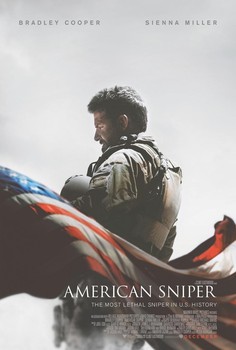
American society bombards such impressionable young men with images of soldiers, often deified in movies like “Act of Valor” or “Lone Survivor.”  Consider the popular success of “American Sniper,” with its depiction of the resolute sniper as avenger and punisher.  Movies like this are powerful in persuading impressionable youth to sign on the dotted line as volunteers for military service.

Military service, which conveys personal dignity, adds a dash of grandeur.  By joining the military, you become part of something much larger than yourself.  A sense of masculine challenge, especially in elite units like the Army Rangers or Navy SEALs, combined with societal respectability prove alluring to young men.  Sadly, no amount of logic about the lack of wisdom and efficacy of America’s war on terror will convince them otherwise.

Some will say there’s nothing wrong with this.  Why not encourage young men to join the military and to fight in foreign lands?  Yet if those fights serve fallacious causes that amount to strategic folly, our troops’ sacrifices amount to little.

One thing we can do: American society should provide more jobs for young men that convey respect within masculine codes but which don’t require donning a uniform and killing an enemy overseas.

For nearly a decade, I taught working-class students, mostly young men, in rural Pennsylvania.  My students came to class wearing camo fatigues.  Many looked like they had just climbed down from a tree stand in the woods (a big holiday for my students was the first day of rifle deer season).  They drove pickup trucks, listened to country music, dipped Skoal or smoked Marlboros.  They’re not guys who aspire to be metrosexuals sipping lattes at Starbucks.  They’re looking for a job that screams “man,” and sometimes they find it: in welding, as a heavy equipment operator, in residential construction, and so on.

But for those who can’t find such “masculine” vocations that provide decent pay and benefits, military service is powerfully alluring, and almost impossible to resist, especially when there are so few alternatives.

In September 2008, I called for a revival of the Civilian Conservation Corps, national service that is dedicated to rebuilding America.  We need to instill an ethic of national service that goes beyond war and killing.  An ethic that inspires young men with patriotic pride and that conveys societal identities that appeal to them as men.

What we need, in short, are fewer “American snipers” and more American workers and builders.

Special Forces: America’s Jesuits

A Triple Stack of Special Ops with Flag -- Hooah!
A Triple Stack of Special Ops with Flag — Hooah! (Photo Credit: SOCOM)

W.J. Astore

Nick Turse has a revealing new piece at TomDispatch.com on the rise of Special Forces and SOCOM (Special Ops Command) within the U.S. military.  (For a telling critique of America’s excess of enthusiasm for Special Forces, see last year’s article here by Dan White for The Contrary Perspective.)

What are we to make of U.S. Special Forces being involved, in one way or another, in the affairs of 150 countries in the world over the last three years?  And, as Turse points out, just 66 days into Fiscal Year 2015, U.S. Special Forces have already made their presence known in 105 countries, a presence that seems never to wane.

One historical analogy that occurs to me (which I’ve used before) is the rise of the Society of Jesus, the Jesuits, within an embattled Catholic Church during the Reformation.  A besieged Church needed true believers to take the fight to heretical Protestants who were bent on the Church’s destruction.  So along came Ignatius Loyola and his church militant of Jesuit priests, sworn to believe that black was white if the Holy Church deemed it so.  Considered an elite within the Church, the Jesuits took the fight to the Protestants during the Catholic Counter Reformation in Europe and across the world.  Jesuits were everywhere, from China in the Old World to nearly everywhere in the New World, crusading for the Church and against the incursions of Protestantism and its various sects.

So, how does the 16th century shed light on the 21st?  America’s Vatican is obviously the Pentagon.  Its primary methods are wars and weapons sales and military training.  Its Loyola was until recently Admiral William McRaven, head of SOCOM.  And its Jesuit priests are America’s Special Ops troops, true believers who are committed to defending the faith of America.

In the aftermath of 9/11, in a rare outburst of honesty, George W. Bush said America was on a crusade across the world.  You might say against “protestants” and other heretics to the American way of life.  And who are our crusaders?  Who is being sent virtually everywhere (remember those 150 countries in three years?) on various “missions”?

Like it or not, America’s Special Forces are our lead missionaries, our Jesuits, our church militant.

The new head of SOCOM, General Joseph Votel III, West Point grad and Army Ranger, put it plainly back in August that America is witnessing “a golden age for special operations.”  What a telling phrase.  And indeed it’s getting increasingly difficult to recall “golden ages” in America’s past that weren’t linked to the military.

But that’s no accident when the national church is the Pentagon and its Special Ops troops are acclaimed as so many missionary heroes.

Welcome to your new golden age, America.

Martin Luther King, Jr. on America’s Spiritual Death

Martin-Luther-King-SCH

W.J. Astore

On April 4, 1967, Martin Luther King Jr. gave a powerful speech (“Beyond Vietnam – A Time to Break Silence”) that condemned America’s war in Vietnam. Exactly one year later, he was assassinated in Memphis.

What follows are excerpts from MLK’s speech. I urge you to read it in its entirety, but I’d like to highlight this line:

A nation that continues year after year to spend more money on military defense than on programs of social uplift is approaching spiritual death.

MLK called for a revolution of values in America. In his address, he noted that:

There is nothing except a tragic death wish to prevent us from reordering our priorities so that the pursuit of peace will take precedence over the pursuit of war.

MLK didn’t just have a dream of racial equality. He had a dream for justice around the world, a dream of a world committed to peace, a world in which America would lead a reordering of values in the direction of universal brotherhood.

Both of MLK’s dreams remain elusive. Racial inequalities and biases remain, though America is better now than it was in the 1960s in regards to racial equity. And what of a commitment to peace? Sadly, America remains dedicated to war, spending nearly a trillion dollars yearly on defense, Homeland Security, nuclear weapons, and “overseas contingency operations,” i.e. wars.

America has failed to dream the dreams of Martin Luther King, Jr., and we are the worse for it. W.J. Astore

Excerpts from MLK’s Speech on Vietnam, April 4, 1967

At this point I should make it clear that while I have tried in these last few minutes to give a voice to the voiceless in Vietnam and to understand the arguments of those who are called “enemy,” I am as deeply concerned about our own troops there as anything else. For it occurs to me that what we are submitting them to in Vietnam is not simply the brutalizing process that goes on in any war where armies face each other and seek to destroy. We are adding cynicism to the process of death, for they must know after a short period there that none of the things we claim to be fighting for are really involved. Before long they must know that their government has sent them into a struggle among Vietnamese, and the more sophisticated surely realize that we are on the side of the wealthy, and the secure, while we create a hell for the poor.

Somehow this madness must cease. We must stop now. I speak as a child of God and brother to the suffering poor of Vietnam. I speak for those whose land is being laid waste, whose homes are being destroyed, whose culture is being subverted. I speak of the — for the poor of America who are paying the double price of smashed hopes at home, and death and corruption in Vietnam. I speak as a citizen of the world, for the world as it stands aghast at the path we have taken. I speak as one who loves America, to the leaders of our own nation: The great initiative in this war is ours; the initiative to stop it must be ours…

If we continue, there will be no doubt in my mind and in the mind of the world that we have no honorable intentions in Vietnam. If we do not stop our war against the people of Vietnam immediately, the world will be left with no other alternative than to see this as some horrible, clumsy, and deadly game we have decided to play. The world now demands a maturity of America that we may not be able to achieve. It demands that we admit that we have been wrong from the beginning of our adventure in Vietnam, that we have been detrimental to the life of the Vietnamese people. The situation is one in which we must be ready to turn sharply from our present ways. In order to atone for our sins and errors in Vietnam, we should take the initiative in bringing a halt to this tragic war…

It is with such activity in mind that the words of the late John F. Kennedy come back to haunt us. Five years ago he said, “Those who make peaceful revolution impossible will make violent revolution inevitable.” Increasingly, by choice or by accident, this is the role our nation has taken, the role of those who make peaceful revolution impossible by refusing to give up the privileges and the pleasures that come from the immense profits of overseas investments. I am convinced that if we are to get on the right side of the world revolution, we as a nation must undergo a radical revolution of values. We must rapidly begin…we must rapidly begin the shift from a thing-oriented society to a person-oriented society. When machines and computers, profit motives and property rights, are considered more important than people, the giant triplets of racism, extreme materialism, and militarism are incapable of being conquered.

A true revolution of values will soon cause us to question the fairness and justice of many of our past and present policies. On the one hand, we are called to play the Good Samaritan on life’s roadside, but that will be only an initial act. One day we must come to see that the whole Jericho Road must be transformed so that men and women will not be constantly beaten and robbed as they make their journey on life’s highway. True compassion is more than flinging a coin to a beggar. It comes to see that an edifice which produces beggars needs restructuring.

A true revolution of values will soon look uneasily on the glaring contrast of poverty and wealth. With righteous indignation, it will look across the seas and see individual capitalists of the West investing huge sums of money in Asia, Africa, and South America, only to take the profits out with no concern for the social betterment of the countries, and say, “This is not just.” It will look at our alliance with the landed gentry of South America and say, “This is not just.” The Western arrogance of feeling that it has everything to teach others and nothing to learn from them is not just.

A true revolution of values will lay hand on the world order and say of war, “This way of settling differences is not just.” This business of burning human beings with napalm, of filling our nation’s homes with orphans and widows, of injecting poisonous drugs of hate into the veins of peoples normally humane, of sending men home from dark and bloody battlefields physically handicapped and psychologically deranged, cannot be reconciled with wisdom, justice, and love. A nation that continues year after year to spend more money on military defense than on programs of social uplift is approaching spiritual death.

America, the richest and most powerful nation in the world, can well lead the way in this revolution of values. There is nothing except a tragic death wish to prevent us from reordering our priorities so that the pursuit of peace will take precedence over the pursuit of war. There is nothing to keep us from molding a recalcitrant status quo with bruised hands until we have fashioned it into a brotherhood.

America’s Longest Wars

Just a few of the battles fought against Native Americans

W.J. Astore

A popular headline in the media is to describe the Afghan War as “America’s longest,” as in this brief summary today from Foreign Policy:

The war in Afghanistan, America’s longest, is now formally over. The 13-year war, which claimed more than 2,200 American lives and cost more than one trillion dollars, ended quietly at a ceremony in Kabul yesterday. U.S. President Barack Obama and other Western leaders promised their ongoing commitment under the rebranded Operation Resolute Support and insisted the war was a success. But the Taliban is poised for a comeback with a recent surge in violence in Kabul and around the country. There are concerns that Afghanistan’s military and fragile political institutions will crumble as the United States leaves.

There’s a big problem with this.  America’s longest war, by far, is not the recent Afghan War; it was its more or less continuous effort against Native Americans from the early 1600s to the late 1800s.  Americans like to forget that native peoples populated the land before European settlers began to arrive, and that these native peoples had to be killed, or corralled, or otherwise subjugated or shunted aside in the name of Manifest Destiny and in the pursuit of profit.

As historian John Grenier notes in The First Way of War: American War Making on the Frontier, 1607-1814,

For the first 200 years of our military heritage, then, Americans depended on arts of war … [that included] razing and destroying enemy villages and fields; killing enemy women and children; raiding settlements for captives; intimidating and brutalizing enemy noncombatants; and assassinating enemy leaders.

For Grenier, America’s “first way of war” relied on “extravagant violence” often aimed at “the complete destruction of the enemy,” in this case various Native American peoples.  This was indeed America’s longest war. Yet despite (or perhaps because of) its long duration and brutal violence, the war against indigenous peoples is rarely mentioned today, especially by those who seek to promote American exceptionalism.

Another longer war than the Afghan one, more recent in America’s memory, was the Cold War we fought against the Soviet Union and its allies from the close of World War II to the collapse of the Soviet Union in the early 1990s.  Lasting nearly half a century, this war ended in victory of a sort for the United States, even as its legacy continues to poison U.S. culture and foreign relations.  For the Cold War left us with an enormous military-industrial-Congressional complex, to include nuclear forces capable of destroying the planet, which the U.S. continues to feed and even to enlarge.  The result has been the growth of a second “shadow” government, a national security and surveillance state of enormous power, an apparatus with wide-reaching and unaccountable powers that is potentially a greater threat to American freedoms than the Soviet Union ever was.

When America forgets its longest wars, and especially when Americans forget the legacies of these wars, it’s more than history that suffers.

Update: Just after I wrote this, I came across this article on corporate “land grabs” that continue to bedevil Native Americans.  Some would argue that the long war against native peoples never really ended.  And to state a point that is perhaps obvious: the Afghan War grew out of the Cold War and U.S. efforts to embroil the Soviet Union in its own Vietnam in 1980.  U.S. efforts to support the Afghan “freedom fighters” against the Soviets contributed to the rise of Osama bin Laden, who would eventually turn against the U.S. in the 1990s.  America’s Afghan War, in other words, is not a 13-year war.  To understand it, one must look back to 1979-80 and the machinations of a U.S. foreign policy establishment that was much more concerned with hobbling the Soviets than with helping the Afghan people.

The Nuclear Triad Is Not the Holy Trinity

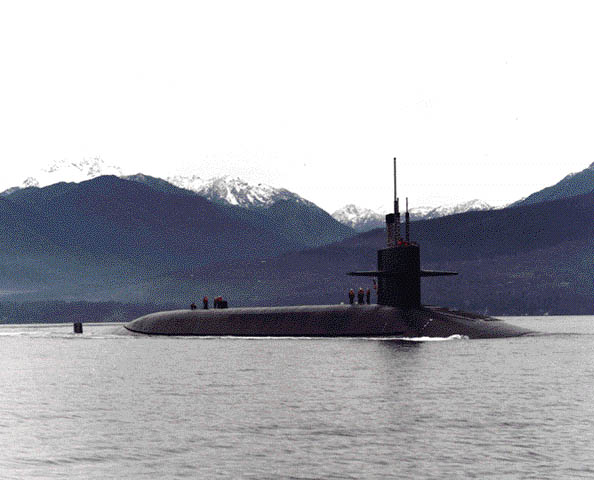
An Ohio-Class Submarine, armed with Trident nuclear missiles

W.J. Astore

America’s nuclear triad of land-based intercontinental ballistic missiles (ICBMs), sub-launched ballistic missiles (Ohio-class nuclear submarines), and nuclear-capable bombers is a relic of the Cold War.  The triad may have made some sense in a MAD (as in mutually assured destruction) way in the 1960s and 1970s, at the height of the Cold War with the USSR.  But it makes no strategic or financial (or moral) sense today.  Nevertheless, the U.S. is investing $10 billion over the next six years to update land-based ICBMs, missiles that should be decommissioned rather than updated precisely because they are both outdated and redundant.

The most survivable leg of the nuclear triad remains the U.S. Navy’s nuclear submarines, which carry Trident II missiles with multiple warheads.  These submarines are virtually impossible for any potential American foe to locate and sink in any timely fashion, therefore ensuring a survivable nuclear deterrent that is more than sufficient in any conceivable crisis.

Indeed, it’s arguable whether the U.S. needs any nuclear deterrent, given the size of the U.S. military and the power of its conventional military forces.  Even old Cold War warriors like Henry Kissinger have come out in favor of eliminating nuclear weapons from the earth, as did Barack Obama when he first ran for president in 2008.

But morality and common sense quickly disappear when politics and fear-mongering intervene.  States where nuclear missiles are currently based, such as North Dakota and Wyoming, want to keep them in their silos so that federal dollars continue to flow into local and state economies.  Fearful “hawks” point to the existence of nuclear missiles in China or Russia (or even Pakistan!) as the reason why the U.S. needs to maintain nuclear superiority, even though no country comes close to the power and survivability of the U.S. Navy’s Trident submarines.

And let’s not, of course, forget morality.  With Christmas coming, I recall something about “Thou Shall Not Kill” and loving thy neighbor.  Spending scores of billions (maybe even a trillion dollars!) to update America’s nuclear arsenal, an arsenal that has the capacity to unleash genocide against multiple enemies while plunging the planet into nuclear winter, seems more than a little contrary to the Christian spirit, whether at Christmas or indeed any time of the year.

The decision to “invest” in outdated and redundant land-based ICBMs says much about the American moment.  It’s almost as if our government believes the nuclear triad really is the Holy Trinity.  Heck — why else did our country choose to anoint genocidal nuclear missiles as “Peacekeepers“?

It should sadden us all that some American leader of the future may yet utter the line, “We had to destroy the planet to save it.”  Such is the horrifying potential and maddening logic of our nuclear forces.


More Thoughts on America’s Military Academies

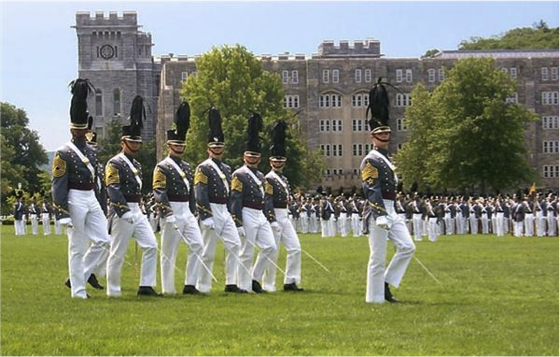
West-Point-Cadets-Marching1

W.J. Astore

The passionate discussion generated by our last article, America’s Military Academies Are Seriously Flawed, was heartening.  Our military academies will not be improved if we merely accept the status quo, with allowance for minor, mainly cosmetic, reforms.  But truly radical reforms are difficult to achieve since the academies are so deeply rooted in tradition.  A reluctance to change can be a good thing, especially when an institution is performing well.  Yet since the Korean Conflict, and certainly since the Vietnam War, America’s military performance has been mediocre.  Placing blame here is obviously contentious, with military professionals tending to point to poor decisions by civilian leaders, among other causes.

Rather than placing blame, let’s entertain some probing questions about the future structure and mission of military academies, with the intent of making them better schools for developing military leaders, as well as better institutions for defending America and advancing its values.

Here in no particular order are a few questions and proposals:

1.  Is America best served by military academies that emulate undergraduate colleges in providing a course of study lasting four years? Or should the academies recruit from students who have already finished most (or all) of an undergraduate degree?  The academies could then develop a concentrated course of study, specifically tailored to military studies, lasting roughly two years.  In effect, the academies would become graduate schools, with all cadets graduating with master’s degrees in military studies with varying concentrations (engineering, science, English, history, and so on).  Such a change would also eliminate the need to kowtow to undergraduate accreditation boards such as ABET.

2.  West Point and the AF Academy rely primarily on serving military officers as instructors, whereas Annapolis relies primarily on civilian instructors. Is this a distinction without difference?  Would West Point and the AF Academy profit from more civilian instructors, and Annapolis from more military ones?  Should all the service academies work harder to bring in top instructors from the Ivy League and similar universities as full-time visiting professors?

3.  How much of today’s experience at military academies is busy work? Or work driven mainly by tradition, i.e. “We do this because we’ve always done this.”  Do we still need lots of inspections, marching, parades, and the like?  Do freshman (call them plebes, doolies, smacks, what have you) truly profit from being sleep-deprived and harassed and otherwise forced into compliance as a rite of passage in their first year?  Does this truly develop character?  Or are cadet schedules so jam-packed that they have little time to think?

4.  Why do cadets continue to have limited exposure to the enlisted ranks? NCOs are the backbone of a professional military, a fact that is not stressed enough in officer training.  How do we increase opportunities for cadets to work with NCOs in the field?

5.  A strong emphasis on physical fitness and sports is smart. But is it necessary to place so much emphasis on big-time sports such as Division I-A football?  What is gained by focusing academy recruiting on acquiring athletes that will help to win football games?  What is gained by offering such athletes preferential treatment within the corps of cadets?  (Some will claim that athletes receive no preferential treatment; if you believe this, I suggest you listen very carefully to cadets who are outside of the charmed circle of celebrated athletes.)

6.  When I was a serving officer at the AF Academy, cadets used to ask me whether I believed they were “the best and the brightest.” Certain senior leaders had told them that, by virtue of being selected to attend a military academy, they were better than their civilian peers at universities such as Harvard or MIT.  Is it wise to sell cadets on the idea that they are America’s best and brightest?

How I answered the question: I told my cadets that comparing military academies to universities such as Harvard or MIT was an apples/oranges situation.  First and foremost, military academies were and are about developing military leaders of strong character.  If you compared cadets to their peers at Harvard or MIT, of course you’d find smarter students at these and similar top-flight universities.  But that wasn’t the point.  Military academies had a different intent, a different purpose, a different mission.  This answer seemed to satisfy my cadets; what I sensed was that they were tired of being told they were America’s best, when they could see for themselves that this often wasn’t true.

We do our cadets no service when we applaud them merely for showing up and working hard, just as our civilian leaders do the military no service when they applaud us as the best-led, best-equipped, best-trained, and so on, military force in all of human history.  Any student of military history should laugh at such hyperbolic praise.

7.  And now for a big question: Are the academies contributing to America’s current state of perpetual war? Have we abandoned Washington’s ideal of Cincinnatus, the citizen-soldier, the soldier who fights reluctantly and who seeks not military honors but only a return to normalcy and an end to war?

Some will argue that the world today demands perpetual vigilance and a willingness to use overwhelming “shock and awe” force to intimidate and defeat America’s enemies.  And that only a professional corps of devoted regulars can lead such a force.  Perhaps so.

But is it time to consider new paradigms?

What are the most serious threats that America faces today?  For example, American infrastructure is crumbling even as we spend hundreds of billions in Iraq and Afghanistan with indifferent results.  Should West Point return to its roots, unleashing its officer-engineers to lead a new Civilian Conservation Corps to rebuild America?  (Recall that George C. Marshall ran the CCC.)  Should America’s military be refocused not on winning the “global war on terror” (unwinnable by definition, for terror will always be with us), but on preserving the global environment?

As humans wage war against our planet and biosphere, should not a force dedicated to the defense of America focus on preserving our livelihood as represented by our planet’s resources?  With its global presence, the American military is uniquely situated to take the lead here.  Indeed, the U.S. Navy already advertises itself as “A global force for good.”  Can we make that a reality?

Too pie in the sky?  The U.S. military has enormous resources and a global role in leadership.  What would it mean to America if our military took the lead in preserving the earth while rebuilding the core strength of America?  Aren’t these “wars” (against global environmental degradation; for America’s internal infrastructure) worth fighting?  Are they not more winnable than a perpetual war on terror?

There you have it.  Let’s hear your ideas in the comments.  And thanks.

America’s Military Academies Are Seriously Flawed

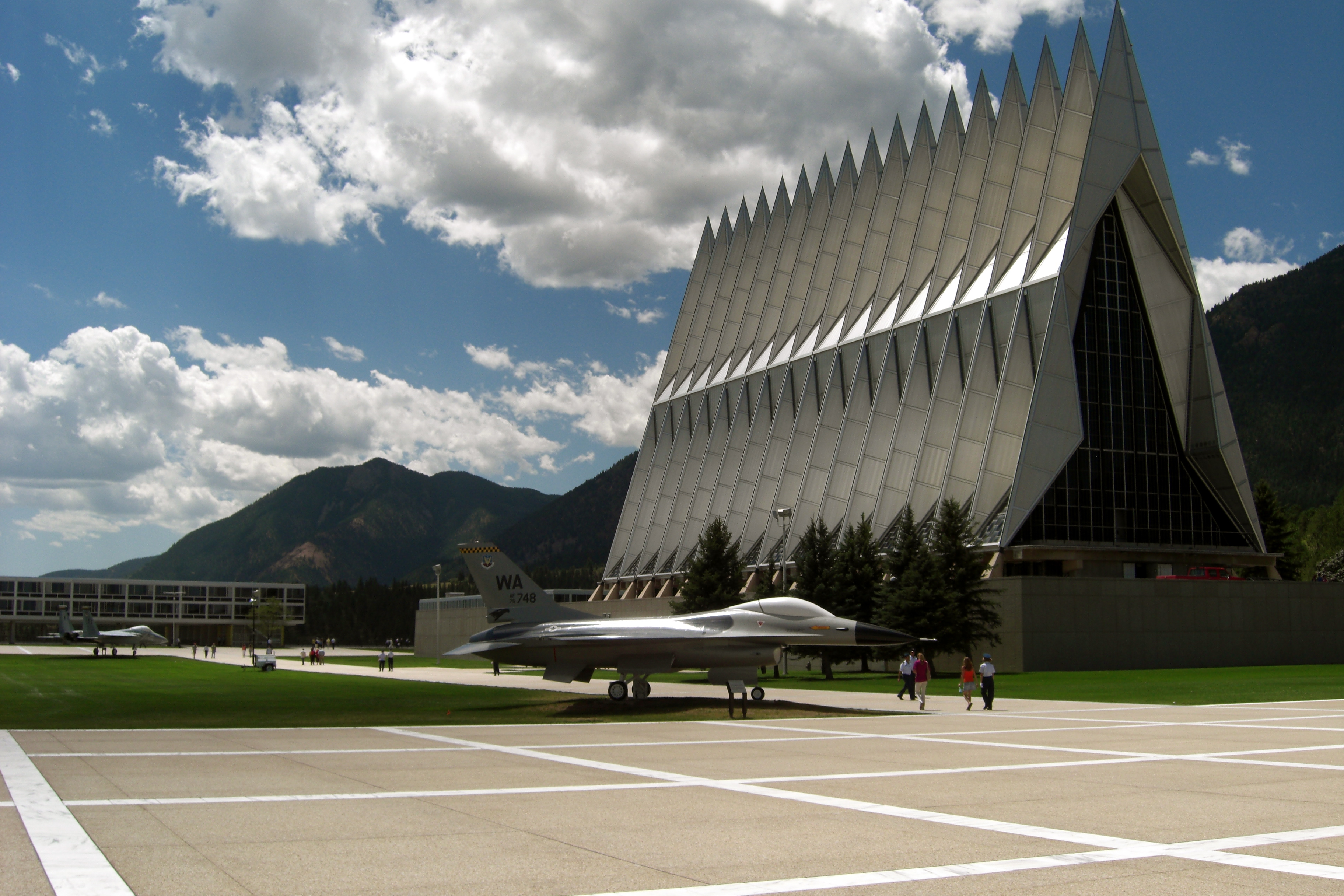
The Air Force Academy Chapel: God and Fighter Jets

W.J. Astore

U.S. military academies are neither Spartan in being dedicated to war, nor are they Athenian in recognizing humanism (even the humanism of war).  They are Archimedean.  They focus on engineering and the machinery of war.  But two millennia ago even Archimedes with his clever war machinery could not save Syracuse from defeat at the hands of Rome.

There is a lesson here for America’s military academies – if only they spent more time studying history and the humanities and less time solving equations.  But they do not.  I taught history at the Air Force Academy (AFA) for six years.  My experience?  The AFA was far too focused on STEM subjects (science/tech/engineering/math) to the neglect of history, political science, and the humanities.  Today, America’s military cadets still concentrate on STEM, and they still receive Bachelor of Science degrees, even when they choose to major in subjects like history.

A technical emphasis may make sense for Air Force test pilots or Navy nuclear engineers; it does not make sense for Marine or Army lieutenants patrolling the mountains of Afghanistan.  Nor does it make sense in counterinsurgency warfare and nation-building operations, which involve soft skills and judgment rather than kinetic action and calculation.  Small wonder that the U.S. military in 2007 had to hire civilian anthropologists to teach the troops that winning is not only about hammering the enemy with superior firepower.

Emerging from an engineering mindset, young officers are too number-oriented, too rule-bound, too risk-averse.  U.S. military officers, old as well as young, tend to think geopolitical problems – even in destabilized cauldrons like Iraq and Afghanistan – are solvable if you identify and manipulate the right variables.  They think history and politics, human and cultural factors, can be controlled or compensated for.

Ever since their service academy days, they have internalized a puzzle-solving mindset, one that is suitable to technocratic hierarchies in which “progress” is measured by metrics.  Their thinking about war is infected by quantification and business-speak in which assets are leveraged and force is optimized.  Reinforcing this impoverished view of war is an officer evaluation system that stresses numbers, numbers, and more numbers, since if it cannot be quantified, it did not happen or does not exist.

When I was an officer and professor teaching history, many military cadets would ask, “What can I do with a History degree?”  They were thinking not in terms of which course of study would make them savvier, more effective, officers and leaders.  They were thinking in terms of which academic major would help them become a pilot (even better: a test pilot or astronaut), or they were thinking which major would make them more marketable once they left the military.

As a result, the vast majority of cadets at the Air Force Academy took two, and only two, history courses: a one-semester survey on world history and another survey course on military history.  (Cadets at West Point take more history courses, but technical subjects are over-stressed there as well.) They had virtually no exposure to U.S. history (unless you count AF heritage or Academy trivia as “history”), but plenty of exposure to thermodynamics, calculus, physics, civil engineering, astronautics, and related technical subjects.  Naturally, an engineering mentality pervaded the air.  Notably absent were critical and sustained studies of recent U.S. military performance.

Combine a reductive, problem-solving approach shared among U.S. military officers with the dominance of lawyers in U.S. governmental systems and you have a recipe for number-crunching rationality and rule-bound conformity.  Solutions, when proffered by such a system, involve cleverness with weapons and Jesuitical reasoning with laws.  A perfect example: America’s high-tech drones and the tortured legal reasoning to sanction their assassination missions.

Educated as engineers and technicians, young officers are deployed to places like Iraq and Afghanistan and charged with negotiating the “human terrain” of cultures utterly foreign to them.  Lacking knowledge of their own history as well as the history of the cultures they walk among, it is hardly surprising that they make little progress, despite hard work and honorable intentions.

Today’s U.S. military likes to fancy itself a collection of warriors, but America is not Sparta.  Today’s military likes to fancy itself the bringers of democracy, but America is not Athens.  Today’s military is Archimedean, infatuated by technology, believing in smart machines and victory achieved through violent action — much like America itself.

But mastery of machines by the military or, for that matter, tortured legalistic gymnastics by civilian commanders, is not in itself sufficient for victory.  Just ask Archimedes at Syracuse, or a US Marine at Fallujah, or even the constitutional lawyer-in-chief at the White House.