It’s increasingly hard to remember how and why America is supposed to go to war. First, war is supposed to be a last resort, not a knee-jerk reaction to Israeli actions. Second, war is supposed to be a deliberative process, a constitutional one, involving Congress and needing its approval since war is declared in the name of the American people and only in response to America itself being directly threatened. Of course, presidents are expected to take the lead here, but prosecuting wars is supposed to be a national act of will requiring the mobilization of consent.
Yet when it comes to Iran today war just seemingly happens based on the whims of President Trump, a small network of loyal advisers, and the wishes of Bibi Netanyahu and Israel. The American people aren’t even asked if they approve. Little effort is made to mobilize national will. We’re simply told by the POTUS that “Iran can’t have a nuclear weapon.” Never mind that the DNI, Tulsi Gabbard, testified that Iran wasn’t actively pursuing such a weapon. Never mind that America has thousands of nukes and Israel a hundred or more. Iran simply can’t have one, apparently because that country can’t be trusted. America and Israel, of course, can have all the nukes they want.
The Iran War, put bluntly, might be the dumbest war ever for America. It has strengthened hardliners in Iran, weakened America’s economy and moral stature (what’s left of it), and arguably revived and accelerated Iran’s nuclear ambitions. It’s done the exact opposite of what the Trump administration claimed it was supposed to do and at enormous cost.
Nevertheless, despite this dumbass war (to put it in Trumpian terms), a frustrated U.S. president seems determined to double down on more war. If only those pesky Arab allies would stop getting in the way, what with all their concerns about getting hit by Iranian drones and missiles in retaliation for U.S. and Israeli attacks. How dare Iran defend itself!
War is the first refuge of the brain dead, to coin a phrase, which led me back to a book I read as a teenager, Isaac Asimov’s Foundation Trilogy. Asimov wrote that Violence is the last refuge of the incompetent. Springing into action, blowing things up, kicking and punching people when they’re down (to cite the noble sentiment of Pete Hegseth), is surely the refuge of the incompetents in the Trump administration.
If only we could put this confederacy of very unstable dunces in time out until they grew up and smartened up.
Can you win a war that isn’t really about the country you’re fighting? Where the aims keep shifting and the motivations are dishonest? We know from Secretary of State Marco Rubio that Israel more or less forced the Trump administration’s hand in attacking Iran. We know from Joe Kent’s testimony that Iran posed no imminent threat to the U.S. We know from President Trump himself that Iran’s nuclear program had been “obliterated” in previous strikes. So why wage war on Iran?
The way we label wars is illustrative of our confusion and dishonesty. “The Vietnam War”: more accurately, it was the U.S. government’s war on Vietnam. “The Iraq War”: again, the U.S. government’s war on Iraq. Same with Afghanistan. Same with Iran. America wages constant wars against other nations and peoples; these wars are really variations on a theme of militarism, imperialism, and profiteering.
Cui bono, who benefits, is always the question to ask. The answer is usually some combination of the military-industrial complex, U.S. oligarchical corporate interests, and, in the case of wars in the Middle East, Zionist Israel and fossil fuel interests.
By its nature, a constant state of warfare feeds authoritarianism and stifles freedom and democracy. Wars favor oligarchs and dictators and feed fascist tendencies. No nation can preserve its freedom in the midst of continual warfare, James Madison warned.
There is no “victory” to be had in these wars, not for the American people. This was true of the Vietnam War and it’s also true of the current war on Iran. America is losing and will lose because these wars weaken freedom and democracy while reinforcing authoritarian and fascistic elements.
America, as in people like us, can only “win” when these wars are ended.
All this has been on my mind as I recalled this review that I wrote (see below) on why the U.S. lost the Vietnam War.
*****
American Reckoning: Why the U.S. Lost the Vietnam War
Written in 2015.
Christian G. Appy, professor of history at U-Mass Amherst, has written a new and telling book on the Vietnam War: American Reckoning: The Vietnam War and Our National Identity (New York, Viking Press). Reading his book made me realize a key reason why the U.S. lost the war: for U.S. leaders it was never about Vietnam and the Vietnamese people. Rather, for these men the war was always about something else, a “something else” that constantly shifted and changed. Whereas for North Vietnam and its leaders, the goal was simple and unchanging: expel the foreign intruder, whether it was the Japanese or the French or the Americans, and unify Vietnam, no matter the cost.
Appy’s account is outstanding in showing the shifting goals of U.S. foreign policy vis-à-vis Vietnam. In the aftermath of World War II, the U.S. first supported the French in their attempts to reassert control over their former colony. When the French failed, the U.S. saw Vietnam through a thoroughly red-tinted lens. The “fall” of a newly created South Vietnam was seen as the first domino in a series of potential Communist victories in Asia. Vietnam itself meant little economically to American interests, but U.S. leaders were concerned about Malaysia and Indonesia and their resources. So to stop that first domino from falling, the U.S. intervened to prop up a “democratic” government in South Vietnam that was never democratic, a client state whose staying power rested entirely on U.S. “advisers” (troops) and weapons and aid.
Again, as Appy convincingly demonstrates, for U.S. leaders the war was never about Vietnam. Under Eisenhower, it was about stopping the first domino from falling; under Kennedy, it was a test case for U.S. military counterinsurgency tactics and Flexible Response; under Johnson, it was a test of American resolve and credibility and “balls”; and under Nixon, it was the pursuit of “peace with honor” (honor, that is, for the Nixon Administration). And this remained true even after South Vietnam collapsed in 1975. Then the Vietnam War, as Appy shows, was reinterpreted as a uniquely American tragedy. Rather than a full accounting of the war and America’s mistakes and crimes in it, the focus was on recovering American pride, to be accomplished in part by righting an alleged betrayal of America’s Vietnam veterans.
In the Reagan years, as Appy writes, American veterans, not the Vietnamese people, were:
portrayed as the primary victims of the Vietnam War. The long, complex history of the war was typically reduced to a set of stock images that highlighted the hardships faced by U.S. combat soldiers—snake-infested jungles, terrifying ambushes, elusive guerrillas, inscrutable civilians, invisible booby traps, hostile antiwar activists. Few reports informed readers that at least four of five American troops in Vietnam carried out noncombat duties on large bases far away from those snake-infested jungles. Nor did they focus sustained attention on the Vietnamese victims of U.S. warfare. By the 1980s, mainstream culture and politics promoted the idea that the deepest shame related to the Vietnam War was not the war itself, but America’s failure to embrace its military veterans.” (p. 241)
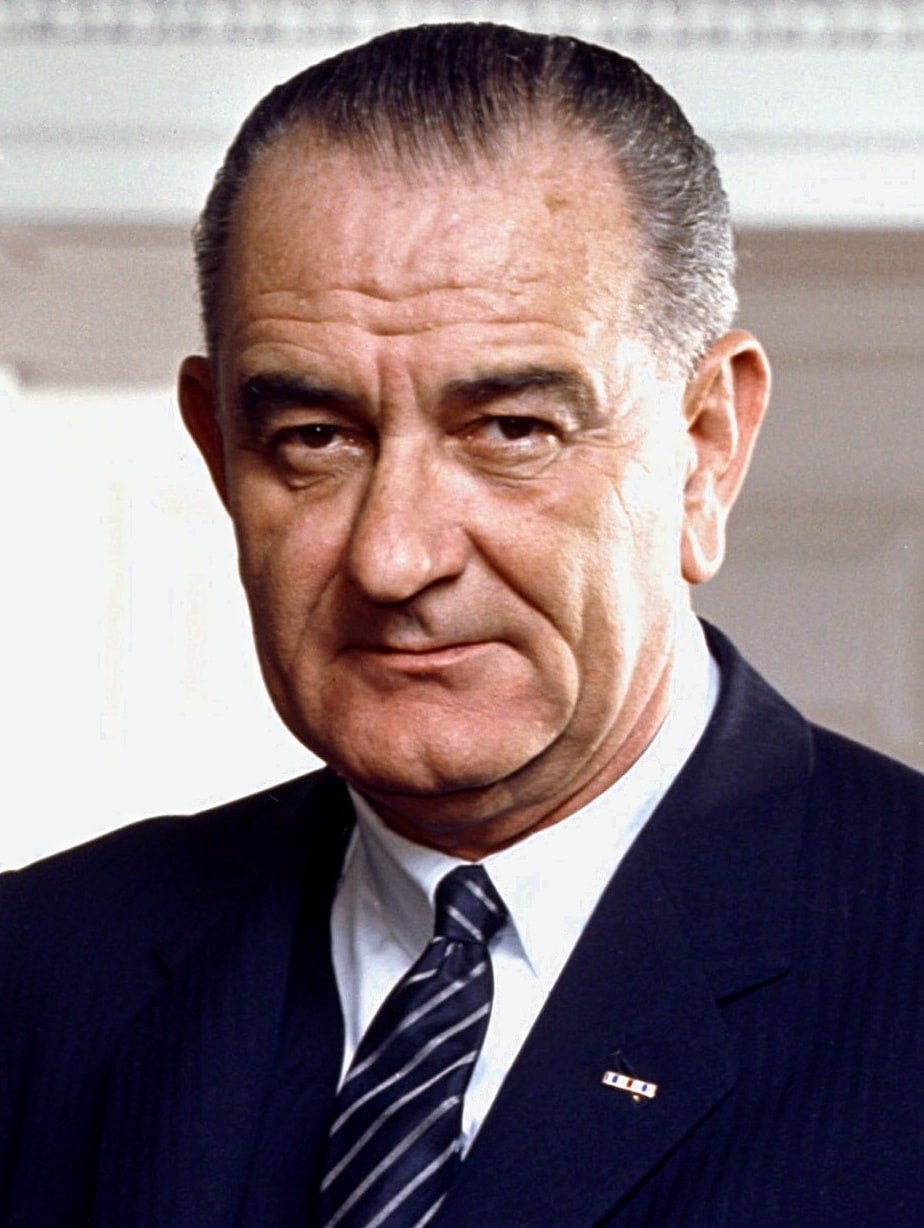
Again, the Vietnam War for U.S. leaders was never truly about Vietnam. It was about them. This is powerfully shown by LBJ’s crude comments and gestures about the war. Johnson acted to protect his Great Society initiatives; he didn’t want to suffer the political consequences of having been seen as having “lost” Vietnam to communism; but he also saw Vietnam as a straightforward test of his manhood. When asked by reporters why he continued to wage war in Vietnam, what it was really all about, LBJ unzipped his pants, pulled out his penis, and declared, “This is why!” (p. 82).
Withdrawal, of course, was never an option. As Appy insightfully notes,
LBJ and most of the other key Vietnam policymakers never imagined that withdrawal from Vietnam would be an act of courage. In one sense this moral blindness is baffling because these same men prided themselves on their pragmatic, hardheaded realism, their ability to cut through sentiment and softhearted idealism to face the most difficult realities of foreign affairs. They could see that the war was failing. But they could not pull out. A deeper set of values trumped their most coherent understandings of the war. They simply could not accept being viewed as losers. A ‘manly man’ must always keep fighting.” (p. 84)
A few pages later, Appy cites Nixon’s speech on the bombing of Cambodia, when Nixon insisted the U.S. must not stand by “like a pitiful, helpless giant,” as further evidence of this “primal” fear of presidential impotence and defeat.
Even when defeat stared American leaders in the face, they blinked, then closed their eyes and denied what they had seen. Beginning with Gerald Ford in 1975, America shifted the blame for defeat onto the South Vietnamese, with some responsibility being assigned to allegedly traitorous elements on the homefront, such as “Hanoi Jane” (Fonda). As Appy writes, “Instead of calling for a great national reckoning of U.S. responsibility in Vietnam, Ford called for a ‘great national reconciliation.’ It was really a call for a national forgetting, a willful amnesia.” (p. 224)
As a result of this “willful amnesia,” most Americans never fully faced the murderous legacies of the Vietnam War, especially the cost to the peoples of Vietnam, Laos, and Cambodia. Instead, our leaders and government encouraged us to focus on America’ssuffering. They told us to look forward, not backward, while keeping faith in America as the exceptional nation.
Appy notes in his introduction that America needs “an honest accounting of our history” if we are “to reject—fully and finally—the stubborn insistence that our nation has been a unique and unrivaled force for good in the world.” (p. xix) American Reckoning provides such an honest accounting. But are Americans truly ready and willing to put aside national pride, nurtured by a willed amnesia and government propaganda, to confront the limits as well as the horrors of American power as it is exercised in foreign lands?
Evidence from recent wars and military interventions in Iraq, Afghanistan, and elsewhere still suggests that Americans prefer amnesia, or to see other peoples through a tightly restricted field of view. Far too often, that field of view is a thoroughly militarized one, most recently captured in the crosshairs of an American sniper’s scope. Appy challenges us to broaden that view while removing those crosshairs.
*****
Addendum (2026): Self-styled Secretary of War Pete Hegseth has already floated the lie that Democrats (and a few Republicans) are betraying the country by seeking to constrain the Trump administration in its disastrous war on Iran. What Hegseth is saying, essentially, is that Congress is committing treason in attempting to exercise its constitutional duties.
Always when the warmongers lose a war, they resort to the hoary “stab-in-the-back” myth. Rare indeed is someone like Robert McNamara, who admitted decades after the Vietnam War that he had been wrong, terribly wrong, to prosecute that war.
Usually in America, those who are most unrepentant about war are the ones hired to comment on or wage the next one.
Courtesy of NBC News, here’s a brief summary of the butcher’s bill of the latest wars in the Middle East:
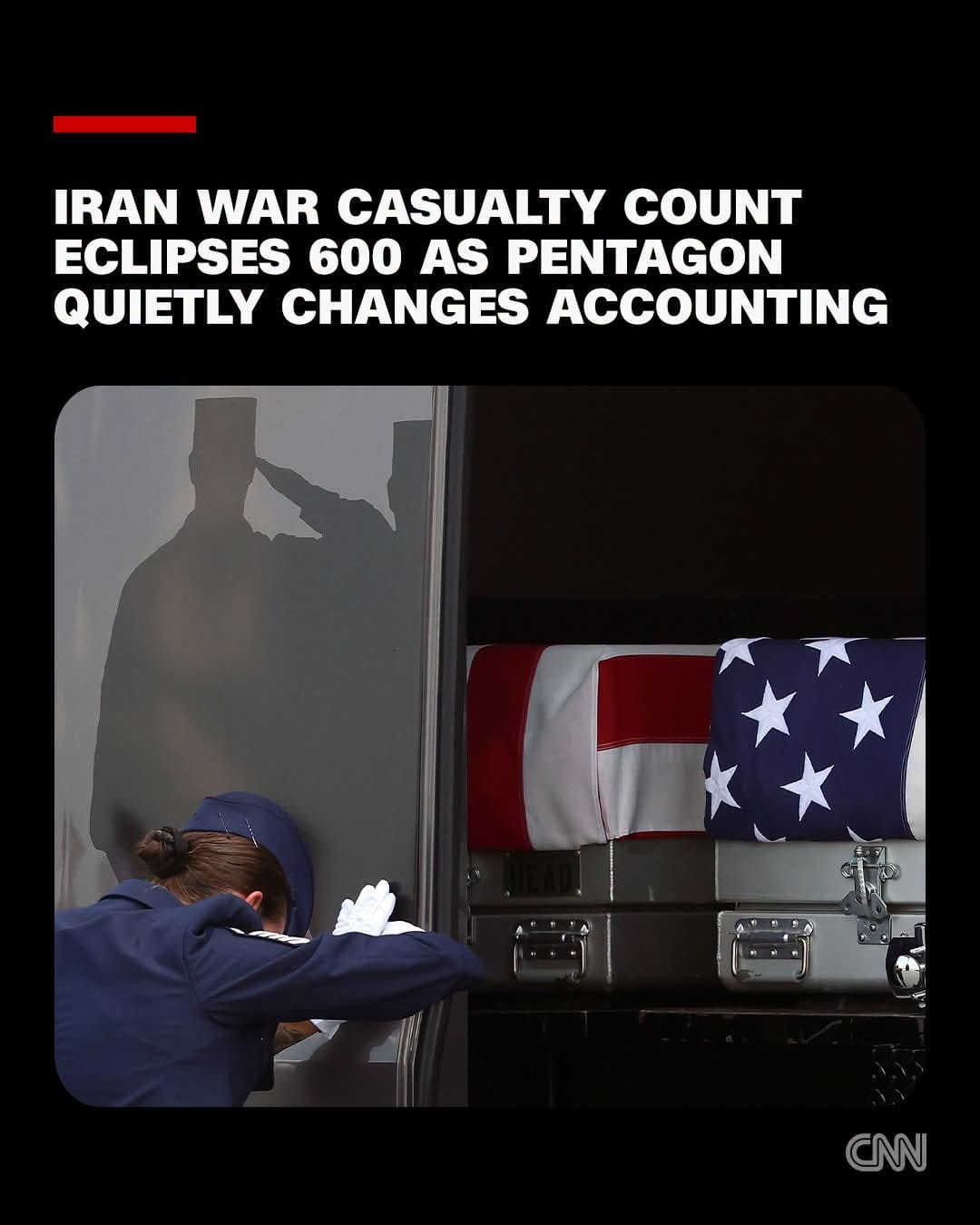
Iran’s forensics chief said nearly 3,400 people had been killed in the country since U.S.-Israeli strikes began Feb. 28. Almost 2,500 people have been killed in Lebanon, 32 have been killed in Gulf states, and 23 have died in Israel. Thirteen U.S. service members have been killed, and two more died of noncombat causes.
I happen to believe Iranian lives are as valuable and precious as American lives. What gives the U.S. and Israeli governments the right to inflict such disproportionate casualties on Iran, on Lebanon, on Gaza? (I know: might makes right.) If you include the Palestinians, more than 100,000 people, and probably closer to 200,000, have been killed in the latest Israeli/U.S. wars, with the United States providing most of the deadly weaponry.
NBC anchor Brian Williams gushed about being “guided by the beauty of our weapons”
Speaking of weaponry, the liberal New York Times had an article yesterday lamenting the heavy expenditure of costly precision weaponry (like Tomahawk cruise missiles) by the U.S. since the beginning of the Iran War. Nowhere in the article was there a complaint about the death toll, nor was there much of a complaint about the cost. No—what the liberal New York Times was concerned about was how quickly the U.S. could replenish its stockpile of weaponry so it could be prepared for a future war against peer threats like China and Russia.
Here’s an excerpt from the article:
Since the Iran war began in late February, the United States has burned through around 1,100 of its long-range stealth cruise missiles built for a war with China, close to the total number remaining in the US stockpile. The military has fired off more than 1,000 Tomahawk cruise missiles, roughly 10 times the number it currently buys each year.
The Pentagon used more than 1,200 Patriot interceptor missiles in the war, at more than $4 million a pop, and more than 1,000 Precision Strike and ATACMS ground-based missiles, leaving inventories worrisomely low, according to internal Defense Department estimates and congressional officials.
The Iran war has significantly drained much of the US military’s global supply of munitions, and forced the Pentagon to rush bombs, missiles and other hardware to the Middle East from commands in Asia and Europe. The drawdowns have left these regional commands less ready to confront potential adversaries such as Russia and China, and it has forced the United States to find ways to scale up production to address the depletions, Trump administration and congressional officials say.
Again, if you read the article, nothing is said about morality. Nothing is said about death and dying and the bloody awfulness of war. The article simply says the U.S. has used a lot of very expensive missiles that we MUST replace if we’re to be prepared to wage more wars in the near future.
There’s not even a hint here that maybe America could be at peace—even in the most distant future. Apparently, America must always remain locked and loaded for a war with China, or Russia, or some other country and combination of countries, even as all this is couched as defending the homeland.
How many war crimes can be hidden or explained away by this phrase: “defend the homeland”? Far too many, and of the most horrific nature.
American militarism must end. Support of Israeli warmongering and killing must end. The national love affair with weaponry must end. Cut the Pentagon budget by 50% and keep cutting. Retrench the empire and recommit to being a republic that doesn’t seek war. Turn away from the bloody awfulness and waste of constant warfare.
War isn’t macho. It isn’t glorious. It’s insanity on a mass scale.
In the New York Times send-out this morning, the pope and president are described as “clashing.” That’s one way of putting it. Actually, the pope is arguing for peace and against war and the death of innocents while Trump has been railing about exterminating an entire civilization. A “clash” for sure.
In Algiers. Guglielmo Mangiapane/Reuters
With his usual conceit, which is colossal, Trump posted an image of himself (since deleted) as a Christ-like healer. The image is a fascinating depiction of megalomaniacal Americana:
A curious tableau
Trump claimed no Christ-like comparisons were intended. “I thought it was me as a doctor,” Trump said.
The semiotics of that image would take decades to unpack. Seriously, the flag, the eagles, the military jets, fireworks, angels (?), troops and veterans: the mind boggles. I’m guessing Trump asked AI to produce a patriotic image showing himself as a Christ-like healer, surrounded by white people showcasing prayer and upholding traditional gender roles and norms. It’s an exercise in colossal chutzpah, that’s for sure.
On “60 Minutes” this past weekend, three American Catholic cardinals spoke about the Church’s stance on the Iran War. The cardinals declared the war wasn’t just.
I wish the cardinals had gone further. I can’t think of a “just” war fought by the United States since World War II.
Of course, the moderator for “60 Minutes” had to assert that Iran is the world’s chief exporter of terror, as if the United States, with all its murderous wars and extensive bombing and killing, doesn’t export terror. I guess the moderator wants to keep her job at CBS.
The cardinals make many good points about war as dehumanizing and the sickening nature of pro-war propaganda coming from the Trump administration. It would have been valuable if they’d mentioned the imperative of “Love thy neighbor,” the commandment that “Thou shalt not kill,” and the identity of Christ as the Prince of Peace.
Still, I commend the pope and the Church for taking a stand for peace.
Yesterday, I went on a network that was new to me, TMJ News, to discuss the Iran War ceasefire and related issues.
I also wanted to share something I put in a note/restack. I’ll post that below:
*****
I’ve always disliked [the idea of] “TACO” Trump because the Democrats are often basically goading a bully into being more of a bully. That is, don’t “chicken out,” Trump, be even more murderous and relentless in war. And then Trump denounces them as the “radical left”! When often Democrats are essentially being more radical and rabidly rightist [than Trump himself].
American politics is such a sham. Two rightist parties fighting over which one can kill more foreigners.
This is madness. Unhinged madness. Imagine “blessing” the people of Iran while threatening to end their entire civilization.
Yesterday, I was watching the war movie, “Fury,” which does a decent job of showing some of the horrors of warfare. We get a few fairly honest scenes about war, as in the opening sequence of “Saving Private Ryan,” yet war coverage in our media portrays war as a bloodless video game.
Meanwhile, Trump tweets about mass murder and most in the media just seem to shrug. Mass murder!
For two decades I’ve been writing about America’s warrior nonsense and the increasing militarization of our country even as we’re kept deliberately isolated from war and all its horrors. It all seems like it’s coalesced into the nightmare we have today.
I was on Judge Napolitano’s show this morning, Judging Freedom, and I was somewhat at a loss to describe my reaction to this. If we can’t unite to stop mass murder of innocents, when are we going to unite?
I watched President Trump’s speech to the nation last night on the Iran War. The lies and boasts flew thick. According to Trump, America is winning and winning big. Under Joe Biden, America was “crippled” and “dead,” but Trump has reanimated the dead and healed it. (An obvious aside: Trump has a serious Christ complex.)
From dead and crippled, America is now the meanest, toughest, hombre in the valley. We take what we want and if you resist we’ll bomb you back to the Stone Age. As the New York Times reported: “We are going to hit them extremely hard,” Trump said. “Over the next two to three weeks, we’re going to bring them back to the Stone Ages, where they belong.”
The proud Iranian people, with Persia as one of the cradles of civilization—they mean less than zero to Trump. It doesn’t matter how many people have to die for Trump to feel like a winner.
“Beautiful” damage in Tehran (Majid Saeed/Getty)
A transcript of the speech is here. You’ll read about America’s “beautiful” B-2 bombers and how they’ve performed “magnificently.” You’ll read about America’s “warriors” and “heroes” who “laid down their lives” to prevent Iran from getting a nuclear weapon. You’ll read about their families who, even as they grieve the loss of loved ones in this war, are beseeching Trump to “Please, sir, please finish the job.” Every one of them, Trump added.
There were many reasons to be offended by Trump’s speech last night, but the idea of every grieving family member begging the president to “finish the job” by continuing to bomb and kill Iranians is certainly high on the list of offenses to morality and truth.
More than anything, what Trump’s speech told us is what he values. First, of course, himself and his identity as a man of action—a winner. The economy and the stock market. Oil and gas. Military might. And taking cheap shots at perceived opponents.
This sentence was especially revealing: The most violent and thuggish regime on earth would be free to carry out their campaigns of terror, coercion, conquest and mass murder from behind a nuclear shield.
Trump was referring to Iran here, but what he’s really saying is that only one violent and thuggish regime merits such a blank check on inflicting global violence protected by a nuclear shield. It’s not Iran’s, it’s his.
Trump weighing several options for U.S. troops inside Iran
Discussions about possible ground troops have focused on missions aimed at escalating the war in attempt to end it, sources say, but no decisions have been made.
*****
Somebody please explain to me how committing ground troops to Iran and escalating the war is in any way a sane method of deescalating the war.
The Trump administration is out-Orwelling George Orwell. Rather than a sobering warning, Orwell’s “1984” has become a user’s manual for autocrats like Trump and Hegseth, where war is waged in the name of peace and escalation is deescalation.
Meanwhile, Tulsi Gabbard, the Director of National Intelligence, told us that it’s not America’s 18 (!) intelligence agencies that determine whether we face an “imminent threat.” No—only the president can make that determination.
Can somebody please tell me why we have 18 intelligence agencies that we spend scores of billions on? All we really need is the president’s gut. I suggest we eliminate America’s entire intelligence “community” and replace it with Trump’s intestines.
If Trump has any sense left in his gut, he should declare victory and end this colossal mistake of a war.
Residential building in Iran. Just imagine if Iran was raining bombs and missiles on the USA. (Majid Saeedi, Getty Images)
Joe Kent’s principled resignation letter, in which he calls out the influence of Israel and AIPAC on President Trump’s decision to go to war with Iran, illustrates the nature of power and dissent in government circles.
The main response is denunciation. Leading the way was Trump, whose response to the news was basically good riddance even as he claimed that Kent, a former Green Beret with extensive combat experience, was “weak on security.” Organizations like the Jewish Anti-Defamation League and AIPAC suggested that Kent was trafficking in age-old anti-semitic tropes (apparently it’s “anti-semitic” to suggest that Israel and AIPAC have influence over the President and Congress).
In the age of social media, denunciation is nearly instantaneous — and often unhinged. I’ve even seen calls to have Kent investigated under the espionage act!
The method to the madness is obvious: discredit Kent by smears, attack him as disloyal, even as such efforts are designed to intimidate others from airing their legitimate concerns.
Kent deserves a lot of credit for going on the record because he surely knew he’d be denounced.
Not quite denouncing him, but showing (so far) conformity that’s more than disappointing is Tulsi Gabbard, the Director of National Intelligence (DNI) and Kent’s former boss. Previously, Tulsi was on the record as being strongly against regime-change wars and especially against war with Iran. She’s often made speeches in the name of her “brothers and sisters in uniform.” Yet so far she has quietly abetted Trump’s policies and actions in his foolish and illegal war against Iran.
I fear Tulsi’s “brothers and sisters” will pay a high price for her complicity.
Here’s her message posted yesterday at X/Twitter:
Donald Trump was overwhelmingly elected by the American people to be our President and Commander in Chief. As our Commander in Chief, he is responsible for determining what is and is not an imminent threat, and whether or not to take action he deems necessary to protect the safety and security of our troops, the American people and our country.
The Office of the Director of National Intelligence is responsible for helping coordinate and integrate all intelligence to provide the President and Commander in Chief with the best information available to inform his decisions.
After carefully reviewing all the information before him, President Trump concluded that the terrorist Islamist regime in Iran posed an imminent threat and he took action based on that conclusion.
This is carefully-worded nonsense, designed to satisfy Trump and his handlers. I bolded a few obvious BS phrases. First, Trump wasn’t “overwhelmingly” elected president, though Trump loves to think he was. Second, anyone who knows how Trump operates can’t imagine him “carefully reviewing” all the intelligence, but perhaps Tulsi is being cute here, since she adds the intel “before him.” (I truly wonder how much of the DNI’s intel actually reached Trump, how much he truly read and reviewed; not much, I’d wager.)
Finally, there’s the notion of an “imminent threat,” which Iran truly didn’t pose to U.S. national security, not before the Israeli/U.S. attacks. And the usual dismissal of Iran as “terrorist Islamist,” i.e. “bad people” we don’t like.
I’ve been a Tulsi supporter for many years and I wrote that she’d make a fine DNI. Recent events are proving me wrong. Her message on X in response to Kent’s resignation was more than disappointing. I’m hoping she also resigns for cause, but perhaps she thinks she can do more as an insider to restrain the worst impulses of Trump, his toadies, and those who have always spoiled for a war against Iran. Her resignation, I think, would be more powerful than her restraining influence (assuming she has any influence).
Of course, if she does resign for cause, she will be smeared and denounced, and not for the first time.
Readers, what do you make of all this?
Addendum: Perhaps I should add that I don’t agree with everything in Kent’s resignation letter, nor would I be likely to vote for him, assuming he runs for office again. His resignation letter is useful exactly because he was a strong Trump loyalist whose military record earns him respect among those who are otherwise unlikely to question Trump and the official narrative. In short, for me this isn’t about Kent and his character, It’s about his recognition that there wasn’t an imminent threat from Iran and his willingness to highlight the roles played by Israel and AIPAC in U.S. politics and foreign policy. As a Trump insider, his words carry persuasive weight. They could also indicate a fracturing of support for Trump’s disastrous war with Iran.
My thanks to Jim and Harvey for having me on their show.
*****
In other news, Joe Kent, the Director of the National Counterterrorism Center in the Trump administration, has resigned in protest against the war with Iran. His resignation letter is well worth reading.
Many Trump loyalists are mystified by the president’s tight embrace of Zionist Israel and his pursuit of war against Iran. Whatever Trump is up to, it’s not MAGA.