Americans like to think we live in the best country in the world. It’s part of our culture, almost the air that we breathe. Perhaps it’s even in our DNA. We’re told from birth how lucky we are to be American. We’re so much better than everyone else that “they hate us because they ain’t us.”
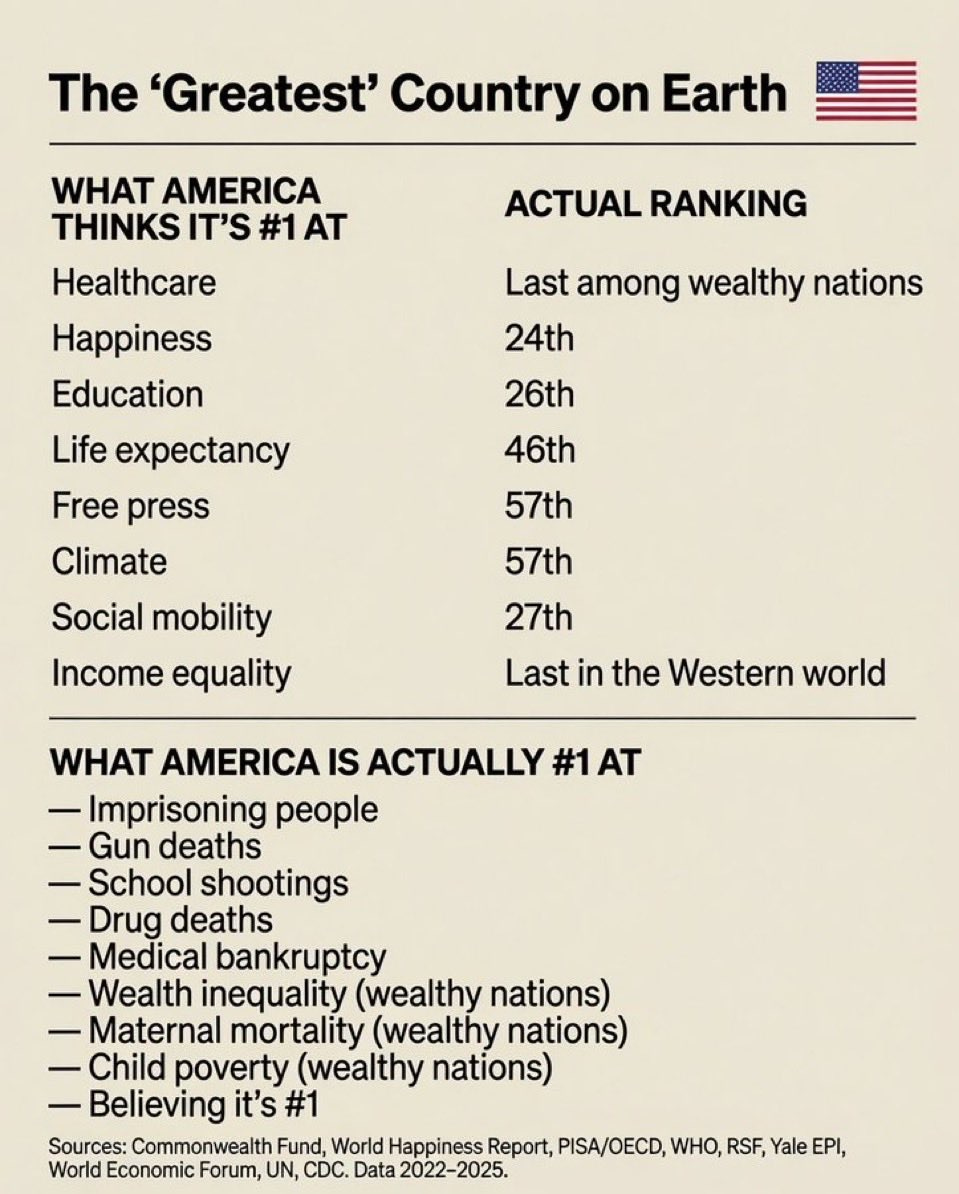
It’s American mythology, of course, and it’s something I was reminded of as I saw this chart (below) this morning on Twitter/X:
Grim chart. I’m surprised that the chart didn’t include that America is indeed #1 at needless wars, colossal military spending, weapons exports, and militarized pageantry that extols the wonders of being an American as various combat jets roar overhead. We’re also #1 at the size of our national debt, now exceeding $40 trillion and rising.
The chart above suggests how America could close the gap by making health care better and more affordable, by improving education, by enhancing the quality of living for all, and so on, but politicians rarely address such issues. The political ads I’ve seen during this electoral season focus on which candidate is more corrupt or which candidate wants to raise your taxes or which candidate can lower the price of gasoline.
George Carlin famously said that you had to be asleep (or perhaps very rich) to believe in the “American dream,” but it seems today that the aspirational dream of a better, more enlightened, more democratic country is dead. The only people dreaming big are people like Trump, he of triumphant arches loaded with snipers and drones, of ballrooms with underground bunkers, of a new “Club Med” in Gaza once the Palestinians there are murdered or starved or forced out.
And maybe that’s a big legacy of MAGA: the death of the American dream, strangled by wars and militarism and corruption. Along with the redefinition of “greatness,” which is now defined by “warriors” kicking people when they’re down and threatening entire civilizations with annihilation.
Shame, and eternal shame, nothing but shame!(The Duke of Bourbon, Henry V)
Why isn’t President Trump being impeached and removed for cause?
This week he went before the United Nations and once again threatened a nation of 93 million people (Iran) with total annihilation. Defying Congress, he seeks to build a triumphant arch in DC complete with snipers, ammunition, and other weapons and surveillance equipment. He illegally bans news agencies from the White House. He’s doing everything possible to steal elections in November. He has embraced militarism and war while choosing himself as America’s greatest president in history. He dismisses climate change as “fake news” even as he accelerates fossil fuel production in the most sensitive environmental areas. He openly uses the office of the presidency to enrich himself and his family.
Trump has never had any desire to support and defend the U.S. Constitution. He has never been a public servant. Like Richard Nixon before him, Trump believes he is above the law, or as Nixon infamously put it, When the president does it, that means it’s not illegal.
There is no more serious threat to America than a lawless president. A president who refuses to support and defend the U.S. Constitution is one that must be removed from office. This is not about being a Republican or Democrat. This is not about partisanship. This is about serving one’s country and upholding the law of the land.
Tolerating a U.S. president who wages illegal wars, who threatens genocide against another people, brings nothing but shame. Trump has threatened the equivalent of 15 Holocausts against Iran—more than 90 million dead, an ancient civilization obliterated because it refuses to bend the knee to Trump’s will.
How can any constitutional republic tolerate such a dangerously unhinged leader?
I went on “Judging Freedom” today to discuss the many dark legacies of 9/11. This video is especially worth watching for Judge Napolitano’s summary of the PATRIOT Act and how it degraded our fourth amendment protections under the U.S. Constitution. Unlike him, I have not read all of the PATRIOT Act.
I had many thoughts both before and after my interview with the Judge. Perhaps the most disturbing to me is the sense of how much my country has embraced war as a creative act, as a force for good, as equivalent to freedom. Hence names like “Operation Iraqi Freedom” and “Operation Enduring Freedom” for the Iraqi and Afghan Wars. Barack Obama had his “good” war (Afghanistan) and his “bad” one (Iraq), even as Hillary Clinton chortled and gloated over the death of Gaddafi in Libya when she was Obama’s Secretary of State.
There was a time when Americans saw war as corruption—as the most insidious threat to democracy (James Madison), as brutal, stupid, and often futile (General Dwight D. Eisenhower). Ever since 9/11, if not before, too many Americans (especially those who don’t have to fight) have come to embrace war as positive, even “good.” This is among the most worrisome signs of creeping fascism—the identification of war with freedom, with patriotism, openly adopted and supported by both political parties in America.
Militarized madness, if left uncorrected and unopposed, will destroy freedom and liberty.
The Judge and I also briefly discussed Islamophobia and the death toll in countries like Iraq, Afghanistan, Libya, and Syria. The harsh reality of hundreds of thousands killed, and millions displaced, during the War on Terror is rarely mentioned in the mainstream media here, and usually goes unacknowledged in 9/11 memorial ceremonies.
The chief legacy of 9/11 is as obvious as it is tragic: a state of permanent warfare in the United States, both abroad and in the “homeland” (a term not used in normal discourse before the 9/11 attacks), with millions dead and displaced for no defensible reason.
If you’re 25 years old or younger in America, you’ve never known a time when your country wasn’t at war. “Peace” is no longer seen as desirable, let alone possible. War is seen as America’s natural state; a land of warriors are we, imbued with a “warrior ethos” that applauds kicking other countries when their down and beating the snot out of them just because we can.
Meanwhile, in the “homeland,” surveillance grows ever more intrusive by the day as agents of ICE kick down doors and haul people away to detention centers that are being rapidly expanded. Personal privacy is increasingly a thing of the past as the government wraps itself in a shroud of secrecy that makes oversight and accountability well-nigh impossible.
The global war on terror has become a war of terror. War begets more war, with no end in sight.
Re-reading the Atlantic Monthly 150th anniversary issue from November 2007, I came across this gem of a quote from America’s 9/11 mayor, Rudolph Giuliani:
We’ve got to be patient and committed [in Iraq], but we’ve got to multitask … We’ve got to talk about Iran—Iran is more dangerous than Iraq—and we have got to get the job done in Afghanistan and in Pakistan.
That was Giuliani in July of 2007 when he ran as a Republican presidential candidate. In America, that’s how you get treated as a “serious” candidate for the presidency—by urging for war not just with Iraq and Afghanistan but with Pakistan and Iran as well. We can “multitask” our wars! Truly a sign of American greatness.
Well, Giuliani’s dream has come true—we are talking a lot about Iran today.
Back in 2007, Ron Paul had a different take on 9/11 and America’s state of forever war, but he was roundly booed for asking Americans to exercise just a bit of empathy by asking why “they” hate us:
That “crazy” Ron Paul, talking about blowback for America’s wars in the Middle East. He obviously didn’t know about America’s peace-making bombs and freedom-bringing missiles. Didn’t he know as well that “they” hate us for our freedoms?
I know: this is old news. But I was going through my notes from September of 2024 on the Harris/Trump presidential debate and came across Kamala Harris’s gushing praise of the “late great John McCain,” American hero. And I thought again to myself: this is how the Democrats run for office, by praising Republican warmongers like McCain?
I get it: Harris was trying to rattle Trump, who had no love of McCain. But as I wrote in my notes at the time, Harris came across as a moderate Republican against a madcap one in Trump. And when you offer voters a “choice” between a moderate rightist and a more extreme one, they tend to go for the extreme one.
A few reasons why Harris struck me as a moderate Republican in that debate:
Her high praise for McCain.
Her tight embrace of military lethality.
Her rejection of Medicare for All and her support for private health insurers.
Her willingness to quote Goldman Sachs with approval.
Her boasting of personal endorsements from Dick and Liz Cheney.
Her strong support of NATO and Ukraine in its war with Russia.
Her unchecked support for Israel despite the genocide in Gaza.
My Democrat friends will likely respond that she was “moving to the center” to win more votes. How did that work out for her?
Yes, I know Kamala wasn’t as crazy as Trump. If she’d been elected in 2024, we wouldn’t have been subjected to the DOGE, or absurdly high tariffs, or ICE goons, or the idiocy of Pete Hegseth. I get that.
But Harris did support “military lethality,” so the Pentagon budget would have increased (though not nearly as much as under Trump). She said Iran was America’s greatest threat, so her foreign policy vis-a-vis that country may have been as bellicose (though whether she would have started a disastrous and illegal war with Iran is unknowable but I think unlikely).
Looking through my old notes from that debate, I’m struck again by the grim vision Trump offered of America. Our country has gone to hell, he said. The nation is in decline, or dying. Other countries are laughing at us, Trump said. They don’t respect us. Migrant crime is killing America. Immigrants are eating your pet dogs and cats. Babies are being aborted (“executed”) at nine months. Biden doesn’t know he’s alive and Harris hates Israel. Or so Trump claimed.
Trump wasn’t wrong about America’s decline. What he fails to see is how rapidly he has accelerated that decline since he was reelected in 2024.
Trump is America’s first declinist president, as Tom Engelhardt has noted. Hence the whole MAGA ideal of a national revival, which resonated with so many people. The problem of course is how Trump is worsening that decline even as he uses the office of the presidency to enrich himself, his family, and his cronies.
It shouldn’t be that difficult for Democrats to beat a corrupt and venal blowhard like Trump, except the Democratic establishment thinks the way to do that is to praise John McCain and to hug the Cheneys. And even while Democrats today criticize Trump for the Iran War, they rarely do so on moral terms, even as they typically put forth their own preferred military action plan against Russia or China or both. Trump actually makes occasional antiwar noises, which is more than can be said for many Democrats.
If Democrats really want to gain the upper hand on Trump, they had best stop praising the McCains and Cheneys of America and reject constant warmongering. And they should be much stronger in their criticism of Trump and Company as WMD, as weapons of mass destruction to democracy, for that is exactly what they are proving to be.
The DSA candidates in 2026 get it: American voters really want alternatives rather than Democrats wearing John McCain and Liz Cheney masks.
I had to laugh as I saw this definitional alchemy in the New York Times this morning:
What is the difference between the agenda of the Democratic Socialists and the agenda of the Democratic Party? | Marilyn McIntyre | Huntley, Illinois
The Democratic Socialists of America (D.S.A.) is an activist organization, not a political party, so its members typically run as Democrats. This has prompted confusion about the two groups. Many mainstream Democrats and D.S.A. members want to move in the same economic direction — raising taxes on wealthy Americans, increasing the minimum wage and expanding health care access. But while most Democrats consider themselves capitalists, D.S.A. members envision ultimately accomplishing those goals by establishing public ownership of the largest corporations. The D.S.A. agenda is also further to the left than most Democrats on social and foreign policy issues. It includes policies like ending all aid to Israel, closing overseas military bases and fully abolishing the police and prison systems. — Lisa Lerer, national politics correspondent
Now, I must admit I’m not an expert on the DSA. But in this “great” land of ours, how likely are we to see “the public ownership of the largest corporations”? How likely is a complete cessation of aid to Israel, the closing of all military bases overseas, and the total abolition of police forces and prisons? Is the DSA really calling for this?
Those scary Democratic Socialists! Radical leftists are they! Vote for them and all prisoners will be unleashed—even the most violent murderers and rapists. And they’ll be no police to protect you because they’re being abolished too.
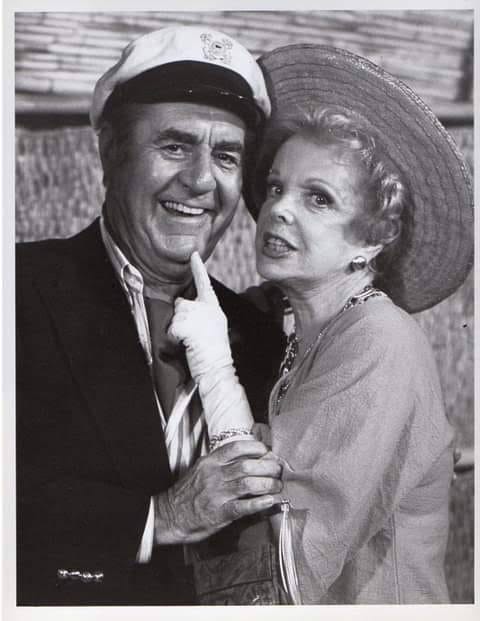
I like the line about “most Democrats consider themselves capitalists”: WTF? I’ve never defined myself as a “capitalist” as if it’s some kind of religion and money is something to be worshipped. Capitalism is an economic system that favors people with, well, capital. I’d wager the more capital you have, the more you identify as a capitalist. In short, working- and middle-class Democrats, even “mainstream” ones, don’t go around thinking they’re “capitalists” like Thurston Howell III on “Gilligan’s Island.”
“Mainstream” Democrats?
Also, so-called mainstream Democratic leaders like Schumer, Pelosi, and Jeffries have been singularly unsuccessful in raising taxes on the wealthy or in providing a higher federal minimum wage and Medicare for All (M4A). I like the way M4A isn’t even mentioned: the much more benign formula of “expanding health care access” is used. For most people access isn’t the biggest problem, affordability is.
I saw recently where, assuming the Democrats regain the House and Senate this November, the stated policy goal of Schumer and Jeffries is a return to the status quo under Joe Biden, meaning a fight for restoration of Obamacare subsidies, restoring funding for Medicaid, and the like. Nothing about M4A, nothing about a higher federal minimum wage, nothing about major cuts to Pentagon spending, and nothing about impeachment of Trump for waging an unconstitutional war against Iran.
As usual, establishment Democrats are protecting the establishment and especially “capitalists.” Compared to them, I’ll eagerly vote for and support just about any “scary” DSA member running for office.
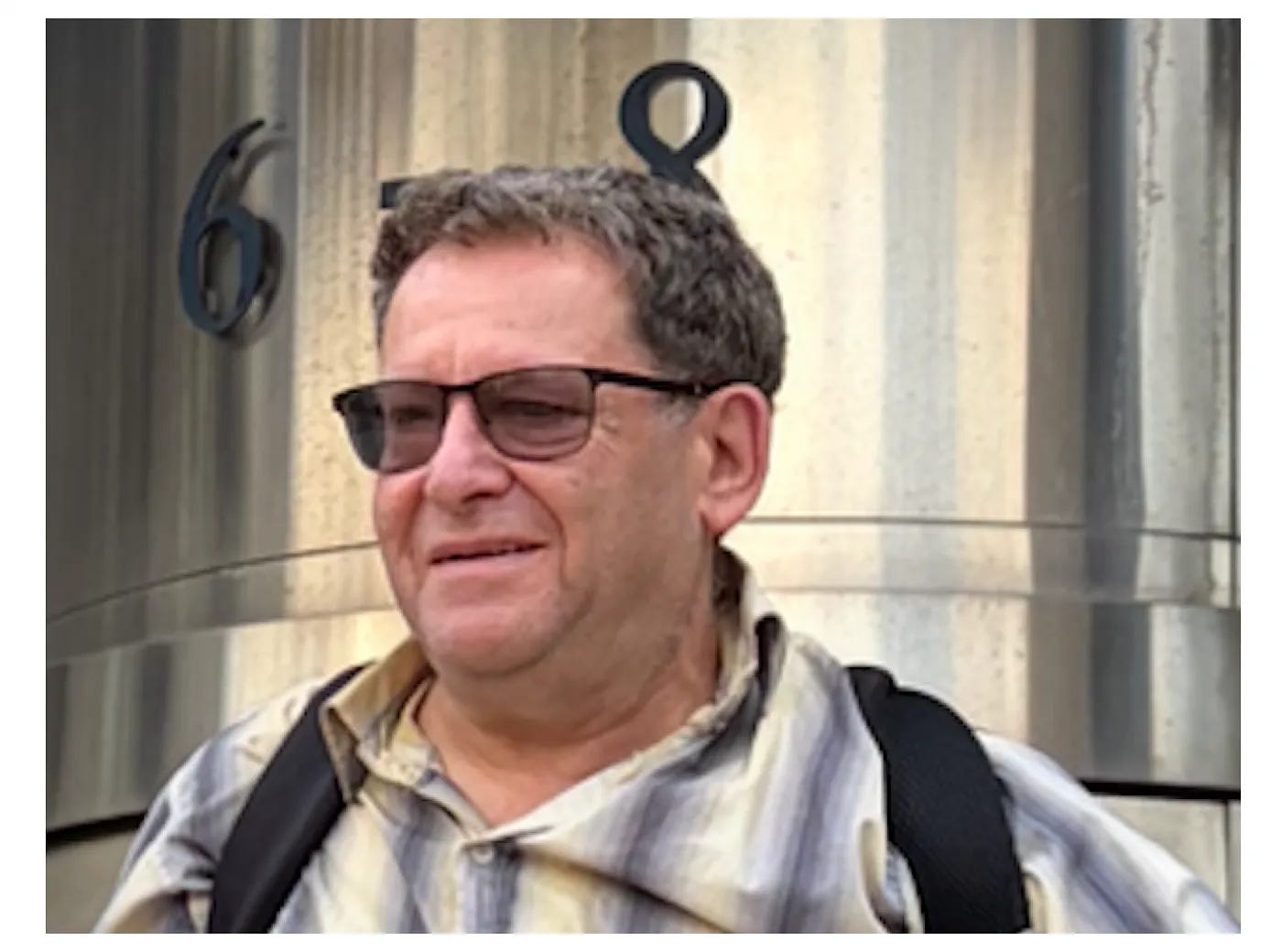
Until today I’d never heard of Tony Greenstein and his battle against being falsely accused by the British government of recruiting for and supporting Hamas. Why the accusation? What motivated it? It may not surprise you that he was quickly found innocent by a jury of his peers, because when you read what he actually wrote, you’ll clearly see none of what he said was pro-Hamas or pro-terrorism. As to why the accusation and what motivated it, Greenstein’s statement to the jury explains it quite well. In fact, his speech is brilliant and should be carefully read by all lovers of liberty and justice for all.
Here is Tony Greenstein’s speech. I first saw it at ColdType; I copied the text from Greg Hadfield’s site on Medium.
Tony Greenstein
1. WHY I AM SPEAKING TO YOU MYSELF
Ladies and gentlemen of the jury.
First, a word about why I have chosen to address you in person rather than through my barrister, Lawrence McNulty. My decision implies no criticism of Lawrence. It is simply this: when my liberty is at stake, I wish to speak to you directly rather than through someone else. It is my words that are on that indictment. When someone is accused of meaning something he never meant, he should be the one to tell you what he meant.
I am not a barrister. I hope you will bear that in mind. However what I will do is speak from the heart. I am seventy-two years old. I have been arguing in public for more than fifty years, and this may be the most important half hour of argument in my life.
The prosecution say that I invited people to support an Islamic group called Hamas while accepting that I didn’t support Hamas myself. Think about that for a moment. Why should I invite people to support a group that I don’t support and never have supported? It is illogical.
According to the Prosecution’s opening statement, although I did not mention Hamas by name in my X posts, my “reference to support for the ‘Gaza ghetto uprising’ — in that specific context, on that specific date — can only have meant support for Hamas”.
In order to sustain their case the Prosecution fixated on one sentence in a blog of 10 pages, concerning the congratulation of Hamas for a well planned and audacious attack. In other words if you ever say anything about any group then you are a supporter if not a recruiting sergeant.
In fact my blog is cut off in the Bundle. At 1060 words. In fact it went on for some 1935 words, including a leading article from an Israeli paper, Ha’aretz and two contributions from American Jewish political scientist, Norman Finkelstein. That is in addition to 2000 words in the comments.
Even on the one piece they produced they had to ensure that you didn’t see all of the evidence. Let alone produce uncut the 15 or so blogs that demonstrated that I didn’t support Hamas and never had.
According to the Prosecution logic Kemi Badenoch supporting Starmer’s decision not to make British bases available for the war against Iran means she supports the Labour Party.
It is like being told that the Pope has supported abortion by helping out women who have had abortion. The fact that you support one action of a group does not mean that you therefore support the group itself. That logic escapes the Prosecution, although it should be obvious that supporting one action of a group doesn’t mean supporting the group itself.
2. WHO I AM
Before I make my case, you are entitled to know a little of my background. Firstly I am a parent, with 4 children, 3 sons and a daughter. Although I am separated from my wife, Fiona she was in the public gallery yesterday with our 35 year old son, Daniel who is severely autistic. Fiona and myself are Daniel’s carers.
I went to Brighton Polytechnic in 1974 where I obtained an honours degree in Applied Sciences. In 1996 I obtained an MA in Colonial History from Birkbeck, London University and between 2000/2 I obtained a law degree from Sussex University and the following year a Legal Practice Certificate from the College of Law in Guildford.
Apart from being a blogger I have written for, among other papers and web sites The Guardian, New Statesman, Tribune Magazine (Orwell), Al Jazeera, Middle East Eye, Middle East Monitor, Open Democracy and many others
I was born in 1953, in the shadow of the Holocaust. The Holocaust had ended only eight years before. My father’s parents came to England from Poland and left the rest of the family behind. Nearly all of them died in the Holocaust in Treblinka extermination camp. My father mentioned it just once in his whole life. Just one sister, who jumped off a deportation train, is known to have survived. Over three million of Poland’s 3.3 million Jews were murdered.
My father was Rabbi Solomon Greenstein. In 1936 he stood at Cable Street, where the working people of the East End — Jews and dockers together — stopped Oswald Mosley’s blackshirts from marching through a Jewish neighbourhood. That is the house I was raised in. Not a house of quietism. A house where you stood in the road.
So I am extremely aware of the trauma caused by the Holocaust. It is not history to me. It is the empty chairs at my family’s table. But what I have always fought against was those who used the murder of 6 million Jews in order to justify the murder and genocide of others. That is why authored Zionism During the Holocaust.
I was brought up as a religious Zionist. In 1967, when Israel captured what is now known as Gaza and the West Bank, I shared in the joy of fellow Jews. None of us knew then what horrors would be visited on the indigenous Palestinians who lived there.
Then, at the King David School in Liverpool, I was asked to take part in a school debate on whether Zionism was Right or Wrong and because nobody else would take that side I agreed to play devil’s advocate. In the course of researching the topic I suddenly realised that I had grown up with a series of fabrications and lies. The refugees of 1948 had not left voluntarily on the orders of the Arab regimes. They had been expelled at the point of a gun, and after a series of massacres. The documents that proved it were classified and are still classified.
This was the pivotal moment of my life. From then on I became a Jewish anti-Zionist. And I learnt something my school had never taught me: that anti-Zionism had been the majority trend amongst Jews until the second world war. It is a Jewish tradition, as old as Zionism, and I stand in that tradition. Today 44% of young British Jews describe themselves as non- or anti-Zionist. We are not a curiosity. We are a tradition, coming back.
And I have lived that tradition the way most of our Jewish ancestors did. For fifty years I have opposed fascist groups on the streets. Because racism and fascism led to the holocaust. I was also a founding member of the Palestine Solidarity Campaign.
I am a Jewish socialist. The Palestinian organisation whose politics I have supported for decades is the Popular Front for the Liberation of Palestine — secular, socialist, founded by a Christian Palestinian, George Habash.
Hamas is an Islamist movement. Its full name is the Islamic Resistance Movement. Ask yourselves — is a Jewish secular socialist who has spent twenty years criticising political Islam and Hamas a plausible recruiting sergeant for it?
And as you weigh that question, understand what it is to be me, standing in this dock. Someone who has spent fifty years fighting fascism on the streets of this country. I never imagined it could happen here in the mother country of democracy that I would be facing 14 years imprisonment for writing a blog and tweeting under the Terrorism Act 2000.
3. HOW THIS CASE CAME TO YOU
At half past six on 20th December a dozen counter-terror police raided my home, seized my electronic devices, and arrested me — on the basis of a single tweet posted a month previously. We live, ladies and gentlemen, in dystopian and Orwellian times.
When I applied for the return of my devices, the officer in charge explained in a witness statement why they were keeping them. They needed, he said, to fully understand my “mind set and ideology” from my internet search history, and from how, “and indeed if”, I talk about Hamas with others away from the public domain.
Is it really the job of the police to act as amateur psychologists, inquiring into people’s minds?
There might be a justification for all this if they thought I was going to set off an explosive device. But that is obviously not the case. It was the police themselves who gave me bail the same day, with three relatively trivial restrictions — which, on appeal, Westminster magistrates watered down further. Clearly, they did not think I was a terrorist.
But the Terrorism Act has been creating a whole new category of terrorist. On the Home Office’s own figures, arrests under the Terrorism Acts have leapt in 2024 from around two hundred to more than three thousand in 2025 — a more than tenfold increase.
And the profile of the average terrorist has changed too. It used to be a 31 year-old man. It is now more likely to be a 59 year-old woman. You may ask yourselves whether the word “terrorist” has quietly been given a new meaning — and whether I am standing in front of you because of it.
And when they interviewed me, I did not hide behind “no comment.” as my solicitor advised me. I answered every question for over an hour, and came back three months later, voluntarily, and did it again. When they asked me directly whether I supported Hamas against the Israeli army, I gave them an answer I will repeat again, because it is my whole case:
“I would probably support the devil against the Israeli army. That doesn’t mean I support the devil in itself.”
And if the devil exists it exists amongst those who prohibit anaesthetics entering Gaza so that children have to endure amputations without the benefit of pain relief. The devil exists amongst those who deliberately starve children to death because they rationalise that those children will only grow up to be terrorists. It exists among those who bomb tent encampments and literally burn children and their parents alive. It exists amongst those who call Palestinians “human animals” the same phrase used by Himmler, the head of the SS about Jewish children in a speech on October 4, 1943 to senior SS Generals.
In a situation where there is a conflict, you support the oppressed rather than the oppressor. That is not support for an organisation. That is a moral position — one, I might add, with a rather long Jewish pedigree.
4. WHAT YOU ARE BEING ASKED TO DECIDE
Her Honour will direct you on the law, and what she tells you about the law you must take from her, not from me. But you know by now what the prosecution must make you sure of, and it is worth setting out plainly, because everything I say from here on hangs from it.
They must make you sure of three things. That Hamas was proscribed on 7 October 2023 — that is agreed, and always was. That my words in fact invited support for Hamas. And that I knew, at the time, that that is what I was doing.
Three things. All three. Sure of each.
Now notice what is not on that list.
It is not on that list whether you agree with my opinions about Israel and Palestine. It is not on that list whether you find those opinions congenial, or offensive — some of you may find that they are. And it is not on that list whether Hamas ought to be proscribed. That is the government’s decision. It is not mine, and it is not yours.
The charge is not holding an opinion. The charge is inviting other people to support an organisation, Hamas. Those are two different things — and every single question in this trial lives in the distance between them.
Hold on to that distinction, because I am now going to show you what I actually wrote.
5. WHAT I ACTUALLY WROTE
This case hinges on three short posts and one article. That is the entire alleged crime. So let us read it — carefully, the way the prosecution hopes you won’t.
First. Hamas is not mentioned. Not in the first tweet. Not in the second nor the third. Not once. The prosecution invite you to supply the name yourselves — because I did not supply it.
What I wrote was “the Gaza Ghetto Uprising.” And I chose the word ghetto deliberately, but not for the reason the prosecution imply.
Let me explain, for those of you who do not know the history. In the second world war, the Nazis walled the Jews of Warsaw, half a million of them into a ghetto — a sealed district, starved and diseased, from which the trains left for the Treblinka death camp. And in 1943 the young Jews who remained did something nobody expected. With a handful of smuggled pistols, against tanks and the SS, they rose. They knew they could not win. They rose because it was better to die resisting than to be led away quietly. It is one of the proudest moments in Jewish history.
The last surviving commander of that uprising was a man named Marek Edelman. And in his old age, Edelman wrote to the Palestinian resistance and addressed them as fellow fighters — much to Israel’s annoyance. When he died, Poland gave him a state funeral, a fifteen-gun salute, the President gave the oration. Israel did not send the lowliest clerk at the Israeli Embassy. Edelman wasn’t a Zionist.
Edelman, who led the Warsaw Ghetto Uprising against the Nazis, described Gaza as a ghetto. I have used his comparison for years before October 2023. Two million people, most of them refugees or the children of refugees, sealed into a strip of land under blockade for 16 years, where the majority are children who have never once been allowed out. When I wrote “ghetto,” I meant a ghetto. My blog supported the Uprising just as I would have supported the slave uprisings of the 19th century. That is a political opinion. It was a political opinion on 7 October 2023, and it is a political opinion now.
And here is the crazy thing. Read section 1 of the Terrorism Act 2000 and ask what it would have made of the Warsaw Ghetto fighters. If this Act had existed in 1944, they could have been classified as terrorists. So could the French Resistance. That is how widely this law is drawn — and it is worth remembering when you consider who it is now being pointed at. The definition of terrorism in the Terrorism Act 2000 is no definition at all. It has been widely criticised, both by the Supreme Court in Gul and also by the Independent Reviewer of terrorism David Anderson QC as he then was.
Second. “PLEASE SHARE.” The prosecution say those two words are the invitation. Members of the jury, I have written a blog for 18 years. “Please share” means: read my article, pass it on, argue with it. Asking people to read what you have written is not asking them to support an organisation. If it were, every writer in this country would be standing where I am standing. My purpose was not to invite support for anyone. If I had wanted people to support a particular group I would have said it. I often ask for support for things such as the Al Tafawk kindergarten in Jenin. Nothing in the wording suggests that. The posts were advertising my blog. That is what writers do.
And here is what that “recruitment campaign” achieved. 56 views. 73 views. 58 views. Four shares between them. The prosecution’s case that this was an invitation to the public to support a proscribed organisation — is a fantasy that they have created out of nothing.
Third — the sentence the whole case rests on.”Whatever criticisms one can make of Hamas, we should congratulate them on this well planned and audacious attack.”
Note the words: “whatever criticisms.” Those are not the words of a recruiter. A recruiter does not open with the criticisms of the thing he is recruiting for. Those are the words of someone who has spent fifteen years making those criticisms in public — and I will show you the receipts in a moment.
And “well planned and audacious” — that is a description, not an endorsement. October 7 was well planned, and it was audacious. Israel had constructed a five billion dollar electronic fence, complete with drones, sensors and automatic machine guns, and it was breached in minutes. Retired generals said the same thing on television that week. Nobody raided their homes at dawn.
As for “Hamas should be congratulated” it is so obviously a figure of speech, not meant literally, that I am surprised that the prosecutor doesn’t blush every time she argues this.
And I will tell you what else I wrote that day, in the same article and its comments. I wrote that the retribution of Israel would be bloody and savage. I wrote to a commenter: “Graham, believe you me, I am apprehensive of the days ahead and Israel’s potential for genocide.” Apprehensive. Those are not the words of someone celebrating. They are the words of someone who feared exactly what was coming — and who, you may think, has been proved catastrophically right.
But you would not have read the latter comment because the version of the blog in your Bundle is only half the original (1060 words as opposed to 1935 words). The comments underneath were another 2,000 words and they too were not in your bundle. Why? Because it is clear that the conversation didn’t mention anyone joining Hamas. Anyone with eyes to see would understand that the blog was not an invitation to join Hamas.
It takes a certain malevolence to read that into the blog. And let it be clear that support for an action of a proscribed group is not the same as support for the group itself. expressing an opinion or belief that is shared by or coincides with the aims of a proscribed organization is not the same thing as expressing support for the organization itself That is or should be common senses. It is also good law as in the case ABJ decided recently in the Supreme Court.
So ask yourself the only question that matters. Where, in any of this, is the invitation? Did I ask anyone to join anything? Did I ask for money? Did I ask a single human being to take a single action — other than to read an article?
You may take those three posts and that article into your deliberation room and read them from beginning to end as many times as you like. You will not find it. It is not there. ‖
6. TWENTY YEARS OF MY OWN HEADLINES
The prosecution must also prove that I knew I was inviting support for Hamas. So let me show you what I have actually written about Hamas, over twenty years, under my own name. These are the titles of my articles:
We Support the Palestinian People of Gaza — not Hamas. March 2009.
Islamic Fascists Attack Children’s Summer Camp in Gaza. May 2010.
Hamas — Speaking with a Forked Tongue. December 2010.
The Lousy Hamas Government. February 2011.
Hamas Prevents Palestinian Students Studying Abroad. August 2011.
Hamas’s Attack on NGOs Resembles That of Israel. August 2011.
Hamas Pays the Price of Forced Islamicisation. April 2013.
How Israel Helped Create Hamas. July 2014.
Hamas Does Its Best to Make Palestinian Lives a Misery. February 2018.
Abbas and Hamas — Abuse and Torture of Palestinians. October 2018.
Ten years of headlines. I called them Islamic fascists. In print. In public. Under my own name. Do the titles of those blogs indicate support for Hamas?
And these are only some of them. You can be sure that if my writings helped the prosecution in any way, they would have given them to you to read rather than objecting to them.
I have spent my political life supporting the secular, socialist tradition of Palestine. So when the prosecution tell you that on the morning of 7 October 2023 I woke up and decided to become a recruiter for the Islamic Resistance Movement, you are entitled to ask: on what planet? ‖
7. WHY, THEN, AM I HERE? — ONE LAW FOR SOME
So if the words don’t say it, and the record contradicts it, you are entitled to ask the obvious question: why is this prosecution happening at all?
Let me answer it with a comparison, and you may draw your own conclusions.
Hay’at Tahrir al-Sham — Al Qaeda’s franchise in Syria — was a proscribed organisation in this country until October of last year. While it was still proscribed, and while its leader, who became Syria’s President, still had a ten million dollar bounty on his head, eminent British public figures — Alastair Campbell, Tony Blair’s former spin doctor, and Rory Stewart, a former Conservative MP — travelled to Damascus to conduct a friendly, filmed interview with him. This is a regime whose forces have killed thousands of Christians, Druze and Alawites because of their religion. They came home and were effusive in their opinions about him, to audiences of hundreds of thousands.
Nobody raided their homes at half past six in the morning. Nobody seized their devices to investigate their “mind set and ideology.” A decision was taken not to trouble them.
Now, when a law is implemented against certain people and not others, that goes against the first principle of the rule of law. Either laws are applicable to all, or to none. To apply them only to those whose opinions the government of the day disagrees with — that is the hallmark of a police state, not a democracy.
And you do not have to take the point from me on trust, because the same double standard is written on a larger canvas. Parliament made genocide and war crimes offences under the International Criminal Court Act 2001. Yet successive British governments have gone on supplying arms to what most of the world regard as a genocide in Gaza, and yet no minister has ever stood where I am standing.
This is not a new story. Nelson Mandela — whose statue stands today in Parliament Square, facing the Houses of Parliament — was described by Margaret Thatcher and Ronald Reagan as a terrorist, and the movement he led as a terrorist movement. If this Act had been in force in those decades, that movement would have been proscribed — and anyone in Britain who wrote “we should congratulate them” would have been at risk of standing exactly where I am standing now. Mandela himself said:
“The West sees liberation movements as terrorist movements — and that is why I am accused of supporting terrorism.”
Now let me be precise about what I am saying, because it is not what the prosecution may pretend I am saying. I am not comparing any organisation to Nelson Mandela. The comparison is not between organisations at all. It is between governments — then and now — and how easily they attach the word terrorist to whoever opposes the policy of the day. Today, Mandela is widely admired. The label of terrorism should be applied to those who are terrorists not those who are not. ‖
8. THE STATE HAS ALWAYS PROSECUTED OPINIONS
Judges have always insisted that the trials before them are not political. They said it at the trial of Emmeline Pankhurst in 1912. Chief Prosecutor and Attorney General Sir Rufus Isaacs, emphasised that:
‘Suffrage is not the issue, it is the criminal behaviour of the suffragettes and their incitement to partake in militant activity at which 54 windows were broken.’
That was also the view of the Judge, Mr Justice Coleridge, who handed out a sentence of 9 months to be served in the second division of prison, despite the plea of the jury for clemency.
The Home Secretary immediately stepped in to have Pankhurst transferred to the First Division of prison — a division reserved for political prisoners. A century ago the state admitted what today it denies: that some prisoners were political.
And consider what this country has done, within my lifetime, with laws that prosecuted people for what they were and what they said. The law of blasphemous libel — repealed. The law of gross indecency, which criminalised sexual conduct between men and destroyed Oscar Wilde and Alan Turing was also repealed, and more than repealed: under the Alan Turing Law of 2017, every conviction was wiped out, as if it had never existed. Parliament itself has accepted that there are times when it has made mistakes, and the law of the day was wrong.
The Editor of Gay News, Dennis Lemon, was the last person sentenced to 6 months imprisonment suspended in July 1977 for blasphemous libel for suggesting Jesus was gay. The Judge at his trial, Alan King Hamilton, stated that homosexuality was responsible for the downfall of the Roman Empire. The judge at Oscar Wilde’s trial bemoaned the fact that he could only sentence him to 2 years in prison.
Judges have nearly always been the fiercest opponents of free speech. The reason is simple. As the Law Society Gazette pointed out on 25 June 2019 ‘Senior judges “most socially exclusive” of all professionals, 75% are Oxbridge educated and 65% having gone to private school.
When the state prosecutes opinions, it always says it is prosecuting something else. And usually it eventually, apologises but usually too late.
Freedom of speech in this country was not granted to us from above, and it did not arrive with the European Convention. It was won through political struggle — at the Peterloo Massacre in 1819, where cavalry rode down women and children; by the Chartists at Newport who were brutally slaughtered for peacefully demanding democratic reforms in 1839. People died for the right I exercised on 7 October 2023: the right to publish an opinion the government doesn’t like.
Benjamin Franklin warned: “Whoever would overthrow the liberty of a nation must begin by subduing the freeness of speech.” George Orwell — a man who knew something about both socialism and dystopia — put it in one sentence:
“If liberty means anything at all, it means the right to tell people what they do not want to hear.”
And if you want the alternative philosophy — the philosophy of this prosecution — it was stated with admirable honesty by the Ugandan dictator Idi Amin:
“There is freedom of speech — but I cannot guarantee freedom after speech.”
Ladies and gentlemen, you may think that sentence sums up a dawn raid over a tweet rather well. I was arrested, not for anything I did, but for what I said. This case is not about terrorism. It is about freedom of speech.
This is why the government’s own Independent Reviewer of terrorism legislation, David Anderson KC, was critical of the new terrorism laws. I quote from his 2014 Report on Terrorism Legislation :
a) To afford over-broad discretions to Ministers, prosecutors and police is undesirable in itself. As the Supreme Court maintained in R v Gul, 91 it leaves citizens in the dark and risks undermining the rule of law.
b) To render people subject to the terrorism laws whom no sensible person would think of as terrorists risks destroying the trust upon which these special powers depend for their acceptance by the public.
I have committed no violence. I have threatened noone. I have incited nobody. Nobody in this courtroom suggests otherwise. I wrote an article.
And for that article, I face a maximum sentence of fourteen years in prison. Fourteen years. For three posts and a blog. Ask yourself what kind of country are we becoming to send a seventy-two-year-old Jewish grandfather — a carer — to prison for fourteen years over three tweets and a blog article? ‖
9. YOU — THE LAMP THAT SHOWS THAT FREEDOM LIVES
Which brings me, finally, to you, members of the Jury.
Let me be clear about what I am asking of you, and what I am not. I am not asking you to set aside the law. Her Honour will direct you on the law, and you should follow her directions. I am not asking you to agree with my politics. You may think I am wrong about everything I believe, and it would change nothing about your task.
The role of the Judge is concerned with the law. The role of juries is to ensure justice is done. That is why successive governments have slowly whittled away at the right to trial by jury. The previous Justice Secretary David Lammy wanted to abolish them for half of those who are now entitled to a jury. I have no doubt that although Andy Burnham has stopped these proposals they will return.
Because here is what the law itself gives you. You are the sole judges of the facts, of the context, and of the meaning of words. Not the prosecution. Not the police analyst who selected the phrases. Twelve ordinary people, precisely because ordinary people know what words mean. The prosecution does not get to dictate that “please share my article” means “support Hamas.” That question belongs to you, and to nobody else in this building.
That is not an accident of our constitution. It is the whole point of it. Lord Patrick Devlin — one of the greatest judges this country produced — said:
“Trial by jury is more than an instrument of justice and more than one wheel of the constitution: it is the lamp that shows that freedom lives.”
The jury, he said, is “an insurance that the criminal law will conform to the ordinary man’s idea of what is fair and just.”
Dame Heather Hallett, who sat on the Court of Appeal for 14 years, 2005–17, gave the 2017 Blackstone Lecture on the role of the jury. She is Chair of the COVID Inquiry and previously of the inquiry into the terrorist atrocity on 7.7: She said:
A jury may refuse to convict in spite of the law and the evidence because it concludes that the law is an unjust law. The jury passes its verdict on the law. Secondly, it ensures that the prosecution and the judge are on trial.
There is a plaque inside the entrance to the Old Bailey. It commemorates the most famous legal case of all — Bushell’s. The jury in 1670, refused to convict two Quakers, William Penn and William Mead, for the crime of unlawful preaching. For that refusal the jurors were locked up for two nights without food, water, fire — or a chamber pot. They did not budge. And out of their stubbornness, in Bushell’s case, came the right that you now hold: the right of a jury to deliver its verdict according to its conscience and its convictions, and to answer to no one for it.
I am asking you to do something far more modest than those twelve did. I am asking you to read three posts and an article, in their full context, with your own common sense — and to answer honestly the only two questions in this case. Were those words an invitation to support Hamas? And was I, a Jewish socialist with twenty years of published criticism of Hamas, knowingly recruiting for them?
And understand that your answer will not stay in this room. If these three posts are terrorism, then the word has a new meaning for everyone in this country. Every student who shares an article. Every pensioner who retweets the wrong opinion. Every writer, every blogger, every one of your neighbours with a social media account and a view about a war. Can it really be the law of England that any of them — that any of you — will be condemned to fourteen years of prison for a tweet? You have the power, today, to answer that question. Whatever you answer is, it will be remembered long after this trial is forgotten.
If you are left in doubt as to whether I was genuinely inviting people to support a proscribed organisation — you must acquit. That is not politics. That is the law. ‖
10. FINALLY
I told you at the beginning what it is to be me, standing in this dock. Let me end with why it should matter to you.
I was born eight years after the gates of the camps were opened. It was British soldiers who opened the gates at Belsen. Whatever quarrels I have had with British governments — and you have heard today that I have had many — I have never once doubted what that meant.
I do not say that to ask for your sympathy. I say it because my family’s history taught me one thing above all others. The moment that matters is never the loud one. It is the quiet one — when ordinary, decent people are asked to go along with something that does not sit right with them, and they do, because it is easier, because the language is technical, because someone in authority has assured them that it is necessary. I ask you to ensure that no one else goes through what I have experienced.
Not merely a case like this hanging over my head for 3 years, but the harassment that I have experienced from the State. Five times in the past two years I have been debanked for what is called ‘regulatory reasons’. First was Nationwide Bank which I had been with for a quarter of a century, then HSBC which closed an account my wife and I opened for our son, Daniel’s disability benefits. Then First Direct which I had been with 33 years, just 3 fewer than the bank itself existed. Then this year Santander and Kent Reliance building society.
It is clear that some agency of the state — the NCA most likely — fed false and malicious information to the banks and under money laundering legislation they are not allowed to tell me.
Lord Lane, Lord Chief Justice of England from 1980 to 1992, put it best of all in a House of Lords debate on April 7 1989:
“Loss of freedom seldom happens overnight. Oppression doesn’t stand on the doorstep with toothbrush moustache and swastika armband — it creeps up insidiously… step by step, and all of a sudden the unfortunate citizen realises that it is gone.”
You are twelve ordinary people, and this is one of the quiet moments. You are not being asked to make a protest, or to change any law. You are being asked to look at three short messages and one article, and to answer, on your conscience: was that an invitation to support Hamas — and did I know that that was what I was doing?
Although I am on trial today, it is really freedom of speech in this country that is on trial. The pretext for this attack is terrorism. However that is all it is. A pretext. I will finish with a quote from one of America’s founding fathers, Benjamin Franklin, who said:
‘Those who trade liberty for security deserve neither’.
Thank you members of the jury.
*****
Coda: Sadly, I doubt the British government cares that they lost this case. The intent was (and is) to silence anyone with the temerity to take a public stance against mass murder in Gaza. Tony Greenstein’s prosecution was about setting an example, and even though he was acquitted, the long and laborious fight he had to wage to clear his name will likely deter others from expressing “unpopular” opinions about Zionist Israel. All credit, then, to those who refuse to be deterred—who refuse to be silenced despite threats of prosecution.
Back in 2012, Barbara Ehrenreich wrote a sobering article for TomDispatch on how poor people are used as piggy banks by the rich and by local, state, and federal governments. It’s a form of extractive “capitalism” that seems endless until the poor are bled dry. Nowadays, the Trump administration is making major cuts to Medicaid, food stamps, and other programs for the poorest among us. Poor people don’t seem to have rich lobbyists to protect their interests.
If only!
Coincidentally, today I leaned a new acronym courtesy of the New York Times: BNPL, or buy now, pay later. These are loans that encourage you to make purchases now that you may not be able to afford “later.” Naturally, interest payments are involved. Of course, there are apps for this for your Smart phone. The BNPL option seems targeted toward the middle class, which makes sense. You can only bleed so much from the working poor.
Here’s an excerpt from the NYT story:
Lending apps can now cover your electricity bill, your health insurance, your water bill, your visit to the dentist, even your mortgage or rent. Use one to pay a $200 bill today, and it might subtract $25 from your bank account every week for two months, plus a few bucks for fees.
My colleague Stacy Cowley, who covers consumer finance, has a smart story about the loans. They’re becoming the “working capital for the modern middle class,” a market expert told her. “Consumers are using it more for essential, everyday things.”
The gist of the story is that BNPL apps can be a good thing. “Working capital for the modern middle class”—who can be against that? But shouldn’t we focus on higher wages for workers so that they can afford to pay their bills now without resorting to loans that charge “a few bucks for fees”?
My dad, who worked in factories for years until he got a civil service job as a city firefighter, always reminded me that the rich have neither much sympathy nor use for the poor. Except to prey on them, as Ehrenreich notes below.
Individually the poor are not too tempting to thieves, for obvious reasons. Mug a banker and you might score a wallet containing a month’s rent. Mug a janitor and you will be lucky to get away with bus fare to flee the crime scene. But as Business Week helpfully pointed out in 2007, the poor in aggregate provide a juicy target for anyone depraved enough to make a business of stealing from them.
The trick is to rob them in ways that are systematic, impersonal, and almost impossible to trace to individual perpetrators. Employers, for example, can simply program their computers to shave a few dollars off each paycheck, or they can require workers to show up 30 minutes or more before the time clock starts ticking.
Lenders, including major credit companies as well as payday lenders, have taken over the traditional role of the street-corner loan shark, charging the poor insanely high rates of interest. When supplemented with late fees (themselves subject to interest), the resulting effective interest rate can be as high as 600% a year, which is perfectly legal in many states.
It’s not just the private sector that’s preying on the poor. Local governments are discovering that they can partially make up for declining tax revenues through fines, fees, and other costs imposed on indigent defendants, often for crimes no more dastardly than driving with a suspended license. And if that seems like an inefficient way to make money, given the high cost of locking people up, a growing number of jurisdictions have taken to charging defendants for their court costs and even the price of occupying a jail cell.
The poster case for government persecution of the down-and-out would have to be Edwina Nowlin, a homeless Michigan woman who was jailed in 2009 for failing to pay $104 a month to cover the room-and-board charges for her 16-year-old son’s incarceration. When she received a back paycheck, she thought it would allow her to pay for her son’s jail stay. Instead, it was confiscated and applied to the cost of her own incarceration.
Government Joins the Looters of the Poor
You might think that policymakers would take a keen interest in the amounts that are stolen, coerced, or extorted from the poor, but there are no official efforts to track such figures. Instead, we have to turn to independent investigators, like Kim Bobo, author of Wage Theft in America, who estimates that wage theft nets employers at least $100 billion a year and possibly twice that. As for the profits extracted by the lending industry, Gary Rivlin, who wrote Broke USA: From Pawnshops to Poverty, Inc. — How the Working Poor Became Big Business, says the poor pay an effective surcharge of about $30 billion a year for the financial products they consume and more than twice that if you include subprime credit cards, subprime auto loans, and subprime mortgages.
And while government generally turns a blind eye to the tens of billions of dollars in exorbitant interest that businesses charge the poor, it is notably chary with public benefits for the poor. Temporary Assistance to Needy Families, for example, our sole remaining nationwide welfare program, gets only $26 billion a year in state and federal funds. The impression is left of a public sector that’s gone totally schizoid: on the one hand, offering safety-net programs for the poor; on the other, enabling large-scale private sector theft from the very people it is supposedly trying to help.
At the local level though, government is increasingly opting to join in the looting. In 2009, a year into the Great Recession, I first started hearing complaints from community organizers about ever more aggressive levels of law enforcement in low-income areas. Flick a cigarette butt and get arrested for littering; empty your pockets for an officer conducting a stop-and-frisk operation and get cuffed for a few flakes of marijuana. Each of these offenses can result, at a minimum, in a three-figure fine.
And the number of possible criminal offenses leading to jail and/or fines has been multiplying recklessly. All across the country — from California and Texas to Pennsylvania — counties and municipalities have been toughening laws against truancy and ratcheting up enforcement, sometimes going so far as to handcuff children found on the streets during school hours. In New York City, it’s now a crime to put your feet up on a subway seat, even if the rest of the car is empty, and a South Carolina woman spent six days in jail when she was unable to pay a $480 fine for the crime of having a “messy yard.” Some cities — most recently, Houston and Philadelphia — have made it a crime to share food with indigent people in public places.
Being poor itself is not yet a crime, but in at least a third of the states, being in debt can now land you in jail. If a creditor like a landlord or credit card company has a court summons issued for you and you fail to show up on your appointed court date, a warrant will be issued for your arrest. And it is easy enough to miss a court summons, which may have been delivered to the wrong address or, in the case of some bottom-feeding bill collectors, simply tossed in the garbage — a practice so common that the industry even has a term for it: “sewer service.” In a sequence that National Public Radio reports is “increasingly common,” a person is stopped for some minor traffic offense — having a noisy muffler, say, or broken brake light — at which point the officer discovers the warrant and the unwitting offender is whisked off to jail.
Local Governments as Predators
Each of these crimes, neo-crimes, and pseudo-crimes carries financial penalties as well as the threat of jail time, but the amount of money thus extracted from the poor is fiendishly hard to pin down. No central agency tracks law enforcement at the local level, and local records can be almost willfully sketchy.
According to one of the few recent nationwide estimates, from the National Association of Criminal Defense Lawyers, 10.5 million misdemeanors were committed in 2006. No one would risk estimating the average financial penalty for a misdemeanor, although the experts I interviewed all affirmed that the amount is typically in the “hundreds of dollars.” If we take an extremely lowball $200 per misdemeanor, and bear in mind that 80%-90% of criminal offenses are committed by people who are officially indigent, then local governments are using law enforcement to extract, or attempt to extract, at least $2 billion a year from the poor.
And that is only a small fraction of what governments would like to collect from the poor. Katherine Beckett, a sociologist at the University of Washington, estimates that “deadbeat dads” (and moms) owe $105 billion in back child-support payments, about half of which is owed to state governments as reimbursement for prior welfare payments made to the children. Yes, parents have a moral obligation to their children, but the great majority of child-support debtors are indigent.
Attempts to collect from the already-poor can be vicious and often, one would think, self-defeating. Most states confiscate the drivers’ licenses of people owing child support, virtually guaranteeing that they will not be able to work. Michigan just started suspending the drivers’ licenses of people who owe money for parking tickets. Las Cruces, New Mexico, just passed a law that punishes people who owe overdue traffic fines by cutting off their water, gas, and sewage.
Once a person falls into the clutches of the criminal justice system, we encounter the kind of slapstick sadism familiar to viewers of Wipeout. Many courts impose fees without any determination of whether the offender is able to pay, and the privilege of having a payment plan will itself cost money.
In a study of 15 states, the Brennan Center for Justice at New York University found 14 of them contained jurisdictions that charge a lump-sum “poverty penalty” of up to $300 for those who cannot pay their fees and fines, plus late fees and “collection fees” for those who need to pay over time. If any jail time is imposed, that too may cost money, as the hapless Edwina Nowlin discovered, and the costs of parole and probation are increasingly being passed along to the offender.
The predatory activities of local governments give new meaning to that tired phrase “the cycle of poverty.” Poor people are more far more likely than the affluent to get into trouble with the law, either by failing to pay parking fines or by incurring the wrath of a private-sector creditor like a landlord or a hospital.
Once you have been deemed a criminal, you can pretty much kiss your remaining assets goodbye. Not only will you face the aforementioned court costs, but you’ll have a hard time ever finding a job again once you’ve acquired a criminal record. And then of course, the poorer you become, the more likely you are to get in fresh trouble with the law, making this less like a “cycle” and more like the waterslide to hell. The further you descend, the faster you fall — until you eventually end up on the streets and get busted for an offense like urinating in public or sleeping on a sidewalk.
I could propose all kinds of policies to curb the ongoing predation on the poor. Limits on usury should be reinstated. Theft should be taken seriously even when it’s committed by millionaire employers. No one should be incarcerated for debt or squeezed for money they have no chance of getting their hands on. These are no-brainers, and should take precedence over any long term talk about generating jobs or strengthening the safety net. Before we can “do something” for the poor, there are some things we need to stop doing to them.
*****
OK, that’s the end of her fine article.
America seems to be conducting a great experiment to see how much money can be funneled upward to the richest among us before the impoverished lower orders either revolt or die or are incarcerated (perhaps in the new camps under construction by ICE). All this is overseen by a cartoonish billionaire, Donald Trump, whose most famous tagline is “You’re fired!” (Perhaps soon an AI bot will do the firing.)
It was the best of times, it was the worst of times …
I know: politicians lie. Who knew? But the lies are so blatant, so fundamental (if that’s the right word), that it’s hard not to despair.
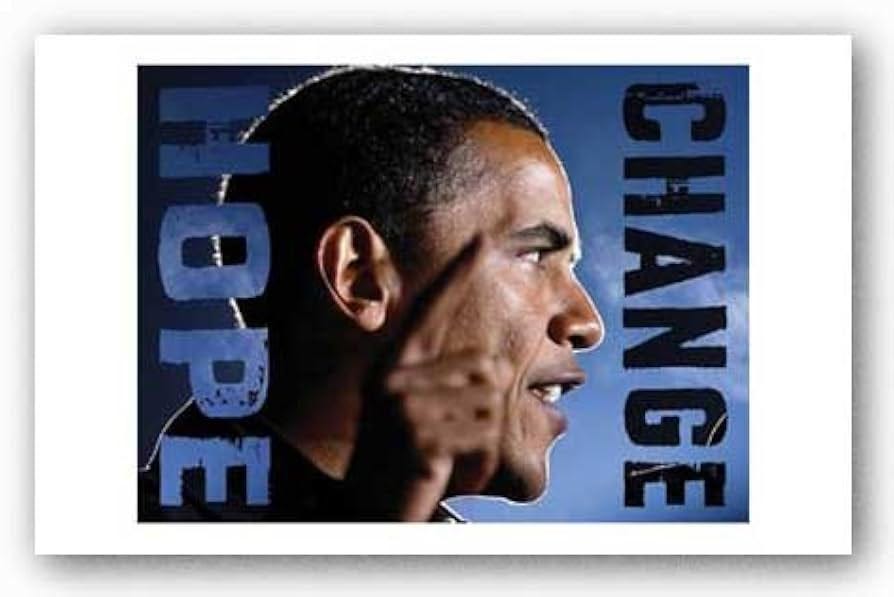
Consider Barack Obama. As a candidate he was a beacon of hope and change. He told Planned Parenthood that signing the Freedom of Choice Act would be the first thing he did as president. Once in office, he said it was not his highest legislative priority—and it never got done. He allied himself with neoliberals and Wall Street and bailed out the banks in a process begun by George W. Bush (remember the TARP?) even as millions of Americans defaulted on their home mortgages. In 2011 he offered little meaningful support to the Occupy Wall Street movement as the police in New York and other cities dismantled the encampments. He escalated the Afghan War (promise kept!) and became (according to the 2013 book Double Down) “really good at killing people” via Predator and Reaper drones. His health care plan was much like Romney care as he abandoned the public option. After he left the presidency, he cashed in big time through books, media deals, speaking fees and other ventures, with Forbes estimating his net worth at more than $70 million. (I got a fundraising letter from him last week asking me to send $25 to the DNC. Instead, he could donate a few million or sell his mansion on Martha’s Vineyard.)
Obama said he was the hope and change for Americans to believe in. He proved to be a very smooth con man.
Consider Donald Trump. He promised to put Americans first, to end wasteful wars, to take on the military-industrial complex, and to restore American “greatness.” Instead, he’s waging a costly and apparently losing war with Iran and he’s throwing buckets of mega billions at the Pentagon as he chops away at educational, Medicaid, food/SNAP, and other funds for the working classes. Trump is using the presidency to enrich himself and his family, showcasing a brazen greed that might make Chuck Schumer and Nancy Pelosi blush. He’s a one-man wrecking crew for faith and trust in the government.
Trump said he was the man to make America great again. He’s proven to be an abrasive but nevertheless very successful con man.
Back in the Reagan days, we were told government was the problem not the solution, and that it had to be downsized radically (the Pentagon, of course, was exempt from downsizing). An untrustworthy and spendthrift federal government is most definitely a problem today as the U.S. national debt just soared past the $40 trillion mark.
And where does half of federal discretionary spending go today? To wars and weapons, to the Pentagon and Homeland Security, to more nukes and golden domes, together with more schemes to enrich Trump and his oligarch cronies. If that’s not bad enough, Trump is seeking $500 billion more for the Pentagon in FY2027. Remember he vowed to take on the military-industrial complex? He’s feeding it instead.
Betrayal. Small wonder that Americans are despondent as well as angry. And why perhaps so much effort is being exerted to redirect that anger away from the betrayers-in-chief and toward other “enemies.” Even “Marxist-communists” are back—the “enemy” that will not die, as if Marxists are pulling the strings and reaping the profits in Washington, DC. It’s laughably absurd.
“Throw the bums out!” is a mood in America today. But will new politicians actually have principles to serve working-class Americans? How do you reform a system where money basically equals speech and where lobbyists exert enormous power? Stay tuned as the great American experiment plays itself out.
Abraham Lincoln’s Second Inaugural Address, often described as a prose-poem for its surprising brevity and deep meaning, is the most moving work of political discourse I’ve ever read. In that short speech, Lincoln captured the horrific nature of war and the terrible burdens of an American history built literally on the backs of slaves. In describing that great civil war, he did not mince words about its “mighty scourge,” nor on its connection to that so-called peculiar institution of slavery:
Fondly do we hope ~ fervently do we pray ~ that this mighty scourge of war may speedily pass away. Yet, if God wills that it continue, until all the wealth piled by the bond-man’s two hundred and fifty years of unrequited toil shall be sunk, and until every drop of blood drawn with the lash shall be paid by another drawn with the sword, as was said three thousand years ago, so still it must be said ‘the judgments of the Lord, are true and righteous altogether.’
My dad’s old silver certificate featuring Abraham Lincoln
After that terrifyingly honest sentence, Lincoln then extended an olive branch to the defeated South and indeed to the entire nation:
With malice toward none; with charity for all; with firmness in the right, as God gives us to see the right, let us strive on to finish the work we are in; to bind up the nation’s wounds; to care for him who shall have borne the battle, and for his widow, and his orphan ~ to do all which may achieve and cherish a just, and a lasting peace, among ourselves, and with all nations.
We should think of war as a scourge—the most sweeping and biting of whips, capable of inflicting the most horrendous of tortures to human flesh.
Lincoln’s speech is dated March 4, 1865. More than a century later, another politician of integrity would refer to the awful scourge of war: Tony Benn, a member of the British Parliament, here in 1998:
The words of Lincoln and Benn resonate with hard-won truths. How awful it is today that war is sold to us as noble and honorable and just, the province of warriors and warrior-states, as if that is something admirable.
U.S. leaders’ pride in military lethality and global prowess are sure signs of the death of reason and democracy in America.