Reading NBC News this morning, I saw where the U.S. “is winning decisively, devastatingly and without mercy,” so claimed self-styled Secretary of War Pete Hegseth. “We are only four days in,” he added, and the U.S. “will take all the time we need” to prevail. He further added “We are punching them while they’re down, which is exactly how it should be.” (There’s nothing more honorable than punching someone when they’re down, right?)
“They [the Iranians] are toast, and they know it, or at least, soon enough, they will know it. And we have only just begun, to hunt, dismantle, demoralize, destroy and defeat their capabilities,” Hegseth boasted. As far as how long the war will last, he equivocated. Three weeks? Eight weeks? Who knows? Hegseth doesn’t.
Hegseth also doesn’t know something fundamental: You can’t do a wrong thing the right way.
The Iran War is wrong. It’s illegal, unconstitutional, immoral, and also extremely dangerous. There’s no way to prevail in a war fought for the wrong reasons, a war fought without clear goals, a war that is already beginning to spiral out of control. But Hegseth thinks if the U.S. launches enough missiles, drops enough bombs, and torpedoes enough ships, somehow the U.S. will “win.”
Congratulations, U.S. and Israel: You made him a martyr
In so many ways, the U.S. has already lost. The Ayatollah Khamenei is now a martyr. Iran is now more likely to pursue a nuclear weapon. Even more so than usual, Israel is now in the driver’s seat, calling America’s shots in the Middle East. This has all the makings of a major catastrophe for U.S. forces, but all Hegseth can see is the promise of punching a man when he’s down.
Clearly, Hegseth is intoxicated with winning “without mercy.” Think about that for a moment—war without mercy. Only the most barbaric or fanatical person would boast about waging war without mercy.
With the Iran War, the Trump administration is marching down the most perilous of paths, blinded by illusions of total victory.
A warning: More than anything, America must not allow this to become a religious war, a crusade, between a Judeo-Christian force and a Shia-Islamic force. We’re already seeing a lot of talk within the U.S. military of a God-driven mission against Iran, with (positive!) references to Armageddon. Such rhetoric is incredibly dangerous and inflammatory. (In this context, that crusader cross tattoo on Hegseth’s chest is more than alarming.)
If anything, the best outcome for the U.S. would be an immediate ceasefire before more U.S. troops are killed and wounded. But how is such a ceasefire to be negotiated? U.S. diplomacy has no credibility. None.
Among the worst outcomes would be the commitment of U.S. troops to Iran, so-called boots on the ground, which would likely create a massive Bay of Pigs-style fiasco. America can ill afford yet another land war quagmire in the Middle East. There is already talk, however, of committing U.S. Special Forces to Iran, perhaps to organize Kurdish and Iranian dissidents against the legitimate Iranian government. Such folly must be prevented.
Any commitment of U.S. troops to Iran would further accelerate escalation. If you begin to hear rumblings about Selective Service and a return to a military draft, you’ll know the Trump administration has become completely unhinged (if it isn’t already).
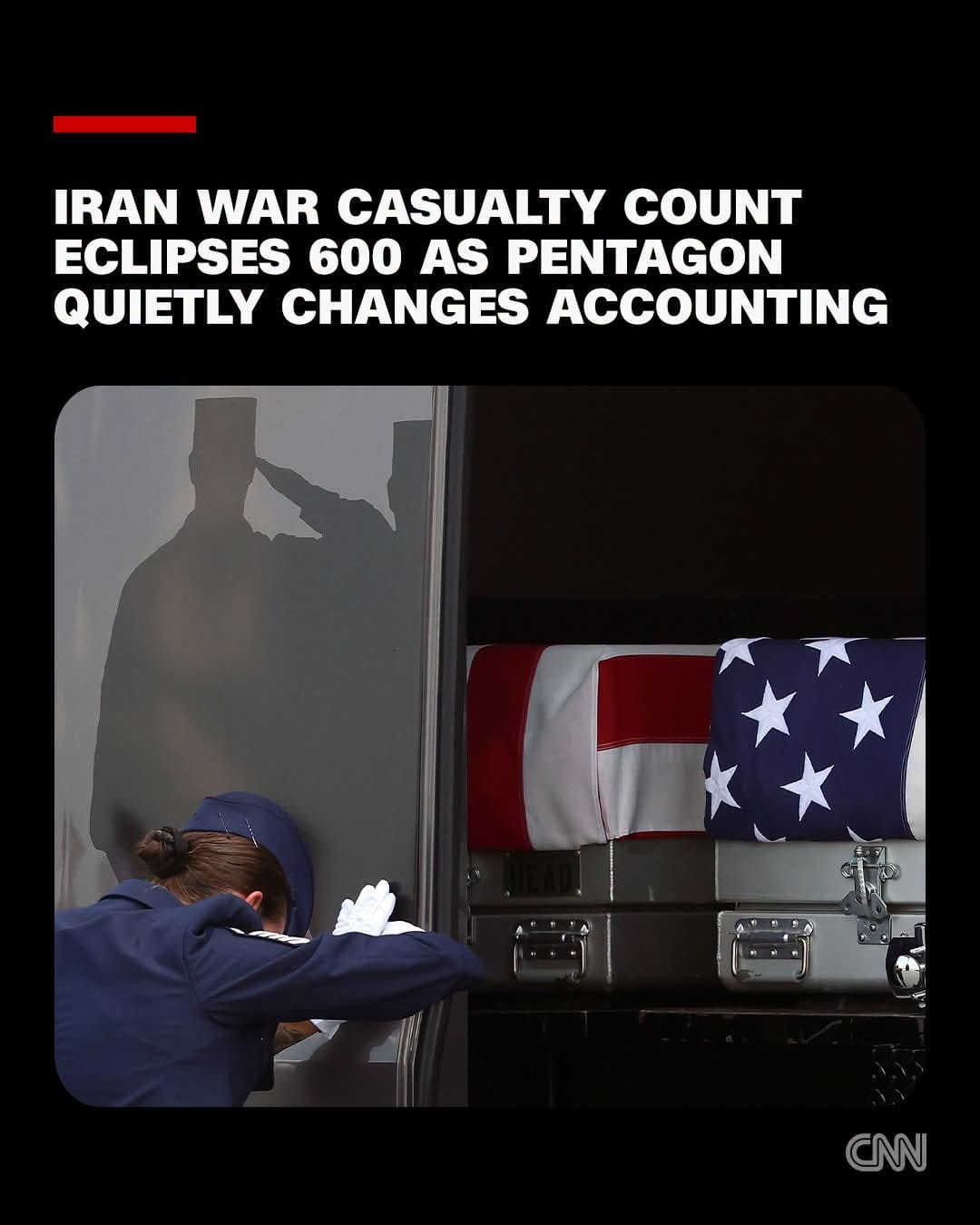
In just a few days of “major combat operations,” the Trump administration already has more than enough innocent Iranian blood on its hands. That toll in blood is only going to increase, as will the risk of blowback on the “homeland.”
The smartest course for America at this moment is to declare “victory” and leave. Since it’s unlikely Trump and Hegseth will see the light, Congress should immediately cut war funding. Sadly, a weak-willed Congress seems far more likely to pass supplemental funding bills to give Trump and Hegseth a blank check to wage a Judeo-Christian crusade.
We don’t live in interesting times: we live in unhinged times. Perilous times. We must find a way to seek a merciful peace. The alternative just might be World War III.
If you’re looking to “your” military to resist wrongful wars, you’re looking in the wrong place.
I should know. I was still on active duty in 2003 during the run-up to the disastrous Iraq War. What I remember was a sense of inevitability. The Bush/Cheney administration obviously wanted a settling of accounts with Saddam Hussein, and the war was going to happen irrespective of diplomatic efforts. One clear sign was that the good-faith efforts of weapons inspectors were discarded in a rush to war.
I did not speak out against the Iraq War until 2007 (I retired in 2005). Some profile in courage!
As I’ve commented here, “It’s not easy for us military lifers to get a grip on organizational betrayal because we’re part of the organization–our identities and ideals are linked to it. We are too close–we are reluctant to believe we’re being misled by lies spread from the very top of the pyramid.”
I submit this as a partial explanation, not as an excuse. Within the military, there’s a strong emphasis on staying in your lane. Do your job. Leave the decisions to the higher-ups. They have the intelligence, not you. Yours not to reason why … yours but to do and die.
History indicates that dissent within any military will be tightly constrained. And of course the U.S. military, if necessary, will use the UCMJ (uniform code of military justice) to imprison and otherwise to silence those who represent a threat to “good order and discipline.”
A separate question is this: How does a rebellious military even work? Alternatively, if a military is a hotbed of dissent and rebellion, it suggests a dishonest war and poor leadership as well. Are we headed in that direction now with respect to Iran? Are we already there? Perhaps this is one reason why there’s so much talk of “warriors” today in the U.S. military–the idea our soldiers fight as mercenaries for the thrill of it, not because they’re citizen-soldiers upholding the Constitution.
*****
Let’s be blunt: We are not supposed to go to war based on presidential whims, pressure from foreign powers like Israel, corporate profits, imperial dominance, and similar imperatives. Only Congress has the power to declare war in the name of the American people. But ever since World War II, Congress has been shunted aside by the National Security State. A few members of Congress may protest, but Congress writ large has abdicated its responsibility over war. This is perhaps the leading reason why we fight wrongful wars.
Another reason is our poor choice of leaders. Donald Trump spoke plainly early in 2016 that he believed the military should and would follow his orders irrespective of their legality. Trump believes he is not constrained by the U.S. Constitution, that his orders are the law. He should have been disqualified from running for office when he admitted he saw himself as being above the law; instead, he was elected and reelected.
And, let’s face it, “our” government treats we the people like mushrooms, keeping us in the dark while feeding us bullshit. Along with being actively misled, warmongers like Dick Cheney simply don’t care what the people think. As Cheney infamously replied when he was told the American people were losing faith in the Iraq War: “So?” Who cares? America’s leaders don’t care what you think. They don’t require your approval—only your obedience.
Finally, we the people, writ large, have acquiesced in the construction of a U.S. military machine based on global reach, global power, and full-spectrum dominance. We’ve “invested” gargantuan sums to create a military machine of great enormity. A military machine that we hold in high esteem. There will always be a temptation to use that machine, to see every problem as a Gordian knot that can be easily cut by our well-honed military saber.
To come back to the U.S. military: First, troops are trained to obey, not so much educated to think, and they certainly aren’t encouraged to disobey. Pilots want to be the best pilots they can be; maintainers want to be skilled maintainers; and so on. Sergeants and lieutenants leave bigger questions to their COs, their commanding officers. This is how militaries have worked for millennia.
The harsh realities of war
*****
Again, I write this as a partial explanation about why we wage wrongful wars. It’s not meant as an excuse.
Ten years ago, I wrote an article for TomDispatch on why it’s so difficult for military members to speak out, even against illegal wars. (And who’s to say what is illegal?) Here’s an excerpt from that article:
Leaving military insularity, unit loyalty, and the pressure of combat aside, however, here are seven other factors I’ve witnessed, which combine to inhibit dissent within military circles.
1. Careerism and ambition: The U.S. military no longer has potentially recalcitrant draftees — it has “volunteers.” Yesteryear’s draftees were sometimes skeptics; many just wanted to endure their years in the military and get out. Today’s volunteers are usually believers; most want to excel. Getting a reputation for critical comments or other forms of outspokenness generally means not being rewarded with fast promotions and plum assignments. Career-oriented troops quickly learn that it’s better to fail upwards quietly than to impale yourself on your sword while expressing honest opinions. If you don’t believe me, ask all those overly decorated generals of our failed wars you see on TV.
2. Future careerism and ambition: What to do when you leave the military? Civilian job options are often quite limited. Many troops realize that they will be able to double or triple their pay, however, if they go to work for a defense contractor, serving as a military consultant or adviser overseas. Why endanger lucrative prospects (or even your security clearance, which could be worth tens of thousands of dollars to you and firms looking to hire you) by earning a reputation for being “difficult”?
3. Lack of diversity: The U.S. military is not blue and red and purple America writ small; it’s a selective sampling of the country that has already winnowed out most of the doubters and rebels. This is, of course, by design. After Vietnam, the high command was determinednever to have such a wave of dissent within the ranks again and in this (unlike so much else) they succeeded. Think about it: between “warriors” and citizen-soldiers, who is more likely to be tractable and remain silent?
4. A belief that you can effect change by working quietly from within the system: Call it the Harold K. Johnson effect. Johnson was an Army general during the Vietnam War who considered resigning in protest over what he saw as a lost cause. He decided against it, wagering that he could better effect change while still wearing four stars, a decision he later came deeply to regret. The truth is that the system has time-tested ways of neutralizing internal dissent, burying it, or channeling it and so rendering it harmless.
5. The constant valorization of the military: Ever since 9/11, the gushing pro-military rhetoric of presidents and other politicians has undoubtedly served to quiet honest doubts within the military. If the president and Congress think you’re the best military ever, a force for human liberation, America’s greatest national treasure, who are you to disagree, Private Schmuckatelli?
America used to think differently. Our founders considered a standing army to be a pernicious threat to democracy. Until World War II, they generally preferred isolationism to imperialism, though of course many were eager to take land from Native Americans and Mexicans while double-crossing Cubans, Filipinos, and other peoples when it came to their independence. If you doubt that, just read War is a Racket by Smedley Butler, a Marine general in the early decades of the last century and two-time recipient of the Medal of Honor. In the present context, think of it this way: democracies should see a standing military as a necessary evil, and military spending as a regressive tax on civilization — as President Dwight D. Eisenhower famously did when he compared such spending to humanity being crucified on a cross of iron.
Chanting constant hosannas to the troops and telling them they’re the greatest ever— remember the outcry against Muhammad Ali when, with significantly more cause, he boasted that he was the greatest? — may make our military feel good, but it won’t help them see their flaws, nor us as a nation see ours.
6. Loss of the respect of peers: Dissent is lonely. It’s been more than a decade since my retirement and I still hesitate to write articles like this. (It’s never fun getting hate mail from people who think you’re un-American for daring to criticize any aspect of the military.) Small wonder that critics choose to keep their own counsel while they’re in the service.
7. Even when you leave the military, you never truly leave: I haven’t been on a military base in years. I haven’t donned a uniform since my retirement ceremony in 2005. Yet occasionally someone will call me “colonel.” It’s always a reminder that I’m still “in.” I may have left the military behind, but it never left me behind. I can still snap to attention, render a proper salute, recite my officer’s oath from memory.
In short, I’m not a former but a retired officer. My uniform may be gathering dust in the basement, but I haven’t forgotten how it made me feel when I wore it. I don’t think any of us who have served ever do. That strong sense of belonging, that emotional bond, makes you think twice before speaking out. Or at least that’s been my experience. Even as I call for more honesty within our military, more bracing dissent, I have to admit that I still feel a residual sense of hesitation. Make of that what you will.
Bonus Reason: Troops are sometimes reluctant to speak out because they doubt Americans will listen, or if they do, empathize and understand. It’s one thing to vent your frustrations in private among friends on your military base or at the local VFW hall among other veterans. It’s quite another to talk to outsiders. War’s sacrifices and horrors are especially difficult to convey and often traumatic to relive. Nevertheless, as a country, we need to find ways to encourage veterans to speak out and we also need to teach ourselves how to listen — truly listen — no matter the harshness of what they describe or how disturbed what they actually have to say may make us feel.
My fellow Americans, it’s nice to think we have a semblance of a constitutional republic, but that warship has sailed. This time, to Iran.
*****
This AM, I read an interesting story on the Supreme Court’s repeal of Trump’s tariffs. Justice Neil Gorsuch made the point that his fellow justices’ interpretation of the law often changes based on whether the president is a Republican or Democrat. This, to state the obvious, is not how the law is supposed to work.
*****
Years ago, I spied a bumper sticker that read: “I’m already against the next war.” It’s on my mind again.
******
I’ll support a war when Hollywood celebrities and sports stars willingly enlist. And when the sons and daughters of presidents and senators and CEOs happily join them in the ranks.
*****
Do you think it’s a coincidence that Bibi Netanyahu keeps visiting the White House even as the Trump administration prepares for yet another war in the Middle East?
*****
A great book for this moment is “Deadly Betrayal: The Truth About Why the United States Invaded Iraq” (2024) by Dennis Fritz. Fritz, a retired AF command chief master sergeant, was in the halls of power when the Bush/Cheney administration decided to invade Iraq in 2003. He identifies three main reasons for the Iraq War fiasco: U.S. leaders’ concerns about “credibility” and the perpetual fear of being perceived as “weak”; serving the security needs of Israel, especially by weakening Hamas and Hezbollah together with Iraq; and neocon fever dreams of imperial dominance in the Middle East connected to the control of oil.
In his conclusion, Fritz is scathingly blunt:
More than 4,500 [U.S. troops] made the ultimate sacrifice, and 100,000 have been wounded for life. There were no weapons of mass destruction in Iraq. Saddam Hussein posed no threat to our national security. The Iraq War wasn’t an honest mistake. It was a calculated lie—a deadly betrayal. Our service members were used as pawns by the government to fulfill an imperialist ideology. Their sacrifice had no basis in national defense. All Americans should be outraged, and we should never let this happen again. The troops didn’t even know why they were going to war.
It saddens me to think that Fritz may soon need to write “Deadly Betrayal II” about the forthcoming war with Iran.
The Pentagon has failed eight consecutive financial audits. For decades it has been unable to account for trillions of dollars. It has not won a major war since World War II. That is not a record of excellence. It is a record of entrenched failure.
Naturally, President Trump’s answer is to give it another $500 billion in next year’s budget.
If enacted, that would drive annual U.S. military spending north of $1.5 trillion. The math is almost too neat: U.S. GDP hovers around $30 trillion; five percent of that is $1.5 trillion. Somewhere along the way, the arbitrary idea that “defense” spending should equal 5 percent of GDP hardened into dogma. A considered strategy no longer informs budgets. Arbitrary numerology does.
Did the Pentagon request an extra half-trillion dollars? No. Has the administration identified a new existential threat that requires it? No. There is no grand strategy unveiled to justify this “surge.” Just a number — large, round, politically expedient.
An institution that cannot pass an audit is not prepared to manage another half-trillion dollars. Pouring money into a system riddled with cost overruns, duplicated programs, and strategic confusion does not produce security. It produces contractors’ profits and future disasters.
Let’s be honest about what this really is. The national security state — the blob, the military-industrial-congressional-intelligence-media-academia-think tank complex — is already the most powerful force in Washington. When you add “defense,” nuclear weapons, intelligence, veterans’ programs, and homeland security, it consumes well over half of federal discretionary spending. It is the unofficial fourth branch of government, and arguably the first in power.
Few presidents confront it. Dwight D. Eisenhower warned about the military-industrial complex — and even he presided over huge Cold War budgets. John F. Kennedy spoke of peace while deepening involvement in Vietnam. Lyndon B. Johnson escalated that war catastrophically. Barack Obama accepted a Nobel Peace Prize and then defended the necessity of permanent American war. Presidents learn quickly: you appease the Pentagon or you risk political ruin.
And so Trump does what presidents do. Even as he talks of peace, he feeds the war machine.
We are told this is about safety. That peace comes only through overwhelming force. That America must dominate every domain — land, sea, air, space, cyberspace — indefinitely. That garrisoning the globe is synonymous with freedom. That “exceptional” nations do not generate blowback.
Yet two decades in Iraq and Afghanistan ended not in triumph but exhaustion and retreat. Each failure somehow justifies a larger budget. Nothing succeeds like failure.
In a functioning democracy, military spending would be tied to actual defense. It would be scrutinized, debated, constrained. Instead, military failure yields medals and ribbons. Audit failure yields budget growth. Strategic stalemate yields expansion. The larger the disappointment, the louder the demand for more money and authority.
When an institution grows more powerful no matter how poorly it performs, accountability has died. When elected officials dare not meaningfully challenge it, civilian control becomes theater. Call it what you will, but a republic that cannot rein in its military establishment is drifting toward a system where the sword outweighs the ballot and proves mightier than the pen.
As Joe Biden once said, “Show me your budget, and I’ll tell you what you value.” A $1.5 trillion military budget tells us that war — or at least preparation for it — sits at the center of national life.
Perhaps not so happy
On Presidents’ Day, it is worth recalling that George Washington surrendered military power to constitutional authority. That was the founding act of the republic. The test of any president is whether he sees himself as bound by law — or as a ruler who commands legions.
Empires require Caesars. Republics require restraint. The colossal size of Trump’s proposed war budget suggests which path he (and America) is choosing.
Hello Everyone: here’s an interview I did with Dick Price and Sharon Kyle at LA Progressive about why we can’t seem to heed Ike’s warning about the dangers of the military-industrial complex in 1961.
Other topics covered include sports and the military, Hollywood and the Pentagon, first-person shooter games, and toxic masculinity.
We also discuss what it would take to change America—to redirect energies dedicated to imperialism and war to democracy and peace. I say something here about idealism, a sign perhaps of my own naïveté.
You can have my ideals when you pry them from my cold dead brain.
I’ve been noticing a new word of the moment: “guardrails.” President Trump is smashing the guardrails of democracy. At the same time, new guardrails are the answer to ICE murders in Minneapolis, at least according to Chuck Schumer and Hakeem Jeffries.
New guardrails will stop ICE!
If guardrails are so easy for Trump to smash, how are new ones going to restrain the power of ICE and prevent abuses?
Remember when we used to talk about laws? That you had to obey the law of the land else be prosecuted for violating it? We need clear and enforceable laws and a system that upholds them, not more “guardrails.”
I suppose “guardrail” is a metaphor that’s easily understood—they help keep us on the road, right? Yet cars and trucks do smash through them, so are they really the answer to restraining Trump and ICE?
As Stephen Semler notes here, Schumer and Jeffries promote “guardrails” for ICE even as they propose to fully fund the agency, making it easy for ICE to say, sure, we’ll respect your guardrails even as they drive their SUVs and surplus military equipment through them.
America is supposed to be a nation of laws, not guardrails. If ICE and Trump are like out-of-control trucks, no metaphorical guardrail is going to restrain them. A strong Constitutional system upheld and enforced by officials of integrity and courage, however, could and should.
I was reading an article by James Baldwin today from July 11, 1966 about the “Harlem Six” and his thoughts on policing. His words resonated as I thought of recent events in Minneapolis and the deaths of Renee Good and Alex Pretti.
James Baldwin
Here’s what Baldwin had to say in 1966:
This is why those pious calls to “respect the law,” always to be heard from prominent citizens each time the ghetto explodes, are so obscene. The law is meant to be my servant and not my master, still less my torturer and my murderer. To respect the law, in the context in which the American Negro finds himself, is simply to surrender his self-respect. [Emphasis added.]
Yes, Renee Good, Alex Pretti, indeed all Americans expect the law to be our servant. We don’t expect the law to be our murderer.
President Trump is now saying Good and Pretti’s deaths shouldn’t have happened even as he’s also said they were no angels (hinting that maybe their murders were justified, or that they somehow were responsible for their own executions).
Of course, Trump and members of his administration have said far worse, reflexively denouncing Good and Pretti as “domestic terrorists” while suggesting the people who’ve suffered the most have been the ICE agents who shot and killed them!
Claims such as these are an insidious form of authoritarian madness.
ICE agents, like all elements of law enforcement, are supposed to be public servants, upholders of the law, not a law unto themselves. When the law becomes a torturer and a murderer, it becomes a moral obscenity, as Baldwin noted.
If we are to make any progress in America, we need equal justice for all; we need to stop blaming the victims; and we must stop kowtowing to murderous authority.
Wow. Just wow. That was my response after reading “The Trillion Dollar War Machine” by Bill Hartung and Ben Freeman. The book’s subtitle captures the “wow” part succinctly: “How runaway military spending drives America into foreign wars and bankrupts us at home.” And now, naturally, President Trump wants even more money for that runaway war machine: an almost unimaginable $500 billion more for FY2027. Egads! How did America’s so-called elites come to embrace war and weapons so wholeheartedly, so lustily, so greedily?
Many of the answers to that question are provided by Hartung and Freeman. They cite and explore President Dwight D. Eisenhower’s famous warning from 1961 about an emerging military-industrial complex. They explain how Congress is complicit in the growing power (and dangers) of the MIC, funding incessant warfare overseas and explosive spending on (often overpriced and largely ineffective) weaponry like the F-35 fighter and the Littoral Combat Ship (known colloquially as “little crappy ships”). Corruption, they show, is baked into the system: the corruption of the revolving door that spins so easily between the military, think tanks, the government, and weapons makers like Boeing and Lockheed Martin. It’s all thoroughly shocking as well as depressing.
Hartung and Freeman, both experienced researchers, know the MIC well. They also know it’s more than the MIC: it’s more like the MICIMATTSHG, or the military-industrial-congressional-intelligence-media-academe-think-tank-sports-Hollywood-gaming complex, so thoroughly has profiteering through militarism and war permeated American culture and society. Military and weapons funding is so colossal it’s seemingly everywhere even as it adds inexorably to the U.S. debt while contributing to military adventurism that further deepens that same debt. Small wonder that our national debt clock is fast approaching $39 trillion. It’s a golden dome of debt!
Reading this book made me think back to another classic account of the MIC and its many follies: James Fallows’s “National Defense.” That book came out in 1981, just as the “defense” buildup under President Ronald Reagan began. Timely as that book was, the Pentagon and its many camp followers were and are rarely forced to retreat when confronted by sensible and logical analysts. I fear this latest effort by Hartung and Freeman, much needed as it is, will similarly be ignored by a purblind Pentagon always in pursuit of power irrespective of the cost.
That would truly be a shame, not only for Americans in general but for the Pentagon as well. Hartung and Freeman aren’t anti-military: they’re pro-defense when defense is smart, effective, thrifty, and focused on upholding the U.S. Constitution. Everyone in uniform, indeed everyone without a uniform, should read this book. You really should know where so much of your taxpayer dollars go—and how much of that money is being wasted by a system that is not only burning your money but weakening America as a democracy. (Indeed, when it comes to money, the Pentagon may be the ultimate burn pit.)
Buy it, study it, absorb it. As Sun Tzu said, it’s smart to know your opponent. Far too often, the military-industrial complex is exactly that.
Two headlines caught my eye this AM in my email media stream.
From the New York Times: “How the Trump Administration Rushed to Judgment in Minneapolis Shooting”
There was no “judgment” displayed in the execution of Alex Pretti. The Trump administration blatantly, maliciously, and viciously lied about what happened. Video evidence incontrovertibly shows that the Trump administration lied. Period.
Trump officials simply didn’t and don’t care about the truth. About justice. About the life of a U.S. citizen. They only care about their own petty lives and violent narratives. Anyone who gets in their way is a potential “domestic terrorist.” They’re sending a loud message clearly: resist us and you’ll end up bloodied in the streets—and maybe dead.
All governments lie, as I.F. Stone famously reminded us. But rarely can I remember lies of such obvious viciousness about regular people whose only real crime is exercising their right to dissent in democracy.
The other headline was this one from the Boston Globe: “Maine and Minnesota: A tricky tale of ICE surges in two states.”
What had been a careful, rhetorical balancing act has begun turning to increasing anger after the shooting of Alex Pretti, a 37-year-old Veterans Affairs nurse, in Minneapolis
*****
There’s that word again: Surge. Remember the U.S. military “surges” in Iraq and Afghanistan? Remember how those “surges” in troops and violence were supposed to win those wars for America? How did that work out for us?
We know how. Both surges failed, but they did succeed in producing a lot of dead Iraqis and Afghans (“foreign terrorists”) along with U.S. troops killed and wounded in action.
“Surges” are not how you win wars, whether overseas or here at home. In fact, surges in Iraq and Afghanistan were admissions of a sort that the wars were already lost; their main purpose was to show resolve and to provide political cover for dishonest leaders like George W. Bush, Dick Cheney, and Barack Obama.
But government officials have an amazing capacity not to learn. Their “solution” is always to show resolve through military and/or police action. Nothing is “won,” nothing is achieved, and the main product is more blood in the streets.
Isn’t it nice to know that your government reflexively views you as a “domestic terrorist” if you exercise your right to assemble and protest? Especially if you inconveniently get shot and killed by an ICE agent?
Last January, I published “My Father’s Journal,” which recounts my dad’s experience surviving the Great Depression, serving in the Civilian Conservation Corps in Oregon fighting forest fires, military service in the Army during World War II, and bringing up five children during the “Baby Boom” years of the 1950s and 1960s while serving as a city firefighter. If you’re interested, it’s available at Amazon for $10 for the paperback and $5 for the Kindle version. Follow this link, and thanks!
*****
I received two interesting queries this week, one on Blitzkrieg and the other on how much the U.S. spends on weapons and war. On the first subject, I was asked about the characteristics of Blitzkrieg, when the concept was developed and seen in battle, and for post-World War II examples. I was also asked about Russia-Ukraine and the recent U.S. attack on Venezuela. Here are my answers:
1. Speed, surprise, combined arms, and disruption are the main characteristics of Blitzkrieg. “Combined arms” refers to all combat arms working synergistically, i.e. infantry, armor, artillery, supported by air forces (nowadays, drones might be involved in large numbers). Special forces like airborne units may also be involved. Deception and misdirection are also aspects of Blitzkrieg. The fundamental idea is to move and maneuver so quickly that the enemy can’t keep pace–to disrupt the enemy’s cohesion. To place them in an untenable position where they have to withdraw or perhaps even surrender.
2. Blitzkrieg, though associated with Nazi Germany in World War II, is an old concept in warfare. Perhaps the best practitioners were the Mongols in the 13th century. The Western concept has its roots in World War I and the stalemate of trench warfare. Ideas associated with what became known as Blitzkrieg were tried on various World War I battlefields. The idea was to break the stalemate of fixed lines and fortifications without getting into costly battles of attrition. These ideas came to maturity in World War II.
3. Blitzkrieg, perhaps ironically, is sometimes attached to the Israeli Defense Forces, as in their attacks in 1967 in the Six Day War. You might say the USA used Blitzkrieg against Iraq in 1991. Russia’s initial attack on Ukraine in 2022 was not a Blitzkrieg–it was more of an uncoordinated show of force that backfired. The USA attack on Venezuela was a “snatch and grab” kidnapping, not a military campaign per se.
*****
The second query focused on how much the U.S. spends on weaponry and war and how we measure that as a percentage of the federal budget. Here’s my answer to that:
Yes, it’s a numbers game. If you include all federal spending (including non-discretionary spending like social security and Medicare/Medicaid), it’s a smaller percentage. Roughly 15% of the federal budget.
If you focus on discretionary spending, it’s more than 50%. It depends on how you count it. If you add Pentagon spending to Homeland Security, the VA, the DOE (nukes), and interest on the federal debt due to wars and military spending, the percentage is 60% or even higher.
When the warmongers really want to minimize war spending, they compare it to GDP.
*****
No matter how you measure it (or attempt to minimize it), a trillion dollars is a lot of money. Of course, the best way to think of “defense” spending is from President Dwight D. Eisenhower’s “Cross of Iron” speech in 1953:
Every gun that is made, every warship launched, every rocket fired signifies, in the final sense, a theft from those who hunger and are not fed, those who are cold and are not clothed. This world in arms is not spending money alone. It is spending the sweat of its laborers, the genius of its scientists, the hopes of its children… This is not a way of life at all, in any true sense. Under the cloud of threatening war, it is humanity hanging from a cross of iron.
That is the true cost of spending on weapons and war.