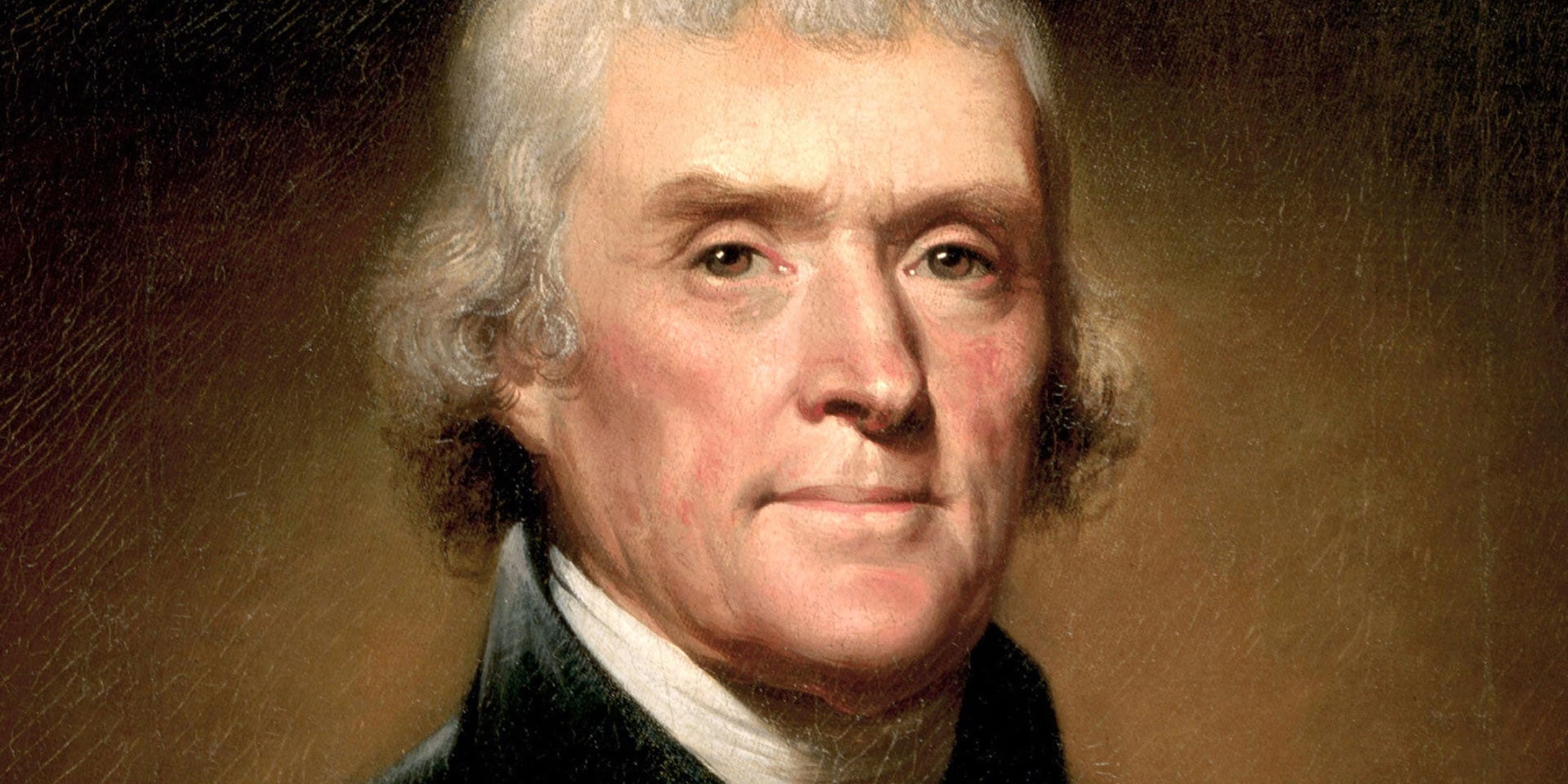
In July 1776, courageous colonists came together to declare their independence from the perceived tyranny of King George III. “Rebels” like Thomas Jefferson urged the colonists to start down a new path, one of independence from the Crown, one that put life, liberty, and the pursuit of happiness before fealty to a king. It was a long-shot effort, but the rebels somehow pulled it off.
Today, America has a new “king.” It’s the national security state, with all its threat inflation, its wars, and its appetite for more, always more. Combine that with President Trump and self-styled Secretary of War Pete Hegseth and their reckless pursuit of war irrespective of the Constitution and of international law, let alone Christian concepts of morality, and you have a form of tyranny that Americans must declare their independence from.
So, consistent with Jefferson, we need a new American revolution, or if you prefer a restoration of the republic, one that recognizes that immense imperial militaries are corrosive to democracy and individual liberty.
2026 can be a new 1776 if America rejects the tyranny of war and ever-higher Pentagon spending. America needs new sons and daughters of liberty, committed to diplomacy and peace, as fostered in a true participatory democracy that puts the needs of U.S. citizens first.
America’s Founders knew that persistent war is a most insidious and pernicious enemy to our freedoms. America today is a structure infested by the termites of war. If we fail to get rid of them, our house will collapse in a pile of dust.
Since 1776, many patriotic Americans have warned of the dangers of persistent warfare and steroidal military spending. Perhaps most famously, President Dwight D. Eisenhower in 1953 spoke of the immense waste of weapons spending: how humanity would crucify itself on a cross of iron if wars endured and war budgets kept rising. He spoke again in 1961 of how America’s military-industrial complex was threatening the fundamental freedoms and liberty of Americans, especially if that complex was allowed to spread and grow. Ike’s warning went unheeded as America fought disastrous and unnecessary wars in Vietnam, Afghanistan, Iraq, Iran and elsewhere.
Ike came to recognize the astonishing waste and dangers of militarism and war. So should we all. Let us on our nation’s 250th birthday declare our independence from persistent and pernicious militarism and warfare.
Note to Readers: Here’s an article I wrote for the LA Progressive as America marks the 250th anniversary of the Declaration of Independence.
When I look back at my old parchment from 1976, I see noble words written by courageous but deeply imperfect men. We remain imperfect as well.
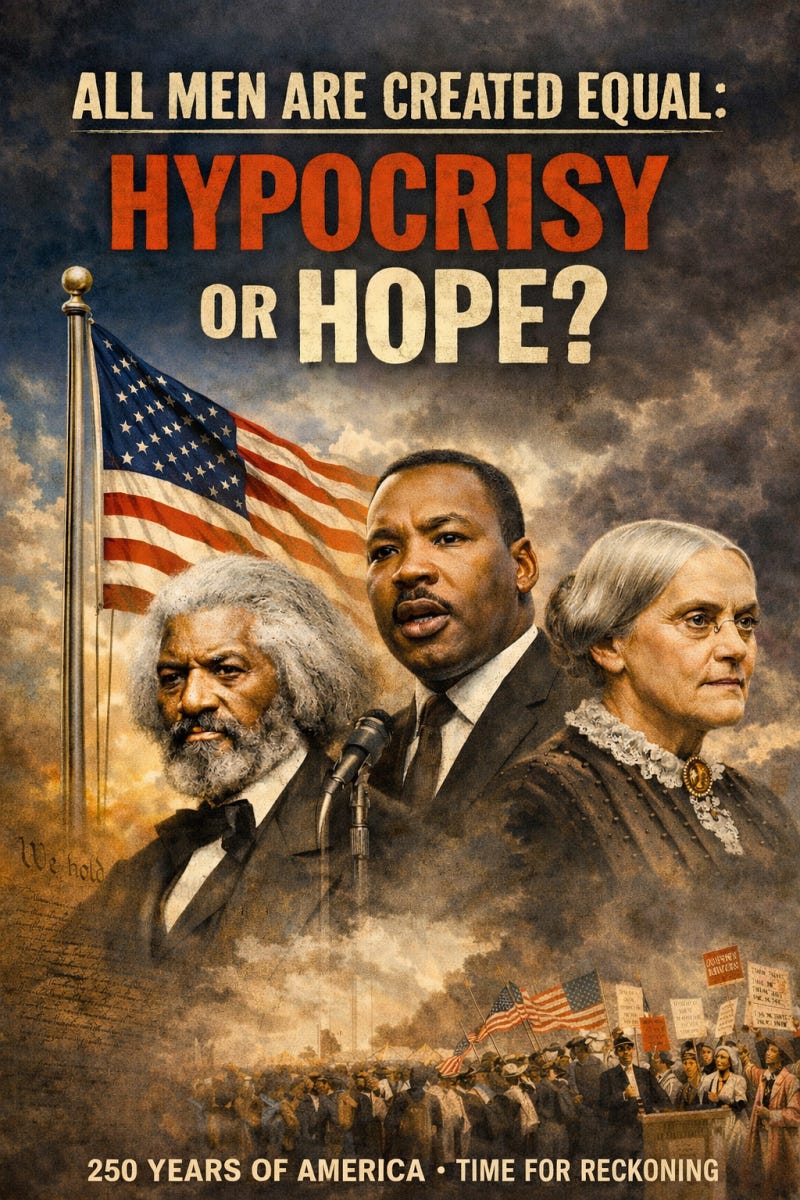
This article is part of the series that addresses the question whether it was hypocrisy or hope when 250 years ago we stated in our Declaration of Independence that “All Men Are Created Equal.” Hypocrisy because more than half of the declaration signers were slaveholders. Plus, how about women, Native Americans, and the unpropertied? But also hopeful because sometime in the future those groups might (and would) be given the vote.
I was thirteen during our nation’s bicentennial in 1976. To celebrate, I had a parchment reproduction of the Declaration of Independence, something that meant a great deal to me at the time. I still remember John Hancock’s glorious signature—defiant, oversized, unmistakable. Take that, King George III.
Of course, declaring independence in 1776 didn’t make it so—history rarely bends simply because words demand it. The thirteen colonies had to fight a long, debilitating, and often brutal war for nearly six years. Even after Yorktown in 1781, George Washington and others struggled to keep the fragile new nation from collapsing into acrimonious division. True independence came only in 1783, when the British Empire formally recognized the former colonies through treaty. Even then, conflict lingered. The United States would fight Britain again in the War of 1812, a war that included the burning of Washington, D.C., underscoring how precarious American independence remained.
Rereading the Declaration later in life reminded me of the cleverness of its authors. They framed their cause in terms of noble ideals, which was smart, but they also personalized their grievances by casting blame on an allegedly tyrannical king, which was even smarter. By the standards of the eighteenth century, King George III was neither unusually cruel nor especially despotic. He expected obedience to the Crown, wanted the colonies to pay for their own defense, and sought order over disorder. If anything, he may not have been tyrannical enough to enforce compliance.
Still, the founders skillfully appealed to Parliament and to English citizens’ jealousy for their own rights—life, liberty, and property (or, as Thomas Jefferson famously revised it, the pursuit of happiness). This was the Age of Reason, after all, a time when the divine right of kings no longer went unquestioned. Even so, the Declaration often reads like a laundry list of complaints against the king—complaints that were not always fair or fully convincing.
Most colonists, at least early on, were not seeking a radical break with Britain. They wanted the traditional rights of Englishmen, especially as educated men who owned property. No matter how “enlightened” they considered themselves, these were men of their times: slaveholders like Jefferson, men who saw no reason to extend the right to vote to women, to enslaved Black people, or even to white men without property.
Yet embedded within the Declaration was a promise more radical than its authors likely intended. The assertion that all men are created equal and endowed with unalienable rights planted a seed that women, Black Americans, and other marginalized groups would later seize upon. Like the colonists themselves, these groups had to fight for those rights. Power, as the saying goes, concedes nothing without a demand—and rarely concedes much without sustained struggle.
The same remains true today. Declaring America to be a democracy where all are equally respected does not make it so. Our country is more oligarchy than democracy, a land divided between the haves—and the have-mores—and the have-nots, rather than a nation that shares equitably in its collective bounty. We may have won independence from Britain, but we did not win freedom from the forces of history or from the imperfections of human nature.
America remains a place of contention, where the meaning of the American Revolution is still argued over and fought about. Yet there is enduring, aspirational nobility in the idea that we are all in this together, still striving to form a more perfect union. That goal is not achieved through declarations alone, no matter how brave or eloquent. It must be pursued, defended, and renewed every day—against tyrants large and petty, foreign and domestic.
When I look back at my old parchment from 1976, I see noble words written by courageous but deeply imperfect men. We remain imperfect as well. The question is whether we can regain the courage, fortitude, and commitment of the founders—not to idolize them, but to continue the unfinished work they began. I believe we can. To believe otherwise is to abandon the very spirit of America’s declaration in 1776. Why not work to make it so?
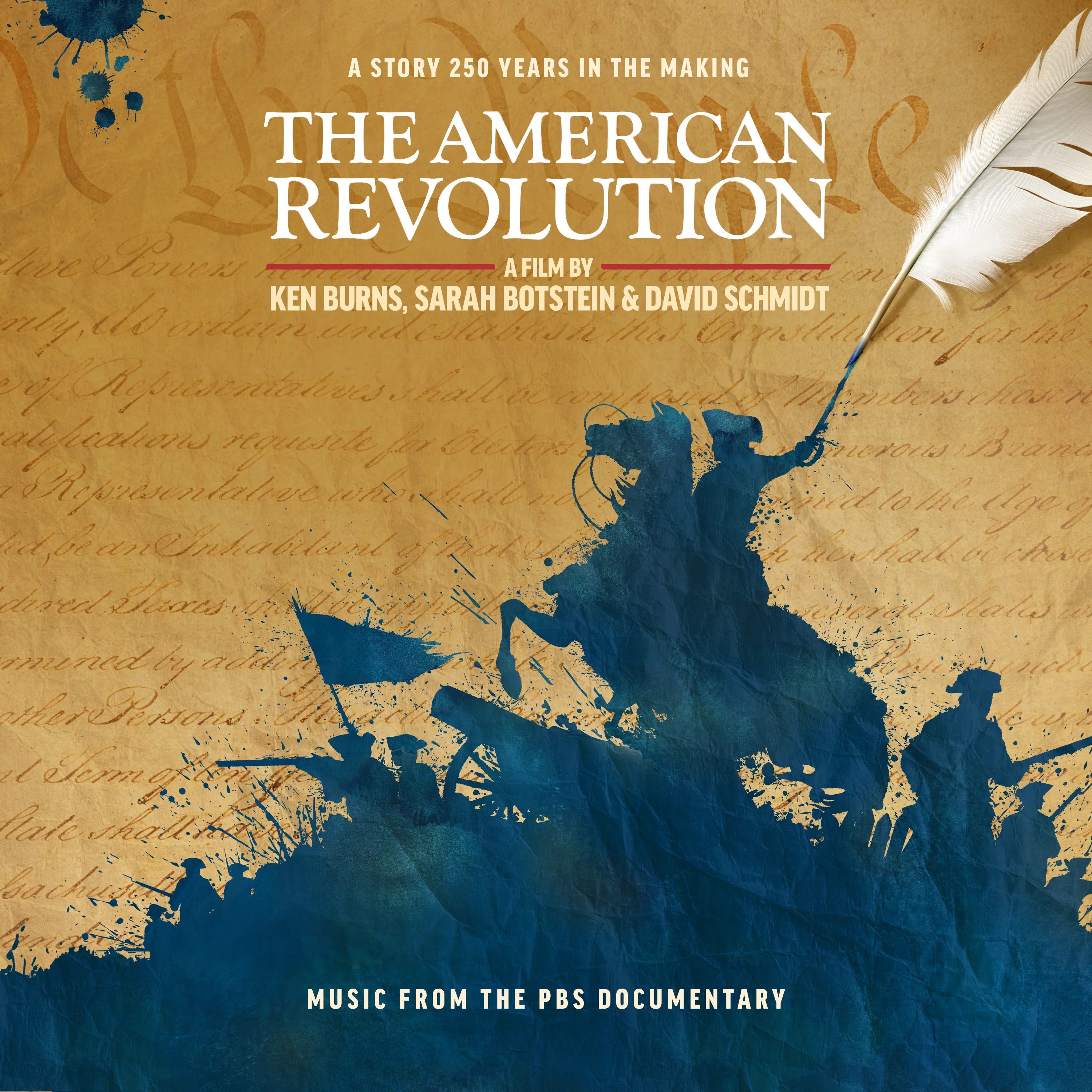
Next year we celebrate the 250th anniversary of America’s founding. There’s going to be the usual fight over what that anniversary should mean to Americans, and what lessons we should draw. For example, the Ken Burns series on “The American Revolution” starts this Sunday night on PBS. I’ll be watching it. If it comes close to his series on the U.S. Civil War, it should be interesting and informative.
There are so many lessons we could take from the American revolution (or war of independence). Speaking as a retired military officer, I might stress the citizen-soldier tradition, the ideal of the Minuteman, the rejection of tyranny, the suspicion of large standing armies, the desire for independence and liberty, the courage to affix one’s name to a declaration that could end with your head swinging in the air.
I don’t know what lessons Trump & Crew will be selling, but something tells me they won’t be salutary. Lots of flag-waving, of course, along with American exceptionalism.
We know America was founded as an imperfect union. Life, liberty, and the pursuit of happiness wasn’t granted to slaves. Or indigenous peoples. Or women for that matter. (Let’s not forget women couldn’t vote for president until 1920.) The founders were mostly white men of property, with some holding “property” in slaves. For African-Americans, the “revolution of 1776” certainly didn’t prove revolutionary for them.
I would stress the idea of striving toward a more perfect union, recognizing the early republic was, in so many ways, imperfect. And that’s putting it gently. I’d stress as well what Benjamin Franklin said. As a form of government, a representative republic is better than most but also difficult to keep. And there’s the rub: today our representatives, our public servants, serve the owners and donors, the power brokers, rather than the people. A revival of the republic isn’t going to come from either major political party—they’re both beholden to money.
So how can we end this “tyranny” without a bloody revolution? Is a national revival possible without years and years of domestic conflict and strife? Meanwhile, can America reject its embrace of militarism and imperialism? Can it advance the rule of law as represented by the U.S. Constitution? Can we be touched, as Abraham Lincoln wrote, by the better angels of our nature?
1776-2026. 250 years of glorious imperfection. We can be better. We can do better. Let’s strive to live up to the promise of America.
At TomDispatch.com today, Rebecca Gordon writes about “American carnage” resulting from forever wars across the globe. Her article references King George III, the “mad king” of Britain during the American Revolution, which raises an interesting point. In Britain today, there’s a Royal Navy and a Royal Air Force, but there is no Royal Army. That’s because the British acted to limit the authority of the monarchy, notably in the aftermath of the disastrous English Civil War and the rise of Cromwell in the 17th century. Royal armies, the British learned, can be powerful forces for suppression of the rights of citizens.
In the 18th century, America’s founders tapped into a commonly held fear of royal armies to motivate fence-straddling colonists to rebel against King George III. The colonists, as Gordon notes, accused the king in the Declaration of Independence of making “the Military independent of and superior to the Civil power.”
Thus it was when the colonists gained their independence, they acted to keep America’s standing army as small as possible while subjecting it firmly to civilian control. America wanted no “royal” army, no class of aristocrats whose identity resided in that army, and certainly no leader who postured and posed as a military commander, as kings of that age typically did.
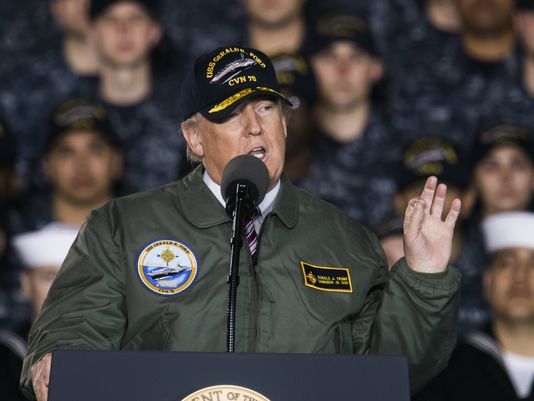
What America has witnessed since the end of World War II is the emergence of a large standing military that is increasingly identified with our president as a quasi-monarch “commander-in-chief.” And like monarchs of the past, U.S. presidents now dress up in military uniforms, strutting about as if they literally are “the king” of their military. (Trump, for example, talks of “my” generals.) Meanwhile, a U.S. president has, with the paramilitary CIA, his own private military augmented by a newly empowered military within the military, Special Operations Command, whose operations are often so highly classified as to be beyond effective civilian oversight.
America has regressed to the pre-revolutionary 17th century, when monarchs fought long wars against other monarchs, often in religious/confessional conflicts which were also motivated by money, power, resources, and similar concerns and which lasted for decades or even centuries. These wars, often involving mercenaries and warrior-corporations, ran out of control and eventually came to bankrupt states, leading to an “enlightenment” witnessed at the creation of the United States, whose founders tried to rein in the tyranny of monarchs and their wasteful forever wars.
Sadly, America is no longer “enlightened.” King Trump is a mix of Mad King George III and France’s imperious and vainglorious Louis XIV (“I am the state”), but without George’s or Louis’s interest in science and wider forms of knowledge. And, much like royal courtiers of the past, King Trump’s courtiers are often “aristocratic” generals or slithering sycophants.
Consider a Trump courtier who’s been getting a lot of press lately: Sebastian Gorka. He’s embraced the idea of a war against radical Islamic terrorism, tracing that war to jihadist flaws within Islam. This virulent disease within Islam, Gorka and likeminded advisers to Trump argue, must and can be wiped out by American-led military action. Much like Catholic King Philip II, who launched the Spanish Armada to extirpate the heresy of English Protestantism under Queen Elizabeth I, Trump and Gorka and Crew seek to unleash the American armada against the heresy of radical jihadist Islam.
King Trump I is about to escalate what he and his courtiers see as a religious/civilizational war. Donning a military cap and flight jacket, Trump promises quick victories against a dastardly enemy. Even as he pursues his wars, the U.S. military will continue to expand, as will paramilitaries and warrior-corporations. Even as victory proves as elusive as the fighting is enervating to domestic concerns, Mad King Trump will persist. America must win. For he is the state.
Under Trump, as with mad King George III, big changes are ahead. Just not the ones these monarchs imagined for themselves and their empires.