
The Bloody Awful Waste of War

Insanity on a Mass Scale

BILL ASTORE

APR 25, 2026

Courtesy of NBC News, here’s a brief summary of the butcher’s bill of the latest wars in the Middle East:

Iran’s forensics chief said nearly 3,400 people had been killed in the country since U.S.-Israeli strikes began Feb. 28. Almost 2,500 people have been killed in Lebanon, 32 have been killed in Gulf states, and 23 have died in Israel. Thirteen U.S. service members have been killed, and two more died of noncombat causes.

I happen to believe Iranian lives are as valuable and precious as American lives. What gives the U.S. and Israeli governments the right to inflict such disproportionate casualties on Iran, on Lebanon, on Gaza? (I know: might makes right.) If you include the Palestinians, more than 100,000 people, and probably closer to 200,000, have been killed in the latest Israeli/U.S. wars, with the United States providing most of the deadly weaponry.
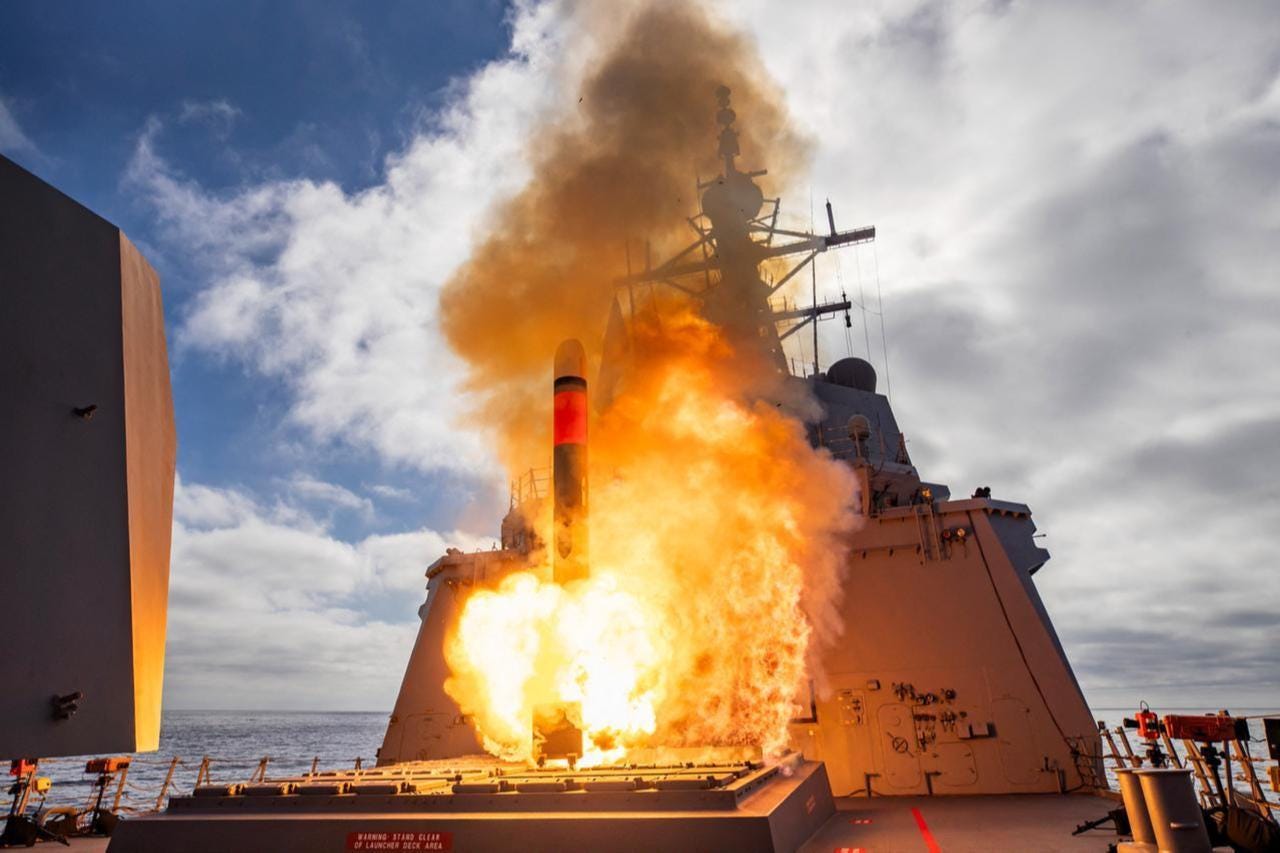
NBC anchor Brian Williams gushed about being “guided by the beauty of our weapons”

Speaking of weaponry, the liberal New York Times had an article yesterday lamenting the heavy expenditure of costly precision weaponry (like Tomahawk cruise missiles) by the U.S. since the beginning of the Iran War. Nowhere in the article was there a complaint about the death toll, nor was there much of a complaint about the cost. No—what the liberal New York Times was concerned about was how quickly the U.S. could replenish its stockpile of weaponry so it could be prepared for a future war against peer threats like China and Russia.

Here’s an excerpt from the article:

Since the Iran war began in late February, the United States has burned through around 1,100 of its long-range stealth cruise missiles built for a war with China, close to the total number remaining in the US stockpile. The military has fired off more than 1,000 Tomahawk cruise missiles, roughly 10 times the number it currently buys each year.

The Pentagon used more than 1,200 Patriot interceptor missiles in the war, at more than $4 million a pop, and more than 1,000 Precision Strike and ATACMS ground-based missiles, leaving inventories worrisomely low, according to internal Defense Department estimates and congressional officials.

The Iran war has significantly drained much of the US military’s global supply of munitions, and forced the Pentagon to rush bombs, missiles and other hardware to the Middle East from commands in Asia and Europe. The drawdowns have left these regional commands less ready to confront potential adversaries such as Russia and China, and it has forced the United States to find ways to scale up production to address the depletions, Trump administration and congressional officials say. 

Again, if you read the article, nothing is said about morality. Nothing is said about death and dying and the bloody awfulness of war. The article simply says the U.S. has used a lot of very expensive missiles that we MUST replace if we’re to be prepared to wage more wars in the near future.

There’s not even a hint here that maybe America could be at peace—even in the most distant future. Apparently, America must always remain locked and loaded for a war with China, or Russia, or some other country and combination of countries, even as all this is couched as defending the homeland.

How many war crimes can be hidden or explained away by this phrase: “defend the homeland”? Far too many, and of the most horrific nature.

American militarism must end. Support of Israeli warmongering and killing must end. The national love affair with weaponry must end. Cut the Pentagon budget by 50% and keep cutting. Retrench the empire and recommit to being a republic that doesn’t seek war. Turn away from the bloody awfulness and waste of constant warfare.

War isn’t macho. It isn’t glorious. It’s insanity on a mass scale.
Technology Substitutes for Strategy in U.S. Military Operations

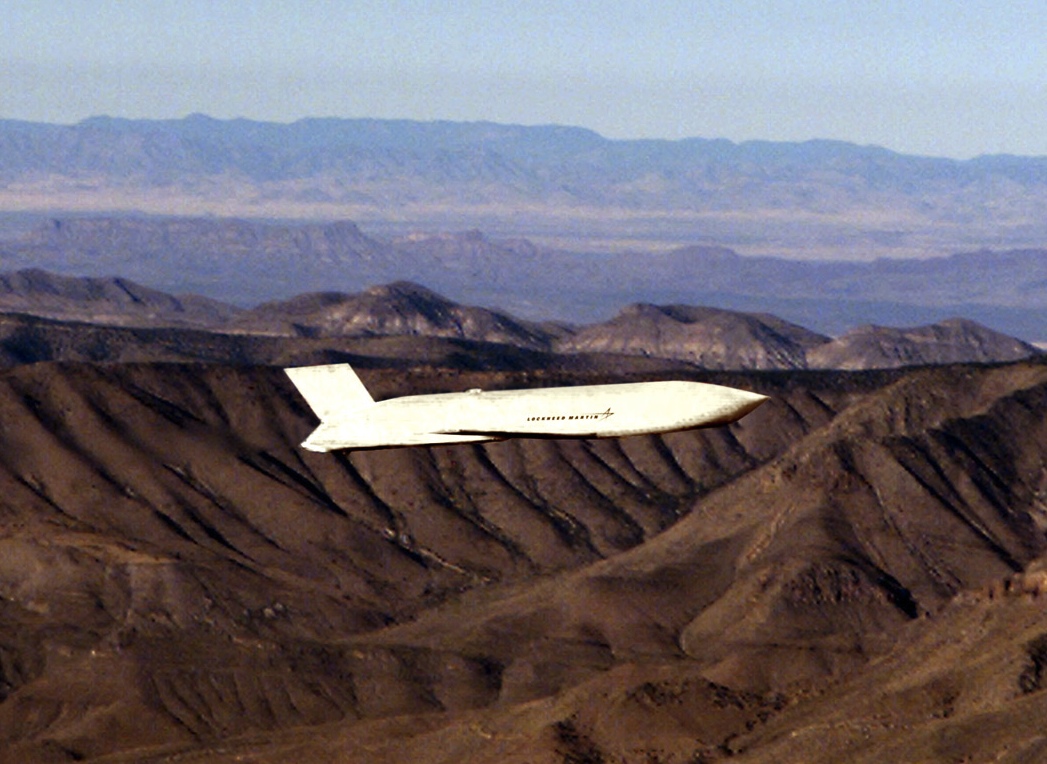
Agm-158_JASSM
Yet more weapons: The JASSM

W.J. Astore

Once again, the U.S. military has launched Tomahawk cruise missiles against Syria, as well as a new weapon called the JASSM-ER, described as “a stealthy long-range air-fired cruise missile.”  According to FP: Foreign Policy, the latter weapon is “likely being closely watched in Tokyo, where military officials are considering purchasing the missile to give the country’s military a long-range strike capability against North Korean targets, Japan Times reports.”  In short, the U.S. military demonstrated a new weapon for an ally and potential client while striking a country (Syria) that has no way of striking back directly at the U.S.

Here’s a report from Defense Industry Daily on the weapons used:

April 16/18: JASSM-ER makes its combat debut The USAF has fired Lockheed Martin’s AGM-158B Joint Air-to-Surface Standoff Missile Extended Range (JASSM-ER) missile in combat for the first time. 19 such missiles were launched from two B-1B Lancer bombers during last weekend’s sortie against Syrian chemical weapon research and storage facilities, and were joined by 57 Tomahawk missiles launched from US naval assets, as well as Storm Shadow and SCALP missiles from British and French warplanes. While Russian sources in Syria claim that Russian and Syrian air defenses managed to down 71 or the total 105 cruise missiles launched during the Friday night operation—claims Washington refutes—a report on the mission by the Aviationist reckon the newer missiles—in particular the JASSM-ER, SCALP and Storm Shadow—would have been highly effective against their targets. 

One thing is certain: business is booming yet again for Lockheed Martin.

Technology shapes thought even as it becomes a substitute for it.  It amazes me, for example, how the U.S. military threw technology at the “problem” of Vietnam in an attempt to “win” that war.  Everything short of nuclear weapons was unleashed on Southeast Asia, yet those brave people refused to surrender.  U.S. Presidents from Kennedy to Nixon were always sending messages through airpower and other forms of destructive technology, but the Vietnamese couldn’t have cared less about those “messages.”  They had one goal: expel the invader, unify the country, and they stuck to it despite all the high explosive, napalm, defoliants, electronic fences, and everything else inflicted upon them.

Americans tend to see technology as a panacea.  Even deadly technology.  So, for example, what’s the proposed solution to gun violence in the USA?  According to the NRA and our president, it’s more guns.  What’s the solution to violence in Syria?  According to the military and our president, it’s more bombs and missiles.  One clear winner emerges here: those who produce the guns, bombs, and missiles.

Tomahawks and drones and similar weapons are all about action at a distance. They incur no risk of harm to U.S. troops.  As a result, America’s leaders use them liberally to send “signals” and to add to the body count.  They strike because they can and because it’s relatively easy.  Action serves as a substitute for thought.  The only strategy is to keep blowing things up.

The U.S. strategy, such as it is, is defined and driven by Tomahawks and drones and related weaponry.  These weapons make possible “global reach, global power,” but they do not facilitate global thinking.  Promising decision or at least quick results, they lead only to more bodies and deeper quagmires.

The U.S. keeps getting bogged down in wars in part because of the faith the government places in technology.  So much is invested in military weaponry that it becomes a substitute for thought.

But there are no missions accomplished: there is only more destruction.