New Year’s Resolution: End America’s Quagmire Wars

b-52
B-52s against drug labs.  Really?

W.J. Astore

Here’s a New Year’s resolution: How about ending America’s quagmire wars?

There are many reasons why Afghanistan, Iraq, and similar countries will always be quagmires for the U.S. military.  U.S. troops have difficulty identifying friend from foe, and indeed “friendly” troops and police sometimes turn on their U.S. counterparts.  U.S. troops will always be a foreign presence, heavily armed and invasive, often (mis)guided by incomplete or misleading intelligence.  Almost inevitably, they are seen as backing corrupt and kleptocratic governments, whether in Kabul or Baghdad.  At the same time, U.S. bombing and search and destroy missions kill innocents even as they generate refugees—and new enemies.  Under such violent and tumultuous conditions, you can forget about winning hearts and minds or creating lasting political stability.

Facing this no-win scenario, savvy U.S. leaders would pull troops out immediately, but of course pulling out is never an option.  Whether it’s Bush or Obama or Trump, the preferred “solution” to unwinnable quagmires is to “surge” (more troops, more airpower, more “advisers,” more weaponry) or to dither with tactics.  Old theories are trotted out, such as pacification and counterinsurgency and nation-building, dressed up with new terms and acronyms such as asymmetrical warfare, the gray zone, MOOTW (military operations other than war), and VEOs, or violent extremist organizations, known to most people as terrorists.

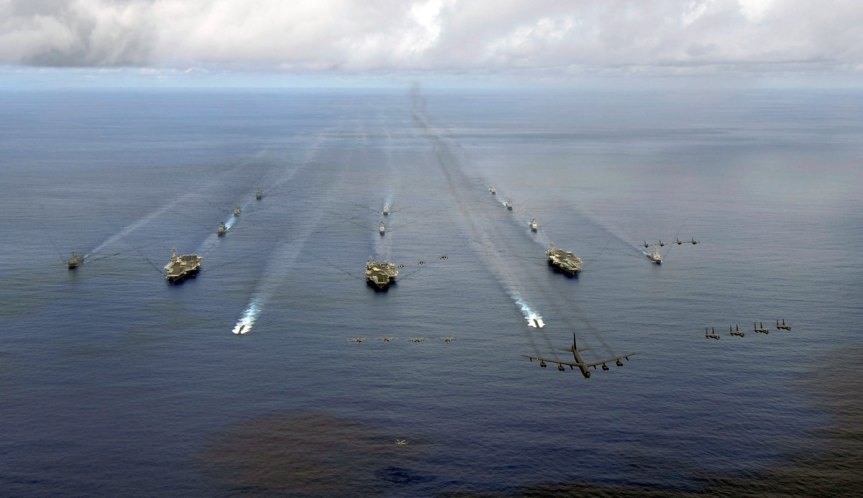
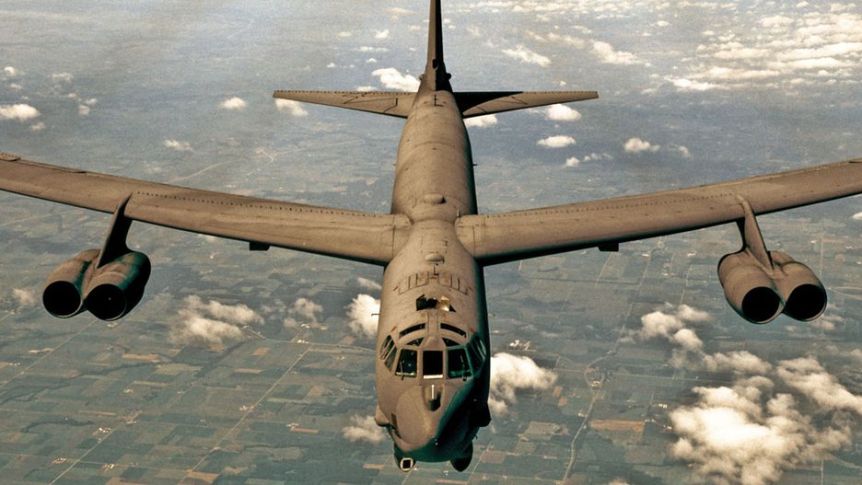
The mentality among America’s generals is that the war must go on.  There must be a can-do way to defeat VEOs in the grey zone using asymmetrical warfare while engaged in MOOTW.  Thus B-52s, those venerable strategic bombers from the early Cold War era, are now being used in Afghanistan to “asymmetrically” destroy drug laboratories associated with Taliban funding, yet another instance of the U.S. military swinging a sledgehammer to kill a gnat.

After 16 years, if you’re calling in B-52s to flatten small drug labs, this is not a sign of impending victory.  It’s a sign of desperation — a sign of a totally bankrupt strategy.

The same is true of the use of MOAB in 2017.  It’s not a sign of strength to use such blockbuster bombs on an undeveloped country like Afghanistan.  It’s a sign of desperation.  Of having no coherent strategy.  Of throwing munitions at the wall and seeing which one makes the biggest boom.

Of course, a key aspect of this is domestic politics.  The target of B-52s and MOABs isn’t always the Taliban and similar VEOs.  It’s American public opinion.  For Trump, it’s like, “See?  We used MOAB.  We’re using B-52s.  Obama didn’t do this.  We’re tougher–better–stronger.  We’re taking the gloves off.”

When America’s military is not taking metaphorical gloves off, it’s learning to eat soup with a knife.  That’s the title of Lieutenant Colonel John Nagl’s book on counterinsurgency, abbreviated as COIN in military circles.  A decade ago, Nagl worked with General David Petraeus to rewrite the book on COIN, which enjoyed a brief renaissance during the Iraq and Afghan surges.  But COIN methods (the idea of killing or otherwise neutralizing guerrillas/terrorists/VEOs while winning the hearts and minds of the people) haven’t worked to clean up American-made messes in those countries, a result contained within the metaphor.  For if you really want to eat soup, best to put away military knives, pick up the soup bowl, and slurp away.

But America’s warfighters, with their affinity for knives, persist in efforts to develop new and “better” ones (spoons are for wimps!) as they flail away in various soup bowls (or, if you prefer, Petri dishes, which was General John Nicholson’s, the U.S. commander in Afghanistan, “bowl” of choice to describe the Af-Pak region in his testimony to Congress in 2017).

To use a different soup metaphor, too many cooks spoil the broth.  The U.S. military’s interventions—its various and varying recipes for success, the ingredients of which are almost exclusively violent—never add up to a palatable product.

William S. Smith put it well in a recent article for The American Conservative.  American military interventions, Smith notes, driven in large part by COIN theory, mostly ignore local history, religion, and culture.  The resulting quagmire, according to Smith, is predictable:

The fact is that all political order at all times and everywhere emerges from an extremely complex set of unique symbols, practices, and beliefs that are rooted in history, culture, and religion. Political order does not merely flow from safety and the protection of property but out of a cultural inheritance that provides citizens with a sense that their society embodies something larger than themselves. To them, the symbols and traditions of their society reflect a certain divine order. An invading army from a foreign civilization will always be seen as a threat to that order whether citizens embrace violence or not. Without a major revolution in culture an occupying army will be in no position to generate more than a skin-deep and transitory political reconciliation. (Emphasis added)

Call it COINfusion followed by defeat.  The U.S. military tried the “occupying army” part of this with its various surges in Iraq and Afghanistan, and the political results were as Smith says: skin-deep and transitory.  The “new” American approach seems to be a variation of Richard Nixon’s Vietnamization policy of turning the fight over to the “indigenous” peoples, whether Afghans, Iraqis, etc. while continuing to bomb, to supply weaponry, and to provide training and “advice” with U.S. boots on the ground.  Such an approach is sold to the American people as staying the course to victory, with the exact terms of “victory” left undefined.

But what price “victory”, even an illusory one?  A staggering one.  By the end of fiscal year 2018, America’s post-9/11 wars will have cost the taxpayers nearly $5.6 trillion, notes the “Cost of Wars” project at Brown University.  With U.S. generals speaking of “generational” wars, this enormous burden will only continue to grow in the future—unless we wise up.

So my New Year’s resolution for 2018 is simple.  End quagmire wars.  Bring the troops home.  After all, what’s wrong with saving blood and treasure?
The Doomsday Machine: The Madness of America’s Nuclear Weapons

41zhRYUMyYL

W.J. Astore

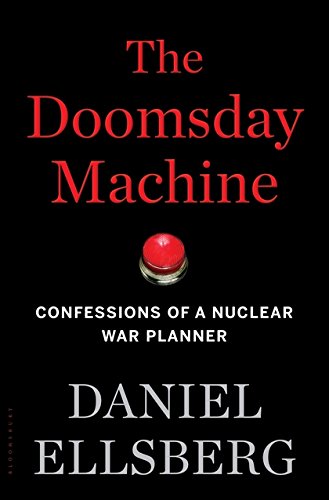
I just finished Daniel Ellsberg’s new book, The Doomsday Machine: Confessions of a Nuclear War Planner.  Talk about hair-raising!  Ellsberg, of course, is famous for leaking the Pentagon papers, which helped to end the Vietnam war and the presidency of Richard Nixon as well.  But before Ellsberg worked as a senior adviser on the Vietnam war, he helped to formulate U.S. nuclear policy in the late 1950s and early 1960s.  His book is a shattering portrayal of the genocidal nature of U.S. nuclear planning during the Cold War — and that threat of worldwide genocide (or omnicide, a word Ellsberg uses to describe the death of nearly everything from a nuclear exchange that would generate disastrous cooling due to nuclear winter) persists to this day.

Rather than writing a traditional book review, I want to list some memorable facts and lessons I took from the book, lessons that should lead us to question the very sanity of America’s leaders.  To wit:

  1. U.S. nuclear war plans circa 1960 envisioned a simultaneous attack on the USSR and China that would generate 600 million deaths after six months.  As Ellsberg notes, that is 100 Holocausts.  This plan was to be used even if China hadn’t directly attacked the U.S., i.e. the USSR and China were lumped together as communist bad guys who had to be eliminated together in a general nuclear war.  Only one U.S. general present at the briefing objected to this idea: David M. Shoup, a Marine general and Medal of Honor winner, who also later objected to the Vietnam War.
  2. The U.S. military consistently overestimated the Soviet nuclear threat, envisioning missile and bomber gaps that didn’t exist.  In the nuclear arms race, the U.S. was often racing itself in the fielding of more and more nuclear weapons.
  3. General Curtis LeMay, the famous commander of Strategic Air Command (SAC) and later AF Chief of Staff, said that once war started, politicians like the president had no role to play in decision-making.
  4. When the atomic bomb was first tested in 1945, there were fears among the scientists involved that the atmosphere could be ignited, ending all life on earth.  The chance was considered remote (perhaps 3 in a million), so the scientists pressed ahead.
  5. The Cuban Missile Crisis of 1962 came much closer to nuclear war than most people recognize.  Soviet submarines in the area, attacked by mock U.S. depth charges, were prepared to launch nuclear torpedoes against U.S. ships.  Fidel Castro’s air defenses were also preparing to shoot down American planes, which may have ended in U.S. air attacks and an invasion in which Soviet troops on Cuba may have used nuclear weapons to defend themselves.
  6. The U.S. military was (and probably still is) extremely reluctant to reveal nuclear secrets to senior American civilian leaders, including even the President himself.  Ellsberg, possessing the highest security clearances and acting with presidential authority, had to pry answers from military officers who refused to provide detailed and complete information.
  7. The U.S. has always refused, and continues to refuse, to pledge to a “no first use” policy for nuclear weapons.
  8. The U.S. remains the only country to have used nuclear weapons (Hiroshima and Nagasaki).  Yet, as Ellsberg notes, the U.S. uses nuclear weapons all the time — by threatening their use, as President Eisenhower did during the Korean War, as President Nixon did during the Vietnam War, and as President Trump is doing today, promising “fire and fury” against North Korea.  The U.S. uses nuclear weapons like a loaded gun — holding it to an enemy’s head and threatening to pull the trigger, Ellsberg notes.  In short, there’s nothing exceptional about Trump and his nuclear threats.  All U.S. presidents have refused to take nuclear attacks “off the table” of options for U.S. action.
  9. Interservice rivalry has always been a driver of U.S. nuclear force structure and strategy.  The Navy (with its nuclear submarine programs, Polaris followed by Trident) and especially the Air Force (with its ICBMs and bombers) jealously guard their nuclear forces and the prestige/power/budgetary authority they convey.
  10. President Eisenhower’s emphasis on massive retaliation (as represented by SAC and its war plan, the SIOP) was a way for him to limit the power of the military-industrial complex (MIC).  But once Ike was gone, so too was the idea of using the nuclear deterrent as a way of restricting U.S. expenditures on conventional weaponry and U.S. adventurism in foreign wars, e.g. Vietnam.  (It should be said that Ike’s exercise at limiting the MIC in America held the world as a nuclear hostage.)
  11. Ellsberg shows convincingly that control over U.S. nuclear weapons was decentralized and delegated to much lower levels than most Americans know.  It’s not the case that only the president can launch a nuclear war.  Especially in the late 1950s and early 1960s, Ellsberg shows how it was possible that field-grade officers (majors and colonels) could have made decisions in the heat of battle to release nuclear weapons without direct orders from the president.
  12. Most Americans, Ellsberg notes, still don’t understand the huge quantitative and qualitative differences between atomic bombs and hydrogen (thermonuclear) weapons.  Hydrogen bombs are measured in megatons in equivalent TNT yield; atomic bombs are in kilotons.  In short, hydrogen bombs are a thousand times more destructive than atomic ones.  And this is just their explosive yield.  Radioactive fallout and massive fires are even bigger threats to life on earth.
  13. Most Americans still don’t understand that even a smallish nuclear exchange involving a few dozen hydrogen bombs could very well lead to nuclear winter and the deaths of billions of people on the earth (due to the widespread death of crops and resulting famine and disease).
  14. Despite the genocidal threat of nuclear weapons, the U.S. is persisting in plans to modernize its arsenal over the next 30 years at a cost of $1 trillion.

Ellsberg sees this all as a form of collective madness, and it’s hard to disagree.  He quotes Nietzsche to the effect that madness in individuals is rare, but that it’s common among bureaucracies and nations.  The tremendous overkill inherent to U.S. nuclear weapons — its threat of worldwide destruction — is truly a form of madness.  For how do you protect a nation or uphold its ideals by launching a nuclear war that would kill nearly everyone on earth?  How does that make any sense?  How is that not mad?

Ellsberg ends his “confessions” with many sane proposals for downsizing nuclear arsenals across the world.  But is anyone in power listening?  Certainly not U.S. presidents like Trump or Obama, who both signed on to that trillion dollar modernization program for U.S. nuclear weapons.

Ellsberg shows us there have been many chair-bound paper-pushers in the U.S. government who’ve drawn up plans to murder hundreds of millions of people — to unleash doomsday — all in the name of protecting America.  He also shows how close they’ve come to doing just that, especially during the Cuban Missile Crisis, but during other crises as well.

Nuclear brinksmanship, threats of nuclear war, and similar uses of nuclear weapons to intimidate hold the potential for catastrophe.  Miscalculations, mishaps, mistakes, are more than possible in an atmosphere of mistrust, when words and actions can be misinterpreted.

Ellsberg’s recommendations for changes point the way to a better world, a world where the threat of nuclear doomsday could be much reduced, perhaps eliminated completely.  The question remains: Is anyone in power listening?

Mike Pence’s Visit to Afghanistan

pence_60385_c0-0-4500-2623_s885x516
VP Pence, in his military flight jacket, posing for selfies with the troops

W.J. Astore

Vice President Mike Pence made a surprise visit to Bagram air base in Afghanistan, reassuring the assembled troops that they are winning the war there, despite evidence to the contrary.  For the occasion he donned a spiffy-looking leather military flight jacket, customized for him, as have other presidents and VPs going back at least as far as Ronald Reagan.

I’ve written about this before, this adoption of military clothing by civilian commanders.  It’s an insidious blurring of the lines between the civilian chain of command — and the crucial idea of civilian control of the military — and the military chain.  You don’t see generals and admirals on active duty showing up to testify before Congress in civilian coat and tie: they wear their uniforms because that’s who they are–commissioned military officers.  Similarly, our civilian leaders, whether Ronald Reagan or Barack Obama or Donald Trump, should wear their “uniform,” typically civilian coat and tie, for that is who they are.  They should never wear military flight jackets and similar items, no matter how “cool” or “supportive” they think they look.  It sends the wrong sartorial and political signals.

I just can’t imagine Dwight D. Eisenhower, who was of course a five-star general before he became president, wearing military jackets and hats while he was president.  Ike knew better.  He was the civilian commander in chief, thus he dressed like it.  Same with George C. Marshall.  He wasn’t parading around in military jackets when he was Secretary of State in the aftermath of World War II.

Hitting another common theme, Pence was at pains to praise the troops as heroes, noting that “You are the best of us.”  Why this need for endless flattery of the troops?  Recall that President Obama praised the U.S. military as the finest fighting force in history.  Satirically, you might call it the 4F military: the finest fighting force since forever.

America’s civilian leaders need to put aside hyperbolic praise and wannabe military uniform items.  There’s a far better way of complimenting our troops while leading America.  That better way?  Ending America’s wars and bringing the troops home.

Selling Drones, Exporting War

predator
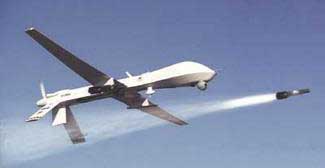
Exporting Drones: What could go wrong?

W.J. Astore

The business of America is weapons sales.  That much is true when you consider the following snippet today from FP: Foreign Policy:

Drone sales. The United States is looking to make changes to a major international arms control treaty that would open the door for wider exports of military drones, Defense News reports. The proposed change to the Missile Technology Control Regime would make it easier for nations to sell drones.

Proliferation of drones: What could go wrong?

America is the world’s leader in drone technology, and the companies that have developed them see even bigger profits on the horizon if they can sell them to America’s allies around the globe.  The nature of drones is that they make killing easier — usually bloodless — for those countries that possess the technology.  They promise results, but the American use of drones in places like Iraq and Afghanistan has not led to any resolution of those conflicts.  Only the body count has increased.

As I wrote in 2012:

A famous utterance attributed to General Robert E. Lee during the U.S. Civil War is, “It is well that war is so terrible – lest we should grow too fond of it.” His words capture the idea that war is an elemental thing – and also a seductive one. Much like a storm-tossed ocean, war is relentless, implacable, and unsparing. It is chaotic, arbitrary, and deadly. It is not to be bargained with; only to be endured.

Given its ferocity, its rapacity, the enormity of its waste and devastation, war is best to be avoided, especially since war itself has its appeals, especially since war itself can be intoxicating, as the quotation from Lee suggests, and as the title of Anthony Loyd’s fine book on the war in Bosnia, My War Gone By, I Miss It So (1999), indicates.

What happens when we decouple war’s terrible nature from its intoxicating force? What happens when one side can kill with impunity in complete safety? Lee’s words suggest that a nation that decouples war from its terrors will likely grow too fond of it. The temptation to use deadly force will no longer be restrained by knowledge of the horrors unleashed by the same.

Such thoughts darken the reality of America’s growing fondness for drone warfare. Our land-based drone pilots patrol the skies of foreign lands like Afghanistan in complete safety. They unleash appropriately named Hellfire missiles to smite our enemies. The pilots see a video feed of the carnage they inflict; the American people see and experience nothing. In rare cases when ordinary Americans see drone footage on television, what they witness is something akin to a “Call of Duty” video game combined with a snuff film. War porn, if you will.

Many Americans seem happy that we can smite foreign “militants” at no risk to ourselves. They trust that our military (and the CIA) rarely misidentifies a terrorist, and that “collateral damage,” that mind-numbing euphemism that obscures the reality of innocent men, women, and children obliterated by missiles, is the regrettable price of keeping America safe.

But the reality is that sloppy intelligence and the fog and friction of war combine to make seemingly antiseptic drone warfare much like all other forms of war: bloody, wasteful, and terrible. Terrible, that is, for those on the receiving end of American firepower. Not terrible for us.

There is a real danger that today’s drone warfare has become the equivalent to the Dark Side of the Force as described by Yoda in The Empire Strikes Back: a quicker, easier, more seductive form of terror. It is indeed seductive to deploy the technological equivalent of Darth Vader’s throat-constricting powers at a safe distance. We may even applaud ourselves for our prowess while doing so. We tell ourselves that we are killing only the bad people, and that the few innocents caught in the crosshairs constitute an accidental but nonetheless unavoidable price of keeping America safe.

In light of America’s growing affection for drone warfare combined with a disassociation from its terrible results, I submit to you a modified version of General Lee’s sentiment:

It is not well that war grows less terrible for us – for we are growing much too fond of it.

The USA Is Number One — In Weapons Sales

f-35
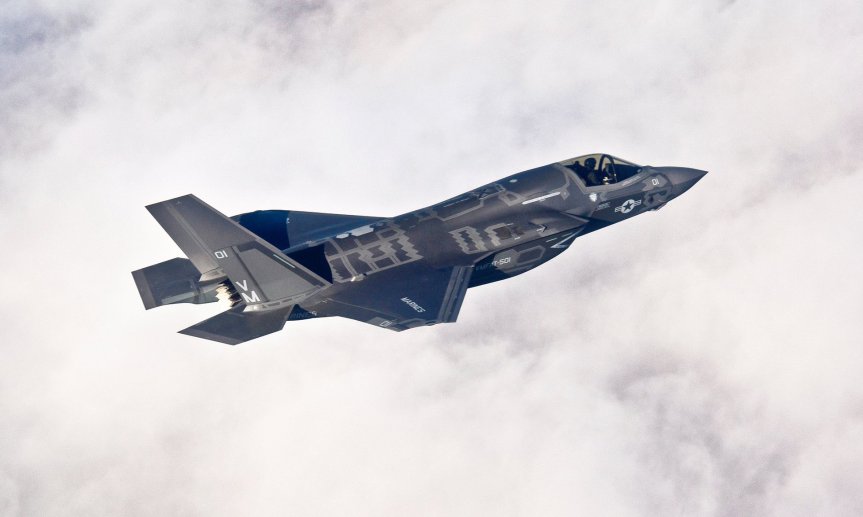
Arms Sales and Profits: Up, Up, and Away!

W.J. Astore

Once again, the USA leads the world in weapons sales, notes SIPRI, the Stockholm International Peace Research Institute.  The 100 biggest arms producers accounted for $375 billion in weapons sales in 2016, with US firms having by far the largest share at $217 billion.  That’s right: the US accounts for roughly 58% of the global arms trade. We’re #1!  We’re #1!

Not only do we arm our friends but our foes as well, notes FP: Foreign Policy, which has the following SitRep (situation report) for today:

U.S. weapons used by ISIS. A new report from Conflict Armament Research, a U.K.-based weapons tracking group, outlines in fascinating detail the industrial-scale weapons manufacturing capabilities the Islamic State boasted of in its prime… But what might be most notable are the American-supplied weapons found amid the ruins — the aftermath of secretive American efforts to provide small rebel groups with anti-tank rockets and other guided munitions. The transfer of the rockets, purchased from European countries, violated end-user agreements signed by the United States pledging not to transfer the weapons to third parties. In some cases, it took only a few weeks for the weapons to end up in the hands of Islamic State fighters after being delivered to allegedly friendly forces.  

Let’s face it: $217 billion is an enormous amount of money, and the weapons trade is enormously profitable to the US.  America’s wars are not coming to an end anytime soon: there’s simply too much money being made on manufacturing and selling war.

This puts me to mind of observations made by Father Daniel Berrigan, who served prison time for protesting the Vietnam War.  Berrigan wrote with eloquence against war, and his words from a half-century ago are as timely today as they were during the Vietnam protests:

“we are powerless to inquire why it is easier to continue to slaughter than to stop it, why the historical cult of violence has become the mainstay of policy–both foreign and domestic, or why our economy so requires warmaking that perpetual war has united with expanding profits as the chief national purpose.”

And that was when the US still had a manufacturing base for consumer goods that hadn’t withered from “free” trade deals like NAFTA and other globalization efforts.  The global market the US dominates today is not for consumer goods but for wares of destruction.

When you sow the winds of weaponry and war, and profit mightily from it, do you not eventually have to reap the whirlwind of destruction?

Donald Trump and His Global War on Truth

Trump-Locker-Room-Cartoon-58b8fdb25f9b58af5cc8205d
Too many lies

W.J. Astore

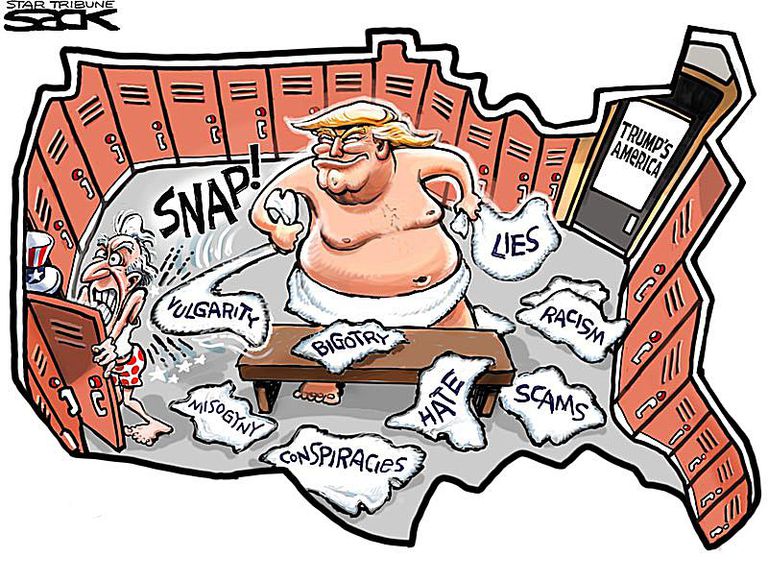
Donald Trump is waging a global war on truth.  He is the anti-truth president.  From Trump steaks to his “university” to his support of the “birther” movement against Barack Obama, he’s perpetually selling lies.  Now he’s selling lies on a global stage.  By making everything potentially a lie, e.g. climate change as a “Chinese hoax,” Trump is doing his best to demolish facts, paving the way to do whatever he pleases.

Trump believes he can have his own facts and tweet them too.  We can blame Trump for being the vain, venal, and vile man that he is, but America elected him (yes, not all Americans, but enough to carry the Electoral College).  He’s a con man, a crafty one, and the media can’t look away, nor can the rest of us.

How did we end up with Trump and his assault on truth?  I’d like to focus on two reasons.  The first was noted by Bernie Sanders back in September of 1998.  Then a congressman, Sanders noted how the Democratic Party under the Clinton regime, with its corporate-friendly pursuit of “free” trade and feel-good globalization, was screwing the working classes.  Sanders then issued the following warning (in an editorial in The Nation entitled, “Globalization’s the Issue”):

Right-wing populists like Pat Buchanan are lining up to ride to power on public fear and anger about globalization.  If corporate globalism continues to result in deteriorating conditions of life for ordinary Americans, we’re likely to see a rise of scapegoating demagogy and virulent right-wing economic nationalism.

Scapegoating demagogy?  Trump and Mexicans, Trump and Muslims, Trump and immigrants in general.  Right-wing economic nationalism?  Trump and “making America great again” through massive military spending and weapons exports combined with tax cuts that are sold as helping the poor even as they reward the rich.

By betraying the working classes and becoming yet another business party, the Clinton Democrats helped pave the way for right-wing populists and unprincipled opportunists like Trump.  Indeed, by running the corporate-friendly Hillary Clinton against Trump in 2016, the Democratic Party turned its back on their own populist, Bernie Sanders, who genuinely was (and is) concerned with helping the working classes.

The second reason for Trump’s assault on truth has been all around us for decades, but it was exacerbated by the 9/11 attacks.  Think back to the Vietnam War, the Pentagon Papers, and Watergate.  If there’s one thing we learned from these debacles, it’s how much our government lies to us.  Now fast-forward to 9/11.  In the aftermath of those attacks, the Bush/Cheney administration did its level best to deflect all responsibility, and especially their responsibility, for the attack.  Al Qaeda inflicted a major defeat on the U.S., yet no one took the blame.  The buck stopped nowhere.  Instead, Bush/Cheney drove a climate of fear and revenge, attacking Afghanistan followed by a disastrous war in Iraq.

By turning so quickly to war on a massive scale, Bush/Cheney knew that most Americans would rally around the flag.  They further cynically used the moment to pass the PATRIOT Act to extend their power and that of the government.  Choosing not to rally Americans, they instead made them fearful, obedient, and passive (Go to Disney!  Go shopping!).

The leaders and the government that so badly let us down on 9/11 worked to convince us that only those same leaders and government could keep us safe after 9/11.  Bush/Cheney and Crew, in essence, told a Big Lie that led, I think directly, to a Big Liar being elected as president in 2016.  But I don’t just blame Bush/Cheney.  The Obama administration refused to call these men to account, e.g. no prosecution for torture and other war crimes.  Furthermore, Obama expanded the legacy of illegal surveillance, excessive secrecy, and incessant warfare that has characterized the manic opportunism of a government that refuses accountability, whether for the defeat of 9/11 or for the ongoing disasters of Afghanistan, Iraq, Libya, et al.

Long in the making, Trump’s victory march of 2016 quickened its pace in the aftermath of 9/11 and all the anti-Muslim, anti-immigrant, and anti-anything-I-don’t-like, hysteria stirred up by Bush/Cheney and Crew.  But its impetus goes back further: to the lies and deceptions revealed by the Pentagon Papers, to the sordid lies and cover-ups of Watergate, and to the abandonment of the working classes by Democrats, the latter of which provided fertile soil for right-wing populist demagogy to take root and grow.

Whether led by democrats or republicans, our government has been telling us so many lies for so long that it’s not surprising we now have a president whose chief skill is as a con man and a liar.  His global war on truth is the culmination of too much governmental lying and too little attention paid to the real needs of ordinary Americans.

The Key Reason Why the USA Keeps Losing Wars

lie

W.J. Astore

In a word, dishonesty.  That’s the key reason why America keeps losing its wars of choice, whether in Iraq, Afghanistan, Libya, Syria, or elsewhere.

Dishonesty is nothing new, of course.  Recall the lessons from the Pentagon Papers in the Vietnam War.  U.S. leaders knew the war was lost, yet they lied to the American people about seeing lights at the end of tunnels.  Recall the Iraq war and the “fixing” of intelligence to justify the invasion.  Today the newspeak for Afghanistan is “corners,” as in we’ve turned yet another corner toward victory in that 16-year conflict, according to military testimony before Congress this week.

About those “corners,” here’s a concise summary from FP: Foreign Policy:

Afghanistan turning a corner. Again. Or still? After 16 years of war, the United States and its Afghan partners “have turned the corner,” and Kabul’s battered forces are “on a path to a win.” the top U.S. general there told reporters on Tuesday.

But FP’s Paul McLeary notes that we’ve heard this before. American generals have been seeing victory on the horizon since at least 2007, and “Gen. John Nicholson is at least the eighth top commander in the last decade to forecast a pathway to victory in a war that has dragged on nearly all century, and his optimistic forecasts contrast starkly with deteriorating Afghan government control and a resurgent Taliban.”

The military and our leaders can’t even level with us on the number of troops deployed in Syria.  Consider this report today, courtesy of FP: Foreign Policy:

The Pentagon is good at a great many things, but they can do absolutely magical things with troop numbers. The U.S. Central Command announced this week that it was pulling 400 Marines out of Syria, where they had been providing artillery support for the Syrian Democratic Forces battling ISIS.

The number is remarkable given that the military continues to insist there are only 503 U.S. troops in Syria overall. And somehow, that 503 number has managed to remain exactly the same even after the Marines left. Recently, a general running U.S. special operations in Iraq and Syria said there were 4,000 U.S. troops in Syria. He quickly backtracked, saying the number was around 500 and holding steady, despite all actual physical evidence to the contrary.

Do we have 500 troops in Syria, or 2000, or 4000?  Who are our generals trying to fool?  Our rivals and enemies know how many troops we have in their regions and countries.  Why can’t the American people have a full and honest accounting of what “our” troops are up to in places like Syria?

Whether from the Executive branch or from the military, the dishonesty keeps coming.  This is exactly why we fail.

Why are we so persistent in our folly?  For several reasons.  Some people come to believe their own lies, their own happy talk.  Careerism plays a role; so does politics.  Money is a big concern, since there’s so much of it to be made in war.  Some people even think it’s OK to lie if it’s for the “right” reason, i.e. better to project an image of dumb strength than one of pacific wisdom.  America must never appear “weak”!  For some, that means never quitting a war, no matter how foolish.  Better to lie about “progress” than to admit problems that should lead to dramatic change.

Deception is at the heart of war, but we’re supposed to be deceiving the enemy, not ourselves.  We’ve allowed public relations — driven by dishonesty — to rule our thinking and reporting on war.  But, to paraphrase a saying of Richard Feynman with respect to the Space Shuttle Challenger disaster,

To wage a successful war, reality must take precedence over public relations, for the war gods cannot be fooled.

And to borrow from the penultimate sentence of his report (using the Pentagon in place of NASA): The Pentagon “owes it to the citizens from whom it asks support to be frank, honest, and informative, so that these citizens can make the wisest decisions for the use of their limited resources.”

Imagine if our leaders were frank, honest, and informative about our wars and their costs?  But they prefer dishonesty instead — and that is why they (and we) fail.

The Afghan War Isn’t a Stalemate: It’s a Defeat

new camera 007
My old chess clock.  Time has run out, America.

W.J. Astore

Stalemate: That’s the word of choice being used by U.S. generals to describe the Afghan War.  What, exactly, is a stalemate?  I played chess at an early age, caught up in the Bobby Fischer craze of the early 1970s, and I still play occasionally.  In chess, a stalemate is a special kind of draw, and an often frustrating one.  Put concisely, “Stalemate is a situation in the game of chess where the player whose turn it is to move is not in check but has no legal move.”

For example, I may be winning decisively, with only my opponent’s king left on the board.  But if I carelessly put my opponent’s (unchecked) king in such a position that his only move is into harm (or “check”), the position is stalemated.  My decisive material advantage makes no difference: the game is over, it’s a draw.  In effect, given my material advantage, it’s a win for him and a loss for me.

Is the Afghan War “stalemated”?  Not according to the U.S. military, since it believes the “stalemate” can be reversed, that the U.S. can still “win.”  Indeed, President Trump has already gone on record last week as saying his administration is winning in Afghanistan.  No stalemate here.

A stalemated chess match is simply a bad metaphor for the Afghan War.  It’s not that one side can’t make a legal move, therefore the game is over.  (Would that the war could end so easily and cleanly!)  The situation today in Afghanistan is that the Taliban continues to tighten its grip on the country, or, in chess terms, it’s enlarging its span of control over the board, even as U.S. and Coalition forces send more troops, expend more munitions, and issue more reports about how they can still win — as long as U.S. generals get exactly what they want.

So, if stalemate is the wrong word, what is the right one?  I have one: defeat.  U.S. and Coalition forces have been fighting the Afghan War for 16 years.  Surges have come and gone.  More than a trillion dollars has been spent.  Yet the enemy retains the initiative and largely dictates the terms of the conflict.  Whatever this is, it isn’t “victory”; it’s not “progress”; nor is it “stalemate.” It’s a lost position, a defeat, pure and simple.

There’s nothing wrong with defeat.  The very best chess grandmasters lose; and when they do, they almost always tip their king and resign before they’re checkmated (defeated utterly).  By doing so, they conserve their energy for the next opponent, even as they study the lost game so they can learn from their mistakes.

Isn’t it time the U.S. did the same in the Afghan War?  Admit a lost position, resign, and withdraw?  Then learn?

Trump, of course, says he’s all about winning.  He’ll continue to push pieces about the board, despite the lost position.  This is not reversing a stalemate (which, by the rules of chess, can’t be done).  It’s only delaying defeat – at a high cost indeed to all those “pieces” being shunted about and sacrificed on the chessboard that is Afghanistan.

U.S. Air Strikes and Civilian Deaths in the War on Terror

mosul-destroyed
Mosul, Iraq: Destroying the City to Save It?

W.J. Astore

U.S. and Coalition forces have seriously undercounted the number of civilians killed in air attacks against ISIS.  That is the key finding of an 18-month-long investigation led by Azmat Khan and Anand Gopal and published this week in the New York Times Magazine.  Khan/Gopal surveyed 103 sites of air strikes in northern Iraq, extrapolating from these attacks into other regions in which the Coalition launched air attacks against ISIS since 2014.  They conclude that between 8000 and 10,000 civilians have been killed in these attacks, far higher than the U.S. government’s estimate of roughly 500 civilians killed (or the 3000 civilian deaths estimated by Airwars.org over this same period).

Does it matter to Americans if the true count of civilian deaths is closer to 10,000 than 500?  To most Americans, sadly, I’m not sure it matters.  Not if these air strikes are described and defended as saving American and Coalition lives as well as killing terrorists.

Airwars.org keeps a running tally of U.S. and Coalition airstrikes in Iraq and Syria.  Their website today (11/19/17) records 28,380 strikes over an almost four-year period, using 102,082 bombs and missiles.  It would be remarkable if only a few hundred innocents were killed by such an astonishing number of bombs and missiles, and indeed they estimate that nearly 6000 civilians have been killed in these attacks.

Why are U.S./Coalition figures so much lower than those estimated by Khan/Gopal and Airwars.org?

In March 2013, I wrote an article for TomDispatch in which I explained that airpower and bombing missions are neither cheap nor surgical nor decisive.  More recently, I lamented the horrific euphemism of “collateral damage,” a term often used to elide the realities of death by bombing.  There are good reasons why officialdom in Washington is content to undercount the number of civilians killed in bombing and drone attacks overseas.  Some are obvious; others perhaps less so:

  1. It’s not in the best interests of the U.S. military to give a full and honest accounting of civilian casualties, so they don’t.
  2. A full and honest accounting requires direct investigations (boots on the ground) like the ones conducted by Khan/Gopal. These are not generally done, partly because they would expose U.S. troops to considerable risk.
  3. A full and honest accounting might suggest that air attacks are too costly, murderously so.  The Coalition and the U.S. military prefer to advertise airpower as a “precise” and “decisive” weapon, and of course the Coalition relies on airpower to keep their casualties limited.
  4. Related to (3), as airpower is sold as “surgical” and decisive, there are billions and billions of dollars riding on this image.  Think of the hundreds of billions of dollars invested in warplanes, drones, and munitions.  Is the U.S. willing to suggest that this approach is often not that effective in the “war on terror”?  Even worse, that it results in the death and grievous wounding of thousands of innocent men, women, and children? That it may, in fact, exacerbate terrorism and intensify the war?
  5. Another possible angle: Do you want to tell pilots and other crew members that their bombs and missiles often kill innocents rather than the enemy? What would that do to morale?

When civilian deaths are mentioned in the U.S. media, they are often explained, or explained away, as the byproduct of ISIS/ISIL using innocents as human shields, or of the messiness and unpredictability of urban warfare in densely packed cities like Mosul.  But the Khan/Gopal study notes that civilian deaths from the air war are often due to poor intelligence – a failure of process, the result of insufficient resources and inadequate understanding of events on the ground.  In a word, negligence.

Again, do Americans care about civilian casualties in Iraq or Syria or other faraway places?  We seem to have a blasé attitude toward foreign peoples being killed at a distance in air strikes.  I suppose this is so because those killings are termed “accidental” by military spokesmen even as they’re attributed to a nefarious enemy or to technological errors.  It’s also so because these deaths have been both undercounted and underreported in America.

In showing that the U.S. government seriously undercounts civilian casualties and by highlighting systemic flaws in intelligence-gathering and targeting, the Khan/Gopal study makes a major contribution to our understanding of the true costs of America’s endless war on terror.

National Defense versus Global (In)Security

armada
Carrier strike forces, bombers, fighters: As American as apple pie

W.J. Astore

Our government likes to talk about global security, which in their minds is basically synonymous with homeland security.  They argue that the best defense is a good offense, that “leaning forward in the foxhole,” or always being ready to attack, is the best way to keep Americans safe.  Hence the 800 U.S. military bases in foreign countries, the deployment of special operations units to 130+ countries, and the never-ending “war on terror.”

Consider this snippet from today’s FP: Foreign Policy report:

If Congress votes through the massive tax cuts currently on the House floor, it would likely mean future cuts to Pentagon budgets “for training, maintenance, force structure, flight missions, procurement and other key programs.”

That’s according to former defense secretaries Leon E. Panetta, Chuck Hagel and Ash Carter, who sent a letter to congressional leadership Wednesday opposing the plan. “The result is the growing danger of a ‘hollowed out’ military force that lacks the ability to sustain the intensive deployment requirements of our global defense mission,” the secretaries wrote.

“Our global defense mission”: this vision that the U.S., in order to be secure, must dominate the world ensures profligate “defense” spending, to the tune of nearly $700 billion for 2018.  Indeed, the Congress and the President are currently competing to see which branch of government can throw more money at the Pentagon, all in the name of “security,” naturally.

Here’s a quick summary of the new “defense” bill and what it authorizes (from the Washington Post):

The bill as it stands increases financial support for missile defense, larger troop salaries and modernizing, expanding and improving the military’s fleet of ships and warplanes. The legislation dedicates billions more than Trump’s request for key pieces of military equipment, such as Joint Strike Fighters — there are 20 more in the bill than in the president’s request — and increasing the size of the armed forces. The bill also outlines an increase of almost 20,000 service members — nearly twice Trump’s request.

In the House of Representatives, the bill passed by a vote of 356-70.  At least Congress can agree on something — more and more money for the Pentagon.  (The $700 billion price tag includes $65.7 billion “for combat operations in Iraq, Afghanistan, Syria, Yemen, various places in Africa, and elsewhere,” notes FP: Foreign Policy.)

Besides all this wasteful spending (the Pentagon has yet to pass an audit!), the vision itself is deeply flawed.  If you want to defend America, defend it.  Strengthen the National Guard.  Increase security at the border (including cyber security).  Spend money on the Coast Guard.  And, more than anything, start closing military bases overseas.  End U.S. participation in wars in Afghanistan, Iraq, and throughout the greater Middle East and Africa.  Bring ground troops home.  And end air and drone attacks (this would also end the Air Force’s “crisis” of being short nearly 2000 pilots).

This is not a plea for isolationism.  It’s a quest for sanity.  America is not made safer by spreading military forces around the globe while bombing every “terrorist” in sight.  Quite the reverse.

Until we change our vision of what national defense really means–and what it requires–America will be less safe, less secure, and less democratic.