The Disastrous Italian War Against Austria-Hungary (1915-18), the Rise of Fascism, and Trump’s Victory in 2016

W.J. Astore

My father’s family was Italian, and his relatives fought, suffered, and died in Italy’s wars before and during World War I.  In his diary, my dad recounted these relatives and their fates:

My mother as far as I can recall had two brothers in the [Italian military] service. One brother had an exploding shell land near him.  He was highly agitated.  A doctor who knew my mother’s family saw that he got a medical discharge.

His brother had a much more dangerous career in the Italian Army.  He was a forward observer for an artillery unit.  He was severely gassed on the Austrian front.  He survived the war but had a premature death from the effects of the gas.

Luigi, Uncle Louie, Astore had quite a career in the Italian Army.  My mother used to call him El Sargento.

Uncle Louie fought three years in the Turkish War [1911-12] and four years in World War 1.  He was a prisoner of war in Germany for a year.  I overheard a conversation and he remarked that things were tough as a prisoner and food was a scarce item.  He never told me about his experiences in World War 1.

So, my grandmother had one brother who had shell-shock (PTSD) and another who died prematurely from poison gas.  My grandfather had a brother (Luigi) who was a POW who nearly starved and who didn’t talk about his war experiences. (I am too young to have clear memories of Luigi, but photos show an unsmiling man, which is not surprising given his war experiences.)

War is all hell, as General William Sherman said, and my father’s family’s experience in Italy illustrates the truth of that.

A childhood friend of mine, who also had Italian parents, sent along a book recommendation to me: The White War: Life and Death on the Italian Front, 1915-1919 by Mark Thompson.  My friend wrote a nice little review of it in an email to me, which follows below:

The White War (about Italy’s WWI fight against the Austro-Hungarians) has been fascinating but also depressing.  The insistence of Italian staff officers to send poorly armed and trained men into a battlefield even more deadly than the western front (the Italians had to scale hills and mountains in the face of withering machine gun and artillery fire) boggles the mind.  The Italian high command also had the dubious distinction of ordering more summary executions of the rank and file than the Brits, French, Germans, and Austrians.  Illiterate peasants needlessly sent to their deaths in the hundreds of thousands with Italian military policemen stationed with machine guns to their rear with orders to fire on them in case they did not show the requisite élan.  (My mother’s paternal uncle fell in that war–I wonder what horrors he saw and experienced.)  If it did not already exist, surely the stereotypical Italian cynicism toward governmental authority resulted from the incompetence and brutality of Italian military leadership in WWI.  

With respect to Italian POWs and food scarcity during captivity, my friend noted the following startling fact that he gleaned from reading The White War:

Italian authorities made it a policy to prevent food packages from being sent to Italian POWs in Austrian control as part of their strategy to deter Italian soldiers from surrendering.  Many POWs died as a result.  Unbelievable.

So much for the alleged glories of war.  Italy’s war against Austria-Hungary, fought under bitterly cold conditions in the torturous terrain of the alps, is little known in the United States.  It was a disastrous struggle that consumed nearly a million men for little reason, and the frustrations of that war – the betrayal of common soldiers by societal elites – contributed to estrangement, bitterness, and the embrace of fascism in the 1920s as an alternative to the status quo.

In U.S. politics today, with the backdrop of President Donald Trump’s strong man posturing that recalls the thrusting belligerence of the Italian fascist dictator Benito Mussolini, are we witnessing something similar?  Recall that Trump in 2016 garnered  a lot of support in rural areas by taking a position against America’s wasteful wars, even as he beckoned to an unspecified “great” past.  Mussolini, who railed against Italy’s “mutilated victory” in World War I, also won support by calling for societal revival, even as he beckoned to the greatness of Italy’s imperial past.

Like Mussolini, Trump wasn’t (and isn’t) against war.  Rather, both men were against losing wars.  Appealing to tough-guy generals like George Patton and Douglas MacArthur, Trump promised Americans who had suffered they’d “win” again.  Like Mussolini, he promised a brighter future (endless victories!) through higher military spending and aggressive military action.  No more shame of “mutilated” victories — or so Mussolini and Trump promised.
Screen-Shot-2017-07-06-at-1.46.30-PM-1499363261
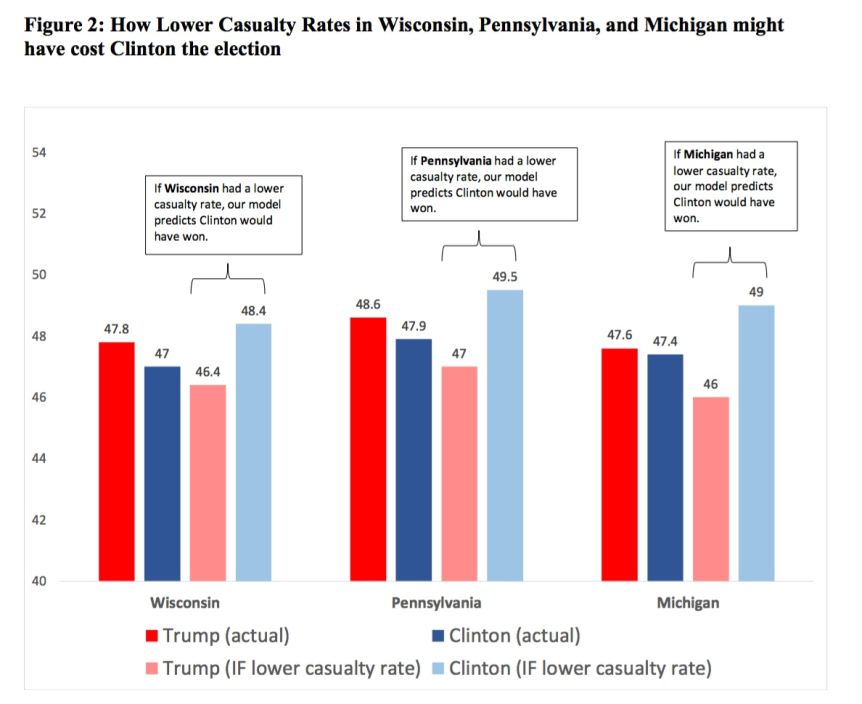
Did Trump win because he had the nerve to highlight the “mutilated victory” nature of America’s wars?  (Note that the caption here, from the Krinera/Shen study and the Zaid Jilani article, is unclear.  The intent is to show that higher casualty rates favored Trump, and, if rates had been lower, Hillary Clinton may have won instead.)

Trump tapped the anger and resentments of American families who’d borne the sacrifices and suffering of the mutilated victories of Afghanistan and Iraq.  He did this so well that, according to Zaid Jilani at The Intercept, citing a study by Boston University political science professor Douglas Krinera and University of Minnesota Law professor Francis Shen, it may have provided his winning margin of victory in 2016.  As the study notes (also see the illustration above):

“[The] three swing states — Wisconsin, Pennsylvania, and Michigan — could very well have been winners for [Hillary] Clinton [in 2016] if their war casualties were lower.”

Like rural Italian families in the aftermath of World War I, American rural families in the Bush-Obama “war on terror” rejected the status quo posturing of establishment politicians (e.g. Hillary Clinton), turning instead to the anger-driven nationalism (Italy first!  America first!) of self-styled strong men like Mussolini and Trump.

The question is, as America’s fruitless wars persist, and as rural American families continue to bear a disproportionate share of the burden of these wars, will “strong” men like Trump continue to prosper?  Put differently, will the Democratic Party finally have the guts to offer an alternative vision that rejects forever war across the planet?

We know what happened to Mussolini’s quest to make Italy great again — total defeat in World War II.  Will a similar fate befall Trump’s quest?

Time will tell.

One Grizzled Veteran’s Dream

W.J. Astore

Today I saw this bulletin from FP: Foreign Policy: 

OUTSIDE THE WIRE: Several years after pulling back, American troops will head outside the wire to battle the Taliban and turn up the air war, FP’s Paul McLeary and Dan De Luce report.

America’s wars never end.  So much for Armistice Day of 99 years ago.  In place of Woodrow Wilson’s eternal peace, we now have eternal war.  It doesn’t have to be this way.  We have a choice, as this article, that I wrote for Veterans Day in 2009, suggests.

Thirty years ago, I attended Boys State. Run by the American Legion, Boys State introduces high school students to civics and government in a climate that bears a passing resemblance to military basic training. Arranged in “companies,” we students did our share of hurrying up, lining up, and waiting (sound preparation, in fact, for my career in the military). I recall that one morning a “company” of students got to eat first because they launched into a lusty rendition of the Marine Corps hymn. I wasn’t angry at them: I was angry at myself for not thinking of the ruse first.

Today, most of my Boys State experience is a blur, but one event looms large: the remarks made by a grizzled veteran to us assembled boys. Standing humbly before us, he confessed that he hoped organizations like the American Legion and Veterans of Foreign Wars would soon wither away. And he said that he hoped none of us would ever become a member of his post.

At first, we didn’t get it. Didn’t he like us? Weren’t we tough enough? (Indeed, I recall that one of our adolescent complaints was that the name “Boys State” didn’t seem manly enough.)

Then it dawned on us what the withering away of organizations like the American Legion and the VFW would mean. That in our future young Americans would no longer be fighting and dying in foreign wars. That our world would be both saner and safer, and only members of an “old guard” like this unnamed veteran would be able to swap true war stories. Our role would simply be to listen with unmeasured awe and undisguised thanks, grateful that our own sons and daughters no longer had to risk life or limb to enemy bullets and bombs.

It pains me that we as a country have allowed this veteran’s dream to die. We as a country continue to enlarge our military, expand our foreign commitments, and fight seemingly endless wars, whether in Iraq, Afghanistan, or in other far-off realms of less-than-vital interest to us.

As a result of these wars, we continue to churn out so many new veterans, including so many wounded veterans, not forgetting those who never made it back.

Collectively, we Americans tend to suppress whatever doubts we have about the wisdom of our wars with unequivocal statements of support for our troops. And on days like Veteran’s Day, we honor those who served, and especially those who paid the ultimate price on the battlefield.

Yet, wouldn’t the best support for our troops be the achievement of the dream of that grizzled vet who cut through a young man’s fog thirty years ago?

2009-11-11-VDay2.jpg

Shouldn’t we be working to achieve a new age in which the rosters of our local VFWs and Legion posts are no longer renewed with the broken bodies and shattered minds of American combat veterans?

Sadly, as we raise more troops and fight more wars, we seem committed to the opposite. Our military just enjoyed its best recruiting class in years. This “success” is not entirely surprising. It’s no longer that difficult to fill our military’s expanding ranks because many of our young men and women simply have little choice but to enlist, whether for economic opportunity, money for college, or benefits like free health care.

Many of course enlist for patriotic reasons as well. Yet the ease of expanding our military ranks during a shooting war is also a painful reminder of the impoverishment of opportunities for young, able-bodied Americans – the bitter fruit of manufacturing jobs sent overseas, of farming jobs eliminated by our own version of corporate collectivization, of a real national unemployment rate that is approaching twenty percent.

On this Veteran’s Day, what if we began to measure our national success and power, not by our military arsenal or by the number of new recruits in the ranks, but rather by the gradual shrinking of our military ranks, the decline of our spending on defense, perhaps even by the growing quiet of our legion posts and VFW halls?

Wouldn’t that be a truer measure of national success: fewer American combat veterans?

Wouldn’t that give us something to celebrate this Veteran’s Day?

I know one old grizzled veteran who would quietly nod his agreement.

Business as Usual at the Pentagon

canstock33067582
It keeps spinning and spinning …

W.J. Astore

The revolving door between major defense contractors and the Pentagon is spinning ever more rapidly, notes FP: Foreign Policy.  Here’s a telling report from last week:

McCain says enough, but does he mean it? During a hearing Thursday to vet several Trump administration nominees for top Pentagon jobs, Sen. John McCain (R-Ariz.) said he was tired of seeing defense industry executives go to work in the Pentagon.

But he indicated he’ll support the Mark Esper, chief lobbyist for for Raytheon — the fourth largest defense contractor in the United States — for secretary of the Army, telling Esper his concerns “grew out of early consultations I had with the administration about potential nominations, including yours.” McCain added that “it was then that I decided I couldn’t support further nominees with that background, beyond those we had already discussed.”

Lots of defense industry execs already at work. But at least one more will soon pass through McCain’s Senate Armed Services Committee, however. At some point in the coming weeks, John C. Rood, senior vice president for Lockheed Martin International will testify for the under secretary of defense for policy job, the third highest position in the Defense Department.

The Senate has already approved former Boeing executive Patrick Shanahan to be deputy defense secretary — the second highest position in the Pentagon — and Ellen Lord, the former chief executive officer of Textron Systems, to be undersecretary of defense for acquisition.

In short, there are no fresh thinkers at the Pentagon: just men and women drawn mainly from the corporate world or from the ranks of military retirees (or both).  They’re hired because they know the system — but also because they believe in it.  They’re not going to rock the boat.  They believe in “staying the course.”

The result is a system with no new ideas.  Consider Afghanistan.  Sixteen years after the initial invasion after 9/11, American forces are still bogged down there.  As FP: Foreign Policy reports today, we finally have an official number for the latest mini-surge orchestrated by retired Generals John Kelly and James Mattis:

We have a surge number. After months of tapdancing around exactly how many more U.S. troops are are heading to Afghanistan, Monday’s request asks for $1.2 billion to support an additional 3,500 U.S. troops in Afghanistan.

Somehow, a few thousand extra U.S. troops are supposed to reverse the growth of the Taliban while improving Afghan security forces and reining in Afghan governmental corruption.  In short, sixteen years’ experience has meant nothing to U.S. decision makers.

It puts me to mind of a great description of military thinking from C.S. Forester’s “The General,” a remarkable novel about British generalship in World War I (and one of General John Kelly’s favorite books).  Here’s what Forester had to say about the persistence of military folly among the generals planning major offensives in that war:

“In some ways it was like the debate of a group of savages as to how to extract a screw from a piece of wood. Accustomed only to nails, they had made one effort to pull out the screw by main force, and now that it had failed they were devising methods of applying more force still, of obtaining more efficient pincers, of using levers and fulcrums so that more men could bring their strength to bear. They could hardly be blamed for not guessing that by rotating the screw it would come out after the exertion of far less effort; it would be a notion so different from anything they had ever encountered that they would laugh at the man who suggested it.”

Forester goes on to write that:

“The Generals round the table were not men who were easily discouraged–men of that sort did not last long in command in France. Now that the first shock of disappointment had been faced they were prepared to make a fresh effort, and to go on making those efforts as long as their strength lasted.”

That’s the U.S. military in Afghanistan in a nutshell: fresh efforts, but no fresh thinking.  How could it not be so?  The same generals are in charge, men like Mattis and Kelly, who led previous “surges,” backed by civilian leaders drawn from private military contractors, whose main priority it is to spend this year’s massive defense budget while ensuring next year’s budget will be even more massive.

There’s no incentive in the system for fresh thinking, and certainly none for saving money.  Instead, it’s all about showing “resolve,” even if resolve in this case means hammering and pulling away at so many screws.  And this even makes a weird sort of sense, for there’s a lot of profit to be made in the name of  developing better pincers and levers and fulcrums to tackle “screws” like Afghanistan.

Relentlessly Building Potency: The U.S. Military Encircles Russia

Russian Flag
Encircling a bear: A good idea?

W.J. Astore

Nick Turse has an excellent article at TomDispatch.com documenting how U.S. special ops forces are involved in many countries that share a border with Russia.  A telling quotation from his article comes from General Raymond Thomas, the head of U.S. Special Operations Command (SOCOM).  Testifying before Congress, Thomas said

“We are working relentlessly with our [European] partners and the Department of State to build potency in eastern and northern Europe to counter Russia’s approach to unconventional warfare, including developing mature and sustainable Special Operations capabilities across the region.”

This looks like typical bureaucratese, but two words struck me as revealing: “relentlessly” and “potency.”  Typically, one might say one is working “tirelessly,” or “cooperatively,” or just plain working.  The idea one is working “relentlessly” serves to highlight the often frenetic nature of U.S. military deployments, the emphasis on ceaseless toil and constant action, especially of the kinetic variety.  This is a leading feature of America’s can-do military, a strong preference for acting first, thinking later.  And it doesn’t bode well as American special ops forces take up “mature and sustainable” positions in former Soviet satellite countries for the alleged reason of deterring Russian aggression.

The second word that struck me from the general’s testimony was “potency.”  Americans certainly can’t be seen as impotent.  But potency here is really a weasel word for offensive potential — the ability to strike “kinetically” at an enemy.  For example, one could say the Soviets were building up potency in Cuba during the early 1960s, but the Kennedy administration didn’t exactly see nuclear missiles being based there in those terms.  Is Kim Jong-un similarly building up regional “potency,” working “relentlessly” to deter U.S. aggression in his region of the world?  American military and foreign policy experts would laugh at those words and sentiments coming from the mouth of rival leaders like Vladimir Putin or Kim Jong-un.

With ever bigger military budgets, and ever growing ambitions, the U.S. military is relentlessly building up potency, which is nevertheless always framed as defensive, even benign.

Something tells me the Russians don’t see it this way.

Bread and Circuses in Rome and America

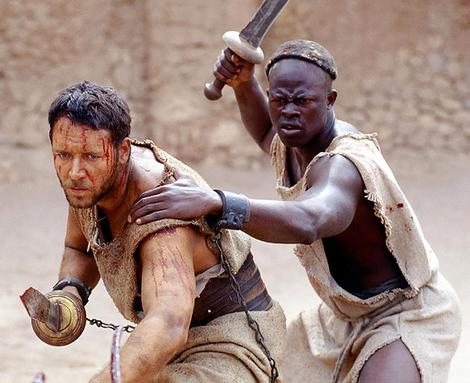
gladiator 4
Games are hell

W.J. Astore

Back in June 2013, I wrote the following article on “Bread and Circuses in Rome and America.”  It flashed through my mind this morning because of Robert Lipsyte’s post today at TomDispatch.com on Trump, the NFL, violence, race, brain injuries, and patriotism.  I urge you to read it as well as Tom Engelhardt’s introduction, which cites the bread and circuses of the Roman Empire.

A key insight in my article below came from a correspondent, Amy Scanlon, who keenly observed that the Roman Imperium saw compassion, not violence, as a vice.  The gladiatorial games were meant to keep Romans at a fever pitch for war (with the bloody, murderous games being the next best thing to war).  It’s not much of a stretch to think of NFL violence as keeping Americans at a similar feverish pitch; and, not just the NFL, but the commercials during the games, which are often saturated with guns and violence and war.

Here’s my article, unchanged from 2013:

Bread and Circuses in Rome and America

The expression “bread and circuses“ captures a certain cynical political view that the masses can be kept happy with fast food (think Cartman’s “Cheesy Poofs” on South Park) and faster entertainment (NASCAR races, NFL games, and the like). In the Roman Empire, it was bread and chariot races and gladiatorial games that filled the belly and distracted the mind, allowing emperors to rule as they saw fit.

There’s truth to the view that people can be kept tractable as long as you fill their bellies and give them violent spectacles to fill their free time. Heck, Americans are meekly compliant even when their government invades their privacy and spies upon them. But there’s a deeper, more ominous, sense to bread and circuses that is rarely mentioned in American discourse. It was pointed out to me by Amy Scanlon.

In her words:

Basically ancient Rome was a society that completely revolved around war, and where compassion was considered a vice rather than a virtue… [The] Romans saw gladiatorial contests not as a form of decadence but as a cure for decadence. And decadence to the Romans had little to do with sexual behavior or lack of a decent work ethic, but a lack of military-style honor and soldierly virtues. To a Roman compassion was a detestable vice, which was considered both decadent and feminine. Watching people and animals slaughtered brutally [in the arena] was seen as a way to keep the civilian population from this ‘weakness’ because they didn’t see combat…

Scanlon then provocatively asks, “Could our society be sliding towards those Roman attitudes in a bizarre sort of way?”

I often think that America suffers from an empathy gap. We are simply not encouraged to put ourselves in the place of others. For example, how many Americans fancy the idea of a foreign power operating drones in our sovereign skies, launching missiles at gun-toting Americans suspected by this foreign power of being “militants“? Yet we operate drones in places like Afghanistan, Pakistan, and Yemen, killing suspected militants with total impunity. Even when innocent women and children are killed, our emperors and our media don’t encourage us to have compassion for them. We are basically told to think of them as collateral damage, regrettable, perhaps, but otherwise inconsequential.

Certainly, our military in the last two decades has put new stress on American troops as “warriors” and “warfighters,” a view more consistent with the hardened professionals of the Roman Empire than with the citizen-soldiers of the Roman Republic. Without thinking too much about it, we’ve come to see our troops as an imperial guard, ever active on the ramparts of our empire. War, meanwhile, is seen not as a last course of defense but as a first course to preempt the evil designs of the many hidden enemies of America. Our troops, therefore, are our protectors, our heroes, the defenders of America, even though that “defense” treats the entire globe as a potential killing field.

Scanlon’s view of the Roman use of bread and circuses — as a way to kill compassion to ensure the brutalization of Roman civilians and thus their compliance (or at least their complacency) vis-à-vis Imperial expansion and domestic policing — is powerful and sobering.

At the same time, the Obama administration is increasingly couching violent military intervention in humanitarian terms. Deploying troops and tipping wars in our favor is done in the name of defeating petty tyrants (e.g. Khadafy in Libya; Is Assad of Syria next?). Think of it as our latest expression of “compassion.”

All things considered, perhaps our new national motto should be: When in America, do as the Roman Empire would do. Eat to your fill of food and violence, cheer on the warfighters, and dismiss expressions of doubt or dismay about military interventions and drone killings as “feminine” and “weak.”

At least we can applaud ourselves that we no longer torture and kill animals in the arena like the Romans did. See how civilized we’ve become?

The Atrocious Nature of the Vietnam War

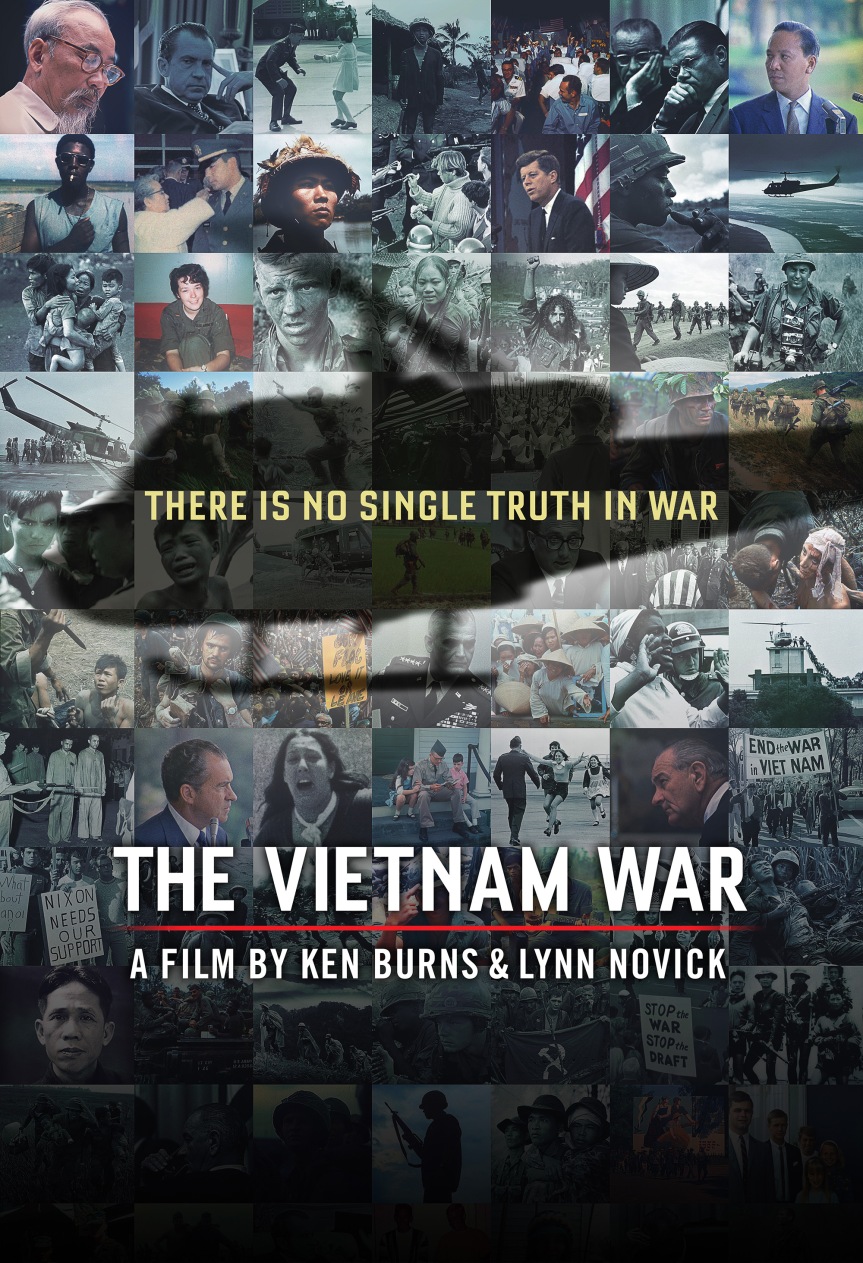
Helicopter_Poster_promoV2

W.J. Astore

“It’s their [South Vietnam’s] war to win. We can help them … but in the final analysis, it’s their people and their government who have to win or lose this struggle.”  President Kennedy in September 1963

“We are not about to send American boys nine or ten thousand miles from home [to fight in Vietnam] to do what Asian boys ought to be doing for themselves.”  President Johnson in 1964

I’ve now watched all ten episodes of the Burns/Novick series on the Vietnam War.  I’ve written about it twice already (here and here), and I won’t repeat those arguments.  Critical reviews by Nick Turse, Peter Van Buren, Andrew Bacevich, and Thomas Bass are also well worth reading.

I now know the main message of the series: the Vietnam war was an “irredeemable tragedy,” with American suffering being featured in the foreground.  The ending is revealing.  Feel-good moments of reconciliation between U.S. veterans and their Vietnamese counterparts are juxtaposed with Tim O’Brien reading solemnly from his book on the things American troops carried in Vietnam.  The Vietnamese death toll of three million people is briefly mentioned; so too are the bitter legacies of Agent Orange and unexploded ordnance; regional impacts of the war to Laos and Cambodia are briefly examined.  But the lion’s share of the emphasis is on the American experience, with the last episode focusing on subjects like PTSD and the controversy surrounding the Vietnam War Memorial in Washington, D.C.

The series is well made and often powerful.  Its fault is what’s missing.  Little is said about the war being a crime, about the war being immoral and unjust; again, the war is presented as a tragedy, perhaps an avoidable one if only U.S. leaders had been wiser and better informed, or so the series suggests.  No apologies are made for the war; indeed, the only apology featured is by an antiwar protester near the end (she’s sorry today for the harsh words she said decades ago to returning veterans).

The lack of apologies for wide-scale killing and wanton destruction, the lack of serious consideration of the war as a crime, as an immoral act, as unjust, reveals a peculiarly American bias about the war, which Burns/Novick only amplify.  The series presents atrocities like My Lai as aberrations, even though Neil Sheehan is allowed a quick rejoinder about how, if you include massive civilian casualties from U.S. artillery and bombing strikes, My Lai was not aberrational at all.  Not in the sense of killing large numbers of innocent civilians indiscriminately.  Such killing was policy; it was routine.  Sheehan’s powerful observation is not pursued, however.

What the Burns/Novick series truly needed was a two-hour segment devoted exclusively to the destruction inflicted on Southeast Asia and the suffering of Vietnamese, Laotian, and Cambodian peoples.  Such a segment would have been truly eye-opening to Americans.  Again, the series does mention napalm, Agent Orange, massive bombing, and the millions of innocents killed by the war.  But images of civilian suffering are as fleeting as they are powerful.  The emphasis is on getting to know the veterans, especially American ones, of that war.  By comparison, the series neglects the profound suffering of Vietnamese, Laotians, and Cambodians.

In short, the series elides the atrocious nature of the war.  This is not to say that atrocities aren’t mentioned.  My Lai isn’t ignored.  But it’s juxtaposed with communist atrocities, such as the massacre of approximately 2500 prisoners after the Battle of Hue during the Tet Offensive, a war crime committed by retreating North Vietnamese Army (NVA) and National Liberation Front (NLF) forces.

Yet in terms of scale and frequency the worst crimes were committed by U.S. forces, again because they relied so heavily on massive firepower and indiscriminate bombing.  I’ve written about this before, citing Nick Turse’s book, Kill Anything That Moves, as well as the writings of Bernard Fall, who said that indiscriminate bombing attacks showed the U.S. was not “able to see the Vietnamese as people against whom crimes can be committed.  This is the ultimate impersonalization of war.”

Why did many Americans come to kill “anything that moves” in Vietnam?  Why, in the words of Fall, did U.S. officialdom fail to see the peoples of Southeast Asia as, well, people?  Fellow human beings?

The Burns/Novick series itself provides evidence to tackle this question, as follows:

  1. At the ground level, U.S. troops couldn’t identify friend from foe, breeding confusion, frustration, and a desire for revenge after units took casualties. It’s said several times in the series that U.S. troops thought they were “chasing ghosts,” “phantoms,” a “shadowy” enemy that almost always had the initiative.  In American eyes, it wasn’t a fair fight, so massive firepower became the equalizer for the U.S.—and a means to get even.
  2. Racism, depersonalization, and alienation.  U.S. troops routinely referred to the enemy by various racist names: gooks, dinks, slopes, and so on. (Interestingly, communist forces seem to have referred to Americans as “bandits” or “criminals,” negative terms but not ones dripping with racism.)  Many U.S. troops also came to hate the countryside (the “stinky” rice paddies, the alien jungle) as well.  Racism, fear, and hatred bred atrocity.
  3. Body count: U.S. troops were pushed and rewarded for high body counts. A notorious example was U.S. Army Lieutenant General Julian Ewell.  The commanding general of the 9th Infantry Division, Ewell became known as the “Butcher of the Delta.”  Douglas Kinnard, an American general serving in Vietnam under Ewell, recounted his impressions of him (in “Adventures in Two Worlds: Vietnam General and Vermont Professor”).  Ewell, recalled Kinnard, “constantly pressed his units to increase their ‘body count’ of enemy soldiers.  This had become a way of measuring the success of a unit since Vietnam was [for the U.S. Army] a war of attrition, not a linear war with an advancing front line.  In the 9th [infantry division] he had required all his commanders to carry 3” x 5” cards with body count tallies for their units by date, by week, and by month.  Woe unto any commander who did not have a consistently high count.”

The Burns/Novick series covers General Ewell’s “Speedy Express” operation, in which U.S. forces claimed a kill ratio of 45:1 (45 Vietnamese enemy killed for each U.S. soldier lost).  The series notes that an Army Inspector General investigation of “Speedy Express” concluded that at least 5000 innocent civilians were included as “enemy” in Ewell’s inflated body count—but no punishment was forthcoming.  Indeed, Ewell was promoted.

Ewell was not the only U.S. leader who drove his troops to generate high body counts while punishing those “slackers” who didn’t kill enough of the enemy.  Small wonder Vietnam became a breeding ground for atrocity.

  1. Helicopters.  As one soldier put it, a helicopter gave you a god’s eye view of the battlefield.  It gave you distance from the enemy, enabling easier kills (If farmers are running, they’re VC, it was assumed, so shoot to kill).  Helicopters facilitated a war based on mobility, firepower, and kill ratios, rather than a war based on territorial acquisition and interaction with the people.  In short, U.S. troops were often in and out, flitting about the Vietnamese countryside, isolated from the land and the people—while shooting lots and lots of ammo.
  2. What are we fighting for? For the grunt on the ground, the war made no sense.  Bernard Fall noted that, after talking to many Americans in Vietnam, he hadn’t “found anyone who seems to have a clear idea of the end – of the ‘war aims’ – and if the end is not clearly defined, are we justified to use any means to attain it?”

The lack of clear and defensible war aims, aims that could have served to limit atrocities, is vitally important in understanding the Vietnam war.  Consider the quotations from Presidents Kennedy and Johnson that lead this article.  JFK claimed it wasn’t America’s war to win — it was South Vietnam’s.  LBJ claimed he wasn’t going to send U.S. troops to Vietnam to fight; he was going to leave that to Asian boys.  Yet JFK committed America to winning in South Vietnam, and LBJ sent more than half a million U.S. “boys” to wage and win that war.

Alienated as they were from the land and its peoples, U.S. troops were also alienated from their own leaders, who committed them to a war that, according to the proclamations of those same leaders, wasn’t theirs to win.  They were then rewarded for producing high body counts.  And when atrocities followed, massacres such as My Lai, U.S. leaders like Richard Nixon conspired to cover them up.

In short, atrocities were not aberrational.  They were driven by the policy; they were a product of a war fought under false pretenses.  This is not tragedy.  It’s criminal.

Failing to face fully the horrific results of U.S. policy in Southeast Asia is the fatal flaw of the Burns/Novick series.  To that I would add one other major flaw*: the failure to investigate war profiteering by the military-industrial complex, which President Eisenhower famously warned the American people about as he left office in 1961.  Burns/Novick choose not to discuss which corporations profited from the war, even as they show how the U.S. created a massive “false” economy in Saigon, riven with corruption, crime, and profiteering.

As the U.S. pursued Vietnamization under Nixon, a policy known as “yellowing the bodies” by their French predecessors, the U.S. provided an enormous amount of weaponry to South Vietnam, including tanks, artillery pieces, APCs, and aircraft.  Yet, as the series notes in passing, ARVN (the South Vietnamese army) didn’t have enough bullets and artillery shells to use their American-provided weaponry effectively, nor could they fly many of the planes provided by U.S. aid.  Who profited from all these weapons deals? Burns/Novick remain silent on this question—and silent on the issue of war profiteering and the business side of war.

The Vietnam War, as Tim O’Brien notes in the series, was “senseless, purposeless, and without direction.”  U.S. troops fought and died to take hills that were then quickly abandoned.  They died in a war that JKF, Johnson, and Nixon admitted couldn’t be won.  They were the losers, but they weren’t the biggest ones.  Consider the words of North Vietnamese soldier, Bao Ninh, who says in the series that the real tragedy of the war was that the Vietnamese people killed each other.  American intervention aggravated a brutal struggle for independence, one that could have been resolved way back in the 1950s after the French defeat at Dien Bien Phu.

But U.S. leaders chose to intervene, raining destruction on Southeast Asia for another twenty years, leading to a murderous death toll of at least three million.  That was and is something more than a tragedy.

*A Note: Another failing of the Burns/Novick series is the lack of critical examination about why the war was fought and for what reasons, i.e. the series takes at face value the Cold War dynamic of falling dominoes, containment, and the like.  It doesn’t examine radical critiques, such as Noam Chomsky’s point that the U.S. did achieve its aims in the war, which was the prevention of Vietnamese socialism/communism emerging as a viable and independent model for economic development in the 1950s and 1960s.  In other words, a debilitating war that devastated Vietnam delayed by several decades that people’s emergence as an economic rival to the U.S., even as it sent a message to other, smaller, powers that the U.S. would take ruthless action to sustain its economic hegemony across the world.  This line of reasoning demanded a hearing in the series, but it’s contrary to the war-as-tragedy narrative adopted by Burns/Novick.

For Chomsky, America didn’t accidentally or inadvertently or ham-fistedly destroy the Vietnamese village to save it; the village was destroyed precisely to destroy it, thereby strengthening capitalism and U.S. economic hegemony throughout the developing world.  Accurate or not, this critique deserves consideration.

The American Religion of War

moab
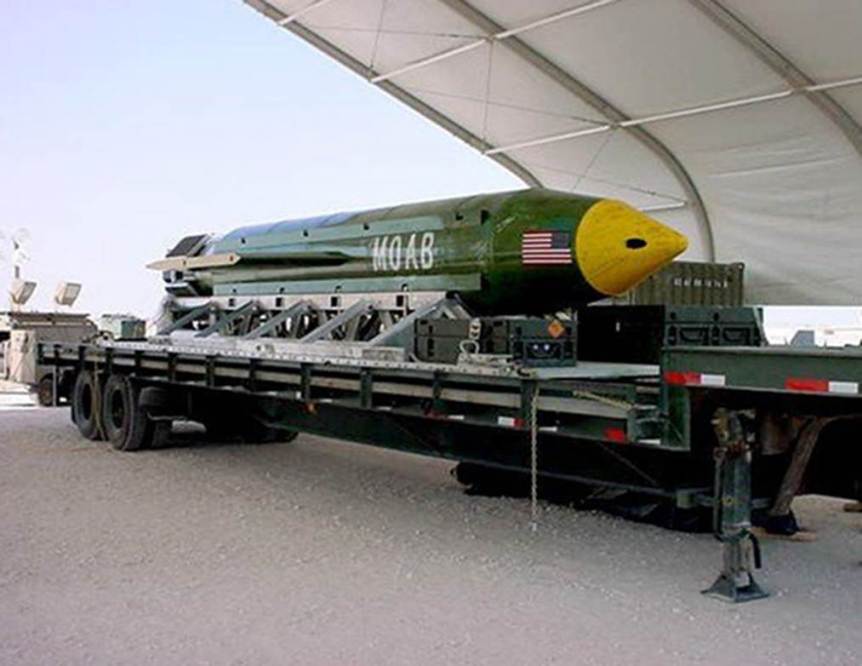
The Holy Mother of All Bombs?

A few thoughts on violence and military idolatry in America

W.J. Astore

If you believe the polls, America is a nation of believers.  A nation of faith.  But is our faith truly in a pacific god of love?  Or do we instead worship a god of war?  Current and past events suggest that too often Americans place their faith in war and the military.  We continue to believe despite the evidence our belief is both wrongheaded and destructive.

We have a cult-like affection for war and the military.  It drives what we see — what we perceive.  Believing is seeing.  The military confesses to believe in “progress” in Iraq and Afghanistan, for example, so we invent metrics that show how we’re winning (which is exactly what we did fifty years ago in Vietnam).

We are not a rational society.  We are a faith-based society.  And our temples and crosses are military bases and weaponry, which we export globally.  The U.S. has 800 overseas bases, and America dominates the international trade in arms.  Meanwhile, our missionaries are our Special Ops troops, which we send to 130 countries, spreading the American gospel.  The gospel of war and the gun.

The icons of American militarism are our weapons. Our warplanes, our drones, big bombs (the MOAB), the list goes on. They have become the iconic symbols of an idolatry of destruction.

A xenophobic form of patriotism exacerbates a religion of violence.  Exclusive rather than inclusive, it sets the boundaries of “us” versus “them.”  Critics and dissenters are cast out and exiled.

Meanwhile, in far-off foreign lands, we reject the reality of ruins and rubble.  We couch it instead in terms of salvation: “we had to destroy the village to save it.”  It’s another aspect of our evangelical approach to war.  It’s like being born again.  You must tear yourself down before you’re born again in the spirit of Christ.  We seem to believe cities must be ruined before we can declare victory over the enemy.

Consider 9/11/2001.  An inward-looking people may have kept the ruins of 9/11 as a monument to the victims.  But not us.  That’s expensive real estate, and on those ruins we were born again, building Freedom Tower, exactly 1776 feet in height.  Thus our fall was reinterpreted as rebirth, our defeat as victory, tragedy as triumph.  Even 9/11 itself is now celebrated as a day of patriotism.

Yes, we can reconstruct our own rubble, as we did after 9/11.  But will foreign rubble ever be reconstructed?  Cities like Mosul?  Well, who cares?  They are not of the body.  They are not us.  They are outcasts.  Let them survive in what’s left of their blasted buildings and homes.

Our TV shows reinforce our belief in violence and militarism.  New ones include “The Brave” on NBC, which begins by focusing on a pretty White female doctor kidnapped by Muslim terrorists and “brave” efforts to rescue her; “Valor” on the CW channel, featuring lots of helicopters and flags and automatic weapons; and the rather obvious “SEAL Team” on CBS, with elite Navy SEALs standing in for the superheroes of the past.  If you get tired of watching military heroics on TV, there’s always military-themed “shooter” video games.  Indeed, the military experience is everywhere, even in Madden football, where in “story mode” you can play against quarterback Dan Marino on an Army base in Iraq.  (The field is surrounded by a fortified fence, rocky hills, and a helicopter pad, among other exotic military features.)

America is being consumed by a religion of violence and mayhem.  We’re trapped in a dark maelstrom of death and destruction.  Yet how can we repudiate our god of war when we are so busy feeding him?  When we talk of “thoughts and prayers” after each tragedy, do we truly know which god we’re calling upon?

The Vietnam War: A Tragic Mistake?

Helicopter_Poster_promoV2

W.J. Astore

I’ve watched the first three episodes of the Ken Burns/Lynn Novick series on the Vietnam War, which take us from the French colonial period beginning in the 19th century to the end of 1965 and a mushrooming U.S. military commitment.  The narrative thread, it seems to me, is the notion of the war as a tragic mistake, most especially for the United States.

The series begins with a voice-over that suggests the war was begun in good faith by America, even as other American voices in the series suggest otherwise.  I kept a notebook handy and jotted down the following notes and thoughts as the series progressed:

  1. There were divisions among the Vietnamese people, but they were more or less united by one idea: resist the foreign invaders/occupiers, whether that foreign presence was French, Japanese, the French again, American, or (both earlier and later) Chinese.  And there’s no doubt Ho Chi Minh would have won a democratic election, as promised at Geneva.  Which is exactly why that election never came.
  2. As one American admitted, the U.S. totally misread the situation in Indochina after the French defeat in 1954.  The Cold War and Falling Dominoes dominated the thoughts of Americans, obscuring the reality of a powerful and popular anti-colonial and nationalist revolt that tapped Vietnamese patriotism.
  3. When not fearing Falling Dominoes, U.S. officials were far more concerned about their own prestige (or political fortunes) than they were with the Vietnamese people.
  4. U.S. officials recognized South Vietnam was a fiction, a puppet government propped up by American money and power, and that they had “backed the wrong horse.” But they came to believe it was the only horse they had in the race against communism.
  5. U.S. presidents, stuck with a losing horse of their own creation, began to lie. As president, Kennedy said he hadn’t sent combat troops; he had.  As president, Johnson tried to obscure both the size and intent of the U.S. military’s commitment. These lies were not done to deceive the enemy — they were done to deceive the American people.
  6. After backing the wrong horse (Diem and his family), American leaders conspired to eliminate him in a coup.  When Diem was assassinated, matters only grew worse. Left with no horse in the race and a “turnstile” government in South Vietnam, the U.S. began to bomb North Vietnam and committed combat units beginning in March of 1965.
  7. More duplicity by U.S. officials: Battles such as Ap Bac and Binh Gia, which revealed the “miserable performance” of the South Vietnamese army (ARVN), were reinterpreted and sold as victories by senior U.S. military leaders.
  8. Both JFK and LBJ had serious reservations about going to war in Vietnam. However, domestic political concerns, together with concerns about containing the spread of communism, always came up trumps.  For example, the series quotes Kennedy as saying he believed America couldn’t win in Vietnam, but that he couldn’t win the 1964 presidential election if he withdrew U.S. advisors from Vietnam. LBJ was similarly skeptical but took a tough line with the Gulf of Tonkin resolution, which saw his approval rating on Vietnam soar from 42% to 72%, ensuring his electoral victory over Goldwater in 1964.

One of the more compelling sound bites comes from then-Major Charles Beckwith, who is at pains to praise the fighting quality of Viet Cong/NLF forces, their total commitment to the struggle.  If only he had (Vietnamese) troops like them to work with, says Beckwith.

To summarize: the series provides evidence of U.S. dishonesty and duplicity and showcases the mistakes generated by hubris when aggravated by ignorance.  Yet, the overall message is one of sadness about a “tragic mistake” committed by decent men who were overwhelmed by fears of international communism.

Final points: As we watch the series, we follow individual Americans, and hear American commentators, far more than we hear Vietnamese voices.  Also, while the series shows U.S. bombing from afar and mentions Agent Orange, the effects of this destruction haven’t yet been shown in detail.  (A telling exception: a young Vietnamese women joins the communist resistance after U.S. bombing destroys a center for senior citizens near her home.)

In short, the Burns/Novick series privileges the American experience, suggesting that U.S. troops of that era fought courageously as a new “greatest generation,” even as senior U.S. leaders spoke privately of an unwinnable war.

Is killing millions of people in a lost cause merely a tragic mistake?  Or is it something far worse?  More to come as the series continues to air on PBS.

The Climate Change War

mothernature-pissed2
Mother Nature doesn’t care about your denials (Josh Addessi at Blogspot.com)

W.J. Astore

It seems Americans can’t rally support for something without declaring a “war” on it. The war on poverty. On drugs. On gangs and crime. On terror. And these wars have become open-ended, or “generational” in Pentagon-speak, with a dynamic of crisis-surge-“progress”-new crisis-new surge-repeat that sustains large bureaucracies and huge government spending.

To these “wars” we must add a new one, notes Michael Klare at TomDispatch.com: the climate change war.  As Texas and Florida were being clobbered by powerful hurricanes, the U.S. military and Homeland Security took the lead role in responding to these disasters, notes Klare.  Yet, even as the U.S. National Security State was mobilized to respond, identifying and seeking to mitigate a root cause of this “war” — the role global warming plays in exacerbating these storms — was and is very much forbidden by the Trump administration.

This is nothing new. As with so many other wars, the U.S. military is deployed to address symptoms rather than root causes. Worse than that, we often deny our own role in creating or worsening those root causes.

With respect to climate change, we Americans have made our choice. We’ve come to believe the advertising slogans that “we can have it all.” We’ve dismissed the dangers of wanton fossil fuel consumption, and indeed wanton materialism in general. Corporations have worked hard to persuade us that global warming might just be a hoax, or at the very least dodgy science. Many of us have willingly bought the message that coal is “clean,” that fracking along with new pipelines are safe and create jobs, even though it’s clean(er) energy like wind and solar that is the better job-creator.

Those are facts that lead me to a different “war” in America, the one being waged against truth.  Basic truths are denied (e.g. that human activity contributes to global warming) in the interests of profits enjoyed by powerful industries. But denial in “war” is not a path to victory (except for the profiteers). Denial is a path only to generational conflict, one that is sure to lead to more disasters and end only in defeat.

So, two things are most definitely certain: the climate change war will be generational. And, much like that other generational war — the war on terror — our military won’t win it. For no one wins a war against Mother Nature — not when we’re going out of our way to piss her off.

The American Military Uncontained

Ike
Ike had it right: Beware the military-industrial complex

W.J. Astore

In my latest article for TomDispatch.com, I detail how the U.S. military is out everywhere but winning nowhere.  What I mean by not winning is the military’s failure to end wars on terms remotely favorable to national security and the interests of democracy.  I hesitate to be a cynic, but perpetual war does mean perpetual high “defense” budgets and prolonged and prodigious power for generals (and retired generals). Peace would mean smaller defense budgets and far less influence for these men.

What chance of peace with President Trump in charge surrounded by the generals of all these losing wars?  Indeed, generals continue to speak of generational wars, so much so that I’m tempted to make a play on words: generational wars generated by generals.  It’s not entirely fair, nor is it entirely unfair.

Anyway, here’s an excerpt from my article.  You can read it in its entirety at TomDispatch.com.

When it comes to the “world’s greatest military,” the news has been shocking. Two fast US Navy ships colliding with slow-moving commercial vessels with tragic loss of life. An Air Force that has been in the air continuously for years and yet doesn’t have enough pilots to fly its combat jets. Ground troops who find themselves fighting “rebels” in Syria previously armed and trained by the CIA. Already overstretched Special Operations forces facing growing demands as their rates of mental distress and suicide rise. Proxy armies in Iraq and Afghanistan that are unreliable, often delivering American-provided weaponry to black markets and into the hands of various enemies. All of this and more coming at a time when defense spending is once again soaring and the national security state is awash in funds to the tune of nearly a trillion dollars a year.

What gives? Why are highly maneuverable and sophisticated naval ships colliding with lumbering cargo vessels? Why is an Air Force that exists to fly and fight short 1,200 pilots? Why are US Special Operations forces deployed everywhere and winning nowhere? Why, in short, is the US military fighting itself — and losing?

It’s the Ops Tempo, Stupid

After 16 years of a never-ending, ever-spreading global war on terror, alarms are going off in Asia from the Koreas and Afghanistan to the Philippines, while across the Greater Middle East and Africa the globe’s “last superpower” is in a never-ending set of conflicts with a range of minor enemies few can even keep straight. As a result, America’s can-do military, committed piecemeal to a bewildering array of missions, has increasingly become a can’t-do one.

Too few ships are being deployed for too long. Too few pilots are being worn out by incessant patrols and mushrooming drone and bombing missions. Special Operations forces (the “commandos of everywhere,” as Nick Turse calls them) are being deployed to far too many countries — more than two-thirds of the nations on the planet already this year — and are involved in conflicts that hold little promise of ending on terms favorable to Washington. Meanwhile, insiders like retired Gen. David Petraeus speak calmly about “generational struggles” that will essentially never end. To paraphrase an old slogan from ABC’s Wide World of Sports, as the US military spans the globe, it’s regularly experiencing the agony of defeat rather than the thrill of victory.

To President Donald Trump (and so many other politicians in Washington), this unsavory reality suggests an obvious solution: boost military funding; build more navy ships; train more pilots and give them more incentive pay to stay in the military; rely more on drones and other technological “force multipliers” to compensate for tired troops; cajole allies like the Germans and Japanese to spend more on their militaries; and pressure proxy armies like the Iraqi and Afghan security forces to cut corruption and improve combat performance.

One option — the most logical — is never seriously considered in Washington: to make deep cuts in the military’s operational tempo by decreasing defense spending and downsizing the global mission, by bringing troops home and keeping them there. This is not an isolationist plea. The United States certainly faces challenges, notably from Russia (still a major nuclear power) and China (a global economic power bolstering its regional militarily strength). North Korea is, as ever, posturing with missile and nuclear tests in provocative ways. Terrorist organizations strive to destabilize American allies and cause trouble even in “the homeland.”

Such challenges require vigilance. What they don’t require is more ships in the sea lanes, pilots in the air and boots on the ground. Indeed, 16 years after the 9/11 attacks it should be obvious that more of the same is likely to produce yet more of what we’ve grown all too accustomed to: increasing instability across significant swaths of the planet, as well as the rise of new terror groups or new iterations of older ones, which means yet more opportunities for failed US military interventions …

The Greatest Self-Defeating Force in History?

Incessant warfare represents the end of democracy. I didn’t say that, James Madison did.

I firmly believe, though, in words borrowed from President Dwight D. Eisenhower, that “only Americans can hurt America.” So how can we lessen the hurt? By beginning to rein in the military. A standing military exists — or rather should exist — to support and defend the Constitution and our country against immediate threats to our survival. Endless attacks against inchoate foes in the backlands of the planet hardly promote that mission. Indeed, the more such attacks wear on the military, the more they imperil national security.

A friend of mine, a captain in the Air Force, once quipped to me: you study long, you study wrong. It’s a sentiment that’s especially cutting when applied to war: you wage war long, you wage it wrong. Yet as debilitating as they may be to militaries, long wars are even more devastating to democracies. The longer our military wages war, the more our country is militarized, shedding its democratic values and ideals.

Back in the Cold War era, the regions in which the US military is now slogging it out were once largely considered “the shadows” where John le Carré-style secret agents from the two superpowers matched wits in a set of shadowy conflicts. Post-9/11, “taking the gloves off” and seeking knockout blows, the US military entered those same shadows in a big way and there, not surprisingly, it often couldn’t sort friend from foe.

A new strategy for America should involve getting out of those shadowy regions of no-win war. Instead, an expanding US military establishment continues to compound the strategic mistakes of the last 16 years. Seeking to dominate everywhere but winning decisively nowhere, it may yet go down as the greatest self-defeating force in history.