America’s Phony Wars and the National Defense Strategy

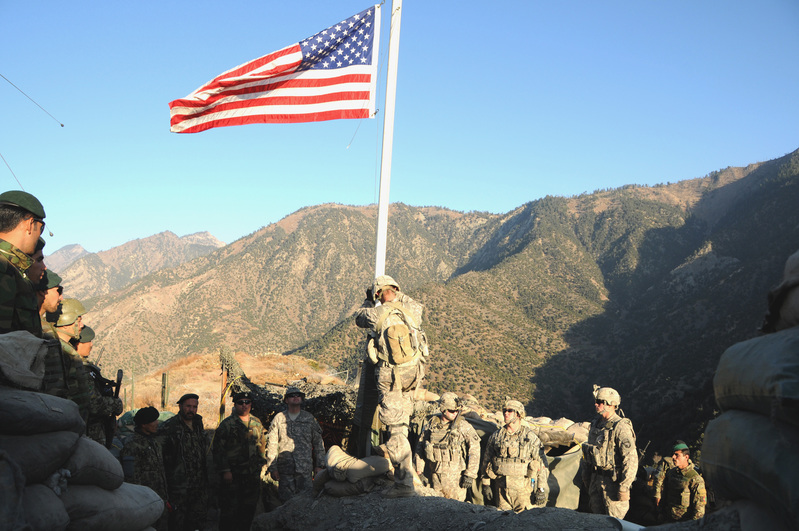
Afghan National Army takes charge at Observation Post Mace
U.S. troops and outposts and flags are everywhere, but for whose interests, and at what cost?

W.J. Astore

In my latest article for TomDispatch.com, I address America’s real wars overseas and contrast them with the phony war in the so-called Homeland.  What I mean by “phony” is the lack of national mobilization for, and even interest in, these overseas wars.  These wars exist and persist; they are both ever-spreading and never-ending; yet few Americans outside of the military and the Washington beltway crowd have any stake in them.  Except when U.S. troops die or a spectacular bomb is used, the mainstream media rarely covers them.

Meanwhile, the Trump administration has defined a new National Defense Strategy (NDS) that has only expanded America’s list of enemies and rivals.  A quick summary:

  1. Conventional conflict against peer enemies, e.g. Russia and China.
  2. Conventional conflict against “rogue” states, e.g. North Korea and Iran.
  3. Unconventional (anti-terror) operations, e.g. Afghanistan, Syria, Yemen, Niger, etc.

If that’s not enough, the Pentagon also seeks extended nuclear supremacy (at a cost of at least $1.2 trillion over the next few decades) and full-spectrum dominance for space and cyber as well as land, sea, and air.  As U.S. “defense” budgets continue to grow, there’s really no sense of limits, monetary or otherwise.  Rising budgets feed endless war, and vice-versa.  It’s a fail-safe recipe for imperial over-stretch and the decline if not collapse of America.

What follows is an excerpt from my latest article; you can read the entire article here at TomDispatch.com.

America’s New (Phony) National Defense Strategy

Even phony wars need enemies.  In fact, they may need them more (and more of them) than real wars do.  No surprise then that the Trump administration’s recently announced National Defense Strategy (NDS) offers a laundry list of such enemies.  China and Russia top it as “revisionist powers” looking to reverse America’s putative victory over Communism in the Cold War.  “Rogue” powers like North Korea and Iran are singled out as especially dangerous because of their nuclear ambitions.  (The United States, of course, doesn’t have a “rogue” bone in its body, even if it is now devoting at least $1.2 trillion to building a new generation of more usable nuclear weapons.)  Nor does the NDS neglect Washington’s need to hammer away at global terrorists until the end of time or to extend “full-spectrum dominance” not just to the traditional realms of combat (land, sea, and air) but also to space and cyberspace.

Amid such a plethora of enemies, only one thing is missing in America’s new defense strategy, the very thing that’s been missing all these years, that makes twenty-first-century American war so phony: any sense of national mobilization and shared sacrifice (or its opposite, antiwar resistance).  If the United States truly faces all these existential threats to our democracy and our way of life, what are we doing frittering away more than $45 billion annually in a quagmire war in Afghanistan?  What are we doing spending staggering sums on exotic weaponry like the F-35 jet fighter (total projected program cost: $1.45 trillion) when we have far more pressing national needs to deal with?

Like so much else in Washington in these years, the NDS doesn’t represent a strategy for real war, only a call for more of the same raised to a higher power.  That mainly means more money for the Pentagon, the Department of Homeland Security, and related “defense” agencies, facilitating more blitz attacks on various enemies overseas.  The formula — serial blitzkrieg abroad, serial sitzkrieg in the homeland — adds up to victory, but only for the military-industrial complex.

Why the Pentagon Gets So Much Money So Easily

pent
The five-sided puzzle palace on the Potomac is about to be flooded with new money

W.J. Astore

Over at Foreign Policy, there’s a good article on how the Pentagon gets so much money so easily.  Basically, the Pentagon complains about lack of “readiness” for war, and Congress caves.  But as the article’s author, Gordon Adams, notes, most of the boost in spending goes not to training and maintenance and other readiness issues but to expensive new weaponry:

But the big bucks, according to the Pentagon’s own briefing, will go into conventional military equipment. That means more F-35s and F-18s than planned, a new presidential helicopter, Navy surveillance planes and destroyers, Marine helicopters, space launch rockets, tank modifications, another Army multipurpose vehicle, and a joint tactical vehicle the Army, Marines, and Air Force can all use. Basically, the services will soon have shiny new hardware.

With its $160+ billion budgetary boost over the next two years, the U.S. military will soon have many more shiny toys, which pleases Congress (jobs) and of course the military-industrial complex (higher and higher profits).

All of this is par for the Pentagon course, yet there are other, cultural and societal, reasons why the Pentagon is winning all the budgetary battles at home.  Here are seven key reasons:

  1. The heroes narrative. Collectively and individually, U.S. troops have been branded as heroes. And who is churlish and ungenerous enough to underfund America’s heroes?
  2. Military weaponry has been rebranded as being all about our “safety” and “security.” With spillover into the Homeland, and even America’s classrooms (think about how guns for teachers are now being equated with safety for America’s children).
  3. Defense contractors increasingly influence (and even own) the media, ensuring “journalists” like Brian Williams will wax poetically about the inspiring beauty of weapons. Rarely do you hear sustained criticism from the mainstream media about wasteful spending at the Pentagon.
  4. At the same time, the mainstream media relies on “retired” senior military officers for analysis and commentary. Some of these men have links to defense contractors, and all of them are loath to criticize the military.  They are, in a word, conflicted.
  5. Throughout U.S. popular culture, military hardware is portrayed as desirable and “cool.” Think of all the superhero movies featuring jet fighters and other military hardware, or all the jets and helicopters flying over sports stadiums across the USA.  For that matter, think of all the video games that focus on war and weaponry.
  6. Related to (5) is a collective fantasy of power based on violence in war. Most Americans are powerless when it comes to politics and decision-making.  Here is where our “beautiful” weapons can serve as potent symbols for a largely impotent people.
  7. Finally, the ever-present climate of fear: fear of terrorists, immigrants, missiles from North Korea, Russian nukes, and so forth, even as the real killers in the USA (opioid abuse, vehicle accidents, shootings, bad or no healthcare, poor diets, climate-change-driven catastrophes, and of course diseases, some of which are preventable) are downplayed.

Defense spending used to be examined closely, with many programs exposed as wasteful.  This was common in the aftermath of the Vietnam War in the 1970s and early 1980s – remember Senator William Proxmire and his Golden Fleece awards?  Now, it seems there’s no such thing as wasteful spending.  It’s a remarkable change of narrative representing an amazing success story for the military-industrial complex.

It will take more than cutting the Pentagon’s budget to effect change.  America needs to change its mindset, an ethos in which weapons, even wars, are equated with safety and security and potency, and even occasionally with entertainment and fun.

In sum, the Pentagon is doing what it’s always done: issuing demands for more and more money.  It’s up to us (and Congress) to say “no.”

The Siren Song of American Imperialism

BudDajo1a
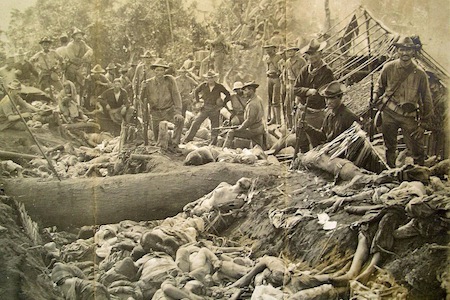
U.S. troops pose with dead Moro rebels, Philippines, 1906

W.J. Astore

Introduction: In September 2012, I wrote the following piece on U.S. imperialism, inspired by an old sound recording.  It came to mind as I read a review in The Nation of a new book by Stephen Kinzer, The True Flag: Theodore Roosevelt, Mark Twain, and the Birth of American Empire.  Its reviewer, Brenda Wineapple, notes the terrible toll of America’s “splendid little war” against Spain in 1898, followed by the campaign to conquer and control (or, to use the expression from those days, to “civilize”) the Filipino people.  Here’s an excerpt from her review:

The war in the Philippines, however, was far from over. Even after McKinley’s assassination, US soldiers continued to ravage the country, killing Filipinos, burning their villages, and laying waste to crops; after three years of such “counterinsurgency,” Kinzer writes, “Americans lost whatever national innocence had survived slavery, anti-Indian campaigns, and the Mexican War.” Twain and the anti-
imperialists had never seen any innocence to speak of: “Lust of conquest had long ago done its work…. There was no principle but commercialism, no patriotism but of the pocket,” Twain wrote.

At the end of 41 months, hundreds of thousands of Filipino civilians had died, and at least 20,000 insurgents—far more than had perished in the 350 years of Spanish rule. But, Kinzer argues, no lessons had been learned: US foreign policy in the 20th and 21st centuries may spring from an ambivalence to intervene in the world, but it continues to represent itself as benevolent when it does so for its own economic self-interest.

She and Stephen Kinzer mention President William Howard Taft, which brings me again to my article from 2012.  I can still faintly hear Taft’s voice, emerging from my friend’s old phonograph horn, telling Americans how they had to embrace “the ignorant masses” of the Philippines.  How deadly that embrace would prove for so many Filipinos …

The Siren Song of American Imperialism (2012)

Considering the scale of our mistakes over the last decade in Iraq and Afghanistan, if we as a country truly want to pursue a leaner, smarter, more effective foreign policy, the first step we must take is to stop listening to the siren song of our own imperial rhetoric. We need to stop posing as benevolent caregivers and start being more honest with ourselves.

And that honesty extends to our own history. The French have a saying that translates to “the more things change, the more they remain the same.” The appropriateness of that saying was brought home to me last week when a good friend of mine played an old campaign speech of William Howard Taft. In 1908, when he was running for president to succeed Teddy Roosevelt, Taft recorded several speeches on Edison-era cylinders. Fortunately for me, my friend collects vintage Edison phonographs and cylinders.

As I stood in front of the large trumpet-like horn of the player, Taft’s voice came alive for me. As Taft sought to justify the U.S. invasion and occupation of the Philippines, it occurred to me that the rhetoric he was using a century ago was the same as that of Presidents Bush and Obama in justifying our most recent foreign misadventures in Iraq and Afghanistan. Taft, as we shall see, was if anything more direct and honest than our most recent commanders-in-chief.

The thrust of Taft’s speech was that Americans were lifting up the benighted and “ignorant masses” of the Philippines. In Taft’s words, we were involved “in a great missionary work that does our nation honor,” one that “is certain to promote … the influence of Christian civilization.” Evidence of our progress included improvements to Filipino infrastructure such as the building of harbors, roads, and railroads. More evidence included our role in building up Filipino police forces to improve internal security. Education was also cited as decreasing “the dense ignorance of the ninety percent.”

Having portrayed our presence in the Philippines as purely benevolent and disinterested, Taft ended with a rousing dismissal of critics who were advocating what today would be termed “cutting and running.” To relinquish the “burden” of our civilizing mission in the Philippines, Taft concluded, would be “cowardly.”

Considering Taft’s rhetoric and comparing it to that of Bush and Obama, it’s clear that little has changed in one hundred years. It’s true that we no longer talk openly about spreading “Christian” civilization. And we’re more circumspect about portraying native peoples as “dense” and “ignorant.” But other than that, our imperial rhetoric hasn’t changed at all. Our presidents still praise our country as being motivated entirely by benevolence; as evidence of our generosity and “progress,” they still tout infrastructure built and native police forces trained; and they still dismiss critics of our imperial efforts as misguided (at best) or cowardly (of the worst kind of “cut and run” variety).

But the truth is that it’s tragically hard to win hearts and minds overseas when we don’t even recognize what’s in our own hearts and minds. We venture forth on “civilizing” missions when our own culture could use some civilizing. We think we’re pure of heart, but “civilizing” missions based on military occupation inevitably contain a heart of darkness.

Whether it’s the presidential election of 1908 or our current one of 2012, we’ve heard enough speeches about how great and noble and honorable we are. To chart a new course, let’s educate our own “ignorant natives” in the USA before we try to cure ignorance elsewhere. Let’s rebuild our own crumbling infrastructure. Let’s tame our own passions. And let’s reconnect with a virtue that, though not unique to Christianity, was then and is now closely associated with it. The virtue? Humility.

To put this in words that may have resonated with Taft, the self-styled “Christian missionary,” let’s first work on removing the beam from our own eye before focusing on the motes in the eyes of others. For it’s only after removing our own beam that we’ll succeed in charting a smarter foreign policy — as well as a far less hypocritical one.

To paraphrase Taft, it would be cowardly indeed to lay down the burden of removing that beam until our purpose is achieved.

Sports, War, Fairness, and Fate: Lessons from My Dad

Spunk visit 005
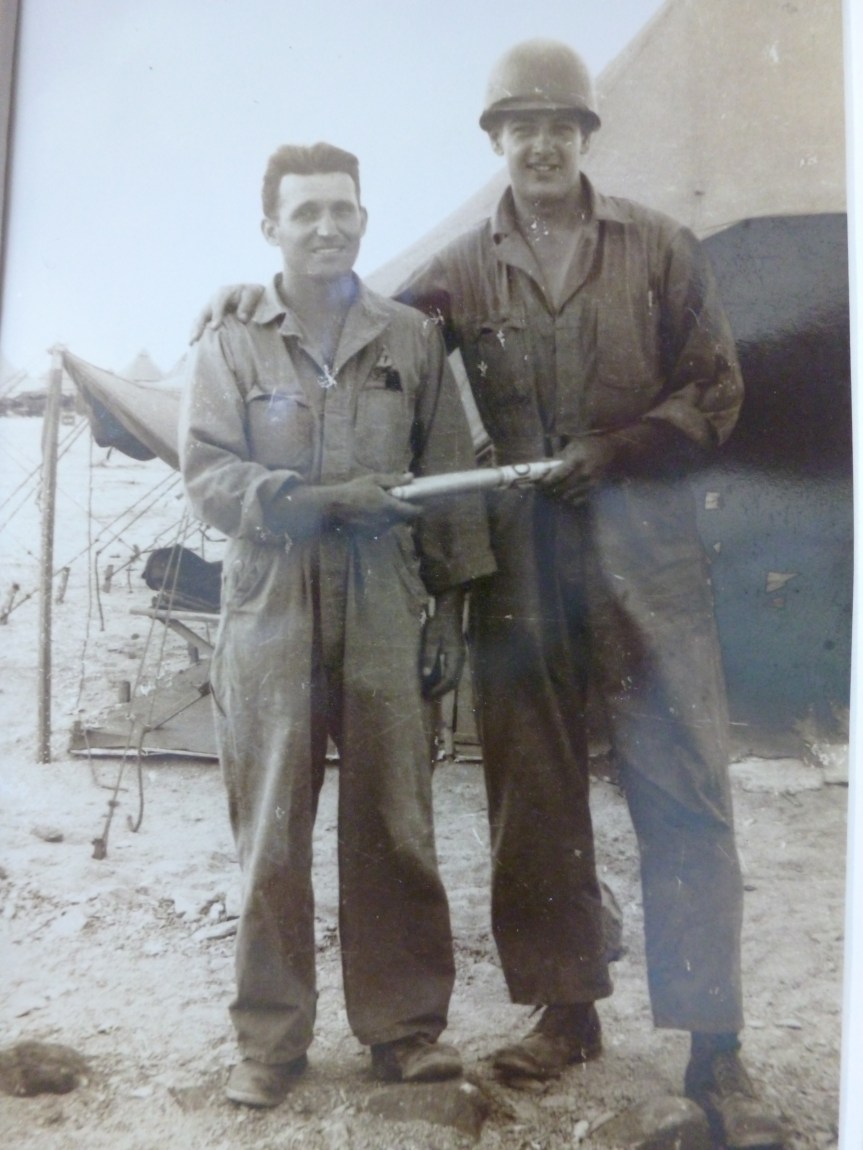
My dad (left) during armored desert maneuvers in California

W.J. Astore

Life isn’t fair: that’s a lesson my dad learned growing up during the Great Depression and working hard in the Civilian Conservation Corps and local factories in the 1930s.  He also learned it during World War II, when he was drafted and eventually assigned to an armored headquarters company at Fort Jackson, South Carolina.  In fact, before World War II, my dad tried to enlist in the Navy, only to discover he was too short to make the grade (he was just under 64″, the Navy minimum, and recruiters were picky before Pearl Harbor).  A half-inch or so probably saved my dad’s life.  After that experience, my dad vowed he wouldn’t volunteer for war; he’d wait until he was drafted, which he was in 1942 by the Army.

My dad was on track to be a surgical technician for the 7th Armored Division; he would have gone overseas and faced combat.  But another soldier on the dental technician track talked my dad into switching positions with him.  My dad agreed, only to learn a dental technician was limited to a corporal technician’s rating, whereas a surgical tech could become a sergeant with higher pay.  My dad was also “excess” on the table of organization when he finished training, so he was reassigned from the 7th Armored to the 15th Armored Group.

My dad had to transfer and got less pay, but he got lucky: his new unit didn’t go overseas, whereas the 7th Armored did.  A guy he knew, Danny Costellani, was transferred from medical battalion to armored infantry while in France and was killed in action.  My dad knew this could have been him.

While my dad was assigned to Fort Jackson, South Carolina, late in 1944, there was a frantic call for more soldiers to be sent overseas in response to high losses during the Battle of the Bulge, the last major German offensive of World War II.  Many “green” recruits were rushed through basic training and shipped overseas to fight the Germans.  But a few local Southerners noticed that highly qualified soldier-athletes at Fort Jackson weren’t being sent anywhere.  They just seemed to stay in place while playing baseball, football, tennis, and other sports.  I’ll let my dad take the story from here:

During the Battle of the Bulge some Southern civilians were wondering why their sons, after Basic Training were shipped overseas as replacements.  While the Post Commander had on station complement a group of about fifty soldiers who played sports for the Ft Jackson baseball, basketball, football and even tennis teams.  Well the general got an order from higher echelons to put all able bodied troops into a combat outfit.  Well fifty of our soldiers were shipped overseas and fifty of the general’s athletes were put into our company.  When that happened the rest of our company figured we would never go overseas.  As time showed 99% stayed state side.  The 15th Armored Group took all the athletic honors.  Very seldom did our sports teams lose.

My dad saved newspaper clippings that celebrated the athletic achievements of the 15th Armored Group.  One photo showed the 15th Headquarters and Headquarters Company orientation room, which included a prominent section on “The World of Sports” and a table showcasing all individual and team trophies.

My dad may have owed his life to a picky Navy recruiter and a fellow soldier who wanted sergeant’s stripes.  These athletes at Fort Jackson may have owed their lives to a post commander who preferred winning at sports to shipping the most able-bodied troops overseas to fight the enemy.

Yes, life isn’t fair.  And fate sure does have an odd sense of humor.

U.S. and Coalition Aid to Iraq Is Ungenerous and Self-Interested

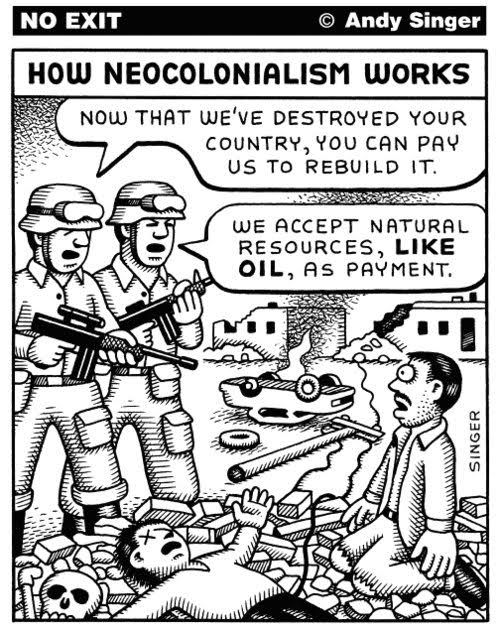
anna cartoon

By Pamela

At the donor conference for the “post-ISIL reconstruction” of Iraq which just ended in Kuwait, U.S. Secretary of State Rex Tillerson talked about Iraqi corruption and insecurity, which he claimed had to be tackled for rebuilding investments to be feasible.  He said nothing about donations or reparations for the immeasurable damage the U.S. inflicted on Iraq since the first Gulf war in 1991, let alone since the invasion in 2003.  I do not recall reading that Iraq had been successfully rebuilt before ISIL struck in 2014.  And let’s recall that ISIL was largely the result of L. Paul Bremer and assorted US generals’ disastrous policies.

The US “aid” offered by Tillerson is a financial package from the U.S. Export-Import Bank in the amount of $3 billion in loans, loan guarantees, and insurance funds to American firms investing in Iraq.  Compare that paltry sum to the post-WWII Marshall Plan to Western Europe — including defeated enemy Germany and its allies — which amounted to about $140 billion in today’s dollars. Without going into the increasingly disputed purpose and even effectiveness of that aid, it amounted to more than the totality of Iraq’s needs as estimated at this moment.  And only some 10-15% of it were loans; the rest were grants, even if most of these had to finance goods imported from the U.S.

After Saddam’s capture in 2003, the U.S. apparently promised some $20 billion in reconstruction money in the form of credit against Iraq’s future oil revenues.  Whether this ever materialized I do not know, and there may well have been similar pledges, but there is no reason to assume that any of it was a grant without major strings attached.

The U.S. government is not the only hypocrite in this matter.  The overwhelming majority of the $30 billion in reconstruction pledges concerns credit and investments.  Is this simply donor fatigue?  How come the U.S.-led coalition had no trouble spending untold billions on the destruction of Iraq and its people, but cannot afford to help them rebuild their country?

The only governmental exception seems to be the nearly half a billion in donations from the European Union, but I wonder how much of this is dedicated to purchases from the EU.

I doubt my own government [Poland] will contribute anything but a token investment — if anything — while it enthusiastically joined the unholy coalition in 2003 for three candidly stated reasons: gain more importance in NATO, train its military in field conditions (!), and benefit from economic off-sets.  We do not even have the vibrant veterans-against-war associations which in the U.S. fight to prevent more of such wars from happening.  One such admirable initiative is We Are Not Your Soldiers, with veterans visiting high schools to harness kids against the propaganda of military recruiters, by explaining what war really looks like and what damage it inflicts on both victims and perpetrators.

In sum, American “Shock & Awe” doctrine destroyed Iraq, initial reconstruction efforts were haphazard and insufficient, and now in 2018 Iraq is sure to end up with a debt noose around its neck and ever greater dependence on the whims of foreign investors.

With respect to foreign investors, consider this quotation: “Iraq also is Opec’s second-largest crude producer and home to the world’s fifth-largest known reserves, though it has struggled to pay international firms running them.”

As for the Iraqi government, this is how it was described by New York-based Iraqi poet and long-term exile Sinan Antoon:  “The Iraqi government and the entire political class are beneficiaries of the U.S. and its wars. They recognize and commemorate the crimes of Saddam Hussein and the Baath regime and now ISIL and exploit them for their narrow and sectarian political purposes.”

Antoon’s critique of the Iraqi government should be kept in mind when reading Prime Minister’s Haider al-Abadi’s glowing appreciation of our “generous aid.”

Pamela, a former aid worker with a decade’s worth of on-the-ground experience in Afghanistan, worked with the Afghan people in relationships characterized by trust and friendship.

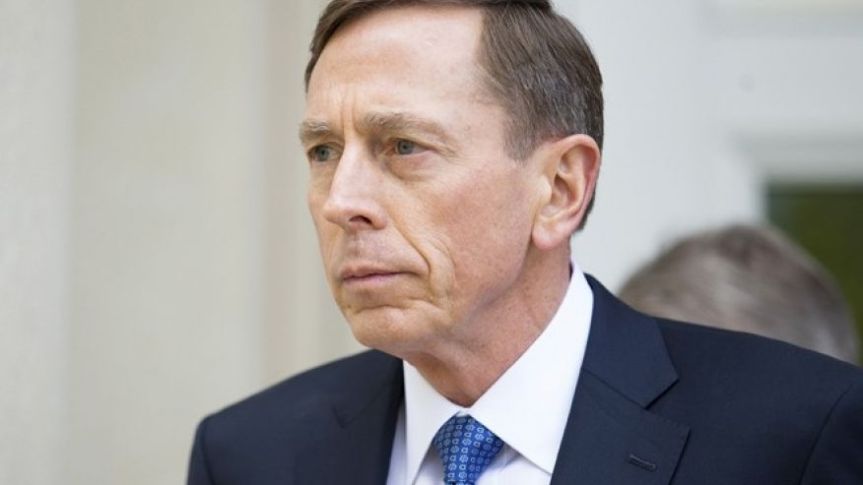
David Petraeus: A Gold Medal Winner in Spin

Petraeus mufti

W.J. Astore

I’ve been watching the Winter Olympics on TV, and the color commentators for NBC are typically athletes who’ve earned gold medals in the past, like Tara Lipinski in figure skating or Bode Miller in skiing.  Why is it, then, when NBC and other networks seek expert “color” commentary on America’s wars, they turn to retired generals like David Petraeus, who’ve won nothing?

I’m not dissing Petraeus here.  He himself admitted his “gains” in Iraq as well as Afghanistan were both “fragile and reversible.”  And so they proved.  The U.S. fought in Iraq and Afghanistan and lost thousands of troops and trillions of dollars for gains that truly were ephemeral.  Despite this disastrous and tragic reality, Petraeus remains the sage on the stage, the go-to guy for analysis of our never-ending wars on PBS, Fox News, and elsewhere.

But then I got to thinking.  Sure, Petraeus hasn’t won any wars.  But he’s earned a gold medal in public relations.  In spin.  In 2007 he spun the Surge as a major U.S. victory in Iraq.  (Temporary stability, bought at such a high price, did indeed prove fragile and reversible.)  A later surge in Afghanistan didn’t prove as spinnable, but in a strange way his adulterous affair, a personal failure, came to obscure his military one.  Now he regularly appears as a pundit, the voice of reason and experience, spinning the Afghan war, for example, as winnable as long as Americans continue to give the Pentagon a blank check to wage generational war.

In facilitating the growth of the national security state and ensuring it never takes the blame for its military defeats, Petraeus has indeed excelled in the eyes of those who matter in Washington.  He’s no Tara Lipinski on ice or Bode Miller on snow, but when it comes to spinning wars and gliding over the facts, he takes the gold.

A Curious Aspect of Air Power

Crash Site
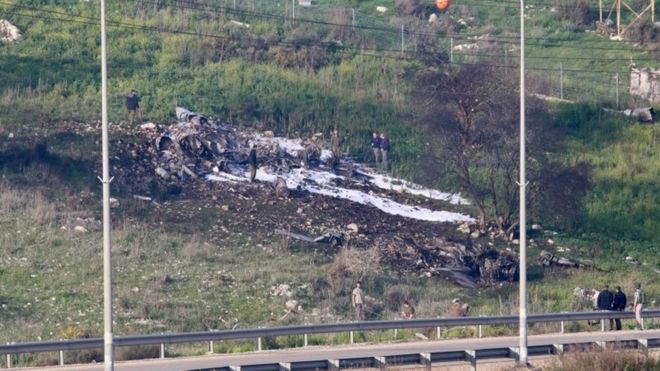
Crash site of Israeli F-16 Fighter Jet

W.J. Astore

Over the past several days, Russia and Israel have lost fighter jets over Syria.  This shouldn’t come as a surprise to those countries.  When jets attack people on the ground, those people tend to fire back (if they have weapons at hand), and sometimes they even hit their targets.

What is interesting is the Russian and Israeli reaction, which was in essence identical: immediate escalation.  More air attacks.  More bombs.  All justified as “reprisal” raids that are couched in terms of self-defense.

The mentality goes something like this: How dare you little people on the ground have the temerity to fire back at us and actually hit our planes?  For that you must be punished with more air attacks and more bombs until you stop firing at and hitting our planes.

I think this reaction is linked to the imagery of jet aircraft as a symbol of technological superiority, a marker of power, potency, and prowess.  Losing a jet over Syrian lands isn’t just seen as a mundane loss of military equipment in combat: it’s seen as a loss of potency by the attacker.  This “loss” necessitates a bigger show of force so as to punish the enemy while regaining that sense of inviolate power from the skies that advanced countries like Russia, Israel, and the USA believe they are entitled to, simply by being “advanced” countries, as measured by military hardware like sophisticated jets.

Air power is a tricky thing.  Students of the American involvement in the Vietnam War may recall that in 1965 U.S. Marine units were initially sent in to guard air bases from attack.  Of course, their mission quickly escalated from static defense to “active” defense to “taking the fight to the enemy,” i.e. full-scale, offensive, military operations.

Today, U.S. ground troops are similarly involved in places like the Middle East and Africa, helping to establish and protect air and drone bases.  Yet, as history teaches us, those missions often expand quickly to aggressive military operations on the ground, often in the name of “securing” those very air bases.  Air attacks may lead to ground operations, which lead to more air attacks in support of the ground ops, which lead to air planes being shot down and then reprisal attacks …

Air power, as I’ve written before, is neither cheap nor surgical nor decisive.  It also often creates its own escalatory dynamic, which is what we’re witnessing now in the skies over Syria.  Israeli jets, Russian jets, American jets, all attempting through force to alter the facts on the ground, but all instead creating conditions that are likely to generate more violence, more instability, and more war.

Curious indeed.

Ike’s Military-Industrial-Congressional Complex Is Alive and Very Well

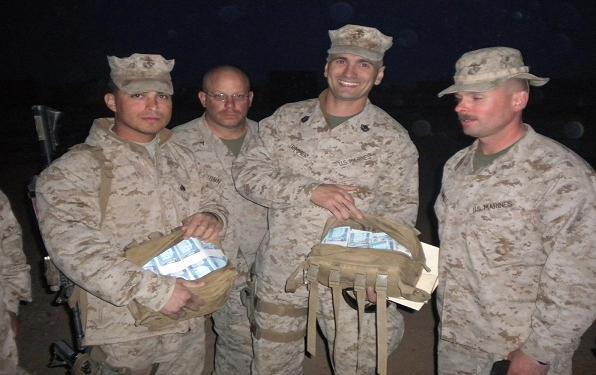
250 000 dollar - 50
Look, Ma: More Money!  Don’t Worry: We’ll Spend It Wisely

W.J. Astore

The new Congressional budget boosts military spending in a big way.  Last night’s PBS News report documented how military spending is projected to increase by $160 billion over two years, but that doesn’t include “overseas contingency funding” for wars, which is another $160 billion over two years.  Meanwhile, spending for the opioid crisis, which is killing roughly 60,000 Americans a year (more Americans than were killed in the Vietnam War), is set at a paltry $6 billion ($25 billion was requested).

One thing is certain: Ike was right about the undue influence of the military-industrial-Congressional complex.

The military talks about needing all these scores of billions to “rebuild.”  And, sure, there are ships that need to be refitted, planes in need of repairs, equipment that needs to be restocked, and veterans who need to be cared for.  But a massive increase in military and war spending, perhaps as high as $320 billion over two years, is a recipe for excessive waste and even more disastrous military adventurism.

Even if you’re a supporter of big military budgets, this massive boost in military spending is bad news.  Why?  It doesn’t force the military to think.  To set priorities.  To define limits.  To be creative.

Perhaps you’ve heard of the expression, “Spending money like drunken sailors on shore leave.”  Our military has been drunk with money since 9/11.  Is it really wise to give those “sailors” an enormous boost in the loose change they’re carrying, trusting them to spend it wisely?

Our Enemy, Ourselves

W.J. Astore

In my latest article for TomDispatch.com, I suggest how America can pursue a wiser, more peaceful, course.  This is exactly what our leaders are not doing (and haven’t been doing for decades), as I document in the first half of my article, which I’m sharing here.  Bottom line: perpetual war doesn’t produce perpetual peace.  Nor does it make us safer.

Whether the rationale is the need to wage a war on terror involving 76 countries or renewed preparations for a struggle against peer competitors Russia and China (as Defense Secretary James Mattis suggested recently while introducing America’s new National Defense Strategy), the U.S. military is engaged globally.  A network of 800 military bases spread across 172 countries helps enable its wars and interventions.  By the count of the Pentagon, at the end of the last fiscal year about 291,000 personnel (including reserves and Department of Defense civilians) were deployed in 183 countries worldwide, which is the functional definition of a military uncontained.  Lady Liberty may temporarily close when the U.S. government grinds to a halt, but the country’s foreign military commitments, especially its wars, just keep humming along.

As a student of history, I was warned to avoid the notion of inevitability.  Still, given such data points and others like them, is there anything more predictable in this country’s future than incessant warfare without a true victory in sight?  Indeed, the last clear-cut American victory, the last true “mission accomplished” moment in a war of any significance, came in 1945 with the end of World War II.

Yet the lack of clear victories since then seems to faze no one in Washington.  In this century, presidents have regularly boasted that the U.S. military is the finest fighting force in human history, while no less regularly demanding that the most powerful military in today’s world be “rebuilt” and funded at ever more staggering levels.  Indeed, while on the campaign trail, Donald Trump promised he’d invest so much in the military that it would become “so big and so strong and so great, and it will be so powerful that I don’t think we’re ever going to have to use it.”

As soon as he took office, however, he promptly appointed a set of generals to key positions in his government, stored the mothballs, and went back to war.  Here, then, is a brief rundown of the first year of his presidency in war terms.

In 2017, Afghanistan saw a mini-surge of roughly 4,000 additional U.S. troops (with more to come), a major spike in air strikes, and an onslaught of munitions of all sorts, including MOAB (the mother of all bombs), the never-before-used largest non-nuclear bomb in the U.S. arsenal, as well as precision weapons fired by B-52s against suspected Taliban drug laboratories.  By the Air Force’s own count, 4,361 weapons were “released” in Afghanistan in 2017 compared to 1,337 in 2016.  Despite this commitment of warriors and weapons, the Afghan war remains — according to American commanders putting the best possible light on the situation — “stalemated,” with that country’s capital Kabul currently under siege.

How about Operation Inherent Resolve against the Islamic State?  U.S.-led coalition forces have launched more than 10,000 airstrikes in Iraq and Syria since Donald Trump became president, unleashing 39,577 weapons in 2017. (The figure for 2016 was 30,743.)  The “caliphate” is now gone and ISIS deflated but not defeated, since you can’t extinguish an ideology solely with bombs.  Meanwhile, along the Syrian-Turkish border a new conflict seems to be heating up between American-backed Kurdish forces and NATO ally Turkey.

Yet another strife-riven country, Yemen, witnessed a sixfold increase in U.S. airstrikes against al-Qaeda on the Arabian Peninsula (from 21 in 2016 to more than 131 in 2017).  In Somalia, which has also seen a rise in such strikes against al-Shabaab militants, U.S. forces on the ground have reached numbers not seen since the Black Hawk Down incident of 1993.  In each of these countries, there are yet more ruins, yet more civilian casualties, and yet more displaced people.

Finally, we come to North Korea.  Though no real shots have yet been fired, rhetorical shots by two less-than-stable leaders, “Little Rocket Man” Kim Jong-un and “dotard” Donald Trump, raise the possibility of a regional bloodbath.  Trump, seemingly favoring military solutions to North Korea’s nuclear program even as his administration touts a new generation of more usable nuclear warheads, has been remarkably successful in moving the world’s doomsday clock ever closer to midnight.

Clearly, his “great” and “powerful” military has hardly been standing idly on the sidelines looking “big” and “strong.”  More than ever, in fact, it seems to be lashing out across the Greater Middle East and Africa.  Seventeen years after the 9/11 attacks began the Global War on Terror, all of this represents an eerily familiar attempt by the U.S. military to kill its way to victory, whether against the Taliban, ISIS, or other terrorist organizations.

This kinetic reality should surprise no one.  Once you invest so much in your military — not just financially but also culturally (by continually celebrating it in a fashion which has come to seem like a quasi-faith) — it’s natural to want to put it to use.  This has been true of all recent administrations, Democratic and Republican alike, as reflected in the infamous question Madeleine Albright posed to Chairman of the Joint Chiefs Colin Powell in 1992: “What’s the point of having this superb military you’re always talking about if we can’t use it?”

With the very word “peace” rarely in Washington’s political vocabulary, America’s never-ending version of war seems as inevitable as anything is likely to be in history.  Significant contingents of U.S. troops and contractors remain an enduring presence in Iraq and there are now 2,000 U.S. Special Operations forces and other personnel in Syria for the long haul.  They are ostensibly engaged in training and stability operations.  In Washington, however, the urge for regime change in both Syria and Iran remains strong — in the case of Iran implacably so.  If past is prologue, then considering previous regime-change operations in Afghanistan, Iraq, and Libya, the future looks grim indeed.

Despite the dismal record of the last decade and a half, our civilian leaders continue to insist that this country must have a military not only second to none but globally dominant.  And few here wonder what such a quest for total dominance, the desire for absolute power, could do to this country.  Two centuries ago, however, writing to Thomas Jefferson, John Adams couldn’t have been clearer on the subject.  Power, he said, “must never be trusted without a check.”

The question today for the American people: How is the dominant military power of which U.S. leaders so casually boast to be checked? How is the country’s almost total reliance on the military in foreign affairs to be reined in? How can the plans of the profiteers and arms makers to keep the good times rolling be brought under control?

As a start, consider one of Donald Trump’s favorite generals, Douglas MacArthur, speaking to the Sperry Rand Corporation in 1957:

“Our swollen budgets constantly have been misrepresented to the public. Our government has kept us in a perpetual state of fear — kept us in a continuous stampede of patriotic fervor — with the cry of grave national emergency. Always there has been some terrible evil at home or some monstrous foreign power that was going to gobble us up if we did not blindly rally behind it by furnishing the exorbitant funds demanded. Yet, in retrospect, these disasters seem never to have happened, seem never to have been quite real.”

No peacenik MacArthur.  Other famed generals like Smedley Butler and Dwight D. Eisenhower spoke out with far more vigor against the corruptions of war and the perils to a democracy of an ever more powerful military, though such sentiments are seldom heard in this country today.  Instead, America’s leaders insist that other people judge us by our words, our stated good intentions, not our murderous deeds and their results.

For ten suggestions (plus a bonus) on how the U.S. can pursue a wiser, and far less bellicose, course, please read the rest of my article here at TomDispatch.com. 

On Vietnam, Afghanistan, and Bloody Irreversibility

020910astore
One war ends; another begins; nothing really changes (Image from the original article/Jared Rodriguez)

W.J. Astore

Eight years ago to this month, I wrote the following article for Truthout about America’s ongoing folly in Afghanistan.  I was inspired by an old Look magazine from the 1960s and its coverage of the Vietnam War.

Reading old articles about the Vietnam War is sobering precisely because they read like articles written yesterday. Consider just one example. On May 30, 1967, Look magazine published a comprehensive, 25-page review entitled “USA in Asia.” The subtitle gave the game away: “Our bloody commitments in Asia horrify many Americans. But like it or not, we are irreversibly involved.”

Today, more than forty years later, many say the same of our involvement in Central Asia. Our bloody commitments continue to horrify Americans. And yet again we’re told we’re irreversibly involved. Yet if Vietnam taught us anything, it’s that the “irreversible” is eminently reversible.

Historians and pundits alike can cite dozens of well-informed reasons why today’s Afghanistan is not like yesterday’s Vietnam. And they’re right — and wrong. For what remains the same is us, especially the power of our own self-regard, as well as that of our overly militarized vision, both of which must be overcome if we are ever to succeed in Asia.

Consider how Look in 1967 labeled Vietnam as “our albatross.” Yet those Americans who dared to question our country’s immense military commitment to this “albatross” were labeled as leftist isolationists, “more upset about the billions diverted to Asia than the $22 billion being spent to put a man on the moon,” a non sequitur if ever there was one. Meanwhile, comparing Vietnam to landlocked Laos, an unnamed US official gushed that Vietnam has “the ocean, and we’re great on the ocean. It’s the right place.”

So, Look portrayed “our” Vietnam either as an albatross weighing us down or as the “right place” for American power projection. That the real Vietnam was something different from a vexatious burden for us or an ideal showcase for our military prowess doesn’t seem to have occurred to an Amero-centric Look staff.

Consider as well Look’s précis of the Vietnam War in 1967 and its relevance to our approach to fighting in Afghanistan today:

“The crux is winning the loyalty of the people. We have spent billions … [on] ‘strategic hamlets’ to ‘Revolutionary Development,’ and have failed to make much progress. We have had to reoccupy villages as many as eight times. There is no front and no sanctuary.”

“Our latest ploy has been to turn ‘pacification’ over to the South Vietnamese Army … Unfortunately, most of the ARVN is badly trained and led, shows little energy and is reputedly penetrated by the Vietcong …. Whether such an undisciplined army can move into villages and win over the people is dubious.

“We are trying harsher measures. We have even organized ‘counter-terror’ teams to turn Vietcong tactics against their own terrorist leaders. ‘The real cancer is the terrorist inner circle,’ says one U.S. leader. ‘These terrorists are very tough people. We haven’t scratched the surface yet.’

“We can really win in Vietnam only if we achieve the ‘pacification’ that now seems almost impossible.”

Note the continuities between past and present: the emphasis on winning hearts and minds, the unreliability and corruption of indigenous allied forces, the use of counter-terror against a “very tough” terrorist foe (with barely suppressed disgust that “our” friendly allies lack this same toughness, for reasons that are not exposed in bright sunlight), the sense of mounting futility.

Counterinsurgency combined with counter-terror, escalating US combat forces while simultaneously seeking to “Vietnamize” (today’s “Afghanize”) the war to facilitate an American withdrawal: An approach that failed so miserably forty years ago does not magically improve with age.

Look’s Asian tour concluded on a somber, even fatalistic, note: “The wind blows not of triumphs but of struggle, at a high price, from which there is no escape and with which we have to learn to live…. Men who bomb; men who are killed. Men who booby-trap; men who are maimed. And children who are maimed and who die. They are the price of our bloody involvements in Asia.”

Bloody inevitability — but was it inevitable? Was it irreversible?

So it seems, even today. Why? Precisely because we continue to look so unreflectively and so exclusively through military field glasses for solutions. As Look noted in 1967: “Our massive military presence dominates our involvement in Asia,” words that ring as true today as they did then. And as Secretary of State Dean Rusk opined back then, “It’s going to be useful for some time to come for American power to be able to control every wave of the Pacific, if necessary.”

Again, the sentiment of “full spectrum dominance” rings ever true.

But one thing has changed. Back then, Look described our “massive” commitment to Asia as a byproduct of our “might and wealth,” evidence of our “fat.” We wouldn’t be there, Look suggested, “if we were poor or powerless.”

Today, a slimmer America (at least in terms of budgetary strength) nevertheless persists in making massive military commitments to Asia. Again, we say we’re irreversibly involved, and that blood is the price of our involvement.

But is Central Asia truly today’s new “right place” to project American power? In arresting the spread of a “very tough” terrorist foe, must we see Afghanistan as a truly irreversible — even irresistible — theater for war?

Our persistence in squinting at Asia through blood-stained military goggles suggests that we still have much to learn from old articles about Vietnam.