How Republicans Talk About Foreign Policy

The ideal Republican candidate for president
A Barechested Putin Riding Bareback on a Bear: The Ideal Republican Candidate for President!

W.J. Astore

At the New York Times, Robert Draper had a fascinating article last month on how Republican candidates for president are positioning themselves on foreign policy.  Rand Paul excepted, all of the Republican candidates are calling for a more “aggressive” U.S. foreign policy, one that promises more military interventions and higher military spending.  The goal is apparently to show more muscle than President Obama, who has been “weak,” according to these same Republicans.

The language here fascinates me.  Again and again in Draper’s article, you see references to “a more muscular foreign policy.”  Showcasing muscles appears to be a favorite trope of Republican advisers, as is the need to be more “aggressive” overseas (Obama, of course, is viewed as being passive and timid).  Republicans according to Draper favor the “aggressive promotion of American values” (whatever those are), an aggression that will somehow avoid recklessness (good luck with that).  So, ISIS will be aggressively “destroyed,” even as the Middle East is stabilized by infusing it with “American values” (freedom? democracy? human rights?) promulgated by (as near as I can tell) American military muscle.

To cite just one example, consider this political ad featuring Senator Lindsey Graham, seen in his Air Force reserve uniform, highlighting his promise to “destroy” ISIS.

A muscular and aggressive foreign policy to destroy America’s enemies: If that excites you, vote Republican.  But consider the cost of this love affair with muscles and aggression.  And then ask yourself: Are they not the real “American values”?

All this talk of bulging military muscles and coldly calculated aggression: the ideal candidate for gung ho Republicans is not the reincarnation of Ronald Reagan.  It’s an American Vladimir Putin.

America’s Overseas Military Bases: The 51st State

The true American Flag?

W.J. Astore

As David Vine reports for TomDispatch.com, the U.S. has roughly 800 military bases in foreign countries. Maintaining these bases costs upwards of $100 billion each year, more than the federal government spends on U.S. education.

The sheer extent and cost of these bases got me to thinking.  Each base is basically a “little America,” with a few of those bases being large enough to constitute an American city. If we can envision them collectively, would they not constitute America’s 51st state?  But instead of adding one more star to the American flag, we’d have to add a white Pentagon to the field of blue to represent the controlling interest of “base world,” our 51st state.

Fifty stars and one Pentagon: Or, if you prefer, 51 stars arranged in the shape of a Pentagon.

Sound crazy?  Not when you consider “base world’s” population, its corporate interests, its influence on American politics, and its leading role in American foreign policy. “Base world” is at least as significant to U.S. interests as real states like Wyoming. We really should have two U.S. senators elected from “base world.”  Then again, they’re not really needed, since all 100 of our current U.S. senators represent the Pentagon (as long as the Pentagon keeps funneling money to their respective states, of course).

We have all these foreign bases because America needs them to protect our far-flung national interests against evil-doers.  Right? Let’s think about these bases for a moment, the influence they wield, and the image they present of America.  After all, for many foreigners, the USA = base world.  What they know of America is represented by our military facilities and our troops.  Most of our troops are decent individuals; believe me, I’ve known a lot of them.  But there’s a reason why the Third Amendment to the U.S. Constitution forbids the quartering of troops in American households.

Ever been around a major military base in the USA?  Often it’s easy to find them. Look for pawn shops, strip clubs, tattoo parlors, payday loan shops, and predatory car dealers. And if you think such “attractions” are a little sordid, perhaps you best not go overseas. This may surprise a few people, but young troops overseas are not always chaste and sage ambassadors of democracy.  America’s “base world” is often not pretty, as young troops look for cheap suits and cheaper women, among other “bennies” (benefits) of an overseas deployment.

Statement of the obvious: Young troops of any nationality misbehave, especially when abroad.  And that’s how many foreigners come to know America: through the misbehavior of our young troops from “base world.”

And here’s another point about “base world” that’s as obvious as it’s rarely made: How many Americans would like it if foreign troops had major military facilities near or within our cities?  Perhaps some Russians or Saudis or Iranians in LA and Chicago and NYC.  Because those “allies” would be “protecting” us with their bases on American soil.  Right?  Let’s add some foreign fighter jets into the mix, and perhaps some aerial drones as well.  Surely we can trust our allies and their jets armed with bombs above our heads — right?

Incredibly expensive, often counterproductive, and sometimes disruptive, America’s “base world” needs to be downsized dramatically.  If you truly want to shrink government, don’t start with your local post office.  Start with America’s mega military bases overseas.

Knowledge is Power, but Power is no Substitute for Knowledge

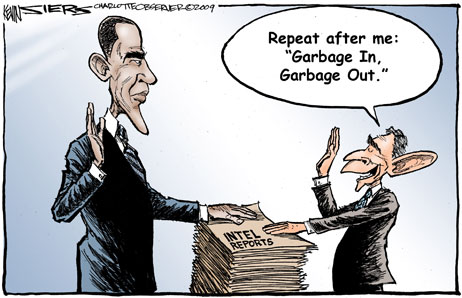
020309_siers_462

W.J. Astore

Francis Bacon is famous for the aphorism, “Knowledge is power.”  Yet the reverse aphorism is not true.  The United States is the most powerful nation in the world, yet its knowledge base is notably weak in spite of all that power.  Of course, many factors contribute to this weakness.  Our public educational systems are underfunded and driven by meaningless standardized test results.  Our politicians pander to the lowest common denominator.  Our mainstream media is corporate-owned and in the business of providing info-tainment when they’re not stoking fear.  Our elites are in the business of keeping the American people divided, distracted, and downtrodden, conditions that do not favor critical thinking, which is precisely the point of their efforts.

All that is true.  But even when the U.S. actively seeks knowledge, we get little in return for our investment.  U.S. intelligence agencies (the CIA, NSA, DIA, and so on) aggregate an enormous amount of data, then try to convert this to knowledge, which is then used to inform action.  But these agencies end up drowning in minutiae.  Worse, competing agencies within a tangled bureaucracy (that truly deserves the label of “Byzantine”) end up spinning the data for their own benefit.  The result is not “knowledge” but disinformation and self-serving propaganda.

When our various intelligence agencies are not drowning in minutiae or choking on their own “spin,” they’re getting lost in the process of converting data to knowledge.  Indeed, so much attention is put on process, with so many agencies being involved in that process, that the end product – accurate and actionable knowledge – gets lost.  Yet, as long as the system keeps running, few involved seem to mind, even when the result is marginal — or disastrous.

Consider the Vietnam War.  Massive amounts of “intelligence” data took the place of knowledge.  Data like enemy body counts, truck counts, aircraft sorties, bomb tonnages, acres defoliated, number of villages pacified, and on and on.  Amassing this data took an enormous amount of time; attempting to interpret this data took more time; and reaching conclusions from the (often inaccurate and mostly irrelevant) data became an exercise in false optimism and self-delusion.  Somehow, all that data suggested to US officialdom that they were winning the war, a war in which US troops were allegedly making measurable and sustained progress.  But events proved such “knowledge” to be false.

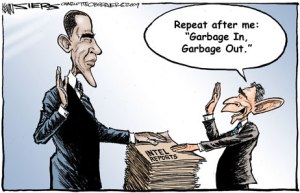
Of course, there’s an acronym for this: GIGO, or garbage (data) in, garbage (knowledge) out.

In this case, real knowledge was represented by the wisdom of Marine Corps General (and Medal of Honor recipient) David M. Shoup, who said in 1966 that:

I don’t think the whole of Southeast Asia, as related to the present and future safety and freedom of the people of this country, is worth the life or limb of a single American [and] I believe that if we had and would keep our dirty bloody dollar-crooked fingers out of the business of these nations so full of depressed, exploited people, they will arrive at a solution of their own design and want, that they fight and work for. And if, unfortunately, their revolution must be of the violent type…at least what they get will be their own and not the American style, which they don’t want…crammed down their throat.

But few wanted to hear Shoup and his brand of hard-won knowledge, even if he’d been handpicked by President Kennedy to serve as the Commandant of the Marine Corps exactly because Shoup had a reputation for sound and independent thinking.

Consider as well our rebuilding efforts in Iraq after 2003.  As documented by Peter Van Buren in his book “We Meant Well,” those efforts were often inept and counterproductive.  Yet the bureaucracy engaged in those efforts was determined to spin them as successes.  They may even have come to believe their own spin.  When Van Buren had the clarity and audacity to say, We’re fooling no one with our Kabuki dance in Iraq except the American people we’re sworn to serve, he was dismissed and punished by the State Department.

Why?  Because you’re not supposed to share knowledge, real knowledge, with the American people.  Instead, you’re supposed to baffle them with BS.  But Van Buren was having none of that.  His tell-all book (you can read an excerpt here) captured the Potemkin village-like atmosphere of US rebuilding efforts in Iraq.  His accurate knowledge had real power, and for sharing it with the American people he was slapped down.

Tell the truth – share real knowledge with the American people – and you get punished.  Massage the data to create false “knowledge,” in these cases narratives of success, and you get a pat on the back and a promotion.  Small wonder that so many recent wars have gone so poorly for America.

What the United States desperately needs is insight.  Honesty.  A level of knowledge that reflects mastery.  But what we’re getting is manufactured information, or disinformation, or BS.  Lies, in plainspeak, like the lie that Iraq had in 2002 a large and active program in developing WMD that could be used against the United States.  (Remember how we were told we had to invade Iraq quickly before the “smoking gun” became a “mushroom cloud”?)

If knowledge is power, what is false knowledge?  False knowledge is a form of power as well, but a twisted one.  For when you mistake the facade you’re constructing as the real deal, when you manufacture your own myths and then forget they’re myths as you consume them, you may find yourself hopelessly confused, even as the very myths you created consume you.

So, a corollary to Francis Bacon: Knowledge is power, but as the United States has discovered in Vietnam, Iraq, and elsewhere, power is no substitute for knowledge.


Training Wheels: The Fatal Flaw in U.S. Foreign Policy

Put them on? Take them off? The dilemma of US foreign policy "experts"
Put them on? Take them off? The dilemma of US foreign policy “experts”

W.J. Astore

You read it here first: the fatal flaw in U.S. foreign policy is training wheels.  Yes, those supplemental wheels you add to your child’s bike when she’s first trying to learn how to balance herself as she pedals.

How so?  Listen closely to America’s leaders as they talk about helping Iraqis, Afghans, and other peoples.  A common expression they use is training wheels, which they visualize themselves as affixing to or removing from the Iraqi or Afghan governmental bike.  Because the idea of democracy is apparently so new and novel to foreign peoples, and because these foreigners basically act like so many children when it comes to governing themselves equitably, the U.S. must treat them like so many unskilled and tippy children on bikes.  We must affix training wheels to their bikes of state, and at the proper moment – a moment that only American adults can determine – those training wheels must then be removed.

Sounds simple – or is it?

Some examples suggest it’s not so simple.   In January 2004, President George W. Bush told his fellow Republicans that Iraqis were ready to “take the training wheels off” and assume some responsibility for their own self-government.  Yet a decade later in June 2014, retired General Michael Hayden, formerly head of the NSA and CIA, claimed that America “took the training wheels off the new Iraqi government far too early,” and by “too early” Hayden meant 2011, not seven years earlier in 2004.

Another American “adult” in the room, retired General Anthony Zinni, formerly commander of US Central Command, disagreed with Hayden, saying in December 2014 that those training wheels were still very much on in Iraq as well as Afghanistan, and that it was now high time for us to take them off.   That may have surprised Vice President Joe Biden, who said back in November 2010 that it was time for Afghans to remove their governmental training wheels, and if they didn’t, “Daddy” would do it for them.

In fact, those were Biden’s exact words on Larry King Live:  “Daddy is going to start to take the training wheels off … next July [2011], so you [Afghan leaders had] better practice riding.”  That admonition from their American “Daddy” in 2010 has failed over the last half-decade to inspire Afghan leaders to pedal smartly for American-style democracy.

And there’s the rub.  You don’t win foreign peoples to your side by treating them like so many unskilled and tippy children.  You don’t condescend to them by comparing their efforts to children trying to learn to ride a bike for the first time.  And you certainly don’t shake a finger at them that “Daddy” has lost patience and is going to remove the training wheels, whether they’re ready or not.

So, how do Americans respond when their Iraqi or Afghan “children” get angry at “Daddy” for messing with their training wheels?  Whether oblivious or indifferent to their own condescension, Americans respond by treating their foreign “children” as ingrates.  “Ingratitude, the vilest weed that grows,” to cite Eugene O’Neill’s play, Long Day’s Journey Into Night, generates anger – and violence.

Dammit, why can’t these foreign “kids” learn to ride their democratic bikes?  Time to cut their allowance (in this case, American aid).  Or perhaps it’s even time for a good ass whooping with Daddy’s belt (in this case, drones firing Hellfire missiles).

Those foreign ingrates!  We gave them everything — lots of money, lots of aid, American troops and advisers, even “training wheels” for their bikes of democracy — and they still despise us.  Why?

I’ll tell you why.  They don’t hate us for our freedoms, as former President George W. Bush once claimed.  But they may very well despise us for our training wheels – and for all the smugness and paternalism and condescension they represent.

Four Sayings from My Dad

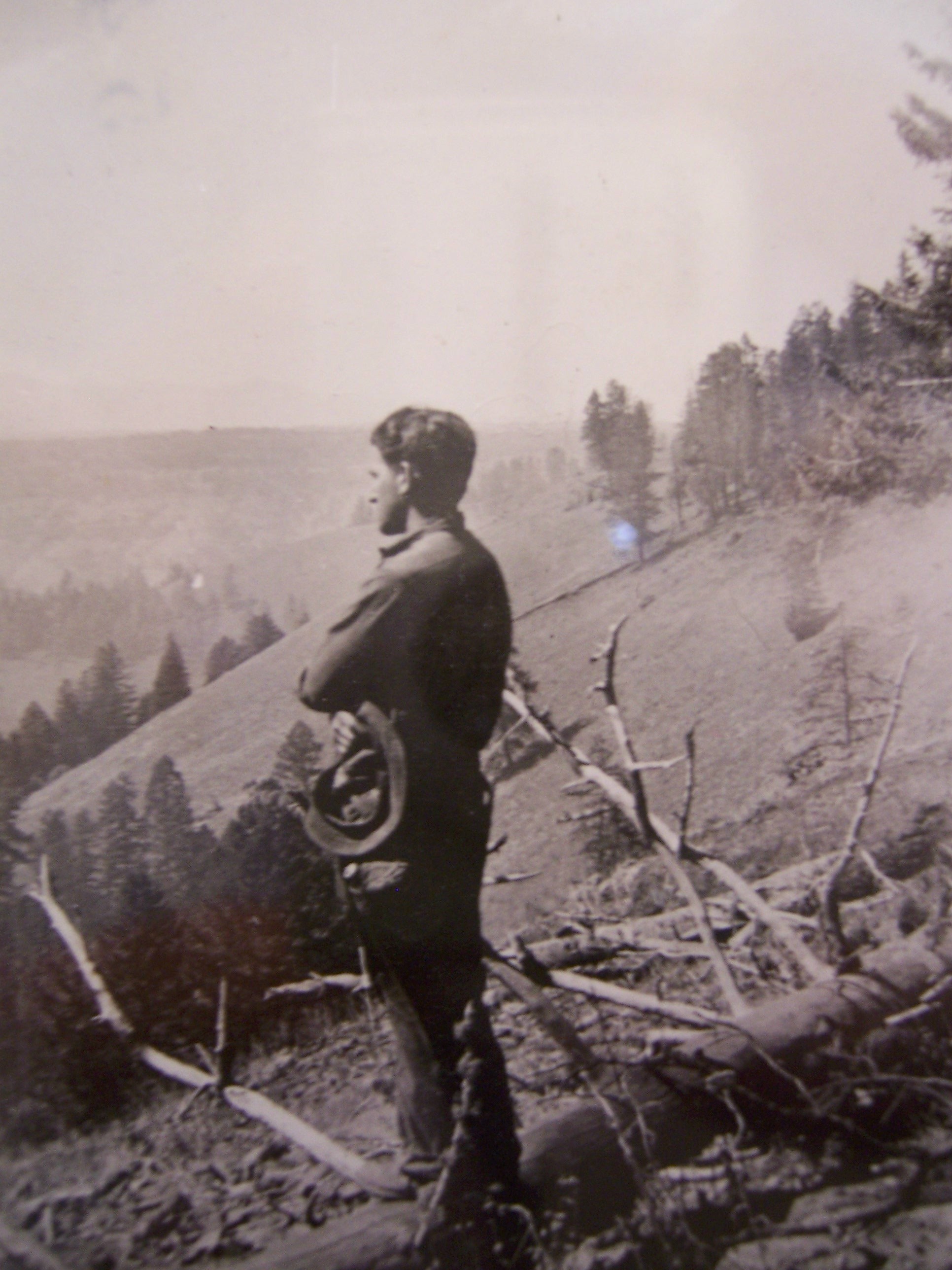
My Dad in Oregon, 1937

W.J. Astore

We tackle heavy subjects at this site, but occasionally we throw in a change of pace.  My Dad was a fount of homespun wisdom and sayings.  Three of them immediately spring to mind. “Water seeks its own level,” meaning (for him) that you don’t have to coddle talented kids—they’ll find their own path in life. “The peaches don’t drop too far from the tree,” meaning kids are often a lot like their parents, even when (especially when) they take pains to deny it.  And “The cream rises to the top.”

That last one is less than obvious to today’s generation.  In these days of homogenized milk, many people have no experience skimming the cream from the top of a glass bottle or bucket of milk.  But my father did.  He recounts his experience in a short anecdote he titled, “A full mess cup,” when he was in the Civilian Conservation Corps in 1937:

We were in a rest area [in Oregon] when the pickup truck loaded with five gallon cans of fresh milk came in.

I was first in line with my mess cup.  I guess it held more than a pint.  Those days milk wasn’t homogenized.  Being first my cup was filled with 100% cream.  Who thought of fat and cholesterol in those days?  What a taste treat.

Sometimes it pays to be first in line, especially when you can skim the cream from the top.

My father’s fourth saying?  It’s one of my favorites: “The empty barrel makes the most noise.”  I think of this whenever I encounter blowhards — someone like Donald Trump, perhaps?

Holding Military Boots to the Fire

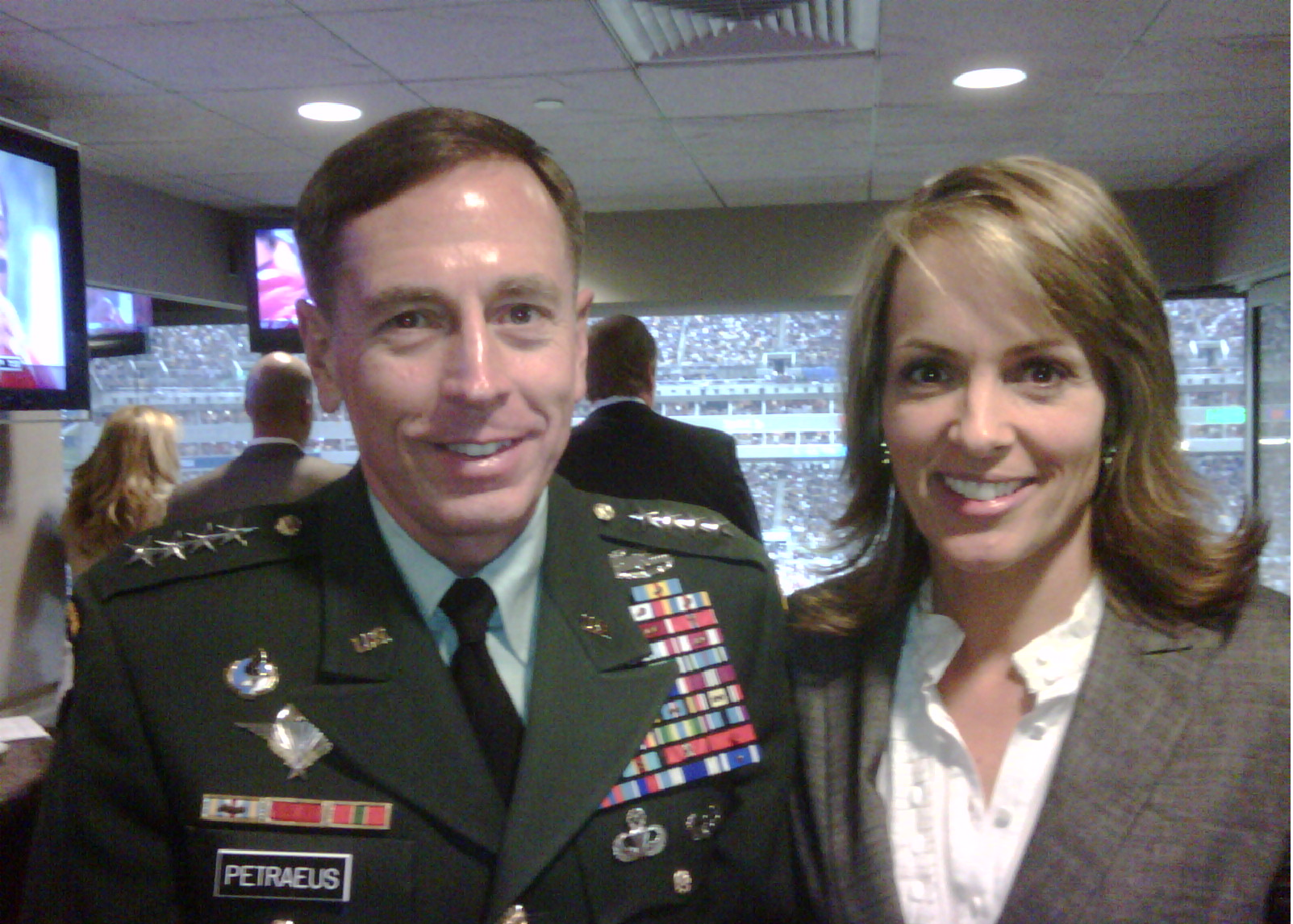
Petraeus with Broadwell
Petraeus: Lots of ribbon candy crowded on that uniform

W.J. Astore

I write a lot about the U.S. military, partly because I served in it for 20 years, partly because I’ve been reading about it since I could read, and partly because I have a lot of affection for colleagues, young and old, who still serve.  My articles tend to be critical because there’s much to criticize about our military.  I get interesting responses, like the one from a military man who said I wrote well and had a few interesting things to say, but why couldn’t I write more positive articles about the military?  Why couldn’t I just focus on “good news”?  I explained to him that the military has a small legion of public affairs officers and that sharing good news is their job, not mine.  He didn’t write back.

I have a few critical things to say in my latest article at TomDispatch: “Seventy Years of Military Mediocrity.”  You can read the entire article here; what follows is an excerpt on America’s most senior officers and some of their faults and failings.  As ever, I welcome your comments.

America’s Senior Officers: Lots of Ribbon Candy, No Sweetness of Victory

In my first article for TomDispatch back in 2007, I wrote about America’s senior military leaders, men like the celebrated David Petraeus. No matter how impressive, even kingly, they looked in their uniforms festooned with ribbons, badges, and medals of all sorts, colors, and sizes, their performance on the battlefield didn’t exactly bring to mind rainstorms of ribbon candy. So why, I wondered then, and wonder still, are America’s senior military officers so generally lauded and applauded? What have they done to deserve those chests full of honors and the endless praise in Washington and elsewhere in this country?

By giving our commanders so many pats on the back (and thanking the troops so effusively and repeatedly), it’s possible that we’ve prevented the development of an American-style stab-in-the-back theory — that hoary yet dangerous myth that a military only loses wars when the troops are betrayed by the homefront. In the process, however, we’ve written them what is essentially a blank check. We’ve given them authority without accountability. They wage “our” wars (remarkably unsuccessfully), but never have to take the blame for defeats.  Unlike President Harry Truman, famous for keeping a sign on his desk that read “the buck stops here,” the buck never stops with them.

Think about two of America’s most celebrated generals of the twenty-first century, Petraeus and Stanley McChrystal and how they fell publicly from grace.  Both were West Point grads, both were celebrated as “heroes,” despite the fact that their military “surges” in Iraq and Afghanistan proved fragile and reversible.  They fell only because Petraeus was caught with his pants down (in an extramarital affair with a fawning biographer), while McChrystal ran afoul of the president by tolerating an atmosphere that undermined his civilian chain of command.

And here, perhaps, is the strangest thing of all: even as America’s wars continue to go poorly by any reasonable measure, no prominent high-ranking officer has yet stepped forward either to take responsibility or in protest.  You have to look to the lower ranks, to lieutenant colonels and captains and specialists (and, in the case of Chelsea Manning, to lowly privates), for straight talk and the courage to buck the system.  Name one prominent general or admiral, fed up with the lamentable results of America’s wars, who has either taken responsibility for them or resigned for cause.  Yup — I can’t either.  (This is not to suggest that the military lacks senior officers of integrity.  Recall the way General Eric Shinseki broke ranks with the Bush administration in testimony before Congress about the size of a post-invasion force needed to secure Iraq, or General Antonio Taguba’s integrity in overseeing a thorough investigation of prisoner abuse at Abu Ghraib.  Their good deeds did not go unpunished.)

Authority without accountability means no one is responsible.  And if no one is responsible, the system can keep chugging along, course largely unaltered, no matter what happens.  This is exactly what it’s been doing for years now in Iraq, Afghanistan, and elsewhere.

Can we connect this behavior to the faults of the service academies?  Careerism.  Parochialism.  Technocratic tendencies.  Elitism.  A focus on image rather than on substance.  Lots of busywork and far too much praise for our ascetic warrior-heroes, results be damned.  A tendency to close ranks rather than take responsibility.  Buck-passing, not bucking the system.  The urge to get those golden slots on graduation and the desire for golden parachutes into a lucrative world of corporate boards and consultancies after “retirement,” not to speak of those glowing appearances as military experts on major TV and cable networks.

By failing to hold military boots to the fire, we’ve largely avoided unpleasantness between the military and its civilian leadership, not to speak of the American public. But — and here’s the rub — 70 years of mediocrity since World War II and 14 years of failure since 9/11 should have resulted in anti-war protests, Congressional hearings, and public controversy. It should have created public discord, as it did during the Vietnam War, when dissent was a sign of a healthy democracy and an engaged citizenry. Nowadays, in place of protest, we hear the praise, the applause, the thank-yous followed by yet another bombastic rendition of “God Bless America.” Let’s face it. Our military has failed us, but haven’t we failed it, too?

Two Points About the Hillary Clinton Email Fiasco

Hillary in 2013
Hillary in 2013

W.J. Astore

Much is being made of Hillary Clinton’s private email server, which she used when she was Secretary of State.  To me, the real issue is not that Hillary endangered national security by sending classified information in the clear.  No — the real issue is that the Clintons act as if they are above the rules and laws that apply to “the little people.”  They are superior and smug, totally devoted to themselves and their pursuit of power and the privileges that come with it.  It’s a matter of character, in other words.  Hillary’s evasiveness, her lack of transparency, her self-righteousness, her strong sense of her own rectitude, make her a dangerous candidate for the presidency.

My second point is this: The issue of classification should be turned on its head.  The real issue is not that Hillary potentially revealed secrets.  No — the real issue is that our government keeps far too much from us.  Our government uses security classification not so much to keep us safe, but to keep the national security state safe — safe from the eyes of the American people.

As The Guardian reported in 2013:

“A committee established by Congress, the Public Interest Declassification Board, warned in December that rampant over-classification is ‘imped[ing] informed government decisions and an informed public’ and, worse, ‘enabl[ing] corruption and malfeasance’. In one instance it documented, a government agency was found to be classifying one petabyte of new data every 18 months, the equivalent of 20m filing cabinets filled with text.”

Nowadays, seemingly everything is classified.  And if it’s classified, if it’s secret, we can’t know about it.  Because we can’t be trusted with it.  That’s a fine idea for an autocracy or dictatorship, but not so fine for a democracy.

Government of the people, by the people, for the people?  Impossible when nearly everything of any importance is classified.

Too bad Hillary didn’t send everything in the clear — what a service she would have done for the American people and for democracy!

A Few Letters to My Dad during World War II

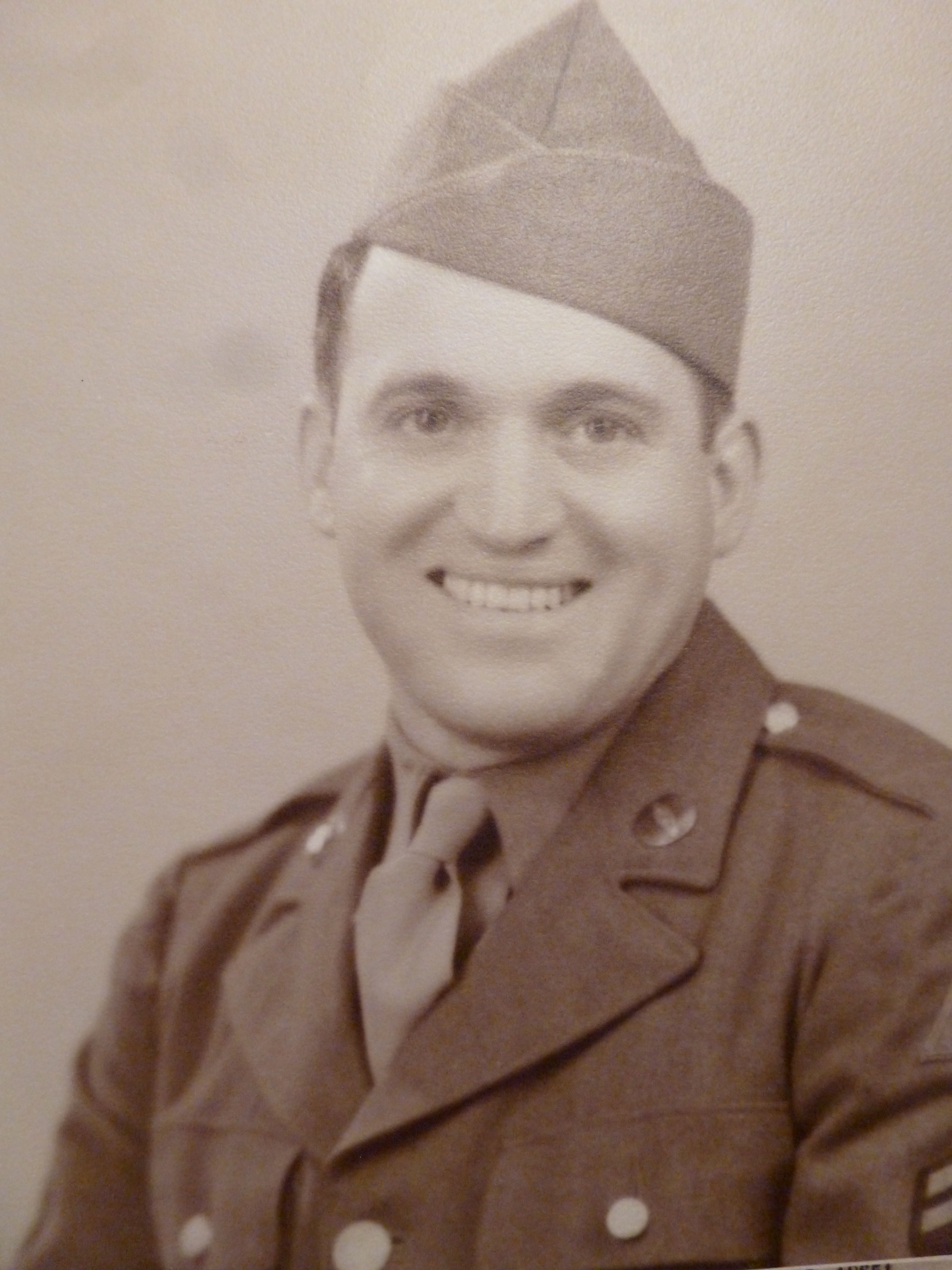
My Dad in 1945
My Dad in 1945

W.J. Astore

My dad was in the Army in World War II.  He was a dental technician in an armored headquarters group and never went overseas.  But many of his friends did go overseas and saw combat.  What follows are some excerpts from letters sent to my dad.

Bill Zerby was attached to the 781 Tank Battalion, 7th Army, in France and Germany.  In December 1944, just before the Battle of the Bulge, Zerby wrote to my dad that:

“Here we have plenty of mud and rain and 24 hours a day the field artillery lays down a barrage with everything they have.  The outfit is making out pretty well so far.  One good thing these boys don’t believe in taking prisoners…. We all live in houses and have lanterns for lights.  Everything is blacked out at 5 P.M. till dawn.”

I’d like to repeat Zerby’s 3rd sentence: One good thing these boys don’t believe in taking prisoners.

The fight against the Nazis was tough, and it wasn’t just the Germans who violated the Geneva Convention and its rules about taking prisoners.  War, in short, should never be sugarcoated.

At the end of March 1945, Zerby wrote to my dad again, a letter that contained this telling sentence:

“Bookbinder [a fellow soldier] sure got a break [by not going overseas] but he better hope he don’t get sent to Germany.  It seems they don’t like the Heb’s [Jews].”

By this point, Allied troops were beginning to liberate German concentration camps, and beginning as well to realize the murderous hatred the Nazis had for the Jewish people.

On a lighter note, Zerby regales my dad with the following story:

“The place where we live now is a large estate that belongs to a German big shot.  He got chased out and we moved in.  He has a wine cellar that runs all over town—all underground passages, and the dates on some of the casks run back to 1755.  Well some of the wine was really good.  The boys made a tour of the place and took all the best drinks for their own use.  Yes, I was in on it too.  Now we are tired of it and don’t take anymore.  Of course it’s bolted up now but that don’t mean anything.”

In another letter, Zerby writes about American soldiers hunting for deer.  Yes, American troops knew how to have a good time. Wine, venison, and women.  After all, who knew from day to day if you’d live to see home again?

At the end of 1945, Zerby writes again to my dad that “I am now a proud civilian and no more lousy Army life.”  And to my dad’s mention of a few of their friends from the battalion, Zerby writes with painful honesty: “I don’t remember many of those guys anymore.  A hell of a lot of them got bumped off also last winter [in action in France and Germany].  I guess we were just lucky.”

Another of my dad’s friends was Corporal Ed C. Sarna, who was assigned to a headquarters battery in Divisional Artillery.  He wrote to my dad in December 1944 that:

“To date, I have seen a number of [German V-1] buzz bombs at a very close range.  A little in regards to Germany.  If Hitler decided to fight until we hit Berlin, I can sincerely feel that the destruction will wipe Germany right off the map.  At our present place – there isn’t a place found to be livable.  Our forces are really doing a good job of it.”

The Allies wanted to make sure the Germans knew they had been well and truly beaten in this war, so as to prevent the myth that emerged after World War I that the German Army had not been defeated in the field.

This was a sentiment seconded by Corporal Paul Vella, 5th Depot Repair Squadron, Maintenance Division.  He wrote to my dad in March 1945 that “You’re right, Julie, the Germans are getting the shit kicked out of them and the quicker it’s over the better I like it.  I sure would like to see the states after a couple of years of being away from it.”

Corporal Vella also jokingly mentioned the “Soldier’s Prayer” in his letter: Please, Dear God, distribute the bullets like you do the pay and give officers first dibs. Yes, there’s some grim humor shared in the front lines.

There’s nothing really that special about these letters to my dad – and that’s their value.  They are the typical sentiments of American dogfaces in Europe in World War II.  Men who saw the destruction of Germany and the deaths of their friends.  They had no illusions about war, and they didn’t spout patriotic platitudes.  They just wanted the war to be over so they could get back to living their “real” lives.

As one soldier put it to my dad in 1945, “I sure hope that I’ll get my discharge soon, I’ve got plans to complete, my girl is getting tired of waiting so long.”

And thus baby boomers like me followed.

It Should Never Be Done Again: Hiroshima, 70 Years Later

Hiroshima after the bomb

W.J. Astore

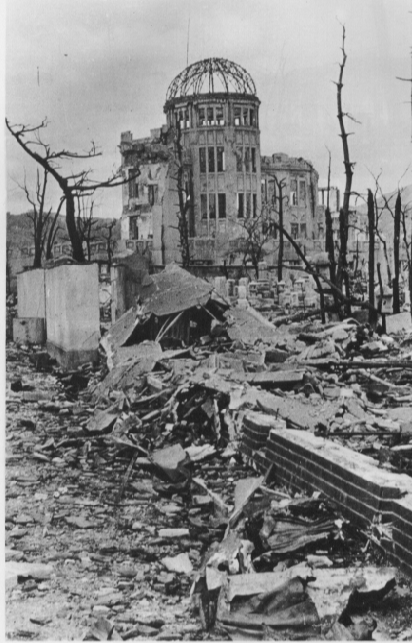
August 6, 1945.  Hiroshima.  A Japanese city roughly the size of Houston.  Incinerated by the first atomic bomb.  Three days later, Nagasaki.  Japanese surrender followed.  It seemed the bombs had been worth it, saving countless American (and Japanese) lives, seeing that a major invasion of the Japanese home islands was no longer needed.  But was the A-bomb truly decisive in convincing the Japanese to surrender?

President Truman’s decision to use atomic bombs against Japan is perhaps the most analyzed, and, in the United States, most controversial decision made during World War II.  The controversy usually creates more heat than light, with hardliners posed on mutually opposed sides.  The traditional interpretation is that Truman used the A-bombs to convince a recalcitrant Japanese Emperor that the war was truly lost.  A quick Japanese surrender appeared to justify Truman’s choice.  It also saved tens of thousands of Allied lives in the Pacific (while killing approximately 250K Japanese).  This thesis is best summed up in Paul Fussell’s famous essay, “Thank God for the Atomic Bomb.”

Even before Hiroshima, however, a small number of scientists argued that the A-bomb should not be used against Japan without a prior demonstration in a remote and uninhabited location.  Later, as the horrible nature of radiation casualties became clearer to the American people, and as the Soviet Union developed its own arsenal of atomic weapons, threatening the United States with nuclear Armageddon, Americans began to reexamine Truman’s decision in the context of the Cold War and the nuclear arms race.  Gar Alperovitz’s revisionist view that Truman was practicing “atomic diplomacy” won its share of advocates in the 1960s. (Alperovitz expanded upon this thesis in the 1990s.)  Other historians suggested that racism and motives of revenge played a significant role in shaping the U.S. decision.  This debate reached its boiling point in the early 1990s, as the Smithsonian’s attempt to create a “revisionist” display to mark the bomb’s 50th anniversary became a lightning rod in the “culture wars” between a Democratic administration and a resurgent Republican Congress.

Were the atomic bombs necessary to get the Japanese to surrender?  Would other, more humane, options have worked, such as a demonstration to the Japanese of the bomb’s power?  We’ll never know with certainty the answer to such questions.  Perhaps if the U.S. had been more explicit in their negotiations with Japan that “unconditional surrender” did not mean the end of Japan’s Emperor, the Japanese may have surrendered earlier, before the A-bomb was fully ready.  Then again, U.S. flexibility could have been interpreted by Japanese hardliners as a sign of American weakness or war fatigue.

Unwilling to risk appearing weak or weary, U.S. leaders dropped the A-bomb to shock the Japanese into surrendering. Together with Stalin’s entry into the war against Japan, these shocks were sufficient to convince the Japanese emperor “to bear the unbearable,” in this case total capitulation, a national disgrace.

A longer war in the Pacific — if only a matter of weeks — would indeed have meant higher casualties among the Allies, since the Japanese were prepared to mount large-scale Kamikaze attacks.  Certainly, the Allies were unwilling to risk losing men when they had a bomb available that promised results.  The mentality seems to have been: We developed it.  We have it.  Let’s use it.  Anything to get this war over with as quickly as possible.

That mentality was not humane, but it was human.  Truman had a weapon that promised decisiveness, so he used it.  The attack on Hiroshima  was basically business as usual, especially when you consider the earlier firebombing raids led by General Curtis LeMay.  Indeed, such “conventional” firebombing raids continued after Hiroshima and Nagasaki until the Japanese finally sent a clear signal of surrender.

Of course, an event as momentous, as horrific, as Hiroshima took on extra meaning after the war, given the nuclear arms race, the Cold War and a climate represented by the telling acronym of MAD (mutually assured destruction). U.S. decisionmakers like Truman were portrayed as callous, as racist, as war criminals.  Yet in the context of 1945, it’s difficult to see any other U.S. president making a different decision, especially given Japan’s apparent reluctance to surrender and their proven fanaticism at Iwo Jima, Okinawa and elsewhere.

As Andrew Rotter notes in Hiroshima: The World’s Bomb (2008), World War II witnessed the weakening, if not erasure, of distinctions between combatants and non-combatants, notably during LeMay’s firebombing of Tokyo in March 1945 but in many other raids as well (Rotterdam and Coventry and Hamburg and Dresden, among so many others). In his book, Rotter supports the American belief that Japan would fight even more fanatically for their home islands than they did at Iwo Jima and Okinawa, two horrendous battles in 1945 that preceded the bomb. But he argues that Truman and Secretary of War Henry Stimson engaged in “self-deception” when they envisioned that the effects of the atomic bomb could be limited to “a purely military” target.

A quarter of a million Japanese died at Hiroshima and Nagasaki and in the years and decades following.  They died horrible deaths.  And their deaths serve as a warning to us all of the awful nature of war and the terrible destructiveness of nuclear weapons.

Hans Bethe worked on the bomb during the Manhattan Project.  A decent, humane, and thoughtful man, he nevertheless worked hard to create a weapon of mass destruction. His words of reflection have always stayed with me.  They come in Jon Else’s powerful documentary, “The Day After Trinity: J. Robert Oppenheimer and the Atomic Bomb.”

Here is what Bethe said (edited slightly):

The first reaction we [scientists] had [after Hiroshima] was one of fulfillment.  Now it has been done.  The second reaction was one of shock and awe: What have we done?  What have we done.  The third reaction was it should never be done again.

It should never be done again: Just typing those words here from memory sends chills up my spine.

Let us hope it is never done again.  Let us hope a nuclear weapon is never used again.  For that way madness lies.

Surprise! Weapons Sales Are Booming

Heck ya!  Send some B-52s to Israel (U.S. Air Force photo)
Heck ya! Send some B-52s to Israel (U.S. Air Force photo)

W.J. Astore

Any optimism that the Iran nuclear deal might slow the momentum of weapons sales to the Middle East has already been strangled in the cradle. Consider the following news item, courtesy of FP: Foreign Policy:

While U.S. Defense Department officials make promises to partner with Middle East allies nervous about the Iranian missile threat in their backyard, U.S. defense contractors are rushing in to ink multiple billion dollar deals to fill the gap. On Wednesday, the State Department announced a pending $5.4 billion deal with Saudi Arabia for a 600 new PAC-3 Patriot missile interceptors, which will bring the Saudi missiles up to date with the latest version of the Patriot.

The massive deal follows an April agreement with Riyadh for $2 billion worth of Patriots, and another $1.5 billion sale, announced this month, for Patriot interceptors in Qatar, United Arab Emirates, Taiwan, South Korea, and Saudi Arabia. Defense contractors Lockheed Martin and Raytheon will produce the missiles.

That’s $9 billion in Patriot surface-to-air missile (SAM) sales, a coup indeed for Lockheed Martin and Raytheon.

At least the Patriot SAM is largely defensive in nature.  One former Obama official has gone a quantum leap further in advocating that the U.S. supply B-52 bombers to Israel armed with special bunker-busting bombs.  Here’s the gist of the story, courtesy of Defense News:

A former top adviser to US President Barack Obama is calling on Washington to provide bunker-busting B-52 bombers to Israel as a means of bolstering Israeli deterrence and the credibility of its so-called military option should Iran opt out of commitments codified in Tuesday’s deal with world powers.

“To have a credible military option, it’s not enough to say all options are on the table. We have to be much more blunt,” said Ambassador Dennis Ross, a longtime diplomat and former special adviser to Obama on Iran.

In an interview Thursday, Ross said he favors the transfer of an unspecified quantity of B-52 Stratofortress bombers outfitted to deliver 30,000-pound GBU-57 Massive Ordnance Penetrators as one of the means of shoring up deterrence vis a vis Iran.

Sure: Just what the Israelis need: a huge long-range strategic bomber, originally built in the 1950s to deter, and if necessary to attack, the Soviet Union with nuclear weapons.  Perhaps an Israeli Major Kong can ride one of those bunker-busters right into the heartland of Iran.

We do indeed have a strange love for weaponry.