Higher Military Spending Leads to Less Security

W.J. Astore

What does “security” mean to you?  My dad had a utilitarian definition.  Born in 1917, he found himself in a fatherless immigrant family with four siblings during the height of the Great Depression.  To help his family survive, he enlisted in the Civilian Conservation Corps in 1935 and served for two years, earning a dollar a day, most of it sent home to his mother.  For my dad, security meant a roof over one’s head, three square meals a day, and warm clothes on one’s back.  Food, shelter, clothing: it really was that simple.

Of course, you needed to pay for those bare necessities, meaning you needed a job with decent pay and benefits.  Personal security, therefore, hinges on good pay and affordable health care, which many U.S. workers today – in the richest country in the world – continue to scratch and claw for.  Another aspect of personal security is education because pay and career advancement within U.S. society often depend on one’s educational level.  A college education is proven to lead to higher pay and better career prospects throughout one’s life.

Personal security is in many ways related to national security.  Certainly, a nation as large as the U.S. needs a coast guard, border controls, an air force, a national guard, and similar structures for defensive purposes.  What it doesn’t need is a colossal, power-projecting juggernaut of a military at $800+ billion a year that focuses on imperial domination facilitated by 750 overseas bases that annually cost more than $100 billion just to maintain.  True security, whether personal or national, shouldn’t be about domination.  It should be focused on providing a collective standard of living that ensures all Americans can afford nutritious food, a decent place to live, adequate clothing, a life-enriching education, and health care.

President Dwight D. Eisenhower understood this.  In his farewell address as president in 1961, he warned us about the military-industrial complex and its anti-democratic nature.  Even more importantly, he called for military disarmament as a “continuing imperative,” and he talked of peace, which he tied to human betterment, and which he said could be “guaranteed by the binding force of mutual respect and love.”  Ike knew that huge, offensive-minded military budgets constituted a theft from the people; even worse, he knew they constituted a betrayal of our national ideals.  A hugely powerful military establishment had “grave implications” to the “very structure of our society,” Ike presciently warned.  We have failed to heed his warning.

Ike, a former five-star U.S. general who led the D-Day invasion in 1944, knew the dangers of funding an immense military establishment

For Ike, true national security was about fostering human betterment and working toward world peace.  It was about securing the necessities of life for everyone.  It entailed the pursuit of military disarmament, a pursuit far preferable to allowing the world to be crucified on a cross of iron erected by wars and weapons manufacturers.

Tragically, America’s “councils of government” no longer guard against militarism; rather, they have been captured, often willingly, by the military-industrial complex.  The “alert and knowledgeable citizenry” that Ike was counting on to hold the line against incessant warfare and wasteful weaponry is largely uninterested, or uninformed, or uneducated in matters of civics and public policy.  Meanwhile, military spending keeps soaring, and the result is greater national insecurity.

In a paradox Ike warned us about, the more money the government devotes to its military, the less secure the nation becomes.  Because security isn’t measured in guns and bullets and warheads.  It’s measured in a healthy life, a life of meaning, a life of liberty. The pursuit of happiness, not eternal belligerence, should be the goal.

Consider the following fable.  A man lives in a castle.  He says he seeks security.  So he digs moats and erects walls and piles cannon ball upon cannon ball.  He posts armed guards and launches raids into the surrounding countryside to intimidate “near-peer” rivals.  He builds outlying fortifications and garrisons them, thinking these will secure his castle from attack.  Meanwhile, his family and relations in the castle are starving; the roof leaks and internal walls are covered in mold; the people, shivering and in rags, are uneducated and in poor health.  Has this man truly provided security for his people?  Would we call this man wise?

Grossly overspending on the military and weaponry — on castles and cannons everywhere — produces insecurity. It’s the very opposite of wisdom. Let’s end this folly, America, and seek human betterment and world peace as Ike advised us to do.

Addendum: these are the words Ike spoke in 1953

Every gun that is made, every warship launched, every rocket fired signifies, in the final sense, a theft from those who hunger and are not fed, those who are cold and are not clothed.

This world in arms is not spending money alone. It is spending the sweat of its laborers, the genius of its scientists, the hopes of its children. The cost of one modern heavy bomber is this: a modern brick school in more than 30 cities.  It is two electric power plants, each serving a town of 60,000 population. It is two fine, fully equipped hospitals. It is some fifty miles of concrete pavement. We pay for a single fighter plane with a half million bushels of wheat. We pay for a single destroyer with new homes that could have housed more than 8,000 people.

This is, I repeat, the best way of life to be found on the road the world has been taking. This is not a way of life at all, in any true sense. Under the cloud of threatening war, it is humanity hanging from a cross of iron.


Deplorable Leaders

W.J. Astore

America’s “leaders” believe they are in-the-know, and the rest of us are know-nothings who can be pushed around or ignored.

Perhaps the most honest thing Hillary Clinton ever did was to speak of her “basket of deplorables” after which she dismissed them as “irredeemable.” This is exactly how Hillary and most of our “leaders” think. Anyone who’s skeptical of them, anyone who asks for proof, anyone who’s willing to resist, is thrown into a “deplorable” basket and dismissed.

It will work until it doesn’t; indeed, it’s already not working. But the system is not about to give in. At the presidential level, America’s likely candidates for “leader of the free world” in 2024 are Joe Biden and Donald Trump, or, as my wife likes to joke, ODR versus ODR. Old Demented Rotter versus Old Divisive Rotter.

Let’s take the “old” part first, since ageism is an instant rejoinder. It used to be said that being President of the U.S. was the toughest, most demanding, job in the world, making enormous demands on physical stamina and mental acuity. Eisenhower was considered old when he left the presidency at the age of 70, replaced by John F. Kennedy at the age of 43. If Biden is reelected in 2024, he will be 82 that November, and Trump will be 78. Both men are well past their prime. Are they truly ready for the rigors of the office? Do we trust either man to be able to complete another four-year term in office?

Now, let’s take the “D” part. Many observers have noted Biden’s mental decline; it was readily noticeable in 2020 when he ran as a candidate in the primaries. Sadly, mental decline often accelerates with age, sometimes unpredictably. Reelecting Joe Biden in 2024, assuming he runs again, will likely lead to his vice president taking over for him during his second term of office. Trump, meanwhile, is a divisive leader whose personal motto might be “divide and rule.” A leader should bring people together for their mutual advantage, not tear them apart for his own advantage.

And now the “R” part, the “rotter.” Neither Trump nor Biden is a champion of workers, of the poor, of the vulnerable. Neither has much empathy. Both are deeply compromised. It’s a common failing of “big fish” politicians to have so little regard for the commoners that they rule, but surely we can find candidates that are, dare I say, less rotten?

“Leaders” like Hillary Clinton are fond of denouncing large swaths of the American public as “deplorable.” Is this not a classic case both of projection and of profound narcissism? How do we move beyond ODR versus ODR in 2024?

What a country! (Azeen Ghorayshi / BuzzFeed News)

What Would It Take for the Pentagon Budget to Shrink?

W.J. Astore

In my latest article for TomDispatch.com, I examine what it would take for the Pentagon budget to go down. You can read the entire article here. What follows is the concluding section.

Ever since 9/11, endless conflict has been this country’s new normal.  If you’re an American 21 years of age or younger, you’ve never known a time when your country hasn’t been at war, even if, thanks to the end of the draft in the previous century, you stand no chance of being called to arms yourself.  You’ve never known a time of “normal” defense budgets.  You have no conception of what military demobilization, no less peacetime might actually be like. Your normal is only reflected in the Biden administration’s staggering $813 billion Pentagon budget proposal for the next fiscal year.  Naturally, many congressional Republicans are already clamoring for even highermilitary spending.  Remember that Mae West quip[Too much of a good thing can be wonderful]?  What a “wonderful” world!

And you’re supposed to take pride in this.  As President Biden recently told soldiers from the 82nd Airborne Division now stationed in Poland, this country has the “finest fighting force in the history of the world.”  Even with the mountains of cash we give to that military, the nation still “owes you big,” he assured them.

Well, I’m gobsmacked.  During my 20-year career in the military, I never thought my nation owed me a thing, let alone owed me big.  Now that I think of it, however, I can say that this nation owed me (and today’s troops as well) one very big thing: not to waste my life; not to send me to fight undeclared, arguably unconstitutional, wars; not to treat me like a foreign legionnaire or an imperial errand-boy.  That’s what we, the people, really owe “our” troops.  It should be our duty to treat their service, and potentially their deaths, with the utmost care, meaning that our leaders should wage war only as a last, not a first, resort and only in defense of our most cherished ideals.

This was anything but the case of the interminable Afghan and Iraq wars, reckless conflicts of choice that burned through trillions of dollars, with tens of thousands of U.S. troops killed and wounded, and millions of foreigners either dead or transformed into refugees, all for what turned out to be absolutely nothing.  Small wonder today that a growing number of Americans want to see less military spending, not more.  Citizen.org, representing 86 national and state organizations, has called on President Biden to decrease military spending.  Joining that call was POGO, the Project on Government Oversight, as well as William Hartung at the Quincy Institute for Responsible Statecraft.  And they couldn’t be more on target, though they’re certain to be ignored in Washington.

Consider the recent disastrous end to the Afghan War.  Viewing that conflict in the aggregate, what you see is widespread corruption and untold waste, all facilitated by generals who lied openly and consistently to the rest of us about “progress,” even as they spoke frankly in private about a lost war, a reality the Afghan War Papers all too tellingly revealed.  That harsh story of abysmal failure, however, highlights something far worse: a devastating record of lying on a massive scale within the highest ranks of the military and government.  And are those liars and deceivers being called to account?  Perish the thought!  Instead, they’ve generally been rewarded with yet more money, promotions, and praise.

So, what would it take for the Pentagon budget to shrink?  Blowing the whistle on wasteful and underperforming weaponry hasn’t been enough.  Witnessing murderous and disastrous wars hasn’t been enough.  To my mind, at this point, only a full-scale collapse of the U.S. economy might truly shrink that budget and that would be a Pyrrhic victory for the American people.

In closing, let me return to President Biden’s remark that the nation owes our troops big.  There’s an element of truth there, perhaps, if you’re referring to the soldiers, Marines, sailors, and airmen, many of whom have served selflessly within its ranks. It sure as hell isn’t true, though, of the self-serving strivers and liars at or near the top, or the weapons-making corporations who profited off it all, or the politicians in Washington who kept crying out for more.  They owe the rest of us and America big.

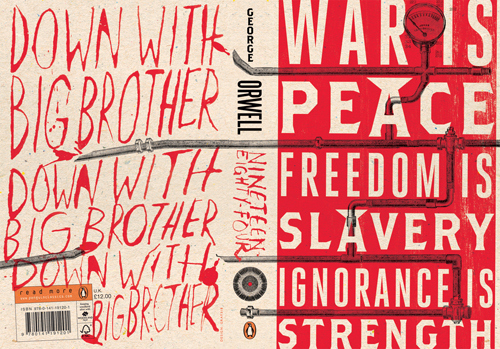
My fellow Americans, we have now reached the point in our collective history where we face three certainties: death, taxes, and ever-soaring spending on weaponry and war.  In that sense, we have become George Orwell’s Oceania, where war is peace, surveillance is privacy, and censorship is free speech.

Such is the fate of a people who make war and empire their way of life.

To read the entire article, visit TomDispatch.com.

The Military-Industrial Complex Is Not a Way of Life at All

W.J. Astore

As I mentioned in a previous Bracing View, I was invited to participate in a forum to generate new ideas to tackle the military-industrial complex (MIC) that President Dwight D. Eisenhower warned us about in 1961. Here are a few more thoughts in response to this stimulating collaboration:

When I was a college student in the early 1980s, and in Air Force ROTC, I wrote critically of the Reagan defense buildup. Caspar Weinberger, he of the “Cap the knife” handle for cost-cutting, became “Cap the ladle” as Reagan’s Secretary of Defense, ladling money in huge amounts to the Pentagon.  History is repeating itself again as the Biden administration prepares to ladle $813 billion (and more) to the Pentagon.

How do we stop this?  Of course, we must recognize (as I’m sure we all do) what we’re up against.  Both political parties are pro-military and, in the main, pro-war.  Our economy is based on a militarized Keynesianism and our culture is increasingly militarized.  Mainstream Democrats, seemingly forever afraid of being labeled “weak” on defense, are at pains to be more pro-military than the Republicans.  Biden, in Poland, echoed the words of Obama and other past presidents, declaring the U.S. military to be “the finest fighting force” in history.  Think about that boast.  Think about how Biden added that the nation owes the troops big. This is a sign of a sick culture.

Ike gave his MIC speech in 1961, and for 61 years the MIC has been winning.  Even after the collapse of the Soviet Union in the early ‘90s, the MIC held its own; after 9/11, it went into warp speed and is accelerating.  To cite Scotty from Star Trek: “And at Warp 10, we’re going nowhere mighty fast.” 

We need a reformation of our institutions; we need a restoration of our democracy; we need a reaffirmation of the U.S. Constitution; we need to remember who we are, or perhaps who we want to be, as a people.

Do we really want to be the world’s largest dealer of arms?  Do we really want to spend a trillion or more dollars, each and every year, on wars and weapons, more than the next dozen or so countries combined, most of which are allies of ours?  (“Yes” is seemingly the answer here, for both Democrats and Republicans.)  Is that really the best way to serve the American people?  Humanity itself?

Consider plans to “invest” in “modernizing” America’s nuclear triad.  (Notice the words used here by the MIC.)  What does this really mean?  To me, it means we plan on spending nearly $2 trillion over the next 30 years to replace an older suicide vest with a newer one, except this suicide vest will take out humanity itself, as well as most other life forms on our planet.  To channel Greta Thunberg’s righteous anger, “How dare you!” https://www.youtube.com/watch?v=xVlRompc1yE

Or, as Ike said in 1953, “This is not a way of life at all … it is humanity hanging from a cross of iron.”

We will need the broadest possible coalition to tackle this outrage against civilization and humanity.  That’s why I applaud these efforts to tackle the MIC, even as I encourage all of us to enlist and recruit more people to join our ranks.

My father enlisted in the Civilian Conservation Corps in 1935 to do his bit for his family and his nation.  He fought forest fires in Oregon and later became a firefighter after serving in the Army during World War II.  That was the last formally declared war that America fought.  It was arguably the last morally justifiable war this country has fought, waged by citizens who donned a uniform, not “warriors” who are told that the nation owes them big.

In “It’s A Wonderful Life,” Jimmy Stewart, a true war hero, played a man who never fought in World War II, who stayed at home and helped ordinary people even as his younger brother Harry went off to war and earned the Medal of Honor.  Yet the movie doesn’t celebrate Harry’s war heroism; it celebrates the nobility, decency, and humility of George Bailey.

How do we get back to that America?  The America from before the MIC, that celebrated decency and kindness and humanitarianism?

Yes, I know.  It’s just a Frank Capra movie, and America has never been a perfect shining city.  All I’m saying is we need more of that spirit, and more of the righteous anger of Greta Thunberg, if we are to prevail.

Tackling the Military-Industrial Complex

W.J. Astore

Sixty-one years ago, in 1961, President Dwight D. Eisenhower warned America of the threat posed by the military-industrial complex (MIC). To that complex, Ike had rightly added Congress, whose members are generally supportive of immense military spending, especially when it occurs in their district. Americans, in the main, haven’t heeded Ike’s warning, mainly due to government/corporate propaganda, military lobbying and threat inflation, wars and rumors of war, the naked desire for global dominance in the stated cause of keeping the “homeland” safe, and, well, greed.

Ike in 1959

How does “an alert and knowledgeable citizenry” tackle such a beast?  I was part of a discussion this week on strategies to “dismantle” the MIC; more on that in a moment. First, a caveat. When I use the term “military-industrial complex,” I know what I’m referring to and talking about, and so too do my readers. But what about your average American, who perhaps has barely heard of President Eisenhower, let alone his farewell address in 1961?  And what about those who prosper from the MIC, whether they know it or not?  Why should they support calls for “dismantling” a big part of their livelihood?

Random example. I went to the doctor’s office today. The receptionist noted my military background as she told me about her son, whose work on red blood cells is funded by the Department of Defense, and her husband, whose work is connected to Raytheon, a major weapons contractor.  Another example is my previous dental hygienist, whose husband proudly worked on the helmet system for the F-35 jet fighter. So many of our fellow Americans are connected to the MIC; lots of my friends are, especially if they served.  As a retired military officer who writes articles that are generally critical of the MIC, I’m the exception.  Many of my peers are still employed by the MIC in good-paying positions that would be difficult for them to replicate in the private, civilian sector of society.

This is not an argument for how wonderful the MIC is. But reformers need to recognize that significant cuts to MIC funding, desirable as they are, will impact ordinary people first, rather than retired generals and corporate CEOs, who will be just fine no matter what happens.

Whatever your reforming zeal, terminology is vitally important.  To me, talk of “dismantling” the MIC is a non-starter.  Like “defund” the police, it’s doomed to fail because its message is so easily twisted. Recall that for most Americans, the military remains a trusted institution within our society, much more trusted than Congress and the President.  “Support our troops” is almost the new national motto, an adjunct to In God We Trust.  Indeed, Jesus is often envisioned as a warrior-god who’s always on America’s side.

To be persuasive, we shouldn’t say “defund” the Pentagon; “dismantle” also sounds wrong in this moment.  But if we talk of a leaner military, a smarter one, more agile, more cost-effective, more bang for the buck, those phrases will resonate better.  Let’s talk as well of a military focused on national defense, motivated by high ideals, and aligned with liberty, freedom, and democracy.

Look: The MIC has a big advantage over would-be reformers and cost-cutters: the clarity that comes with a common goal, which for the Complex is profit/power.  We live in a capitalist society that values those things. I don’t think we can compete on the money field with the MIC, but we can compete in the realm of ideas and ideals, and the military can be an ally in this, so long as its members remember the ideals of their oaths to the U.S. Constitution.

What do I mean here?  We need to tell Americans their very future is being stolen from them by wanton military spending.  At the same time, their past is being rewritten.  We’re forgetting past American ideals like “right makes might” and the citizen-soldier as a public servant.  Instead, it’s might makes right as enforced by warriors and warfighters.  We are in yet another Orwellian moment where war is peace, surveillance is privacy, and censorship is free speech.

In fighting against this moment, we need to use all tools at our disposal. Somehow, we need to bring people together at a moment when our “leaders” are determined to divide us, distract us, and keep us downtrodden.

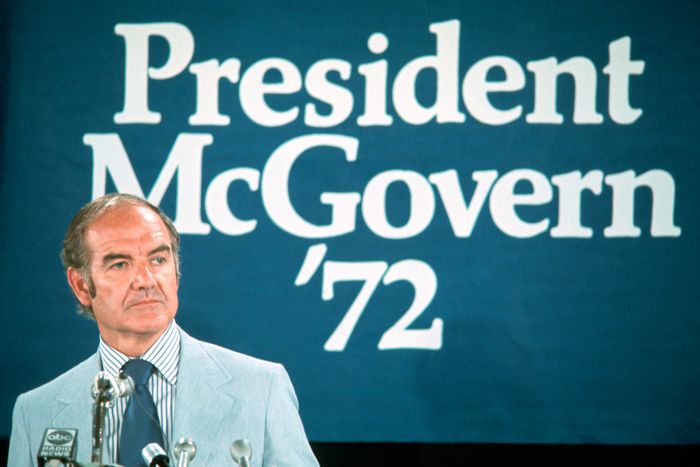
“Come home, America” is a famous speech given fifty years ago by George McGovern. He wanted to cut military/war spending and send rebate checks directly to the American people.  Let’s advocate for that!  Let’s put money back in the pockets of Americans as we make a leaner, smarter, cheaper U.S. military that can pass a financial audit.  (I’d cut all Pentagon funding until it passed an honest and thorough audit.) Most Americans would support major reforms if they were pitched in this way.

At the same time, I’d like to see a revival of the Nye Commission from the 1930s and the “merchants of death” idea.  Whatever else it is, selling weapons is not a way to peace, nor is it life-affirming.  Harry Truman made his mark in Congress during World War II by attacking fraud and waste related to military spending. Again, today’s Pentagon can’t even pass an audit!  We need to show the American people that the Pentagon brass is stealing from them and hiding behind a veil of secrecy that is undemocratic and probably illegal as well. Here, I would love to see Members of Congress act in the spirit of William Proxmire and his “Golden Fleece” awards.  The American people are being fleeced by the MIC, and we should be reminding them of this fact, every single day.

In the 1930s, General Smedley Butler, a Marine veteran who was twice awarded the Medal of Honor, saw how war was a racket, and that to end it, you had to take the profit out of it.  How can America do that?  Can we “nationalize” defense contractors?  Can we make weapons building into a non-profit activity?  Can we reverse Citizens’ United and outlaw weapons lobbying as a form of protected speech (it’s really legalized bribery)?

How about slowing the revolving door between the U.S. military and weapons contractors?  Make it so that retired officers in the grade of major and above must forfeit their pensions if they join a weapons/war firm.  Naturally, no one employed by, and especially on the board of, a defense contractor should ever be approved by Congress as the civilian Secretary of Defense.

Another idea: All retired military officers, CIA-types, etc., who appear on TV and media should be required to reveal their conflicts of interest (if any).  For example, if retired General John Q. Public appears on TV and works for Raytheon, that should be identified in the on-screen chyron, and by the general himself if he has integrity.

It’s high time the Pentagon shares more information with the American people. Secrecy is a huge problem that the MIC hides behind and exploits. Democracy doesn’t work without transparency, which is why the MIC is at pains to hide the truth from us of malfunctioning weaponry and disastrous and murderous wars.

I would add that tackling the MIC is not a liberal issue, it’s not a progressive issue, it’s not a partisan issue: it’s an American issue.  My readers, I’m guessing, are not fans of Fox News or commentators like Tucker Carlson.  But if they’re against war and want to see major reforms to the MIC, recruit them!  Work with them.  They are not the enemy.  Not even the MIC is the enemy.  I was, after all, part of it for 20 years.  The real enemy is war.  The real enemy is spending trillions of dollars on weaponry that could, and just might, destroy us all.  If we can’t set aside our differences and get together to save ourselves and our planet from war’s destructiveness, we’re pretty much doomed, don’t you think?

The MIC is united by profit and power.  Maybe we can find unity in the preservation of our planet and love for the wonderful blessings it has bestowed on us.

Come on people now, smile on your brother everybody get together try to love one another right now.  Right now.  Right now.

A Just Cause? Why Lie?

W.J. Astore

Readers, my memory here is a bit fuzzy, so please bear with me.

When I was at the Air Force Academy in the late 1990s, a British diplomat came to speak on Anglo-American policies and activities in the Middle East. A controversial subject was the “No-Fly” zone enforced by the U.S. Air Force as well as sanctions against Iraq, with the stated goal of encouraging the Iraqi people to overthrow Saddam Hussein. That overthrow never happened; instead, the U.S. military had to invade in 2003 with “shock and awe,” leading to war, insurgency, and torture that truly was shocking and awful.

I recall asking a question of the diplomat, a younger guy, slick and polished, probably a product of Oxbridge (and I had recently earned my D.Phil. from Oxford, so I knew the type). The gist of my question was this: Why are we continuing with sanctions when they appear not to be hurting Saddam but only ordinary people in Iraq?

The diplomat smoothly ignored the tenor of my question and instead praised Anglo-American resolve and cooperation in the struggle against Saddam and similar bad actors in the Middle East. I was nonplussed but I didn’t push the matter. I was in a classroom with a couple of dozen other AF officers and we were all supposed to be on the same team.

This all came back to me today as I listened to Army Colonel Douglas Macgregor at The Gray Zone. He recalled a British major asking similar questions of similar diplomats, but the British major went much further than I had in challenging the BS he was being fed. COL Macgregor quotes this major as saying the following in response:

If our cause is just, why do we have to lie about it?

Those words should be seared in the minds of all Americans at this perilous moment. I wish I’d had the clarity of mind and the confidence to say something similar, but I recall thinking that maybe I just didn’t know enough about what was going on in Iraq.

Of course, Madeleine Albright, asked on “60 Minutes” if the premature deaths of hundreds of thousands of Iraqi children due to sanctions was a price worth paying for Saddam’s eventual downfall, readily replied that yes, she believed this price was worth paying.

Her sociopathic calculation didn’t even work; only a massive U.S. invasion finally toppled Saddam, leading to yet more chaos and mass death in Iraq.

We need to stop lying to ourselves that America’s policies are generally noble and just or even morally defensible or forced upon us by a harsh and cruel world. In fact, perhaps that harsh and cruel world is exactly the one we’ve created for ourselves — and for so many others as well.

The New Cold War

W.J. Astore

In my latest article for TomDispatch, I tackle the new cold war and the consensus in Washington that future Pentagon budgets must soar ever higher in response to Russia’s invasion of Ukraine. You can read the entire article here. What follows is the concluding section of the article.

Your Role as a Loyal American in the New Cold War

My fellow Americans, in this new cold war of ours, the national security state expects both all too much and all too little of you. Let’s start with the little. It doesn’t expect you to enlist in the military if you’re rich or have “other priorities” (as former Vice President Dick Cheney said about the Vietnam War). It doesn’t expect you to pay close attention to our wars, let alone foreign policy. You don’t even have to vote. It does, however, expect you to cheer at the right times, be “patriotic,” wave the flag, gush about America, and celebrate its fabulous, militarized exceptionalism.

To enlist in this country’s cheerleading squad, which is of course God’s squad, you might choose to wear a flag lapel pin and affix a “Support Our Troops” sticker to your SUV. You should remind everyone that “freedom isn’t free” and that “God, guns, and guts” made America great. If the godly empire says Ukraine is a worthy friend, you might add a blue-and-yellow “frame” to your Facebook profile photo. If that same empire tells you to ignore ongoing U.S. drone strikes in Somalia and U.S. support for an atrocious Saudi war in Yemen, you are expected to comply. Naturally, you’ll also be expected to pay your taxes without complaint, for how else are we to buy all the weapons and wage all the wars that America needs to keep the peace?

Naturally, certain people need to be collectively despised in our very own version of George Orwell’s “Two Minutes Hate.” So, when Putin’s visage comes on the screen, or Xi’s, or Kim Jong-un’s, or whoever the enemy du jour is, be prepared to express your outrage. Be prepared to treat them as aliens, almost incomprehensible in their barbarity, as if, in fact, they were Klingons in the original Star Trek series. As a peaceful member of the “Federation,” dominated by the United States, you must, of course, reject those Klingon nations and their warrior vision of life, their embrace of might-makes-right, choosing instead the logic, balance, and diplomacy of America’s enlightened State Department (backed up, of course, by the world’s greatest military).

Two Minutes’ Hate: Still from the movie “1984”

Again, little is expected of you (so far) except your obedience, which should be enthusiastic rather than reluctant. Yet whether you know it or not, much is expected of you as well. You must surrender any hopes and dreams you’ve harbored of a fairer, kinder, more equitable and just society. For example, military needs in the new cold war simply won’t allow us to “build back better.” Forget about money for childcare, a $15 federal minimum wage, affordable healthcare for all, better schools, or similar “luxuries.” Maybe in some distant future (or some parallel universe), we’ll be able to afford such things, but not when we’re faced with the equivalent of the Klingon Empire that must be stopped at any cost.

But wait! I hear some of you saying that it doesn’t have to be this way! And I agree. A better future could be imagined. A saying of John F. Kennedy’s comes to mind: “We shall be judged more by what we do at home than what we preach abroad.” What we’re currently doing at home is building more weapons, sinking more tax dollars into the Pentagon, and enriching more warrior-corporations at the expense of the poor, the weak, and the vulnerable. Where’s the democratic future in that?

Sheer military might, our leaders seem to believe, will keep them forever riding high in the saddle. Yet you can ride too high in any saddle, making the fall that’s coming that much more precipitous and dangerous.

Americans, acting in concert, could stop that fall, but not by giving our current crop of leaders a firmer grasp of the reins. Do that and they’ll just spur this nation to greater heights of military folly. No, we must have the courage to unseat them from their saddles, strip them of their guns, and corral their war horses, before they lead us into yet another disastrously unending cold war that could threaten the very existence of humanity. We need to find another way that doesn’t prioritize weapons and war, but values compromise, compassion, and comity.

At this late date, I’m not sure we can do it. I only know that we must.

Orwell Is Alive and Well in the U.S. and Russia

W.J. Astore

There’s considerable support in the U.S. for “No-Fly” zones in Ukraine. It’s a fine Orwellian turn of phrase: by some kind of magic, we simply won’t allow Russian warplanes to fly over key areas in Ukraine. And Russia will be happy to respect our no-fly zones because that’s how wars work. War is always predictable, calm, rational, and moderate, and countries at war are always tolerant of other countries dictating terms on where and when they can fly and fight.

What’s amazing is the number of people, including members of Congress, who have no idea that no-fly zones mean engaging directly in conventional war with Russia: killing Russian air crews in air-to-air combat, clearly an act of war, and one that would escalate quickly as both sides took losses.

Here’s one member of Congress who supports a no-fly zone without even knowing what it is and what it implies:

Well, “freedom isn’t free.” So on we go to World War III.

Then there’s the Orwellian turn of phrase by the Russians that their invasion of Ukraine is really just a “special” operation, a conceit I’ve seen mocked on Facebook with this illustration:

Of course, Tolstoy wrote “War and Peace,” and the changed title is mildly humorous. But let’s not limit this critique to Russia. Think of all those lovely military “operations” that the U.S. military has launched over the years, such as Operation Enduring Freedom for the Afghan invasion beginning in 2001 and Operation Iraqi Freedom for the Iraq invasion in 2003. We are far better than the Russians at camouflaging our wars as “operations.” Indeed, at least the Russians didn’t describe their invasion as “Operation Ukrainian Freedom.” So take that, Russia! We still overmatch you in Orwellian terms.

Dishonesty of language isn’t just mendacious: it’s downright dangerous.

Finally, remember when nuclear war and World War III was supposed to be the end result of the madness of evil geniuses, Dr. Strangelove-like figures? What if World War III is the end result of ignorant dumbasses who think nuclear annihilation is worth it because “freedom isn’t free”?

As Russia Weakens, Why Is Pentagon Spending Set to Soar?

W.J. Astore

Overall, the Russian invasion of Ukraine isn’t going well for Russia. If reports are correct, the Russian military hasn’t distinguished itself. Poor logistics, bad intelligence, lack of effective air support, and an increasing reliance on brute strength appear to be features of this campaign. Meanwhile, Russia is suffering from debilitating economic sanctions imposed by the West. In sum, Russia is weaker today than it was three weeks ago before the invasion. So why is Pentagon spending set to soar in the coming fiscal years?

A friend sent an article along from the New York Times that sums up this insane moment in Washington. He suggested that I re-post it here and make some comments on it. Here goes (my comments in italics):

War in Ukraine rallies support in Congress for more military spending

Catie Edmondson

The New York Times

WASHINGTON — From his perch as chairman of the Armed Services Committee, Rep. Adam Smith, D-Wash., has long lamented what he sees as a Pentagon budget bloated by inefficient spending. When hawkish lawmakers led a successful charge last year to pour nearly $24 billion more into the military’s coffers, he opposed the move.

But last week, as Russian forces continued their assault on Ukraine and he pondered the size of the coming year’s military budget, Mr. Smith sounded a different tone.

“I haven’t picked a number yet,” he said, “but without question, it’s going to have to be bigger than we thought.”

Yes, the Pentagon budget is “bloated” and “inefficient.” You don’t solve that by giving the Pentagon yet more billions!

He added: “The Russian invasion of Ukraine fundamentally altered what our national security posture and what our defense posture needs to be. It made it more complicated, and it made it more expensive.”

No, the invasion hasn’t “fundamentally altered” America’s “defense posture.” If anything, a weakening Russia means we can spend less money on defense, not more.

His shift signals a stark new reality facing President Joe Biden on Capitol Hill, where Democrats had already shown they had little appetite for controlling the defense budget, even as Mr. Biden declared an end to the era of ground wars and indicated he wanted to reimagine the use of American power abroad.

How interesting. I thought “American power” was about “defense.” Why does this have to be “reimagined”?

Now, facing a military onslaught by President Vladimir Putin in Ukraine, and rising fears of a protracted war in Europe and an emboldened China, lawmakers in both parties — including some who had resisted in the past — are pressing for vast increases in military spending to address a changed security landscape.

Why are more weapons and more wars always the answer to a “changed security landscape”? What is the sense of “vast increases”?

As images pour out of Ukrainian cities devastated by a relentless and indiscriminate volley of Russian missiles, Democrats and Republicans who have struggled to coalesce behind meaningful legislation to aid the Ukrainian cause are rallying around one of the few substantive tools available to them: sending money and weapons.

The House this week is poised to approve $10 billion in emergency funds to Ukraine, including $4.8 billion to cover the costs of weapons already sent to Ukraine and eastern flank allies, as well as the deployment of U.S. troops. But already on Monday, Sen. Chuck Schumer, D-N.Y., the Senate majority leader, suggested lawmakers could approve a $12 billion package, in a sign of how eager lawmakers were to send more aid to Kyiv. The United States alone has deployed more than 15,000 troops to Europe, while committing an additional 12,000 to NATO’s response force if necessary.

$10 billion in “emergency funds” is now more than $13 billion for Ukraine. How come America’s poor and neediest can’t get that level of aid, and that quickly?

Beyond funding immediate needs, the consensus around more generous Pentagon spending previews a dynamic that is likely to drive negotiations around next year’s defense budget, potentially locking in the kind of large increases that Mr. Biden and many Democrats had hoped to end.

This is false. Biden ran for president promising increases in Pentagon spending over and above what Trump had proposed.

“I think people are sort of waking up out of this haze that we were living somehow in a secure world,” said Rep. Elaine Luria, D-Va., who sits on the Armed Services Committee.

WTF? We live in an insecure world because of wanton spending by the military-industrial-congressional complex.

Ms. Luria added: “I was not satisfied with the budget that came over last year from the White House, especially in regards to China, especially in regards to the Navy or shipbuilding, and I’ll be very disappointed, in light of the new world situation, if they come up with a budget like that again.”

The rapid shift in thinking is a setback for progressives who had hoped that unified Democratic control of the House, the Senate and the White House would translate into a smaller Pentagon budget and a reduced footprint of American troops around the world.

Democrats, as a party, never wanted a smaller Pentagon budget.

Rep. Ilhan Omar, D-Minn., said in a brief interview that she believed it was crucial that the United States provide Ukrainians with some defensive weapons, but added: “Do I think that there is a point where it becomes too much? Yes.”

Ms. Omar said she was particularly worried about the prospect of arming an insurgency, especially as civilians from around the world have flocked to Ukraine to help push back against the Russian army.

“We’ve seen what the result of that was in Afghanistan, when we armed so many people to fight against the Russians,” said Ms. Omar, who was born in Somalia. “Many of those people went back to their own countries and caused a lot of havoc, including the one I come from.”

A little bit of sense by Rep. Omar, but she has no support here.

Mr. Biden last weekend authorized a $350 million package of weapons that included Javelin anti-tank missiles and Stinger anti-aircraft missiles as well as small arms and munitions, a shipment that represented the largest single authorized transfer of arms from U.S. military warehouses to another country.

Weapons bought for U.S. troops are being sent for free to Ukraine to be used (in some cases) by neo-Nazi forces. I’m sure nothing bad will come from this.

Many lawmakers want to go further. Several Republican senators have endorsed setting up a separate fund to support the Ukrainian resistance, signaling an appetite to continue arming those in Ukraine willing to fight for an extended period of time, even in the event their government falls.

“I want to see more Javelins,” said Sen. Jim Risch, of Idaho, the top Republican on the Armed Services Committee. “I want to see more Stingers.”

Missiles are the answer! More Russian and Ukrainian dead! Hooah!

An emotional virtual meeting on Saturday in which President Volodymyr Zelenskyy, of Ukraine, who has been defiant in the face of continuing Russian attacks, pleaded with senators for additional weapons rallied more support for his cause.

Sen. Ted Cruz, R-Texas, called for Congress to pass an additional military aid emergency spending bill. And Rep. Tom Malinowski, D-N.J., suggested that Congress quickly approve funding to reimburse Eastern European allies if they provide Ukraine with planes or surface-to-air missiles.

“We should be signaling to the Poles and Romanians and others that this is something we would want to help them do,” Mr. Malinowski said.

Lawmakers are eyeing long-term solutions, too, in Europe and beyond. At an Armed Services Committee hearing last week, both Republicans and Democrats endorsed increasing the U.S. military presence in the Baltics.

Rep. Elissa Slotkin, D-Mich., who is a former Pentagon official, called Mr. Putin’s invasion “a sea change” for “how both the Defense Department and the State Department should think about our presence in Europe.”

“I couldn’t agree more with my colleagues who have talked about putting more force in right now,” Ms. Slotkin said, adding later, “We have to completely re-evaluate deterrence and how we re-establish it.”

What we’re witnessing is the U.S. Congress foaming at the mouth to send more weapons to Ukraine to kill more Russians (and doubtless Ukrainians too), while boosting Pentagon spending against a Russian threat that will be considerably lower, assuming this war doesn’t spiral out of control because of ill-judged and incendiary responses by the U.S.

Readers, what do you think of all this?

Orwell’s “1984” Holds Many Lessons for the New Cold War

Jeffrey G. Moebus

Anybody attempting to understand what is unfolding in Ukraine and over in the South China Sea and Taiwan should read George Orwell’s 1984. When you do, you will recognize and realize the following.

To use Orwell’s terms:  What we have here and now is a Eurasia with its Putin and an Eastasia with its Xi. All that is lacking is an Oceania with its Big Brother. And we have a whole gaggle of folks on the American political landscape ~ on the Left and on the Right ~ who would love to have the chance to fill that slot.

America’s twenty year “Forever War” after 9/11 was, is, and ever will be a half-time show designed to keep the troops occupied, the defense contractors profitable, and the American people comfortably numb to protracted conflicts in places many of them cannot find on a map of the world.

For now, Russia has recovered from the disintegration of European Communism and the USSR ~ and China has recovered from the madness of Mao ~ sufficiently for either [or especially both] to present viable, credible “threats” to America’s 30-year reign of global, unipolar hegemony since the end of Cold War I in December, 1991.

For now looms Cold War II, with Ukraine, the South China Sea, and/or Taiwan set to kick it off in fine fashion.

And to understand what is happening in Ukraine, in particular, one must also be familiar with the history of Russia’s interaction with Western Europe over the past 200 years.  Napoleon and Hitler both tried to bring the “blessings” of the West to Mother Russia, and failed at terrible cost, particularly to the Land, Country, Nation, and People that was ~ and still is ~ Russia.  

NATO is hard on all of Russia’s borders except in Ukraine; and, given that history spanning over two centuries, it is not at all difficult to understand why Russia wants to keep it that way.  This in no way justifies, excuses, or exonerates Putin and his illegal, immoral, and quite insane invasion of Ukraine.  It merely speculates on a very real possible motive. 

And beyond all that is the fact that a major force at work here in the United States is the possibility of a War, and the effect that that can have on the Citizens of a nation already hammered by a failed national response to a pandemic, inflation kicking in big time, a national Debt that just broached $30 trillion, a crumbling infrastructure increasingly vulnerable to disruptions by weather, cyber attack, and social unrest, and the disintegration of anything even close to a national consensus on virtually every hot-button issue: from vaccine and mask mandates, voting rights, and critical race theory, to gun control, police violence, and crimes against persons and property, to drug overdoses, suicides, and vehicular deaths, abortion, wokeness and cancel culture, “domestic terrorism,” and so forth.   

So that’s the “long answer” to what’s up in Ukraine and East Asia.    

The short, bottom-line, bullet-hits-the bone answer is that it is a very convenient distraction for Putin, Xi, and Biden [ie, his owners, operators, and script writers, America’s Ruling Elite] as they each attempt to deal with very serious economic and social problems within their own kingdoms. 

While the wings haven’t fallen off quite yet, rivets are popping loose and hydraulic fluid is streaming back across the wing tops.  And the folks up in the cockpit are very aware that it is increasingly visible to the other folks back in 1st, Business, and especially Tourist Class. 

Add all that to the fact that this is an election year in the US, and this is shaping up to be a very interesting Chinese “Year of the Black Water Tiger,” indeed.

Note:  One of the biggest differences between 1984 and today is that we all carry our very own portable, personal telescreen around with us. Certainly makes the job of the Thought Police a whole lot easier, eh?

Jeffrey Moebus, a retired U.S. Army Master Sergeant, spent two years in Vietnam in the 1960s and two years in the pre-Operation Desert Storm Middle East in the 1980s.  He lives in Sitka, Alaska on the sailboat he brought up from San Francisco Bay ten years ago this summer, and is the POC for Veterans Against War [Sitka Platoon] at vaw.sitka@gmail.com.