Next year we celebrate the 250th anniversary of America’s founding. There’s going to be the usual fight over what that anniversary should mean to Americans, and what lessons we should draw. For example, the Ken Burns series on “The American Revolution” starts this Sunday night on PBS. I’ll be watching it. If it comes close to his series on the U.S. Civil War, it should be interesting and informative.
There are so many lessons we could take from the American revolution (or war of independence). Speaking as a retired military officer, I might stress the citizen-soldier tradition, the ideal of the Minuteman, the rejection of tyranny, the suspicion of large standing armies, the desire for independence and liberty, the courage to affix one’s name to a declaration that could end with your head swinging in the air.
I don’t know what lessons Trump & Crew will be selling, but something tells me they won’t be salutary. Lots of flag-waving, of course, along with American exceptionalism.
We know America was founded as an imperfect union. Life, liberty, and the pursuit of happiness wasn’t granted to slaves. Or indigenous peoples. Or women for that matter. (Let’s not forget women couldn’t vote for president until 1920.) The founders were mostly white men of property, with some holding “property” in slaves. For African-Americans, the “revolution of 1776” certainly didn’t prove revolutionary for them.
I would stress the idea of striving toward a more perfect union, recognizing the early republic was, in so many ways, imperfect. And that’s putting it gently. I’d stress as well what Benjamin Franklin said. As a form of government, a representative republic is better than most but also difficult to keep. And there’s the rub: today our representatives, our public servants, serve the owners and donors, the power brokers, rather than the people. A revival of the republic isn’t going to come from either major political party—they’re both beholden to money.
So how can we end this “tyranny” without a bloody revolution? Is a national revival possible without years and years of domestic conflict and strife? Meanwhile, can America reject its embrace of militarism and imperialism? Can it advance the rule of law as represented by the U.S. Constitution? Can we be touched, as Abraham Lincoln wrote, by the better angels of our nature?
1776-2026. 250 years of glorious imperfection. We can be better. We can do better. Let’s strive to live up to the promise of America.
War and rumors of war dominate the headlines. Venezuela. Nigeria. Iran. Somalia. A “new Cold War” involving Russia and China. What are we to believe?
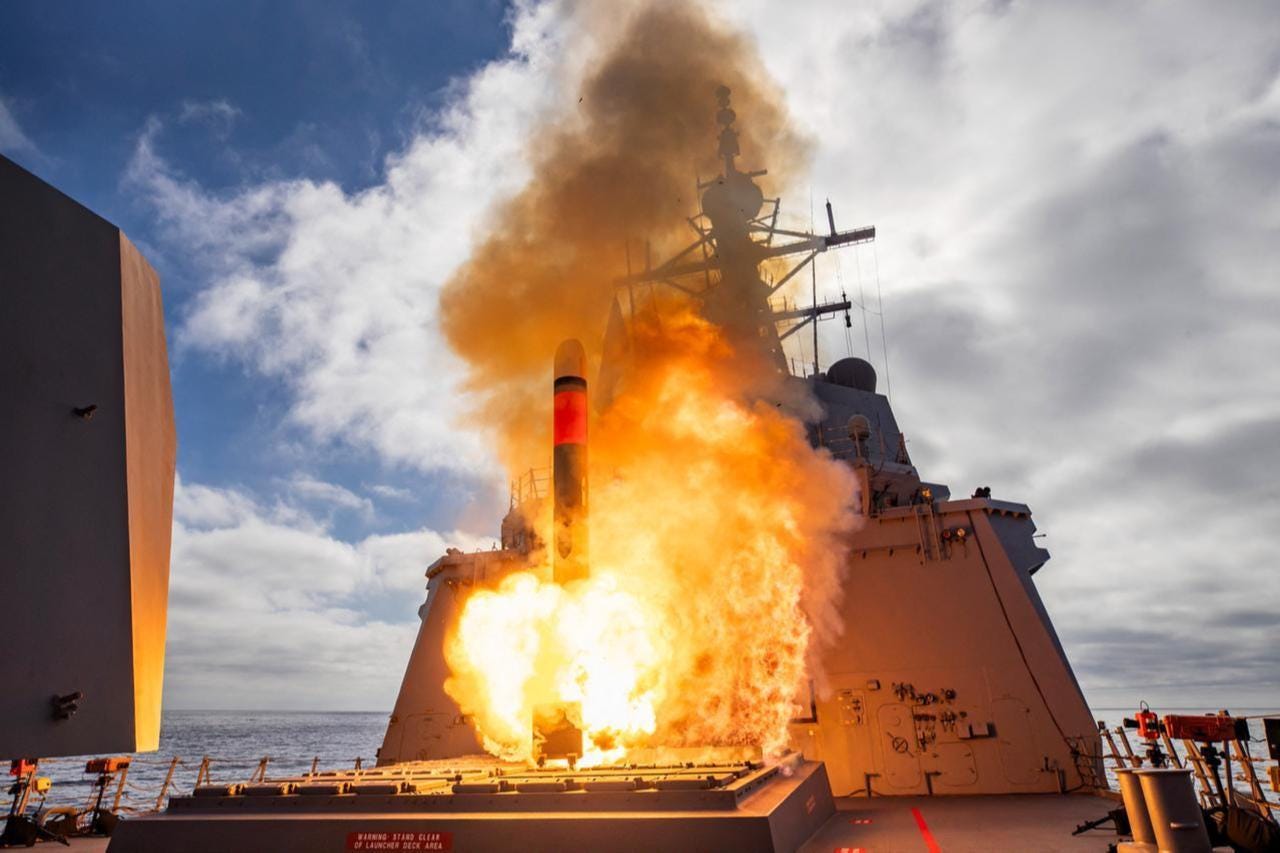
The events of the 62 years of my short life (Vietnam, Afghanistan, Iraq, Libya, peace dividends that never arrive, military budgets that keep soaring, U.S. domination of the world’s weapons trade, the National Security State as America’s fourth and arguably most powerful branch of government, and on and on) make me highly suspect of official narratives about any war, especially as those same Pentagon budgets soar and those same arms exports keep flooding the world in the (false) name of democracy.
Nevertheless, warmongers in our country continue to shout and bray for more war. Those who make the most noise are typically the furthest from the fighting. Typically, the closer you are to the fighting, the more you want it to stop. Especially if you’re doing the fighting. Consider Erich Maria Remarque’s “All Quiet on the Western Front.” When the main character, Paul, a frontline grunt, goes home on leave, he realizes the blood-thirstiness of the REMFs is far different from the war he’s seeing at the front. (REMF, rear-echelon mother-fucker, is a colorful and meaningful military acronym.)
Often those who talk about war use the most bloodless expressions. So, for example, I’ve read that Ukrainians must “prosecute their war of defense,” helped by generous supplies of American-made weaponry. When I think of war, I think of the concrete. Blasted bodies, a poisoned environment, disease, dead animals, PTSD and TBI, moral injury, atrocities and war crimes (because wars always produce atrocity), and so on. Phrases like “help Ukraine prosecute their war of defense” strike me as Orwellian in the sense of his classic essay on politics and the English language. It sounds good and noble, but how ready are those who support Ukraine to join the cause in the trenches?
An American president now speaks of “the enemy within” and city streets as a training ground for U.S. military action. When everything is war, nothing is safe as the worst crimes and atrocities become possible.
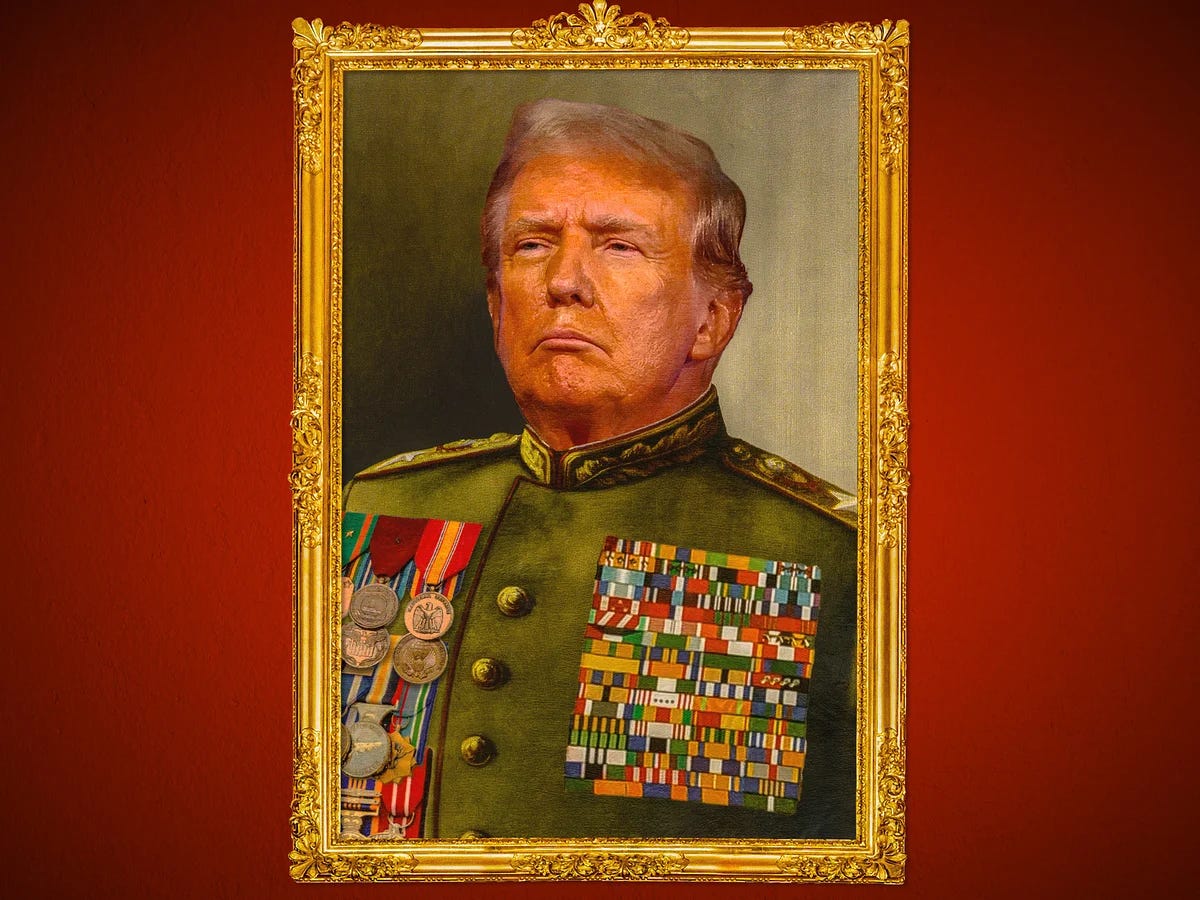
As a young man, Cheney had “other priorities” than serving in the U.S. military. Later, the further he was from battle, the more hawkish he became.
Postscript: As I was writing this, I learned that Dick Cheney has died at the age of 84. NBC News described him as the “Iraq war architect,” as if he was a highly skilled and creative builder instead of a war criminal. A reader sent along a BBC headline that suggests there was “faulty” intelligence leading up to the Iraq war in 2003, as if Cheney had no hand in manufacturing a malicious and mendacious narrative of weapons of mass destruction in Iraq.
Even warmongers like Cheney, proud of their mailed fists, get treated and fitted with kid gloves by a fawning media. Of course, Cheney, when he had an opportunity to serve in Vietnam, famously said he had other priorities.
Maybe the American people, collectively, need to say we have other priorities than waging war around the globe.
Last week, I talked to Judge Napolitano about the Russia-Ukraine War, the Trump administration’s designs on Venezuela, and the rule of law in America.
A point I could have made more clearly involves casualty figures in the Russia-Ukraine War. There are no official figures that are trustworthy; each side is exaggerating the casualties of the other, which is unsurprising, since the first casualty of war is truth.
Figures that I’ve seen suggest that Ukraine has suffered over 100,000 killed and another 400,000 wounded/missing/captured. Russian figures may be double those of Ukraine but I honestly don’t know. My guess is that Russian casualty figures are higher because they have been on the offensive more and Ukrainian defenses have generally been robust and the troops increasingly skilled. Added to these battlefield casualties are the more than 30,000 Ukrainian citizens killed in the war, plus another six to seven million Ukrainians who have fled the country.
My point here isn’t to celebrate one side as “winning” or “losing.” To my mind, both sides are losing as they wage this devastating war, a war that will enter its fourth year next February. While some commentators see this war as a necessary one for Ukraine, a war for high ideals like democracy and freedom, I see a country that has lost roughly 20% of its territory, a country that suffers because the war is being fought largely on Ukrainian land, a country where roughly 7 in 10 people seek an end to this costly struggle.
A common narrative in the West is that Putin must not be allowed to profit from war, and if he does, the Russian military will next be on the march against NATO countries. This narrative suggests war and more war until either Putin is defeated or Ukraine collapses under the strain.
I would prefer to see negotiations to end the killing, the suffering, and the destruction, allowing Ukraine to recover, even if Ukraine must give up its desire to join NATO. I remain concerned that this war could expand further, as lengthy wars tend to do, becoming a wider regional war that could conceivably escalate toward nuclear weapons.
News that President Trump may yet gain control over the Oregon National Guard despite the opposition of Oregon’s governor, mainly for the purpose of intimidating the City of Portland reminds us that our National Guard is worth protecting from power-hungry egotists scheming for war on enemies without and “within.”
In my home state of Massachusetts, I recently supported legislation to “Defend the Guard.” It seeks to prohibit the Massachusetts National Guard from being deployed into active combat without a formal declaration of war from the U.S. Congress.
Here’s the letter I wrote to “Defend the Guard.” There may be similar efforts in your home state; I urge you to support them.
Photo by Richard Cheek
*****
I’m a retired Air Force lieutenant colonel who grew up in Brockton. Members of the MA National Guard included my neighbors and members of my family.
Since 9/11/2001 and the AUMF that followed it, Guard units across the country have been deployed to overseas wars (Afghanistan and Iraq most notably) without Congressional Declarations of War. Guard units have further been deployed to faraway conflict zones such as Africa. They are deployed for months at a time for missions unrelated to the defense of the United States. Hardships to Guard members and their families are considerable.
During the War on Terror, more than 40% of U.S. forces in Iraq and Afghanistan were Guard and Reserve units. Under Presidents Trump and Biden (2017-24), the bulk of U.S. forces in Syria and Iraq have often been National Guard units. Many state legislators do not know their NG units are deployed in this manner. Furthermore, those units are then unavailable to respond to local and state-wide disasters such as hurricanes, floods, wildfires, and other contingencies.
The bill before the Senate does not restrict the use of Guard units in a legal war declared by Congress. It does, however, protect the Guard from being abused by irresponsible leaders who refuse to obey and follow the U.S. Constitution, the law of the land. For that reason, I strongly support this bill.
Please vote “yes” to protect your family, friends, and neighbors who serve honorably and selflessly in the Guard here in Massachusetts. The Guard defends us—please help defend the Guard.
Thank you.
*****
The bill itself is still pending in the Massachusetts State Legislature.
America’s overseas wars, with all their capricious and vicious violence, have indeed come home. For decades, our leaders projected power abroad under the banner of fighting evil — whether Communism, terrorism, or tyranny. Yet in doing so, they helped cultivate an authoritarian mindset that has now turned inward. The “enemy” is no longer some distant foe in a foreign land; it is “the enemy within.” For Donald Trump, that means the mythical “radical left,” a variation of the 1950s fantasy that a Communist was hiding under every bed. The irony, of course, is that the real danger then, as now, comes not from a phantom leftist menace but from a radical right-wing movement willing to strip Americans of their rights in the false name of security, safety, and patriotism.
Joe McCarthy (L) with Roy Cohn
Today’s moment is more perilous than the McCarthy era. In the 1950s, Senator Joe McCarthy could destroy reputations and careers, but he was still just one senator. Today, we face a president who channels McCarthy’s demagoguery from the Oval Office, using the full power of the executive branch to punish dissent and reward loyalty. He is surrounded by a coterie of opportunists, lackeys, and lickspittles who feed his vanity, echo his grievances, and amplify his baseless conspiracy theories. The machinery of government — the same machinery once used to surveil and target foreign “enemies” — is now being aimed at our fellow citizens.
The global war on terror, it seems, has finally gone global in the truest sense — extending to America’s own streets, courthouses, and universities. Trump and his allies portray Democratic cities and progressive movements as breeding grounds of chaos and sedition. In his mind, anyone who resists his will — even through the most lawful and constitutional means — is an “insurrectionist.” He has long shown contempt for the Constitution he swore to uphold. Trump is often exactly what he appears to be: a dangerous blowhard with a vindictive streak, ignorant of the limits and responsibilities of his office. Yet others in his orbit, people like Stephen Miller, harbor more deliberate and insidious designs on American democracy.
What is to be done? Congress is paralyzed, fragmented, and largely disempowered. The Supreme Court is dominated by ideologues nursing grievances and eager to reshape the nation along reactionary lines. Who, then, will check a president determined to rule rather than govern?
The American experiment in self-government has endured many crises but rarely has it seemed so fragile. As journalist Nick Turse recently wrote in TomDispatch, the United States now stands on the precipice of authoritarian rule. Many Trump loyalists appear eager to leap — to wage an internal war against their fellow citizens under the guise of saving the nation.
Never has Dwight D. Eisenhower’s warning, “Only Americans can hurt America,” been more prescient or more tragic. The enemy within is not a phantom of the left or right — it is the creeping authoritarianism that grows when fear conquers freedom.
As Master Po reminded us in Kung Fu, “fear is the only darkness.” My fellow Americans, we are in a very dark place.
I wonder why the Trump administration is so interested in Venezuela?
Oh, so that’s why.
A barrel of oil is selling for about $60 this morning. 303 billion barrels at $60 a barrel is more than $18 trillion in future earnings (likely much more than this as the price of oil climbs to $100 per barrel and higher).
Who put America’s oil off the coast of Venezuela? Remember, it’s the Gulf of America, people.
In other news, the admiral in charge of SOUTHCOM is retiring early. Rumor has it he’s objected to the kill and regime change policies of Trump and Hegseth vis-a-vis Venezuela.
President Trump himself recently admitted he’s authorized covert overt CIA activities against the Venezuelan government. A CIA-orchestrated coup combined with U.S. military attacks on Venezuela is likely coming. It’s shrouded in drug war rhetoric, but of course the real goal is control over Venezuela’s oil.
The recent award of the Nobel Peace Prize to a Venezuelan opposition leader is another fig leaf in this operation. Once again, war will be sold to the American people as advancing democracy when it’s really all about the Benjamins.
Trump and Hegseth’s murderous strikes against alleged drug-running boats (at least five already destroyed) is another pretext for regime change. Yet the USA was more than happy to tolerate, even encourage, a massive drug trade in heroin during the Afghan War.
Oh well. War always finds a way, especially when oil is involved. Just think of the Iraq regime change invasion in 2003. That went so well, didn’t it?
This short video by Max Blumenthal sums it up quite well:
Conveniently, the government is still shut down, so I guess Trump can’t ask Congress for a formal declaration of war. Yet another unconstitutional war has already started and Congress is nowhere to be found.
It’s time for regime change for democracy right here in America.
Recently, I jotted down some qualities of good leadership. Of course, the importance of specific traits depends on context—a leader who is overly cautious may be a liability in a crisis requiring quick action, though less so in a college faculty meeting. That said, here are thirteen attributes I consider essential, in no particular order:
· Decisiveness balanced with care: the ability to decide informed by experience and consultation.
· Integrity and character.
· Bringing people together–motivating and inspiring them.
· Calmness under pressure.
· Leading by example, or “walking the walk.”
· Honor and trustworthiness.
· A commitment to fairness. Setting high standards that apply equally to all.
· Selflessness. A belief in service.
· Compassion. A hard-ass shouldn’t have a hard heart.
· Open-mindedness. A willingness to listen.
· Humility. A willingness to admit no one knows everything or always gets it right.
· Experience (again). While people want to know a leader cares, they also expect competence. Confidence erodes quickly if a leader doesn’t grasp the fundamentals of the job and mission.
· A commitment to ethics, or “doing the right thing.”
That’s my baker’s dozen. Sadly, when I measure Donald Trump against these qualities, I don’t see him embodying any of them with consistency. Yet his supporters insist he is not only effective but “great.” In Trump’s case, does he have the integrity to support and defend the U.S. Constitution? Does he realize that no man is above the law? Is the example he sets a selfless one? Does he bring people together for the greater good?
In business and the military, leadership is often judged narrowly by results—profits earned, battles won. But that standard can elevate sociopaths, people who care only about themselves and about producing results at any cost. Such leaders may achieve short-term gains, like higher profits, but at immense costs to those beneath them. Ultimately, a self-absorbed, “results-at-any-cost” leader drives organizations into the ground.
Leadership can be lonely, in the sense of “uneasy lies the head that wears a crown.” True leaders must sometimes accept unpopularity, stand firm, and take responsibility—“the buck stops here.” Leadership is both privilege and burden, which is why many shy away from it. Sociopaths, by contrast, don’t hesitate; they feel no weight from the consequences of their actions.
So, America, are we doing our best to identify the right—truly qualified—leaders? Evidence suggests we are not.
A final thought. I was once asked, as a young lieutenant competing for “Company Grade Office of the Quarter,” to explain the difference between management and leadership. For management, I said something about teamwork, smarts, effectiveness—taking on a project and bringing it to fruition. For leadership, I remember saying something like the ability to make good things happen. Here I was inspired by Chief Dan George in “Little Big Man” when he asks the Great Spirit “to grant me my old power—to make things happen.” And I remember a friend of mine, another lieutenant, saying the selection board loved short snappy answers. Maybe it was true—I won the award for that quarter.
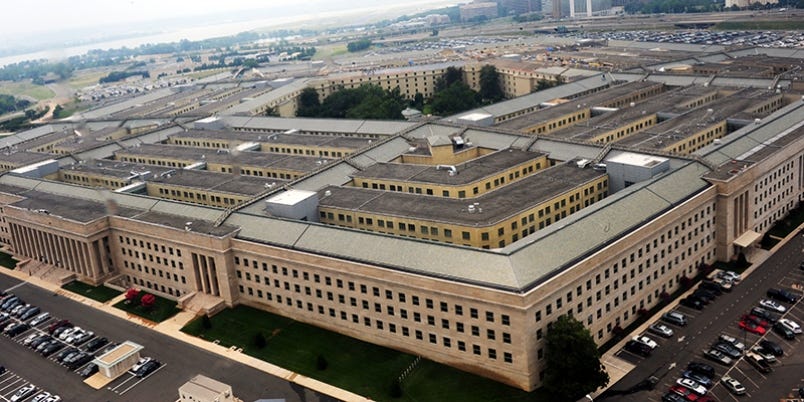
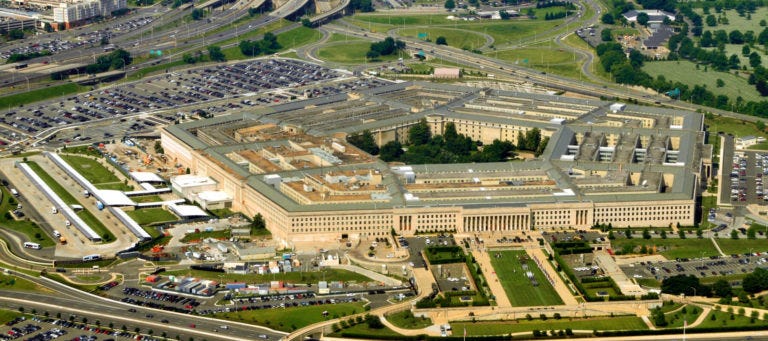
If there’s one thing we’ve learned (or re-learned, again and again) from the Pentagon it’s that all governments lie and that the first casualty of war is truth. From the Pentagon Papers in the Vietnam War to the Afghan War Papers and the lies about WMD in Iraq, the American people have been deliberately and maliciously lied to about America’s wars and their true causes and purposes. And you can go back further to the infamous “Remember the Maine!” cry that touched off the Spanish-American War of 1898. When it comes to war, America’s leaders have always been economical with the truth.
At the Pentagon, Pomade Pete Strikes Again!
But wait, today’s Pentagon is about to outdo that! As usual with nefarious government decisions, it was announced on Friday when people are most distracted. A short summary from NBC News:
Journalists who cover the Defense Department at the Pentagon can no longer gather or report information, even if it is unclassified, unless it’s been authorized for release by the government, defense officials announced Friday. Reporters who don’t sign a statement agreeing to the new rules will have their press credentials revoked, officials said.
Multiple press associations quickly condemned the new rules and said they will fundamentally change journalists’ ability to cover the Pentagon and the U.S. military. They called for the Trump administration to rescind the new requirements, arguing they inhibit transparency to the American people.
The National Press Club denounced the requirement as “a direct assault on independent journalism at the very place where independent scrutiny matters most: the U.S. military.”
Remember that old saw that, “If you’ve done nothing wrong, you have nothing to hide” from your friendly government surveillance program? Looks like the Pentagon has decided it’s got plenty to hide, meaning it’s done and is planning to do a lot of wrong, and thus only government-approved information will be allowed to be released.
Any journalist worth her or his salt will never agree to this. Journalists who do agree, who sign the Pentagon statement, should just become paid spokespeople for the U.S. military (as indeed many of them already essentially are).
We’ve created a monstrous military, America, one that believes it should be completely unaccountable to us even as we feed it over a trillion dollars a year.
America, there’s only one way to rein in the military: cut the Pentagon budget in half. Show them who’s boss. Of course, Congress controls the purse strings, and Congress, as Ike noted, is intimately intertwined with the military-industrial complex, so it’s not going to be easy to do it.
But no one ever said it’ll be easy: it’s just necessary for the survival of our country as a quasi-democracy.
The LA Holocaust Museum recently suggested that “Never Again” is a fundamental lesson of the Holocaust. Then they took it back. Here’s the (almost) inconceivable story from Caitlin Johnstone:
Israel supporters are so crazy and evil that the Los Angeles Holocaust Museum recently retracted a statement saying “Never again can’t only mean never again for Jews” after objections from Zionists.
The museum issued a statement saying, “We recently posted an item on social media that was part of a pre-planned social media campaign intended to promote inclusivity and community that was easily open to misinterpretation by some to be a political statement reflecting the ongoing situation in the Middle East. That was not our intent. It has been removed to avoid any further confusion.”
Think about how gross your position has to be for you to be all hey, let’s say no genocide for ANYBODY, and then immediately have to come back and clarify that you definitely weren’t saying no genocide for the Palestinians.
I’m glad that’s clear! Talk about a profile in cowardice.
Then there are those who get testy about applying the word “genocide” to events in Gaza. Their distorted mouth noises sound something like this: Israel is at war with terrorists (Hamas) and *only* 70,000 or so Palestinians are dead so it’s not really a genocide, is it? Plus it’s all their fault because of October 7th, end of story.
For what it’s worth, I taught the Holocaust as a professor of history after attending a seminar at the US Holocaust Memorial Museum. Also, if it means anything, I’m Catholic, retired military, with no particular axe to grind.
Yes, it’s a genocide in Gaza. A holocaust in slow motion. Heck, Israeli leaders have freely confessed their goal is a final solution to the Gaza question, mainly by killing many Palestinians while forcing the rest to leave. (Whether they’ll have any place to go remains to be seen.)
There is no one model of genocide, and definitions also vary. But if what’s happening in Gaza isn’t a genocide, I don’t know what other word applies. Mass murder, perhaps? Extermination, but slowly? Ethnic cleansing and mass death followed by mass expulsion? That is genocide, plain and simple.
Welcome back, everyone. I hope you enjoyed Labor Day Weekend.
It’s grim times in America. Perhaps grimmest of all is the U.S. government’s support of genocide through mass killing and starvation in Gaza. “Never again” was the message of the Holocaust, not “Yes, again” if it benefits Zionists in Israel.
Americans, in the main, are against mass killing (at least, I hope we are), but what does it matter when all 100 senators take money from AIPAC and the Trump administration is rabidly pro-Israel? “Our” government isn’t ours; the man who gets what he wants with the loudest applause is Bibi Netanyahu. Talk about foreign interference in America’s elections and governance!
Courtesy of Lisa Savage at her Substack site
Why is it so hard for Americans to come together in sensible ways? A decade ago, I wrote about how we’re kept divided, distracted, and downtrodden. The letter D truly is for defective and deficient—disastrous as well—but permit me a little exercise in alliteration as I expand my D list to seven, as in the 7 habits of a highly defective country.
1. Divided: Are you Republican or Democrat? Red or Blue? MAGA or “libtard”? Woke or Anti-woke? Cis white male or BIPOC? Pro-life or Pro-choice? There are far too many labels and efforts that end in division. And we know how rulers use division to conquer.
2. Distracted: Wherever you look, Americans are bombarded with distractions, starting with the screens we carry everywhere with us. The Romans had bread and circuses; we have junk food, NASCAR, and the NFL. Curl up before that 75-inch TV and chow down.
3. Downtrodden: When you’re working 50+ hours a week, straining to make ends meet, suffering from high health care costs, student loan debt, and so on, it’s hard to pay attention to what’s going on in Washington—and even harder to act against it.
4. Discontented: Paradoxically, the discontentment so many of us feel is not resulting in significant political action. Instead, it’s being channeled in counterproductive ways. Consumer goods and drugs from big pharmaceutical companies are offered as palliatives to “cure” our discontentment. We buy more, or pop more pills, but contentment remains elusive.
5. Duopoly: Sure, Democrats and Republicans aren’t exactly the same. But when it comes to war, foreign policy, weapons sales, serving Israel, favoring billionaires, kowtowing to the big banks and Wall Street, and genuflecting to corporations, both parties are virtually indistinguishable. Both also work together to quash third parties. Small wonder that the largest voting bloc in America is Independent/Non-aligned.
6. Discouragement: Faced with that grim fact—a government completely unresponsive to ordinary people—Americans are discouraged from acting in dynamic and outspoken ways. Also serving to discourage political action is America’s increasingly militarized streets, now occupied with agents from Homeland Security and even armed members of the National Guard.
7. Despair: Remember “hope and change” Barack Obama and the surging idealism of 2008? Those were the days. Now it seems the mantra is “no hope” and change that only makes matters worse. This contributes to despair, our sense of hopelessness and helplessness before impersonal government forces—and this is deliberate. A weaponizing of despair.
So, what is to be done? On the small scale, get involved. Get educated. Follow protesters like Lisa Savage and Clif Brown. Small acts of protest can be contagious.
Clif Brown, taking a stand and sending a message
I do my thing here on Substack and belong to organizations like the Eisenhower Media Network and Space4Peace (The Global Network Against Weapons and Nuclear Power in Space). Since 2007, I’ve written against militarism and war at TomDispatch.com and similar alternative sites. Do what you can, what matches your talents, even if it’s just talking to your family, your friends, your neighbors about your concerns. (Believe me, that isn’t always easy!)
Maybe it’s easier to say where the answer isn’t coming from. It’s not coming from Democrats or Republicans. It’s not coming from Congress. It’s not coming from the richest among us, nor from corporate and financial elites.
Fundamentally, the first big step we need to take as a country is publicly funded elections. No more lobbyists. No more “legal” bribes. That requires a reversal of the SCOTUS Citizens United Decision. It requires legislation or a Constitutional amendment.
How to force that when war and weapons are bipartisan? When the powers that be are more than happy with the status quo? Probably only through mass organizations and protest. Or perhaps the creation of a viable third party–but that will be staunchly resisted by the duopoly (the Dems and Repubs).
The short answer is we need a lot more profiles in courage to counter the profiles in pusillanimity produced and elevated within a corrupt system.
The system as it exists today seems unreformable and unstoppable, but history teaches us that sometimes a crack can widen to a fault that leads to an earthquake quickly and unpredictably. So the only recourse is to keep fighting, to keep the pressure on, hoping those cracks will indeed lead to something greater.
Apathy and surrender are not options. Discouragement and despair mustn’t be our end state. Take inspiration from people like Lisa and Clif, the writing of people like Chris Hedges, and sites like Antiwar.com.