
Extractive Capitalism

Gusher Up, Trickle Down, Leads Me to a Sinking Feeling

BILL ASTORE

AUG 02, 2026

Extractive capitalism is the economic model for the United States.

We’ve been living through a brutal experiment of how much work and wealth can be extracted from the working- and middle classes and funneled upward before the former are exhausted. The same brutal experiment is being inflicted on Mother Earth: how much lithium, gold, fossil fuels, strategic metals and minerals, even drinking water can be commodified and extracted before the earth itself is exhausted.

It’s a gusher up, trickle down system where almost all the profit is absorbed by corporations and the oligarchs. It’s a system we’re told that’s inevitable—the best possible system, the most efficient, market-driven, a reflection of the “genius” of men like Jeff Bezos and Elon Musk. And it is indeed a reflection of those men—and their boundless greed.

It’s truly amazing how much wealth is being extracted from workers. The tax code targets wages more than capital gains. Inflation (gas, groceries, and other essentials) cuts into largely fixed incomes. Health care costs continue to rise and are the leading cause of personal bankruptcies. Higher education often leads to onerous student debt that cannot be discharged through personal bankruptcy. Workers are bombarded with ads to bet money on sports using apps on their phones. Lottery tickets are everywhere, selling the dream of a financial windfall at very long odds. Expensive prescription drugs are sold as a solution to excessive weight and even to addiction to other drugs such as opioids.

The term “debt slavery” describes the status of many Americans; they own so little, not their houses (assuming they can afford one), not their cars and trucks, in some cases not even their furniture.

Productive capitalism is possible. So too is a “share the wealth” system centered on communal health rather than the greed of billionaires. But we are fed constant BS that “lifestyles of the rich and famous” are what we should all aspire toward.

How long a top-heavy system of extractive capitalism can last before it collapses under the weight of its own greed and waste is an experiment we’re currently conducting. What will come after the collapse is unknown. 

To me, it seems the idea of a social contract is dead. America’s oligarchs and corporations are driven by profit margins, and workers’ jobs are being ruthlessly curtailed or eliminated in the process. AI is being pushed largely to make salaried employees redundant. Who needs people when machines can perform the same function, even if the machines are limited and only as reliable as their (faulty) programming?

Corporations say they exist to maximize shareholder value. Billionaires say they deserve all the money they can extract because they are the “makers” and creators (the rest of us, of course, are takers and drones). They owe us (the little people) nothing, so they say, and if we complain, we are told to work harder toward the American dream, even if it takes three jobs, none of which may provide health care benefits.

Small wonder that the American people want a different system; small wonder we are so heavily propagandized against anything that smacks of “communism” or even democratic socialism.

It’s laughable that Trump and Company sell communism (!) as a leading threat to America when it’s so obviously extractive capitalism that threatens to bury us. Meanwhile, extractive capitalism is protected (and accelerated) by unbridled U.S. militarism as the Pentagon’s budget soars to $1.5 trillion (or higher) in FY2027.

A militant extractive system is very good for a few at the expense of a great many. I suppose this is why my dad warned me that “the rich get richer and the poor poorer” and that tough times were ahead that might rival his experience of surviving the Great Depression in the 1930s.

I don’t know if it’s too late to change course. Whether we’ve already hit the iceberg and are just fighting over the lifeboats as the ship of state goes down remains to be seen. America, I like to think, still has the potential to rally. What is so deeply frustrating is that we’re being led by rogues and villains who seek to keep us in steerage even as they dance in the ballroom.

And when the ship finally slips beneath the waves, they won’t be onboard, dressed in their best while waiting for their demise. They will be long gone, motoring away on their luxury yachts.
There’s No Business Like War Business

W.J. Astore

Among my many weak spots is economics and business. I took exactly one course in college on macroeconomics. I took dozens of courses in math and engineering like calculus, statics, dynamics, fluid mechanics, thermodynamics, biomechanics, you name it. Then I switched academic specialties and became a historian of science, technology, and religion. Again I took dozens of courses in various branches of history, but again my one economics course remains my brief exposure to that world. And I took it as a freshman forty years ago!

Economics has been on my mind lately because so much of what passes for national military (a redundant phrase) strategy in the U.S. is really about making money. Profit. Capitalism, pure and simple. Moving products, expanding markets, diversifying portfolios, and so on. There’s no business like war business. It’s a capitalist’s dream.

In this rich vein of greed-war, I urge you to read Christian Sorensen’s 5-part series on the military-industrial-congressional complex at Consortium News. (Here’s a link to part 5, which also includes links to the previous four parts.) I really like the way he begins Part 5:

Without looking at military adventurism through the lens of the corporation, analysts are bound to produce error-filled studies. For example, one analyst contended in an interview on The Real News Network, “Military force is almost never going to achieve your political aims. The Americans learned this in Vietnam. They’re learning it in Afghanistan. They’re learning it in Syria… So [President Barack] Obama supporting the Saudis and Emiratis in Yemen is a sign really of incoherence on the part of the United States.”

Far from incoherence, the behavior actually is quite rational. A variety of conflicts, disparate and some seemingly futile, is precisely the aim. Conflict itself — producing untold mountains of profit for war corporations and Wall Street — is the goal.

Yes, yes, a thousand times yes. You can’t look at U.S. military-national “strategy” today through a purely strategic lens or one informed solely by military history (as I’m tempted to do). Clausewitz, Jomini, and other classical military theorists won’t help you much. You need to look to Wall Street, to economics, to how capitalism works. You have to look to business cycles, profit, markets, portfolios, diversification, and similar concepts. You have to recognize war is a special kind of business, one that America is very good at because we specialize in it. War and weaponry may well be our leading exports.

Again, I’m tempted as a former engineer and as a professional historian who’s studied strategy (at Oxford no less) to try to make sense of U.S. national-military strategy in logical terms informed by history, Wrong approach! The right approach is to follow the money. Think not of “war as a continuation of politics” but of war as a continuation of capitalism, a special kind of disaster or death capitalism. Remember too to think in terms of portfolios and diversification of the same, after which U.S. policies make all the sense in the world.  More conflict means more weapons sales means more money.  The same is true of arms races in the false cause of deterrence.

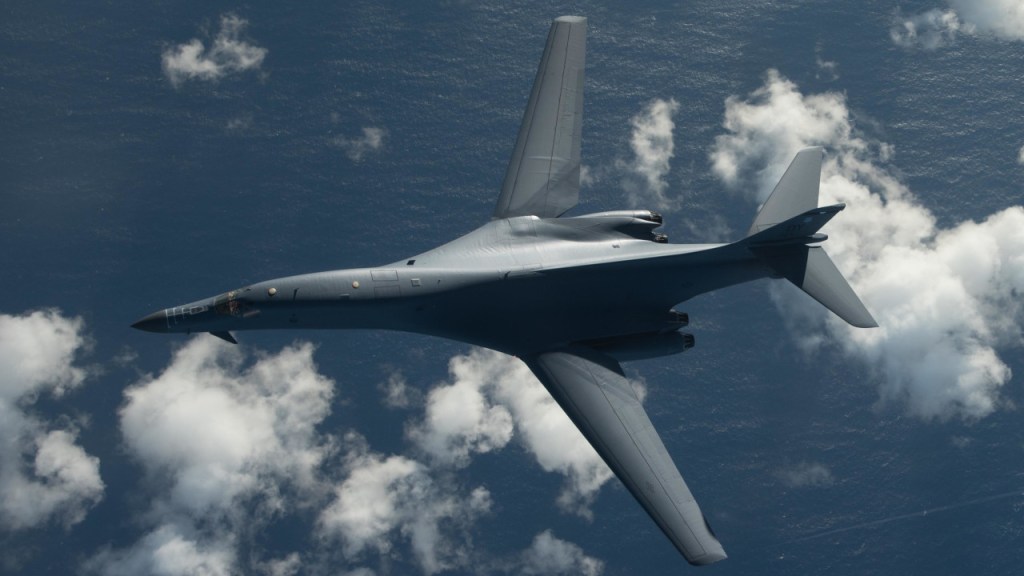
An early example from my life. When I was a young lieutenant in the U.S. Air Force, circa 1985, I wrote a paper on the B-1 bomber and the strategy of “manned penetrating bombers.” In plain speak (plane speak?), the Air Force was spending loads of money on a high-tech swing-wing plane loaded with avionics which would in theory enable it to penetrate Soviet airspace and bomb targets directly. This made little sense to me, nor did it make sense to President Jimmy Carter, who had cancelled the plane as unneeded. After all, B-52s could carry highly accurate cruise missiles and launch them from outside of Soviet airspace, and for much less money.

But the B-1, like any major weapon system, had powerful friends in Congress, since Rockwell International had spread production of the plane and its components to as many Congressional districts as possible. When Ronald Reagan became president in 1981, he quickly reversed Carter’s decision. It wasn’t about strategy. It was about business and profit justified in the name of sending a tough message to the “Evil Empire.” Meanwhile, the Soviet Union collapsed a few years later and the U.S. was stuck with 100 B-1 bombers it didn’t need. Time has proven it to be an expensive plane to maintain, and one that’s never been used (fortunately) on the mission for which it was designed.

The U.S. has a lot of weapons like the B-1 bomber: expensive, unreliable, redundant strategically, and ultimately unneeded. It doesn’t make much sense, until you realize it’s all about making money, moving product, inflating threats, and keeping the cycle going, again and again, wars and weapons without end, Amen.

Of Tail Fins and Fighter Jets: Artificial Obsolescence and Economic Bankruptcy (Updated)

The Good Old Days of Artificial Obsolescence

A U.S. Air Force F-16 Fighting Falcon flies a ...
A U.S. Air Force F-16 Fighting Falcon.  Not stealthy, but still a great jet.  And compared to the F-35, very cheap indeed! (U.S. Air Force photo by Staff Sgt. Cherie A. Thurlby) (Photo credit: Wikipedia)

Harley Earl was Vice President of Styling for General Motors and considered the father of American automotive design.  Since its inception in the 1920s, GM styling was based on a concept known as “artificial obsolescence,” which involved redesigning and retooling the entire line of cars every two years so that car owners would want to sell or trade in their old car and buy the “latest” model.  It worked so well for GM that Ford and Chrysler were driven to follow the same business model which ultimately, years later, led to the financial collapse of the automotive industry.

The economic waste due to the enormous cost of retooling body parts and production lines so that automobiles could present a “fresh face” to consumers was of little consequence to executives.  What mattered was that to be “in” consumers had to have the “new” model.  This manufactured need boosted short term profit for the companies.  When I [b. traven] worked in Detroit, I had an older utilitarian Ford station wagon which drove my co-workers crazy.  It was disloyal to my GM employer, but it got me where I wanted to go.  Even back then I was a brand and style contrarian.

Artificial obsolescence and manufactured need is of course not limited to cars.  Consider America’s defense industry and its high-ticket items.  Let’s kick the tires of the F-22 Raptor “stealth” fighter and the F-35 Lightning II “stealth” fighter-bomber.  First of all, stealth technology (involving esoteric and expensive radar absorbing and reflecting materials) adds billions of dollars to the sticker price of these planes, yet the need for this “option” is marginal (at best).  There’s little need to evade sophisticated radars in a world with only one superpower.

Leaving that aside, consider the effectiveness of previous American fighter jets, such as the F-15 Eagle (available in air superiority and “strike” versions), the F-16 Fighting Falcon, the F-18 Hornet (and Super Hornet), even the ungainly A-10 Warthog.  All of these planes are proven performers; they are also far cheaper than the F-22 and F-35, and arguably more effective.

Even our profligate Pentagon spenders stopped buying F-22s because at roughly $400 million a copy, they were just too expensive (and also too prone to killing their pilots).  Yet the Pentagon is persisting in plans to spend roughly $400 billion to acquire F-35s (despite serious teething pains and horrendous cost overruns), even though older and more reliable models like the A-10 or F-18 are perfectly capable of accomplishing the mission.

That’s the story of our military-industrial complex and the compliant representatives of the people who approve these foolish expenditures.  They’ll spend countless billions on the equivalent of new tail fins for their latest Cadillac fighter jet.  Harley Earl is laughing somewhere.

But what’s really obsolete is our thinking, which prefers the new and shiny, never mind the cost, all in the name of short-term profits for industry.  It’s an economic model that wasn’t sustainable in the automotive industry.  And it sure isn’t sustainable in military circles at a time of supposed fiscal austerity.

But, heck: We’re winning style points even as we imperil our economy.  Hooray, America!

Update 1 (10/3/2013): The Inspector General (IG) for the Department of Defense has identified 719 problems with the F-35 fighter-bomber.  Efforts to solve these problems will continue to drive up the per unit cost of the F-35.  Meanwhile, Predator and Reaper unmanned drones continue to supplant manned fighters.  And when we need a pilot in the cockpit, legacy fighters such as the F-15, F-16, and F-18 continue to perform the mission.

Actually, what matters more than new planes to combat effectiveness is the skill of pilots and the weapons attached to those planes.  Yet with the F-35 we continue to pursue the “bleeding edge” of aircraft technology — and hence our country continues to bleed scores of billions for a plane we arguably don’t need.  But we are scoring style points…

Update 2 (10/25/2013): For a detailed (and very sobering) article on the F-35 and all its problems, see Adam Ciralsky, “Will It Fly?” at Vanity Fair.  Link here.  Also useful is this article by JP Sottile.

b. traven and W.J. AstoreImage