Feeding the Disease of Terrorism

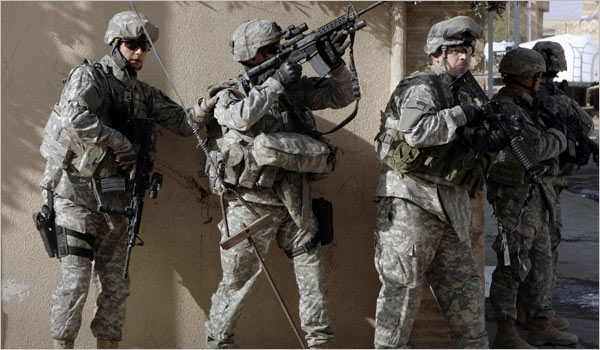
07kurds.xlarge1 U.S. troops in Mosul, Iraq in 2007.  A foreign presence to Iraqis

W.J. Astore

I’m a retired U.S. military officer.  When I think of U.S. troops, naturally I see them as my gals and guys.  I identify with them.  And I know enough of them to know that their intent is usually good — at least in the sense that they seek to do their duty.

But I’m also an historian with a modicum of empathy.  I know that foreigners don’t see the U.S. military as I see it.  Nor do they experience it the way I experienced it.  To cite just one anecdote: I recall a story in the New York Times in which U.S. troops in Iraq ask an Iraqi farmer if he’s seen any foreign fighters around.  The Iraqi has a simple answer: “Yes. You.”

Six years ago, I wrote an article for Huffington Post on “Catch-22 in Afghanistan.”  I argued that the more the U.S. military intervened in the affairs of Afghanistan, the less likely it was that a permanent, and suitably Afghan, solution would be found to the problems confronting that country.  Not much has changed in those six years, except that today the Taliban controls even more territory, the drug trade is even more pervasive, and corruption is even more endemic.

We need to learn (or re-learn) a basic lesson: The more the U.S. intervenes in conflicts within other countries, the less likely it is that a favorable outcome will result (favorable for the U.S., that is), simply because U.S. forces are viewed as a foreign contagion. And indeed we are that.

Ignoring its Afghan failures, the U.S. government now seeks to widen its military commitment to the most hotly contested areas of the Middle East.  Our leaders act as if the way to end civil wars driven in part by radical Islam is violent intervention led by American troops.

But American troops (and drones and bombs and all the rest) are not the answer.  Indeed, their actions spread the contagion further.

The other day, I was reading about “super-bugs,” those bacterial infections that have become highly resistant to traditional antibiotics due to misuse and overuse of the same.  In seeking to “destroy” ISIL and similar “infections,” the American government instead often feeds them.  Indeed, I was surprised to learn that in medicine there are super-bugs that literally feed on traditional antibiotics.  They gain strength from being attacked.  Such is often the case for “bugs” like ISIL, which feed off of heavy-handed U.S. military actions.

This is not an argument for the U.S. military to do nothing.  Rather, it’s a reminder of the limits of power and the complexity of life.  It’s a reminder too that to foreigners the U.S. military is the foreign presence, the contagion.  Even when it seeks to act as a “cure,” it may in fact be feeding the disease.
School Cops with Assault Rifles: Make My Day — Not

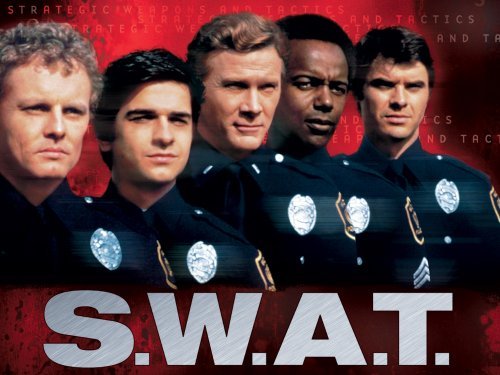
swat
Keeping American TV “safe” since 1975

W.J. Astore

At Northeastern University in Massachusetts, members of campus security are now routinely carrying military assault rifles in their vehicles. The rationale is that you never know when and where terrorists will strike, so you have to be prepared to outgun them at all times.

Many Americans equate guns with safety — and bigness with value. So, the bigger the gun, the safer you are.  Right?

It didn’t used to be this way.

Back in the 1970s, I remember when the police got by with .38 revolvers. Up-arming the police meant going from .38 specials to .357 magnums.  Of course, these were six-shot revolvers.  Then cops started carrying 9mm handguns with clips that could carry 15-18 rounds.  Now some cops carry .40 caliber semi-automatics, which are more powerful than the 9mm but also more difficult to control.

You might call it the “Dirty Harry” syndrome (that bigger guns are better), except that that’s being unfair to Harry (played so memorably by Clint Eastwood).

As a teen, I was a big “Dirty Harry” fan, so I remember the rationale for Harry’s Smith & Wesson .44 magnum.  He carried it because he was a pistol champion (as he said, “I hit what I aim at”), and because he wanted a round with “penetration” (he noted that .38 rounds “careen off of windshields”). Finally, Harry said he used a “light special” load to limit recoil, saying it was like firing a .357 with wadcutters.  (All of this is from memory, which shows you the impression those “Dirty Harry” movies made on a typical teen interested in guns.)

Soon after Harry started boasting about his .44 magnum, a new TV show aired in America: SWAT (standing for “special weapons and tactics”). Police SWAT teams are now common in America, but they were somewhat of a novelty forty years ago.  I recall that the team carried AR-15 assault rifles along with specialized sniper rifles and shotguns.  They drove around in a big police van and arrived each week just in the nick of time to save the day.  My favorite character was the guy who carried the sniper rifle.

My excuse?  Heck, I was a teenager! What’s disturbing to me is how my teen enthusiasm for guns is now considered the height of maturity in the USA.  So much so that we arm campus police with assault rifles and see it as a prudent and sensible measure to safeguard young students.

The ready availability of guns of all types has created our very own “arms race” in America — an arms race that is being played out, in deadly earnest, each and every day on our streets and in our buildings.  We’ve allowed the cold, bold “Dirty Harry” of the early 1970s to be outgunned not only by today’s hardened criminals but by campus cops as well.

Assault rifles and SWAT teams are part of America’s new normal. Rare in the 1970s, they are now as American as baseball and apple pie.

I don’t think even Dirty Harry would be pleased with America’s new reality.  Make my day — not.

The Republican Debate: Attack of the Clones!

W.J. Astore

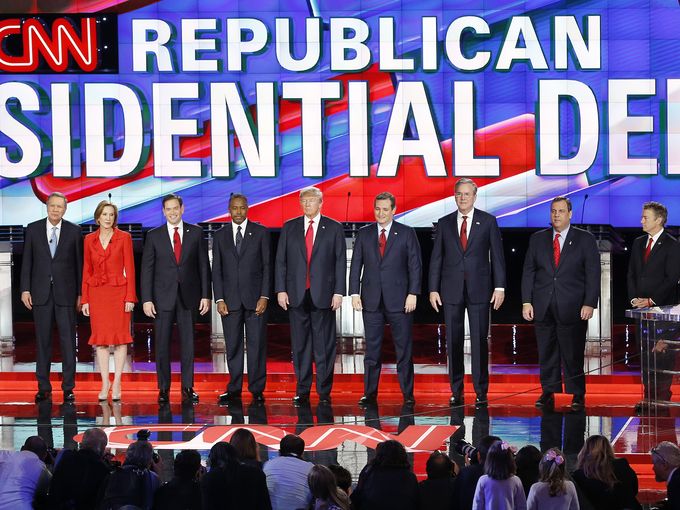
They say a picture is worth a thousand words, so here’s one:

635858109901870040-AP-GOP-2016-Debate.2

From left to right, we have Kasich, Fiorina, Rubio, Carson, Trump, Cruz, Jeb!, Christie, and Paul.

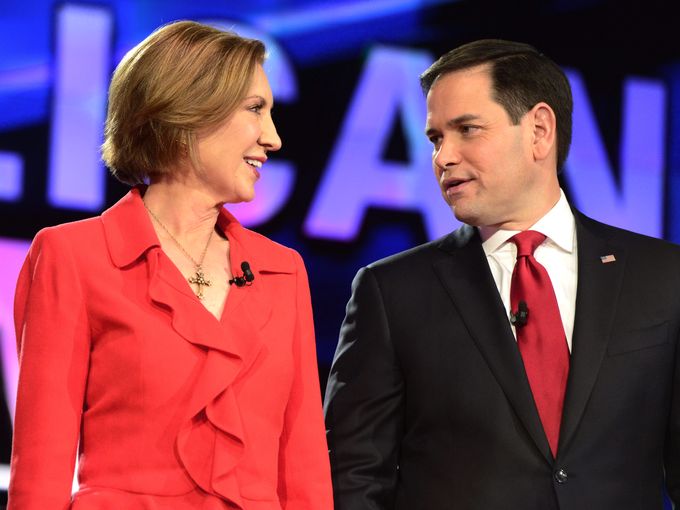
Look closely.  Rubio, Trump, Cruz, Jeb!, Christie, and Paul are following the standard sartorial script for “conservative” politicians: dark suits, red power ties, flag lapel pins.  Obedient to their image consultants, they are conforming to the notion that one can appear confident and patriotic just by donning that red tie and flag pin.  In the spirit of the “Star Wars” season, let’s call this the “Attack of the Clones.”

Then you have Fiorina.  She upstages the men with a power red suit, complete with an ostentatious cross to assure viewers that she’s not just a kickass former CEO: She’s a kickass Christian CEO.

Fiorina Rubio

Then we have Dr. Ben Carson.  Yes, he has the (nearly) obligatory flag lapel pin, but kudos to him for wearing a smart blue tie with white polka dots.  His tie is much like the way the candidate speaks: calm and measured.  (The content of his speech is often a different story.)

carson

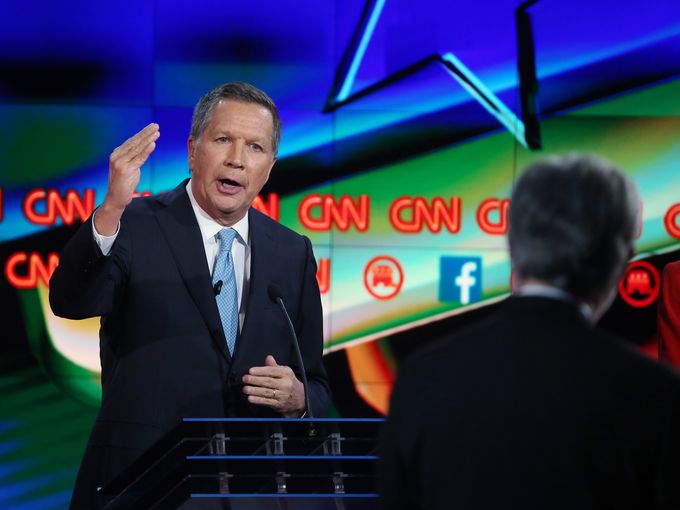
Finally we have John Kasich.  A soft blue tie and no flag lapel pin.  Why do you hate America, Governor Kasich?

Kasich

Well, if I had to vote for a Republican based purely on optics, I’d go for Kasich.  Imagine a Republican candidate brave enough not to wear a power red tie and a flag lapel pin.  With no Christian crosses in sight.

Perhaps Kasich actually wants to be judged by his words and deeds?


A Contrary Perspective on the Middle East

IMG_0230

W.J. Astore

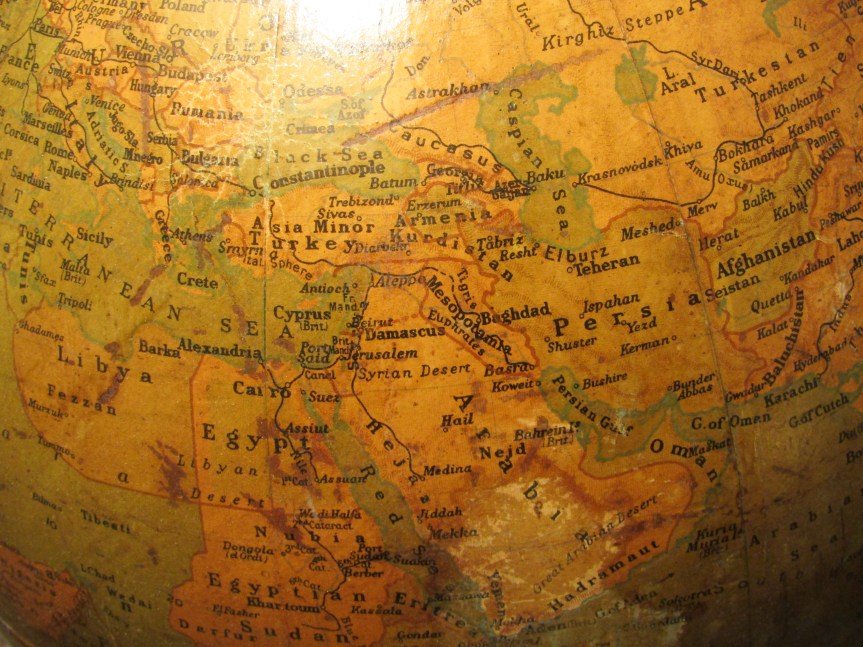
How about a contrary perspective on the Middle East, courtesy of my old globe?  It dates from the early 1920s, just after World War I but before Russia became the Soviet Union.  Taking a close look at the Middle East (a geographic term that I use loosely), you’ll notice more than a few differences from today’s maps and globes:

  1. Iraq and Syria don’t exist.  Neither does Israel.  Today’s Iran is yesterday’s Persia, of course.
  2. Instead of Iraq and Syria, we have Mesopotamia, a name that resonates history, part of the Fertile Crescent that encompassed the Tigris and Euphrates Rivers as well as the Nile in Egypt.  Six thousand years ago, the cradle of human civilization, and now more often the scene of devastation caused mainly by endless war.
  3. Ah, Kurdistan!  The Kurds today in northern Iraq and southern Turkey would love to have their own homeland.  Naturally, the Arabs and Turks, along with the Persians, feel differently.
  4. Look closely and you’ll see “Br. Mand.” and “Fr. Mand.”  With the collapse of the Ottoman Empire (roughly a larger version of modern-day Turkey) at the end of World War I, the British gained a mandate over Palestine and Mesopotamia and the French gained one over territory that would become Lebanon and Syria.  The British made conflicting promises to Jews and Arabs over who would control Palestine while scheming to protect their own control over the Suez Canal.  A large portion of Palestine, of course, was given to Jews after the Holocaust of World War II, marking the creation of Israel and setting off several Arab-Israeli Wars(1948-73) and the ongoing low-level war between Israel and the Palestinians, most bitterly over the status of the “Occupied Territories”: land captured by the Israelis during these wars, i.e. the West Bank (of the Jordan River) and the Gaza Strip (both not labeled on my outdated globe).
  5. Improvisation marked the creation of states such as Lebanon, Syria, and Iraq.  Borders encapsulated diverse peoples with differing goals. Western powers like Britain and France cared little for tribal allegiances or Sunni/Shia sensitivities or political leanings, favoring autocratic rulers who could keep the diverse peoples who lived there in line.
  6. Historically powerful peoples with long memories border the Middle East.  The Turks and the Persians (Iranians), of course, with Russians hovering in the near distance.  They all remain players with conflicting goals in the latest civil war in Syria and the struggle against ISIS/ISIL.
  7. Three of the world’s “great” religions originated from a relatively tiny area of our globe: Judaism, Christianity, and Islam.  Talk about a fertile crescent!  Sadly, close proximity and shared roots did not foster tolerance: quite the reverse.
  8. Remember when Saudi Arabia was just Arabia?  Ah, those were the good old days, Lawrence.
  9. Nobody talks much about Jordan, an oasis of relative calm in the area (not shown on my old globe).  Lucky Jordan.
  10. The presence of Armenia in Turkey on my old globe raises all kinds of historical ghosts, to include the Armenian genocide of World War I. Today, Turkey continues to deny that the word “genocide” is appropriate to the mass death of Armenians during World War I.

My fellow Americans, one statement: The idea that America “must lead” in this area of the world speaks to our hubris and ignorance.  We are obviously not seen as impartial.  Our “leadership” is mainly expressed by violent military action.

But we just can’t help ourselves.  The idea of “global reach, global power” is too intoxicating.  We see the globe as ours to spin.  Ours to control.

Perhaps old globes can teach us the transitory nature of power.  After all, those British and French mandates are gone.  European powers, however grudgingly, learned to retrench.  (Of course, the British and French, together with the Germans, are now bombing and blasting old mandates in the name of combating terrorism.)

I wonder how a globe made in 2115 will depict this area of the world. Will it look like today’s globe, or more like my globe from c.1920, or something entirely different?  Will it show a new regional empire or more fragmentation?  An empire based on Islam or a shattered and blasted infertile crescent ravaged by war and an inhospitable climate driven by global warming?

Readers: I welcome your comments and predictions.

Mother Nature: It’s Really Not Nice to Fool with Her

earth
Guess What?  There’s Only One Earth

W.J. Astore

The other day, I was watching a typical truck commercial on TV. It showed trucks literally tearing up the backroads, along with ATVs spinning and jumping and chewing up the countryside, all synonymous with “adventure” and “freedom.”

I remember those old Coors commercials featuring Mark Harmon. They were set in Colorado (I think) and featured him quietly extolling the virtues of barley and clean water. Now most Coors commercials are about self-indulgent partying (but please drink responsibly).

My point? We need a change in mindset — one that values nature and its preservation. We’re doomed if we keep selling the idea “you can have it all,” so go party and tear up nature — who cares as long as you’re having fun?

We act as if we have many planet earths, but we have only one.  And we’re slowly and surely making our planet less habitable for humans.

Our planet is already having its revenge.  As Tom Engelhardt wrote about in a recent article about “Emperor Weather,”

Of course, his [Emperor Weather’s] air power — his bombers, jets, and drones — would be superstorms; his invading armies would be mega-droughts and mega-floods; and his navy, with the total or partial melting of the Greenland and Antarctic ice sheets, would be the rising seas of the planet, which would rob humanity of its coastlines and many of its great cities. His forces would occupy not just one or two countries in the Greater Middle East or elsewhere, but the entire planet, lock, stock, and barrel.

Emperor Weather’s imperial realms would be global on an awe-inspiring scale and the assaults of his forces would fragment the present planet in ways that could make much of it, in human terms, look like Syria. Moreover, given how long it takes greenhouse gases to leave the atmosphere, his global rule would be guaranteed to last an inhumanly long period of time unchallenged.

Heat (think burning Australia today, only far worse) would be the coin of the realm. While humanity will undoubtedly survive in some fashion, whether human civilization as we now know it can similarly survive on a planet that is no longer the welcoming home that it has been these last thousands of years we have no way of knowing.”

Wars will doubtless follow in the wake of disruptions by Emperor Weather, which will only make matters worse for humanity.  Think of all those weapons that run on fossil fuels — ships, planes, and tanks.  All those weapons that pollute the earth while consuming valuable resources that could be used for alternative energies (solar panels, for example).

It’s time to beat our weapons into wind turbine blades, and to make war no more, either on ourselves or on nature.

President Obama’s Speech on Terror

07obama-01-SUB-articleLarge

W.J. Astore

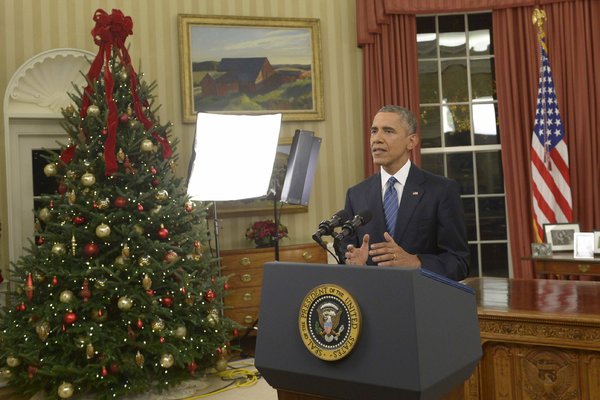
My wife and I watched the president’s speech last night.  Overall, it was a solid, even praiseworthy, performance.  First, we had to get past the NBC pre-speech fear-mongering.  Lester Holt and Chuck Todd, the NBC commentators, were talking about how afraid Americans were, hinting that we all feared our holiday parties would be invaded by active shooters bent on murder.  My wife and I looked at each other.  Are you fearful, honey?  Neither am I.

President Obama himself made many good points.  Yes, we shouldn’t vilify Muslim-Americans or condemn all of Islam.  Yes, we shouldn’t commit major ground forces to the Middle East to chase ISIL terrorists. Yes, we need sane gun control measures in the USA.  Nobody needs an AK-47 or AR-15 (these are not hunting guns: they are military assault rifles designed to kill people).  And nobody needs the right to buy a gun if they’re on a “no fly” list as a possible terror threat.

These were “common sense” points, and it pains me to think the president has to belabor what should be obvious.  But he does.  Because the National Rifle Association wants no restrictions on gun ownership, and the radical right does want to vilify Muslims, commit large numbers of U.S. ground troops to the Middle East, and extend a regimen of militarized surveillance and security at home that will make us even less safe.

Where President Obama consistently disappoints is what he leaves unsaid. That the U.S. invasion and occupation of Iraq essentially created ISIL; and that his policy of overthrowing the Syrian government by arming indigenous Arab forces contributed to it (according to Lieutenant General Michael Flynn, formerly head of the Defense Intelligence Agency). That his strategy of drone assassination (so-called signature strikes that are often based on faulty intelligence) is creating more terrorists than it kills, as several military drone operators have recently argued.

Defenders of the U.S. drone assassination program argue that it’s not the intent of the U.S. government to kill innocents, therefore the U.S. is free from blame.  Try telling that to those who have lost loved ones to drones.  (So sorry: We didn’t mean to kill your mother/brother/loved one. Wrong place/wrong time: an explanation as infuriating as it is unconvincing.)

President Obama concluded by arguing that he needed even more of a blank check (in the form of a Congressional authorization) to prosecute the war on terror.  All in the name of keeping Americans safe, naturally. But he has it exactly backwards.  Congress needs to exercise more oversight, not less.  Imagine giving President Donald Trump a Congressional blank check to exercise the war on terror.  Not such a good idea, right?

Finally, and disappointingly, Obama misunderstands the solemn duty of his office.  As commander in chief, Obama believes his first duty is to keep Americans safe and secure.  Wrong.  His first duty is to “preserve, protect and defend” the U.S. Constitution and the rights, freedoms, and responsibilities defined within.  Put bluntly, you can’t keep Americans safe and secure by abridging their rights to freedom of speech or to privacy or to dissent.  “Safety” and “security” were not the bywords of America’s founders.  Liberty was.  And liberty entails risks.

A saying popular on the right is Thomas Jefferson’s “The tree of liberty must be refreshed from time to time with the blood of patriots and tyrants.”  In the USA today, “tyranny” is most likely to come in the form of a leader who promises to keep us safe and secure at any cost.  (Just look at the Republican candidates for president with their calls for Muslim detention camps, mass expulsion of immigrants, the shuttering of houses of worship, and similar measures of repression.)

The president was right to argue that we must not betray our values.  He was right to talk about human dignity.  He was right to say that freedom is more powerful than fear.  Now we as Americans need to live up to those words.  And so does he.


Crazy American double standards on terrorism

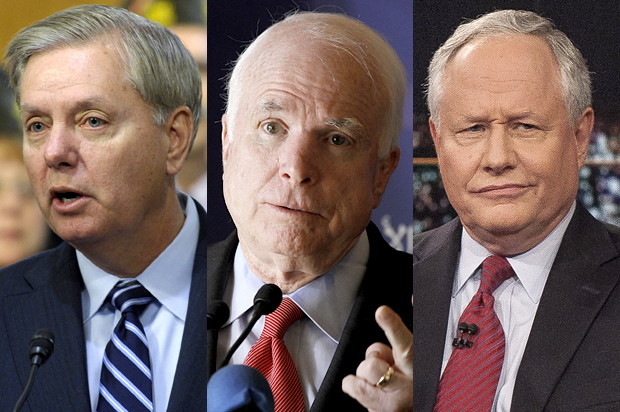
Even John McCain (middle) might blanch at being bookended by "warriors" Lindsey Graham (left) and Bill Kristol (right)
John McCain (middle) bookended by “warriors” Lindsey Graham (left) and Bill Kristol (right)

W.J. Astore

In his latest introduction at TomDispatch.com, Tom Engelhardt reveals a remarkable double standard — perhaps craziness is a better term — in the U.S. approach to terrorism in the wake of the Paris attacks.  Prominent “conservative” leaders are calling for a major U.S. military invasion of territory controlled by ISIS, even though they know that ISIS has the “home field advantage.”  They know, in short, that such an invasion will be both risky and costly, spreading chaos even further in the region, but they just can’t help themselves: they must “do something,” and the “something” in this case is sending other people’s sons and daughters into harm’s way.

But when it comes to incurring any risk, no matter how remote, to the American “homeland” from allowing refugees fleeing the chaos of the Middle East (chaos partly made by the USA and its previous military interventions, of course) to enter, these same conservative leaders cower.  We can’t let “them” in. Too dangerous!

So, where the U.S. has an overwhelming “home field” advantage, these self-styled warriors retreat into paralyzing timidity.  “Not in my backyard,” they say.  But we sure as hell will send “our” troops into their backyards.  See how brave we are in taking the fight to ISIS?

Here is Engelhardt’s introduction that so clearly highlights this tension:

In Washington, voices are rising fast and furiously. “Freedom fries” are a thing of the past and everyone agrees on the need to support France (and on more or less nothing else). Now, disagreements are sharpening over whether to only incrementally “intensify” the use of U.S. military power in Syria and Iraq or go to “war” big time and send in the troops. The editor of the right-wing Weekly Standard, Bill Kristol, is already calling for 50,000 American troops to take the Islamic State’s “capital,” Raqqa. Republican presidential candidate Senator Lindsey Graham, who has been urging that another 20,000 troops be dispatched to the region for months, offers this illuminating analogy to sports: “I’m looking for an away game when it comes to ISIL, not a home game. I want to fight them in their backyard.”

And don’t forget that increasingly angry sideline discussion about the Obama administration’s plan to let 10,000 Syrian refugees, carefully vetted for up to two years, trickle into the country.  Alternatives proposed include setting up even harsher, more time-consuming vetting processes to insure that few of them can make it, allowing only certified, God-fearing Christian Syrians in while — give a rousing cheer for the “clash of civilizations” — leaving Muslims to rot in hell, or just blocking the whole damn lot of them.

I’m all for Bill Kristol and Lindsey Graham’s warrior fervor.  I wish them every success as they deploy to Raqqa in their “away game” against ISIS.

Terrorism and Threat Inflation: Fear Is the Mind-Killer

threat

W.J. Astore

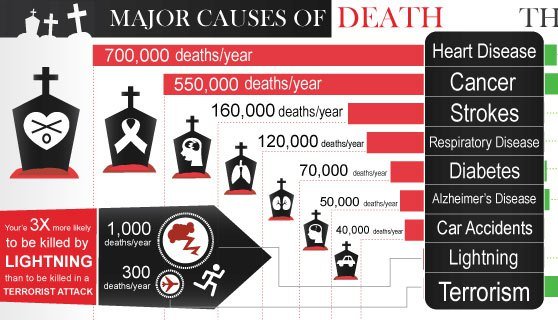
Over the last ten years in the United States, more than 280,000 Americans (more than 300,000 by some counts) have died because of guns.  Over that same period, roughly 350,000 Americans have died on the roads in vehicular accidents.  That’s roughly 630,000 Americans dying every decade either in road accidents or by gunshots, which is roughly the number of Americans who died in the horrible carnage of the U.S. Civil War from 1861 to 1865, America’s bloodiest war.

In other words, at the hands of guns and vehicles, Americans suffer the equivalent of a civil war-like bloodletting each and every decade.  Is it time to declare war on guns and cars?  (And now roughly 30,000 people each year are dying from drug overdoses related to the abuse of prescription painkillers and other opiates.)

The U.S. media and our leaders prefer to fixate on radical Islamic terrorism, which has accounted for 24 deaths over the same period.  Indeed, by the numbers the White supremacist threat to America is twice as serious as threats from ISIS or other external radical groups.

According to the Washington Times,

“In the 14 years since the Sept. 11 terror attacks, nearly twice as many people have been killed in the United States by white supremacists and anti-government radicals than by Muslim jihadis, according to a new study.”

“White supremacists and anti-government radicals have killed 48 Americans … versus 26 killings by Muslim radicals, according to a count by New America, a Washington research center.”

“New America program associate David Sterman said the study shows that white supremacy and anti-government idealists are a major problem, that their growth rate needs to be addressed and that there is an ‘ignored threat’ woven in the fabric of American society.”

Given these numbers and realities, why are America’s leaders so fixated on hyping the threat of radical Islamic terrorists?  Shouldn’t we be focusing on saving lives on our roads? Reducing gun accidents and gun crimes and suicide by guns? On reducing hate-filled radicalism within our own country?

We should be, but we’re not.  Our leaders prefer threat inflation: They believe in making political hay while the foreign terrorist threat shines.  So presidential candidates like Jeb Bush and Marco Rubio predictably call for a war on terrorism, for military “boots on the ground” in Syria and Iraq, and (of course) for higher military spending and more surveillance, in the name of protecting America.  Threat inflation knows no political party, of course, with Hillary Clinton joining the chorus of the tough-talkers against terror.

Threat inflation sells.  And threat inflation pays.  This is an important theme in Tom Engelhardt’s latest tour de force at TomDispatch.com, “The National Security State’s Incestuous Relationship with the Islamic State.”  As Engelhardt notes, threat inflation drives a dance of death even as it eliminates grey zones — opportunities for dialog, diplomacy, compromise, forms of accommodation.  It enforces a black and white world of crusaders and jihadists bent on killing one another in the name of righteousness.

Here is how Engelhardt puts it:

the officials of [the U.S. national] security state have bet the farm on the preeminence of the terrorist “threat,” which has, not so surprisingly, left them eerily reliant on the Islamic State and other such organizations for the perpetuation of their way of life, their career opportunities, their growing powers, and their relative freedom to infringe on basic rights, as well as for that comfortably all-embracing blanket of secrecy that envelops their activities.  Note that, as with so many developments in our world which have caught them by surprise, the officials who run our vast surveillance network and its staggering ranks of intelligence operatives and analysts seemingly hadn’t a clue about the IS plot against Paris (even though intelligence officials in at least one other country evidently did).  Nonetheless, whether they see actual threats coming or not, they need Paris-style alarms and nightmares, just as they need local “plots,” even ones semi-engineered by FBI informers or created online by lone idiots, not lone wolves. Otherwise, why would the media keep prattling on about terrorism or presidential candidates keep humming the terror tune, and how, then, would public panic levels remain reasonably high on the subject when so many other dangers are more pressing in American life?

The relationship between that ever-more powerful shadow government in Washington and the Islamic terrorists of our planet is both mutually reinforcing and unnervingly incestuous.

Of course, Engelhardt knows that terrorism must be fought.  The point is not to lose our collective heads over the (much exaggerated) threat of it.  To cite Frank Herbert’s insight in Dune, “Fear is the mind-killer.”  Yet our media and leaders seem determined to hype fear so as to kill our minds.

As our media and politicians stoke our fear by exaggerating the threat posed by terrorism, ask yourself to what purpose are they attacking your minds.

Hint: It certainly isn’t about keeping you safe.

Terrorism in Paris: A Few Thoughts

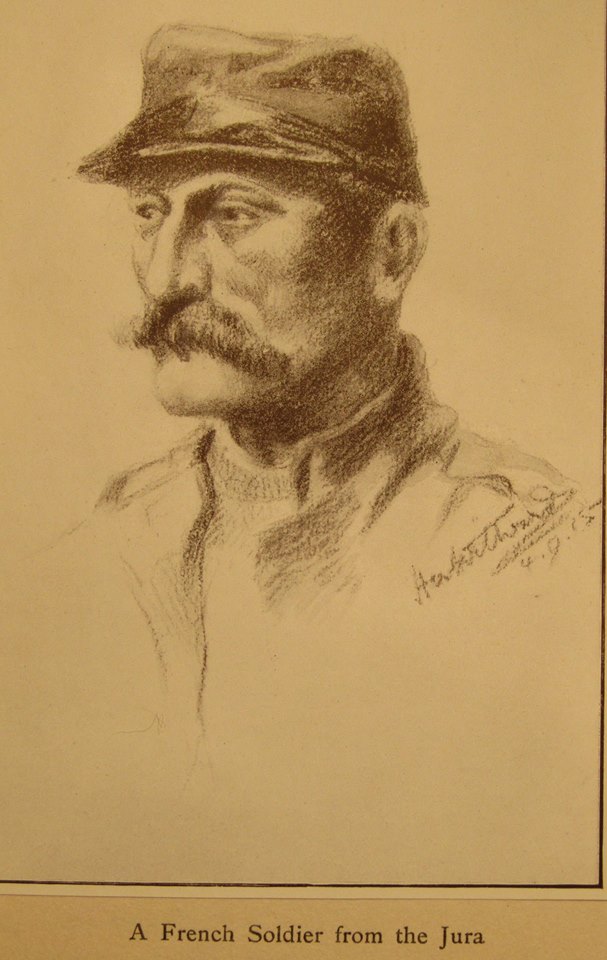
The French showed great resolve in 1915. A century later, that resolve yet lives

W.J. Astore

The world is still trying to digest the horrifying news from Paris of terrorist attacks by ISIS.  We sympathize with all the victims of terrorism and other forms of violence, and we stand with France and its desire to bring the perpetrators and their accomplices to justice.

Yet we also must be careful not to overreact — not to play into the hands of ISIS and similar terrorist organizations.

French President François Hollande is already on the record as vowing, “We are going to lead a war [against ISIS] which will be pitiless.” But the answer to terrorism is not “pitiless” war.  That’s exactly what terrorists want: they thrive on war and endless cycles of horrifying violence.

I understand Hollande’s rhetorical purpose.  He’s saying: We’re united, we’re tough, we’ll avenge the murder of innocents.  But pitiless war has been tried again and again in history — and it begets more atrocities and more war.

Terrorism is nothing new.  What’s new is the way the West is elevating it into a generational war — another crusade.  We must be very careful not to let the rhetoric of “generational” and “merciless” war become a self-fulfilling prophecy.

We must also be careful not to overreact to the threat of terrorism.  In spite of the latest horrifying attacks in Paris, the threat of terrorism remains remote for the vast majority of us.  The answer to the terrorist threat is not more state surveillance, not more military reprisals, not more curtailments of individual freedoms in the false name of security.

What is the answer?  Resolve.  Patience.  Cooperation (e.g. international police work, intelligence sharing, and so forth). And action.  Anger and cries for revenge in the form of “pitiless” war are natural after a profound shock, but they are not smart policy. Injustices committed in the name of “pitiless” war will not bring justice to the victims of the Paris attacks.

Resolve — yes.  Justice — yes.  Courage — yes.  Action — yes.  Pitiless war — no.

Henry Kissinger’s Big Stick: Bombing

Kissinger's foreign policy
Kissinger’s foreign policy

W.J. Astore

Greg Grandin has a new book on Henry Kissinger and a new article at TomDispatch.com.  Kissinger, writes Grandin, had an affinity (or perhaps an avidity) for power, especially air power, as a way of demonstrating his (and America’s) resolve.

Notes Grandin:

Henry Kissinger is, of course, not singularly responsible for the evolution of the U.S. national security state into a monstrosity. That state has had many administrators. But his example — especially his steadfast support for bombing as an instrument of “diplomacy” and his militarization of the Persian Gulf — has coursed through the decades, shedding a spectral light on the road that has brought us to a state of eternal war …

Kissinger was very hands-on. “Strike here in this area,” Sitton recalled Kissinger telling him, “or strike here in that area.” The bombing galvanized the national security adviser. The first raid occurred on March 18, 1969. “K really excited,” Bob Haldeman, Nixon’s chief of staff, wrote in his diary. “He came beaming in [to the Oval Office] with the report.”

In fact, he would supervise every aspect of the bombing. As journalist Seymour Hersh later wrote, “When the military men presented a proposed bombing list, Kissinger would redesign the missions, shifting a dozen planes, perhaps, from one area to another, and altering the timing of the bombing runs… [He] seemed to enjoy playing the bombardier.” (That joy wouldn’t be limited to Cambodia. According to Washington Post reporters Bob Woodward and Carl Bernstein, when the bombing of North Vietnam finally started up again, Kissinger “expressed enthusiasm at the size of the bomb craters.”) A Pentagon report released in 1973 stated that “Henry A. Kissinger approved each of the 3,875 Cambodia bombing raids in 1969 and 1970” — the most secretive phase of the bombing — “as well as the methods for keeping them out of the newspapers.”

All told, between 1969 and 1973, the U.S. dropped half-a-million tons of bombs on Cambodia alone, killing at least 100,000 civilians. And don’t forgetLaos and both North and South Vietnam. “It’s wave after wave of planes. You see, they can’t see the B-52 and they dropped a million pounds of bombs,” Kissinger told Nixon after the April 1972 bombing of North Vietnam’s port city of Haiphong, as he tried to reassure the president that the strategy was working: “I bet you we will have had more planes over there in one day than Johnson had in a month… Each plane can carry about 10 times the load [a] World War II plane could carry.”

As the months passed, however, the bombing did nothing to force Hanoi to the bargaining table.  It did, on the other hand, help Kissinger in his interoffice rivalries. His sole source of power was Nixon, who was a bombing advocate. So Kissinger embraced his role as First Bombardier to show the tough-guy militarists the president had surrounded himself with that he was the “hawk of hawks.” And yet, in the end, even Nixon came to see that the bombing campaigns were a dead end. “K. We have had 10 years of total control of the air in Laos and V.Nam,” Nixon wrote him over a top-secret report on the efficacy of bombing, “The result = Zilch.” (This was in January 1972, three months before Kissinger assured Nixon that “wave after wave” of bombers would do the trick).

During those four-and a half years when the U.S. military dropped more than 6,000,000 tons of bombs on Southeast Asia, Kissinger revealed himself to be not a supreme political realist, but the planet’s supreme idealist.  He refused to quit when it came to a policy meant to bring about a world he believed heought to live in, one where he could, by the force of the material power of the U.S. military, bend poor peasant countries like Cambodia, Laos, and North Vietnam to his will — as opposed to the one he did live in, where bomb as he might he couldn’t force Hanoi to submit. As he put it at the time, “I refuse to believe that a little fourth-rate power like North Vietnam does not have a breaking point.”

In fact, that bombing campaign did have one striking effect: it destabilized Cambodia, provoking a 1970 coup that, in turn, provoked a 1970 American invasion, which only broadened the social base of the insurgency growing in the countryside, leading to escalating U.S. bombing runs that spread to nearly the whole country, devastating it and creating the conditions for the rise to power of the genocidal Khmer Rouge…

Bombing for Kissinger was a way to show he was tough within an inner circle around Nixon that put a premium on toughness. It was also a way to minimize casualties to Americans while demonstrating a total disregard for casualties among the peoples of Southeast Asia.

Kissinger the bombardier was seduced by the seemingly god-like potential of air power — the ability to strike from on high, to smite evil-doers and those who would thwart Kissinger’s designs.  Best of all, Kissinger never had to bloody his own hands. (Can you imagine Kissinger in a knife fight?  Of course not.  But you can imagine him gleefully gushing over bombing reports and bomb craters as bomber jets knifed through the sky.)

There’s a “Star Trek” episode in which Captain Kirk says, “Above all else, a god needs compassion.”  Kissinger the “air power god” had no compassion.  It was all about power.  The little people who refused to kowtow to him — the Vietnamese, the Cambodians, the Chileans, and so on — these people were simply abstractions for Kissinger.  Put differently, they were pawns on the geopolitical chessboard, to be sacrificed at will by self-styled grandmasters like Kissinger.

In his book “Secrets,” Daniel Ellsberg captured Kissinger’s blithe disregard for the lives of others in a probing question about Vietnamization.  Was it moral, Ellsberg asked, to turn the war over to the South Vietnamese, knowing they were going to incur high casualties while fighting North Vietnam, even as American troops withdrew?  Kissinger had no answer, one senses because the morality of his policies didn’t much matter to him.  The goal was to save America’s “face” in Vietnam; for Kissinger the fates of the peoples of Southeast Asia paled in comparison to the importance of American prestige.

In his deliberately ponderous Germanic accent, Kissinger spoke softly as he wielded the big stick of American bombing. It didn’t work then, nor is it working today for those who still worship at the altar of Kissinger’s Realpolitik.