Creator of Bracing Views. Contributor to TomDispatch, Truthout, HNN, Alternet, Huffington Post, Antiwar, and other sites. Retired AF lieutenant colonel and professor of history. Senior fellow, Eisenhower Media Network
We’re truly living in Orwellian times. A 17-year-old high school student, now known as #plaidshirtguy due to his choice of wardrobe, was removed from a Trump rally in Montana because of the faces he was making as Trump spoke. You can read all about here, and watch an interview with him at CNN.
Not surprisingly, people who stand behind Trump are selected ahead of time and told to clap and cheer. This young man did that, but he also chose to look quizzical, skeptical, and bemused at times. This is not allowed! A Trump staffer eventually intervened to remove him from the audience due to his “face crime.” To make matters worse, he was then held by the Secret Service for ten minutes, after which he was asked to leave the event.
Leave the event? For making skeptical and quizzical facial expressions?
You may recall from George Orwell’s “1984” that “Facecrime” existed. Anyone making skeptical or otherwise unacceptable faces when the Party announced bogus victories, production figures, and so forth opened himself or herself up to serious punishment.
Thanks to plaid shirt guy, we now know that facecrime has come to America. Just remember, fellow citizens, always to smile and cheer in the presence of Our Dear Leader. Unless you want to be detained and sent away — perhaps next time to the cornfield.
*From my copy of “1984”: “In any case, to wear an improper expression on your face (to look incredulous when a victory was announced, for example) was itself a punishable offense. There was even a word for it in Newspeak: facecrime, it was called.” (From the end of Chapter 5.)
I get “Air & Space Power Journal” electronically. You might call it a professional journal for Air Force personnel. The latest articles had these titles:
Character into Action: How Officers Demonstrate Strengths with Transformational Leadership
Multidomain Observing and Orienting: ISR to Meet the Emerging Battlespace
Preparing for Multidomain Warfare: Lessons from Space/Cyber Operations
An Ethical Decision-Making Tool for Offensive Cyberspace Operation
There’s something about military writing that loves pretentious jargon. Not just leadership, but “transformational” leadership. Combat or war must be “multidomain.” Battle or battlefield isn’t enough: we must now talk of “battlespace.” My automatic spell-check is having conniptions over these three words.
Instead of resorting to pretentious jargon in titles, why not go for the simple and direct? Here are my suggested titles for the articles above:
* How to Lead.
*Intelligence, Surveillance, and Reconnaissance in Battle.
*Lessons from Space/Cyber Warfare.
*Applying Ethics to Cyber Warfare.
(Here I think “warfare” is more honest than “operations.”)
One tiny reason the U.S. military continues to struggle in its various “overseas contingency operations,” i.e. wars, is the pretentiousness of its writing.
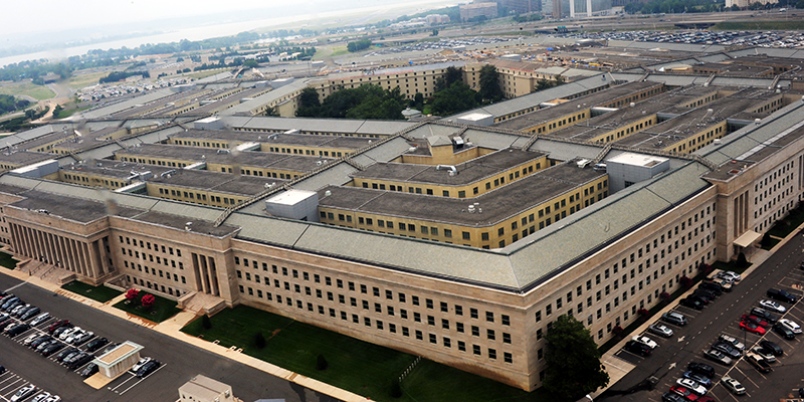
As the military drowns in words, it’s also drowning in money, though it’s already thinking about what will happen when the cash is curtailed. A good friend of mine sent me an article with the title, “Pentagon, Defense Industry Brace for Expected Dip in Future Funding.” Here’s an excerpt:
Without congressional action, the decrease in defense funding would be dramatic. The base Department of Defense budget would drop to $549 billion in FY 2020 and $564 billion in FY 2021, according to a July 2018 report by the Congressional Research Service. The FY 2019 defense budget, recently signed into law, set spending at $717 billion.
The defense industry knows what a looming congressional budget fight could do to the Pentagon’s current high levels of spending. Executives are preparing Wall Street analysts for what likely lays ahead: Congress reducing the cash flow to the Pentagon and what that will mean to corporate bottom lines.
Yes — we must defend those “corporate bottom lines”!
Defense contractors have to be prudent and prepare for the future. That said, a decline in defense spending should be good news to the American taxpayer. Old-school Republicans, who used to fight for smaller government and lower deficits, should also be pleased at the prospect of lower spending.
Except it doesn’t work that way anymore. Few if any Members of Congress of either party want to see a decline in spending. And of course defense contractors want to keep the money flowing — as President Eisenhower famously warned us about in his military-industrial-Congressional complex speech of 1961.
The rest of the world could declare “peace forever” tomorrow and Ike’s complex would still roll along. The U.S. economy is now linked (forever?) to inflated spending on weapons and war.
Inflated war/weapons spending and inflated prose about “transformational multidomain battlespace” what-have-yous. All that’s missing in our military are the victories.
As a kid, I was a big admirer of Israel.* I kept a scrapbook on the Yom Kippur War in 1973. Back then, Israel was America’s plucky ally, David against Goliath, helping to keep the Soviet bear at bay, or so it seemed to me.
Through a kid’s eyes, Israel in 1973 was an island seemingly surrounded by a sea of well-armed enemies: Egypt, Syria, Iraq, Jordan, Saudi Arabia. Outnumbered and outgunned. And now look at today’s reality: Egypt and Iraq have been neutralized. Syria is devastated. Jordan is wisely (sort of) neutral. The Saudis are a quasi-ally. Outside of the more-or-less manageable threat of terrorism (Hamas and Hezbollah), Israel’s chief enemy today appears to be itself.
What I mean by that is this: Israel, which over the last 70 years has fought several wars for its survival, is now a regional superpower. Yet the mindset of David versus Goliath persists, even though Goliath is hobbled and defeated. Meanwhile, as Israel combats terrorism and the legacies of West Bank occupation and isolation of the Gaza Strip, the government prosecutes policies that are considered illiberal and dangerous by many Jewish critics within Israel itself.
A similar David-Goliath mindset exists in the USA, but with far less cause. Bizarrely, the world’s military superpower envisions itself as being surrounded by enemies. Its response is something like Israel’s, as if the USA is Israel writ large. Both countries seek total military dominance over their perceived enemies and rivals; both are led by strong men dogged by claims of corruption; both glorify their militaries; both appear to be spoiling for war with Iran.
Interestingly, both are also obsessed with demographic “enemies within”: many Israelis fear growing Arab/Muslim influence within; many Americans fear minorities will soon constitute the majority (estimates say non-whites will outnumber whites in the year 2045, but some Americans – like Laura Ingraham on Fox News – feel it’s already happened). The result: the ruling administrations of both countries have doubled down on security and identity politics. Israel has made Arabs second-class citizens, a form of apartheid; Trump & Co. has vilified immigrants (especially Mexicans) as rapists and murderers. Both are building walls to keep the “enemy” without. Both see massive military spending (and nuclear weapons) as the ultimate guarantors of peace.
Israel is little Prussia; the USA is big Prussia. And like Prussia (and Germany) of the past, they pose as the aggrieved party, surrounded by enemies, hemmed in and oppressed. It’s never wrong to be strong – that’s their guiding motto. And by strength they mean hardness: military strength, police strength, the strength of superior weapons technology, embraced by leaders willing to kill or torture or imprison others in the name of preserving a “democratic” way of life.
It’s a mindset conducive to authoritarianism, to militarism, to nationalism, even to kleptocracy disguised as essential spending on national security. At its root is fear, which generates a “no compromise” attitude toward the Other (whether Palestinian “terrorists” or immigrant “killers” and “animals”). As the Palestinian activist Bassam Aramin put it in an interview in The Sun (October 2016):
“I think our main enemy is the Israelis’ fear. It’s part of their consciousness. When they talk about security, the Holocaust is always in the background. If I throw a stone at an armored tank, they interpret it as the beginning of a new Holocaust.”
Fear is the mind-killer. It enables perpetual warfare and a police state – and lots of profit and power to those who facilitate the same.
The original Prussia became consumed by militarism and nationalism and collapsed after two devastating world wars. What will happen to today’s Big and Little Prussia? Perhaps a war against Iran, timed to coincide with the 2020 presidential campaign season in the USA? Such an unnecessary and likely disastrous war can’t be ruled out.
Consider the dynamic between the current leaders of the USA and Israel, each egging the other one on to be tougher, less compromising, more Prussian. A pacific future is not in the cards for these military “superpowers.” Not when they’re so busy emulating Prussia.
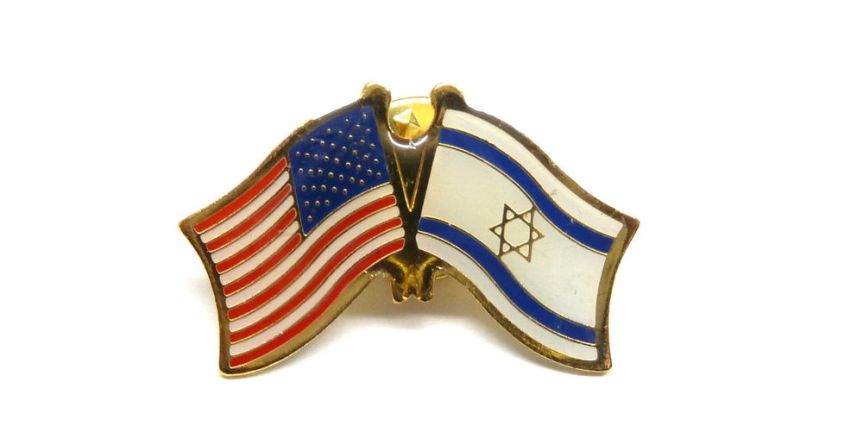
*Why are Americans, generally speaking, supporters and admirers of Israel? So much so that politicians ostentatiously wear co-joined US/Israel flag lapel pins? For several reasons:
1. The US media is generally pro-Israel. Meanwhile, the Arab world is often synonymous with terrorism in our media.
2. Israelis seem more like Americans. What I mean is this: Israeli spokespeople wear western dress and speak English with a faint accent. Until recently, Arab spokespeople on TV looked and dressed “foreign” and spoke English with a heavier accent.
3. The power of pro-Israeli political lobbies such as AIPAC and fear among politicians that criticism of Israel will be construed (and demonized) as anti-Semitism.
4. The Holocaust.
5. The Evangelical Context: I remember listening to a talk show on the radio, soon after the Yom Kippur War, in the mid-1970s. The speaker predicted the Second Coming was near. That got my attention! Why was that? Because, this person said, Israel had gained control over Jerusalem in apparent fulfillment of Biblical prophecy. Fast forward forty years to today and you hear basically the same evangelical predictions about the Second Coming of Christ being imminent as Israel expands its hegemony over the “holy land” in Palestine.
One cannot underrate the importance of (selective) Biblical prophecy as advanced by fundamentalist Christians nestled within today’s Republican Party. These evangelicals couldn’t care less about Trump’s sins and transgressions. Their eyes are on the prize: Armageddon and Christ’s return, which they link to Israel’s domination of the region – which will lead to more wars, a brutal future seen as inevitable, even desirable.
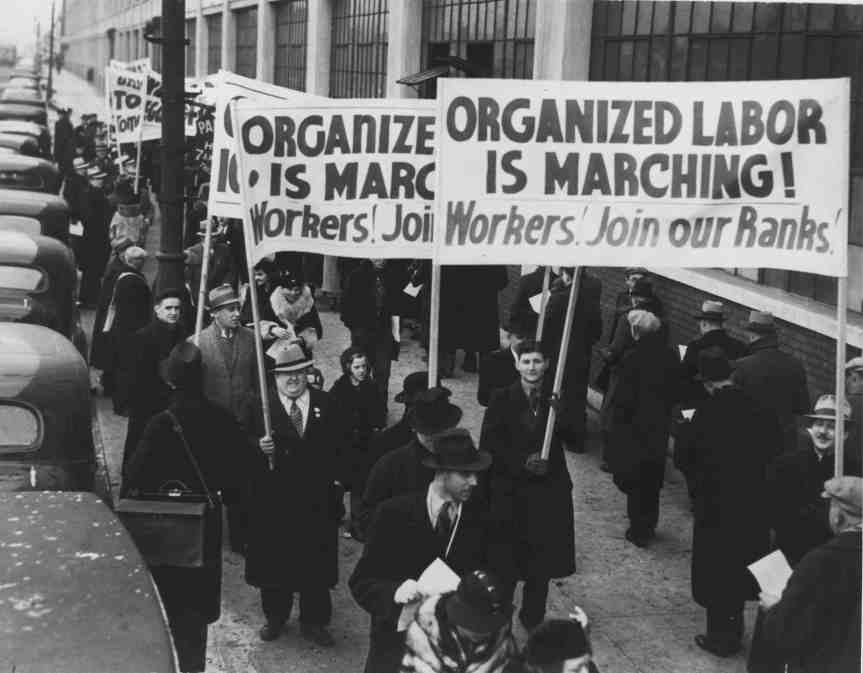
Labor Day weekend is a reminder there’s no labor party in U.S. politics. Instead, we have two pro-business parties: the Republicans and the Republicans-lite, otherwise known as the Democrats. Both are coerced if not controlled by corporations through campaign finance “contributions” (bribes) and lobbyists (plus the promise of high-paying jobs should your local member of Congress lose an election or wish to transition to a much higher paying job as a lobbyist/influence peddler). With money now defined as speech, thanks to the Supreme Court, there’s a lot of “speech” happening in Congress that has nothing to do with the concerns of workers.
Nevertheless, a myth exists within the mainstream media that “socialist” progressive politicians are coming this fall to take your money and to give it to the undeserving poor (and especially to “illegal” immigrants, who aren’t even citizens!). First of all, the so-called Democratic Socialists are not advocating nationalization of industry; they’re basically New Deal Democrats in the tradition of FDR. Just like Republicans, they believe in capitalism and the “free” market; they just want to sand down some of the rougher edges of exploitation. Consider, for example, Bernie Sanders’s efforts to get a living wage for Disney employees. Disney has finally promised to pay workers $15.00 an hour (phased in over the next few years), even as the corporation makes record profits and the CEO stands to earn hundreds of millions. Second, you’ll notice the bulk of the Trumpian tax breaks aren’t going to the workers and middle class: it’s the richest Americans (and corporations) that benefit the most from these cuts. Some of that money is supposed to “trickle down” to workers, but most of it doesn’t. (Funding stock buy-backs, not pay raises, is especially popular among corporations.)
My father knew the score. As a factory worker, he lived the reality of labor exploitation, and fought his own humble battle for decent wages. I’ve shared this lesson before, but it bears repeating, especially since it’s Labor Day weekend.
My Dad’s Story
(My dad was attempting to get a dime pay raise at the local factory. This was about the year 1950.)
It seems that Mike Calabrese on his own asked Harry Callahan [one of the owners] for a pay raise and he was refused. Mike decided to organize the men members and go down in a group. In our group he got ten men to approach Harry C. for a raise. But when it was time to “bell the cat” only three fellows went to see Harry. Well Mike said he couldn’t join the group because he had already tried to get a raise. I knew I was being used but I was entitled to a raise. Well Harry said to me, “What can I do for you men?” So I said to Harry: 1) Living costs were going up; 2) We deserved a raise. So Harry said, “How much?” and I said ten cents an hour would be a fair raise. So he said I’ll give you a nickel an hour raise and later you’ll get the other nickel. We agreed. So, I asked Harry will everyone get a raise and he replied, “Only the ones that I think deserve it.”
Well a month later I was drinking water at the bubbler and Harry saw me and said what a hard job they had to get the money to pay our raises. Well, Willie, Harry Callahan and his brother Sam and their two other Italian brother partners all died millionaires. No other truer saying than, “That the rich have no sympathy or use for the poor.”
My dad was no political radical. He later became a firefighter and served for more than 30 years before retiring. It’s precisely because my dad wasn’t a political firebrand that his words resonate so powerfully: “That the rich have no sympathy or use for the poor.”
It’s a good lesson to keep in mind. Isn’t it high time we put Labor back in Labor Day weekend?
Just another civilian casualty incident? Original caption: Mourners carry the coffin of a child at the funeral procession for those killed in an airstrike on a bus in Yemen. Photograph: Mohammed Hamoud/Getty Images
W.J. Astore
Last night, as I was watching the PBS News Hour, I snapped to attention as I heard a new euphemism for murdered innocents from bombing: “civilian casualty incidents.”
A PBS reporter used it, unthinkingly I believe, repeating bureaucratic jargon about all the innocents in Yemen smashed to bits or shredded by “dumb” bombs, cluster munitions, and even “smart” bombs that are really only as smart as the pilots launching them (and the often imperfect “actionable intelligence” gathered to sanction them).
The overall tone of the PBS report was reassuring. General Mattis appeared to comfort Americans that the Saudis are doing better with bombing accuracy, and that America’s role in helping the Saudis is limited to aerial refueling and intelligence gathering about what not to hit. Of course, the Saudis can’t bomb without fuel, so the U.S. could easily stop aerial massacres if we wanted to, but the Saudis are our allies and they buy weapons in massive quantities from us, so forget about any real criticism here.
I’ve written about Orwellian euphemisms for murderous death before: “collateral damage” is often the go-to term for aerial attacks gone murderously wrong. To repeat myself: George Orwell famously noted the political uses of language and the insidiousness of euphemisms. Words about war matter. Dishonest words contribute to dishonest wars. They lead to death, dismemberment, and devastation. That’s not “collateral” — nor is it merely a “civilian casualty incident” — that’s a defining and terrifying reality.
What if innocent Americans were being killed? Would they be classified and covered as regrettable if inevitable “civilian casualty incidents”?
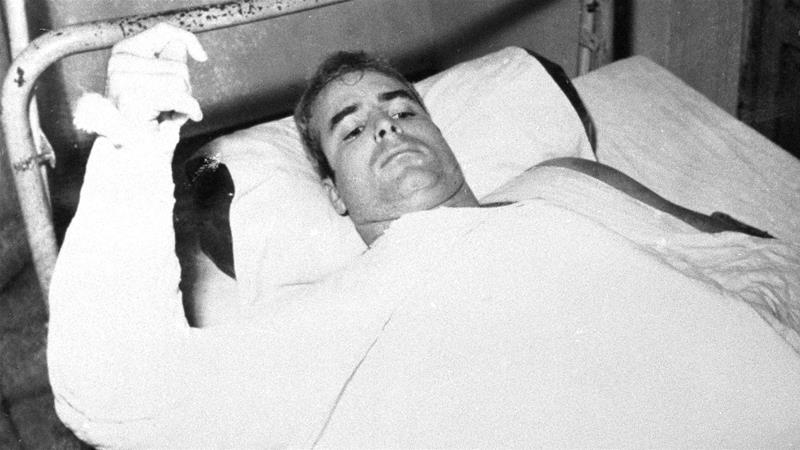
I’ve been seeing a lot of headlines, and reading quite a few tributes, about John McCain. A common word used to describe him is “warrior,” as in this op-ed at Al Jazeera of all places. If you do a quick Google search with “John McCain” and “warrior” you’ll see what I mean.
I’m a firm believer in the citizen-soldier tradition. Warrior-speak, I believe, is inappropriate to this tradition and to the ideals of a democracy. “Warrior” should not be used loosely as a substitute for “fighter,” nor should it replace citizen-sailor, which is what John McCain was (or should have been).
Yes, John McCain came from a family of admirals. He attended the U.S. Naval Academy. He became a naval aviator. He was shot down and became a prisoner of war. He showed toughness and fortitude and endurance as a POW under torture. But all this doesn’t (or shouldn’t) make him a “warrior.” Rather, he was a U.S. Navy officer, a product of a citizen-sailor tradition.
It’s corrosive to our democracy as well as to our military when we use “warrior” as a term of high praise. Many Americans apparently think “warrior” sounds cool and tough and manly, but there’s a thin line between “warrior” and “warmonger,” and both terms are corrosive to a country that claims it prefers peace to war.
In sum, it says something disturbing about our country and our culture when “warrior” has become the go-to term of ultimate praise. By anointing McCain as a “warrior,” we’re not praising him: we’re wounding our country.
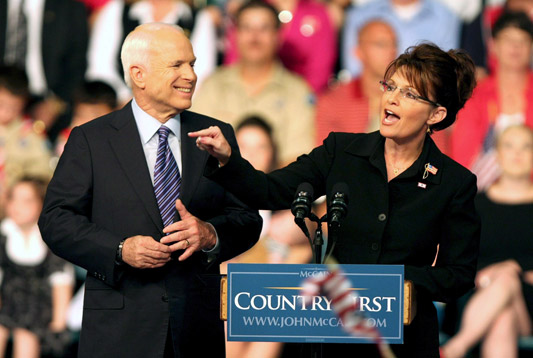
News of the death of Senator John McCain from cancer has generated enormous sympathy and praise. When he ran for president in 2008, McCain was known as a “maverick” in the media, even though his views were rarely that far removed from traditional Republican orthodoxy. Maybe it was his style that won him that nickname. A former Navy fighter pilot and prisoner of war during the Vietnam war, McCain was less guarded than most politicians, and he courted the media with candor and humor (what a contrast to Donald Trump, who denounces the media as “the enemy of the people”).
Rolling the dice in the 2008 campaign, McCain picked Sarah Palin as his running mate, a folksy governor from Alaska with virtually no experience in national or international politics. But what Palin had was strong populist instincts and a certain plain-speaking charisma. If McCain was the “maverick,” Palin was the “rogue” candidate. She helped to unleash a populist (anti-intellectual) fervor in the Republican party that culminated with Donald Trump.
I well remember the 2008 election. I was living in rural Pennsylvania and both vice-presidential candidates came for a visit. Joe Biden, the Democratic candidate, filled a high school gymnasium — roughly 600 people. Sarah Palin filled a minor league baseball stadium to overflowing — roughly 13,000 people.
Back then, Rebecca Traister wrote about Palin’s triumphal tour of rural Pennsylvania here. She also wrote about Palin’s rally at that minor league baseball stadium, Bowman Field. For some reason, the link to that article (which appeared originally at Salon.com) no longer works, but another blogger (“Lowell”) at Contextual Criticism cited portions of it back in early November 2008. Here’s how that blogger, quoting Traister, set the scene:
Palin is in Williamsport, Pennsylvania. It is a cold Thursday night. Thirteen thousand faithful, with “their Christian literature and thundersticks in tow,” have come to an outdoor baseball stadium to see the hockey mom from Alaska, the moose-slayer, the pit bull who ignites their basest instincts.
“Finally, about an hour before Palin’s scheduled arrival, Bowman Field kicked off its pre-party with the National Anthem sung under the giant flag suspended from a crane over the ‘Victory in Pennsylvania’ sign. A security sniper ogled the chilly crowd with his night-vision glasses, and a local minister took the stage to offer a benediction that hit the trifecta of guns, gays and abortion. The preacher asked forgiveness ‘for so many [who] have shed innocent blood through the course of abortions, and so many [who] would stop the sanctity of marriage between a man and a woman.’ With these abominations in mind, the preacher continued, ‘Thank you for raising up a woman like Gov. Sarah Palin at a time like this. Bless her for standing against those who would remove the guns from our cabinets, and those who would want to remove the baby from the womb of her mother. Bless her family as they adjust to changes in their lives that are going to be taking place on Tuesday.'”
Ms. Traister writes that “Palin was her down-home bestest, peppering her brief address with references to First Dude’s four snow-machine world championships, a lot of gratitude toward the veterans in the crowd, and a lot of folksy, g-droppin’ references to how ‘the time for choosin’s comin’ real soon,’ a golden-oldie reference to Ronald Reagan’s famous 1964 speech in support of Barry Goldwater. Combined with Palin’s repeated use of the phrases ‘You betcha!’ and ‘Drill, baby, drill!’ and her guess that the crowd was ‘so doggone proud’ of the Phillies, and her environmental justification that ‘God has so richly blessed this land with resources’ that [we] should probably strip-mine it, Palin seemed to be imitating Tina Fey’s imitation of her on ‘Saturday Night Live.'”
Toward the end, Palin invoked Reagan again, saying “In the end, what John McCain and I believe in is what Ronald Reagan believes in … we believe that America is still that shining City on a Hill that Ronald Reagan used to speak of.”
Now, lest you think Ms. Traister got out of that God-lovin’ bunch of folks without incident, think again. Here’s how she tells it:
“While I was interviewing some of the attendees, accompanied by another Salon staffer who was holding a video camera, a Palin fan in a newish silver sedan drove by and hit me hard in the back with the side mirror of the car, hard enough to bend the mirror back. Then the car drove off without anybody inside pausing to ask if I was all right. The middle-aged woman in the passenger seat, however, might have saluted me with an un-Christian hand gesture.”
Yes — that happened. Traister, a journalist, was hit “hard in the back” by a car, earning a middle-finger salute for her pains from one of the passengers. Talk about being anti-media! Small wonder that Trump’s diatribes resonate so well with “God-lovin'” people across the USA.
After the rallies in 2008, I asked my students (I was teaching college at the time) about them. They gushed about Palin. One of my students was especially taken by Palin’s husband, whom she considered to be a stud. None of my students had anything to say about the (much smaller and comparatively sedate) Biden rally.
Then and now, the mainstream media and the Democratic Party dismissed Palin as a joke, just as they initially dismissed Trump as a joke in 2015. Yet, as I wrote about Palin in 2010:
Much of what’s been said about Palin was also said of another backwoods American whose values were honed on the frontier: President Andrew Jackson. Palin may be no Jackson, but the liberal media’s sneering dismissal of her constitutes an indulgent, often self-congratulatory, narrative. It’s also a repudiation of our Jacksonian heritage of tough-minded, plain-speaking independence.
Like Jackson, Palin makes no pretense about being a cultivated American. Like it or not, she’s seen by her admirers as genuine precisely because she’s not a conflicted intellectual — precisely because she doesn’t confuse her followers by revealing a fourth side to every three-sided problem. Gosh darn it, she just loves God and loves America and loves our troops and loves her special baby and … well … that’s more than enough for her many admirers and followers.
Rural people in “fly-over” country are naturally suspicious of slick politicians who are both too smarmy and too clever for their own good. Palin is naturally “aw shucks” and seemingly content with her knowledge of the world. And, like Andrew Jackson before her, Palin is unapologetic, undeferential, and unabashedly proud to be an American. One simply can’t imagine her making a “patronizing apology tour” of European capitals, as President Obama was accused of doing by conservatives.
And which past president does Trump believe he’s most like? Andrew Jackson. Trump is, in a way, a male Palin with a lot more celebrity, lots more money, and scads of mendacity.
By selecting Palin as his running mate in 2008, McCain helped to open a door for future populists, a door Trump jumped through in 2015. It may not be McCain’s defining legacy, but it is, perhaps, his most negative.
Reference: See David Smith, “John McCain opened Pandora’s box – Sarah Palin came out, but Trump was right behind her. The senator regretted his choice of running mate. In 2008, no one could have imagined what it would mean,” at The Guardian, which got me thinking about this issue.
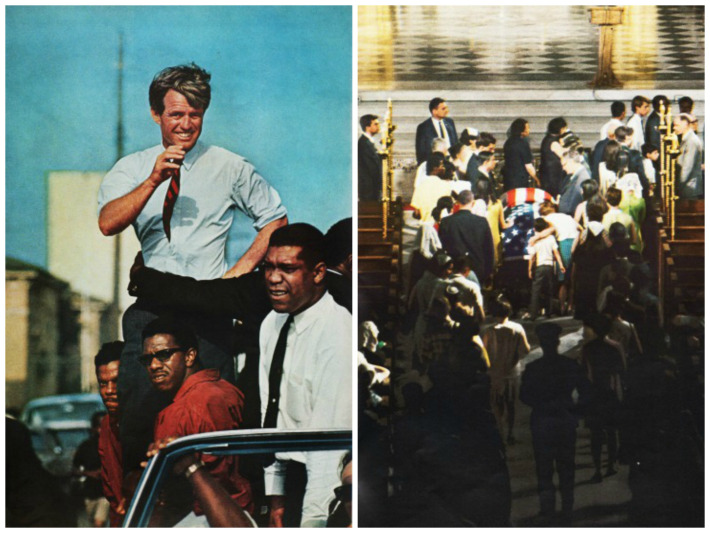
Watching a documentary commemorating the fiftieth anniversary year of Robert Kennedy’s (RFK) tragic run for the Democratic presidential nomination in 1968, I couldn’t help thinking back to a venerable (if also somewhat moth-eaten) political science theory of critical realignment. This theory refers to a national election that radically and durably alters the balance of power in our two party system.
According to one iteration of that theory, these elections tend to occur on an approximately 36 year cycle of presidential elections and manifest in one of three ways: a new party displaces one of the two major parties (as when the Lincoln Republicans, calling for the containment of slavery, completed the dissolution of the Whig Party in 1860); a major party reinvigorates its dominance by mobilizing new and existing constituents around a fresh set of policy issues (as when the Republican Party ushered in a new period of electoral success with the 1896 election of the industrial protectionist McKinley); and when dominance switches between the two major parties (as when Franklin D. Roosevelt won overwhelmingly the first of his four presidential terms in 1932).
Key features of critical realignments include a crystallizing issue, heavy voter turnout, and major and durable shifts in voter allegiance. Political scientists have noted that this phenomenon seems to have petered out with the fracturing of FDR’s coalition in the Sixties. The election of 1968 did not see the emergence of a dominant new party (George Wallace’s success as a third party candidate that year was fleeting), nor did it witness either a renewal of Democratic dominance or a switch to long-term Republican Party dominance (control of the White House and Congress has instead oscillated between the two major parties).
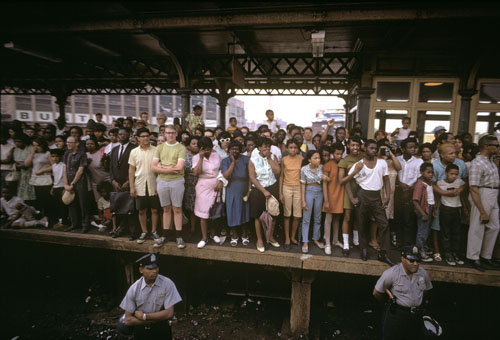
Would the U.S. party system have experienced a critical realignment had Bobby Kennedy avoided assassination and won election as the thirty-seventh president of the United States? It is a question that occurred to me as I watched video footage taken from Kennedy’s funeral train of the people spontaneously gathered along the rail lines in big cities and small hamlets to pay last respects to their martyred candidate.
Mourners await the RFK funeral train (1968)
As one of the Kennedy family friends riding that train noted, those forlorn folks represented Kennedy’s base—Catholics, people of color, blue collar workers, the poor.
Had he lived and gone on to run in the general election, he would have added to these groups the students and liberals who had flocked to Senator Eugene McCarthy’s antiwar candidacy, as well as the party bosses who were supporting the sitting vice-president Hubert Humphrey. And had he won the presidency in 1968 and made significant progress in achieving his stated goals—ending US military involvement in Vietnam, retooling LBJ’s efforts at poverty reduction, fostering a sense of solidarity among racial and generational groups—would that have been enough durably to boost voter turnout and cement loyalty to a more social justice-oriented Democratic Party for decades?
Mourners await the RFK funeral train (1968)
A lot of “what ifs,” I know. But watching the stasis of American politics over the last decades in the face of mounting crises on both the domestic and international fronts, it is consoling to think of a possibility (however remote) of the critical realignment that could have been.
M. Davout, an occasional contributor to Bracing Views, teaches political science in the American South.
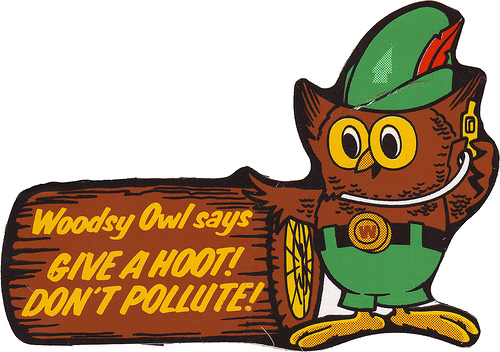
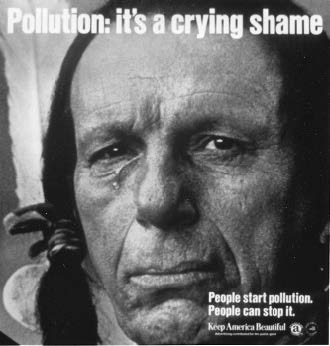
If you’re of a certain age, you probably remember environmental commercials featuring Woodsy the “anti-pollution owl” with the motto: “Give a hoot! Don’t pollute!”
Under the Trump administration, we need to modify that motto: “Don’t give a hoot. Pollute!”
That’s the message of Trump’s new plan for powerplant emissions. According to the EPA, this new plan may result in as many as 1,630 additional premature deaths annually by 2030, as reported by Bloomberg:
The U.S. Environmental Protection Agency says its proposal to relax greenhouse gas limits on power plants will cause as many as 1,630 additional premature deaths annually by 2030 from heart and lung disease — an estimate independent experts say may be low.
The projection is contained in a 289-page technical document accompanying the agency’s proposal to replace the Obama-era Clean Power Plan that was released Tuesday.
The new rule would give states more leeway to set limits on greenhouse gas emissions from their power sectors — even though, by the agency’s own admission, that will result in higher levels of particulate matter and ozone being emitted by coal plants than would have occurred under President Barack Obama’s plan. That pollution is linked with respiratory infections, asthma and impaired lung function.
As my wife pointed out to me, Trump & friends aren’t worried about smog and pollution and respiratory discomfort. They don’t live downwind from coal-fired plants. Trump can always escape to one of his many resorts and golf courses around the world.
How cynical and callous do you have to be to suggest changes to environmental regulations that you know will kill lots of Americans in the future?
Making America great again? No — It’s making America polluted again. Woodsy the Owl is not happy, America.
(For an extended essay on sports and the military, please see my latest at TomDispatch.com: “Why Can’t We Just Play Ball? The Militarization of Sports and the Redefinition of Patriotism,” August 19, 2018, http://www.tomdispatch.com/post/176459.)
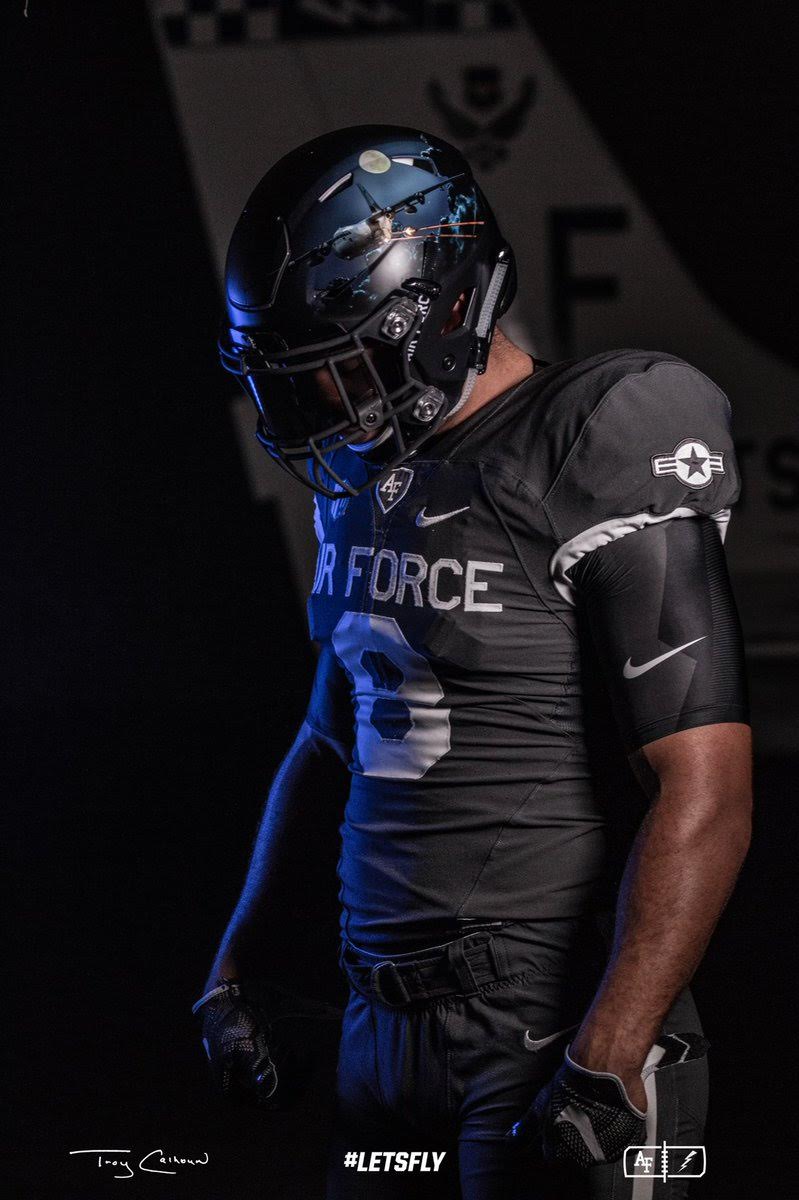
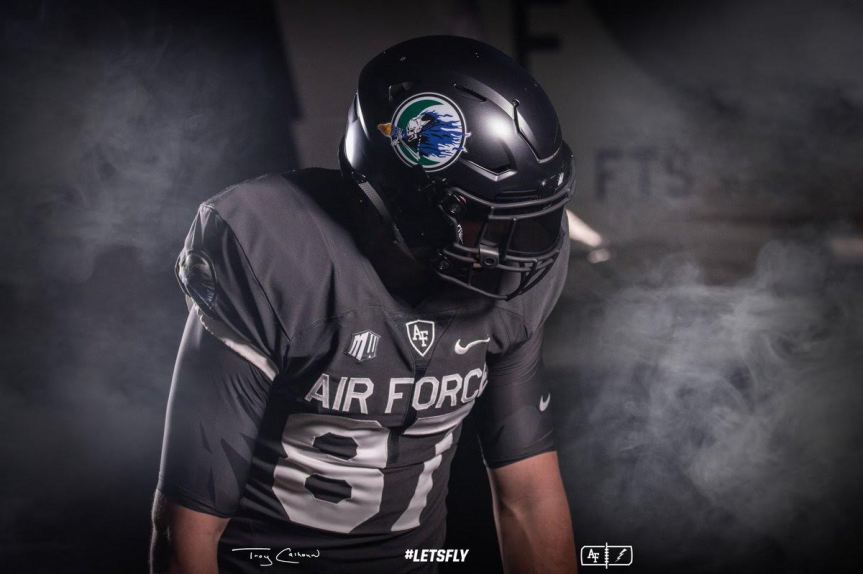
There’s a lot of blurring and blending of sports with the military in the USA today, but my service branch, the U.S. Air Force, has taken it to a new level. The Falcons football team at the USAF Academy has issued a new “alternate” uniform in honor of air power and specifically the AC-130 gunship. What this means is that cadets can now wear helmets that feature spooky, grim-reaper-like images together with images of the AC-130 firing on some indistinct enemy below. Check it out above and below:
The fog and the shark-like tailfin in the background are nice touches. Somebody probably got a promotion and/or a commendation medal for putting this campaign together.
Of course, the Air Force celebrates flight, using falcons as the team mascot, which makes sense. But uniforms dedicated to and celebrating a specific weapon system — really? The AC-130 gunship rains death from the sky; it’s a nasty weapon system and certainly one that I’d want on my side in a shooting war. But putting it on football helmets with images of screaming skeletons is a bit much.
How did military academies like West Point and Annapolis play football for so long with just regular uniforms? Without images of tanks or battleships adorning their uniforms?
I know: I’m an old fuddy-duddy. This is the new military — the military of warriors and warfighters. These new uniforms: so cool! So sexy! Dealing death is so much fun!
Why is it that these new “alternate” football uniforms of the AF Academy remind me, not of our citizen-airmen force of the past, but of some sinister, darker, force of the future? Why does the Star Trek episode, “Mirror, Mirror,” come to mind? (Hint: We’re no longer the “good” Federation.)
Knives and scars are in plain view in the barbarian “mirror” universe of Star Trek
(You can go to https://twitter.com/hashtag/LetsFly and watch an Air Force video that links AC-130 combat footage with the new uniform, complete with lusty music and stoked players.)





 The fog and the shark-like tailfin in the background are nice touches. Somebody probably got a promotion and/or a commendation medal for putting this campaign together.

