Creator of Bracing Views. Contributor to TomDispatch, Truthout, HNN, Alternet, Huffington Post, Antiwar, and other sites. Retired AF lieutenant colonel and professor of history. Senior fellow, Eisenhower Media Network
My wife recently said, “We Americans don’t do quiet,” which I thought was a great subject for a blog post. Then I remembered this article from two years ago. We are a noisy bunch, led by a president who’s constantly tweeting trash and shouting at various rallies. We’re so loud that it’s really hard to hear ourselves think. And maybe that’s the point. We’re not supposed to think anymore — or, we’re not encouraged to. “Make some noise” is a typical command issued to Americans, especially at sports stadiums. Promote yourself, we’re told, especially on social media. Put yourself out there. Be loud and be proud!
It’s truly hard to hear the tiny voice within when it’s being drowned out by all the loud voices without. Including our own.
People who don’t like noise get a bad rap in America. We once had neighbors in Colorado who used to ride off-road dirt bikes up and down the street. Someone complained about the noise and their response was, “Don’t like it? Move. This is America. We have freedom to make all the noise we want.”
Yesterday, my barber was talking about television. He was watching an “entertainment” show in which people were screaming, amplified by explosions, and he just couldn’t abide the noise. But he’s an old fuddy-duddy, like me, right?
When I watch baseball on TV, I keep the “mute” button very close by for the commercials. But even the commentators are getting noisy. Baseball used to be a fairly quiet game with two commentators in the booth, a play-by-play guy and a “color” guy (usually an ex-ballplayer). Now there are often…
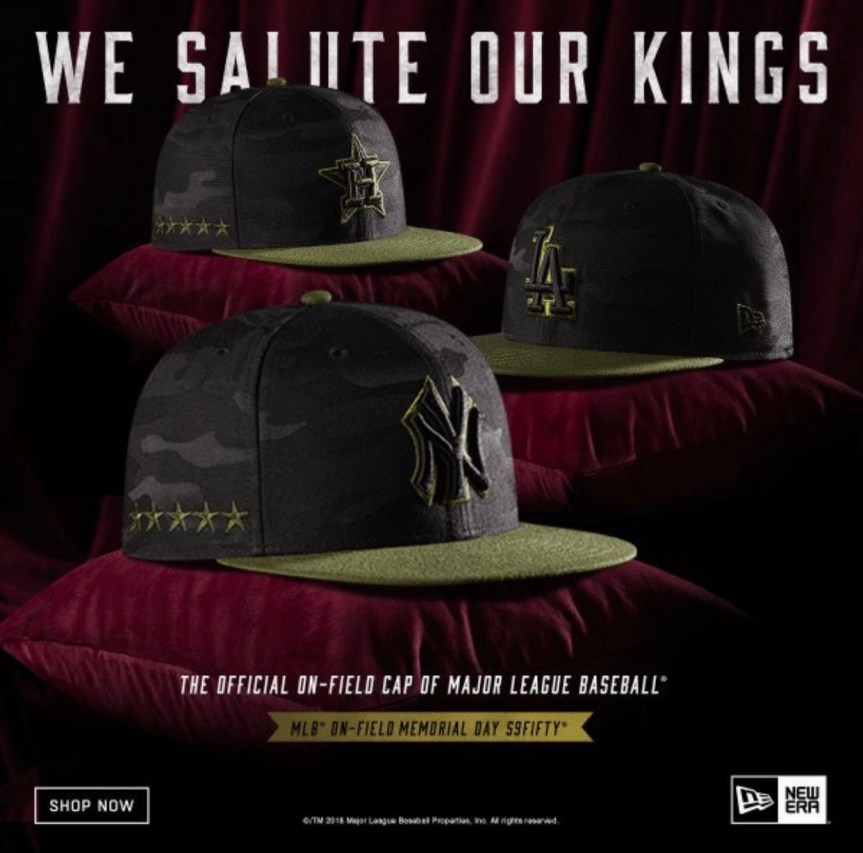
Admiration — or adulation? An over-the-top “salute” to the troops in a marketing campaign for camouflage baseball caps
W.J. Astore
A reader recently posed a simple question: If the U.S. military hasn’t won a war decisively since 1945, why do Americans continue to place so much faith in it and its leaders? I’ve tackled this issue before, but it got me to thinking again about the roots of military admiration — and adulation — within our society.
Here are a few reasons I came up with:
1. Although the U.S. military lost in Vietnam, stalemated in Korea, and got bogged down in seemingly endless wars recently in Iraq and Afghanistan, that doesn’t mean it hasn’t won victories in battles, such as Desert Storm in 1991 or the beginning of Afghanistan in 2001 and Iraq in 2003. Its defeats were not primarily the fault of the troops but of poor leadership at the top (both military and government). In other words, when Americans say they admire and trust the military, what they mean, perhaps, is they appreciate the spirit of service and sacrifice of the troops, while reserving judgment on presidents and generals.
2. Let’s not forget victory in the Cold War. The fall of the “Iron Curtain,” the collapse of the Soviet Union, the reunification of Germany, the end of the Warsaw Pact — these were momentous events for the West.
3. The U.S. military may not win wars, but it does accomplish good things, e.g. rescue work, disaster relief, humanitarian missions. Critics often neglect these non-hostile missions.
4. Pro-military propaganda. There are many, many, examples of this, e.g. President Reagan and the myth of the noble cause in Vietnam, or presidents from Bush to Obama to Trump consistently praising the military as the finest fighting force in all of history. This is supported by Hollywood and TV. Think of all the movies and television shows that depict the military and war as ennobling and exciting and energizing.
5. The military-industrial complex and its power to control the narrative. The national security state has become a fourth branch of government with enormous influence and power in society. The mainstream media, for example, is dominated by pro-military talking heads, most of whom are retired colonels or generals.
6. Guilt. The U.S. military is “all volunteer.” The vast majority of Americans not only choose not to serve — they choose not to pay much attention. And I think many have some guilt for this, which they assuage with “support our troops” bumper stickers and other easy gestures of conformity.
7. Exposure to the military may be limited, but that doesn’t mean it’s not emotional. Indeed, when they think of the military, Americans may think of a son or daughter who serves, or granddad who served, or maybe that nice boy or girl down the street in uniform. They know nothing of the Pentagon, the military-industrial complex, war crimes, and so on.
8. For many Americans, the military is a point of pride. A symbol of strength but also a symbol of service and sacrifice.
My point is not to praise the military — it gets plenty of praise already, indeed, way too much praise, so much so that admiration becomes adulation. My intent here is rather to explicate some of the reasons why Americans continue to place so much confidence in the military, even when the results are disastrous.
One more thought: We live in a “selfie” society, a me-first culture. Whatever the military is, it’s not typically me-first. So when people say they respect or trust the military, perhaps they’re thinking of an organization that values teamwork — that puts the many before the few. In an America marked by divisiveness, it’s an ideal that resonates still.
Readers, what do you think?
Postscript: In my list above, I should have highlighted more strongly the role of lying by the military and government (think of the initial lies/reports about Pat Tillman’s death in Afghanistan, for example). I’m currently reading Sy Hersh’s new book, “Reporter.” Hersh’s accounts of systematic lying by the military and government during the Vietnam War are sober reminders to Americans. Yes, our government and military will often lie to us, sometimes for the most mundane reasons, but often to avoid accountability and to maintain control over the narrative.
When we think of the American press corps in the Vietnam War, names like Hersh and David Halberstam and Neil Sheehan come to mind, hardboiled reporters who sought the truth, no matter how shattering it proved to be. But these men, and reporters like Izzy Stone, were truly exceptional. Most reporters were more or less willing to repeat government and military explanations verbatim and without pushback. Hersh cites Arthur Sylvester, who served as Defense Secretary Robert McNamara’s senior press aide, as describing the Pentagon press corps as “shabby” and gullible. “Cover stories [lies],” Sylvester wrote, “go down smooth as cream [and for six years], when I thought they would cause a frightful gargle” among reporters.
So, even as the Pentagon fooled many reporters and most Americans about progress in and prospects of the war, they didn’t fool the North Vietnamese themselves, who decisively won the war. “There was no learning curve among the men in the Pentagon running the war,” Hersh concludes (p. 62). Perhaps all these men really learned was how to lie better in the future — and how to shift blame from themselves to the usual suspects (hippies, leftists, commies, anti-war protesters, and so on).
Update (8/6/18): For more on U.S. lies and self-deception, see “The American Sea of Deception” by Paul Street at Truthdig.com.
I was looking at some old military history notes today and came across this photo of Lieutenant General Hubert Reilly Harmon, known today as the father of the Air Force Academy and its first superintendent:
I love the simplicity of this photo. General Harmon is wearing four ribbons on his uniform and his pilot’s wings. He commanded an air force in the Pacific during World War II and helped to win that war.
Of course, the architect of victory for the entire U.S. military in World War II was George C. Marshall. His portrait as a five-star general is here:
A simple uniform with three rows of ribbons.
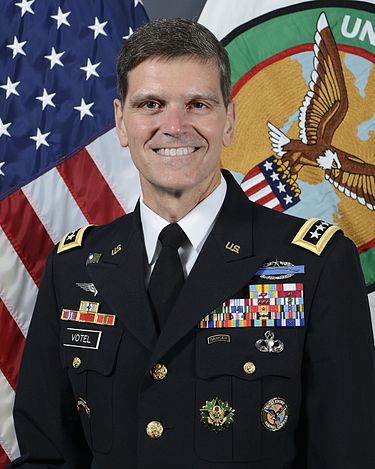
But that was then, and this is now. Generals today have far busier uniforms that are festooned with ribbons, badges, and other militaria. General Joseph Votel, currently the commanding general of Central Command, is typical:
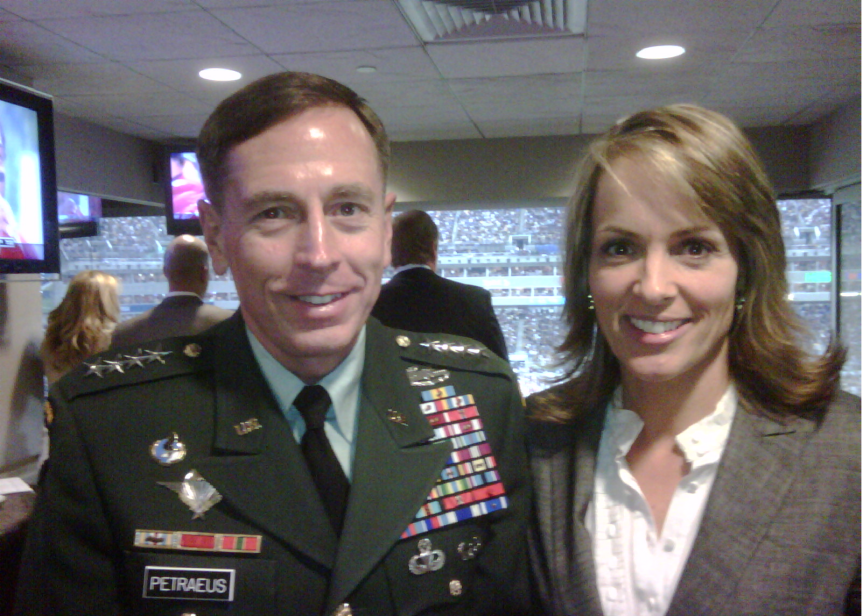
But I don’t think any general has outdone David Petraeus in the pursuit of ribbons and badges:
Petraeus: Lots of ribbon candy crowded on that uniform
What would men like Hubert Harmon and George Marshall say about today’s crop of American generals? How did Marshall win World War II without a Ranger tab, without parachute wings, and without ten rows of ribbons?
America’s citizen-soldier military of the era of the “Greatest Generation” was concerned with one measure of success: victory over Imperial Japan and Nazi Germany in a war vital not only to U.S. security but to the survival of the free world (even if that world isn’t as “free” as they or we would like it to be). Today’s military is distracted by the pursuit of the right “tabs” and “wings” and other paraphernalia even as they wage wars without end (and without any apparent prospect of victory).
I suppose today’s generals will talk about how complex the world is today, how asymmetrical our wars are, how our enemies occupy a “grey zone” that is difficult to master, and so forth and so on. Even so, why the grade inflation? Why the over-the-top uniforms?
Perhaps America will start winning wars again (even better: avoiding them altogether) when its military leaders stop acting like crazed Boy Scouts in the pursuit of merit badges and ribbon candy.
Postscript: I’ve written about this issue before (here and here) and also here way back in 2007. But nothing seems to change; if anything, the ribbons and badges continue to proliferate, so much so that the U.S. military now has more bling than the Kardashians.
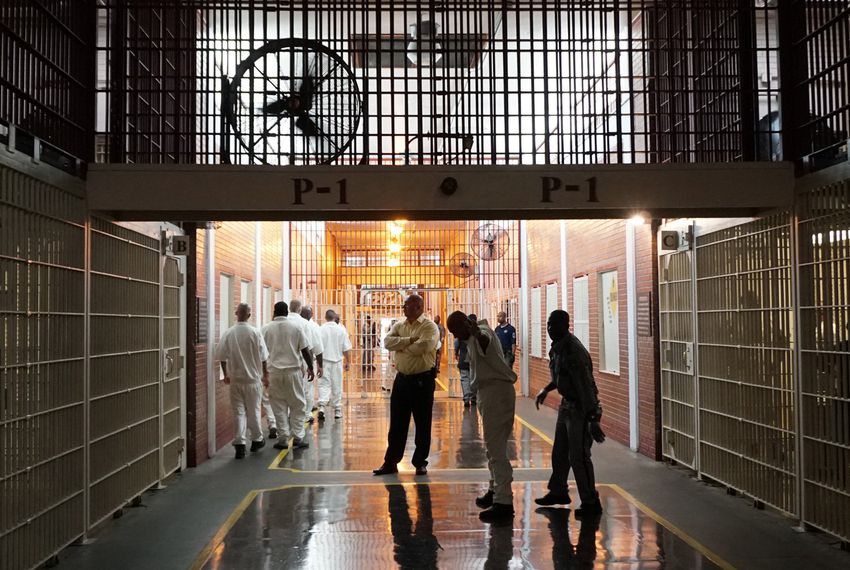
Back in the 1970s, when I was in high school, smart aleck students used to joke about high school as “prison.” Nowadays, American schools have metal detectors, school police, even armed teachers. And let’s not forget reinforced doors and lockdown drills–just like real prisons! And all these guns and security devices and police presence is together touted as “the solution” to school violence.
I thought of this when I read this morning that Marjory Stoneman Douglas High School in Parkland, Florida, where seventeen students were murdered last February, is adding metal detectors to protect students. (Not that metal detectors would have kept out the former student/shooter, Nikolas Cruz, who murdered all those teenagers in cold blood.) Perhaps the school is doing this to reassure parents; or to deter copy-cats; or to preempt possible lawsuits in case of future attacks. Or maybe they really believe that having 3,200 students pass through metal detectors each and every morning is the cost of being “safe.”
One thing is certain: We’re raising our young people with a lockdown mentality. We’re teaching them the best way to be safe is to submit passively to metal detectors and other forms of security screening. We’re indoctrinating them with the idea that a guard with a gun is the very best form of security, and that even their teachers, charged with educating them, may be packing heat in the classroom — to keep them safe, naturally. (These teachers may even be making a few extra bucks after completing gun training.)
Who says American students aren’t learning anything in our schools? They’re learning every day they pass through a metal detector, or see heavily armed police in school corridors, or their teachers toting firearms. Every day they have to submit to lockdown drills, they’re learning.
I don’t have a smart aleck observation here. Just a sad one: that old joke about school as prison isn’t even worth a teenager’s smirk anymore.
The supposed big news here is that Dan Coats, the Director of National Intelligence, didn’t know about President Trump’s invitation to Vladimir Putin to visit the White House this fall.
The real story is in plain sight: all the corporate sponsors of the Aspen Security Forum, including Lockheed Martin, the nation’s leading weapons maker. I like the way the logo for Lockheed Martin hovers just above Dan Coats’s head. Who works for whom here?
(Other military contractors with prominent logos included Symantec, which specializes in cybersecurity, and MITRE, which technically is a not-for-profit corporation that works mainly with the Department of Defense; I worked with MITRE engineers when I was in the Air Force.)
The other obvious story: the mainstream media’s cozy relationship to those in power. Andrea Mitchell’s interview with Coats is downright chummy. It’s all very polite and non-confrontational, with Mitchell hinting we all should be very concerned and nervous about Trump negotiating alone with Putin.
Perhaps so, perhaps not. But I am concerned about all those cozy relationships within and across the national security state, and the way our media eagerly joins in on the fun. Collusion takes many forms; let’s not focus so tightly on alleged collusion between the Trump campaign and Russia that we miss what’s in clear sight in photos and videos such as this.
Update (7/22/18): Is the mainstream media focusing on cozy relationships and possible collusion among the various players at Aspen? You know, the military-industrial complex, the government and its seventeen intelligence agencies, universities and think tanks and the media, i.e. the usual suspects? Of course not. At ABC News, they’re focusing on whether Dan Coats’s chuckle and off-the-cuff remarks about Putin’s proposed visit to the White House were disrespectful to Trump. And there you have it.
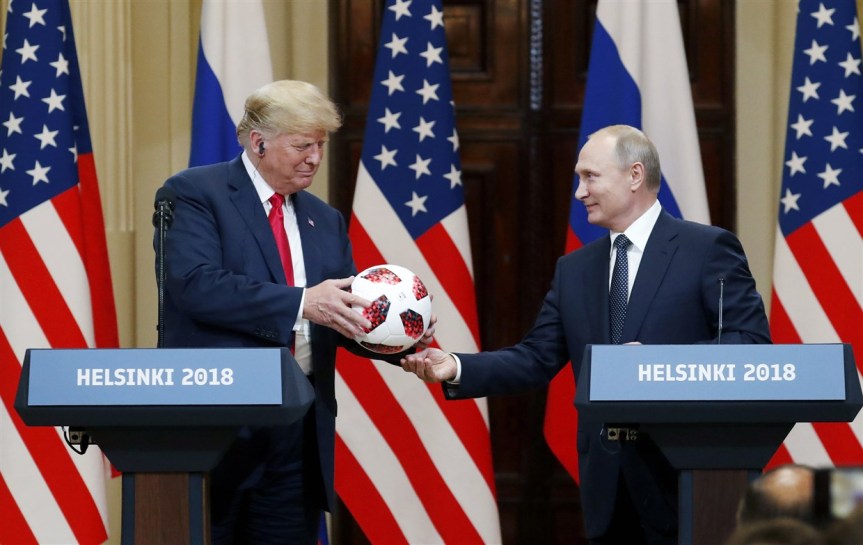
America’s MAGA President, Donald Trump, has generated enormous criticism for his news conference with Vladimir Putin. Typical of this is James Fallows at The Atlantic, who wrote that “Never before have I seen an American president consistently, repeatedly, publicly, and shockingly advance the interests of another country over those of his own government and people.” A “national nightmare,” opined The Washington Post. A “train wreck,” said NBC News, that made Russians “gleeful.”
Is Trump advancing the interests of Russia? Is this an example of high crimes and misdemeanors, perhaps even rising to treason?
Methinks not. Trump, if he is advancing Russian interests, is doing so indirectly. Because only one thing matters to Trump: his own interests. With Trump, it really is all about him.
Consider the accusations of Russian meddling in the 2016 presidential election. Trump is never going to side with his intelligence agencies on this issue. He thinks that, by doing so, he’d be admitting that maybe he didn’t win fair and square over “Crooked Hillary.” He refuses to countenance Russian meddling, not because he’s a Putin stooge, but rather because he’s an egomaniac. He’ll admit to nothing that diminishes, however slightly, his victory — and his ego.
Russia doesn’t matter to Trump. Indeed, America doesn’t matter to Trump. With Trump, it’s really all about him. Recall how he visited the CIA and boasted about himself while standing before the wall that commemorates fallen CIA officers. Recall how he declared the military would follow his orders regardless of their legality. He rashly accuses Democrats of not caring about the troops or border security whenever they oppose his policies. He does best with foreign leaders, like the Saudis and Israelis, who are at pains to flatter him. He apparently can’t stand Angela Merkel because she doesn’t play the flattery game.
Trump lives in his own reality, a narcissistic swirl of fabrications, falsehoods, and lies. He’s happiest when he’s commanding the scene, when people are kowtowing to him, when he can boast about himself and advertise his businesses (during this latest trip, he went to a Trump golf course in Scotland and waxed about its “magical” qualities).
In short, Trump is not treasonous. He simply has no concept of public service. He has no capacity to serve any cause other than himself.
Readers, what do you think of the treason accusations against Trump?
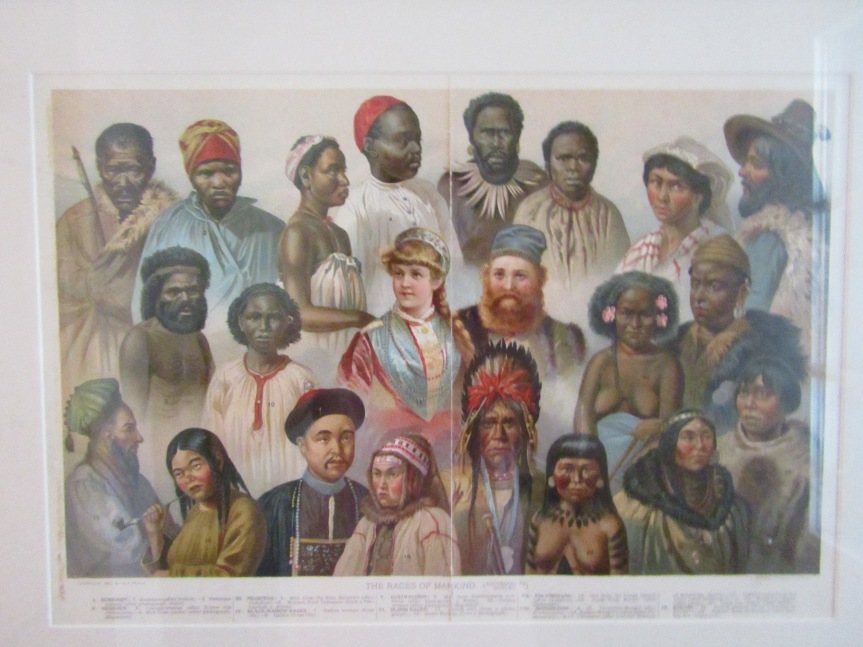
In the 19th century, many people believed in polygenism, and others used the concept of “the races of man,” where by “race” they often meant species. At home, I have a framed copy of the races of man taken from an encyclopedia published in the 1890s. Here’s a photo of it:
Of course, there’s always an assumed hierarchy to the races of man concept. White Europeans are at the top, since it’s they who defined and ordered the hierarchy. Surprise!
In my photo, White Europeans take pride of place in the center, with some swarthy Italians at the top right (I’m half-Italian). Meanwhile, Polynesian (pink flowers in hair) and Indian (from South America) women are shown with bare breasts. “Primitives” are primitive precisely because they’re “immodest” in dress, a convention that allowed publishers to show nudity in illustrations and photos without being accused of pornography. You might call this the “National Geographic” dispensation for nudity.
My college students were often amazed when I told them that science shows that all of us — all humans — came out of Africa. Far too many people today still think of race as both definitive and as a rung on a ladder, and naturally they always place their own “race” on the top rung.
Even more disturbing is the resurgence of racialized (and often racist) thinking in the United States. The idea of the races of man and the “scientific” ordering of the same was debunked a century ago, yet it’s back with a vengeance in much of the U.S.
Naturally, those who promote racialized thinking always put their own perceived race at the top. In that sense, nothing whatsoever has changed since the 19th century and the “races of man” concept.
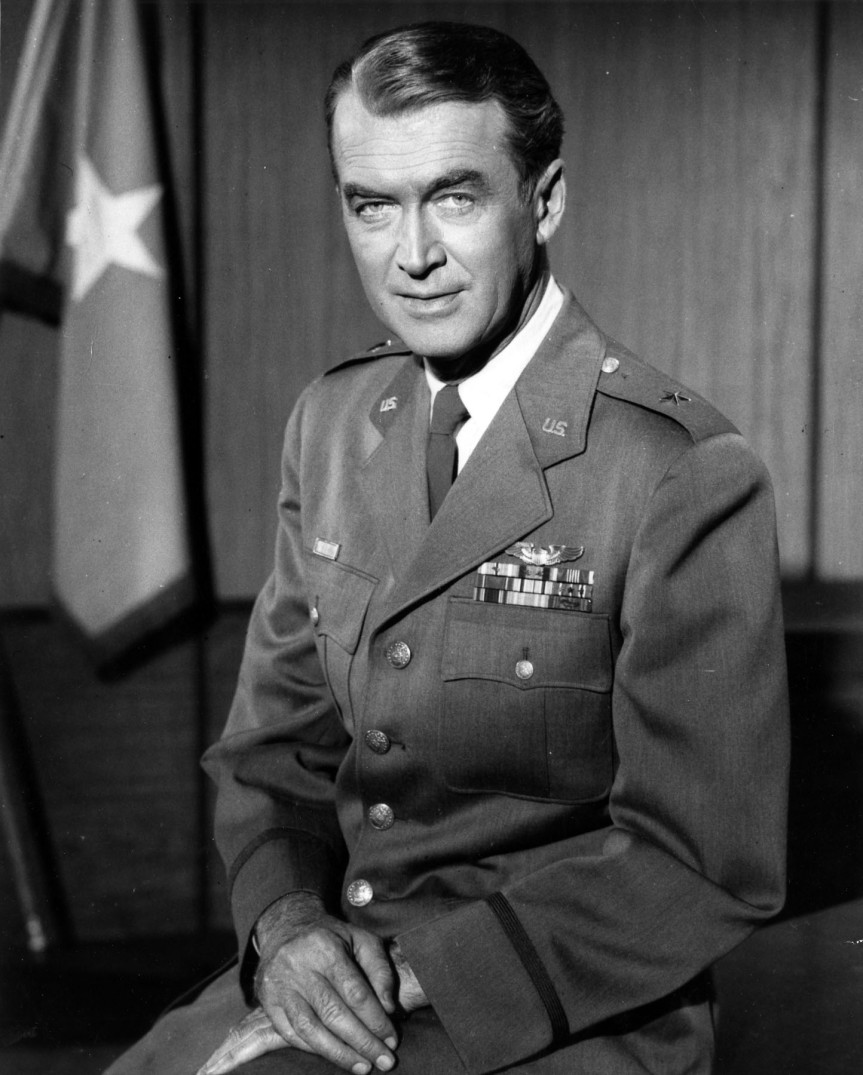
No — Jimmy Stewart is not acting here. He flew bombers in World War II and rose to the rank of brigadier general in the Air Force
W.J. Astore
Back in 2013, I wrote an article on U.S. wars and the absence of movie and sports stars in the ranks of those who serve. Hollywood and sports leagues such as the NFL and MLB celebrate the military today, but that celebration does not extend to service and sacrifice. Indeed, the main service is lip service: basically, cheap words to the effect that we celebrities “support” the troops. It’s not exactly the kind of service we associate with the Greatest Generation of World War II, is it?
Yet the absence of Hollywood celebrities and sports “heroes” in the ranks may be indicative of another, much more serious, issue. Maybe America’s wars simply aren’t vital to them — or to us? And if they’re not vital, why are they still in progress? Why can’t we end them?
Here is what I wrote in 2013:
The tradition of the citizen-soldier is still alive in this country — just look at our National Guard units. But the burden of military service is obviously not equally shared, with the affluent and famous tucked away safely at home. How many people remember that Jimmy Stewart, legendary Hollywood actor, flew dangerous combat missions in the skies over Europe during World War II? Stewart didn’t flaunt his combat service; in fact, playing against type, he stayed home as the unhallowed George Bailey in It’s A Wonderful Life, a movie that celebrated the heroism of the ordinary citizen. In the movie, Stewart’s quiet, home-based heroism, his powerful sense of fairness and decency, is even allowed to overshadow that of his younger brother, who returns from war with the Medal of Honor.
There’s an interesting lesson there. In World War II, celebrities often risked life and limb in real military service, then after the war played against type to celebrate the virtues of a homespun heroism. Today’s celebrities avoid military service altogether but play tough in action films where they pose as “heroes.”
Other than Pat Tillman, who gave up a promising NFL football career to join the military after 9/11, I can’t think of a single celebrity who answered the call to arms as a citizen-soldier.
Then again, that call was never issued. After 9/11, President George W. Bush famously told us to keep calm and carry on — carrying on shopping and patronizing Disney, that is. He did so because he already had a large standing professional military he could call on, drawn primarily from the middling orders of society. This “all volunteer military” is often described (especially in advertisements by defense contractors) as a collection of “warfighters” and “warriors.” In the field, they are supplemented by privatized militaries provided by companies like Academi (formerly Blackwater/Xe), Triple Canopy, and DynCorp International. In a word, mercenaries. These bring with them a corporate, for-profit, mindset to America’s wars.
If we as a country are going to keep fighting wars, we need a military drawn from the people. All the people. As a start, we need to draft young men (and women) from Hollywood, from the stage and screen. And we need to draft America’s sports stars (I shouldn’t think this would be an issue, since there are so many patriotic displays in favor of the troops at NFL stadiums and MLB parks).
Jimmy Stewart served in combat. So too did Ted Williams. So too did so many of their Hollywood and sporting generation.
Until today’s stars of stage and screen and sports join with the same sense of urgency as their counterparts of “The Greatest Generation,” I’ll remain deeply skeptical of all those Hollywood and sporting world patriotic displays of troop support.
If this whole line of argument sounds crazy to you, I have a modest suggestion. Rather a plea. If our celebrities who profit the most from America are unwilling to defend it the way Stewart and Williams did, perhaps that’s not just a sign of societal rot. Perhaps it’s a sign that our wars are simply not vital to us. And if that’s the case, shouldn’t we end them? Now?
I got involved in a brief discussion on Facebook about privatizing the U.S. postal service. Briefly, those in favor of privatization argued that the post office is inefficient and costly, and that exposing it to market forces through privatization will result in much improved efficiency at lower cost to the American taxpayer.
First of all, if you’re looking for a wasteful government agency to privatize, why not start with the department of defense, which spends roughly $750 billion a year, and which has never passed an audit? Leaving that aside, the privatization enthusiasts assume that “market forces” will necessarily generate improvements in efficiency and improved service. But what if it just monetizes everything, leading to higher prices and poorer service?
Furthermore, why should “efficiency” be the primary goal for a public service? Many small communities and villages rely heavily on local post offices. Under an “efficient” and private system, these local post offices are likely to be closed or consolidated in the name of efficiency, with prices rising for poor and rural communities. Those steps may be “efficient” to private owners, but they won’t be beneficial to all the people who just want mail and related services (and maybe a place to chat with neighbors).
Service to the public should be the primary goal of a public service, not “efficiency.” Sure, efficiency is a good thing, but so too is affordability, convenience, trustworthiness, courteousness, and so on. When you elevate efficiency as the goal above all others, and measure that by metrics based on money, you are inevitably going to compromise important aspects of public service.
Consider the state of public education. When you privatize it, new metrics come in, driven by profit. Private (charter) schools, for example, pursue better students and reject marginal ones as they attempt to maximize test scores so as to justify their approach and ranking. Public schools have to take all students, the good and the bad, the affluent and the disadvantaged, and thus their ratings are often lower.
There’s a myth afoot in our land that government is always wasteful and inefficient, and that unions are always costly and greedy. Our postal service employs roughly 213,000 people, fellow Americans who work hard and who, when they retire, have earned a pension and benefits. Why are so many people so eager to attack public postal workers as well as public schoolteachers?
In my 55 years of living in America, I’ve been well served by a public post office and well educated by public schools. I see no compelling reason to privatize public services just because someone thinks a corporation driven by profit can do it more efficiently.
People think that corporations driven by the profit motive will inevitably produce a better system with improved service. While profit can be made by providing superior service, it can also be made by providing shoddy service or even no service at all, especially in a market resembling a monopoly, or one where corporations are protected by powerful interests.
To recap: public service and efficiency are not identical. Nor should we think of ourselves merely as consumers of a product, whether that product is mail service or education. We need to think of ourselves as citizens, and the post office as composed of citizens like us providing a public service for us, a service where “efficiency” is only one driver, and not the most important one.
A final, perhaps obvious, point: often those who argue for privatization are also those with the most to gain, financially, from it. A lot of people are making money from charter schools, for example. It’s not “efficiency” that’s the driver here: it’s the chance to make a buck, and despite what Gordon Gekko said, greed isn’t always good and right, especially when public service is involved.
My family’s old wringer-washer. Look closely: as a kid, I stuck an American flag just above the “Maytag” label.
W.J. Astore
Walls and weapons and wars have come to define the USA in the 21st century. The most infamous wall is Donald Trump’s proposed extension of the border wall with Mexico. Weapons are everywhere, domestically with guns and mass shootings even as weapons sales overseas drive U.S. foreign policy. Wars are simply endless in places that most Americans would struggle to identify on maps. What percentage of Americans, for example, could identify Niger before the ambush that cost four Green Berets or Yemen before a Navy SEAL died there after Trump’s first military action (which he subsequently blamed on the generals)? Indeed, how many Americans could identify these countries now, even with U.S. troops having died there, ostensibly in the name of fighting terrorism and keeping America safe?
I’m both a baby boomer and a retired military officer. Looking back to the 20th century and in the context of the Cold War, when I thought of walls, images of Berlin came to mind, with desperate people risking life and limb to seek freedom in the West. A wall was a symbol of them – you know, the Evil Empire, the Soviets, the Stasi, the freedom-deniers. The USA, land of liberty, neither needed nor wanted walls. Weapons? Sure, we had plenty of those when I was young, and sold lots of them too to countries overseas, when we weren’t using them ourselves to pummel Southeast Asia and other regions. But military-style assault weapons for citizens were virtually unknown until the 1980s, and extensive weapons sales overseas had a purpose (at least in theory) of deterring communist expansion. Nowadays, weapons sales need have no purpose other than profit for those who make and sell them.
And wars? However evil the U.S. had acted during the Vietnam War, and indeed there’s much evil in policies that enjoin troops to “kill anything that moves,” as Nick Turse has documented in his book by that name, at least one thing can be said of that war: it ended, and America lost. Even the Cold War ended (or so we believed, until recent claims that Russia and China represent the threats of the future). Today, America’s wars never end. Retired generals like David Petraeus spout gibberish about the wisdom of a “sustainable sustained commitment” to the war in Afghanistan, with the Pentagon babbling on about “long” and “generational” campaigns, as if prolonging wars for less-than-vital causes is a sign of U.S. strength.
The point is this: Walls were not us. Weapons, however prevalent throughout U.S. history, were not treated as panaceas and sold as solutions to everything from classroom shootings to saving American jobs to boosting economic growth and cutting trade imbalances. Even America’s wars were not open-ended or openly described as “generational.” All of this is either new today or a twisted version of past policies and practices.
The Unmaking of American Idealism
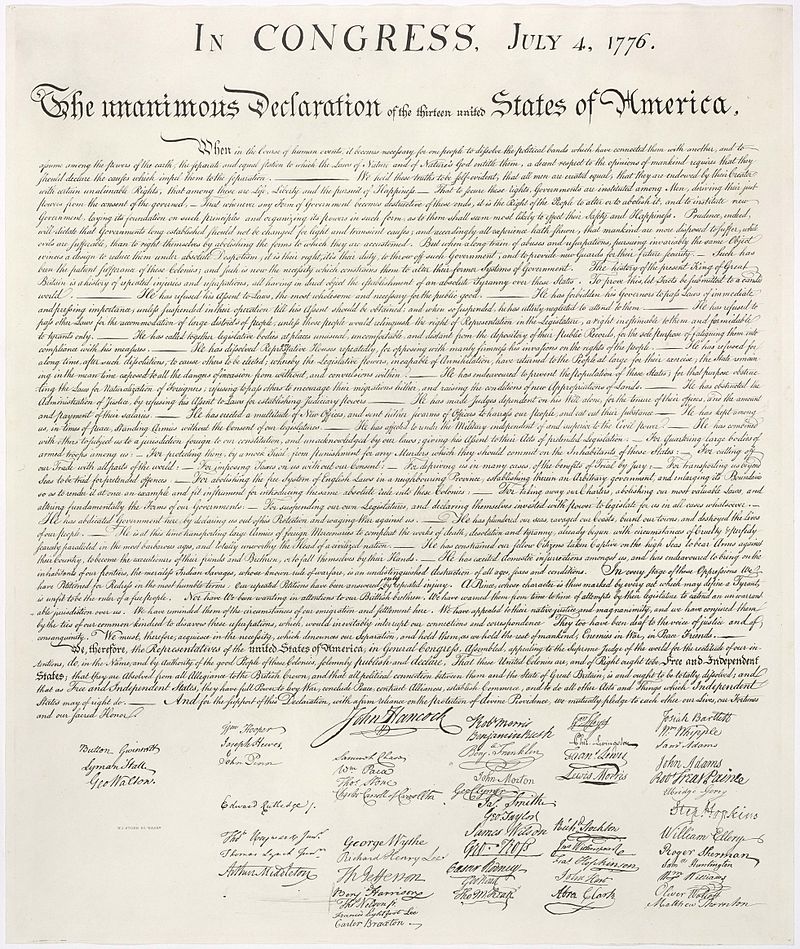
As a teenager, I embraced American idealism. The bicentennial was coming in 1976, and I was the proud owner of a reproduction of the Declaration of Independence. It was on pseudo-parchment paper, a cheap copy for sure, but I treated it as if were precious because it was – and is. It’s precious for the ideals it represents, the enshrinement of self-evident truths like life and liberty and the pursuit of happiness, however imperfectly America upheld and advanced these in practice.
Maybe this is why I bought a roll of American flag stickers and stuck them on everything (including our kitchen door and our washing machine, which must have thrilled my parents). Back then, I thought I knew what America stood for, or at least what my country stood against. Despite all our sins, America was anti-wall, and even as we built and sold weapons and fought proxy wars in a contest with the Soviets, there was a sense America stood for freedom, or so I believed. Meanwhile, in the immediate aftermath of Vietnam, we were also not as eager to fight wars everywhere and without end.
But that was then, and this is now. Forget about the “Age of Aquarius,” a trippy song about peace and love that I remember singing when I was eight years old. Today in America, it’s the Age of Mars, the Age of Walls and Weapons and War.
Coming of age in the 1970s, I heard and read a lot about war. Vietnam had been a disaster, but there was always the example of World War II to set things right in my mind. I could read about American heroism at Wake Island and during the Battle of the Bulge; I could watch movies like “Patton” that glorified tough-talking U.S. generals; I could look to my uncle who won a bronze star fighting at Guadalcanal in the Pacific. I knew (or so I thought) that America stood for freedom and against tyranny.
But that ideal of freedom was always tinged by images of violent frontier justice, as depicted in popular culture. Memorable movies of my teen years included Clint Eastwood playing a rogue cop in “Dirty Harry,” Charles Bronson playing a shattered vigilante in “Death Wish,” and John Wayne playing tough cop roles in movies like “McQ” and “Brannigan.” These movies were clear about one thing: the rule of law wasn’t enough to keep us safe. Sometimes, a man’s gotta do what a man’s gotta do, which usually involved Clint or Chuck or John (and, later, Sylvester Stallone’s John Rambo) dispensing justice with fists and from the barrels of various (big) guns.
Extreme violence as well as images of the lone gunfighter were and are features of American history and culture, of course. But these were counterbalanced in the 1960s and 1970s by peace anthems such as John Lennon’s “Imagine.” A less known song, one I sang as a kid, was “Billy don’t be a hero” (how could I resist: It had my name in it). In this song, young Billy wants to go off to war, but his fiancée discourages him. Predictably, Billy goes anyway, the words of his fiancée following him (Billy don’t be a hero/don’t be a fool with your life). Billy, after volunteering for a dangerous mission, dies a hero, the government sending a laudatory letter to his fiancée, who tearfully tosses it into the trash.
That song made an impression, though it didn’t stop me from joining the military. Why? Because I bought the narrative: the U.S. was fighting a war of survival against godless communism, showing patient resolve as we worked to contain a threat to freedom around the world.
That cold war ended more than 25 years ago, yet nevertheless the U.S. continues to build and sell more weapons than any other country; to support higher and higher military spending; and to wage more wars in more places than ever. Clinton or Bush, Obama or Trump, the war song remains the same. It all represents a narrowing of national horizons, a betrayal of American promise, one we’ll overcome only when we change course and reject walls and weapons and war.
Stopping Walls, Weapons, and Wars
There are two war parties in the U.S. today. We call them Republicans and Democrats. When it comes to fostering and feeding war, both are essentially the same. Both are slaves to the national security state, even if Democrats make a show of rattling their chains a bit more. Both define patriotism in militaristic terms and loyalty in terms of blanket support of, even reverence for, American military adventurism and interventionism. Political candidates who have rival ideas, such as Libertarian Gary Johnson (remember him?) or Green Party candidate Jill Stein, are not even allowed on the stage. Even when heard, they’re dismissed as jokes.
In 2016, for example, Johnson suggested cuts to military spending approaching 20%; Jill Stein suggested cuts as deep as 50%. Their proposals, however, were simply rejected as preposterous by the mainstream media. Even Bernie Sanders, a democratic socialist, refused to propose serious cuts to military spending: if he had, he knew he’d be dismissed as either a weak-kneed appeaser or an unserious ignoramus. (Recall how Gary Johnson was depicted as clueless by the mainstream media because he couldn’t place Aleppo in Syria or instantly name a foreign leader he adored.)
Unmasked military authoritarianism is the new reality in U.S. government and society today, complete with a martial parade in Washington, D.C. come this November. This is no surprise. Recall how both Hillary Clinton and Donald Trump boasted of how many generals and admirals supported them in their respective presidential campaigns, as if they couldn’t run for office unless they’d been anointed by men in military uniforms wearing stars.
And we dare call this a democracy?
Seeing the problem clearly is a way to begin to solve it. Want to restore American liberty? Stop building walls (and tearing children from parents). Stop buying and selling massive amounts of weaponry here and everywhere. And stop waging war across the globe. Americans used to know the chief result of divisive walls, proliferating weapons, and endless war is chaos everywhere and democracy nowhere. How did we come to forget this lesson?
If we take these simple yet profound steps, I could look again at my childhood copy of the Declaration of Independence with a renewed sense of hope.



 Words can be explosive too