American Militarism Is Riding High

W.J. Astore

In my latest article for TomDispatch.com, I again turn to the Pentagon and the military-industrial complex, inspired by a critique written by J. William Fulbright almost a half-century ago.  Given the murderous and disastrous war in Southeast Asia of Fulbright’s time, many Americans back then were willing to be highly critical of the military, especially with a draft still in force.  (A draft that privileged men like Dick Cheney, Bill Clinton, and Donald Trump managed to avoid.)  Nowadays, of course, Americans are encouraged to venerate the military, to salute “our” troops, to applaud as various warplanes soar overhead, as they did during Donald Trump’s recent militaristic July 4th ceremony.  What we’re not encouraged to do is to criticize or even to question America’s vast military establishment and its enormous power, even though President Dwight D. Eisenhower warned us about that establishment in his famous farewell speech in 1961.

It’s high time we Americans listened to Ike as well as to J.W. Fulbright.  Let’s give the latter a close listen, shall we?

download
Because nothing says “America” like tanks, fences, barriers, police, and a sign saying the way is closed to the “left”

A while back … I stumbled across Senator J. William Fulbright’s 1970 book The Pentagon Propaganda Machine and, out of curiosity, bought it for the princely sum of five dollars. Now, talk about creepy. Fulbright, who left the Senate in 1974 and died in 1995, noted a phenomenon then that should ring a distinct bell today. Americans, he wrote, “have grown distressingly used to war.” He then added a line that still couldn’t be more up to date: “Violence is our most important product.” Congress, he complained (and this, too, should ring a distinct bell in 2019), was shoveling money at the Pentagon “with virtually no questions asked,” while costly weapons systems were seen mainly “as a means of prosperity,” especially for the weapons makers of the military-industrial complex. “Militarism has been creeping up on us,” he warned, and the American public, conditioned by endless crises and warnings of war, had grown numb, leaving “few, other than the young, [to] protest against what is happening.”

Back then, of course, the bogeyman that kept the process going was Communism. America’s exaggerated fear of Communism then (and terrorism now) strengthened militarism at home in a myriad of ways while, as Fulbright put it, “undermining democratic procedure and values.” And doesn’t that ring a few bells, too? Complicit in all this was the Pentagon’s own propaganda machine, which worked hard “to persuade the American people that the military is good for you.”

Perhaps my favorite passage from that book was a message the senator received from a citizen who had attended a Pentagon rah-rah “informational seminar.”  Writing to Fulbright, he suggested that “the greatest threat to American national security is the American Military Establishment and the no-holds-barred type of logic it uses to justify its zillion-dollar existence.”

In a rousing conclusion on the “dangers of the military sell” that seems no less apt nearly a half-century later, Fulbright warned that America’s “chronic state of war” was generating a “monster [military] bureaucracy.” Citing the My Lai massacre in Vietnam, he noted how “the mindless violence of war” was eroding America’s moral values and ended by emphasizing that dealing with the growth of immoral militarism was vitally important to the country’s future.

“The best defense against militarism is peace; the next best thing is the vigorous practice of democracy,” he noted, citing the dissenters of his day who opposed America’s murderous war in Southeast Asia. And he added a warning no less applicable today: Americans shouldn’t put their faith in senior military men whose “parochial talents” were too narrow “to equip them with the balance of judgment needed to play the political role they now hold in our society.”

Reading Fulbright today, I couldn’t help but recall one of my dad’s favorite sayings, translated from the French: the more things change, the more they stay the same. Sure, the weaponry may be upgraded (drones with Hellfire missiles rather than bombers dropping napalm); the names of the countries may be different (Afghanistan, Iraq, and Somalia rather than Vietnam, Laos, and Cambodia); even the stated purpose of the wars of the moment may have altered (fighting terrorism rather than defeating Communism); but over the last 50 years, the most fundamental things have remained remarkably consistent: militarism, violence, the endless feeding of the military-industrial complex, the growth of the national security state, and wars, ever more wars, always purportedly waged in the name of peace.

Sometimes when you buy a used book, it comes with a bonus. This one held between its pages a yellowed clipping of a contemporary New York Times review with the telling title, “O What a Lovely Pentagon.” In agreeing with Fulbright, the reviewer, Herbert Mitgang, himself a veteran of World War II, wrote:

“To keep up the [Pentagon] budgets, all three services compete for bigger and better armaments in coordination with the publicity salesmen from the major corporations — for whom retired generals and admirals serve as front men. Thousands of uniformed men and millions of dollars are involved in hard-selling the Pentagon way of life.”

Change “millions” to “billions” and Mitgang’s point remains as on target as ever.

Citing another book under review, which critiqued U.S. military procurement practices, Mitgang concluded: “What emerges here is a permanent floating crap game with the taxpayer as loser and Congress as banker, shelling out for Pentagon and peace profiteers with an ineptitude that would bankrupt any other business.”

Spot on, Herb Mitgang, who perhaps played his share of craps during his Army service!

As I read Fulbright’s almost 50-year-old polemic and Mitgang’s hard-hitting review, I asked myself, how did the American people come to forget, or perhaps never truly absorb, such lessons? How did we stop worrying about war and come to love the all-volunteer military quite so much? (Thank you for your service!) So much so that, today, we engorge the Pentagon and the rest of the national security state with well more than a trillion taxpayer dollars annually — and the power to match…

Read more of my essay here at TomDispatch.com.

Addendum: Along with Abrams tanks and Bradley Fighting Vehicles, Trump’s July 4th ceremony turned into a military air show of sorts.  When you read the Declaration of Independence from 1776, you’re reminded that the colonists wanted to be free of the King’s wars and their high costs.  Now, on Independence Day, we celebrate our military weaponry without mentioning the high costs, even as we ignore our unending wars.

It’s time for another political revolution against the king’s wars and their high costs.  It’s time to throw off the heavy yoke of militarism in America.
Is Masculinity Under Attack in America?

Bacevich-jumbo-v2
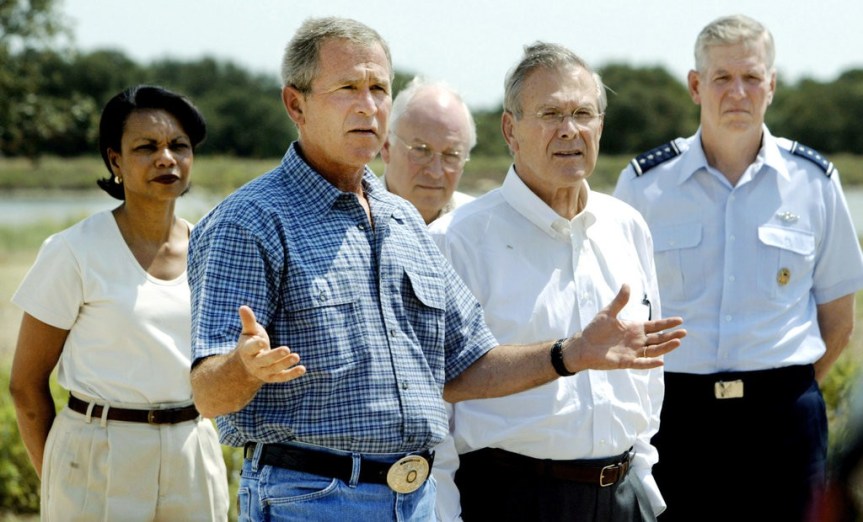
Look at Bush at his “ranch.”  Look at that belt buckle!  And you dare claim masculinity is in decline?

W.J. Astore

Is the American male dead?  I’ve seen enough articles and books espousing a “war” on men and boys, amounting to a concerted attack on masculinity, to suggest that males are, if not dead, very much in decline in America, threatened by a “feminized” society that devalues manly virtues.

An article at the National Review, “Understanding the Inescapable Reality of Masculinity,” suggests that men as men have an “essential nature,” one that is “physical, aggressive, violent,” but that these traits are under attack as wider American society works to deny men their “inherent masculinity.” The article further argues there aren’t enough male role models in the lives of young boys – especially fathers and father-figures. This is a well-worn argument on the vital importance of the nuclear family with a man like Ward Cleaver in charge of it.  There’s nothing wrong with that, except not all fathers are patient, kind, and intelligent mentors like Ward on “Leave it to Beaver.” Sadly, more than a few drive young boys to be aggressive and violent in selfish and dangerous ways.

Leaving that aside, it seems odd that this narrative of the decline of masculinity persists so strongly in Trump’s America.  Now there’s a man!  He’s physical, aggressive, unafraid to boast of pussy-grabbing or the size of his penis.  He’s urged his followers at rallies to get physical with protesters.  He supports torture and even hints at shooting immigrants as a rational “get tough” policy.  Posing like Winston Churchill, he scowls and frowns in a simulacrum of manly determination.  If the president is America’s chief role model, Trump’s doing his best to project masculinity as he understands it.

Indeed, you might argue Trump won the presidency in part because of his unapologetic “masculine” posing.  Contrast this to Hillary Clinton, often portrayed as a “ball-buster,” an emasculating female.  (Indeed, I had a Hillary nutcracker, a novelty gift from a friend.)  Male voters (joined by a majority of White women) in 2016, perhaps looking for a “real” man to vote for and turned off by an alleged nut-cracking harridan, broke for Trump.

Trump’s win—and continued tolerance of his bullying, boastful, and bellicose manner—give the lie to the decline of masculinity narrative in America.  Why does it persist, then?  Because it’s yet another way to divide us.  Consider similar narratives of an alleged war on Christianity, or that higher education is driven by hegemonic liberal/leftist agendas.  In fact, Christianity is more powerful than ever in America—just look at Mike Pence and the influence of evangelicals in the U.S. government—and higher education is increasingly about serving the needs of business, industry, and the military-industrial complex.

But truth is unimportant when the object is stirring up divisiveness.  Tell American men they’re threatened: that radical feminists, effete city dwellers, Ivy League elites, and other disreputable elements are out to get them.  Then urge “threatened” males to vote for retrograde (fake) tough guys like Trump.  It may not be the most subtle tactic, but it works.

In this narrative, masculinity is defined in “can-do,” action-oriented ways.  Man as Alpha male, as doer, as fighter, whether in a bad way (as a killer) or in a good way (as a protector).  It’s warrior-and empire-friendly.  And indeed U.S. foreign policy today is distinctly masculine, with loads of emphasis on domination, on bossing other peoples around, simply because we’re bigger and badder than them.

What’s truly worrisome is not false narratives about masculinity’s decline but how it’s narrowly defined in violent and aggressive ways.  We forget that macho posturing by America’s “leaders” has created enormous problems.  Just think of George W. Bush and all his macho strutting before and during the Iraq war.

America needs fewer calls about putting on “big boy” pants and more emphasis on engaging in negotiation and diplomacy, along with action to end America’s chaotic and unwinnable wars.  America is already carrying a big stick.  It can afford to speak softly instead of shouting.

The NFL Draft and America First

NFLDraft2019-1024x512
What a spectacle!

W.J. Astore

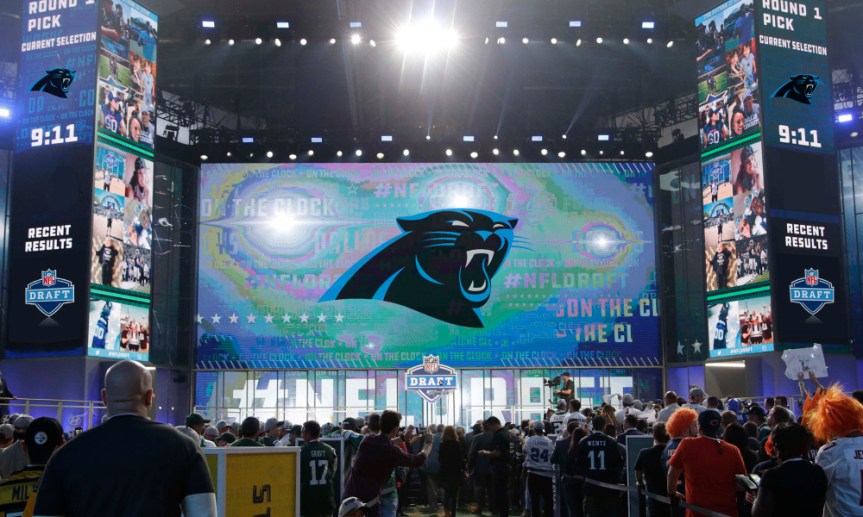
Every year, I watch a little of the NFL draft, one of America’s most revealing cultural displays.  This year the draft was held in Nashville over two nights and one day.  The NFL claimed 200,000 people showed up in Nashville for the draft, and indeed the outdoor audience resembled a mass political rally.  Video boards and celebrities were everywhere.  Last year, I wrote about the draft here, and so I won’t repeat those arguments.  Suffice to say the draft is a massive commercial for the NFL and a massive exercise in nationalism.

Of course, the NFL is at pains to celebrate the military, and the military is at pains to boost recruitment, which lately has been disappointing.  So predictably there was a prominent pro-military display during the draft.  Early in the third round of the draft, there was a pause in the “auctioneering” of the athletes.  Nine troops walked out in dress uniform: three Marines, two soldiers, two sailors, and two airmen.  They stood at attention as the rally members chanted “USA! USA!” Then Lee Greenwood’s anthem came on: “God Bless the USA.”  And the assembled masses sang along.

It was an exercise in pure, unadulterated, propaganda.  “Proud to be an American,” indeed!

Last August, I wrote about sports and the military for TomDispatch.com, where I quoted this telling observation by Norman Mailer, which he made prior to the Iraq War in 2003:

“The dire prospect that opens, therefore, is that America is going to become a mega-banana republic where the army will have more and more importance in Americans’ lives… [D]emocracy is the special condition — a condition we will be called upon to defend in the coming years. That will be enormously difficult because the combination of the corporation, the military, and the complete investiture of the flag with mass spectator sports has set up a pre-fascistic atmosphere in America already.”

A pre-fascistic atmosphere: a mass rally of 200,000 fans (fanatics?), applauding troops in uniform and singing about how proud they are to be Americans, where at least they know they’re free, as college athletes get auctioned off to NFL mega-millionaire and billionaire owners, all captured on gigantic video boards on prime-time television.  Talk about making America great again!

Speaking of the Donald, Trump naturally had to get involved with the draft.  One pro-Trump player who was drafted (Nick Bosa) had criticized ex-NFL quarterback Colin Kaepernick, who had taken a knee at several games to raise consciousness of violence against blacks.  Bosa had tweeted various insults against Kaepernick, calling him “Crappernick” and “a clown.”  Trump, showing his usual leadership skills, urged Bosa in a tweet to “always stay true to yourself,” concluding “MAKE AMERICA GREAT AGAIN!”

Ah, “greatness” has so many different meanings, does it not?  But something tells me America’s founders didn’t think “greatness” resided in the conjunction of sports, the military, corporations, and jingoistic shouts of “USA! USA!”

NFL: NFL Draft
American greatness on display

After the Mueller Report, Should Trump Be Impeached?

1711
French Ambassador Araud: Like Louis XIV, Trump believes he is the state.

W.J. Astore

The redacted Mueller Report is out, and there’s plenty of evidence that President Trump attempted to obstruct the investigation, which he saw as a partisan “witch hunt.” Indeed, Trump was saved by his aides, who refused to follow his orders to impede the investigation and to fire Robert Mueller.  Predictably, Republicans still support Trump, whereas prominent Democrats like Elizabeth Warren are calling for impeachment.

Should Trump be impeached?  No, I don’t think so.

I’m no fan of Trump.  I think he disqualified himself as a candidate in 2016 when he said he’d issue illegal orders to the U.S. military, which his generals would be obliged to follow.  Trump is not a public servant; in fact, he’s not much of a leader, period.  His basic instinct is to divide and conquer.  He looks for toadies and yes-men.  He cares little for anyone but himself and his immediate family.  He’s a master of regressive politics, a fomenter of discord.  His idea of justice is everything for Trump.

In sum, I don’t reject impeachment because I favor Trump.  I reject impeachment since the process will consume Congress and the country.

We have much higher priorities to address in America.  People are hurting.  Congress should focus (for once!) on helping ordinary people, not chasing Trump down various rabbit holes.

The outgoing French ambassador to the U.S. put it well in a recent interview.  Comparing Trump to Louis XIV, Ambassador Araud said “You have an old king, a bit whimsical, unpredictable, uninformed, but he wants to be the one deciding.”  Part of his act is to humiliate his subordinates as a way of showing his “mastery” of them.  He saves his admiration for other “strong men” like Vladimir Putin and Kim Jong-un.  That’s who Trump is.

Trump’s an awful president.  But impeachment won’t kill him — it will likely make him stronger.  Put differently, Trump has already been convicted in the court of public opinion.  Even some of his followers recognize that Trump’s a con man who can’t be trusted.  The point is not to remove him via impeachment, but to defeat him in 2020 by offering a progressive vision rather than a regressive one.

Focus on helping the American people, Congress.  Leave the “old king” to his ignorance and whimsies.

What Do Leading Democrats Believe In?

pelosi
Would you buy a used car from them?

W.J. Astore

Give me five minutes, and I can tell you exactly what Bernie Sanders believes in.  Single-payer health care for all.  A $15 minimum wage.  Higher taxes on the richest Americans.  College education that doesn’t bankrupt families and leave students with crushing debt.  Criminal justice reform.  Investment in infrastructure and renewable energy.  He gives specifics, and he’s walked a principled walk for decades.

But what does the Democratic Partly leadership believe in?  As this article at Truthdig put it, “Nancy Pelosi Believes In Nothing.”  Of course, she does believe in something: her own power and privilege, which she seeks to maintain and expand.  But principles like those held by Bernie Sanders?  Forget about it.

I’ve been reading Matt Taibbi’s “The Great Derangement,” a terrific book that came out in 2008, and Taibbi nails it in this passage (pages 243-4):

The Democrats’ error was in believing that people wouldn’t notice this basic truth [that the party’s ideology is driven by power and nothing more] about their priorities. They were wrong on that score. In fact, a Quinnipiac poll taken around that time [2007] found the approval rating of Congress had fallen to 23 percent. Other polls saw the number plummet to the teens. The rating of the Democratic Congress was even lower than [George W.] Bush’s, and it was not hard to see why. Bush was wrong and insane, but he stood for something. It was a fucked-up something, but it was something. The Democrats stood for nothing; they viewed their own constituents as problems to be handled, and even casual voters were beginning to see this.

If you substitute Trump’s name for Bush’s in the above quotation, it makes even more sense.  “[Trump] was wrong and insane, but he stood for something. It was a fucked-up something, but it was something.”

This is the biggest issue for corporate Democrats: What do you stand for?  For so many in the establishment, what they stand for is themselves.  The perpetuation of their own power and privilege.  This is the biggest reason why Hillary Clinton lost in 2016.  It was always all about her.

Another quotation from Matt Taibbi made me laugh out loud even as I winced at the harsh truth of it (page 190):

You don’t elect politicians to commit crimes; you elect politicians to make your crimes legal. That is the whole purpose of the racket of government.

In this case, the “you” in question are all the banks, corporations, and other vested interests that essentially buy our politicians.  Until we get big money out of politics, this corruption will persist.

Bernie Sanders doesn’t take corporate money.  Neither does Tulsi Gabbard.  But most of the current batch of Democratic candidates for president in 2020 do take money from big corporate and financial donors.  And that should tell you what they believe in: their own power and privilege, and little else.

Speaking of Bernie Sanders, I recently read a depressing article in the Nation by Eric Alterman who argued Bernie can’t win in 2020.  Why?  Supposedly because Americans won’t elect a socialist, and also because Trump and the Republican attack machine will convince Americans he’s simply too radical.

WTF?  Americans are desperate for leaders who believe in something rather than nothing.  That’s why Trump won in 2016.  Again, in the spirit of Taibbi, Trump may be batshit crazy, but he does take a stand, e.g. “Build the wall.”  The best way to defeat Trump in 2020 is to go bold: to nominate a candidate with strong core beliefs.  A candidate who connects with young and old and who inspires enthusiastic participation.  That’s Bernie.

But perhaps Jimmy Dore, the comedian/political commentator, is right: establishment Democrats like Pelosi would rather defeat Progressives like Bernie Sanders than win the presidential election against Trump in 2020.  Because if Trump wins, they can continue to serve (and profit from) corporate interests while posing as being anti-Trump, i.e. they can continue life as they know it, with all the power and privilege that comes with it.

As my wife quipped today, “They don’t let their beliefs get in their way, do they?”  Which is another way of saying they really have no beliefs at all.

No Collusion, Says the Mueller Report

soccer

W.J. Astore

The Mueller Report has finally landed, not with a thud, but with a whisper.  No collusion.  No more indictments.  Inconclusive evidence of obstruction of justice.

Readers of Bracing Views won’t be surprised.  Back in February 2017, Mike Murry wrote an article for this site (Get Another Goat) in which he explained the inept methods and bizarre mentality of establishment Democrats in blaming Putin and the Russians rather than themselves for losing to a two-bit con man:

At any rate, it appears as if the defeated Democrats have chosen Russian President Putin as an attractive scapegoat simply due to (1) his “foreignness” and (2) the nature of transferred nationalism. This psychological transference, Orwell wrote, “has an important function. … It makes it possible for [the nationalist] to be much more nationalistic – more vulgar, more silly, more malignant, more dishonest – than he [or she] could ever be on behalf of [their] native country, or any unit of which [they] had real knowledge” …

it seems like a monumental waste of time, energy, and limited American attention span for the Democrats to scapegoat President Putin for their own stupidity, arrogance, and insensitivity to their party’s traditional base.

Echoing Mike Murry, it has indeed been “a monumental waste of time, energy, and limited American attention span” to connect Trump’s victory in 2016 to an organized campaign of collusion with Russia.  Mainstream networks like MSNBC and high-profile reporters like Rachel Maddow have spent the last 2+ years pushing the narrative of collusion and even treason when they could have been attacking Trump and his administration for its specific policies and decisions that hurt ordinary Americans.  By pushing the collusion/treason narrative and coming up empty, they’ve only made Trump stronger as he prepares to run for reelection in 2020.

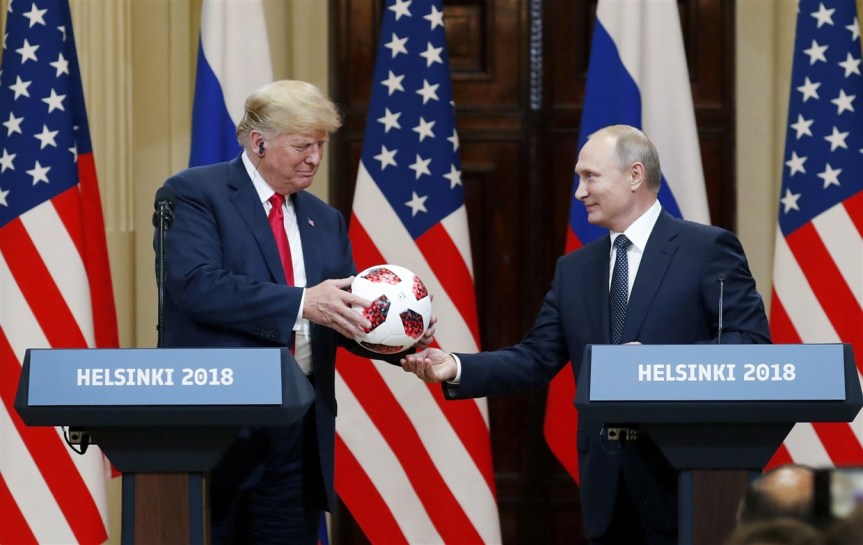
As I wrote here in July of 2018, it’s a fundamental misunderstanding of Trump to accuse him of being a “puppet” because he’s incapable of serving anyone but himself:

Consider the accusations of Russian meddling in the 2016 presidential election.  Trump is never going to side with his intelligence agencies on this issue.  He thinks that, by doing so, he’d be admitting that maybe he didn’t win fair and square over “Crooked Hillary.”  He refuses to countenance Russian meddling, not because he’s a Putin stooge, but rather because he’s an egomaniac.  He’ll admit to nothing that diminishes, however slightly, his victory — and his ego.

Russia doesn’t matter to Trump.  Indeed, America doesn’t matter to Trump.  With Trump, it’s really all about him… Trump lives in his own reality, a narcissistic swirl of fabrications, falsehoods, and lies.  He’s happiest when he’s commanding the scene, when people are kowtowing to him, when he can boast about himself and advertise his businesses…

In short, Trump is not treasonous.  He simply has no concept of public service.  He has no capacity to serve any cause other than himself.

Trump may be a blowhard, a bully, a braggart, a bigot, and a buffoon, but that doesn’t make him a “traitor” who “colluded” with Russia.  By pushing a false narrative for 2+ years, establishment Democrats and the mainstream media have yet again colluded in their usual inept way to strengthen Trump while discrediting themselves.

Ordinary Americans looking for a little more safety and equity in their lives are, of course, the biggest losers.

An Anti-War Democrat Can Win the Presidency in 2020

peace-symbol-usa-flag
Isn’t it time to get behind the peace flag?

W.J. Astore

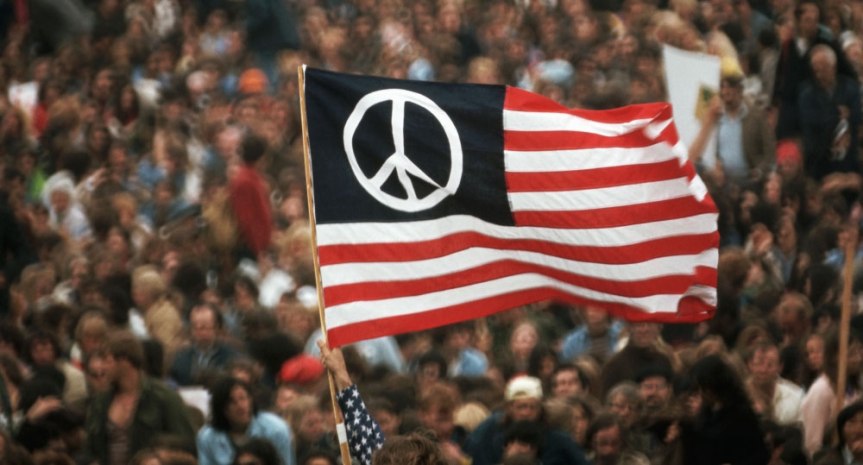
How can Democrats win the presidency in 2020?  The answer is simple: field a candidate who’s genuinely anti-war.  A candidate focused on America and the domestic health of our country rather than on global empire.  A candidate like Tulsi Gabbard, for example, who’s both a military veteran and who’s anti-war.  (Gabbard does say, however, that she’s a hawk against terrorism.)  Another possibility is Bernie Sanders, who’s beginning to hone his anti-war bona fides, and who’s always been focused on domestic issues that help ordinary Americans, e.g. a higher minimum wage, single-payer health care for all, and free college education at public institutions.

Many Democrats still don’t recognize that Hillary Clinton lost in 2016 in part because she was more hawkish than Trump on foreign policy and wars.  (As an aside, the burdens of war are most likely to fall on those people Hillary dismissed as “deplorables.”)  Most Americans are tired of endless wars in faraway places like Afghanistan and Syria as well as endless global commitments that drive a “defense” budget that stands at $716 billion this year, increasing to $750 billion next year.  Throwing more money at the Pentagon, to put it mildly, isn’t the wisest approach if your goal is to end wasteful wars and restore greatness here at home.

Many of Trump’s supporters get this.  I was reading Ben Bradlee Jr.’s book, The Forgotten, which examines the roots of Trump’s victory by focusing on Pennsylvania.  Bradlee interviews a Vietnam veteran, Ed Harry, who had this to say about war and supporting Trump:

“We’re tired.  Since I’ve been born, we’ve been in a state of war almost all the time.  When does it stop?  We’re pissing away all our money building bombs that kill people, and we don’t take care of veterans at home that need the help.”

Harry says he voted for Trump “because he was a nonpolitician” rather than a liberal or conservative.  Trump, the “nonpolitician,” dared to talk about America’s wasteful wars and the need to end them, whereas Hillary Clinton made the usual vague yet tough-sounding noises about staying the course and supporting the military.

Again, Democrats need to listen to and embrace veterans like Ed Harry when he says: “All the money pissed away on wars could be used here to take care of the needs of the people.”

I’d like to cite one more Vietnam veteran, Richard Brummett, who was interviewed in 2018 by Nick Turse at The Nation.  Brummett, I think, would identify more as a liberal and Harry more as a conservative, but these labels really mean little because these veterans arrive at the same place: arguing against America’s endless wars.

Here’s what Brummett had to say about these wars: “I feel intense sadness that we’ve gotten the country into this.  All these naive 20-year-olds, 18-year-olds, are getting chewed up by these wars–and then there’s what we’re doing to the people of all these countries.  The list gets longer all the time: Afghanistan, Iraq, Yemen, Libya, Syria.  Who is benefiting from all this agony?  I had the naive hope, in the years after Vietnam, that when I died–as a really old guy–the obituary would read: ‘America’s last combat veteran of any war died today.'”

If Democrats want to lose again, they’ll run a “centrist” (i.e. a pseudo-Republican) like Joe Biden or Kamala Harris who’ll make the usual noises about having a strong military and keeping the world safe by bombing everywhere.  But if they want to win, they’ll run a candidate who’s willing to tell the truth about endless wars and their incredibly high and debilitating costs.  This candidate will promise an end to the madness, and as a result he or she will ignite a fire under a large and diverse group of voters, because there are a lot of people out there like Harry and Brummett who are fed up with forever war.

The Syrian Troop Withdrawal That Wasn’t

hqdefault
Stability operations?

W.J. Astore

After calling for all U.S. troops to be pulled out of Syria, President Trump is now in favor of keeping a “small…stabilizing force” there.  What a shame.  Trump is the ultimate flip-flopper, bowing to the neo-cons and the Washington establishment whenever it’s expedient for him to do so.

What, exactly, is America’s national security interest in Syria?  Trump says these U.S. troops will help to prevent a resurgence of ISIS, but surely Syria, Turkey, Russia, and other countries in the region have more incentive — and far more capability — to keep the Islamic State down and out.  But let’s say the Islamic State did make a comeback in Syria after all U.S. troops left.  In that case, couldn’t U.S. troops just redeploy there?  Why are “boots on the ground” needed in perpetuity in Syria to monitor the dead carcass of ISIS?

Once the U.S. commits troops to a region or country, they seem to linger — and linger.  In rare cases when troops finally are withdrawn and something bad happens, you instantly hear how it’s the fault of those who called for troop withdrawals, as if U.S. troops bring stability wherever they go.

It’s a strange belief.  The U.S. celebrates its troops as warriors, trains them in kinetic operations, outfits them with the most destructive technologies, and then deploys them to bring stability and peace to regions those troops barely understand.  For a different vision of the “stability” American troops bring, one might ask the peoples of Afghanistan, Iraq, and Libya, to name only three recent examples.

It’s high time, America, that we bring the troops home.  Our national defense is not advanced by worldwide troop deployments in the name of “stability.”  Trump once seemed to recognize this, however fleetingly, as a candidate.  As president, however, he’s become yet another pawn of U.S. military interventionists and neo-cons.  As Trump would say, sad.

Jared Kushner’s Top Secret Clearance

Jared
On his majesty’s secret service

W.J. Astore

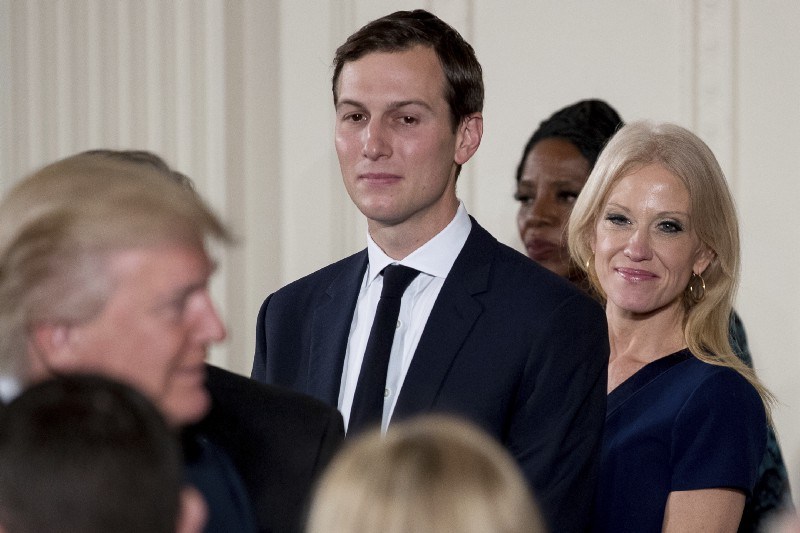
Word is that President Trump intervened to grant his son-in-law, Jared Kushner, a “top secret” security clearance.  So what?  That’s the president’s prerogative, and Kushner needs this clearance to perform all the magic he’s apparently capable of, such as reinventing government, negotiating with Mexico, solving the opioid epidemic, and bringing peace to the Middle East.

Top Secret security clearances are quite common in America: more than one million people have them, and at least another three million have secret/confidential ones.  Of course, not all TS clearances are created equal.  They all require background investigations, but some are “special,” and some are SCI, which stands for compartmentalized information.  In other words, just because you have a TS clearance doesn’t mean you can access all TS information.  You have to have “a need to know.”  You have to be “read in” to certain programs.  And some programs are so secret that only a few people have access to them.

One would assume Kushner needs access to top secret intelligence in his job as a “peace envoy” for the Middle East.  Lacking such a clearance, Kushner would have to be fired, but as Trump’s son-in-law and as a special friend to the Israelis and Saudis, Jared is not about to be fired.  Trump apparently lied about intervening to approve Jared’s clearance (“The president was equally forthright a month ago when he unequivocally denied that he intervened in any way to get a permanent security clearance for his son-in-law,” notes The Guardian), but Trump lies a lot.  It’s a little like breathing for him.

What’s the real issue here?  For me, as I wrote about back in 2015, it’s how the government uses classification schemes to keep secrets from us, the American people.  Apparently, either we or they can’t handle the truth.  To cite myself:

Our government uses security classification not so much to keep us safe, but to keep the national security state safe — safe from the eyes of the American people.

As The Guardian reported in 2013:

“A committee established by Congress, the Public Interest Declassification Board, warned in December that rampant over-classification is ‘imped[ing] informed government decisions and an informed public’ and, worse, ‘enabl[ing] corruption and malfeasance’. In one instance it documented, a government agency was found to be classifying one petabyte of new data every 18 months, the equivalent of 20m filing cabinets filled with text.”

Nowadays, seemingly everything is classified.  And if it’s classified, if it’s secret, we can’t know about it. Because we can’t be trusted with it.  That’s a fine idea for an autocracy or dictatorship, but not so fine for a democracy.

Government of the people, by the people, for the people?  Impossible when nearly everything of any importance is classified.

America, Trump or Jared’s loose lips aren’t the problem.  The problem is a government shrouded in secrecy.

Trump and North Korea

download
All aboard the “peace train”?

W.J. Astore

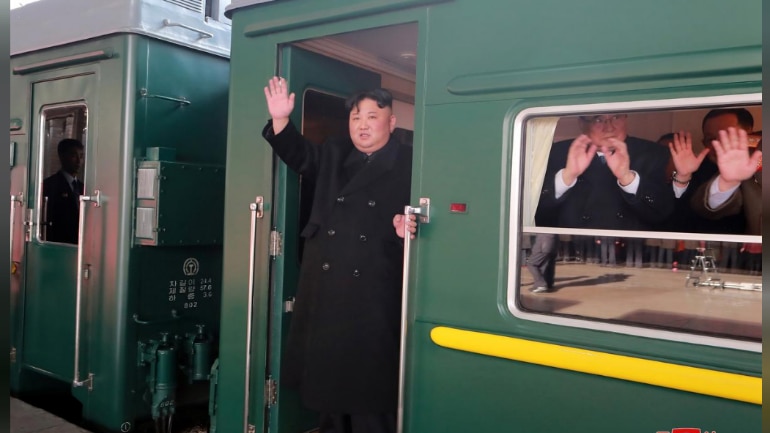
This week Trump is off to Vietnam to meet with Kim Jong-un, the leader of North Korea.  Revealingly, the bar is already being set very low for what may be accomplished at this meeting.  Trump’s original goal was denuclearization, meaning that North Korea would have to give up its nuclear weapons program and remove whatever atomic bombs or warheads it has.  But North Korea isn’t stupid.  They know what happened to Qaddafi when he got rid of his weapons of mass destruction (WMD) in Libya.  For North Korea, nuclear WMD is a sort of insurance policy — a rational arsenal to deter the U.S. from launching a regime-change war.

Coming out of the last summit in Singapore between these men, Trump essentially declared “peace in our time,” even though North Korea has yet to make any significant changes in its nuclear weapons program.  Again, why should North Korea surrender its weapons?

If Ronald Reagan’s motto was “trust — but verify” with the Soviet Union, Trump’s motto with North Korea is simply “trust.”  It’s encouraging that Trump is no longer threatening to bring nuclear fire and fury to the North Koreans, and that Kim Jong-un is no longer approving launches of missiles in the general direction of Hawaii.  But is there any treaty being negotiated with substantive details of verification?  Do the North Koreans truly have any intent to give up their nuclear weapons?  I’d say the answer to both questions is no.

Interestingly, at the request of the Trump administration, the Japanese government has nominated Trump for a Nobel Peace Prize for his attempted rapprochement with North Korea.  Perhaps Trump’s peculiar brand of diplomacy may ease tensions with North Korea.  Detente may be followed by a negotiated settlement and an end to the rancor produced by the Korean War.  Such an ending would indeed be prize-worthy.

Trump’s quixotic efforts seem more vanity project than a well-considered project for peace.  Yet perhaps a vain wannabe dictator like Trump has an edge in understanding a vain and very real dictator like Kim Jong-un.  Trump, after all, did speak of a special bond he has with Kim, one that’s akin to falling in love.  And doesn’t love conquer all?

Trump, sadly, is probably being played by North Korea.  But who cares if lives are saved?  Facing possible famine, the North Korean people could surely use food and other aid.  Let’s hope the U.S. is able to give them some in exchange for promises, however vague, of denuclearization, however defined.

At this point, I’m tired of thinking of countries and national egos.  I’d rather think of saving lives.  Why not start in North Korea?