The Next Commander-in-Chief

Governor_John_Kasich
John Kasich

W.J. Astore

A reader wrote to ask my opinion on which presidential candidate would make the best commander-in-chief.  This is a speculative exercise, of course, but why not speculate? I’ve watched most of the debates and have a sense of the candidates, though of course I’ve never met them and have no direct experience with them.  (I once shook President Bill Clinton’s hand, and saw Hillary in the background, but that’s a story for another day.)  So let’s take the five remaining candidates in alphabetical order:

Hillary Clinton: Often wrong and too hawkish, which is a bad combination. She was wrong on the Iraq War, wrong on Libya, and unapologetic in her fondness for Henry Kissinger. Under Clinton, I see more wasteful military interventions.

Ted Cruz: Far too eager to use military force.  You’ll recall his posturing about “carpet bombing” and making the sand “glow” in the Middle East, apparently by using nuclear weapons.  The recent terrorist attacks in Belgium have him calling for a police state in U.S. neighborhoods where Muslim-Americans live.

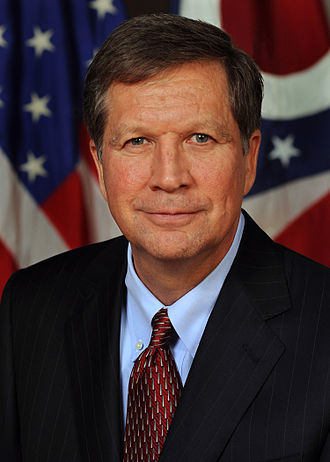
John Kasich: Has experience working military matters while in Congress (18 years on the House Armed Services Committee).  Has executive experience as a governor.  Has had the temerity to criticize the Saudis for supporting radical elements in Islam.  Has opposed wasteful weapons systems (the B-2 and A-12, for example).  Speaks carefully and appears to be temperamentally suited to the job.

Bernie Sanders: He was right to oppose the Iraq War.  Thinks for himself.  Not a slave to neoconservative interventionism.  Yet he lacks experience dealing with the military and with foreign policy.  Has the capacity for growth.

Donald Trump: Lacks an understanding of the U.S. Constitution and his role and responsibilities as commander-in-chief.  Though he has shown a willingness to depart from orthodoxies, e.g. by criticizing the Iraq War and the idea of nation-building, Trump’s temperament is highly suspect.  His bombast amplified by his ignorance could make for a deadly combination.  Hysterical calls for medieval-like torture practices are especially disturbing.

Of the five major candidates, and with Sanders somewhat of a blank slate, I think John Kasich has the best potential — in the short-term — to be an effective commander-in-chief.  This does not mean that I support Kasich for president, for I object to several of his domestic policies.

Not exactly a “bracing view,” perhaps, but it’s my honest attempt to answer a reader’s question.  I do think Sanders has considerable potential to be an excellent commander-in-chief because he possesses moral courage.

Sadly, the odds of either Kasich or Sanders winning in November seem very long indeed.

Today’s Pentagon as an Ant Farm

ant-farm

W.J. Astore

I was on active duty in the military for twenty years.  My experience: It’s very difficult to see the big picture in the military.  The everyday pressures of the mission keep you focused on the short term.  I recall writing many WARs (weekly activity reports) and being focused on the immediate.  Even the yearly budgetary process tends to keep you focused on the short term.  Assignments for officers and enlisted rarely last longer than three years, with combat tours typically much shorter.  Personnel are constantly changing: for one acquisition project I worked on, four program managers (colonels) rotated in and out in three years.

Along with being focused on the immediate, you are actively discouraged from criticizing the system in any fundamental way.  Of course, you’re not supposed to criticize the commander-in-chief, you’re not supposed to be insubordinate to your chain of command, you’re not supposed to undermine morale.  At the same time, one mistake can be deadly to a career.  People in the military therefore tend to play it safe.  Doubters tend to conform.  They shut their mouths.  Or they vote with their feet by leaving the military.

Critics with the best of intentions often get squashed.  Consider the Air Force pilot who found a problem with the F-22 Raptor’s cockpit oxygen supply system.  This was a top priority, safety of flight, issue, but the Air Force played down the problem so as to protect procurement for the Raptor.  The pilot eventually complained to CBS “60 Minutes” and saw his career stall as a result.  Or consider General Eric Shinseki, who as Army Chief of Staff had the temerity to disagree with the Bush Administration’s rosy talk of low troop requirements in the wake of the invasion of Iraq in 2003.  Shinseki was shunted aside by a system that had no room for well-informed dissent.

Pressures to conform and short-term planning and personnel cycles combine to produce mediocrity and to reproduce the past.  John Paul Vann, an expert on the Vietnam War who died in that war, noted the U.S. military didn’t have 12 years’ experience in Vietnam: it had one years’ experience repeated 12 times over.  Something similar is true in Afghanistan today: the U.S. doesn’t have 14 years’ experience fighting the Taliban and building Afghan security forces, but rather one years’ experience repeated 14 times.

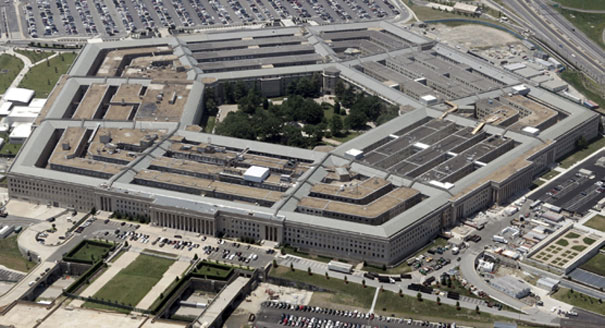
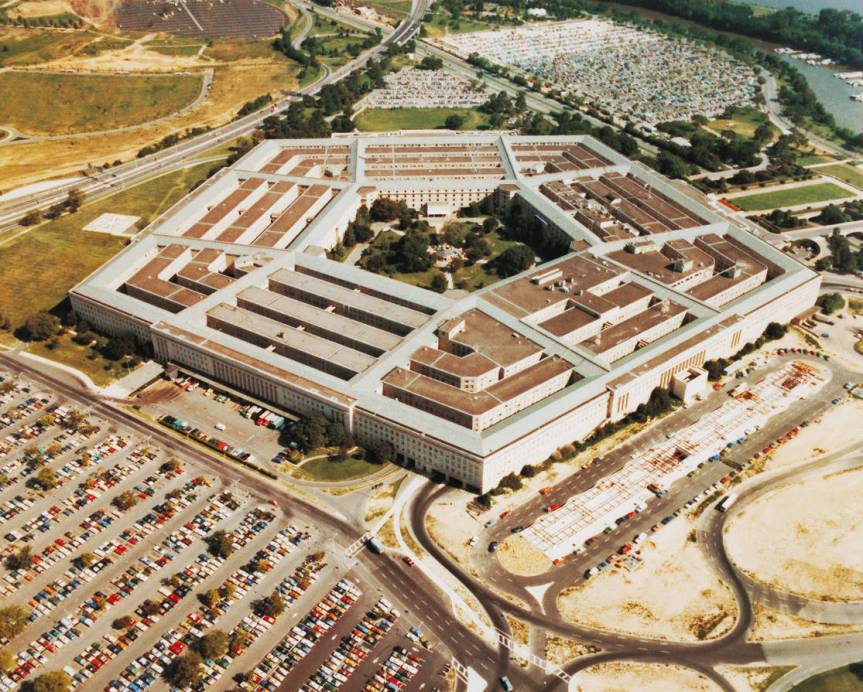
U.S. military actions are sequential rather than synergistic.  It’s just one damn thing after another.  The reality of this is often seen more clearly by people who are outside of the military.  Outsiders aren’t caught up in everyday pressures or limited by conformism.  They’re not caught in a Pentagonal box in which misguided tactics and mistaken goals are accepted by insiders as SOP – standard operating procedure.

But perhaps “box” is the wrong image for the Pentagon and its unreflective busyness; ant farm might be better.  If you’re of a certain age, you may remember those old ant farms advertised in the back pages of comic books.  You could send away for a see-through container with sand and ants that allowed you to watch as your crew of ants busily worked away in your “farm.”

Today’s Pentagon reminds me of those old ant farms.  The ants work busily within it.  Anyone watching wouldn’t question their dedication.  Yet as you’re standing outside the farm, watching them, you can see how tightly their world is delimited and circumscribed.  What is obvious to you is simply beyond them.  The ants keep digging in and rolling along.

It’s well worth asking why the U.S. military puts so much pride on working to the point of exhaustion.  A friend of mine worked at the Pentagon.  He worked hard during his normal shift – but he left on-time to go home.  His co-workers, noses to the grindstone, would hassle him about leaving “early.”  He’d reply: I can leave on-time because I didn’t spend hours rotating between the coffee maker and the gym.

A mindless emphasis on over-caffeinated work and fitness, as another friend suggested, may be a post-Vietnam War reaction to the McNamara “managerial” culture of the 1960s.  As he put it, “One easy way of showing one has the right stuff is to be an exercise nut, and the penumbras of that mind-set have really distorted the allocation of effort in our military.”  Recall that General David Petraeus made a moral fetish out of personal fitness and how that indirectly cost him his career (he made his initial connection to his mistress/biographer while running together).  Recall that General Stanley McChrystal was celebrated for his fitness regimen, which didn’t convey the smarts to rein in the insubordinate behavior of his men.

One more anecdote about incessant “army ant” work.  A Vietnam veteran told me this story about mindless work for the sake of show:

“One feature of my first Vietnam unit epitomized all this to me: the trucks in our motor pool were perfectly lined up. I don’t know how they did it. Must have had squads of soldiers pushing them to just the right spot then stuck chocks under the wheels to keep them there. The 4-star-corps commander used to drive by our motor pool frequently to go to USARV HQ. He never stopped to see if the trucks were drivable. They were not. Almost all deadlined.”

Lots of busy-work down on the ant farm may look good from a distance, but it does not produce victory.

Today’s U.S. military has its enemies outgunned.  There’s little wrong with its work ethic.  What the U.S. military hasn’t done is to outthink its enemies.  Indeed, the military’s actions often conspire to create new ones.  To admit this is not to place the blame entirely on the military.  Its civilian leaders have to shoulder blame as well.  But ultimately it’s the military that advises the president and Congress, and I haven’t witnessed senior military officers resigning because their advice hasn’t been followed.

If the U.S. military is to be reformed, you can’t look to the ants to do it.  They’re too busy keeping the system running.  We must look beyond the farm, to outsiders who are able and willing to think freely.  Yet the military too needs to act, if for no other reason than to end a miserable run of defeats (or pyrrhic victories, if that sounds less harsh).  Rather than simply promoting loyal and hardworking ants, it needs to foster seers and thinkers – people willing to buck the system.

It won’t be easy – but it’s sure better than losing.

The Pentagon as Business and Church

Ike
Ike had it right

W.J. Astore

Military spending is supposed to be about keeping America safe.  It’s supposed to be tied to vital national interests.  And at roughly $750 billion a year (for defense, homeland security, wars overseas, the VA, and nuclear weapons), it’s a colossal chunk of money, representing nearly two-thirds of federal discretionary spending.

There’s also a colossal amount of waste in defense spending, and nearly all of the major candidates currently running for commander-in-chief want more.  Only Bernie Sanders has suggested, tepidly, that defense spending might be cut.

Why is this?  It’s because much of Pentagon spending is not about “keeping us safe.” Listen to the social critic and essayist Lewis Lapham.  For him, the U.S. military establishment is both “successful business enterprise and reformed church.”  In his words, “How well or how poorly the combined services perform their combat missions matters less than their capacity to generate cash and to sustain the images of omnipotence.  Wars, whether won or lost, and the rumors of war, whether true or false, increase the [defense] budget allocations, stimulate the economy, and add to the stockpile of fear that guarantees a steady demand for security and promotes a decent respect for authority.”

Is Lapham too cynical?

It’s true that the more ISIS or China or Russia are hyped as threats, the more money and authority the Pentagon gains.  Not much incentive – if any – exists within the Pentagon to play down the threats it perceives itself as facing.  Minimizing danger is not what the military is about.  Nor does it seek to minimize its funding or its authoritative position within the government or across American society.  Like a business, the Pentagon wants to enlarge its market share and power.  Like a church, it’s jealous of its authority and stocked with true believers.

There was a time when Americans, as well as their commander-in-chief, recognized the onerous burden of defense spending as a regressive tax on society and humanity.  That time was 1953, and that commander was Dwight D. Eisenhower, the former five-star general who’d led the D-Day invasion on June 6, 1944.

This is what Ike had to say about “defense” spending:

Every gun that is made, every warship launched, every rocket fired signifies, in the final sense, a theft from those who hunger and are not fed, those who are cold and not clothed. This world in arms is not spending money alone. It is spending the sweat of its laborers, the genius of its scientists, the hopes of its children. This is not a way of life at all in any true sense. Under the cloud of threatening war, it is humanity hanging from a cross of iron.

Economists use the term “opportunity cost,” and certainly massive spending on weapons and warfare is an opportunity lost for greater spending in needed areas such as education, infrastructure, environmental preservation, and alternative energies.

Keeping Ike’s words in mind, Americans may yet come to recognize that major cuts in the Pentagon “tax” are in the best interests of all.  Even, I daresay, the Pentagon.


Spoiling the Pentagon

Pentagon
Spoiled?

W.J. Astore

In my latest article for TomDispatch.com, I compare the Pentagon and the Department of Defense to Ethan Couch, the Texas teenager said to be suffering from “affluenza.”  Like Couch, the Pentagon has been showered with money and praise, yet despite all the preferential treatment, the Pentagon is never called to account for its mistakes and its crimes.  You can read the entire article here; what follows is an excerpt.

A Spoiled Pentagon Means Never Having to Say You’re Sorry

To complete our affluenza diagnosis, let’s add one more factor to boundless praise and a bountiful allowance: a total inability to take responsibility for one’s actions. This is, of course, the most repellent part of the Ethan Couch affluenza defense: the idea that he shouldn’t be held responsible precisely because he was so favored.

Think, then, of the Pentagon and the military as Couch writ large. No matter their mistakes, profligate expenditures, even crimes, neither institution is held accountable for anything.

Consider these facts: Iraq, Afghanistan, and Libya are quagmires. The Islamic State is spreading. Foreign armies, trained and equipped at enormous expense by the U.S. military, continue to evaporate. A hospital, clearly identifiable as such, is destroyed “by accident.” Wedding parties are wiped out “by mistake.” Torture (a war crime) is committed in the field. Detainees are abused. And which senior leaders have been held accountable for any of this in any way? With the notable exception of Brigadier General Janis Karpinskiof Abu Ghraib infamy, not a one.

After lengthy investigations, the Pentagon will occasionally hold accountable a few individuals who pulled the triggers or dropped the bombs or abused the prisoners. Meanwhile, the generals and the top civilians in the Pentagon who made it all possible are immunized from either responsibility or penalty of any sort. This is precisely why Lieutenant Colonel Paul Yingling memorably wrote in 2007 that, in the U.S. military, “a private who loses a rifle suffers far greater consequences than a general who loses a war.” In fact, no matter what that military doesn’t accomplish, no matter how lacking its ultimate performance in the field, it keeps getting more money, resources, praise.

When it comes to such subjects, consider the Republican presidential debate in Iowa on January 28th. Jeb Bush led the rhetorical charge by claiming that President Obama was “gutting” the military. Ted Cruz and Marco Rubio eagerly agreed, insisting that a “dramatically degraded” military had to be rebuilt. All the Republican candidates (Rand Paul excepted) piled on, calling for major increases in defense spending as well as looser “rules of engagement” in the field to empower local commanders to take the fight to the enemy. America’s “warfighters,” more than one candidate claimed, are fighting with one arm tied behind their backs, thanks to knots tightened by government lawyers. The final twist that supposedly tied the military up in a giant knot was, so they claim, applied by that lawyer-in-chief, Barack Obama himself.

Interestingly, there has been no talk of our burgeoning national debt, which former chairman of the Joint Chiefs of Staff Admiral Mike Mullen once identified as the biggest threat facing America. When asked during the debate which specific federal programs he would cut to reduce the deficit, Chris Christie came up with only one, Planned Parenthood, which at $500 million a year is the equivalent of two F-35 jet fighters. (The military wants to buy more than 2,000 of them.)

Throwing yet more money at a spoiled military is precisely the worst thing we as “parents” can do. In this, we should resort to the fiscal wisdom of Army Major General Gerald Sajer, the son of a Pennsylvania coal miner killed in the mines, a Korean War veteran and former Adjutant General of Pennsylvania. When his senior commanders pleaded for more money (during the leaner budget years before 9/11) to accomplish the tasks he had assigned them, General Sajer’s retort was simple: “We’re out of money; now we have to think.”

Accountability Is Everything

It’s high time to force the Pentagon to think. Yet when it comes to our relationship with the military, too many of us have acted like Ethan Couch’s mother. Out of a twisted sense of love or loyalty, she sought to shelter her son from his day of reckoning. But we know better. We know her son has to face the music.

Something similar is true of our relationship to the U.S. military. An institutional report card with so many deficits and failures, a record of deportment that has led to death and mayhem, should not be ignored. The military must be called to account.

How? By cutting its allowance. (That should make the brass sit up and take notice, perhaps even think.) By holding senior leaders accountable for mistakes. And by cutting the easy praise. Our military commanders know that they are not leading the finest fighting force since the dawn of history and it’s time our political leaders and the rest of us acknowledged that as well.

The Drone Medal Revived!

W.J. Astore

Bad ideas never die at the Pentagon — nor do they fade away.  No — like no-win wars (Vietnam followed by Afghanistan, and so on), they keep coming back to haunt us.

According to today’s New York Times, the Pentagon is reviving the idea of special medals and awards for drone pilots and cyber-warfare specialists.

predator
Give that drone a medal!

This was an idea shot down by former SecDef Chuck Hagel, but bad ideas live a phoenix-like existence at the Pentagon.

Back in July 2012, I wrote the following article for Huffington Post about “the drone medal.”  It still stands today.  There are plenty of military decorations and awards, already on the books, that “a grateful nation” can give to its drone operators and cyberwar experts.  Creating new decorations to celebrate the “chair force” — well, what more can I say?

The Drone Medal (July 2012)

News that the Pentagon is considering a special “Distinguished Warfare Medal” for drone pilots tells us much about the American war-making moment. Leaving aside issues of bravery or courage of drone operators, let’s first consider the name of the medal, with its stress on “distinguished warfare.”

Traditionally, U.S. military medals by their very names have stressed honor or service, such as our highest award, the Medal of Honor, or the Distinguished Service Cross. Other medals are specifically connected to aerial prowess and feats, such as the Distinguished Flying Cross or the Air Medal. Such medals are well named, linked as they are to skills demonstrated by air crews operating in harm’s way.

What are we to make of a medal named for prowess in “warfare,” especially when drone operators are completely isolated from the battlefield? For that matter, how can war by remote control be recognized and celebrated as a “distinguished” form of “warfare”? Wouldn’t it be more honest (and perhaps even more honorable) to name this new decoration the “Drone Medal,” with all that name implies?

In raising these semantic points, I wish to take nothing away from drone pilots. They train hard, they work long hours, and they’re dedicated professionals. What they don’t need is a new medal created especially for them, and I’m guessing most of them would agree.

The U.S. military already has a bewildering array of awards and decorations on the books. If a drone pilot does something especially noteworthy or meritorious, there already exist commendation, meritorious service, and distinguished service medals that can be awarded to recognize his or her contribution.

Honestly, the last thing our bloated military establishment needs is more medals. But if the Pentagon insists on creating a “Distinguished Warfare Medal,” we really should insist on calling the Department of Defense by its old (and, given recent events, much more accurate) name: the Department of War.

America’s Overseas Military Bases: The 51st State

The true American Flag?

W.J. Astore

As David Vine reports for TomDispatch.com, the U.S. has roughly 800 military bases in foreign countries. Maintaining these bases costs upwards of $100 billion each year, more than the federal government spends on U.S. education.

The sheer extent and cost of these bases got me to thinking.  Each base is basically a “little America,” with a few of those bases being large enough to constitute an American city. If we can envision them collectively, would they not constitute America’s 51st state?  But instead of adding one more star to the American flag, we’d have to add a white Pentagon to the field of blue to represent the controlling interest of “base world,” our 51st state.

Fifty stars and one Pentagon: Or, if you prefer, 51 stars arranged in the shape of a Pentagon.

Sound crazy?  Not when you consider “base world’s” population, its corporate interests, its influence on American politics, and its leading role in American foreign policy. “Base world” is at least as significant to U.S. interests as real states like Wyoming. We really should have two U.S. senators elected from “base world.”  Then again, they’re not really needed, since all 100 of our current U.S. senators represent the Pentagon (as long as the Pentagon keeps funneling money to their respective states, of course).

We have all these foreign bases because America needs them to protect our far-flung national interests against evil-doers.  Right? Let’s think about these bases for a moment, the influence they wield, and the image they present of America.  After all, for many foreigners, the USA = base world.  What they know of America is represented by our military facilities and our troops.  Most of our troops are decent individuals; believe me, I’ve known a lot of them.  But there’s a reason why the Third Amendment to the U.S. Constitution forbids the quartering of troops in American households.

Ever been around a major military base in the USA?  Often it’s easy to find them. Look for pawn shops, strip clubs, tattoo parlors, payday loan shops, and predatory car dealers. And if you think such “attractions” are a little sordid, perhaps you best not go overseas. This may surprise a few people, but young troops overseas are not always chaste and sage ambassadors of democracy.  America’s “base world” is often not pretty, as young troops look for cheap suits and cheaper women, among other “bennies” (benefits) of an overseas deployment.

Statement of the obvious: Young troops of any nationality misbehave, especially when abroad.  And that’s how many foreigners come to know America: through the misbehavior of our young troops from “base world.”

And here’s another point about “base world” that’s as obvious as it’s rarely made: How many Americans would like it if foreign troops had major military facilities near or within our cities?  Perhaps some Russians or Saudis or Iranians in LA and Chicago and NYC.  Because those “allies” would be “protecting” us with their bases on American soil.  Right?  Let’s add some foreign fighter jets into the mix, and perhaps some aerial drones as well.  Surely we can trust our allies and their jets armed with bombs above our heads — right?

Incredibly expensive, often counterproductive, and sometimes disruptive, America’s “base world” needs to be downsized dramatically.  If you truly want to shrink government, don’t start with your local post office.  Start with America’s mega military bases overseas.

Why the American Military Is Doomed

General Flynn (FP: Foreign Policy)

W.J. Astore

Is the U.S. military doomed?  I’d say yes.  But it’s not because our troops are uncommitted, our weapons are bad, and our tactics are flawed.  Rather it’s because of the conventional wisdom in Washington and the Pentagon that continues to commit our troops to unnecessary and unwinnable wars.

This conventional wisdom is perhaps best summed up in a speech by retired Lieutenant General Michael T. Flynn, the ex-chief of the Defense Intelligence Agency (DIA).  It’s worth reading the speech in full, not because it’s especially original or insightful, but because it’s so unreflective and representative of Washington’s collective wisdom.

Here are General Flynn’s main points as I see them:

1. The American public must be committed to an open-ended ideological war “for decades.”

2. That war is against “grotesque” Islamic extremists who “hate our ideals” and who are “committed to the destruction of freedom and the American way of life.”

3. To win the war, America must be ready to use “overwhelming power” to defeat or deter the enemy, even if the U.S. must act alone.

4. Special Operations Forces (SOF) must be “well resourced” for this war, meaning they must be expanded even further and given even more money and latitude.

5.  The model for this ideological war against extremist Islam is Ronald Reagan’s war against communism.

That is General Flynn’s strategic vision.  It’s a vision widely shared within the Pentagon.  And it’s a vision that dooms America to defeat.

Why?  Mainly because radical Islam is a political/religious/social phenomenon.  It is not amenable to military solutions.  Indeed, the more America makes it into THE enemy, the more legitimacy organizations like ISIS gain within their communities and across the Muslim World.

Military force is a blunt instrument, even when it’s applied by the Special Ops community.  Expanding the American SOF presence throughout the world is a recipe for more blowback, not more victories.  Consider how well we’ve done so far in Afghanistan or Libya or Yemen.  Or for that matter Iraq.  Can anyone say that U.S. military intervention has produced stability in these countries?  Has it contributed to the defeat of radical Islam?  Indeed, in destabilizing Iraq and Libya and Yemen, has the U.S. not contributed to the spread of Islamic extremism?

Military professionals like General Flynn really know only one solution: “overwhelming power” applied “for decades.” And if you don’t accept their solution, they dismiss you as misguided (at best) or as arguing for “Retreat, retrenchment, and disarmament,” which “are historically a recipe for disaster,” according to General Flynn.

Well, I’m not aware of anyone seriously arguing for disarmament (fat chance of that happening in the USA!).  I’m not aware of anyone arguing for “retreat,” as if this was the Chosin Reservoir in the Korean War.  I’m not aware of anyone seriously working toward “retrenchment”; indeed, the SOF community keeps expanding, already mounting operations in 105 countries around the world in FY2015 (i.e., since October 2014).  It’s easy to bayonet a straw man, general.

I have a few words for the general: Committing the American military to an ideological war “for decades” against radical Islam is pure folly.  Chances are you won’t hammer it into non-existence: your blows will just spread it further, while wasting the energies of America and the lives of its troops.

Stop looking to Reagan and the collapse of communism for lessons and start looking at the actual results over the last 20-30 years of American meddling in Afghanistan, Iraq, Libya, and Yemen.  And tell me: Is this what “victory” looks like?  You want to double down on “overwhelming power” applied “for decades” as defending American “ideals” and “way of life”?

Which “ideals” are those, exactly?  A permanent state of war in which military men are deferred to as the heroes and sages of the moment?

No thanks.

Special Forces: America’s Jesuits

A Triple Stack of Special Ops with Flag -- Hooah!
A Triple Stack of Special Ops with Flag — Hooah! (Photo Credit: SOCOM)

W.J. Astore

Nick Turse has a revealing new piece at TomDispatch.com on the rise of Special Forces and SOCOM (Special Ops Command) within the U.S. military.  (For a telling critique of America’s excess of enthusiasm for Special Forces, see last year’s article here by Dan White for The Contrary Perspective.)

What are we to make of U.S. Special Forces being involved, in one way or another, in the affairs of 150 countries in the world over the last three years?  And, as Turse points out, just 66 days into Fiscal Year 2015, U.S. Special Forces have already made their presence known in 105 countries, a presence that seems never to wane.

One historical analogy that occurs to me (which I’ve used before) is the rise of the Society of Jesus, the Jesuits, within an embattled Catholic Church during the Reformation.  A besieged Church needed true believers to take the fight to heretical Protestants who were bent on the Church’s destruction.  So along came Ignatius Loyola and his church militant of Jesuit priests, sworn to believe that black was white if the Holy Church deemed it so.  Considered an elite within the Church, the Jesuits took the fight to the Protestants during the Catholic Counter Reformation in Europe and across the world.  Jesuits were everywhere, from China in the Old World to nearly everywhere in the New World, crusading for the Church and against the incursions of Protestantism and its various sects.

So, how does the 16th century shed light on the 21st?  America’s Vatican is obviously the Pentagon.  Its primary methods are wars and weapons sales and military training.  Its Loyola was until recently Admiral William McRaven, head of SOCOM.  And its Jesuit priests are America’s Special Ops troops, true believers who are committed to defending the faith of America.

In the aftermath of 9/11, in a rare outburst of honesty, George W. Bush said America was on a crusade across the world.  You might say against “protestants” and other heretics to the American way of life.  And who are our crusaders?  Who is being sent virtually everywhere (remember those 150 countries in three years?) on various “missions”?

Like it or not, America’s Special Forces are our lead missionaries, our Jesuits, our church militant.

The new head of SOCOM, General Joseph Votel III, West Point grad and Army Ranger, put it plainly back in August that America is witnessing “a golden age for special operations.”  What a telling phrase.  And indeed it’s getting increasingly difficult to recall “golden ages” in America’s past that weren’t linked to the military.

But that’s no accident when the national church is the Pentagon and its Special Ops troops are acclaimed as so many missionary heroes.

Welcome to your new golden age, America.

Abolish the Air Force?

usaf

W.J. Astore

Back in January, James Carroll had an op-ed in the Boston Globe that called for eliminating the Air Force as a separate service.  He claimed that the Air Force’s strategic components (its nuclear ICBMs and manned bombers) were now largely irrelevant, that the Air Force’s tactical mission could be folded into the Army and Navy, and that unmanned aerial vehicles or drones would soon largely replace manned surveillance and attack planes.

By folding the Air Force into its two older rivals, the Army and Navy, Carroll suggested the Pentagon would be forced to economize, the magic coming from reorganization.  I highly doubt that.

OK.  I’m a retired Air Force officer, so I’m biased.  But there are certain things the Air Force does, certain skills the Air Force has, that won’t be easily duplicated and probably will be lost in a bureaucratic war touched off by elimination and reorganization.  Here’s a quick list:

1.  The Air Force concentrates on air and space, just like the Army concentrates on land and the Navy on sea.  These are unique elements, requiring unique services with specialized mindsets.

2.  The Air Force is not just about fighter planes and nuclear missiles.  Much of the Air Force’s mission is in the less glorious aspects of air and space control.  Missions like cargo transport, tankers for aerial refueling, aerial and satellite reconnaissance, and the like.  Do we really believe the Army and Navy will adequately focus on and fund these vital missions?

3.  The U.S. Air Force was hardly the first independent air force in the world.  Great Britain saw the need for an independent air force in 1918 when the Royal Air Force was created.  (The USAF had to wait until 1947, i.e. after World War II.)  An independent air force reflects the technological revolution inaugurated by the Wright Brothers in 1903 and the inherent reach and power of aerial vehicles.  This is especially relevant to “island” nations such as Great Britain — and the United States.

4.  Related to (2), the Air Force has a wide range of missions, to include aerial intelligence-gathering, AWACS (airborne warning and control) and vital national command planes such as Air Force One.  Again, are these missions truly suited to the Army or Navy?

5.  In the chaos that is war, there’s something to be said for military continuity and tradition and experience.  Eliminating the Air Force and folding it into the Army and Navy will generate enormous internal friction within the Pentagon, possibly destabilizing a national defense system that is already less than optimal in its stability (as well as its wisdom).

The Air Force today certainly has its problems.  It’s the most top heavy of the services, with far too many colonels and generals.  It spends way too much on under-performing aircraft such as the F-35 Lightning II.  It’s always shied away from adequately funding the close air support mission, which is why the Army pursues its own fleet of attack helicopters.  Since its early days, it’s placed way too much faith in the efficacy of bombing, so much so that it’s generated its own Strangelovian caricatures, men like Curtis LeMay.

That said, the last thing we need is more internecine warfare in the Pentagon.  Eliminating the Air Force is not a recipe for cost-savings.  It’s a recipe for a bureaucratic bloodbath that will ultimately hurt rather than help America’s national defense.

The Pentagon Wins Wars! Budgetary Wars, That Is

The Pentagon of Power

W.J. Astore

The Pentagon brass and bureaucrats can’t win foreign wars, but they sure as hell kick ass in domestic budgetary wars. That point is clear from Mattea Kramer’s new article at TomDispatch.com. Allowing the Pentagon a largely untouchable second budget to fund the ongoing military occupation of Afghanistan is an invitation both to prolong that war and for exercises in money-changing. Masters at budgetary sleight of hand, the military spins any reduction, no matter how small, in apocalyptic terms, as we saw with claims that cuts in the end strength of the US Army would reduce it to 1940 levels, i.e. the somnolent peacetime days just before Pearl Harbor.

Any cut to military spending is spun as “appeasement,” as recklessly endangering our security vis-a-vis the exaggerated threats of the day, usually China or Russia or both. Yet the true “threat” that the Pentagon sees is not so much China or Russia (they can be handled) but cuts to their privileges and power. The Pentagon still maintains an unimaginably top-heavy bureaucracy that continues to throw pallets of money into the afterburners of costly weapons programs like the F-35 jet fighter.

Here is Kramer’s full text, courtesy of TomDispatch. Isn’t it nice to know that in lean times the Pentagon continues to live off the fat of the land?

The Pentagon’s Phony Budget War: Or How the U.S. Military Avoided Budget Cuts, Lied About Doing So, Then Asked for Billions More

By Mattea Kramer

Washington is pushing the panic button, claiming austerity is hollowing out our armed forces and our national security is at risk. That was the message Secretary of Defense Chuck Hagel delivered last week when he announced that the Army would shrink to levels not seen since before World War II. Headlines about this crisis followed in papers like the New York Times and members of Congress issued statements swearing that they would never allow our security to be held hostage to the budget-cutting process.

Yet a careful look at budget figures for the U.S. military — a bureaucratic juggernaut accounting for 57% of the federal discretionary budget and nearly 40% of all military spending on this planet — shows that such claims have been largely fictional. Despite cries of doom since the across-the-board cuts known as sequestration surfaced in Washington in 2011, the Pentagon has seen few actual reductions, and there is no indication that will change any time soon.

This piece of potentially explosive news has, however, gone missing in action — and the “news” that replaced it could prove to be one of the great bait-and-switch stories of our time.

The Pentagon Cries Wolf, Round One

As sequestration first approached, the Pentagon issued deafening cries of despair. Looming cuts would “inflict lasting damage on our national defense and hurt the very men and women who protect this country,” said Secretary Hagel in December 2012.

Sequestration went into effect in March 2013 and was slated to slice $54.6 billion from the Pentagon’s $550 billion larger-than-the-economy-of-Sweden budget. But Congress didn’t have the stomach for it, so lawmakers knocked the cuts down to $37 billion. (Domestic programs like Head Start and cancer research received no such special dispensation.)

By law, the cuts were to be applied across the board. But that, too, didn’t go as planned. The Pentagon was able to do something hardly recognizable as a cut at all. Having the luxury of unspent funds from previous budgets — known obscurely as “prior year unobligated balances” — officials reallocated some of the cuts to those funds instead.

In the end, the Pentagon shaved about 5.7%, or $31 billion, from its 2013 budget. And just how painful did that turn out to be? Frank Kendall, who serves as the Undersecretary of Defense for Acquisition, Technology, and Logistics, has acknowledged that the Pentagon “cried wolf.” Those cuts caused no substantial damage, he admitted.

And that’s not where the story ends — it’s where it begins.

Sequestration, the Phony Budget War, Round Two

A $54.6 billion slice was supposed to come out of the Pentagon budget in 2014. If that had actually happened, it would have amounted to around 10% of its budget. But after the hubbub over the supposedly devastating cuts of 2013, lawmakers set about softening the blow.

And this time they did a much better job.

In December 2013, a budget deal was brokered by Republican Congressman Paul Ryan and Democratic Senator Patty Murray. In it they agreed to reduce sequestration. Cuts for the Pentagon soon shrank to $34 billion for 2014.

And that was just a start.

All the cuts discussed so far pertain to what’s called the Pentagon’s “base” budget — its regular peacetime budget. That, however, doesn’t represent all of its funding. It gets a whole different budget for making war, and for the 13th year, the U.S. is making war in Afghanistan. For that part of the budget, which falls into the Washington category of “Overseas Contingency Operations” (OCO), the Pentagon is getting an additional $85 billion in 2014.

And this is where something funny happens.

That war funding isn’t subject to caps or cuts or any restrictions at all. So imagine for a moment that you’re an official at the Pentagon — or the White House — and you’re committed to sparing the military from downsizing. Your budget has two parts: one that’s subject to caps and cuts, and one that isn’t. What do you do? When you hit a ceiling in the former, you stuff extra cash into the latter.

It takes a fine-toothed comb to discover how this is done. Todd Harrison, senior fellow for defense studies at the Center for Strategic and Budgetary Assessments, found that the Pentagon was stashing an estimated extra $20 billion worth of non-war funding in the “operation and maintenance” accounts of its proposed 2014 war budget. And since all federal agencies work in concert with the White House to craft their budget proposals, it’s safe to say that the Obama administration was in on the game.

Add the December budget deal to this $20 billion switcheroo and the sequester cuts for 2014 were now down to $14 billion, hardly a devastating sum given the roughly $550 billion in previously projected funding.

And the story’s still not over.

When it was time to write the Pentagon budget into law, appropriators in Congress wanted in on the fun. As Winslow Wheeler of the Project on Government Oversight discovered, lawmakers added a $10.8 billion slush fund to the war budget.

All told, that leaves $3.4 billion — a cut of less than 1% from Pentagon funding this year. It’s hard to imagine that anyone in the sprawling bureaucracy of the Defense Department will even notice. Nonetheless, last week Secretary Hagel insisted that “[s]equestration requires cuts so deep, so abrupt, so quickly that… the only way to implement [them] is to sharply reduce spending on our readiness and modernization, which would almost certainly result in a hollow force.”

Yet this less than 1% cut comes from a budget that, at last count, was the size of the next 10 largest military budgets on the planet combined. If you can find a threat to our national security in this story, your sleuthing powers are greater than mine. Meanwhile, in the non-military part of the budget, sequestration has brought cuts that actually matter to everything from public education to the justice system.

Cashing in on the “Cuts,” Round Three and Beyond

After two years of uproar over mostly phantom cuts, 2015 isn’t likely to bring austerity to the Pentagon either. Last December’s budget deal already reduced the cuts projected for 2015, and President Obama is now asking for something he’s calling the “Opportunity, Growth, and Security Initiative.” It would deliver an extra $26 billion to the Pentagon next year. And that still leaves the war budget for officials to use as a cash cow.

And the president is proposing significant growth in military spending further down the road. In his 2015 budget plan, he’s asking Congress to approve an additional $115 billion in extra Pentagon funds for the years 2016-2019.

My guess is he’ll claim that our national security requires it after the years of austerity.

Mattea Kramer is a TomDispatch regular and Research Director at National Priorities Project, which is a 2014 nominee for the Nobel Peace Prize. She is also the lead author of the book A People’s Guide to the Federal Budget.

Copyright 2014 Mattea Kramer