America as a POW Nation

The political button in question (Photo by Tori LaGarde)

W.J. Astore

I wrote my latest article for TomDispatch.com (below) before the Capitol riot, adding a quick reference to it at the last minute in the first paragraph. Events at the U.S. Capitol as well as other recent violent events in America lend credence to the idea we’re all prisoners of war of a sort. Global wars may be invisible to most Americans, but domestic ones are all too plain to see. How do we make our “great escape” from a culture of incessant violence and permanent war?

“POWs Never Have A Nice Day.”  That sentiment was captured on a button a friend of mine wore for our fourth grade class photo in 1972.  That prisoners of war could never have such a day was reinforced by the sad face on that button.  Soon after, American POWs would indeed be released by their North Vietnamese captors as the American war in Vietnam ended.  They came home the next year to a much-hyped heroes’ welcome orchestrated by the administration of President Richard Nixon, but the government would never actually retire its POW/MIA (missing-in-action) flags.  Today, almost half a century later, they continue to fly at federal installations, including the U.S. Capitol as it was breached and briefly besieged last week by a mob incited by this country’s lame-duck president, ostensibly to honor all U.S. veterans who were either POWs or never returned because their bodies were never recovered.

Remembering the sacrifices of our veterans is fitting and proper; it’s why we set aside Memorial Day in May and Veterans Day in November.  In thinking about those POWs and the dark legacy of this country’s conflicts since World War II, however, I’ve come to a realization.  In the ensuing years, we Americans have all, in some sense, become prisoners of war.  We’re all part of a culture that continues to esteem war, embrace militarism, and devote more than half of federal discretionary spending to wars, weaponry, and the militarization of American culture.  We live in a country that leads the world in the export of murderous munitions to the grimmest, most violent hotspots on the planet, enabling, for example, a genocidal conflict in Yemen, among other conflicts.

True, in a draft-less country, few enough Americans actually don a military uniform these days.  As 2021 begins, most of us have never carried a military identification card that mentions the Geneva Convention on the proper and legal treatment of POWs, as I did when I wore a uniform long ago.  So, when I say that all Americans are essentially POWs, I’m obviously using that acronym not in a legal or formal way, but in the colloquial sense of being captured by some phenomenon, held by it, subjected to it in a fashion that tends to restrict, if not eliminate, freedom of thought and action and so compromises this country’s belief in sacred individual liberties.  In this colloquial sense, it seems to me that all Americans have in some fashion become prisoners of war, even those few “prisoners” among us who have worked so bravely and tirelessly to resist the phenomenon.

Ask yourself this question: During a deadly pandemic, as the American death toll approaches 400,000 while still accelerating, what unites “our” representatives in Congress?  What is the only act that draws wide and fervent bipartisan support, not to speak of a unique override of a Trump presidential veto in these last four years?  It certainly isn’t providing health care for all or giving struggling families checks for $2,000 to ensure that food will be on American tables or that millions of us won’t be evicted from our homes in the middle of a pandemic.  No, what unites “our” representatives is funding the military-industrial complex to the tune of $740.5 billion in fiscal year 2021 (though the real amount spent on what passes for “national security” each year regularly exceeds a trillion dollars).  Still, that figure of $740.5 billion in itself is already higher than the combined military spending of the next 10 countries, including Russia and China as well as U.S. allies like France, Germany, and the United Kingdom.

Not only that, but Congress added language to the latest defense bill that effectively blocked efforts by President Trump before he leaves office on January 20th to mandate the withdrawal of all troops from Afghanistan (and some troops from Germany).  Though it’s doubtful he would have accomplished such goals anyway, given his irresolute nature, that Congress worked to block him tells you what you need to know about “our” representatives and their allegiance to the war complex.

That said, an irresolute Trump administration has been most resolute in just one area: selling advanced weaponry overseas. It’s been rushing to export American-made bombs, missiles, and jets to the Middle East before turning over government efforts to shill for America’s merchants of death to President Joe Biden and his crew of deskbound warriors.

Speaking of Biden, that he selected retired General Lloyd Austin III to be his secretary of defense sends the strongest possible signal of his own allegiance to the primacy of militarism and war in American culture.  After all, upon retiring, General Austin promptly cashed in by joining the board of directors of United Technologies from which he received $1.4 million in “stock and other compensation” before it merged with giant weapons-maker Raytheon and he ended up on the board of that company. (He holds roughly $500,000 in Raytheon stock, a nice supplement to his six-figure yearly military pension.) 

How better than selecting him as SecDef to ensure that the “military” and the “industrial” remain wedded in that famed complex?  America’s secretary of defense is, of course, supposed to be a civilian, someone who can exercise strong and independent oversight over America’s ever-growing war complex, not a lifelong military officer and general to boot, as well as an obvious war profiteer.

War Is Peace

As Quincy Institute President Andrew Bacevich so aptly put it, “many Americans have made their peace with endless war.”  Within America’s war culture, peace activists like Medea Benjamin and organizations like Veterans for Peace are seen as not just “radical,” but genuinely aberrant. Meanwhile, an unquestioning acceptance of the fact that this country is now eternally at war across significant parts of the planet is considered normal, even respectable.  Certainly, not something to put real time or thought into considering.

As a result, warmongers like former Trump National Security Advisor John Bolton are touted in some quarters as hard-headed realists. In seeing the world as a hostile place that Americans need to (but somehow, almost 20 years later, can’t) dominate means their heads are screwed on straight, unlike those screwy thinkers who advocate for peace.  But as Dorothy Day, the Catholic peace activist, once said: “Our problems stem from our acceptance of this filthy, rotten system.”  

That Americans mostly refuse to see permanent war as filthy and rotten, or to think much about it or the “defense” budget that goes with it showcases the triumph of a broader war culture here.  Whereas this country’s profligate and prodigal military complex has given us stunning failure after stunning failure overseas (just consider all those disastrous efforts to win “hearts and minds” from Vietnam to Afghanistan to Iraq and on and on), it has proved stunningly successful in winning — or at least taming — hearts and minds in the homeland.  How else to explain the way those trillion-dollar-plus “national security” budgets are routinely rubber-stamped by Congress with hardly a murmur of protest?

In the twenty-first century, Americans are suffering a form of cognitive capture in which war has become the new normal.  As an astute reader at my blog, Bracing Views, put it: “Our desire to live without war is held in a stockade, and every day that we wake up and walk out into the yard that understanding is being broken down by the powerful monied elites.”

In America’s collective stockade of the mind, activism for peace is an aberration, while acceptance of the war state is second nature.  Small wonder that Biden’s proposed cabinet and administration features so many neocon-style policymakers who made their peace with war, whether in Iraq and Afghanistan or Libya and Syria (Antony Blinken as secretary of state; Jake Sullivan as national security advisor; retired general Lloyd Austin as secretary of defense; and Avril Haines as director of national intelligence).  Biden’s hawkish picks avidly place their faith in U.S. military power.  And they will be advising a new president, who once supported war in Iraq himself and talks not of reducing “defense” spending but of boosting it.

Perhaps you’ve noticed, in fact, how every president from George W. Bush in 2001 on has been proud to pose at some point as a “wartime” president.  Perhaps you’ve noticed as well that this country can’t or won’t close Gitmo, the detention facility at Guantanamo Bay, Cuba, flooded with prisoners from the global war on terror beginning late in 2001, men who will likely be imprisoned until death does us part.

Perhaps this is why the U.S. government “tortured some folks,” as President Obama put it in 2014, and abused Iraqi prisoners at Abu Ghraib in Iraq.  (Avril Haines, Biden’s proposed national intelligence director, once helped suppress evidence of just such abuse and torture.)  Perhaps this is why every president starting with George W. Bush has unapologetically smited evildoers around the world via robotic assassin drones.  (Remember, the drone assassination of Iranian Major General Qasem Suleimani at Baghdad International Airport by one Donald J. Trump?)  Perhaps this is also why U.S. bombing never seems to stop and those wars never end, even when a president comes into office promising that they will.  After all, it’s so empowering to be a “wartime” president!

In his novel 1984, George Orwell put it simply enough when he coined the slogan “war is peace” for his fictional dystopian society. Randolph Bourne put it no less simply when, during World War I, he explained that “war is the health of the state.”  Rosa Brooks, who worked at the Pentagon, put it bluntly when she titled her 2016 book How Everything Became War and the Military Became Everything.  What we have in America today is warfare as welfare, a form of man-made disaster capitalism, profitable for a few at the expense of the many.

Say it again: We are all POWs now.

The Time I Met a Real POW       

In the early 1990s, when I was a young captain in the U.S. Air Force, I served as an escort officer for Brigadier General Robinson Risner.  It’s not too much to say that Risner is held in awe in the Air Force.  A skilled fighter pilot and Korean War ace, he was a colonel and on the cover of Time magazine in 1965, just as the Vietnam War was ramping up, after which he was shot down and became a POW.  He later wrote The Passing of the Night, a harrowing account of the seven years he spent as a prisoner in the “Hanoi Hilton,” the sardonic name American POWs gave North Vietnam’s Hoa Lo Prison.

What sustained Risner through torture and those years of captivity was his Christian faith and patriotism.  I vividly recall a talk he gave at the Air Force Academy about his experiences and how that faith of his had sustained him.  I’ve never heard a more vivid evocation of the spirit of duty, honor, and country sustained by faith in a higher power.  I was proud to have a photo taken with General Risner, as we stood next to the trophy named after him and annually awarded to the top graduate of the Air Force’s Weapons School, the AF’s Top Gun, so to speak.

Risner was gracious and compelling, and I was humbled to meet a POW who’d endured and overcome as much as he had.  Yet, back then (to be honest), I never gave a thought to his actions as a fighter pilot leading bombing missions during Operation Rolling Thunder in Vietnam.  Since the U.S. government had chosen not to officially declare war against North Vietnam, whether his missions were even legal should have been open to question.  Lacking such an official declaration, one could argue that Risner and U.S. POWs like him did not enjoy the legal protections of the Geneva Convention.  Using American terminology today, Risner might then have been termed an “enemy combatant” to be held indefinitely, as the U.S. today holds captives at Guantanamo Bay in Cuba, POWs who have little hope of ever being released.

To your average American captured by U.S. war culture, objections here are easy.  Of course, Risner’s bombing missions were legal.  Of course, he deserved to be recognized as a POW and treated decently.  America never goes to war without righteous cause, in this case the containment of Communism by any means short of nuclear weapons.  The North Vietnamese saw it differently, however, perhaps because it was they who were being bludgeoned and flattened by U.S. military power.

My point is neither to praise Risner nor to bury him.  Rather, it’s to bury war and the culture that breeds and then feeds on it.  The more Americans facilitate war (largely by ignoring it and so giving it our tacit approval), the more Washington funds it, the more other people die because of “our” wars and “our” weaponry, the more this country becomes a POW nation writ large.

My Friend’s Button Again

Remember my friend’s button, the one that insisted POWs never have a nice day?  As a POW nation writ large, it should apply to all of us.  America won’t have a nice day again until it extricates itself from war in all its manifestations.  There will be no nice day until Congress stops funding munitions makers and starts seeking peace and helping the sick and poor.  There will be no nice day until Americans hate war with all the passion now saved for “patriotic” flag waving.  There will be no nice day until presidents bless peacemakers instead of beseeching God to protect the troops. 

So, the next time you see a POW/MIA flag outside a federal building, don’t dismiss it as a relic of America’s past.  Think about its meaning and relevance in an era of constant global warfare and colossal military spending.  Then, if you dare, ask yourself if you, too, are a POW of sorts — not in the strictly legal sense that applies to formal militaries in declared wars, but in the sense of this country being captured by war in all its death, destruction, and despair.  And then ask yourself, what does America have to do, collectively, to break out of the POW camp in which it’s imprisoned itself?

Upon that question hinges the future of the American republic.

Copyright 2021 William J. Astore

Many thanks to UTEJACK for the “stockade” quote and the inspiration. Many thanks to Tori LaGarde for identifying the POW button in the 4th grade photo — and for the inspiration as well.

Cutting the War Budget

We need McGovern-size cuts to America’s bloated war budget

W.J. Astore

This week, Congress will attempt to override President Trump’s veto of the NDAA, the national defense authorization act, which in 2021 provides $740 billion to the Pentagon and its wars. As usual, there is strong bipartisan support for this massive war budget. Democrats will join Republicans in bowing and scraping before the military-industrial complex, even as they frame it in terms of “supporting” the troops and defending America. In short, Trump’s veto will not stand.

I’m so fed up with Democrats serving the war party, denying health care to all Americans, and so on that I finally changed my political party designation in my home state. I am now a no-party independent instead of a registered Democrat. (My wife joined me as she’s no fan of “handsy” Joe Biden and the refusal of “centrist” Democrats to help people in meaningful ways.)

Perhaps that’s what we all need to do. Reject the Republican and Democratic parties and fight for a political establishment that would put people first rather than billionaires and corporations. Short of revolution, I don’t see other options that promise meaningful change.

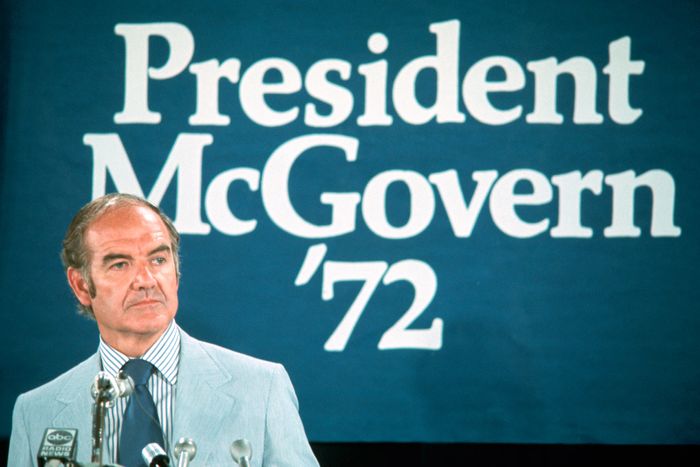
To my knowledge, the last major party presidential candidate who called for meaningful reductions in war spending was George McGovern. For example, McGovern called for a defense budget in 1975 of $54.8 billion, roughly $32 billion less than what the Nixon administration had proposed. McGovern, of course, had to couch this in terms of America still being a superpower with a nuclear arsenal that would be second to none, but at least he had the courage to talk of peace and of new approaches to foreign policy that would put diplomacy first instead of weaponry and war. What a loser he was, right?

If we applied a McGovern-size cut to today’s NDAA, we’d be talking about a “defense” budget of roughly $470 billion a year, still plenty of money, one would think, for the Pentagon to defend America. The $270 billion in savings could and should be applied to stimulus checks for Americans desperate for help in these Covid-disturbed times.

Imagine Americans getting a check from the government — a rebate of sorts — as a peace dividend! What would Americans rather have: a bunch of expensive F-35 jet fighters; ultra-expensive newer nuclear weapons on top of the ultra-expensive older ones; or some cash in pocket to buy groceries and pay their rent? I don’t know about you, but more F-35s and more nuclear bombers and missiles are not helping my bottom line.

To return to my changed political party affiliation: When a Democratic president-elect nominates a retired general and board member of Raytheon as the best person to exercise civilian oversight over the Pentagon, you know the Democratic party is a toady to the military-industrial complex and devoid of integrity as well as fresh ideas.

War? What is it good for? Absolutely nothing. Time for some peace dividends, America.

The Military-Industrial Complex Wins Again

Does the Pentagon and its contractors need a stimulus more than the American people?

W.J. Astore

At the American Conservative, I discuss the War on Terror, the nomination of General (retired) Lloyd Austin as Secretary of Defense, the lack of an American anti-war movement, and why we never see a “peace dividend” in the USA. My discussion begins at the 16-minute point.

Also, articles by Matt Taibbi and David Sirota suggest that the biggest winner of the latest Covid-relief stimulus talks in Congress is, believe it or not, the military-industrial complex. Right now there are no plans to send money to the American people, even as nearly 15 million have lost their employer-sponsored health care and millions more face eviction or foreclosure in the new year.

Here are the headlines:

“Stimulus Bill Bails Out Defense Contractors, Denies Direct Payments to Families,” by David Sirota and Julia Rock at https://www.dailyposter.com/p/stimulus-bill-bails-out-defense-contractors

“Amazing” Hypocrisy: Democrats Make Wreck of Covid-19 Relief Negotiations
Democrats stonewalled all year on a new pandemic relief package. Now they’re proposing a new plan that undercuts even Republican proposals, and screws everyone but – get this – defense contractors, by Matt Taibbi at https://taibbi.substack.com/p/amazing-hypocrisy-democrats-make

Taibbi quotes one aide as saying: “There are no direct payments for regular working people, people living off tips. But they made sure there’s a provision in there to help defense contractors who aren’t working right now. They get what they’re looking for.”

In short, the military-industrial complex wins again. The American people? They lose again.

Biden Rounds Up the Usual Suspects

Biden: Plenty of flags, but no change

W.J. Astore

Surprise! President-elect Joe Biden isn’t listening to progressive voices in his party. Instead, he’s been rounding up the usual suspects for his cabinet and staff. Turns out, progressives, that if you give your support and vote to a Democratic establishment tool like Biden without making firm demands, you won’t get anything in return. Who knew?

Here are a few good articles on Biden’s staff and cabinet:

At TomDispatch.com, Danny Sjursen gives a sharp-eyed summary of the typical Biden operative in the realm of military and foreign affairs. Here’s what Sjursen has to say:

In fact, the national security bio of the archetypal Biden bro (or sis) would go something like this: she (he) sprang from an Ivy League school, became a congressional staffer, got appointed to a mid-tier role on Barack Obama’s national security council, consulted for WestExec Advisors (an Obama alumni-founded outfit linking tech firms and the Department of Defense), was a fellow at the Center for New American Security (CNAS), had some defense contractor ties, and married someone who’s also in the game.

It helps as well to follow the money. In other words, how did the Biden bunch make it and who pays the outfits that have been paying them in the Trump years? None of this is a secret: their two most common think-tank homes — CNAS and the Center for Strategic and International Studies (CSIS) — are the second- and sixth-highest recipients, respectively, of U.S. government and defense-contractor funding. The top donors to CNAS are Northrop Grumman, Boeing, and the Department of Defense. Most CSIS largesse comes from Northrop Grumman, Lockheed Martin, Boeing, and Raytheon. 

With the news that Tony Blinken will be Biden’s Secretary of State, Caitlin Johnstone makes the following salient point:

Blinken is a liberal interventionist who has supported all of the most disgusting acts of US mass military slaughter this millennium, including the Iraq invasion which killed over a million people and ushered in an unprecedented era of military expansionism in the Middle East. So needless to say he will fly through the confirmation process.

Meanwhile, Julia Rock and Andrew Perez note the incestuous nature of this process, or how the national security revolving door keeps spinning:

On Sunday, Bloomberg reported that Biden has chosen his longtime aide, Tony Blinken, to serve as Secretary of State and will name Jake Sullivan, his senior advisor and a former Hillary Clinton aide, national security adviser. Former Obama Defense Department official Michèle Flournoy is considered the favorite to be Secretary of Defense. 

After leaving the Obama administration, Blinken and Flournoy founded WestExec Advisors, a secretive consulting firm whose motto has been: “Bringing the Situation Room to the board room.” Flournoy and Sullivan have both held roles at think tanks raking in money from defense contractors and U.S. government intelligence and defense agencies. 

Biden has been facing calls [Ha! Ha!] from Democratic lawmakers and progressive advocacy groups to end the revolving door between government and the defense industry. One-third of the members of Biden transition’s Depart­ment of Defense agency review team were most recently employed by “orga­ni­za­tions, think tanks or com­pa­nies that either direct­ly receive mon­ey from the weapons indus­try, or are part of this indus­try,” according to reporting from In These Times.

Meanwhile, defense executives have been boasting about their close relationship with Biden and expressing confidence that there will not be much change in Pentagon policy. 

Please forgive the “Ha! Ha!” parenthetical, but all this was predictable based on Biden’s record and his statement that nothing would fundamentally change in his administration.

Progressives have essentially no power in the Democratic Party. Look at who the Speaker of the House is! Nancy Pelosi, once again, the ultimate swamp creature.

Expect no new ideas from this bunch, meaning grim times are ahead. Isn’t it high time that progressives take the plunge and start their own party? They are voiceless and powerless within the Democratic Party. Failing that, they had better discover their spines and model themselves on the Tea Party in outspokenness, else they will remain utterly irrelevant.

Bernie Sanders who? Elizabeth Warren who? Progressive reforms? Not with the usual suspects that Joe Biden is selecting and empowering.

On War, Trump Has Largely Been an Appeaser

W.J. Astore

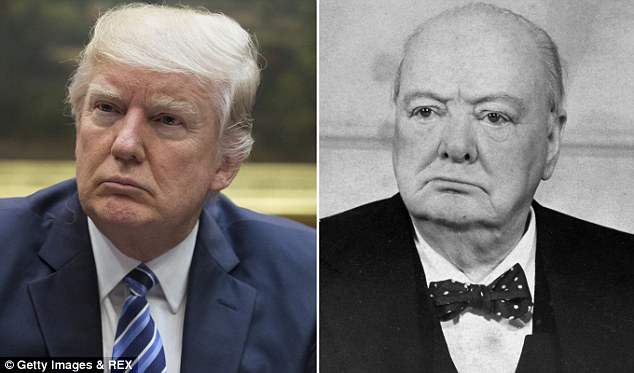
For all his tough-guy posturing and his attempts to pose like Winston Churchill, President Trump has largely been an appeaser to the military-industrial complex and its insatiable appetite for wars and weapons sales.

Trump, frowning (he thinks) like Churchill

Yes, it’s good news that Trump is withdrawing troops from Afghanistan and Iraq, though roughly 2500 troops will remain in each country when Joe Biden takes office in January. In short, Trump isn’t ending these wars; he’s merely reducing the number of boots on the ground. His Acting Defense Secretary, Chris Miller, described it as a “repositioning of forces from those two countries.”

Repositioning! Perish the thought that the U.S. military might retreat or even withdraw. The answer is to “reposition” those deck chairs on the USS Titanic and its imperial wars, never mind the sinking feeling you may be experiencing.

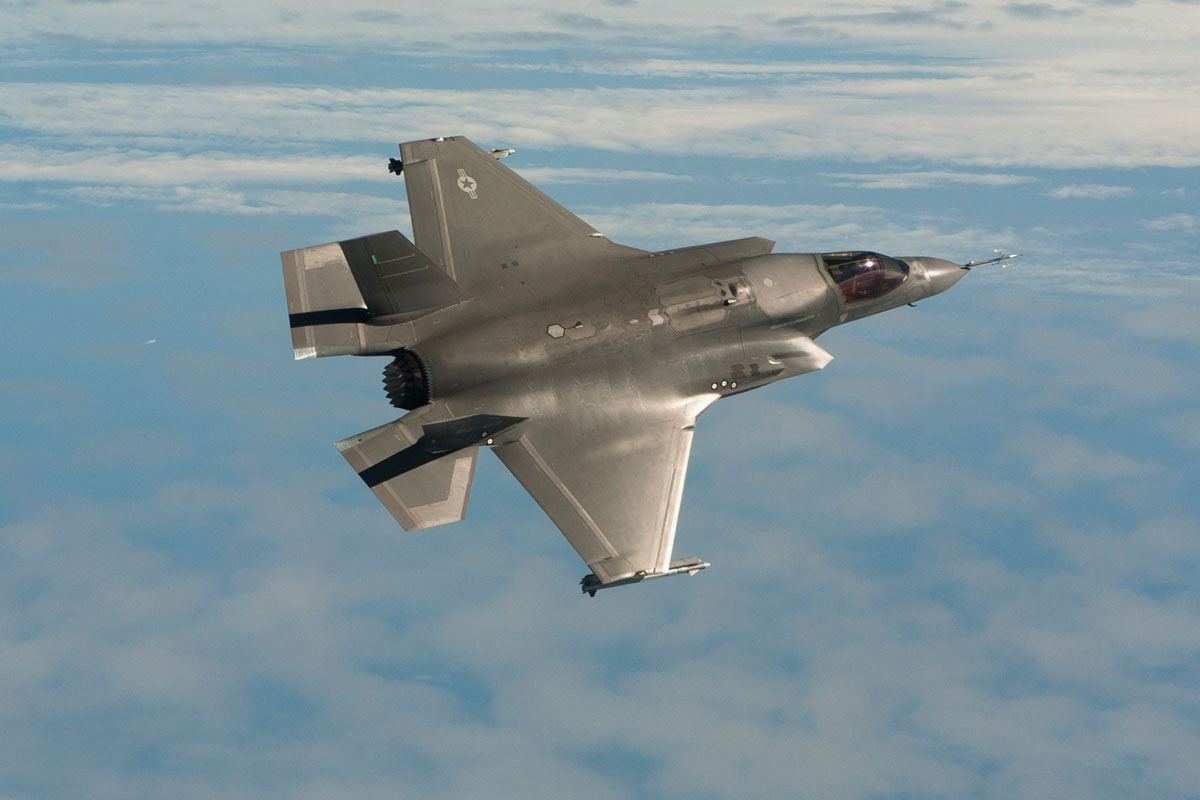
Meanwhile, Trump recently announced more weapons sales to the United Arab Emirates, including F-35 fighter-bombers and Reaper drones, worth $23 billion to U.S. weapons manufacturers. When it comes to empowering merchants of death, the United States is indeed number one.

Throughout his four years of office, Trump courted the Pentagon and the Complex by throwing money at it. He hired Complex functionaries like General (retired) James Mattis and General H.R. McMaster and Raytheon lobbyist Mark Esper to run things for him. The result was predictable: more of the same, such that Trump never kept his campaign promise to end America’s wasteful wars in Afghanistan, Iraq, and elsewhere.

Perhaps this was because Trump didn’t want to be blamed if things went south (as they probably will) if he’d ordered all U.S. troops out of these countries. Trump, like most Americans, hates to be labeled a loser. But what he needed to be reminded of was that these countries were never ours to win to begin with. The answer to “Who lost Afghanistan?” is not the president who finally “repositions” all U.S. troops from that country. The answer is Bush/Cheney, Obama/Biden, Trump/Pence, and, assuming they keep the war going in Afghanistan (and elsewhere), Biden/Harris.

Fighting needless and wasteful wars on the periphery of empire makes sense only to weapons makers and warmongers. Ditto making massive weapons sales, especially to unstable areas. The “Made in America” label used to be seen proudly on everything from clothing and shoes to engines and steel; now it’s affixed mainly to weapons and wars.

Before he took office, Trump promised a new approach, an America First approach, that would end the folly of perpetual wars that cost trillions of dollars. In this he failed. Because when it came to the Pentagon and to weapons makers, Trump chose appeasement rather than confrontation.

William Astore, a retired lieutenant colonel (USAF) and history professor, is a senior fellow at the Eisenhower Media Network (EMN), an organization of critical veteran military and national security professionals.

Monday Musings: On Russia, Helplessness, and Polls

W.J. Astore

A few items for this Monday:

1. A strategic analyst wrote to me about how America can improve relations with Russia. The gist of my response was this:

I totally agree on ending the “new” cold war. But the military-industrial complex (MIC) seems determined to use threat inflation to justify high Pentagon budgets. Meanwhile, establishment Democrats think they can use Trump’s alleged softness toward Russia against him. Hardline policies rule the day.

What is to be done? First, I suppose, is recognizing the vital importance of domestic politics — and profit and power — vis-a-vis our foreign relations with Russia. As long as the MIC keeps exaggerating the Russian threat, and as long as the Democrats keep exaggerating the Russian threat to the election while alleging Trump is a Putin-puppet, there’s little we can do. We simply need to work to change the narrative.

2. So many Americans have a sense of learned powerlessness. We simply think there’s nothing we can do to effect change. As I wrote to a friend this weekend: Lots of people have lost faith in government. But they’ve lost faith in collective action as well. They just don’t think they can do anything to fight corruption and a rigged system.

They feel powerless — then a Messiah-like candidate comes along offering hope and change. (In a strange way, Trump is the yang to Obama’s yin.) Trump said he’d drain the swamp — but it proved fetid and fertile land for his long con. His supporters just love the guy even as he hurts them — but at least he makes them feel good, empowered, liberated from the libtards …

A true confidence man, Trump poses as a helper. He’s going to drain the swamp, make things better, make us (you) great again. Turn back the clock — when America was America, men were men, women were women.

Interestingly, Trump has no vision for the future. His vision is relentlessly retrograde. The only way we can be great “again” is by rejecting change and today’s “kids” who support BLM, LGBTQ, and so on.

A new wrinkle is the reactionary and authoritarian “blue lives matter” narrative. Who could have guessed that American activism would culminate in societal militarization and the glorification of police forces?

I’ve seen a few of these on cars and trucks — and I live in an allegedly strong Democratic state

3. Recent polling suggests Joe Biden has a lead of up to 14%. Don’t believe it. As I wrote to a friend: My sense is that this election will be very close. Many people support Trump but they keep that support quiet. And his people show up to vote. Maybe twice if they follow Trump’s advice. Plus, of course, it’s the electoral college that matters, not the popular vote. And there’s still a lot that can happen in the next month.

Readers, what are your musings for this Monday?

Putting the Hype in Hypersonic Weapons

As a teenager, I loved this magazine and read it at my local library

W.J. Astore

Supersonic just isn’t fast enough anymore. Now we need hypersonic weapons. Hypersonic generally refers to something that travels at Mach 5 or above, or five times the speed of sound. (Most supersonic jets max out at Mach 2 or thereabouts.) Missiles that are hypersonic would be very difficult to intercept and could be deadly against large, slow-moving targets, e.g. aircraft carriers. So occasionally you hear about China or Russia or both developing hypersonic weapons, followed by a Chicken Little, sky-is-falling, warning about how the U.S. is failing to keep up.

This is all on my mind because I got an email invitation to a hypersonic weapons conference. As a retired Air Force officer and former engineer, this could have been my life: working for a defense contractor, hyping hypersonic weaponry. Where did I go wrong?

“In light of the Department of Defense’s recent & successful hypersonic glide body test marking a major milestone for the DOD’s fielding of hypersonic capabilities, IDGA is bringing back the Hypersonic Weapons Summit this October 28-30, in order to comprehensively analyze and enable the fielding of hypersonic warfighting capabilities.”

“This summit will highlight critical areas to include:

• Enabling Hypersonic Capabilities Utilization for Warfighters across Multiple Domains
• S&T Roadmaps & Investment Areas to Achieve Hypersonic Utilization
• Guiding Hypersonic Testing to Understand Technological Needs
• Workforce Initiatives
• US Academia/University Collaboration”

This invitation makes me nostalgic for my military days: all those acronyms, all that jargon, all those references to “warfighting” and “warfighters,” all those vague references, e.g. multiple domains, workforce, investment, and so on.

Again, this is just a random invite, the kind that industry people see daily, but it does reveal the military-industrial-university complex in all its hyperventilating glory.

Advertised speakers at this conference include civilians from the Office of the Secretary of Defense, the commanding general of Air Force Global Strike Command, the Army Hypersonic Project Office, a senior representative from U.S. Strategic Command, and a professor of the Hypersonic Systems Initiative, Aerospace and Mechanical Engineering, University of Notre Dame.

What a lineup! These people make very good money developing faster and faster missiles to blow things up or to intercept other missiles that blow things up. And I do appreciate the rare honesty of the name “Air Force Global Strike Command.” Global strike is far more accurate than national defense.

As a teenager, I used to read “Aviation Week & Space Technology” at my local library. I loved keeping track of the latest cool weapons, which back then meant fighter jets like the F-14 and F-15 or bombers like the B-1. I hate to admit it, but I didn’t give much thought to what these and similar weapons were all about: blowing things up and killing people. They just seemed exciting and a little bit sexy, and I bought the hype.

Sad to say to my teenage self but this will be a conference I’ll have to miss.

The Superpower As Super-Spreader, and Other Snippets

US Navy aircraft carrier
I need one of these to protect me from Covid-19.  And it will stimulate the economy!

W.J. Astore

Item: After reading an interesting story about Joseph McCarthy’s rise and fall in the 1950s, I came across this headline today at NBC News: “‘I’m not a communist’: Potential Biden running mate Rep. Bass reassures Cuban American voters.”

Explains Congresswoman Bass of California:  “I’m not a socialist. I’m not a communist. I’ve belonged to one party my entire life and that’s the Democratic Party and I’m a Christian,” Bass told NBC News.

Isn’t that reassuring?  She’s a Christian and a Democrat.  And she has to deny strongly that she’s a communist, as if 2020 was really 1952 at the height of McCarthyism.

Why today are we supposed to be so scared of the commie wolf?  I thought America won the Cold War thirty years ago.

Item: Speaking of the big bad commie wolf, a friend who’s privy to senior U.S. military thinking (ha!) tells me that this is the “New Era of Great Power Competition,” i.e. a new cold war.  How else can you justify rapidly expanding “defense” budgets?  Another concept — or opportunistic notion — being kicked around is “unbounded strategic uncertainty.”  For the military-industrial complex, this sounds like a very useful concept indeed.  In these unbounded, uncertain times, shouldn’t America’s “defense” budget also be unbounded?  Who knows what will be the next threat?  We must dominate everything!

This reminds me of the story of mask shortages among troops in the U.S. military.  The military’s solution, at least in the short-term, was to encourage troops and their families to make their own protective masks for the Covid-19 outbreak.  A trillion-dollar military complex can’t afford to outfit troops with protective masks that cost pennies on the dollar.  But of course we can fund more F-35s, more aircraft carriers … It’s like the satirical Onion said: Each American should get an aircraft carrier as a stimulus.  What better way to protect ourselves while stimulating the economy?

Item: Andrea Mazzarino, a Navy spouse, has a great new article at TomDispatch.com that brings together two subjects that are rarely connected: the U.S. has a global empire with bases in 80 countries, even as Covid-19 cases spike in the “homeland” and affect (and infect) U.S. troops.  It’s conceivable that infected U.S. troops, in their worldwide deployments, will emerge as super-spreaders of a sort, especially given the out-of-control nature of Covid-19 cases in the American South, where so many U.S. troops are stationed.

We Americans fancy ourselves as the world’s sole superpower.  Will we emerge as the world’s viral super-spreader as well?  Yet another example of full spectrum dominance!

And that’s enough items to ponder today.  Readers, what say you?

The Pentagon — and War — Win Again

f-35b-lightning-ii_010
The Pentagon Budget: Up, Up, and Away!  That budget is the true stealth warplane, nearly invisible to oversight and nearly impregnable to all challenges

W.J. Astore

Who’s going to win the 2020 election?  I can already tell you who’s won: the military-industrial-congressional complex.  With broad bipartisan support, the next Pentagon budget will be $740.5 billion, and that’s just for starters.  Congress has also acted to thwart troop withdrawals from Afghanistan, because fighting a devastating war for 19 years and counting isn’t enough.  (See this excellent article and video by Glenn Greenwald at The Intercept.)  We must keep fighting that war because — well, reasons.  You can insert various phony reasons here: we must support our Afghan allies; we must combat terrorism; we must stay loyal to the Nato allies we dragooned into the war; we must continue fighting or else Russia wins because … bounties?  Putin?

The real reasons: profit.  Bases.  Resources.  And a total lack of sense and fortitude within the Washington Beltway.

It’s deja vu all over again, because in 2012 I wrote the following article on how the Pentagon had already won the election irrespective of which candidate — Barack Obama or Mitt Romney — prevailed.  And so it proved.

Even during a pandemic, even during a recession, even when American workers and our armies of the unemployed need all the help they can get, the Pentagon budget reigns supreme.  War and weapons are truly the health of the state here in America, uniting Democrats and Republicans in a form of militaristic bliss.  But fighting and containing Covid-19?  Helping the needy?  Not so much.

Here’s my article from 2012, originally posted at TomDispatch.com:

The National Security State Wins (Again)
Why the Real Victor in Campaign 2012 Won’t Be Obama or Romney
By William J. Astore

Now that Mitt Romney is the presumptive nominee of the Republican Party, the media is already handicapping the presidential election big time, and the neck-and-neck opinion polls are pouring in.  But whether President Obama gets his second term or Romney enters the Oval Office, there’s a third candidate no one’s paying much attention to, and that candidate is guaranteed to be the one clear winner of election 2012: the U.S. military and our ever-surging national security state.

The reasons are easy enough to explain.  Despite his record as a “warrior-president,” despite the breathless “Obama got Osama” campaign boosterism, common inside-the-Beltway wisdom has it that the president has backed himself into a national security corner.  He must continue to appear strong and uncompromising on defense or else he’ll get the usual Democrat-as-war-wimp label tattooed on his arm by the Republicans.

Similarly, to have a realistic chance of defeating him — so goes American political thinking — candidate Romney must be seen as even stronger and more uncompromising, a hawk among hawks.  Whatever military spending Obama calls for, however much he caters to neo-conservative agendas, however often he confesses his undying love for and extols the virtues of our troops, Romney will surpass him with promises of even more military spending, an even more muscular and interventionist foreign policy, and an even deeper love of our troops.

Indeed, with respect to the national security complex, candidate Romney already comes across like Edward G. Robinson’s Johnny Rocco in the classic film Key Largo: he knows he wants one thing, and that thing is more.  More ships for the Navy.  More planes for the Air Force.  More troops in general — perhaps 100,000 more.  And much more spending on national defense.

Clearly, come November, whoever wins or loses, the national security state will be the true victor in the presidential sweepstakes.

Of course, the election cycle alone is hardly responsible for our national love of weaponry and war.  Even in today’s straitened fiscal climate, with all the talk of government austerity, Congress feels obliged to trump an already generous president by adding yet more money for military appropriations.  Ever since the attacks of 9/11, surging defense budgets, forever war, and fear-mongering have become omnipresent features of our national landscape, together with pro-military celebrations that elevate our warriors and warfighters to hero status.  In fact, the uneasier Americans grow when it comes to the economy and signs of national decline, the more breathlessly we praise our military and its image of overwhelming power.  Neither Obama nor Romney show any sign of challenging this celebratory global “lock and load” mentality.

To explain why, one must consider not only the pro-military positions of each candidate, but their vulnerabilities — real or perceived — on military issues.  Mitt Romney is the easier to handicap.  As a Mormon missionary in France and later as the beneficiary of a high draft lottery number, Romney avoided military service during the Vietnam War.  Perhaps because he lacks military experience, he has already gone on record (during the Republican presidential debates) as deferring to military commanders on decisions such as whether we should bomb Iran.  A President Romney, it seems, would be more implementer-in-chief than civilian commander-in-chief.

Romney’s métier at Bain Capital was competence in the limited sense of buying low and selling high, along with a certain calculated ruthlessness in dividing companies and discarding people to manufacture profit.  These skills, such as they are, earn him little respect in military circles.  Compare him to Harry Truman or Teddy Roosevelt, both take-charge leaders with solid military credentials.  Rather than a Trumanesque “the buck stops here,” Romney is more about “make a buck here.”  Rather than Teddy Roosevelt’s bloodied but unbowed “man in the arena,” Romney is more bloodless equity capitalist circling high above the fray in a fancy suit.

Consider as well Romney’s five telegenic sons.  It’s hard to square Mitt’s professions of love for our military with his sons’ lack of interest in military service.  Indeed, when asked about their lack of enthusiasm for joining the armed forces during the surge in Iraq in 2007, Mitt off-handedly replied that his sons were already performing an invaluable national service by helping him get elected.

An old American upper class sense of noblesse oblige, of sons of privilege like George H.W. Bush or John F. Kennedy volunteering for national service in wartime, has been dead for decades in our otherwise military-happy country.  When it comes to sending American sons (and increasingly daughters) into harm’s way, for President Romney it’ll be another case of chickenhawk guts and working-class blood.

For election 2012, however, the main point is that the Romney family’s collective lack of service makes him vulnerable on national defense, a weakness that has already led Mitt and his campaign to overcompensate with ever more pro-military policy pronouncements supplemented with the usual bellicose rhetoric of all Republicans (Ron Paul excepted).  As a result, President-elect Romney will ultimately find himself confined, cowed, and controlled by the national security complex — and he’ll have only himself (and Barack Obama) to blame.

Obama, by way of contrast, has already shown a passion for military force that in saner times would make him invulnerable to charges of being “weak” on defense.  Fond of dressing up in military flight jackets and praising the troops to the rafters, Obama has substance to go with his style.  He’s made some tough calls like sending SEAL Team 6 into Pakistan to kill Osama Bin Laden; using NATO airpower to take down Qaddafi in Libya; expanding special ops and drone warfare in Afghanistan, Yemen, and elsewhere, including the assassination of U.S. citizens without judicial process.  America’s Nobel Peace Prize winner of 2009 has become a devotee of special forces, kill teams, and high-tech drones that challenge the very reality of national sovereignty.  Surely such a man can’t be accused of being weak on defense.

The political reality, of course, is different.  Despite his record, the Republican Party is forever at pains to portray Obama as suspect (that middle name Hussein!), divided in his loyalties (that Kenyan connection!), and not slavish enough in his devotion to “underdog” Israel.  (Could he be a crypto-Muslim?)

The president and his campaign staff are no fools.  Since any sign of “weakness” vis-à-vis Iran and similar enemies du jour or any expression of less than boundless admiration for our military will be exploited ruthlessly by Romney et al., Obama will continue to tack rightwards on military issues and national defense.  As a result, once elected he, too, will be a prisoner of the Complex.  In this process, the only surefire winner and all-time champ: once again, the national security state.

So what can we expect on the campaign trail this summer and fall?  Certainly not prospective civilian commanders-in-chief confident in the vitally important role of restraining or even reversing the worst excesses of an imperial state.  Rather, we’ll witness two men vying to be cheerleader-in-chief for continued U.S. imperial dominance achieved at nearly any price.

Election 2012 will be all about preserving the imperial status quo, only more so.  Come January 2013, regardless of which man takes the oath of office, we’ll remain a country with a manic enthusiasm for the military.  Rather than a president who urges us to abhor endless war, we’ll be led by a man intent on keeping us oblivious to the way we’re squandering our nation’s future in fruitless conflicts that ultimately compromise our core constitutional principles.

For all the suspense the media will gin up in the coming months, the ballots are already in and the real winner of election 2012 will be the national security state.  Unless you’re a denizen of that special interest state, we know the loser, too. It’s you.

William J. Astore, a retired lieutenant colonel (USAF), is a TomDispatch regular.  He welcomes reader comments at wjastore@gmail.com. To listen to Timothy MacBain’s latest Tomcast audio interview in which Astore discusses how the two presidential candidates are sure to out-militarize each other in the coming election campaign, click here or download it to your iPod here.

Follow TomDispatch on Twitter @TomDispatch and join us on Facebook.

Copyright 2012 William J. Astore

The Nobility of Tulsi Gabbard

1st-a-gabbard-1

W.J. Astore

In the South Carolina primary won on Saturday by Joe Biden, Tulsi Gabbard earned only 1.3% of the vote.  Her poor showing was due in part to her outcast status among the Democratic establishment joined by mainstream media outlets like MSNBC and CNN.  Speaking of CNN, I caught a few minutes of coverage last night during which its commentators confessed they couldn’t understand why Tulsi was still running. (Update: See my comment below for more details on this exchange.)  One person (Anderson Cooper, the weasel) suggested she was angling for a job with Fox News.  Of course, Tulsi’s principled opposition to regime-change wars and other disastrous U.S. foreign policy decisions went unmentioned.  When her name is mentioned by the corporate-owned media, it’s usually in the context of the candidate most likely to succeed – in Russia.

By running in the election, Tulsi Gabbard continues to make an invaluable contribution: She highlights the power of the military-industrial-Congressional-media complex and its rejection of any candidate willing to challenge it.  Gabbard’s status as a major in the Hawaii Army National Guard, her service in Congress on the House Armed Services Committee, her military deployments to Iraq: all of this is downplayed or dismissed.  Meanwhile, Mayor Pete’s brief stint in Afghanistan is celebrated as the height of military service.  What’s the difference between them?  Mayor Pete plays ball with big donors and parrots talking points of the Complex – Tulsi doesn’t.

In a recent op-ed for The Hill, Tulsi yet again does America a service by calling out red baiting in America’s elections.  Here’s how her op-ed begins:

Reckless claims by anonymous intelligence officials that Russia is “helping” Sen. Bernie Sanders (I-Vt.) are deeply irresponsible. So was former New York City Mayor Michael Bloomberg’s calculated decision Tuesday to repeat this unsubstantiated accusation on the debate stage in South Carolina. Enough is enough. I am calling on all presidential candidates to stop playing these dangerous political games and immediately condemn any interference in our elections by out-of-control intelligence agencies.

A “news article” published last week in The Washington Post, which set off yet another manufactured media firestorm, alleges that the goal of Russia is to trick people into criticizing establishment Democrats. This is a laughably obvious ploy to stifle legitimate criticism and cast aspersions on Americans who are rightly skeptical of the powerful forces exerting control over the primary election process. We are told the aim of Russia is to “sow division,” but the aim of corporate media and self-serving politicians pushing this narrative is clearly to sow division of their own — by generating baseless suspicion against the Sanders campaign.

Tulsi is right here – and she’s right when she says that:

The American people have the right to know this information in order to put Russia’s alleged “interference” into proper perspective. It is a mystery why the Intelligence Community would want to hide these details from us. Instead it is relying on highly dubious and vague insinuations filtered through its preferred media outlets, which seem designed to create a panic rather than actually inform the public about a genuine threat.

All this does is undermine voters’ trust in our elections, which is what we are constantly told is the goal of Russia.

She also accurately notes how the “corporate media will do everything they can to turn the general election into a contest of who is going to be ‘tougher’ on Russia. This tactic is necessary to propagandize the American people into shelling over their hard-earned tax dollars to the Pentagon to fund the highly lucrative nuclear arms race that the military-industrial complex craves.”

Tulsi Gabbard may not be in the democratic race much longer, but that’s not because she lacks guts.  Indeed, her willingness to buck the system – and her commitment to making the world a less militaristic place – make her a notable candidate.  She’s been a noble voice crying in a corrupt and self-serving wilderness.