
War Is Too Easy

We’ll End the War by Escalating It?

BILL ASTORE

JUL 18, 2026

War is too easy in America today. We’ve come to accept it as normal. Peace is now aberrant. As war grows ever easier, peace becomes ever harder.

“Escalation,” not diplomacy, is touted as the smart way to end wars. Logic doesn’t seem to matter. How do you end a war by launching more damaging and deadly strikes? How is killing even more people a way to peace?

President Trump now seems to believe that climbing the “escalation ladder” in the Iran War and in the Russia-Ukraine War is the best way to resolve these deadly conflicts. It reminds me of that Vietnam-era quip that waging war for peace is like screwing for virginity.

Journalist Aaron Maté’s piece today also cites Washington’s belief in escalation:

Shortly before returning to the White House for a second term, Donald Trump criticized the exiting president, Joe Biden, for letting Ukraine fire long-range US missiles into Russia. “Why are we doing that?” Trump complained. “We’re just escalating this war and making it worse.”

Just as his campaign pledge of “no new wars” gave way to a regime-change war on Iran, Trump’s professed aversion to a US-fueled escalation in Ukraine is no more. At this month’s NATO summit in Turkey, Trump and Secretary of State Marco Rubio endorsed Ukraine’s drone attacks deep inside Russia. With the Russians “finding it more difficult to defend their own airspace,” Rubio explained, this will “create the space now to negotiate the end of this war.” Added Trump: “It’s an escalation, but it’s also an escalation that could help lead to an end.”

How often do “escalations” help to end wars? Does anyone remember how escalation in Vietnam turned out?

Maybe if we truly seek to end a war, we should deescalate attacks, then engage in diplomacy. No, that makes too much sense.

Spock learns that logic often doesn’t apply to murder or war

There’s a great line in an old Star Trek episode, “Journey to Babel,” where Spock is advised he’d do well to “forget logic and devote yourself to motivations of passion and gain,” for “those are the reasons for murder” — and often for war as well.

Of course, these aren’t the only reasons for war, but logic often has little to do with how and why wars are waged. That much is obvious as “climbing the escalation ladder” is seen or sold by Washington as the best way to deescalate in Iran and in Russia and Ukraine.
Embrace the “Nuance” of Nuclear Weapons

W.J. Astore

We must not allow a missing rung on America’s nuclear escalation ladder!

I get email notices for Aether, a professional journal for “strategic airpower & spacepower,” and the lead article on the cover caught my eye:

A Tactical Nuclear Mindset: Deterring with Conventional Apples and Nuclear Oranges

James R. McCue, Adam Lowther, and James Davis

Comparing and contrasting low-yield theater nuclear weapons with conventional precision strike weapons leads to a nuanced conclusion that both contribute to deterrence.

Imagine that! Both nuclear and conventional weapons “contribute to deterrence.” Even though they’re apparently apples and oranges. Well, there’s “nuance” for you.

Anybody want a tasty nuclear “orange”? Fresh and juicy, and with a low yield. It may very well deter you from eating citrus fruit for, well, forever.

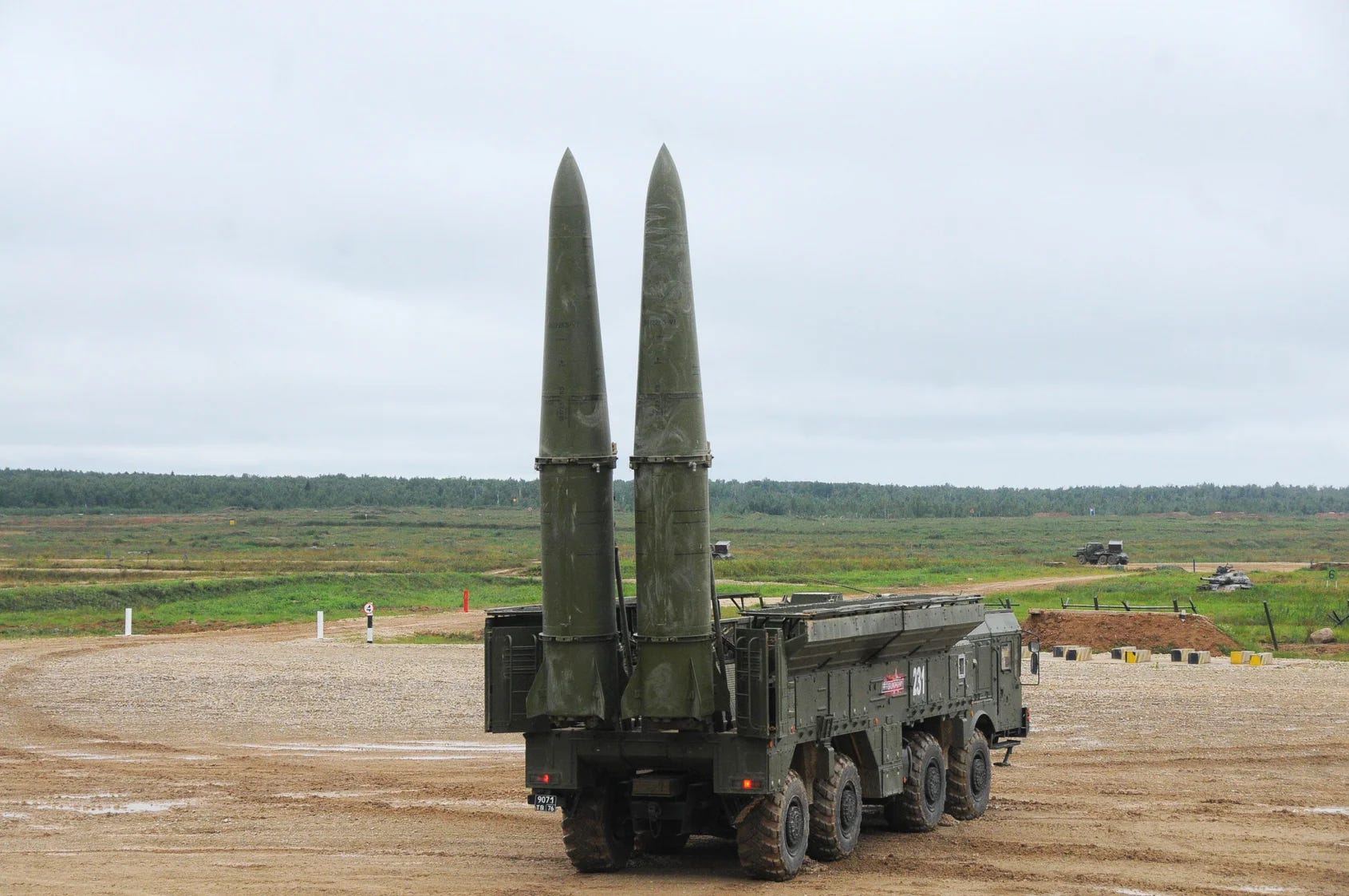
Potential delivery system for low-yield nukes. Think of them as juicy oranges

I’m not familiar with the authors of the piece. McCue is an Air Force lieutenant colonel with the Defense Threat Reduction Agency. I don’t know about you, but suggesting that low-yield nukes can be used in nuanced ways heightens my sense of threat. Lowther directs strategic deterrence programs at the National Strategic Research Institute, which makes me think anew about the meaning of “deterrence.” In this case, it seems to mean the willingness to use nuclear weapons against “bad actors” like China but especially Putin and Russia. And Davis is an Army major assigned to U.S. Central Command. It’s nice to know the Army, just like the Air Force, has a strange love for nukes.

In essence, the article’s argument is this: Russia, China, and North Korea are “investing” in low-yield nukes while the U.S. and other NATO allies have generally been reducing their arsenals of the same. To deter those three adversaries, the U.S. must make new “investments” in low-yield nukes, because you never know what those foreigners are up to.

Here’s how the authors put it in their conclusion: “In the right circumstances conventional weapons offer greater certainty of destruction than tactical nuclear weapons. The West must examine what this means for warfighting, as well as what adversaries are signaling by investing in low-yield nuclear weapons. The best solution may be the development of a state-of-the-art nuclear capability that ensures certain, prompt, proportionate, and in-kind response options. The perception of a missing rung on the American escalation ladder could prove alluring to Russia or China in a conflict.”

Mr. President, we must not allow a missing rung on America’s escalation ladder!

Even if that “missing rung” is only a “perception.”

Let’s keep that in mind if nuclear weapons start flying in Europe or Asia. We can console ourselves that at least we weren’t missing a rung in our escalatory ladder as millions get blasted, burnt, and irradiated.