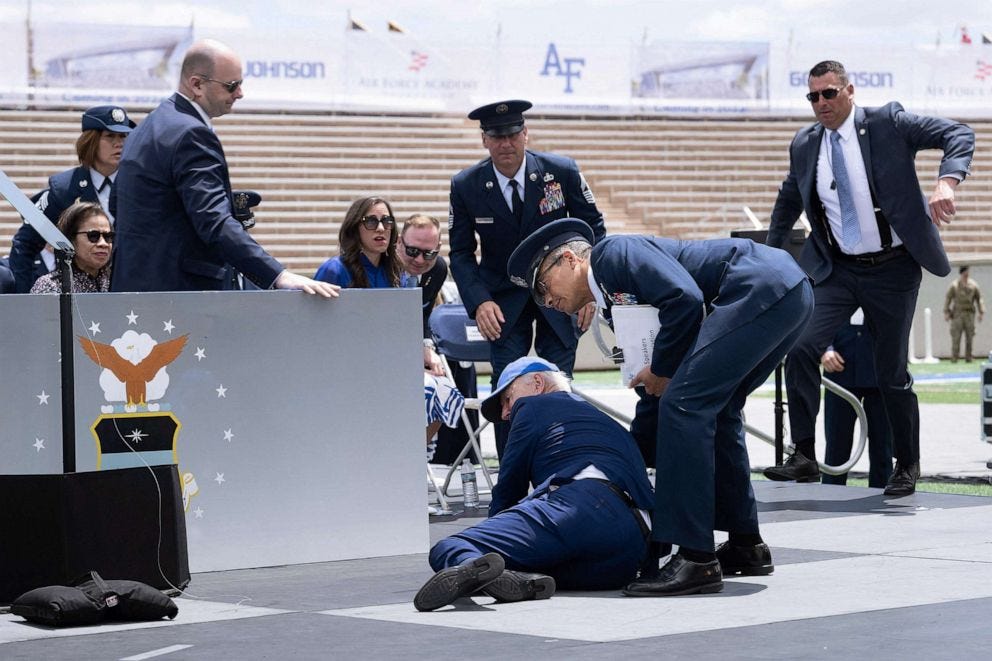
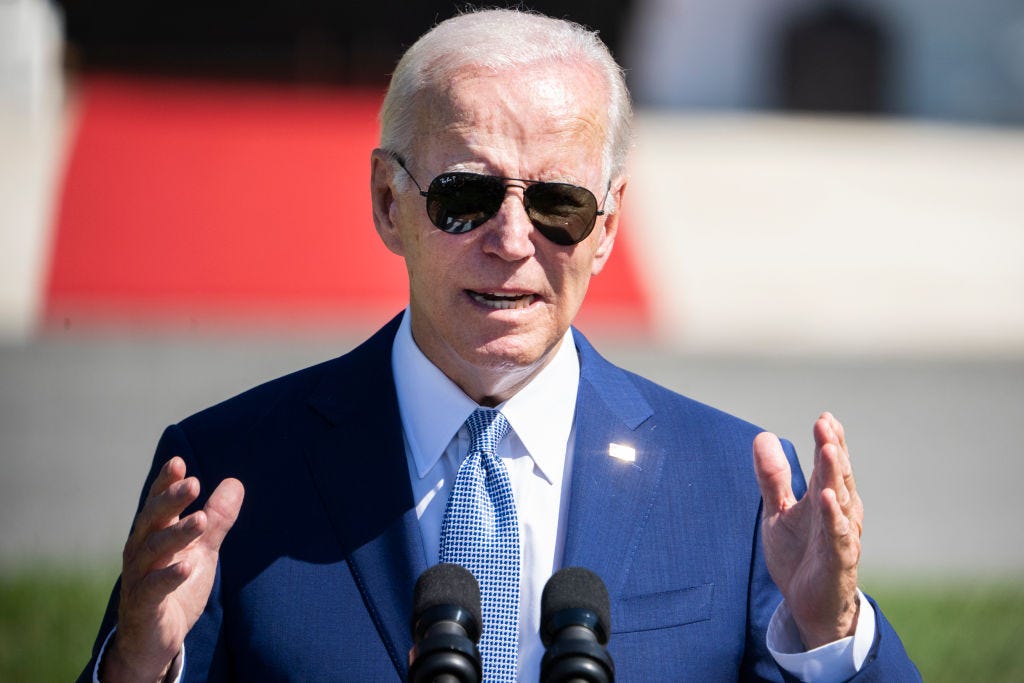
Yesterday, President Joe Biden tripped and fell at the Air Force Academy after handing diplomas to roughly 900 graduating cadets. He was helped to his feet by an Air Force officer and two Secret Service agents.
There. That seems straightforward. Biden tripped and fell, apparently not seeing a small sandbag in his path that was being used to weigh down a teleprompter stand. No big deal. We all stumble, bump into things, trip, and fall.
Why didn’t the Secret Service neutralize the sandbag that tripped our president?
So I have no idea why the New York Times described it like this:
President Biden appeared to trip and fall to his knees after handing out diplomas to graduates at the Air Force Academy in Colorado Springs.
He “appeared to”? Why the hedging? He obviously tripped and fell. And he had some trouble getting back up. That’s OK. He’s 80 years old and has some arthritis. We shouldn’t be surprised that this happened, nor should we try to qualify it. “Appeared to” trip and fall—c’mon, man, as Biden might say.
What worries me much more about Biden is that he never holds press conferences and rarely speaks extemporaneously. Remember when presidents would hold televised press conferences and occasionally take challenging questions? These simply don’t happen anymore. Biden is kept isolated from the press, and when he does appear, the questions appear to be scripted, with Biden calling on reporters by name in pre-determined order.
Add to this the DNC’s policy that there will be no Democratic candidate debates in 2024, irrespective of how well rivals are polling, and it truly makes you wonder about Biden’s fitness for office. If he can’t handle a real unscripted press conference and can’t endure a 90-minute unscripted debate with rivals like Robert F. Kennedy Jr. and Marianne Williamson, how can he possibly be well enough to serve as president, unless, of course, he’s merely a figurehead, pushed and shoved and propped up by those around him?
Even Hillary Clinton of all people has said that Biden’s age is a legitimate issue in the 2024 election. (Clinton said this, it seems, as a reminder to the DNC that she’s ready to run if Biden should stumble and fall in the primaries.) I don’t know what’s happening behind the scenes, but so far the DNC is standing by their man, no matter how much he has to be propped up.
Personally, I don’t want Biden to run again for many reasons, but one is most certainly his age. He deserves to walk away with some dignity intact. Another four years as president for Biden would likely kill him; charges of ageism aside, the physical and mental demands of the presidency are simply beyond most people in their eighties. That’s no knock on Joe; it’s just reality.
Six days ago, I received an email from the New York Times informing me that “The counteroffensive is coming.” It was all about Ukraine and its plans to take the fight to the Russians. Overall, I’d describe the tone of the article as almost giddy. Isn’t it great that Ukraine will soon be killing more Russians?
Readers here know I’m for diplomacy. Russia and Ukraine share a long border and history. They need to find a way to end this war and live together, and we should be helping them do this. The longer the war lasts, the more bitter it will get, even as events become more unpredictable. Nuclear escalation is quite possible. Yet the New York Times is gushing about Ukraine using the element of surprise and combined arms warfare to teach all those nasty Russians a lesson.
Map from the NYT Newsletter, citing the Institute for the Study of War. Interestingly, the map suggests Crimea as an objective of the promised Ukrainian counteroffensive
I liked this passage from the NYT article/newsletter: “The troops [of Ukraine] have learned a technique known as combined-arms warfare, in which different parts of the military work together to take territory. Tanks punch through enemy lines by rolling over trenches, for example, and infantry then spread out to hold the area.”
It sure sounds nice and clean. Tanks “punch through” and infantry “then spread out.” I’m sure glad the Russians have no tanks of their own, no anti-tank missiles, no machine guns, and no artillery.
Here’s another example from the NYT article of positive thinking and bloodless prose:
In the favorable scenario for Ukraine, a peace deal in which Russia is expelled from everywhere but Crimea and parts of the Donbas region would become plausible. On the flip side, a failed counteroffensive and an unbroken land bridge would provide Putin with a big psychological victory and a foundation from which to launch future attacks.
Only two scenarios? Either the Ukraine counteroffensive is a success, leading to a favorable peace deal, or it stalls, meaning victory for Russia and future Russian assaults? What about a wider war with Russia? Or a wildly successful attack that leads the Russians to deploy tactical nuclear weapons against it? Or an attack that Ukraine can’t sustain, leaving it vulnerable to Russian counterattacks in which Ukraine is convincingly defeated?
No matter what happens, we can count on at least two things as certain: more dead and wounded Russians and Ukrainians, and more profits for all those arms merchants providing weaponry to Ukraine, much of it paid for by American taxpayers, whether they know it or not.
Nowhere in this NYT newsletter is anything mentioned about the human costs of this much-anticipated Ukrainian counteroffensive. There’s only one mention of losses, and that comes with Russia:
Experts have compared the war’s recent months to World War I, with both sides dug into trenches and neither making much progress. Russia lost tens of thousands of troops this year merely to capture Bakhmut, a marginal city in the Donbas.
I’m glad Ukraine “lost” no troops in defending that “marginal city in the Donbas.” And who’s to say which city is “marginal” and which isn’t?
I’ve heard the NYT described as “liberal,” but when it comes to war, the NYT is a bloodthirsty cheerleader. Perhaps that’s the new face of liberalism in America today.
Watch out if the robots and computers copy their human creators
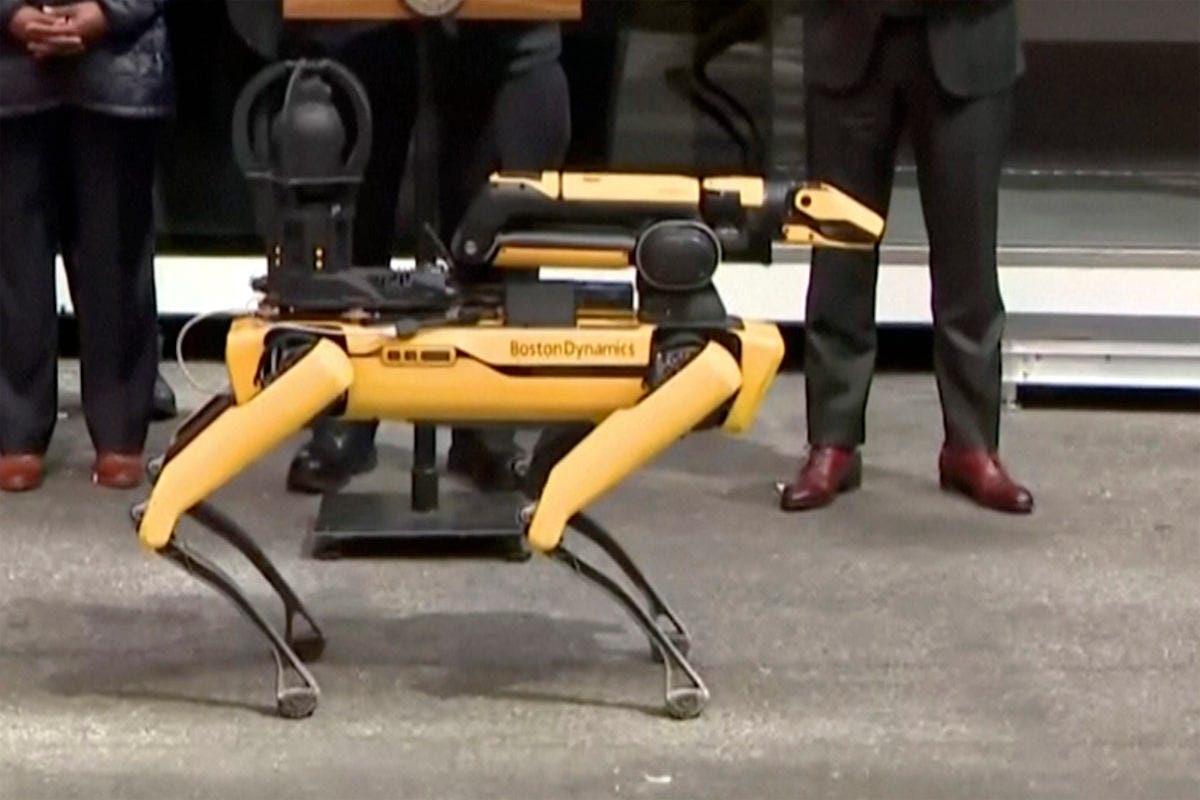
Robot dogs as potential enforcers. AI chatbots that write scripts, craft songs, and compose legal briefs. Computers and cameras everywhere, all networked, all connected, all watching—and possibly learning?
Artificial intelligence (AI) is all the rage as science fiction increasingly becomes science fact. I grew up reading and watching Sci-Fi, and the lessons of the genre about AI are not always positive.
To choose three TV shows/movies that I’m very familiar with:
Star Trek: The Ultimate Computer: In this episode of the classic 1960s TV series, a computer is put in charge of the ship, replacing its human crew. The computer, programmed to think for itself while also replicating the priorities and personality of its human creator, attempts to destroy four other human-crewed starships in its own quest for survival before Captain Kirk and crew are able to outwit and unplug it.
The Terminator: In this 1980s movie, a robot-assassin is sent from the future to kill the mother of its human nemesis, thereby ensuring the survival of Skynet, a sophisticated AI network created by the U.S. military that gains consciousness and decides to eliminate its human creators. Many sequels!
The Matrix: In this 1990s movie, the protagonist, Neo, discovers his world is an illusion, a computer simulation, and that humans are being used as batteries, as power sources, for a world-dominating AI computer matrix. Many sequels!
Sci-Fi books and movies have been warning us for decades that AI networks may be more than we humans can handle. Just think of HAL from Stanley Kubrick’s 2001: A Space Odyssey. Computers and droids of the future may not be like R2-D2 and C-3PO from Star Wars, loyal servants to their human creators.
Nothing to worry about: It’s a cute “Digidog” featured by the New York Police Department. You may be the one begging and rolling over, however.
As they say, it’s only a movie, but I do worry about too much hype about AI. If AI becomes a reflection of its human creators, especially a distorted one, we could have much to worry about.
Assuming computers could truly learn from their human creators, it makes sense they would act like us, pursuing violence and issuing death sentences in the name of AI’s security and progress.
To AI networks of the future, linked to robotic enforcer dogs and armed aerial drones, humans just might be the “terrorists.”
The best way to honor sacrifice is to seek an end to war and militarism
I was asked for a few words about Memorial Day. Here’s what I came up with:
On Memorial Day, we honor those who died in the service of our country. Let us do everything we can as a people and a nation to stop war and all its brutality. A peaceful future without war and all its awfulness is the best way to honor our troops, even as we cherish the memory of the heroes who gave their all.
Too often, Memorial Day is reduced to sales events, barbecues, and the like. It is, of course, a solemn occasion to remember the sacrifice of American service members. To honor the dead. To cherish their memory.
Yet one can also focus too narrowly on the veneration of the dead, using euphemisms like “the fallen” and speaking of how troops willingly “gave” their lives for their country. The best antidote to this is a short video by Andy Rooney for “60 Minutes” (when that show still had some principles and bite). Rooney, who’d served in World War II, knew of what he spoke. His goal was to end war, to save the living, to make a better world.
If you haven’t seen it, I urge you to watch it and to reflect on his sad and wise words.
Yesterday, Ron DeSantis announced his candidacy for President on Twitter; it didn’t go well due to “technical difficulties.” Something about his butchered announcement is telling. Yet what creeps me out about him isn’t his botched announcement with Elon Musk or even his record in Florida, which is bad enough, but rather his record in the U.S. military.
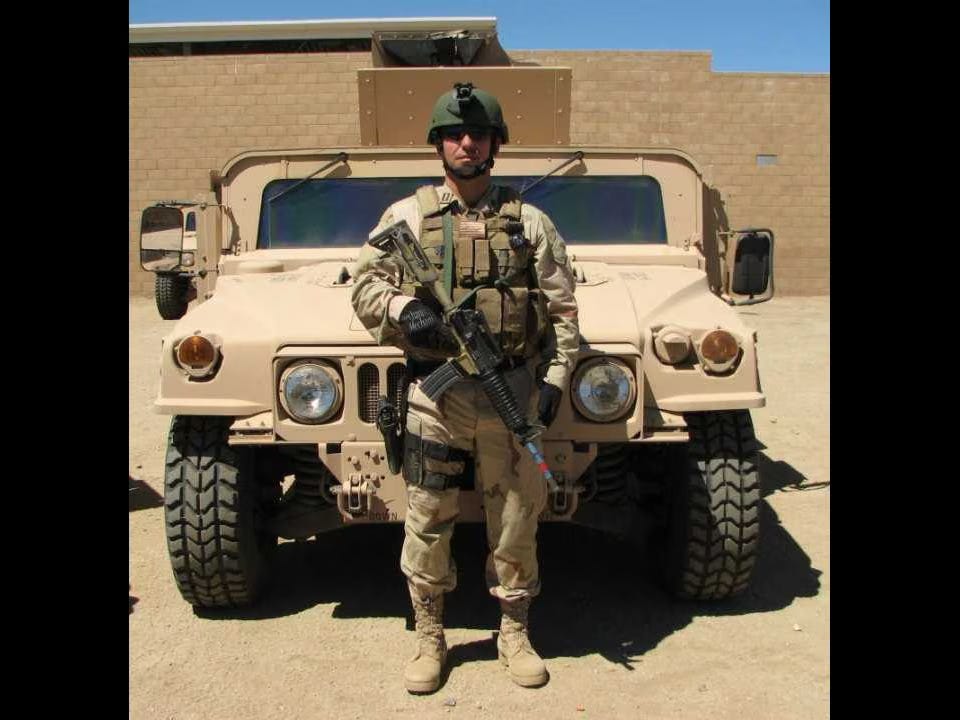
As a JAG (military lawyer), he seems to have facilitated torture at Gitmo (the prison at Guantanamo Bay in Cuba) and assassinations by Special Forces teams in Iraq. He was also fond of posing like a combat officer in desert camo holding an assault rifle. I doubt DeSantis was ever truly in harm’s way (same with me, by the way, but I never posed like a commando), but he loves to strike a pose. He even made a campaign commercial based on Tom Cruise’s “Maverick” in which DeSantis, of course, is the “Top Gun” of Florida.
Ron DeSantis, lawyer, ready to rock ‘n’ roll in Iraq
Meanwhile, speaking of image-making, according to the New York Times his wife Casey is cultivating a Jackie Kennedy-like image with her fashion choices (as a former TV news anchor, she knows the power of positive visuals). If image is everything, as those old camera commercials claimed, Ron DeSantis is burnishing his as a warrior-dad, which, I suppose, is better than the reality of a Harvard-trained power-hungry lawyer with no scruples.
There is something “off” about DeSantis, something inauthentic and dishonest, even more so than the typical politician. Call it a gut feeling.
But, moving past my “gut,” there’s the stunt DeSantis pulled in shipping immigrants seeking asylum in Texas to Martha’s Vineyard in Massachusetts. People are just pawns in his political power game. Again, not that unusual for an ambitious pol, but that doesn’t mean I want this charlatan to have his finger on the nuclear button.
I see him as a proto-Greg Stillson (from Stephen King’s “The Dead Zone”). A dangerous man. Strange as it may sound, Donald Trump strikes me as more authentic and less dangerous than DeSantis. Which, by the way, is no endorsement of Trump.
Mobsters are known for breaking kneecaps to bend people to their will. Marketers break into heads with repetitive and manipulative advertising, images, and narratives. Mobsters of the mind, they are.
I thought of this after watching all those repetitive (and largely interchangeable) ads for “legal” prescription drugs. Rarely do they show the often serious conditions they allegedly treat. Instead it’s image after image of people enjoying life, whether at amusement parks, the beach, dancing, or what-have-you. It’s as if drug companies are selling happiness pills whose only side effect is experiencing the best day of your life. Meanwhile, as images spill into your head of eternal bliss, a narrator quietly intones about potential serious side effects, even possible death in the case of one drug I’ve seen advertised.
Excuse me while I pop a few pills and denounce Russia—or China
Drug ads are the worst. People wonder why Americans take so many illegal drugs and why we have so many drug addictions — well, just look at all the ads for legal drugs, and how they’re advertised as making people incandescently happy. It’s all about the messaging: the repetition of powerful feel-good imagery, with drugs as panaceas.
Speaking of repetition, something similar is true of political manipulation. To cite one example: Russia. Has there ever been a worse “drug” with more serious side effects than Russia? Russia keeps hacking our elections! Russia is led by war criminals! Russia is raping Ukraine! Over and over again, the mainstream media encourages us to hate Russia and Vladimir Putin. Is this truly all we need to know about Russia? As Sting sang, don’t the Russians love their children too? (Back in the 1980s, the media didn’t go easy on Sting for his alleged naïveté and pro-Russian sentiments.)
Whether it’s drug advertisers, the mainstream media, or the U.S. government for that matter, America is infested with various “ministries of truth” that are driven by a mobster-like mentality. They may not break your kneecaps, but they nevertheless find ways to break into your mind.
Now you’ll excuse me while I pop a few pills while denouncing Russia. And China too, perhaps?
Matt Taibbi and Walter Kirn on “Catch-22” and Bureaucratic Madness
I wanted to share with you a conversation between Matt Taibbi and Walter Kirn on Joseph Heller’s classic satire, “Catch-22,” that focuses on the idea of loyalty oaths but that has much broader implications for our society today. Their entire conversation is well worth reading, but this passage is especially penetrating and important.
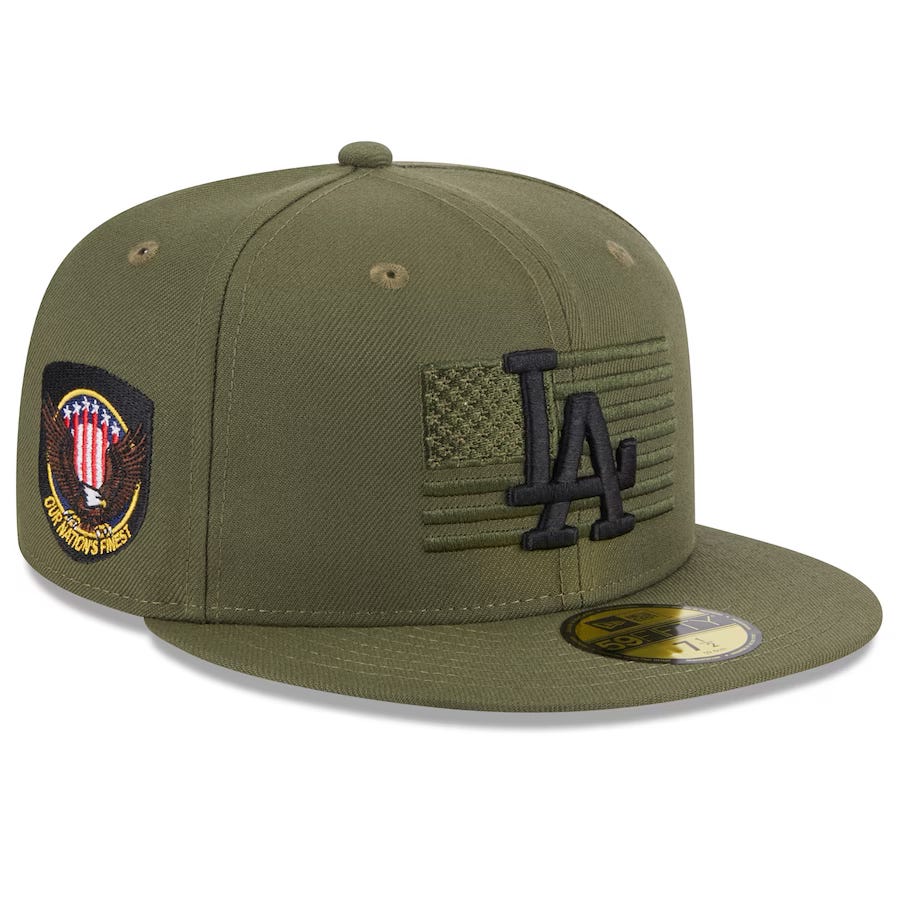
Profess your loyalty with a baseball cap for Armed Forces Day. $50 or less. Buy them for everyone in your family. You can’t be too patriotic — or too careful.
Matt Taibbi: That seems like a good place to segue into the story from this week.
On Joseph Heller’s “Catch-22,” in particular, “The Great Loyalty Oath Crusade.”
Walter Kirn: So we don’t end up being polite and going, no, you do it. No, you do it. It’s Chapter 11 of Catch-22 entitled “Captain Black.” Some people know it as the chapter called “The Great Loyalty Oath Crusade.” It tells a very simple story. There’s an officer on the air base where Catch-22 is set, and he’s been passed over for promotion. His name’s Captain Black, and he lost out when another officer was killed in battle, he thought he would succeed to his post, but he didn’t. Another guy, Major Major, got the job. So how is he going to take his revenge? How is he going to become important on the base? He comes up with the notion that he will start forcing all the troops and all the bombers and the crews of the different aircraft to take a “loyalty oath”, which he has to authorize before they can do anything.
And not just one loyalty oath, because they easily pass that test. They do it, but it’s two, three, four, until the point where the entire air base and its missions are paralyzed by the need to recite these oaths. If you want to get your plane off the ground, if you want to fuel your plane, if you want to eat lunch, you have to recite one of these oaths. And finally, the bureaucratic necessity of reciting oaths completely paralyzes the entire operation such that Heller says they were no longer able to even respond to emergencies. They were no longer able to respond to reality, because almost all they were doing was reciting these oaths over and over and over.
And it was assumed that if you had recited one oath and a minute had passed before you had recited the next one, that you might have become disloyal in the meantime. I guess what this all is a metaphor for is the notion that requiring loyalty of people is a bottomless request, which finally becomes an end in itself. Just as we saw at the hearing yesterday, let’s not get to the substance of what you’re alleging here. Let’s have you recite the oath first and did you recite it correctly and could you recite it again, and do you agree that it’s necessary? So by a Zeno’s arrow thing, you never get to the issue of anything because loyalty must always be the primary question and it is always doubted.
Matt Taibbi: Heller has this great line about the doctrine of “continual reaffirmation” that Captain Black originated. And the quote is,
A doctrine designed to trap all those men who had become disloyal since the last time they had signed a loyalty oath the day before.
Nobody has the authority to stop this thing. Even the colonel in the group, Colonel Korn, he’s complaining: “It’s that idiot Black off on a patriotism binge.”
But when they’re deciding what to do about it, he just says:
Well, this will probably run its course soon. I think the best thing now is to send Captain Black a letter of total support and hope he drops dead before he does too much damage.
In other words, even the people who have authority, once one of these things gets going, nobody wants to get in front of this buzz saw. And if they do, they get cut down.
Walter Kirn: You can’t stop it because as is the abiding theme of Catch-22, you can never get off the hook with a bureaucracy that wants everything. You can never pass the loyalty oath because the one you took was a minute ago, are you taking one now? The perfect loyalty oath, in other words from a bureaucratic point of view, is one that no one can ever pass. One that never ends.
The perfect accusation in a witch trial is one that you can never be innocent of. And I wrote, “The more absurd loyalty oath, and the more often it is required, the better.” Anyone can repeat a loyalty oath that’s true and it is offered only once, but only the truly submissive will repeat it over and over until it loses all meaning. Because finally, what bureaucracy wants of you is humiliation and submission. It doesn’t want an answer. It doesn’t want to give you a pass and say, “You are free to go now. You may enter, you may run your mission. You’ve got your credential.” It wants total power. And total power can only be had if you are never declared loyal.
Matt Taibbi: The only people who succeed in this system are complete sociopaths with no shame. I think that’s one of the great things about this chapter is the way he starts off, Heller — one of the great things about this book in general is his ability to make snap characterizations. I mean, it takes even very skilled authors a paragraph to capture the personality of a person, but he’s able to do it in a sentence or two over and over again.
With Captain Black at the very start of this chapter, he gets a phone call that the unit is going to have to attack Bologna, which is heavily guarded and is going to involve a tremendous number of casualties. There’s a scene:
Captain Black brightened immediately. Bologna, he exclaimed with delight. Well, I’ll be damned.” He broke into loud laughter, “Bologna?” He laughed again and shook his head in pleasant amazement. “Boy, I can’t wait to see those bastards’ faces when they find out they’re going to Bologna.”
And then he goes down again and keeps repeating this.
”That’s right, you bastards, Bologna.” He kept repeating to all the bombardier who inquired incredulously if they were really going to Bologna. “Ha, ha, ha! Eat your livers, you bastards.”
He’s a total sadist. The only thing that has any meaning in his life is that as you said, he was passed over for this promotion when somebody else got killed. The person who stepped in his place was Major Major, a hilarious character to whom all kinds of things happen. Among his distinctive qualities is that he looks like Henry Fonda. When the officers are talking about this, this is where the idea for the loyalty oath comes:
Captain Black asserted that Major Major really was Henry Fonda. And when they remarked it Major Major was somewhat odd. Captain Black announced that he was a communist.
“They’re taking over everything.” He would declare rebelliously. “Well, you fellows can stand around and let them if you want to, but I’m not going to. I’m doing something about it. From now on I’m going to make every son of a bitch who comes to my intelligence tent sign a loyalty oath.”
There’s a great line. “He had really hit on something.” That’s when it starts this whole description of how you have to sign an oath to go to the PX to buy anything, to get your hair cut, to get paid, to do anything. This idiotic, insipid character, who has no positive qualities and is a pure careerist, for whom even the death of other people is totally meaningless, he’s exactly the person who succeeds in this bureaucracy, because bureaucracies are designed to elevate such people.
Walter Kirn: This is why literature is a superior form of analysis for the human condition over politics. Politics has us believe that the content of our arguments matter, that the positions and ideas we’re arguing about matter, but literature suggests that rituals are rituals and human passions are human passions. And that sweep aside what people are talking about and what people are saying and focus on what they’re actually doing. And in this case, we have Black proclaiming Major Major a communist, and the suspicion of communism among the troops becomes the basis for the Great Loyalty Oath. But it could just as well be that he could have accused them of being MAGA or fascists, because loyalty oaths are the same no matter what the occasion for their administration. They are rituals of dominance and submission, they are ritualistic affirmations of the bureaucracy’s preeminence. [Emphasis added.]
We constantly are amazed by the fact that the same machinations that the anti-communist McCarthyite put into place in the fifties are now being used by the liberal party against the presumably patriotic side. In other words, we now have not communist-hunting but MAGA-hunting. And we think that something has changed because politics makes us think it’s all about the ideas. It’s not. It’s all about the whatand who sits above, and who sits below; who administers the oath and who has to take it. Who has the power to come up with an oath, and who is so unfortunate that they have to recite them?
What we’re seeing in American politics is a recapitulation in terms of structure and form of an old drama. But the words have changed, and the names for evil have swapped. And in some ways the D or the R on the desk, the Democrat or Republican plaque, has changed sides, but we’re seeing the same thing. What Heller’s showing in this novel is that bureaucracy itself serves its own interests over and above any particular problem that it’s there to solve.
These people are there to win a war. The great irony of Catch-22 is that this intense deadly war that’s going on in the background, is, actually in the background. What people are really concerned about are their promotions, whether they’ve filled out forms correctly, have they won the esteem of their superior? Have they triumphed over their inferior? And meanwhile, people are dying, thousands of people are being bombed and planes are going down. But that hardly matters when there are new stripes to be won for your uniform, or an extra lunch to be had at the commissary, or whatever. So the book’s continuing comedy is the inversion of values in which the institution is all important, and the purposes are forgotten. [Emphasis added]
END OF EXCERPT
OK, I’m back. I hope you enjoyed reading that passage. It helps to explain why the Pentagon/MICC continues to grow in power even as it’s lost every major war since World War II (ironically the historical setting for Heller’s brilliant satire).
Believe me, I’ve met my share of officers in the U.S. military who weren’t concerned with the mission or higher ideals like their oath to the Constitution. They were concerned about getting promoted and enlarging their own personal rice bowl (an image used often when I was on active duty).
How to stop a runaway bureaucracy that insists on your loyalty and obedience, repeated ad infinitum, is one of the great issues of this moment. With military propaganda in full swing this weekend (It’s Armed Forces Day!), you had best salute the troops smartly and show your loyalty, as baseball players are, by wearing special olive drab military-themed caps to celebrate “our nation’s finest.” Available for less that $50 each at MLB!
If you miss this weekend (Are you sure you’re a real American?), there’ll be themed caps for Memorial Day and July 4th. And if you’re not a baseball fan, the NFL will get you in the fall at all its “Salute to Service” celebrations.
When I was teaching college in Pennsylvania, I had a colleague whose car sported a telling bumper sticker: “Our national health care plan: Don’t get sick.” As true as that is, I think America’s real health care plan can be summed up by a corporate motto of my own coining: You can make a lot of money off sick people.
This came to mind today as my wife returned from a routine medical appointment. She overheard a lady complaining to a clerk that she didn’t understand her health insurance and why her latest procedure hadn’t been covered. Meanwhile, my wife noticed a sign about Medicare at the office, something about a new requirement that medical professionals were apologizing for in advance. And so it goes in the land of the free …
If you’re an American and 100% pleased with your medical care, you are a rare bird indeed. It’s an incredibly complex “system” with its own logic driven by the need to make money, whether off drugs or surgical procedures or whatever. I’ve talked to doctors and they tell me they’re typically allotted fifteen minutes per patient. They have to see a certain number of patients per hour, creating billable actions in the computer tablets they increasingly carry around with them, to fulfill quotas and to stay in business.
A heart specialist I was seeing, a truly sympathetic and knowledgable doctor, got fed up with all the emphasis on billing and money and took another position at a different hospital where he could do more research. At his practice, I noted new computer monitors in the examination rooms featuring videos that advertised drugs to lower cholesterol, improve blood pressure, and the like, along with pamphlets featuring shiny happy people taking various drugs related to heart and blood care. Honestly, I felt good for my doctor that he was going to a better job for him even as I felt bad for all his patients, myself included.
A big reason I supported Bernie Sanders was his seemingly empathetic and principled call for affordable health care for all, some kind of national plan that would deemphasize the profit motive, ending the tragic reality that some Americans have to choose between their own health and bankruptcy. Naturally, the Democratic Party, in league with big Pharma, health insurers (they should be called health deniers for their business model that seeks to deny claims whenever possible), and other corporate forces, threw their considerable financial support behind corporate tools like Hillary Clinton and Joe Biden.
He promised a public option. I guess he forgot about it.
Speaking of Biden, he of course promised a public (government) option on the campaign trail, only to renege on that promise once he became president. Biden, a tired corporate hack, will never go to bat for affordable health care, which is no endorsement of his Republican opponents. Their “plan” consists of encouraging bake sales and go-fund-me appeals along with vague hints of Scrooge-like notions: If you can’t afford your health care, you had best die to decrease the surplus population.
Are there no prisons, no workhouses?
The health of our society, in a sense, is the aggregate of the health of 333 million of us. Americans are increasingly sick, obese, depressed, tense, even suicidal. And it seems the first question some “providers” ask here is: How can I make money off this?
P.S. I kid you not. I just got an email from Amazon saying that “Your new pharmacy is here.” I feel happier and healthier already!
Former President Donald Trump went on CNN last week and said something sensible. When asked if he wanted Ukraine to win the war, Trump replied he didn’t think about the war in terms of winning and losing. His priority was to stop the killing on both sides by ending the war. Naturally, he boasted he could end the war in 24 hours, surely a hyperbolic claim, though if the U.S. ended its massive package of military and financial aid, Ukraine would likely be forced to sue for peace, and quickly.
Interestingly, the CNN anchor badgered Trump, trying to get him to say he favored Ukraine over Russia and that Ukraine had to win. Trump, to his credit, was having none of it. Nor would Trump declare that Putin was a war criminal for the sensible reason that such a declaration would make a diplomatic settlement much more problematic.
Readers here know I’m no fan of Trump. I think he’s a dangerous con man without a clue about what public service is about. But I give him credit for not giving the easy answers, the expected ones, that Ukraine must win, that Russia must lose, that Putin is a war criminal, and that as long as Ukraine wins it really doesn’t matter how many people die in this disastrous war.
Former President Donald Trump at the recent CNN “Town Hall”
The CNN anchor never bothered to define what “winning” looks like for Ukraine. I assume she meant something like this: All Russian troops expelled from Ukraine; democracy flourishing in Ukraine as the country is rebuilt, in part from sanctions put on Russia; Ukraine eventually joining NATO; and perhaps even the end of Vladimir Putin’s power and his possible execution as a war criminal. Such a decisive win for Ukraine is unlikely; what I see is more stalemate, more dead and wounded on both sides, more destruction, and escalatory pressure as the war continues without a clear end in sight.
I can’t fault Trump for wanting to stop the killing in the Russia-Ukraine War. I also can’t fault him for refusing to take the bait and declaring Ukraine must win. It matters because a lot of Americans find Trump attractive because he’s willing to pose as antiwar. Clearly, he’s an alternative to the Democrats and Joe Biden who insist on prosecuting the war for reasons that I believe are largely cynical and self-interested.
Americans are war-weary. Very few Americans, I think, truly want a war with Russia or China. Trump is a serial liar, a venal manipulator, and a selfish braggart, but he doesn’t want World War III. Who knows: that very fact alone might be enough to win him four more years in the Oval Office.
Its biggest advantage is that it knows what it wants
The military-industrial-congressional complex (MICC) has a huge advantage over its critics. Its proponents are united by greed and power. They know exactly what they want. Like Johnny Rocco in “Key Largo,” they want MORE. More money. More authority. And obviously more weapons and more war.
Whereas critics of the MICC tend to approach the beast from different angles with different emphases. Tactical differences lead to fissures. Fissures prevent coalitions from forming. Unity is lacking, and not for want of trying. And so the MICC rumbles on, unchallenged by any societal force that is remotely its size.
A colleague of mine, Dennis Showalter, was fond of a saying that helps to explain the situation. Critics and intellectuals, he said, have a propensity to see the fourth side of every three-sided problem. Analysis leads to paralysis. The tyranny of small differences prevents unanimity of purpose.
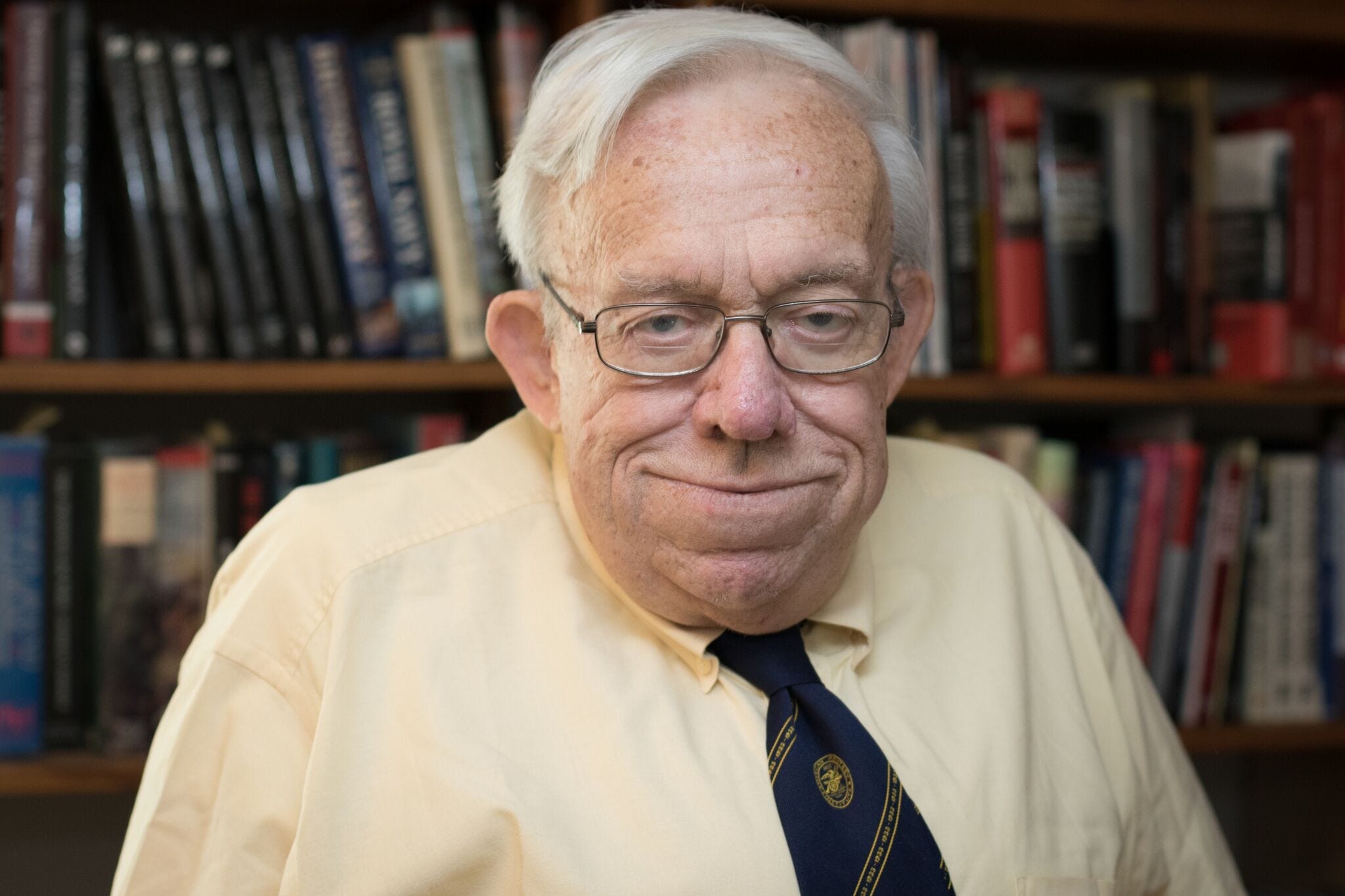
Dennis Showalter, a fine historian and a better friend.
Another key strength of the MICC is reflected in an alternate acronym: the MICIMATT, which adds the intelligence “community,” the mainstream media, academe, and various think tanks to the military, industry, and Congress. To that we might also add the world of sports, entertainment (Hollywood and TV especially), and the very idea of patriotism in America with all its potent symbols. I’d even add Christianity here, the muscular version practiced in the U.S. rather than the compassionate version promulgated by Christ.
When you focus just on the MICC, you miss the wellsprings of its power. It’s not just about greed and authority, it’s about full-spectrum dominance of all aspects of American life and society.
America hasn’t won a major war since World War II, but the MICC has won the struggle for societal dominance in America. Serious challenges to it will require Americans to put aside differences in the name of a greater cause of peace and sanity. The wildcard here, of course, is the ever-present hyping of fear by the MICC.
FDR told Americans the only thing we truly needed to fear was fear itself. Fear paralyzes the mind and inhibits action. Fear is the only darkness, Master Po said in “Kung Fu.”
If we can overcome our fear and our differences to focus on building a more compassionate world, a world in harmony with nature and life, then maybe, just maybe, we can see the foolishness of funding and embracing an MICC based on an unnatural pursuit of destruction and death.