With Trump’s election, it’s a bull market at the Pentagon
W.J. Astore
In two recent speeches, President Obama has repeated the conceit that the United States is “the indispensable nation.” Apparently, that means the U.S. must lead “the free world,” with a none-too-subtle corollary that other “free” nations must follow. Yet the conceit of indispensability gets the U.S. into serious trouble. It facilitates interventionism and meddling, and when the U.S. intervenes and meddles, it’s almost always in military ways, often disastrously (Afghanistan, Iraq, Libya are just three recent examples).
This is hardly surprising. The U.S. military has roughly 800 bases worldwide. Its aircraft carriers are essentially mobile American bases, bristling with weapons and munitions. The U.S. spends roughly $600 billion a year maintaining this military and empire, even as it continues to dominate the world’s arms trade. This heavy investment in weaponry and war-making, abetted by a mentality that celebrates “global reach, global power,” is a strange way to define your nation as being “indispensable.”
How did America come to invest so much of itself in military weaponry and incessant wars? One reason is the quest for total safety. As one of my friends put it:
It [the notion of total safety] must be a post-1941 thing [after the shocking sneak attack on Pearl Harbor]. I think in both cases (1917 [U.S. entry into World War I] and 1941 and maybe 2001) the question Americans have asked is how to keep an evil “over there” somehow from affecting us. In all three cases, I think the answer was neutrality until neutrality no longer seemed to offer safety. My guess is that the idea that total safety required global involvement comes from c.1948, fears of the USSR’s globalism, atomic paranoia, and the desire to protect and preserve the new American affluence. Thus NSC-68 gets passed with nary a whisper of opposition.
What is NSC-68? We must turn the clock back to 1950, the Cold War, and the Truman Administration, as detailed here by The History Channel:
According to the [National Security Council’s] report, the United States should vigorously pursue a policy of “containing” Soviet expansion. NSC-68 recommended that the United States embark on rapid military expansion of conventional forces and the nuclear arsenal, including the development of the new hydrogen bomb. In addition, massive increases in military aid to U.S. allies were necessary as well as more effective use of “covert” means to achieve U.S. goals. The price of these measures was estimated to be about $50 billion; at the time the report was issued, America was spending just $13 billion on defense.
Under President Trump, we’re likely to see a new version of NSC-68, another expansion of the U.S. military (and U.S. militarism), along with covert action by a newly empowered CIA, this time in the name of containing and defeating radical Islam rather than godless communism.
Defense company stocks are already soaring at the prospect of much higher military spending under Trump, notes William Hartung today at TomDispatch.com. Trump is difficult to predict, so Hartung takes him at his word in this passage:
A window into Trump’s thinking [on defense] can be found in a speech he gave in Philadelphia in early September. Drawing heavily on a military spending blueprint created by Washington’s right-wing Heritage Foundation, Trump called for tens of thousands of additional troops, a Navy of 350 ships (the current goal is 308), a significantly larger Air Force, an anti-missile, space-based Star Wars-style program of Reaganesque proportions, and an acceleration of the Pentagon’s $1 trillion “modernization” program for the nuclear arsenal (now considered a three-decade-long project).
Todd Harrison of the Center for Strategic and International Studies estimates that, if Trump faithfully follows the Heritage Foundation’s proposal, he could add more than $900 billion to the Pentagon’s budget over the next decade.
In other words, Obama’s America, the “indispensable nation,” is likely under Trump to channel enormous resources into more weapons even as Trump’s military advisers, men like retired general Mike Flynn, posture for a no-holds-barred crusade against “the cancer” of radical Islam around the globe.
Here’s a harsh truth: America has allowed its arsenal of democracy of World War II fame to become simply an arsenal. A nation that fought in the name of democracy in two world wars has become one that wages endless wars driven by a crusader’s righteousness.
He doesn’t speak softly, even as he now inherits a very big U.S. military stick. REUTERS/Jonathan Ernst
W.J. Astore
I’d never watched a U.S. presidential candidate who scared me – truly scared me – until the Republican debate on March 3, 2016. This candidate literally gave me the creeps. As a historian and as a retired U.S. military officer, his answer to a question on torture and the potential illegality of his orders if he became the military’s civilian commander-in-chief horrified me. The next day, I wrote a short blog post in which I argued that this candidate had disqualified himself as a candidate for the presidency. That candidate’s name was Donald Trump.
What did candidate Trump say that so horrified me? He said this: They [U.S. military leaders] won’t refuse [my illegal orders]. They’re not going to refuse me. Believe me. After again calling for waterboarding and more extreme forms of (illegal) torture, as well as not denying he’d target terrorists’ families in murderous reprisal raids, candidate Trump then said this: I’m a leader. I’m a leader. I’ve always been a leader. I’ve never had any problem leading people. If I say do it, they’re going to do it. That’s what leadership is all about.
As I wrote at the time, “Our military does not follow blindly orders issued by ‘The Leader.’ Our military swears an oath to the Constitution. We swear to uphold the law of the land. We don’t swear allegiance to a single man (or woman) as president.”
“Trump’s performance … reminded me of Richard Nixon’s infamous answer to David Frost about Watergate: ‘When the president does it, that means it’s not illegal.’ No, no, a thousand times no. The president has to obey the law of the land, just as everyone else has to. No person is above the law, an American ideal that Trump seems neither to understand nor to embrace.”
“And that disqualifies him to be president and commander-in-chief.”
Yes, I wrote those words just before the Ides of March. And yet here we are, with Trump as our president-elect and, come January 2017 the U.S. military’s next commander-in-chief. What the hell?
Confronted with criticism of his remarks that the U.S. military would follow his orders irrespective of their legality, Donald Trump soon walked them back. But for me his dictatorial instincts, his imperiousness, and, worst of all, his ignorance of or indifference to the U.S. Constitution, stood revealed in horrifyingly stark relief. Little that Trump said or did after this major, to my mind disqualifying, gaffe convinced me that he was fit to serve as commander-in-chief.
Here’s what I wrote back in March about the prospect of Trump serving as commander-in-chief:
Donald Trump: Lacks an understanding of the U.S. Constitution and his role and responsibilities as commander-in-chief. Though he has shown a willingness to depart from orthodoxies, e.g. by criticizing the Iraq War and the idea of nation-building, Trump’s temperament is highly suspect. His bombast amplified by his ignorance could make for a deadly combination. Hysterical calls for medieval-like torture practices are especially disturbing.
Another disturbing tack he took was to suggest that he’d clean house among the military’s senior ranks — apparently, America today doesn’t have enough men like George Patton and Douglas MacArthur, Trump’s all-time favorite generals. Patton was a notorious hothead, and MacArthur was vainglorious, egotistical, and insubordinate. Leaving that aside, Trump doesn’t seem to understand that the president is not a dictator who can purge the military officer corps. Officers are appointed by Congress, not by the president, and they serve at the will of the American people, not at the whim of the president.
Combine Trump’s ignorance of the U.S. Constitution with his cavalier attitude toward nuclear weapons and you truly have a combustible formula. Clearly, Trump had no idea what America’s nuclear triad was during the Republican primary debates, but few people in the media seemed to care. (Gary Johnson, meanwhile, was pilloried by the press for not knowing about Aleppo.) Trump gave statements that seemed to favor nuclear proliferation, and seemed to suggest he saw nuclear weapons as little different from conventional ones. He also repeated that hoary chestnut, vintage 1960, that some sort of “missile gap” existed between the U.S. and Russia: the lie that Russia was modernizing its nuclear forces and the USA was falling hopelessly behind. Again, there was little push back from the press on Trump’s ignorance and lies: they were enjoying the spectacle and profits too much.
When it comes to nuclear war, ignorance and lies are not bliss. Can Trump grow up? Can he become an adequate commander-in-chief? America’s future, indeed the world’s, may hinge on this question.
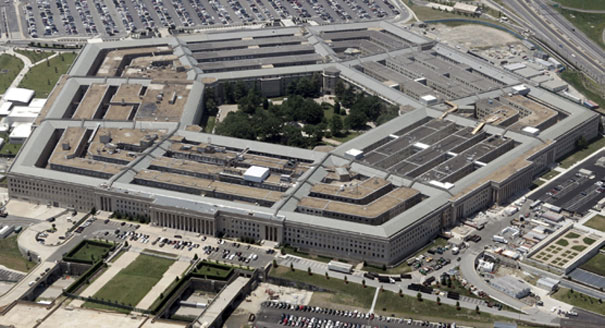
In the puzzle palace on the Potomac, nothing succeeds like failure
W.J. Astore
When it comes to the Pentagon, nothing succeeds like failure. That is the message of William Hartung’s latest article at TomDispatch.com. The Pentagon, Hartung notes, continues to receive massive funding from the American taxpayer, even as its various wars drag on, seemingly without end. Hartung, who wrote a book on Lockheed Martin and the military-industrial complex, has a knack for revealing the latest Pentagon follies. Even as you read his latest at TomDispatch.com, I’d like to add two more items to his list:
1. Washington Think Tanks: Perhaps you’ve heard of them, centers for thinking about national defense, hiring the best and the brightest to come up with disinterested recommendations to safeguard America. Ha! A few days ago, The National Interest ran an article on what these think tanks were proposing, the “latest fashions in warfighting,” as the article’s title put it. Please note there’s no “fashion” in peacemaking or war-ending.
Four out of the five think tanks featured in the article were in basic agreement. “Deterrence” had to be based on massive investments in offensive weaponry. There was much agreement as well on modernizing America’s nuclear arsenal, on the need to feature more drones and other unmanned platforms, on air power and power projection, as well as support for the wildly expensive F-35 jet fighter. In sum, more of the same at the Pentagon, only more.
One think tank, the Cato Institute, a Libertarian outfit, dared to depart from Pentagon orthodoxy. Cato called into question the Pentagon’s need for better nukes, prodigal jet fighters, and similar “sticker shock” items on the Pentagon’s wish list. This dissent drew a stinging rebuke from The National Interest, which suggested Cato had developed a defense plan for Canada rather than the great and powerful USA.
To that I say, tell me again what is wrong with Canada?
A question: If four out of five think tanks essentially agree with each other, are not at least three of them redundant?
2. Forcing Soldiers to Pay Back Bonuses: Yes, you read that right. Even as the Pentagon spends nearly $750 billion a year, even as it avoids any semblance of an audit, U.S. troops who fought overseas are being forced to pay back bonuses that the Pentagon gave them, apparently by mistake (but also with some fraud involved on behalf of recruiters), at a time when the U.S. military was under duress to improve retention rates.
Let’s be clear: In accepting the bonuses, the individual troops were not at fault. They took the money in good faith from a military that patted them on the back for staying in. But now the military says, whoops, we were wrong, we want the money back.
In Pentagon terms, we’re not talking big money. We’re talking chump change. It’s $15,000 here, $30,000 there. But of course it is big money to the troops and their families. Consider the stress of having government-sanctioned collection agencies on your tail. One soldier had to refinance his house to raise the money to repay an incentive bonus he’d accepted in good faith.
Here’s the kicker. In California, where these abuses and mistakes happened, the military “assigned 42 auditors to comb through paperwork for bonuses and other incentive payments given to 14,000 soldiers.”
Imagine that. The Pentagon can’t even hold an audit, let alone pass one, but it’s willing to hire a platoon of auditors to go after troops and their bonuses.
Here’s my recommendation: Let’s deploy an army of 42,000 auditors to comb through Pentagon paperwork for waste, fraud, and abuse. Let’s get our money back, America. And let’s stop thinking about “fashions” in “warfighting,” and instead dedicate ourselves to ending our wars — before they end us.
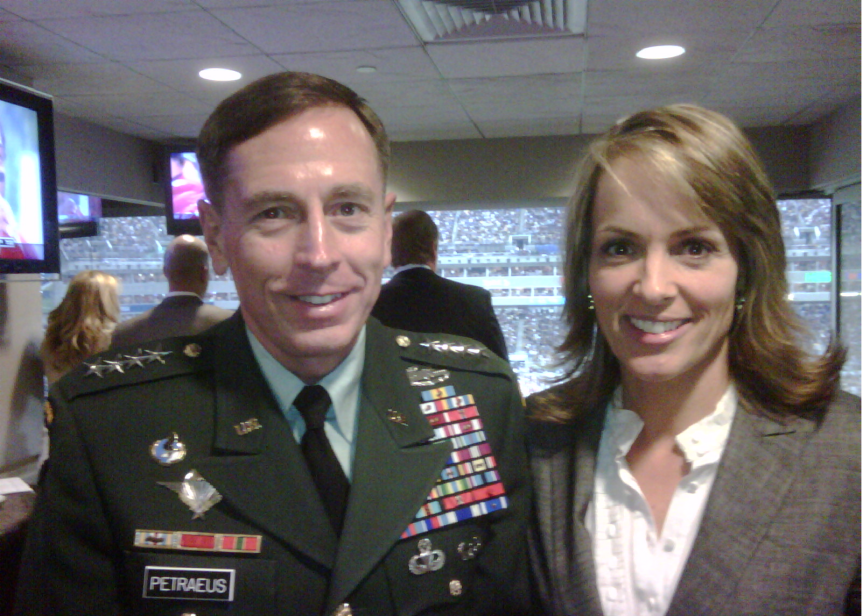
General (retired) David Petraeus was on PBS the other day to explain the current Iraqi offensive on Mosul. Sure, his military “surges” in Iraq and Afghanistan had no staying power, and he disgraced himself by sharing classified information with his mistress during an extramarital affair, but nevertheless let’s call on him as an unbiased “expert” on all things military. Right?
But that’s the extent of what we [the U.S.] can do [in Iraq today]. We can encourage, we can nudge, we can cajole [the Iraqi military and Kurdish forces]. We can’t force. And it is going to have to be Iraqis at the end of the day that come together, recognizing that, if they cannot, fertile fields will be planted for the planting of the seeds of ISIS 3.0, of further extremism in Iraq.
Wow. There’s no sense here that the U.S. is to blame for planting the seeds of Iraqi extremism (or, at the very least, fertilizing them) in those “fertile fields.” Overthrowing Saddam Hussein in 2003 and demobilizing Iraqi military forces predictably left a power vacuum that facilitated factionalism and extremism in Iraq, which was only exacerbated by an extended and mismanaged U.S. occupation. Petraeus’s “Surge” in 2007 papered over some of the worst cracks, but only temporarily, a fact that Petraeus himself knew (consider all his caveats about “gains” being “fragile” and “reversible”).
But no matter. Petraeus is now saying it’s up to the Iraqis to get their act together, with some “nudging” and “cajoling” by the U.S. I’m sure Iraqi leaders are happy to learn that U.S. experts like Petraeus are behind them, ready to encourage and nudge and cajole. They’re likely happiest with U.S. Apache helicopters and direct tactical assistance via Special Ops teams (yes, there are U.S. boots on the ground, and they’re in harm’s way).
And Petraeus’s reference to ISIS 3.0: Isn’t it strange to compare a terrorist organization’s evolution to a new software product roll-out? Petraeus might have added that ISIS 1.0 came as a result of the extended U.S. occupation of Iraq, and that ISIS 2.0 came as U.S. forces pulled out, leaving behind Iraqi security forces that the U.S. claimed were ready to defend Iraq, but which fled in 2014, abandoning their weapons and equipment to ISIS forces. Put plainly, U.S. bungling helped to launch ISIS 1.0 and to equip ISIS 2.0. And yet Petraeus suggests if there’s an ISIS 3.0, that version will be entirely the fault of the Iraqis.
Throughout the Petraeus interview, there’s a callous calculus in place. For example, earlier in the interview, Petraeus casually notes the population of Mosul, originally 2 million people, is down to 1.2 million and dropping. Nothing is said about the missing 800,000 Iraqis. Most are refugees, but many are dead. Doesn’t their fate suggest a colossal failure of the war and occupation you ran, General Petraeus? But questions such as this are never asked in the mainstream media.
In its long wars in the Greater Middle East, the U.S. has an incredibly short and corrupted memory. Indeed, to stay with Petraeus and his software analogies, the American memory is a circular file that is constantly overwritten with flawed data. That’s a recipe not for smooth running but for catastrophic crashes. And so it has proved.
Much of the post-debate analysis I’ve read from last night’s presidential debate has focused on Donald Trump’s crudeness, his threat to prosecute and jail his political opponent, the way in which he stalked her on the stage, looming in the background and crowding her, and finally his non-apology apology about “locker room banter.” Yes: Trump is most definitely lewd, crude, and socially unacceptable, but that’s hardly the worst of his qualities.
His worst quality? His sweeping ignorance to the point of recklessness when it comes to matters of national defense, and specifically America’s nuclear arsenal.
This is what Trump had to say last night about the U.S. nuclear deterrent:
But our nuclear program has fallen way behind, and they’ve gone wild with their nuclear program. Not good. Our government shouldn’t have allowed that to happen. Russia is new in terms of nuclear. We are old. We’re tired. We’re exhausted in terms of nuclear. A very bad thing.
This is utter nonsense. First off, nuclear weapons are not people. They don’t get “tired” or “exhausted” or “old.” Second, the U.S. nuclear program has not “fallen way behind” the programs of other nations, certainly not Russia’s. Third, even if portions of Russia’s nuclear program are “new” (whatever that means), that’s not necessarily a bad thing for the United States. “New” in this case may mean safer and more reliable systems that are less prone to catastrophic error.
Here’s an undeniable fact: The U.S. nuclear arsenal is by far the world’s most powerful and advanced. The key aspect to nuclear capability is survivability, and nothing is more survivable than America’s force of Trident nuclear submarines. Virtually impossible to detect, America’s Trident force is essentially capable of destroying the world. One submarine carries enough missiles and warheads to devastate every major city in Russia (or any other country, for that matter). What more is needed as a deterrent?
Specifically, an Ohio-class Trident submarine can carry up to 24 nuclear missiles, each with up to eight nuclear warheads, each warhead equivalent to roughly six Hiroshima bombs. That represents a potential for hitting 192 targets, each with six times the impact of the atomic bomb dropped on Hiroshima in 1945 (which killed up to 200,000 people). That’s 1152 Hiroshimas from one submarine — a rough calculus, I know, but accurate enough to show the awesome might represented by a small portion of America’s nuclear force.
The Trident missiles are also incredibly accurate, with a circular error probability of less than 150 meters. And the U.S. has 14 of these submarines. (Not all are on patrol at any one time.) These highly sophisticated and ultra-powerful submarines are further augmented by land-based ICBMs (intercontinental ballistic missiles) and bomber planes (the “air-breathing” element), forming the other two legs of the American nuclear triad. Again, when it comes to redundancy, accuracy, and survivability, no other country comes close to America’s nuclear capability.
This awesome nuclear force is not a sign the U.S. is “old” and “tired” and “exhausted.” It’s a sign that the U.S. is incredibly powerful, and, if you’re a foreign leader, incredibly dangerous, especially if America’s next commander-in-chief is undisciplined, thin-skinned, and in possession of a scattershot knowledge of military matters.
Back in March of this year, Trump boasted at a debate that the U.S. military would follow his orders irrespective of their legality. In this latest debate, he yet again revealed that he has no real knowledge of America’s nuclear capability and how modern and powerful (and scary) it truly is.
Sure, Trump is crude, lewd, and sexist, but those qualities won’t destroy the world as we know it. Ignorance about nuclear weapons, combined with impetuosity and an avowed affection for he-man wild-card generals like George S. Patton and Douglas MacArthur, is a recipe for utter disaster.
Ike in 1959: Too critical of the military to be elected today
W.J. Astore
President Dwight D. Eisenhower gave his most powerful speech as he left office in 1961. He warned the American people about an emerging military-industrial complex, a complex that was already beginning to erode democratic rule in America. Originally, Ike had Congress as a collaborator with and enabler of that Complex, but he deleted the reference in the final version, apparently deciding that by alienating Members of Congress, he’d only push them further into the Complex’s corner.
The military-industrial complex, the Complex for short, has only grown in power over the last half-century. Today, more than half of Federal discretionary funding goes to it. With the post-9/11 addition of Homeland Security and more and more intelligence agencies (seventeen of them at last count), the Complex continues to grow like Topsy. It consumes roughly $750 billion each and every year, a sum likely to grow whether Trump or Clinton wins the presidency. (Trump has promised to rebuild an allegedly shattered military; Clinton, meanwhile, is a steadfast supporter of the military as well as neo-con principles of aggressive foreign interventionism.)
In the U.S. today, the Complex is almost unchallengeable. This is not only because of its size and power. The Complex has worked to convince Americans that war is inevitable and therefore endless (it’s never the fault of the Complex, of course: it’s the terrorists, or the Russians, or the Chinese …), and also that military service (and spending) is virtuous and therefore a boon to democracy.
America’s founders like James Madison thought differently, knowing from bitter experience and deep learning that incessant wars and standing militaries are an insidious threat to democracy. Nowadays, however, Americans say they trust their military more than any other societal institution, and mainstream society universally celebrates “our” troops as selfless heroes, the very best of America. This moral, indeed metaphysical, elevation of the U.S. military serves to silence legitimate criticism of its failings as well as its corrosive effect on democratic principles and values.
All of these topics I’ve written about before, but I wish to cite them again by way of introducing an article by Maximilian C. Forte, an anthropologist who writes at Zero Anthropology (I first saw his work at Fabius Maximus). The article Forte wrote is on Bernie Sanders and his limitations, but what struck me most was his reference to C. Wright Mills and his analysis of the nexus of interests and power between U.S. capitalism and militarism.
The following extended excerpt from Forte’s article shines much light into the darker corners of America’s corridors of power:
In The Power Elite (1956) and “The Structure of Power in American Society” (The British Journal of Sociology, March 1958), Mills’ explanations can look like an elaborated, in-depth version of what former president Dwight Eisenhower described as the military-industrial complex, but with a stronger focus on the role of private corporations and special interest lobbies. These approaches endure today — because the problem they describe and analyze continues — as shown in the work of anthropologists such as Wedel on Shadow Elite: How the World’s New Power Brokers Undermine Democracy, Government, and the Free Market … [as well as works by other authors that showcase] the relationship between the stock market, multinational corporations and the US’ CIA-led coups against foreign governments …
For C. Wright Mills, the problem was not just “Wall St.,” nor the “Pentagon” alone — focusing on one over the other produces a half-headed understanding, with all of the political demerits that result. As he argued in his 1958 article, “the high military, the corporation executives, the political directorate have tended to come together to form the power elite of America” (pp. 32-33). The power elite is what he described as a “triangle of power,” linking corporations, executive government, and the military: “There is a political economy numerously linked with military order and decision. This triangle of power is now a structural fact, and it is the key to any understanding of the higher circles in America today” (Mills, 1958, p. 32).
Contrary to Bernie Sanders, Mills emphasizes the decisive influence of the military in the corporate oligarchic state (as Kapferer later called it):
“The military order, once a slim establishment in a context of civilian distrust, has become the largest and most expensive feature of government; behind smiling public relations, it has all the grim and clumsy efficiency of a great and sprawling bureaucracy. The high military have gained decisive political and economic relevance. The seemingly permanent military threat places a premium upon them and virtually all political and economic actions are now judged in terms of military definitions of reality: the higher military have ascended to a firm position within the power elite of our time”. (Mills, 1958, p. 33)
US politics are dominated, Mills argued, “by a few hundred corporations, administratively and politically interrelated, which together hold the keys to economic decision,” and the economy that results is “at once a permanent-war economy and a private-corporation economy”:
“The most important relations of the corporation to the state now rest on the coincidence between military and corporate interests, as defined by the military and the corporate rich, and accepted by politicians and public”. (Mills, 1958, p. 33)
Mills also pays attention to the history of this type of corporate-military state. The influence of private lobbies dates back deep into US political history, when the influence of railway tycoons, banana magnates, and tobacco barons was considerable at different times. From this Mills discerned the rise of what he called the “invisible government,” which existed starting from at least 50 years prior to his 1958 article…
“Fifty years ago many observers thought of the American state as a mask behind which an invisible government operated. But nowadays, much of what was called the old lobby, visible or invisible, is part of the quite visible government. The ‘governmentalization of the lobby’ has proceeded in both the legislative and the executive domain, as well as between them. The executive bureaucracy becomes not only the centre of decision but also the arena within which major conflicts of power are resolved or denied resolution. ‘Administration’ replaces electoral politics; the maneuvering of cliques (which include leading Senators as well as civil servants) replaces the open clash of parties”. (Mills, 1958, p. 38)
The corporate-military government is tied to US global dominance, and its power increased dramatically from 1939 onwards. As Mills noted, “the attention of the elite has shifted from domestic problems — centered in the ’thirties around slump — to international problems centered in the ’forties and ’fifties around war” (1958, p. 33). (As I argued elsewhere, this shift also registers in US anthropology, which moved from research at home, on domestic social problems, to fieldwork abroad as the dominant norm.)
Rather than challenge the arms industry, whose growing size and power stunned Eisenhower, Sanders would simply tax them more. It is open to debate whether Sanders is offering even half of a solution, and whether he sees even half of the bigger picture. Usually Sanders has voted in favour of military appropriations, supported the financing of wars in Iraq and Afghanistan, and has backed a range of regime change and “humanitarian interventionist” efforts, from NATO’s war in Kosovo, to support for the 1998 Iraq Liberation Act and for regime change in Libya (contrary to his false representations on the latter point). He is also an aggressive supporter of NATO and its anti-Russian posture. While he is not even half of anti-imperialist, some might argue that it is also too generous to see him as half of a socialist–either way, we need to do better than beat each other up with half-answers.
***
Forte’s criticism of Sanders is spot on. My guess is that Sanders refused to take on the Complex precisely because of its financial, its political, and finally its cultural and societal clout. There are only so many windmills you can tilt at, Sanders may have decided. Yet, notwithstanding his willingness to appease the Complex, Sanders has been relegated to the sidelines by a corrupt Democratic establishment that did everything it could to ensure that one of its own, Complex-abettor Hillary Clinton, won the party nomination.
The fundamental problem for the U.S. today is as obvious as it appears insoluble. The Complex has co-opted both political parties, Republican and Democratic. It has at the same time redefined patriotism in militaristic terms, and loyalty in terms of unquestioning support of, even reverence for, American military adventurism and interventionism. Candidates who have rival ideas, such as Libertarian Gary Johnson or Green Party candidate Jill Stein, are simply not allowed on the stage. Their voices of dissent are suppressed. They are never heard within the mainstream.
Johnson, for example, has suggested cuts to the Complex approaching 20%; Jill Stein has suggested cuts as deep as 50%. Such suggestions, of course, are never seriously discussed in mainstream America. Indeed, when they’re mentioned at all, they’re instantly dismissed by the “power elite” as the ravings of weak-kneed appeasers or unserious ignoramuses. (Johnson, for example, is now depicted as an ignoramus by the mainstream media because he couldn’t place Aleppo or instantly name a foreign leader he adored.)
We have a new reality in U.S. government and society today: the Complex essentially rules unchallenged. Back in the 1950s, Ike had the military and political authority to constrain it. Today, well, no. There are no restraints. Just look at Hillary and Trump, both boasting of how many generals and admirals support them, as if they couldn’t run for office unless they’d been anointed by men in military uniforms wearing stars.
And America calls this democracy?
Democracy in America is dying. It’s dying because it’s being strangled by winner-take-all capitalism and corrosive militarism. Greed-war is consuming America’s resources. Not just material, not just political, but mental and emotional resources as well. The greed-war nexus as represented and nurtured by the Complex and its power elite is both narrowing and coloring the horizons of America. Tortured by mindless fear and overwrought concerns about weakness and decline, Americans embrace the Complex ever tighter.
The result: America builds (and sells) more weapons, supports higher military spending, and wages more war. Trump or Clinton, the war song remains the same. It’s a narrowing of national horizons, a betrayal of American promise, that we will overcome only when we reject greed-war.
Afterword: The sad part is that Martin Luther King said it far better than I can fifty years ago in this speech on Vietnam. Ike in 1961, MLK in 1967, both prophetic, both largely ignored today for their insights into the “spiritual death” represented by greed-war. Even earlier, General Smedley Butler, twice awarded the Medal of Honor, argued in the 1930s that war is a racket and that it would end only when the profit motive was eliminated from it.
So, if I had one question for Hillary and Trump, this would be it: When it comes to your decision to enlarge the military-industrial complex, to feed it ever more money and resources, what makes your decision right and the warnings of Ike, MLK, and General Butler wrong?
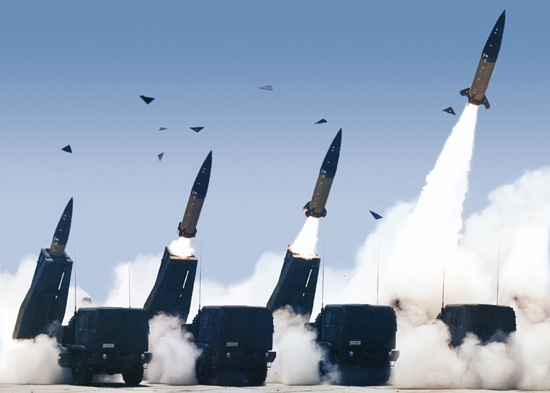
Today brings yet another announcement of more U.S. troops to Iraq. This time 600 are being sent as logistics support, advisers, and enablers (that term, “enabler,” is fuzzy indeed: enabler of what? More failure?). That brings the number of U.S. troops in Iraq to more than 5200, but of course this figure seriously under-represents the American presence in the region. Nowadays, most “troops” are provided by private contractors, and many of these are U.S. military veterans who discovered they could make a lot more money wearing mufti than in Uncle Sam’s uniforms. At the same time, the U.S. continues to provide heavy-duty weaponry to the Iraqi military, including Apache attack helicopters and the HIMARS rocket system. All of this is intended to help the Iraqi military retake the city of Mosul.
That the U.S. is yet again providing more troops as well as heavy weapons as “force multipliers” highlights the failure of U.S. military efforts to “stand up” an effective Iraqi military. The enemy, after all, has no Apache helicopters, no HIMARS system, and no U.S. advisers, although we certainly “enable” them with all the U.S. weaponry they’ve been able to capture or steal. Despite a lack of U.S. military training and aid, ISIS and crew have proven to be remarkably resilient. What gives?
Two years ago, I wrote an article at TomDispatch.com on “America’s Hollow Foreign Legions.” Back then, I said this:
Military training, no matter how intensive, and weaponry, no matter how sophisticated and powerful, is no substitute for belief in a cause. Such belief nurtures cohesion and feeds fighting spirit. ISIS has fought with conviction. The expensively trained and equipped Iraqi army hasn’t. The latter lacks a compelling cause held in common. This is not to suggest that ISIS has a cause that’s pure or just. Indeed, it appears to be a complex mélange of religious fundamentalism, sectarian revenge, political ambition, and old-fashioned opportunism (including loot, plain and simple). But so far the combination has proven compelling to its fighters, while Iraq’s security forces appear centered on little more than self-preservation.
Despite an ongoing record of failure, pulling out of Iraq is never an option that’s considered by the Pentagon. The only option our leaders know is more: more troops, more weapons, more money. As I wrote for TomDispatch back in October 2014:
pulling out is never an option, even though it would remove the “American Satan” card from the IS propaganda deck. To pull out means to leave behind much bloodshed and many grim acts. Harsh, I know, but is it any harsher than incessant American-led bombing, the commitment of more American “advisers” and money and weapons, and yet more American generals posturing as the conductors of Iraqi affairs? With, of course, the usual results.
Here we are, two years later, and nothing has changed. The war song remains the same, as discordant as ever, with a refrain as simple as it is harsh: putting out the fire with gasoline.
A good friend passed along an article at Forbes from a month ago with the pregnant title, “U.S. Army Fears Major War Likely Within Five Years — But Lacks The Money To Prepare.” Basically, the article argues that war is possible — even likely — within five years with Russia or North Korea or Iran, or maybe all three, but that America’s army is short of money to prepare for these wars. This despite the fact that America spends roughly $700 billion each and every year on defense and overseas wars.
Now, the author’s agenda is quite clear, as he states at the end of his article: “Several of the Army’s equipment suppliers are contributors to my think tank and/or consulting clients.” He’s writing an alarmist article about the probability of future wars at the same time as he’s profiting from the sales of weaponry to the army.
As General Smedley Butler, twice awarded the Medal of Honor, said: War is a racket. Wars will persist as long as people see them as a “core product,” as a business opportunity. In capitalism, the profit motive is often amoral; greed is good, even when it feeds war. Meanwhile, the Pentagon is willing to play along. It always sees “vulnerabilities” and always wants more money.
But back to the Forbes article with its concerns about war(s) in five years with Russia or North Korea or Iran (or all three). For what vital national interest should America fight against Russia? North Korea? Iran? A few quick reminders:
#1: Don’t get involved in a land war in Asia or with Russia (Charles XII, Napoleon, and Hitler all learned that lesson the hard way).
#2: North Korea? It’s a puppet regime that can’t feed its own people. It might prefer war to distract the people from their parlous existence.
#3: Iran? A regional power, already contained, with a young population that’s sympathetic to America, at least to our culture of relative openness and tolerance. If the U.S. Army thinks tackling Iran would be relatively easy, just consider all those recent “easy” wars and military interventions in Iraq, Afghanistan, Libya, Syria …
Of course, the business aspect of this is selling the idea the U.S. Army isn’t prepared and therefore needs yet another new generation of expensive high-tech weaponry. It’s like convincing high-end consumers their three-year-old Audi or Lexus is obsolete so they must buy the latest model else lose face.
We see this all the time in the U.S. military. It’s a version of planned or artificial obsolescence. Consider the Air Force. It could easily defeat its enemies with updated versions of A-10s, F-15s, and F-16s, but instead the Pentagon plans to spend as much as $1.4 trillion on the shiny new and under-performing F-35. The Army has an enormous surplus of tanks and other armored fighting vehicles, but the call goes forth for a “new generation.” No other navy comes close to the U.S. Navy, yet the call goes out for a new generation of ships.
The Pentagon mantra is always for more and better, which often turns out to be for less and much more expensive, e.g. the F-35 fighter.
Wars are always profitable for a few, but they are ruining democracy in America. Sure, it’s a business opportunity: one that ends in national (and moral) bankruptcy.
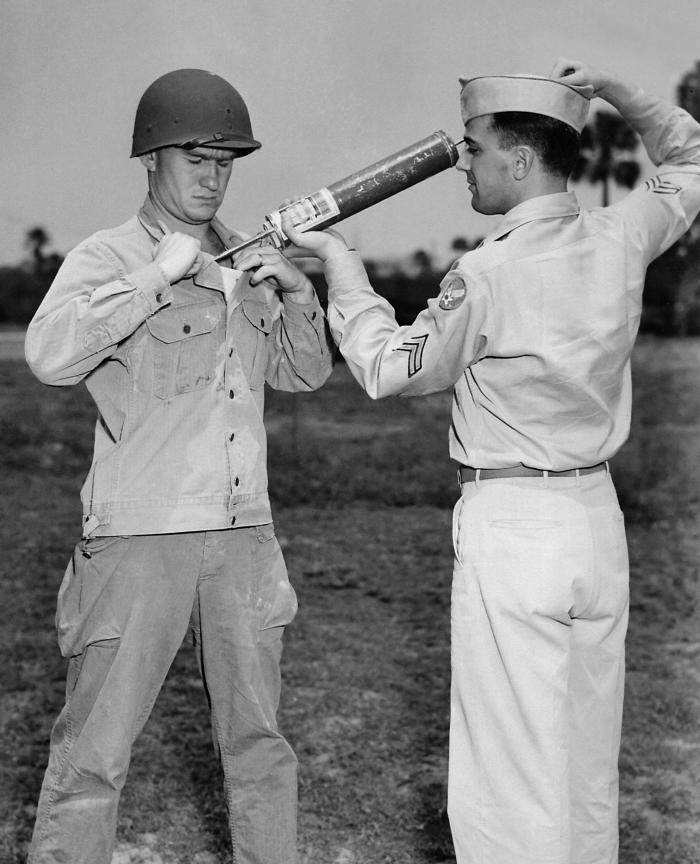
Just spray the bad bugs with DDT. What can go wrong?
W.J. Astore
Today, the essence of U.S. military “strategy” is targeting. The enemy is treated as vermin to be exterminated with the right bug bomb. As if those bombs had no negative consequences; as if we learned nothing from the overuse of DDT, for example.
You might recall DDT, the miracle insecticide of the 1950s and 1960s. It wiped out bad bugs (and a lot of good ones as well) while leading to DDT-resistant ones. It also damaged the entire ecology of regions (because DDT is both persistent and bio-accumulative). Something similar is happening in the Greater Middle East. The U.S. is killing bad “bugs” (terrorists) while helping to breed a new generation of smarter “bugs.” Meanwhile, constant violence, repetitive bombing, and other forms of persistent meddling are accumulating in their effects, damaging the entire ecology of the Greater Middle East.
The U.S. government insists the solution is all about putting bombs on target, together with Special Forces operating as bug zappers on the ground. At the same time, the U.S. sells billions of dollars in weaponry to our “friends” and allies in the region. Israel just got $38 billion in military aid over ten years, and Saudi Arabia has yet another major arms deal pending, this time for $1.15 billion (with Senator Rand Paul providing that rare case of principled opposition based on human rights violations by the Saudis).
Of course, the U.S. has provided lots of guns and military equipment to Iraqi and Afghan security forces, which often sell or abandon them to enemies such as ISIS and the Taliban. The special inspector general in Afghanistan reported in 2014 that “As many as 43% of all small arms supplied to the Afghan National Security Forces remain unaccounted for – meaning more than 200,000 guns, including M2s, M16s, and M48s, are nowhere to be found.” A recent tally this year that includes Iraq suggests that 750,000 guns can’t be accounted for, according to Action on Armed Violence (AOAV), a London-based charity. The Pentagon’s typical solution to missing guns is simply to send more of them. Thus the U.S. is effectively arming its enemies as well as its allies, a business model that’s a win-win if you’re an arms merchant.
The essence of U.S. strategy makes me think of a Warren Zevon song lyric, “Send lawyers, guns, and money.” As we’ve seen, U.S. lawyers can authorize anything, even torture, even as U.S. guns and money go missing and end up feeding war and corruption. The tag line of Zevon’s song is especially pertinent: “The shit has hit the fan.” How can you flood the Greater Middle East with U.S.-style bureaucracy, guns and money, and not expect turmoil and disaster?
Back in World War II, the USA was an arsenal of democracy. Now it’s just an arsenal. Consider Bill Hartung’s article on U.S. military weaponry that’s flooding the Middle East. The business of America is war, with presidential candidates like Donald Trump just wanting to dump more money into the Pentagon.
There is no end to this madness. Not when the U.S. economy is so dependent on weapons and war. Not when the U.S. national security state dominates the political scene. Not when Americans are told the only choices for president are Trump the Loose Cannon or Hillary the Loaded Gun.
As a teenager, I read Joe Haldeman’s book, “The Forever War.” The title intrigued, as did the interstellar setting. Haldeman’s soldiers are caught up in a conflict whose rules keep changing, in part due to time dilation as predicted by Einstein’s theory of relativity. But there’s one thing the soldiers know for certain: no matter what year the calendar says it is, there will always be war.
For the United States today, something similar is true. Our government, our leaders, have essentially declared a forever war. Our military leaders have bought into it as well. The master narrative is one of ceaseless war against a shifting array of enemies. One year it’s the Taliban in Afghanistan. The next it’s Al Qaeda. The next it’s Iraq, followed by Libya and ISIS. Echoing the time dilation effects of Haldeman’s book, Russia and China loom as enemies of the American future as well as of the past. One thing is constant: war.
Our government and leaders can no longer imagine a time of peace. For them the whole world has become a zone of conflict, an irredeemable realm of crusaders jumping from place to place, country to country, even time to time. I say “time to time” because I had a student, an Army infantry veteran, who described Afghan villages to me as “primitive” and “like traveling back to Biblical times.” Indeed, U.S. troops are much like Haldeman’s soldiers, jumping in and out of foreign lands, in both “primitive” and modern times, the one constant again being war.
Why the “forever war”? In part because we as a country have allowed war to become too profitable, even as we’ve assigned it too much meaning in our collective lives. The USA is a country whose past is littered with wars, whose present is defined by war and preparations for it, and whose bellicose future is seemingly already determined by those who see generational conflicts ahead of us. In fact, they’re already planning to profit from them.
War, in short, is a peculiar form of American zen, a defining mindset. When we’re not actually fighting wars, we’re contemplating fighting them. Our form of meditation is ceaseless violent action. Wherever the USA goes, there it is, exporting troops and weapons and, if not war itself, the tools and mindset that are conducive to war.