The American Military Uncontained

Ike
Ike had it right: Beware the military-industrial complex

W.J. Astore

In my latest article for TomDispatch.com, I detail how the U.S. military is out everywhere but winning nowhere.  What I mean by not winning is the military’s failure to end wars on terms remotely favorable to national security and the interests of democracy.  I hesitate to be a cynic, but perpetual war does mean perpetual high “defense” budgets and prolonged and prodigious power for generals (and retired generals). Peace would mean smaller defense budgets and far less influence for these men.

What chance of peace with President Trump in charge surrounded by the generals of all these losing wars?  Indeed, generals continue to speak of generational wars, so much so that I’m tempted to make a play on words: generational wars generated by generals.  It’s not entirely fair, nor is it entirely unfair.

Anyway, here’s an excerpt from my article.  You can read it in its entirety at TomDispatch.com.

When it comes to the “world’s greatest military,” the news has been shocking. Two fast US Navy ships colliding with slow-moving commercial vessels with tragic loss of life. An Air Force that has been in the air continuously for years and yet doesn’t have enough pilots to fly its combat jets. Ground troops who find themselves fighting “rebels” in Syria previously armed and trained by the CIA. Already overstretched Special Operations forces facing growing demands as their rates of mental distress and suicide rise. Proxy armies in Iraq and Afghanistan that are unreliable, often delivering American-provided weaponry to black markets and into the hands of various enemies. All of this and more coming at a time when defense spending is once again soaring and the national security state is awash in funds to the tune of nearly a trillion dollars a year.

What gives? Why are highly maneuverable and sophisticated naval ships colliding with lumbering cargo vessels? Why is an Air Force that exists to fly and fight short 1,200 pilots? Why are US Special Operations forces deployed everywhere and winning nowhere? Why, in short, is the US military fighting itself — and losing?

It’s the Ops Tempo, Stupid

After 16 years of a never-ending, ever-spreading global war on terror, alarms are going off in Asia from the Koreas and Afghanistan to the Philippines, while across the Greater Middle East and Africa the globe’s “last superpower” is in a never-ending set of conflicts with a range of minor enemies few can even keep straight. As a result, America’s can-do military, committed piecemeal to a bewildering array of missions, has increasingly become a can’t-do one.

Too few ships are being deployed for too long. Too few pilots are being worn out by incessant patrols and mushrooming drone and bombing missions. Special Operations forces (the “commandos of everywhere,” as Nick Turse calls them) are being deployed to far too many countries — more than two-thirds of the nations on the planet already this year — and are involved in conflicts that hold little promise of ending on terms favorable to Washington. Meanwhile, insiders like retired Gen. David Petraeus speak calmly about “generational struggles” that will essentially never end. To paraphrase an old slogan from ABC’s Wide World of Sports, as the US military spans the globe, it’s regularly experiencing the agony of defeat rather than the thrill of victory.

To President Donald Trump (and so many other politicians in Washington), this unsavory reality suggests an obvious solution: boost military fundingbuild more navy ships; train more pilots and give them more incentive pay to stay in the military; rely more on drones and other technological “force multipliers” to compensate for tired troops; cajole allies like the Germans and Japanese to spend more on their militaries; and pressure proxy armies like the Iraqi and Afghan security forces to cut corruption and improve combat performance.

One option — the most logical — is never seriously considered in Washington: to make deep cuts in the military’s operational tempo by decreasing defense spending and downsizing the global mission, by bringing troops home and keeping them there. This is not an isolationist plea. The United States certainly faces challenges, notably from Russia (still a major nuclear power) and China (a global economic power bolstering its regional militarily strength). North Korea is, as ever, posturing with missile and nuclear tests in provocative ways. Terrorist organizations strive to destabilize American allies and cause trouble even in “the homeland.”

Such challenges require vigilance. What they don’t require is more ships in the sea lanes, pilots in the air and boots on the ground. Indeed, 16 years after the 9/11 attacks it should be obvious that more of the same is likely to produce yet more of what we’ve grown all too accustomed to: increasing instability across significant swaths of the planet, as well as the rise of new terror groups or new iterations of older ones, which means yet more opportunities for failed US military interventions …

The Greatest Self-Defeating Force in History?

Incessant warfare represents the end of democracy. I didn’t say that, James Madison did.

I firmly believe, though, in words borrowed from President Dwight D. Eisenhower, that “only Americans can hurt America.” So how can we lessen the hurt? By beginning to rein in the military. A standing military exists — or rather should exist — to support and defend the Constitution and our country against immediate threats to our survival. Endless attacks against inchoate foes in the backlands of the planet hardly promote that mission. Indeed, the more such attacks wear on the military, the more they imperil national security.

A friend of mine, a captain in the Air Force, once quipped to me: you study long, you study wrong. It’s a sentiment that’s especially cutting when applied to war: you wage war long, you wage it wrong. Yet as debilitating as they may be to militaries, long wars are even more devastating to democracies. The longer our military wages war, the more our country is militarized, shedding its democratic values and ideals.

Back in the Cold War era, the regions in which the US military is now slogging it out were once largely considered “the shadows” where John le Carré-style secret agents from the two superpowers matched wits in a set of shadowy conflicts. Post-9/11, “taking the gloves off” and seeking knockout blows, the US military entered those same shadows in a big way and there, not surprisingly, it often couldn’t sort friend from foe.

A new strategy for America should involve getting out of those shadowy regions of no-win war. Instead, an expanding US military establishment continues to compound the strategic mistakes of the last 16 years. Seeking to dominate everywhere but winning decisively nowhere, it may yet go down as the greatest self-defeating force in history.
Ken Burns and the Vietnam War: Ten Items to Watch For

Helicopter_Poster_promoV2

W.J. Astore

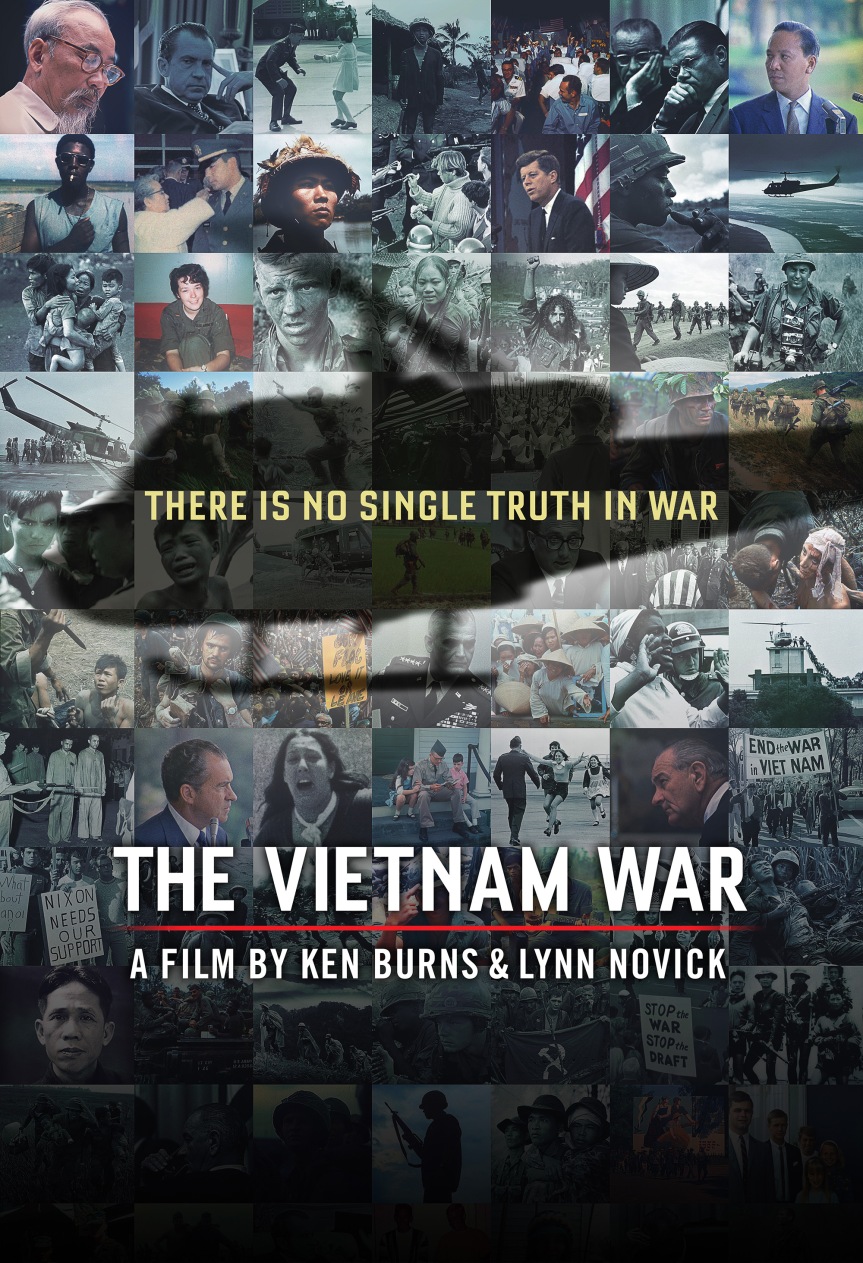
On September 17th, a new TV documentary series on the Vietnam War by Ken Burns (famous for past series on the U.S. Civil War, Baseball, and Jazz, among others) and Lynn Novick begins its run on PBS.  Airing in ten parts over 18 hours, the series promises a comprehensive look at the war from all sides, with the catchphrase “There is no single truth in war” serving as a guiding light.  Initial excerpts suggest the series isn’t looking to provide definitive answers, perhaps as a way of avoiding political controversy in the Age of Trump.

I’ll be watching the series, but I have ten points of my own to make about America’s war in Vietnam.  As a preamble, the Vietnam War (American version) was both mistake and crime. What’s disconcerting in the U.S. media is the emphasis on the war as an American tragedy, when it was truly a horrific tragedy inflicted upon the peoples of Southeast Asia (Vietnamese, Laotians, Cambodians). Yes, American troops suffered and died in large numbers, yet Southeast Asian casualties were perhaps 50 times as great. Along with wanton killing came the poisoning of the environment with defoliants like Agent Orange; meanwhile, mines and unexploded ordnance from the war continue to kill people today in Southeast Asia. In a sense, the killing from that war still isn’t over.

With the caveat that we should reserve judgment until we’ve seen the series, let’s keep these ten points in mind as we watch:

1. To most Americans, Vietnam is a war. And war is a distorting and limiting lens through which to view cultures and peoples. Will Burns recognize this distortion?

2. The series talks about hearing voices from all sides of the conflict. But will the Vietnamese people, together with Laotians and Cambodians, really have as much say as Americans?

3. The U.S. suffered nearly 60,000 troops killed. But Vietnamese killed numbered in the millions. And the destruction to SE Asia — the spread of the war to Laos and Cambodia — was on a scale that rivaled or surpassed the destruction to the American South during the U.S. Civil War. Will that destruction be thoroughly documented and explained?

4. Whose point of view will prevail in the documentary? What will be the main thread of the narrative? Will the war be presented as a tragedy? A misunderstanding? A mistake? A crime? Will the “noble cause” and “stabbed in the back” myths (the ideas that the U.S. fought for freedom and democracy and against communism, and that the U.S. military could have won but was prevented from doing so by unpatriotic forces at home) be given equal time in the interests of a “fair and balanced” presentation? Will these myths be presented as alternative truths of the war?

5. Which American war in Vietnam will be presented? Even when we talk of the American part of the Vietnam War, there were at least four wars. The U.S. Army under General William Westmoreland fought a conventional, search and destroy, war. The Air Force wanted to prove that airpower alone, specifically bombing, could win the war. The Marines were more interested in counterinsurgency and pacification. The CIA and special ops types were engaged in psychological warfare, assassinations, torture, and god-knows-what-else.

6. The American presence in Vietnam became so overwhelming that by 1967-68 the Vietnamese economy was completely distorted. We brought American materialism and profligacy to a nation that was, by comparison, impoverished and “backwards” (from our perspective, of course). Material superiority bred and fed cockiness.

Consider Meredith Lair’s book, “Armed with Abundance: Consumerism and Soldiering in the Vietnam War” (2011).  It details the non-combat experiences of U.S. troops in Vietnam.  Here’s a telling book blurb written by historian Christian Appy: “Meredith Lair’s fascinating analysis of rear-echelon life among American G.I.s dramatically challenges our most common conceptions of U.S. military experiences in Vietnam. From steaks to steambaths, swimming pools to giant PXs, the amenities provided on large bases not only belie conventional images of that war, but also stand as dramatic testimony to the desperate and unsuccessful effort of American officials to bolster flagging troop morale as the war lurched toward its final failure.”

Will this orgy of American-driven materialism be documented?

7. Anti-war protests and serious unrest within the U.S. military led to the end of the draft and the creation of an “all-volunteer” military. Has this decision contributed to a more imperial U.S. foreign policy facilitated by a much more tractable military of “volunteers”?

8. Short of nuclear weapons, the U.S. military used virtually every weapon in its arsenal in SE Asia. The region became a test/proving ground for all sorts of weapons and concepts, from “smart” weapons and electronic fences and sensors to horrendous pounding by conventional bombs to war on the environment using defoliants and massive bulldozers to … well … everything. All sorts of pacification theories were tested as well, along with COIN and “small wars” and unconventional tactics to search and destroy to Vietnamization to … well … again, everything. SE Asia became a laboratory and its peoples became lab rats. Will this reality be fully documented?

9. It’s essential that people realize President Richard Nixon and his National Security Adviser, Henry Kissinger, knew the war was a lost cause no later than 1969. (Their conversations on tape prove this.) All they were looking for was a “decent interval” between a peace treaty (“peace with honor”) and what they saw as the inevitable collapse. They got that (in)decent interval of roughly 2.5 years. The Congressional decision to cut off funding to South Vietnam was convenient for the Nixon/Kissinger acolytes, since it allowed them to shift the blame for South Vietnam’s collapse in 1975 to Congress as well as to the usual “suspect” elements in American society, i.e. the peace movement.

Will the duplicity and hypocrisy of Nixon/Kissinger be adequately documented?

10. Finally, an important aspect of the Vietnam War was the breakdown in discipline within the U.S. military, which helped to drive the eventual elimination of the draft. Part of this breakdown was driven by drugs, a trade in which the CIA was implicated. At The Intercept, Jeremy Scahill interviewed Alfred McCoy, who wrote the book on this drug trade. Here’s an excerpt from their recent interview:

Alfred McCoy: And in 1970 and ’71, there were rumors that started coming back from Vietnam, particularly 1971, that heroin was spreading rapidly in the ranks of the U.S. forces fighting in South Vietnam. And in later research, done by the White House, [it was] determined that in 1971, 34 percent, one-third of all the American combat troops fighting in South Vietnam were heavy heroin users. There were, if that statistic is accurate, more addicts in the ranks of the U.S. Army in South Vietnam than there were in the United States.

And so what I did was I set out to investigate: Where was the opium coming from? Where was the heroin coming from? Who was trafficking it? How is it getting to the troops in their barracks and bunkers across the length and breadth of South Vietnam? Nobody was asking this question. Everyone was reporting on the high level of abuse, but nobody was figuring out where and who.

So I started interviewing. I went to Paris. I interviewed the head of the French equivalent of the CIA in Indochina, who was then head of a major French helicopter manufacturing company, and he explained to me how during the French Indochina war from 1946 to 1954, they were short of money for covert operations, so the hill tribes in Laos produced the opium, the aircraft picked it up, they turned it over to the netherworld, the gangsters that controlled Saigon and secured it for the French and that paid for their covert operations. And I said, “What about now?” And he said, “Well I don’t think the pattern’s changed. I think it’s still there. You should go and look.”

So I did. I went to Saigon. I got some top sources in the Vietnamese military. I went to Laos. I hiked into the mountains. I was ambushed by CIA mercenaries and what I discovered was that the CIA’s contract airline, Air America, was flying into the villages of the Hmong people in Northern Laos, whose main cash crop was opium and they were picking up the opium and flying it out of the hills and there were heroin labs — one of the heroin labs, the biggest heroin lab in the world, was run by the commander-in-chief of the Royal Laotian Army, a man whose military budget came entirely from the United States. And they were transforming, in those labs, the opium into heroin. It was being smuggled into South Vietnam by three cliques controlled by the president, the vice president, and the premier of South Vietnam, and their military allies and distributed to U.S. forces in South Vietnam.

And the CIA wasn’t directly involved, but they turned a blind eye to the role of their allies’ involvement in the traffic. And so this heroin epidemic swept the U.S. Army in Vietnam. The Defense Department invented mass urine analysis testing, so when those troops left they were tested and given treatment. And what I discovered was the complexities, the complicity, of the CIA in this traffic and that was a pattern that was repeated in Central America when the Contras became involved in the traffic.

These ten items highlight just some of the complexities of the Vietnam War and its effects throughout Southeast Asia.  How many of these will be tackled honestly in Ken Burns’s new series?  We shall see, beginning in two weeks.

Of Historical Statues and Monuments

vietnam
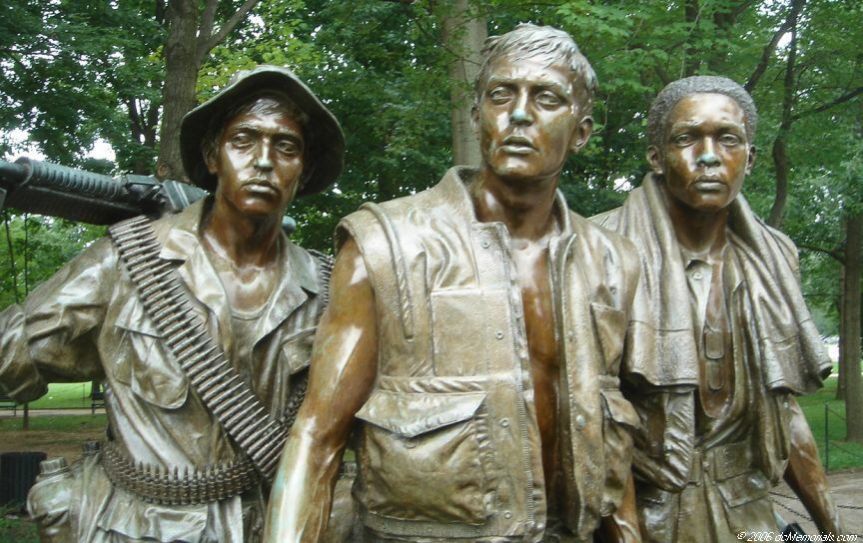
To counterbalance the perceived grimness of Maya Lin’s Vietnam wall memorial, more traditional statues depicting soldiers were added near it.

W.J. Astore

Historical statues and monuments are in the news, but sadly not because Americans have taken a new interest in understanding their history. Statues of men who supported the Confederacy, prominent generals like Robert E. Lee and Stonewall Jackson, for example, have been appropriated by White supremacists (this is nothing new, actually). Such statues have been defended as “beautiful” by a man, Donald Trump, with little sense of history, even as other Americans have called for these and similar statues to be removed.

Statues, of course, are just that. Inanimate objects. Places for pigeons to poop. It’s we who invest them with meaning. Most people, I think, take little notice of statues and monuments until they become controversial, after which everyone has an opinion.

For me, statues and monuments are a stimulus for reflection as well as education. Who was that guy on a horse? Why is he being honored? And what does that decision tell us about who we were and are as a people?

As a people, we choose certain historical figures as worthy of being sculpted in stone or cast in bronze. We choose our heroes, so to speak, our paragons, our worthies. And our choices are just that — choices. They reflect certain values, priorities, motives, feelings. And since our values, our motives, our sense of what is good and bad, right and wrong, change over time, so too can our statues and memorials change, if that is the will of the people in a democracy that enshrines freedom of choice.

If the peoples of various states choose to remove certain statues, so be it. Other statues might take their place; other worthies might be selected as more in keeping with the times and our values as we conceive them today as a people.

What we choose to memorialize as a people says much about ourselves. Many statues and memorials fall under the category of “man on horseback.” Certainly, military figures like Lee and Jackson were considered great men of their times, at least in a Confederate context. They also, sadly, became potent symbols of racism in the Jim Crow South, physical symbols of the myth of the Lost Cause, intimidating and demoralizing figures to Black communities struggling against violence and prejudice.

Americans are an intemperate lot, driven by extremes, constantly fighting to reconfigure ourselves through our interpretation and re-interpretation of history. All this is proof to William Faulkner’s famous saying that, “The past is not dead. It’s not even past.”

As a historian, I find it deeply sad as well as ironic that, at a time when education in history is withering in the United States, the importance of history has arguably never been greater. We should use statues as a stimulus for learning, but instead they’re more often appropriated as a driver for divisiveness.

If nothing else, today’s debates about statues should remind us yet again of the importance of history and a proper understanding of it. History is inherently disputatious. Controversial. Challenging. Exciting. If we can tap the heat generated by the latest controversies and warm students to a study of history in all its richness, perhaps some good can come from the ongoing controversy.

What kind of statues and memorials are the “right” ones for America? It’s a vexing question, is it not? It’s also a question with powerful implications. I come back to George Orwell’s comment (slightly paraphrased): He who controls the past controls the future. He who controls the present controls the past.

Our understanding of the past — our selective celebration of it — helps to define what is possible in the future. If you celebrate generals on horseback — military men of the Confederacy — you make a choice that helps to shape what is seen as right and proper in the present moment, and what will be right and proper in the future.

For a better future, I’d like to see fewer statues to military men and sports heroes and the like, and more to visionaries who sought a better way for us as a people. I recall a small monument I saw to Elihu Burritt in Massachusetts. No one is talking about him or his legacy today. He’s an obscure figure compared to his contemporaries, Lee and Jackson. Known as the “Learned Blacksmith,” he was a committed pacifist and abolitionist who worked to educate the less fortunate in society.

Berkshires Oct 2012 027
Monument to Elihu Burritt in New Marlboro, Mass. (author’s photo)

If we are to build prominent statues and monuments, would it not be better to build them to people like Elihu Burritt, people who worked for justice and equality, people who fought against war and slavery and for peace and freedom?

Military Control of the Civilian: It’s Opposite Day in America

mattis
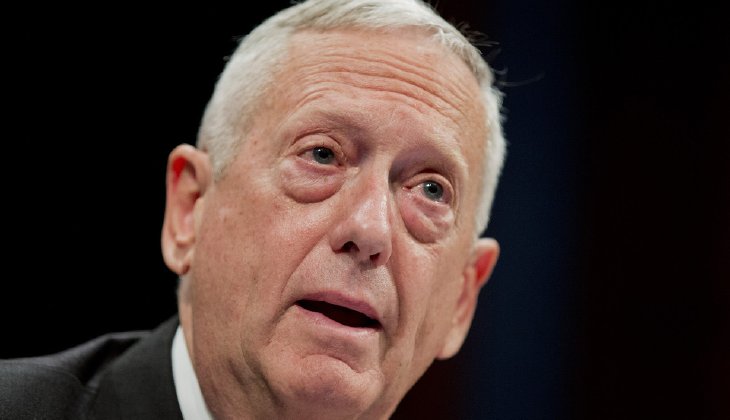
General Mattis: Celebrated as a moderating influence on Trump

W.J. Astore

It’s becoming increasingly difficult for Americans to recall that civilian leaders are supposed to command and control the military, not vice-versa.  Consider an article posted yesterday at Newsweek with the title, TRUMP’S GENERALS CAN SAVE THE WORLD FROM WAR—AND STOP THE CRAZY.  The article extols the virtues of “Trump’s generals”: James Mattis as Secretary of Defense, John Kelly as White House Chief of Staff, and H.R. McMaster as National Security Adviser.  The article presents them as the adults in the room, the voices of calm and reason, a moderating force on a bombastic and bellicose president.

I’ve written about Trump’s generals already at TomDispatch.com and elsewhere.  The latest gushing tribute to America’s generals at Newsweek illustrates a couple of points that bear repeating.  First, you don’t hire generals to rein in a civilian leader, or at least you shouldn’t if you care to keep a semblance of democracy in America.  Second, lifelong military officers favor military solutions to problems.  That’s precisely why you want civilians to control them, and to counterbalance their military advice.  Only in a democracy that is already crippled by creeping militarism can the rise of generals to positions of power be celebrated as a positive force for good.

Speaking of creeping militarism in the USA, I caught another headline the other day that referenced General Kelly’s appointment as Chief of Staff.  This headline came from the “liberal” New York Times:

John Kelly Quickly Moves to Impose Military Discipline on White House


Note that headline.  Not that Kelly was to impose discipline, but rather military discipline. What, exactly, is military discipline?  Well, having made my first career in the military, I can describe its features. Obedience.  Deference to authority.  Respect for the chain of command.  A climate that sometimes degenerates to “a put up and shut up” mentality. Such a climate may be needed in certain military settings, but do we want it to rule the White House?

Here is what I wrote back in December about Trump and “his” generals:

In all of this, Trump represents just the next (giant) step in an ongoing process.  His warrior-steeds, his “dream team” of generals, highlight America’s striking twenty-first-century embrace of militarism. At the same time, the future of U.S. foreign policy seems increasingly clear: more violent interventionism against what these men see as the existential threat of radical Islam. 

Of course, now the threat of nuclear war looms with North Korea.  For a moderating influence, America places its faith in military generals controlling the civilian commander-in-chief, and that’s something to draw comfort from, at least according to Newsweek.

When military control of the civilian is celebrated, you know it’s truly opposite day in America.

Trump: Much “Fire and Fury,” Signifying Something Vital


fat man
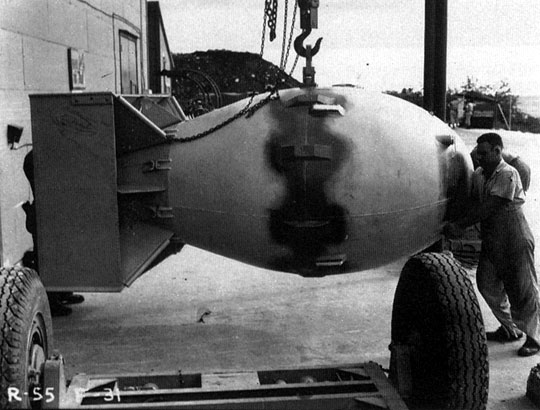
Fat Man, the atomic bomb that devastated Nagasaki on August 9, 1945

W.J. Astore

The big story today is Trump’s threat to North Korea about “fire and fury like the world has never seen” in response to any aggression against the U.S. and its allies.  The world witnessed American “fire and fury” in August of 1945 when Hiroshima and Nagasaki were obliterated by atomic bombs (indeed, today is the 72nd anniversary of the Nagasaki bombing).  Roughly 250,000 people were killed in those two bombings, and Trump is apparently promising a worst form of fury against North Korea (“like the world has never seen”).

Back in October 2016, I wrote a piece at this site with the title: “On nuclear weapons, Trump is nightmarishly scary,” and that nightmare is beginning to take shape.  As I wrote back then, Trump’s worst attribute is his “sweeping ignorance to the point of recklessness when it comes to matters of national defense, and specifically America’s nuclear arsenal.”  I further wrote that:

Back in March … Trump boasted at a debate that the U.S. military would follow his orders irrespective of their legality.  In this latest debate, he yet again revealed that he has no real knowledge of America’s nuclear capability and how modern and powerful (and scary) it truly is.

Sure, Trump is crude, lewd, and sexist, but those qualities won’t destroy the world as we know it.  Ignorance about nuclear weapons, combined with impetuosity and an avowed affection for he-man wild-card generals like George S. Patton and Douglas MacArthur, is a recipe for utter disaster.

A man of Trump’s vanity and impetuosity — a man of raging grievances who lives in his own reality of alternative facts — is hardly a reassuring figure to have at the top of America’s “fire and fury” nuclear arsenal.  Is it all just bluster?  It’s impossible to know, and that’s truly the scary part.

All this fire and fury, even if it remains only bluster, should teach the world a critical lesson: the necessity of nuclear disarmament. Holding millions of people hostage to nuclear terror (as we’ve been doing since the Cold War) has long been immoral, inhumane, and unconscionable.

Instead of making nightmarish threats, a sober and mature U.S. president might actually lead the world in serious efforts to reduce and ultimately to eliminate nuclear weapons. That would be real moral leadership,  That would be real guts.

Trump’s easy boasts of “fire and fury” do signify something vital — the need for global nuclear disarmament, no matter how long it takes.

Update (8/10/17): There’s been a lot of talk, more or less sensible, that Trump’s “fire and fury” rhetoric is just that: rhetoric.  That it will not become reality because North Korean leaders are sensible and rational actors, and that U.S. leaders like Tillerson and Mattis provide a counterbalance to Trump.  Well, maybe.  But escalatory rhetoric can become reality, i.e. it serves to exacerbate tensions that can lead to miscalculation and war.

Think of North Korea’s latest threat to shoot missiles in the direction of Guam.  If that threat is carried out, a U.S. attack on North Korean missile sites is quite likely, and where that would lead is impossible to say.

Reckless rhetoric is not harmless; words can and do box nations as well as people in, often leading to unexpected actions.  Just think of hateful words flung by people in domestic disputes that escalate into something far worse.  Rationality does not always win out.

Update 2 (8/10/17): Trump recently boasted that, during his short presidency, his actions have led to a U.S. nuclear arsenal that is “now far stronger and more powerful” than it was under President Obama.  The truth is that this arsenal hasn’t measurably changed at all.  The Washington Post gives Trump “four Pinocchios” for his latest lie, but surely big lies about nuclear weapons deserve a different rating system.  Should we call it a four megaton lie?  Lie-mageddon?

The Blinding Power of Nationalism

back

W.J. Astore

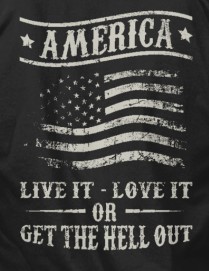
One of the challenges of my teaching career was to encourage students to think critically about American history and actions.  Since I taught at conservative institutions (the Air Force Academy; a technical college in rural Pennsylvania), many of my students had a strong “America: love it or leave it” mentality.  They associated criticism with lack of patriotism.  Fortunately, I had the advantage of wearing a military uniform (at the Air Force Academy) and later the status of a retired military officer (in Pennsylvania), so few students could readily dismiss my critiques as the work of a “libtard” leftist academic.

Patriotism, I would tell my students, meant an informed love of country, meaning that a patriot was open to seeing the faults in his or her country, and willing to work hard to change things for the better.  The “love it or leave it” mentality, I explained, was a form of false patriotism; an unthinking form, a type of blind infatuation.  Nationalism, in a word.

George Orwell, as usual, beat me to the punch, writing with great clarity in 1945 on the distinction between patriotism and nationalism.

By ‘nationalism’ I mean … the habit of identifying oneself with a single nation or other unit, placing it beyond good and evil and recognising no other duty than that of advancing its interests. Nationalism is not to be confused with patriotism… By ‘patriotism’ I mean devotion to a particular place and a particular way of life, which one believes to be the best in the world but has no wish to force on other people…

Orwell further explained the dangers of nationalism.  The way a nationalist “thinks solely, or mainly, in terms of competitive prestige.”  The way a nationalist’s “thoughts always turn on victories, defeats, triumphs and humiliations.”  Nationalism, Orwell explained, “is power-hunger tempered by self-deception. Every nationalist is capable of the most flagrant dishonesty, but he is also — since he is conscious of serving something bigger than himself — unshakeably certain of being in the right …”

Flagrant dishonesty combined with unshakable certainty is a combustible mix.  To explain why, it is worth quoting Orwell at length:

The nationalist not only does not disapprove of atrocities committed by his own side, but he has a remarkable capacity for not even hearing about them. For quite six years the English admirers of Hitler contrived not to learn of the existence of Dachau and Buchenwald. And those who are loudest in denouncing the German concentration camps are often quite unaware, or only very dimly aware, that there are also concentration camps in Russia. Huge events like the Ukraine famine of 1933, involving the deaths of millions of people, have actually escaped the attention of the majority of English russophiles. Many English people have heard almost nothing about the extermination of German and Polish Jews during the present war. Their own antisemitism has caused this vast crime to bounce off their consciousness. In nationalist thought there are facts which are both true and untrue, known and unknown. A known fact may be so unbearable that it is habitually pushed aside and not allowed to enter into logical processes, or on the other hand it may enter into every calculation and yet never be admitted as a fact, even in one’s own mind…

The point is that as soon as fear, hatred, jealousy and power worship are involved, the sense of reality becomes unhinged. And, as I have pointed out already, the sense of right and wrong becomes unhinged also. There is no crime, absolutely none, that cannot be condoned when ‘our’ side commits it. Even if one does not deny that the crime has happened, even if one knows that it is exactly the same crime as one has condemned in some other case, even if one admits in an intellectual sense that it is unjustified — still one cannot feel that it is wrong. Loyalty is involved, and so pity ceases to function…

The nationalist succeeds in constructing his own “reality,” a twisted version of alternative facts, an unthinking construct, a remorseless world without pity and compassion for others.

Contrast the nationalist to the patriot.  A patriot thrives on thought.  She is unafraid to face reality as it is; she does not suppress emotions like pity and compassion.  True patriotism is critical, open-minded, and defensive, as Orwell explained in his Notes on Nationalism:

“Patriotism is of its nature defensive, both militarily and culturally. Nationalism, on the other hand, is inseparable from the desire for power. The abiding purpose of every nationalist is to secure more power and more prestige, not for himself but for the nation or other unit in which he has chosen to sink his own individuality.”

It’s easy, in the “might makes right” reality of nationalism, for murder to become sanctioned as a positive good, or at the very least for nationalists to become oblivious to murder.  As Orwell said, a nationalist can justify anything in the cause of “protecting” his construct of the state.  Again, nationalism is a form of infatuation, a willed blindness, that can be used or manipulated to actuate, support, and justify the most inhumane actions.

The world today faces a rising tide of nationalism.  Its dangers are well documented in history and well explained by Orwell.  “Love it or leave it,” in short, is a murderous path, not a patriotic one.  Let’s not go down it.

(My thanks to Mike Murry and Monotonous Languor for their stimulating comments on Orwell and nationalism at this site.)

Who needs a military coup?

MPW-100679

W.J. Astore

With the swearing in of John Kelly as White House Chief of Staff, a retired four-star Marine general now controls the White House. Another retired four-star Marine general, James Mattis, controls the Department of Defense (DoD) and much of the National Security State. Meanwhile, a serving three-star Army general, H.R. McMaster, controls the National Security Council.

Who needs a military coup?  Remember when the U.S. was founded on civilian control of a citizen-soldier military?  Those were the days.  The point is not that Kelly-Mattis-McMaster constitute a military cabal; it’s that there’s no rival civilian authority at the upper regions of Trump’s government.  Is Steve Bannon going to rein in the generals?  He fancies himself a military strategist in his own right.  Should we place our faith in Congress?  How about Jared and Ivanka?  Prospects for less bellicose policies are indeed looking grim.

Our clueless president, after all, professes love for “his” generals while acclaiming the WWII generals George Patton and Douglas MacArthur, two soldiers who were not known for their deference to civilian authority.

Again, who needs a military coup?  As the real U.S. military budget soars above a trillion dollars a year and as the U.S. State Department is sidelined and gutted, the future of U.S. foreign policy seems clear: More and more “kinetic” operations, together with more and more brinksmanship with Iran, North Korea, and possibly Russia and China as well.

With generals in the White House and the DoD running the show, advised by another general on the National Security Council, enabling a president whose patience and knowledge base are as thin as his skin, the prospects for catastrophic miscalculation and war loom ever larger.

Update (8/2/17): Speaking of Congress, here’s Senator Lindsey Graham on the appointment of retired Marine General John Kelly as White House Chief of Staff: “The Marines can do almost anything,” Senator Graham said. “The Marines have landed at the White House. They have a beachhead.”

And that’s a good thing, Senator?  In a military dictatorship, perhaps …

The Bankruptcy of the Democratic Party

dems
Tepidness and Timidity

W.J. Astore

Why did Donald Trump win the presidency?  A big reason is that he was willing to take unpopular stances.  He criticized the Afghan and Iraq wars in the strongest terms.  He attacked Wall Street.  He called for closer relations with Russia.  Of course, to cite one example, when he became president, Trump willingly  embraced Wall Street — no surprise here.  Trump is not about consistency. The larger point is that he appeared authentic, or at the very least not tied to traditional politics of the mealymouthed, which involves focus groups and think tanks and polls and triangulation before any policy position is taken.

The Democratic Party has learned nothing from Trump’s success, nor for that matter from Bernie Sanders’s rise.  It’s rejecting the energy and popularity of Sanders’s progressive platform for the tired bromides of economic competitiveness, moderate tax increases on the rich, and infrastructure improvements (which Trump has also called for).  It’s refusing to critique America’s enervating and endless overseas wars.  It’s even refusing to focus on serious social issues (too divisive!), as reported here at Mic Network:

The new [Democratic] agenda will be released under the title, “A Better Deal: Better Skills, Better Jobs, Better Wages.”

According to the Washington Post’s Dana Milbank, the plan “jettisoned social and foreign policy issues for this exercise, eschewing the identity politics and box-checking that has plagued Democratic campaigns in the past.”

Leaving social justice issues out of the platform is sure to anger many progressives in the party who have been pushing for issues like police brutality, systemic racism and transgender rights to be front-and-center on the Democratic agenda.

Likewise, the absence of any foreign policy agenda is likely to irk the left’s many critics of America’s never-ending wars.

What’s the point of voting for a Democratic Party that refuses to address such vitally important issues?  And don’t you just love the unimaginative title of the plan?

A Better Deal: Better Skills, Better Jobs, Better Wages.

If you have to repeat the word “better” four times, I’m less than convinced that the deal is actually “better.”  It sounds like a used car salesman trying to sell a lemon.  I’ll give you a better deal on this beat-up Yugo!  At a better price, with a better warranty, with better loan payments!  Sure … right.

I think I can come up with five “better” titles for the Democrats just off the top of my head.  I’ll give it a whirl:

  1. No Guts, No Glory: A Bold New Plan for Our Country
  2. Soaring Together: Remaking Our Country, Reigniting Our Dreams
  3. America the Bountiful: Tapping Our Greatness — and Goodness
  4. Better Angels: Reviving America’s Nobility
  5. Comrade!  March with Me to the Towers and Pitchfork the Rich!

OK.  Maybe not number 5.  I’m not saying my titles are great — just that they hold some promise of raising ourselves to a higher level.  We should be thinking about making a better America, not for skills or jobs or the economy, but for our children.  For our and their collective futures.  A little idealism, please!  The fierce urgency of now!

Where’s the emotional appeal in “better” skills or a “better” job?  It’s funny: I don’t recall the Founders talking about skills and jobs.  They talked about personal liberty, about freedom, about coming together and raising new hopes.  And they didn’t just talk — they acted.  Give me liberty or give me death.  Now that took guts!

I see no inspiration — and no guts — in the current Democratic Party establishment.  And until the party finds some, they will continue to lose.

Silencing War Criticism

dead
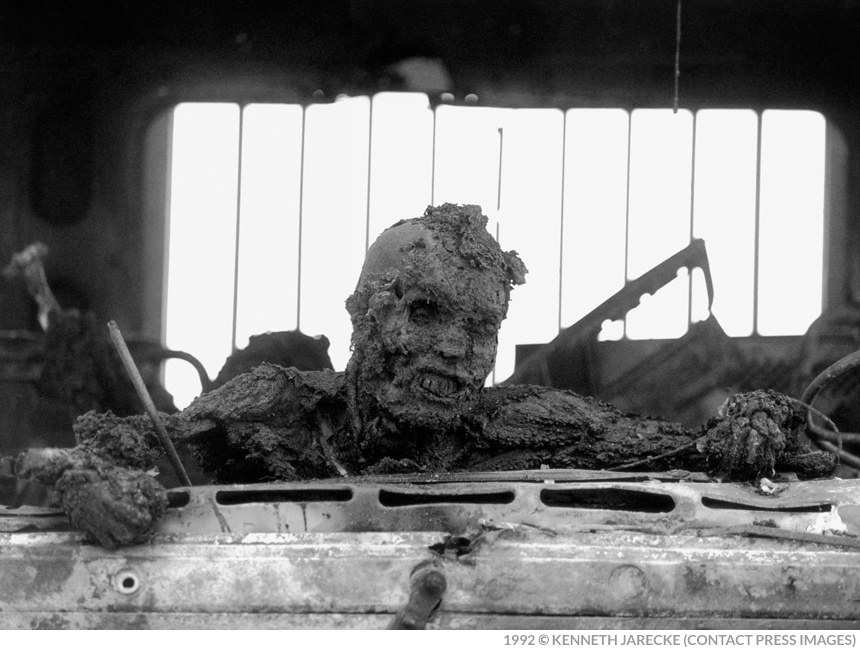
Grisly photos that show war as it is, in this case a dead Iraqi from Desert Storm, are not shown by the U.S. media

Silencing War Criticism: The Iraq Invasion of 2003

W.J. Astore

Update (7/19/17): I posted this article at HuffPost, and the site added a video that shows the mainstream media gushing over Trump’s strike against Syria.  The video is well worth watching.  http://www.huffingtonpost.com/entry/596df7a3e4b07f87578e6bd7 or follow this link.

Jesse Ventura, former governor of Minnesota (1999-2003), was a hot media commodity as the Bush/Cheney administration was preparing for its invasion of Iraq in 2003.  Ventura, a U.S. Navy veteran who gained notoriety as a professional wrestler before he entered politics, was both popular and outspoken.  MSNBC won the bidding war for his services in 2003, signing him to a lucrative three-year contract to create his own show – until, that is, the network learned he was against the Iraq war.  Ventura’s show quickly went away, even as the network paid him for three years to do nothing.

I heard this revealing story from a new podcast, the TARFU Report, hosted by Matt Taibbi and Alex Pareene.  By his own account, Jesse Ventura was bought off by the network, which back then was owned by General Electric, a major defense contractor that was due to make billions of dollars off the war.

Of course, Ventura was hardly the only war critic to run afoul of GE/NBC.  Phil Donahue, the famous talk show host, saw his highly rated show cancelled when he gave dissenters and anti-war voices a fair hearing.  Ashleigh Banfield, a reporter who covered the Iraq war, gave a speech in late April 2003 that criticized the antiseptic coverage of the war (extracts to follow below).  For her perceptiveness and her honesty, she was reassigned and marginalized, demoted and silenced.

So much for freedom of speech, as well as the press.

As Phil Donahue said, his show “wasn’t good for business.”  NBC didn’t want to lose ratings by being associated with “unpatriotic” elements when the other networks were waving the flag in support of the Iraq war.  In sidelining Ventura and Donahue, NBC acted to squelch any serious dissent from the push for war, and punished Ashleigh Banfield in the immediate aftermath of the war for her honesty in criticizing the coverage shown (and constructed) by the mainstream media, coverage that was facilitated by the U.S. military and rubber-stamped by corporate ownership.

Speaking of Banfield’s critique, here are some excerpts from her speech on Iraq war coverage in April 2003.  Note that her critique remains telling for all U.S. media war coverage since then:

That said, what didn’t you see [in U.S. media coverage of the Iraq war]? You didn’t see where those bullets landed. You didn’t see what happened when the mortar landed. A puff of smoke is not what a mortar looks like when it explodes, believe me. There are horrors that were completely left out of this war. So was this journalism or was this coverage? There is a grand difference between journalism and coverage, and getting access does not mean you’re getting the story, it just means you’re getting one more arm or leg of the story. And that’s what we got, and it was a glorious, wonderful picture that had a lot of people watching and a lot of advertisers excited about cable news. But it wasn’t journalism, because I’m not so sure that we in America are hesitant to do this again, to fight another war, because it looked like a glorious and courageous and so successful terrific endeavor, and we got rid of a horrible leader: We got rid of a dictator, we got rid of a monster, but we didn’t see what it took to do that.

I can’t tell you how bad the civilian casualties were. I saw a couple of pictures. I saw French television pictures, I saw a few things here and there, but to truly understand what war is all about you’ve got to be on both sides.

….

Some of the soldiers, according to our embeds had never seen a dead body throughout the entire three-week campaign. It was like Game Boy. I think that’s amazing in two different ways. It makes you a far more successful warrior because you can just barrel right along but it takes away a lot of what war is all about, which is what I mentioned earlier. The TV technology took that away too. We couldn’t see where the bullets landed. Nobody could see the horrors of this so that we seriously revisit the concept of warfare the next time we have to deal with it.

I think there were a lot of dissenting voices before this war about the horrors of war, but I’m very concerned about this three-week TV show and how it may have changed people’s opinions. It was very sanitized. [emphasis added]

….

This TV show [Iraq invasion coverage] that we just gave you was extraordinarily entertaining, and I really hope that the legacy that it leaves behind is not one that shows war as glorious, because there’s nothing more dangerous than a democracy that thinks this is a glorious thing to do. [emphasis added]

War is ugly and it’s dangerous, and in this world the way we are discussed on the Arab street, it feeds and fuels their hatred and their desire to kill themselves to take out Americans. It’s a dangerous thing to propagate.

….

I’m hoping that I will have a future in news in cable, but not the way some cable news operators wrap themselves in the American flag and patriotism and go after a certain target demographic, which is very lucrative. You can already see the effects, you can already see the big hires on other networks, right wing hires to chase after this effect, and you can already see that flag waving in the corners of those cable news stations where they have exciting American music to go along with their war coverage.

Nothing has changed since Banfield’s powerful critique.  Indeed, the networks have only hired more retired generals and admirals to give “unbiased” coverage of America’s military actions.  And reporters and “journalists” like Brian Williams have learned too.  Recall how Williams cheered the “beautiful” U.S. Tomahawk cruise missiles as they were launched against Syria earlier this year.

It’s not just that U.S. media coverage actively suppresses dissent of America’s wars: it passively does so as well, which is arguably more insidious.  Any young journalist with smarts recognizes the way to get ahead is to be a cheerleader for U.S. military action, a stenographer to the powerful.  Being a critic leads to getting fired (like Donahue); demoted and exiled (like Banfield); and, in Ventura’s case, if you can’t be fired or demoted or otherwise punished, you can simply be denied air time.

When you consider that billions and billions of dollars are at stake, whether in weapons sales or in advertising revenue tied to ratings, none of this is that surprising.  What’s surprising is that so few Americans know about how pro-authority and uncritical U.S. media coverage of war and its makers is.  If anything, the narrative is often that the U.S. media is too critical of the military to the detriment of the generals.  Talk about false narratives and alternative facts!

America’s greed-wars persist for many reasons, but certainly a big one is the lack of critical voices in the mainstream media.  Today’s journalists, thinking about their career prospects and their salaries (and who is ultimately their boss at corporate HQ), learn to censor themselves, assuming they have any radical thoughts to begin with. Some, like Brian Williams, even learn how to stop worrying and love the beautiful bombs.

And so it goes …

Preventing Doomsday

cmc
I well recall walking in and out of this tunnel.  (You could take a bus too.)

W.J. Astore

It’s hard to think of a higher priority than the prevention of doomsday. Global catastrophe could strike in quick-time via nuclear war, or in slow-motion via global warming. Yet our leaders persist in rattling and sharpening the nuclear saber while denying the very reality of global warming (even as state-size chunks of ice break off from the polar ice caps).

Global catastrophe: What, me worry? It’s a MAD world indeed.

alfred_e_neuman_thumb

Today at TomDispatch.com, I return to my days working in Cheyenne Mountain, America’s nuclear command and control center, tunneled out of a massive granite mountain in Colorado. I argue that it’s time to overcome our lockdown, shelter-in-place, mentality, before that fear-filled mindset leads us all to catastrophe. You can read the entire article here. What follows is an excerpt:

Duck and Cover, America!

Remember those old American Express card commercials with the tag line “Don’t leave home without it”?  If America’s Department of Homeland Security had its own card, its tag would be: “Don’t leave home.”

Consider the words of retired General John Kelly, the head of that department, who recently suggested that if Americans knew what he knew about the nasty terror threats facing this country, they’d “never leave the house.”  General Kelly, a big bad Marine, is a man who — one would think — does not frighten easily.  It’s unclear, however, whether he considers it best for us to “shelter in place” just for now (until he sends the all-clear signal) or for all eternity.

One thing is clear, however: Islamic terrorism, an exceedingly modest danger to Americans, has in these years become the excuse for the endless construction and funding of an increasingly powerful national security state (the Department of Homeland Security included), complete with a global surveillance system for the ages.  And with that, of course, goes the urge to demobilize the American people and put them in an eternal lockdown mode, while the warrior pros go about the business of keeping them “safe” and “secure.”

I have a few questions for General Kelly: Is closing our personal blast doors the answer to keeping our enemies and especially our fears at bay?  What does security really mean?  With respect to nuclear Armageddon, should the rich among us indeed start building personal bomb shelters again, while our government continues to perfect our nuclear arsenal by endlessly updating and “modernizing” it?  (Think: smart nukes and next generation delivery systems.)  Or should we work toward locking down and in the end eliminating our doomsday weaponry?  With respect to both terrorism and immigration, should we really hunker down in Homeland U.S.A., slamming shut our Trumpian blast door with Mexico (actually long under construction) and our immigration system, or should we be working to reduce the tensions of poverty and violence that generate both desperate immigrants and terrorist acts?

President Trump and “his” generals are plainly in favor of you and yours just hunkering down, even as they continue to lash out militarily around the globe.  The result so far: the worst of both worlds — a fortress America mentality of fear and passivity domestically and a kinetic, manic urge to surge, weapons in hand, across significant parts of the planet.

Call it a passive-aggressive policy.  We the people are told to remain passive, huddling in our respective home bunkers, sheltering in place, even as America’s finest aggressively strike out at those we fear most.  The common denominator of such a project is fear — a fear that breeds compliance at home and passivity before uniformed, if often uninformed, experts, even as it generates repetitive, seemingly endless, violence abroad.  In short, it’s the doomsday mentality applied every day in every way.

Returning to Cheyenne Mountain

Thirty years ago, as a young Air Force officer, Cheyenne Mountain played a memorable role in my life.  In 1988 I left that mountain redoubt behind, though I carried with me a small slab of granite from it with a souvenir pen attached.  Today, with greying hair and my very own time machine (my memories), I find myself returning regularly to Cheyenne Mountain, thinking over where we went wrong as a country in allowing a doomsday-lockdown mentality to get such a hold on us.

Amazingly, Barack Obama, the president who made high-minded pleas to put an end to nuclear weapons (and won a Nobel Prize for them), pleas supported by hard-headed realists like former Secretaries of State Henry Kissinger and George Shultz, gave his approval to a trillion-dollar renovation of America’s nuclear triad before leaving office.  That military-industrial boondoggle will now be carried forward by the Trump administration.  Though revealing complete ignorance about America’s nuclear triad during the 2016 election campaign, President Trump has nevertheless boasted that the U.S. will always be “at the top of the pack” when it comes to doomsday weaponry.  And whether with Iran or North Korea, he foolishly favors policies that rattle the nuclear saber.

In addition, recent reports indicate that America’s nuclear arsenal may be less than secure.  In fact, as of this March, inspection results for nuclear weapons safety and security, which had been shared freely with the American public, are now classified in what the Associated Press calls a “lockdown of information.”  Naturally, the Pentagon claims greater secrecy is needed to protect us against terrorism, but it serves another purpose: shielding incompetence and failing grades.  Given the U.S. military’s nightmarish history of major accidents with nuclear weapons, more secrecy and less accountability doesn’t exactly inspire greater confidence.

Today, the Cheyenne complex sits deactivated, buried inside its mountain, awaiting fresh purpose.  And I have one.  Let’s bring our collective fears there, America.  Let’s bury them under all that granite.  Let’s close the blast doors behind us as we walk out of that dark tunnel toward the light.  For sheltering in place shouldn’t be the American way.  Nor should we lock ourselves down for life.  It would be so much better to lockdown instead what should be truly unthinkable: doomsday itself, the mass murder of ourselves and the destruction of our planet.