Before #MeToo – The Price of Silence

What would America be like if men got pregnant instead of women? It seems a silly question, but I’d argue it isn’t. My guess is that abortion would not only be legal under all conditions but that it would be readily available to all (men). The same for contraception: cheap and readily available. I was raised Catholic; consider if the Catholic clergy, all male of course, got pregnant, had to carry babies to term, and then had to care for them. Somehow I think that church teachings on abortion and contraception would be different.

But men don’t get pregnant. And men have full control over their bodies. It’s far different for women in America (and across most of the globe). Women are not only victims of sexual violence: they are increasingly being told they have no other option than to carry a baby to term, even if they were victims of rape or incest. The legislatures making these decisions (no surprise) are predominantly male, and they love to pose as pro-life.

In her memoir, Meredith Keller reminds us of the high price women have paid in America when laws are made by men for men, where women are often an afterthought, if that, and when so-called religious teachings are elevated above empathy and compassion and understanding. W.J. Astore

Before #MeToo – The Price of Silence

Meredith Keller

Now in retirement, I am anticipating a quiet afternoon in my art studio when I check mail in my rural box. Roosters are crowing. I hear clanking sounds of tractors discing and smell the musty soil being turned. I sort through the junk mail when my eye lands on a hand addressed letter. I tear it open to find the shocking words:

I think you might be my grandmother.

My body goes rigid as the thought of reliving a shattering period of my past sends waves of shock reverberating through my body. All those feelings of shame long buried were about to boil up again. If I answered the letter, all would be revealed.

Would I dare? Did I want to go down that path and relive the scenes of a rape and resulting pregnancy, opening the scars of a long buried episode that began on a college campus in 1962? Would this young writer, my granddaughter, be able to comprehend how the moral arbiters of society held us in their grip?

Sexual harassment, rape and intimidation have shadowed and haunted women through the ages. Where were their stories? Buried, like mine, in shame, layered under decades of angst. In my day single women with unintended pregnancies were forced into hiding. From the end of WWII until the passage of Roe v. Wade in 1973, unmarried pregnant women and their families faced shame and insufferable choices.

The alternatives were dismal. One solution was to visit abortionists, in many cases unqualified, who, to protect their own identities, blindfolded women during the procedure.  In 1962, sixteen hundred women, forced into illegal terminations, were admitted to Harlem Hospital Center in New York City due to botched or incomplete abortions. Society had women, especially poor women, in a vise.

Others had no choice but to carry a child to term. They quietly disappeared, spirited away while the stigma of “illegitimacy” hung over them. Shrouded in secrecy, with their identities erased, they were groomed to hand over their babies for adoption and return to society as though nothing had happened. It was known as the Baby Scoop Era when the dominant view was that unmarried women were unfit mothers and needed to acknowledge their guilt and shame and give up their babies for adoption. From 1945 to 1973 it is estimated that four million parents in the United States had children placed for adoption. Four million sad stories like mine went undocumented.

The Unraveling – The Price of Silence, my memoir, puts a spotlight on what it was like to have to weather the paralyzing trauma of rape and then go through the devastating severance of handing a child over to adoption. No one can imagine the gravity and deep sadness of that moment you give away your own child. It caused a quake deep in my soul. Is this what our legislators wish to return to when they not only write restrictive abortion laws, but also deny women health coverage for contraception under the guise of “freedom of religion”?

Feel what it was like to struggle through those times before Roe as I dredge up shattering memories that haunted me for 52 years. I fiercely fought for the dignity that was swiftly erased one night on a college campus. I had to jump hurdles to re-define myself, bury the past and muster the grit to have a successful career beginning as Food Editor of a leading restaurant magazine at age 23.  

The scars from my early life remained and memories lingered until that letter arrived in my mailbox. What would I respond? How could I adequately explain an era long forgotten? That granddaughter had not lived through those restrictive times of shame and humiliation. I unraveled my story for her and all young women so they can feel what it was like when women’s reproductive rights were emphatically denied. It is a struggle we are facing yet again. And yet, there was one champion in our corner, a little known lawyer at the time, and she had this to say:

The decision whether or not to bear a child is central to a woman’s life, to her well-being and dignity. When the government controls that decision for her, she is being treated as less than a fully adult human responsible for her own choices.

Ruth Bader Ginsburg

Keller’s memoir, The Unraveling, is available in paperback, hardback, and electronically from popular outlets such as Amazon and Powell’s. The book’s cover art, reproduced above, is her original work.

This story was first posted at The Contrary Perspective.

Imagine If America Had A Real Department of Defense

W.J. Astore

In my latest article for TomDispatch.com, I ask a simple question: What would real national defense look like? Here are some answers.

What would real national defense for this country look like?  Rarely do any of us pose this question, no less examine what it might truly mean.  Rarely do we think about all the changes we’d have to make as a nation and a people if we were to put defense first, second, and last, while leaving behind both our imperial wars and domestic militarism.

I know what it wouldn’t look like.  It wouldn’t look like today’s grossly inflated military.  A true Department of Defense wouldn’t need 800 foreign military bases, nor would the national security state need a budget that routinely exceeds a trillion dollars annually.  We wouldn’t need a huge, mechanized army, a navy built around aircraft carriers, or an air force that boasts of its global reach and global power, all of it created not for defense but for offense — for destruction, anytime, anywhere.

As a country, we would need to imagine a new “people’s” military as a force that could truly defend the American republic. That would obviously mean one focused above all on supporting the Constitution and the rights we (at least theoretically) hold sacred like freedom of speech, the press, and assembly, the right to privacy and due process, and of course the right to justice for all, not just for the highest bidder or those with the deepest pockets.

What might such a new military look like?  First, it would be much smaller.  America’s current military, including troops on active duty, reservists, and members of the National Guard, consists of roughly 2.4 million men and women.  Those numbers should gradually be cut at least in half.  Second, its budget should similarly be dramatically cut, the end goal being to have it 50% lower than next year’s proposed budget of $715 billion.  Third, it wouldn’t be based and deployed around the world. As a republican force (note the lower-case “r”), it would instead serve democratic ends rather than imperial ones.  It would certainly need far fewer generals and admirals.  Its mission wouldn’t involve “global reach,” but would be defensive, focused on our borders and this hemisphere.

Buy the Book

A friend of mine, a Navy veteran of the Vietnam War, speaks of a military that would consist of a Coast Guard, “militias” (that is, the National Guard) for each of the fifty states, and little else.  Yes, in this America, that sounds beyond extreme, but he has a point.  Consider our unique advantages in terms of geography.  Our continent is protected by two vast oceans.  We share a long and peaceful border with Canada.  While the border with Mexico is certainly troubled, we’re talking about unarmed, desperate migrants, not a military invasion flooding into Texas to retake the Alamo. 

Here, then, are just 10 ways America’s military could change under a vision that would put the defense of America first and free up some genuine funds for domestic needs as well:

  1. No more new nuclear weapons.  It’s time to stop “modernizing” that arsenal to the tune of possibly $1.7 trillion over the next three decades.  Land-based intercontinental ballistic missiles like the Ground Based Strategic Deterrent, expected to cost more than $264 billion during its lifetime, and “strategic” (nuclear) bombers like the Air Force’s proposed B-21 Raider should be eliminated.  The Trident submarine force should also be made smaller, with limited modernization to improve its survivability.
  2. All Army divisions should be reduced to cadres (smaller units capable of expansion in times of war), except the 82nd and 101st Airborne Divisions and the 10th Mountain Division.
  3. The Navy should largely be redeployed to our hemisphere, while aircraft carriers and related major surface ships are significantly reduced in number.
  4. The Air Force should be redesigned around the defense of America’s air space, rather than attacking others across the planet at any time.  Meanwhile, costly offensive fighter-bombers like the F-35, itself a potential $1.7 trillion boondoggle, should simply be eliminated and the habit of committing drone assassinations across the planet ended. Similarly, the separate space force created by President Trump should be folded back into a much-reduced Air Force.
  5. The training of foreign militaries and police forces in places like Iraq and Afghanistan should be stopped.  The utter collapse of the U.S.-trained forces in Iraqin the face of the Islamic State in 2014 and the ongoing collapse of the U.S.-trained Afghan military today have made a mockery of this whole process.
  6. Military missions launched by intelligence agencies like the CIA, including those drone assassination programs overseas, should be halted and the urge to intervene secretly in the political and military lives of so many other countries finally brought under some kind of control.
  7. The “industrial” part of the military-industrial complex should also be brought under control, so that taxpayer dollars don’t go to fabulously expensive, largely useless weaponry. At the same time, the U.S. government should stop promoting the products of our major weapons makers around the planet.
  8. Above all, in a democracy like ours, a future defensive military should only fight in a war when Congress, as the Constitution demands, formally declares one.
  9. The military draft should be restored.  With a far smaller force, such a draft should have a limited impact, but it would ensure that the working classes of America, which have historically shouldered a heavy burden in military service, will no longer do so alone. In the future America of my military dreams, a draft would take the eligible sons and daughters of our politicians first, followed by all eligible students enrolled in elite prep schools and private colleges and universities, beginning with the Ivy League.  After all, America’s best and brightest will surely want to serve in a military devoted to defending their way of life.
  10. Finally, there should be only one four-star general or admiral in each of the three services. Currently, believe it or not, there are an astonishing 44 four-star generals and admirals in America’s imperial forces. There are also hundreds of one-star, two-star, and three-star officers.  This top-heavy structure inhibits reform even as the highest-ranking officers never take responsibility for America’s lost wars.

Pivoting to America

Perhaps you’ve heard of the “pivot to Asia” under the Obama administration — the idea of redeploying U.S. military forces from the Greater Middle East and elsewhere in response to perceived threats from China.  As it happened, it took the new Biden administration to begin to pull off that particular pivot, but America’s imperial military regularly seems to be pivoting somewhere or other.  It’s time to pivot to this country instead.

Echoing the words of George McGovern, a highly decorated World War II bomber pilot who unsuccessfully ran for president against Richard Nixon in 1972, “Come home, America.” Close all those foreign military bases.  Redirect resources from wars and weapons to peace and prosperity.  Focus on restoring the republic.  That’s how Americans working together could truly defend ourselves, not only from our “enemies” overseas, almost always much exaggerated, but from ourselves, the military-industrial-congressional complex, and all our fears.

Please read all of this article at TomDispatch.com.

Don’t Ask, Don’t Tell, Is America’s War Policy

W.J. Astore

For a time, don’t ask, don’t tell, was the U.S. military’s policy about homosexuality within the ranks. In short, if you weren’t a heterosexual, you were supposed to keep quiet (don’t tell) about it. At the same time, the military wasn’t about to ask you whether you were “straight” or not. It was a compromise engineered by the Clinton administration that left more than a few people of all persuasions disgruntled.

There is another don’t ask, don’t tell, policy that I would argue is far worse than the Clinton compromise about sexual orientation. What do I mean?

U.S. military officials work very hard to discourage Americans from asking about America’s wars (don’t ask), and at the same time they work very hard not to tell us anything meaningful about those same wars (don’t tell).

It was my wife who quipped about this other “don’t ask, don’t tell” policy as she read Daniel Hale’s letter posted at this site. You see, people like Edward Snowden, Chelsea Manning, and Daniel Hale are trying to tell us about America’s wars, whether it’s illegal domestic surveillance and the war on terror or war crimes in Iraq or war crimes related to drone killings in Afghanistan. They are not supposed to tell. At the same time, we the people are not supposed to ask.

Other than serving as cheerleaders of “our” troops, Americans are expected to remain passive when it comes to war and the military. We can, if we wish, remain blissfully ignorant, which is exactly what the “experts” at the Pentagon want from us. Leave it to us, the experts say, and we won’t tell you anything that’ll disturb your peace. Whatever you do, don’t ask probing questions of us. Indeed, don’t ask anything at all, except perhaps “How do I sign up?” if you’re young and of military age.

Of course, this is the very opposite of how Democracy should work. We are supposed to ask our government what it’s doing in our name, and they are supposed to tell us even if we won’t like the answers.

But America is no longer a democracy.

As a retired military officer, I’m well aware that discipline is important, that secrecy can be vital, and that loyalty is everything. But loyalty to what?  The U.S. Constitution, I hope, and the idea that leaders and their actions should be accountable to the people since they (in theory) wage war and kill people in our name.  But when wars are no longer declared by Congress, and when the people are no longer rallied to a cause, we have the exercise of unlawful power, of less-than-legal war, which is why we need people to step forward with courage informed by their conscience.

Sadly, precisely because of their courage and their acts of conscience, they are always punished. They are punished because they are not supposed to tell us any uncomfortable truths, and we are not supposed to ask for any of the same.

Consider this the unofficial “don’t ask, don’t tell” policy that helps to drive America’s wars. It’s still very much in effect; it’s also yet another sign of the death of participatory democracy in America.

Listening to Ike’s Military-Industrial Complex Speech

W.J. Astore

May I make a suggestion to all my fellow Americans? Even if you’ve read it, even if you’ve listened to it before, listen again to Dwight D. Eisenhower’s farewell address to the nation in 1961. It’s the speech in which he warned against America’s military-industrial complex, to which Ike wanted rightly to add Congress as well but decided against it.

You’ll hear some words in Ike’s address that you rarely hear in political discourse today. Words like liberty, charity, dignity, integrity, love, mutual respect, and that rarest word of all, peace. You’ll hear him speak of Americans as citizens, not just as consumers, and at the end you’ll hear him rejoice in becoming a private citizen as he prepared to leave the White House to his successor, John F. Kennedy.

You’ll also hear Ike deplore war as one who’d seen its horrors. Ike referred to 20th-century wars as “holocausts,” which they were, and of the need to avoid future wars as they could utterly destroy civilization if nuclear weapons were used in them. Ike called for disarmament in the cause of world peace, and when was the last time an American president made such a call?

Ike further urged Americans, despite this country’s military strength, to avoid arrogance. The strong must not dominate, Ike said, for the weak also deserve a say and a seat at the negotiating table. Ike talked about exercising power for the cause of world peace and human betterment, and that moral intellect and decent purpose should rule, not fear and hate.

Of course, this speech is best known for Ike’s warning about the military-industrial complex, the immense U.S. military establishment “of vast proportions” as well as corporate weapons makers and the “disastrous rise” of their “misplaced power.” It’s vitally important we recognize how Ike framed his warning. His meaning is plain. He says the military-industrial complex, if allowed to grow unchecked, will endanger our liberties and our democratic processes. He says its immense power poses grave implications for the structure of our society. He calls on Americans, as alert and knowledgable citizens, to keep the Complex in check, and indeed to do their best to lessen its power.

Ike gave this address 60 years ago, and we have largely failed to heed his warning. We have allowed the military-industrial-Congressional complex to grow unchecked, so much so that the so-called national security state has become a fourth branch of government that gobbles up more than a trillion dollars a year while pursuing endless war around the globe.

As citizens (are we still citizens?), we are witnessing the slow death of our democracy, even as American militarism and repetitive undeclared wars have made the world a meaner, nastier place.

Our course of action is plain, as it was to Ike in 1961. Until we reject the holocaust of war and reduce as much as humanly possible the power of the military-industrial complex, America will remain on a catastrophic path that threatens the very existence of humanity.

Ike implored us to seek balance; to come together; to look toward the future; to cherish and protect our democratic institutions. He confessed he was disappointed in his own performance as president in ensuring disarmament and pursuing fair-minded diplomacy, but he enjoined us all to seek peace and to advance freedom around the world.

Why not do that?

Ike’s Warning (1961)

The conjunction of an immense military establishment and a large arms industry is new in the American experience. The total influence — economic, political, even spiritual — is felt in every city, every statehouse, every office of the federal government.

In the councils of government, we must guard against the acquisition of unwarranted influence, whether sought or unsought, by the military-industrial complex. The potential for the disastrous rise of misplaced power exists and will persist.

We must never let the weight of this combination endanger our liberties or democratic processes. We should take nothing for granted. Only an alert and knowledgeable citizenry can compel the proper meshing of the huge industrial and military machinery of defense with our peaceful methods and goals, so that security and liberty may prosper together.

America Is Stabbing Itself in the Back

W.J. Astore

Americans may already be lying themselves out of what little remains of their democracy.

The big lie uniting and motivating today’s Republicans is, of course, that Donald Trump, not Joe Biden, won the 2020 presidential election.  Other big lies in our recent past include the notion that climate change is nothing but a Chinese hoax, that Russia was responsible for Hillary Clinton’s electoral defeat in 2016, and that the invasion of Iraq in 2003 was necessary because that country’s leader, Saddam Hussein, had something to do with the 9/11 attacks (he didn’t!) and possessed weapons of mass destruction that could be used against the United States, a “slam dunk” truth, according to then-CIA Director George Tenet (it wasn’t!).

Those and other lies, large and small, along with systemic corruption in Washington are precisely why so many Americans have been driven to despair.  Small wonder that, in 2016, those “deplorables” reached out in desperation to a figure who wasn’t a product of Washington’s mendacious Beltway culture.  Desperate times engender desperate acts, including anointing a failed casino owner and consummate con man as America’s MAGA-cap-wearing savior. As the 45th president, Donald Trump set a record for lies that will likely remain unmatchable in its “greatness” — or so we must hope anyway.

Sadly, Americans have become remarkably tolerant of comfortable lies, generally preferring them to uncomfortable truths.  Nowhere can this be seen more clearly than in the military realm that I’ve inhabited most of my life.  The first casualty of war, so it’s said, is truth, and since this country has remained perennially at war, we continue to eternally torture the truth as well.

When it comes to war, here are just a few of our all-American falsehoods: that this country is slow to anger because we prefer peace, even if wars are often necessary, which is also why peace-loving America must have the world’s “finest” and by far the most expensive military on the planet; that just such a military is also a unique force for freedom on Planet Earth; that it fights selflessly “to liberate the oppressed” (a Special Forces motto) but never to advance imperial or otherwise selfish ambitions.

For a superpower that loves to flex its military muscles, such lies are essentially par for the course.  Think of them, in fact, as government-issue (GI) lies.  As a historian looking to the future, what worries me more are two truly insidious lies that, in the early 1930s, led to the collapse of a fledgling democracy in Weimar Germany, lies that in their own way helped to facilitate the Holocaust and that, under the right (that is, wrong) circumstances, could become ours as well.  What were those two lies?

Germany’s Tragic Lies After World War I

During World War I, the German military attempted to defeat the combined forces of Britain, France, Russia, and later the United States, among other powers, while simultaneously being “shackled to a corpse,” as one German general described his country’s main ally, the Austro-Hungarian Empire.  By the middle of 1916, the German Second Reich led by Kaiser Wilhelm II had, in essence, become a military dictatorship devoted to total victory at any cost. 

Two years later, that same military had been driven to exhaustion by its commanders.  When it was on the verge of collapse, its generals washed their hands of responsibility and allowed the politicians to sue for peace.  But even before the guns fell silent on November 11, 1918, certain reactionary elements within the country were already rehearsing two big and related lies that would facilitate the rise of a demagogue and the onset of an even more disastrous world war.

The first big lie was that the German military, then considered the world’s finest (sound familiar?), emerged from World War I undefeated in the field, its troops a band of heroes covered in glory. That lie was tenable because Germany itself had not been invaded in World War I; the worst fighting took place in France, Belgium, and Russia.  It was also tenable because its military leaders had lied to the people about the progress being made toward “victory.” (This should again sound familiar to contemporary American ears.)  So, when those senior leaders finally threw in the towel in late 1918, it came as a shock to most Germans, who’d been fed a steady diet of “progress,” while news of serious setbacks on the Western Front was suppressed.

Buy the Book

The second big lie followed from the first.  For if one accepted the “undefeated in the field” myth, as so many Germans did, then who was responsible for the defeat of the world’s finest military?  Not Germany’s generals, of course.  Indeed, in 1919, led by Field Marshal Paul von Hindenburg, those same generals would maliciously claim that disloyal elements on the home front — an enemy within — had conspired to betray the country’s heroic troops.  Thus was born the “stab-in-the-back” myth that placed the blame on traitors from within, while ever so conveniently displacing it from the Kaiser and his generals.

Who, then, were Germany’s backstabbers?  The usual suspects were rounded up: mainly socialists, Marxists, anti-militarists, pacifists, and war profiteers of a certain sort (but not weapons makers like the Krupp Family).  Soon enough, Germany’s Jews would be fingered as well by gutter-inhabitants like Adolf Hitler, since they had allegedly shirked their duty to serve in the ranks.  This was yet another easy-to-disprove lie, but all too many Germans, desperate for scapegoats and undoubtedly bigoted as well, proved eager to believe such lies.

Those two big and insidious falsehoods led to an almost total lack of accountability in Weimar Germany for militarists like Hindenburg and General Erich Ludendorff who were significantly responsible for the country’s defeat.  Such lies fed the anger and fattened the grievances of the German people, creating fertile ground for yet more grievous lies.  In a climate of fear driven by the massive economic dislocation brought on by the Great Depression of 1929, a previously fringe figure found his voice and his audience.  Those two big lies served to empower Hitler and, not surprisingly, he began promoting both a military revival and calls for revenge against the backstabbing “November criminals” who had allegedly betrayed Germany.  Hitler’s lies were readily embraced in part because they fell on well-prepared ears.

Of course, a mature democracy like America could never produce a leader remotely like a Hitler or a militaristic empire bent on world domination.  Right?

To read the rest of my article for TomDispatch.com, please click here. Thanks!

Note: In writing my book on Paul von Hindenburg, I was greatly helped by Dennis Showalter, a wonderful historian and a better friend. Dennis was remarkably generous to me and to so many other students of history. Dennis died at the end of 2019, and I miss his keen mind, his exceptional scholarship, but most of all his warmth and sense of humor. We joked that our work on Hindenburg represented a rare “bipartisan” collaboration between a Yankees fan (that’s him) and a Red Sox fan (that’s me). Thanks for everything, Dennis.

Dennis Showalter, a remarkable historian and a better friend

There’s No Business Like War Business

W.J. Astore

Among my many weak spots is economics and business. I took exactly one course in college on macroeconomics. I took dozens of courses in math and engineering like calculus, statics, dynamics, fluid mechanics, thermodynamics, biomechanics, you name it. Then I switched academic specialties and became a historian of science, technology, and religion. Again I took dozens of courses in various branches of history, but again my one economics course remains my brief exposure to that world. And I took it as a freshman forty years ago!

Economics has been on my mind lately because so much of what passes for national military (a redundant phrase) strategy in the U.S. is really about making money. Profit. Capitalism, pure and simple. Moving products, expanding markets, diversifying portfolios, and so on. There’s no business like war business. It’s a capitalist’s dream.

In this rich vein of greed-war, I urge you to read Christian Sorensen’s 5-part series on the military-industrial-congressional complex at Consortium News. (Here’s a link to part 5, which also includes links to the previous four parts.) I really like the way he begins Part 5:

Without looking at military adventurism through the lens of the corporation, analysts are bound to produce error-filled studies. For example, one analyst contended in an interview on The Real News Network, “Military force is almost never going to achieve your political aims. The Americans learned this in Vietnam. They’re learning it in Afghanistan. They’re learning it in Syria… So [President Barack] Obama supporting the Saudis and Emiratis in Yemen is a sign really of incoherence on the part of the United States.”

Far from incoherence, the behavior actually is quite rational. A variety of conflicts, disparate and some seemingly futile, is precisely the aim. Conflict itself — producing untold mountains of profit for war corporations and Wall Street — is the goal.

Yes, yes, a thousand times yes. You can’t look at U.S. military-national “strategy” today through a purely strategic lens or one informed solely by military history (as I’m tempted to do). Clausewitz, Jomini, and other classical military theorists won’t help you much. You need to look to Wall Street, to economics, to how capitalism works. You have to look to business cycles, profit, markets, portfolios, diversification, and similar concepts. You have to recognize war is a special kind of business, one that America is very good at because we specialize in it. War and weaponry may well be our leading exports.

Again, I’m tempted as a former engineer and as a professional historian who’s studied strategy (at Oxford no less) to try to make sense of U.S. national-military strategy in logical terms informed by history, Wrong approach! The right approach is to follow the money. Think not of “war as a continuation of politics” but of war as a continuation of capitalism, a special kind of disaster or death capitalism. Remember too to think in terms of portfolios and diversification of the same, after which U.S. policies make all the sense in the world.  More conflict means more weapons sales means more money.  The same is true of arms races in the false cause of deterrence.

An early example from my life. When I was a young lieutenant in the U.S. Air Force, circa 1985, I wrote a paper on the B-1 bomber and the strategy of “manned penetrating bombers.” In plain speak (plane speak?), the Air Force was spending loads of money on a high-tech swing-wing plane loaded with avionics which would in theory enable it to penetrate Soviet airspace and bomb targets directly. This made little sense to me, nor did it make sense to President Jimmy Carter, who had cancelled the plane as unneeded. After all, B-52s could carry highly accurate cruise missiles and launch them from outside of Soviet airspace, and for much less money.

But the B-1, like any major weapon system, had powerful friends in Congress, since Rockwell International had spread production of the plane and its components to as many Congressional districts as possible. When Ronald Reagan became president in 1981, he quickly reversed Carter’s decision. It wasn’t about strategy. It was about business and profit justified in the name of sending a tough message to the “Evil Empire.” Meanwhile, the Soviet Union collapsed a few years later and the U.S. was stuck with 100 B-1 bombers it didn’t need. Time has proven it to be an expensive plane to maintain, and one that’s never been used (fortunately) on the mission for which it was designed.

The U.S. has a lot of weapons like the B-1 bomber: expensive, unreliable, redundant strategically, and ultimately unneeded. It doesn’t make much sense, until you realize it’s all about making money, moving product, inflating threats, and keeping the cycle going, again and again, wars and weapons without end, Amen.

America Doesn’t Have A Foreign Policy, It Has A Business Plan

Business as usual

W.J. Astore

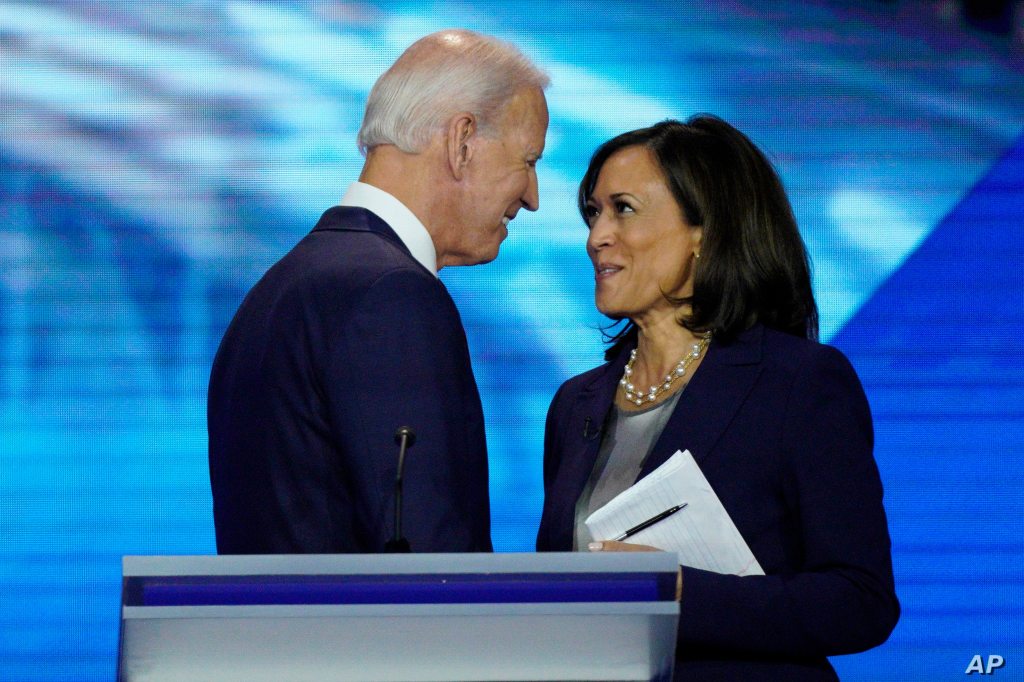
America doesn’t have a foreign policy, it has a business plan, and it’s business as usual in the Biden administration. Joe Biden promised his donors that nothing would fundamentally change in his administration. Kamala Harris said her agenda wasn’t about substantive change. So what we’re getting under the Biden/Harris team is eminently predictable:

  1. More blank checks for Israel, and no recognition of any rights for Palestinians.
  2. A revival of the old Cold War, with China as the leading “threat” but with Russia not forgotten.
  3. Politics subordinated to the military, rather than the military in service of political aims. In brief, military dominance is America’s foreign policy.
  4. Related to (1-3) is dominance of the world’s trade in weapons. The State Department has become a tiny branch of the Pentagon and the military-industrial complex. It’s all about closing arms deals, moving hardware, selling weaponry, making a buck.
  5. Naturally, one of Biden’s first acts as president was to bomb a foreign country, in this case Syria. So presidential!

In Joe Biden, America has a fading and flailing man to lead a fading and flailing empire. In Kamala Harris, America has an example of old wine in new packaging. She’s a woman, she’s Black, she’s South Asian — and she thinks like Hillary Clinton and Henry Kissinger.

Joined at the hip

Remember when Joe Biden said he’d be all about diplomacy? That the power of America’s example would rule over the example of our power? Nice words, but that’s all they’ve been so far. Words.

Two examples where Biden has appeared to offer meaningful change are with Afghanistan and Yemen. With Afghanistan, Biden has promised a complete military withdrawal by 9/11/2021. But does this apply only to combat troops while excluding mercenaries, the CIA, special forces “trainers,” and the like? It’s not yet clear. Plus anything can happen between now and 9/11 for Biden to switch gears and keep some combat troops in place.

With Yemen, Biden made a point about excluding offensive arms sales to Saudi Arabia while still allowing defensive ones. Almost any weapon can be labeled as defensive in nature, so it’s doubtful whether Saudi operations in Yemen will be impacted at all by Biden’s weasel-word policies.

The Biden/Harris foreign policy, such as it is, is retrograde. It’s a return to the Cold War, with an emphasis on new nuclear weapons and larger Pentagon budgets. It’s about global dominance while America at home burns. It’s foolish and stupid yet it will make a few people richer for a few more business cycles.

And thus it’s business as usual in Washington, which is exactly what Biden/Harris were hired for.

Culture War!

W.J. Astore

I saw another article this weekend about culture war in America. Supposedly, America is deeply divided, and I’m not denying there are divisions. But when you ask Americans what they want, what’s surprising is how united we are, irrespective of party differences. For example, Americans favor a $15 minimum wage. We favor single-payer health care. We favor campaign finance reform that gets big money donors and corporations out of government. Yet our government, which is bought by those same donors, refuses to give Americans what we want. Division is what they give us instead, and even then it’s often a sham form of division.

What do I mean by “sham”? Well, our so-called divided government is strongly united in support of huge war budgets and endless war. Strongly united in support of Israel. Strongly in favor of, and obedient to, special interests and big money in politics. Strongly in favor of business as usual (with a stress on “business”), with sham elections every four years between the center-right Democrats and the increasingly unhinged-right Republicans. Sadly, when it comes to policy that impacts the working classes, there isn’t much difference between Nancy Pelosi and Mitch McConnell. They are unified in what they deny us.

It’s a war of the have-mores versus the haves and especially the have-nots, and the have-lots-more are winning. Why? Because they’ve bought the government too.

Of course, we do see examples of so-called culture war in the U.S. Consider in the realm of history the “battle” between the 1619 Project and the 1776ers. The 1619ers want to stress the many violent and tragic legacies of slavery to America’s history. (1619 was the first year an African slave was brought to the colonies.) The 1776ers want to stress the ideals of the American Revolution, the proud legacy of George Washington and other founders, the Declaration of Independence and the U.S. Constitution, and so on.

What’s the solution to this “culture war” between the 1619ers and the 1776ers? I’m a historian, and I’ve taught U.S. history. The solution is easy. You teach both. America is a land of contradictions. Any U.S. historian worth her salt is going to talk about genocide and the Native Americans; is going to talk about the violent and bitter legacies of slavery; and is also going to talk about the ideals and idealism of the founders, however imperfectly they put them into practice, and the promise of the Constitution and the spirit of liberty. To ignore slavery while singing the praises of the founders would be as flawed and one-sided as focusing entirely on slavery without ever mentioning the proud achievements of those same founders.

America is a complex and contradictory place — and any historian is going to address those complexities and contradictions because that’s precisely what makes history interesting, fascinating, enthralling. Few students want to be comforted by feel-good history or assaulted by feel-bad history. They want to know the good, the bad, and the ugly, and historians should be able to teach the same. There’s simply no need for a culture war here over the content of history.

I said there’s no need, but that doesn’t mean a culture war isn’t wanted. Polemicists love culture wars, and so too do the already privileged and the powerful. For if we’re fighting each other, if we perceive we’re divided and simply can’t find common ground, we’ll forget we have so much in common, like our desire for a living wage, affordable health care, and politicians who’d actually represent us instead of the special interests.

Forget culture war. Let’s make war on those who keep us apart and who refuse to work for those so desperately in need.

Readers, what do you think?

Diversity and Inclusion!

Hooray for diversity, the 1980s version

W.J. Astore

I got a circular from a university today boasting of their efforts to encourage diversity and inclusion. Good things for sure. Such circulars and brochures are all the rage. They typically feature lots of people of color and a few inspiring stories of grads who’ve beaten the demographic odds in their particular field. Sometimes it’s made obvious the grads are also part of the LGBTQ community, a double dip into political correctness. And I truly dislike that PC term.

Again, these efforts are commendable and necessary, but the self-promotional tenor of these marketing brochures gives me pause. They remind me of those old Benetton ads that assiduously promoted diversity as a way of moving product. It’s a fine thing to be diverse, inclusive, tolerant, and so on, but can we just do it and shut up about it?

Even the Army is getting into the act, promoting recruits who come from non-traditional families (two mothers, for example). America is so great that even our warriors are woke, which is truly upsetting to people like Senator Ted Cruz, who prefers old-fashioned tough-guy Russians in the ranks. Cruz fears our military is “emasculated,” but if I recall, he couldn’t handle a few cold days in Texas and bugged out to Cancun before he was called out for his hypocrisy. Please, Ted, bring your manliness back to us!

Having served in the military for twenty years, I met and served with plenty of “diverse” people, to use today’s terminology. I had a white guy evangelical boss and a Black woman colonel boss. I had plenty of colleagues who were Black and brown. I can’t say if they were LGBTQ since I served in the “Don’t ask, don’t tell” era, but I really don’t think I would have cared. I have male friends who live with their husband and female friends who live with their wife. The first time you see it (at least for this Catholic white boy), you’re a bit surprised just because of the novelty, then you get over it because love is love and who really cares anyway? We’ve got bigger fish to fry in America.

To repeat myself, I’m all for diversity and inclusion. Let’s do it. But can we also truly focus on health care for all, a living wage for all, a healthy environment for all? Can we stop our disastrous wars and stop building new nuclear weapons while destroying the ones we have?

Because I don’t feel better when America’s allegedly more diverse and inclusive military keeps having to fight the same old dumb wars overseas, where, sadly and with bitter irony, they kill a lot of people with Black and brown faces and with backgrounds that would register as “diverse” and “inclusive” and therefore worthy of being promoted and celebrated by those same glossy university brochures I receive.

Readers, what do you think?

More Thoughts (5/23/21)

To state the obvious, there’s nothing new about the push for diversity and inclusion. Reading a tribute to JFK from 1964, I saw this: “This is a time when we are struggling to guarantee that persons of all classes, creeds, and races may move into positions of economic and political leadership…”

Nowadays, class isn’t often mentioned, but race, gender, sexual orientation, and so on are. BIPOC, Black, Indigenous, people of color, is a common acronym. So too is LGBTQ.

Diversity and inclusion shows up in many places. Consider the first three “Dirty Harry” movies from the 1970s. Harry’s first partner was a Mexican-American. His second partner was Black. His third partner was a woman promoted by a quota system driven by diversity concerns. Harry comes to respect all these partners because they’re good, not because of BIPOC or gender.

Of course, we have a long way to go to be truly diverse and inclusive. But, and here’s the rub, if we see more women at work but they still make only 80% (or less) than men make for the same job, that’s not right. And it’s not solved simply by hiring more women.

And if “Black faces in high places” promote the same policies as the same old white establishment, is there truly progress here in policy? In fairness for people in the lower classes, i.e. for workers of all colors and orientations living paycheck to paycheck?

Biden has been touted as having a diverse cabinet, but when it comes to policies that would truly help the working classes, how diverse is it, really? For example, Biden has already essentially abandoned promises to support a $15 minimum wage and a public option for health care. Higher wages and cheaper health care would be a boon to BIPOC, LGBTQ, indeed everyone on the lower rungs of the economic ladder. The only problem is that corporations may see lower profits, including health insurance and drug companies. And guess who received lots of money from these corporations and companies? Joe Biden and his “diverse” cabinet.

I wonder why they won’t help diverse members of the working classes when they say they’re so committed to diversity?

Marxism in the Military!

W.J. Astore

A friend sent along an article on a certain lieutenant colonel in the U.S. Air Force who is being disciplined because he wrote a book warning about Marxism in the U.S. military. Apparently this officer is deeply concerned about “critical race theory,” which he connects to Marxism, and how the military is being contaminated by an emphasis on diversity and other “liberal” ideas. In short, by stressing inclusion, diversity, and tolerance, (neo)Marxism is unmaking the U.S. military, or perhaps remaking it in a revolutionary way that excludes conservative views espoused by white men like this Lt Col.

And I thought Marxism was about class conflict, about seizing the means of production from the rich capitalists and ensuring an equitable distribution of wealth to the workers. Marxism is supposed to witness a withering away of the state as societal hierarchies are flattened or leveled in the cause of creating a more equitable and just society. Nowadays, Marxism has become a bogeyman term of great elasticity, associated with anything somebody doesn’t like that can be further tarred with labels like “liberal” or “leftist.”

Too much diversity isn’t exactly the biggest problem facing the U.S. Air Force today. Consider the under-performing F-35 jet fighter that’s 10 years behind schedule and $200 billion over budget. Consider a new and unneeded B-21 stealth bomber that will cost at least $100 billion (I think you can double or triple that price, based on cost overruns for previous AF projects). Consider the plan to spend at least $100 billion on new land-based ICBMs, an obsolete concept that is also dangerously escalatory. Indeed, so-called nuclear modernization, meaning more megatons of explosives and deadly radiation with which we can destroy all life on planet earth, may cost more than a trillion dollars over the next 30 years. I’d say these issues are a bit more disconcerting than rumors of Marxism in the ranks.

Another concern this lieutenant colonel had was with the politicization of the military, which he associates with contamination by liberal agendas that are neo-Marxist. I think the good colonel should realize the U.S. military is already politicized, but not in the way he imagines. The brass may be willing to pay lip service to diversity and LGBTQ empowerment and so on, but what they really care about is budgetary authority, pure power and influence.

The U.S. military isn’t being undone by neo-Marxist agendas: it’s being undone by unwinnable wars and wasteful spending on unnecessary or ineffective weaponry.

Unwinnable (and unnecessary) wars have cost the American taxpayer more than $6 trillion since 9/11. We’ve lost thousands of troops killed with tens of thousands seriously injured. Profligate spending on prodigal weapon systems is further driving America into debt, even as more nuclear weapons threaten our planet with destruction.

The problem isn’t Karl Marx invading our military. The problem is greed and stupidity, threat inflation and dereliction of duty.

We really could use more diversity in the U.S. military, as in diversity of ideas, of strategy. How about some “diverse” leaders who have the courage to challenge and change the militaristic and imperial path we’re on?

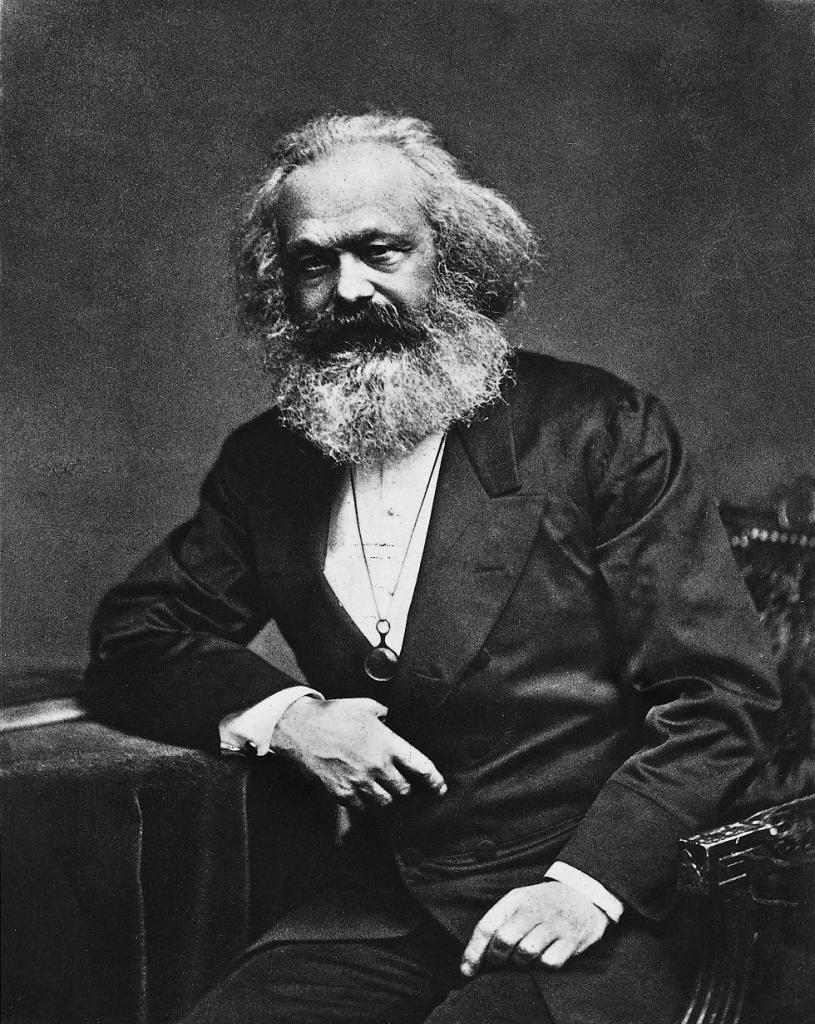
Karl Marx. No, he’s not a problem for the U.S. military, but unwinnable wars and more nuclear weapons are