Creator of Bracing Views. Contributor to TomDispatch, Truthout, HNN, Alternet, Huffington Post, Antiwar, and other sites. Retired AF lieutenant colonel and professor of history. Senior fellow, Eisenhower Media Network
This year the USA celebrates the 200th anniversary of The Star-Spangled Banner. Francis Scott Key wrote the lyrics, inspired by the battle at Fort McHenry during the War of 1812, and it officially became the National Anthem in 1931. Notoriously difficult to sing (my favorite rendition is Whitney Houston’s, complete with combat jets at the end), it’s a song of resolve and resilience suffused with images of battle, which only makes sense given the conditions under which it was composed.
Along with the National Anthem, the other patriotic song most commonly sung at sporting events and other official gatherings is God Bless America. Penned by Irving Berlin in 1918 and made famous by Kate Smith’s renditions, it’s usually performed today without its placatory preamble (“While the storm clouds gather far across the sea/Let us swear allegiance to a land that’s free/Let us all be grateful for a land so fair/As we raise our voices in a solemn prayer”). Most performances that I hear today are neither solemn nor placatory; they’re boastful in the sense of suggesting that God uniquely blesses America, that of course God blesses America. We’re so great — how could He not? Here I recall the saying of Abraham Lincoln that we must not presume God is on our side, but rather we must be concerned we are on His side.
A third and unofficial anthem for many Americans today is Lee Greenwood’s God Bless the USA, with its refrain “And I’m proud to be an American,” the popularity of which is consistent with the strongly affirmational qualities of the National Anthem and God Bless America.
Why is this? I think it’s because these three songs are less bellicose, less boastful, and more insistent that the defining qualities of America are national beauty and brotherhood, liberty and freedom, and equality of access for all, rather than of bellicosity and boastfulness about being uniquely blessed and favored by God.
The most contrarian is Woody Guthrie’s “This Land.” Most people have never heard the stanzas that Guthrie included in the original version that highlight inequality and suffering in the USA. Yet even without those, Guthrie’s song stayed with me as a youth because it stressed that the land was made for you as well as me: that we share the land together as a form of commonwealth.
Here are the original stanzas to Guthrie’s song as he composed them in 1940:
This land is your land, this land is my land
From California to the New York Island,
From the Redwood Forest, to the Gulf stream waters,
This land was made for you and me.
As I went walking that ribbon of highway
And saw above me that endless skyway,
And saw below me the golden valley, I said:
This land was made for you and me.
I roamed and rambled and followed my footsteps
To the sparkling sands of her diamond deserts,
And all around me, a voice was sounding:
This land was made for you and me.
Was a high wall there that tried to stop me
A sign was painted said: Private Property,
But on the back side it didn’t say nothing —
This land was made for you and me.
When the sun come shining, then I was strolling
In wheat fields waving and dust clouds rolling;
The voice was chanting as the fog was lifting:
This land was made for you and me.
One bright sunny morning in the shadow of the steeple
By the Relief Office I saw my people —
As they stood hungry, I stood there wondering if
This land was made for you and me.
Recalling that my father and his family went hungry during the Great Depression, and remembering my father’s saying that the rich have no use or sympathy for the poor, I think he would have appreciated the honesty and integrity of Guthrie’s song.
On this Labor Day weekend, patriotic songs will be in vogue. But let’s not sing just the first three above; let’s sing the final three, including Woody Guthrie’s. Let’s stress, and stress again, the importance of national beauty and brotherhood, liberty and freedom, and equality of access for all.
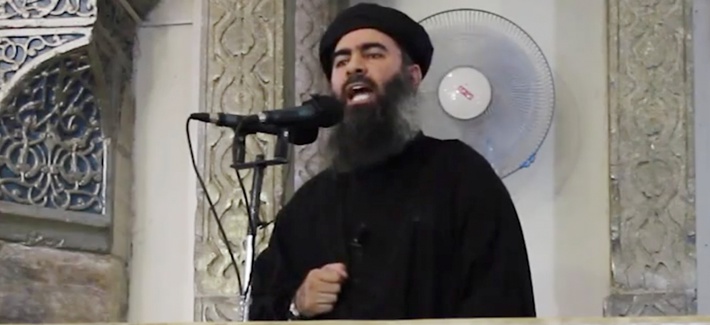
Is this the leader of a “scourge” and an “abomination” and a “witch’s brew”?
W.J. Astore
General John Allen wants to “destroy the Islamic State now.” So he says in an article for Defense One. Allen, a retired Marine Corps general who led troops in Iraq and Afghanistan, is currently a distinguished fellow at the Brookings Institution. But what is distinguishing him in this article is his crusader-speak, a remarkable blend of religious extremism and chauvinistic parochialism.
Let’s tackle the latter first. For Allen, the good people of Iraq are “poor” and “benighted.” But some of them can serve as our “boots on the ground” in the region, i.e. they can serve as bullet magnets while the U.S. provides air support with impunity. It’s up to the U.S. to “orchestrate” their attacks against the Islamic State. As long as they follow our conductor’s baton, all will end well, perhaps with a crescendo of U.S. bombs. (As an aside, he describes the Taliban in Afghanistan as “cavemen” when compared to the new enemy in Iraq. Some of those “cavemen” did fairly well against the former Soviet Union, did they not?)
My charge that the general’s language is that of “religious extremism” may itself appear extreme, but take a close look at his article. The general refers to the Islamic State as a “scourge” and an “abomination.” (I’ve read my Bible and recognize the religious resonances here.) They are “beyond the pale of humanity” and must be “eradicated” because they are engaged in “total war” aided by a “witch’s brew” of foreign recruits.
In sum, General Allen has demonized the enemy while at the same time diminishing potential allies (those “poor benighted” people in need of an American conductor). The answer is eradication, i.e. extermination of that enemy. Now!
Remind me again: Which side is engaged in religious war here?
As Richard Nixon used to say, let me make one thing perfectly clear: I’m not in any way defending the murderous extremism of the Islamic State. What I’m saying is that the best solution is not to return the favor (unless you’re truly seeking a crusade). I’m also suggesting that the general’s article is (unintentionally) indicative of a mindset that explains much about why American efforts in Iraq and Afghanistan have failed.
When you do something again and again, placing great faith in it, investing enormous amounts of money in it, only to see indifferent or even negative results, you wouldn’t be entirely surprised if a neutral observer questioned your sanity or asked you if you were part of some cult. Yet few Americans question the sanity or cult-like behavior of American presidents as they continue to seek solutions to complex issues by bombing Iraq (as well as numerous other countries across the globe).
Poor Iraq. From Operation Desert Shield/Storm under George H.W. Bush to enforcing no-fly zones under Bill Clinton to Operation Iraqi Freedom under George W. Bush to the latest “humanitarian” bombing under Barack Obama, the one constant is American bombs bursting in Iraqi desert air. Yet despite this bombing — or rather in part because of it — Iraq is a devastated and destabilized country, slowly falling apart at seams that have been unraveling under almost a quarter-century of steady, at times relentless, pounding. “Shock and awe,” anyone?
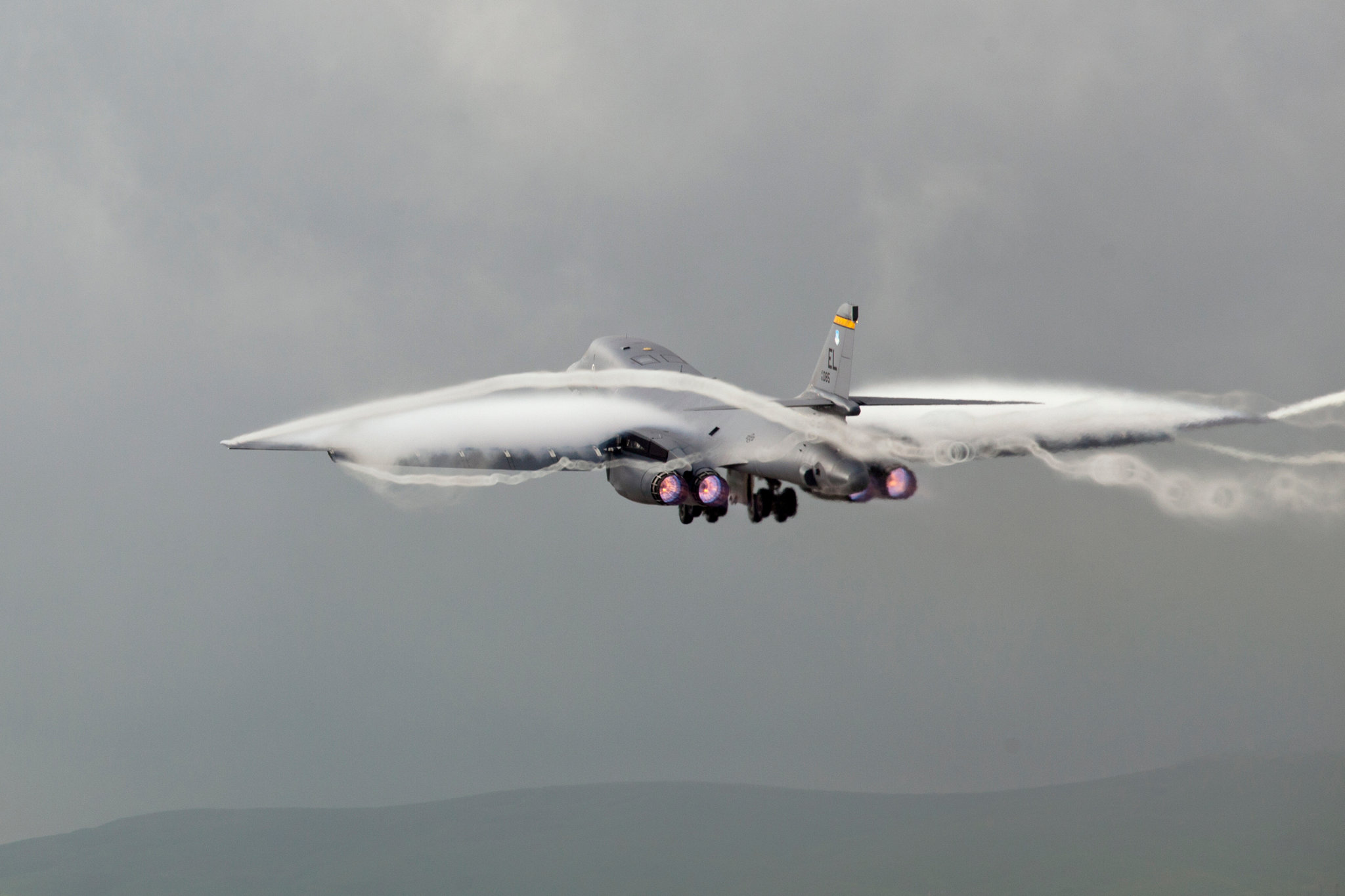
Well, I confess to being shocked: that U.S. airpower assets, including strategic bombers like B-52s and B-1s, built during the Cold War to deter and, if necessary, attack that second planetary superpower, the Soviet Union, have routinely been used to attack countries that are essentially helpless to defend themselves from bombing.
In 1985, when I entered active duty as an Air Force lieutenant, if you had asked me which country the U.S. would “have” to bomb in four sustained aerial campaigns spanning three decades, among the last countries I would have suggested was Iraq. Heck, back then we were still helping Saddam Hussein in his war against Iran, sharing intelligence that aided his military in pinpointing (and using his chemical weapons against) Iranian troop concentrations. The Reagan administration had sent future Bush secretary of defense Donald Rumsfeld there to shake Saddam’s hand for a photo op. We even overlooked Iraq’s “accidental” bombing in 1987 of a American naval vessel, the USS Stark, that resulted in the death of 37 American sailors, all in the name of containing Iran (and Shia revolutionary fervor).
…
What we need in 2014 is a new expression that catches the essence of the cult of U.S. air power, something like: “The bomber will always get funded — and used.”
Let’s tackle the first half of that equation: the bomber will always get funded. Skeptical? What else captures the reality (as well as the folly) of dedicating more than $400 billion to the F-35 fighter-bomber program, a wildly over-budget and underperforming weapons system that may, in the end, cost the American taxpayer $1.5 trillion. Yes, you read that right. Or the persistence of U.S. plans to build yet another long-range “strike” bomber to augment and replace the B-1 and B-2 fleet? It’s a “must-have,” according to the Air Force, if the U.S. is to maintain its “full-spectrum dominance” on Planet Earth. Already pegged at an estimated price of $550 million per plane while still on the drawing boards, it’s just about guaranteed to replace the F-35 in the record books, when it comes to delays, cost overruns, and price. And if you don’t think it’ll get funded, you don’t know recent history.
Heck, I get it. I was a teenager once. In the 1970s, as an Air Force enthusiast and child of the Cold War, I hugged exotic and therefore pricey bomber jets to my chest. (Well, models of them, anyway.) I considered them to be both uniquely American and an absolute necessity when it came to defending our country against the lumbering (but nevertheless menacing) Soviet “bear.” As a result, I gasped in 1977 when President Jimmy Carter dared to cancel the B-1 bomber program. While I was a little young to pen my outrage, more mature critics than I quickly accused him of being soft on defense, of pursuing “unilateral disarmament.”
Back then, I’d built a model of the B-1 bomber. In my mind’s eye I still see its sexy white body and its rakish swing wings. No question that it was a man’s bomber. I recall attaching a firecracker to its body, lighting the wick, and dropping the plane from the third-floor porch. It exploded in mid-air, symbolic to me of the plane’s tragic fate at the hands of the pusillanimous Carter.
But I need not have feared for the B-1. In October 1981, as one of his first major acts in office, President Ronald Reagan rescinded Carter’s cancellation and revived the mothballed program. The Air Force eventually bought 100 of the planes for $28 billion, expensive at the time (and called a “turkey” by some), but a relative bargain in the present budgetary environment when it comes to bombers (but these days, little else).
At that point, I was a young lieutenant serving on active duty in the Air Force. I had by then come to learn that Carter, the peanut farmer (and former Navy nuclear engineer), was right. We really didn’t need the B-1 for our defense. In 1986, for a contest at Peterson Air Force Base where I was stationed, I wrote a paper against the B-1, terming the idea of a “penetrating strategic bomber” a “flawed strategy” in an era of long-range air-launched cruise missiles. It earned an honorable mention, the equivalent of drawing the “you have won second prize in a beauty contest” card in Monopoly, but without the compensatory $10.
That “penetrating,” by the way, meant being loaded with expensive avionics, nowadays augmented by budget-busting “stealth” features, so that a plane could theoretically penetrate enemy air defenses while eluding detection. If the idea of producing such a bomber was flawed in the 1980s, how much more is it today, in an age of remotely-piloted drones and missiles guided by GPS and in a world in which no country the U.S. chooses to bomb is likely to have air defenses of any sophistication? Yet the Air Force insists that it needs at least 100 of the next generation version of them at a cost of $55 billion. (Based on experience, especially with the F-35, you should automatically double or even triple that price tag, cost overruns and product development delays being a given in the process. So let’s say it’ll cost closer to $150 billion. Check back with me, God willing, in 2040 to see whether the Air Force’s figure or mine was closer to reality.)
Idols for Worship, Urges to Satisfy
Obviously, there are staggering amounts of money to be made by feeding America’s fetish for bombers. But the U.S. cult of air power and its wildly expensive persistence requires further explanation. On one level, exotic and expensive attack planes like the F-35 or the future “long range strike bomber” (LRS-B in bloodless acronym-speak) are the military equivalent of sacred cows. They are idols to be worshipped (and funded) without question. But they are also symptoms of a larger disease — the engorgement of the Department of Defense. In the post-9/11 world, this has become so pronounced that the military-industrial-congressional complex clearly believes it is entitled to a trough filled with money with virtually no accountability to the American taxpayer.
Add to that sense of entitlement the absurdist faith of administration after administration in the efficacy of bombing as a problem solver — despite overwhelming evidence to the contrary — and you have a truly lethal combo. Senator John McCain was widely mocked by progressives for his “bomb Iran” song, warbled during the 2008 presidential campaign to the tune of the Beach Boys’s “Barbara Ann.” In fact, his tuneless rendition captured perfectly Washington’s absolute faith in bombing as a solution to…whatever.
Even if the bombs bursting over Iraq or elsewhere don’t solve anything, even when they make things worse, they still make a president look, well, presidential. In America, land of warbirds, it is always better politically to pose as a hunting hawk than a helpless dove.
So don’t blame the Air Force for wanting more and deadlier bombers. Or don’t blame only them. Just as admirals want more ships, flyboys naturally want more planes, even when strategically obsolete from scratch and blazingly expensive. No military service has ever willingly given up even a tiny slice of its share of the prospective budgetary pie, especially if that slice cuts into the service’s core image. In this sense, the Air Force takes its motto from King Lear’s “Reason not the need!” and from Zack Mayo’s “I want to fly jets!” (memorably uttered by that great Shakespearean actor Richard Gere in An Officer and a Gentleman).
The sad truth runs deeper: Americans evidently want them, too. More bombers. More bombs. In the movie Top Gun, Tom Cruise’s Maverick got it all wrong. It’s not speed Americans feel a need for; they have an urge to bomb. When you refuse to reason, when you persist in investing ever more resources in ever more planes, use almost automatically follows.
In other words, fund it, build it, and, as promised in the second half of my equation, the bomber will always get used. Mock him all you want, but John McCain was on to something. It’s bomb, bomb, bomb, bomb bomb if not (yet) Iran… then Iraq, or Pakistan, or Libya, or Yemen, or (insert intransigent foreign country/peoples here).
And like cults everywhere, it’s best not to question the core belief and practices of its leaders — after all, bombs bursting in air is now as American as the “Star Spangled Banner.”
There you go again, President Obama, echoing a line delivered by that consummate actor, Ronald Reagan. Yes, we’re bombing Iraq again, in the name of humanitarianism. This time, we’re only getting the “bad” Iraqis, so it’s OK. Right?
The only “humanitarian” bombing I’ve ever heard of is in fiction; specifically, in Slaughter-House Five, where Kurt Vonnegut imagined a bombing raid in reverse, with bombs returning to their planes and bodies blown into pieces magically reassembling into living, breathing, human beings.
The U.S. still believes in the dream of airpower: that it’s cheap, surgical, decisive. But history has taught us otherwise, a fact I wrote about at TomDispatch.com in March of 2013. But who cares about history — it’s bunk, right?
So we persist in our “bombs away” mentality, whether it’s Iraq or Afghanistan or Pakistan or Libya or Yemen or … well, you get the picture.
Here is the article I wrote about airpower and its lessons. Consider it as you listen to media reports of how precise and decisive and “modulated” and “measured” our most current raids have been.
The lesson, I think, is simple: So many bombs; so little brains.
The Ever-Destructive Dreams of Air Power Enthusiasts
Today’s unmanned aerial vehicles, most famously Predator and Reaper drones, have been celebrated as the culmination of the longtime dreams of airpower enthusiasts, offering the possibility of victory through quick, clean, and selective destruction. Those drones, so the (very old) story goes, assure the U.S. military of command of the high ground, and so provide the royal road to a speedy and decisive triumph over helpless enemies below.
Fantasies about the certain success of air power in transforming, even ending, war as we know it arose with the plane itself. But when it comes to killing people from the skies, again and again air power has proven neither cheap nor surgical nor decisive nor in itself triumphant. Seductive and tenacious as the dreams of air supremacy continue to be, much as they automatically attach themselves to the latest machine to take to the skies, air power has not fundamentally softened the brutal face of war, nor has it made war less dirty or chaotic.
Indeed, by emboldening politicians to seek seemingly low-cost, Olympian solutions to complex human problems — like Zeus hurling thunderbolts from the sky to skewer puny mortals — it has fostered fantasies of illimitable power emboldened by contempt for human life. However, just like Zeus’s obdurate and rebellious subjects, the mortals on the receiving end of death from on high have shown surprising strength in frustrating the designs of the air power gods, whether past or present. Yet the Olympian fantasy persists, a fact that requires explanation.
The Rise of Air Power
It did not take long after the Wright Brothers first put a machine in the air for a few exhilarating moments above the sandy beaches of Kitty Hawk, North Carolina, in December of 1903, for the militaries of industrialized countries to express interest in buying and testing airplanes. Previously balloons had been used for reconnaissance, as in the Napoleonic wars and the U.S. Civil War, and so initially fledgling air branches focused on surveillance and intelligence-gathering. As early as 1911, however, Italian aircraft began dropping small bombs from open-air cockpits on the enemy — we might today call them “insurgents” — in Libya.
World War I encouraged the development of specialized aircraft, most famously the dancing bi- and tri-winged fighter planes of the dashing “knights of the air,” as well as the more ponderous, but for the future far more important, bombers. By the close of World War I in 1918, each side had developed multi-engine bombers like the German Gotha, which superseded the more vulnerable zeppelins. Their mission was to fly over the trenches where the opposing armies were stalemated and take the war to the enemy’s homeland, striking fear in his heart and compelling him to surrender. Fortunately for civilians a century ago, those bombers were too few in number, and their payloads too limited, to inflict widespread destruction, although German air attacks on England in 1917 did spread confusion and, in a few cases, panic.
Pondering the hecatombs of dead from trench warfare, air power enthusiasts of the 1920s and 1930s not surprisingly argued strongly, and sometimes insubordinately, for the decisive importance of bombing campaigns launched by independent air forces. A leading enthusiast was Italy’s Giulio Douhet. In his 1921 work Il dominio dell’aria (Command of the Air), he argued that in future wars strategic bombing attacks by heavily armed “battle-planes” (bombers) would produce rapid and decisive victories. Driven by a fascist-inspired logic of victory through preemptive attack, Douhet called for all-out air strikes to destroy the enemy’s air force and its bases, followed by hammer blows against industry and civilians using high-explosive, incendiary, and poison-gas bombs. Such blows, he predicted, would produce psychological uproar and social chaos (“shock and awe,” in modern parlance), fatally weakening the enemy’s will to resist.
As treacherous and immoral as his ideas may sound, Douhet’s intent was to shorten wars and lessen casualties — at least for his side. Better to subdue the enemy by pressing hard on select pressure points (even if the “pressing” was via high explosives and poison gas, and the “points” included concentrations of innocent civilians), rather than forcing your own army to bog down in bloody, protracted land wars.
That air power was inherently offensive and uniquely efficacious in winning cheap victories was a conclusion that found a receptive audience in Great Britain and the United States. In England, Hugh Trenchard, founding father of the Royal Air Force (RAF), embraced strategic bombing as the most direct way to degrade the enemy’s will; he boldly asserted that “the moral effect of bombing stands undoubtedly to the material effect in a proportion of twenty to one.”
Even bolder was his American counterpart, William “Billy” Mitchell, famously court-martialed and romanticized as a “martyr” to air power. (In his honor, cadets at the U.S. Air Force Academy still eat in Mitchell Hall.) At the Air Corps Tactical School in the 1930s, U.S. airmen refined Mitchell’s tenets, developing a “vital centers” theory of bombing — the idea that one could compel an enemy to surrender by identifying and destroying his vulnerable economic nodes. It therefore came as no accident that the U.S. entered World War II with the world’s best heavy bomber, the B-17 Flying Fortress, and a fervid belief that “precision bombing” would be the most direct path to victory.
World War II and After: Dehousing, Scorching, Boiling, and Baking the Enemy
In World War II, “strategic” air forces that focused on winning the war by heavy bombing reached young adulthood, with all the swagger associated with that stage of maturity. The moral outrage of Western democracies that accompanied the German bombing of civilian populations in Guernica, Spain, in 1937 or Rotterdam in 1940 was quickly forgotten once the Allies sought to open a “second front” against Hitler through the air. Four-engine strategic bombers like the B-17 and the British Lancaster flew for thousands of miles carrying bomb loads measured in tons. From 1942 to 1945 they rained two million tons of ordnance on Axis targets in Europe, but accuracy in bombing remained elusive.
While the U.S. attempted and failed at precision daylight bombing against Germany’s “vital centers,” Britain’s RAF Bomber Command began employing what was bloodlessly termed “area bombing” at night in a “dehousing” campaign led by Arthur “Bomber” Harris. What became an American/British combined bomber offensive killed 600,000 German civilians, including 120,000 children, reducing cities like Cologne (1942), Hamburg (1943), Berlin (1944-45), and Dresden (1945) to rubble.
Yet, contrary to the dreams of air power advocates, Germany’s will to resist remained unbroken. The vaunted second front of aerial battle became yet another bloody attritional brawl, with hundreds of thousands of civilians joining scores of thousands of aircrews in death.
Similarly mauled but unbroken by bombing was Japan, despite an air campaign of relentless intensity that killed hundreds of thousands of Japanese civilians. Planned and directed by Major General Curtis LeMay, new B-29 bombers loaded with incendiaries struck Tokyo, a city made largely of wood, in March 1945, creating a firestorm that in his words “scorched and boiled and baked [the Japanese] to death.” As many as 100,000 Japanese died in this attack.
Subsequently, 60 more cities were firebombed until the apotheosis of destruction came that August as atomic bombs incinerated Hiroshima and Nagasaki, killing another 200,000 people. It quickly became an article of faith among American air power enthusiasts that these bombs had driven Japan to surrender; together with this, the “decisive” air campaign against Germany became reason enough to justify an independent U.S. Air Force, which was created by the National Security Act of 1947.
In the total war against Nazi and Japanese terror, moral concerns, when expressed, came privately. General Ira Eaker worried that future generations might condemn the Allied bombing campaign against Germany for its targeting of “the man in the street.” Even LeMay, not known for introspective doubts, worried in 1945 that he and his team would likely be tried as war criminals if the U.S. failed to defeat Japan. (So Robert McNamara, then an Army Air Force officer working for LeMay, recalled in the documentaryThe Fog of War.)
But moral qualms were put aside in the post-war glow of victory and as the fear rose of future battles with communism. The Korean War (1950-1953) may have ushered in the jet age, as symbolized by the dogfights of American Sabre Jets and Soviet MiGs over the Yalu River, but it also witnessed the devastation by bombing of North Korea, even as the enemy took cover underground and refused to do what air power strategists had always assumed they would: give up.
Still, for the U.S. Air Force, the real action of that era lay largely in the realm of dystopian fantasies as it created the Strategic Air Command (SAC), which coordinated two legs of the nuclear triad, land-based intercontinental ballistic missiles in silos and nuclear-armed long-range bombers. (The third was nuclear-missile-armed submarines.) SAC kept some of those bombers carrying thermonuclear weapons in the air 24/7 as a “deterrent” to a Soviet nuclear first strike (and as a constant first strike threat of our own). “Thinking about the unthinkable” — that is, nuclear Armageddon — became all the rage, with “massive retaliation” serving as the byword for air power enthusiasts. In this way, dreams of clean victories morphed into nightmares of global thermonuclear annihilation, leaving the 1930s air power ideal of “clean” and “surgical” strikes in the dust — for the time being.
Reaping What We Sow
Despite an unimaginably powerful nuclear deterrent that essentially couldn’t be used, the U.S. Air Force had to relearn the hard way that there remained limits to the efficacy of air power, especially when applied to low-intensity, counterinsurgency wars. As in Korea in the 1950s, air power in the 1960s and 1970s failed to provide the winning edge in the Vietnam War, even as it spread wanton destruction throughout the Vietnamese countryside. But it was the arrival of “smart” bombs near that war’s end that marked the revival of the fantasies of air power enthusiasts about “precision bombing” as the path to future victory.
By the 1990s, laser- and GPS-guided bombs (known collectively as PGMs, for precision guided munitions) were relegating unguided, “dumb” bombs largely to the past. Yet like their predecessors, PGMs proved no panacea. In the opening stages of Operation Iraqi Freedom in 2003, for example, 50 precision “decapitation strikes” targeting dictator Saddam Hussein’s top leadership failed to hit any of their intended targets, while causing “dozens” of civilian deaths. That same year, air power’s inability to produce decisive results on the ground after Iraq’s descent into chaos, insurrection, and civil war served as a reminder that the vaunted success of the U.S. air campaign in the First Gulf War (1991) was a fluke, not a flowering of air power’s maturity. (Saddam Hussein made his traditionally organized military, defenseless against air power, occupy static positions after his invasion of Kuwait.)
The recent marriage of PGMs to drones, hailed as the newest “perfect weapon” in the air arsenal, has once again led to the usual fantasies about the arrival — finally, almost 100 years late — of clean, precise, and decisive war. Using drones, a military need not risk even a pilot’s life in its attacks. Yet the nature of war — its horrors, its unpredictability, its tendency to outlive its original causes — remains fundamentally unaltered by “precision” drone strikes. War’s inherent fog and friction persist. In the case of drones, that fog is often generated by faulty intelligence, the friction by malfunctioning weaponry or innocent civilians appearing just as the Hellfire missiles are unleashed. Rather than clean wars of decision, drone strikes decide nothing. Instead, they produce their share of “collateral damage” that only spawns new enemies seeking revenge.
The fantasy of air war as a realm of technical decision, as an exercise in decisively finding, fixing, and dispatching the enemy, appeals to a country like the United States that idolizes technology as a way to quick fixes. As a result, it’s hardly surprising that two administrations in Washington have ever more zealously pursued drone wars and aerial global assassination campaigns, already killing 4,700 “terrorists” and bystanders. And this has been just part of our Nobel Peace Prize-winning president’s campaign of 20,000 air strikes (only 10% of which were drone strikes) in his first term of office. Yet despite — or perhaps because of — these attacks, our global war against al-Qaeda, its affiliates, and other groups like the Taliban appears no closer to ending.
And that is, in part, because the dream of air power remains just that: a fantasy, a capricious and destructive will-o’-the-wisp. It’s a fantasy because it denies agency to enemies (and others) who invariably find ways to react, adapt, and strike back. It’s a fantasy because, however much such attacks seem both alluringly low-risk and high-reward to the U.S. military, they become a rallying cause for those on the other end of the bombs and missiles.
A much-quoted line from the movie Apocalypse Now captured the insanity of the American air war in Vietnam. “I love the smell of napalm in the morning,” says an Air Cav commander played by Robert Duvall. “Smelled like… victory.” Updated for drone warfare, this line might read: “I love the sound of drones in the morning. Sounds like… victory.” But will we say the same when armed drones are hovering, not only above our enemies’ heads but above ours, too, in fortress America, enforcing security and conformity while smiting citizens judged to be rebellious?
Something tells me this is not the dream that airpower enthusiasts had in mind.
In April of 2009, I wrote the following article for TomDispatch.com on the situation in Afghanistan. During his 2008 campaign for President, Obama had claimed that Afghanistan was the right war to be fighting, and that Bush and Company had taken their eye off the Afghan ball when they chose to invade Iraq in 2003.
Here we are in August 2014 and the news from Afghanistan is about as grim as one could expect. This week has witnessed costly “insider” attacks that killed an American major general as well as eleven Afghan police officers. Progress toward democratic reforms and political stability remains elusive. U.S. efforts to reshape and rebuild Afghanistan have cost more than $100 billion, exceeding the Marshall Plan that rebuilt Europe after World War II, but without corresponding results.
Obama appears to be channeling Richard Nixon. Publicly, he’s seeking “peace with honor” in Afghanistan. Privately, he’s seeking a “decent interval” between when the U.S. exits Afghanistan for good and when Afghanistan returns to Taliban and tribal control, i.e. chaos, or at least that’s my guess. The “fall” of Afghanistan will then become a political football, with Republicans attempting to paint Democrats as being spineless in leaving Afghanistan, whereas the Democrats will likely paint Afghan leaders as corrupt and incompetent and ungrateful. Perhaps a Democratic candidate will emerge in 2020 to explain to Americans that our failed efforts in Afghanistan were nevertheless part of a “noble cause” in the global war on terror.
What follows is my article from April of 2009. I think lesson (2) below will be especially telling in the weeks and months ahead.
Mary McCarthy in Vietnam, Barack Obama in Afghanistan
Seven Lessons and Many Questions for the President
By William Astore
In 1967, outraged by the course of the Vietnam War, as well as her country’s role in prolonging and worsening it, Mary McCarthy, novelist, memoirist, and author of the bestseller The Group, went to Saigon, then the capital of South Vietnam, to judge the situation for herself. The next year, she went to the North Vietnamese capital, Hanoi. She wrote accounts of both journeys, published originally in pamphlet format as Vietnam (1967) and Hanoi (1968), and later gathered with her other writings on Vietnam as a book, The Seventeenth Degree (1974). As pamphlets, McCarthy’s accounts sold poorly and passed into obscurity; deservedly so, some would say.
Those who’d say this, however, would be wrong. McCarthy brought a novelist’s keen eye to America’s activities and its rhetoric in Vietnam. By no means a military expert, not even an expert on Vietnam — she only made a conscious decision to study the war in Vietnam after she returned from her trip to Saigon — her impressionistic writings were nevertheless insightful precisely because she had long been a critical thinker beholden to no authority.
Her insights into our approach to war-fighting and to foreign cultures are as telling today as they were 40 years ago, so much so that President Obama and his advisors might do well to add her unconventional lessons to their all-too-conventional thinking on our spreading war in Afghanistan and Pakistan.
What were those lessons? Here are seven of them, each followed by questions that, four decades later, someone at President Obama’s next press conference should consider asking him:
1. McCarthy’s most fundamental objection was to the way, in Vietnam, the U.S. government decided to apply “technology and a superior power to a political situation that will not yield to this.” At the very least, the United States was guilty of folly, but McCarthy went further. She condemned our technocentric and hegemonic form of warfare as “wicked” because of its “absolute indifference to the cost in human lives” to the Vietnamese people.
Even in 1967, the widespread, at times indiscriminate, nature of American killing was well known. For example, U.S. planes dropped roughly 7 million tons of bombs on Vietnam and parts of Laos and Cambodia during the war, nearly five times the tonnage used against Germany during World War II. The U.S. even waged war on the Vietnamese jungle and forest, which so effectively hid Vietnamese guerrilla forces, spraying roughly 20 million gallons of toxic herbicides (including the dioxin-contaminated Agent Orange) on it.
In her outrage, McCarthy dared to compare the seeming indifference of many of her fellow citizens toward the blunt-edged sword of technological destruction we had loosed on Vietnam to the moral obtuseness of ordinary Germans under Adolf Hitler.
Questions for President Obama: Aren’t we once again relying on the destructive power of technology to “solve” complex political and religious struggles? Aren’t we yet again showing indifference to the human costs of war, especially when borne by non-Americans? Even though we’re using far fewer bombs in the Af-Pak highlands than we did in Vietnam, aren’t we still morally culpable when these “precision-guided munitions” miss their targets and instead claim innocents, or hit suspected “terrorists” who suddenly morph into wedding parties? In those cases, do we not seek false comfort in the phrase, C’est la guerre, or at least that modern equivalent: unavoidable collateral damage?
2. As Richard Nixon campaigned for the presidency in 1968 by calling for “peace with honor” in Vietnam, McCarthy offered her own warning about the dangers that arose when the office of the presidency collided with an American desire never to be labeled a loser: “The American so-called free-enterprise system, highly competitive, investment-conscious, expansionist, repels a loser policy by instinctive defense movements centering in the ganglia of the presidency. No matter what direction the incumbent, as candidate, was pointing in, he slowly pivots once he assumes office.”
Questions for President Obama: Have you, like Vietnam-era presidents, pivoted toward yet another surge simply to avoid the label of “loser” in Afghanistan? And if the cost of victory (however defined) is hundreds, or even thousands, more American military casualties, hundreds of billions of additional dollars spent, and extensive collateral damage and blowback, will this “victory” not be a pyrrhic one, achieved at a price so dear as to be indistinguishable from defeat?
3. Though critical of the U.S. military in Vietnam, McCarthy was even more critical of American civilian officials there. “On the whole,” she wrote, they “behaved like a team of promoters with a dubious ‘growth’ stock they were brokering.” At least military men were often more forthright than the civilians, if not necessarily more self-aware, McCarthy noted, because they were part of the war — the product, so to speak — not its salesmen.
Questions for President Obama: In promising to send a new “surge” of State Department personnel and other civilians into Afghanistan, are you prepared as well to parse their words? Are you braced in case they sell you a false bill of goods, even if the sellers themselves, in their eagerness to speak fairy tales to power, continually ignore the Fantasyland nature of their tale?
4.Well before Bush administration officials boasted about creating their own reality and new “facts on the ground” in Iraq, Mary McCarthy recognized the danger of another type of “fact”: “The more troops and matériel committed to Vietnam, the more retreat appears to be cut off — not by an enemy, but by our own numbers. To call for withdrawal in the face of that commitment… is to seem to argue not against a policy, but against facts, which by their very nature are unanswerable.”
Questions for President Obama: If your surge in Afghanistan fails, will you be able to de-escalate as quickly as you escalated? Or will the fact that you’ve put more troops in harm’s way (with all their equipment and all the money that will go into new base and airfield and road construction), and committed more of your prestige to prevailing, make it even harder to consider leaving?
5.A cursory reading of The Pentagon Papers, the famously secret government documents on Vietnam leaked to the New York Times by Daniel Ellsberg, reveals how skeptical America’s top officials were, early on, in pursuing a military solution to the situation in South Vietnam. Nevertheless, knowing better, the “best and brightest,” as journalist David Halberstam termed them in his famous, ironic book title, still talked themselves into it; and they did so, as McCarthy noted, because they set seemingly meaningful goals (“metrics” or “benchmarks,” we’d say today), which they then convinced themselves they were actually achieving. When you trick yourself into believing that you’re meeting your goals, as Halberstam noted, there’s no reason to reexamine your course of action.
Questions for President Obama: Much has been written about an internal struggle within your administration over the wisdom of surging in Afghanistan. Now, you, too, have called for the setting of “benchmarks” for your new strategy’s success. Are you wise enough to set them to capture the complexities of political realities on the ground rather than playing to American strengths? Are you capable of re-examining them, even when your advisors assure you that they are being achieved?
6.In her day, Mary McCarthy recognized the inequities of burden-sharing at home when it came to the war in Vietnam: “Casualty figures, still low [in 1967], seldom strike home outside rural and low-income groups — the silent part of society. The absence of sacrifices [among the privileged classes] has had its effect on the opposition [to the war], which feels no need, on the whole, to turn away from its habitual standards and practices — what for? We have not withdrawn our sympathy from American power and from the way of life that is tied to it — a connection that is more evident to a low-grade G.I. in Vietnam than to most American intellectuals.”
Questions for President Obama: Are you willing to listen to the common G.I. as well as to the generals who have your ear? Are you willing to insist on greater equity in burden-sharing, since once again most of the burden of Iraq and Afghanistan has fallen on “the silent part of society”? Are you able to recognize that the “best and brightest” in the corridors of power may not be the wisest exactly because they have so little to lose (and perhaps much to gain) from our “overseas contingency operations”?
7.McCarthy was remarkably perceptive when it came to the seductiveness of American technological prowess. Our technological superiority, she wrote, was a large part of “our willingness to get into Vietnam and stay there… The technological gap between us and the North Vietnamese constituted, we thought, an advantage which obliged us not to quit.”
Questions for President Obama: Rather than providing us with a war-winning edge, might our robot drones, satellite imagery, and all our other gadgetry of war seduce us into believing that we can “prevail” at a reasonable and sustainable cost? Indeed, do we think we should prevail precisely because our high-tech military brags of “full spectrum dominance”?
One bonus lesson from Mary McCarthy before we take our leave of her: Even now, we speak too often of “Bush’s war” or, more recently, “Obama’s war.” Before we start chattering mindlessly about Iraq and Afghanistan as American tragedies, we would do well to recall what McCarthy had to say about the war in Vietnam: “There is something distasteful,” she wrote, “in the very notion of approaching [Vietnam] as an American tragedy, whose protagonist is a great suffering Texan [President Lyndon Baines Johnson].”
Yes, there is something distasteful about a media that blithely refers to Bush’s or Obama’s war as hundreds of thousands of Iraqis and Afghans suffer. For American troops, after all, are not the only ones paying the ultimate price when the U.S. fights foreign wars for ill-considered reasons and misguided goals.
Dissent is fundamental to democracy. Or so we claim. Until such dissent makes us angry or uncomfortable. Then we yell at the dissenter to shut up; better yet, we denounce him or her as a traitor to … well, whatever fits.
But responsible criticism of the actions of one’s government is not disloyalty; rather, it’s often a form of higher loyalty, a loyalty to the ideal of freedom of speech as well as the ideal of organized political action. The alternative is “My government, right or wrong.” And who wants that, except for government leaders and their lackeys?
The USA and Israel claim to be democracies. Yet in difficult times, dissent is often suppressed, and dissenters painted as disloyal. Recall the aftermath of 9/11 in the USA, when those who questioned the rush to war against Iraq were painted as naive peaceniks (at best) or as dupes of Saddam Hussein or even (at worst) as supporters of Al Qaeda. That was the mentality of Bush and Company, a Manichean “you’re either for us or against us.” And look where that got us.
Sorry, I’m not “for” a government and its leaders. I’m “for” the US Constitution and our essential rights and liberties, including the right to dissent from my government when I believe it is wrong.
Today, the debate on Israel and Gaza is similarly heated. Those who risk expressing sympathy for the Palestinians often get painted as supporters of Hamas and terrorism. Jon Stewart showcased this mentality on The Daily Showhere. Similarly, David Harris-Gershon wrote a telling article with the meaningful title, “Empathizing with Gaza does NOT make me anti-Semitic, nor pro-Hamas or anti-Israel. It makes me human.”
It almost goes without saying that Stewart and Harris-Gershon are Jewish. Indeed, Harris-Gershon’s wife was seriously injured by a terrorist bomb in Israel, an ordeal he wrote about in his book, “What Do You Buy the Children of the Terrorist Who Tried to Kill Your Wife? A Memoir of Jerusalem.” That they have to fight against the charge of being “self-hating Jews” or enemy sympathizers says much about the suppression of dissent by authoritarian elements in Israel as well as the USA.
Look: The situation in Gaza is highly inflammatory. As an organization, Hamas is quite obviously dedicated to launching rockets against innocents and building tunnels to launch terrorist attacks. Few people can blame Israel for wanting to stop the rocket attacks and destroy the tunnels. But honest people in good faith can definitely disagree with how the Israeli government is going about it.
Let me close with a comment from a Jewish friend. He wrote to me with grave concern about Israel’s actions in Gaza. What he said resonated with me. He said that the Israeli government’s actions in Gaza were betraying a fundamental core value of Jewish identity.
That value? Compassion.
You may agree or disagree with him. But is it too much to ask that we take his concern seriously, without denouncing him as naive or misguided or calling him a self-hating Jew or even a traitor?
Update (8/4/14): Call it “dissent” or call it “gumption” (the word Andrew Bacevich uses below): We need it when the experts are marching in lockstep in the pursuit of bad policies, as they did with the Tonkin Gulf Resolution in August 1964 that enabled the disastrous escalation of the Vietnam War. But let Bacevich tell it:
“It takes gumption to question truths that everyone “knows” to be true. In the summer of 1964, gumption was in short supply. As a direct consequence, 58,000 Americans died, along with a vastly larger number of Vietnamese, Cambodians, and Laotians.
“After 9/11, similar mistakes — deference to the official line and to the conventional wisdom (“terrorism” standing in for communism) — recurred, this time with even less justification. The misbegotten Iraq war was one result. Yet even today, events in Syria, Ukraine, and elsewhere elicit an urge to ‘do something,’ accompanied by the conviction that unless troops are moving or bombs dropping the United States is somehow evading its assigned responsibilities. The question must be asked: Are Americans incapable of learning?”
We’re especially incapable of learning when those few who dare to question the wrongheaded policies of our government are painted as malcontents or traitors.
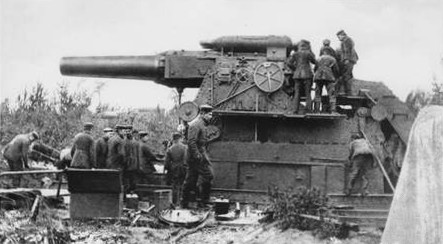
This August marks the 100th anniversary of the start of World War I. That “Great War” was many things, but it was most certainly a war of machines, of dreadnought battleships and “Big Bertha” artillery, of newfangled airplanes and tortoise-like tanks. Industrial juggernauts like Great Britain, France, and Germany succeeded more or less in mobilizing their economies fully for war; their reward was reaping the horrors of death-dealing machinery on a scale theretofore thought impossible.
In that summer of 1914, most experts expected a short war, so plans for sustaining machine-age warfare through economic mobilization were lacking. Confronted by trench warfare and stalemate on the Western Front which owed everything to modern industrialism and machinery, the “big three” antagonists strove to break that stalemate using the means that had produced it: weapons and munitions. Those empires caught up in the war that were still industrializing, e.g. Russia, Austria-Hungary, the Ottoman Empire, found themselves at a serious disadvantage.
Together, Britain and France forged an industrial alliance that proved (with help from the U.S.) to be a war-winning “arsenal of democracy.” Yet this alliance contributed to an overvaluing of machines and munitions at the soldiers’ expense. For Entente leaders — even for old-school cavalry officers like Britain’s Field Marshal Sir Douglas Haig — new artillery with massive stockpiles of shells promised to produce the elusive breakthrough and a return to mobile warfare and glorious victory.
Thus it was that at the Battle of the Somme that began on July 1, 1916, British soldiers were reduced to trained occupiers. Lengthy pre-battle artillery barrages, it was believed, would annihilate German defenders, leaving British troops to slog uncontested across no-man’s land to occupy the enemy’s shattered and empty trenches.
But those trenches were not empty. Germany’s defenses survived Britain’s storm of steel largely intact. And Britain’s soldiers paid the price of misplaced faith in machine warfare: nearly 20,000 dead on that first day, with a further 40,000 wounded.
The Somme is but one example of British and French commanders being overwhelmed by the conditions of machine warfare, so much so that they placed their faith in more machines and more munitions as the means to victory. After underestimating the impact of technology on the battlefield up to 1914, commanders quickly came to overestimate it. As a result, troops were inadequately trained and tactics inadequately developed.
As commanders consumed vast quantities of machinery and munitions, they became accustomed to expending lives on a similarly profligate scale. Bodies piled up even as more economic means were tapped. Meanwhile, the staggering sacrifices required by destructive industrialism drove nations to inflate strategic ends. Industrialized warfare that spat out lead and steel while consuming flesh and bone served only to inflame political demands, negating opportunities for compromise. Total victory became the only acceptable result for both sides.
In retrospect it’s remarkable how quickly leaders placed their faith in the machinery of war, so much so that military power revved uncontrollably, red-lined, then exploded in the faces of its creators. Industrialized destruction and mass slaughter were the predictable outcomes of a crisis whose resolution was driven by hardware — more weaponry, more machinery, more bodies. The minds of the men who drove events in that war could not sanction negotiation or compromise; those were forms of “weakness” that neither side could accept. Such murderous inflexibility was captured in the postwar observation of novelist Virginia Woolf that “It was a shock to see the faces of our rulers in the light of the shell fire. So ugly they looked — German, English, French — so stupid.” Note how she includes her own countrymen, the English, in the mix of the ugly and the stupid.
In World War I, Carl von Clausewitz’s dictum of war as an extreme form of politics became tragically twisted to war as the only means of politics, with industrialized mass destruction as the only means of war. The resulting failure to negotiate a lasting peace came as no surprise since the war had raced not only beyond politics, but beyond the minds of its military and political leaders.
The Great War had unleashed a virus, a dynamic of destruction, that would only be suppressed, and even then only imperfectly, by the wanton destruction of World War II. For what was Auschwitz but a factory of death, a center for mass destruction, a mechanized and murderous machine for efficient and impersonal slaughter, a culmination of the industrialized slaughter (to include mass gassing) of World War I?
The age of mass warfare and mass destruction was both catalyst for and byproduct of the age of machinery and mass production. Today’s age is less industrial but no less driven by machinery and mass consumption (which requires a form of mass destruction inflicted largely on the environment).
Aerial drones and cyber warfare are already providing disturbing evidence that the early 21st century may yet echo its predecessor in introducing yet another age of misplaced faith in the machinery of warfare. The commonality remains the vulnerability of human flesh to steel, as well as human minds to manipulation.
A century has passed, yet we’re still placing far too much faith in the machinery of war.
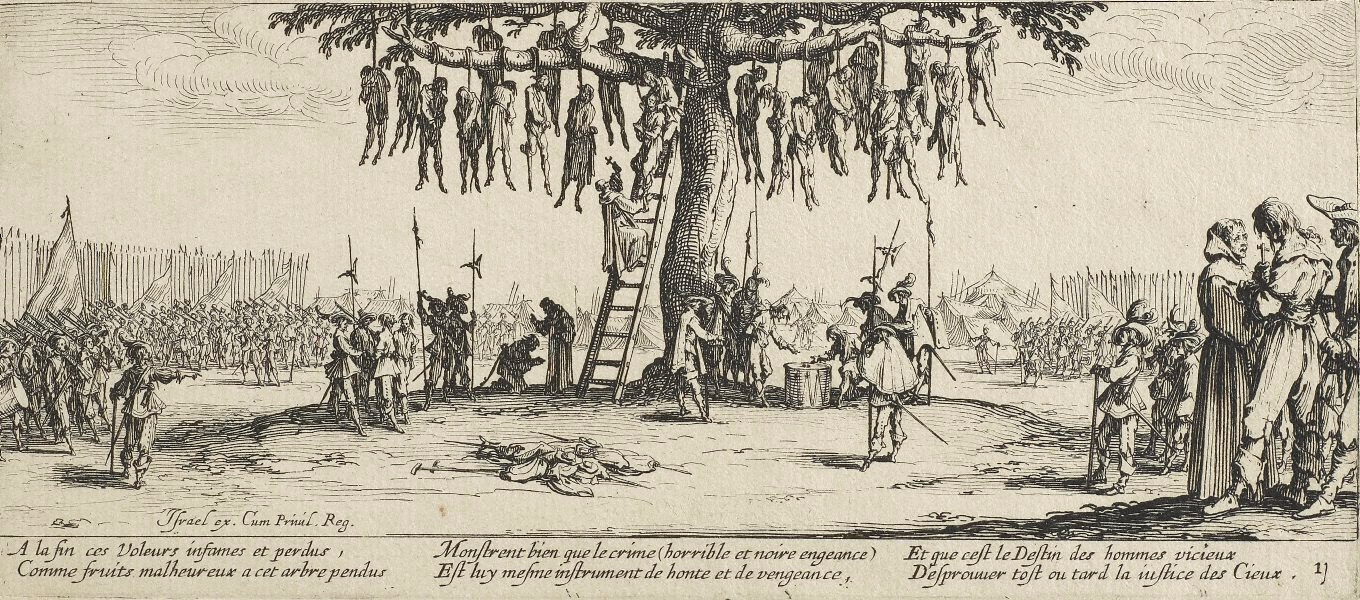
Jacques Callot captured the miseries of the Thirty Years’ War. Here we see a mass hanging
W.J. Astore
The Middle East of the early 21st century is looking more and more like the Thirty Years’ War of the early 17th century that tore apart the Germanic states of the Holy Roman Empire. Religious sectarianism? In the 17th century, Catholics and Protestants killed each other with gusto. Disunity? Yes, within and among the various Germanic states of the Holy Roman Empire. Great power intervention that made matters far worse? Yes, Protestant Sweden and Catholic France intervened in a big way, among a host of other lesser powers. Privatized, for-profit militaries that threw more fuel on the fire? Yes, Albrecht von Wallenstein, the greatest mercenary captain of the age, created his own empire until he was assassinated in 1634.
The war finally ended when it burnt itself out, and when European leaders realized the more they intervened, the more they risked the infection spreading to their own kingdoms. Thus came the Peace of Westphalia in 1648, but not before roughly eight million people, most of them civilians, died in and of the war.
When will conflicts in the Middle East finally burn themselves out? In 2048? When the oil is finally gone? (Sadly, water may replace oil as a major source of conflict.)
And when will great powers like the United States realize the more they intervene, the more the infection spreads elsewhere? Indeed, the more it comes home to endanger the United States?
Speaking of 30 years, when did the war for the greater Middle East truly begin? With the Iraq-Iran war of the 1980s? The creation of Israel in 1948? The end of World War I and the breakup of the Ottoman Empire in 1918? Biblical times?
The Thirty Years’ War worked to delay German unification until 1871, after which Germany, late to European power politics, decided to rattle its saber for a bigger seat at the table. World War I was the result.
What will be the long-term effects of constant warfare in the Middle East? Impossible to see, perhaps, but the short-term ones are before our eyes: more instability ahead, more innocents dead, more hatred spread.
When I was a kid, I was a big admirer of Israel. I saw Israel as being surrounded by implacable enemies bent on its destruction. Israel was the plucky underdog, David against Goliath, with Goliath being Arab countries like Egypt and Syria, having militaries trained and equipped by the Soviet Union, sworn enemy of the U.S. during the Cold War (or so my ten-year-old mind saw it). I recall keeping a scrapbook of articles on the Yom Kippur War of 1973. I cheered the Israeli “blitzkrieg” (What an odd term for a daring Jewish armored attack!) that crossed the Suez Canal and isolated the Egyptian Third Army, as well as the Israeli riposte on the Golan Heights against Syria.
That was 1973. Forty-one years later, Israel is engaged in yet another assault on Gaza and the Palestinians. Compared to the Israeli Defense Forces (IDF), the Palestinian militants are undergunned and hopelessly outclassed. Organizations like Hamas rely on the traditional tactics of terrorists (or freedom-fighters, choose your loaded word): hit-and-run raids, random attacks (unguided rockets), war in the shadows (or in the tunnels). Who is David and who is Goliath now?
What hasn’t changed, of course, is the mainstream media in the U.S., which cheers the Israelis while condemning Hamas and any other Palestinians who choose resistance instead of compliance. Watching a snippet of CNN, I witnessed Wolf Blitzer, who poses as a disinterested journalist, demanding from his Palestinian interviewee an immediate stoppage in rocket attacks. Blitzer had nothing critical to say of Israeli air raids or the disproportionate casualties suffered by the Palestinians in this latest skirmish in a very long war.
What can be done? As one of my historian friends put it, the Middle East has “a massive legacy of entropy.” All I know is that more bloodshed, and more innocents killed, like those four young boys playing soccer on the beach, only adds to that entropy — and the legacy of hatred.
Perhaps one thing I’ve learned in four decades is that negotiations in good faith can’t occur when either side sees itself as a heroic David fighting against a glowering Goliath. Until Israelis and Palestinians see each other as fellow human beings, as equals rather than as monsters, wars will continue, innocents will suffer, and hopes will be left in the dust, slayed like so many Goliaths by self-anointed Davids.
Twenty-five years ago, I wrote the following paper for a class in the history of technology. Back then, chlorofluorocarbons (CFCs) and acid rain as well as global warming were issues highlighting the drawbacks of technology. CFCs were damaging the ozone layer, acid rain was poisoning our lakes and streams and damaging trees, with the buildup of greenhouse gases looming as a future threat. The future is now, of course, since we’ve done virtually nothing to address global warming. If anything, the debate in 1989 was far more sober, since back then there were no “climate change deniers.”
Written at the tail end of the Cold War, my paper from 1989 is colored by the threat of nuclear annihilation, another threat (like acid rain and CFCs) that has abated in the last two decades. Reason for hope, perhaps?
Yet in those 25 years, technology has only proliferated even as compassion for those less fortunate has declined. I wrote this paper before there was an Internet and World Wide Web, before cell phones and smart phones became ubiquitous, before we had so much conclusive evidence of the dangers of man-accelerated global warming. I was attempting to argue that scientists and engineers had an obligation to consider the larger impact of their work, to include the moral implications of their research.
I’ve made one major change to this paper as written 25 years ago. Back then, I concluded with the idea that an ethics based on Christianity needed to inform the work of scientists and engineers. Today, this argument seems far too parochial and limiting, so I have removed it.
Technology and the Role of Scientists and Engineers in Modern Society (1989)
What is the proper role of scientists and engineers in modern society? This question is especially relevant today, as can readily be confirmed by opening the September 1989 special issue of Scientific American entitled “Managing Planet Earth.” Technology, it seems, has spawned many monsters: chlorofluorocarbons that tear holes in our protective ozone shield, factory smoke that turns our rain acidic, carbon dioxide that threatens to convert our planet into one big greenhouse. The contributors to Scientific American assert that humanity must regain control over technology before its monsters inflict irreparable damage to the earth.
Defenders of technology, not surprisingly, advance the opposite thesis. Samuel Florman, an engineer and the author of Blaming Technology, counters that “technology is still very much under society’s control, that it is in fact an expression of our very human desires, fancies, and fears.” In Florman’s opinion, engineers should dedicate themselves to doing works for the good of society, but they should not try to define what is good for society. Their mission, Florman holds, is to achieve rather than to set society’s goals.
Florman does not exonerate engineers from all responsibility, however. He asserts that engineers must be guided by their individual consciences, but he also suggests that society should not expect any “special compassion” from its engineers. In fact he implies that society must resign itself to emotionally-detached engineers: “If we accept the single-minded dedication of ballet dancers and other artists,” Florman analogizes, “we should be able to accept, however regretfully, the same characteristic in a number of scientists and engineers.”
But a serious flaw lies at the heart of Florman’s plea for the sanctity of the engineering profession. He disregards the vastly different societal roles of artists versus scientists and engineers, as well as the serious dangers of a powerful technical elite. The philosopher Hannah Arendt noted these dangers in the context of atomic experimentation:
The simple fact that physicists split the atom without any hesitations … although they realized full well the enormous destructive potentialities … demonstrates that the scientist qua scientist does not even care about the survival of the human race on earth or, for that matter, about the survival of the planet itself.
Arendt makes an important point here. Scientists and engineers sometimes pursue their interests even when they threaten the survival of humanity (or themselves for that matter). Evidence from the Manhattan Project lends credibility to this argument. Most scientists who worked on the project were too caught up in the technical challenges of building the atomic bomb to entertain moral qualms about the bomb’s purpose. Robert R. Wilson, the leader of the cyclotron group during the Project, observed that he never considered quitting:
We were the heroes of our epic, and there was no turning back. We were working on a problem to which we were completely committed; there was little time to re-examine our moral position from day to day.
The atomic bomb was the grail for these knights of science; they focused on their pursuit and little else. Perhaps they believed they could wash their hands clean of the stains of Hiroshima and Nagasaki, for they neither made the decision to drop the bombs nor did they pilot the planes. Yet they could not deny that it was their expertise that brought humanity to the brink of its own destruction during the Cold War.
So what does our nuclear heritage teach us? It teaches us that humanity needs a more humane technology and more humane engineers. In sum, we need a new purpose for technology, one that is inspired by social and humanitarian concerns.
Jules Verne captured the risk of failing to do so. “If men go on inventing machinery, they’ll end by being swallowed up by their own inventions,” Verne prophesized. There are still some people, however, who continue to believe that technological advances themselves will eliminate technology’s harms. Charles F. Kettering, a remarkably inventive General Motor’s executive and a quintessential company man, captured this idea. In Paul de Kruif’s words, Kettering felt that
You cannot put the brakes on any discovery … you’ve got to go on with it even if we’re all blown to hell with it. What you should do is step up the study of human nature, you may even find a chemical, a vitamin, a hormone, a simple pill to take the devil out of human nature….
Here one cannot help but be reminded of Aldous Huxley’s Brave New World, where another automotive engineer, Henry Ford, was god, morality was but a faint memory, and drugs were the panacea for human ills.
Elting Morison, in Men, Machines, and Modern Times (1984), suggests that since technology forces humanity into its categories, humanity has no choice but to create a new culture to accommodate it. He proposes that a series of small experiments be performed world-wide, with “man as the great criterion” (or, perhaps more accurately, the great guinea pig). Apparently, a successful experiment will be one in which humans thrive, while an unsuccessful one will be one where humans “break down.” Rather oddly, Morison believes the military provides us with the paradigm of how to proceed. In his words:
They [the military] have the nuclear weapon that has fulfilled the exaggerated extreme toward which the system always tends … But for practical purposes they have created around this extreme a whole arsenal of carefully graded instruments of limited destruction – old-fashioned armaments of lesser power and new weapons of modulated nuclear energy.
It’s shocking how Morison waxes nostalgic over those “old-fashioned” weapons, and his addition of “modulation” to atomic bombs makes them seem downright cozy. As George Orwell observed in his famous 1946 essay entitled Politics and the English Language, “such phraseology is needed if one wants to name things without calling up mental pictures of them.” Thus cluster bombs that send shrieking hunks of shrapnel through the air, napalm that sears lungs and burns human skin, and atomic artillery shells that annihilate armies (but not cities, we hope) become, for Morison, “modest examples of how to begin to proceed.”
A more pessimistic prospectus for the future of technology is held by Arnold Pacey in The Maze of Ingenuity (1980). For Pacey, history reveals that technology cannot “easily accommodate the broad aims and the mixture of human and technical factors which a socially-orientated direction of progress in technology … require[s]. Thus the efforts made to encourage a more directly social form of technical progress … have been relatively ineffective.”
Pacey attributes this failure to the dominance of the mechanical world view. Beginning with Galileo, Pacey maintains, scientists and engineers restricted their own view of the world, blinding themselves to the larger purposes of technology.
Pacey does more than lament, though. He offers several potential solutions, all of which seem flawed. He assumes that new, less destructive, technologies are needed to meet human needs, or to ease poverty, yet the world currently has enough resources to end poverty, and present technology could doubtless be used more constructively. Pacey also unconsciously undermines his argument by citing education and medical care as “examples of how continuous improvement is possible without any large accompanying drain on material resources.” Unfortunately for Pacey, both education and medical care are currently (and rightly) under siege in this country. Despite large sums of money spent and countless reform proposals, education remains mediocre, while medical care remains compassionless and costly.
No wonder Pacey despairs. He half-heartedly mentions other potential balms, e.g. critical science, which pursues “careful, rigorous researches into the relationship between technical innovation, nature and society,” and general systems theory, yet it is unclear from reading Pacey how critical science differs from general systems theory. In the end, Pacey supplies the reader with little in the way of hope, for he despondently observes that systems theory is corruptible.
In the end, we’re left with today’s dehumanizing technological imperative, as noted by Carlo Cipolla, a noted historian of technology, in this passage:
Each new machine … creates new needs, besides satisfying existing ones, and breeds newer machines. The new contrivances modify and shape our lives and our thoughts; they affect the arts and philosophy, and they intrude even into our spare time.
To prevent this dominance of the machine, science and technology need to serve social and humanitarian needs more directly. In “Thinking about Human Extinction,” George Kateb holds that individuals must attach themselves first and foremost to existence. This attachment “cannot be cultivated by way of a theology that bestows [from the outside] meaning or worth on existence,” and it must be able to withstand “all temptations to go along with policies that may lead to human and natural extinction.”
Existence is justified by a sense of beauty; specifically, Martin Heidegger’s wonderment at the very indefiniteness of existence. For Kateb, “because there could have been earthly nothingness … one must finally attach oneself to earthly existence, whatever it is, and act to preserve it … [To this end] persons must be schooled in beauty to acquire the disposition to sustain wonder that there is earthly existence rather than none.” In sum, we must learn to revel in the very fact of humanity’s existence against the longest of cosmic odds.
In a world that grows ever more fragile with each passing day, an appreciation for the fragility of our existence, as well as an abiding compassion for humanity, is exactly what we need from our scientists and engineers.
________________________
Sources in order of citation
Samuel C. Florman, Blaming Technology: The Irrational Search for Scapegoats (New York: St. Martin’s Press, 1981).
Hannah Arendt, “A Symposium on Space: Has Man’s Conquest of Space Increased or Diminished his Stature?”, The Great Ideas Today 1963 (Chicago: Encyclopedia Britannica, Inc., 1963).
Robert R. Wilson, “The Scientists who Made the Atom Bomb,” Science, Conflict and Society (San Francisco: W.H. Freeman, 1969).
Jules Verne, Five Weeks in a Balloon (1862), quoted in James R. Newman, “The History and Present State of Science Fiction,” Science, Conflict and Society (San Francisco: W.H. Freeman, 1969).
Paul de Kruif, Life Among the Doctors (New York: Harcourt, Brace, 1949), p. 445, quoted in William Leslie, Boss Kettering (New York: Columbia University Press, 1983).
Elting E. Morison, Men, Machines, and Modern Times (Cambridge, Mass: MIT Press, 1966, 1984).
Arnold Pacey, The Maze of Ingenuity: Ideas and Idealism in the Development of Technology (New York: Holmes/Meier, 1974, 1980).
Carlo M. Cipolla, Clocks and Culture 1300-1700 (New York: W.W. Norton & Co., 1978).
George Kateb, “Thinking about Human Extinction: (I) Nietzsche and Heidegger,” Raritan (Fall 1986), pp. 1-28.