Debunking Spectator Sports: Confessions of an Anti-Sports Fan

download
Are you not entertained?

Richard Sahn

I’ve never gotten excited about or interested in a particular sports team, whether professional or amateur. I don’t care whether a particular team wins or loses and I go out of my way not to watch games on TV or listen to a radio broadcast.

Prior to this year’s Super Bowl game, I listened to people chant, on the phone or in person, “Go Patriots” or “Go Eagles.” Even a Catholic priest at the end of a mass I attended recently couldn’t leave the altar before letting the parishioners know he was a Patriots fan.

Spectator sports have always been a secular religion in most developed countries but with no promise of any form of salvation, afterlife, or reincarnation. The most you can really expect from your team is winning a bet on the game. But  spectator sports  is a distraction with negative consequences, ultimately, to society and the individual sports fan—such as having no understanding of the actions of political parties.

And because each season of the year has its athletic contests there is no letup. A fan is deluged all year round with games as well as incessant commentaries on athletes and the points they score or might score.  Athletic contests and players, even on the high school level, are  a major topic of conversation, especially among adult males  I view such conversations as not only boring but irrelevant to my own life, to what I  would call meaningful concerns.

In fact, I would argue spectator sports discussions have no lasting therapeutic value in dealing with the real “slings and arrows of outrageous fortune.” Political philosopher Noam Chomsky recently said, probably somewhat sarcastically, that if as much mental energy was expended in solving the social and economic problems of the world as is expended in trying to explain why a given team wins or loses a game, much socially and politically induced suffering and death could be eliminated.

Eavesdrop on virtually any conversation, especially at World Series, Super Bowl, or NBA playoff times, and you’ll hear conversations that would make you believe you were in a think-tank rivaling the Institute for Advanced Study at Princeton.

Now, as a sociologist, I realize the important function of sports in society. That function, of course, is a distraction from life’s existential problems and dilemmas. Death, loss of loved ones, nuclear war, global warming are certainly among those problems. And, most assuredly, being a spectator sports fanatic is a far better alternative than being a drug addict or engaging in anti-social behavior.  I also admit spectator sports have a limited psycho-therapeutic effect on some people.

My quarrel is with the level of energy spent watching and then discussing sports events. Even expressing one’s preference for one team or another I find disturbing, mainly because I feel there are more worthwhile causes to champion. Agonizing, so it seems, over the prowess of individual players and their team’s chances of winning playoffs or championships is a waste of time and energy. Simply put, I cannot empathize in the slightest with the sports fan. In that respect I guess I’m a type of sociopath since sociopaths can’t empathize with other human beings in general.

Arguably, spectator sports also contribute to the “us” versus “them” perspective toward social life, the belief that life is not interesting or worthwhile unless “us” is always trying to  defeat “them,” whether “them” be a rival team or country–in other words, not “us.”

The great (former) coach of the Green Bay Packers, Vince Lombardi once proclaimed, “Winning isn’t everything; it’s the only thing.” Could Lombardi’s philosophy be applied to our current president who is also an ardent sports fan?  Could Donald Trump’s insistence on America becoming “great again,” with all the dire consequences to minority groups and the underclass, not to mention the world in general, be the by-product of his obsessive interest in spectator sports? At one time our president wanted to be owner of an NFL team. What does that tell us?

Two psychological processes seem to account for the prevalence of the typical sports fan. These are vicarious identification and reification. Vicarious identification is thinking that one “IS” actually the team he or she is watching.  The team’s victory or defeat is his/her victory or defeat.  Being able to enjoy plays, movies, and novels entails the same process; for the moment, one is a character in a work of fiction. The ability of consciousness (mind, soul, brain, spirit, if you prefer) to immerse itself in a story or situation that is fictitious is, for sure, one of the great joys of life. From time to time I’ve watched certain films or videos multiple times and can still fool myself into thinking that I don’t really know the outcome.  Perhaps spectator sports allow male fans in particular to be the macho male, the alpha male they’re not in everyday life, without having to perform in any way. No need to resort to violent behavior if one vicariously identifies with a football team or professional wrestlers.

Reification is psychologically treating an abstract concept or mental construct as if it were real, as if it were empirical or tangible reality.  Semanticists will say “the word is not the thing” or “the map is not the territory.”  Nations, states, cities do not exist as realities (sui generis); they are only abstract concepts, in other words, words.  People exist, athletes exist, and games are played, but the sports fan wants his/her “team” to win because the name of the team itself is regarded as if it were a live person or group of people.

It doesn’t matter, usually, who the real life players are or even if there are any real life players. It’s the “team” itself—the word is the thing.  I once asked my students who were fans of the Pittsburgh Steelers whether they would still want the Steelers to defeat the Dallas Cowboys if the teams’ executives exchanged players and coaches. The Steelers fans said they would still support or root for the Steelers over the Cowboys. I tried to point out the error in their thinking, that there is no such reality as the “Steelers” or the “Cowboys,” that only players and their coaches exist. No, the Steelers fans would remain Steelers fans and want the team to win because they are “The Steelers.”

Existence precedes essence, say the existentialists.  Existence is what is tangibly real, for example, what could physically maim, hurt, kill. Essence refers to words, ideas, concepts. (For example, essence would be the “thoughts and prayers” for gun victims–what we hear so much these days from our politicians in the wake of shooting violence.) Scoring a touchdown is “existence.” The team that fans roots for is “essence,” in other words, nothing but an idea with no more substance than the number “5.” When one regards spectator sports existentially it becomes difficult to be a fan, although one may enjoy viewing brilliantly executed plays on the field or in the arena.

My argument here, then, is that the serious spectator sports fan is likely to be distracted from engaging in philosophical, political, aesthetic, critical thinking or reflection.  Now, I have no doubt that one could be a sports fan, even a fanatical sports fan, and be a social activist, an artist, a scholar, a reflective person capable of deep meditation.  I just see spectator sports as tending to obstruct or preclude intellectual and aesthetic development in the general population of a given country.

Professional and collegiate athletic events do benefit our economic system by creating all kinds of jobs and careers, and not just for the players. But spectator sports may also stand in the way of the fan being exposed to and contemplating the vital social and political issues of the times. It is reasonable to ask whether being a serious sports fan erodes participation in the democratic process. Why are most universities known for their teams and not for what their faculties teach? What’s the first thing an American thinks of when he or she thinks of “Ohio State” or “Notre Dame” or “Penn State”?  Is it higher learning?  Or football?

Richard Sahn teaches sociology at a college in Pennsylvania.

Frederick Douglass on Patriotism and Taking A Knee

taking a knee
Colin Kaepernick (#7) takes a knee

M. Davout

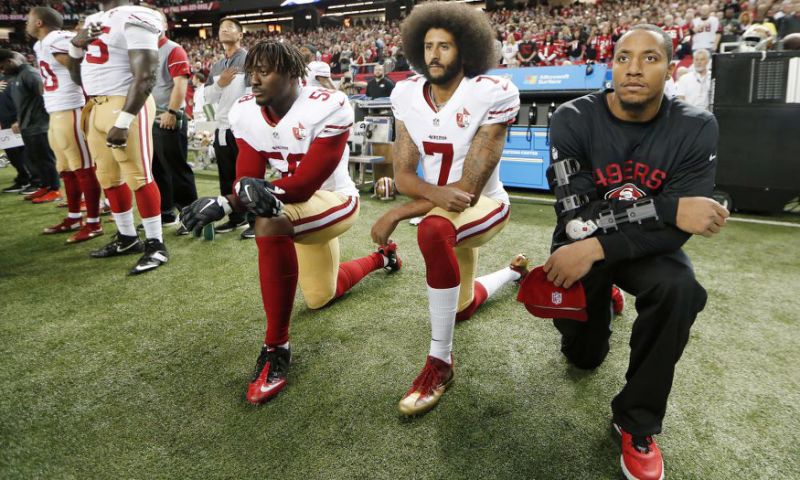
A week after Super Bowl Sunday, I was reading Frederick Douglass’s “Fourth of July Address,” given by the intrepid abolitionist and eminent public intellectual on July 5, 1852 to several hundred spectators in Rochester, New York. It struck me then how contemporary Douglass’s antebellum insights into the nature of patriotism in America seemed, especially in the wake of an NFL season steeped in controversy over football players (mostly African-American) taking a knee during the national anthem.  Their symbolic protest, dismissed by some, notably including a tweeting president, as unpatriotic, was intended to highlight how police encounters with people of color in this country all too often and disproportionately end in unjustified uses of deadly force.
800px-Frederick_Douglass_by_Samuel_J_Miller,_1847-52
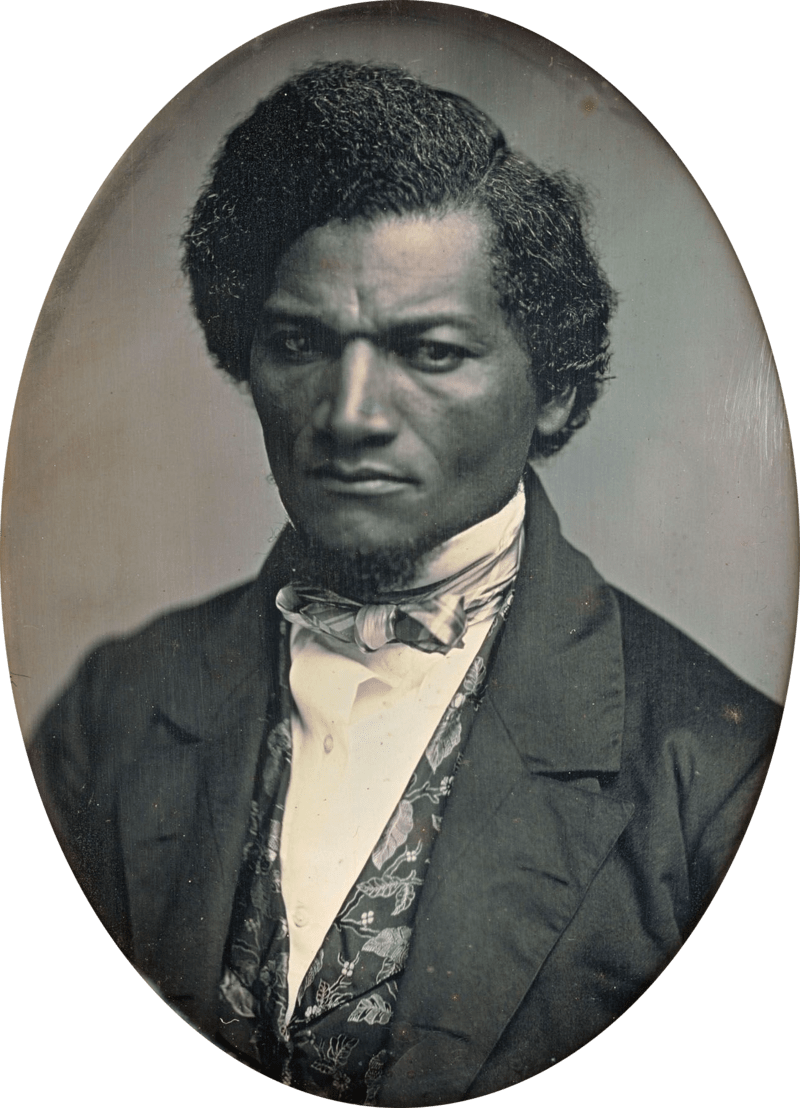
Frederick Douglass near the time of the Rochester Speech, given on the 5th of July 1852

At the time of his Fourth of July Address, Douglass was about fifteen years removed from a state of enslavement he managed, against steep odds, to escape and had become an orator of note in abolitionist circles. Attesting to a sense of trepidation in accepting an invitation to speak before such a large audience on their august day of national celebration, Douglass praised the generation of 1776 (“your fathers,” he calls them) for “lov[ing] their country better than their own private interests” and for their “solid manhood” in “preferr[ing] revolution to peaceful submission to bondage.”

Douglass then reminded his audience that, while it is easy in present times to celebrate the founders for resisting British oppression, “to pronounce against England, and in favor of the cause of the colonies” in the 1770s meant being pilloried and browbeaten as “plotters of mischief, agitators and rebels, dangerous men.”  Moving beyond this critique of the easy and self-congratulatory patriotism of his contemporaries, Douglass raised the prospect that the founders’ great deeds might even be evoked by men of tyrannical intent: “The cause of liberty may be stabbed by the men who glory in the deeds of your fathers.”

Douglass went on to warn his listeners, and free citizens of the American republic generally, against shirking their own responsibility for carrying on the emancipatory tradition celebrated each Fourth of July–“You have no right to wear out and waste the hard-earned fame of your fathers to cover your indolence.”

While there is much more to Douglass’s powerful address, his opening discourse on the patriotic meaning of the Fourth of July provides a way of dousing the “fire and fury” that has been generated by the right-wing media around the symbolic protest started by Colin Kaepernick in 2016 and seeing the significance of that protest with a quiet clarity.

Douglass’s Fourth of July Address warns against the self-serving belief that routinized, programmed patriotic gesture is equivalent to a true love of liberty.  He daringly calls out those who would abuse patriotic gesture in order to control others. His words remind us that the struggle for freedom is always a work in progress and that it is too easy to celebrate its provisional achievement after the hard and risk-laden work is done by others.

Douglass’s speech is part of a tradition of exposing empty patriotic gesture and challenging citizens to live up to the emancipatory demands of true patriotism, a tradition which Colin Kaepernick and his emulators can be seen as stalwartly embracing.  His speech serves as a powerful rejoinder to those who would, like Donald J. Trump, attempt to shame NFL player-protesters into anthem-standing conformity with transparently cynical references to the sacrifices of US veterans and members of the armed forces.

M. Davout (pseudonym) is a professor of political science who teaches in the Deep South.
Jerusalem and an Alabama Senate Race

171116210448-roy-moore-1116-exlarge-169
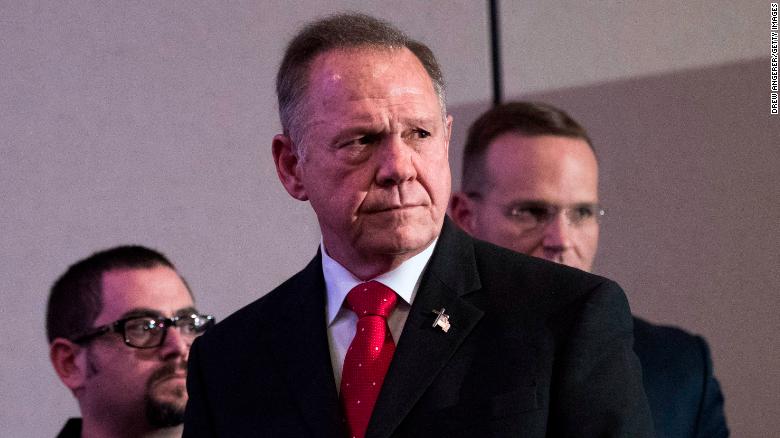
Roy Moore: Was the timing of Trump’s Jerusalem announcement driven by his election bid?

M. Davout

The December 6 announcement by Trump of U.S. recognition of Jerusalem as the capital of Israel and his administration’s intention to move the U.S. embassy from Tel Aviv to that storied city sparked much consternation and puzzlement, both prospectively and in its aftermath. The consternation, especially among career diplomats and Middle East policy experts, revolved around the likely effects of such a move both for Israeli-Palestinian relations and U.S. relationships with the larger Arab world. Wouldn’t this policy change, by making a unilateral concession to Israel, make even more difficult a two-state solution and unnecessarily inflame Arab world opinion?

The puzzlement stemmed from the timing. Why announce this now? Israel declared Jerusalem as its eternal, united and undivided capital in 1980 and the U.S. Congress passed a law requiring the U.S. to move its embassy to Jerusalem in 1995 but U.S. presidents, including Trump, have signed a waiver of the law every six months for the last two decades justifying their actions in terms of national security concerns. Why didn’t Trump wait another six months or year or announce this policy change six months ago?

The consensus answer to why Trump broke with precedent is that his actions are being driven by domestic political priorities, in particular, the support for a militant Israel evinced by members of his white evangelical base as well as of deep-pocketed rightwing donors such as casino magnate Sheldon Adelson. Johnnie Moore, co-chairman of Trump’s unofficial faith advisory board, said in the aftermath of Trump’s announcement that, “The issue was–to many–second only to concerns about the judiciary among the president’s core evangelical supporters.”

While this macro-scale view of Trump’s domestic political support might explain why he is choosing to break with U.S. foreign policy precedent and risk so much, it does not explain why this break is happening now.  For a more nuanced and plausible answer to this latter question, one has to zoom in for a closer look at Trump’s domestic political landscape and ask what Jerusalem might have to do with a closely contested Alabama senate race between Republican Roy Moore, proud fundamentalist and accused pedophile, and Democrat Doug Jones.

For several weeks after the accusations against Moore for sexual abuse and harassment of teenage girls during the time he was in his thirties, he seemed radioactive to the national Republican establishment. Trump changed that with his December 4 early morning tweet endorsing Moore. The very next day, Steve Bannon, Trump’s alt-right alter ego, spoke at a Moore rally in Mobile, Alabama. And on December 6, Trump upended U.S. policy in the Middle East with his Jerusalem announcement.

Is the quick succession of these events a coincidence? Or is it evidence that Bannon continues in his former role as Don Trump’s consigliere? Changing U.S. policy was something Trump had wanted to do from the start. He was evidently persuaded to forego the move six months ago and sign the waiver. However, the unexpected events of late November turned what would have been a shoo-in for the Republican Senate candidate in Alabama into a slogging match with a capable Democratic contender. Might this turn of events have seemed to Trump (if not also to Bannon) the perfect moment to throw some red meat to the base in Alabama and motivate any evangelicals having second thoughts about voting in an accused pedophile to go to the polls on December 12?

Whatever the motivation for Trump’s move on Jerusalem, one thing is certain. This president’s first and (apparently) only priority is to please his base by fulfilling as many of his election season promises as he can. In doing so, he demonstrates that he truly is the President of Red America.

M. Davout (pseudonym) is a professor of political science who teaches in the Deep South.
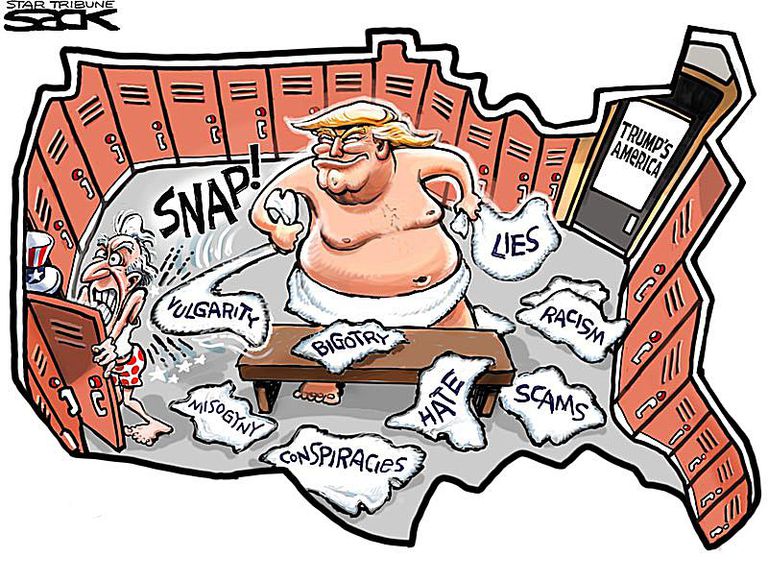
Donald Trump and His Global War on Truth

Trump-Locker-Room-Cartoon-58b8fdb25f9b58af5cc8205d
Too many lies

W.J. Astore

Donald Trump is waging a global war on truth.  He is the anti-truth president.  From Trump steaks to his “university” to his support of the “birther” movement against Barack Obama, he’s perpetually selling lies.  Now he’s selling lies on a global stage.  By making everything potentially a lie, e.g. climate change as a “Chinese hoax,” Trump is doing his best to demolish facts, paving the way to do whatever he pleases.

Trump believes he can have his own facts and tweet them too.  We can blame Trump for being the vain, venal, and vile man that he is, but America elected him (yes, not all Americans, but enough to carry the Electoral College).  He’s a con man, a crafty one, and the media can’t look away, nor can the rest of us.

How did we end up with Trump and his assault on truth?  I’d like to focus on two reasons.  The first was noted by Bernie Sanders back in September of 1998.  Then a congressman, Sanders noted how the Democratic Party under the Clinton regime, with its corporate-friendly pursuit of “free” trade and feel-good globalization, was screwing the working classes.  Sanders then issued the following warning (in an editorial in The Nation entitled, “Globalization’s the Issue”):

Right-wing populists like Pat Buchanan are lining up to ride to power on public fear and anger about globalization.  If corporate globalism continues to result in deteriorating conditions of life for ordinary Americans, we’re likely to see a rise of scapegoating demagogy and virulent right-wing economic nationalism.

Scapegoating demagogy?  Trump and Mexicans, Trump and Muslims, Trump and immigrants in general.  Right-wing economic nationalism?  Trump and “making America great again” through massive military spending and weapons exports combined with tax cuts that are sold as helping the poor even as they reward the rich.

By betraying the working classes and becoming yet another business party, the Clinton Democrats helped pave the way for right-wing populists and unprincipled opportunists like Trump.  Indeed, by running the corporate-friendly Hillary Clinton against Trump in 2016, the Democratic Party turned its back on their own populist, Bernie Sanders, who genuinely was (and is) concerned with helping the working classes.

The second reason for Trump’s assault on truth has been all around us for decades, but it was exacerbated by the 9/11 attacks.  Think back to the Vietnam War, the Pentagon Papers, and Watergate.  If there’s one thing we learned from these debacles, it’s how much our government lies to us.  Now fast-forward to 9/11.  In the aftermath of those attacks, the Bush/Cheney administration did its level best to deflect all responsibility, and especially their responsibility, for the attack.  Al Qaeda inflicted a major defeat on the U.S., yet no one took the blame.  The buck stopped nowhere.  Instead, Bush/Cheney drove a climate of fear and revenge, attacking Afghanistan followed by a disastrous war in Iraq.

By turning so quickly to war on a massive scale, Bush/Cheney knew that most Americans would rally around the flag.  They further cynically used the moment to pass the PATRIOT Act to extend their power and that of the government.  Choosing not to rally Americans, they instead made them fearful, obedient, and passive (Go to Disney!  Go shopping!).

The leaders and the government that so badly let us down on 9/11 worked to convince us that only those same leaders and government could keep us safe after 9/11.  Bush/Cheney and Crew, in essence, told a Big Lie that led, I think directly, to a Big Liar being elected as president in 2016.  But I don’t just blame Bush/Cheney.  The Obama administration refused to call these men to account, e.g. no prosecution for torture and other war crimes.  Furthermore, Obama expanded the legacy of illegal surveillance, excessive secrecy, and incessant warfare that has characterized the manic opportunism of a government that refuses accountability, whether for the defeat of 9/11 or for the ongoing disasters of Afghanistan, Iraq, Libya, et al.

Long in the making, Trump’s victory march of 2016 quickened its pace in the aftermath of 9/11 and all the anti-Muslim, anti-immigrant, and anti-anything-I-don’t-like, hysteria stirred up by Bush/Cheney and Crew.  But its impetus goes back further: to the lies and deceptions revealed by the Pentagon Papers, to the sordid lies and cover-ups of Watergate, and to the abandonment of the working classes by Democrats, the latter of which provided fertile soil for right-wing populist demagogy to take root and grow.

Whether led by democrats or republicans, our government has been telling us so many lies for so long that it’s not surprising we now have a president whose chief skill is as a con man and a liar.  His global war on truth is the culmination of too much governmental lying and too little attention paid to the real needs of ordinary Americans.

The Afghan War Isn’t a Stalemate: It’s a Defeat

new camera 007
My old chess clock.  Time has run out, America.

W.J. Astore

Stalemate: That’s the word of choice being used by U.S. generals to describe the Afghan War.  What, exactly, is a stalemate?  I played chess at an early age, caught up in the Bobby Fischer craze of the early 1970s, and I still play occasionally.  In chess, a stalemate is a special kind of draw, and an often frustrating one.  Put concisely, “Stalemate is a situation in the game of chess where the player whose turn it is to move is not in check but has no legal move.”

For example, I may be winning decisively, with only my opponent’s king left on the board.  But if I carelessly put my opponent’s (unchecked) king in such a position that his only move is into harm (or “check”), the position is stalemated.  My decisive material advantage makes no difference: the game is over, it’s a draw.  In effect, given my material advantage, it’s a win for him and a loss for me.

Is the Afghan War “stalemated”?  Not according to the U.S. military, since it believes the “stalemate” can be reversed, that the U.S. can still “win.”  Indeed, President Trump has already gone on record last week as saying his administration is winning in Afghanistan.  No stalemate here.

A stalemated chess match is simply a bad metaphor for the Afghan War.  It’s not that one side can’t make a legal move, therefore the game is over.  (Would that the war could end so easily and cleanly!)  The situation today in Afghanistan is that the Taliban continues to tighten its grip on the country, or, in chess terms, it’s enlarging its span of control over the board, even as U.S. and Coalition forces send more troops, expend more munitions, and issue more reports about how they can still win — as long as U.S. generals get exactly what they want.

So, if stalemate is the wrong word, what is the right one?  I have one: defeat.  U.S. and Coalition forces have been fighting the Afghan War for 16 years.  Surges have come and gone.  More than a trillion dollars has been spent.  Yet the enemy retains the initiative and largely dictates the terms of the conflict.  Whatever this is, it isn’t “victory”; it’s not “progress”; nor is it “stalemate.” It’s a lost position, a defeat, pure and simple.

There’s nothing wrong with defeat.  The very best chess grandmasters lose; and when they do, they almost always tip their king and resign before they’re checkmated (defeated utterly).  By doing so, they conserve their energy for the next opponent, even as they study the lost game so they can learn from their mistakes.

Isn’t it time the U.S. did the same in the Afghan War?  Admit a lost position, resign, and withdraw?  Then learn?

Trump, of course, says he’s all about winning.  He’ll continue to push pieces about the board, despite the lost position.  This is not reversing a stalemate (which, by the rules of chess, can’t be done).  It’s only delaying defeat – at a high cost indeed to all those “pieces” being shunted about and sacrificed on the chessboard that is Afghanistan.

The Disastrous Italian War Against Austria-Hungary (1915-18), the Rise of Fascism, and Trump’s Victory in 2016

W.J. Astore

My father’s family was Italian, and his relatives fought, suffered, and died in Italy’s wars before and during World War I.  In his diary, my dad recounted these relatives and their fates:

My mother as far as I can recall had two brothers in the [Italian military] service. One brother had an exploding shell land near him.  He was highly agitated.  A doctor who knew my mother’s family saw that he got a medical discharge.

His brother had a much more dangerous career in the Italian Army.  He was a forward observer for an artillery unit.  He was severely gassed on the Austrian front.  He survived the war but had a premature death from the effects of the gas.

Luigi, Uncle Louie, Astore had quite a career in the Italian Army.  My mother used to call him El Sargento.

Uncle Louie fought three years in the Turkish War [1911-12] and four years in World War 1.  He was a prisoner of war in Germany for a year.  I overheard a conversation and he remarked that things were tough as a prisoner and food was a scarce item.  He never told me about his experiences in World War 1.

So, my grandmother had one brother who had shell-shock (PTSD) and another who died prematurely from poison gas.  My grandfather had a brother (Luigi) who was a POW who nearly starved and who didn’t talk about his war experiences. (I am too young to have clear memories of Luigi, but photos show an unsmiling man, which is not surprising given his war experiences.)

War is all hell, as General William Sherman said, and my father’s family’s experience in Italy illustrates the truth of that.

A childhood friend of mine, who also had Italian parents, sent along a book recommendation to me: The White War: Life and Death on the Italian Front, 1915-1919 by Mark Thompson.  My friend wrote a nice little review of it in an email to me, which follows below:

The White War (about Italy’s WWI fight against the Austro-Hungarians) has been fascinating but also depressing.  The insistence of Italian staff officers to send poorly armed and trained men into a battlefield even more deadly than the western front (the Italians had to scale hills and mountains in the face of withering machine gun and artillery fire) boggles the mind.  The Italian high command also had the dubious distinction of ordering more summary executions of the rank and file than the Brits, French, Germans, and Austrians.  Illiterate peasants needlessly sent to their deaths in the hundreds of thousands with Italian military policemen stationed with machine guns to their rear with orders to fire on them in case they did not show the requisite élan.  (My mother’s paternal uncle fell in that war–I wonder what horrors he saw and experienced.)  If it did not already exist, surely the stereotypical Italian cynicism toward governmental authority resulted from the incompetence and brutality of Italian military leadership in WWI.  

With respect to Italian POWs and food scarcity during captivity, my friend noted the following startling fact that he gleaned from reading The White War:

Italian authorities made it a policy to prevent food packages from being sent to Italian POWs in Austrian control as part of their strategy to deter Italian soldiers from surrendering.  Many POWs died as a result.  Unbelievable.

So much for the alleged glories of war.  Italy’s war against Austria-Hungary, fought under bitterly cold conditions in the torturous terrain of the alps, is little known in the United States.  It was a disastrous struggle that consumed nearly a million men for little reason, and the frustrations of that war – the betrayal of common soldiers by societal elites – contributed to estrangement, bitterness, and the embrace of fascism in the 1920s as an alternative to the status quo.

In U.S. politics today, with the backdrop of President Donald Trump’s strong man posturing that recalls the thrusting belligerence of the Italian fascist dictator Benito Mussolini, are we witnessing something similar?  Recall that Trump in 2016 garnered  a lot of support in rural areas by taking a position against America’s wasteful wars, even as he beckoned to an unspecified “great” past.  Mussolini, who railed against Italy’s “mutilated victory” in World War I, also won support by calling for societal revival, even as he beckoned to the greatness of Italy’s imperial past.

Like Mussolini, Trump wasn’t (and isn’t) against war.  Rather, both men were against losing wars.  Appealing to tough-guy generals like George Patton and Douglas MacArthur, Trump promised Americans who had suffered they’d “win” again.  Like Mussolini, he promised a brighter future (endless victories!) through higher military spending and aggressive military action.  No more shame of “mutilated” victories — or so Mussolini and Trump promised.

Screen-Shot-2017-07-06-at-1.46.30-PM-1499363261
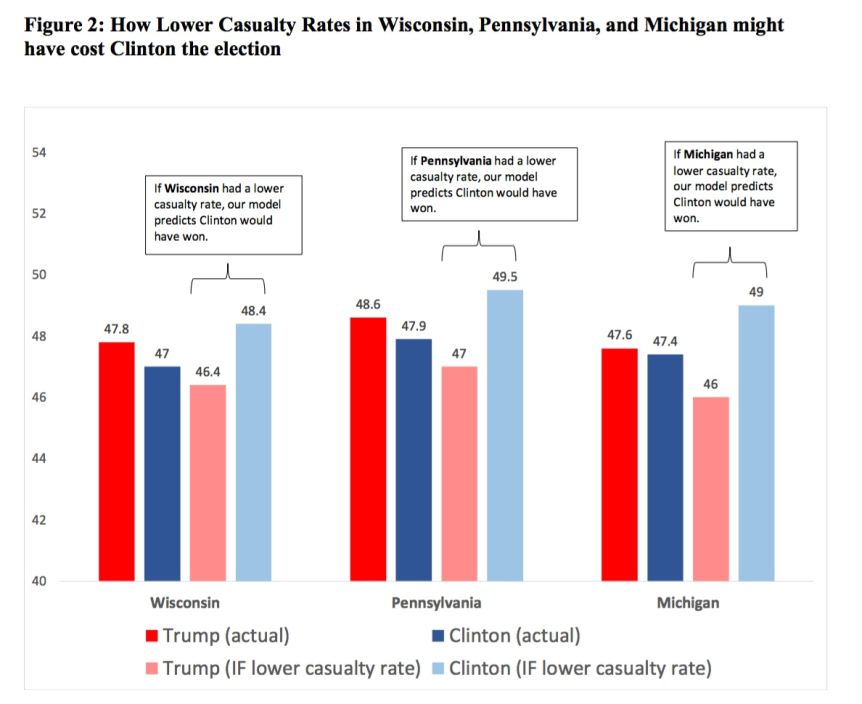
Did Trump win because he had the nerve to highlight the “mutilated victory” nature of America’s wars?  (Note that the caption here, from the Krinera/Shen study and the Zaid Jilani article, is unclear.  The intent is to show that higher casualty rates favored Trump, and, if rates had been lower, Hillary Clinton may have won instead.)

Trump tapped the anger and resentments of American families who’d borne the sacrifices and suffering of the mutilated victories of Afghanistan and Iraq.  He did this so well that, according to Zaid Jilani at The Intercept, citing a study by Boston University political science professor Douglas Krinera and University of Minnesota Law professor Francis Shen, it may have provided his winning margin of victory in 2016.  As the study notes (also see the illustration above):

“[The] three swing states — Wisconsin, Pennsylvania, and Michigan — could very well have been winners for [Hillary] Clinton [in 2016] if their war casualties were lower.”

Like rural Italian families in the aftermath of World War I, American rural families in the Bush-Obama “war on terror” rejected the status quo posturing of establishment politicians (e.g. Hillary Clinton), turning instead to the anger-driven nationalism (Italy first!  America first!) of self-styled strong men like Mussolini and Trump.

The question is, as America’s fruitless wars persist, and as rural American families continue to bear a disproportionate share of the burden of these wars, will “strong” men like Trump continue to prosper?  Put differently, will the Democratic Party finally have the guts to offer an alternative vision that rejects forever war across the planet?

We know what happened to Mussolini’s quest to make Italy great again — total defeat in World War II.  Will a similar fate befall Trump’s quest?

Time will tell.

The Dangerous Sophistry of Steve Bannon

steve-bannon-interview-on-donald-trump
Bannon Wormtongue: Hiding behind the troops

W.J. Astore

After Republican Bob Corker had the guts to criticize President Trump for his bellicose rhetoric and incompetent management of U.S. foreign policy, Steve Bannon issued the following riposte:

“Bob Corker has trashed the commander in chief of our armed forces while we have young men and women in harm’s way.”

The indecency of Bannon’s argument is obvious.  According to Bannon, Corker’s criticism of Trump is tantamount to treason, because an attack on Trump is an attack on “our” troops “in harm’s way.”

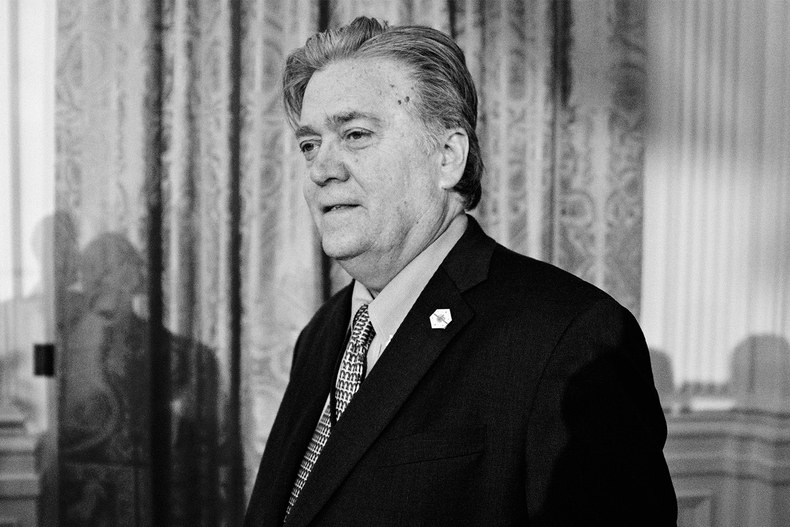
If Bannon had his way, no one would be allowed to criticize Trump about foreign policy while U.S. troops are in harm’s way.  Since U.S. troops are deployed to more than 800 bases overseas and to more than 130 countries while incessantly fighting wars in places like Afghanistan, they are, in essence, always in harm’s way.  Thus, no criticism of our Great Leader would ever be allowed, which is convenient for Trump and Bannon Wormtongue.

It’s infuriating how men like Bannon attempt to squelch criticism of the president by hiding behind the troops.  Judging by his rhetoric, Bannon doesn’t want to live in a democracy; he’d much prefer a dictatorship.  Meanwhile, Trump’s riposte to Bob Corker focused on his height.  (Corker is roughly six inches shorter than Trump.)

Mr. Bannon, Trump is more mocker-in-chief than a commander.  And, in defending our chief mocker, your sophistic attempt to hide behind the troops was more than shameful.  It’s grotesque.

Trump Tackles the NFL!

When it Comes to the NFL, Trump Should be Flagged and Ejected for Unnecessary Roughness

taking a knee
Taking a stand by taking a knee: NFL players, including Colin Kaepernick (#7)

W,J. Astore

President Trump has once again attacked the NFL for exactly the wrong reasons.  He wants NFL owners to fire players who take a knee during the national anthem.  Their sin, according to Trump, is disrespecting the American flag.  Trump also complains that the game has gotten soft, that big and exciting hits of the past are now penalized, so much so that today’s game is boring precisely because it’s insufficiently violent.

Nonsense.  First, few players dare to use the game as a platform for protest, perhaps because they fear being blackballed like Colin Kaepernick, the talented quarterback who can’t find a job because he took a knee in protest against racism.  Second, the NFL is awash in patriotic displays, everything from gigantic flags and military flyovers to special events to honor the troops.  Just one example: During the opening game of this season, uniformed troops waving flags ran out on the field ahead of the New England Patriots as the team emerged from the tunnel.  What are troops in camouflaged combat uniforms doing on the field of play?

With respect to violence, the NFL has only lately begun haltingly to address crippling injuries, especially brain abnormalities due to recurrent hits and concussions.  Watching an NFL game is often an exercise in medical triage, as players are carted off the field with various injuries.  A new feature this season is a tent on the sidelines that injured players may now enter to be treated away from the incessantly probing eyes of sideline cameras.  Careers in the NFL are often cut short by crippling injuries, yet Trump claims the game is going down the tubes because it’s not violent enough.

Trump represents a minority view (I believe), but nevertheless a vocal one.  Given his narcissism and the grudges he carries, one wonders if he attacks the NFL because of his failed bid to acquire the Buffalo Bills team back in 2014.

Football is the most popular sport in America.  It speaks volumes about our culture.  That Trump sees it as insufficiently violent and insufficiently patriotic — and that he’s cheered for making these claims — points to the gladiatorial nature of America’s imperial moment. Bread and circuses at home, wars abroad.  And U.S. politicians who fiddle while the world burns.

Update: Trump’s comments have drawn a response during the first NFL game today (played in England).  Here’s the headline at the Washington Post:  NFL Week 3: Ravens, Jaguars respond to President Trump’s comments by linking arms, kneeling during anthem.  It will be interesting to see how other teams respond today and during Monday night football.

Military Control of the Civilian: It’s Opposite Day in America

mattis
General Mattis: Celebrated as a moderating influence on Trump

W.J. Astore

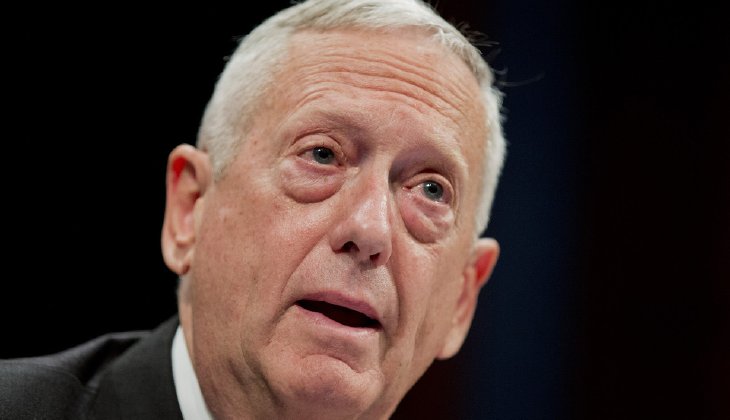
It’s becoming increasingly difficult for Americans to recall that civilian leaders are supposed to command and control the military, not vice-versa.  Consider an article posted yesterday at Newsweek with the title, TRUMP’S GENERALS CAN SAVE THE WORLD FROM WAR—AND STOP THE CRAZY.  The article extols the virtues of “Trump’s generals”: James Mattis as Secretary of Defense, John Kelly as White House Chief of Staff, and H.R. McMaster as National Security Adviser.  The article presents them as the adults in the room, the voices of calm and reason, a moderating force on a bombastic and bellicose president.

I’ve written about Trump’s generals already at TomDispatch.com and elsewhere.  The latest gushing tribute to America’s generals at Newsweek illustrates a couple of points that bear repeating.  First, you don’t hire generals to rein in a civilian leader, or at least you shouldn’t if you care to keep a semblance of democracy in America.  Second, lifelong military officers favor military solutions to problems.  That’s precisely why you want civilians to control them, and to counterbalance their military advice.  Only in a democracy that is already crippled by creeping militarism can the rise of generals to positions of power be celebrated as a positive force for good.

Speaking of creeping militarism in the USA, I caught another headline the other day that referenced General Kelly’s appointment as Chief of Staff.  This headline came from the “liberal” New York Times:

John Kelly Quickly Moves to Impose Military Discipline on White House


Note that headline.  Not that Kelly was to impose discipline, but rather military discipline. What, exactly, is military discipline?  Well, having made my first career in the military, I can describe its features. Obedience.  Deference to authority.  Respect for the chain of command.  A climate that sometimes degenerates to “a put up and shut up” mentality. Such a climate may be needed in certain military settings, but do we want it to rule the White House?

Here is what I wrote back in December about Trump and “his” generals:

In all of this, Trump represents just the next (giant) step in an ongoing process.  His warrior-steeds, his “dream team” of generals, highlight America’s striking twenty-first-century embrace of militarism. At the same time, the future of U.S. foreign policy seems increasingly clear: more violent interventionism against what these men see as the existential threat of radical Islam. 

Of course, now the threat of nuclear war looms with North Korea.  For a moderating influence, America places its faith in military generals controlling the civilian commander-in-chief, and that’s something to draw comfort from, at least according to Newsweek.

When military control of the civilian is celebrated, you know it’s truly opposite day in America.

Trump: Much “Fire and Fury,” Signifying Something Vital


fat man
Fat Man, the atomic bomb that devastated Nagasaki on August 9, 1945

W.J. Astore

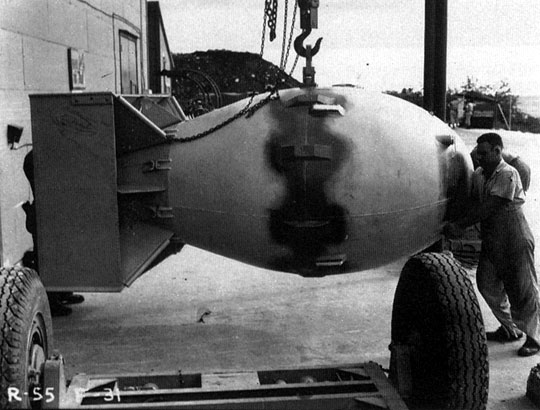
The big story today is Trump’s threat to North Korea about “fire and fury like the world has never seen” in response to any aggression against the U.S. and its allies.  The world witnessed American “fire and fury” in August of 1945 when Hiroshima and Nagasaki were obliterated by atomic bombs (indeed, today is the 72nd anniversary of the Nagasaki bombing).  Roughly 250,000 people were killed in those two bombings, and Trump is apparently promising a worst form of fury against North Korea (“like the world has never seen”).

Back in October 2016, I wrote a piece at this site with the title: “On nuclear weapons, Trump is nightmarishly scary,” and that nightmare is beginning to take shape.  As I wrote back then, Trump’s worst attribute is his “sweeping ignorance to the point of recklessness when it comes to matters of national defense, and specifically America’s nuclear arsenal.”  I further wrote that:

Back in March … Trump boasted at a debate that the U.S. military would follow his orders irrespective of their legality.  In this latest debate, he yet again revealed that he has no real knowledge of America’s nuclear capability and how modern and powerful (and scary) it truly is.

Sure, Trump is crude, lewd, and sexist, but those qualities won’t destroy the world as we know it.  Ignorance about nuclear weapons, combined with impetuosity and an avowed affection for he-man wild-card generals like George S. Patton and Douglas MacArthur, is a recipe for utter disaster.

A man of Trump’s vanity and impetuosity — a man of raging grievances who lives in his own reality of alternative facts — is hardly a reassuring figure to have at the top of America’s “fire and fury” nuclear arsenal.  Is it all just bluster?  It’s impossible to know, and that’s truly the scary part.

All this fire and fury, even if it remains only bluster, should teach the world a critical lesson: the necessity of nuclear disarmament. Holding millions of people hostage to nuclear terror (as we’ve been doing since the Cold War) has long been immoral, inhumane, and unconscionable.

Instead of making nightmarish threats, a sober and mature U.S. president might actually lead the world in serious efforts to reduce and ultimately to eliminate nuclear weapons. That would be real moral leadership,  That would be real guts.

Trump’s easy boasts of “fire and fury” do signify something vital — the need for global nuclear disarmament, no matter how long it takes.

Update (8/10/17): There’s been a lot of talk, more or less sensible, that Trump’s “fire and fury” rhetoric is just that: rhetoric.  That it will not become reality because North Korean leaders are sensible and rational actors, and that U.S. leaders like Tillerson and Mattis provide a counterbalance to Trump.  Well, maybe.  But escalatory rhetoric can become reality, i.e. it serves to exacerbate tensions that can lead to miscalculation and war.

Think of North Korea’s latest threat to shoot missiles in the direction of Guam.  If that threat is carried out, a U.S. attack on North Korean missile sites is quite likely, and where that would lead is impossible to say.

Reckless rhetoric is not harmless; words can and do box nations as well as people in, often leading to unexpected actions.  Just think of hateful words flung by people in domestic disputes that escalate into something far worse.  Rationality does not always win out.

Update 2 (8/10/17): Trump recently boasted that, during his short presidency, his actions have led to a U.S. nuclear arsenal that is “now far stronger and more powerful” than it was under President Obama.  The truth is that this arsenal hasn’t measurably changed at all.  The Washington Post gives Trump “four Pinocchios” for his latest lie, but surely big lies about nuclear weapons deserve a different rating system.  Should we call it a four megaton lie?  Lie-mageddon?