In a functioning democracy, which the USA decidedly isn’t, what would be the features of a necessary war, as in a war fought for defensive (and for defensible) reasons and purposes? Here are ten features that occur to me:
A necessary war would readily gain the approval of Congress, and indeed there would be a formal declaration of war issued by Congress.
National mobilization would be required to win as swiftly as possible.
All Americans could clearly state the reasons for the war and the end goals.
Americans would reject, as much as possible, a long and open-ended war, knowing that long wars are the enemy of democracy.
Nearly all sectors of society would share the war’s burdens. (Think here of celebrities like Jimmy Stewart and sports stars like Ted Williams, among so many others, doing their bit for the war effort in World War II.)
Sacrifices would be made on a national scale, including rationing of materials needed for the war effort.
Taxes would go up to pay for the war effort. War bonds might be sold as well. Deficit spending wouldn’t be used to hide the costs of the war.
Civilian leaders would be in control of the war effort. Military leaders who failed to produce results would be reassigned, demoted, or fired.
As much as possible, freedom of the press would be encouraged so that Americans knew the true course and costs of war.
When the war ended, again as quickly as possible, the nation would return to its default state of peace; military establishments bolstered during wartime would be demobilized.
Now let’s consider every U.S. war since World War II. Let’s focus especially on Iraq and Afghanistan. How many of these ten features would apply to these wars?
I’d argue that none of them apply.
That’s how you know these wars are not in the service of democracy, whether at home or overseas. They are also not defensive wars, nor are they defensible in ways that pass rigorous and honest debate among the people. (This is precisely why none of them came with Congressional declarations of war.)
I know my “top ten” list isn’t all-inclusive, but I think it’s a reasonable guide to whether the next war (and I’m sure more are coming) will be necessary and justifiable. It’s a safe bet it won’t be.
Readers, can you think of other ways we can tell whether war is truly justifiable? History teaches us that most wars are unjustifiable, offensive in nature, and therefore crimes against humanity.
In fact, since 1945 it’s often been America’s putative “enemies” who are more likely to be fighting a necessary war — it’s perhaps the chief reason why they so often win.
In sum, war is the enemy of democracy. You wage war long, you wage it wrong, assuming you want to keep a democracy. That so many American “thought-leaders” are still advocating for more war in Afghanistan is a clear sign that our country’s operating system is infected by malware that promotes militarism and war.
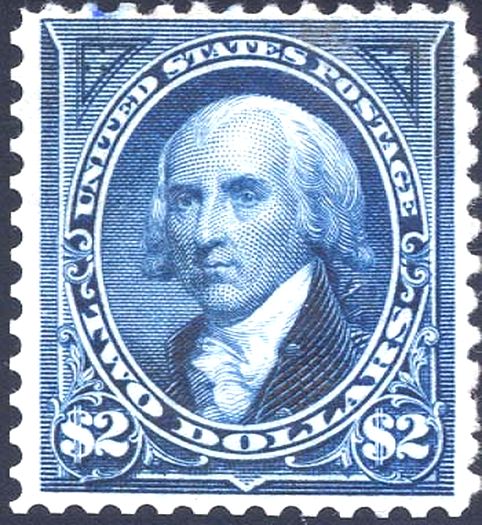
James Madison: No nation can preserve its freedom in the midst of continual warfare
It didn’t take long, did it? The Taliban are already in Kabul and the American-supported central government has scattered to the winds. What happened? What can we learn from this dramatic collapse?
Images of Saigon in 1975 keep appearing in minds and on TV screens, but let’s not forget the collapse of the American-trained Iraqi military in 2014. It turns out that a special product of America’s military-industrial-Congressional complex is junk militaries, whether in Vietnam in 1975 or Iraq in 2014 or Afghanistan in 2021. As I wrote about in 2014 at TomDispatch.com, the U.S. really knows how to invest in junk armies. And when they inevitably collapse, no one is held responsible, whether in the military or in Congress or in the various mercenary corporations that ostensibly trained and equipped Afghan security forces.
What follows is an excerpt from my article written in 2014 when Iraqi forces collapsed. The lessons I drew from that collapse are applicable to the latest one in Afghanistan. Just substitute “The Taliban” for ISIS and Afghan security forces for Iraqi ones in the paragraphs below.
A Kleptocratic State Produces a Kleptocratic Military
In the military, it’s called an “after action report” or a “hotwash” — a review, that is, of what went wrong and what can be learned, so the same mistakes are not repeated. When it comes to America’s Iraq training mission, four lessons should top any “hotwash” list:
1. Military training, no matter how intensive, and weaponry, no matter how sophisticated and powerful, is no substitute for belief in a cause. Such belief nurtures cohesion and feeds fighting spirit. ISIS has fought with conviction. The expensively trained and equipped Iraqi army hasn’t. The latter lacks a compelling cause held in common. This is not to suggest that ISIS has a cause that’s pure or just. Indeed, it appears to be a complex mélange of religious fundamentalism, sectarian revenge, political ambition, and old-fashioned opportunism (including loot, plain and simple). But so far the combination has proven compelling to its fighters, while Iraq’s security forces appear centered on little more than self-preservation.
2. Military training alone cannot produce loyalty to a dysfunctional and disunified government incapable of running the country effectively, which is a reasonable description of Iraq’s sectarian Shia government. So it should be no surprise that, as Andrew Bacevich has noted, its security forces won’t obey orders. Unlike Tennyson’s six hundred, the Iraqi army is unready to ride into any valley of death on orders from Baghdad. Of course, this problem might be solved through the formation of an Iraqi government that fairly represented all major parties in Iraqi society, not just the Shia majority. But that seems an unlikely possibility at this point. In the meantime, one solution the situation doesn’t call for is more U.S. airpower, weapons, advisers, and training. That’s already been tried — and it failed.
3. A corrupt and kleptocratic government produces a corrupt and kleptocratic army. On Transparency International’s 2013 corruption perceptions index, Iraq came in 171 among the 177 countries surveyed. And that rot can’t be overcome by American “can-do” military training, then or now. In fact, Iraqi security forces mirror the kleptocracy they serve, often existing largely on paper. For example, prior to the June ISIS offensive, as Patrick Cockburn has noted, the security forces in and around Mosul had a paper strength of 60,000, but only an estimated 20,000 of them were actually available for battle. As Cockburn writes, “A common source of additional income for officers is for soldiers to kickback half their salaries to their officers in return for staying at home or doing another job.”
When he asked a recently retired general why the country’s military pancaked in June, Cockburn got this answer:
“‘Corruption! Corruption! Corruption!’ [the general] replied: pervasive corruption had turned the [Iraqi] army into a racket and an investment opportunity in which every officer had to pay for his post. He said the opportunity to make big money in the Iraqi army goes back to the U.S. advisers who set it up ten years ago. The Americans insisted that food and other supplies should be outsourced to private businesses: this meant immense opportunities for graft. A battalion might have a nominal strength of six hundred men and its commanding officer would receive money from the budget to pay for their food, but in fact there were only two hundred men in the barracks so he could pocket the difference. In some cases there were ‘ghost battalions’ that didn’t exist at all but were being paid for just the same.”
Only in fantasies like J.R.R. Tolkien’s Lord of the Rings do ghost battalions make a difference on the battlefield. Systemic graft and rampant corruption can be papered over in parliament, but not when bullets fly and blood flows, as events in June proved.
Such corruption is hardly new (or news). Back in 2005, in his article “Why Iraq Has No Army,” James Fallows noted that Iraqi weapons contracts valued at $1.3 billion shed $500 million for “payoffs, kickbacks, and fraud.” In the same year, Eliot Weinberger, writing in the London Review of Books, cited Sabah Hadum, spokesman for the Iraqi Ministry of the Interior, as admitting, “We are paying about 135,000 [troop salaries], but that does not necessarily mean that 135,000 are actually working.” Already Weinberger saw evidence of up to 50,000 “ghost soldiers” or “invented names whose pay is collected by [Iraqi] officers or bureaucrats.” U.S. government hype to the contrary, little changed between initial training efforts in 2005 and the present day, as Kelley Vlahos noted recently in her article “The Iraqi Army Never Was.”
4. American ignorance of Iraqi culture and a widespread contempt for Iraqis compromised training results. Such ignorance was reflected in the commonplace use by U.S. troops of the term “hajji,” an honorific reserved for those who have made the journey (or hajj) to Mecca, for any Iraqi male; contempt in the use of terms such as “raghead,” in indiscriminate firing and overly aggressive behavior, and most notoriously in the events at Abu Ghraib prison. As Douglas Macgregor, a retired Army colonel, noted in December 2004, American generals and politicians “did not think through the consequences of compelling American soldiers with no knowledge of Arabic or Arab culture to implement intrusive measures inside an Islamic society. We arrested people in front of their families, dragging them away in handcuffs with bags over their heads, and then provided no information to the families of those we incarcerated. In the end, our soldiers killed, maimed, and incarcerated thousands of Arabs, 90 percent of whom were not the enemy. But they are now.”
Sharing that contempt was Secretary of Defense Donald Rumsfeld, who chose a metaphor of parent and child, teacher and neophyte, to describe the “progress” of the occupation. He spoke condescendingly of the need to take the “training wheels” off the Iraqi bike of state and let Iraqis pedal for themselves. A decade later, General Allen exhibited a similarly paternalistic attitude in an article he wrote calling for the destruction of the Islamic State. For him, the people of Iraq are “poor benighted” souls, who can nonetheless serve American power adequately as “boots on the ground.” In translation that means they can soak up bullets and become casualties, while the U.S. provides advice and air support. In the general’s vision — which had déjà vu all over again scrawled across it — U.S. advisers were to “orchestrate” future attacks on IS, while Iraq’s security forces learned how to obediently follow their American conductors.
The commonplace mixture of smugness and paternalism Allen revealed hardly bodes well for future operations against the Islamic State.
What Next?
The grim wisdom of Private Hudson in the movie Aliens comes to mind: “Let’s just bug out and call it ‘even,’ OK? What are we talking about this for?”
Unfortunately, no one in the Obama administration is entertaining such sentiments at the moment, despite the fact that ISIS does not actually represent a clear and present danger to the “homeland.” The bugging-out option has, in fact, been tested and proven in Vietnam. After 1973, the U.S. finally walked away from its disastrous war there and, in 1975, South Vietnam fell to the enemy. It was messy and represented a genuine defeat — but no less so than if the U.S. military had intervened yet again in 1975 to “save” its South Vietnamese allies with more weaponry, money, troops, and carpet bombing. Since then, the Vietnamese have somehow managed to chart their own course without any of the above and almost 40 years later, the U.S. and Vietnam find themselves informally allied against China.
To many Americans, IS appears to be the latest Islamic version of the old communist threat — a bad crew who must be hunted down and destroyed. This, of course, is something the U.S. tried in the region first against Saddam Hussein in 1991 and again in 2003, then against various Sunni and Shiite insurgencies, and now against the Islamic State. Given the paradigm — a threat to our way of life — pulling out is never an option, even though it would remove the “American Satan” card from the IS propaganda deck. To pull out means to leave behind much bloodshed and many grim acts. Harsh, I know, but is it any harsher than incessant American-led bombing, the commitment of more American “advisers” and money and weapons, and yet more American generals posturing as the conductors of Iraqi affairs? With, of course, the usual results.
One thing is clear: the foreign armies that the U.S. invests so much money, time, and effort in training and equipping don’t act as if America’s enemies are their enemies. Contrary to the behavior predicted by Donald Rumsfeld, when the U.S. removes those “training wheels” from its client militaries, they pedal furiously (when they pedal at all) in directions wholly unexpected by, and often undesirable to, their American paymasters.
And if that’s not a clear sign of the failure of U.S. foreign policy, I don’t know what is.
I retired from the U.S. military in 2005. I had no direct role in America’s Afghan war, which means I have no personal stake in trying to justify it or defend it. I never understood how invading and occupying portions of Afghanistan made any sense.
In re-reading a few of my articles against the Afghan war, I came across this email from a dear friend who put it better than I ever could:
I feel sometimes like our military leaders don’t really think of the human cost [of war], even today. I went to church today and I wiped away many tears as they told the story of a member’s son whose legs were recently blown off in Afghanistan, and of a chaplain in Iraq who was there with dying soldiers. These stories, and working and living with military families for all these years has really humanized war and made it so personal to me — but I don’t think most Americans have this personal connection.
Personal email to author, 2012.
For me, my friend’s words sum up the great tragedy of this war. So many lives lost or damaged, most of them not American, and for what? What were America’s leaders thinking? What were they feeling, or failing to feel?
Obviously, the Afghan war was never America’s to win. Young troops were sent there on a fool’s errand. They may have tried hard — real hard — but they failed. Yet that failure wasn’t their fault. That failure was Bush’s and Obama’s and Trump’s. That failure was shared by a Congress that refused to exercise true oversight. That failure was aggravated by all those who profited from a doomed effort. Small wonder that Americans put so little faith and trust in their government today. We’ve been lied to so often by callous politicians with no skin in the game.
As the Taliban consolidates its control over much of Afghanistan, the entire U.S. and Coalition war effort stands in high relief as a debacle and disaster. Just as South Vietnam’s quick fall in 1975 revealed the dishonesty of U.S. government officials (along with the Pentagon Papers, Watergate, and so many other events), the ongoing collapse of America’s position in Afghanistan highlights a system that lacks integrity and honesty.
We lose because we’re craven and dishonest. We lose because we forget the personal costs of war. We lose because we fail to pay attention. We lose because we’re greedy and stupid.
Yes, I’m angry. I’ve written far too many articles against America’s Afghan war. Of course, they changed nothing. Even now, as the evidence is all around us of how much we’ve been lied to about “progress” in Afghanistan, there are still officials who argue we should stay and fight. For what reasons? To what end?
As journalist Megan Stack put it in a recent article in The New Yorker,
As the United States rushes to remove its troops from Afghanistan this summer, the Pentagon has imposed a de-facto press blackout on their departure. The military has ignored requests for embeds, denied pleas for even perfunctory interviews with troops, and generally worked to obstruct the public’s view of the United States pulling up stakes … the obfuscation was predictable. Leaving a country that many expect will now collapse into civil war, the United States has no victory to declare; it can only acknowledge the reality of relinquishment and retreat … [T]he outcome in Afghanistan was ignominious. The conflict will cost taxpayers more than two trillion dollars, including veteran care and interest on war borrowing, according to the Costs of War project at Brown University, which also estimates that more than a hundred and seventy thousand people died in the conflict, counting Afghan forces, Taliban fighters, and contractors. That figure includes twenty-four hundred U.S. troops and forty-seven thousand civilians who died in a project that failed at its most basic goal of defeating the Taliban, who are now surging back to seize control of districts and, according to human-rights groups, carrying out organized revenge killings.
Will anyone in the U.S. government be held accountable for this “ignominious” debacle? This disaster?
Isn’t it sad that we already know that “Not only no, but hell no!” is the answer here?
Update: For what it’s worth, this was my original opening to this article: As the Taliban quickly expands its control over Afghanistan, the dishonesty of the U.S. military and government is revealed. More than a trillion dollars spent over two decades, all those reports of progress in creating Afghan security forces and a centralized government, all the lives lost, and for what?
The Biden administration says it wants to remove U.S. combat troops from Iraq. Hooray! Mission finally accomplished, right? It may be 18 years after George W. Bush declared it to be so, but who’s counting the years?
Not so fast. For President Biden still wants to keep roughly 2000 or so U.S. troops in Iraq for training and advisory purposes. So much for mission accomplished.
Why can’t U.S. troops just leave — for good? If Iraq can’t defend itself after nearly two decades of U.S. “training” in the war on terror, maybe it’s finally time to admit our limits (or our folly) and simply leave.
It almost seems like America’s system of “defense” is an imperial project — an effort to enlarge American power at almost any cost (and the Iraq war has cost America in the trillions of dollars).
This is the telling argument of Tom Engelhardt’s latest post at TomDispatch.com. The U.S. is the empire that dare not speak its name, even as it begins to collapse due to perpetual war externally and perpetual rancor internally. And, believe me, as former President Trump would say, those two are related. He should know, given how he tapped that rancor and aggravated it for his own purposes.
Here’s an excerpt from Engelhardt’s latest, where he points out what might be termed the Pentagon Paradox: The more America’s generals fail, the more they succeed (more money, more promotions, more power):
Still, let’s face it, this isn’t the set of conflicts that, once upon a time, involved invasions, massive air strikes, occupations, the killing of staggering numbers of civilians, widespread drone attacks, the disruption of whole countries, the uprooting and displacement of more than 37 million people, the deployment at one point of 100,000 U.S. troops in Afghanistan alone, and the spending of untold trillions of American taxpayer dollars, all in the name of fighting terror and spreading democracy. And think of it as mission (un)accomplished in the truest sense imaginable.
In fact, that idea of spreading of democracy didn’t really outlast the Bush years. Ever since, there’s been remarkably little discussion in official Washington about what this country was really doing as it warred across significant parts of the planet. Yes, those two decades of conflict, those “forever wars,” as they came to be called first by critics and then by anyone in sight, are at least winding, or perhaps spiraling, down — and yet, here’s the strange thing: Wouldn’t you think that, as they ended in visible failure, the Pentagon’s stock might also be falling? Oddly enough, though, in the wake of all those years of losing wars, it’s still rising. The Pentagon budget only heads ever more for the stratosphere as foreign policy “pivots” from the Greater Middle East to Asia (and Russia and the Arctic and, well, anywhere but those places where terror groups still roam).
In other words, when it comes to the U.S. military as it tries to leave its forever wars in someone else’s ditch, failure is the new success story.
And how! Maybe we need a new saying in America: Nothing succeeds like failure. It’s truly paradoxical until you realize that someone is always winning and profiting from this failure, even as the rest of America suffers.
Engelhardt’s book above has a well-judged title: “A Nation Unmade By War.” But perhaps we can improve it? How about “An Empire Unmade By War”?
Serving in the U.S. Air Force, Daniel Hale witnessed America’s drone assassination program and decided to speak out against it. As he awaits sentencing under the Espionage Act for sharing secrets about that program so that the American people could gain insight into the murderous realities of this war from a distance, he penned this letter to the judge hearing his case.
It is a heartfelt and harrowing letter that should be read by all Americans. The Biden administration is seeking a 9-year prison sentence and would prefer an even tougher punishment. This is exactly what is wrong about the United States today: the innocent are punished severely while the guilty are celebrated and promoted.
What follows are the words of Daniel Hale.
Daniel Hale (Photo by Bob Hayes via AP)
Dear Judge O’Grady,
It is not a secret that I struggle to live with depression and post traumatic stress disorder. Both stem from my childhood experience growing up in a rural mountain community and were compounded by exposure to combat during military service. Depression is a constant. Though stress, particularly stress caused by war, can manifest itself at different times and in different ways. The tell-tale signs of a person afflicted by PTSD and depression can often be outwardly observed and are practically universally recognizable. Hard lines about the face and jaw. Eyes, once bright and wide, now deepset and fearful. And an inexplicably sudden loss of interest in things that used to spark joy. These are the noticeable changes in my demeanor marked by those who knew me before and after military service. To say that the period of my life spent serving in the United States Air Force had an impression on me would be an understatement. It is more accurate to say that it irreversibly transformed my identity as an American. Having forever altered the thread of my life’s story, weaved into the fabric of our nation’s history. To better appreciate the significance of how this came to pass, I would like to explain my experience deployed to Afghanistan as it was in 2012 and how it is I came to violate the Espionage Act, as a result.
In my capacity as a signals intelligence analyst stationed at Bagram Airbase, I was made to track down the geographic location of handset cellphone devices believed to be in the possession of so-called enemy combatants. To accomplish this mission required access to a complex chain of globe-spanning satellites capable of maintaining an unbroken connection with remotely piloted aircraft, commonly referred to as drones. Once a steady connection is made and a targeted cell phone device is acquired, an imagery analyst in the U.S., in coordination with a drone pilot and camera operator, would take over using information I provided to surveil everything that occurred within the drone’s field of vision. This was done, most often, to document the day-to-day lives of suspected militants. Sometimes, under the right conditions, an attempt at capture would be made. Other times, a decision to strike and kill them where they stood would be weighed.
The first time that I witnessed a drone strike came within days of my arrival to Afghanistan. Early that morning, before dawn, a group of men had gathered together in the mountain ranges of Patika provence around a campfire carrying weapons and brewing tea. That they carried weapons with them would not have been considered out of the ordinary in the place I grew up, muchless within the virtually lawless tribal territories outside the control of the Afghan authorities. Except that among them was a suspected member of the Taliban, given away by the targeted cell phone device in his pocket. As for the remaining individuals, to be armed, of military age, and sitting in the presence of an alleged enemy combatant was enough evidence to place them under suspicion as well. Despite having peacefully assembled, posing no threat, the fate of the now tea drinking men had all but been fulfilled. I could only look on as I sat by and watched through a computer monitor when a sudden, terrifying flurry of hellfire missiles came crashing down, splattering purple-colored crystal guts on the side of the morning mountain.
Since that time and to this day, I continue to recall several such scenes of graphic violence carried out from the cold comfort of a computer chair. Not a day goes by that I don’t question the justification for my actions. By the rules of engagement, it may have been permissible for me to have helped to kill those men—whose language I did not speak, customs I did not understand, and crimes I could not identify—in the gruesome manner that I did. Watch them die. But how could it be considered honorable of me to continuously have laid in wait for the next opportunity to kill unsuspecting persons, who, more often than not, are posing no danger to me or any other person at the time. Nevermind honorable, how could it be that any thinking person continued to believe that it was necessary for the protection of the United States of America to be in Afghanistan and killing people, not one of whom present was responsible for the September 11th attacks on our nation. Notwithstanding, in 2012, a full year after the demise of Osama bin Laden in Pakistan, I was a part of killing misguided young men who were but mere children on the day of 9/11.
Nevertheless, in spite of my better instincts, I continued to follow orders and obey my command for fear of repercussion. Yet, all the while, becoming increasingly aware that the war had very little to do with preventing terror from coming into the United States and a lot more to do with protecting the profits of weapons manufacturers and so-called defense contractors. The evidence of this fact was laid bare all around me. In the longest or most technologically advanced war in American history, contract mercenaries outnumbered uniform wearing soldiers 2 to 1 and earned as much as 10 times their salary. Meanwhile, it did not matter whether it was, as I had seen, an Afghan farmer blown in half, yet miraculously conscious and pointlessly trying to scoop his insides off the ground, or whether it was an American flag-draped coffin lowered into Arlington National Cemetery to the sound of a 21-gun salute. Bang, bang, bang. Both served to justify the easy flow of capital at the cost of blood—theirs and ours. When I think about this I am grief-stricken and ashamed of myself for the things I’ve done to support it.
The most harrowing day of my life came months into my deployment to Afghanistan when a routine surveillance mission turned into disaster. For weeks we had been tracking the movements of a ring of car bomb manufacturers living around Jalalabad. Car bombs directed at US bases had become an increasingly frequent and deadly problem that summer, so much effort was put into stopping them. It was a windy and clouded afternoon when one of the suspects had been discovered headed eastbound, driving at a high rate of speed. This alarmed my superiors who believe he might be attempting to escape across the border into Pakistan.
A drone strike was our only chance and already it began lining up to take the shot. But the less advanced predator drone found it difficult to see through clouds and compete against strong headwinds. The single payload MQ-1 failed to connect with its target, instead missing by a few meters. The vehicle, damaged, but still driveable, continued on ahead after narrowly avoiding destruction. Eventually, once the concern of another incoming missile subsided, the driver stopped, got out of the car, and checked himself as though he could not believe he was still alive. Out of the passenger side came a woman wearing an unmistakable burka. As astounding as it was to have just learned there had been a woman, possibly his wife, there with the man we intended to kill moments ago, I did not have the chance to see what happened next before the drone diverted its camera when she began frantically to pull out something from the back of the car.
A couple of days passed before I finally learned from a briefing by my commanding officer about what took place. There indeed had been the suspect’s wife with him in the car. And in the back were their two young daughters, ages 5 and 3 years old. A cadre of Afghan soldiers were sent to investigate where the car had stopped the following day. It was there they found them placed in the dumpster nearby. The eldest was found dead due to unspecified wounds caused by shrapnel that pierced her body. Her younger sister was alive but severely dehydrated. As my commanding officer relayed this information to us she seemed to express disgust, not for the fact that we had errantly fired on a man and his family, having killed one of his daughters; but for the suspected bomb maker having ordered his wife to dump the bodies of their daughters in the trash, so that the two of them could more quickly escape across the border. Now, whenever I encounter an individual who thinks that drone warfare is justified and reliably keeps America safe, I remember that time and ask myself how could I possibly continue to believe that I am a good person, deserving of my life and the right to pursue happiness.
One year later, at a farewell gathering for those of us who would soon be leaving military service, I sat alone, transfixed by the television, while others reminisced together. On television was breaking news of the president giving his first public remarks about the policy surrounding the use of drone technology in warfare. His remarks were made to reassure the public of reports scrutinizing the death of civilians in drone strikes and the targeting of American citizens. The president said that a high standard of “near certainty” needed to be met in order to ensure that no civilians were present. But from what I knew, of the instances where civilians plausibly could have been present, those killed were nearly always designated enemies killed in action unless proven otherwise. Nonetheless, I continued to heed his words as the president went on to explain how a drone could be used to eliminate someone who posed an “imminent threat” to the United States. Using the analogy of taking out a sniper, with his sights set on an unassuming crowd of people, the president likened the use of drones to prevent a would-be terrorist from carrying out his evil plot. But, as I understood it to be, the unassuming crowd had been those who lived in fear and the terror of drones in their skies and the sniper in this scenario had been me. I came to believe that the policy of drone assasiniation was being used to mislead the public that it keeps us safe, and when I finally left the military, still processing what I’d been a part of, I began to speak out, believing my participation in the drone program to have been deeply wrong.
I dedicated myself to anti-war activism, and was asked to partake in a peace conference in Washington, DC late November, 2013. People had come together from around the world to share experiences about what it is like living in the age of drones. Fazil bin Ali Jaber had journeyed from Yemen to tell us of what happened to his brother Salem bin Ali Jaber and their cousin Waleed. Waleed had been a policeman and Salem was a well-respected firebrand Imam, known for giving sermons to young men about the path towards destruction should they choose to take up violent jihad.
One day in August 2012, local members of Al Qaeda traveling through Fazil’s village in a car spotted Salem in the shade, pulled up towards him, and beckoned him to come over and speak to them. Not one to miss an opportunity to evangelize to the youth, Salem proceeded cautiously with Waleed by his side. Fazil and other villagers began looking on from afar. Farther still was an ever present reaper drone looking too.
As Fazil recounted what happened next, I felt myself transported back in time to where I had been on that day, 2012. Unbeknownst to Fazil and those of his village at the time was that they had not been the only watching Salem approach the jihadist in the car. From Afghanistan, I and everyone on duty paused their work to witness the carnage that was about to unfold. At the press of a button from thousands of miles away, two hellfire missiles screeched out of the sky, followed by two more. Showing no signs of remorse, I, and those around me, clapped and cheered triumphantly. In front of a speechless auditorium, Fazil wept.
About a week after the peace conference I received a lucrative job offer if I were to come back to work as a government contractor. I felt uneasy about the idea. Up to that point, my only plan post military separation had been to enroll in college to complete my degree. But the money I could make was by far more than I had ever made before; in fact, it was more than any of my college-educated friends were making. So, after giving it careful consideration, I delayed going to school for a semester and took the job.
For a long time I was uncomfortable with myself over the thought of taking advantage of my military background to land a cushy desk job. During that time I was still processing what I had been through and I was starting to wonder if I was contributing again to the problem of money and war by accepting to return as a defense contractor. Worse was my growing apprehension that everyone around me was also taking part in a collective delusion and denial that was used to justify our exorbitant salaries, for comparatively easy labor. The thing I feared most at the time was the temptation not to question it.
Then it came to be that one day after work I stuck around to socialize with a pair of co-workers whose talented work I had come to greatly admire. They made me feel welcomed, and I was happy to have earned their approval. But then, to my dismay, our brand-new friendship took an unexpectedly dark turn. They elected that we should take a moment and view together some archived footage of past drone strikes. Such bonding ceremonies around a computer to watch so-called “war porn” had not been new to me. I partook in them all the time while deployed to Afghanistan. But on that day, years after the fact, my new friends gaped and sneered, just as my old one’s had, at the sight of faceless men in the final moments of their lives. I sat by watching too; said nothing and felt my heart breaking into pieces.
Your Honor, the truest truism that I’ve come to understand about the nature of war is that war is trauma. I believe that any person either called-upon or coerced to participate in war against their fellow man is promised to be exposed to some form of trauma. In that way, no soldier blessed to have returned home from war does so uninjured. The crux of PTSD is that it is a moral conundrum that afflicts invisible wounds on the psyche of a person made to burden the weight of experience after surviving a traumatic event. How PTSD manifests depends on the circumstances of the event. So how is the drone operator to process this? The victorious rifleman, unquestioningly remorseful, at least keeps his honor intact by having faced off against his enemy on the battlefield. The determined fighter pilot has the luxury of not having to witness the gruesome aftermath. But what possibly could I have done to cope with the undeniable cruelties that I perpetuated?
My conscience, once held at bay, came roaring back to life. At first, I tried to ignore it. Wishing instead that someone, better placed than I, should come along to take this cup from me. But this too was folly. Left to decide whether to act, I only could do that which I ought to do before God and my own conscience. The answer came to me, that to stop the cycle of violence, I ought to sacrifice my own life and not that of another person.
So, I contacted an investigative reporter, with whom I had had an established prior relationship, and told him that I had something the American people needed to know.
It’s another very warm and very humid day here in the Bracing Views HQ. As the situation in Afghanistan continues to go poorly, at least from the perspective of the U.S. government, I thought I’d reflect on a comment I made with the theme of “Wherever we go, there we are.” In other words, wherever America makes war, we bring certain aspects of ourselves and our culture with us. What do I mean by this?
When America intervenes in (or invades) countries like Iraq and Afghanistan in the stated cause of “freedom” (recall these operations were unironically named Operation Enduring Freedom and Operation Iraqi Freedom, proving that the U.S. government can out-Orwell George Orwell), we bring anything but freedom. That’s because our “freedom” wars feature an almost total reliance on the military (no surprise there), and the military simply isn’t about freedom. That military is trained for kinetic ops, i.e., murderous violence; and that military features “force multipliers” (bombs and missiles and chemical agents of various sorts, otherwise known as weapons of mass destruction) to subdue various “enemies” while limiting American casualties.
At the same time as lots of foreigners are being killed, Americans generally maintain a stubborn ignorance of the foreign country in which we’re involved. Their history doesn’t matter; all that matters is putting bombs on target and killing the “right” people, the bad guys, whoever they are. Even as the war starts going poorly, predictably because we don’t really know who the “bad guys” are, nor are we sensible enough to recognize we’re the “foreigners” and often the real bad guys, the U.S. military proceeds to engage in a mindless pursuit of “victory,” however poorly defined, which in the end degenerates to a desire not to be labeled a “loser” in any war, no matter how stupid and unnecessary it is.
Related to this is the reality that once a war gets ginned up, there is an overwhelming desire by war profiteers in the U.S. military-industrial complex to keep the good times rolling. Look at how long the Vietnam war lasted, or the Afghan war for that matter. Decades of “good times” await war profiteers as long as American troops are kept in harm’s way, busily hammering away at “freedom,” because “our” troops must be “defended” at any cost.
Americans in general, ignoring obvious evidence to the contrary, have a strong bias that U.S. troops are always fighting on the side of the angels. Who really wants to believe otherwise? Such a bias makes it easier for us to wash our hands of the whole sordid affair. And whether you like it or not, the U.S. military always fights in your and my name.
There are many other factors at work to explain the woeful nature of America’s wars, but the ones I mention above are important, I think, as we examine how dreadful America’s “freedom” wars turn out to be. And when these freedom wars end poorly, as they do, the very last organization to shoulder any blame is the U.S. government.
Perhaps that’s truly the lead feature of U.S. war-making today: Even when you lose, and lose badly, war means never having to say you’re sorry.
For the Pentagon, sorry seems to be the hardest word
In my CNN news feed for today, I came across a warning from Army General Austin Scott Miller about Taliban advances in Afghanistan as U.S. troop withdrawals proceed. Conditions are deteriorating (not for the Taliban, obviously) and CNN cautioned that the Biden administration has yet to put together a plan to pursue terrorists in Afghanistan after the troop pullout is completed.
And I thought to myself: yet more evidence of the U.S. military covering its collective ass, for when the Taliban does take over, which it has been doing over the last decade, America’s generals can say, See, we told you so. We told you not to pullout too quickly. We told you this would happen, despite all those hard-fought gains we’d secured (always “fragile” and “reversible,” though, in the words of General David Petraeus). So when the “loss” does come (Afghanistan was never ours to “win” to begin with), it’ll be Biden’s fault, not ours.
In short, if we lose Afghanistan, we in the military are not to blame. You’re to blame.
Of course, this is patently ridiculous for so many reasons. I’ve written a lot about the Afghan war, and read more, so in a nutshell here’s why General Miller and Company are full of it:
The U.S. military had nearly 20 years and billions and billions in resources to train, equip, and field an Afghan military, yet all those efforts gained little.
The U.S. military had nearly 20 years and a trillion dollars in resources yet failed to defeat the Taliban.
Before Biden ordered the troop pullout, the Taliban had already secured most of the country. This was also true when Trump as president considered withdrawing but was talked out of it by his generals.
As the saying goes in Afghanistan, the Americans have the fancy watches but the Afghan people have the time. Afghanistan never was America’s to win. And with respect to terrorism, the presence of U.S. and allied troops there only served to exacerbate the conflict. More and more military hammer blows only shattered the country further, causing more devastation, more desperation, and more extremism. The U.S. military seemed to specialize in killing the second- or third-ranked “terrorist” leader, over and over again, only to see a generally younger, more extreme leader rise to take his place. It was a terrific tactic for perpetual war, but it was hardly one suited to producing victory, whatever that might look like.
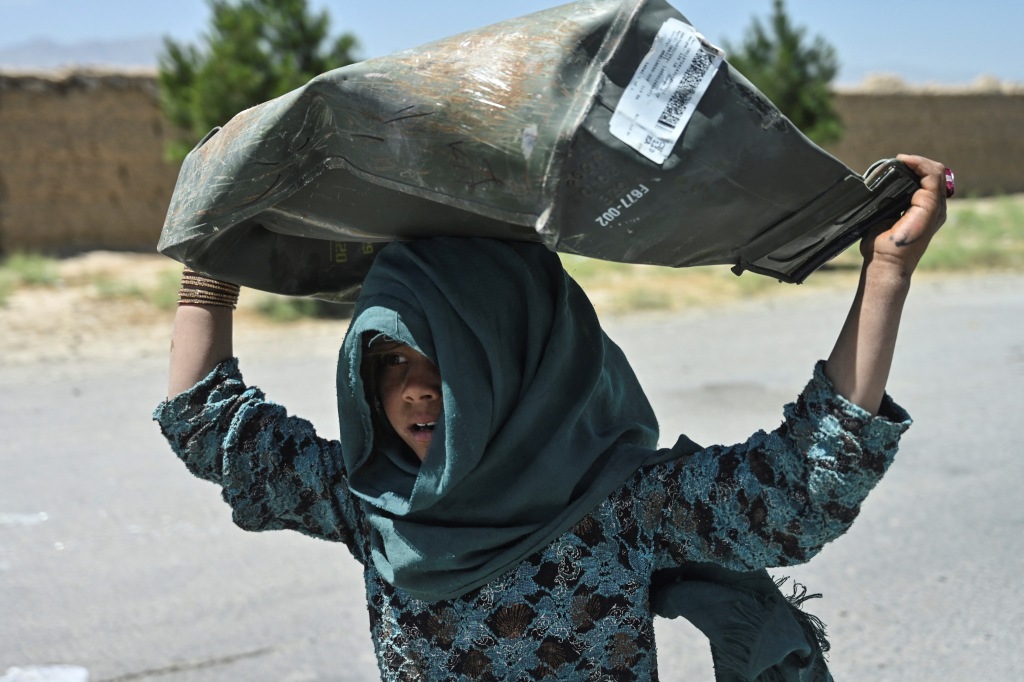
So American troops are leaving places like Bagram like thieves in the night, leaving behind lots of junk and a legacy of violence and destruction. If one photo can serve to sum up our withdrawal, consider this one of an Afghan girl at work carrying scrap metal (Made in USA!) for money:
In this picture taken on June 17, 2021, a girl carries a metal box she collected from a junkyard near the Bagram Air Base in Bagram. – The Pentagon is evacuating Bagram airbase as part of its plan to withdraw all forces by this year’s 20th anniversary of the September 11 attacks on the US, taking military gear home or given to Afghan security forces, but tons of civilian equipment must be left behind. (Photo by Adek BERRY / AFP) / TO GO WITH ‘Afghanistan-USA-conflict-Bagram’ FOCUS by Anne CHAON and Mushtaq MOJADDIDI
Well, that makes me proud to be an American.
Update (7/9/21):
Biden’s speech yesterday on Afghanistan was the usual claptrap. He claimed the U.S. didn’t go to Afghanistan to nation-build, even though the Afghan surge was all about defeating the Taliban while installing a “government in a box” for the Afghan people. All that effort by so many agencies to create an Afghan justice system, security forces, and so on so as to create the fundamentals of a government — all forgotten now because they failed. Meanwhile, the Afghan forces the U.S. military “trained” are folding quickly, flooding Afghanistan with even more weaponry.
I got this in my news feed from the New York Times:
In Forceful Defense of Afghan Withdrawal, Biden Says U.S. Achieved Its Objectives
By Michael D. Shear, David E. Sanger and Thomas Gibbons-Neff The president insisted that the United States had done more than enough to empower the Afghan police and military to secure the future of their people.
Look at the way this is structured. First the lie that we achieved our objectives. Then the idea that the way to “secure the future” is to create strong police and military forces. That is surely an idea that’s made in militarist America — that you secure the future through strong police and military forces. It’s the very opposite of what a democratic society would argue. But it is the approach of an authoritarian empire.
In my latest article for TomDispatch, I write that America is programmed for war. It’s a feature of our polity and our politics and our culture, not a bug. In some sense, we are a country made by war, and that’s not a good feature for a self-avowed democracy to have. Here’s an excerpt:
I know, I know: President Joe Biden has announced that our combat troops will be withdrawn from Afghanistan by 9/11 of this year, marking the 20th anniversary of the colossal failure of George W. Bush and Dick Cheney to defend America.
Of course, that other 9/11 in 2001 shocked us all. I was teaching history at the U.S. Air Force Academy and I still recall hushed discussions of whether the day’s body count would exceed that of the Battle of Antietam, the single bloodiest day of the Civil War. (Fortunately, bad as it was, it didn’t.)
Hijacked commercial airliners, turned into guided missiles by shadowy figures our panicky politicians didn’t understand, would have a profound impact on our collective psyche. Someone had to pay and among the first victims were Afghans in the opening salvo of the misbegotten Global War on Terror, which we in the military quickly began referring to as the GWOT. Little did I know then that such a war would still be going on 15 years after I retired from the Air Force in 2005 and 80 articles after I wrote my first for TomDispatch in 2007 arguing for an end to militarism and forever wars like the one still underway in Afghanistan.
Over those years, I’ve come to learn that, in my country, war always seems to find a way, even when it goes badly — very badly, in fact, as it did in Vietnam and, in these years, in Afghanistan and Iraq, indeed across much of the Greater Middle East and significant parts of Africa. Not coincidentally, those disastrous conflicts haven’t actually been waged in our name. No longer does Congress even bother with formal declarations of war. The last one came in 1941 after Pearl Harbor. During World War II, Americans united to fight for something like national security and a just cause. Today, however, perpetual American-style war simply is. Congress postures, but does nothing decisive to stop it. In computer-speak, endless war is a feature of our national programming, not a bug.
Two pro-war parties, Republicans and Democrats, have cooperated in these decades to ensure that such wars persist… and persist and persist. Still, they’re not the chief reason why America’s wars are so difficult to end. Let me list some of those reasons for you. First, such wars are beyond profitable, notably to weapons makers and related military contractors. Second, such wars are the Pentagon’s reason for being. Let’s not forget that, once upon a time, the present ill-named Department of Defense was so much more accurately and honestly called the Department of War. Third, if profit and power aren’t incentive enough, wars provide purpose and meaning even as they strengthen authoritarian structures in society and erode democratic ones. Sum it all up and war is what America now does, even if the reasons may be indefensible and the results so regularly abysmal.
Support Our Troops! (Who Are They, Again?)
The last truly American war was World War II. And when it ended in 1945, the citizen-soldiers within the U.S. military demanded rapid demobilization — and they got it. But then came the Iron Curtain, the Cold War, the Korean War, fears of nuclear Armageddon (that nearly came to fruition during the Cuban Missile Crisis in 1962), and finally, of course, Vietnam. Those wars were generally not supported — not with any fervor anyway — by the American people, hence the absence of congressional declarations. Instead, they mainly served the interests of the national security state, or, if you prefer, the military-industrial-congressional complex.
Ike knew the score
That’s precisely why President Dwight D. Eisenhower issued his grave warning about that Complex in his farewell address in 1961. No peacenik, Ike had overseen more than his share of military coups and interventions abroad while president, so much so that he came to see the faults of the system he was both upholding and seeking to restrain. That was also why President John F. Kennedy called for a more humble and pacific approach to the Cold War in 1963, even as he himself failed to halt the march toward a full-scale war in Southeast Asia. This is precisely why Martin Luther King, Jr., truly a prophet who favored the fierce urgency of peace, warned Americans about the evils of war and militarism (as well as racism and materialism) in 1967. In the context of the enormity of destruction America was then visiting on the peoples of Southeast Asia, not for nothing did he denounce this country as the world’s greatest purveyor of violence.
Collectively, Americans chose to ignore such warnings, our attention being directed instead toward spouting patriotic platitudes in support of “our” troops. Yet, if you think about it for a moment, you’ll realize those troops aren’t really ours. If they were, we wouldn’t need so many bumper stickers reminding us to support them.
With the military draft gone for the last half-century, most Americans have voted with their feet by not volunteering to become “boots on the ground” in the Pentagon’s various foreign escapades. Meanwhile, America’s commanders-in-chief have issued inspiring calls for their version of national service, as when, in the wake of 9/11, President George W. Bush urged Americans to go shopping and visit Disney World. In the end, Americans, lacking familiarity with combat boots, are generally apathetic, sensing that “our” wars have neither specific meaning to, nor any essential purpose in their lives.
As a former Air Force officer, even if now retired, I must admit that it took me too long to realize this country’s wars had remarkably little to do with me — or you, for that matter — because we simply have no say in them. That doesn’t mean our leaders don’t seek to wage them in our name. Even as they do so, however, they simultaneously absolve us of any need to serve or sacrifice. We’re essentially told to cheer “our” troops on, but otherwise look away and leave war to the professionals (even if, as it turns out, those professionals seem utterly incapable of winning a single one of them).
Please read the rest of my article here at TomDispatch.com.
A quick Google search reveals that, “According to the Department of Housing and Urban Development, it would cost $20 billion to end homelessness in the United States.” That’s roughly the cost of a few dozen ICBM interceptor missiles (estimated cost: $18 billion) that are unlikely to work and which may encourage potential adversaries to build more nuclear missiles to overcome them (assuming they do work, but hitting a bullet with a bullet is truly a long shot). Another cost comparison: ending homelessness in America could be done for the cost of roughly 150 F-35 jet fighters. Another: ending homelessness in America could be done for less than half the yearly cost of America’s Afghan War. Yet we’d rather build interceptors, fighter jets, and continue wars than house the homeless.
I’m seeing predictions by America’s generals that Afghan national forces will likely collapse if U.S. combat troops are withdrawn by 9/11. Yet the U.S. military has been training those same Afghan forces for nearly twenty years, all the while making “progress” according to those same generals. What gives? If after two decades Afghan forces don’t have the wherewithal to defend themselves despite untold billions in U.S. assistance and aid, isn’t it logical to assume they will never have the wherewithal?
Of course, it’s an effective strategy for U.S. generals to warn of an impending collapse after Biden’s troop withdrawal. For when it comes, they can say “we told you so” and shift the blame for the loss to Biden and the politicians. Sorry, folks, Afghanistan was never ours to win to begin with. It wasn’t even ours to lose, because we never “had” it. Never mind that: Whenever the U.S. military loses anywhere (including Vietnam), there is always someone else to blame.
The NFL draft concluded this past weekend, and once again I was astonished by the media coverage: the sheer amount of resources dedicated to it. Just go to ESPN, for example, which has “draft cards” on every player with all their vitals, including video highlights. If only the media devoted a tenth of the resources to covering America’s various wars across the globe! With verifiable metrics and video highlights (or lowlights). It’s good to know that sports are much more important to our nation than the military’s global presence and actions.
And now to return to the beginning: Why not act to end homelessness? WWJD: What would Jesus do? I always remember from Catholic mass how Jesus healed the sick, fed the hungry, and helped the poor. Where’s that Jesus nowadays? He seems to have been replaced, at least in America, by Prosperity Gospel Jesus, who shares good news and money only with the richest and most fortunate of Americans.
Can I please have “old” Jesus back? The one who helped lame people to walk and blind people to see?
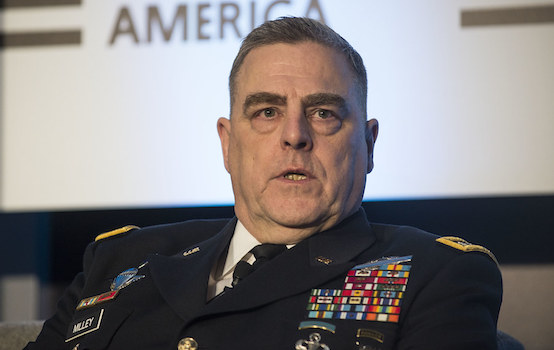
General Mark Milley. So many ribbons, so few victories (Gabriella Demczuk/New America)
Tom Engelhardt. Introduction by W.J. Astore.
Ever since that fateful day of 9/11/2001, Americans have been trying to process what can only be termed a colossal defeat. Showing our usual capacity for denial, we’ve rebranded it as a day for patriotism. We built the Freedom Tower, exactly 1776 feet high, on the ruins of the Twin Towers. We “got” Osama bin Laden. Yet the first victims of our collective rage, the Taliban in Afghanistan, have somehow emerged triumphant in a long destructive war against U.S. and NATO forces.
With his usual powerful prose, careful research, and keen eye for telling details, Tom Engelhardt has written a compelling introduction to Rajan Menon’s latest article on the Afghan War. It’s reposted here with Tom’s permission.W.J. Astore
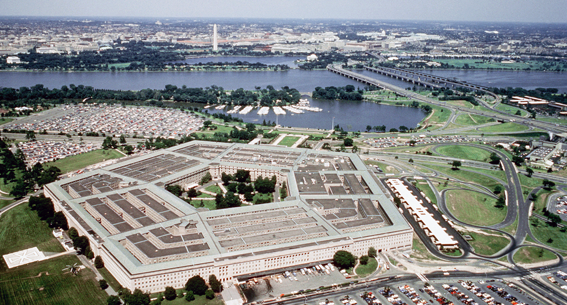
It started with three air strikes on September 11, 2001. The fourth plane, heading perhaps for the Capitol (a building that wouldn’t be targeted again until last January 6th), ended up in a field in Pennsylvania. Those three strikes led to an American invasion of Afghanistan, beginning this country’s second war there in the last half-century. Almost 20 years later, according to the New York Times, there have been more than 13,000 U.S. air strikes in Afghanistan. Call that payback after a fashion. There’s only one problem: the greatest military on the planet, with a budget larger than that of the next 10 countries combined, has visibly lost its war there and is now in full-scale retreat. It may not be withdrawing the last of its forces on May 1st, as the Trump administration had agreed to do, but despite the pressure of the American military high command, President Biden “overrode the brass” and announced that every last American soldier would be gone by the 20th anniversary of those first airstrikes against the Pentagon and the World Trade Center.
At this late date, consider it grimly fascinating that the generals who all those years kept claiming that “corners” were being turned and “progress” made, that we were “on the road to winning” in Afghanistan, as the present Chairman of the Joint Chiefs Mark Milley insisted back in 2013, simply can’t let go of one of their great failures and move on. Under the circumstances, don’t for a second assume that the American war in Afghanistan is truly over. For one thing, the Taliban have not yet agreed to the new withdrawal date, as they did to the May 1st one. Instead, some of its commanders are promising a “nightmare” for U.S. troops in the months to come. Were they, for instance, to attack an air base and kill some American soldiers, who knows what the reaction here might be?
In addition, the Pentagon high command and this country’s intelligence agencies are still planning for possibly making war on Afghanistan from a distance in order to “prevent the country from again becoming a terrorist base.” As Eric Schmitt and Helene Cooper of the New York Timesreported recently, “Planners at the military’s Central Command in Tampa, Fla., and Joint Staff in Washington have been developing options to offset the loss of American combat boots on the ground.”
In other words, the American war in Afghanistan may be ending but, as with so much else about that endless experience, even the finale is still up for grabs. In that context, consider the thoughts of TomDispatch regular Rajan Menon on what has, without any doubt, been the American war from hell of this century. Tom
Please read Rajan Menon’s latest article at TomDispatch.com.






 Bracing Views