National Defense versus Global (In)Security

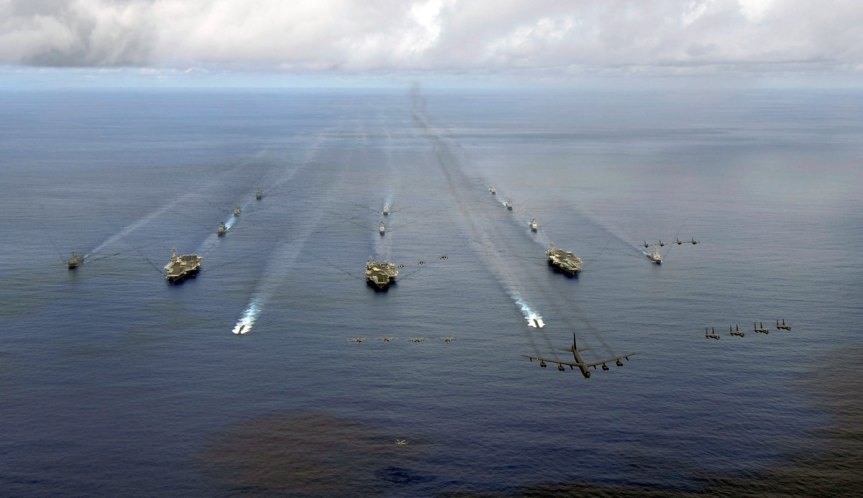
armada
Carrier strike forces, bombers, fighters: As American as apple pie

W.J. Astore

Our government likes to talk about global security, which in their minds is basically synonymous with homeland security.  They argue that the best defense is a good offense, that “leaning forward in the foxhole,” or always being ready to attack, is the best way to keep Americans safe.  Hence the 800 U.S. military bases in foreign countries, the deployment of special operations units to 130+ countries, and the never-ending “war on terror.”

Consider this snippet from today’s FP: Foreign Policy report:

If Congress votes through the massive tax cuts currently on the House floor, it would likely mean future cuts to Pentagon budgets “for training, maintenance, force structure, flight missions, procurement and other key programs.”

That’s according to former defense secretaries Leon E. Panetta, Chuck Hagel and Ash Carter, who sent a letter to congressional leadership Wednesday opposing the plan. “The result is the growing danger of a ‘hollowed out’ military force that lacks the ability to sustain the intensive deployment requirements of our global defense mission,” the secretaries wrote.

“Our global defense mission”: this vision that the U.S., in order to be secure, must dominate the world ensures profligate “defense” spending, to the tune of nearly $700 billion for 2018.  Indeed, the Congress and the President are currently competing to see which branch of government can throw more money at the Pentagon, all in the name of “security,” naturally.

Here’s a quick summary of the new “defense” bill and what it authorizes (from the Washington Post):

The bill as it stands increases financial support for missile defense, larger troop salaries and modernizing, expanding and improving the military’s fleet of ships and warplanes. The legislation dedicates billions more than Trump’s request for key pieces of military equipment, such as Joint Strike Fighters — there are 20 more in the bill than in the president’s request — and increasing the size of the armed forces. The bill also outlines an increase of almost 20,000 service members — nearly twice Trump’s request.

In the House of Representatives, the bill passed by a vote of 356-70.  At least Congress can agree on something — more and more money for the Pentagon.  (The $700 billion price tag includes $65.7 billion “for combat operations in Iraq, Afghanistan, Syria, Yemen, various places in Africa, and elsewhere,” notes FP: Foreign Policy.)

Besides all this wasteful spending (the Pentagon has yet to pass an audit!), the vision itself is deeply flawed.  If you want to defend America, defend it.  Strengthen the National Guard.  Increase security at the border (including cyber security).  Spend money on the Coast Guard.  And, more than anything, start closing military bases overseas.  End U.S. participation in wars in Afghanistan, Iraq, and throughout the greater Middle East and Africa.  Bring ground troops home.  And end air and drone attacks (this would also end the Air Force’s “crisis” of being short nearly 2000 pilots).

This is not a plea for isolationism.  It’s a quest for sanity.  America is not made safer by spreading military forces around the globe while bombing every “terrorist” in sight.  Quite the reverse.

Until we change our vision of what national defense really means–and what it requires–America will be less safe, less secure, and less democratic.

The Disastrous Italian War Against Austria-Hungary (1915-18), the Rise of Fascism, and Trump’s Victory in 2016

W.J. Astore

My father’s family was Italian, and his relatives fought, suffered, and died in Italy’s wars before and during World War I.  In his diary, my dad recounted these relatives and their fates:

My mother as far as I can recall had two brothers in the [Italian military] service. One brother had an exploding shell land near him.  He was highly agitated.  A doctor who knew my mother’s family saw that he got a medical discharge.

His brother had a much more dangerous career in the Italian Army.  He was a forward observer for an artillery unit.  He was severely gassed on the Austrian front.  He survived the war but had a premature death from the effects of the gas.

Luigi, Uncle Louie, Astore had quite a career in the Italian Army.  My mother used to call him El Sargento.

Uncle Louie fought three years in the Turkish War [1911-12] and four years in World War 1.  He was a prisoner of war in Germany for a year.  I overheard a conversation and he remarked that things were tough as a prisoner and food was a scarce item.  He never told me about his experiences in World War 1.

So, my grandmother had one brother who had shell-shock (PTSD) and another who died prematurely from poison gas.  My grandfather had a brother (Luigi) who was a POW who nearly starved and who didn’t talk about his war experiences. (I am too young to have clear memories of Luigi, but photos show an unsmiling man, which is not surprising given his war experiences.)

War is all hell, as General William Sherman said, and my father’s family’s experience in Italy illustrates the truth of that.

A childhood friend of mine, who also had Italian parents, sent along a book recommendation to me: The White War: Life and Death on the Italian Front, 1915-1919 by Mark Thompson.  My friend wrote a nice little review of it in an email to me, which follows below:

The White War (about Italy’s WWI fight against the Austro-Hungarians) has been fascinating but also depressing.  The insistence of Italian staff officers to send poorly armed and trained men into a battlefield even more deadly than the western front (the Italians had to scale hills and mountains in the face of withering machine gun and artillery fire) boggles the mind.  The Italian high command also had the dubious distinction of ordering more summary executions of the rank and file than the Brits, French, Germans, and Austrians.  Illiterate peasants needlessly sent to their deaths in the hundreds of thousands with Italian military policemen stationed with machine guns to their rear with orders to fire on them in case they did not show the requisite élan.  (My mother’s paternal uncle fell in that war–I wonder what horrors he saw and experienced.)  If it did not already exist, surely the stereotypical Italian cynicism toward governmental authority resulted from the incompetence and brutality of Italian military leadership in WWI.  

With respect to Italian POWs and food scarcity during captivity, my friend noted the following startling fact that he gleaned from reading The White War:

Italian authorities made it a policy to prevent food packages from being sent to Italian POWs in Austrian control as part of their strategy to deter Italian soldiers from surrendering.  Many POWs died as a result.  Unbelievable.

So much for the alleged glories of war.  Italy’s war against Austria-Hungary, fought under bitterly cold conditions in the torturous terrain of the alps, is little known in the United States.  It was a disastrous struggle that consumed nearly a million men for little reason, and the frustrations of that war – the betrayal of common soldiers by societal elites – contributed to estrangement, bitterness, and the embrace of fascism in the 1920s as an alternative to the status quo.

In U.S. politics today, with the backdrop of President Donald Trump’s strong man posturing that recalls the thrusting belligerence of the Italian fascist dictator Benito Mussolini, are we witnessing something similar?  Recall that Trump in 2016 garnered  a lot of support in rural areas by taking a position against America’s wasteful wars, even as he beckoned to an unspecified “great” past.  Mussolini, who railed against Italy’s “mutilated victory” in World War I, also won support by calling for societal revival, even as he beckoned to the greatness of Italy’s imperial past.

Like Mussolini, Trump wasn’t (and isn’t) against war.  Rather, both men were against losing wars.  Appealing to tough-guy generals like George Patton and Douglas MacArthur, Trump promised Americans who had suffered they’d “win” again.  Like Mussolini, he promised a brighter future (endless victories!) through higher military spending and aggressive military action.  No more shame of “mutilated” victories — or so Mussolini and Trump promised.

Screen-Shot-2017-07-06-at-1.46.30-PM-1499363261
Did Trump win because he had the nerve to highlight the “mutilated victory” nature of America’s wars?  (Note that the caption here, from the Krinera/Shen study and the Zaid Jilani article, is unclear.  The intent is to show that higher casualty rates favored Trump, and, if rates had been lower, Hillary Clinton may have won instead.)

Trump tapped the anger and resentments of American families who’d borne the sacrifices and suffering of the mutilated victories of Afghanistan and Iraq.  He did this so well that, according to Zaid Jilani at The Intercept, citing a study by Boston University political science professor Douglas Krinera and University of Minnesota Law professor Francis Shen, it may have provided his winning margin of victory in 2016.  As the study notes (also see the illustration above):

“[The] three swing states — Wisconsin, Pennsylvania, and Michigan — could very well have been winners for [Hillary] Clinton [in 2016] if their war casualties were lower.”

Like rural Italian families in the aftermath of World War I, American rural families in the Bush-Obama “war on terror” rejected the status quo posturing of establishment politicians (e.g. Hillary Clinton), turning instead to the anger-driven nationalism (Italy first!  America first!) of self-styled strong men like Mussolini and Trump.

The question is, as America’s fruitless wars persist, and as rural American families continue to bear a disproportionate share of the burden of these wars, will “strong” men like Trump continue to prosper?  Put differently, will the Democratic Party finally have the guts to offer an alternative vision that rejects forever war across the planet?

We know what happened to Mussolini’s quest to make Italy great again — total defeat in World War II.  Will a similar fate befall Trump’s quest?

Time will tell.

God, Country, Guns

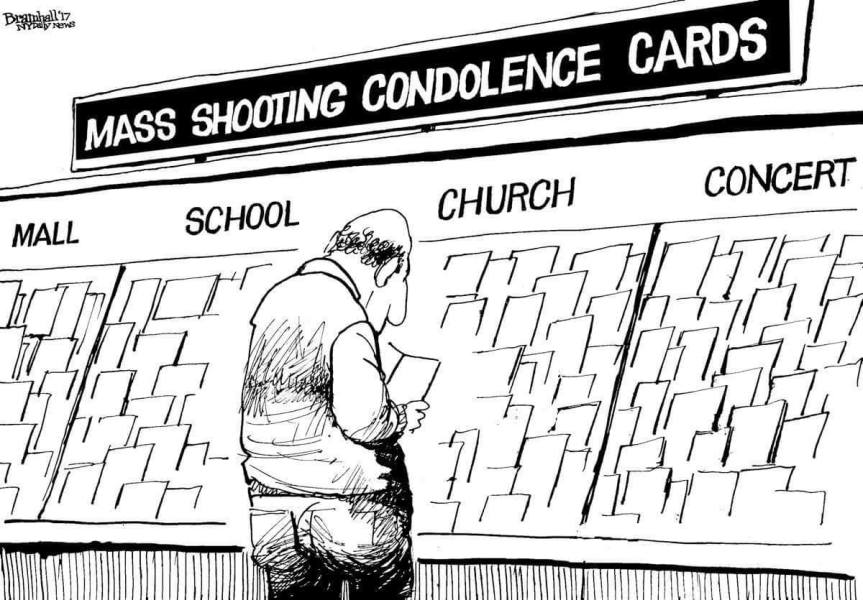
mass shooting

W.J. Astore

Yesterday, I saw a sticker on a pickup truck that read “God, Country, Guns.”  To me, that sticker made as much sense as “God, Country, Hammers” or “God, Country, Bicycles.”  A gun is just that: a tool, an object, like a hammer or a bicycle, only much more dangerous in the wrong hands.

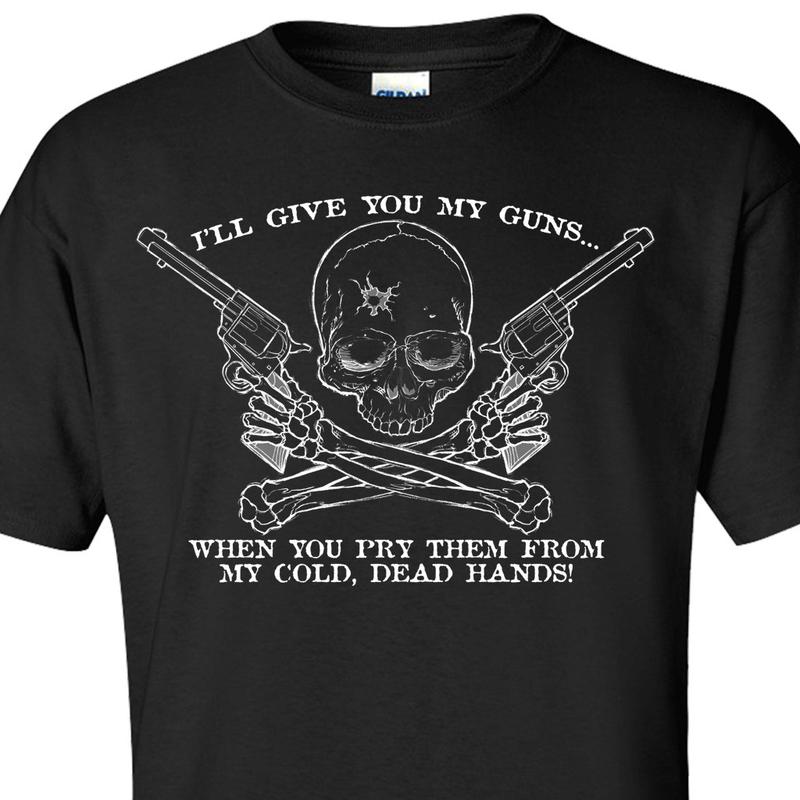
But many Americans don’t look at guns as tools, as objects, as a deadly technology that requires great care and also strict regulations.  They identify it with God and Country.  They see it as representing certain values, such as freedom and liberty and individuality.  For some men, guns are synonymous with masculinity.  They are symbols of potency.  Of agency.  They are worthy of protection, indeed of a lifelong vow, ’til death do us part.  Hence the catchphrase, “you can have my gun when you pry it from my cold, dead hands.”

pry_close_edited-1_800x

This sacralization of the gun, its elevation as a totem of strength and virility, its hugely symbolic presence in American life, is an important reason why gun control efforts largely fail, even in the aftermath of horrendous mass shootings.  Reasoned and reasonable efforts to limit mass shootings, e.g. by banning military-style assault weapons, high-capacity clips, and bump stocks, are no match for people’s emotional — I daresay religious or spiritual — attachment to guns.

I’ve owned guns myself and have enjoyed firing everything from a pellet rifle to a .45-70 and from a .22 pistol to a .44 magnum.  As a historian of technology, I appreciate the history of guns as well as their aesthetic beauty.  (If you go to a gun show or hang around gun owners, you’ll often hear guns described as “beautiful.”)  But my appreciation for guns doesn’t translate to an affection for them.  And in the cause of greater public safety and a reduction in mass shootings, I’d like to see stricter regulations for certain guns and related accessories.

Again, here are three reasonable changes I’d like to see:

  1. No military-style assault or high-caliber sniper rifles.
  2. No high-capacity clips.
  3. No bump stocks or other devices to increase rate of fire.

Yet, no matter how reasonable these changes seem to most, organizations like the National Rifle Association will oppose them,* as will those who associate guns with God and Country and freedom and similar values.

Growing up in the 1970s, I remember reading “Field and Stream” and “Outdoor Life” (and an occasional “American Rifleman” too).  In the early ’80s, I wrote a paper on the history of hunting in America prior to the U.S. Civil War.  Until fairly recently, gun owners focused mainly on hunting and personal protection, using weapons like bolt-action or lever-action rifles, shotguns, and revolvers.  Rifles that I recall friends talking about or owning were .30-06 or .30-30.  Nobody talked about owning an AR-15 or AK-47 or similar military-style assault rifles with “banana” (high-capacity) clips and bump stocks.

America, of course, is a land of extremes, and one example is today’s gun-rights crowd, which attacks all regulations or restrictions as an assault on their “rights” or “way of life” as articulated in the Second Amendment.  But it didn’t use to be this way.  Indeed, it wasn’t this way when I was a teenager.  How did guns become so venerated, so cherished, so worshiped, in American culture?  So much so that people ride around today with stickers equating gun ownership with God and Country?

As long as our society continues to worship the gun, the more likely it is that we’ll suffer more mass shootings — and indeed shootings in general.

*Yes, in the aftermath of the Vegas Massacre, it’s true the NRA said it wouldn’t oppose “additional regulations” on bump stocks.  Note, however, that no ban is forthcoming from Congress.  The NRA are a savvy bunch…

Business as Usual at the Pentagon

canstock33067582
It keeps spinning and spinning …

W.J. Astore

The revolving door between major defense contractors and the Pentagon is spinning ever more rapidly, notes FP: Foreign Policy.  Here’s a telling report from last week:

McCain says enough, but does he mean it? During a hearing Thursday to vet several Trump administration nominees for top Pentagon jobs, Sen. John McCain (R-Ariz.) said he was tired of seeing defense industry executives go to work in the Pentagon.

But he indicated he’ll support the Mark Esper, chief lobbyist for for Raytheon — the fourth largest defense contractor in the United States — for secretary of the Army, telling Esper his concerns “grew out of early consultations I had with the administration about potential nominations, including yours.” McCain added that “it was then that I decided I couldn’t support further nominees with that background, beyond those we had already discussed.”

Lots of defense industry execs already at work. But at least one more will soon pass through McCain’s Senate Armed Services Committee, however. At some point in the coming weeks, John C. Rood, senior vice president for Lockheed Martin International will testify for the under secretary of defense for policy job, the third highest position in the Defense Department.

The Senate has already approved former Boeing executive Patrick Shanahan to be deputy defense secretary — the second highest position in the Pentagon — and Ellen Lord, the former chief executive officer of Textron Systems, to be undersecretary of defense for acquisition.

In short, there are no fresh thinkers at the Pentagon: just men and women drawn mainly from the corporate world or from the ranks of military retirees (or both).  They’re hired because they know the system — but also because they believe in it.  They’re not going to rock the boat.  They believe in “staying the course.”

The result is a system with no new ideas.  Consider Afghanistan.  Sixteen years after the initial invasion after 9/11, American forces are still bogged down there.  As FP: Foreign Policy reports today, we finally have an official number for the latest mini-surge orchestrated by retired Generals John Kelly and James Mattis:

We have a surge number. After months of tapdancing around exactly how many more U.S. troops are are heading to Afghanistan, Monday’s request asks for $1.2 billion to support an additional 3,500 U.S. troops in Afghanistan.

Somehow, a few thousand extra U.S. troops are supposed to reverse the growth of the Taliban while improving Afghan security forces and reining in Afghan governmental corruption.  In short, sixteen years’ experience has meant nothing to U.S. decision makers.

It puts me to mind of a great description of military thinking from C.S. Forester’s “The General,” a remarkable novel about British generalship in World War I (and one of General John Kelly’s favorite books).  Here’s what Forester had to say about the persistence of military folly among the generals planning major offensives in that war:

“In some ways it was like the debate of a group of savages as to how to extract a screw from a piece of wood. Accustomed only to nails, they had made one effort to pull out the screw by main force, and now that it had failed they were devising methods of applying more force still, of obtaining more efficient pincers, of using levers and fulcrums so that more men could bring their strength to bear. They could hardly be blamed for not guessing that by rotating the screw it would come out after the exertion of far less effort; it would be a notion so different from anything they had ever encountered that they would laugh at the man who suggested it.”

Forester goes on to write that:

“The Generals round the table were not men who were easily discouraged–men of that sort did not last long in command in France. Now that the first shock of disappointment had been faced they were prepared to make a fresh effort, and to go on making those efforts as long as their strength lasted.”

That’s the U.S. military in Afghanistan in a nutshell: fresh efforts, but no fresh thinking.  How could it not be so?  The same generals are in charge, men like Mattis and Kelly, who led previous “surges,” backed by civilian leaders drawn from private military contractors, whose main priority it is to spend this year’s massive defense budget while ensuring next year’s budget will be even more massive.

There’s no incentive in the system for fresh thinking, and certainly none for saving money.  Instead, it’s all about showing “resolve,” even if resolve in this case means hammering and pulling away at so many screws.  And this even makes a weird sort of sense, for there’s a lot of profit to be made in the name of  developing better pincers and levers and fulcrums to tackle “screws” like Afghanistan.

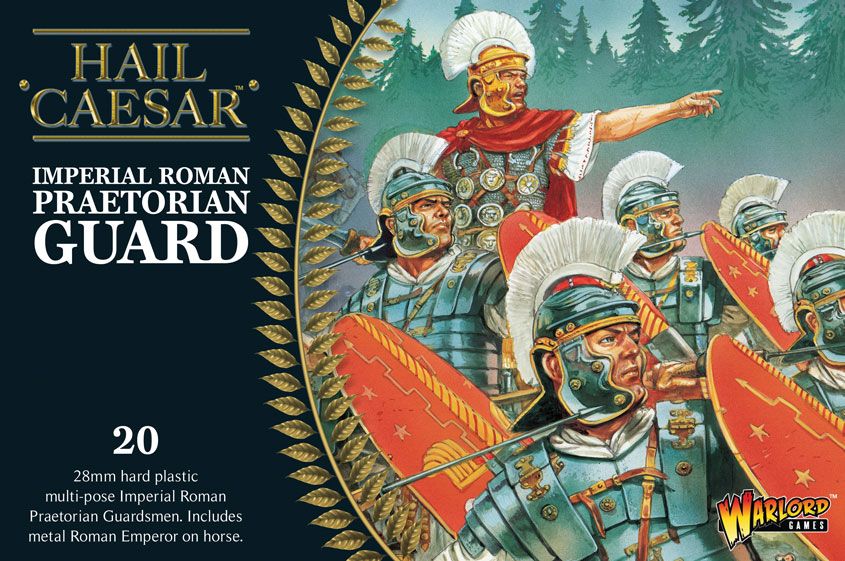
Trump Talks About the Military as if It’s His Praetorian Guard

WGH-IR-03_PraetorianGuard
Hail Trump? Includes wannabe American Emperor in Golf Cart.

W.J. Astore

President Donald Trump has a disturbing way of talking about the U.S. military.  Consider the following Trump quotation about the recent attack on U.S. troops in Niger:

“I have generals that are great generals,” Trump said. “I gave them authority to do what’s right so that we win. My generals and my military, they have decision-making ability. As far as the incident that we’re talking about [in Niger], I’ve been seeing it just like you’ve been seeing it. I’ve been getting reports.” [emphasis added]

For Trump, it’s not the American people’s military, it’s “my” military.  Generals are not Congressionally-appointed officers, they’re “my” generals.  Trump has a fundamental misunderstanding of his role as commander-in-chief, as well as the role of the U.S. military.  He sees himself as the big boss of “his” military, with generals as his personal employees whom he can order around and fire at will.

And by “order around,” I mean the issuance of orders regardless of their legality, a point Trump made back in March of 2016, in response to a debate question by Bret Baier:

BAIER: Mr. Trump, just yesterday, almost 100 foreign policy experts signed on to an open letter refusing to support you, saying your embracing expansive use of torture is inexcusable. General Michael Hayden, former CIA director, NSA director, and other experts have said that when you asked the U.S. military to carry out some of your campaign promises, specifically targeting terrorists’ families, and also the use of interrogation methods more extreme than waterboarding, the military will refuse because they’ve been trained to turn down and refuse illegal orders.

So what would you do, as commander-in-chief, if the U.S. military refused to carry out those orders?

TRUMP: They won’t refuse. They’re not going to refuse me. Believe me.

BAIER: But they’re illegal.

TRUMP: And — and — and — I’m a leader. I’m a leader. I’ve always been a leader. I’ve never had any problem leading people. If I say do it, they’re going to do it. That’s what leadership is all about.

As I wrote then, Trump’s fundamental misunderstanding of leadership, and especially his boasts about the military obeying his orders irrespective of their legality, disqualified him as a presidential candidate.  Of course, Trump’s dictatorial statements didn’t deter his determined fans. Indeed, they elected him because they wanted a Strong Man, not because they feared one.

So here we are, with a dictator wannabe as president, treating the U.S. military as if it’s his personal Praetorian Guard.  If the Republic isn’t dead, its heartbeat is fading fast.  Meanwhile, the sordid and corrupt Empire of Trump – just by its endurance – grows ever stronger.

Bread and Circuses in Rome and America

gladiator 4
Games are hell

W.J. Astore

Back in June 2013, I wrote the following article on “Bread and Circuses in Rome and America.”  It flashed through my mind this morning because of Robert Lipsyte’s post today at TomDispatch.com on Trump, the NFL, violence, race, brain injuries, and patriotism.  I urge you to read it as well as Tom Engelhardt’s introduction, which cites the bread and circuses of the Roman Empire.

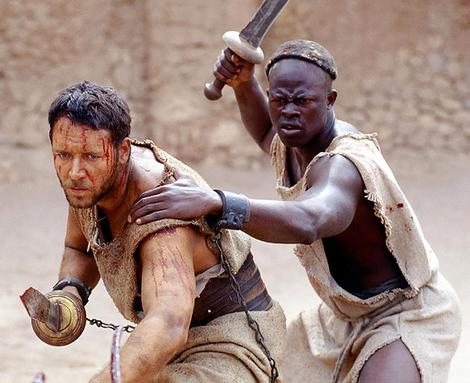
A key insight in my article below came from a correspondent, Amy Scanlon, who keenly observed that the Roman Imperium saw compassion, not violence, as a vice.  The gladiatorial games were meant to keep Romans at a fever pitch for war (with the bloody, murderous games being the next best thing to war).  It’s not much of a stretch to think of NFL violence as keeping Americans at a similar feverish pitch; and, not just the NFL, but the commercials during the games, which are often saturated with guns and violence and war.

Here’s my article, unchanged from 2013:

Bread and Circuses in Rome and America

The expression “bread and circuses“ captures a certain cynical political view that the masses can be kept happy with fast food (think Cartman’s “Cheesy Poofs” on South Park) and faster entertainment (NASCAR races, NFL games, and the like). In the Roman Empire, it was bread and chariot races and gladiatorial games that filled the belly and distracted the mind, allowing emperors to rule as they saw fit.

There’s truth to the view that people can be kept tractable as long as you fill their bellies and give them violent spectacles to fill their free time. Heck, Americans are meekly compliant even when their government invades their privacy and spies upon them. But there’s a deeper, more ominous, sense to bread and circuses that is rarely mentioned in American discourse. It was pointed out to me by Amy Scanlon.

In her words:

Basically ancient Rome was a society that completely revolved around war, and where compassion was considered a vice rather than a virtue… [The] Romans saw gladiatorial contests not as a form of decadence but as a cure for decadence. And decadence to the Romans had little to do with sexual behavior or lack of a decent work ethic, but a lack of military-style honor and soldierly virtues. To a Roman compassion was a detestable vice, which was considered both decadent and feminine. Watching people and animals slaughtered brutally [in the arena] was seen as a way to keep the civilian population from this ‘weakness’ because they didn’t see combat…

Scanlon then provocatively asks, “Could our society be sliding towards those Roman attitudes in a bizarre sort of way?”

I often think that America suffers from an empathy gap. We are simply not encouraged to put ourselves in the place of others. For example, how many Americans fancy the idea of a foreign power operating drones in our sovereign skies, launching missiles at gun-toting Americans suspected by this foreign power of being “militants“? Yet we operate drones in places like Afghanistan, Pakistan, and Yemen, killing suspected militants with total impunity. Even when innocent women and children are killed, our emperors and our media don’t encourage us to have compassion for them. We are basically told to think of them as collateral damage, regrettable, perhaps, but otherwise inconsequential.

Certainly, our military in the last two decades has put new stress on American troops as “warriors” and “warfighters,” a view more consistent with the hardened professionals of the Roman Empire than with the citizen-soldiers of the Roman Republic. Without thinking too much about it, we’ve come to see our troops as an imperial guard, ever active on the ramparts of our empire. War, meanwhile, is seen not as a last course of defense but as a first course to preempt the evil designs of the many hidden enemies of America. Our troops, therefore, are our protectors, our heroes, the defenders of America, even though that “defense” treats the entire globe as a potential killing field.

Scanlon’s view of the Roman use of bread and circuses — as a way to kill compassion to ensure the brutalization of Roman civilians and thus their compliance (or at least their complacency) vis-à-vis Imperial expansion and domestic policing — is powerful and sobering.

At the same time, the Obama administration is increasingly couching violent military intervention in humanitarian terms. Deploying troops and tipping wars in our favor is done in the name of defeating petty tyrants (e.g. Khadafy in Libya; Is Assad of Syria next?). Think of it as our latest expression of “compassion.”

All things considered, perhaps our new national motto should be: When in America, do as the Roman Empire would do. Eat to your fill of food and violence, cheer on the warfighters, and dismiss expressions of doubt or dismay about military interventions and drone killings as “feminine” and “weak.”

At least we can applaud ourselves that we no longer torture and kill animals in the arena like the Romans did. See how civilized we’ve become?

The Dangerous Sophistry of Steve Bannon

steve-bannon-interview-on-donald-trump
Bannon Wormtongue: Hiding behind the troops

W.J. Astore

After Republican Bob Corker had the guts to criticize President Trump for his bellicose rhetoric and incompetent management of U.S. foreign policy, Steve Bannon issued the following riposte:

“Bob Corker has trashed the commander in chief of our armed forces while we have young men and women in harm’s way.”

The indecency of Bannon’s argument is obvious.  According to Bannon, Corker’s criticism of Trump is tantamount to treason, because an attack on Trump is an attack on “our” troops “in harm’s way.”

If Bannon had his way, no one would be allowed to criticize Trump about foreign policy while U.S. troops are in harm’s way.  Since U.S. troops are deployed to more than 800 bases overseas and to more than 130 countries while incessantly fighting wars in places like Afghanistan, they are, in essence, always in harm’s way.  Thus, no criticism of our Great Leader would ever be allowed, which is convenient for Trump and Bannon Wormtongue.

It’s infuriating how men like Bannon attempt to squelch criticism of the president by hiding behind the troops.  Judging by his rhetoric, Bannon doesn’t want to live in a democracy; he’d much prefer a dictatorship.  Meanwhile, Trump’s riposte to Bob Corker focused on his height.  (Corker is roughly six inches shorter than Trump.)

Mr. Bannon, Trump is more mocker-in-chief than a commander.  And, in defending our chief mocker, your sophistic attempt to hide behind the troops was more than shameful.  It’s grotesque.

The Myths We Tell Ourselves

4266
General John Kelly

W.J. Astore

John Kelly, President Trump’s chief of staff and a retired Marine Corps general, held a press conference on Thursday to deny he’s quitting or that he’s about to be fired.  In passing, he referred to two common myths in America that go almost completely unexamined.  (By “myth” I mean a defining belief, held in common, and usually without question.)

The first myth: That the United States has “the greatest military on the planet.”  The second myth: That the U.S. military’s value is its “deterrent factor.”

The U.S. certainly has a powerful military, one that costs roughly a trillion dollars a year, when all national security expenses are tallied (e.g. Homeland Security, intelligence, nuclear weapons, and interest on the national debt associated with these expenditures, among other costs).  But is it “the greatest”?  More importantly, why should a democracy and a people allegedly dedicated to peace and freedom be so proud of possessing “the greatest military on the planet”?

There was a time when Americans were proud of having a small standing military.  There was a time when Americans were proud of protesting arms sales around the world by “merchants of death.”  Those days ended with the Cold War.  Now, America leads the world in military spending and arms exports; no other country comes close.  Is this something to boast about?

How about General Kelly’s claim of the military’s “deterrent factor”?  The U.S. military has 800 bases around the world, with U.S. special operations forces involved in more than 130 countries.  Is this all about “deterrence”?  Is the U.S. deterring or preventing wars in Libya, Yemen, Syria, Iraq, and Afghanistan, among other places throughout the greater Middle East and Africa?  That hardly seems to fit the facts on the ground.

Of course, the media focused on Kelly’s message that he isn’t being fired and that President Trump is both “thoughtful” and a “man of action.”  His claims about the “world’s greatest military” and its strong deterrent value went unreported and unquestioned.  Such claims are now as “American” as baseball, hot dogs, apple pie, and Chevrolet.

And so it goes …

Trump Tackles the NFL!

When it Comes to the NFL, Trump Should be Flagged and Ejected for Unnecessary Roughness

taking a knee
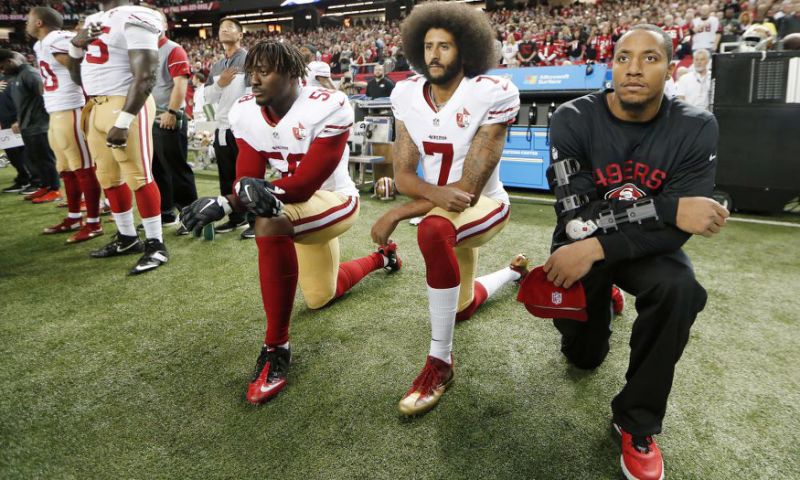
Taking a stand by taking a knee: NFL players, including Colin Kaepernick (#7)

W,J. Astore

President Trump has once again attacked the NFL for exactly the wrong reasons.  He wants NFL owners to fire players who take a knee during the national anthem.  Their sin, according to Trump, is disrespecting the American flag.  Trump also complains that the game has gotten soft, that big and exciting hits of the past are now penalized, so much so that today’s game is boring precisely because it’s insufficiently violent.

Nonsense.  First, few players dare to use the game as a platform for protest, perhaps because they fear being blackballed like Colin Kaepernick, the talented quarterback who can’t find a job because he took a knee in protest against racism.  Second, the NFL is awash in patriotic displays, everything from gigantic flags and military flyovers to special events to honor the troops.  Just one example: During the opening game of this season, uniformed troops waving flags ran out on the field ahead of the New England Patriots as the team emerged from the tunnel.  What are troops in camouflaged combat uniforms doing on the field of play?

With respect to violence, the NFL has only lately begun haltingly to address crippling injuries, especially brain abnormalities due to recurrent hits and concussions.  Watching an NFL game is often an exercise in medical triage, as players are carted off the field with various injuries.  A new feature this season is a tent on the sidelines that injured players may now enter to be treated away from the incessantly probing eyes of sideline cameras.  Careers in the NFL are often cut short by crippling injuries, yet Trump claims the game is going down the tubes because it’s not violent enough.

Trump represents a minority view (I believe), but nevertheless a vocal one.  Given his narcissism and the grudges he carries, one wonders if he attacks the NFL because of his failed bid to acquire the Buffalo Bills team back in 2014.

Football is the most popular sport in America.  It speaks volumes about our culture.  That Trump sees it as insufficiently violent and insufficiently patriotic — and that he’s cheered for making these claims — points to the gladiatorial nature of America’s imperial moment. Bread and circuses at home, wars abroad.  And U.S. politicians who fiddle while the world burns.

Update: Trump’s comments have drawn a response during the first NFL game today (played in England).  Here’s the headline at the Washington Post:  NFL Week 3: Ravens, Jaguars respond to President Trump’s comments by linking arms, kneeling during anthem.  It will be interesting to see how other teams respond today and during Monday night football.

The Vietnam War: A Tragic Mistake?

Helicopter_Poster_promoV2

W.J. Astore

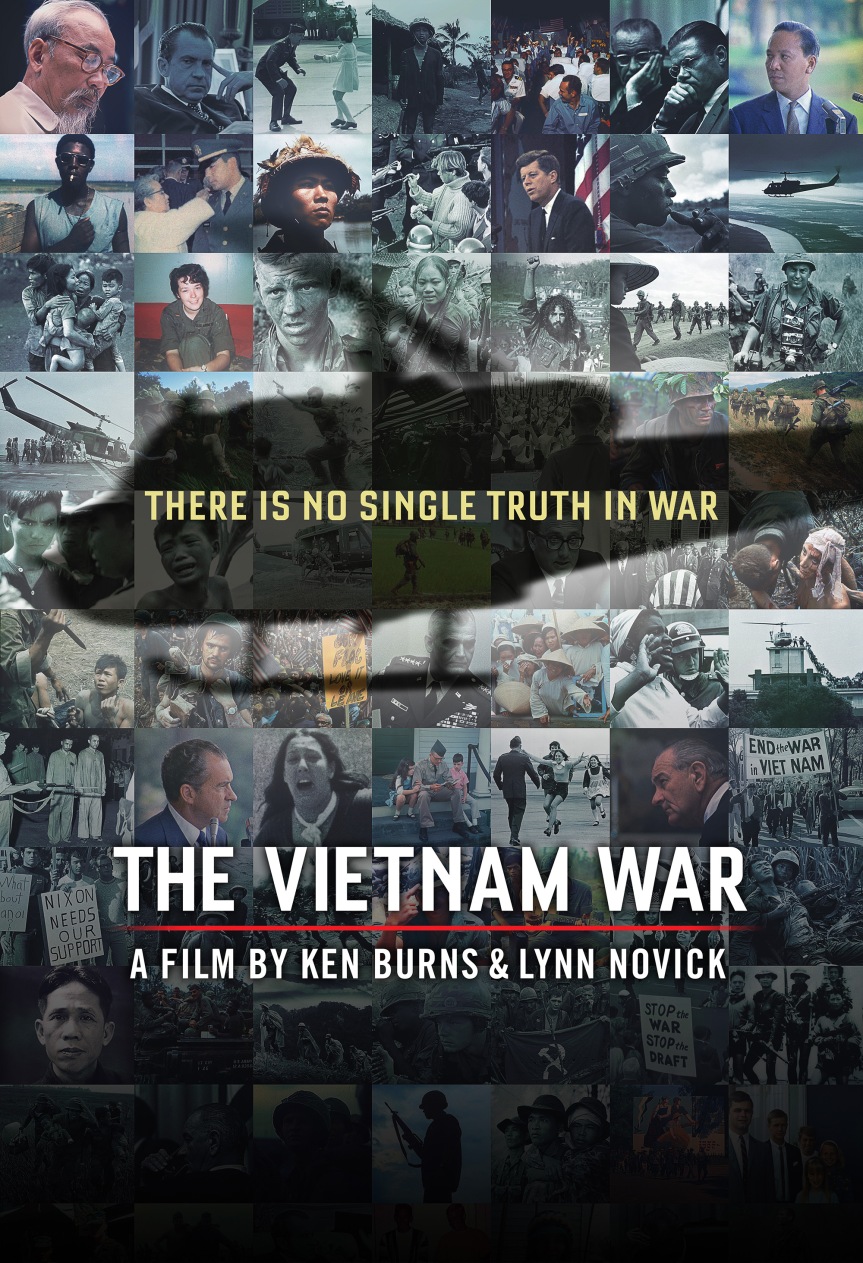
I’ve watched the first three episodes of the Ken Burns/Lynn Novick series on the Vietnam War, which take us from the French colonial period beginning in the 19th century to the end of 1965 and a mushrooming U.S. military commitment.  The narrative thread, it seems to me, is the notion of the war as a tragic mistake, most especially for the United States.

The series begins with a voice-over that suggests the war was begun in good faith by America, even as other American voices in the series suggest otherwise.  I kept a notebook handy and jotted down the following notes and thoughts as the series progressed:

  1. There were divisions among the Vietnamese people, but they were more or less united by one idea: resist the foreign invaders/occupiers, whether that foreign presence was French, Japanese, the French again, American, or (both earlier and later) Chinese.  And there’s no doubt Ho Chi Minh would have won a democratic election, as promised at Geneva.  Which is exactly why that election never came.
  2. As one American admitted, the U.S. totally misread the situation in Indochina after the French defeat in 1954.  The Cold War and Falling Dominoes dominated the thoughts of Americans, obscuring the reality of a powerful and popular anti-colonial and nationalist revolt that tapped Vietnamese patriotism.
  3. When not fearing Falling Dominoes, U.S. officials were far more concerned about their own prestige (or political fortunes) than they were with the Vietnamese people.
  4. U.S. officials recognized South Vietnam was a fiction, a puppet government propped up by American money and power, and that they had “backed the wrong horse.” But they came to believe it was the only horse they had in the race against communism.
  5. U.S. presidents, stuck with a losing horse of their own creation, began to lie. As president, Kennedy said he hadn’t sent combat troops; he had.  As president, Johnson tried to obscure both the size and intent of the U.S. military’s commitment. These lies were not done to deceive the enemy — they were done to deceive the American people.
  6. After backing the wrong horse (Diem and his family), American leaders conspired to eliminate him in a coup.  When Diem was assassinated, matters only grew worse. Left with no horse in the race and a “turnstile” government in South Vietnam, the U.S. began to bomb North Vietnam and committed combat units beginning in March of 1965.
  7. More duplicity by U.S. officials: Battles such as Ap Bac and Binh Gia, which revealed the “miserable performance” of the South Vietnamese army (ARVN), were reinterpreted and sold as victories by senior U.S. military leaders.
  8. Both JFK and LBJ had serious reservations about going to war in Vietnam. However, domestic political concerns, together with concerns about containing the spread of communism, always came up trumps.  For example, the series quotes Kennedy as saying he believed America couldn’t win in Vietnam, but that he couldn’t win the 1964 presidential election if he withdrew U.S. advisors from Vietnam. LBJ was similarly skeptical but took a tough line with the Gulf of Tonkin resolution, which saw his approval rating on Vietnam soar from 42% to 72%, ensuring his electoral victory over Goldwater in 1964.

One of the more compelling sound bites comes from then-Major Charles Beckwith, who is at pains to praise the fighting quality of Viet Cong/NLF forces, their total commitment to the struggle.  If only he had (Vietnamese) troops like them to work with, says Beckwith.

To summarize: the series provides evidence of U.S. dishonesty and duplicity and showcases the mistakes generated by hubris when aggravated by ignorance.  Yet, the overall message is one of sadness about a “tragic mistake” committed by decent men who were overwhelmed by fears of international communism.

Final points: As we watch the series, we follow individual Americans, and hear American commentators, far more than we hear Vietnamese voices.  Also, while the series shows U.S. bombing from afar and mentions Agent Orange, the effects of this destruction haven’t yet been shown in detail.  (A telling exception: a young Vietnamese women joins the communist resistance after U.S. bombing destroys a center for senior citizens near her home.)

In short, the Burns/Novick series privileges the American experience, suggesting that U.S. troops of that era fought courageously as a new “greatest generation,” even as senior U.S. leaders spoke privately of an unwinnable war.

Is killing millions of people in a lost cause merely a tragic mistake?  Or is it something far worse?  More to come as the series continues to air on PBS.