I was reading an article from 2007 by an Air Force master sergeant, “We are called Airmen,” only to stumble on these lines:
You have to be able to understand what part you play in America’s defense. You have to be disciplined and willing to maintain your readiness to go wherever our enemy confronts us and to live up to the ideals of the core values of integrity, service and excellence.
As an Airman, you have to bring airpower to the battlespace effectively and ensure it is properly applied.
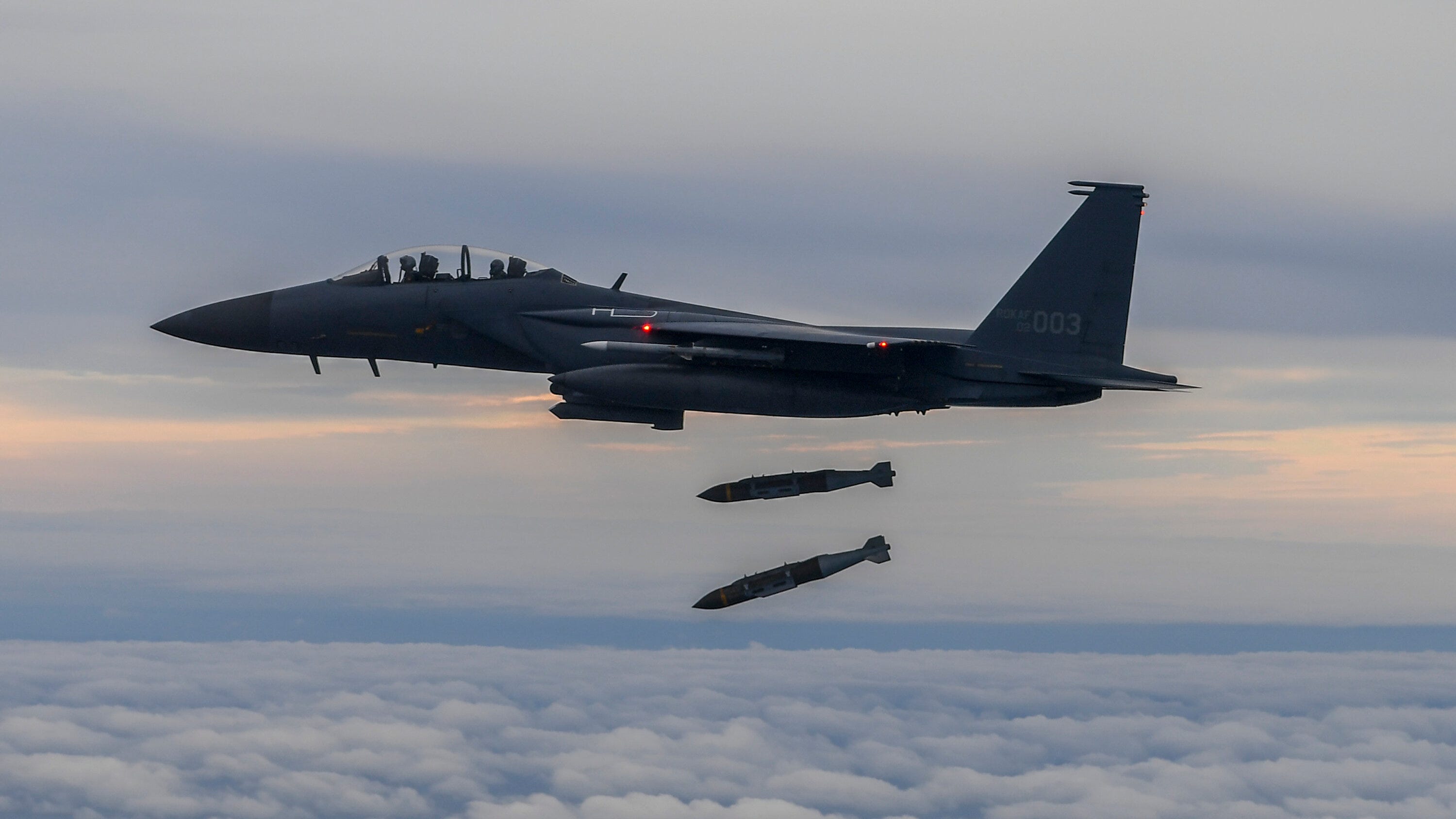
Your charge as an Airman of the 4th Fighter Wing is to deliver “combat airpower, on target, on time for America, or more simply, “put warheads on foreheads.”
Now, this article is featured on the Air Force’s official website, so I assume it captures important truths the AF wants its airmen to know. But are these “truths” really true? Is that all there is, my friend? Then let’s keep bombing.
Who is “our enemy”? What are the reasons why this enemy “confronts us”? Is America’s “defense” really safeguarded if the mission is everywhere and anywhere and “wherever” U.S. forces are “confronted”?
And how do you apply airpower “properly” in the “battlespace”? The author has the answer to that one: by putting “warheads on foreheads.” Or, as we said in my day, by putting bombs on target.
Put those warheads on foreheads!
Of course, this is rah-rah stuff, military cheerleading, if you will. The article was posted during the Iraq War, when the Air Force was at pains to stress its relevance in what was largely a ground war. Which explains this passage:
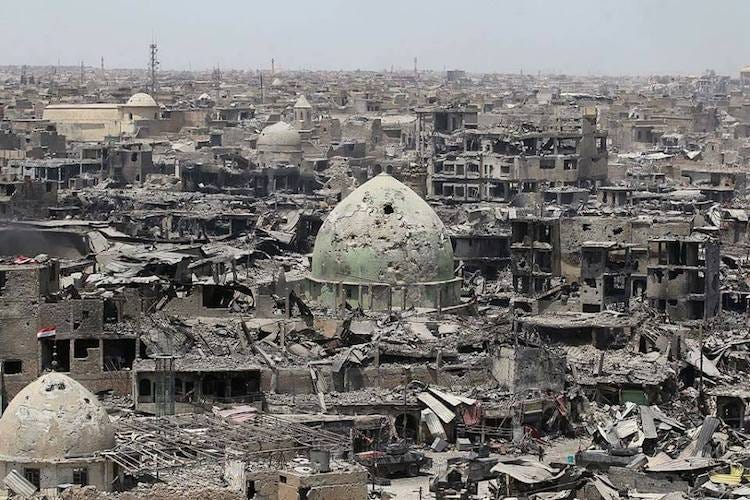
We are doing so well [in the war on terror], we make it look too easy. Our weapons systems are so precise; we can deliver ordnance anywhere, any time. If [sic] fact, if ground troops chase the enemy into a house, our aircraft can drop a bomb that eradicates one mud hut, while leaving all the others in the neighborhood standing.
Now that’s what I call precision! The Air Force made it look too easy! We dropped warheads on the foreheads of evil-doers without any innocents being killed and wounded. It’s almost as if our bombs and warheads sang “Amazing Grace” as they slammed into the enemy (and only the enemy, whoever that might be and wherever they might live).
Mosul, Iraq. Sure looks like “precision” attacks to me
Naturally, this article also makes reference to the “Airman’s warrior ethos.” That old idea (and ideal) of the citizen-airman who serves to support and defend the U.S. Constitution isn’t even mentioned. We’re all “warriors” and “warfighters” now.
Ours not to reason why; ours but to drop warheads on foreheads; theirs but to scream and die.
What is it, exactly, that the U.S. military is making it look “too easy” to do? Having lost the Iraq and Afghan wars despite enormous amounts of munitions used, it seems “losing” is the answer here. That, and killing, of course. And not just the bad guys.
Reason and Rationality Have Little to Do with Them
It is often hard to understand the reasons for America’s wars, especially since World War II, but they always have a rationale backed up by lies. The rationale for Vietnam was the containment of communism and the domino theory. The lie was that U.S. naval ships had been attacked at Tonkin Gulf. The rationale for Iraq was overthrowing a ruthless dictator and spreading “freedom.” The lie was that he had WMD and that he was somehow connected to the 9/11 attacks.
Nations and peoples are not dominoes
The real reasons for America’s many disastrous wars are opaque. Domestic politics are almost always paramount. No U.S. president wants to be accused of losing a war or appearing to be weak, so starting or continuing a war is considered as “strength.” Congress doesn’t want to be accused of “tying the hands of the president” or of “betraying the troops,” so most members happily go along with wars. The military, of course, always thinks it can win, and wars are good for promotions and power. And military contractors, the “merchants of death,” are even more happy to make money off war. Not surprisingly, perhaps, President Dwight D. Eisenhower’s farewell speech in 1961 warned America of the military-industrial complex, to which Ike had added Congress in an earlier draft. Ike’s warning has been largely forgotten; even his own monument in DC obscures it.
In Washington today, the Democrats accuse the Republicans of being weak on Russia; the Republicans return the favor by accusing the Biden administration of being weak on China. Military and industry are happy to play this blame game, knowing the Pentagon budget will soar as a result, as it has. And thus a dangerous “new cold war” appears to be a certainty.
The folly and fallaciousness of America’s wars, along with their carnage, are enough to make any rational human angry, especially one who has served in one of these wars. Mike Murry, a Vietnam War veteran, is angry, and so am I. Back in 2017, I wrote a piece on the atrociousness of the Vietnam War, to which Mr. Murry appended this comment. It merits consideration by all thinking Americans.
The ”Rationale” of America’s Wars. Comment by Mike Murry in 2017.
An excellent choice of words, “rationale.” Not the reason for doing something in the first place, but a conscious lie made up beforehand just to get things started, or an excuse invented afterwards to avoid accountability and, where required, the necessary punishment that true justice occasionally administers. Marine Corps General Smedley Butler once said that we have only two acceptable reasons for going to war: to defend our homes or defend the Constitution. In not a single case after World War II has either of these conditions applied, so that none of the pointless and ruinous fighting — I won’t dignify these Presidential/Career Military misadventures by calling them “war” — has had any justifiable reason or purpose. Not surprisingly, no Congress has declared war on another nation state since 1941 because no nation state on planet earth has attacked either American homes or America’s Constitution. The United States has not just “gone abroad in search of monsters to destroy,” as our sixth President, John Quincy Adams, warned us against foolishly doing, but has invented imaginary hobgoblins at home before even setting out to vanquish them on the far side of the globe.
Of course, Smedley Butler only made his remarks after serving for thirty years as an admitted “gangster for capitalism,” probably the best summary description of the U.S. military offered to date by one who ought to know. Today, as for the past seventy-plus years, the U.S. military simply fights — aimlessly and disastrously — for the sake of fighting. The fighting has no “reason” other than to provide a steady stream of outrageous corporate CEO bonuses, stockholder dividends, and the pensions and perquisites of retired senior military officers. This Warfare Welfare and Make-work Militarism has secondary beneficiaries, of course, most notably the hothouse orchids, special snowflakes and privileged peacock pugilists known as United States as “political leaders.” Naturally, the feeding and maintenance of this system of corrupt cronyism requires a death grip on over half the nation’s discretionary budget. As George Orwell wrote in “The Theory and Practice of Oligarchical Collectivism” (the book-within-a-book from 1984):
“The primary aim of modern warfare (in accordance with the principles of doublethink, this aim is simultaneously recognized and not recognized by the directing brains of the Inner Party) is to use up the products of the machine without raising the general standard of living.”
In other words, the entire U.S. military/security monstrosity — which I like to call the Lunatic Leviathan — has only one purpose: to suck the life out of the domestic economy so that the productivity of the people’s labor will not result in the betterment of their station in life, which might in due course result in the discarding of America’s useless parasitic economic and political “elites.” Any transparent euphemism designed and deployed to disguise this ugly, fundamental truth properly deserves the label “rationale.” In no way do the usual and time-dishonored obfuscations amount to a reason. Reason has fled the United States, replaced by a deserved and rancid Ridicule. The country now consumes itself, lost in its own vicarious fears and fantasies featuring the celluloid exploits of our vaunted Visigoths vanquishing visions of vultures somewhere, someplace, at some time, until … eventually … after some “progress” and “fragile gains” … as T.S. Eliot wrote of The Hollow Men:
This is the way the world ends This is the way the world ends This is the way the world ends Not with a bang but a whimper.
Men and women so hollow that you can hear their own bullshit echoing in them even before they start moving their jaws and flapping their lips to begin lying.
A blast from my past, vintage 2009, with a postscript
Back in 2009, when President Barack Obama was debating a new “surge” in Afghanistan, I wrote an article for TomDispatch that urged him to reconsider, citing the words of Norman Mailer that he applied against the Vietnam War. Naturally, my article had no impact whatsoever on policy, though it was picked up by many outlets, including Salon. I was checking something else today at Salon and came across my old piece. I hope you enjoy reading (or re-reading) it.
This was that rare article I wrote that was actually excerpted at the New York Times. My article is mentioned at the end if you follow this link.
After this piece appeared, I had an opportunity to write a chapter for a book on “Star Wars and History.” Through the grapevine I heard George Lucas wasn’t too sure he wanted a retired military officer to write for a book in his “Star Wars” universe until he heard I’d recommended Norman Mailer (or someone like him) for Secretary of Defense. That seemed to persuade Lucas that my contribution might be acceptable.
POSTSCRIPT: In retrospect, I got one big thing right and one wrong here. I was right: the Afghan surge was doomed to fail. But what I didn’t realize was that its failure didn’t matter. What mattered was that Obama showed his obedience to Washington rules. He showed he’d largely defer to the Pentagon and the generals. His deference, his willingness to play the game rather than trying to end it, probably ensured his second term as president.
Yes, the surge was a failure, and the Afghan War would last another 12 years. But Obama easily won a 2nd term by showing he could wage war just like his predecessors, Bush/Cheney.
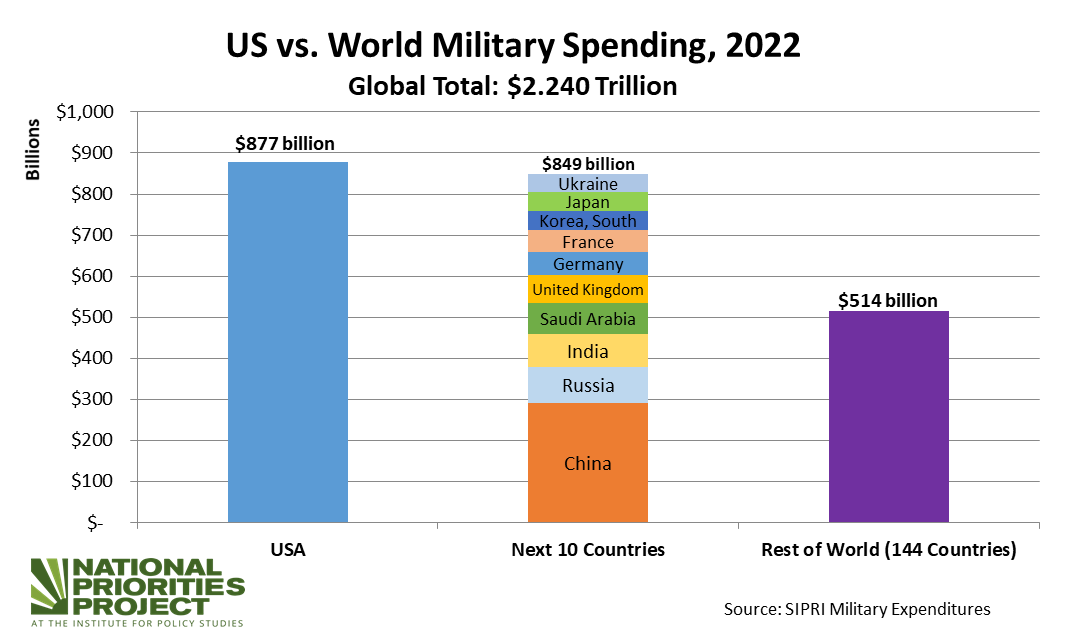
So, how was Joe Biden finally able to end the Afghan War in 2021? Two reasons. He could blame the Trump administration for putting him in an untenable position, and he could neutralize Pentagon opposition by giving them even more money even as he pulled troops from Afghanistan. Instead of the Pentagon budget decreasing by roughly $50 billion, the yearly cost of the Afghan War, it increased by that amount even as that war finally crashed and burned. There was never, ever, any talk of peace dividends, and once Russia invaded Ukraine early in 2022, vast increases in U.S. and NATO military spending were guaranteed. And so today’s Pentagon budget soars toward $900 billion, which doesn’t even include aid to Ukraine.
If Biden wins a 2nd term in 2024, it may be largely because he’s shown himself to be a slavish servant of the military-industrial-congressional complex and the national security state.
Anyhow, from October of 2009:
Norman Mailer for secretary of defense
On Afghanistan, Obama needs the input of freethinking outsiders, not generals. What if LBJ had listened to Mailer?
Author Norman Mailer speaks at an anti-war rally at the bandshell in New York’s Central Park, March 26, 1966.
It’s early in 1965, and President Lyndon B. Johnson faces a critical decision. Should he escalate in Vietnam? Should he say “yes” to the request from U.S. commanders for more troops? Or should he change strategy, downsize the American commitment, even withdraw completely, a decision that would help him focus on his top domestic priority, “The Great Society” he hopes to build?
We all know what happened. LBJ listened to the generals and foreign policy experts and escalated, with tragic consequences for the United States and calamitous results for the Vietnamese people on the receiving end of American firepower. Drawn deeper and deeper into Vietnam, LBJ would soon lose his way and eventually his will, refusing to run for reelection in 1968.
President Obama now stands at the edge of a similar precipice. Should he acquiesce to General Stanley A. McChrystal’s call for 40,000 to 60,000 or more U.S. troops for Afghanistan? Or should he pursue a new strategy, downsizing our commitment, even withdrawing completely, a decision that would help him focus on national healthcare, among his other top domestic priorities?
The die, I fear, is cast. In his “war of necessity,” Obama has evidently already ruled out even considering a “reduction” option, no less a withdrawal one, and will likely settle on an “escalate lite” program involving more troops (though not as many as McChrystal has urged), more American trainers for the Afghan army, and even a further escalation of the drone war over the Pakistani borderlands and new special operations actions.
By failing his first big test as commander-in-chief this way, Obama will likely ensure himself a one-term presidency, and someday be seen as a man like LBJ whose biggest dreams broke upon the shoals of an unwinnable war.
The conventional wisdom: Military escalation
To whom, we may ask, is Obama listening as he makes his decision on Afghanistan strategy and troop levels? Not the skeptics, it’s safe to assume. Not the freethinkers, not today’s equivalents of Mary McCarthy or Norman Mailer. Instead, he’s doubtless listening to the generals and admirals, or the former generals and admirals who now occupy prominent “civilian” positions at the White House and inside the beltway.
By his actions, Obama has embraced the seemingly sober conventional wisdom that senior military officers, whether on active duty or retired, have, as they say in the corridors of the Pentagon, “subject matter expertise” when it comes to strategy, war, even foreign policy.
Don’t we know better than this? Don’t we know, as Glenn Greenwald recently reminded us, that General McChrystal’s strategic review was penned by a “war-loving foreign policy community,” in which the usual suspects — “the Kagans, a Brookings representative, Anthony Cordesman, someone from Rand” — were rounded up to argue for more troops and more war?
Don’t we know, as Tom Engelhardt recently reminded us, that Obama’s “civilian” advisors include “Karl W. Eikenberry, a retired lieutenant general who is the U.S. ambassador to Afghanistan, Douglas Lute, a lieutenant general who is the president’s special advisor on Afghanistan and Pakistan (dubbed the “war czar” when he held the same position in the Bush administration), and James Jones, a retired Marine Corps general, who is national security advisor, not to speak of Secretary of Defense Robert Gates, a former director of the Central Intelligence Agency”? Are we surprised, then, that when we “turn crucial war decisions over to the military, [we] functionally turn foreign policy over to them as well”? And that they, in turn, always opt for more troops, more money and more war?
One person unsurprised by this state of affairs would have been Norman Mailer, who died in 2007. War veteran, famed author of the war novel “The Naked and the Dead” (1948) as well as the Pulitzer Prize-winning report on Vietnam-era protests, “The Armies of the Night” (1968), self-styled tough guy who didn’t dance, Mailer witnessed (and dissected) the Vietnam analog to today’s Afghan events. Back in 1965, Mailer bluntly stated that the best U.S. option was “to get out of Asia.” Period.
The unconventional wisdom: Military extrication
Can Obama find the courage and wisdom to extricate our troops from Afghanistan? Courtesy of Norman Mailer, here are three unconventional pointers that should be driving him in this direction:
1. Don’t fight a war, and clearly don’t escalate a war, in a place that means so little to Americans. In words that apply quite readily to Afghanistan today, Mailer wrote in 1965: “Vietnam [to Americans] is faceless. How many Americans have ever visited that country? Who can say which language is spoken there, or what industries might exist, or even what the country looks like? We do not care. We are not interested in the Vietnamese. If we were to fight a war with the inhabitants of the planet of Mars there would be more emotional participation by the people of America.”
2. Beware of cascading dominoes and misleading metaphors, whether in Southeast Asia or anywhere else. The domino theory held that if Vietnam, then split into north and south, was united under communism, other Asian countries, including Thailand, the Philippines, perhaps even India, would inevitably fall to communism as well, just like so many dominoes toppling. Instead, it was communism that fell or, alternately, morphed into a version that we could do business with (to paraphrase former British Prime Minister Margaret Thatcher).
We may no longer speak metaphorically of falling dominoes in today’s Af-Pak theater of operations. Nevertheless, our fears are drawn from a similarly misleading image: If Afghanistan falls to the Taliban, Pakistan will surely follow, opening a nuclear Pandora’s box to anti-American terrorists in which, in our fevered imaginations, smoking guns will once again become mushroom clouds.
Despite the fevered talk of falling dominoes in his era, Mailer was unmoved. Such rhetoric suggests, he wrote in 1965, “that we are not protecting a position of connected bastions so much as we are trying to conceal the fact that the bastions are about gone — they are not dominoes, but sand castles, and a tide of nationalism is on the way in. It is curious foreign policy to use metaphors in defense of a war; when the metaphors are imprecise, it is a swindle.”
To this I’d add that, in viewing countries and peoples as so many dominoes, which by the actions — or the inaction — of the United States are either set up or knocked down, we vastly exaggerate our own agency and emphasize our sense of self-importance. And before we even start in on the inevitable argument about “Who lost Afghanistan?” or “Who lost Pakistan?” is it too obvious to say that never for a moment did we own these countries and peoples?
3. Carrots and sticks may work together to move a stubborn horse, but not a proud people determined to find their own path. As Mailer put it, with a different twist: “Bombing a country at the same time you are offering it aid is as morally repulsive as beating up a kid in an alley and stopping to ask for a kiss.”
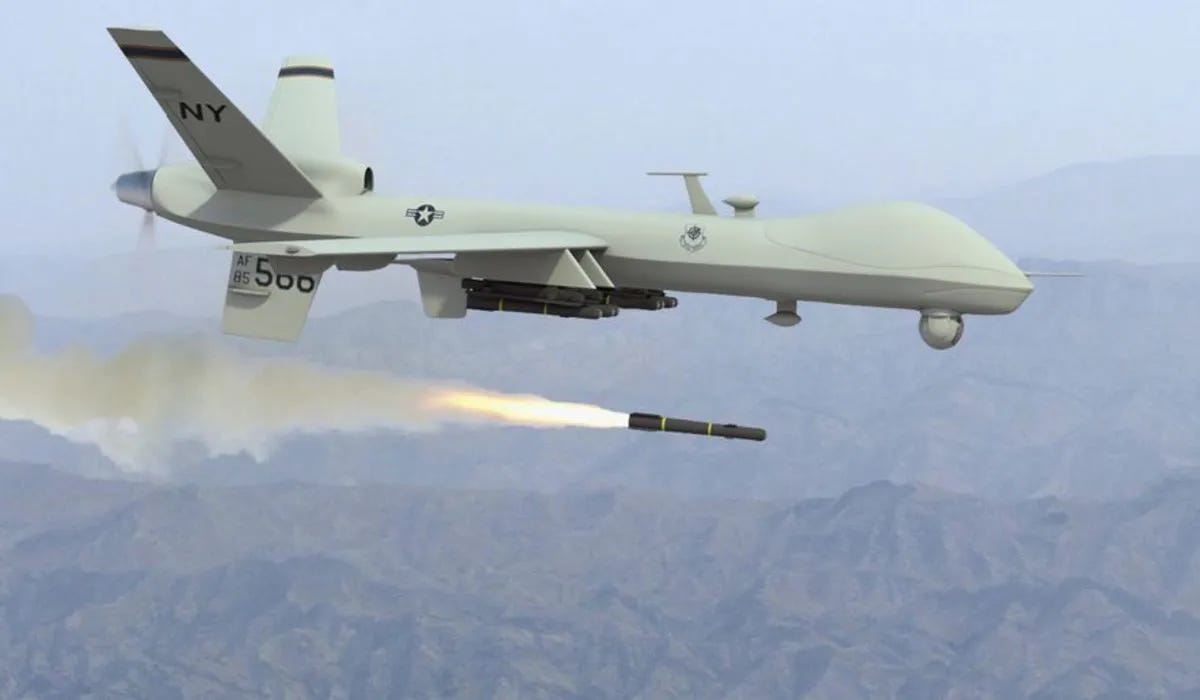
As our Predator and Reaper drones scan the Afghan terrain below, launching missiles to decapitate terrorists while unintentionally taking innocents with them, we console ourselves by offering aid to the Afghans to help them improve or rebuild their country. As it happens, though, when the enemy hydra loses a head, another simply grows in its place, while collateral damage only leads to a new generation of vengeance-seekers. Meanwhile, promised aid gets funneled to multinational corporations or siphoned off by corrupt government officials, leaving little for Afghan peasants, certainly not enough to win their allegiance, let alone their “hearts and minds.”
If we continue to speak with bombs while greasing palms with dollars, we’ll get nothing more than a few bangs for our $228 billion (and counting).
What if LBJ had listened to Mailer in ’65?
Not long before LBJ crossed his Rubicon and backed escalation in Vietnam, he could have decided to pull out. Said Mailer:
The image had been prepared for our departure — we heard of nothing but the corruption of the South Vietnam government and the professional cowardice of the South Vietnamese generals. We read how a Viet Cong army of 40,000 soldiers was whipping a government army of 400,000. We were told in our own newspapers how the Viet Cong armed themselves with American weapons brought to them by deserters or captured in battle with government troops; we knew it was an empty war for our side.
Substitute “the Hamid Karzai government” for “the South Vietnam government” and “Taliban” for “Viet Cong” and the same passage could almost have been written yesterday about Afghanistan. We know the Karzai government is corrupt, that it stole the vote in the last election, that the Afghan army is largely a figment of Washington’s imagination, that its troops sell their American-made weapons to the enemy. But why do our leaders once again fail to see, as Mailer saw with Vietnam, that this, too, is a recognizably “empty war for our side”?
Mailer experienced the relentless self-regard and strategic obtuseness of Washington as a mystery, but that didn’t stop him from condemning President Johnson’s decision to escalate in Vietnam. For Mailer, LBJ was revealed as “a man driven by need, a gambler who fears that once he stops, once he pulls out of the game, his heart will rupture from tension.” Johnson, like nearly all Americans, Mailer concluded, was a member of a minority group, defined not in racial or ethnic terms but in terms of “alienat[ion] from the self by a double sense of identity and so at the mercy of a self which demands action and more action to define the most rudimentary borders of identity.”
This American drive for self-definition through constant action, through headlong acceleration, even through military escalation, the novelist described, in something of a mixed metaphor, as “the swamps of a plague” in which Americans had been caught and continued to sink. He saw relief of the desperate condition coming only via “the massacre of strange people.”
To be honest, I’m not sure what to make of Mailer’s analysis here, more emotionally “Heart of Darkness” than coolly rational. But that’s precisely why I want someone Mailer-esque — pugnacious, free-swinging, and prophetical, provocative and profane — advising our president. Right now.
As Obama’s military experts wield their battlefield metrics and call for more force (to be used, of course, with ever greater precision and dexterity), I think Mailer might have replied: We think the only thing they understand is force. What if the only thing we understand is force?
Mailer, I have no doubt, would have had the courage to be seen as “weak” on defense, because he would have known that Americans had no dog in this particular fight. I think he would intuitively have recognized the wisdom of the great Chinese strategist Sun Tzu, who wrote more than 2,000 years ago in “The Art of War” that “to win one hundred victories in one hundred battles is not the acme of skill. To subdue the enemy without fighting is the acme of skill.” Our generals, by way of contrast, seem to want to fight those 100 battles with little hope of actually subduing the enemy.
What Obama needs, in other words, is fewer generals and ex-generals and more Norman Mailers — more outspoken free-thinkers who have no interest in staying inside the pentagonal box that holds Washington’s thinking tight. What Obama needs is to silence the endless cries for more troops and more war emanating from the military and foreign policy “experts” around him, so he can hear the voices of today’s Mailers, of today’s tough-minded dissenters. Were he to do so, he might yet avoid repeating LBJ’s biggest blunder — and so avoid suffering his political fate as well.
There’s an important point about America’s Global War on Terrorism (GWOT) that people often miss.
When the Bush/Cheney administration announced the GWOT after 9/11, I think nearly all Americans assumed that “global” meant everywhere but the “good” countries. That global meant the axis of evil (Iraq, Iran, North Korea) and similar so-called bad actors, but that it didn’t mean countries like Canada — and certainly not the U.S. homeland.
But global really did mean everywhere on earth as we’ve watched the war on terror escalate domestically. The U.S. government/security state has built the foundation and superstructure for a permanent war on terror, and it simply isn’t going to go away. The Iraq and Afghan wars are essentially over (both lost), and fears of North Korea have subsided as the military-industrial-congressional complex focuses on Ukraine, Russia, and China, but the GWOT continues. It’s now turned inwards, within and along our own borders, and those techniques that were practiced (if not perfected) in Iraq, Afghanistan, and elsewhere are now being used and inflicted upon ordinary Americans who are attempting to resist state-corporate authoritarianism.
The GWOT has come home — but perhaps it’s always been here. What’s changed is how state-corporate entities can define almost any form of determined protest—even civil and nonviolent ones—as “terror.” Labeling someone a “domestic terrorist” gives state-corporate actors a whole host of powerful ways to punish activists, notes by Michael Gould-Wartofsky at TomDispatch.com.
At the same time, America has witnessed the “rise of the warrior-cop,” as Radley Balko noted in his book by that title.
Three years ago, I wrote about the militarization of police forces at TomDispatch. This is what I wrote then:
America’s violent overseas wars, thriving for almost two decades despite their emptiness, their lack of meaning, have finally and truly come home. An impoverished empire, in which violence and disease are endemic, is collapsing before our eyes. “When the looting starts, the shooting starts,” America’s self-styled wartime president [Donald Trump] promised, channeling a racist Miami police chief from 1967. It was a declaration meant to turn any American who happened to be near a protest into a potential victim
As such demonstrations proliferate, Americans now face a grim prospect: the chance to be wounded or killed, then dismissed as “collateral damage.” In these years, that tried-and-false military euphemism has been applied so thoughtlessly to innumerable innocents who have suffered grievously from our unending foreign wars and now it’s coming home.
A few days ago, The Onion, a satirical news site, compared America’s obedience and passivity to power to the current situation in France. Here’s how they put it:
In an ongoing struggle against ruling-class oppression, the people of France again protested in a way that Americans are welcome to at any time, sources confirmed Thursday. According to reports, French citizens across the country were spotted hitting the streets en masse as a unified front against the institutional bondage that seeks to subjugate them while never failing to apply forceful pressure every time injustice strikes, which Americans can and should feel free to do whenever they so choose.
Yes, but are Americans truly “welcome” to protest “whenever they so choose”? We’d like to think so, especially as July 4th approaches (America! Land of the Free!), but who wants to be detained and thrown in jail for domestic terrorism? Anyone in America hankering to be labeled as a terrorist by the state, whether on the right or left of the political spectrum, even if the charge is eventually dismissed?
Searing photo of state violence at Kent State in 1970. The dead student’s name was Jeffrey Miller. The young woman crouched in shock and horror was Mary Ann Vecchio. Richard Nixon called the protesters “bums.” What would the state call them today—domestic terrorists?
Remember those innocent days of the 1960s when for some the police were “pigs” and the protesters were “bums” (Richard Nixon’s word for the students killed at Kent State)? Now those protesters could be charged with domestic terrorism even as various heavily armed enforcers of the law would likely be celebrated (consider all those “blue lives matter” flags, for example).
Remember when “defund the police” was briefly a thing? By which people meant less funding for militarized police forces and more for mental health services and the like. President Joe Biden and the Democrats realized any serious effort to restrain police power would leave them open to charges of being soft on crime, so Biden and the party simply declared: Fund the police. (Republicans concur, of course, even as they still accuse Biden and the Dems of being soft on crime.)
And there you have it. Fund the police at all levels, local, state, and federal, and grant them the kind of powers given to America’s “warriors” in the GWOT. Set them loose on all of America’s domestic “terrorists.” After all, the GWOT went so well in Iraq, Afghanistan, Libya, Yemen, and elsewhere. Surely it will go equally well in the Homeland. Right?
Addendum: In writing this, I came across a superb article by Patricia McCormick at the Washington Post on Mary Ann Vecchio, “the girl in the Kent State photo.” She was just 14 when the above photo was taken. She paid a high price, as the article recounts. Letters to her family accused her of being a “drug addict,” a “tramp,” or a “communist.” The then-governor of Florida suggested she was a “professional agitator” and therefore responsible for the students’ deaths. A Gallup poll back then, cited by McCormick, said that 58% of Americans blamed the students at Kent State and only 11% blamed the National Guardsmen who opened fire and killed the four students.
“Professional agitator” sounds much like today’s domestic terrorist. And let’s reflect on those 58% of Americans who believed the students at Kent State were responsible for their own deaths. How dare they block the free flight of “Made in USA” bullets with their young bodies? The “bums”! (“Domestic terrorists.”)
Comparing and contrasting low-yield theater nuclear weapons with conventional precision strike weapons leads to a nuanced conclusion that both contribute to deterrence.
Imagine that! Both nuclear and conventional weapons “contribute to deterrence.” Even though they’re apparently apples and oranges. Well, there’s “nuance” for you.
Anybody want a tasty nuclear “orange”? Fresh and juicy, and with a low yield. It may very well deter you from eating citrus fruit for, well, forever.
Potential delivery system for low-yield nukes. Think of them as juicy oranges
I’m not familiar with the authors of the piece. McCue is an Air Force lieutenant colonel with the Defense Threat Reduction Agency. I don’t know about you, but suggesting that low-yield nukes can be used in nuanced ways heightens my sense of threat. Lowther directs strategic deterrence programs at the National Strategic Research Institute, which makes me think anew about the meaning of “deterrence.” In this case, it seems to mean the willingness to use nuclear weapons against “bad actors” like China but especially Putin and Russia. And Davis is an Army major assigned to U.S. Central Command. It’s nice to know the Army, just like the Air Force, has a strange love for nukes.
In essence, the article’s argument is this: Russia, China, and North Korea are “investing” in low-yield nukes while the U.S. and other NATO allies have generally been reducing their arsenals of the same. To deter those three adversaries, the U.S. must make new “investments” in low-yield nukes, because you never know what those foreigners are up to.
Here’s how the authors put it in their conclusion: “In the right circumstances conventional weapons offer greater certainty of destruction than tactical nuclear weapons. The West must examine what this means for warfighting, as well as what adversaries are signaling by investing in low-yield nuclear weapons. The best solution may be the development of a state-of-the-art nuclear capability that ensures certain, prompt, proportionate, and in-kind response options. The perception of a missing rung on the American escalation ladder could prove alluring to Russia or China in a conflict.”
Mr. President, we must not allow a missing rung on America’s escalation ladder!
Even if that “missing rung” is only a “perception.”
Let’s keep that in mind if nuclear weapons start flying in Europe or Asia. We can console ourselves that at least we weren’t missing a rung in our escalatory ladder as millions get blasted, burnt, and irradiated.
Ukraine’s counteroffensive against Russia appears to be stalling, (See this frank article by Medea Benjamin and Nicolas Davies.) This isn’t surprising.
War is inherently unpredictable, but there are certain ingredients that contribute to the success of counteroffensives. Here are a few:
The element of surprise: Catching the enemy off-guard is always helpful. But everyone knew Ukraine was counterattacking, including roughly where and when.
Superiority at the point of attack: As a rough rule, an attacker needs at least a 3-to-1 superiority in force to prevail against a determined defender, along with a willingness and ability to accept casualties. It’s unclear to me that Ukraine had a clear superiority at their points of attack. Whether Ukraine can continue to sustain high numbers of killed and wounded is also unclear.
The synergy of combined arms: Everything in war is difficult, most especially orchestrating and conducting an offensive. “Combined arms” includes infantry, artillery, and tanks, moving with machine-like precision, supported by airpower, enhanced by intelligence, and kept supplied by adequate logistical chains. Ukrainian forces did well on the defensive in resisting often poorly coordinated Russian attacks, but now the combat boot is on the other foot, and it’s Ukraine that’s having trouble breaking through well-prepared Russian positions.
The importance of training and experience: While Ukrainian troops have gained experience over the last year or so, they have primarily been on the defensive while also assimilating new weapons and related equipment. They arguably lack the experience to launch coordinated offensives against determined resistance.
Effective leadership: It was said the presence of Napoleon Bonaparte on the battlefield was equivalent to the French having an extra army corps, i.e. roughly 30,000 men. Offensives go better when they’re led by skilled generals backed up by effective officers and experienced NCOs. I’m not aware of any Napoleon-types on either side of the Russia/Ukraine War, and I fear Ukraine has suffered too many losses to have a solid core of experienced officers and NCOs.
The Western solution to all this appears to be more promises of “magical” weapons like German Leopard tanks and American F-16 fighter jets. But weapons alone are insufficient to provide war-winning advantages. Military history teaches us that the side with superior weapons often loses to the side with superior skill and motivation. Think here of the U.S. experience in Vietnam, for example.
Poland delivers Leopard II tanks to Ukraine. But tanks are not enough.
As I’ve said before, what I fear is that neither side can win this war decisively even as Ukraine suffers most grievously because the war is being fought in their country.
People like Senator Lindsey Graham talk tough about Ukrainians fighting to the last man with U.S. and NATO weaponry. Easy for him to say, since he’s not the one who’s fighting and possibly dying at the front. Meanwhile, U.S. companies profit from the sale of weapons, hence that apt descriptor from the 1930s, “the merchants of death.”
For the sake of argument, let’s say Ukraine is able to make modest territorial gains at high cost. This would be an excellent time to call for a truce and diplomacy. Ukraine can claim a face-saving “victory” (those modest gains) even as the Russians can boast of containing the much-hyped NATO-supported counteroffensive. Let both sides declare victory as they hash out a compromise that ends the killing and destruction.
What’s the real definition of “victory” here? For me, it’s a rapid end to a wasteful war before that war is allowed to escalate in ways that could spark a much wider and potentially catastrophic conflict involving nuclear powers.
The people on the receiving end of American bombs don’t care if those bombs are from a “woke” B-52 or a MAGA one, or whether the crews of those planes are diverse. Is it better to be bombed by female or gay or Black air crews?
The comedian Jimmy Dore did a recent segment on the CIA’s celebration of Gay Pride Month. Am I supposed to trust the CIA when they wrap themselves in a rainbow flag?
Regardless of who’s been president and which party he’s been from, U.S. military spending has continued to soar. And while Joe Biden finally ended the disastrous Afghan War, the military-industrial-congressional complex is profiting wildly from the new Cold War with China and Russia.
Americans should be deeply concerned with the increasing likelihood of nuclear war, together with the government’s great affection for building even more nuclear weapons. Yet we are actively discouraged by our government from thinking about the unthinkable, i.e. genocidal nuclear weapons and war. “Trust the experts” is the implicit message, along with “pay no attention” to the trillions being spent on new nuclear bombers, ICBMs, and submarines. After all, they’re job-creators!
Reelecting Trump or Biden, or electing younger tools like Ron DeSantis or Pete Buttigieg, isn’t going to change America’s imperial, militaristic, and rapacious foreign policy. I’d like to elect a president who prefers not to drop bombs, a leader who knows that bombs remain bombs whether they’re “woke” or “MAGA” or decorated with rainbow or “blue lives matter” flags.
All around us things are falling apart. Collectively, Americans are experiencing national and imperial decline. Can America save itself? Is this country, as presently constituted, even worth saving?
For me, that last question is radical indeed. From my early years, I believed deeply in the idea of America. I knew this country wasn’t perfect, of course, not even close. Long before the 1619 Project, I was aware of the “original sin” of slavery and how central it was to our history. I also knew about the genocide of Native Americans. (As a teenager, my favorite movie — and so it remains — was Little Big Man, which pulled no punches when it came to the white man and his insatiably murderous greed.)
Nevertheless, America still promised much, or so I believed in the 1970s and 1980s. Life here was simply better, hands down, than in places like the Soviet Union and Mao Zedong’s China. That’s why we had to “contain” communism — to keep themover there, so they could never invade our country and extinguish our lamp of liberty. And that’s why I joined America’s Cold War military, serving in the Air Force from the presidency of Ronald Reagan to that of George W. Bush and Dick Cheney. And believe me, it proved quite a ride. It taught this retired lieutenant colonel that the sky’s anything but the limit.
In the end, 20 years in the Air Force led me to turn away from empire, militarism, and nationalism. I found myself seeking instead some antidote to the mainstream media’s celebrations of American exceptionalism and the exaggerated version of victory culture that went with it (long after victory itself was in short supply). I started writingagainst the empire and its disastrous wars and found likeminded people at TomDispatch — former imperial operatives turned incisive critics like Chalmers Johnson and Andrew Bacevich, along with sharp-eyed journalist Nick Turse and, of course, the irreplaceable Tom Engelhardt, the founder of those “tomgrams” meant to alert America and the world to the dangerous folly of repeated U.S. global military interventions.
But this isn’t a plug for TomDispatch. It’s a plug for freeing your mind as much as possible from the thoroughly militarized matrix that pervades America. That matrix drives imperialism, waste, war, and global instability to the point where, in the context of the conflict in Ukraine, the risk of nuclear Armageddon could imaginably approach that of the 1962 Cuban Missile Crisis. As wars — proxy or otherwise — continue, America’s global network of 750-odd military bases never seems to decline. Despite upcoming cuts to domestic spending, just about no one in Washington imagines Pentagon budgets doing anything but growing, even soaring toward the trillion-dollar level, with militarized programs accounting for 62% of federal discretionary spending in 2023.
Indeed, an engorged Pentagon — its budget for 2024 is expected to rise to $886 billionin the bipartisan debt-ceiling deal reached by President Joe Biden and House Speaker Kevin McCarthy — guarantees one thing: a speedier fall for the American empire. Chalmers Johnson predicted it; Andrew Bacevich analyzed it. The biggest reason is simple enough: incessant, repetitive, disastrous wars and costly preparations for more of the same have been sapping America’s physical and mental reserves, as past wars did the reserves of previous empires throughout history. (Think of the short-lived Napoleonic empire, for example.)
Known as “the arsenal of democracy” during World War II, America has now simply become an arsenal, with a military-industrial-congressional complex intent on forging and feeding wars rather than seeking to starve and stop them. The result: a precipitous decline in the country’s standing globally, while at home Americans pay a steep price of accelerating violence (2023 will easily set a record for mass shootings) and “carnage” (Donald Trump’s word) in a once proud but now much-bloodied“homeland.”
Lessons from History on Imperial Decline
I’m a historian, so please allow me to share a few basic lessons I’ve learned. When I taught World War I to cadets at the Air Force Academy, I would explain how the horrific costs of that war contributed to the collapse of four empires: Czarist Russia, the German Second Reich, the Ottoman empire, and the Austro-Hungarian empire of the Habsburgs. Yet even the “winners,” like the French and British empires, were also weakened by the enormity of what was, above all, a brutal European civil war, even if it spilled over into Africa, Asia, and indeed the Americas.
And yet after that war ended in 1918, peace proved elusive indeed, despite the Treaty of Versailles, among other abortive agreements. There was too much unfinished business, too much belief in the power of militarism, especially in an emergent Third Reich in Germany and in Japan, which had embraced ruthless European military methods to create its own Asiatic sphere of dominance. Scores needed to be settled, so the Germans and Japanese believed, and military offensives were the way to do it.
As a result, civil war in Europe continued with World War II, even as Japan showed that Asiatic powers could similarly embrace and deploy the unwisdom of unchecked militarism and war. The result: 75 million dead and more empires shattered, including Mussolini’s “New Rome,” a “thousand-year” German Reich that barely lasted 12 of them before being utterly destroyed, and an Imperial Japan that was starved, burnt out, and finally nuked. China, devastated by war with Japan, also found itself ripped apart by internal struggles between nationalists and communists.
As with its prequel, even most of the “winners” of World War II emerged in a weakened state. In defeating Nazi Germany, the Soviet Union had lost 25 to 30 million people. Its response was to erect, in Winston Churchill’s phrase, an “Iron Curtain” behind which it could exploit the peoples of Eastern Europe in a militarized empire that ultimately collapsed due to its wars and its own internal divisions. Yet the USSR lasted longer than the post-war French and British empires. France, humiliated by its rapid capitulation to the Germans in 1940, fought to reclaim wealth and glory in “French” Indochina, only to be severely humbled at Dien Bien Phu. Great Britain, exhausted from its victory, quickly lost India, that “jewel” in its imperial crown, and then Egypt in the Suez debacle.
There was, in fact, only one country, one empire, that truly “won” World War II: the United States, which had been the least touched (Pearl Harbor aside) by war and all its horrors. That seemingly never-ending European civil war from 1914 to 1945, along with Japan’s immolation and China’s implosion, left the U.S. virtually unchallenged globally. America emerged from those wars as a superpower precisely because its government had astutely backed the winning side twice, tipping the scales in the process, while paying a relatively low price in blood and treasure compared to allies like the Soviet Union, France, and Britain.
History’s lesson for America’s leaders should have been all too clear: when you wage war long, especially when you devote significant parts of your resources — financial, material, and especially personal — to it, you wage it wrong. Not for nothing is war depicted in the Bible as one of the four horsemen of the apocalypse. France had lost its empire in World War II; it just took later military catastrophes in Algeria and Indochina to make it obvious. That was similarly true of Britain’s humiliations in India, Egypt, and elsewhere, while the Soviet Union, which had lost much of its imperial vigor in that war, would take decades of slow rot and overstretch in places like Afghanistan to implode.
Meanwhile, the United States hummed along, denying it was an empire at all, even as it adopted so many of the trappings of one. In fact, in the wake of the implosion of the Soviet Union in 1991, Washington’s leaders would declare America the exceptional “superpower,” a new and far more enlightened Rome and “the indispensable nation” on planet Earth. In the wake of the 9/11 attacks, its leaders would confidently launch what they termed a Global War on Terror and begin waging wars in Afghanistan, Iraq, and elsewhere, as in the previous century they had in Vietnam. (No learning curve there, it seems.) In the process, its leaders imagined a country that would remain untouched by war’s ravages, which was we now know — or do we? — the height of imperial hubris and folly.
For whether you call it fascism, as with Nazi Germany, communism, as with Stalin’s Soviet Union, or democracy, as with the United States, empires built on dominance achieved through a powerful, expansionist military necessarily become ever more authoritarian, corrupt, and dysfunctional. Ultimately, they are fated to fail. No surprise there, since whatever else such empires may serve, they don’t serve their own people. Their operatives protect themselves at any cost, while attacking efforts at retrenchment or demilitarization as dangerously misguided, if not seditiously disloyal.
That’s why those like Chelsea Manning, Edward Snowden, and Daniel Hale, who shined a light on the empire’s militarized crimes and corruption, found themselves imprisoned, forced into exile, or otherwise silenced. Even foreign journalists like Julian Assange can be caught up in the empire’s dragnet and imprisoned if they dare expose its war crimes. The empire knows how to strike back and will readily betray its own justice system (most notably in the case of Assange), including the hallowed principles of free speech and the press, to do so.
Perhaps he will eventually be freed, likely as not when the empire judges he’s approaching death’s door. His jailing and torture have already served their purpose. Journalists know that to expose America’s bloodied tools of empire brings only harsh punishment, not plush rewards. Best to look away or mince one’s words rather than risk prison — or worse.
Yet you can’t fully hide the reality that this country’s failed wars have added trillions of dollars to its national debt, even as military spending continues to explode in the most wasteful ways imaginable, while the social infrastructure crumbles.
Clinging Bitterly to Guns and Religion
Today, America clings ever more bitterly to guns and religion. If that phrase sounds familiar, it might be because Barack Obama used it in the 2008 presidential campaign to describe the reactionary conservatism of mostly rural voters in Pennsylvania. Disillusioned by politics, betrayed by their putative betters, those voters, claimed the then-presidential candidate, clung to their guns and religion for solace. I lived in rural Pennsylvania at the time and recall a response from a fellow resident who basically agreed with Obama, for what else was there left to cling to in an empire that had abandoned its own rural working-class citizens?
Something similar is true of America writ large today. As an imperial power, we cling bitterly to guns and religion. By “guns,” I mean all the weaponry America’s merchants of death sell to the Pentagon and across the world. Indeed, weaponry is perhaps this country’s most influential global export, devastatingly so. From 2018 to 2022, the U.S. alone accounted for 40% of global arms exports, a figure that’s only risen dramatically with military aid to Ukraine. And by “religion,” I mean a persistent belief in American exceptionalism (despite all evidence to the contrary), which increasingly draws sustenance from a militant Christianity that denies the very spirit of Christ and His teachings.
Yet history appears to confirm that empires, in their dying stages, do exactly that: they exalt violence, continue to pursue war, and insist on their own greatness until their fall can neither be denied nor reversed. It’s a tragic reality that the journalist Chris Hedges has written about with considerable urgency.
The problem suggests its own solution (not that any powerful figure in Washington is likely to pursue it). America must stop clinging bitterly to its guns — and here I don’t even mean the nearly 400 million weapons in private hands in this country, including all those AR-15 semi-automatic rifles. By “guns,” I mean all the militarized trappings of empire, including America’s vast structure of overseas military bases and its staggering commitments to weaponry of all sorts, including world-ending nuclearones. As for clinging bitterly to religion — and by “religion” I mean the belief in America’s own righteousness, regardless of the millions of people it’s killed globally from the Vietnam era to the present moment — that, too, would have to stop.
History’s lessons can be brutal. Empires rarely die well. After it became an empire, Rome never returned to being a republic and eventually fell to barbarian invasions. The collapse of Germany’s Second Reich bred a third one of greater virulence, even if it was of shorter duration. Only its utter defeat in 1945 finally convinced Germans that God didn’t march with their soldiers into battle.
What will it take to convince Americans to turn their backs on empire and war before it’s too late? When will we conclude that Christ wasn’t joking when He blessed the peacemakers rather than the warmongers?
As an iron curtain descends on a failing American imperial state, one thing we won’t be able to say is that we weren’t warned.
The best way to honor sacrifice is to seek an end to war and militarism
I was asked for a few words about Memorial Day. Here’s what I came up with:
On Memorial Day, we honor those who died in the service of our country. Let us do everything we can as a people and a nation to stop war and all its brutality. A peaceful future without war and all its awfulness is the best way to honor our troops, even as we cherish the memory of the heroes who gave their all.
Too often, Memorial Day is reduced to sales events, barbecues, and the like. It is, of course, a solemn occasion to remember the sacrifice of American service members. To honor the dead. To cherish their memory.
Yet one can also focus too narrowly on the veneration of the dead, using euphemisms like “the fallen” and speaking of how troops willingly “gave” their lives for their country. The best antidote to this is a short video by Andy Rooney for “60 Minutes” (when that show still had some principles and bite). Rooney, who’d served in World War II, knew of what he spoke. His goal was to end war, to save the living, to make a better world.
If you haven’t seen it, I urge you to watch it and to reflect on his sad and wise words.
Matt Taibbi and Walter Kirn on “Catch-22” and Bureaucratic Madness
I wanted to share with you a conversation between Matt Taibbi and Walter Kirn on Joseph Heller’s classic satire, “Catch-22,” that focuses on the idea of loyalty oaths but that has much broader implications for our society today. Their entire conversation is well worth reading, but this passage is especially penetrating and important.
Profess your loyalty with a baseball cap for Armed Forces Day. $50 or less. Buy them for everyone in your family. You can’t be too patriotic — or too careful.
Matt Taibbi: That seems like a good place to segue into the story from this week.
On Joseph Heller’s “Catch-22,” in particular, “The Great Loyalty Oath Crusade.”
Walter Kirn: So we don’t end up being polite and going, no, you do it. No, you do it. It’s Chapter 11 of Catch-22 entitled “Captain Black.” Some people know it as the chapter called “The Great Loyalty Oath Crusade.” It tells a very simple story. There’s an officer on the air base where Catch-22 is set, and he’s been passed over for promotion. His name’s Captain Black, and he lost out when another officer was killed in battle, he thought he would succeed to his post, but he didn’t. Another guy, Major Major, got the job. So how is he going to take his revenge? How is he going to become important on the base? He comes up with the notion that he will start forcing all the troops and all the bombers and the crews of the different aircraft to take a “loyalty oath”, which he has to authorize before they can do anything.
And not just one loyalty oath, because they easily pass that test. They do it, but it’s two, three, four, until the point where the entire air base and its missions are paralyzed by the need to recite these oaths. If you want to get your plane off the ground, if you want to fuel your plane, if you want to eat lunch, you have to recite one of these oaths. And finally, the bureaucratic necessity of reciting oaths completely paralyzes the entire operation such that Heller says they were no longer able to even respond to emergencies. They were no longer able to respond to reality, because almost all they were doing was reciting these oaths over and over and over.
And it was assumed that if you had recited one oath and a minute had passed before you had recited the next one, that you might have become disloyal in the meantime. I guess what this all is a metaphor for is the notion that requiring loyalty of people is a bottomless request, which finally becomes an end in itself. Just as we saw at the hearing yesterday, let’s not get to the substance of what you’re alleging here. Let’s have you recite the oath first and did you recite it correctly and could you recite it again, and do you agree that it’s necessary? So by a Zeno’s arrow thing, you never get to the issue of anything because loyalty must always be the primary question and it is always doubted.
Matt Taibbi: Heller has this great line about the doctrine of “continual reaffirmation” that Captain Black originated. And the quote is,
A doctrine designed to trap all those men who had become disloyal since the last time they had signed a loyalty oath the day before.
Nobody has the authority to stop this thing. Even the colonel in the group, Colonel Korn, he’s complaining: “It’s that idiot Black off on a patriotism binge.”
But when they’re deciding what to do about it, he just says:
Well, this will probably run its course soon. I think the best thing now is to send Captain Black a letter of total support and hope he drops dead before he does too much damage.
In other words, even the people who have authority, once one of these things gets going, nobody wants to get in front of this buzz saw. And if they do, they get cut down.
Walter Kirn: You can’t stop it because as is the abiding theme of Catch-22, you can never get off the hook with a bureaucracy that wants everything. You can never pass the loyalty oath because the one you took was a minute ago, are you taking one now? The perfect loyalty oath, in other words from a bureaucratic point of view, is one that no one can ever pass. One that never ends.
The perfect accusation in a witch trial is one that you can never be innocent of. And I wrote, “The more absurd loyalty oath, and the more often it is required, the better.” Anyone can repeat a loyalty oath that’s true and it is offered only once, but only the truly submissive will repeat it over and over until it loses all meaning. Because finally, what bureaucracy wants of you is humiliation and submission. It doesn’t want an answer. It doesn’t want to give you a pass and say, “You are free to go now. You may enter, you may run your mission. You’ve got your credential.” It wants total power. And total power can only be had if you are never declared loyal.
Matt Taibbi: The only people who succeed in this system are complete sociopaths with no shame. I think that’s one of the great things about this chapter is the way he starts off, Heller — one of the great things about this book in general is his ability to make snap characterizations. I mean, it takes even very skilled authors a paragraph to capture the personality of a person, but he’s able to do it in a sentence or two over and over again.
With Captain Black at the very start of this chapter, he gets a phone call that the unit is going to have to attack Bologna, which is heavily guarded and is going to involve a tremendous number of casualties. There’s a scene:
Captain Black brightened immediately. Bologna, he exclaimed with delight. Well, I’ll be damned.” He broke into loud laughter, “Bologna?” He laughed again and shook his head in pleasant amazement. “Boy, I can’t wait to see those bastards’ faces when they find out they’re going to Bologna.”
And then he goes down again and keeps repeating this.
”That’s right, you bastards, Bologna.” He kept repeating to all the bombardier who inquired incredulously if they were really going to Bologna. “Ha, ha, ha! Eat your livers, you bastards.”
He’s a total sadist. The only thing that has any meaning in his life is that as you said, he was passed over for this promotion when somebody else got killed. The person who stepped in his place was Major Major, a hilarious character to whom all kinds of things happen. Among his distinctive qualities is that he looks like Henry Fonda. When the officers are talking about this, this is where the idea for the loyalty oath comes:
Captain Black asserted that Major Major really was Henry Fonda. And when they remarked it Major Major was somewhat odd. Captain Black announced that he was a communist.
“They’re taking over everything.” He would declare rebelliously. “Well, you fellows can stand around and let them if you want to, but I’m not going to. I’m doing something about it. From now on I’m going to make every son of a bitch who comes to my intelligence tent sign a loyalty oath.”
There’s a great line. “He had really hit on something.” That’s when it starts this whole description of how you have to sign an oath to go to the PX to buy anything, to get your hair cut, to get paid, to do anything. This idiotic, insipid character, who has no positive qualities and is a pure careerist, for whom even the death of other people is totally meaningless, he’s exactly the person who succeeds in this bureaucracy, because bureaucracies are designed to elevate such people.
Walter Kirn: This is why literature is a superior form of analysis for the human condition over politics. Politics has us believe that the content of our arguments matter, that the positions and ideas we’re arguing about matter, but literature suggests that rituals are rituals and human passions are human passions. And that sweep aside what people are talking about and what people are saying and focus on what they’re actually doing. And in this case, we have Black proclaiming Major Major a communist, and the suspicion of communism among the troops becomes the basis for the Great Loyalty Oath. But it could just as well be that he could have accused them of being MAGA or fascists, because loyalty oaths are the same no matter what the occasion for their administration. They are rituals of dominance and submission, they are ritualistic affirmations of the bureaucracy’s preeminence. [Emphasis added.]
We constantly are amazed by the fact that the same machinations that the anti-communist McCarthyite put into place in the fifties are now being used by the liberal party against the presumably patriotic side. In other words, we now have not communist-hunting but MAGA-hunting. And we think that something has changed because politics makes us think it’s all about the ideas. It’s not. It’s all about the whatand who sits above, and who sits below; who administers the oath and who has to take it. Who has the power to come up with an oath, and who is so unfortunate that they have to recite them?
What we’re seeing in American politics is a recapitulation in terms of structure and form of an old drama. But the words have changed, and the names for evil have swapped. And in some ways the D or the R on the desk, the Democrat or Republican plaque, has changed sides, but we’re seeing the same thing. What Heller’s showing in this novel is that bureaucracy itself serves its own interests over and above any particular problem that it’s there to solve.
These people are there to win a war. The great irony of Catch-22 is that this intense deadly war that’s going on in the background, is, actually in the background. What people are really concerned about are their promotions, whether they’ve filled out forms correctly, have they won the esteem of their superior? Have they triumphed over their inferior? And meanwhile, people are dying, thousands of people are being bombed and planes are going down. But that hardly matters when there are new stripes to be won for your uniform, or an extra lunch to be had at the commissary, or whatever. So the book’s continuing comedy is the inversion of values in which the institution is all important, and the purposes are forgotten. [Emphasis added]
END OF EXCERPT
OK, I’m back. I hope you enjoyed reading that passage. It helps to explain why the Pentagon/MICC continues to grow in power even as it’s lost every major war since World War II (ironically the historical setting for Heller’s brilliant satire).
Believe me, I’ve met my share of officers in the U.S. military who weren’t concerned with the mission or higher ideals like their oath to the Constitution. They were concerned about getting promoted and enlarging their own personal rice bowl (an image used often when I was on active duty).
How to stop a runaway bureaucracy that insists on your loyalty and obedience, repeated ad infinitum, is one of the great issues of this moment. With military propaganda in full swing this weekend (It’s Armed Forces Day!), you had best salute the troops smartly and show your loyalty, as baseball players are, by wearing special olive drab military-themed caps to celebrate “our nation’s finest.” Available for less that $50 each at MLB!
If you miss this weekend (Are you sure you’re a real American?), there’ll be themed caps for Memorial Day and July 4th. And if you’re not a baseball fan, the NFL will get you in the fall at all its “Salute to Service” celebrations.