Deplorable Leaders

W.J. Astore

America’s “leaders” believe they are in-the-know, and the rest of us are know-nothings who can be pushed around or ignored.

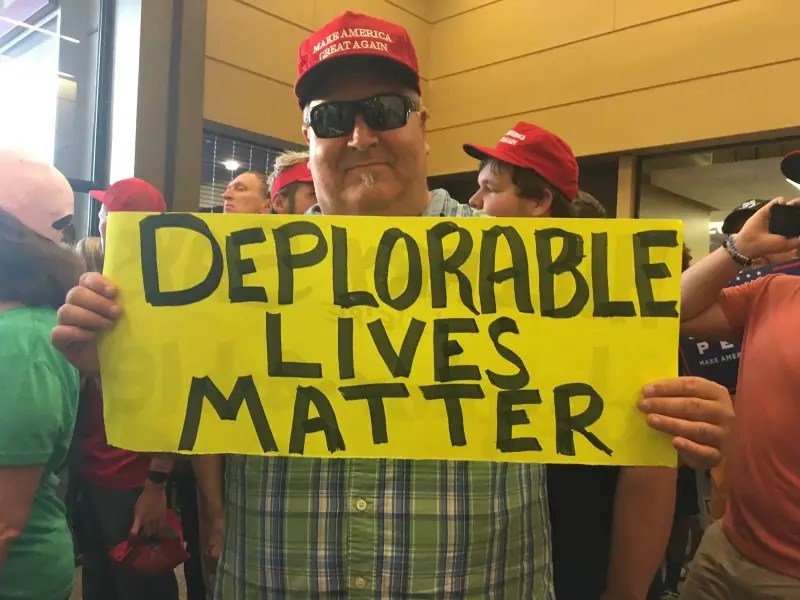
Perhaps the most honest thing Hillary Clinton ever did was to speak of her “basket of deplorables” after which she dismissed them as “irredeemable.” This is exactly how Hillary and most of our “leaders” think. Anyone who’s skeptical of them, anyone who asks for proof, anyone who’s willing to resist, is thrown into a “deplorable” basket and dismissed.

It will work until it doesn’t; indeed, it’s already not working. But the system is not about to give in. At the presidential level, America’s likely candidates for “leader of the free world” in 2024 are Joe Biden and Donald Trump, or, as my wife likes to joke, ODR versus ODR. Old Demented Rotter versus Old Divisive Rotter.

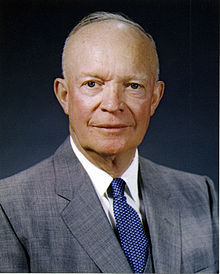
Let’s take the “old” part first, since ageism is an instant rejoinder. It used to be said that being President of the U.S. was the toughest, most demanding, job in the world, making enormous demands on physical stamina and mental acuity. Eisenhower was considered old when he left the presidency at the age of 70, replaced by John F. Kennedy at the age of 43. If Biden is reelected in 2024, he will be 82 that November, and Trump will be 78. Both men are well past their prime. Are they truly ready for the rigors of the office? Do we trust either man to be able to complete another four-year term in office?

Now, let’s take the “D” part. Many observers have noted Biden’s mental decline; it was readily noticeable in 2020 when he ran as a candidate in the primaries. Sadly, mental decline often accelerates with age, sometimes unpredictably. Reelecting Joe Biden in 2024, assuming he runs again, will likely lead to his vice president taking over for him during his second term of office. Trump, meanwhile, is a divisive leader whose personal motto might be “divide and rule.” A leader should bring people together for their mutual advantage, not tear them apart for his own advantage.

And now the “R” part, the “rotter.” Neither Trump nor Biden is a champion of workers, of the poor, of the vulnerable. Neither has much empathy. Both are deeply compromised. It’s a common failing of “big fish” politicians to have so little regard for the commoners that they rule, but surely we can find candidates that are, dare I say, less rotten?

“Leaders” like Hillary Clinton are fond of denouncing large swaths of the American public as “deplorable.” Is this not a classic case both of projection and of profound narcissism? How do we move beyond ODR versus ODR in 2024?

What a country! (Azeen Ghorayshi / BuzzFeed News)

Hollywood, the Oscars, and America

W.J. Astore

I finally watched the Oscars last night. Of course, I’d heard about Will Smith slapping comedian Chris Rock because of a joke Smith’s wife didn’t like. It was an ugly incident, but fortunately Chris Rock kept his cool. Hollywood loves itself, much like America loves itself, and an A-list actor like Will Smith can pretty much get away with anything, including assaulting one of the hosts for a joke that, though apparently well-intended, obviously miscarried. Smith never apologized during the show, though he finally issued a pro forma apology yesterday once he figured out that public opinion was against him.

I’m a movie buff, and I’ve always enjoyed watching the Oscars, but each year the shows get tackier, sleazier, and more morally repugnant. As my wife said this morning, you see a lot of sick people at the Oscars with no morals and apparently no souls.

I did want to mention one oversight at the Oscars. Now, I have to admit I didn’t listen to every word of every acceptance speech, but those I did hear all had one glaring omission: None of the Oscar winners thanked the fans, the movie-goers, the ones who truly pay them and support them. Instead, the winners thanked the usual suspects: agents, mentors, producers, big companies like Apple and Disney and Netflix, with occasional references to parents and to God. After slapping Chris Rock, Will Smith blubbered on about how he was all about serving God and love, apparently seeing no contradiction between his words and his deeds.

Of course, the Oscars are always a self-indulgent spectacle, always an exercise in narcissism and self-promotion. But would it really hurt the Oscar winners to take a few moments to thank their fans and movie-goers, especially when going to the movies was a bit risky given the Covid-19 pandemic? Instead, I heard talk of how brave they all were for continuing to make movies during the pandemic.

Again, I’m a big movie fan, and I don’t dismiss their artistry and often their cultural significance. At their best, movies can truly inspire us; they can help to open doors to new worlds; they are truly part of the human experience. What’s truly sad is how the Oscars and Hollywood’s yearly celebration of itself actually diminishes the movies rather than showcasing and enhancing them.

The Oscars should go the way of the Emmy Awards — they should simply disappear, having outlived their usefulness and having become something of an embarrassment.

A rare moment of grace at the Oscars, as Lady Gaga helps Liza Minnelli announce the award for best picture (Photo by Christopher Polk)

Testament of Youth

W.J. Astore

Perhaps the most powerful antiwar film that I’ve seen is “Testament of Youth” (2014), based on Vera Brittain’s memoir of the same title. I watched it soon after it first came out, and I rewatched it this past week after Russia invaded Ukraine. The film rips your heart out with its depiction of the costs of war: battered and bloodied bodies, blasted and shattered nature. It’s set during World War I and recounts Brittain’s heartrending loss of her fiancé, her brother, and other close friends. Brittain is played brilliantly by Alicia Vikander, who pours her heart and soul into every scene.

Especially powerful is the scene near the end, where Brittain passionately denounces war and the way it demonizes and dehumanizes the enemy, even as “patriots” (including her younger self) send young men off to fight and die in the name of honor. Even if you haven’t seen all that leads up to this scene, it retains its power (you may need to click and watch on YouTube):

“No to killing. No to war.”

Near the end of Brittain’s memoir, she passionately asks us to find another way, a better way, than the murderous one of war. She seeks to “rescue mankind from that domination by the irrational which leads to war,” to lead an “exultant fight” against war that would enlarge the soul of humanity.

Earlier in her memoir, she quoted from the war diary she kept that “It is impossible to find any satisfaction in the thought of 25,000 slaughtered Germans, left to mutilation and decay; the destruction of men as though beasts, whether they be English, French, German or anything else, seems a crime to the whole march of civilization.” How right she was, and remains.

One aspect of this film I truly appreciate is that it shows the costs of war without glorifying battle. In fact, there are no spectacular battle scenes; no rousing music; nothing to distract us from war’s many horrors. The movie does not romanticize war in any way, which makes it that much more effective.

I’m astonished this movie isn’t better known. It is worth 100 “Avatars” and “Titanics” and Marvel/DC superhero movies. Then again, I suppose I shouldn’t be shocked; antiwar films are rarely that popular, no matter how powerful, no matter how well-crafted, no matter how true.

If you haven’t seen it, watch it. Think about its message. We need to ask ourselves, again and again, why we as humans simply can’t say no to war.

Alicia Vikander as Vera Brittain in “Testament of Youth”

America’s Twin Pandemics of Covid and Agency Panic

M. Davout

Agency and autonomy are fundamental to democracy. Panic is fundamental to fear and chaos.  Preserving personal agency while avoiding panicked reactions is one of the great challenges ahead of us. While the Covid pandemic will burn itself out, America’s pandemic of panic–manifested in the rise of wild and often evidence-free conspiracies–continues to accelerate. How much misinformation and mistrust can America tolerate before democracy itself crashes around us? Our very own M. Davout, who teaches political science, introduces the concept of “agency panic” and challenges us to take the red pill of uncomfortable truths.  W.J. Astore

America’s Twin Pandemics of Covid and Agency Panic

M. Davout

America is awash in conspiracy thinking and it is doing terrible damage to the country. However, the solution is not to dismiss conspiracy thinking altogether but to distinguish fake conspiracies from real ones.

Consider the many theories afloat about Covid-19.  Scrolling through the Facebook posts of anti-maskers and anti-vaxxers curated on the Herman Cain Award subreddit, one is struck by the sheer quantity of conspiratorial memes circulating among networks of likeminded Facebook friends. The Covid pandemic is variously presented as the product of a nefarious plot enacted by the Chinese government or by the US government or by the Centers for Disease Control or…the list goes on. Public health measures that have been recommended or mandated at the federal, state or local levels such as quarantining, masking, and vaccinating are similarly condemned as elements of the conspiratorial machinations of Anthony Fauci or Bill Gates (or both of them working in cahoots), of profiteering Big Pharma, of collectivizing communists, of Medicare-For-All socialists, and so on.

As Richard Hofstadter demonstrated in his famous essay, “The Paranoid Style in American Politics,” the United States has from very early in its history provided fertile ground for the organized circulation of political rhetoric warning in shrill tones about the impending takeover of the political system. Alleged nefarious groups named in these conspiracy theories included the Illuminati, the Freemasons, papists, Jesuits, anarchists, Jews, international financiers, and communists. 

While the anti-mask and anti-vax conspiracies circulating on Facebook today manifest the characteristics of “heated exaggeration, suspiciousness, and conspiratorial fantasy” which Hofstadter identified as typical of the paranoid style, the sense of what is at stake has changed. It is no longer just constitutional government that seems to be at risk. When you read the conspiratorial warnings available across the ideological spectrum—from QAnon enthusiasts or Trumpist dead-enders or health purists or anti-corporate populists, among others—you get the sense that people feel their very identities to be under threat. Has a threshold been passed that separates the conspiracy-mongers of today from their anti-papist, anti-Masonic forebearers?   

In his book, Empire of Conspiracy: The Culture of Paranoia in Postwar America (2000), Timothy Melley argued that conspiracy thinking fundamentally changed after World War II with the rise of the “information age.” Consumers of electronic mass media became susceptible to what he characterized as a state of “agency panic,” an “intense anxiety about an apparent loss of autonomy or self-control” in the face of pernicious systems of social control acting with a singular will. Notions of secret plots hatched by bands of conspirators aiming at the conquest of political power were increasingly replaced by visions of “whole populations being openly manipulated without their knowledge” through the effects of advertising, schooling, fluoridation, and so on. The USA was ground zero for this new form of conspiratorial thinking because the American embrace of the idea of rugged individualism was so at odds with the reality of an increasingly interdependent society in which self-sufficient farmers were a dying breed.

Empire of Conspiracy was published at the dawn of the surveillance economy ushered in by Google and Facebook. This economy has at the same time systematically perfected the relentless tracking of individual activities and facilitated the exchange of conspiratorial memes and messages lamenting the threats to individual integrity and freedom. Paranoid messages that are likely to attract eyes are moved algorithmically to the top of search results or share lists. The Covid pandemic has only supercharged these developments by boosting mass dependence on the internet and amplifying mass grievance against infringements on individual freedoms. 

The easy response to this internet-fueled conspiratorial dynamic would be to dismiss conspiracy thinking as the paranoid raving of the uneducated and ignorant if it weren’t for the fact that real conspiracies are continually afoot in our political system. One has only to take note of the ever-accelerating revolving door between public officialdom and the lobbying-industrial complex or to monitor the ever-greater lobbying and campaign expenditures of major industries such as Big Pharma or Big Coal or Big Tech to know that well-paid influencers are working diligently with corrupted politicians to poach the common good.

Yet the rising tide of agency panic-driven conspiratorial thinking continually diverts Americans from the true causes of their collective misery into attacks on those few public measures that are in our collective interest. 

It truly is a choice between taking the red pill or the blue pill, as The Matrix meme circulated by so many of the Covid conspiracy Facebook posters suggests. But, against their expectation, taking the red pill would lead to a clear-eyed understanding of how corporate influence peddling diminishes our lives rather than to a revelation that supposed college roommates Bill Gates and Anthony Fauci hatched a conspiracy against our freedoms fifty years ago.

M. Davout, an occasional contributor to Bracing Views, teaches political science at the collegiate level.

Many Decades of the Condor

W.J. Astore

I recently rewatched “Three Days of the Condor” (1975) featuring Robert Redford and Faye Dunaway. It’s a smart and understated spy thriller that takes on the Central Intelligence Agency (CIA) and the deadly games the agency plays in its pursuit of global dominance. In the aftermath of the Vietnam War and the backlash from Richard Nixon and Watergate, not to mention America’s role in overthrowing the Allende government in Chile in 1973, it became acceptable in Hollywood to make films that portrayed the U.S. government as sometimes less than noble in all its pursuits. Condor, the codename for Redford’s character, stumbles across a plot within the CIA to overthrow governments in the Middle East so that U.S. corporations could dominate the oil market, and for that he and his colleagues in the special branch where he works must die. The movie follows his efforts to stay alive among people who will execute their own for the greater good of The Company (the CIA).

At the end (spoiler alert), Redford goes to the New York Times as a whistleblower in an effort both to stay alive and to reveal the nefarious machinations of the CIA. A CIA senior official, played by Cliff Robertson, confronts Redford and asks him a question that is deadly in its implications: Will they print it? Redford is confident the newspaper will, but Robertson, in asking Redford how he can be sure that they will, reminds us that there’s no certainty the “liberal” New York Times will go against the wishes of the CIA.

Robert Redford and Cliff Robertson in “Three Days of the Condor”

This was on my mind today as news broke once again that the CIA is collecting “bulk data” on Americans without Congressional authorization and outside of normal oversight. Well, as some of my students used to say, if you’ve done nothing wrong, you have nothing to fear from the diligent and honest agents of the CIA, right?

There’s a little scene in the movie where Condor laughs at the conceit of the CIA in referring to themselves as the intelligence “community.” A community of powerful and ultra-secretive intelligence agencies — I’m sure we have nothing to fear from such an Orwellian concoction.

Anyway, if you haven’t seen “Three Days of the Condor,” I recommend it. As a bonus, it has one of the most powerful yet understated romantic relationships caught on film, with Redford and Dunaway both superb in portraying two people on the edge who are desperately looking for connection.

How to Prevent a Coup in Washington

W.J. Astore

Three retired Army generals recently wrote an op-ed at The Washington Post on their fears of a coup in the aftermath of the next presidential election in 2024. Their scenario: Biden gets reelected, but Trump or a Trump-like candidate refuses to concede. A hyper-partisan military splits, with some units throwing their support to the loser, leading to a coup attempt. The three generals further suggest that the military must act now to prepare for, and thus to prevent, such a coup.

I have several thoughts on this. First, and most obvious, is the military’s oath of office, which is to the U.S. Constitution. If the U.S. military, with all its authority in our society, and all the colossal sums of money we give it, can’t be trusted to honor its oath, then there is truly something fundamentally wrong with its leadership and its ethos. I would suggest immediate public firings and prosecution of any leaders who put political partisanship before the U.S. Constitution and the oath of office.

Second, what’s most striking to me is what these generals don’t say. They talk about partisanship and seem to assume the enemy is solely from the Trumpian wing of the Republican Party. If Trump would just disappear, along with his movement, America would be just fine. Really?

Here’s my take: Partisanship surely does exist, but it needs to be understood. It needs to be connected to America’s disastrous and dishonest wars and also to the greedy and dishonest behavior of the generals. If military veterans are dangerous, it’s because they feel betrayed. They believe their situation is hopeless — and thus many are alienated and angry. A Trump-like figure can exploit this alienation and anger precisely because the Democratic Party is doing so little to help the working classes, including military veterans. (Of course, Republicans are arguably doing even less.)

If you want fewer hyper-partisan veterans, give them something tangible, like higher wages, affordable health care, better job opportunities — some recognition that their sacrifices were not in vain. Show them you’re working to enrich all citizens, not just those who are already in the top 10%, or the top 1% for that matter. 

That said, I want to stress the culpability of the U.S. military in creating the potential conditions for a coup. The warrior ethos of today’s all-volunteer military is corrosive to democratic society. It’s the generals who advanced this warrior ethos, and it’s the generals who accepted, even applauded, the elimination of the draft. They didn’t want a citizen-military that would question the constitutionality of aggressive wars overseas. Now, a few of them admit to worrying about those demobbed “warriors” who’ve learned to believe less in the Constitution and more in the shock and awe of decapitating strikes.

These generals further fail to note the total lack of accountability within the senior leadership of the U.S. military for Iraq and Afghanistan, among other disasters. Indeed, the generals have, almost to a man, cashed in, none more so than General Stanley McChrystal, who actually was fired for cause. The vast majority of today’s generals retire with six-figure pensions and go immediately to work for the military-industrial complex. In place of Cincinnatus or George Washington, their role model is Gordon Gekko.

Want to stop future coup attempts? Admit to veterans that the wars they fought were based on, driven by, and perpetuated with lies. Unite to advance true democratic reforms. Act to ensure all future wars are defensive and authorized only by congressional declaration. And return to the citizen-soldier traditions of Cincinnatus and George Washington. Most of all, seek peace, among ourselves and with all nations.

Cincinnatus surrendered power and went back to the plow. George Washington has been called the American Cincinnatus. Today’s generals are much more fond of cashing in (Image courtesy of ohkylel @twitter)

The Herman Cain Award Subreddit and What It Says about America’s Political Crisis

Deaths from Covid-19 in the U.S. recently passed 800,000 with no signs of abating. The blame game is also not abating. Are corrupt elites exacerbating and exploiting a crisis for their own interests? Are “irrational” elements at lower levels exhibiting mass resentments at being bossed around? Why does everything seem polarized in America, even “common sense” steps to save lives during a raging pandemic? M. Davout uses the lens of the “Herman Cain Award” to take a closer look at America’s Covid dilemma. He reaches a conclusion that will challenge many. W.J. Astore

Learning from the Herman Cain Award

M. Davout

As America undergoes a series of overlapping domestic political crises—notably among them, determined attacks on democratic election processes, fierce resistance to public health responses during a deadly pandemic, reckless brinkmanship over federal government budgeting and debt payment—commentators often resort to the notion of political polarization as an explanation of our problems. A recent case in point is the disapproving mainstream media response to the Herman Cain Award (HCA) subreddit, which is devoted to showcasing the social media posts of anti-maskers and anti-vaxxers who get sick with Covid-19 and end up in hospital ICUs in need of breathing assistance.

Herman Cain, you might remember, was a failed candidate for the 2012 GOP presidential nomination.  He attended a Trump reelection campaign rally in Tulsa, posted a photo of himself and his entourage at the rally unmasked while belittling concerns about Covid, and then died of the disease six weeks later.

Herman Cain

For any given recipient of the Herman Cain Award, the presentation of captured social media posts follows a typical arc. The early posts feature memes and images disparaging Fauci, Biden, the medical establishment, mRNA vaccines, and masked and vaccinated Americans (“sheep”), intermixed with memes and images exalting Trump, the healing powers of Jesus, the adequacy of their own unvaccinated immune systems, and their independent and courageous selves (“lions”). Then comes a series of posts notifying followers of their falling ill with Covid and their shock at the severity of the symptoms, their eventual hospitalization and need for prayers. Finally, posting duties fall to a relative or friend of the afflicted, who reports on the increasingly more radical medical procedures undergone, the almost inevitable decline in organ health, and eventual death. GoFundMe appeals for donations to cover the obscenely high medical expenses round out many of the HCA posts.

Many of the comment threads for each post could fairly be characterized as largely (though not exclusively) being exercises in schadenfreude. Some posters belittle the pleas for aid from “prayer warriors” and the all-caps invocations of divine intervention to heal failing organs. Self-proclaimed liberal commentators sarcastically express their “dismay” at being “owned” by conservatives who have scored ideological points at the cost of their lives. Accusations are often lodged against rightwing media celebrities and GOP politicians who amplify the conspiratorial memes which appear again and again on the social media accounts of the HCA recipients.

Occasional critical reference is made to the facilitating roles played by foreign disinformation campaigns in broadcasting lies and to Big Tech in channeling lies to those most susceptible to believing them. But, by and large, the commentators are unrelentingly hostile to the HCA recipients themselves for “shitposting” the lies to their family, friends, and other social media followers, and leaving family members bereft and financially devastated when they die.  

In a recent New York Times article, an academic psychologist is paraphrased as arguing that “these websites are an outgrowth of the nation’s extreme polarization.”

To my mind, application of the notion of polarization to a political crisis or conflict encourages one to withhold judgment about the truth claims and reasonability of each of the two sides to a dispute. Particularly in the case of the HCA, polarization is too simplistic a way of understanding the fierceness of the social media pushback against vaccine denial and the avoidable deaths such denial causes. For me, the HCA posts are better understood in the context of a perennial question in my academic field about political dysfunction: is political crisis more a product of the pursuit of unaccountable power by corrupt elites or is it more a product of mass resentments which often find expression in campaigns of scapegoating and demonizing people?

Political theorist Michael Rogin usefully framed this issue within a longstanding debate between “realist” scholars who frame historical episodes of political dysfunction (e.g., McCarthyism) as products of elite-driven programs of political repression serving the interests of capitalism, the state apparatus or other powerful institutions, and “symbolist” scholars, who emphasize the dangers of popular indulgence in conspiratorial thinking and paranoid fears of racial, ethnic, religious or cultural “others.”

In response to the needless prolongation of the Covid pandemic, many of the HCA commentators seem to have taken the symbolist position, blaming rightwing members of the polity for indulging and promoting paranoia (e.g., drawing parallels between public health measures against Covid and Nazi genocide) and conspiratorial thinking (e.g., the offer of free vaccines as a Trojan horse for socialized medicine). To be sure, there are voices among them that take the realist position of blaming rightwing political and media elites for instrumentalizing populist anxieties for their own power interests.

So rather than characterize HCA commentary simply as “cruel sentiment,” I see much of that commentary as lodging symbolist (and, in some cases, realist) critiques of a deadly form of political dysfunction afflicting our public life, namely the perverse resistance of an irrational minority to reasonable and time-tested public health measures aimed at protecting all of us from exposure to a disease that kills far too many and disables many more.

M. Davout is a professor of political science and an occasional contributor to Bracing Views.

Disagreeing Without Being Disagreeable: The Kyle Rittenhouse Verdict

W.J. Astore

Disagreements are part of life. And indeed my friends, and readers of this blog, have been known to disagree with me. And thank goodness for that! Who’d want obsequious toadies for friends? And, if I’m writing articles that are truly “bracing,” obviously I should expect disagreements. And I do, which is one of the best aspects of this site. We learn from people who disagree with us, that is, when they have reasons well supported by facts, or wisdom learned from their own life experiences, and so on.

America is highly polarized today, and it seems as if people can no longer disagree without being disagreeable. Discussions quickly become arguments, which turn into shouting matches, with lots of name-calling and attacks on people and their alleged motives and leanings.

There’s nothing wrong with impassioned disagreement. But too many people start from there and quickly descend to being disagreeable, even violently so. The end result is that no common ground is discovered, nothing is learned, and any kind of concerted action to effect meaningful change is sabotaged.

Take the case of Kyle Rittenhouse. He was recently acquitted of murder after shooting three people during a Black Lives Matter protest in Kenosha, Wisconsin, that turned violent. The jury found that there wasn’t enough evidence to convict him beyond a reasonable doubt. I’ve watched video from the protests, and it appears to me that Rittenhouse acted in self-defense. Other people may watch this video evidence and watch the trial and reach a different conclusion, and that’s OK. We should be able to discuss this reasonably and rationally, while putting some faith in the verdict reached by the jury.

Kyle Rittenhouse (SEAN KRAJACIC/PHOTOGRAPHER: SEAN KRAJACIC /GET)

Scanning my Facebook feed, however, I see polarization and vituperation about the verdict. It seems like if you agree with the verdict of “not guilty,” you’re obviously a white supremacist, a gun enthusiast, and a Trump supporter. On the other hand, if you disagree with the verdict, you’re obviously a libtard who hates guns and wants to defund the police. It’s a disagreeable mess with no common ground except mutual suspicion, even hate.

Even as I wrote those words, I got an email with an article on the verdict:

Kyle Rittenhouse, white supremacy, and the privilege of self-defense

Rittenhouse has the benefit of boyhood — white boyhood

By Jeneé Osterheldt

In this article, Osterheldt writes that the three white victims of Rittenhouse were “perceived to be fighting for Black lives to matter,” so their lives were “also up for grabs.” But Rittenhouse, also white, was supported by the system because he “believ[ed] in the authority of whiteness.” His life was apparently never “up for grabs.”

This author then authoritatively declares that: “Had he [Rittenhouse] been white and protecting Black lives in Kenosha instead of purportedly protecting cars, he’d be in prison. Or maybe cops would have pepper-sprayed him instead of giving him gratitude and water. Rittenhouse has the privilege of white power.”

Again, based on the video evidence and the trial, I don’t see this verdict as being driven by “white power” and privilege. Rittenhouse’s first victim was a man who chased him, threatened him, and tried to take his gun from him. The second victim was beating Rittenhouse with a skateboard. The third victim (wounded in the arm) was pointing a gun at Rittenhouse, as he himself admitted during the trial. The jury watched the videos, heard the testimony, and decided Rittenhouse’s actions did not constitute murder or attempted murder. From what I’ve seen and heard, I agree with the jury.

Now, it shouldn’t matter, but all three of Rittenhouse’s victims were white. Two of the three were attacking him before they were shot (the two he killed), and the other pointed a handgun at him (the one he wounded). The first man he shot was mentally unbalanced; video at the scene shows him shouting racial obscenities, including the N-word, at Blacks, daring them to shoot him.

So, I disagree that Rittenhouse’s acquittal is an example of white privilege and power. I shouldn’t have to say this, but I’ll add that I support the Black Lives Matter movement, that I’m not a “gun enthusiast,” and that I’ve never voted for Trump and never will. (I’m not a fan of Biden either.)

We can disagree based on evidence, reason, facts. We can disagree without being disagreeable. Can’t we?

Our National Health Care Plan

W.J. Astore

Fifteen years ago, I saw a bumper sticker on a colleague’s car:

Our National Health Care Plan — Don’t Get Sick.

That’s about as succinct an expression of U.S. health care as you can make. We have no national health care plan. Your only hope is not to get sick, or, if you do get a serious (read: expensive) illness, to die quickly before you and yours are bankrupted.

I often joke that health care is really wealth care in America, and an anecdote shared by a friend this morning confirmed it. He recently had a bad case of the flu, but he confirmed it wasn’t Covid-19 through home test kits. Since he travels to Germany, he bought several home test kits there that were on sale for the equivalent of roughly one dollar. Compare that to Covid home test kits at CVS here in America (assuming you can find one), which retail for $30.00. As my friend noted, “Your profit-driven health care industry at work!”

Profiting from sickness is truly an “exceptional” feature of American capitalism. Isn’t it wonderful that you have the “freedom” to purchase private, for-profit, health insurance that costs you hundreds of dollars a month, with deductibles of $5000 or $10,000 or higher, with co-pays and various other costs and restrictions? Truly, freedom isn’t free!

A reminder: Joe Biden ran against Medicare for all and said he’d veto it if it ever reached his desk, which it obviously won’t. But he did promise a public (government-provided) option for health care, a promise he has failed to keep, just as Barack Obama failed to keep his promise for a public option in 2008-09. And the Democrats wonder why so many people either don’t vote or vote for an even more pro-business party.

The latest betrayal is the Democratic Party’s capitulation to Big Pharma. Instead of allowing Medicare to negotiate prices for all prescription drugs, the Democrats have decided to allow negotiation for only 10 drugs, the new prices of which won’t become effective until 2025. One of these drugs is insulin. So if your insulin costs too much and you need to ration it, thereby imperiling your health, never fear: maybe in four years it’ll be affordable again. Or maybe not.

And if you’re sick and you need an expensive drug that’s not one of the magical ten, well, too bad for you. Maybe you shouldn’t have gotten sick. Or maybe you should have gotten a job with better health care benefits. It’s most certainly your fault, not the government’s and certainly not that of the profit-driven health care industry.

Clint Eastwood, in “The Outlaw Josey Wales,” said that “Dying ain’t much of a living.” That may have been true about bounty hunting, but it turns out that many indeed are making a living, indeed a killing, off of health care in America. Hooray capitalism!

Are You Ready for Four More Years of Trump?

W.J. Astore

I had no idea America elected Joe Manchin and the Senate Parliamentarian as the two most powerful people in our country. Senator Manchin has been the convenient obstacle and scapegoat for the corporate Democrats. He’s allegedly blocked tougher action on climate change. He’s helped to defund efforts to make community college free, to extend Medicare, to lower prescription drug prices, and so on. The Senate Parliamentarian, meanwhile, who is in fact unelected and has no real power, ruled that hiking the minimum wage is something that simply can’t be countenanced under budgetary reconciliation rules. I think I got that right, not that it matters. It’s all a smokescreen, it’s all BS. The Democratic Party, like the Republican, answers to the owners and donors. It is doing exactly what it’s been told to do, abandoning all its progressive promises (it never had any principles) in the false name of compromise and bipartisanship.

And this is exactly why Donald Trump will be reelected in 2024.

Not that the corporate-owned Democrats care, mind you. Things are actually easier for them with Trump in office. They can raise more money off their fake “resistance” to Trump, and they can wash their hands of tax cuts for the rich and more and more corporate-friendly deals, blaming them on Trump when of course the Democrats too support all these things. For that matter, so too does the Supreme Court. Justices like Brett Kavanaugh, Neil Gorsuch, and Amy Coney Barrett weren’t just picked because they lean against abortion: they were picked because of their pro-business sympathies. Joined by Justices Roberts and Thomas and Alito, corporations can count on winning cases in their favor by at least a 6-3 margin. Corporations are people, my friends, and they rule us through the political parties they own and the court they have packed.

If many Americans don’t know this, they certainly sense it. They know politicians like Biden and Harris are phonies. They are so phony that people actually prefer a twice-divorced wife-cheater, con man, and reality TV host like Trump for his authenticity. At least Trump speaks their language and apes their grievances.

Former President Obama, meanwhile, gives speeches blaming the voters for not voting. He says with a straight face that we can’t always get what we want, but that if you don’t despair and keep voting blue no matter who, you may yet get a few crumbs after 2024. Who believes this anymore?

Hillary Clinton and the DNC were so bad in 2016 that America elected a failed casino owner with a fake university named after him. Biden/Harris and the DNC are so bad now that in 2024 America will elect a bloviating dictator wannabe and coup-plotter who threw his own VP under the bus as president. Yup, the same guy again. Maybe this time Ivanka will run the World Bank or possibly the State Department (can she be worse than Mike Pompeo?).

That blurry man is returning — and so too is his daughter. Not so sure about the guy on the right

America has become a very bad joke — worst of all, the joke’s on us.