What is Biden’s Worldview?

W.J. Astore

Joe Biden’s worldview, it’s safe to say, poses no threat to big business and high finance. If this weren’t true, he would have been stomped on just like Bernie Sanders was stomped on during the primaries. And who did the stomping? Establishment tools like Barack Obama.

Back in January 2011, I wrote about my reaction to Obama’s state of the union address. His speech was all about competition and consumerism and making America great again. Great not as in good or moral or just, but great as in economically competitive. If Biden is elected on November 3rd, you can count on hearing this message again in January 2021.

They say Trump is a servant of Wall Street. It’s true that he’s a creature of it, but Biden is arguably more servile toward it. As Don Henley sang: “Now it’s take and take takeover, takeover/ It’s all take and never give.” The makers are the takers, and you know who serves the makers.

Anyway, here’s what I wrote in 2011:

Obama: It’s a Darwinian World, So Work Harder!

01/26/2011
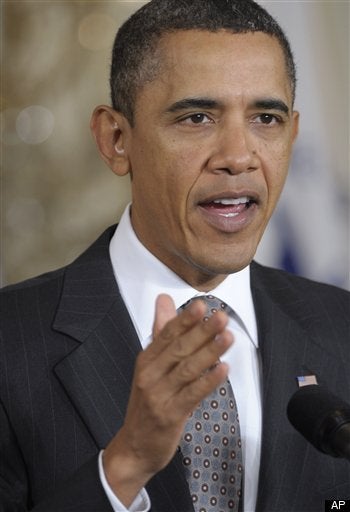
Last night’s State of the Union address boils down to one point: In a cutthroat world, America has lost its edge. We’re dull, and the Chinese are sharp. They have faster computers and high-speed rail. Their students work harder and score higher on math and science tests. It’s Sputnik all over again. The only way to defeat them is to out-compete them.

It seems President Obama concluded that we as Americans can only understand the rhetoric of competition (and the related rhetoric of consumption). Look closely at his speech, and you’ll see no mention of conservation (whether of energy or any other natural resource). You’ll see precious few references to cooperation. Instead, it’s all about restoring America’s greatness while at the same time keeping America safe from terrorists.

We can’t solve future problems with the government of the past, Obama said. But I would argue that we can’t meet future challenges with the rhetoric of the past. For Obama, America is still the exceptional country, the light on the hill, though we may shine less brilliantly today. His solution is not to rethink our belief in our greatness, but to rekindle our competitive fire: to rededicate ourselves to being Number One, irrespective of the cost to others.

In an era of globalization and of shrinking natural resources, Obama continues to think in terms of nations in relentless competition. And to compete successfully, we must struggle, produce, innovate, all in the name of greater economic power and military prowess.

We must, Obama exclaims, remain exceptional: Exceptional, that is, in our profligate consumption of the world’s resources and our prodigious expenditures on weaponry.

And with a State of the Union like that, who needs a Republican rejoinder?

Professor Astore writes regularly for TomDispatch.com and can be reached at wjastore@gmail.com.
Struggling to Vote in Trump Land

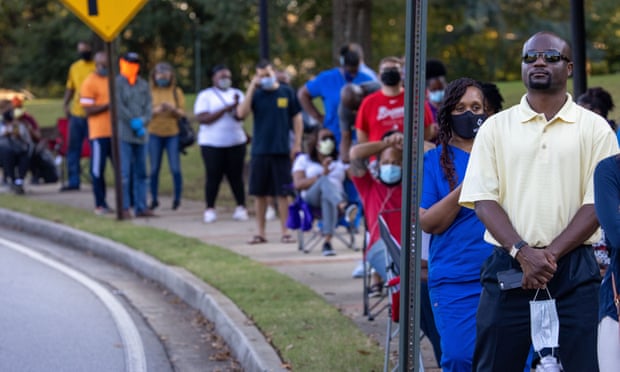
Long lines for early voting in Georgia. A few voters waited up to ten hours to cast a ballot

M. Davout

Whenever I teach Introduction to American Government, a course for freshman, I give a lecture on the notorious Bush v. Gore 2000 presidential election and use the Florida recount story to teach a basic lesson about U.S. politics: elections are not an exact science because vote totals in any given election are always only approximations. In the period leading up to the 2000 fiasco, in typical nationwide elections upwards of a million votes were tossed as uncountable for various reasons.

The reasons for the imprecision of election tallies are several but the three that I highlight to my students are: (1) the wide variation across jurisdictions in the kind, quality and age of voting technology and in the reliable application of procedures and standards (as evidenced in 2000 in the faulty punch hole devices in South Florida that resulted in many thousands of uncounted ballots); (2) the amateur status of poll workers (an hour or two of “training” qualified me to serve at a polling station during my graduate school days); and (3) the partisanship of election officials (as notoriously exemplified in 2018 by Secretary of State Brian Kemp’s contested “oversight” of the close election that resulted in his election as Georgia governor). Since 2000, many states adopted computerized voting systems in what turned out to be the false expectation that precision in voting tallies could be achieved through digitization.

We have gotten past presidential elections only approximately right and we can expect this upcoming one to be no more than approximately right. And given the unprecedented number of requests for absentee ballots, state and county switches to mail-in balloting systems during this pandemic, slow-downs in mail delivery engineered by Trump’s postmaster general, and Trump’s unrelenting campaign to de-legitimize absentee and mail-in ballots, the likelihood is that the tally of uncounted ballots will be higher than ever this November. As a longtime absentee ballot voter, my recent experience with both the local election board and local mail delivery service does not give me confidence.

I mailed my absentee ballot request for the November 3 election in mid-August and was still waiting for a ballot in late September. I emailed the local election board and was told that they couldn’t find my paper ballot request (curiously, my wife’s request, which had been dropped off in a separate envelope with mine, was processed). I was instructed to file another request, this time electronically, which I immediately did. Notified by email that my absentee ballot was mailed October 1, I am still waiting for its arrival two weeks later. Meanwhile, I did receive an absentee ballot by mail but it was my neighbor’s and this botched delivery only increased my unease.        

When I think of the many voters across the country who might encounter similar problems and have less time and energy than I have to follow up on undelivered or delayed absentee ballots, I begin to wonder if the imprecision of November’s tallies will be on such a scale as to change the outcome. And, if not change it, then leave it open to dispute, a dispute to be settled by a Supreme Court with justices who are increasingly conservative and in three cases beholden to the man who nominated them.  It’s what Trump is counting on for “victory.”

M. Davout, a professor of political science, teaches in the Deep South.

Even the Law is Dead in America

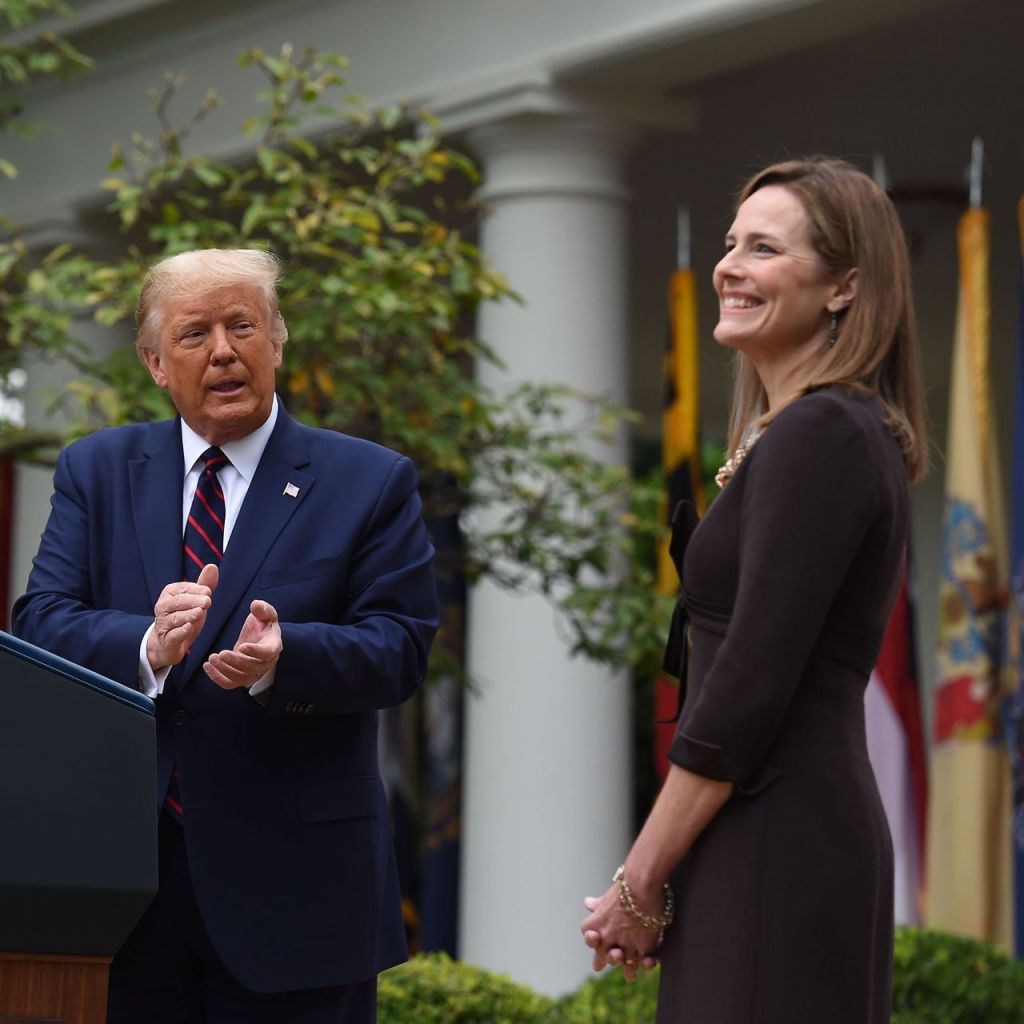
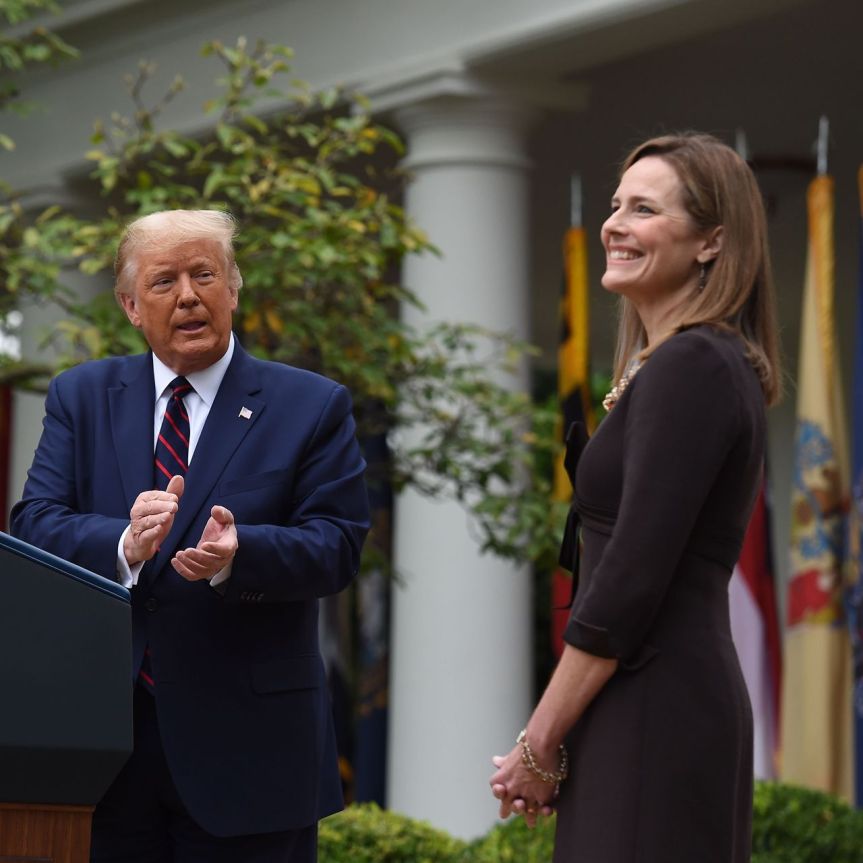
Amy Coney Barrett (the one not clapping)

W.J. Astore

This snippet just showed up in my email (courtesy of the Boston Globe):

Supreme Court nominee Amy Coney Barrett declared Monday that Americans “deserve an independent Supreme Court that interprets our Constitution and laws as they are written,” encapsulating her conservative approach to the law that has Republicans excited about the prospect of her taking the place of the late Justice Ruth Bader Ginsburg before Election Day.

Now, I know this is coded talk. The idea of a close and literal reading of the U.S. Constitution and related laws is meant to tell conservatives that she is not an activist, that she is not liberal in any way. But it also means that she’s mainly, in a bizarre way, a clerk rather than a judge — if her statement was meant to be the truth, the whole truth, and nothing but the truth. But it isn’t.

Barrett is spouting half-truths, since conservative judges are just as activist as their liberal counterparts on the bench. They simply disguise their activism using terms like literalism, which is “strict” and “conservative” and allegedly in keeping with what the Founders intended, as if we can be mind-readers. And even if we could be mind-readers, hasn’t the world changed a lot in roughly 250 years?

Look, I’m a historian, not a lawyer. I’m no expert on judging the law, but I can view the law in historical terms. And in those terms the law is organic, not static, as is our understanding of it. Put differently, the law should be made and remade for us, not we for the law. Because we’re human, we’re imperfect, the societies we create are imperfect, and so too are the laws we create.

Our goal should always be to form a more perfect union, to grow in understanding and compassion. Such is also true of the law. If all these judges do is to issue rulings simply on what is written in the documents before them, why do we even need a Supreme Court?

A static system of laws based on the writings of men who lived 250 years ago is not only unwise: it’s inhuman. Even the law is dead in America.

Update (10/13/20):

I used “literalist” when “textualist” and “originalist” seem to be the preferred terms for this judicial approach.

But judicial literalism echoes the Biblical literalism that is consistent with this judicial approach: the idea the Bible, like the law, should be read plainly, literally, based on the text, with no changes based on new scholarship.

It’s a mindset, an alleged quest for certainty through “simple” readings, but what it’s really all about is a deference to authority figures in the here-and-now who claim to know how to make these “simple” readings. And when they do, these readings are always in their favor.

Surprise! God favors a conservative patriarchy, just as the law does. Who knew?

Update 2 (10/14/20)

It beggars belief that an educated adult in America would have no firm opinion on climate change. Heck, even Trump has admitted there’s a human component to the same. But Amy Coney Barrett says she has no “firm views” on climate change; meanwhile, her father has been a lawyer with Shell Oil for decades. And a major case involving Shell on climate change is pending before the Supreme Court. Coincidence? See this article by David Sirota & Co.

https://www.dailyposter.com/p/upcoming-scotus-climate-case-involves

What’s sad about these sham senate hearings is how nominees like Kavanaugh and Barrett end up effectively perjuring themselves with their answers. I know: I’m not a lawyer and technically it’s probably not perjury. But they essentially answer questions dishonestly in their quest to be confirmed. Here’s an example:

https://www.theguardian.com/us-news/2020/oct/13/kamala-harris-amy-coney-barrett-senate-hearing

Finally, a friend made two fine points about Barrett. The first is she’s smart with the law; the second is she’s a person of faith. But what kind of smarts, and what kind of faith? Smarts that are limited, uninformed by compassion and an appreciation for the human condition, can be sterile. Faith that is rigid and shaped by a patriarchal church can be hidebound, conveying certainty and a holier-than-thou attitude.

The Failure of Our “Free” Press

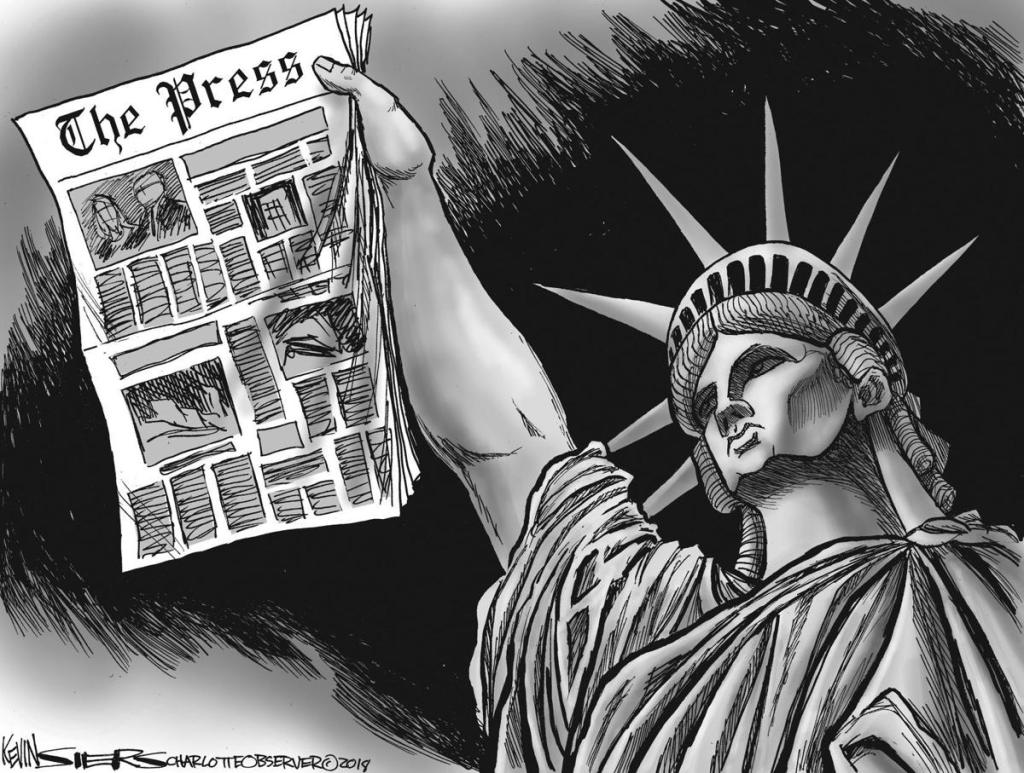
For all the talk of a “free” press that has the guts to tackle the powerful, the truth is our press is mainly a for-profit operation that is largely owned by the powerful. We get a lapdog press instead of a watchdog; we certainly don’t get an attack dog. I wrote about this in January of 2012; what I didn’t foresee is how that press would facilitate the rise of a petty demagogue like Donald Trump, mainly because he’s good for ratings and serves the needs of the powerful, but also because so many Americans have lost faith in the media, so much so that they buy the lies of a con man and serial liar like Trump. In short, if you’re tired of the corporate-friendly lies at CNN, why not turn to the entertaining conspiracy theories and lies of a manipulator like Trump?

If America truly had a watchdog press that protected the people, a serial liar like Trump should never have gained such a powerful purchase on our national narrative. Even now, as Trump continues to endanger our national health during a pandemic, the press largely treats him as a “normal” president.

The Failure of Our “Free” Press

01/13/2012

W,J. Astore

Do we have a truly free press, one that is willing to challenge the powerful and to serve the people?

A recent editorial by Arthur S. Brisbane at the New York Times suggests that our press is more lapdog than watchdog.

A truly free press needs guts. It needs to be willing to say, “I accuse.” Yet as Glenn Greenwald points out, our mainstream media today willingly acts as “stenographers” to the high and mighty, as if established elites need more support and more privileges.

The other day I ran across a passage in Arthur Schopenhauer’s Essays and Aphorisms that has much to say about freedom of the press as well as the perils of source anonymity. In full it reads:

“Freedom of the press is to the machinery of the state what the safety-valve is to the steam engine: every discontent is by means of it immediately relieved in words—indeed, unless this discontent is very considerable, it exhausts itself in this way. If, however, it is very considerable, it is as well to know of it in time, so as to redress it. — On the other hand, however, freedom of the press must be regarded as a permit to sell poison: poison of the mind and poison of the heart. For what cannot be put into the heads of the ignorant and credulous masses? — especially if you hold before them the prospect of gain and advantages. And of what misdeeds is man not capable once something has been put into his head? I very much fear, therefore, that the dangers of press freedom outweigh its usefulness, especially where there are legal remedies available for all grievances. In any event, however, freedom of the press should be conditional upon the strictest prohibition of any kind of anonymity.”

That last statement is the kicker. The media’s stenographer-types market the “poison” of the elites, whether governmental or corporate, and they often do so under the cover of source anonymity. As a result, the “credulous” masses have no way to track the poisoners, and few avenues to find an antidote.

Schopenhauer’s statement also condemns our press for its failure to serve as a “safety-valve” for democracy. Indeed, because our mainstream press is so sycophantic, it fails in its democratic duty to relieve the people’s discontent, notably in its failure to empower the people to redress the abuses of power by established elites.

When our “free” press agonizes over whether it should challenge the “facts” of societal elites, is it any wonder why so many people have lost faith in it?

Hence the rise of the various “occupy” movements. They know that the mainstream press is in thrall to power and is therefore compromised, thus they’re seeking a new path to redress their grievances — and new antidotes to the poison spread by the powerful to intoxicate the minds and hearts of the powerless.

Our press, as Schopenhauer notes, has much power to spread poison, but it also has the ability to serve as an antidote to the poison spread by others.

The ideal of freedom of the press, so crucial to democracy, is upheld only when its practitioners willingly challenge the so-called “facts” of the powerful.

Give us a watchdog press willing to bite the hand that feeds it, not a lapdog that snaps up all the little treats fed to it by its masters.

Professor Astore writes regularly for TomDispatch.com and can be reached at wjastore@gmail.com.
The Election Without a Future

Their vision for the future is stuck in the past

W.J. Astore

Isn’t it remarkable that Joe Biden and Donald Trump have no compelling vision of a future America?

Both Biden and Trump are retrograde candidates. Biden talks of restoration. He wants to restore comity and decency. To turn the clock back to a mythical time of bipartisan accord. A time when Americans sought to help other Americans. Trump, of course, is about division and carnage but he has his own vision of restoration. Trumps appeals to the America of the 1950s, before the Civil Rights movement, before the Vietnam War protests, before the Women’s Liberation movement, before Roe v. Wade was the law of the land, and (taking it back even further, to the Roaring Twenties, perhaps), before FDR’s New Deal.

It tells us something that Biden and Trump are so past-oriented. It suggests our best days are behind us, that we know, on some level, the future is in the crapper, what with extreme weather, anti-social technologies, forever wars, pandemics, exploding deficits, and the ever-growing gap between the richest few and poorest many.

The America I grew up in was future-oriented. Space travel would be routine. We’d have a moonbase; we’d have journeyed to Mars and Jupiter; we’d have flying cars; we’d have rewarding work, with more leisure time; we’d live longer, healthier, richer lives. That was a vision of the new millennium, but here we are, twenty years into it, and our political candidates look desperately (Biden) or maniacally (Trump) to pasts that never really existed.

A saying attributed to Yogi Berra is that the future ain’t what it used to be. Now it seems we have no future. Just one day after another, chasing our tails and calling it “progress.”

Why is this? Perhaps it’s because certain powerful forces in American society like things just the way they are. They’d rather have us fighting over which past is more comfortable to us than have us reaching for a new future without them in charge. That’s one big reason we have two presidential candidates in their seventies with their gear shifts locked permanently in reverse.

Biden and Trump both want us peering closely into the rear view mirror (even as Trump’s is more distorted) when we should be looking ahead through the windshield. Put differently, Biden is comity without change, and Trump is American carnage on steroids. Considering both, it’s an election without a future.

Monday Musings: On Russia, Helplessness, and Polls

W.J. Astore

A few items for this Monday:

1. A strategic analyst wrote to me about how America can improve relations with Russia. The gist of my response was this:

I totally agree on ending the “new” cold war. But the military-industrial complex (MIC) seems determined to use threat inflation to justify high Pentagon budgets. Meanwhile, establishment Democrats think they can use Trump’s alleged softness toward Russia against him. Hardline policies rule the day.

What is to be done? First, I suppose, is recognizing the vital importance of domestic politics — and profit and power — vis-a-vis our foreign relations with Russia. As long as the MIC keeps exaggerating the Russian threat, and as long as the Democrats keep exaggerating the Russian threat to the election while alleging Trump is a Putin-puppet, there’s little we can do. We simply need to work to change the narrative.

2. So many Americans have a sense of learned powerlessness. We simply think there’s nothing we can do to effect change. As I wrote to a friend this weekend: Lots of people have lost faith in government. But they’ve lost faith in collective action as well. They just don’t think they can do anything to fight corruption and a rigged system.

They feel powerless — then a Messiah-like candidate comes along offering hope and change. (In a strange way, Trump is the yang to Obama’s yin.) Trump said he’d drain the swamp — but it proved fetid and fertile land for his long con. His supporters just love the guy even as he hurts them — but at least he makes them feel good, empowered, liberated from the libtards …

A true confidence man, Trump poses as a helper. He’s going to drain the swamp, make things better, make us (you) great again. Turn back the clock — when America was America, men were men, women were women.

Interestingly, Trump has no vision for the future. His vision is relentlessly retrograde. The only way we can be great “again” is by rejecting change and today’s “kids” who support BLM, LGBTQ, and so on.

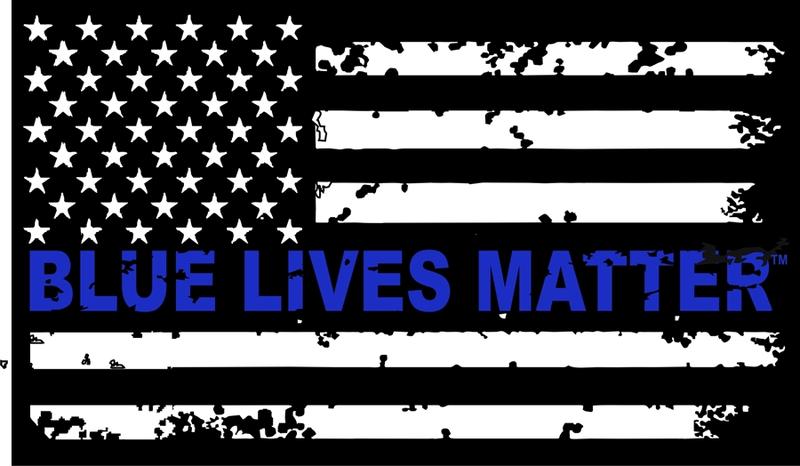
A new wrinkle is the reactionary and authoritarian “blue lives matter” narrative. Who could have guessed that American activism would culminate in societal militarization and the glorification of police forces?

I’ve seen a few of these on cars and trucks — and I live in an allegedly strong Democratic state

3. Recent polling suggests Joe Biden has a lead of up to 14%. Don’t believe it. As I wrote to a friend: My sense is that this election will be very close. Many people support Trump but they keep that support quiet. And his people show up to vote. Maybe twice if they follow Trump’s advice. Plus, of course, it’s the electoral college that matters, not the popular vote. And there’s still a lot that can happen in the next month.

Readers, what are your musings for this Monday?

Nature Cannot Be Fooled — Nor Conned

W.J. Astore

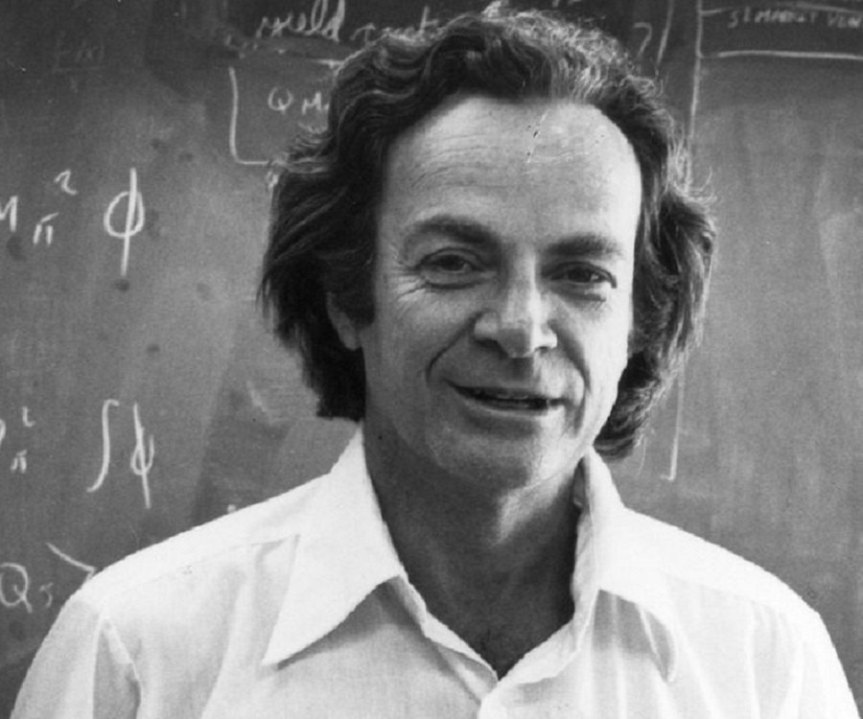
News that President Trump has COVID-19 and must be hospitalized highlights Richard Feynman’s famous observation that, whether you’re dealing with technology or science or medicine, reality must take precedence over public relations, for nature cannot be fooled. Many Republicans have been proud to act carelessly, refusing to wear masks or even claiming the virus is a hoax. Trump, for example, enjoyed making fun of Joe Biden and his propensity for mask-wearing; he further claimed the virus would simply disappear.

Trump’s illness is a sobering reminder — and we shouldn’t have needed one — to take medical warnings seriously.

Here’s what I wrote back in March:

The Coronavirus Is Immune to Lies

richard-feynman-1
Richard Feynman

W.J. Astore

Investigating the Space Shuttle Challenger explosion, physicist Richard Feynman reached a famous conclusion: “For a successful technology, reality must take precedence over public relations, for Nature cannot be fooled.”

The COVID-19 virus is not going to be fooled with lies.  It’s not going to be fooled by a denial of medical science.  You can’t “spin” the virus away with false information and happy talk.  And this is precisely why President Trump (and indeed many other politicians) is uniquely unqualified to handle this crisis.

Trump is the man who sold us a fake university.  Trump is the man who’s lied roughly 13 times a day since becoming president.  Trump is a fantasist, a fabulist, a con man, a used car salesman, a huckster, an entertainer, take your pick.  And he’s good at it.  It’s a skill that got him to the White House.  But it’s not a skill that works against the coronavirus.

The other day, I was listening to an interview with Noam Chomsky, and he made the point that Trump is a master propagandist.  His skill is his shamelessness and sheer extent of his lying.  Trump floods the market with lies, so much so that many people, and especially those sympathetic to him, lose the ability to tell truth from lies, fact from fiction.  Politically, this helps Trump; but in meeting this medical crisis, it’s a skill that may cost America tens of thousands of lives, and, in worst-case scenarios, perhaps a million or more.

Living by the light of lies is a surefire way to get burned.  Last night, I was reading Norman Mailer and came across this invaluable insight:

“Fascism is not a way of life but a murderous mode of deadening reality by smothering it with lies.”

The more lies we tell, the more we open ourselves to fascism.  Mailer uses the word meretricious, which combines vulgarity with falseness and insincerity, and he proceeds to denounce our culture, our art, as sickening us because of its ugly dishonesty.  (And Mailer was saying this in the early 1960s!)

Again, lies will not defeat COVID-19; they will only speed its spread through America.  Lies will only kill us while smothering democracy.

Feynman was right: “Nature cannot be fooled.”  So too was Mailer: As a leader, if you think you can deaden the reality of a pandemic with lies, you’re not thinking at all.  You’re acting murderously instead.

Update (3/25): Our Dear Leader has decreed America will be open for business again by Easter. Don’t worry: the final decision will be based “on facts.”

They really felt they needed to add that coda: based on facts. And they did, because most of the Trump presidency has been based on lies.

Maybe my title should have been “The Coronavirus Feeds on Lies.” And we are giving it plenty to feed on.

Patriotic History Is An Oxymoron

W.J. Astore

In my latest article for TomDispatch.com, I tackle Trump’s call for “patriotic” U.S. history. If normal history is “The Good, the Bad, and the Ugly,” think of Trump’s history as all good and with none of the bad and ugly. It would make for a boring movie, and for boring history as well. Of course, this argument over “patriotic” history is yet another front in Trump’s Kulturkamp, or culture war, in America.

Yet isn’t ironic that Trump, who says he seeks to celebrate America’s greatness, ran in 2016 as a declinist candidate? “Make America Great Again” was his motto: the again suggesting an America that had to be put right, which apparently Trump has done, since his 2020 motto is “Keep America Great.”

A lot of historians will be spilling much ink in the coming decades on Trump and his administration. I have a feeling most of it will not be judged as “patriotic” by Trump’s standard.

Nuking History (from TomDispatch)

There goes our history

Aggravating such essential collective madness in this moment (and the president’s fiery and furious fascination with such weaponry) is Trump’s recent cynical call for what might be thought of as the nuking of our history: the installation of a truly “patriotic” education in our schools (in other words, a history that would obliterate everything but his version of American greatness). That would, of course, include not just the legacy of slavery and other dark chapters in our past, but our continued willingness to build weaponry that has the instant capacity to end it all in a matter of hours.

As a history professor, I can tell you that such a version of our past would be totally antithetical to sound learning in this or any world. History must, by definition, be critical of the world we’ve created. It must be tough-minded and grapple with our actions (and inactions), crimes and all, if we are ever to grow morally stronger as a country or a people.

History that only focuses on the supposedly good bits, however defined, is like your annoying friend’s Facebook page — the one that shows photo after photo of smiling faces, gourmet meals, exclusive parties, puppies, ice cream, and rainbows, that features a flurry of status updates reducible to “I’m having the time of my life.” We know perfectly well, of course, that no one’s life is really like that — and neither is any country’s history.

History should, of course, be about understanding ourselves as we really are, our strengths and weaknesses, triumphs, tragedies, and transgressions. It would even have to include an honest accounting of how this country got one Donald J. Trump, a failed casino owner and celebrity pitchman, as president at a moment when most of its leaders were still claiming that it was the most exceptional country in the history of the universe. I’ll give you a hint: we got him because he represented a side of America that was indeed exceptional, just not in any way that was ever morally just or democratically sound.

Jingoistic history says, “My country, right or wrong, but my country.” Trump wants to push this a goosestep further to “My country and my leader, always right.” That’s fascism, not “patriotic” history, and we need to recognize that and reject it.

Read the rest of my article for TomDispatch here.

The Biden-Trump Debate: The Agony Booth

W.J. Astore

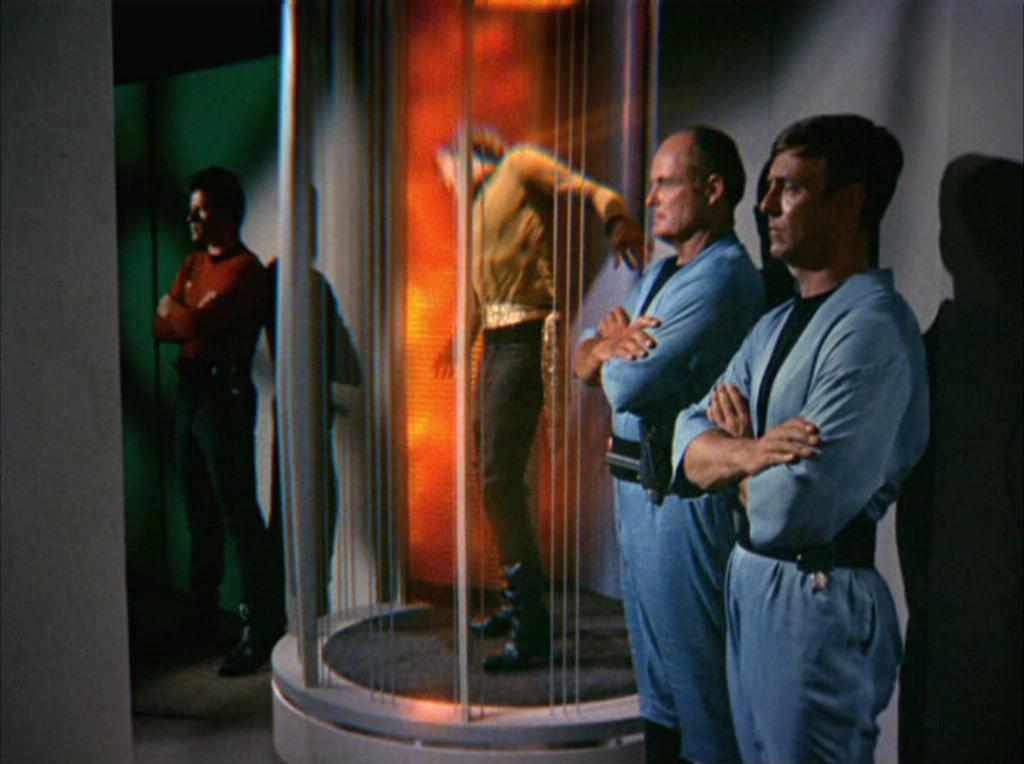
In the Star Trek episode, “Mirror, Mirror,” Captain Kirk and a few other crewmembers find themselves in a parallel universe on a more barbaric ship. On this imperial version of the Enterprise, disobedient or otherwise malperforming crew are punished, tortured really, in an “agony booth.” And that’s exactly how I felt last night watching the Biden-Trump debate. What did I do wrong to be put in this agony booth? Fortunately, I was able to escape after 75 minutes. The “full-duration” just may have killed me.

I watched the debate with my wife (agony loves company), and she had some of the best lines of the night. Here’s a sampling:

  • Great, two old white guys again. It’s blinking Biden versus bully-boy Trump.
  • Trump’s just a horrible, badgering bully.
  • Biden’s already muddled and is mixing up his numbers.
  • Trump never smiles, never laughs. Mean people suck.
  • Trump is steamrolling over everything.

Really, the less said about this “debate,” the better. It was insult after insult, interruption after interruption, most of the insults and interruption coming from Trump. His followers, I assume, enjoy his bully-boy tactics, but they left me cold and made the “debate” unwatchable.

As usual, Trump played some of his greatest hits. Covid-19 is “the China plague” and is “China’s fault.” A vaccine is “weeks away” (with no mention of how many weeks. Five? Fifteen? Fifty?). He’s going to make insulin for diabetics as cheap and available as water. Even that he was the one who brought back Big Ten college football.

Speaking of football, Trump earned many penalties in this debate. Taunting. Unsportsmanlike conduct. Delay of game. Unnecessary roughness. The list goes on. Next time, instead of a debate moderator, I suggest a team of NFL referees with whistles and plenty of penalty flags.

Media spokespeople and candidate spin rooms are most concerned about which candidate “won” or “lost” the debate. My sense is that Trump, in dominating the debate — what a nasty man he is — “won.” And who lost? Anyone who was expecting a real debate.

Welcome to the agony booth that is politics in America.

There I am, in the Agony Booth (actually, it’s Ensign Chekov)

The Pick Is In: Amy Coney Barrett

W.J. Astore

As expected, President Trump has selected Amy Coney Barrett for the Supreme Court. Intellectually, she’s qualified. But any candidate supported strongly by Trump’s evangelical base is suspect. The reason is simple: evangelicals wouldn’t support her if they weren’t confident of her opposition to Roe v. Wade. And Trump has indeed gone on the record as predicting she will be instrumental in overturning it.

Amy Coney Barrett, it’s fair to say, is a conservative Catholic. I can relate to her because into my early 20s I was a church-going Catholic. (I even carried a Catholic study bible to church.) Following the lead of the church, I thought abortion was wrong, and I tended to have a holier-than-thou attitude about it. Except in cases of rape or incest or the life of the mother, I saw no reason to publicly fund abortions. If I recall correctly, I accepted the church’s teaching that life begins at the moment of conception.

My problem was conflating my personal religious beliefs, guided by Catholic dogma, with politics and public policy. Put bluntly, I was mixing religion with politics, as if my religion had all the right answers for all Americans. But I got over it. I met more people of different religions, traveled, read a lot, got my master’s and doctorate (focusing on relations between science and religion in historical terms), and realized my personal religious beliefs should neither intrude nor interfere with the rights and privileges and beliefs of my fellow citizens.

Amy Coney Barrett will doubtless say all the right things at her Senate confirmation hearing. She’ll affirm that her religious beliefs won’t determine or even shape her decisions on the law; she won’t say how she’ll rule on Roe v. Wade, but she’ll affirm that she respects judicial precedent; she’ll affirm she’s a believer in judicial restraint; in brief, she knows the drill at these hearings.

But all this won’t be the full truth. She’s not the dream pick of evangelicals because she’s unbiased and disinterested. They know from her record (and her personal life) she’s a critic of Roe v. Wade. They also know she can be counted on to rule in favor of moneyed interests. For example, if she votes against Obamacare, as her record indicates she will, the richest Americans will see a financial windfall (they will effectively get a substantial tax cut). She can be counted on to deliver for the richest among us as well as for evangelicals and conservative Catholics, else she wouldn’t have been picked to begin with.

Two more items of interest. The conservative Catholic organization she belongs to is rather retrograde, to put it mildly, in arguing for a nuclear family of heterosexuals with the man as the “head” of the family. Homosexuality is seen as aberrational and sinful, which is how I saw it when I was carrying my Catholic study bible around. Again, all the evangelicals who support Barrett know exactly where she stands here. Finally, while being pro-life, she is also a strong supporter of gun rights and the Second Amendment.

So there you have it. Amy Coney Barrett is much like I was when I was in my early 20s. Back then I thought I had a lot of life’s answers right there in my holiest of books, and I was unafraid to suggest that public policy should be informed, if not determined, by my personal religious beliefs. But I grew up. Trump’s evangelical friends are counting on the fact that Barrett remains what she’s always been: a conservative Catholic loyalist whose religious views will very much inform how she rules from the bench.

So, goodbye to Roe v. Wade. Goodbye to Obamacare and health care for millions. Hello to a land in which corporations as “citizens” will have even more power than before. A 6-3 conservative majority on the Supreme Court will say this is justice — until the rest of us say otherwise.