Beware of China!

W.J. Astore

Threat inflation is always a lead feature at the Pentagon (how better to justify enormous budgets?), and just today I caught this story at FP: Foreign Policy.

At the Jiangyan shipyard near Shanghai, the Chinese navy is busy building up its next crown jewel. The Type 003 Carrier—boring name aside—showcases China’s growing naval ambitions and poses one of the greatest new challenges to U.S. naval supremacy in the Asia-Pacific. 

China isn’t saying much about its new carrier, but satellite imageryanalyzed by experts at the Center for Strategic and International Studies this week shows it is making “considerable progress” on the carrier, with its flight deck, superstructure, and sponsons “nearly complete.” 

The carrier, about 318 meters in length, will be the Chinese People’s Liberation Army Navy’s (PLAN) most technologically advanced and largest yet—and the largest non-U.S. carrier to be constructed in decades. U.S. Indo-Pacific Command estimates China could have four carriers by 2025, with potentially one more to come by 2030. It’s a sign China, already the world’s largest shipbuilder, wants to use that industrial might to supercharge its massive navy. 

What the new carrier means. “The trend is that China is attempting to build a blue water navy, and that’s what this third carrier and plan beyond that represents,” said Eric Sayers, an expert with the American Enterprise Institute and former advisor to the commander of U.S. Pacific Command. “That’s not for its near seas. … That’s more for projecting power into the Indo-Pacific and beyond.” 

China’s carrier upgrades and other investments in its navy have some experts worried Beijing could be getting more capable of showdowns with U.S. carrier strike groups in the region or launching a military assault on Taiwan, which top military officials have predicted could come within the next six years. 

PLAN of attack. “I think they’re going to become more confrontational,” said Jerry Hendrix, a retired Navy captain and former U.S. Defense Department official. “With their carriers, they may think that they’re going to be able to establish sea control for long enough that they can pull off an amphibious assault.” 

Aha! The Chinese are just like us! “Confrontational.” They’re building a navy that’s all about “projecting power,” perhaps even beyond the Pacific. How dare they! I wonder what the U.S. should do in response? Perhaps build even more aircraft carriers and an even bigger “blue water” navy? I wonder…

The U.S. Air Force is getting into the threat inflation act as well. I saw a report that suggested China is building sites (possibly dummy ones) for nuclear Intercontinental Ballistic Missiles (ICBMs). Guess which service has its own plans to build new ICBMs? Yes, it’s the U.S. Air Force, and the Chinese “threat” is being used to justify the huge expense of new, stationary, nuclear missiles based on land. (Those ICBMs, if deployed, will probably end up costing at least $100 billion, and perhaps double that.)

I have a perfect strategy for China to win any struggle against the U.S. Make noises about something that you know will set off America’s military-industrial complex, such as aircraft carriers, ICBMs, even ambiguous plans about attacking Taiwan. Then watch as America’s military wets its pants before Congress, calling desperately for money and weaponry to meet the Chinese threat. A few billion spent here and there by China should goad America’s military enthusiasts into spending trillions to meet the threat that, to be frank, they very much want to see from China. It’s truly a win-win for China, and perhaps a win as well for America’s military-industrial complex, but it’s a huge loss for the American people.

Speaking of Taiwan, I’ve even heard talk of the U.S. Army getting into the act by basing “tripwire” forces there, much like our “tripwire” forces in South Korea, the idea being if Mainland China dares to attack Taiwan, they know it’ll be a cause for war as they’ll have to “trip” over, and presumably kill, U.S. troops. What a comforting thought.

Chinese hysteria is reaching its peak in America, notes Michael Klare at TomDispatch.com, so much so that strategic miscalculation is more possible than ever as both sides–but especially America–see hostility as the other side makes moves to counter perceived aggression.

I know the title of my article is “Beware of China,” but of course my real message is beware of America, specifically its military leaders and corporate profiteers who are always happy to exaggerate threats in the cause of securing more money and power.

“Only Americans can hurt America,” said Dwight D. Eisenhower. We had best keep that in mind as various men in uniform hyperventilate about China and the threat it poses over the next few years or decades. Indeed, as Andrea Mazzarino noted in a fine article at TomDispatch.com today, the cancer of never-ending war is killing our democracy. Forget about being afraid of China. It’s time to be afraid of our leaders and all their democracy-killing schemes.

OMG! China might be building silos! You know, those things we’ve had for 60 years? Take cover!

The Atrocious Nature of the Vietnam War

The soon-to-be “fall” of Afghanistan, at least from a U.S. perspective, put me to mind of Vietnam and its fall in 1975. As we examine why U.S. military interventions (or invasions) keep ending so badly, we might consider how there are always winners to these losing wars in America. After all, the Afghan War has cost the U.S. more than a trillion dollars in twenty years, and quite a few people have prospered from it.

In the end, Vietnam and Afghanistan were never America’s to win, and our presence there, and our use of massive firepower, left behind a legacy of violence and destruction that should be a national shame.

wjastore's avatarBracing Views

Helicopter_Poster_promoV2W.J. Astore

“It’s their [South Vietnam’s] war to win. We can help them … but in the final analysis, it’s their people and their government who have to win or lose this struggle.”  President Kennedy in September 1963

“We are not about to send American boys nine or ten thousand miles from home [to fight in Vietnam] to do what Asian boys ought to be doing for themselves.”  President Johnson in 1964

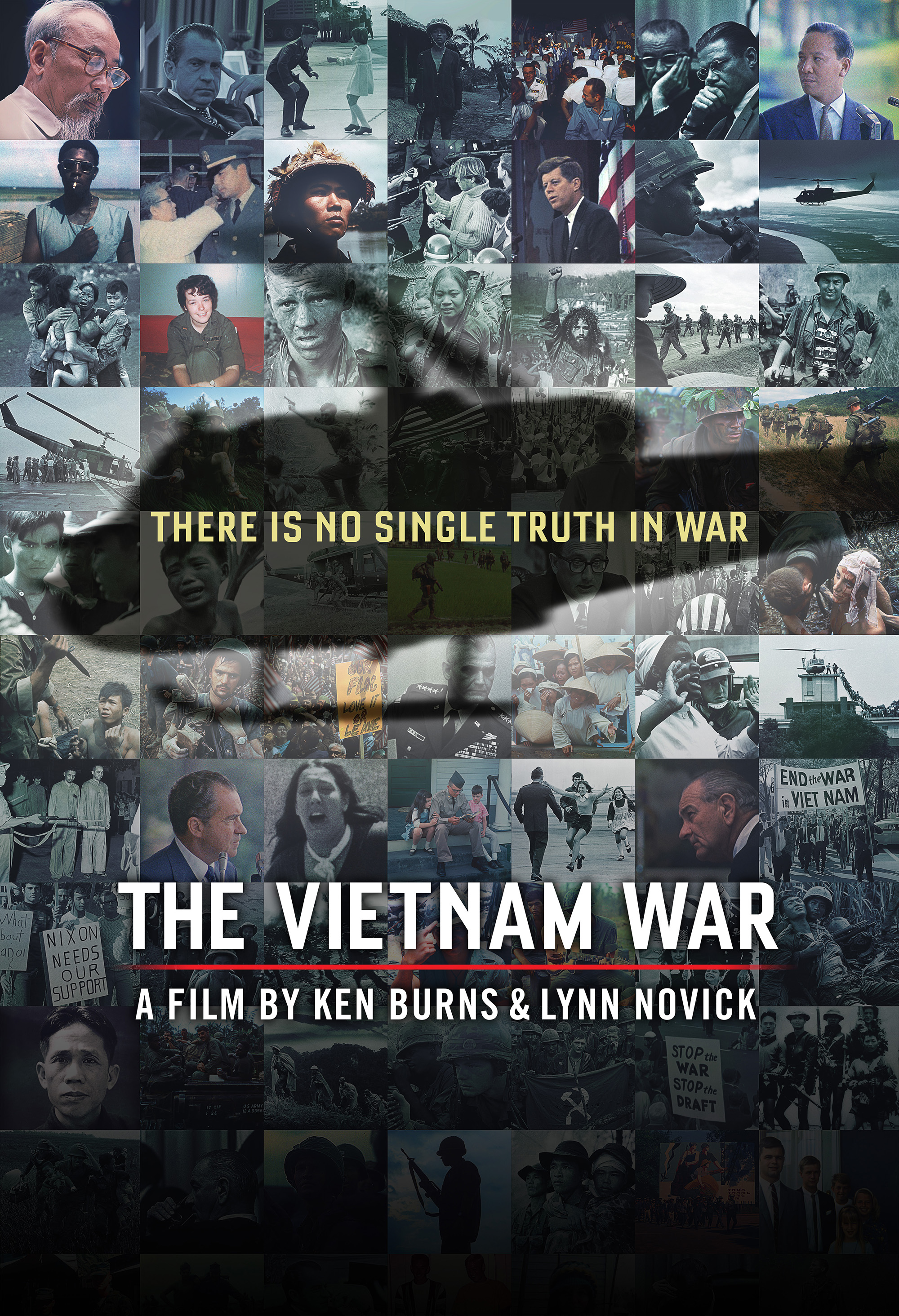
I’ve now watched all ten episodes of the Burns/Novick series on the Vietnam War.  I’ve written about it twice already (here and here), and I won’t repeat those arguments.  Critical reviews by Nick Turse, Peter Van Buren, Andrew Bacevich, and Thomas Bass are also well worth reading.

I now know the main message of the series: the Vietnam war was an “irredeemable tragedy,” with American suffering being featured in the foreground. …

View original post 1,845 more words

If We Lose Afghanistan, You’re to Blame

W.J. Astore

In my CNN news feed for today, I came across a warning from Army General Austin Scott Miller about Taliban advances in Afghanistan as U.S. troop withdrawals proceed. Conditions are deteriorating (not for the Taliban, obviously) and CNN cautioned that the Biden administration has yet to put together a plan to pursue terrorists in Afghanistan after the troop pullout is completed.

And I thought to myself: yet more evidence of the U.S. military covering its collective ass, for when the Taliban does take over, which it has been doing over the last decade, America’s generals can say, See, we told you so. We told you not to pullout too quickly. We told you this would happen, despite all those hard-fought gains we’d secured (always “fragile” and “reversible,” though, in the words of General David Petraeus). So when the “loss” does come (Afghanistan was never ours to “win” to begin with), it’ll be Biden’s fault, not ours.

In short, if we lose Afghanistan, we in the military are not to blame. You’re to blame.

Of course, this is patently ridiculous for so many reasons. I’ve written a lot about the Afghan war, and read more, so in a nutshell here’s why General Miller and Company are full of it:

  1. The U.S. military had nearly 20 years and billions and billions in resources to train, equip, and field an Afghan military, yet all those efforts gained little.
  2. The U.S. military had nearly 20 years and a trillion dollars in resources yet failed to defeat the Taliban.
  3. Before Biden ordered the troop pullout, the Taliban had already secured most of the country. This was also true when Trump as president considered withdrawing but was talked out of it by his generals.

As the saying goes in Afghanistan, the Americans have the fancy watches but the Afghan people have the time. Afghanistan never was America’s to win. And with respect to terrorism, the presence of U.S. and allied troops there only served to exacerbate the conflict. More and more military hammer blows only shattered the country further, causing more devastation, more desperation, and more extremism. The U.S. military seemed to specialize in killing the second- or third-ranked “terrorist” leader, over and over again, only to see a generally younger, more extreme leader rise to take his place. It was a terrific tactic for perpetual war, but it was hardly one suited to producing victory, whatever that might look like.

So American troops are leaving places like Bagram like thieves in the night, leaving behind lots of junk and a legacy of violence and destruction. If one photo can serve to sum up our withdrawal, consider this one of an Afghan girl at work carrying scrap metal (Made in USA!) for money:

In this picture taken on June 17, 2021, a girl carries a metal box she collected from a junkyard near the Bagram Air Base in Bagram. – The Pentagon is evacuating Bagram airbase as part of its plan to withdraw all forces by this year’s 20th anniversary of the September 11 attacks on the US, taking military gear home or given to Afghan security forces, but tons of civilian equipment must be left behind. (Photo by Adek BERRY / AFP) / TO GO WITH ‘Afghanistan-USA-conflict-Bagram’ FOCUS by Anne CHAON and Mushtaq MOJADDIDI

Well, that makes me proud to be an American.

Update (7/9/21):

Biden’s speech yesterday on Afghanistan was the usual claptrap. He claimed the U.S. didn’t go to Afghanistan to nation-build, even though the Afghan surge was all about defeating the Taliban while installing a “government in a box” for the Afghan people. All that effort by so many agencies to create an Afghan justice system, security forces, and so on so as to create the fundamentals of a government — all forgotten now because they failed. Meanwhile, the Afghan forces the U.S. military “trained” are folding quickly, flooding Afghanistan with even more weaponry.

I got this in my news feed from the New York Times: 

In Forceful Defense of Afghan Withdrawal, Biden Says U.S. Achieved Its Objectives

By Michael D. Shear, David E. Sanger and Thomas Gibbons-Neff
The president insisted that the United States had done more than enough to empower the Afghan police and military to secure the future of their people.

Look at the way this is structured. First the lie that we achieved our objectives. Then the idea that the way to “secure the future” is to create strong police and military forces. That is surely an idea that’s made in militarist America — that you secure the future through strong police and military forces. It’s the very opposite of what a democratic society would argue. But it is the approach of an authoritarian empire.

Nuclear Firecrackers for the Fourth of July

W.J. Astore

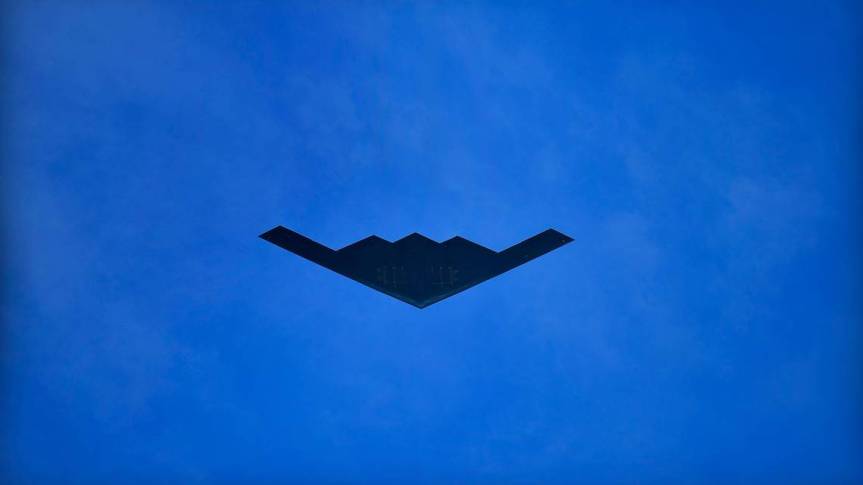
Did you know the U.S. is developing a new land-based ICBM? That’s intercontinental ballistic missile, and back in the 1980s we pretty much considered them obsolete in the Air Force. That’s because they’re the least survivable “leg” of the nuclear triad, which consists of ICBMs, nuclear bombers like the B-2 stealth, and submarines like the current Ohio-class ones armed with Trident missiles.

But never mind all that. When I visited Los Alamos National Laboratory (home of the Manhattan Project) as an Air Force captain in the spring of 1992, the mood there was glum. With the collapse of the Soviet Union, Los Alamos was facing major cuts in funding, since back then we naively believed there was going to be a “peace dividend” and the U.S. would return to being a normal country in normal times. We wouldn’t have to “invest,” as our military likes to say, in more nukes. We had plenty already; indeed, more than enough to end life on earth.

But that was then and this is now and the Biden administration, joining the previous Trump and Obama administrations, is “investing” up to $1.7 trillion over the next thirty years in more nuclear weapons to destroy the earth. It’s a job-creator, don’t you know. And rural areas with nuclear missile bases, like Wyoming and North Dakota, don’t want to lose jobs or the billions in federal dollars that flow to their states in the stated cause of nuclear deterrence. Deterring who or what is uncertain.

Americans love things that blow up while lighting up the sky and causing the heavens to glow. We witness it every year at this time. Let’s just hope the nuclear firecrackers stay stashed away. Some firecrackers are too dangerous to contemplate.

I remember back in 1992 walking around the desert at Alamogordo, New Mexico, site of the first atomic blast that preceded Hiroshima and Nagasaki. There’s not much left of the tower where the bomb sat: just the concrete base and some twisted metal. Walking around the area, you can still find sand that’s been fused into glass by the heat of the atomic blast. I didn’t take any home with me as it’s still radioactive. People were walking around with masks before masks became a thing with Covid. It was an eerie experience.

We don’t spend much time, if any, on July 4th thinking about all our weapons that are designed with great care and ingenuity to blow up and kill, whether it’s one person or millions (or perhaps even the planet itself). But I urge you to set aside a few minutes to read Tom Engelhardt’s latest article at TomDispatch.com. He writes about his own eerie and disturbing experience visiting Japan and Hiroshima and thinking about the unthinkable.

Here’s the link: https://tomdispatch.com/an-all-american-horror-story/

Isn’t it high time we finally ended our distinctly American nuclear horror story?

Please — no nuclear firecrackers

The Unexamined U.S. Military

W.J. Astore

Perhaps you’ve heard the saying that the unexamined life is not worth living. Can it also be said that the unexamined military is not worth having?

What amazes me about the U.S. military is how little it is scrutinized. Sure, there’s armed services committees in the House and Senate, but they seem most concerned about shoveling more money toward the Pentagon. Either that or the dire perils of “critical race theory,” which is surely threatening the Republic more than runaway militarism, endless wars, and unneeded nuclear weapons.

What is to be done? I see only one solution: major cuts to the “defense” budget. And that budget is even higher than the stated figure of $705 billion or thereabouts. Nuclear weapons come under the Department of Energy, for example. Homeland Security has its separate budget (isn’t defense of the homeland what the Pentagon is all about?). The various intelligence agencies like the CIA and NSA and so forth churn through scores of billions yet couldn’t predict the collapse of the Soviet Union or the 9/11 attacks. Interestingly, after 9/11 these agencies saw vast increases in funding. Who knew incompetence could be so rewarding?

If you add up all the billions tied to weapons and wars and “defense” in America, you routinely exceed a trillion dollars a year. It’s almost an unfathomable sum. Perhaps it is to the U.S. military as well, since they can’t pass an audit. No one really knows where all the money is going.

Ike knew the score. Sixty years ago, President Eisenhower warned us all about the military-industrial-Congressional complex. A few people listened, but nobody in power did anything about it. Since then the Complex has only grown stronger and more pervasive (and invasive) in America. And now that same Complex owns the mainstream media. Remarkably, the “journalists” telling us all about the Complex on MSNBC and CNN and Fox are often retired CIA and military officials; they don’t even bother disclosing their obvious conflict of interest here.

Strangely, it’s become patriotic to salute our military rather than to examine it and challenge it. Americans, generally a boisterous and busy bunch, are remarkably quiet and passive except for all the saluting and praising. Until this mindset, and this behavior, changes radically, America will continue on a wasteful and wanton path forged by weapons and war.

And that really is something we need to examine in the collective life of our country.

Sure, stealth bombers look cool. But together we paid roughly $2 billion per plane for a weapon designed to drop nuclear bombs on people.

America, Land of Death

W.J. Astore

Checking today’s headlines at CNN was a grim affair. First, gun violence:

Ten mass shootings happened across the nation this weekend, leaving at least seven people dead and more than 40 injured. It was the latest in a streak of violent weekends in America. The weekend before this, there were also 10 mass shootings that left 12 people dead across seven states. (CNN defines a mass shooting as four or more people shot, not including the shooter.) This weekend’s violence included shootings at several parties and celebrations, including in California, Indiana and Colorado. According to the Gun Violence Archive, there have been 293 mass shootings in 2021 so far.

After death by gun, we have death by vehicles on America’s roads:

38,680: That’s how many people died in motor vehicle crashes in 2020, according to estimates from the National Highway Traffic Safety Administration. That’s the largest projected number of deaths since 2007, despite a 13.2% decrease in miles traveled from the prior year.

And of course the Covid-19 death toll has surpassed 600,000 in the United States (one study suggests the true Covid death toll is over 900,000), with the Trump administration having rejected any responsibility for its botched response to the pandemic. Most Trump supporters seem content with the notion that, well, at least Trump tried to do, well, something, like blaming the Chinese for “Kung Flu.” Sadly, Trump’s “gifts” of bluster and boasting and bragging and bombast just had no effect on a deadly virus.

At this site, I often marvel at how Americans have so little knowledge of or interest in America’s wars overseas and the deaths and suffering they produce. But the hard truth is that we also tend to ignore mass death here in the USA, whether from guns or motor vehicles or lack of affordable health care. Indeed, I’ve seen estimates to suggest that perhaps half of America’s deaths from Covid could have been prevented if our country had a national health care system. But we’d rather die from kleptocratic capitalism (in the name of freedom) than live with democratic socialism.

I don’t think America has a death wish — but we sure could use a lot more emphasis on life and living. Readers, what say you?

Remarkably, despite how busy he’s been, the Grim Reaper has time to answer questions at a Florida beach (as played by Daniel Uhlfelder)

How to Teach, by Miss Jean Brodie

Miss Jean Brodie (center) and “her girls”

Richard Sahn

“The Prime of Miss Jean Brodie” (1969) starring Maggie Smith, who won the academy award for best actress that year, challenges, at least for a moment, pedagogical orthodoxy.  In this fictitious story Jean Brodie is a teacher in a private secondary school for girls in 1932 Edinburgh.  From the beginning it is obvious she is the most popular as well as the most controversial teacher in the school. The rigorously traditional head mistress regards Miss Brodie as a maverick who has consistently demonstrated that her methods over the years of her tenure are starkly incompatible with the goals and values of the school. Jean nurtures a romantic attraction to social, political, and military upheavals. In her classes she avoids talking about the political and moral ramifications of historical events, seeing them as obstacles to her view of history as drama. Showing her students projected slides of classical architectural structures and paintings to engage their capacity for aesthetic appreciation is also a major feature of Miss Brodie’s classes. Engaging her students’ emotions is more important to Jean than detailed historical facts. 

In first day of class for the new semester Miss Brodie describes an imaginary scene of a former lover dying on the battlefield in World War I. She seems to delight in exposing her girls (her students are “my girls”) to the emotional realities of war by providing them with the opportunity to romanticize death.  Listening to the description of the former lover’s death in battle one of her students bursts into tears. At that moment, the head mistress enters the classroom to see how the first day is going. She is perplexed by the student crying, declaring: “You shouldn’t cry during a history lesson.”          

“Truth and beauty” is what Jean Brodie claims she is teaching her students. To challenge her students to appreciate the romantic qualities of even ghastly historical events seems to be a goal. But what she means by “truth” is not necessarily empirical facts. Beauty is truth, Miss Brodie adamantly believes. Even war is an aspect of “beauty” because people die heroically. It doesn’t matter what the reason or cause is as long as passionate feelings can be engaged in the presentation of the lesson.

At one point in the film Jean is called to the head mistress’s office to explain her teaching methods. The head mistress suspects—and rightly so—that Jean is not giving her students the standard information regarding the subject matter. Miss Brodie argues that the meaning of education comes from the Latin word “e-ducare” which means to lead out of.  Her job, she believes, is to elicit her students’ inherent love of learning.  She seeks to stimulate her students’ inherent capacity to see macro and micro events, especially of war, as an art form.  A scene on the battlefield in Spain is to be admired as one appreciates a Giotto painting.

Throughout the movie Jean keeps telling her students they are the “crème de la crème.”  When she asks Mary, a new student at the beginning of the semester what her interests are the student says she doesn’t have any.  Miss Brodie promptly tells her she will give her interests. Later in the school year that same student goes off to fight for Franco in the Spanish Civil War after Jean had told the class that one is not fully living until one is engaged in major social and political events, events which elicit passionate responses. The student drops out of school and join’s Franco’s fascist army. She gets killed before the school year is over. (Jean has obviously omitted discussing with her students the moral purpose of the war in the first place.)

So, what can educators learn from the character of Miss Jean Brodie? Jean’s teaching style—you have to see the movie to really appreciate it–surely leaves something to be desired. But Miss Brodie’s love of teaching itself and her desire to engage her students’ emotions in the learning process is to be taken seriously. After all, her students love and respect her highly, as almost every scene in the film demonstrates.  But Jean’s failure to acknowledge important facts in favor of the aesthetic and the romantic aspects of political events—Mussolini is a beautiful leader, she proclaims–is what brings her down. She is ultimately dismissed from her teaching post.

The film raises an important question in liberal arts education, both on secondary and post-secondary levels. Do teachers and professors need to engage students’ capacity to become emotional, even passionate, about the subject matter? Should the role of the educator be to provide students with interests, as Jean insists her purpose is, at the expense of factual information? Put simply, does the story of Miss Jean Brodie have something significant to offer educators despite Jean’s playing fast and loose with empirical reality?

For myself—I’ve been a professor of sociology for decades–the importance of emotive anecdotal examples throughout the teaching process when the subject matter pertains particularly to human behavior and socio-historical events can’t be overstated.  The teacher of social sciences and history as artist and poet is a very plausible mixture. At any rate I felt very much inspired by the Jean Brodie character.  She genuinely wanted to reach her students to inspire them to live passionately.

Yet, as the movie suggests, passions unguided by a sound moral compass may prove deadly.

Richard Sahn is a sociology professor who challenged and inspired his students to think differently in and out of the classroom for more than four decades.   

America Is Stabbing Itself in the Back

W.J. Astore

Americans may already be lying themselves out of what little remains of their democracy.

The big lie uniting and motivating today’s Republicans is, of course, that Donald Trump, not Joe Biden, won the 2020 presidential election.  Other big lies in our recent past include the notion that climate change is nothing but a Chinese hoax, that Russia was responsible for Hillary Clinton’s electoral defeat in 2016, and that the invasion of Iraq in 2003 was necessary because that country’s leader, Saddam Hussein, had something to do with the 9/11 attacks (he didn’t!) and possessed weapons of mass destruction that could be used against the United States, a “slam dunk” truth, according to then-CIA Director George Tenet (it wasn’t!).

Those and other lies, large and small, along with systemic corruption in Washington are precisely why so many Americans have been driven to despair.  Small wonder that, in 2016, those “deplorables” reached out in desperation to a figure who wasn’t a product of Washington’s mendacious Beltway culture.  Desperate times engender desperate acts, including anointing a failed casino owner and consummate con man as America’s MAGA-cap-wearing savior. As the 45th president, Donald Trump set a record for lies that will likely remain unmatchable in its “greatness” — or so we must hope anyway.

Sadly, Americans have become remarkably tolerant of comfortable lies, generally preferring them to uncomfortable truths.  Nowhere can this be seen more clearly than in the military realm that I’ve inhabited most of my life.  The first casualty of war, so it’s said, is truth, and since this country has remained perennially at war, we continue to eternally torture the truth as well.

When it comes to war, here are just a few of our all-American falsehoods: that this country is slow to anger because we prefer peace, even if wars are often necessary, which is also why peace-loving America must have the world’s “finest” and by far the most expensive military on the planet; that just such a military is also a unique force for freedom on Planet Earth; that it fights selflessly “to liberate the oppressed” (a Special Forces motto) but never to advance imperial or otherwise selfish ambitions.

For a superpower that loves to flex its military muscles, such lies are essentially par for the course.  Think of them, in fact, as government-issue (GI) lies.  As a historian looking to the future, what worries me more are two truly insidious lies that, in the early 1930s, led to the collapse of a fledgling democracy in Weimar Germany, lies that in their own way helped to facilitate the Holocaust and that, under the right (that is, wrong) circumstances, could become ours as well.  What were those two lies?

Germany’s Tragic Lies After World War I

During World War I, the German military attempted to defeat the combined forces of Britain, France, Russia, and later the United States, among other powers, while simultaneously being “shackled to a corpse,” as one German general described his country’s main ally, the Austro-Hungarian Empire.  By the middle of 1916, the German Second Reich led by Kaiser Wilhelm II had, in essence, become a military dictatorship devoted to total victory at any cost. 

Two years later, that same military had been driven to exhaustion by its commanders.  When it was on the verge of collapse, its generals washed their hands of responsibility and allowed the politicians to sue for peace.  But even before the guns fell silent on November 11, 1918, certain reactionary elements within the country were already rehearsing two big and related lies that would facilitate the rise of a demagogue and the onset of an even more disastrous world war.

The first big lie was that the German military, then considered the world’s finest (sound familiar?), emerged from World War I undefeated in the field, its troops a band of heroes covered in glory. That lie was tenable because Germany itself had not been invaded in World War I; the worst fighting took place in France, Belgium, and Russia.  It was also tenable because its military leaders had lied to the people about the progress being made toward “victory.” (This should again sound familiar to contemporary American ears.)  So, when those senior leaders finally threw in the towel in late 1918, it came as a shock to most Germans, who’d been fed a steady diet of “progress,” while news of serious setbacks on the Western Front was suppressed.

Buy the Book

The second big lie followed from the first.  For if one accepted the “undefeated in the field” myth, as so many Germans did, then who was responsible for the defeat of the world’s finest military?  Not Germany’s generals, of course.  Indeed, in 1919, led by Field Marshal Paul von Hindenburg, those same generals would maliciously claim that disloyal elements on the home front — an enemy within — had conspired to betray the country’s heroic troops.  Thus was born the “stab-in-the-back” myth that placed the blame on traitors from within, while ever so conveniently displacing it from the Kaiser and his generals.

Who, then, were Germany’s backstabbers?  The usual suspects were rounded up: mainly socialists, Marxists, anti-militarists, pacifists, and war profiteers of a certain sort (but not weapons makers like the Krupp Family).  Soon enough, Germany’s Jews would be fingered as well by gutter-inhabitants like Adolf Hitler, since they had allegedly shirked their duty to serve in the ranks.  This was yet another easy-to-disprove lie, but all too many Germans, desperate for scapegoats and undoubtedly bigoted as well, proved eager to believe such lies.

Those two big and insidious falsehoods led to an almost total lack of accountability in Weimar Germany for militarists like Hindenburg and General Erich Ludendorff who were significantly responsible for the country’s defeat.  Such lies fed the anger and fattened the grievances of the German people, creating fertile ground for yet more grievous lies.  In a climate of fear driven by the massive economic dislocation brought on by the Great Depression of 1929, a previously fringe figure found his voice and his audience.  Those two big lies served to empower Hitler and, not surprisingly, he began promoting both a military revival and calls for revenge against the backstabbing “November criminals” who had allegedly betrayed Germany.  Hitler’s lies were readily embraced in part because they fell on well-prepared ears.

Of course, a mature democracy like America could never produce a leader remotely like a Hitler or a militaristic empire bent on world domination.  Right?

To read the rest of my article for TomDispatch.com, please click here. Thanks!

Note: In writing my book on Paul von Hindenburg, I was greatly helped by Dennis Showalter, a wonderful historian and a better friend. Dennis was remarkably generous to me and to so many other students of history. Dennis died at the end of 2019, and I miss his keen mind, his exceptional scholarship, but most of all his warmth and sense of humor. We joked that our work on Hindenburg represented a rare “bipartisan” collaboration between a Yankees fan (that’s him) and a Red Sox fan (that’s me). Thanks for everything, Dennis.

Dennis Showalter, a remarkable historian and a better friend

You Shouldn’t Need a College Degree

W.J. Astore

A friend sent along an article today with the eye-catching title “You shouldn’t need a college degree to have a decent life in America.” The author argued that Americans are too dependent on college for better opportunities and that a Swiss model of education based on vocational tracking had some lessons for us. Here’s the link: Karin Klein, LA Times, June 13th, https://www.post-gazette.com/news/insight/2021/06/13/You-shouldn-t-need-a-college-degree-to-have-a-decent-life-in-America/stories/202106130026

But what was most interesting to me was what the article left out. Firstly, my dad never finished high school, but he got an education in the Civilian Conservation Corps in the 1930s and the Army during World War II, then did factory work (again) until he got on the civil service as a firefighter. And that’s what was essential: a decent-paying job backed up by a strong union. My dad’s pay and benefits continued to increase throughout his career because of the firefighters’ union and its bargaining power. Yet nowhere in the article above are unions mentioned. In fact, in America today unions are often demonized as being against the interests of workers. Instead, we’re urged to trust in the uber-rich like Jeff Bezos to provide high-paying jobs with great benefits. Just don’t hold your breath waiting for that to happen.

My dad’s “education” included two years in the CCC, including time in Oregon fighting major forest fires. He never formally graduated from high school but loved philosophy and opera

Secondly, the article fails to mention anything about a living wage for these workers and their careers. There’s no mention of Joe Biden’s broken promise to pass a $15 federal minimum hourly wage (which really nowadays should be $20 an hour).  Without unions and without a living wage, how are all these high school graduates with vocations going to support themselves? Not all vocations pay that well, and some pay no more than $10 an hour and come without health care. Small wonder that so many Americans turn to college for some “insurance.”

Yet even in college they often don’t find the insurance they’re looking for. America’s collegiate system is often about funneling the maximum number of young adults to college while extracting as much money from them as they and their parents are able (or unable) to pay. What’s “higher” about higher education are often the bills and little else.

Look, I taught for nine years at a vocational college and I’m all for it. At a community college you can gain certificates and associate degrees without assuming a heavy load of student debt.  I agree we need more decent-paying vocational programs. For example, I had a student who trained as a heavy equipment operator.  He didn’t do that well in my class, but he didn’t much care.  As he told me, he was graduating to a job, probably in the fracking fields of Pennsylvania, where he’d soon be earning $75K-$85K a year, and this was circa 2010. Not bad pay at all for his chosen profession.

I’m all for vocational options that don’t require four-year (or longer) college degrees and lots of debt.  But let’s have strong unions and fair pay as well, else many of these vocational graduates will be screwed yet again by a system that deflates wages as much as possible so as to funnel more money to the richest.

Another subject the author fails to develop is how college has become the new high school for too many students.  I saw my share of students where I taught who needed remedial math and English because they didn’t learn the same in high school.  Partly this is because we underfund our schools, underpay our teachers, and often focus way too much on high school sports (football in Texas, anyone?).

I also wonder at times whether our system is designed to produce dead ends for students.  It’s one way you get more than a few eighteen-year-olds to enlist in the military. They’re often seeking educational benefits, vocational training, and sometimes those enlistment bonuses as well. Often those bonuses are tied directly to enlisting in the most dangerous military occupational specialties, like being a combat infantryman. The empire always needs fresh bodies.

In sum, I think it’s a great idea to open more opportunities to high school graduates in America. But while we do that, let’s do three other things: 1) Strengthen workers’ unions in America; 2) Raise the federal minimum wage to at least $15 an hour; 3) Improve high school education across the board through more educational funding. higher pay for teachers, and an ethos in America that values education as essential to active and informed participation in civic life.

Never Again War

W.J. Astore

In the early 1990s, my wife and I had the pleasure of visiting friends in a newly unified Berlin, where we were introduced to the work of Käthe Kollwitz (1867-1945). Kollwitz lost a beloved son, Peter, in World War I and turned against war in her art. We visited the museum dedicated to her work, which reflected the causes that moved her. She was for people, for workers, for equity, for equality, for mothers and fathers and their children, and she was very much against war.

Here’s one of her powerful images with the theme of No More War:

“Never again war” was a common sentiment across the world in 1924, in the aftermath of the death and devastation of World War I. Yet that sentiment didn’t last, and in the chaos of the Great Depression the Nazis soon gained power and then ruthlessly acted to consolidate it. So much for “never again war.”

The Neue Wache: here Kollwitz has a sculpture of mother and her dead son, based on the Christian imagery of Mary cradling Jesus after his death by crucifixion. Why do we crucify so many of our young via endless war?

Kollwitz was haunted by the death of her son, Peter, in World War I. The burden of pain she carried is captured in this moving and powerful sculpture. There is no glory here. Only grief and suffering and love of the most painful kind.

It’s well worth watching this brief and moving ceremony:

For far too many, war is something like a game, as shown in this telling image of Napoleon playing chess against the Russian Winter (Andreas Paul Weber). So many of us are only pawns in the “game” of war. Where is the glory here, emperor?

Kollwitz knew the pain and loss of war, and she knew how to share that pain and loss with the world. If you should find yourself in Berlin, I urge you to visit her museum and also to visit the Neue Wache memorial to the victims of war and dictatorship.

Here’s a link to the Käthe Kollwitz museum in Berlin: https://www.kaethe-kollwitz.berlin/en/

The Grieving Parents (Memorial to Peter Kollwitz, killed in World War I), Vladslo German war cemetery, Belgium