Creator of Bracing Views. Contributor to TomDispatch, Truthout, HNN, Alternet, Huffington Post, Antiwar, and other sites. Retired AF lieutenant colonel and professor of history. Senior fellow, Eisenhower Media Network
Corporate Capture of Government, not Age, Is the Problem
In honor of Presidents’ Day, let’s look ahead to the 2024 presidential election.
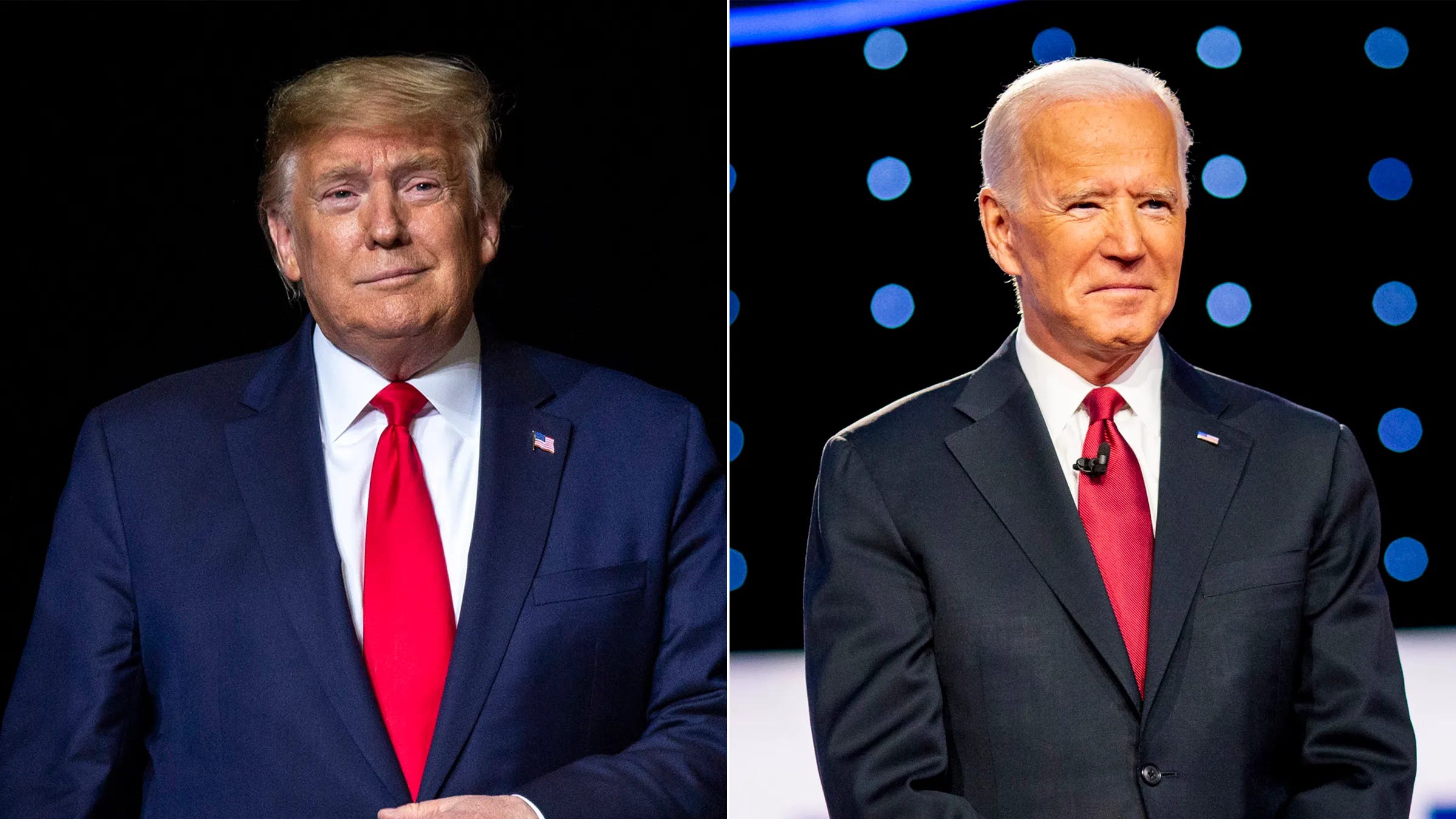
Right now, Joe Biden and Donald Trump are the leading candidates of their respective parties for the 2024 election. Biden will be 82 if reelected; Trump will be 78. Are they simply too old to serve?
Another battle of aging white men wearing red power ties?
The short answer is “no.” Sixty is allegedly the new forty, so I suppose eighty is the new sixty. Seriously, age alone isn’t the issue. Many people are mentally alert and physically vigorous well into their eighties and beyond. But many people aren’t; age does take its toll, we do age unequally, so it’s best to take this case by case, person by person.
Trump’s problem isn’t that he’s too old; he’s simply too much of a con man and a narcissist. Even as a businessman, he was largely a loser. When you go bankrupt running casinos, where the odds are stacked in your favor, you truly are incompetent. Trump wants to be president again because he lost and hates to lose. He lacks a positive plan for America, which isn’t surprising, as he has no empathy for others. He’s not too old; he’s just supremely focused on himself.
Biden isn’t too old, in theory. But more so than Trump, he does appear to be in physical and cognitive decline. At the British Guardian, Margaret Sullivan wrote that:
“Of course, I wish Biden were 20 years younger; I wish he didn’t stumble over his words and sometimes make inexplicable mistakes. I worry about his cognitive decline and physical frailty. But right now, he looks like the best bet to stave off a likely-disastrous Republican presidency and his record, while not flawless, is impressive.”
Her argument is simple: Biden is the best bet to defeat Trump (or DeSantis), so ignore his faults and frailties. It’s OK for a president to stumble over his words, to make inexplicable mistakes, even to exhibit signs of cognitive decline and physical frailty. Why? Because Democrats apparently have no other viable candidate to defeat the Republicans.
The willingness of the mainstream media and so many otherwise sensible people to dismiss obvious signs of Biden’s decline inadvertently points to a larger truth: Biden, if reelected, won’t be running the country anyway, so why worry about his physical and mental health?
As Chris Hedges and others have argued, America isn’t a democracy. Presidents aren’t public servants. America is an oligarchy, and presidents largely answer to the oligarchs. A corporate coup d’etat enacted over the last half-century ensures the real rulers of America are on Wall Street, in big finance, and with the national security state and similar powerful interests.
So, which figurehead do you want, Trump or Biden? That seems to be America’s “choice” for 2024, making this Presidents’ Day grimmer than it should be.
Show me a candidate who wants to fight against the corporate capture of the U.S. government, and I’ll joyfully vote for that person irrespective of their age.
(A coda: Speaking of age, can you imagine two women the ages of Biden and Trump contesting for the presidency in America? I can’t. They’d be dismissed by too many as “old hags,” obviously well past their prime, as Republican presidential candidate Nikki Haley was recently described by CNN host Don Lemon, and Ms. Haley is only 51! Yet again, America has a “choice” between aging white men wearing red power ties, each with serious flaws. Democracy!)
My Speech for the Rage Against the War Machine Rally
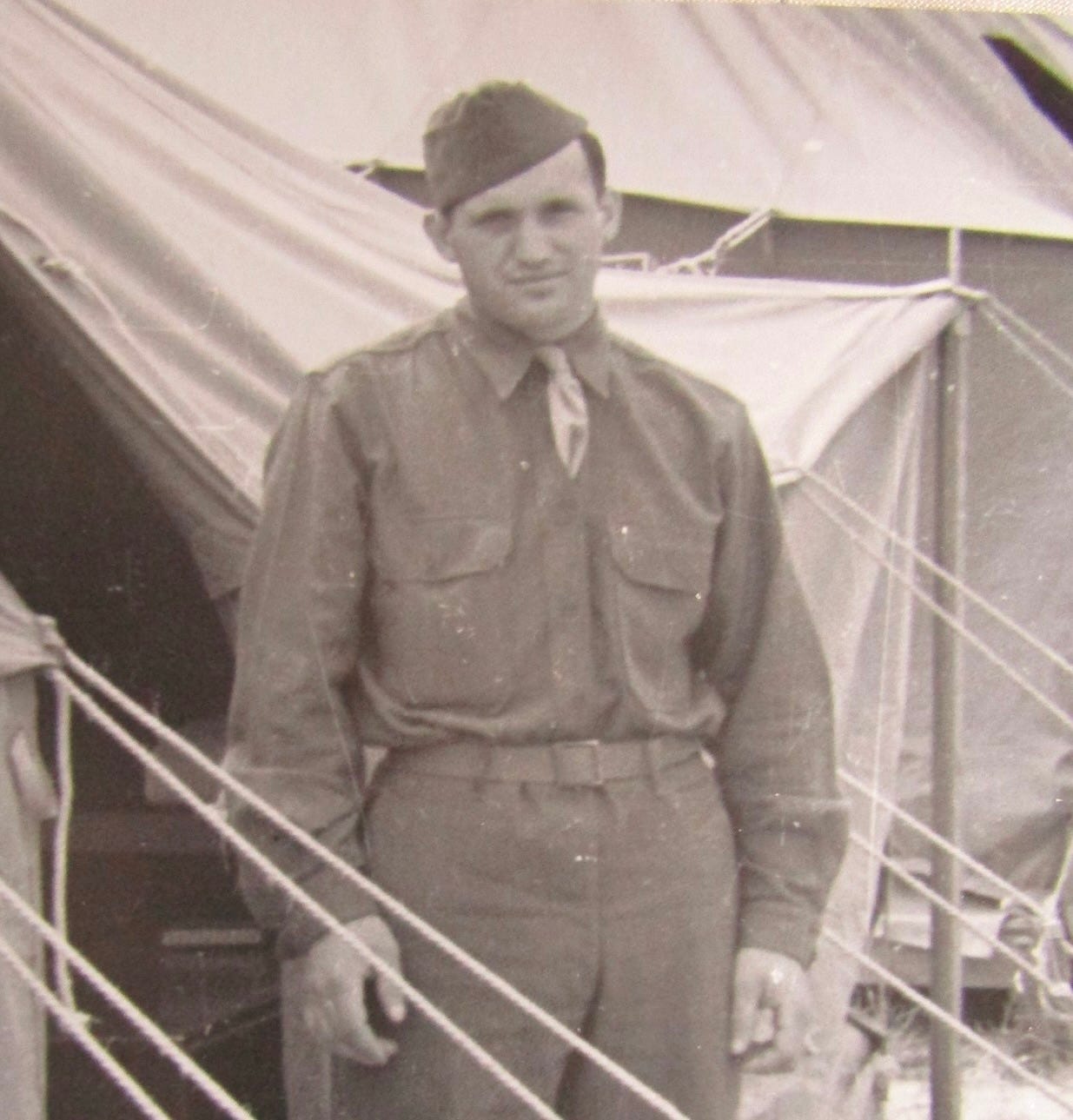
February 19th is the Rage Against the War Machine rally in DC. It just so happens to be my dad’s birthday as well. He was born on that date in 1917, endured the Great Depression, worked in the Civilian Conservation Corps and in factories until being drafted in 1942, and after the war became a firefighter, serving for more than thirty years until retiring. With my dad in mind, here’s the speech I’d give if I was invited on the stage. (The rally already has 27 speakers, but hopefully I can add a bit of rage and inspiration of my own.)
[To be clear: this is an “imaginary” speech. I am not one of the 27 speakers.]
My dad in the Army during World War II
Hello everyone. Today would have been my dad’s 106th birthday. Happy Birthday, Dad!
In the late 1930s, when my dad was working hard for low pay in a factory, he tried to enlist in the U.S. Navy. The Navy recruiter rejected him because he was roughly a half inch too short. After Pearl Harbor, and remembering his rejection, my dad didn’t join the eager volunteers. He waited to be drafted and reported to the Army. He served in an armored headquarters group but never went overseas to fight. That fact, and his earlier rejection by the Navy, is perhaps why I’m alive today to add my voice of rage against the military-industrial complex and America’s permanent state of undeclared war.
Dad and Mom raised me during the Cold War. I was conceived around the time of the Cuban Missile Crisis and was in diapers when John F. Kennedy was shot and killed in Dallas. As a boy, I embraced military things, played with toy soldiers, GI Joes, imitation M-16s, and similar toys of war. I built model tanks, model warplanes, model warships. I blew them up with firecrackers, imagining heroic battles.
As a teenager in the 1970s, I believed the Soviet Union was an insidious threat to American democracy. We faced the prospect of nuclear destruction. My dad was philosophical about this. Even if Americans and Russians killed each other in mutual assured destruction, known appropriately as MAD, a billion Chinese would survive to kickstart humanity, he quipped.
But there were two harsh realities my dad and I didn’t know back then. Nuclear winter was one. Any major exchange between nuclear powers, we now know, wouldn’t just kill the people in those countries. The soot and ash thrown into the atmosphere from thermonuclear war would likely lead to mass starvation globally. (Let’s not forget global radioactivity, sickness, and death as well.) The second one was that America’s nuclear plans, known as the SIOPs, envisioned not just massive attacks on the USSR but China as well, even if China hadn’t attacked the United States.
Sorry, Dad: In case of a major nuclear war, China’s goose was cooked, as was most other forms of life on our planet.
When I graduated from college in 1985, a brand-new 2nd lieutenant in the U.S. Air Force, my first assignment took me to Colorado Springs and Cheyenne Mountain, America’s very own Mount Doomsday. Cheyenne Mountain was America’s nuclear command and control center, literally blasted and tunneled out of a mountain, protected by 2000 feet of solid granite above it. Giant blast doors and buildings mounted on immense springs theoretically enabled us to ride out a nuclear war. But we few under the mountain knew that if DEFCON 1 came to pass, we’d likely be among the first to die in a nuclear war, even with all that rock over our heads.
You might say I’ve been to the mountain, Cheyenne Mountain, that is, both inside and outside. I much preferred the outside, hiking in the cool crisp Colorado air.
Once, when I was inside the mountain, the “battle staff” ran a wargame that ended with a nuclear attack on U.S. cities. In a sense, then, I’ve seen the missiles fly, I’ve seen their tracks end at American cities, if only on a monochrome monitor. Even that low-tech video screen convinced me that I never, ever, want to see the real thing.
A few years later, I walked the desert wilderness of Alamogordo, New Mexico, site of the first atomic blast in July of 1945, the Trinity test that preceded Hiroshima and Nagasaki. I’ve seen what little remained from that test, a test that changed everything, after which the survival of humanity as a species became problematic, precarious, and uncertain, dependent on men and their control over their thermonuclear toys, the playthings of the demented.
I’ve been to doomsday mountain, I’ve walked in an atomic wilderness, and I’ve come here to say: enough is enough.
As the doomsday clock ticks ever closer to midnight, we must act to stop it, to turn it back. We must act so that it never has the remotest chance of striking midnight.
We must walk – better yet, run – out of the dark and dank tunnel of doomsday mountain into the glorious light awaiting us. We must relish the wondrous sights and sounds of life. We must embrace each other, share the warmth of our common humanity as we seek a better, peaceful future for everyone everywhere.
Because mountains won’t protect us. Missiles won’t save us. Weapons won’t warm us, unless by warmth you mean death by nuclear fire.
Ending war will protect us. Ending missiles will save us. Compassion, tolerance, and love will warm us.
I know because I’ve been to doomsday mountain. I’ve witnessed nuclear war, if only during an exercise. I’ve walked in a desert where an atomic blast obliterated and irradiated most everything in its path. And that’s not a future I want. That’s not a future any sane person wants. That way lies madness.
Come, take my hand. Join me in leaving Cheyenne Mountain. Let’s run like children, with joy, away from tunnels and blast doors, toward the light of peace.
And, once we’re out, let’s put the darkness of war and nuclear terror behind us and never look back.
I never miss a Super Bowl, and this year’s game was close until its somewhat anti-climatic end. Of course, there’s always a winning team and a losing one, but perhaps the biggest winner remains the military-industrial complex, which is always featured and saluted in these games.
How so? The obligatory military flyover featured Navy jets flown by female pilots. Progress! The obligatory shot of an overseas (or on-the-sea) military unit featured the colorful crew of the USS Carl Vinson, an aircraft carrier. A Marine Corps color guard marched out the American flag along with the flags of each of the armed services. The announcers made a point to “honor those who fight for our nation.” All this is standard stuff, a repetitive ritual that turns the Super Bowl into Veterans Day, if only for a few minutes.
What was new about this year’s ceremony was the celebration of Pat Tillman’s life, the sole NFL player (and I think the only athlete in any of America’s “major” sports leagues) to give up his career and hefty paycheck to enlist in the U.S. military after 9/11. Yes, Pat Tillman deserves praise for that, and since the game was played in Arizona and Tillman had been with the Arizona Cardinals, honoring him was understandable. Yet, the network (in this case, Fox) quickly said he’d “lost his life in the line of duty.” No further details.
Pat Tillman’s glorious statue
Tillman was killed in a friendly-fire incident that was covered up by the U.S. military in a conspiracy that went at least as high as Secretary of Defense Donald Rumsfeld. The military told the Tillman family Pat had died heroically in combat with the enemy in Afghanistan and awarded him the Silver Star. The Tillman family eventually learned the truth, that Pat had been killed by accident in the chaos of war, a casualty of FUBAR, because troops in combat, hyped on adrenaline, confused and under stress, make deadly mistakes far more often than we’d like to admit.
What makes me sad more than angry is how Tillman’s legacy is being used to sell the military as a good and noble place, a path toward self-actualization. Tillman, a thoughtful person, a soldier who questioned the war he was in, is now being reduced to a simple heroic archetype, just another recruitment statue for the U.S. military.
His life was more meaningful than that. His lesson more profound. His was a cautionary tale of a life of service and sacrifice in a war gone wrong; his death and the military’s lies about the same are grim lessons about the waste of war, its lack of nobility, the sheer awfulness of it all.
Tillman’s statue captures the essence of a man full of life. His death by friendly fire in a misbegotten war, made worse by the lies told to the Tillman family by the U.S. military, reminds us that the essence of war is death.
That was obviously not the intended message of this Super Bowl tribute. That message was of military service as transformative, as full of grace, and I’m sorry but I just can’t stomach it because of what happened to Pat Tillman and how he was killed not only by friendly fire on the ground but how his life was then mutilated by those at the highest levels of the U.S. military.
Comrades, it has finally happened: I’ve been accused of being pro-Russia.
I was accused because I advocate for diplomacy and a negotiated settlement to the Russia-Ukraine War. Generally, I’m pro-peace and anti-war, but that’s a bad thing to be in the Russia-Ukraine conflict.
Apparently, the only way to be pro-Ukraine is to advocate for and work toward a complete Ukrainian military victory over Russian forces, meaning that all Russian forces must be expelled from Ukraine, no matter the cost. That also means that Ukraine should get every weapon system they request from the U.S. and NATO, no matter the cost and no matter how many people are killed with these weapons. Putin is evil, Russians are bad, and the only thing “they” understand is maximum violence.
Of course it’s my favorite Bond film!
Comrades, I figure I should embrace my pro-Russia identity and really explain it. So here are the top ten reasons “From Russia With Love” is my byword:
I want Ukraine to win the war and Russia to lose, and I accept that Putin’s invasion a year ago was both illegal and immoral. That makes me pro-Russia.
While I want Ukraine to win, I don’t believe the best way to “win” is a long war fought on Ukrainian territory at immense cost to all involved. That makes me pro-Russia.
I believe negotiations are possible between Russia and Ukraine and that an immediate cease fire will save countless Russian and Ukrainian lives. That makes me pro-Russia.
I don’t believe Western military aid to Ukraine is disinterested or driven by a love of democracy. That makes me pro-Russia.
I worry that a lengthy war as well as a more intense one could lead to dangerous escalation, perhaps even to nuclear war, a risk illustrated by the “doomsday clock” moving ever closer to midnight. That makes me pro-Russia.
I worry that a war that ends with Putin being overthrown could lead to a destabilized Russia in which nuclear surety is compromised. That makes me pro-Russia.
I believe that history began before Russia’s illegal invasion of Ukraine and that NATO expansion to Russia’s borders was unnecessary and unwise. That makes me pro-Russia.
I note the enormous profits being made by U.S. fossil fuel companies, especially from LNG (natural gas) shipments, partly due to the destruction of Nord Stream 2, as well as the profiteering by arms merchants and a soaring Pentagon budget, and I question U.S. motivations in this war. That makes me pro-Russia.
I note the mind numbing casualties already produced by this war (roughly 100,000 troops killed or wounded on each side), the millions of refugees, the untold billions in destruction inflicted on Ukraine, and I seek a way to say “no” to more killing, “no” to more war. That makes me pro-Russia.
I call on all sides to show maturity, to seek another way beyond yet more violence and killing, a way that respects the security interests of all involved, a way that fosters peace and reconciliation. That makes me pro-Russia.
Comrades, there you have it. I think you’ll agree I am pro-Russia, an acolyte of Putin, a willing puppet or useful idiot of Russian imperialism. The clincher is that I haven’t added a tiny Ukrainian flag to my Facebook profile photo or to my Twitter feed, so, really, what more proof do you need?
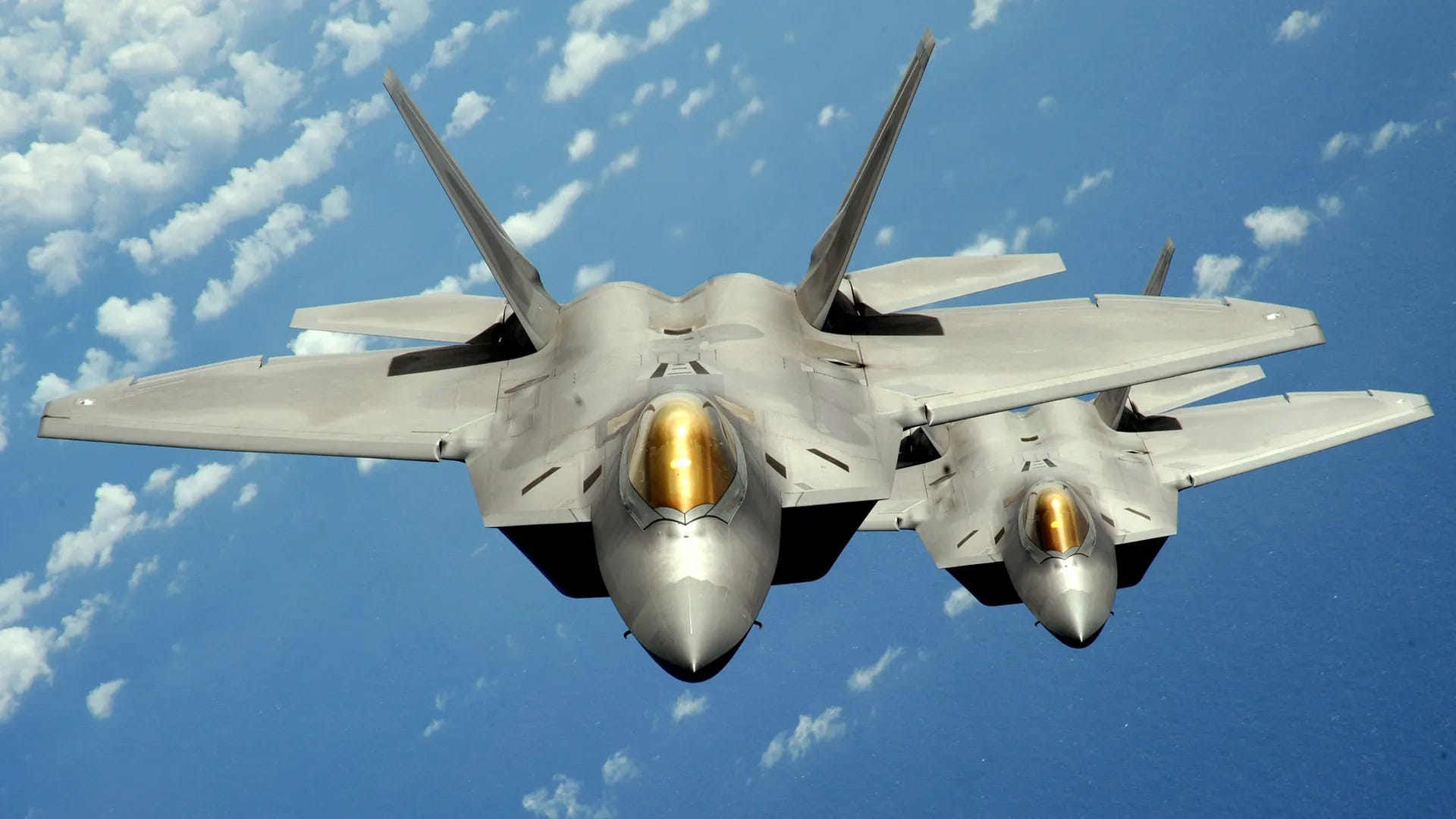
Good gawd, apparently another balloon fell victim to a missile launched from an F-22, this time over Alaska.
Look, up in the sky! It’s a bird! It’s a plane! No, it’s a Chinese war balloon!
Details are sketchy, but what’s clear is that the Biden administration is touting decisive action against what was apparently another balloon/surveillance instrument, most likely from China.
This is all about domestic politics. About the Biden administration “looking strong” by shooting down Chinese balloons (assuming the latest UFO was indeed another balloon).
The question is: Have these balloons truly been threats to U.S. national security? To my knowledge, they are not threats.
I’ve heard these balloons could be used for signals intelligence, but even if true, it seems a very crude method. The U.S. military has far more sophisticated techniques for SIGINT.
(An aside: China could mass produce balloons, release them toward the U.S., then watch us exhaust our limited F-22 fleet and our air-to-air missiles. Would we be that stupid?)
I never pictured America’s most sophisticated air superiority fighter, the F-22 Raptor, chasing and shooting down floating balloons in the sky, but here we are.
I love this quotation, courtesy of NBC News: “Do we have a plan for the next time that happens and how we’re going to deal with it?” Sen. Jon Tester, D-Mont., asked defense officials testifying Thursday on Capitol Hill about the alleged spy balloons. “Because, quite frankly, I’ll just tell you: I don’t want a damn balloon going across the United States.”
No more “damn” balloons floating over America! Mister President, we cannot allow a spy(?) balloon gap!
When you think about it, why is this even news? This could easily have been kept quiet.
Again, I come back to domestic politics. Biden was criticized for not acting fast enough on the previous balloon, so now we must shoot down all balloons as soon as they enter U.S. air space. And we must announce it too, as if it’s a great achievement.
Hooray, America! Paint two balloons as “kills” on the side of our F-22s. Airpower!
My Daily Helping of Propaganda from the New York Times
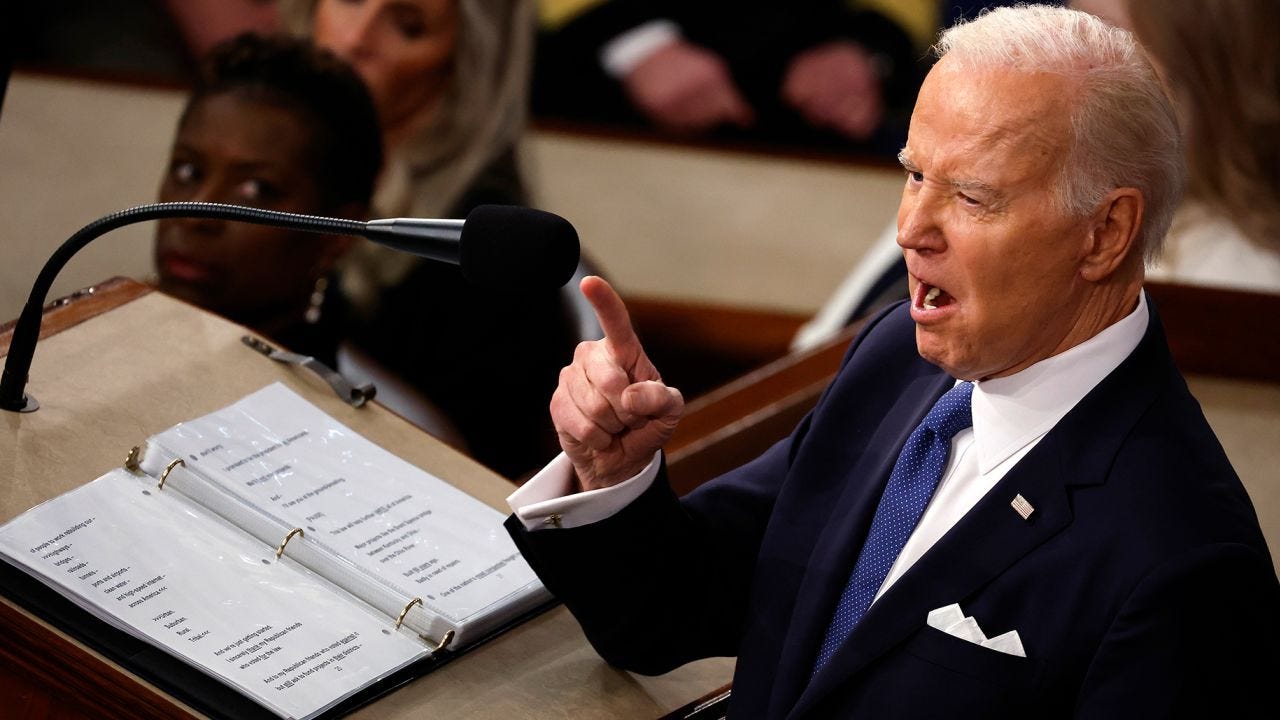
In this image, Joe Biden is “showing vigor,” according to CNN
This morning I read the New York Times’ coverage of Joe Biden’s “State of the Union” address and found this gem of a paragraph on the Russia-Ukraine War:
Ukraine has defied expectations so far, and could continue doing so. But if Ukraine falls, it would signal to the world that autocrats can get away with invading democratic countries. It would suggest the Western alliance isn’t as powerful as it once was — shifting global power away from democracies like the U.S. and members of the E.U. and toward authoritarian powers like Russia and China. And for Biden, it could damage his standing domestically and globally, much as America’s messy exit from Afghanistan did.
A few comments on this:
Note how negotiations aren’t mentioned. Cease fire? Forget about it.
If Ukraine were to fall, would that truly be a signal to autocrats everywhere that democratic countries were ripe for the plucking? Which autocrats and which democratic countries?
Was Ukraine a democracy? Is the USA a democracy?
What about invasions and occupations of Iraq, Afghanistan, and Libya by the US and its allies? Were those costly and disastrous wars OK because a so-called democratic entity invaded a more autocratic one?
Was Biden’s standing truly damaged by that messy exit from Afghanistan? Or was America’s standing truly damaged by persisting in an unwinnable war for 20 years?
If NATO suffers a blow to its prestige due to Ukraine’s fall, that will be the US and NATO’s fault. There was and remains no formal alliance between NATO and Ukraine. Recall that Ukraine was a Soviet republic and that Ukraine is far more closely linked to Russia historically than it is to Europe, let alone the USA.
To answer my own question at (3), the US is not a democracy. It’s an authoritarian oligarchy controlled by Wall Street, the military-industrial complex, and other big financial and corporate interests. Choosing between Corporate Stooge 1 (D) and Corporate Stooge 2 (R) every two or four years is not democracy.
I was further fascinated by how the NYT’s summary began:
President Biden used his State of the Union speech to portray the U.S. as a country in recovery, and he is right that there has been a lot of good news lately.
Price increases have slowed. Covid deaths are down about 80 percent compared with a year ago. Ukraine is holding off Russia’s invasion. Congress passed legislation addressing climate change, infrastructure and gun violence, and some of it was bipartisan.
That Ukraine “is holding off Russia’s invasion” is a sign of “recovery” for the United States! If that’s not a tacit admission of proxy war, I don’t know what is.
It’s nice to know Ukrainians are fighting and dying so that the NYT can brag of the US as being “in recovery.”
A nod of thanks to the NYT for my daily helping of propaganda.
(Also, please detail any important legislation that seriously addresses climate change and gun violence; climate change continues apace, as does gun violence in the US. Finally, Covid deaths are down mainly because of a less virulent strain and increased immunity due to infections, not because of any decisive action taken by the Biden administration.)
Why write so much about the military-industrial complex?
Loyal readers may recall that in June of 2022 M. Davout and I posted a debate between the two of us on the Russia-Ukraine War. This debate is still worth reading, I think.
The other day, my old friend Davout quipped that I had MIC on the brain. Of course, I had suggested that he had Putin on the brain because of his keen support of Ukraine’s war of national liberation, so it was a fair retort. It was also one that I embraced, for as I wrote back to him:
You’re right that I have MIC on the brain. MICIMATT is a useful acronym. The military industrial congressional intelligence media academia think tank complex. Awkward, but it captures some of the scope of the MIC.
There’s a reason Ike warned us about the MIC in 1961. It absorbs more than half of federal discretionary spending. This year Congress gave it $45 billion more than even Biden and the Pentagon wanted. And it just failed its fifth financial audit in a row.
Biden, back in the day, stated “show me your budget and I’ll tell you what you value.” Looking at the federal budget, we see what they value.
Back when I wrote that article (2010), the Pentagon Budget was 10 times as great as State. Now it’s 14 or 15 times as great. Progress!
So, yes, I have the MIC on my brain. All Americans should. That’s why Ike said “only an alert and knowledgeable citizenry” has any hope of keeping the MIC under control.
So far, we’ve failed, myself included.
Davout then made this reply:
What are the real problems with the MIC?
That it functions as a mini-welfare state for many Americans is not a big problem for me. That it supports weapons systems we do not need and in numbers we do not need is a big problem.
That it needlessly supports redundant bases across the country because of protection from members of congress worried about employment and small business in their congressional districts is not a big problem for me. That it provides military surplus to local police departments is a big problem.
The more crucial issue is to what extent and in which ways are military contractors like Boeing more corrupt, wasteful of US taxpayer dollars or endangering to the common good than Exxon Mobil or Philip Morris or Merck?
Haven’t you squeezed enough meaning out of Ike’s speech by now? Why not do a deep dive into the Pentagon budget and give like-minded people better arguments to make to their congressional reps than the top line DOD budget figure and Ike’s warning?
“Deep divers” already exist. I don’t need to duplicate their fine work.
I’m not sure of the relevance of comparing big oil or big tobacco to the MIC. My focus is on the MIC because that’s what I know best. Do I need to add nuance to my critique of the MIC by saying there are other bad corporate actors out there too?
You can see I was getting testy, but we’re old friends, so we don’t mince words.
Davout responded by saying:
The point I was making (inelegantly) about the one-sided focus on the MIC is that if one does not see it in the context of other factors, one might tend to deploy it as an explanation in cases where it doesn’t apply. (If one only has a hammer in one’s toolbox, then one might try to use it for tasks for which it is not fitted.)
For example, you have suggested the US MIC is a major factor explaining the transfer of weapons from western countries to Ukraine. While I think the US MIC does benefit from those transfers (though not so much as one might think, given that some of that weaponry is drawing on overstocks of weapons systems no longer in use), it is not driving this war. Russian aggression, Ukrainian resistance, and NATO countries’ concerns about future Russian aggression are the prime factors driving those weapons transfers.
To which I replied:
For a grimmer take on the Ukraine war and its implications for the US, consider this article by Chris Hedges:
And you’re wrong about the MIC and its profits here. For example, in the case of M-1 tanks, the 31 going to Ukraine will be newly built, despite the fact that we have thousands of Abrams tanks in Army inventory. Also, most of the weapons/ammo being sent from U.S. inventories have to be replaced. (Yes, a few weapons systems are obsolete, like MRAPs and M113 APCs, but most aren’t.). Assuming we send F-16s, again these will be new, and Lockheed Martin has already announced they’re willing and eager to produce more.
Don’t worry: the MIC is doing very well indeed [from the Russia-Ukraine War]. It has decades of practice at this.
That was the end of our exchange. I’d add that the MIC profits far more from the atmosphere of uncertainty and anxiety created by the Russia-Ukraine War than it does from the war itself. Even though Russia’s forces haven’t performed well in this war, even though Russia is arguably weaker today than it was before the invasion, the MIC and various preening politicians are exaggerating the Russian threat as a way of boosting military spending. And it’s working, hence the $45 billion extra given to the Pentagon by Congress in this year’s budget.
And so I will continue to have “MIC on the brain” because it continues to grow ever more powerful within our society, and ever more ambitious on the world stage. You might say it’s invaded my brain as well, though (so far) I haven’t sent it more than half of my discretionary income.
Davout and I don’t always agree, but we’re always willing to talk and to listen. We need more conversations among Americans about war and the MIC, for conversing leads to clarity and clarity can lead to a shared commitment to act.
This week, I was truly honored to talk with Robert Scheer about a subject that should be on our minds: nuclear war. I remember reading Scheer’s book, “With Enough Shovels: Reagan, Bush, and Nuclear War” when I was in college in the early 1980s. Back then, at least some of the “experts” surrounding Ronald Reagan and George H.W. Bush believed a nuclear war was “winnable” against the Soviet Union. Those were the days of the nuclear freeze movement and of deep concern about the possibility of a cataclysmic nuclear war. (Of course, any nuclear war would be cataclysmic.)
Today, few people seem that concerned about nuclear war even as the Doomsday Clock creeps ever closer to midnight. Why is this? Scheer and I talk about this as well as other subjects related to nuclear weapons and the military-industrial complex.
Politicians are known liars; military officers are supposed to put integrity first
Newly elected Congressman George Santos of New York has become the butt of many jokes about his serial lying. Santos lied about pretty much everything: his education, his religion, his parents, his work background. It’s hard to say what he didn’t lie about. So far, he has survived because the Republican Party has stood behind him but also because Americans collectively expect politicians to lie. Another lying politician? Say it ain’t so, Joe!
George Santos is a symptom of a much larger disease: a lack of honor, a lack of shame, in America. Honor, truth, integrity, simply don’t seem to matter, or matter much, in America today. What matters is making money, getting ahead, gaining power, at any price. Rarely are liars called to account, especially in politics, where everything is spin.
But how do you have a democracy where there is no truth?
As much as George Santos has been lampooned (here in a funny segment by Bill Maher), as many times as he’s been called on to quit, one group of Americans is never called to account for their lies: U.S. military leaders.
George Santos is estranged from the truth—but he’s not the only one. He also makes dubious hand gestures, but that’s a story for another day
U.S. military leaders appeared before Congress to testify the Iraq War was being won. They appeared before Congress to testify the Afghan War was being won. They talked of “progress,” of corners being turned, of Iraqi and Afghan forces being successfully trained and ready to assume their duties as U.S. forces withdrew. As events showed, it was all spin. All lies.
Where is the accountability? The Congressional hearings? The calls for those military leaders to explain themselves?
Of course, it wasn’t just the U.S. military but other sectors of the U.S. government that lied. Peter Van Buren’s book, “We Meant Well,” documents the lies and exaggerated stories he was pressured to sell as a member of the State Department working with U.S. military units in Iraq. Going along with the lies got you promoted. Trying to tell the truth, as Van Buren did, earned him pariah status and got him forced into retirement at State after a tense fight with his superiors, up to and including Hillary Clinton.
The Afghan War papers, released by the Washington Post in 2019, revealed the systemic lying of U.S. military leaders about that war. Even as they spoke publicly of progress and corners being turned, these same leaders spoke privately of lack of progress and dead ends. It was exactly those “private” concerns that should have been made public.
As the Washington Post put it in 2019: A confidential trove of government documents obtained by The Washington Post reveals that senior U.S. officials failed to tell the truth about the war in Afghanistan throughout the 18-year campaign, making rosy pronouncements they knew to be false and hiding unmistakable evidence the war had become unwinnable.
Prolonging wars based on lies is far more serious than the headline-grabbing sins of Santos. U.S. troops paid for these lies with their lives, as did the peoples of Afghanistan, Iraq, and elsewhere. Again, where is the accountability in a U.S. military that allegedly prides itself on its integrity?
In fact, there were officers with integrity, like Matthew Hoh, who served in the Marine Corps before he joined the State Department. Hoh resigned from State in 2009 because he knew plans to “surge” in Afghanistan were wrongheaded and that reports of progress were false. Privately, his superiors agreed with most of his critique. Publicly, they continued to speak of victory being in sight, just as their predecessors had done during the Vietnam War.
Indeed, Hoh’s honesty and courage created a rare opportunity for then-President Barack Obama. Obama could have latched on to Hoh’s honest critique and used it to modify his own initial misreading of the Afghan War as the “good” war (as opposed to the “bad” Iraq War under Bush/Cheney). But Obama continued on course to military escalation in Afghanistan, a surge that produced nothing except more death and destruction. A dozen years later, U.S. forces finally withdrew from that country, chaotically and ignominiously.
Ironically, Members of Congress often know that senior military leaders are lying to them, but they refuse to act, notes Matt Hoh, mainly because they’re concerned to protect their political careers. In the case of the “surge” in Afghanistan, Democrats lined up to support Obama in part because they wanted no distractions as the president fought to get the Affordable Care Act passed into law.
So, the generals lie and Congress goes along with them, whether for profit, political expediency, and similar reasons, which only highlights further the rot throughout the military-industrial-congressional complex. In short, rather then challenging the lies, Congress is complicit in them.
Today, Republicans in the House want to investigate the 2021 withdrawal from Afghanistan, which is good, except their motivation is purely partisan. They want to attack the Biden administration, to paint it as weak and inept, when the real focus should be on all the lies, blunders, and profiteering by the military-industrial complex throughout the Afghan War.
A mendacious military is a very dangerous thing—far more dangerous than run-of-the-mill politicians like Santos with Pinocchio syndrome. Lies in military settings are matters of life and death. This is precisely why integrity is allegedly so highly valued, why honor is allegedly so highly esteemed, in the U.S. military.
It’s high time for real, honest, Congressional truth hearings on America’s disastrous wars. Just don’t appoint Santos and his ilk to serve on the committee.
My name is Bill Astore and I’m a card-carrying member of the military-industrial complex (MIC).
Sure, I hung up my military uniform for the last time in 2005. Since 2007, I’ve been writing articles for TomDispatch focused largely on critiquing that same MIC and America’s permanent war economy. I’ve written against this country’s wasteful and unwise wars in Iraq and Afghanistan, its costly and disastrous weapons systems, and its undemocratic embrace of warriors and militarism. Nevertheless, I remain a lieutenant colonel, if a retired one. I still have my military ID card, if only to get on bases, and I still tend to say “we” when I talk about my fellow soldiers, Marines, sailors, and airmen (and our “guardians,” too, now that we have a Space Force).
So, when I talk to organizations that are antiwar, that seek to downsize, dismantle, or otherwise weaken the MIC, I’m upfront about my military biases even as I add my own voice to their critiques. Of course, you don’t have to be antiwar to be highly suspicious of the U.S. military. Senior leaders in “my” military have lied so often, whether in the Vietnam War era of the last century or in this one about “progress” in Iraq and Afghanistan, that you’d have to be asleep at the wheel or ignorant not to have suspected the official story.
Yet I also urge antiwar forces to see more than mendacity or malice in “our” military. It was retired general and then-President Dwight D. Eisenhower, after all, who first warned Americans of the profound dangers of the military-industrial complex in his 1961 farewell address. Not enough Americans heeded Ike’s warning then and, judging by our near-constant state of warfare since that time, not to speak of our ever-ballooning “defense” budgets, very few have heeded his warning to this day. How to explain that?
Ike’s warning about the military-industrial complex was also a call to arms to “an alert and knowledgeable citizenry” (Image: WhiteHouse.gov)
Well, give the MIC credit. Its tenacity has been amazing. You might compare it to an invasive weed, a parasitic cowbird (an image I’ve used before), or even a metastasizing cancer. As a weed, it’s choking democracy; as a cowbird, it’s gobbling up most of the “food” (at least half of the federal discretionary budget) with no end in sight; as a cancer, it continues to spread, weakening our individual freedoms and liberty.
Call it what you will. The question is: How do we stop it? I’ve offered suggestions in the past; so, too, have writers for TomDispatch like retired Army Colonel Andrew Bacevich and retired Army Major Danny Sjursen, as well as William Hartung, Julia Gledhill, and Alfred McCoy among others. Despite our critiques, the MIC grows ever stronger. If Ike’s warning wasn’t eye-opening enough, enhanced by an even more powerful speech, “Beyond Vietnam,” by Martin Luther King, Jr., in 1967, what could I and my fellow TomDispatch writers possibly say or do to make a difference?
Maybe nothing, but that won’t stop me from trying. Since I am the MIC, so to speak, maybe I can look within for a few lessons that came to me the hard way (in the sense that I had to live them). So, what have l learned of value?
War Racketeers Enjoy Their Racket
In the 1930s, Smedley Butler, a Marine general twice decorated with the Medal of Honor, wrote a book entitled War Is a Racket. He knew better than most since, as he confessed in that volume, when he wore a military uniform, he served as “a racketeer, a gangster for capitalism.” And the corporate-driven racket he helped enable almost a century ago by busting heads from the Caribbean to China was small-scale indeed compared to today’s thoroughly global one.
There’s an obvious lesson to be drawn from its striking endurance, never-ending enlargement, and distinct engorgement in our moment (even after all those lost wars it fought): the system will not reform itself. It will always demand and take more — more money, more authority, more power. It will never be geared for peace. By its nature, it’s authoritarian and distinctly less than honorable, replacing patriotism with service loyalty and victory with triumphant budgetary authority. And it always favors the darkest of scenarios, including at present a new cold war with China and Russia, because that’s the best and most expedient way for it to thrive.
Within the military-industrial complex, there are no incentives to do the right thing. Those few who have a conscience and speak out honorably are punished, including truth-tellers in the enlisted ranks like Chelsea Manning and Daniel Hale. Even being an officer doesn’t make you immune. For his temerity in resisting the Vietnam War, David M. Shoup, a retired Marine Corps general and Medal of Honor recipient, was typically dismissed by his peers as unbalanced and of questionable sanity.
For all the talk of “mavericks,” whether in Top Gun or elsewhere, we — there’s that “we” again (I can’t help myself!) — in the military are a hotbed of go-along-to-get-along conformity.
Recently, I was talking with a senior enlisted colleague about why so few top-ranking officers are willing to speak truth to the powerless (that’s you and me) even after they retire. He mentioned credibility. To question the system, to criticize it, to air dirty laundry in public is to risk losing credibility within the club and so to be rejected as a malcontent, disloyal, even “unbalanced.” Then, of course, that infamous revolving door between the military and giant weapons makers like Boeing and Raytheon simply won’t spin for you. Seven-figure compensation packages, like the one current Secretary of Defense Lloyd Austin gained from Raytheon after his retirement as an Army general, won’t be an option. And in America, who doesn’t want to cash in while gaining more power within the system?
Quite simply, it pays so much better to mouth untruths, or at least distinctly less-than-full-truths, in service to the powerful. And with that in mind, here, at least as I see it, are a few full truths about my old service, the Air Force, that I guarantee you I won’t be applauded for mentioning. How about this as a start: that the production of F-35s — an overpriced “Ferrari” of a fighter jet that’s both too complex and remarkably successful as an underperformer — should be canceled (savings: as much as $1 trillion over time); that the much-touted new B-21 nuclear bomber isn’t needed (savings: at least $200 billion) and neither is the new Sentinel Intercontinental Ballistic Missile(savings: another $200 billion and possibly the entire Earth from doomsday); that the KC-46 tanker is seriously flawed and should be canceled (savings: another $50 billion).
Now, tote it up. By canceling the F-35, the B-21, the Sentinel, and the KC-46, I singlehandedly saved the American taxpayer roughly $1.5 trillion without hurting America’s national defense in the least. But I’ve also just lost all credibility (assuming I had any left) with my old service.
Look, what matters to the military-industrial complex isn’t either the truth or saving your taxpayer dollars but keeping those weapons programs going and the money flowing. What matters, above all, is keeping America’s economy on a permanent wartime footing both by buying endless new (and old) weapons systems for the military and selling them globally in a bizarrely Orwellian pursuit of peace through war.
How are Americans, Ike’s “alert and knowledgeable citizenry,” supposed to end a racket like this? We certainly should know one thing by now: the MIC will never check itself and Congress, already part of it thanks to impressive campaign donations and the like by major weapons makers, won’t corral it either. Indeed, last year, Congress shoveled $45 billion more than the Biden administration requested (more even than the Pentagon asked for) to that complex, all ostensibly in your name. Who cares that it hasn’t won a war of the faintest significance since 1945. Even “victory” in the Cold War (after the Soviet Union imploded in 1991) was thrown away. And now the complex warns us of an onrushing “new cold war” to be waged, naturally, at tremendous cost to you, the American taxpayer.
As citizens, we must be informed, willing, and able to act. And that’s precisely why the complex seeks to deny you knowledge, precisely why it seeks to isolate you from its actions in this world. So, it’s up to you — to us! — to remain alert and involved. Most of all, each of us must struggle to keep our identity and autonomy as a citizen, a rank higher than that of any general or admiral, for, as we all need to be reminded, those wearing uniforms are supposed to serve you, not vice-versa.
I know you hear otherwise. You’ve been told repeatedly in these years that it’s your job to “support our troops.” Yet, in truth, those troops should only exist to support and defend you, and of course the Constitution, the compact that binds us all together as a nation.
When misguided citizens genuflect before those troops (and then ignore everything that’s done in their name), I’m reminded yet again of Ike’s sage warning that only Americans can truly hurt this country. Military service may be necessary, but it’s not necessarily ennobling. America’s founders were profoundly skeptical of large militaries, of entangling alliances with foreign powers, and of permanent wars and threats of the same. So should we all be.
Citizens United Is the Answer
No, not that “Citizens United,” not the case in which the Supreme Court decided corporations had the same free speech rights as you and me, allowing them to coopt the legislative process by drowning us out with massive amounts of “speech,” aka dark-money-driven propaganda. We need citizens united against America’s war machine.
Understanding how that machine works — not just its waste and corruption, but also its positive attributes — is the best way to wrestle it down, to make it submit to the people’s will. Yet activists are sometimes ignorant of the most basic facts about “their” military. So what? Does the difference between a sergeant major and a major, or a chief petty officer and the chief of naval operations matter? The answer is: yes.
An antimilitary approach anchored in ignorance won’t resonate with the American people. An antiwar message anchored in knowledge could, however. It’s important, that is, to hit the proverbial nail on the head. Look, for example, at the traction Donald Trump gained in the presidential race of 2015-2016 when he did something few other politicians then dared do: dismiss the Iraq War as wasteful and stupid. His election win in 2016 was not primarily about racism, nor the result of a nefarious Russian plot. Trump won, at least in part because, despite his ignorance on so many other things, he spoke a fundamental truth — that America’s wars of this century were horrendous blunders.
Trump, of course, was anything but antimilitary. He dreamed of military parades in Washington, D.C. But I (grudgingly) give him credit for boasting that he knew more than his generals and by that I mean many more Americans need to challenge those in authority, especially those in uniform.
Yet challenging them is just a start. The only real way to wrestle the military-industrial complex to the ground is to cut its funding in half, whether gradually over years or in one fell swoop. Yes, indeed, it’s the understatement of the century to note how much easier that’s said than done. It’s not like any of us could wave a military swagger stick like a magic wand and make half the Pentagon budget disappear. But consider this: If I could do so, that military budget would still be roughly $430 billion, easily more than China’s and Russia’s combined, and more than seven times what this country spends on the State Department. As usual, you get what you pay for, which for America has meant more weapons and disastrous wars.
Join me in imagining the (almost) inconceivable — a Pentagon budget cut in half. Yes, generals and admirals would scream and Congress would squeal. But it would truly matter because, as a retired Army major general once told me, major budget cuts would force the Pentagon to think — for once. With any luck, a few sane and patriotic officers would emerge to place the defense of America first, meaning that hubristic imperial designs and forever wars would truly be reined in because there’d simply be no more money for them.
Currently, Americans are giving the Pentagon all it wants — plus some. And how’s that been working out for the rest of us? Isn’t it finally time for us to exercise real oversight, as Ike challenged us to do in 1961? Isn’t it time to force the Pentagon to pass an audit each year — it’s failed the last five! — or else cut its budget even more deeply? Isn’t it time to hold Congress truly responsible for enabling ever more war by voting out military sycophants? Isn’t it time to recognize, as America’s founders did, that sustaining a vast military establishment constitutes the slow and certain death of democracy?
Just remember one thing: the military-industrial complex won’t reform itself. It just might have no choice, however, but to respond to our demands, if we as citizens remain alert, knowledgeable, determined, and united. And if it should refuse to, if the MIC can’t be tamed, whether because of its strength or our weakness, you will know beyond doubt that this country has truly lost its way.





 Bracing Views