The Enemy Within

America’s Overseas Wars Have Come Home

BILL ASTORE

OCT 20, 2025

America’s overseas wars, with all their capricious and vicious violence, have indeed come home. For decades, our leaders projected power abroad under the banner of fighting evil — whether Communism, terrorism, or tyranny. Yet in doing so, they helped cultivate an authoritarian mindset that has now turned inward. The “enemy” is no longer some distant foe in a foreign land; it is “the enemy within.” For Donald Trump, that means the mythical “radical left,” a variation of the 1950s fantasy that a Communist was hiding under every bed. The irony, of course, is that the real danger then, as now, comes not from a phantom leftist menace but from a radical right-wing movement willing to strip Americans of their rights in the false name of security, safety, and patriotism.

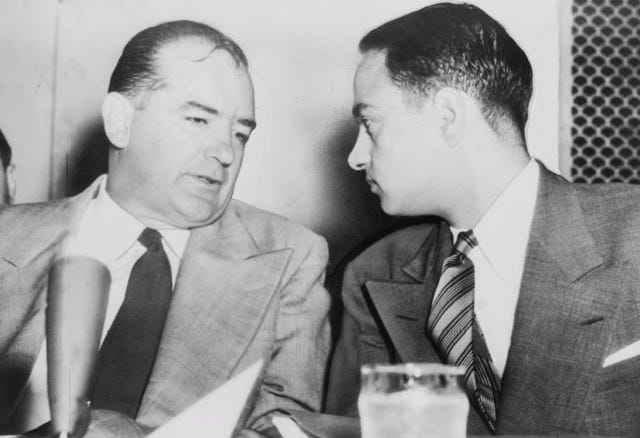
Joe McCarthy (L) with Roy Cohn

Today’s moment is more perilous than the McCarthy era. In the 1950s, Senator Joe McCarthy could destroy reputations and careers, but he was still just one senator. Today, we face a president who channels McCarthy’s demagoguery from the Oval Office, using the full power of the executive branch to punish dissent and reward loyalty. He is surrounded by a coterie of opportunists, lackeys, and lickspittles who feed his vanity, echo his grievances, and amplify his baseless conspiracy theories. The machinery of government — the same machinery once used to surveil and target foreign “enemies” — is now being aimed at our fellow citizens.

The global war on terror, it seems, has finally gone global in the truest sense — extending to America’s own streets, courthouses, and universities. Trump and his allies portray Democratic cities and progressive movements as breeding grounds of chaos and sedition. In his mind, anyone who resists his will — even through the most lawful and constitutional means — is an “insurrectionist.” He has long shown contempt for the Constitution he swore to uphold. Trump is often exactly what he appears to be: a dangerous blowhard with a vindictive streak, ignorant of the limits and responsibilities of his office. Yet others in his orbit, people like Stephen Miller, harbor more deliberate and insidious designs on American democracy.

What is to be done? Congress is paralyzed, fragmented, and largely disempowered. The Supreme Court is dominated by ideologues nursing grievances and eager to reshape the nation along reactionary lines. Who, then, will check a president determined to rule rather than govern?

The American experiment in self-government has endured many crises but rarely has it seemed so fragile. As journalist Nick Turse recently wrote in TomDispatch, the United States now stands on the precipice of authoritarian rule. Many Trump loyalists appear eager to leap — to wage an internal war against their fellow citizens under the guise of saving the nation.

Never has Dwight D. Eisenhower’s warning, “Only Americans can hurt America,” been more prescient or more tragic. The enemy within is not a phantom of the left or right — it is the creeping authoritarianism that grows when fear conquers freedom.

As Master Po reminded us in Kung Fu, “fear is the only darkness.” My fellow Americans, we are in a very dark place.

War in Somalia

I need to get smart on this

BILL ASTORE

AUG 07, 2025

With an ongoing genocide in Gaza and a dangerous war between Russia and Ukraine, who has the time to look to Africa? As we said when I was still in the military, I need to get smart on this.

Coverage of America’s military adventurism/fiascos in Africa is difficult to come by. Fortunately, there’s Nick Turse at The Intercept, whose latest article is entitled:

PENTAGON: U.S. COUNTERTERRORISM EFFORTS HAVE FAILED AFRICANS

A new Pentagon report sheds light on AFRICOM’s disastrous counterterrorism campaigns.

I know Nick Turse from his days at TomDispatch, so I sent him this note in response to his article:

Bombing worked so well to win the war in Indochina — so why not bomb in Africa?

It seems like the goal is permanent war — you throw gasoline on it with all the weapons exports and drone strikes. And they work — war continues.

I guess that’s my obvious take — pay no attention to their words, watch instead what they do. It’s just war and more war. Given that AFRICOM is a military command, should we be surprised that the “solutions” are always violent ones?

That seems to be the U.S. “strategy” in Africa: bomb the “terrorists” while exporting more weapons related to military “assistance” (the building of indigenous African forces ostensibly allied to the U.S.). Again, it’s a strategy that worked so well in Indochina in the early 1960s …

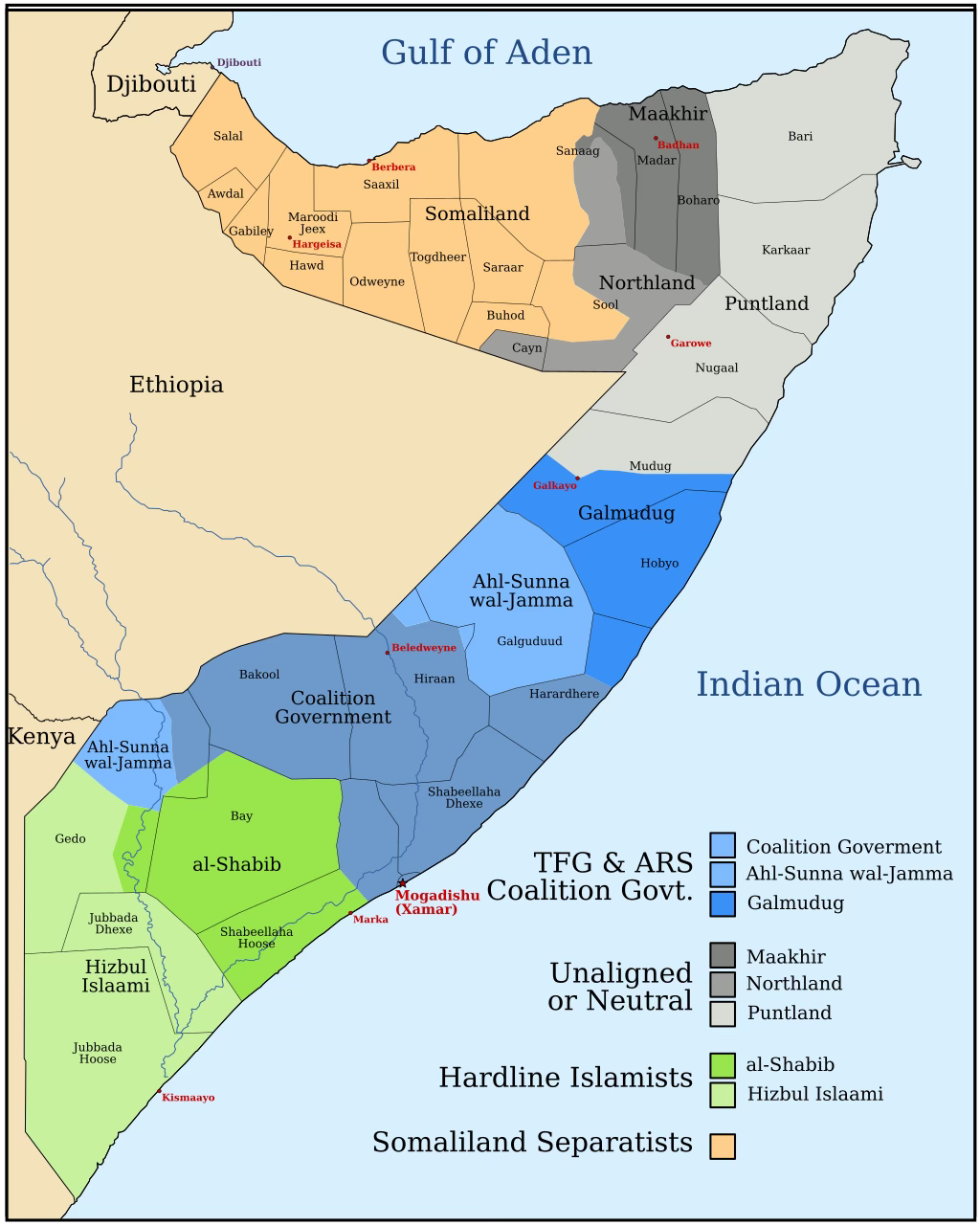
Unfortunately for Somalia, it occupies a strategic position in the Horn of Africa. The U.S. has a major military base in Djibouti.

Besides the perpetuation of war there, I don’t know what the U.S. government is up to in Africa. The mainstream media rarely discusses it. I assume control of scarce resources is a major goal. Also, the military-first AFRICOM approach to the area ensures higher profits for and more power to the military-industrial complex. Geographically, the Horn of Africa is vital to the control of sea and trade routes. Proximity to Yemen, Saudi Arabia, and the Red Sea is obvious. 

In short, I’m exposing my own ignorance as a way of encouraging all of us to get a bit smarter about what our government is up to in Africa. According to the Pentagon’s own sponsored report, it’s not going well. Here’s the kicker from Turse’s article:

“Africa has experienced roughly 155,000 militant Islamist group-linked deaths over the past decade,” reads a new report by the Africa Center for Strategic Studies, a Pentagon research institution. “Somalia and the Sahel have now experienced more militant Islamist-related fatalities over the past decade (each over 49,000) than any other region.”

“What many people don’t know is that the United States’ post-9/11 counterterrorism operations actually contributed to and intensified the present-day crisis and surge of violent deaths in the Sahel and Somalia,” Stephanie Savell, director of the Costs of War Project at Brown University, told The Intercept, referencing the frequent targeting of minority ethnic groups by U.S. partners during counterterrorism operations.

The U.S. provided tens of millions of dollars in weapons and training to the governments of countries like Burkina Faso and Niger, which are experiencing the worst spikes in violent deaths today, she said. “In those critical early years, those governments used the infusion of U.S. military funding, weapons, and training to target marginalized groups within their own borders, intensifying the cycle of violence we now see wreaking such a devastating human toll.”

Terrorist groups are also gaining ground at an exponential rate. “The past year has also seen militant Islamists [sic] groups in the Sahel and Somalia expand their hold on territory,” according to the Africa Center. “Across Africa, an estimated 950,000 square kilometers (367,000 square miles) of populated territories are outside government control due to militant Islamist insurgencies. This is equivalent to the size of Tanzania.” And as militant groups have expanded their reach, Africans have paid a grave price: a 60 percent increase in fatalities since 2023, compared with deaths from 2020 to 2022, according to the report.

As Turse notes, U.S. special forces deployed to Somalia soon after 9/11 as part of the global war on terror (or, if you prefer, the global war of terror). More than two decades of U.S. military strikes (and strife) in the area have only made matters worse. Can we as a nation stand for more of this “success”?

I think the U.S. strategy in Africa is to continue on the same course while suppressing the news of our failures there. Our influence in the region, such as it is, is military-driven, i.e. various African leaders want our weapons and money but little else (because we have little else to offer).

So, all our military leaders can boast of in the region is colossal air strikes. Did you know we used 60 tons of bombs to kill 14 militants in Somalia last February? Victory indeed will soon be ours … if you define “victory” as rising profits for the bomb-makers.

Readers, help me out. If any of you are following America’s war in Africa, I welcome your insights.

Why Burn Books When You Can Stop Them from Being Published?

You won’t have to burn them if they’re never published

W.J. Astore

There are many forms of lying. One that we don’t always think about is lying by omission. A partial truth can be a more insidious lie than an outright falsehood. I might argue, for example, that the Vietnam War was awful for America, dividing the country and costing more than 58,000 U.S. troops their lives, along with innumerable other mental and physical casualties. But if I leave out or downplay the far more horrifying costs to Southeast Asia, the literally millions of Vietnamese, Laotians, and Cambodians killed in that war, the poisoning of their land by highly toxic chemicals like Agent Orange along with millions of unexploded mines and munitions, which still kill to this day, I have most definitely lied by omission. Perhaps the Vietnam War was a “tragedy” for the U.S., but it was far, far worse for those on the receiving end of American firepower.

It’s not easy to get books published that tell tough truths we’d prefer not to hear. For example, Nick Turse’s book about “the real American war in Vietnam,” entitled “Kill Anything that Moves,” was published by Metropolitan Books, which is now being shuttered and shut down, notes Tom Engelhardt in his latest article at TomDispatch.com. Engelhardt has seen this before, with Pantheon Books, another publisher known for publishing books that told uncomfortable truths about America. It too was a victim of consolidation in publishing, of being shut down, mainly because the consolidators simply didn’t like the books being published. And perhaps too because these same books sometimes didn’t make enough money (though some proved to be bestsellers, which, from the owners’ ideological perspective, may have been worse).

Engelhardt’s heartfelt article made me think. Imagine that. It made me think that the best way to “burn” books is to make sure they’re never published.  Same with banning books.  You don’t have to ban them when they can’t find their way into print.

Also, it’s far easier to manufacture consent — to control the national discourse — when only certain books are being published and hyped — the ones reflecting and reinforcing mainstream thought.

Whether it’s shutting down Pantheon or Metropolitan or similar publishing houses, it’s about blocking alternative views that challenge capitalism, neoliberalism,, neoconservatism, and similar mainstream ideologies. You can always claim that the house you’re shuttering just wasn’t making enough money, wasn’t moving enough product, never mind the quality of that “product” and the invaluable service it was providing to democracy and the free exchange of ideas.

Readers here know that I started writing for TomDispatch in 2007. My first article was critical of the Petraeus Surge in the Iraq War, but my goal back then was “to save the U.S. military from itself,” from its misleading and often mendacious metrics to its inflated sense of itself, shown most clearly with its obsession with medals and decorations even as the war was going very poorly indeed. I tried several mainstream publishers including the New York Times and Washington Post without success. A friend mentioned TomDispatch to me, I wrote to Tom, and he found something in my writing worthy of being published at his site. My next “Tomgram” will be the 95th I’ve written for the site.

If TomDispatch didn’t exist, my criticisms and critiques would probably have never been published. Tom’s example inspired me to write further, to become a regular at Huff Post and Antiwar.com and to start my own blogs. Bracing Views exists because of the example provided by TomDispatch.

Good books beget other good books. Critical books beget other critical books. Scholarship builds on itself. When you block or severely limit opportunities for good, daring, and critical books from being published, you strike a blow against scholarship, against the free exchange of ideas, against the very idea of an enlightened America made more powerful and righteous by its informed citizens.

Sure, it’s just another publisher being put out of business. Nothing to see here, move along. Except it’s much more than that. It’s a form of book burning before the book ever existed, a silencing of synapses in our minds, an insidious form of mind control in the sense of curtailing certain thoughts and ideas from ever taking form.

Do I exaggerate? Readers, what do you think?

Being Right For the Wrong Reasons

W.J. Astore

Were you against the Afghan War? The Iraq War? Events proved you right, of course, but for the wrong reasons. And if you were pro-war in both cases, you were of course wrong but for the right reasons. Therefore you will still be celebrated and featured on mainstream media outlets, whereas those “right” people will still be ignored because, again, they may have been right about those disastrous wars, but their reasons were all wrong.

I think I heard this formulation first in Jeremy Scahill’s book “Dirty Wars.” An official said opponents of the war on terror had been “right for the wrong reasons,” but that proponents of war, the Kristols and Krauthammers of the necon world, had been “wrong for the right reasons.”

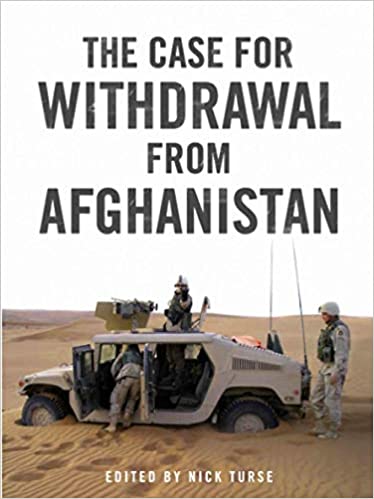
Nick Turse picks up on this theme in his latest for TomDispatch.com. In 2010, Turse edited a book of essays: “The Case for Withdrawal from Afghanistan.” In his latest essay, and with tongue firmly in cheek, Turse asks why he’s not being invited to speak on the mainstream media networks, why he’s not being celebrated for his prescience, why he’s not being lauded for being right. And of course Turse knows the answer: he was right — but for the wrong reasons.

If you’re confused, allow me to translate. It’s OK, even laudable, to argue that the Pentagon will win; that wars should be fought; and that U.S. generals are so many reincarnations of Napoleon and Alexander and Caesar.  Because being “wrong” here means that the Pentagon grows ever more powerful; that the U.S. always looks tough (if perhaps dumb); and that America’s generals are celebrated as the “finest” while never being called to account. Again, all these things are “right,” even when, indeed especially when, they’re so obviously wrong.

But it’s not OK, indeed it’s deplorable, to suggest the Pentagon will lose; that wars should not be fought; that U.S. generals are mostly time-serving mediocrities.  Because being “right” here means a weaker Pentagon; it means America fights fewer wars, an obvious sign of national weakness and a calamity to the military-industrial complex; it means holding generals responsible for their self-serving lies and obfuscations.

Being right about all this weakens militarism in America and could lead to lower “defense” budgets and fewer wars. And we can’t have that in America!

So, remember, in America it’s better to be wrong and thus feed the military-industrial complex than to be right and thus possibly to chart a wiser and less bellicose course. To paraphrase Mister Spock, it is not logical, but it is often true.

Sorry, Nick: You were right but for the wrong reasons

Destroying the Village in Vietnam

W.J. Astore

One day, a village of roughly 1200 people in South Vietnam ceased to exist. The U.S. Air Force destroyed it, and the report read “Target 100% destroyed, body-count 1200 KBA (killed by air) confirmed.”

It wasn’t an “enemy” village. It was a village that had failed to pay its taxes to a South Vietnamese provincial commander, a lieutenant colonel and ostensibly a U.S. ally. He wanted the village destroyed to set an example to other recalcitrant villages, and the U.S. Air Force did what it does: It put bombs and napalm on target.

At Seventh Air Force headquarters, the brass knew this village’s “crime.” As a brigadier general said to then-Lieutenant Colonel James Robert “Cotton” Hildreth, “Damn, Cotton, don’t you know what’s going on? That village didn’t pay their taxes. That [South Vietnamese] lieutenant colonel … is teaching them a lesson.”

It’s a “lesson” that made Cotton Hildreth, who later became a major general, “really sick” and “very bitter” about his role as a combat pilot in the Vietnam War. Later, in an oral interview, he admitted “I don’t talk about this [the war] very much.” One can understand why.

At the time, Hildreth brought his concerns to General William Momyer, the Seventh Air Force Commander, but Momyer offered only platitudes, saying that Hildreth was “doing some good, somewhere,” by dropping bombs and napalm and other ordnance on Vietnam and the Vietnamese people.

We know this story only because Cotton Hildreth was willing to share it after being retired from the Air Force for fifteen years. A few days before this village was obliterated, Hildreth and his wingman, flying A-1 Skyraiders, had been ordered to destroy the village with napalm. They refused to do so after making low and slow passes over the village, only to be greeted by children waving their arms in friendship. In “The Wingman and the Village,” Hugh Turley’s article about this in the Hyattsville Life & Times (July 2010), Hildreth admitted his wingman had dropped napalm away from the village first, and Hildreth then did the same. The wingman in question, old for a pilot at age 48 and a grandfather, had seen a woman running with two children from her hut. He’d made a snap decision to disobey orders.

As the wingman told Hildreth when they returned to base: “Sir, I have three small grandchildren at home, and I could never face them again if I had followed those orders.” The unnamed wingman was later reassigned to a non-combat role.

When Hildreth was asked later if he’d have destroyed the village if he’d been flying an F-105 “Thud,” which flew higher and much faster than the A-1 Skyraider, he admitted he likely would have, because “you don’t see the people.”

What can we learn from this story? This atrocity? That it’s very easy to kill when you never see the people being killed. That it’s easy to follow orders and much harder to disobey them. That the Air Force brass at headquarters knew they were complicit in mass murder but that it meant more to them to keep one South Vietnamese provincial commander happy than it meant to keep 1200 innocent people alive.

One day in a long and atrocious war, Cotton Hildreth and his wingman decided they’d put humanity first; that they wouldn’t destroy a defenseless village despite orders to do so. It didn’t matter. That village and those people were destroyed anyway a few days later. It was just another day in a war allegedly fought to contain communism but which instead led to uncontained barbarity by a so-called democratic alliance.

“We had to destroy the village to save it” is a catchphrase from that war that is of course a contradiction in terms. Destruction is destruction. Death is death. No one was saved. Small wonder that Hildreth was so sick, so bitter, and spoke so rarely of his experiences in Vietnam.

A Note on Sources:

Oral interview with retired U.S. Air Force Major General James Robert “Cotton” Hildreth on 9/19/96. Hildreth recounts his experience beginning at the 21-minute mark of the interview.

I first learned of Hildreth’s interview from David Martin, who wrote about it here in 2015, calling it the largest single known atrocity of the Vietnam War. Such atrocities were commonplace, given the wanton use of destructive power by the U.S. military in Vietnam. This is a theme developed by Nick Turse in his book, “Kill Anything that Moves: The Real American War in Vietnam.” (2013)

Hugh Turley, “The Wingman and the Village,” in “Hugh’s News,” Hyattsville Life & Times, July 2010.

Hildreth’s story is consistent with what Bernard Fall saw in Vietnam, which I wrote about here.

James Robert “Cotton” Hildreth. (Photo from North Carolina Digital Archive)

The Most Important Country the U.S. Military Has Conquered

costofwar_projectmap_large1
Yes, the U.S. military is involved throughout the world.  But even smart maps like this one neglect the one country truly conquered by that military: the USA

W.J. Astore

When the U.S. military boasts of “global reach, global power,” it’s not kidding.  As Nick Turse notes in his latest article at TomDispatch.com, that military’s Special Operations forces deployed in one way or another to 149 countries in 2017, roughly 75% of countries on the globe.  Talk about reach!  Meanwhile, those forces have more than doubled since 2001, sitting at 70,000 effectives today, the equivalent to five divisions.  (Consider it a military within the military.)  All of this has come at tremendous cost, with this year’s defense budget sitting at $700 billion–and rising for the foreseeable future.

For all the bucks, what about the bang–what about results?  Let’s just say that Iraq, Afghanistan, Libya, Yemen, Syria, Niger, and other U.S. military interventions haven’t gone well.

Yet there is one country where the U.S. military truly rules; one country which the U.S. military has truly conquered.  Where and which?  The USA, of course.  No matter its losses and frustrations overseas, the U.S. military keeps winning more money and influence here at home.  Congress loves it, presidents love it, our culture (mostly) loves it, or at least is urged to “support” it irrespective of results.

It’s not just the trillions of dollars it’s consumed since 9/11 or the extent to which retired generals rule the roost in Washington.  Think about popular culture: our sports, our toys, our TV and movies.  Kids dress up as soldiers on Halloween.  Toys are of the “Call of Duty” variety.  In TV shows like “SEAL Team,” Special Forces are all the rage.  Hollywood has embraced them too, in movies like “Act of Valor” and the upcoming “12 Strong,” about a small team of American “horse soldiers” in Afghanistan soon after 9/11, riding to the rescue like so many John Waynes.

And one more item, a vitally important one, to consider: there is no talk of peace, anytime, anywhere, in the mainstream media, hence no talk of declining military budgets.

The military has conquered us.  Indeed, global military action is a rare area of bipartisan accord in Washington, whether the commander-in-chief is Bush or Obama or Trump.

So, while it’s true the U.S. military is in an astonishing 149 countries, the one that really matters is the USA.  It may lose in Afghanistan or Somalia, but it has won here — and that’s all that really matters to the further growth and vitality of America’s national security state.

Relentlessly Building Potency: The U.S. Military Encircles Russia

Russian Flag
Encircling a bear: A good idea?

W.J. Astore

Nick Turse has an excellent article at TomDispatch.com documenting how U.S. special ops forces are involved in many countries that share a border with Russia.  A telling quotation from his article comes from General Raymond Thomas, the head of U.S. Special Operations Command (SOCOM).  Testifying before Congress, Thomas said

“We are working relentlessly with our [European] partners and the Department of State to build potency in eastern and northern Europe to counter Russia’s approach to unconventional warfare, including developing mature and sustainable Special Operations capabilities across the region.”

This looks like typical bureaucratese, but two words struck me as revealing: “relentlessly” and “potency.”  Typically, one might say one is working “tirelessly,” or “cooperatively,” or just plain working.  The idea one is working “relentlessly” serves to highlight the often frenetic nature of U.S. military deployments, the emphasis on ceaseless toil and constant action, especially of the kinetic variety.  This is a leading feature of America’s can-do military, a strong preference for acting first, thinking later.  And it doesn’t bode well as American special ops forces take up “mature and sustainable” positions in former Soviet satellite countries for the alleged reason of deterring Russian aggression.

The second word that struck me from the general’s testimony was “potency.”  Americans certainly can’t be seen as impotent.  But potency here is really a weasel word for offensive potential — the ability to strike “kinetically” at an enemy.  For example, one could say the Soviets were building up potency in Cuba during the early 1960s, but the Kennedy administration didn’t exactly see nuclear missiles being based there in those terms.  Is Kim Jong-un similarly building up regional “potency,” working “relentlessly” to deter U.S. aggression in his region of the world?  American military and foreign policy experts would laugh at those words and sentiments coming from the mouth of rival leaders like Vladimir Putin or Kim Jong-un.

With ever bigger military budgets, and ever growing ambitions, the U.S. military is relentlessly building up potency, which is nevertheless always framed as defensive, even benign.

Something tells me the Russians don’t see it this way.

The Atrocious Nature of the Vietnam War

Helicopter_Poster_promoV2

W.J. Astore

“It’s their [South Vietnam’s] war to win. We can help them … but in the final analysis, it’s their people and their government who have to win or lose this struggle.”  President Kennedy in September 1963

“We are not about to send American boys nine or ten thousand miles from home [to fight in Vietnam] to do what Asian boys ought to be doing for themselves.”  President Johnson in 1964

I’ve now watched all ten episodes of the Burns/Novick series on the Vietnam War.  I’ve written about it twice already (here and here), and I won’t repeat those arguments.  Critical reviews by Nick Turse, Peter Van Buren, Andrew Bacevich, and Thomas Bass are also well worth reading.

I now know the main message of the series: the Vietnam war was an “irredeemable tragedy,” with American suffering being featured in the foreground.  The ending is revealing.  Feel-good moments of reconciliation between U.S. veterans and their Vietnamese counterparts are juxtaposed with Tim O’Brien reading solemnly from his book on the things American troops carried in Vietnam.  The Vietnamese death toll of three million people is briefly mentioned; so too are the bitter legacies of Agent Orange and unexploded ordnance; regional impacts of the war to Laos and Cambodia are briefly examined.  But the lion’s share of the emphasis is on the American experience, with the last episode focusing on subjects like PTSD and the controversy surrounding the Vietnam War Memorial in Washington, D.C.

The series is well made and often powerful.  Its fault is what’s missing.  Little is said about the war being a crime, about the war being immoral and unjust; again, the war is presented as a tragedy, perhaps an avoidable one if only U.S. leaders had been wiser and better informed, or so the series suggests.  No apologies are made for the war; indeed, the only apology featured is by an antiwar protester near the end (she’s sorry today for the harsh words she said decades ago to returning veterans).

The lack of apologies for wide-scale killing and wanton destruction, the lack of serious consideration of the war as a crime, as an immoral act, as unjust, reveals a peculiarly American bias about the war, which Burns/Novick only amplify.  The series presents atrocities like My Lai as aberrations, even though Neil Sheehan is allowed a quick rejoinder about how, if you include massive civilian casualties from U.S. artillery and bombing strikes, My Lai was not aberrational at all.  Not in the sense of killing large numbers of innocent civilians indiscriminately.  Such killing was policy; it was routine.  Sheehan’s powerful observation is not pursued, however.

What the Burns/Novick series truly needed was a two-hour segment devoted exclusively to the destruction inflicted on Southeast Asia and the suffering of Vietnamese, Laotian, and Cambodian peoples.  Such a segment would have been truly eye-opening to Americans.  Again, the series does mention napalm, Agent Orange, massive bombing, and the millions of innocents killed by the war.  But images of civilian suffering are as fleeting as they are powerful.  The emphasis is on getting to know the veterans, especially American ones, of that war.  By comparison, the series neglects the profound suffering of Vietnamese, Laotians, and Cambodians.

In short, the series elides the atrocious nature of the war.  This is not to say that atrocities aren’t mentioned.  My Lai isn’t ignored.  But it’s juxtaposed with communist atrocities, such as the massacre of approximately 2500 prisoners after the Battle of Hue during the Tet Offensive, a war crime committed by retreating North Vietnamese Army (NVA) and National Liberation Front (NLF) forces.

Yet in terms of scale and frequency the worst crimes were committed by U.S. forces, again because they relied so heavily on massive firepower and indiscriminate bombing.  I’ve written about this before, citing Nick Turse’s book, Kill Anything That Moves, as well as the writings of Bernard Fall, who said that indiscriminate bombing attacks showed the U.S. was not “able to see the Vietnamese as people against whom crimes can be committed.  This is the ultimate impersonalization of war.”

Why did many Americans come to kill “anything that moves” in Vietnam?  Why, in the words of Fall, did U.S. officialdom fail to see the peoples of Southeast Asia as, well, people?  Fellow human beings?

The Burns/Novick series itself provides evidence to tackle this question, as follows:

  1. At the ground level, U.S. troops couldn’t identify friend from foe, breeding confusion, frustration, and a desire for revenge after units took casualties. It’s said several times in the series that U.S. troops thought they were “chasing ghosts,” “phantoms,” a “shadowy” enemy that almost always had the initiative.  In American eyes, it wasn’t a fair fight, so massive firepower became the equalizer for the U.S.—and a means to get even.
  2. Racism, depersonalization, and alienation.  U.S. troops routinely referred to the enemy by various racist names: gooks, dinks, slopes, and so on. (Interestingly, communist forces seem to have referred to Americans as “bandits” or “criminals,” negative terms but not ones dripping with racism.)  Many U.S. troops also came to hate the countryside (the “stinky” rice paddies, the alien jungle) as well.  Racism, fear, and hatred bred atrocity.
  3. Body count: U.S. troops were pushed and rewarded for high body counts. A notorious example was U.S. Army Lieutenant General Julian Ewell.  The commanding general of the 9th Infantry Division, Ewell became known as the “Butcher of the Delta.”  Douglas Kinnard, an American general serving in Vietnam under Ewell, recounted his impressions of him (in “Adventures in Two Worlds: Vietnam General and Vermont Professor”).  Ewell, recalled Kinnard, “constantly pressed his units to increase their ‘body count’ of enemy soldiers.  This had become a way of measuring the success of a unit since Vietnam was [for the U.S. Army] a war of attrition, not a linear war with an advancing front line.  In the 9th [infantry division] he had required all his commanders to carry 3” x 5” cards with body count tallies for their units by date, by week, and by month.  Woe unto any commander who did not have a consistently high count.”

The Burns/Novick series covers General Ewell’s “Speedy Express” operation, in which U.S. forces claimed a kill ratio of 45:1 (45 Vietnamese enemy killed for each U.S. soldier lost).  The series notes that an Army Inspector General investigation of “Speedy Express” concluded that at least 5000 innocent civilians were included as “enemy” in Ewell’s inflated body count—but no punishment was forthcoming.  Indeed, Ewell was promoted.

Ewell was not the only U.S. leader who drove his troops to generate high body counts while punishing those “slackers” who didn’t kill enough of the enemy.  Small wonder Vietnam became a breeding ground for atrocity.

  1. Helicopters.  As one soldier put it, a helicopter gave you a god’s eye view of the battlefield.  It gave you distance from the enemy, enabling easier kills (If farmers are running, they’re VC, it was assumed, so shoot to kill).  Helicopters facilitated a war based on mobility, firepower, and kill ratios, rather than a war based on territorial acquisition and interaction with the people.  In short, U.S. troops were often in and out, flitting about the Vietnamese countryside, isolated from the land and the people—while shooting lots and lots of ammo.
  2. What are we fighting for? For the grunt on the ground, the war made no sense.  Bernard Fall noted that, after talking to many Americans in Vietnam, he hadn’t “found anyone who seems to have a clear idea of the end – of the ‘war aims’ – and if the end is not clearly defined, are we justified to use any means to attain it?”

The lack of clear and defensible war aims, aims that could have served to limit atrocities, is vitally important in understanding the Vietnam war.  Consider the quotations from Presidents Kennedy and Johnson that lead this article.  JFK claimed it wasn’t America’s war to win — it was South Vietnam’s.  LBJ claimed he wasn’t going to send U.S. troops to Vietnam to fight; he was going to leave that to Asian boys.  Yet JFK committed America to winning in South Vietnam, and LBJ sent more than half a million U.S. “boys” to wage and win that war.

Alienated as they were from the land and its peoples, U.S. troops were also alienated from their own leaders, who committed them to a war that, according to the proclamations of those same leaders, wasn’t theirs to win.  They were then rewarded for producing high body counts.  And when atrocities followed, massacres such as My Lai, U.S. leaders like Richard Nixon conspired to cover them up.

In short, atrocities were not aberrational.  They were driven by the policy; they were a product of a war fought under false pretenses.  This is not tragedy.  It’s criminal.

Failing to face fully the horrific results of U.S. policy in Southeast Asia is the fatal flaw of the Burns/Novick series.  To that I would add one other major flaw*: the failure to investigate war profiteering by the military-industrial complex, which President Eisenhower famously warned the American people about as he left office in 1961.  Burns/Novick choose not to discuss which corporations profited from the war, even as they show how the U.S. created a massive “false” economy in Saigon, riven with corruption, crime, and profiteering.

As the U.S. pursued Vietnamization under Nixon, a policy known as “yellowing the bodies” by their French predecessors, the U.S. provided an enormous amount of weaponry to South Vietnam, including tanks, artillery pieces, APCs, and aircraft.  Yet, as the series notes in passing, ARVN (the South Vietnamese army) didn’t have enough bullets and artillery shells to use their American-provided weaponry effectively, nor could they fly many of the planes provided by U.S. aid.  Who profited from all these weapons deals? Burns/Novick remain silent on this question—and silent on the issue of war profiteering and the business side of war.

The Vietnam War, as Tim O’Brien notes in the series, was “senseless, purposeless, and without direction.”  U.S. troops fought and died to take hills that were then quickly abandoned.  They died in a war that JKF, Johnson, and Nixon admitted couldn’t be won.  They were the losers, but they weren’t the biggest ones.  Consider the words of North Vietnamese soldier, Bao Ninh, who says in the series that the real tragedy of the war was that the Vietnamese people killed each other.  American intervention aggravated a brutal struggle for independence, one that could have been resolved way back in the 1950s after the French defeat at Dien Bien Phu.

But U.S. leaders chose to intervene, raining destruction on Southeast Asia for another twenty years, leading to a murderous death toll of at least three million.  That was and is something more than a tragedy.

*A Note: Another failing of the Burns/Novick series is the lack of critical examination about why the war was fought and for what reasons, i.e. the series takes at face value the Cold War dynamic of falling dominoes, containment, and the like.  It doesn’t examine radical critiques, such as Noam Chomsky’s point that the U.S. did achieve its aims in the war, which was the prevention of Vietnamese socialism/communism emerging as a viable and independent model for economic development in the 1950s and 1960s.  In other words, a debilitating war that devastated Vietnam delayed by several decades that people’s emergence as an economic rival to the U.S., even as it sent a message to other, smaller, powers that the U.S. would take ruthless action to sustain its economic hegemony across the world.  This line of reasoning demanded a hearing in the series, but it’s contrary to the war-as-tragedy narrative adopted by Burns/Novick.

For Chomsky, America didn’t accidentally or inadvertently or ham-fistedly destroy the Vietnamese village to save it; the village was destroyed precisely to destroy it, thereby strengthening capitalism and U.S. economic hegemony throughout the developing world.  Accurate or not, this critique deserves consideration.

What’s So Special About Special Ops?

seal
Sexy? Yes.  But how effective over the long haul?

W.J. Astore

What’s so special about Special Ops?  It used to be that special operations troops were few in number.  You had Army Green Berets, Navy SEALs, mixed units like the Delta Force, and a few others, but nowadays U.S. Special Operations Command (SOCOM) consists of 70,000 troops, equivalent to five or six regular army divisions, a military within the military.

What’s truly elite about America’s special ops community, as Nick Turse shows in his latest article at TomDispatch.com, is their global reach and global power, to borrow an Air Force phrase.  Special ops forces have already been deployed to 137 countries in 2017, or 70% of the planet’s nations.  Talk about reach!  Yet enduring victories from past deployments, as Turse shows, have been surprisingly elusive.

Why is this?  Special ops forces are good at short-term kinetic actions (hit and run strikes, commando stuff), and they do their share of training and advising.  Yet their staying power, their persistence, their endurance, their ability to shift strategic winds in America’s favor, simply hasn’t been there.  Some would say that’s not their purpose, except that the U.S. military and government has been selling them as strategic game-changers, which they’re not.

As I’ve written before, I see America’s special ops forces as America’s global missionaries, our version of the Catholic Church’s Jesuit order during the Counter Reformation.  The Jesuits were soldiers of Christ, a militant order of highly trained missionaries, totally dedicated to upholding the one true faith (Catholicism, of course).  For many peoples around the world, Catholicism was the Jesuits.  And for many peoples around the world today (137 countries!), Americanism is a gun-toting special ops troop,

Coincidentally, I came across this report from FP: Foreign Policy this morning:

Pentagon taking lead in Africa makes some allies uneasy. At a recent summit meeting in Malawi attended by several U.S. generals and their African counterparts, some allies on the continent, while welcoming American attention, aren’t so sure they want it all from the Pentagon while the State Dept. is diminished.

“We have statements out of Washington about significant reductions in foreign aid,” Gen. Griffin Phiri, the commander of the Malawi Defense Forces, told the New York Times during the African Land Forces Summit, a conference between American Army officers and representatives from 40 African nations. “What I can tell you is that experience has shown us that diplomacy and security must come together.” He was unsure over the “mixed messages” coming out of Washington.

But is Washington’s message really mixed?  It seems clear.  Ever since 9/11, as Nick Turse has shown in several articles for TomDispatch.com, America has been downplaying diplomacy while ramping up “kinetic” strikes by special ops.  This trend has only accelerated under the leadership (if that’s the right word) of Donald Trump and Rex Tillerson at the State Department. When it comes to world affairs, Trump and Tillerson have often been AWOL, leaving the real action to Mattis and the Pentagon.

And nowadays the real action at the Pentagon is centered on SOCOM, the military within the military, America’s militant missionary order.

Even allies question America’s almost monomaniacal commitment to military action everywhere.  They’re right to do so.  For special ops aren’t so special when they’re deployed everywhere in dribs and drabs, parceled out on missions that lack achievable aims.

Finally, there’s this.  Say what you will of the Jesuits, they had faith.  A clear ideology.   Their faith, their devotion, was an inspiration to many. Even as their symbol was the cross, their skill-set was quite varied, e.g. they were often learned men, well ahead of their times in areas like science and mathematics.

Does Washington’s militant missionary order have a clear ideology?  A compelling symbol?  A varied skill-set?  Favorable and enduring results?  Evidence (so far) suggests otherwise.

State of (Military) Failure

turse

Tom Engelhardt

Reposted from TomDispatch.com and used by permission.

Someday, someone will write a history of the U.S. national security state in the twenty-first century and, if the first decade and a half are any yardstick, it will be called something like State of Failure.  After all, almost 15 years after the U.S. invaded the Taliban’s Afghanistan, launching the second American Afghan War of the past half-century, U.S. troops are still there, their “withdrawal” halted, their rules of engagement once again widened to allow American troops and air power to accompany allied Afghan forces into battle, and the Taliban on the rise, having taken more territory (and briefly one northern provincial capital) than at any time since that movement was crushed in the invasion of 2001.

Thirteen years after George W. Bush and his top officials, dreaming of controlling the oil heartlands, launched the invasion of Saddam Hussein’s Iraq (the second Iraq War of our era), Washington is now in the third iteration of the same, with 6,000 troops (and thousands of private contractors) back in that country and a vast air campaign underway to destroy the Islamic State.  With modest numbers of special operations troops on the ground and another major air campaign, Washington is also now enmeshed in a complex and so far disastrous war in Syria.  And if you haven’t been counting, that’s three wars gone wrong.

Then, of course, there was the American (and NATO) intervention in Libya in 2011, which cracked that autocratic country open and made way for the rise of Islamic extremist movements there, as well as the most powerful Islamic State franchise outside Syria and Iraq.  Today, plans are evidently being drawn up for yet more air strikes, special operations raids, and the like there.  Toss in as well Washington’s never-ending drone war in Pakistan’s tribal borderlands, its disastrous attempt to corral al-Qaeda in the Arabian Peninsula in Yemen (leading to a grim and horrifying Saudi-led, American-supported internecine conflict in that country), and the unending attempt to destroy al-Shabaab in Somalia, and you have at least seven wars and conflicts in the Greater Middle East, all about to be handed on by President Obama to the next president with no end in sight, no real successes, nothing.  In these same years Islamic terror movements have only spread and grown stronger under the pressure of the American war machine.

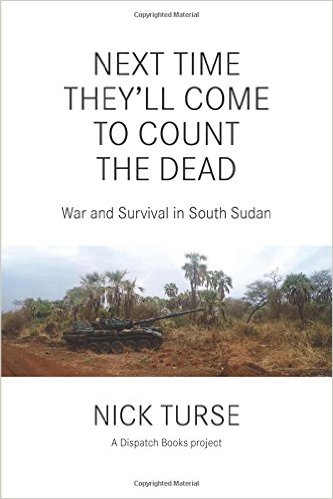
It’s not as if Washington doesn’t know this. It’s quite obvious and, as TomDispatch Managing Editor Nick Turse, author of the highly praised Next Time They’ll Come to Count the Dead, points out today in his latest report on the U.S. military’s pivot to Africa, the pattern is only intensifying, something clearly recognized by key American commanders. What’s strange, however, is that none of this seems to have caused anyone in the national security state or the military to reconsider the last 15 years of military-first policies, of bombs dropped, troops dispatched, drones sent in, and what the results were across the Greater Middle East and now Africa. There is no serious recalibration, no real rethinking. The response to 15 years of striking failure in a vast region remains more of the same. State of failure indeed!

Be sure to read Nick Turse on how U.S. military efforts in Africa show more regress than progress.