Why We Fight Wrongful Wars

Ours Not to Reason Why

BILL ASTORE

FEB 22, 2026


If you’re looking to “your” military to resist wrongful wars, you’re looking in the wrong place.

I should know. I was still on active duty in 2003 during the run-up to the disastrous Iraq War. What I remember was a sense of inevitability. The Bush/Cheney administration obviously wanted a settling of accounts with Saddam Hussein, and the war was going to happen irrespective of diplomatic efforts. One clear sign was that the good-faith efforts of weapons inspectors were discarded in a rush to war.

I did not speak out against the Iraq War until 2007 (I retired in 2005). Some profile in courage!

As I’ve commented here, “It’s not easy for us military lifers to get a grip on organizational betrayal because we’re part of the organization–our identities and ideals are linked to it. We are too close–we are reluctant to believe we’re being misled by lies spread from the very top of the pyramid.”

I submit this as a partial explanation, not as an excuse. Within the military, there’s a strong emphasis on staying in your lane. Do your job. Leave the decisions to the higher-ups. They have the intelligence, not you. Yours not to reason why … yours but to do and die.

History indicates that dissent within any military will be tightly constrained. And of course the U.S. military, if necessary, will use the UCMJ (uniform code of military justice) to imprison and otherwise to silence those who represent a threat to “good order and discipline.”

A separate question is this: How does a rebellious military even work? Alternatively, if a military is a hotbed of dissent and rebellion, it suggests a dishonest war and poor leadership as well. Are we headed in that direction now with respect to Iran? Are we already there? Perhaps this is one reason why there’s so much talk of “warriors” today in the U.S. military–the idea our soldiers fight as mercenaries for the thrill of it, not because they’re citizen-soldiers upholding the Constitution.

*****

Let’s be blunt: We are not supposed to go to war based on presidential whims, pressure from foreign powers like Israel, corporate profits, imperial dominance, and similar imperatives. Only Congress has the power to declare war in the name of the American people. But ever since World War II, Congress has been shunted aside by the National Security State. A few members of Congress may protest, but Congress writ large has abdicated its responsibility over war. This is perhaps the leading reason why we fight wrongful wars.

Another reason is our poor choice of leaders. Donald Trump spoke plainly early in 2016 that he believed the military should and would follow his orders irrespective of their legality. Trump believes he is not constrained by the U.S. Constitution, that his orders are the law. He should have been disqualified from running for office when he admitted he saw himself as being above the law; instead, he was elected and reelected.

And, let’s face it, “our” government treats we the people like mushrooms, keeping us in the dark while feeding us bullshit. Along with being actively misled, warmongers like Dick Cheney simply don’t care what the people think. As Cheney infamously replied when he was told the American people were losing faith in the Iraq War: “So?” Who cares? America’s leaders don’t care what you think. They don’t require your approval—only your obedience.

Finally, we the people, writ large, have acquiesced in the construction of a U.S. military machine based on global reach, global power, and full-spectrum dominance. We’ve “invested” gargantuan sums to create a military machine of great enormity. A military machine that we hold in high esteem. There will always be a temptation to use that machine, to see every problem as a Gordian knot that can be easily cut by our well-honed military saber.

To come back to the U.S. military: First, troops are trained to obey, not so much educated to think, and they certainly aren’t encouraged to disobey. Pilots want to be the best pilots they can be; maintainers want to be skilled maintainers; and so on. Sergeants and lieutenants leave bigger questions to their COs, their commanding officers. This is how militaries have worked for millennia.
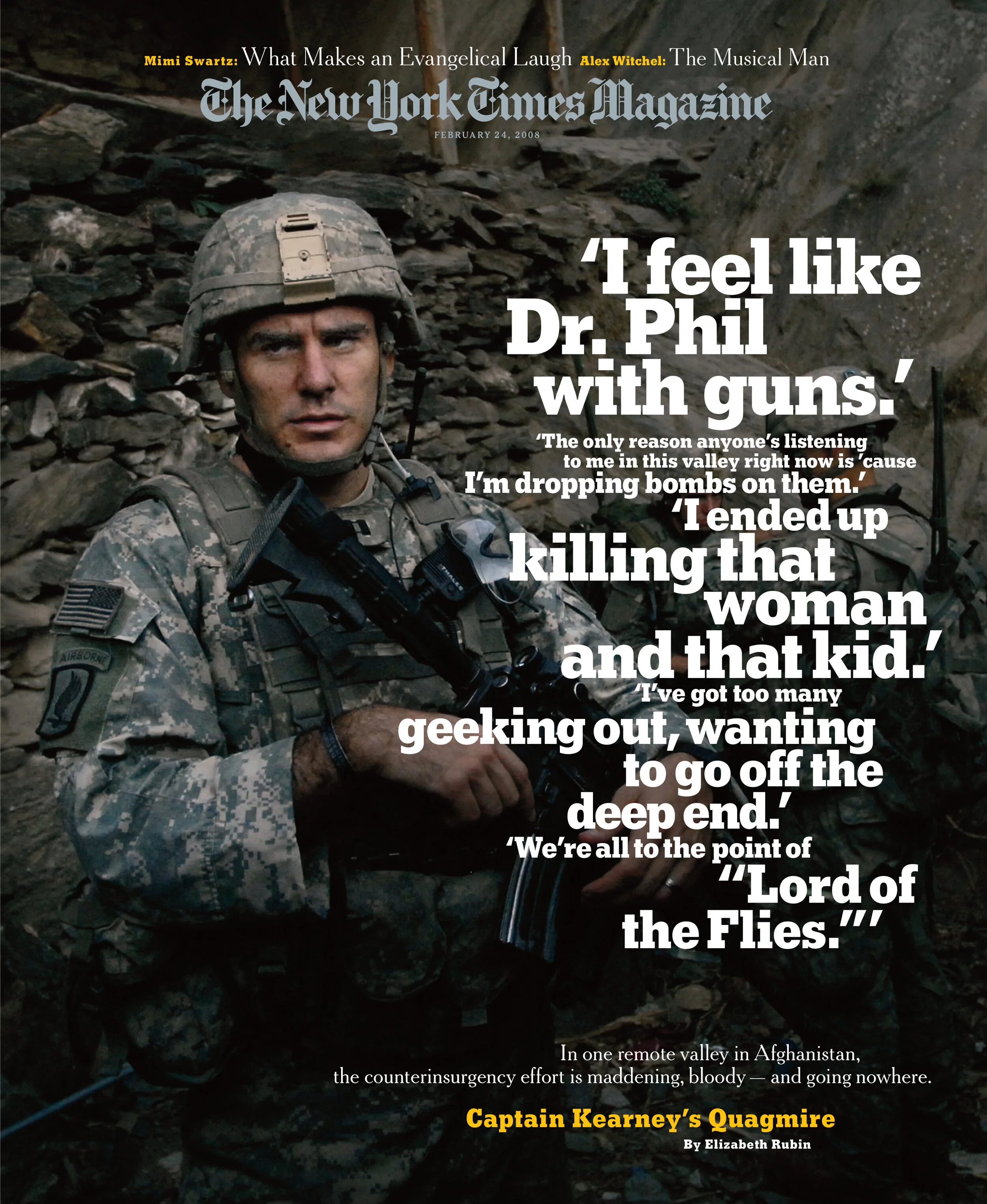
The harsh realities of war

*****

Again, I write this as a partial explanation about why we wage wrongful wars. It’s not meant as an excuse.

Ten years ago, I wrote an article for TomDispatch on why it’s so difficult for military members to speak out, even against illegal wars. (And who’s to say what is illegal?) Here’s an excerpt from that article:

Leaving military insularity, unit loyalty, and the pressure of combat aside, however, here are seven other factors I’ve witnessed, which combine to inhibit dissent within military circles.

1. Careerism and ambition: The U.S. military no longer has potentially recalcitrant draftees — it has “volunteers.” Yesteryear’s draftees were sometimes skeptics; many just wanted to endure their years in the military and get out. Today’s volunteers are usually believers; most want to excel. Getting a reputation for critical comments or other forms of outspokenness generally means not being rewarded with fast promotions and plum assignments. Career-oriented troops quickly learn that it’s better to fail upwards quietly than to impale yourself on your sword while expressing honest opinions. If you don’t believe me, ask all those overly decorated generals of our failed wars you see on TV.

2. Future careerism and ambition: What to do when you leave the military? Civilian job options are often quite limited. Many troops realize that they will be able to double or triple their pay, however, if they go to work for a defense contractor, serving as a military consultant or adviser overseas. Why endanger lucrative prospects (or even your security clearance, which could be worth tens of thousands of dollars to you and firms looking to hire you) by earning a reputation for being “difficult”?

3. Lack of diversity: The U.S. military is not blue and red and purple America writ small; it’s a selective sampling of the country that has already winnowed out most of the doubters and rebels. This is, of course, by design. After Vietnam, the high command was determined never to have such a wave of dissent within the ranks again and in this (unlike so much else) they succeeded. Think about it: between “warriors” and citizen-soldiers, who is more likely to be tractable and remain silent?

4. A belief that you can effect change by working quietly from within the system: Call it the Harold K. Johnson effect. Johnson was an Army general during the Vietnam War who considered resigning in protest over what he saw as a lost cause. He decided against it, wagering that he could better effect change while still wearing four stars, a decision he later came deeply to regret. The truth is that the system has time-tested ways of neutralizing internal dissent, burying it, or channeling it and so rendering it harmless.

5. The constant valorization of the military: Ever since 9/11, the gushing pro-military rhetoric of presidents and other politicians has undoubtedly served to quiet honest doubts within the military. If the president and Congress think you’re the best military ever, a force for human liberation, America’s greatest national treasure, who are you to disagree, Private Schmuckatelli?

America used to think differently. Our founders considered a standing army to be a pernicious threat to democracy. Until World War II, they generally preferred isolationism to imperialism, though of course many were eager to take land from Native Americans and Mexicans while double-crossing Cubans, Filipinos, and other peoples when it came to their independence. If you doubt that, just read War is a Racket by Smedley Butler, a Marine general in the early decades of the last century and two-time recipient of the Medal of Honor. In the present context, think of it this way: democracies should see a standing military as a necessary evil, and military spending as a regressive tax on civilization — as President Dwight D. Eisenhower famously did when he compared such spending to humanity being crucified on a cross of iron.

Chanting constant hosannas to the troops and telling them they’re the greatest ever— remember the outcry against Muhammad Ali when, with significantly more cause, he boasted that he was the greatest? — may make our military feel good, but it won’t help them see their flaws, nor us as a nation see ours.

6. Loss of the respect of peers: Dissent is lonely. It’s been more than a decade since my retirement and I still hesitate to write articles like this. (It’s never fun getting hate mail from people who think you’re un-American for daring to criticize any aspect of the military.) Small wonder that critics choose to keep their own counsel while they’re in the service.

7. Even when you leave the military, you never truly leave: I haven’t been on a military base in years. I haven’t donned a uniform since my retirement ceremony in 2005. Yet occasionally someone will call me “colonel.” It’s always a reminder that I’m still “in.” I may have left the military behind, but it never left me behind. I can still snap to attention, render a proper salute, recite my officer’s oath from memory.

In short, I’m not a former but a retired officer. My uniform may be gathering dust in the basement, but I haven’t forgotten how it made me feel when I wore it. I don’t think any of us who have served ever do. That strong sense of belonging, that emotional bond, makes you think twice before speaking out. Or at least that’s been my experience. Even as I call for more honesty within our military, more bracing dissent, I have to admit that I still feel a residual sense of hesitation. Make of that what you will.

Bonus Reason: Troops are sometimes reluctant to speak out because they doubt Americans will listen, or if they do, empathize and understand. It’s one thing to vent your frustrations in private among friends on your military base or at the local VFW hall among other veterans. It’s quite another to talk to outsiders. War’s sacrifices and horrors are especially difficult to convey and often traumatic to relive. Nevertheless, as a country, we need to find ways to encourage veterans to speak out and we also need to teach ourselves how to listen — truly listen — no matter the harshness of what they describe or how disturbed what they actually have to say may make us feel.

*****

Readers, as ever I welcome your comments here.
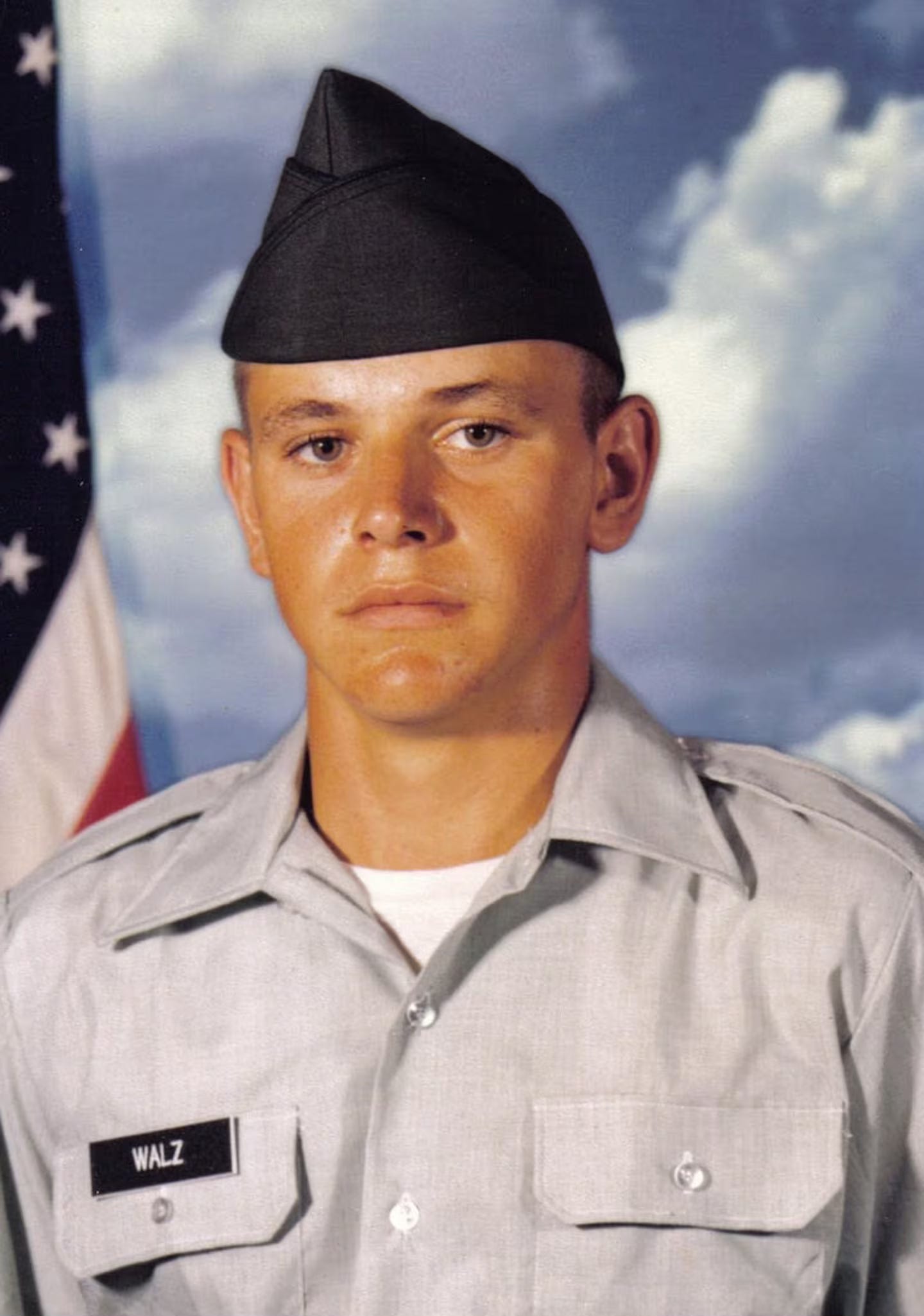
Governor Tim Walz’s Military Record

W.J. Astore

Questionable Assertions, but Not “Stolen Valor”

Governor Tim Walz, the Democratic nominee for Vice President, has come under fire about his military record. Leading the charge has been another Vice President nominee, J.D. Vance of the Republican Party, who served in the Marines and deployed to Iraq.

A young Tim Walz. Little did that young man know how this photo and his military service would become yet another battleground in American politics, generating plenty of heat but very little light

Let’s use the Army acronym of BLUF (bottom line up front); in other words, let’s cut to the chase:

  1. Tim Walz has said he retired as a command sergeant major (CSM) after 24 years of service in the Army National Guard. While he did serve as CSM for his battalion, he didn’t attend the Sergeants Major Academy and therefore he retired a step down as a master sergeant (MSG).
  2. When Tim Walz retired in 2005, he was preparing to run for Congress. His unit was also preparing to deploy to Iraq, which it eventually did in March of 2006. Walz was well within his rights as a soldier to retire when he did. Whether he did so to avoid war service in Iraq is known only to Walz. He claims he’d made his decision to retire before his unit was notified of its overseas deployment to Iraq.
  3. Tim Walz has talked loosely about using weapons of war “that he carried in war,” implying he’d seen combat service when he hadn’t. I don’t see this as a case of “stolen valor.” He wasn’t boasting about being some kind of badass hero in war. Obviously, in 24 years of service in the Army National Guard, he’d carried weapons of war and trained with them under simulated combat conditions “down range.” He should have simply said: “I’ve trained extensively with weapons of war.” Period.

Does any of this matter? Not to me. Tim Walz, by all accounts, served honorably, reaching the senior enlisted ranks. If the Army had wanted him to stay instead of retiring, he could have been stop-lossed or his retirement request could have been denied. He moved on to Congress, winning his election in 2006. He seems to be a person motivated by public service.

The issues that really matter here aren’t mentioned by the Republicans or the corporate-owned news (the CON). Here are those issues:

  1. Tim Walz is a strong supporter of Israel and its ongoing genocide in Gaza.
  2. Tim Walz is a strong supporter of massive military aid to Ukraine.
  3. To my knowledge, Tim Walz has not criticized the military-industrial-congressional complex (MICC) in meaningful ways, though he has spoken out against the idea of China being an inevitable U.S. enemy.

Tim Walz, in short, is a typical pro-Israel, pro-Ukraine, generally pro-MICC, Democrat.

The most important issue of all is the whole idea that one must go to war—to serve in places like Afghanistan and Iraq and, more likely than not, to kill other human beings, to prove one’s “valor” in uniform. Why is carrying and using a gun in war such a great and glorious thing? Especially wars like those in Afghanistan and Iraq that were based on lies? Would we respect Tim Walz more if he’d gone to Iraq in 2006 and shot up some Iraqis in the cause of “freedom”?

As a candidate for the presidency in 2016, Donald Trump famously denounced the Iraq War, using words like “stupid,” “dumb,” a “total disaster.” and a “big fat mistake.” The war was based on a lie, Trump said, about weapons of mass destruction that didn’t exist. Even worse, the Bush/Cheney administration was behind the lie, leading to a war that destabilized the Middle East, costing the U.S. military thousands of lives and U.S. taxpayers $2 trillion, Trump concluded.

Under that bright blaze of honesty from Trump (yes, you read that right), we might question anyone who wants to trumpet service in Iraq as praiseworthy in the sense of “bringing freedom” or “spreading democracy.”

Thank You For Your Service

W.J. Astore

This Veterans Day, instead of thanking vets, ask instead how they’re doing

I served in the U.S. military for twenty years. It was the prime of my life, and I got a great education courtesy of you the American taxpayer. In the Air Force, I was a developmental engineer when I wasn’t teaching history (long story), and I never had to endure bullets and bombs and IEDs in a combat zone, for which I’m grateful. I really consider it an honor to have served, a privilege, because we in the military take an oath to the U.S. Constitution and to the high ideals that document represents.

So I’m always a bit surprised when someone thanks me for my service. I feel like saying, please don’t thank me, but thank you for putting your trust in me, for allowing me to serve and to uphold our nation’s highest ideals. The nation placed its special faith and trust in me, so thanks for doing that.

Of course, I say nothing like that in reply. What I typically say is “You’re welcome,” and then I move on. I don’t tell people: Please, don’t thank me, because that would be rude. My experience is that people want to thank me for sincere if sometimes vague reasons, and that’s OK with me. It’s not the time to launch into a diatribe about the military-industrial-Congressional complex or war crimes or imperialism. I have my blog for that. (Smile.)

Sometimes, though, I think thought (and responsibility) begins and ends with “thank you for your service.” For some people, it means something like this:

Thank you for your service — so I don’t have to think about your service and America’s many wars — and so I don’t have to think about my loved ones having to serve and kill and die in them.

Veterans Day started as Armistice Day, a solemn occasion to mark the end of massive bloodletting in World War I and a return to normalcy, i.e. peace. It was supposed to be the war to end all wars; the armistice on 11 November 1918 was idealistically thought to be the beginning of eternal peace. Today, “peace” is a word you almost never hear in American political discourse. Our new normal is war, which is just about the most horrible thought I could write about U.S. society and culture today.

Why? Partly because veterans often pay “an intolerable price” for their awful experiences in war, notes Kelly Denton-Borhaug at TomDispatch. That’s why most combat veterans don’t want to talk about their experiences, especially with civilians. They’d rather forget, yet it’s so hard to forget or even to forgive yourself when your mind has been scorched by the fires of war.

And it’s not just veterans who pay the price of endless war. Young people turning 21 today have never known a time when America hasn’t been at war with somebody somewhere. They’ve never known a time when massive military budgets were considered abnormal. They’ve never known, in a word, peace.

So, instead of thanking veterans for their service today, perhaps you should simply ask them how they’re doing. Be ready to lend a sympathetic ear, or a helping hand, if they admit to feeling “not so well.”

Thank you for doing this. Thank you for your service.

How to Fix the U.S. Military’s Lying Problem

W.J. Astore

In my last article, I noted the U.S. military’s pursuit and prosecution of wars based on lies. Vietnam, Afghanistan, and Iraq are the most prominent and costly of these wars, though there were and are others. I argued that dishonorable wars were wasting the courage of U.S. troops even as they greatly weakened the U.S. military as an institution. And not just the U.S. military but the Constitution itself, to which all military members swear a sacred oath to support and defend.

I shared my article with a friend who teaches at a senior U.S. military school, and his one comment to me was a question: “How would you fix these problems?”

I’m flattered when my readers think I have the answers to fix major systemic problems that have existed and persisted since the Korean War, if not before. My colleague’s question was sincere, I am sure, and I assume he agreed with much of my analysis since he didn’t question or challenge my fundamental thesis.

Of course, I’m not the only person to have noticed the U.S. military has a serious issue with honor and integrity. Vox Populi posted my last article today with the following photo caption:

Leaders lie “in the routine performance of their duties,” and “ethical and moral transgressions [occur] across all levels” of the organization [Army]. Leaders have also become “ethically numb,” using “justifications and rationalizations” to overcome any ethical doubts, according to a 2015 study by Leonard Wong and Stephen Gerras, who are both professors at the U.S. Army War College.

The title of the Wong/Gerras study is “Lying to Ourselves: Dishonesty in the Army Profession,” published in 2019. Another powerful book is Tim Bakken’s “The Cost of Loyalty: Dishonesty, Hubris, and Failure in the U.S. Military,” published in 2020. Bakken teaches at West Point.

So, what is to be done?

I wrote to my colleague that he should put his question to his own students. Since he teaches at a senior military school, his students are mostly Army and Air Force colonels and Navy captains on the fast track to flag rank and stars. Many of them are America’s future generals and admirals. Surely they are the ones who have to come up with solutions, not me. I retired from the military almost two decades ago. I’m no longer part of the clan. Today’s officers are the ones who must challenge the lies, who must seek honor instead of dishonor, who must have the moral courage as public servants to speak up, to change things, and especially to tell the truth to the American people.

Are we as a nation challenging our public servants, including senior military officers, to be men and women of integrity? Are we insisting that they tell the truth when they testify to Congress? When they talk about wars, are they being frank and honest? Or are they evasive and dishonest? If the latter, are they being held accountable for their lies, both within the military and without it, by Congress and by people like us?

I didn’t attend a senior service school, but I did attend Squadron Officer School (for company-grade officers, which I did in-residence) and Air Command and Staff College (for field-grade officers, which I did by correspondence). From what I recall, there was some emphasis on history, on strategy and tactics, and on leadership but not much emphasis, if any, on moral courage, honesty, truth-telling, and integrity.

Fundamental to any military member is the need to honor one’s oath to the U.S. Constitution. We as a nation need to demand that military leaders serve with honor and integrity; this is far more important to the future of our military and our country than gargantuan military budgets and loads of exotic and expensive weaponry.

I remember exactly one discussion at the Air Force Academy when a roomful of officers started debating about which value was most important, the honor code or loyalty (with loyalty here construed in personal terms as support for one’s superiors, equals, and subordinates). The discussion grew heated in a matter of minutes before it was shut down by the senior officer in the room.

That’s exactly one time in six years that I recall a serious, if abbreviated, discussion of honor and truth-telling versus loyalty and the officer’s duty to both, and the challenge one faces when honor conflicts (or seems to conflict) with loyalty.

The failure to address such tensions is not confined to the military. Think of other hierarchical organizations such as the Catholic Church. As a priest, do you honor God’s commandments and the moral teachings of Christ or should you be loyal to your local bishop and the church? When your conscience tells you one thing and the church tells you something else, which one takes priority?

Readers here know I was raised Catholic. I am no longer a practicing Catholic due to the church’s betrayal of children at the hands of predatory priests and the coverups that followed, done in the name of protecting the church and its reputation. In protecting itself, the church betrayed the people. The church lied. The church lacked moral courage and brought dishonor upon itself. Worst of all, it allowed innocent children to suffer.

Whether we’re talking about military officers or ministers and priests, we must demand integrity and honesty, we must seek to inculcate virtue, and we must not tolerate lying, cheating, stealing, and similar crimes and sins.

It’s a very high standard indeed, and perhaps few will live up to it, but I’m not demanding perfection. Just honesty and accountability. A willingness to do the right thing and the courage to admit when the wrong thing is being done and to act to put a stop to it.

So, that’s my “fix” for the U.S. military: a commitment to righteous service where integrity and truth-telling is the priority, even when it hurts one’s career. Because you didn’t take an oath to your career or to your service or to your commanding officer: you took it to the U.S. Constitution, and your officer’s commission is granted by Congress in the name of the people. Serve the people, serve the truth, and remember that moral courage is rarer even than physical courage.

Update (10/3): Clearly, one way to incentivize truth-telling is to reward those who come forward with promotions. The military, however, tends to do the opposite, punishing those who tell “embarrassing” truths to the American people. Two cases in the U.S. Army are LTC Daniel Davis and LTC Paul Yingling. Davis wrote powerfully and honestly about the folly of the Afghan War, based upon his extensive in-country experiences there. Yingling wrote “A Failure in Generalship,” where he noted a private who loses a rifle suffers more repercussions than generals who lose wars. For their courage and honesty, both were ostracized and not promoted.

All service branches usually promote “the true believers,” those who conform, those who who bleed Army green, or Air Force blue, and so on. One gets promoted for doing a good job within the system, and especially for making one’s superiors look good. Davis and Yingling questioned the Army’s performance in the Iraq and Afghan Wars, based on their direct experience with those wars, and for that they were punished.

Other Army officers took note.

Should You Join the U.S. Military?

W.J. Astore

When I was eighteen, the U.S. Army promised I could “be all that you can be.” The Navy said “It’s not just a job, it’s an adventure.” The Marines were all about “The few — the proud — the Marines.” And the Air Force promised “a great way of life.” I guess I wanted a great way of life, so I joined the Air Force.

Seriously, I never thought I’d serve for twenty years in uniform. My career was relatively easy in the sense that no one ever shot at me, nor did I ever have to take a life. I got an excellent education, met good people, went to interesting places, and got to teach a subject I loved for six years.

Recently, I learned that a member of my family is thinking of joining the military after high school. He hasn’t asked for my advice, but his interest in wearing the uniform made me think about the advice I’d give him if he did ask. What can you say to young men and women that can help them to make an informed decision — the best possible one for them?

It’s easy to be gung-ho about the military. It’s also easy, I think, to dismiss military service with extreme prejudice. The best advice is honest, balanced, and attuned to the person seeking it. In this spirit, what would I say to a young person contemplating enlisting in the military?

Let’s tackle the disadvantages first, the downside and drawbacks to military service, the aspects of military life that potential recruits rarely think about. Here are a few of them:

  1. You could die or be seriously wounded in the military. Think of PTSD, TBI (traumatic brain injury), and similar “hidden” wounds of war. America is incessantly at war, somewhere, and there’s always a chance you could die. But of course young people think they’re immortal and may even crave danger, so this reality rarely deters them.
  2. You may have to kill other people. Perhaps even innocent people, because war is extremely messy and chaotic. Such acts of violence against humanity may lead to moral injury that will haunt your conscience. Are you prepared to kill? Truly?
  3. You sacrifice personal autonomy and some of your rights when you join the military. You have to be willing to follow orders. You can’t just quit and walk away. The military insists on obedience and discipline. Are you prepared to do as you’re told?
  4. If you think you’re important, you’re not: and the military will remind you of this. You’re a pawn in a vast bureaucracy; you’re at the mercy of a system that is often capricious and treats you as a number. You’ll quickly learn the wisdom of acronyms like SNAFU (situation normal, all fucked up) and FUBAR (fucked up beyond all recognition). They may sound funny, until they come to describe your life and career in the military.
  5. You may wish to ask yourself when was the last “good” or necessary war that America has fought for the purpose of true national defense. You may discover that recent wars in Afghanistan, Iraq, and elsewhere were not “good” wars in service of your Oath of Office to the U.S. Constitution. If this gives you pause, if this troubles you, I suggest you don’t enlist.
  6. Take the time to read about veterans who are against war. Consider this letter written by Daniel Hale, who is currently serving prison time for his courageous stance against the murderously imprecise nature of drone warfare. Read about Pat Tillman, the NFL player who enlisted in the Army and who was killed by friendly fire, then used as a propaganda prop by the U.S. military. Don’t think something similar can’t happen to you.

I could mention other disadvantages, such as frequent moves, nonsensical jobs, bad bosses, etc., but many civilian jobs share these. Work isn’t easy; it’s why it’s called “work.”

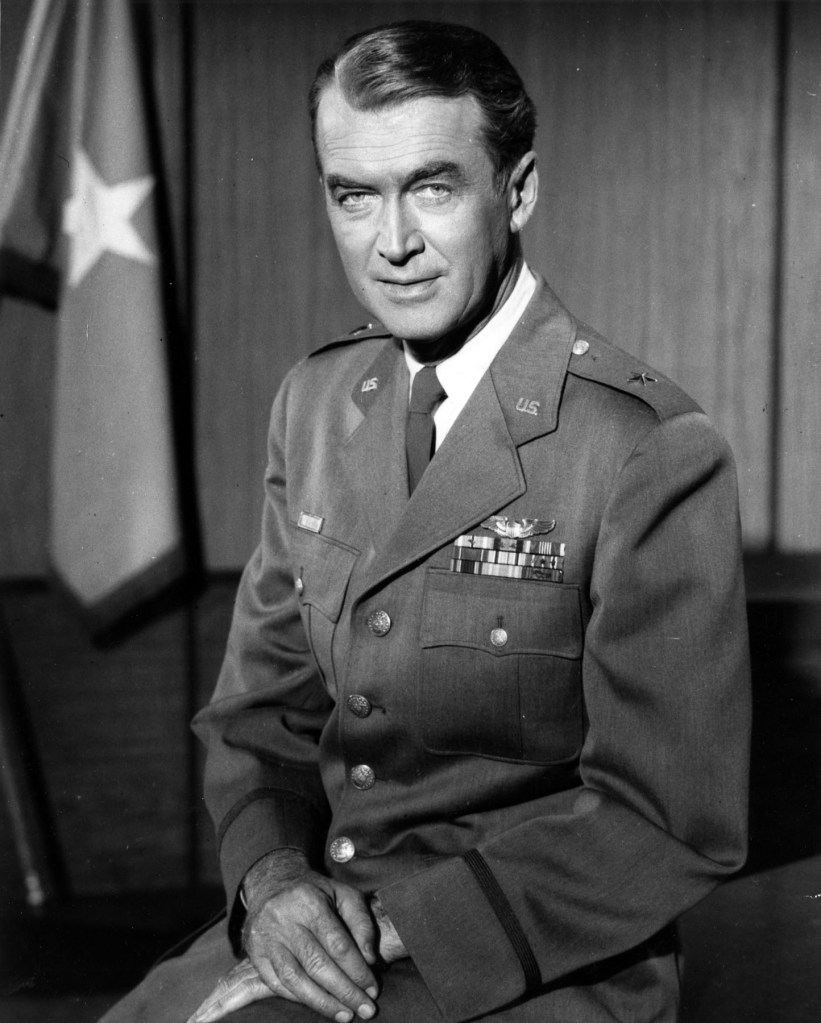
Brigadier General Jimmy Stewart. A bomber pilot during World War II, Stewart suffered from what we today call PTSD. A heroic man, but he’d be the first man to deny that he was a hero. Put differently, Stewart didn’t need war to make him great.

Now, how about the advantages to military service. I know that some of my readers will challenge these, and rightly so, but here are a few “positive waves” about enlisting and taking the oath:

  1. Tradition. For some enlistees, it’s about family tradition. I wasn’t from a strong military family, but my father and his two brothers served in World War II; so did my mother’s brother; and, more recently, my older brother enlisted at the tail end of the Vietnam War and three brothers-in-law also served, one in Vietnam during that horrendous war.
  2. Opportunity. The military today is respected within our society, even venerated. Serving in the military may provide you with unique opportunities both during and after your service.
  3. Teamwork. In a selfish “you can have it all” society, the military reminds us of the importance of teamwork.
  4. Idealism. Taking the Oath of Office should mean something to you. If it doesn’t, don’t enlist.
  5. Purpose, discipline, responsibility, maturity. The military isn’t the only way to live a life of purpose, a disciplined life, a life of responsibility, a life centered on growth and maturation. But, for more than a few people, the military has provided a path forward, a sense of pride and clarity, though that can come at tremendous cost, as explained above.
  6. And, of course, the normal reasons people join: pay, benefits, an opportunity to travel, to start life over, perhaps to escape a bad situation, and so on.

Enlistment, in sum, is a personal decision that must be weighed carefully. What I would say is this: remember the words of Yoda the Jedi Master. “Wars not make one great.” If you’re thinking of enlisting with a hero complex in mind, don’t do it. You’re too immature and you’re misguided to boot. Military service should be about service; it’s also about sacrifice. And you must always remember you may have to make the “ultimate” sacrifice, which is a euphemism for getting killed.

As the Outlaw Josey Wales said: Dyin’ ain’t much of a living, boy.

You’re your own person: Do you what you think is right, and good luck.

Update (11/30/21):

This photo by Jonathan Ernst of Reuters shows the “Gold Star” tree at the White House. It’s a tribute to “the fallen” in recent wars. That expression, “the fallen,” is truly a lamentable euphemism. Of course, we should remember the dead, for which we have Memorial Day and “gardens of stone,” i.e. cemeteries. Should we also remember the dead as ornaments on a Christmas tree? I have my doubts here.

The Pentagon as Pentagod

W.J. Astore

The other day, retired General Michael Flynn called for “one religion under God” in the United States.

Ah, General Flynn, we already have one religion of militant nationalism and imperialism, and we already have one god, the Pentagod, which is the subject of my latest article for TomDispatch.com.

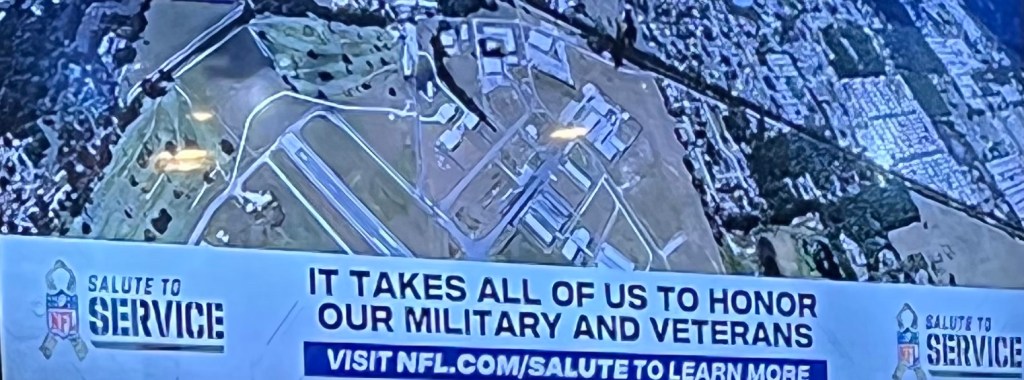
First, one religion. This weekend I watched the New England Patriots play the Cleveland Brown during which a Pentagon recruiting commercial broke out. The coaches wore camouflage jackets and caps, the game started with military flyovers of combat jets, and there even was a mass military swearing-in ceremony hosted by a four-star general and admiral. That same general claimed during an on-field interview during the game that the military is what keeps America free, which might just be the best definition of militarism that I’ve heard.

(Aside: In a true democracy, the military is seen as a necessary evil, because all militaries are essentially undemocratic. The goal of a true democracy is to spend as little as possible on the military while still providing for a robust defense.)

Here’s an illustration, sent by a friend, of America’s one religion:

So, according to the NFL and the mainstream media, “all of us” need to honor “our” military and indeed anyone who’s ever worn a uniform, no questions asked, apparently. I wore a military uniform for 24 years: four years as a cadet, twenty as a military officer, and I’m telling you this is nonsense — dangerous nonsense. Don’t “salute” authority. Question it. Challenge it. Hold it accountable and responsible. At the very least, be informed about it. And don’t mix sports, which is both business and entertainment, with military service and the machinery of war.

OK, so now let’s talk about America’s god. As I argue below, it certainly isn’t the Jesus Christ I learned about by reading the New Testament and studying the Gospels in CCD. America has never worshipped that god. Clearly the god we worship — at least as measured by money and societal influence — is the Pentagod, which leads me to my latest article at TomDispatch. Enjoy!

The Pentagon As Pentagod

Who is America’s god? The Christian god of the beatitudes, the one who healed the sick, helped the poor, and preached love of neighbor? Not in these (dis)United States. In the Pledge of Allegiance, we speak proudly of One Nation under God, but in the aggregate, this country doesn’t serve or worship Jesus Christ, or Allah, or any other god of justice and mercy. In truth, the deity America believes in is the five-sided one headquartered in Arlington, Virginia.

In God We Trust is on all our coins. But, again, which god? The one of “turn the other cheek”? The one who found his disciples among society’s outcasts? The one who wanted nothing to do with moneychangers or swords? As Joe Biden might say, give me a break.

America’s true god is a deity of wrath, whose keenest followers profit mightily from war and see such gains as virtuous, while its most militant disciples, a crew of losing generals and failed Washington officials, routinely employ murderous violence across the globe. It contains multitudes, its name is legion, but if this deity must have one name, citing a need for some restraint, let it be known as the Pentagod.

Yes, the Pentagon is America’s true god. Consider that the Biden administration requested a whopping $753 billion for military spending in fiscal year 2022 even as the Afghan War was cratering. Consider that the House Armed Services Committee then boosted that blockbuster budget to $778 billion in September. Twenty-five billion dollars extra for “defense,” hardly debated, easily passed, with strong bipartisan support in Congress. How else, if not religious belief, to explain this, despite the Pentagod’s prodigal $8 trillion wars over the last two decades that ended so disastrously? How else to account for future budget projections showing that all-American deity getting another $8 trillion or so over the next decade, even as the political parties fight like rabid dogs over roughly 15% of that figure for much-needed domestic improvements?

Paraphrasing Joe Biden, show me your budget and I’ll tell you what you worship. In that context, there can’t be the slightest doubt: America worships its Pentagod and the weapons and wars that feed it.

Prefabricated War, Made in the U.S.A.

I confess that I’m floored by this simple fact: for two decades in which “forever war” has served as an apt descriptor of America’s true state of the union, the Pentagod has failed to deliver on any of its promises. Iraq and Afghanistan? Just the most obvious of a series of war-on-terror quagmires and failures galore.

That ultimate deity can’t even pass a simple financial audit to account for what it does with those endless funds shoved its way, yet our representatives in Washington keep doing so by the trillions. Spectacular failure after spectacular failure and yet that all-American god just rolls on, seemingly unstoppable, unquenchable, rarely questioned, never penalized, always on top.

Talk about blind faith!

To read the rest of my article, please go to TomDispatch here. Here’s my conclusion:

Yet, before I bled Air Force blue, before I was stationed in a cathedral of military power under who knows how many tons of solid granite, I was raised a Roman Catholic. Recently, I caught the words of Pope Francis, God’s representative on earth for Catholic believers. Among other entreaties, he asked “in the name of God” for “arms manufacturers and dealers to completely stop their activity, because it foments violence and war, it contributes to those awful geopolitical games which cost millions of lives displaced and millions dead.”

Which country has the most arms manufacturers? Which routinely and proudly leads the world in weapons exports? And which spends more on wars and weaponry than any other, with hardly a challenge from Congress or a demurral from the mainstream media?

And as I stared into the abyss created by those questions, who stared back at me but, of course, the Pentagod.

The Military and Conformity — and Democracy

Officers’ Wives’ Club in 1967. In the mid-1980s, I belonged to a bowling league with my military unit in Colorado. Good times.

W.J. Astore

Few people will be surprised to learn that the U.S. military is about conformity. Uniformity. Heck, it’s one reason why we wear uniforms to begin with. To a certain extent, individuality is tolerated but only if it’s harmless and doesn’t interfere with unit cohesion or performance — and, not just performance but image.

I can’t count the number of times I heard about my Air Force “family” when I wore the uniform, with the message I had to go along to get along; we’re all family, so stop grumbling and enjoy your “family” time.

A heavy stress on conformity can be a particular burden to civilian spouses, however, who didn’t necessarily think they were enlisting when their partner signed up and donned a uniform. In the bad old days, wives of officers were especially burdened with expectations. If they didn’t join officers’ wives’ clubs and otherwise “support” their husbands, they might find themselves ostracized from the “family.” Their husbands might see their careers suffer as well, not exactly a dynamic that promotes family values and amity at home.

Those bad old days are not entirely over, notes Andrea Mazzarino at TomDispatch.com, and being the wife of a U.S. Naval officer, she should know. I urge you to read her article here at TomDispatch. Nowadays, pressure takes new forms, notably on social media, that crazy 24/7/365 world, with email, Instagram, and Facebook posts (among other social sites) being scrutinized incessantly for right-thinking and right behavior, as judged by the self-anointed keepers of conformity and uniformity.

Militaries, again you won’t be surprised to learn, are not known to embrace criticism and non-conformity, which is why they should be kept as small as possible within a democracy that is supposed to celebrate or at least tolerate critiques and eccentrics. But here’s the rub: The more America celebrates its military and feeds it with money. the more it reinforces anti-democratic forces and tendencies within our larger society. And that’s not a good thing in a country where money is speech, i.e. where the richest already rule. (Which is no surprise to military members, as we all know the Golden Rule: He who has the gold makes the rules.)

Here’s an excerpt from Mazzarino’s article. Believe me, she knows of what she speaks.

Eyes Are Always On You

Andrea Mazzarino

I know what it means to be watched all too carefully, a phenomenon that’s only grown worse in the war-on-terror years. I’m a strange combination, I suspect, being both a military spouse and an anti-war-on-terror activist. As I’ve discovered, the two sit uncomfortably in what still passes for one life. In this country in these years, having eyes on you has, sadly enough, become a common and widespread phenomenon. When it’s the government doing it, it’s called “surveillance.” When it’s your peers or those above you in the world of the military spouse, there’s no word for it at all.

Now, be patient with me while I start my little exploration of such an American state at the most personal level before moving on to the way in which we now live in ever more of a — yes — surveillance state.

A Navy Wife’s Perspective on Military Life, Post-9/11

“The military sounds like the mafia. Your husband’s rank determines how powerful you are.” That was a good friend’s response, a decade or so ago, when a more experienced Navy wife shamed me for revealing via text message that my husband’s nuclear submarine would soon return to port. Her spouse had been assigned to the same boat for a year longer than mine and she headed up the associated Family Readiness Group, or FRG.

Such FRGs, led by officers’ wives, are all-volunteer outfits that are supposed to support the families of the troops assigned to any boat. In a moment of thoughtless excitement, I had indeed texted another spouse, offering a hand in celebrating our husbands’ imminent return, the sort of party that, as the same woman had told me, “All wives help with to thank our guys for what they do for us. It’s key to command morale.”

She had described the signs other wives had been making under the direction of both the captain’s wife’s and hers, as well as the phone chain they had set up to let us know the moment the boat would arrive so that we could rush to the base to greet it. In response to my message, she’d replied in visibly angry form (that is, in all capital letters), “NEVER, EVER INDICATE IN ANY WAY OVER TEXT THAT THE BOAT WILL BE RETURNING SOON. YOU ARE ENDANGERING THEIR LIVES.” She added that I would be excluded from all boat activities if I ever again so much as hinted that such a return was imminent.

Alone in my apartment in a sparsely populated town near the local military base, my heart raced with the threat of further isolation. What would happen because of what I’d done?

And yes, I’d blundered, but not, as became apparent to me, in any way that truly mattered or actually endangered anything or anyone at all — nothing, in other words, that couldn’t have been dealt with in a kinder, less Orwellian fashion, given that this was a supposedly volunteer group.

It was my first little introduction to being watched and the pressure that goes with such surveillance in the world of the military spouse. Years later, when my husband was assigned to another submarine, an officer’s wife at the same naval base had burst into tears telling me about the surprise visit she’d just been paid by three women married to officers of higher rank on other boats stationed at that base.

Sitting across from her in their designer dresses, they insisted she wasn’t doing enough to raise raffle money to pay for a military child’s future education. Am I really responsible for sending another kid to college? That was her desperate question to me. Unable to keep a job, given her husband’s multiple reassignments, she had struggled simply to save enough for the education of her own children. And mind you, she was already providing weekly free childcare to fellow spouses unable to locate affordable services in that town, while counseling some wives who had become suicidal during their husbands’ long deployments.

I could, of course, multiply such examples, but you get the idea. In the war-on-terror-era military, eyes are always on you.

Married to the Military (or the Terror Within)

On paper, the American military strives to “recognize the support and sacrifice” of the 2.6 million spouses and children of active-duty troops. And there are indeed gestures in the right direction — from partnerships with employers who have committed to hiring military spouses to short-term-crisis mental-health support.

READ THE REST OF THE ARTICLE HERE.

Veterans Day Is a Time to Reflect on the Purpose of Veterans

My dad (R) home on leave with his brother Gino, c. 1944

W.J. Astore

I come from a family of veterans.  My father and his two brothers served in the military during World War II.  My mother’s brother fought at Guadalcanal against the Japanese and was awarded the Bronze Star.  Later, my eldest brother enlisted in the Air Force at the tail end of the Vietnam War, which my brother-in-law had fought in as a radio operator attached to the artillery.  Their service helped to inspire my decision to become an officer in the U.S. Air Force.

Military service is honorable, not because of wars waged or lives taken, but because of its purpose: to support and defend the Constitution of the United States.  And this should be the purpose of Veterans Day: to take note of our veterans and their service in upholding the ideals of our Constitution, including freedom of speech and assembly, freedom of the press, a right to privacy, and most of all a government that is responsive to our needs and accountable to our oversight.

Yet since World War II America has fought wars without formal Congressional declarations.  The Korean War, the Vietnam War, wars in Afghanistan and Iraq and elsewhere, have lacked the wholehearted support of the American people.  They were arguably unnecessary wars in the sense these countries and peoples posed no direct threat to America and our Constitution.  Indeed, prosecuting these wars often posed more of a threat to that very Constitution.

Naturally, America associates veterans with wars and combat, and we say the dead made “the ultimate sacrifice,” which indeed they did.  But for what purpose, and to what end?  We owe it to veterans to ask these questions: for what purposes are we risking their lives, and to what end are these wars being waged?  If we can’t answer these simple questions, in terms intimately associated with our Constitution and the true needs of national defense, we should end these wars immediately.

Unending wars are the worst enemy of freedom and liberty.  This isn’t just my sentiment.  As James Madison put it, “Of all the enemies of true liberty, war is, perhaps, the most to be dreaded … No nation can preserve its freedom in the midst of continual warfare.”  America once knew this; we were once a nation that was slow to anger and with little taste for large military establishments.

A few years ago, I stumbled across old sheet music in a bookstore.  Catching my eye was the title of the song: “I Didn’t Raise My Boy to be a Soldier,” respectfully dedicated to “Every Mother – Everywhere.”  From 1915, this popular song captured American resistance to the calamitous “Great War” that we now call World War I.  Anti-war sentiment was strong that year in America, and indeed Woodrow Wilson would be reelected president in 1916 in large part because he had kept Americans out of the war.  The lyrics put it plainly: a mother who’d brought her son up “to be my pride and joy” didn’t want to see that same son having “to shoot some other mother’s darling boy.”

The contrast in these lyrics to recent U.S. military recruitment commercials couldn’t be starker.  In a new Department of Defense advertising campaign, featuring the catchphrase “Their success tomorrow begins with your support today,” mothers are shown incongruously in military settings asking their sons why they wanted to sign up.  Weapons are featured prominently in these ads, but no combat.  There’s much talk of teamwork and being part of something larger than yourself but no talk of the U.S. Constitution.  At the end of these spots, the young men depicted have convinced their mothers that it’s desirable indeed to have your boy become a soldier.

Recruitment ads, of course, have never been at pains to show the true costs of war.  When I was a teen, the Army’s motto was “Be all that you can be.”  For the Navy, service was about “adventure.”  For the Air Force, it was about “a great way of life.”  These ads, by ignoring or eliding war’s costs, have contributed to America’s tighter embrace of war on the world stage and its severe impact, not only on our veterans but on our democracy.  America’s strategy of “global reach, global power” has embroiled us in wars of choice that we increasingly choose not to end.  Surely, it’s time to chart a more pacific path.

Sometimes the best offense is a good defense.  On this Veterans Day, let’s remind ourselves that veterans exist to defend our Constitution and our country, but that endless warfare, and intensifying militarism, are in fact among the most pressing dangers to our democracy.    

William Astore, a retired lieutenant colonel (USAF) and history professor, is a senior fellow at the Eisenhower Media Network (EMN), an organization of critical veteran military and national security professionals.

Rich Man’s War, Poor Man’s Fight

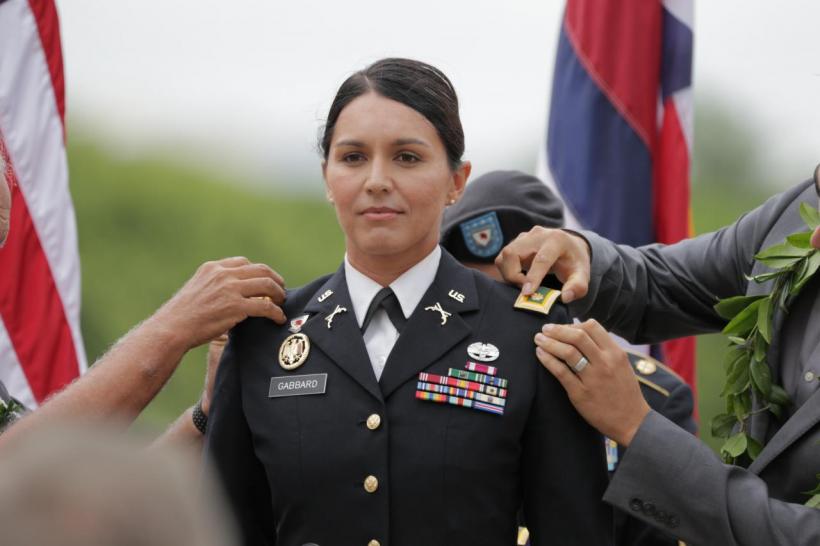
tg_promotion-to-major
Tulsi Gabbard’s promotion to major

W.J. Astore

Donald Trump attended a high school military academy.  But when the Vietnam War came calling, he developed heel spurs that kept him out of the military.  In the case of Joe Biden, it was asthma that kept him on the sidelines of that war.  Dick Cheney had multiple student deferments and “higher priorities” than serving, as he put it.  George W. Bush got a safe spot in the Texas Air National Guard.  John Kerry, ironically, did serve in the military during Vietnam but famously turned against that war.  His service was “Swift-boated” into infamy even as Bush/Cheney were being applauded by some for their alleged toughness.

When it comes to service in the military, U.S. politicians typically vote with their feet, meaning they double-time away from joining the ranks.  This is nothing new, of course.  During the U.S. Civil War, the rich could pay for substitutes if they were drafted.  When it comes to war, it’s very often a rich man’s war, but a poor man’s fight.

Interestingly, there are two Democratic candidates who are veterans of America’s most recent wars: Mayor Pete Buttigieg and Congresswoman Tulsi Gabbard.  According to his website, Mayor Pete “served as a lieutenant in the U.S. Navy Reserve and took an unpaid seven-month leave during his mayoral term to deploy to Afghanistan. For his counterterrorism work, he earned the Joint Service Commendation Medal.”  Sounds impressive, yet a “joint service commendation medal” is a standard-issue medal for any company-grade officer who completes such an assignment without screwing up in a major way.  It’s a little like a participation trophy in a Little League tournament.

Despite Mayor Pete’s fairly limited military experience, his web site boasts that if he’s elected president, he’ll take office with the most military experience since George H.W. Bush, who served in the U.S. Navy in combat during World War II.

Hawaii Congresswoman Tulsi Gabbard’s military record is far more extensive than Mayor Pete’s.  She joined the Army National Guard soon after 9/11 and deployed to Iraq during some of the most bitter fighting in that country.  She’s currently a major in the Guard and has spoken extensively about how her military service informs her positions against wasteful, regime-change, wars.  According to her web site, “Having experienced first-hand the true cost of war, Tulsi made a personal vow to find a way to ensure that our country doesn’t continue repeating the mistakes of the past, sending our troops into war without a clear mission, strategy, or purpose.”

Tonight, there’s yet another Democratic debate featuring Mayor Pete as well as Congresswoman Gabbard.  It will be interesting to see if they’re called on specifically for their views on military issues, such as Trump’s recent decision to pull U.S. troops from northern Syria.

In fact, I’d like to hear the views of all twelve Democrats on that stage tonight on the question of America’s forever wars, and why these wars have illustrated that old story of war being in the service of the rich even as the poor pay the ultimate price.  Given America’s supine Congress, our presidents have enormous power over life and death in making war across the globe.  When are we going to rein that power in?  When are we going to stop fighting foolish and destructive wars that have nothing to do with safeguarding America?

Until we honestly — even ruthlessly — address these questions, America will continue to witness generational wars for the rich fought by the poor.

Memorial Day 1955 — And Today

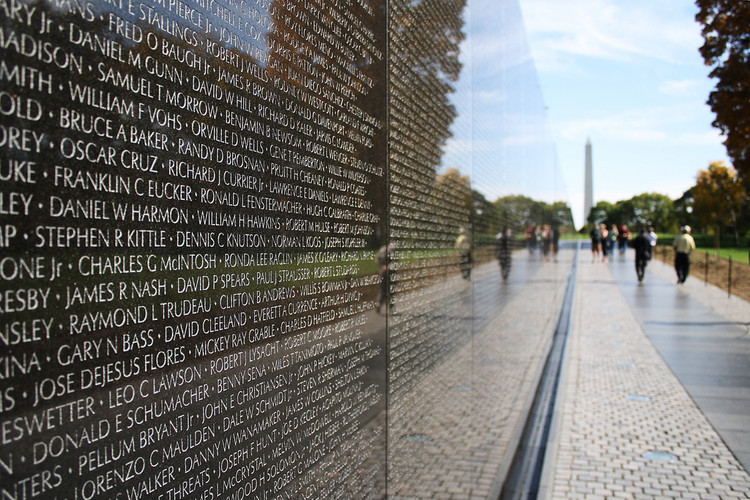
wall
The Vietnam War Memorial in Washington, D.C.

W.J. Astore

How far we’ve come as a country.  Consider the following proclamation by President Dwight D. Eisenhower for Memorial Day in 1955:

“Whereas Memorial Day each year serves as a solemn reminder of the scourge of war and its bitter aftermath of sorrow; and Whereas this day has traditionally been devoted to paying homage to loved ones who lie in hallowed graves throughout the land… I, Dwight D. Eisenhower, President of the United States of America, do hereby proclaim Memorial Day, Monday, the thirtieth of May, 1955, as a day of Nation-wide prayer for permanent peace.”

Permanent peace?  What was that hippie peacenik president smoking?

I find it remarkable that talk of peace in America has almost completely disappeared from our public discourse.  Permanent war is instead seen as inevitable, the price of confronting evildoers around the world.

Yes, I know Ike’s record as president wasn’t perfect.  But compared to today’s presidents, whether Barack “Kill List” Obama or Donald “Make Genocidal Threats” Trump, Ike was positively pacific.

Memorial Day, as Ike said, is a time for us all to remember the sacrifices of those who fought and died for this country.  But it’s also a time, as Ike said, to work to eliminate the scourge of war.  For the best way to honor our war dead is to work to ensure their ranks aren’t expanded.

Sadly, as Colonel (retired) Andrew Bacevich notes at TomDispatch.com, those ranks do keep expanding.  The names of our latest war dead are memorialized on a little-known wall in Marseilles, Illinois (including the name of Bacevich’s son, who died serving in Iraq).  Like Ike, Bacevich knows the costs of war, and like Ike he’s not taken in by patriotic talk about noble sacrifices for “freedom.”  As he puts it:

Those whose names are engraved on the wall in Marseilles died in service to their country. Of that there is no doubt. Whether they died to advance the cause of freedom or even the wellbeing of the United States is another matter entirely. Terms that might more accurately convey why these wars began and why they have persisted for so long include oil, dominion, hubris, a continuing and stubborn refusal among policymakers to own up to their own stupendous folly, and the collective negligence of citizens who have become oblivious to where American troops happen to be fighting at any given moment and why. Some might add to the above list an inability to distinguish between our own interests and those of putative allies like Saudi Arabia and Israel.

Those are strong words that all Americans should consider this Memorial Day weekend.  As we consider them, let’s also recall Ike’s 1955 prayer for peace.  And, even better, let’s act on it.

Read the rest of Andrew Bacevich’s article here at TomDispatch.

promo334624303
Part of the Middle East Conflicts Memorial Wall in Marseilles, Illinois