Working Toward Peace

Imagine if Veterans Day Became Obsolete

BILL ASTORE

NOV 11, 2025

Today is Veterans Day, though of course November 11th was originally Armistice Day to mark the end of World War I on the 11th hour of the 11th day in 1918. Back then, it was hoped that the World War would inaugurate an era of lasting peace. Tragically, instead it inaugurated a state of more or less permanent war.

When I think of Veterans Day, I recall a grizzled veteran who spoke to me and a group of other young men (we didn’t want to be called “boys”) at Boys State in Massachusetts in 1980. I told the story 16 years ago at Huff Post, and I think it bears repeating today in 2025.

One Grizzled Veteran’s Dream

On this Veterans Day [in 2009], what if we began to measure our national success and power not by our military arsenal or number of recruits, but rather by the very opposite of that?

William Astore

By William Astore, Contributor

Writer, History Professor, Retired Lieutenant Colonel (USAF)

Thirty years ago [Now, 45 years ago], I attended Boys State. Run by the American Legion, Boys State introduces high school students to civics and government in a climate that bears a passing resemblance to military basic training. Arranged in “companies,” we students did our share of hurrying up, lining up, and waiting (sound preparation, in fact, for my career in the military). I recall that one morning a “company” of students got to eat first because they launched into a lusty rendition of the Marine Corps hymn. I wasn’t angry at them: I was angry at myself for not thinking of the ruse first.

Today, most of my Boys State experience is a blur, but one event looms large: the remarks made by a grizzled veteran to us assembled boys. Standing humbly before us, he confessed that he hoped organizations like the American Legion and Veterans of Foreign Wars would soon wither away. And he said that he hoped none of us would ever become a member of his post.

At first, we didn’t get it. Didn’t he like us? Weren’t we tough enough? (Indeed, I recall that one of our adolescent complaints was that the name “Boys State” didn’t seem manly enough.)

Then it dawned on us what the withering away of organizations like the American Legion and the VFW would mean. That in our future young Americans would no longer be fighting and dying in foreign wars. That our world would be both saner and safer, and only members of an “old guard” like this unnamed veteran would be able to swap true war stories. Our role would simply be to listen with unmeasured awe and undisguised thanks, grateful that our own sons and daughters no longer had to risk life or limb to enemy bullets and bombs.

It pains me that we as a country have allowed this veteran’s dream to die. We as a country continue to enlarge our military, expand our foreign commitments, and fight seemingly endless wars, whether in Iraq, Afghanistan, or in other far-off realms of less-than-vital interest to us.

As a result of these wars, we continue to churn out so many new veterans, including so many wounded veterans, not forgetting those who never made it back.

Collectively, we Americans tend to suppress whatever doubts we have about the wisdom of our wars with unequivocal statements of support for our troops. And on days like Veterans Day, we honor those who served, and especially those who paid the ultimate price on the battlefield.

Yet, wouldn’t the best support for our troops be the achievement of the dream of that grizzled vet who cut through a young man’s fog thirty years ago? Shouldn’t we be working to achieve a new age in which the rosters of our local VFWs and Legion posts are no longer renewed with the broken bodies and shattered minds of American combat veterans?

2009-11-11-VDay2.jpg
Veteran’s grave, Williamsport, PA (Author’s photo)

Sadly, as we raise more troops and fight more wars, we seem committed to the opposite. Our military just enjoyed its best recruiting class in years. This “success” is not entirely surprising. It’s no longer that difficult to fill our military’s expanding ranks because many of our young men and women simply have little choice but to enlist, whether for economic opportunity, money for college, or benefits like free health care.

Many of course enlist for patriotic reasons as well. Yet the ease of expanding our military ranks during a shooting war is also a painful reminder of the impoverishment of opportunities for young, able-bodied Americans – the bitter fruit of manufacturing jobs sent overseas, of farming jobs eliminated by our own version of corporate collectivization, of a real national unemployment rate that is approaching twenty percent.

On this Veterans Day, what if we began to measure our national success and power, not by our military arsenal or by the number of new recruits in the ranks, but rather by the gradual shrinking of our military ranks, the decline of our spending on defense, perhaps even by the growing quiet of our legion posts and VFW halls?

Wouldn’t that be a truer measure of national success: fewer American combat veterans?

Wouldn’t that give us something to celebrate this Veterans Day?

I know one old grizzled veteran who would quietly nod his agreement.
“And Forever in Peace May You Wave”

W.J. Astore

The grand old flag is no more

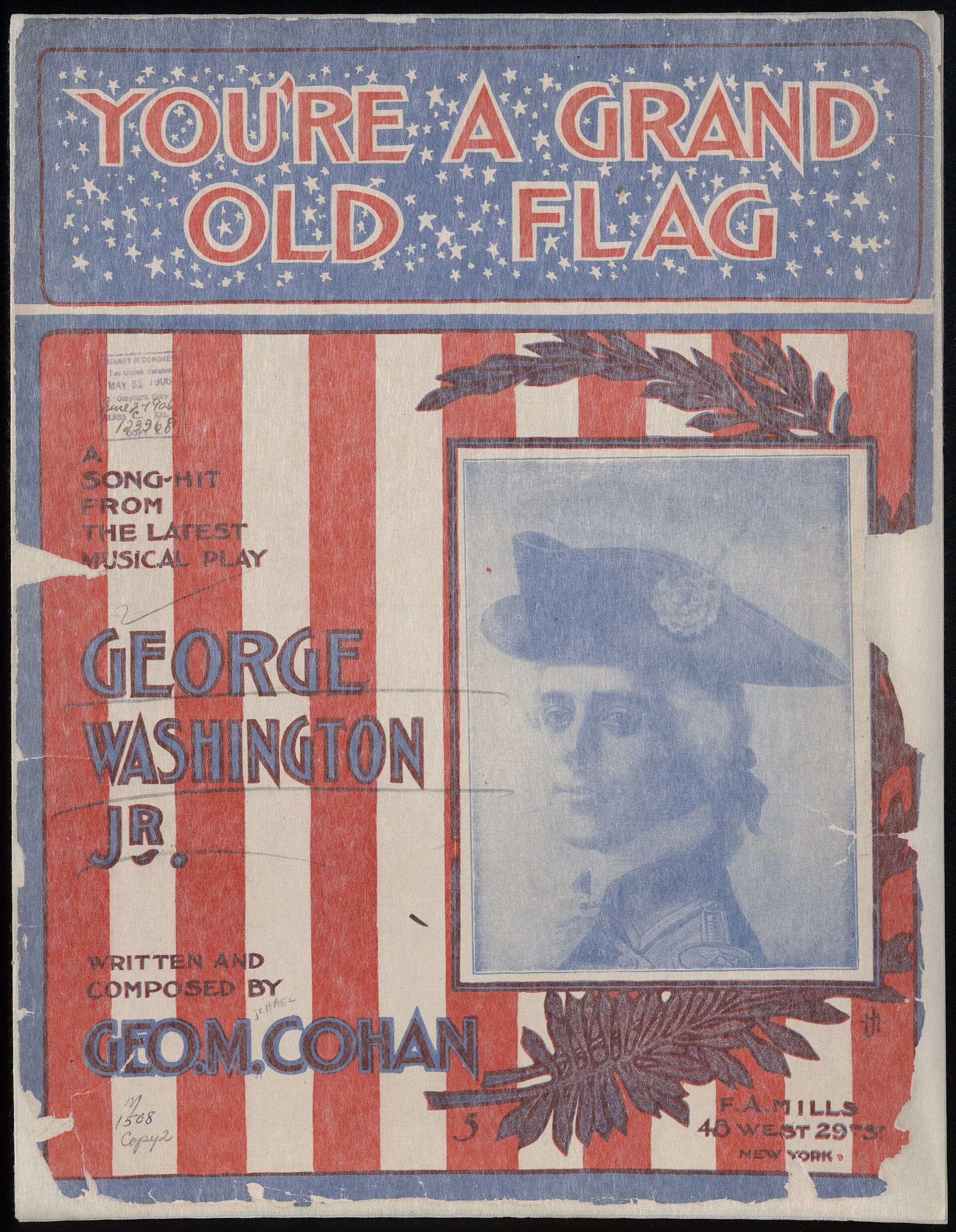
A patriotic song I was taught in my youth was “You’re A Grand Old Flag,” written by George M. Cohan in 1906. It’s been a long time since I’ve heard it, but it flashed into my mind the other day because of its lyrics, especially the refrain:

You’re a grand old flag,
You’re a high-flying flag,
And forever in peace may you wave.
You’re the emblem of the land I love,
The home of the free and the brave.
Ev’ry heart beats true
‘Neath the Red, White and Blue,
Where there’s never a boast or brag.
But should auld acquaintance be forgot,
Keep your eye on the grand old flag.

Forever in peace? I second that sentiment, except America is constantly at war or preparing for war. An America that doesn’t boast or brag? Amen to that, except presidents from Bush to Obama to Biden to Trump boast and brag about America having the world’s best and strongest military, with Obama adding that America has the best military in all human history. How’s that for a boast?

Cohan’s song, of course, is nakedly patriotic, with its references to marches and pride. Yet even this stanza is more resonant of democracy than America’s actions today:

Here’s a land with a million soldiers,
That’s if we should need ’em,
We’ll fight for freedom!

The song speaks of U.S. military potential (“a million soldiers”) but adds only if we should need them, in which case they’ll fight for freedom.

When was the last time the U.S. military truly fought for freedom? World War II, I reckon.

This song’s references to peace, to humility, and to fighting only if we should need to in the defense of freedom, mark it as a true museum piece. How do we recover that version of America?

$95 Billion for More Weapons and War

W.J. Astore

The U.S. Senate Once Again Serves the Military-Industrial Complex

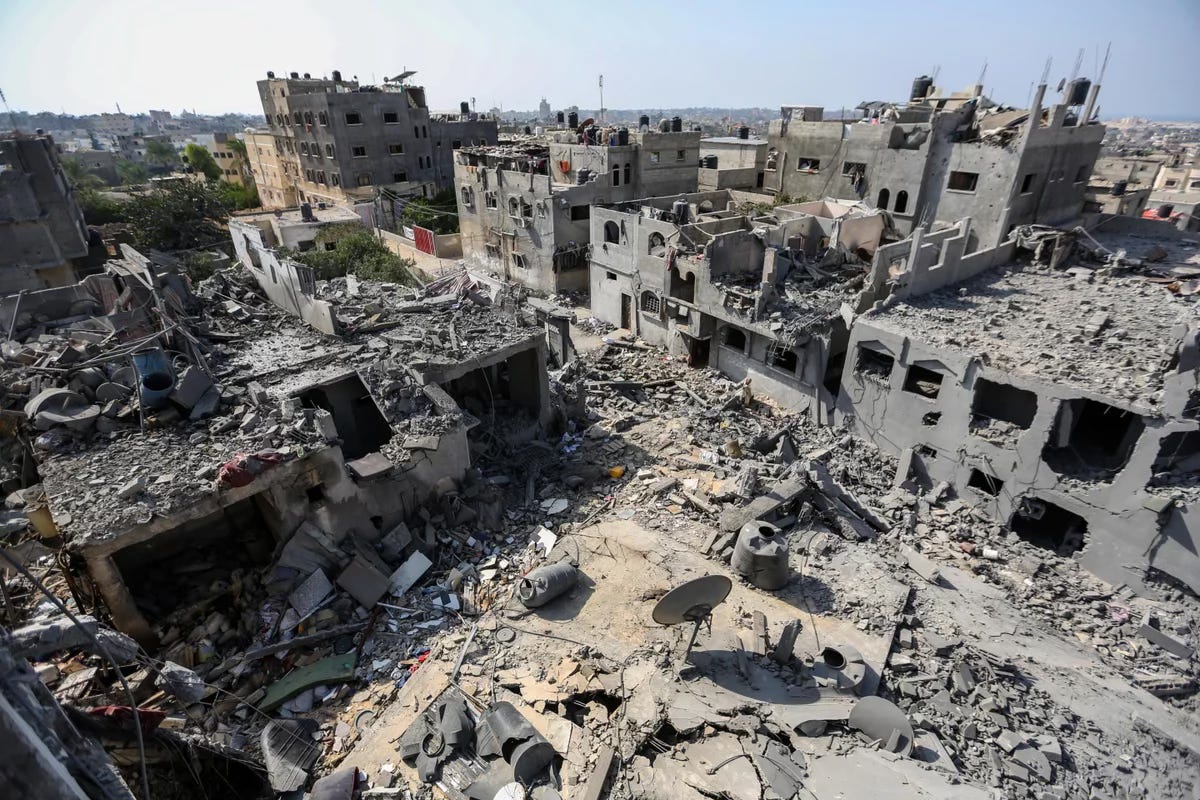
The U.S. Senate has worked tirelessly to pass a bill for $95 billion for more weapons and war. Surprise! Roughly $61 billion will go to Ukraine to continue that ghastly and largely stalemated war, $14 billion will go to Israel to facilitate the ongoing genocide in Gaza, roughly $9 billion will go to humanitarian aid, and roughly $5 billion will go to Taiwan and other countries in the region to stir up trouble with China.

Isn’t it nice to know the U.S. Senate has our backs? That senators have heard the cry of the American working classes and are going to help them by shipping more weapons overseas for more war?

Just think: Another $14 billion to Israel to produce more scenes like this in Gaza

I had to laugh when I saw this assertion from Heather Cox Richardson: “The fight over U.S. aid to Ukraine, Israel, Taiwan, and the other countries with which we have made partnerships is not about saving money—most of the funds for Ukraine are actually spent in the U.S.” Yes! It’s not about “saving money”! After all, most of the money will go to major weapons contractors, America’s merchants of death. So pay no attention to this, peasant. You’re getting a bargain.

In her article, Richardson mentions Dwight D. Eisenhower and the year he took office as president, 1953, which made me think of these famous words said by Ike in 1953:

Every gun that is made, every warship launched, every rocket fired signifies, in the final sense, a theft from those who hunger and are not fed, those who are cold and are not clothed. This world in arms is not spending money alone. It is spending the sweat of its laborers, the genius of its scientists, the hopes of its children… This is not a way of life at all, in any true sense. Under the cloud of threatening war, it is humanity hanging from a cross of iron.

Richardson is having none of this. The Senate’s $95 billion is not “a theft from those who hunger and are not fed,” but rather a wise investment that will pay dividends—as it will, for America’s vast military-industrial-congressional complex (MICC).

Fortunately, it appears the Senate’s $95 billion handout to the MICC (remember: don’t worry about saving money here!) is unlikely to survive the House of Representatives. Still, it is indicative of the total moral bankruptcy of the U.S. Senate and its supine obedience to the weapons makers.

Video bonus: Here I am, talking about the military-industrial complex, trying to channel a tiny bit of Ike and his wisdom:

The video link above is courtesy of the Merchants of Death Tribunal.

Should You Join the U.S. Military?

W.J. Astore

When I was eighteen, the U.S. Army promised I could “be all that you can be.” The Navy said “It’s not just a job, it’s an adventure.” The Marines were all about “The few — the proud — the Marines.” And the Air Force promised “a great way of life.” I guess I wanted a great way of life, so I joined the Air Force.

Seriously, I never thought I’d serve for twenty years in uniform. My career was relatively easy in the sense that no one ever shot at me, nor did I ever have to take a life. I got an excellent education, met good people, went to interesting places, and got to teach a subject I loved for six years.

Recently, I learned that a member of my family is thinking of joining the military after high school. He hasn’t asked for my advice, but his interest in wearing the uniform made me think about the advice I’d give him if he did ask. What can you say to young men and women that can help them to make an informed decision — the best possible one for them?

It’s easy to be gung-ho about the military. It’s also easy, I think, to dismiss military service with extreme prejudice. The best advice is honest, balanced, and attuned to the person seeking it. In this spirit, what would I say to a young person contemplating enlisting in the military?

Let’s tackle the disadvantages first, the downside and drawbacks to military service, the aspects of military life that potential recruits rarely think about. Here are a few of them:

  1. You could die or be seriously wounded in the military. Think of PTSD, TBI (traumatic brain injury), and similar “hidden” wounds of war. America is incessantly at war, somewhere, and there’s always a chance you could die. But of course young people think they’re immortal and may even crave danger, so this reality rarely deters them.
  2. You may have to kill other people. Perhaps even innocent people, because war is extremely messy and chaotic. Such acts of violence against humanity may lead to moral injury that will haunt your conscience. Are you prepared to kill? Truly?
  3. You sacrifice personal autonomy and some of your rights when you join the military. You have to be willing to follow orders. You can’t just quit and walk away. The military insists on obedience and discipline. Are you prepared to do as you’re told?
  4. If you think you’re important, you’re not: and the military will remind you of this. You’re a pawn in a vast bureaucracy; you’re at the mercy of a system that is often capricious and treats you as a number. You’ll quickly learn the wisdom of acronyms like SNAFU (situation normal, all fucked up) and FUBAR (fucked up beyond all recognition). They may sound funny, until they come to describe your life and career in the military.
  5. You may wish to ask yourself when was the last “good” or necessary war that America has fought for the purpose of true national defense. You may discover that recent wars in Afghanistan, Iraq, and elsewhere were not “good” wars in service of your Oath of Office to the U.S. Constitution. If this gives you pause, if this troubles you, I suggest you don’t enlist.
  6. Take the time to read about veterans who are against war. Consider this letter written by Daniel Hale, who is currently serving prison time for his courageous stance against the murderously imprecise nature of drone warfare. Read about Pat Tillman, the NFL player who enlisted in the Army and who was killed by friendly fire, then used as a propaganda prop by the U.S. military. Don’t think something similar can’t happen to you.

I could mention other disadvantages, such as frequent moves, nonsensical jobs, bad bosses, etc., but many civilian jobs share these. Work isn’t easy; it’s why it’s called “work.”

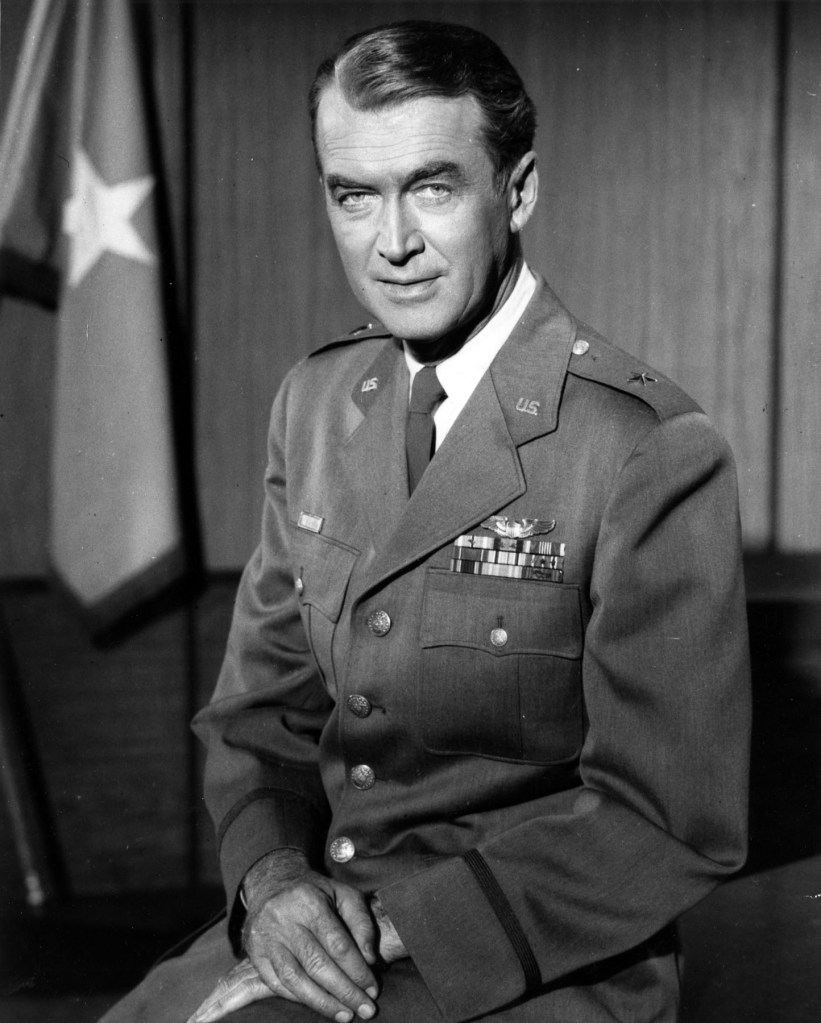
Brigadier General Jimmy Stewart. A bomber pilot during World War II, Stewart suffered from what we today call PTSD. A heroic man, but he’d be the first man to deny that he was a hero. Put differently, Stewart didn’t need war to make him great.

Now, how about the advantages to military service. I know that some of my readers will challenge these, and rightly so, but here are a few “positive waves” about enlisting and taking the oath:

  1. Tradition. For some enlistees, it’s about family tradition. I wasn’t from a strong military family, but my father and his two brothers served in World War II; so did my mother’s brother; and, more recently, my older brother enlisted at the tail end of the Vietnam War and three brothers-in-law also served, one in Vietnam during that horrendous war.
  2. Opportunity. The military today is respected within our society, even venerated. Serving in the military may provide you with unique opportunities both during and after your service.
  3. Teamwork. In a selfish “you can have it all” society, the military reminds us of the importance of teamwork.
  4. Idealism. Taking the Oath of Office should mean something to you. If it doesn’t, don’t enlist.
  5. Purpose, discipline, responsibility, maturity. The military isn’t the only way to live a life of purpose, a disciplined life, a life of responsibility, a life centered on growth and maturation. But, for more than a few people, the military has provided a path forward, a sense of pride and clarity, though that can come at tremendous cost, as explained above.
  6. And, of course, the normal reasons people join: pay, benefits, an opportunity to travel, to start life over, perhaps to escape a bad situation, and so on.

Enlistment, in sum, is a personal decision that must be weighed carefully. What I would say is this: remember the words of Yoda the Jedi Master. “Wars not make one great.” If you’re thinking of enlisting with a hero complex in mind, don’t do it. You’re too immature and you’re misguided to boot. Military service should be about service; it’s also about sacrifice. And you must always remember you may have to make the “ultimate” sacrifice, which is a euphemism for getting killed.

As the Outlaw Josey Wales said: Dyin’ ain’t much of a living, boy.

You’re your own person: Do you what you think is right, and good luck.

Update (11/30/21):

This photo by Jonathan Ernst of Reuters shows the “Gold Star” tree at the White House. It’s a tribute to “the fallen” in recent wars. That expression, “the fallen,” is truly a lamentable euphemism. Of course, we should remember the dead, for which we have Memorial Day and “gardens of stone,” i.e. cemeteries. Should we also remember the dead as ornaments on a Christmas tree? I have my doubts here.

Will the U.S. Military Hammer Strike the Citizen Nails?

2980
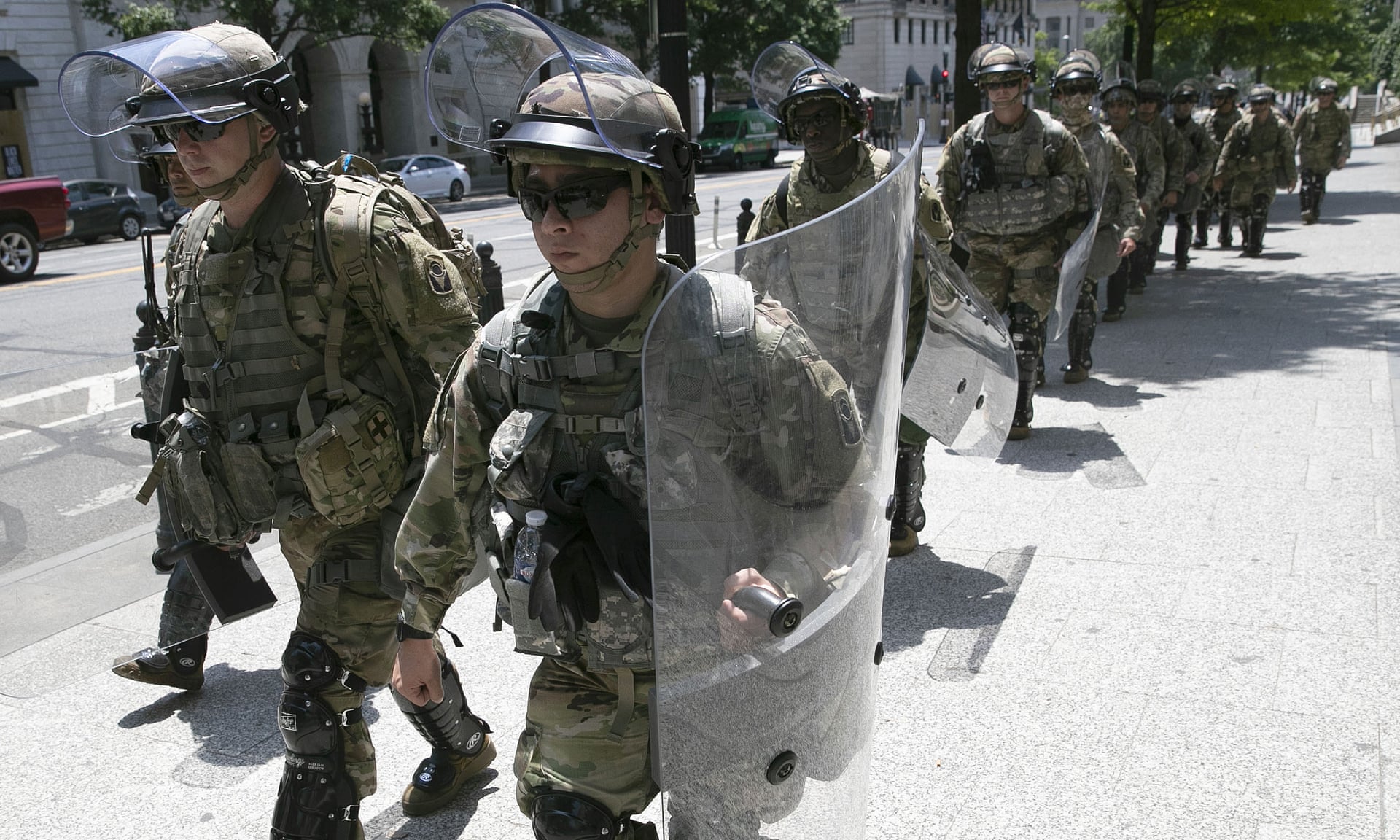
Caption at the Guardian: Members of an airborne military unit are deployed on the streets of Washington DC on Thursday. Photograph: Win McNamee/Getty Images

W.J. Astore

When the only tool you have is a hammer, all problems begin to look like nails.  This year alone, the U.S. government will spend roughly $740 billion on its military, though the real figure when you add in all costs exceeds a trillion dollars.  With so much “invested,” as the Pentagon likes to say, in that military, there’s a strong tendency to see it as the solution to the most stubborn problems.  All problems become nails either to be whacked down or pulled out and discarded depending upon which end of the military hammer our rulers choose to employ.

Americans are used to “our” military being used to hammer home American exceptionalism in faraway, foreign places.  But what about when that hammer is deployed to Main Street USA to hammer peaceful protesters into line?  Or, alternatively, to pull them out of the streets and into the jails?  That hammer doesn’t seem to be such a solid “investment,” does it?

It appears the Trump administration has now backed away from plans to commit regular federal troops to “dominate” protesters.  Opposition from retired generals and admirals like James Mattis, John Allen, and Mike Mullen may have helped.  But if and when protests become more widespread or embarrassing to Trump personally, don’t be surprised if the “bunker boy” calls again for troops to be committed, the U.S. Constitution be damned.  After all, he’s described peaceful protesters led by clergy in Washington, D.C. as “terrorists,” and we should all know by now what a “war on terror” looks like, led by generals like that same James Mattis.

Remember when a militarized hammer was a symbol of that Evil Empire, the Soviet Union?  Remember when violent suppression of peaceful protests was something “they” did, you know, the bad commies, in places like Hungary and Czechoslovakia?  As Paul Krugman has noted, today much of the GOP would cheer on Trump if he launched a military coup in the name of “law and order.”

Echoing this, one white American from Michigan told a reporter he “applauds” Trump’s crackdown and “fully supports” Trump if he orders federal troops into American streets to suppress protests.  In the same story from the Guardian, reporting from the white suburb of St Clair Shores, many residents “share the president’s world view that the police and national guard are heroically battling violent agitators, not brutally suppressing largely peaceful protesters.”

The story noted that “Several men who were part of a construction crew called the protests ‘stupid’ and a ‘waste of time and energy.’  Some even suggested Floyd was at fault for his death because he allegedly committed a crime, despite general worldwide outrage at the brutal manner of his killing and the criminal charges it has now brought against the officers involved.”

So, you have Americans who support the brutal murder of George Floyd, with the police acting as judge, jury, and executioner, simply because Floyd allegedly passed a counterfeit bill.  They even support a military crackdown, again in the name of “law and order.”

Who’s the evil empire now, America?

The Military and Sports

Back in July 2011, I wrote an article on how sports were being militarized in American life.  On this subject as well as protest by (mostly) Black athletes, there’s a new book out, The Heritage, written by Howard Bryant, a journalist for ESPN.  The book is excellent and is truly required reading for all sports fans, and indeed for all concerned Americans.
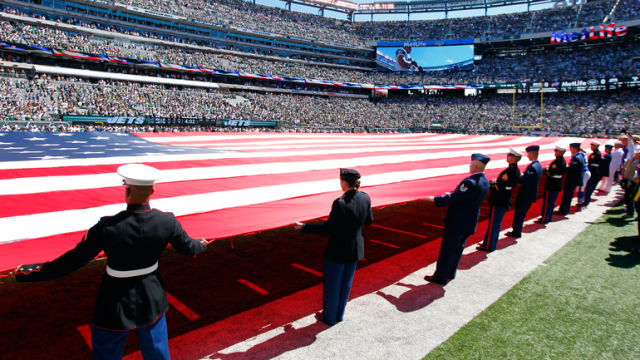
Sports have become infected by often pro forma, often coerced, often empty displays of “patriotism” that consist of gigantic flags, flyovers by combat jets, the wearing of faux camouflage uniforms by players, and similar displays.  (There’s nothing wrong, I should add, with teams and players supporting military charities and the like.)  These so-called patriotic displays are celebrated and applauded even as rare and respectful protests by players are attacked as unpatriotic and un-American.
Every military member knows that our oath of office is to support and defend the U.S. Constitution against all enemies, foreign and domestic.  The enemies of our Constitution are not those players who take a knee in protest when they know it’ll prove unpopular; the enemies are those who attack those players while hiding behind the military and the troops.
Dissent and protest is American; it’s what our founders dared to do against long odds when in 1776 they declared their independence from a powerful empire.  Isn’t it astonishing that in these days so many Americans need to be reminded of this vital fact?  W.J. Astore, 6/10/18

download

The Militarization of Sports — And the Sportiness of Military Service

Originally posted in July 2011.

Connecting sports to military service and vice versa has a venerable history. The Battle of Waterloo (1815) was won on the playing fields of Eton, Wellington allegedly said. Going over the top at the Battle of the Somme (1916), a few British soldiers kicked soccer balls in the general direction of the German lines. American service academies have historically placed a high value on sports (especially football) for their ability to generate and instill leadership, teamwork and toughness under pressure.

But in today’s America, we are witnessing an unprecedented militarization of sports, and a concomitant emphasis on the sportiness of military service. With respect to the latter, take a close look at recent Army recruitment ads (which I happen to see while watching baseball). These ads show soldiers lifting weights, playing volleyball, climbing mountains and similar sporty activities. The voice-over stresses that army service promotes teamwork and toughness (“There’s strong. Then there’s army strong.”) There are, of course, no shots of soldiers under direct fire, of wounded soldiers crying for help, of disabled veterans. Army service in these ads is celebrated as (and reduced to) an action-filled sequence of sporting events.

Today’s militarization of sports is even more blatant. Consider this excellent article by U.S. Army Colonel (retired) Andrew Bacevich, which highlights the “cheap grace” available to crowds at major sporting events. For-profit sports corporations and the Pentagon join hands to orchestrate pageants that encourage (manipulate?) us to cheer and celebrate our flag, our troops and our sports and military heroes, as the obligatory fighter jets roar overhead.

Now, I’m sure there are well-meaning people who see such pageantry as an uncontroversial celebration of love of country, as well as a gesture of generosity and thanks to our military. And this retired veteran admits to feeling my heart swell when I see our flag flying proudly and our troops marching smartly. But the co-joining of corporate-owned sports teams and events (which are ultimately about entertainment and making a buck) with the military (which is ultimately in the deadly business of winning wars) strikes me as more than disturbing.

To cite only one example: The San Diego Padres baseball team takes “tremendous pride” in being “the first team in professional sports to have a dedicated military affairs department,” according to a team press release quoting Tom Garfinkel, the Padres president and chief operating officer. But is it truly “tremendous” for sports teams to be creating “military affairs” departments? As our sporting “heroes” celebrate our military ones, does not a dangerous blurring take place, especially in the minds of America’s youth?

War is not a sport; it’s not entertainment; it’s not fun. And blurring the lines between sport and war is not in the best interests of our youth, who should not be sold on military service based on stadium pageantry or team marketing, however well-intentioned it may be.

We’ve created a dangerous dynamic in this country: one in which sporting events are exploited to sell military service for some while providing cheap grace for all, even as military service is sold as providing the thrill of (sporting) victory while elevating our troops to the status of “heroes” (a status too often assigned by our society to well-paid professional athletes).

Which brings me to a humble request: At our sporting events, is it too much to ask that we simply “Play Ball?” In our appeals for military recruits, is it too much for us to tell them that war is not a sport?

Think of these questions the next time those military warplanes roar over the coliseum of your corporate-owned team.

The U.S. Military and Religion

image
An older symbol of the Chaplain Corps that includes Christian and Jewish symbols. There are now Buddhist, Hindu, and Muslim symbols as well

W.J. Astore

Disturbing, upsetting, baffling: these words often apply when young troops face religious pressure or discrimination for the first time.

And it disturbs, upsets, and baffles me that a nation founded on religious freedom produces people that want to abridge or eliminate that freedom in the (false) name of following Christ.

It also disturbs, upsets, and baffles me that a military that is supposed to defend our Constitutional freedoms, to include freedom of religion, occasionally works in ways that undermine that very freedom.

I was born and raised within the Catholic church, but I would never push my religious beliefs on someone else.  Certainly not in a military context, in which supervisory authority is nearly absolute.

I believe there is a place for God (or gods, or no god) in the military, and a place for chaplains.  Troops should be able to worship freely in the military, as is their right as American citizens.  But there’s no place for proselytizing, pressure, “mandatory” Bible studies, and all the rest of that.

I remember how much Colorado Springs and the Air Force Academy changed between my first tour there (1990-92) and my second (1998-2002).  Lots of evangelical organizations (like Focus on the Family) built headquarters just to the east of the AF Academy.  I started to see that evangelical influence permeate the Academy.  I suppose I was lucky I left in 2002, just before the scandals involving religious discrimination broke.

The military attracts many young people looking for certitude as well as a mission, a calling.  Some of these young people come to espouse a narrow form of “Christianity,” one that sees itself as uniquely American and uniquely suited to a military context.

Yet how can troops take an oath to support and defend the Constitution, which enshrines freedom of religion, and then work to curtail or offend the religious freedoms of others?

Here’s what people need to remember about military settings: the authority of your direct supervisor is nearly absolute.  If your drill sergeant, your platoon commander, your company commander, makes it obvious that he or she favors Christianity, it puts enormous pressure on subordinates to conform, or at least to fake it.

If your boss in a civilian setting is an assertive Christian evangelist, at least you have the option of quitting (however painful that might prove).  There is no option in the military of “quitting” your platoon, your company, your unit.  Furthermore, in a war zone, refusing to conform to an evangelical zealot as a leader could literally become a matter of life and death.  Hey, Private Jones, you’re an atheist: go ahead and walk point again, i.e. take the lead as the unit walks through dangerous enemy territory infested with IEDs and snipers.  Maybe that’ll give you some faith in God.  Ha ha.

Again, the U.S. military must remember its purpose: to support and defend the Constitution.  In fulfilling that purpose, there is simply no place for evangelism of any religion, Christian or otherwise.

Note: Since 2005, the Military Religious Freedom Foundation (MRFF) has fought to ensure religious freedom within military settings.  The foundation represents nearly 45,000 service members, 96% of whom identify as Christian.  Find out more about the MRFF at http://www.militaryreligiousfreedom.org.

A Surefire Recipe for the End of Democracy

cheerleader camo
Camo-clad NFL Cheerleaders “Salute” the Troops

W.J. Astore

I’ve written several articles about the United States and creeping militarism (see here and here, for example).  This should be obvious, but I’ll say it again: Calling attention to the militarization of American society is pro-democracy, not anti-military.  Indeed, back in the citizen-soldier era of my father, being “gung ho” for the military wasn’t even applauded within the military!

As one veteran wrote to me:

When I was in the military, being “gung ho” was not considered a compliment by most of my friends… Of course we were not professional military types, just taking our turns to do our duty. We remembered the American soldier epitomized by Bill Mauldin as “Willie” and “Joe” who fought successfully against the German Army and the Japanese fanatics…The popular war movies of WWII after the war usually pitted the austere, indoctrinated Nazis fighting to demonstrate the Nazi superiority against the average American citizen soldier. Remember the movie “Battleground”? Today the images of our Army uncomfortably remind me of the way the German superman was portrayed that we overcame. 

As America today celebrates its “superman” warriors (one soldier recently called this “the age of the commando”), our country neglects these same men and women when they leave the military, often with crippling physical and psychological wounds.

As another veteran wrote to me:

[There is a] disjunction between the cult of military hero-worship in American society and American ignorance of veterans’ problems.  I am continually disgusted with those who are pimping off the mystique [surrounding our troops] who don’t deserve any special regard for their military service.  And a final but important point: many combat vets, knowing full well the realities of combat and its effects on combatants, do not want to be thanked at all [by the public].

America’s militarism both feeds and draws support from our endless wars.  The war on terror has been ongoing since 2001.  So too the war in Afghanistan.  Iraq keeps getting more chaotic.  Miscalculation in Syria could lead to World War III.

Speaking of future wars, just look at the rhetoric of our more popular political candidates for president, to include Donald “bomb those suckers” Trump and Ted “carpet bomb” Cruz.  Chickenhawk politicians are nothing but opportunists.  They may be leading the war charge, but they know they’re backed by a society in thrall to military spectacle (as represented, for example, by pom-pom shaking cheerleaders in skimpy camouflage outfits).

Unstinting praise of America’s “warriors” and “heroes” is reinforced by feel-good corporate/military advertising.  Recall Budweiser’s “welcome home” party for an Army lieutenant that aired during the Super Bowl a couple of years back.  Or red-white-and-blue Budweiser cans to “honor” the troops on July 4th.  “Saluting” the troops with colorful beer cans – really?

Signs of militarism USA are everywhere.  Police forces with MRAPs and similar tank-like vehicles.  Colleges and universities jostling for “defense” funding (even bucolic campuses want those war bucks).  Popular games that glorify military mayhem, such as the “Call of Duty” video games.  Even mundane items like camouflage headsets for NFL coaches.

It’s time to end the madness.  Paraphrasing Dwight Eisenhower, only Americans can defeat America.  Constant celebration of all things military is not a recipe for victory.  But it is a surefire recipe for the end of democracy.

Betraying the military (and democracy) by loving indifference

A grim reality of military service that we often prefer not to see

W.J. Astore

Since the end of the Vietnam War, when it eliminated the draft, the United States has relied on an “all-volunteer military,” or AVM.  But that military, as one would expect, has not drawn equally from all segments of American society.  Its recruits have been more rural than urban, more Southern and Midwestern than from coastal regions, more conservative and evangelical than liberal and non-denominational, and certainly more working and middle class than from the affluent upper classes.

Is there a problem here?  Some would answer “no,” but today’s AVM is not the citizen-military of World War II, which drew in a fairly equitable way from all sectors of American society.  Today’s AVM defines itself as a breed apart, as separate from and superior to the masses who choose not to serve.  And in some sense it is a breed apart, because we have allowed it to become so.

This band of self-styled warriors is augmented increasingly by privatized military corporations, or mercenaries in plain speak.  (Indeed, some service members, when they leave the AVM, choose to join privatized military corporations, often doubling or tripling their salaries in the process.)  National Guard and Reserves complete the picture, units of which have been deployed to war zones far more frequently than anticipated since 9/11.

So, the U.S. military today is a curious amalgam.  An AVM or “professional” military, supported by privatized corporations/mercenaries and “weekend warriors,” deployed to foreign locations, acting to guard and sometimes to extend an imperial frontier, often celebrated by gushing politicians and a fawning media as “heroes” and as “the finest fighting force ever,” even as that military is connected less and less tangibly to the American citizenry.

And it’s that very decline in tangible connections that accounts for much of the military boosterism in America.  Most Americans lack any clear sense of what the military does; they certainly care less than they should; but what they are willing to do is to “salute” the troops by buying a beer in a red-white-and-blue can or putting a magnetic ribbon on their SUV as an expression of “support.”

A military that is not drawn equitably and broadly from the people is a military that is potentially corrosive to democracy.  Perhaps not surprisingly, today’s military is also one that is rarely sent on the people’s business in anything but name.  Instead, it is sent on the government’s business, a government riddled by special interests, a deeply compromised government.

Having served myself in the AVM for twenty years, I confess to respect aspects of it while increasingly being uneasy at its current composition and direction.  Why?  Because its composition is less than democratic, and its missions are even less so.  These hard facts are nothing new in history, even in America’s history, even when we had a draft.  Just read General Smedley Butler’s War Is A Racket. What’s new is our acquiescence as a people in the transformation of our military as warriors and mercenaries to well-heeled special interests.

Our nation has betrayed its troops in a strange way — by loving indifference.  Even as the military kills in our name, we choose to look away, sometimes in horror at the face of war, most often in lack of interest.  Even when we show interest, it’s the interest of cheerleaders jumping in celebration, or of fans enthusiastically or politely applauding from the sidelines.  The vast majority of Americans choose to have no real skin in the game.

What our military needs is not gushing cheerleaders or applauding fans but determined critics.  It needs to be challenged.  It needs a good ass-chewing, especially of its decision-makers at the top, the brass.  We sure as hell can’t wait for our “leaders” to do this.

Recent presidents have become cheerleaders-in-chief rather than commanders, nearly all of our Members of Congress have joined the pep squad, and the few critics who exist have been marginalized or attacked as being unpatriotic.

Even as our military becomes less democratic, less a representative sample of the people, we the people refuse to know our military.  We especially don’t want to know what it does in our name (especially the bad stuff, which is largely kept secret from us anyway).  So we end up worshiping a fantasy military, a manic pixie dream military, a figment of our imagination, an amalgam of films like Saving Private Ryan (WWII idealism), Top Gun (technological wargasm), and Act of Valor (Rambo/cowboy histrionics).

We refuse to know our military and what it does.  And if the people don’t know the military, and if the military is not drawn fairly from the people, you have a ripple, a rent, maybe even a fatal fault line, in the political and social life of the Republic.

We don’t know what kind of military we have, we don’t know what it does, but we worship it anyway.  That’s not democracy; that’s militarism as a national religion.

Your Wish Is My Commando

W.J. Astore

Privatization of war is making it far easier for America’s imperial state to wage endless war throughout the world.  Consider the case of Afghanistan.  The U.S. military is allegedly leaving that country, turning the fight over to the Afghan military, trained and equipped largely by America.

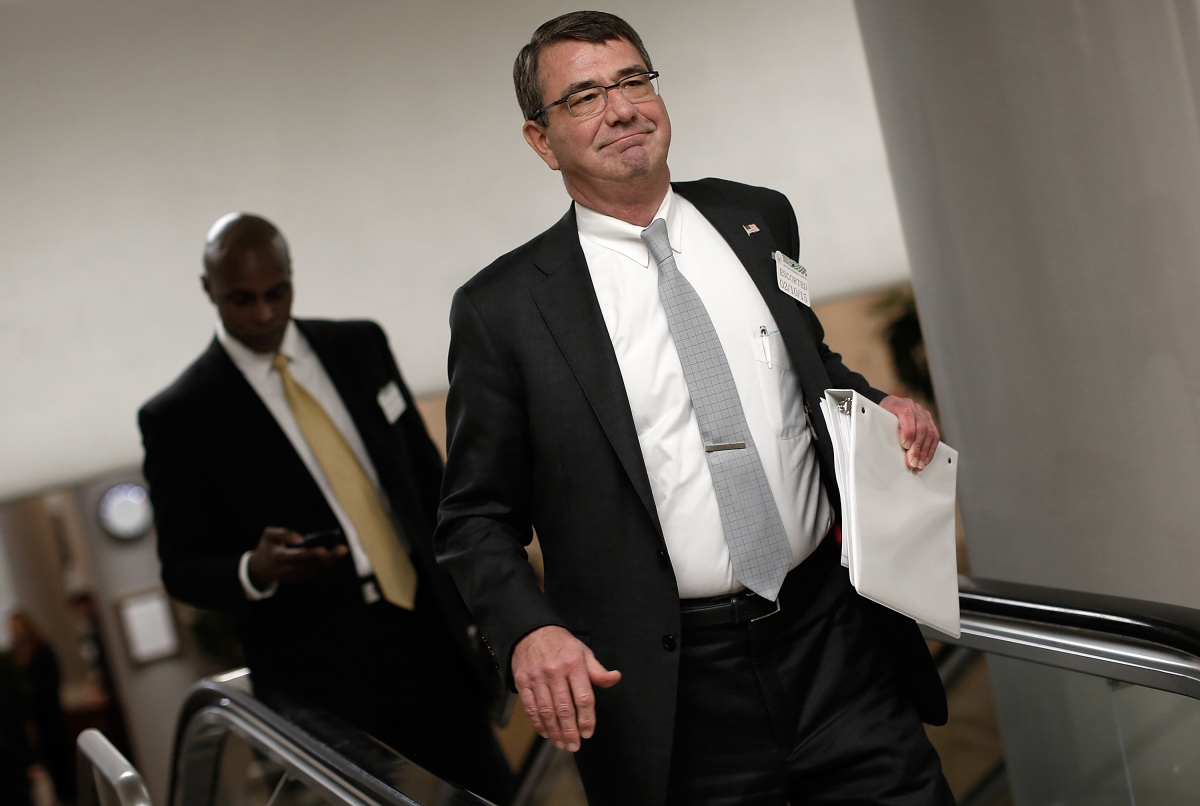
Ashton Carter, Ready to Send in the Mercs
Ashton Carter, ready and willing to send in the Mercs — there ought to be Mercs — don’t bother, they’re here

But the truth is different: the U.S. has simply privatized the Afghan War, turning it over to military contractors, secretive Special Forces, and the CIA, as reported in this article by Tim Shorrock, in which you’ll find the following quote:

“If you define combat mission as only having large numbers of US combat troops in the field, doing patrols, and engaging the Taliban, then, yes, it [the Afghan War] is coming to an end,” says David Isenberg, a Navy veteran and author who has been researching private security and military contractors since the early 1990s. But if you define it as continuing to attack and degrade those you consider hostile, via drone or Special Forces or CIA paramilitaries, all of which are supported by contractors, then not so much.”

Not so much, indeed.  The future is indeed bright for privatized military contractors.  So much so that I have a slogan to offer the next Blackwater/Xe/Academi, the next DynCorp, the next Triple Canopy, the next global mercenary outfit:

My Slogan: Your Wish Is My Commando

Your imperial wish is also my profit, but we won’t mention that fact too loudly.

America was not supposed to go to war like this.  Remember our Founders and their ideas on war?  War was supposed to be a terrible decision, hotly contested among the people by their duly elected representatives in Congress.  It wasn’t supposed to be an easy choice made by presidents, with no real input or debate by that Congress.  It was supposed to involve citizen-soldiers motivated to defend the Constitution and sacred freedoms, not pay-for-hire mercenaries motivated by profit and spoils.

But our imperial state knows that it can’t fool all of the people all of the time on the need for endless wars in places like Iraq and Afghanistan, hence the recourse to wars fought largely in secret by hired guns and CIA/paramilitaries.  The mainstream media, of course, is owned by some of the same corporations that profit from weapons sales overseas, so don’t expect push-back from them.  No — the push-back will have to come from us.  We will have to use all the tools at our disposal to fight for enduring peace.

One thing I know: Without our push-back, enduring (as in endless) war is a certainty for America’s future.

Bonus Lesson: Isn’t it nice to know that this is Ashton Carter’s first day on the job as Secretary of Defense?  And that he’s open to sending more American troops to Afghanistan?  Just the man we needed at the Pentagon.  No wonder he was confirmed 93-5 by the Senate.