The Poison of War

george
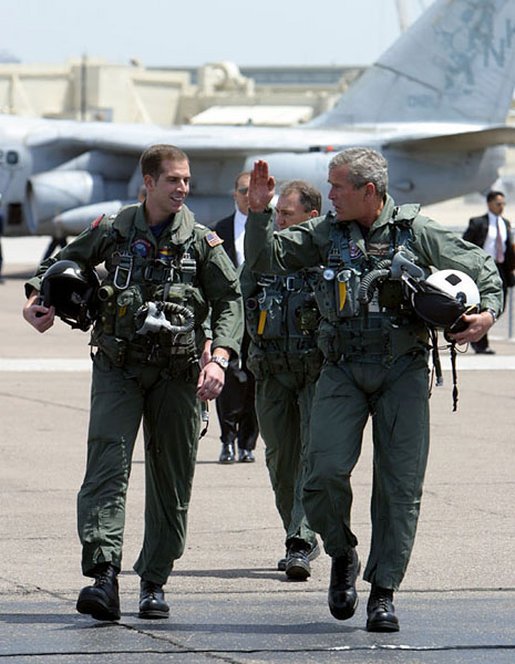
President Bush just before he gave his “mission accomplished” speech in May 2003

Chris Hedges

In May 2003, Chris Hedges gave a controversial commencement speech at Rockford College (Rockford University since 2013) in Illinois.  Back then, Hedges was an award-winning reporter for the New York Times who had recently completed a book, War Is A Force that Gives Us Meaning (2002), which I highly recommend.  Earlier that month, President George W. Bush had given his “Mission Accomplished” speech about the Iraq war, and patriotic pride was riding high.  Hedges had the foresight to recognize the mission had not been accomplished, and that the cost of war (all wars) would be high to the United States as well as to the countries purportedly liberated.

Booed and interrupted on several occasions during his speech, Hedges persevered.  His words from 2003 are well worth reading again, especially as President-elect Trump assembles a team of former generals and hardline rightists with the promise of obliterating ISIS and of “winning” conflicts around the world.

Here is his speech, in its entirety.  I have bolded one passage on Athens and the poison of war that is particularly telling for the current American moment.  W.J. Astore

Chris Hedges at Rockford College, Commencement Address, May 2003

I want to speak to you today about war and empire.

Killing, or at least the worst of it, is over in Iraq. Although blood will continue to spill — theirs and ours — be prepared for this. For we are embarking on an occupation that, if history is any guide, will be as damaging to our souls as it will be to our prestige, power, and security. But this will come later as our empire expands and in all this we become pariahs, tyrants to others weaker than ourselves. Isolation always impairs judgment and we are very isolated now.

We have forfeited the good will, the empathy the world felt for us after 9-11. We have folded in on ourselves, we have severely weakened the delicate international coalitions and alliances that are vital in maintaining and promoting peace and we are part now of a dubious troika in the war against terror with Vladimir Putin and Ariel Sharon, two leaders who do not shrink in Palestine or Chechnya from carrying out acts of gratuitous and senseless acts of violence. We have become the company we keep.

The censure and perhaps the rage of much of the world, certainly one-fifth of the world’s population which is Muslim, most of whom I’ll remind you are not Arab, is upon us. Look today at the 14 people killed last night in several explosions in Casablanca. And this rage in a world where almost 50 percent of the planet struggles on less than two dollars a day will see us targeted. Terrorism will become a way of life, and when we are attacked we will, like our allies Putin and Sharon, lash out with greater fury. The circle of violence is a death spiral; no one escapes. We are spinning at a speed that we may not be able to hold. As we revel in our military prowess — the sophistication of our military hardware and technology, for this is what most of the press coverage consisted of in Iraq — we lose sight of the fact that just because we have the capacity to wage war it does not give us the right to wage war. This capacity has doomed empires in the past.

“Modern western civilization may perish,” the theologian Reinhold Niebuhr warned, “because it falsely worshiped technology as a final good.”

The real injustices, the Israeli occupation of Palestinian land, the brutal and corrupt dictatorships we fund in the Middle East, will mean that we will not rid the extremists who hate us with bombs. Indeed we will swell their ranks. Once you master people by force you depend on force for control. In your isolation you begin to make mistakes.

Fear engenders cruelty; cruelty, fear, insanity, and then paralysis. In the center of Dante’s circle the damned remained motionless. We have blundered into a nation we know little about and are caught between bitter rivalries and competing ethnic groups and leaders we do not understand. We are trying to transplant a modern system of politics invented in Europe characterized, among other things, by the division of earth into independent secular states based on national citizenship in a land where the belief in a secular civil government is an alien creed. Iraq was a cesspool for the British when they occupied it in 1917; it will be a cesspool for us as well. The curfews, the armed clashes with angry crowds that leave scores of Iraqi dead, the military governor, the Christian Evangelical groups who are being allowed to follow on the heels of our occupying troops to try and teach Muslims about Jesus.

The occupation of the oil fields, the notion of the Kurds and the Shiites will listen to the demands of a centralized government in Baghdad, the same Kurds and Shiites who died by the tens of thousands in defiance of Saddam Hussein, a man who happily butchered all of those who challenged him, and this ethnic rivalry has not gone away. The looting of Baghdad, or let me say the looting of Baghdad with the exception of the oil ministry and the interior ministry — the only two ministries we bothered protecting — is self immolation.

As someone who knows Iraq, speaks Arabic, and spent seven years in the Middle East, if the Iraqis believe rightly or wrongly that we come only for oil and occupation, that will begin a long bloody war of attrition; it is how they drove the British out and remember that, when the Israelis invaded southern Lebanon in 1982, they were greeted by the dispossessed Shiites as liberators. But within a few months, when the Shiites saw that the Israelis had come not as liberators but occupiers, they began to kill them. It was Israel who created Hezbollah and was Hezbollah that pushed Israel out of Southern Lebanon.

As William Butler Yeats wrote in “Meditations in Times of Civil War,” “We had fed the heart on fantasies / the hearts grown brutal from the fair.”

This is a war of liberation in Iraq, but it is a war now of liberation by Iraqis from American occupation. And if you watch closely what is happening in Iraq, if you can see it through the abysmal coverage, you can see it in the lashing out of the terrorist death squads, the murder of Shiite leaders in mosques, and the assassination of our young soldiers in the streets. It is one that will soon be joined by Islamic radicals and we are far less secure today than we were before we bumbled into Iraq.

We will pay for this, but what saddens me most is that those who will by and large pay the highest price are poor kids from Mississippi or Alabama or Texas who could not get a decent job or health insurance and joined the army because it was all we offered them. For war in the end is always about betrayal, betrayal of the young by the old, of soldiers by politicians, and of idealists by cynics. Read Antigone, when the king imposes his will without listening to those he rules or Thucydides’ history. Read how Athens’ expanding empire saw it become a tyrant abroad and then a tyrant at home. How the tyranny the Athenian leadership imposed on others it finally imposed on itself.

This, Thucydides wrote, is what doomed Athenian democracy; Athens destroyed itself. For the instrument of empire is war and war is a poison, a poison which at times we must ingest just as a cancer patient must ingest a poison to survive. But if we do not understand the poison of war — if we do not understand how deadly that poison is — it can kill us just as surely as the disease.

We have lost touch with the essence of war. Following our defeat in Vietnam we became a better nation. We were humbled, even humiliated. We asked questions about ourselves we had not asked before.

We were forced to see ourselves as others saw us and the sight was not always a pretty one. We were forced to confront our own capacity for atrocity — for evil — and in this we understood not only war but more about ourselves. But that humility is gone.

War, we have come to believe, is a spectator sport. The military and the press — remember in wartime the press is always part of the problem — have turned war into a vast video arcade came. Its very essence — death — is hidden from public view.

There was no more candor in the Persian Gulf War or the War in Afghanistan or the War in Iraq than there was in Vietnam. But in the age of live feeds and satellite television, the state and the military have perfected the appearance of candor.

Because we no longer understand war, we no longer understand that it can all go horribly wrong. We no longer understand that war begins by calling for the annihilation of others but ends if we do not know when to make or maintain peace with self-annihilation. We flirt, given the potency of modern weapons, with our own destruction.

The seduction of war is insidious because so much of what we are told about it is true — it does create a feeling of comradeship which obliterates our alienation and makes us, for perhaps the only time of our life, feel we belong.

War allows us to rise above our small stations in life; we find nobility in a cause and feelings of selflessness and even bliss. And at a time of soaring deficits and financial scandals and the very deterioration of our domestic fabric, war is a fine diversion. War for those who enter into combat has a dark beauty, filled with the monstrous and the grotesque. The Bible calls it the lust of the eye and warns believers against it. War gives us a distorted sense of self; it gives us meaning.

Once in war, the conflict obliterates the past and the future all is one heady intoxicating present. You feel every heartbeat in war, colors are brighter, your mind races ahead of itself.  We feel in wartime comradeship.  We confuse this with friendship, with love. There are those who will insist that the comradeship of war is love — the exotic glow that makes us in war feel as one people, one entity, is real, but this is part of war’s intoxication.

Think back on the days after the attacks on 9-11. Suddenly we no longer felt alone; we connected with strangers, even with people we did not like. We felt we belonged, that we were somehow wrapped in the embrace of the nation, the community; in short, we no longer felt alienated.

As this feeling dissipated in the weeks after the attack, there was a kind of nostalgia for its warm glow and wartime always brings with it this comradeship, which is the opposite of friendship. Friends are predetermined; friendship takes place between men and women who possess an intellectual and emotional affinity for each other. But comradeship — that ecstatic bliss that comes with belonging to the crowd in wartime — is within our reach. We can all have comrades.

The danger of the external threat that comes when we have an enemy does not create friendship; it creates comradeship. And those in wartime are deceived about what they are undergoing. And this is why once the threat is over, once war ends, comrades again become strangers to us. This is why after war we fall into despair.

In friendship there is a deepening of our sense of self. We become, through the friend, more aware of who we are and what we are about; we find ourselves in the eyes of the friend. Friends probe and question and challenge each other to make each of us more complete; with comradeship, the kind that comes to us in patriotic fervor, there is a suppression of self-awareness, self-knowledge, and self-possession. Comrades lose their identities in wartime for the collective rush of a common cause — a common purpose. In comradeship there are no demands on the self. This is part of its appeal and one of the reasons we miss it and seek to recreate it. Comradeship allows us to escape the demands on the self that is part of friendship.

In wartime when we feel threatened, we no longer face death alone but as a group, and this makes death easier to bear. We ennoble self-sacrifice for the other, for the comrade; in short we begin to worship death. And this is what the god of war demands of us.

Think finally of what it means to die for a friend. It is deliberate and painful; there is no ecstasy. For friends, dying is hard and bitter. The dialogue they have and cherish will perhaps never be recreated. Friends do not, the way comrades do, love death and sacrifice. To friends, the prospect of death is frightening. And this is why friendship or, let me say love, is the most potent enemy of war. Thank you.
Why is Petraeus an Expert on Mosul?

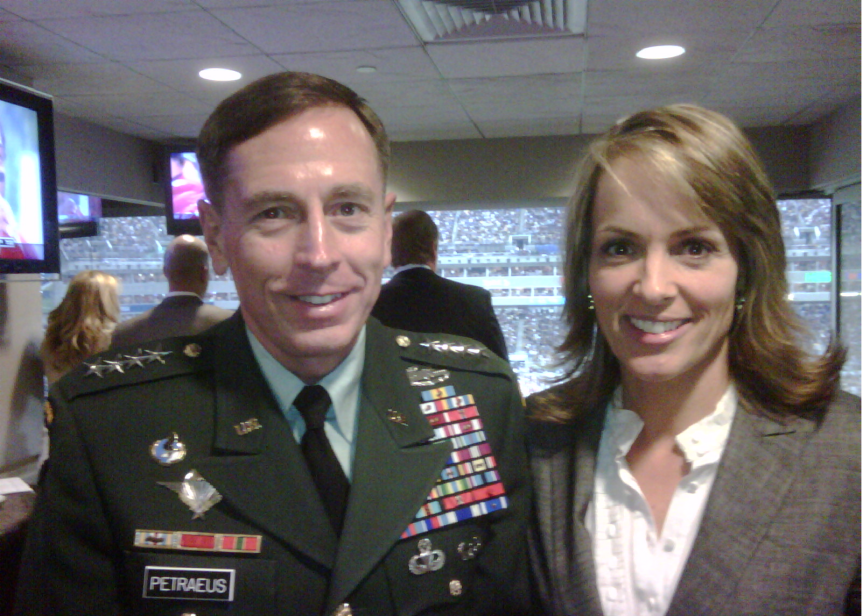
Petraeus with Broadwell
He’s back: General Petraeus in happier days

General (retired) David Petraeus was on PBS the other day to explain the current Iraqi offensive on Mosul.  Sure, his military “surges” in Iraq and Afghanistan had no staying power, and he disgraced himself by sharing classified information with his mistress during an extramarital affair, but nevertheless let’s call on him as an unbiased “expert” on all things military.  Right?

Anyway, I thought the following words of Petraeus were revealing:

But that’s the extent of what we [the U.S.] can do [in Iraq today]. We can encourage, we can nudge, we can cajole [the Iraqi military and Kurdish forces]. We can’t force. And it is going to have to be Iraqis at the end of the day that come together, recognizing that, if they cannot, fertile fields will be planted for the planting of the seeds of ISIS 3.0, of further extremism in Iraq.

Wow.  There’s no sense here that the U.S. is to blame for planting the seeds of Iraqi extremism (or, at the very least, fertilizing them) in those “fertile fields.”  Overthrowing Saddam Hussein in 2003 and demobilizing Iraqi military forces predictably left a power vacuum that facilitated factionalism and extremism in Iraq, which was only exacerbated by an extended and mismanaged U.S. occupation.  Petraeus’s “Surge” in 2007 papered over some of the worst cracks, but only temporarily, a fact that Petraeus himself knew (consider all his caveats about “gains” being “fragile” and “reversible”).

But no matter.  Petraeus is now saying it’s up to the Iraqis to get their act together, with some “nudging” and “cajoling” by the U.S.  I’m sure Iraqi leaders are happy to learn that U.S. experts like Petraeus are behind them, ready to encourage and nudge and cajole.  They’re likely happiest with U.S. Apache helicopters and direct tactical assistance via Special Ops teams (yes, there are U.S. boots on the ground, and they’re in harm’s way).

And Petraeus’s reference to ISIS 3.0: Isn’t it strange to compare a terrorist organization’s evolution to a new software product roll-out?  Petraeus might have added that ISIS 1.0 came as a result of the extended U.S. occupation of Iraq, and that ISIS 2.0 came as U.S. forces pulled out, leaving behind Iraqi security forces that the U.S. claimed were ready to defend Iraq, but which fled in 2014, abandoning their weapons and equipment to ISIS forces.  Put plainly, U.S. bungling helped to launch ISIS 1.0 and to equip ISIS 2.0.  And yet Petraeus suggests if there’s an ISIS 3.0, that version will be entirely the fault of the Iraqis.

Throughout the Petraeus interview, there’s a callous calculus in place.  For example, earlier in the interview, Petraeus casually notes the population of Mosul, originally 2 million people, is down to 1.2 million and dropping.  Nothing is said about the missing 800,000 Iraqis.  Most are refugees, but many are dead.  Doesn’t their fate suggest a colossal failure of the war and occupation you ran, General Petraeus?  But questions such as this are never asked in the mainstream media.

In its long wars in the Greater Middle East, the U.S. has an incredibly short and corrupted memory.  Indeed, to stay with Petraeus and his software analogies, the American memory is a circular file that is constantly overwritten with flawed data.  That’s a recipe not for smooth running but for catastrophic crashes.  And so it has proved.

The USA in Iraq: Putting Out the Fire with Gasoline

himars_10
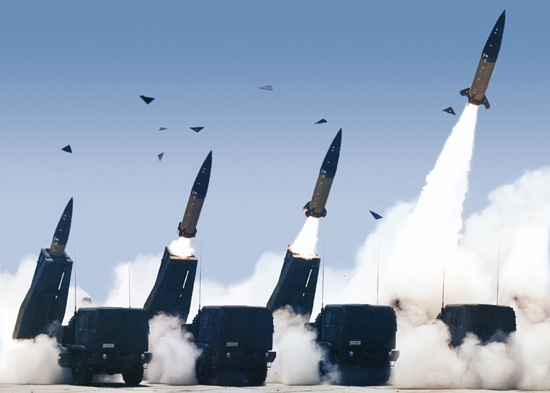
Surely, HIMARS will bring peace to Iraq

W.J. Astore

Today brings yet another announcement of more U.S. troops to Iraq.  This time 600 are being sent as logistics support, advisers, and enablers (that term, “enabler,” is fuzzy indeed: enabler of what?  More failure?).  That brings the number of U.S. troops in Iraq to more than 5200, but of course this figure seriously under-represents the American presence in the region.  Nowadays, most “troops” are provided by private contractors, and many of these are U.S. military veterans who discovered they could make a lot more money wearing mufti than in Uncle Sam’s uniforms.  At the same time, the U.S. continues to provide heavy-duty weaponry to the Iraqi military, including Apache attack helicopters and the HIMARS rocket system.  All of this is intended to help the Iraqi military retake the city of Mosul.

That the U.S. is yet again providing more troops as well as heavy weapons as “force multipliers” highlights the failure of U.S. military efforts to “stand up” an effective Iraqi military. The enemy, after all, has no Apache helicopters, no HIMARS system, and no U.S. advisers, although we certainly “enable” them with all the U.S. weaponry they’ve been able to capture or steal.  Despite a lack of U.S. military training and aid, ISIS and crew have proven to be remarkably resilient.  What gives?

Two years ago, I wrote an article at TomDispatch.com on “America’s Hollow Foreign Legions.”  Back then, I said this:

Military training, no matter how intensive, and weaponry, no matter how sophisticated and powerful, is no substitute for belief in a cause.  Such belief nurtures cohesion and feeds fighting spirit.  ISIS has fought with conviction.  The expensively trained and equipped Iraqi army hasn’t.  The latter lacks a compelling cause held in common.  This is not to suggest that ISIS has a cause that’s pure or just. Indeed, it appears to be a complex mélange of religious fundamentalism, sectarian revenge, political ambition, and old-fashioned opportunism (including loot, plain and simple). But so far the combination has proven compelling to its fighters, while Iraq’s security forces appear centered on little more than self-preservation. 

Despite an ongoing record of failure, pulling out of Iraq is never an option that’s considered by the Pentagon.  The only option our leaders know is more: more troops, more weapons, more money.  As I wrote for TomDispatch back in October 2014:

pulling out is never an option, even though it would remove the “American Satan” card from the IS propaganda deck.  To pull out means to leave behind much bloodshed and many grim acts.  Harsh, I know, but is it any harsher than incessant American-led bombing, the commitment of more American “advisers” and money and weapons, and yet more American generals posturing as the conductors of Iraqi affairs?  With, of course, the usual results.

Here we are, two years later, and nothing has changed.  The war song remains the same, as discordant as ever, with a refrain as simple as it is harsh: putting out the fire with gasoline.

U.S. Military Strategy: Of DDT, Bug Zappers, Lawyers, Guns, and Money

ddt_wwii_soldier
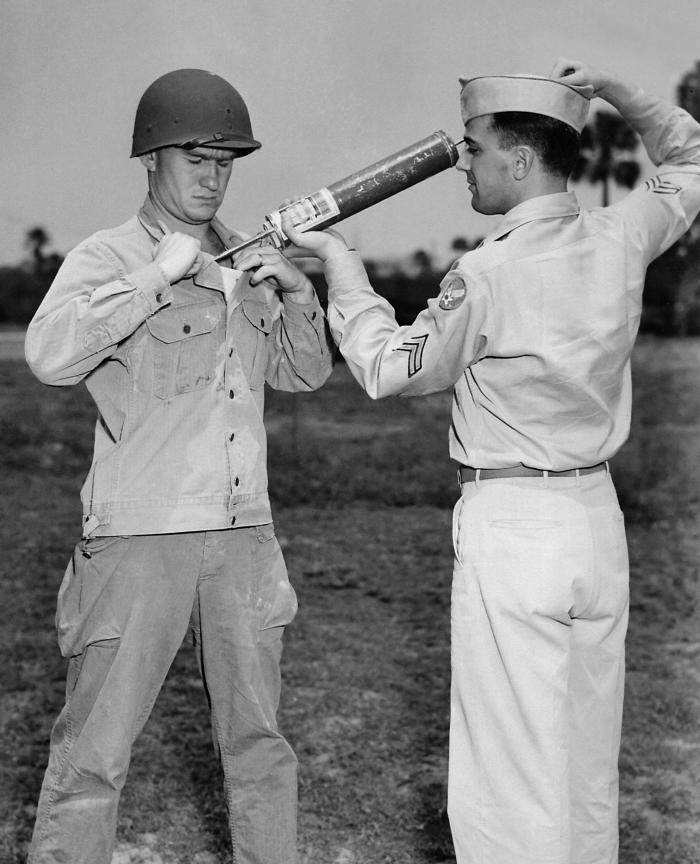
Just spray the bad bugs with DDT.  What can go wrong?

W.J. Astore

Today, the essence of U.S. military “strategy” is targeting.  The enemy is treated as vermin to be exterminated with the right bug bomb.  As if those bombs had no negative consequences; as if we learned nothing from the overuse of DDT, for example.

You might recall DDT, the miracle insecticide of the 1950s and 1960s.  It wiped out bad bugs (and a lot of good ones as well) while leading to DDT-resistant ones.  It also damaged the entire ecology of regions (because DDT is both persistent and bio-accumulative).  Something similar is happening in the Greater Middle East.  The U.S. is killing bad “bugs” (terrorists) while helping to breed a new generation of smarter “bugs.”  Meanwhile, constant violence, repetitive bombing, and other forms of persistent meddling are accumulating in their effects, damaging the entire ecology of the Greater Middle East.

The U.S. government insists the solution is all about putting bombs on target, together with Special Forces operating as bug zappers on the ground.  At the same time, the U.S. sells billions of dollars in weaponry to our “friends” and allies in the region.  Israel just got $38 billion in military aid over ten years, and Saudi Arabia has yet another major arms deal pending, this time for $1.15 billion (with Senator Rand Paul providing that rare case of principled opposition based on human rights violations by the Saudis).

Of course, the U.S. has provided lots of guns and military equipment to Iraqi and Afghan security forces, which often sell or abandon them to enemies such as ISIS and the Taliban.  The special inspector general in Afghanistan reported in 2014 that “As many as 43% of all small arms supplied to the Afghan National Security Forces remain unaccounted for – meaning more than 200,000 guns, including M2s, M16s, and M48s, are nowhere to be found.”  A recent tally this year that includes Iraq suggests that 750,000 guns can’t be accounted for, according to Action on Armed Violence (AOAV), a London-based charity. The Pentagon’s typical solution to missing guns is simply to send more of them.  Thus the U.S. is effectively arming its enemies as well as its allies, a business model that’s a win-win if you’re an arms merchant.

The essence of U.S. strategy makes me think of a Warren Zevon song lyric, “Send lawyers, guns, and money.”  As we’ve seen, U.S. lawyers can authorize anything, even torture, even as U.S. guns and money go missing and end up feeding war and corruption.  The tag line of Zevon’s song is especially pertinent: “The shit has hit the fan.”  How can you flood the Greater Middle East with U.S.-style bureaucracy, guns and money, and not expect turmoil and disaster?

Back in World War II, the USA was an arsenal of democracy.  Now it’s just an arsenal.  Consider Bill Hartung’s  article on U.S. military weaponry that’s flooding the Middle East. The business of America is war, with presidential candidates like Donald Trump just wanting to dump more money into the Pentagon.

There is no end to this madness.  Not when the U.S. economy is so dependent on weapons and war.  Not when the U.S. national security state dominates the political scene.  Not when Americans are told the only choices for president are Trump the Loose Cannon or Hillary the Loaded Gun.

Take the Oil! Trump the Imperialist

trump

W.J. Astore

Last night’s “commander-in-chief” security forum that featured Hillary Clinton and Donald Trump was, not surprisingly, disappointing.  (You can read the transcript here.)  Trump recently stated he was in favor of large increases in defense spending, but he wasn’t asked about this.  He wasn’t asked about his support of torture, nor was he challenged on his remarkably dangerous statement back in March that military officers would obey his presidential decrees, even when they were unlawful.  Hillary was challenged on her email fiasco at the State Department, and rightly so, but she pretty much got a free pass on her support of the calamitous Iraq war and the chaos following the Libyan intervention.  And of course neither candidate was challenged on their blanket support of Israel.

What you got was two self-absorbed candidates, one wonkish, the other one clearly a wanker, both of them posing as warriors as long as someone else’s kids are doing the fighting.  Here’s a question for Trump and Hillary: the next time you deploy troops to Iraq or Syria or Afghanistan or wherever, will you include Ivanka or Chelsea, respectively, and put them in harm’s way?

Most interesting to me was Trump’s old-fashioned imperialism, which explains much of his appeal to the rabid right.  Here’s what Trump had to say about how the Iraq war should have turned out for the USA:

“We [the USA] go in [to Iraq in 2003], we spend $3 trillion, we lose thousands and thousands of lives, and then, Matt, what happens is, we get nothing. You know, it used to be to the victor belong the spoils. Now, there was no victor there, believe me. There was no victor. But I always said: Take the oil.”

You have to hand it to The Donald: at least he’s occasionally honest.  The Iraq war was about oil, among other things, and Trump says the USA as the “victor” should have taken it.  Why?  Because might makes right.  Because, as Thucydides said so many centuries ago, the strong do what they will and the weak suffer as they must.

Remember when George W. Bush said Iraq’s oil was the “patrimony” of the Iraqi people and that the USA wasn’t about to take it?  That the Iraq war was about freedom and democracy in the Middle East, not a naked grab for resources?  Trump is having none of that.  Any wonder that he’s so popular among Americans who are tired, as they see it, of losing?

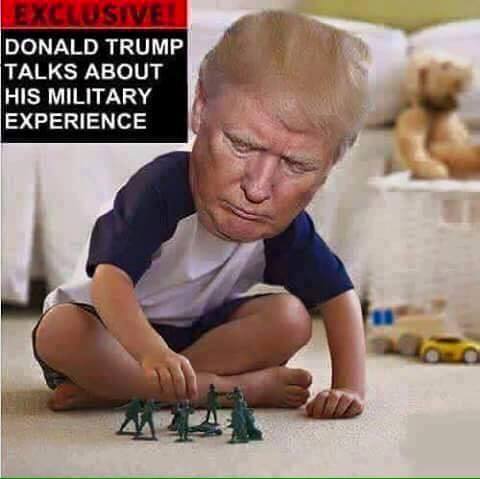
“Take the oil!”  It’s a statement that could easily appear on the next iteration of Trump’s baseball cap.

Obama’s Foreign Policy: Image over Substance

Obama address
Actions speak louder than spin

W.J. Astore

At Salon.com, Patrick Smith has a telling article on the Obama administration’s foreign policy.  He details the way in which style has triumphed over substance, and how tightly the Obama administration controls the narrative in the mainstream media.  Essentially, Smith provides more evidence of the way in which reporters and journalists serve as stenographers to the powerful.

Many journalists, notes Smith, are twenty-somethings who attempt to provide coverage of foreign affairs from inside the Washington Beltway. Under such conditions, even a diligent reporter has to rely far too heavily on official mouthpieces at the Pentagon, State Department, and similar governmental agencies. Those reporters who buck the system risk losing access; in short, they risk losing their privileges — and their jobs. Most end up conforming.

This is nothing new to anyone familiar with Stephen Colbert’s famous take-down of insider journalists at the Washington Correspondents’ Dinner in 2006.  As Colbert said a decade ago:

But, listen, let’s review the rules. Here’s how it works. The President makes decisions. He’s the decider. The press secretary announces those decisions, and you people of the press type those decisions down. Make, announce, type. Just put ’em through a spell check and go home. Get to know your family again. Make love to your wife. Write that novel you got kicking around in your head. You know, the one about the intrepid Washington reporter with the courage to stand up to the administration? You know, fiction!

Along with that critique, Smith is excellent on critiquing the fundamental unoriginality, the militarized banality, of much of Obama’s foreign policy.  As Smith notes:

There can be no radical shift in American conduct abroad, of course, until goals and purposes are addressed very forthrightly. This means taking on, in explicit fashion, our inherited tropes—our claims to exceptionalism and universalism—as well as the hegemonic ambitions the Pentagon shares with American corporations. It is a question, as noted in a previous column, of techne and telos, two words from ancient Greek. You can change the former—your method, your means—all you like, but it will matter little until you alter your telos, your aims, the ideal you strive for …

What is the new [Obama administration] narrative, then? May we know, please? I address the question to Ben Rhodes, David Samuels and Samuels’ editors at the Times Magazine. All this palaver about a brilliant foreign policy innovator and not one word about his masterstroke innovation, a reimagined frame for American conduct abroad?

The lapse is a symptom of the above-noted problem: style without substance, form without content. We cannot count even the openings to Iran and Cuba as any great departures, given Washington’s behavior since. There is no new narrative, only a new way of telling the old narrative.

Just so.  Consider recent events.  More U.S. “advisers” (troops) to Iraq.  More foreign weapons sales.  The commitment of ABM missiles to Romania.  Sending B-52s (a symbol of the Cold War) to strike at ISIS.  More talk of the dangers of a resurgent Russia.  And (of course) more talk of enlarging the Pentagon and feeding it more money.

Yes, the Obama administration has been more reluctant than Bush/Cheney to commit big battalions of the regular army to overseas invasions and wars, but otherwise the foreign policy song has remained pretty much the same.  Obama just prefers a smaller stage presence or “footprint,” as defined by Washington as drones and special ops, together with privatized militaries and extensive weapons sales, rather than big battalions.

That’s hardly a new narrative in U.S. foreign policy — precisely the point of Smith’s telling critique.


Surging to Defeat: Learning from the Germans

armor show

W.J. Astore

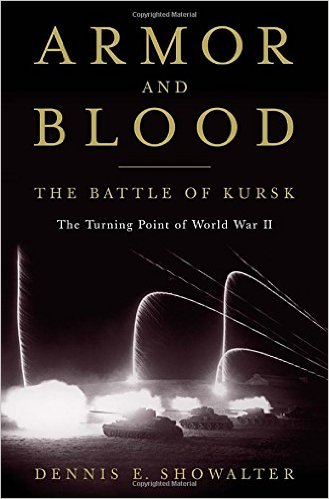
I recently read “Armor and Blood” by Dennis Showalter.  It’s about the Battle of Kursk in July of 1943, the massive, last-ditch offensive by the Nazis on the Eastern Front, and how the Soviet Army was able to stymy it, seize the initiative, and take the offensive for good.  As Showalter notes, the Nazi offensive at Kursk in 1943 was much like the Ludendorff Offensives in the Spring of 1918 near the end of World War I.  They were offensives of desperation.  As General Ludendorff said in 1918, first we’ll punch a hole in the enemy’s lines, and then we’ll see.  Tactical zeal (and wishful thinking) took the place of careful strategic calculation.

In 1918 as well as in 1943, the German military was given free rein to pursue a military solution when there wasn’t one to be had.  Germany simply didn’t have the military means for the strategic end they sought to achieve.  In 1918, Ludendorff believed he could defeat the Entente forces (the French, British, and other allies, to include the rapidly arriving Americans) on the Western Front, but his offensives only served to weaken his own army, ensuring its exhaustion and defeat by that November.  In 1943, Hitler gambled he could defeat the Soviet Army at Kursk, but his massive offensive only weakened his own army, ensuring its exhaustion and eventual defeat in the spring of 1945.  Both times, more military action only precipitated defeat and disaster.

Is the United States the inheritor of this Germanic bias?  Instead of punching a hole, the U.S. military speaks of “surges.”  It surged in Iraq in 2007.  It surged in Afghanistan in 2010-11.  But after each “surge,” the situation in those countries was basically the same – and, over time, grew worse.

Of course, U.S. “surges,” in each case involving roughly 30,000 additional troops, were in scale dwarfed by the German offensives in 1918 and 1943, involving millions of men and the movement of entire armies.  But scale is less important than process.  In each case, “victory” was staked on more military action, in part because both Germans and Americans believed themselves to be in the possession of “the finest fighting forces in the history of the world.”  Neither, of course, would admit that they were fighting on foreign soil, that the enemy had agency too, and that the longer the fighting continued, the weaker they grew as the enemy grew stronger.  So, in the name of “victory” the German and American “surges” played themselves out, and nothing changed strategically – there were no victories to be had.

The Germans, of course, drove themselves to utter collapse, both in 1918 and especially in 1945, after which they could no longer fool themselves as to the success of their “surges.”  A superpower with enormous resources, the United States is not yet on the verge of collapse.  But enormous budgetary deficits, driven in part by endless wars and a plethora of imperial commitments and overseas bases, are gradually eating away at the sinews of American strength, even as militarism eats away at the marrow of democracy.

After their utter defeat in 1945, the Germans learned to avoid endless war and the seductions of militarism.  The question is: Will it require a total collapse of the American Empire before its leaders learn the same lesson?

Hillary the Hardheaded Hawk

hillary henry
Birds of a feather …

W.J. Astore

In a lengthy article (April 21st) at the “liberal” New York Times, “How Hillary Clinton Became a Hawk,” Hillary is variously described as “aggressive,” “tough,” a “military wonk” who’s “more muscular” than President Obama when it comes to advocating for the use of force.  Noted for her “pugnacity” and “hardheadedness,” Hillary is praised for her close relationships with U.S. generals, to include David Petraeus and Stanley McChrystal.  Indeed, the article highlights the fact that Hillary is sometimes more aggressive in advocating for military force than the generals she confers with.  Nevertheless, or rather because of this, the generals apparently like Hillary.  They really like her!

What are we to make of this puff piece that praises Hillary the Hawk?  Obviously, with Hillary’s victory in New York and her forthcoming, now nearly inevitable nomination as the Democratic candidate for president, Hillary Clinton and her allies have decided it’s time to sharpen her beak and claws.  No more nonsense about being a touchy-feely progressive like Bernie Sanders.  It’s time for Hillary the Hawk to take charge and soar, preempting any criticism by Republicans that she’ll be “weak” on defense.

But, tell me again, how did America’s wars in Iraq, Afghanistan, Libya, and elsewhere go for the United States?  At least three trillion dollars lost, tens of thousands of U.S. troops killed and wounded, hundreds of thousands of “foreigners” killed and wounded, millions made refugees, and for what, exactly?

Hillary the Hawk wants to double-down on a losing hand.  That’s neither “aggressive” nor “tough”: It’s reckless and dumb.  Worst of all, she’s playing with our chips as well as the lives of our troops, not to mention the lives of all those “foreigners” seeking shelter from American bombs and bullets and drones.  (But we have a word for them: collateral damage.)

Hillary Clinton, like all of the remaining presidential candidates, never wore a military uniform.  Her one child, Chelsea, married well and lives in a posh apartment (price: a cool $10.5 million) in New York City.  Indeed, like most American politicians in Congress, Hillary is a millionaire without children in the military, therefore she risks little in advocating for more U.S. troops to be sent off to war.  Her defenders (including Hillary herself) will say she will use force only as a last resort, yet the “Hillary Hawk” article cited above makes plain that she is no reluctant warrior.  Hell, why not, when she earns such praise for her wonkish warrior posturing from the New York Times?

Admirer of Henry Kissinger, supporter of the Iraq War in 2003, self-styled conqueror of Qaddafi and Libya (“We came. We saw. He died,” Hillary the Hawk laughed), fervid supporter of Bibi Netanyahu and Israel, Hillary Clinton is ready to take on the world.

One thing is certain: We can’t say we weren’t warned.

Reinforcing Failure

readyandresilient_header5
Send in the troops … there ought to be troops … don’t bother they’re here

W.J. Astore

I get a situation report (or SITREP) from FP: Foreign Policy.  I’ve pasted it below.  The gist of it is that Afghanistan is going poorly, therefore there’ll be no U.S. troop drawdown; and Iraq is going poorly, therefore the U.S. is sending more troops and money.

“Poorly” never seems to lead to the obvious conclusion: withdrawal.  Rather it always leads to escalation: more troops and more money.  So the U.S. always reinforces failure, exactly the opposite of sound military strategy.

The illogical nature  of U.S. foreign policy would surely befuddle Mr. Spock. Put differently, U.S. foreign policy has a “logic” of its own.  It goes something like this: Never admit mistakes.  Domestic politics always come first, so never leave yourself open to charges of “cutting and running.”  Never close an avenue to “influence” and future weapons sales, no matter if that avenue is a dead end.

No foreign policy update would be complete without a Republican charge of weakness or pusillanimity leveled against the Obama administration, hence the concluding comment by John McCain.

Here is the FP SITREP:

“The Institute for the Study of War recently released a map of Taliban strongholds throughout the country, showing the Taliban gains in the south.”

“A spokesman for the U.S. military command in Kabul tells SitRep that no U.S. servicemembers were caught up in the attack. In a statement, Gen. John Nicholson, head of U.S. and NATO troops in the country, said that the attack “shows the insurgents are unable to meet Afghan forces on the battlefield and must resort to these terrorist attacks.” Nicholson, who took command of America’s longest war last month, is still working to draw up a list of recommendations for what assets he’ll need. It’s expected he will ask that troop numbers remain at the current level of 9,800, and not drop to about 5,500 by the end of the year.”

“All eyes on Mosul. There are another 217 U.S. troops headed to Iraq to help security forces fight their way toward the ISIS-held city of Mosul, bringing the official number of American servicemembers there to just over 4,000. Hundreds more are in country but are not counted on the official rolls, meaning the real number is over 5,000, defense officials have said.”

“As part of the new aid package announced in Baghdad by Defense Secretary Ash Carteron Monday, the Pentagon will also start handing over $415 million to the Kurdish government to help pay their fighters, who have gone without pay amid a budget crunch due to falling oil prices.”

“The new troops will move out with Iraqi forces, advising local commanders at the battalion level, potentially putting them closer to the fight as the Iraqi army pushes north toward Mosul. Until this point, American advisors generally stayed at the division level or above. The new troops will also fly Apache helicopters that will strike ISIS fighters and man artillery systems, including the HIMARS (High Mobility Artillery Rocket System), which can fire multiple 200-lb. GPS-guided rockets over 40 miles. The HIMARS has already been used by U.S. forces to pound ISIS around Ramadi, and one U.S.-manned system has fired from Jordan into Syria in recent months. Sen. John McCain (R-Ariz.) called the new deployment the kind of ‘grudging incrementalism that rarely wins wars.'”

Words about War Matter

orwell-nineteen-eighty-four-large-cover

W.J. Astore

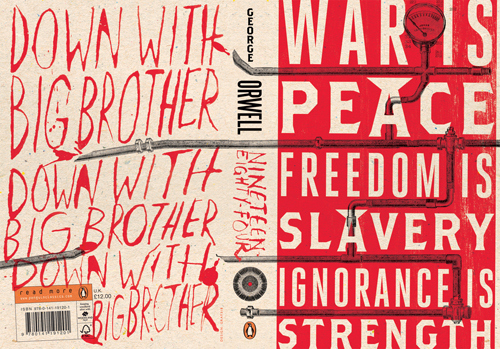
In my new article for TomDispatch.com, I argue that words about war matter.  A clear sign of America’s post-democratic military is the language our leaders use when they talk about war.  Specifically, words, euphemisms, and expressions that muddle or obfuscate meaning while excluding most Americans from the debate.  Acronyms like VUCA and 4GW and COIN, moreover, create a specialized language that suggests war is beyond the understanding of regular folk.  Meanwhile, euphemisms and rhetoric hide the truth about war.

In a democracy, how are proper decisions to be made about war if the truth is deliberately cloaked or hidden?

The entire article is here at TomDispatch.com; what follows is the last section of my article, featuring a strong contribution from Mike Murry, a regular contributor here at Bracing Views.

The proliferation of euphemisms, acronyms, and neologisms has no end.  You might start with “defense” instead of “war” department, followed by “homeland” security, the “PATRIOT” act, and on and on.  I still recall Ronald Reagan’s christening of the MX nuclear missile, with its multiple warheads capable of unleashing city-wide genocides, as the “Peacekeeper.”

The United States may be losing our many “overseas contingency operations,” but when it comes to manipulating words, it’s truly “mission accomplished.”

The Truth About “Progress” in America’s Wars

These days, Secretary of Defense Ashton Carter often resorts to cancer imagery when describing the Islamic state. “Parent tumor” is an image he especially favors — that is, terrorism as a cancer that America’s militarized surgeons need to attack and destroy before it metastasizes and has “children.”  (Think of the ISIS franchises in Libya, where the organization has recently doubled in size, Afghanistan, and Yemen.)  Hence the proliferation of “surgical strikes” by drones and similarly “surgical” Special Ops raids, both of which you could think of as America’s equivalent of white blood cells in its war on the cancer of terrorism.

But is terrorism really a civilizational cancer that can be “cured” via the most aggressive “kinetic” treatments?  Can the U.S. render the world cancer-free?  For that’s what Carter’s language implies.  And how does one measure “progress” in a “war” on the cancer of ISIS?  Indeed, from an outsider’s perspective, the proliferation of U.S. military bases around the world (there are now roughly 800), as well as of drone strikes, Special Ops raids, and massive weapons exports might have a cancerous look to them.  In other words, what constitutes a “cancer” depends on one’s perspective — and perhaps one’s definition of world “health,” too.

The very notion of progress in America’s recent wars is one that a colleague, Michael Murry, recently critiqued.  A U.S. Navy Vietnam War Veteran, he wrote me that, for his favorite military euphemism, “I have to go with ‘progress’ as incessantly chanted by the American military brass in Iraq and Afghanistan…

“We go on hearing about 14 years of ‘progress’ which, to hear our generals tell it, would vanish in an instant should the United States withdraw its forces and let the locals and their neighbors sort things out. Since when do ‘fragile gains’ equate to ‘progress’? Who in their right mind would invest rivers of blood and trillions of dollars in ‘fragility’?  Now that I think of it, we also have the euphemistic expression of ‘drawdown’ substituting for ‘withdrawal’ which in turn substitutes for ‘retreat.’ The U.S. military and the civilian government it has browbeaten into hapless acquiescence simply cannot face the truth of their monumental failures and so must continually bastardize our language in a losing — almost comical — attempt to stay one linguistic step ahead of the truth.”

Progress, as Murry notes, basically means nothing when such “gains,” in the words of David Petraeus during the surge months in Iraq in 2007, are both “fragile” and “reversible.” Indeed, Petraeus repeated the same two words in 2011 to describe similar U.S. “progress” in Afghanistan, and today it couldn’t be clearer just how much “progress” was truly made there.  Isn’t it time for government officials to stop banging the drums of war talk in favor of “progress” when none exists?

Think, for instance, of the American-trained (and now re-trained) Iraqi security forces. Each year U.S. officials swear that the Iraqi military is getting ever closer to combat readiness, but much like one of Zeno’s paradoxes, the half-steps that military takes under American tutelage never seem to get it into fighting shape.  Progress, eternally touted, seems always to lead to regress, eternally explained away, as that army regularly underperforms or its units simply collapse, often abandoning their American-supplied weaponry to the enemy.  Here we are, 12 years after the U.S. began training the Iraqi military and once again it seems to be cratering, this time while supposedly on the road to retaking Iraq’s second largest city, Mosul, from its Islamic State occupiers.  Progress, anyone?

In short, the dishonesty of the words the U.S. military regularly wields illustrates the dishonesty of its never-ending wars. After so many years of failure and frustration, of wars that aren’t won and terrorist movements that only seem to spread as its leaders are knocked off, isn’t it past time for Americans to ditch phrases like “collateral damage,” “enemy noncombatant,” “no-fly zone” (or even worse, “safe zone”), and “surgical strike” and adopt a language, however grim, that accurately describes the military realities of this era?

Words matter, especially words about war.  So as a change of pace, instead of the usual bloodless euphemisms and vapid acronyms, perhaps the U.S. government could tell the shocking and awful truth to the American people in plain language about the realities and dangers of never-ending war.

William Astore, a retired lieutenant colonel (USAF) and professor of history, is a TomDispatch regular.  He blogs at Bracing Views.