Hello Everyone: here’s an interview I did with Dick Price and Sharon Kyle at LA Progressive about why we can’t seem to heed Ike’s warning about the dangers of the military-industrial complex in 1961.
Other topics covered include sports and the military, Hollywood and the Pentagon, first-person shooter games, and toxic masculinity.
We also discuss what it would take to change America—to redirect energies dedicated to imperialism and war to democracy and peace. I say something here about idealism, a sign perhaps of my own naïveté.
You can have my ideals when you pry them from my cold dead brain.
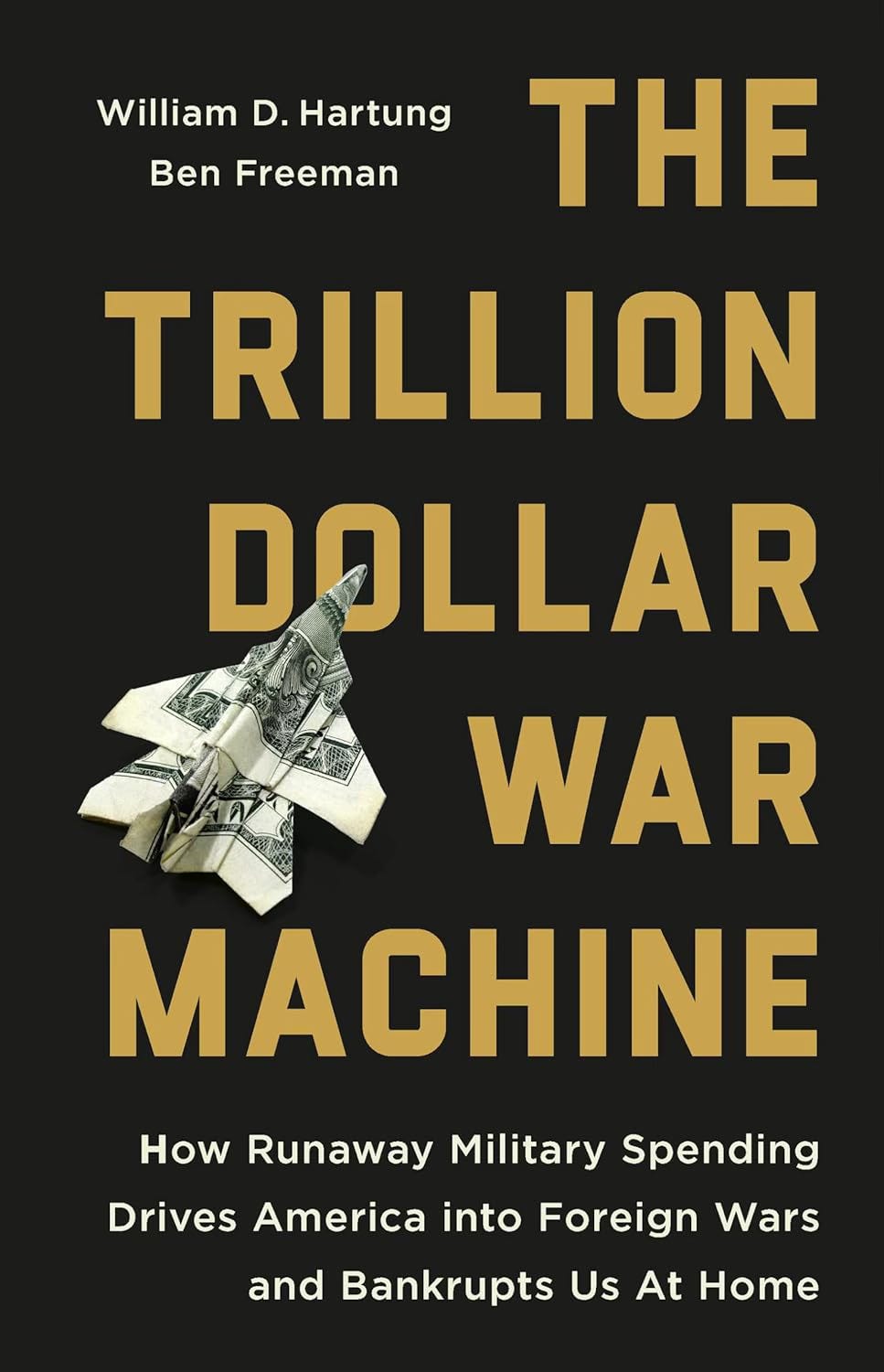
Wow. Just wow. That was my response after reading “The Trillion Dollar War Machine” by Bill Hartung and Ben Freeman. The book’s subtitle captures the “wow” part succinctly: “How runaway military spending drives America into foreign wars and bankrupts us at home.” And now, naturally, President Trump wants even more money for that runaway war machine: an almost unimaginable $500 billion more for FY2027. Egads! How did America’s so-called elites come to embrace war and weapons so wholeheartedly, so lustily, so greedily?
Many of the answers to that question are provided by Hartung and Freeman. They cite and explore President Dwight D. Eisenhower’s famous warning from 1961 about an emerging military-industrial complex. They explain how Congress is complicit in the growing power (and dangers) of the MIC, funding incessant warfare overseas and explosive spending on (often overpriced and largely ineffective) weaponry like the F-35 fighter and the Littoral Combat Ship (known colloquially as “little crappy ships”). Corruption, they show, is baked into the system: the corruption of the revolving door that spins so easily between the military, think tanks, the government, and weapons makers like Boeing and Lockheed Martin. It’s all thoroughly shocking as well as depressing.
Hartung and Freeman, both experienced researchers, know the MIC well. They also know it’s more than the MIC: it’s more like the MICIMATTSHG, or the military-industrial-congressional-intelligence-media-academe-think-tank-sports-Hollywood-gaming complex, so thoroughly has profiteering through militarism and war permeated American culture and society. Military and weapons funding is so colossal it’s seemingly everywhere even as it adds inexorably to the U.S. debt while contributing to military adventurism that further deepens that same debt. Small wonder that our national debt clock is fast approaching $39 trillion. It’s a golden dome of debt!
Reading this book made me think back to another classic account of the MIC and its many follies: James Fallows’s “National Defense.” That book came out in 1981, just as the “defense” buildup under President Ronald Reagan began. Timely as that book was, the Pentagon and its many camp followers were and are rarely forced to retreat when confronted by sensible and logical analysts. I fear this latest effort by Hartung and Freeman, much needed as it is, will similarly be ignored by a purblind Pentagon always in pursuit of power irrespective of the cost.
That would truly be a shame, not only for Americans in general but for the Pentagon as well. Hartung and Freeman aren’t anti-military: they’re pro-defense when defense is smart, effective, thrifty, and focused on upholding the U.S. Constitution. Everyone in uniform, indeed everyone without a uniform, should read this book. You really should know where so much of your taxpayer dollars go—and how much of that money is being wasted by a system that is not only burning your money but weakening America as a democracy. (Indeed, when it comes to money, the Pentagon may be the ultimate burn pit.)
Buy it, study it, absorb it. As Sun Tzu said, it’s smart to know your opponent. Far too often, the military-industrial complex is exactly that.
Last January, I published “My Father’s Journal,” which recounts my dad’s experience surviving the Great Depression, serving in the Civilian Conservation Corps in Oregon fighting forest fires, military service in the Army during World War II, and bringing up five children during the “Baby Boom” years of the 1950s and 1960s while serving as a city firefighter. If you’re interested, it’s available at Amazon for $10 for the paperback and $5 for the Kindle version. Follow this link, and thanks!
*****
I received two interesting queries this week, one on Blitzkrieg and the other on how much the U.S. spends on weapons and war. On the first subject, I was asked about the characteristics of Blitzkrieg, when the concept was developed and seen in battle, and for post-World War II examples. I was also asked about Russia-Ukraine and the recent U.S. attack on Venezuela. Here are my answers:
1. Speed, surprise, combined arms, and disruption are the main characteristics of Blitzkrieg. “Combined arms” refers to all combat arms working synergistically, i.e. infantry, armor, artillery, supported by air forces (nowadays, drones might be involved in large numbers). Special forces like airborne units may also be involved. Deception and misdirection are also aspects of Blitzkrieg. The fundamental idea is to move and maneuver so quickly that the enemy can’t keep pace–to disrupt the enemy’s cohesion. To place them in an untenable position where they have to withdraw or perhaps even surrender.
2. Blitzkrieg, though associated with Nazi Germany in World War II, is an old concept in warfare. Perhaps the best practitioners were the Mongols in the 13th century. The Western concept has its roots in World War I and the stalemate of trench warfare. Ideas associated with what became known as Blitzkrieg were tried on various World War I battlefields. The idea was to break the stalemate of fixed lines and fortifications without getting into costly battles of attrition. These ideas came to maturity in World War II.
3. Blitzkrieg, perhaps ironically, is sometimes attached to the Israeli Defense Forces, as in their attacks in 1967 in the Six Day War. You might say the USA used Blitzkrieg against Iraq in 1991. Russia’s initial attack on Ukraine in 2022 was not a Blitzkrieg–it was more of an uncoordinated show of force that backfired. The USA attack on Venezuela was a “snatch and grab” kidnapping, not a military campaign per se.
*****
The second query focused on how much the U.S. spends on weaponry and war and how we measure that as a percentage of the federal budget. Here’s my answer to that:
Yes, it’s a numbers game. If you include all federal spending (including non-discretionary spending like social security and Medicare/Medicaid), it’s a smaller percentage. Roughly 15% of the federal budget.
If you focus on discretionary spending, it’s more than 50%. It depends on how you count it. If you add Pentagon spending to Homeland Security, the VA, the DOE (nukes), and interest on the federal debt due to wars and military spending, the percentage is 60% or even higher.
When the warmongers really want to minimize war spending, they compare it to GDP.
*****
No matter how you measure it (or attempt to minimize it), a trillion dollars is a lot of money. Of course, the best way to think of “defense” spending is from President Dwight D. Eisenhower’s “Cross of Iron” speech in 1953:
Every gun that is made, every warship launched, every rocket fired signifies, in the final sense, a theft from those who hunger and are not fed, those who are cold and are not clothed. This world in arms is not spending money alone. It is spending the sweat of its laborers, the genius of its scientists, the hopes of its children… This is not a way of life at all, in any true sense. Under the cloud of threatening war, it is humanity hanging from a cross of iron.
That is the true cost of spending on weapons and war.
America’s overseas wars, with all their capricious and vicious violence, have indeed come home. For decades, our leaders projected power abroad under the banner of fighting evil — whether Communism, terrorism, or tyranny. Yet in doing so, they helped cultivate an authoritarian mindset that has now turned inward. The “enemy” is no longer some distant foe in a foreign land; it is “the enemy within.” For Donald Trump, that means the mythical “radical left,” a variation of the 1950s fantasy that a Communist was hiding under every bed. The irony, of course, is that the real danger then, as now, comes not from a phantom leftist menace but from a radical right-wing movement willing to strip Americans of their rights in the false name of security, safety, and patriotism.
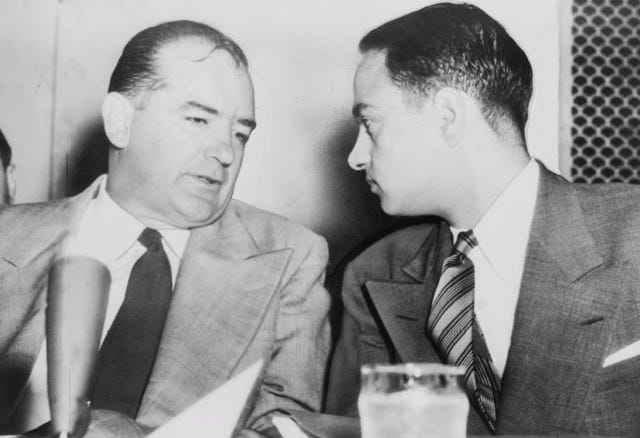
Joe McCarthy (L) with Roy Cohn
Today’s moment is more perilous than the McCarthy era. In the 1950s, Senator Joe McCarthy could destroy reputations and careers, but he was still just one senator. Today, we face a president who channels McCarthy’s demagoguery from the Oval Office, using the full power of the executive branch to punish dissent and reward loyalty. He is surrounded by a coterie of opportunists, lackeys, and lickspittles who feed his vanity, echo his grievances, and amplify his baseless conspiracy theories. The machinery of government — the same machinery once used to surveil and target foreign “enemies” — is now being aimed at our fellow citizens.
The global war on terror, it seems, has finally gone global in the truest sense — extending to America’s own streets, courthouses, and universities. Trump and his allies portray Democratic cities and progressive movements as breeding grounds of chaos and sedition. In his mind, anyone who resists his will — even through the most lawful and constitutional means — is an “insurrectionist.” He has long shown contempt for the Constitution he swore to uphold. Trump is often exactly what he appears to be: a dangerous blowhard with a vindictive streak, ignorant of the limits and responsibilities of his office. Yet others in his orbit, people like Stephen Miller, harbor more deliberate and insidious designs on American democracy.
What is to be done? Congress is paralyzed, fragmented, and largely disempowered. The Supreme Court is dominated by ideologues nursing grievances and eager to reshape the nation along reactionary lines. Who, then, will check a president determined to rule rather than govern?
The American experiment in self-government has endured many crises but rarely has it seemed so fragile. As journalist Nick Turse recently wrote in TomDispatch, the United States now stands on the precipice of authoritarian rule. Many Trump loyalists appear eager to leap — to wage an internal war against their fellow citizens under the guise of saving the nation.
Never has Dwight D. Eisenhower’s warning, “Only Americans can hurt America,” been more prescient or more tragic. The enemy within is not a phantom of the left or right — it is the creeping authoritarianism that grows when fear conquers freedom.
As Master Po reminded us in Kung Fu, “fear is the only darkness.” My fellow Americans, we are in a very dark place.
My fellow Americans, my critical voice has finally been heard inside the Oval Office. No, not my voice against the $1.7 trillion this country is planning to spend on new nuclear weapons. No, not my call to cut the Pentagon budget in half. No, not my imprecations against militarism in America. It was a quip of mine that the Department of Defense (DoD) should return to its roots as the War Department, since the U.S. hasn’t known a moment’s peace since before the 9/11 attacks, locked as it’s been into a permanent state of global war, whether against “terror” or for its imperial agendas (or both).
A rebranded Department of War, President Trump recently suggested, simply sounds tougher (and more Trumpian) than “defense.” As is his wont, he blurted out a hard truth as he stated that America must have an offensive military. There was, however, no mention of war bonds or war taxes to pay for such a military. And no mention of a wartime draft or any other meaningful sacrifice by most Americans.
Rebranding the DoD as the Department of War is, Trump suggested, a critical step in returning to a time when America was always winning. I suspect he was referring to World War II. Give him credit, though. He was certainly on target about one thing: since World War II, the United States has had a distinctly victoryless military. Quick: Name one clear triumph in a meaningful war for the United States since 1945. Korea? At best, a stalemate. Vietnam? An utter disaster, a total defeat. Iraq and Afghanistan? Quagmires, debacles that were waged dishonestly and lost for that very reason.
Even the Cold War that this country ostensibly won in 1991 with the collapse of the Soviet Union didn’t lead to the victory Americans thought was coming their way. After much hype about a “new world order” where the U.S. would cash in its peace dividends, the military-industrial-congressional complex found new wars to wage, new threats to meet, even as the events of 9/11 enabled a surge — actually, a gusher — of spending that fed militarism within American culture. The upshot of all that warmongering was a soaring national debt driven by profligate spending. After all, the Iraq and Afghan Wars alone are estimated to have cost us some $8 trillion.
Those disasters (and many more) happened, of course, under the Department of Defense. Imagine that! America was “defending” itself in Vietnam, Afghanistan, Iraq, Libya, Syria, Somalia, and elsewhere, even as those wars killed and wounded significant numbers of our troops while doing far more damage to those on the receiving end of massive American firepower. All this will, I assume, go away with a “new” Department of War. Time to win again! Except, as one Vietnam veteran reminded me, you can’t do a wrong thing the right way. You can’t win wars by fighting for unjust causes, especially in situations where military force simply can’t offer a decisive solution.
It’s going to take more than a rebranded Department of War to fix wanton immorality and strategic stupidity.
We Need a Return of the Vietnam Syndrome
Hey, I’m okay with the Pentagon’s rebranding. War, after all, is what America does. This is a country made by war, a country of macho men hitching up their big boy pants on the world stage, led by the latest (greatest?) secretary of war, “Pomade Pete”Hegseth, whose signature move has been to do pushups with the troops while extolling a “warrior ethos.” Such an ethos, of course, is more consistent with a War Department than a Defense Department, so kudos to him. Too bad it’s inconsistent with a citizen-soldier military that’s supposed to be obedient to and protective of the Constitution. But that’s just a minor detail, right?
Here’s the rub. As Trump and Hegseth have now tacitly admitted, the national security state has never been about “security” for Americans. Rather, it’s existed and continues to exist as a war state in a state of constant war (or preparations for the same), now stuffed to the popping point with more than a trillion dollars yearly in taxpayer funds. And the leaders of that war state — an enormous blood-sucking parasite on society — are never going to admit that it’s in any way too large or overfed, let alone so incompetent as to have been victoryless for the last 80 years of regular war-making.
And count on one grim reality: that war state will always find new enemies to attack, new rivals to deter, new weapons to buy, and a new spectrum of warfare to try to dominate. Venezuela appears to be the latest enemy, China the latest peer rival, hypersonic missiles and drone swarms the new weaponry, and artificial intelligence the new spectrum. For America’s parasitic war state, there will always be more to feed on and to attempt (never very successfully) to dominate.
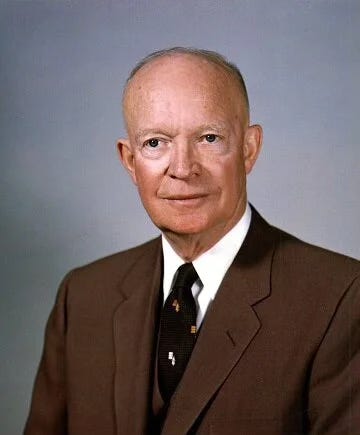
Mind you, this is exactly what President Dwight D. Eisenhower warned us against in his 1961 Farewell Address. Sixty-plus years ago, Ike could already see that what he was the first to call the military-industrial complex was already too powerful (as the Vietnam War loomed). And of course, it has only grown more powerful since he left office. As Ike also wisely said, only Americans can truly hurt America — notably, I’d add, those Americans who embrace war and the supposed benefits of a warrior ethos instead of democracy and the rule of law.
Again, I’m okay with a War Department. But if we’re reviving older concepts in the name of honesty, what truly needs a new lease on life is the Vietnam Syndrome that, according to President George H.W. Bush, America allegedly got rid of once and for all with a rousing victory against Saddam Hussein’s Iraq in Operation Desert Storm in 1991 (that would prove to be anything but).
That Vietnam Syndrome, you may recall, was an allegedly paralyzing American reluctance to use military force in the aftermath of disastrous interventions in Vietnam, Laos, and Cambodia in the 1960s and early 1970s. According to that narrative, the U.S. government had become too slow, too reluctant, too scarred (or do I mean scared?) to march speedily to war. As President Richard Nixon once said, America must never resemble a “pitiful, helpless giant.” To do so, he insisted, would threaten not just our country but the entire free world (as it was known then). America had to show that, when the chips were down, our leaders were up for going all-in, no matter how bad our cards were vis-à-vis those of our opponents.
If nothing else, no country had more chips than we did when it came to sheer military firepower and a willingness to use it (or so, at least, it seemed to Nixon and crew). A skilled poker player, Nixon was blinded by the belief that the U.S. couldn’t afford to suffer a humiliating loss on the world stage (especially when he was its leader). But the tumult that resulted from the fall of Saigon to communist forces in 1975 taught Americans something, if only temporarily: that one should hasten very slowly to war, a lesson Sparta, the quintessential warrior city-state of Ancient Greece, knew to be the sign of mature wisdom.
Spartan wannabes like Pete Hegseth, with his ostentatious displays of “manliness,” however, fail to understand the warrior ethos they purport to exhibit. Wise warrior-leaders don’t wage war for war’s sake. Considering the horrific costs of war and its inherent unpredictability, sage leaders weigh their options carefully, knowing that wars are always far easier to get into than out of and that they often mutate in dangerously unpredictable ways, leaving those who have survived them to wonder what it was ever all about — why there was so much killing and dying for so little that was faintly meaningful.
What Will Trump’s “Winning” War Department Look Like?
Perhaps Americans got an initial look at Trump’s new “winning” War Department off the coast of Venezuela with what could be the start of a new “drug war” against that country. A boat carrying 11 people, allegedly with fentanyl supplies on board, was obliterated by a U.S. missile in this country’s first “drug war” strike. It was a case where President Trump decided that he was the only judge and jury around and the U.S. military was his executioner. We may never know who was actually on board that boat or what they were doing, questions that undoubtedly matter not a whit to Trump or Hegseth. What mattered to them was sending an ultimate message of toughness, regardless of its naked illegality or its patent stupidity.
Similarly, Trump has put the National Guard on the streets of Washington, D.C., deployed Marines and the National Guard to Los Angeles, and warned of yet more troop deployments to come in Chicago, New Orleans, and elsewhere. Supposedly looking to enforce “law and order,” the president is instead endangering it, while disregarding the 1878 Posse Comitatus Act that prohibits a president from deploying active-duty troops as domestic law enforcers.
If America isn’t a nation of laws, what is it? If the president is a lawbreaker instead of an upholder of those laws, what is he?
Recall that every American servicemember takes a solemn oath to support and defend the Constitution and bear true faith and allegiance to the same. Warriors are driven by something different. Historically, they often just obeyed their chieftain or warlord, killing without thought or mercy. If they were bound by law, it was most often that of the jungle.
Knowingly or unknowingly, that’s exactly the kind of military Pete Hegseth and the new Department of War (and nothing but war) are clearly seeking to create. A force where might makes right (although in our recent history, it’s almost invariably made wrong).
I must admit that, from the recent attack on that boat in the Caribbean to the sending of troops into Washington, I find I’m not faintly surprised by this developing crisis (that’s almost guaranteed to grow ever worse). Remember, after all, that Donald Trump, a distinctly lawless man, boasted during the Republican debate in the 2016 election campaign that the military would follow his orders irrespective of their legality. I wrote then that, with such a response, he had disqualified himself as a candidate for the presidency:
“Trump’s performance last night [3/3/16] reminded me of Richard Nixon’s infamous answer to David Frost about Watergate: ‘When the president does it, that means it’s not illegal.’ No, no, a thousand times no. The president has to obey the law of the land, just as everyone else has to. No person is above the law, an American ideal that Trump seems neither to understand nor to embrace. And that disqualifies him to be president and commander-in-chief.”
If only.
In retrospect, I guess Trump had it right. After all, he’s won the presidency twice, no matter that his kind of “rightness” threatens the very foundations of this country.
So, color me more than worried. In this new (yet surprisingly old) age of a War Department, I see even more possibilities for lawlessness, wanton violence, and summary executions — and, in the end, the defeat of everything that matters, all justified by that eternal cry: “We’re at war.” At which point, I return to war’s miseries and how quickly we humans forget its lessons, no matter how harsh or painful they may be.
Someday, America’s soon-to-be War Department, led by wannabe warrior chieftains Trump and Hegseth, will perhaps seem like the ultimate blowback from this country’s disastrous wars overseas since its name changed to the Defense Department in the wake of World War II. In places like Iraq and Afghanistan, this country allegedly waged war in the name of spreading democracy and freedom. That cause failed and America’s own grip on democracy and freedom only continues to loosen — perhaps fatally so.
In harkening back to a War Department, perhaps Trump is also channeling a nostalgia for the Old West, or at least the myth of it, where justice was served through personal bounties and murderous violence enforced by steely-eyed men wielding steel-blue pistols. Trump’s idea of “justice” does seem to be that of a hanging judge on a “wild” frontier facing hostile “Injuns” of various sorts. For men like Trump, those were the glory days of imperial expansion, never mind all the bodies left in the wake of America’s manifest destiny. If nothing else, that old imperial Department of War certainly knew what it was about.
Whatever else one might expect from America’s “new” Department of War, you can bet your life (or death) on a whole lot of future body bags. Warriors are, of course, okay with this as long as there are more boats to blow up, more people to bomb, and more foreign resources to steal in the pursuit of a “victory” that never actually arrives. So hitch up those big boy pants, grab a rifle or a Hellfire missile, and start killing. After all, in what might be thought of as a distinctly victoryless culture, it seems as if America is destined to be at war forever and a day.
The real enemy of America isn’t Russia or China or Iran or any other country. It’s America’s own pursuit of persistent, pernicious, perpetual, and more or less permanent war or preparations for the same.
It’s undeniable. America’s war and weapons budget is a trillion dollars a year. And rising. There are no plans in the foreseeable future to reduce spending on wars and weapons. Predictably, Americans are told this colossal spending on wars and weapons is for “defense” and “national security.” This is a lie. This spending enriches the few at the expense of the many. It sustains imperialism at the expense of democracy. It serves the desires of Wall Street while ignoring the real needs of Main Street USA. And it is supported by a bipartisan majority in Congress as well as the Trump administration (and the Biden administration before it).
War and weapons are making the American people poorer and less free. Sure, some people are getting rich selling murderous weaponry around the globe, yet America itself is being hollowed out. The warmongers in charge tell us that we can’t have nice things because America, or Israel, or Ukraine, or all three need more weapons (never mind the price tag). Yet it’s our money—it’s our taxpayer dollars.
Ike knew the score
We can’t say we weren’t warned about this. President Dwight D. Eisenhower in 1953 told us that pursuing war and weapons would lead to our crucifixion on a “cross of iron.” Eight years later, Ike warned that a military-industrial complex already existed that was undermining American democracy and that we urgently needed to act to curb its power.
Sadly, what gives the military-industrial complex its unity is, among other things, greed and power. Congress is more than happy to serve it. So are America’s presidents. The last U.S. president to speak sincerely and powerfully about peace, John F. Kennedy, was assassinated just over six decades ago. There hasn’t been a peace president since then.
Meanwhile, since 9/11/2001, if not before then, the U.S. military has enthusiastically embraced a warrior ethos, abandoning its own citizen-soldier tradition. America, of course, is supposed to be a constitutional republic, not Sparta or Prussia. But instead of a nation of justice and the rule of law, we have an empire and culture in which wars and warriors rule.
War is not peace. Warriors don’t seek peace. War is war, and perpetual war will destroy both the U.S. empire and the kernel of democracy that remains (however weak or shrinking) at its core.
The choice is clear. We must seek peace. We must cut war and weapons spending dramatically—I’d suggest by 50%—and reinvest that money in Main Street USA. We can have nice things again, if we’re willing to stop empowering the warmongers among us.
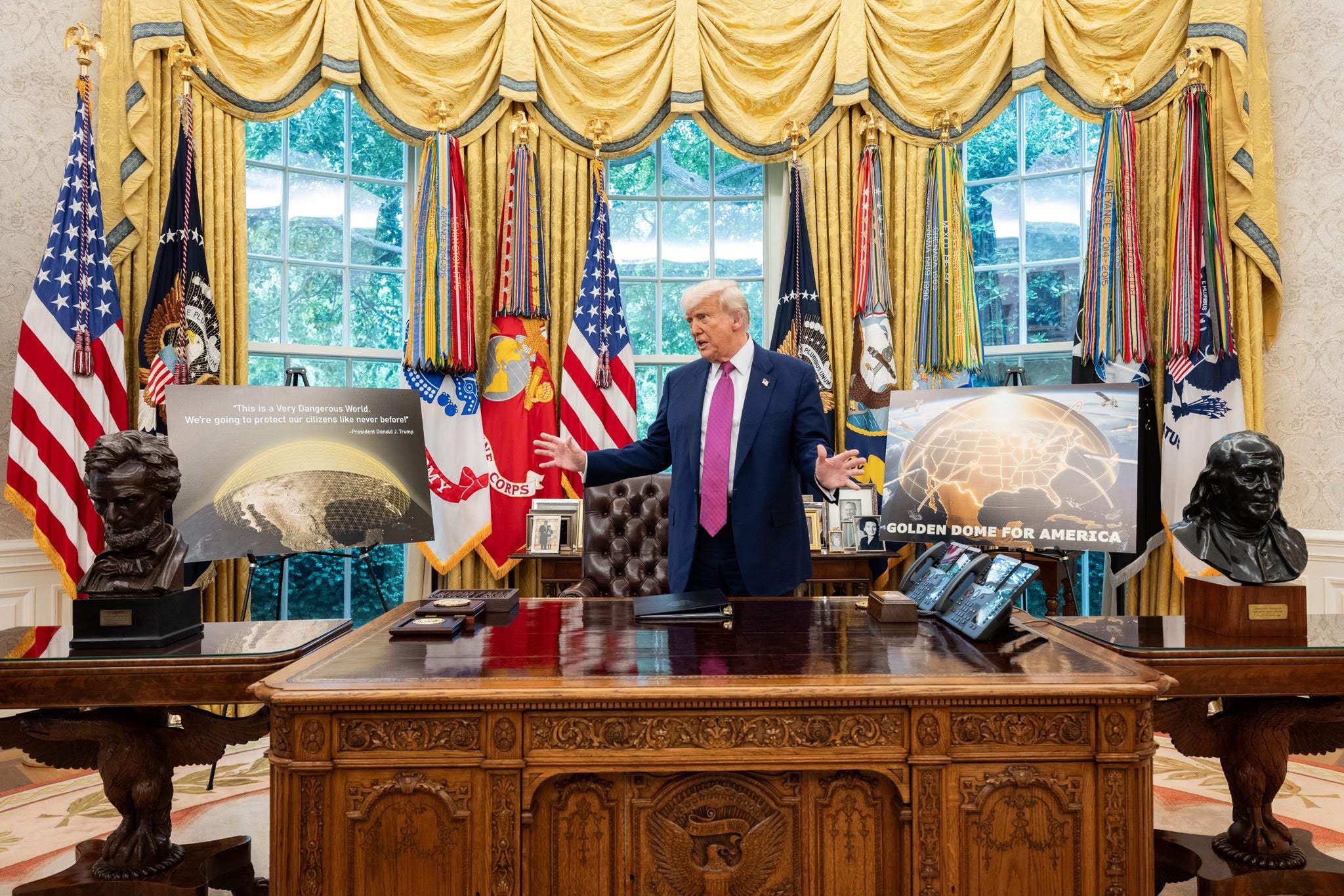
Donald Trump has a dream: a “golden dome” over America to defend the country against nuclear missiles. It’s a repeat of Ronald Reagan’s dream, the Strategic Defense Initiative, nicknamed “Star Wars” after the movie. The problem is that the dream represents a nightmare.
How so? Golden Dome would be dangerously escalatory, wildly expensive, and unlikely to work as a “shield” to America. It is worse than a mistake: it is a crime. It represents a massive theft from those who hunger and suffer in America. As Republican President Dwight D. Eisenhower said in 1953, wasting enormous resources on weapons systems is no way of life at all. It is humanity crucifying itself on a cross of iron. Crucifixion is not made more pleasant when the cross is golden.
A new golden idol occupies his mind
Put differently, the Golden Dome is a golden idol, a false god, one that by making a massive nuclear strike more likely endangers all of us and God’s creation.
Golden Dome is a grotesque example of makework militarism and warfare as welfare for weapons makers. Though it’s unlikely to work, if it did (partially) it would make a massive nuclear strike more likely, not less, endangering the world with the ecocidal terror of nuclear winter.
Golden Dome and the so-called investment in America’s nuclear triad are both examples of socio-technological madness–America’s leaders are like the mutants in “Beneath the Planet of the Apes,” worshipping the bombs that twisted them and which can only destroy what’s left of civilization.
Some Christians today await the apocalypse when Christ is supposed to return–but the most likely apocalypse features not the second coming of a God-man but a third world war featuring bomb-gods of thermonuclear destruction.
As Daniel Ellsberg once noted, U.S. nuclear attack plans in the early 1960s envisioned 600 million killed, or 100 Holocausts (before we knew such an attack would lead to nuclear winter). We’re lucky this insanity never came to pass. The only sane policy is to cancel Golden Dome and end “investment” in a new nuclear triad. Disarmament, not rearmament, is what’s needed.
*****
The Global Network Against Weapons & Nuclear Power in Space has released a statement against Golden Dome that you can read here. You can add your name to the statement, as I have. Here are some bullet points released along with the statement:
Golden Dome is financially reckless and unsustainable. Early cost estimates range from $550 billion to several trillion dollars over two decades. This dwarfs even the Pentagon’s annual budget and adds to the US’s $37 trillion national debt—a price tag that makes the project fiscally indefensible.
Experts overwhelmingly agree that 100% effective missile interception is a fantasy, especially against complex attacks involving decoys, hypersonic missiles, and maneuverable warheads. Even Israel’s Iron Dome has been bypassed by more rudimentary drone and missile attacks.
Golden Dome includes space-based interceptors—effectively weaponizing the Earth’s orbit and triggering an arms race. This violates the spirit of the Outer Space Treaty and pushes nations like China and Russia to accelerate space weapons development.
By giving the illusion of first-strike survivability, it runs counter to the Mutually Assured Destruction (MAD) doctrine that has prevented so far a nuclear holocaust and incentivizes other powers to retain or expand their nuclear arsenals, blocking disarmament efforts permanently.
Thousands of rocket launches for satellite interceptors would further damage the ozone layer, could generate dangerous orbital debris (Kessler Syndrome), and will harm our already fragile space environment.
The only guaranteed winners of Golden Dome are weapons giants like Lockheed Martin, Raytheon, and Palantir, which stand to profit enormously regardless of the system’s effectiveness or risks.
The trillions funneled into Golden Dome could be used for urgent domestic priorities—such as healthcare, infrastructure, climate action, and education, directly benefiting millions of Americans.
In short, Golden Dome is a massive, dangerous, and futile vanity project, cloaked in patriotism but driven by profit, politics, and illusion.
Language and repetition of the same is so important. We hear about the Department of Defense (DoD) and the Pentagon budget and we think little of it. The DoD, of course, used to be called the Department of War until 1947, a far more telling and accurate name, and there wasn’t a Pentagon until we built one during World War II. In the old days, the Army fought the Navy for which service would get more money in the War Budget, with the Navy usually winning as America sought to control the seas as a means of dominating trade and “intercourse” among nations.
Those were more honest times when retired generals like Smedley Butler wrote in the 1930s that he’d served as a “gangster” for capitalism. Butler was a Marine who was twice awarded the Medal of Honor, so it wasn’t easy for the imperialists to smear him, though they certainly tried (as they did to David M. Shoup, another Marine Corps general and Medal of Honor recipient who turned against the Vietnam War in the 1960s).
Anyhow, I just saw at Antiwar.com that President Trump is proposing a $1.01 trillion budget for the Pentagon for FY2026, a 13% increase in imperial spending. Trump, of course, is proud of reaching the Trillion Dollar threshold. Big numbers have always appealed to him.
It doesn’t seem to matter who is president, whether it’s Biden or Trump, Democrat or Republican, when it comes to the Department of Empire and its bloated imperial budget. For that is what it is, a budget that seeks to sustain and enlarge America’s imperial domain. If you add other costs related to imperial dominance, such as interest on the national debt due to war spending, VA costs, nuclear weapons, and the like, the true imperial budget soars toward $1.7 trillion yearly.
No matter. A trillion here, a trillion there, and pretty soon you’re talking real money.
The Pentagon tries to disguise the enormous waste of this imperial budget by speaking of it as an “investment,” but imagine an “investment” that you’re involved in which fails seven audits in a row. How likely would you be to see this as anything other than theft?
Dwight D. Eisenhower had it right in 1953 when he spoke of military spending as a theft from those who hunger. Ike’s words are almost never heard today inside the Washington Beltway. It’s worth reflecting upon them again as America’s leaders boast of trillion-dollar war budgets:
Every gun that is made, every warship launched, every rocket fired signifies, in the final sense, a theft from those who hunger and are not fed, those who are cold and are not clothed. This world in arms is not spending money alone. It is spending the sweat of its laborers, the genius of its scientists, the hopes of its children… This is not a way of life at all, in any true sense. Under the cloud of threatening war, it is humanity hanging from a cross of iron.
Replacing an older suicide vest with a newer one is not a sound plan
We are losing the struggle for the heart and soul of our country.
That much is apparent by the government’s embrace of genocide in Gaza, its boasts of trillion dollar war budgets, and its pride in global weapons sales, which the U.S. dominates (more than 40% of the global arms trade consists of weapons made in the USA).
I’ve been involved in efforts to criticize America’s “merchants of death” and to challenge America’s love affair with the military-industrial complex (MIC), but seemingly nothing we say or do changes the abusive and sociopathic power structure in DC. I suppose that’s none too surprising, given the power of the MICIMATT and the persuasiveness of propaganda.
Still, we must persist in these efforts, bringing a positive message, which I think should focus on the revival of democracy by reinvesting in America while rejecting militarism and restoring peace. Peace should be America’s normal, not war and constant preparations for the same. Yet “peace” seems to be the hardest word, one that’s rarely spoken in the halls of power.
Anyhow, in 2022 I wrote the following email to likeminded colleagues; I hope it’s worth sharing. As I think about it, three years later, I marvel at the death of idealism in America and the triumph of militarism. When more than half of the federal government’s discretionary spending goes to the military and weaponry, despite the Pentagon’s failure to pass audit after audit for seven years running, we must conclude we are one sick society.
The question is: How do we restore ourselves to health? Because I for one do not believe that war is the health of the state.
*****
Written in 2022 to colleagues seeking to reform the military-industrial complex (MIC).
When I was a college student in the early 1980s, and in Air Force ROTC, I wrote against the Reagan “defense” buildup. Caspar Weinberger, he of the “Cap the knife” handle for cost-cutting, became “Cap the ladle” as Reagan’s SecDef, ladling money in huge amounts to the Pentagon. History is repeating itself again as the Biden administration prepares to ladle $813 billion (and more) to the Pentagon.
How do we stop this? Of course, we must recognize (as I’m sure we all do) what we’re up against. Both political parties are pro-military and, in the main, pro-war. Our economy is based on a militarized Keynesianism and our culture is increasingly militarized. Mainstream Democrats, seemingly forever afraid of being labeled “weak” on defense, are at pains to be more pro-military than the Republicans. Biden, in Poland, echoed the words of Obama and other past presidents, declaring the U.S. military to be “the finest fighting force” in history. Think about that boast. Think about how Biden added that the nation owes the troops big. This is a sign of a sick culture.
Ike gave his MIC speech in 1961, and for 61 years the MIC has been winning. Even after the collapse of the Soviet Union in the early ‘90s, the MIC held its own; after 9/11, it went into warp speed and is accelerating. To cite Scotty from Star Trek: “And at Warp 10, we’re going nowhere mighty fast.”
We need a reformation of our institutions; we need a restoration of our democracy; we need a reaffirmation of the U.S. Constitution; we need to remember who we are, or perhaps who we want to be, as a people.
Do we really want to be the world’s largest dealer of arms? Do we really want to spend a trillion or more dollars, each and every year, on wars and weapons, more than the next dozen or so countries combined, most of which are allies of ours? (“Yes” is seemingly the answer here, for both Democrats and Republicans.) Is that really the best way to serve the American people? Humanity itself?
Consider plans to “invest” in “modernizing” America’s nuclear triad. (Notice the words used here by the MIC.) What does this really mean? To me, it means we plan on spending nearly $2 trillion over the next 30 years to replace an older suicide vest with a newer one, except this suicide vest will take out humanity itself, as well as most other life forms on our planet.
As Ike said in 1953, “This is not a way of life at all … it is humanity hanging from a cross of iron.”
We will need the broadest possible coalition to tackle this outrage against civilization and humanity. That’s why I applaud these efforts, even as I encourage all of us to enlist and recruit more people to join our ranks.
My father enlisted in the Civilian Conservation Corps in 1935 to do his bit for his family and his nation. He fought forest fires in Oregon and later became a firefighter after serving in the Army during World War II. That was the last formally declared war that America fought. It was arguably the last morally justifiable war this country has fought, waged by citizens who donned a uniform, not “warriors” who are told that the nation owes them big.
In “It’s A Wonderful Life,” Jimmy Stewart, a true war hero, played a man who never fought in WW2, who stayed at home and helped ordinary people even as his younger brother Harry went off to war and earned the Medal of Honor. Yet the movie doesn’t celebrate Harry’s war heroism; it celebrates the nobility, decency, and humility of George Bailey.
How do we get back to that America? The America from before the MIC, that celebrated decency and kindness and humanitarianism?
Yes, I know. It’s just a Frank Capra movie, and America has never been a perfect shining city. All I’m saying is we need more of that spirit if we are to prevail.
I read the news today, oh boy. About a lucky man named Elon Musk. But he lost out on one thing: he didn’t get a top secret briefing on Pentagon war plans for China. And the news people breathed a sigh of relief.
With apologies to John Lennon and The Beatles, a day in the life is getting increasingly tough to take here in the land of the free. I’m meant to be reassured that Musk didn’t get to see America’s top-secret plans for — yes! — going to war with China, even as I’m meant to ignore the constant drumbeat of propaganda, the incessant military marches that form America’s background music, conveying the message that America must have war plans for China, that indeed war in or around China is possible, even probable, in the next decade. Maybe in 2027?
My fellow Americans, we should be far more alarmed by such secret U.S. war plans, along with those “pivots” to Asia and the Indo-Pacific, and the military base-building efforts in the Philippines, than reassured by the “good news” that Comrade Billionaire Musk was denied access to the war room, meaning (for Dr. Strangelove fans) he didn’t get to see “the big board.”
It’s war, war, everywhere in America. We do indeed have a strange love for it. I’ve been writing for TomDispatch for 18 years now — this is my 111th essay (the other 110 are in a new book of mine) — most of them focusing on militarism in this country, as well as our disastrous wars in Iraq, Afghanistan, and elsewhere, the ruinous weapons systems we continue to fund (including new apocalyptic nuclear weapons), and the war song that seems to remain ever the same.
A few recent examples of what I mean: President Trump has already bombed Yemen more than once. He’s already threatening Iran. He’s sending Israel all the explosives, all the weaponry it needs to annihilate the Palestinians in Gaza (so too, of course, did Joe Biden). He’s boasting of building new weapons systems like the Air Force’s much-hyped F-47 fighter jet, the “47” designation being an apparent homage by its builder, Boeing, to Trump himself, the 47th president. He and his “defense” secretary, Pete Hegseth, continually boast of “peace through strength,” an Orwellian construction that differs little from “war is peace.” And I could, of course, go on and on and on and on…
Occasionally, Trump sounds a different note. When Tulsi Gabbard became the director of national intelligence, he sang a dissonant note about a “warmongering military-industrial complex.” And however haphazardly, he does seem to be working for some form of peace with respect to the Russia-Ukraine War. He also talks about his fear of a cataclysmic nuclear war. Yet, if you judge him by deeds rather than words, he’s just another U.S. commander-in-chief enamored of the military and military force (whatever the cost, human or financial).
Consider here the much-hyped Department of Government Efficiency (DOGE) led by that lucky man Elon Musk. Even as it dismantles various government agencies like the Department of Education and USAID, it has — no surprise here! — barely touched the Pentagon and its vast, nearly trillion-dollar budget. In fact, if a Republican-controlled Congress has any say in the matter, the Pentagon budget will likely be boosted significantly for Fiscal Year 2026 and thereafter. As inefficient as the Pentagon may be (and we really don’t know just how inefficient it is, since the bean counters there keep failing audit after audit, seven yearsrunning), targeted DOGE Pentagon cuts have been tiny. That means there’s little incentive for the generals to change, streamline their operations, or even rethink in any significant fashion. It’s just spend, spend, spend until the money runs out, which I suppose it will eventually, as the national debt soars toward $37 trillion and climbing.
Even grimmer than that, possibly, is America’s state of mind, our collective zeitgeist, the spirit of this country. That spirit is one in which a constant state of war (and preparations for more of the same) is accepted as normal. War, to put it bluntly, is our default state. It’s been that way since 9/11, if not before then. As a military historian, I’m well aware that the United States is, in a sense, a country made by war. It’s just that today we seem even more accepting of that reality, or resigned to it, than we’ve ever been. What gives?
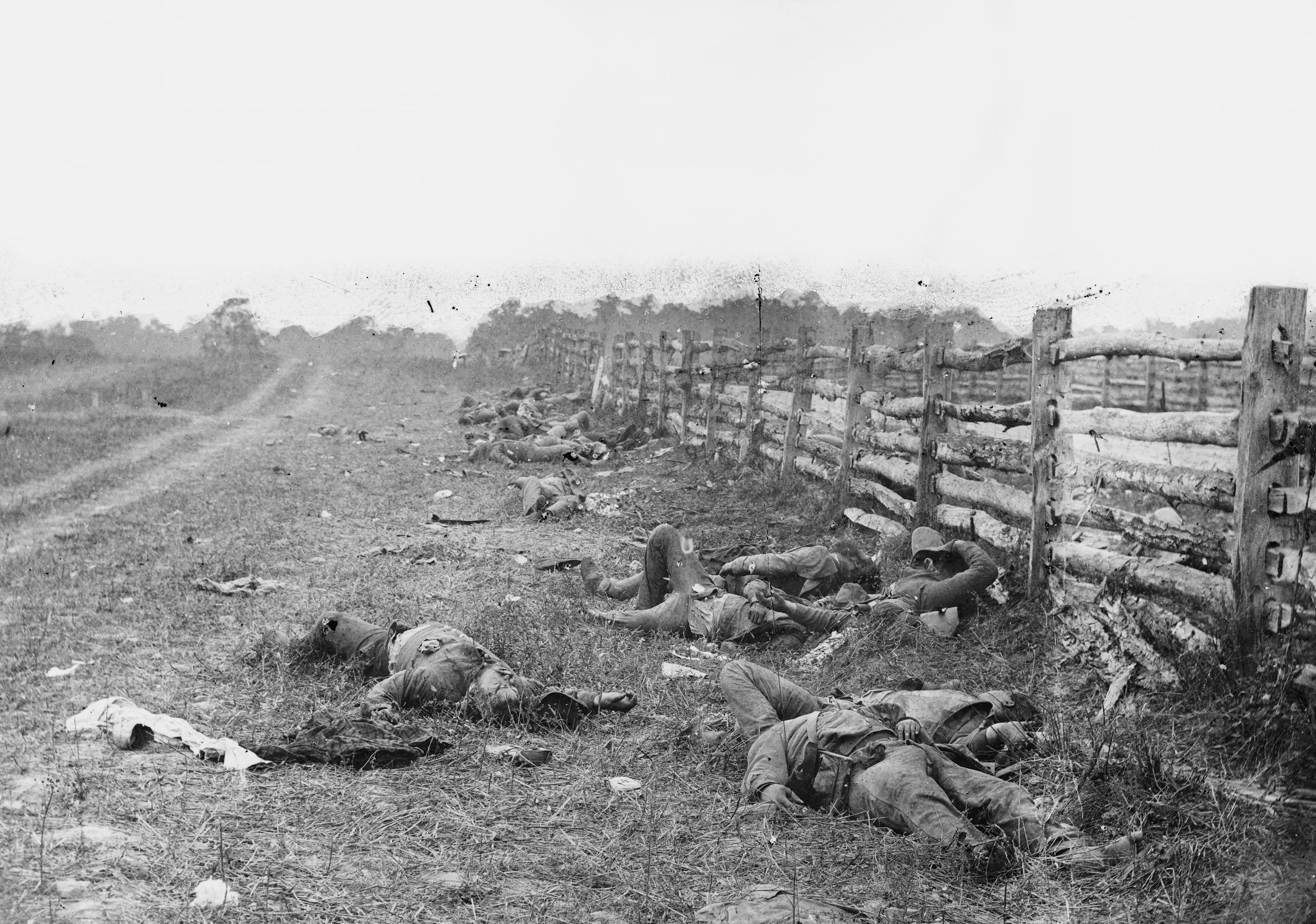
The Face of War: Confederate Dead at Antietam (Matthew Brady)
Remember when, in 1963, Alabama Governor George Wallace said, “Segregation now, segregation tomorrow, and segregation forever”? Fortunately, after much struggle and bloodshed, he was proven wrong. So, can we change the essential American refrain of war now, war tomorrow, and war forever? Can we render that obsolete? Or is that too much to hope for or ask of America’s “exceptional” democracy?
Taking on the MICIMATT(SH)
Former CIA analyst Ray McGovern did America a great service when he came up with the acronym MICIMATT, or the Military-Industrial-Congressional-Intelligence-Media-Academia-Think-Tank complex, an extension of President Dwight D. Eisenhower’s military-industrial complex, or MIC (from his farewell speech in 1961). Along with the military and industry (weapons makers like Boeing and Lockheed Martin), the MICIMATT adds Congress (which Eisenhower had in his original draft speech but deleted in the interest of comity), the intelligence “community” (18 different agencies), the media (generally highly supportive of wars and weapons spending), academia (which profits greatly from federal contracts, especially research and development efforts for yet more destructive weaponry), and think tanks (which happily lap up Pentagon dollars to tell us the “smart” position is always to prepare for yet more war).
You’ll note, however, that I’ve added a parenthetical SH to McGovern’s telling acronym. The S is for America’s sporting world, which eternally gushes about how it supports and honors America’s military, and Hollywood, which happily sells war as entertainment (perhaps the best known and most recent film being Tom Cruise’s Top Gun: Maverick, in which an unnamed country that everyone knows is Iran gets its nuclear ambitions spanked by a plucky team of U.S. Naval pilots). A macho catchphrase from the original Top Gun was “I feel the need — the need for speed!” It may as well have been: I feel the need — the need for pro-war propaganda!
Yes, MICIMATT(SH) is an awkward acronym, yet it has the virtue of capturing some of the still-growing power, reach, and cultural penetration of Ike’s old MIC. It should remind us that it’s not just the military and the weapons-makers who are deeply invested in war and — yes! — militarism. It’s Congress; the CIA; related intel “community” members; the mainstream media (which often relies on retired generals and admirals for “unbiased” pro-war commentary); academia (consider how quickly institutions like Columbia University have bent the knee to Trump); and think tanks — in fact, all those “best and brightest” who advocate for war with China, the never-ending war on terror, war everywhere.
But perhaps the “soft power” of the sporting world and Hollywood is even more effective at selling war than the hard power of bombs and bullets. National Football League coaches patrol the sidelines wearing camouflage, allegedly to salute the troops. Military flyovers at games celebrate America’s latest death-dealing machinery. Hollywood movies are made with U.S. military cooperation and that military often has veto power over scripts. To cite only one example, the war movie 12 Strong (2018) turned the disastrous Afghan War that lasted two horrendous decades into a stunningly quick American victory, all too literally won by U.S. troops riding horses. (If only the famed cowboy actor John Wayne had still been alive to star in it!)
The MICIMATT(SH), employing millions of Americans, consuming trillions of dollars, and churning through tens of thousands of body bags for U.S. troops over the years, while killing millions of people abroad, is an almost irresistible force. And right now, it seems like there’s no unmovable object to blunt it.
Believe me, I’ve tried. I’ve written dozens of “Tomgrams” suggesting steps America could take to reverse militarism and warmongering. As I look over those essays, I see what still seem to me sensible ideas, but they die quick deaths in the face of, if not withering fire from the MICIMATT(SH), then being completely ignored by those who matter.
And while this country has a department of war (disguised as a department of defense), it has no department of peace. There’s no budget anywhere for making peace, either. We do have a colossal Pentagon that houses 30,000 workers, feverishly making war plans they won’t let Elon Musk (or any of us) see. It’s for their eyes only, not yours, though they may well ask you or your kids to serve in the military, because the best-laid plans of those war-men do need lots of warm bodies, even if those very plans almost invariably (Vietnam, Afghanistan, Iraq, etc.) go astray.
So, to repeat myself, how do you take on the MICIMATT(SH)? The short answer: It’s not easy, but I know of a few people who had some inspirational ideas.
On Listening to Ike, JFK, MLK, and, Yes, Madison, Too
Militarism isn’t exactly a new problem in America. Consider Randolph Bourne’s 1918 critique of war as “the health of the state,” or General Smedley Butler’s confession in the 1930s that “war is a racket” run by the “gangsters of capitalism.” In fact, many Americans have, over the years, spoken out eloquently against war and militarism. Many beautiful and moving songs have asked us to smile on your brother and “love one another right now.” War, as Edwin Starr sang so powerfully once upon a time, is good for “absolutely nothin’,” though obviously a lot of people disagree and indeed are making a living by killing and preparing for yet more of it.
And that is indeed the problem. Too many people are making too much money off of war. As Smedley Butler wrote so long ago: “Capital won’t permit the taking of the profit out of war until the people — those who do the suffering and still pay the price — make up their minds that those they elect to office shall do their bidding, and not that of the profiteers.” Pretty simple, right? Until you realize that those whom we elect are largely obedient to the moneyed class because the highest court in our land has declared that money is speech. Again, I didn’t say it was going to be easy. Nor did Butler.
As a retired lieutenant colonel in the U.S. Air Force, I want to end my 111th piece at TomDispatch by focusing on the words of Ike, John F. Kennedy (JFK), Martin Luther King, Jr. (MLK), and James Madison. And I want to redefine what words like duty, honor, country, and patriotism should mean. Those powerful words and sentiments should be centered on peace, on the preservation and enrichment of life, on tapping “the better angels of our nature,” as Abraham Lincoln wrote so long ago in his First Inaugural Address.
Why do we serve? What does our oath of office really mean? For it’s not just military members who take that oath but also members of Congress and indeed the president himself. We raise our right hands and swear to support and defend the U.S. Constitution against all enemies, foreign and domestic, to bear true faith and allegiance to the same.
There’s nothing in that oath about warriors and warfighters, but there is a compelling call for all of us, as citizens, to be supporters and defenders of representative democracy, while promoting the general welfare (not warfare), and all the noble sentiments contained in that Constitution. If we’re not seeking a better and more peaceful future, one in which freedom may expand and thrive, we’re betraying our oath.
If so, we have met the enemy — and he is us.
Ike told us in 1953 that constant warfare is no way of life at all, that it is (as he put it), humanity crucifying itself on a cross of iron. In 1961, he told us democracy was threatened by an emerging military-industrial complex and that we, as citizens, had to be both alert and knowledgeable enough to bring it to heel. Two years later, JFK told us that peace — even at the height of the Cold War — was possible, not just peace in our time, but peace for all time. However, it would, he assured us, require sacrifice, wisdom, and commitment.
How, in fact, can I improve on these words that JFK uttered in 1963, just a few months before he was assassinated?
What kind of peace do we seek? Not a Pax Americana enforced on the world by American weapons of war. Not the peace of the grave or the security of the slave. I am talking about genuine peace, the kind of peace that makes life on earth worth living…
I speak of peace because of the new face of war. Total war makes no sense in an age… when the deadly poisons produced by a nuclear exchange would be carried by wind and water and soil and seed to the far corners of the globe and to generations yet unborn… surely the acquisition of such idle [nuclear] stockpiles — which can only destroy and never create — is not the only, much less the most efficient, means of assuring peace.
I speak of peace, therefore, as the necessary rational end of rational men. I realize that the pursuit of peace is not as dramatic as the pursuit of war — and frequently the words of the pursuer fall on deaf ears. But we have no more urgent task.
Are we ready to be urgently rational, America? Are we ready to be blessed as peacemakers? Or are we going to continue to suffer from what MLK described in 1967 as our very own “spiritual death” due to the embrace of militarism, war, empire, and racism?
Of course, MLK wasn’t perfect, nor for that matter was JFK, who was far too enamored of the Green Berets and too wedded to a new strategy of “flexible response” to make a clean break in Vietnam before he was killed. Yet those men bravely and outspokenly promoted peace, something uncommonly rare in their time — and even more so in ours.
More than 200 years ago, James Madison warned us that continual warfare is the single most corrosive force to the integrity of representative democracy. No other practice, no other societal force is more favorable to the rise of authoritarianism and the rule of tyrants than pernicious war. Wage war long and it’s likely you can kiss your democracy, your rights, and just maybe your ass goodbye.
America, from visionaries and prophets like MLK, we have our marching orders. They are not to invest yet more in preparations for war, whether with China or any other country. Rather, they are to gather in the streets and otherwise raise our voices against the scourge of war. If we are ever to beat our swords into plowshares and our spears into pruning hooks and make war no more, something must be done.
Let’s put an end to militarism in America. Let’s be urgently rational. To cite John Lennon yet again: You may say I’m a dreamer, but I’m not the only one. Together, let’s imagine and create a better world.






 Bracing Views