Seminary Rules for Students while on Vacation

W.J. Astore

Many years ago, I came across a brief (four-page) pamphlet of rules for seminarians while on vacation.  I found it in an old book while doing research on Catholic reactions to science in the 19th century.  The pamphlet refers to students at St. Charles College of the Petit Seminaire (minor seminary) of St. Sulpice.  St. Charles opened in 1848 in Maryland but was largely destroyed by fire in 1911.

IMG_1955

There’s no date on the pamphlet.  I was researching in books mainly from the 1850s and 1860s, so perhaps this is the best estimate for when this pamphlet was printed.  It’s a fragile and interesting piece of Catholic history, so I thought I’d post the text here for other researchers, and for people who might be curious about the rules Catholic seminarians were expected to follow when they left the seminary on “vacation.”  The text below shows a life of discipline that didn’t end when the student left the seminary; indeed, in the “wilderness” of real life, seminarians were warned to be on their guard as well as on their best behavior.

Manner of Spending the Vacation for the Students of St. Charles’ College, Petit Séminaire of St. Sulpice.

Daily Exercises.

Morning.

  1. Have a fixed hour of rising, never later than six o’clock; Morning Prayer; Meditation for a quarter of an hour at least, from some edifying book.
  2. Mass, if possible, every day.
  3. During the forenoon, the Little Hours of the Office of the Blessed Virgin.
  4. An hour or two of serious Study, according to the advice of your director.

Afternoon.

  1. Read a Chapter of the New Testament before dinner, and make the Particular examen on the Virtue which you have proposed to yourself to acquire. Never be ashamed to say Grace before and after meals.
  2. Vespers and Complins. Pay a visit to the Blessed Sacrament, if the Church is not too distant.
  3. Recite Matins and Lauds either in the Church or whilst taking a walk; Beads; Spiritual Reading.
  4. Evening Prayers and Examination of Conscience. Retire to bed, as much as possible, at a fixed hour; and prepare the subject of meditation for the following day.

Weekly Exercises.

  1. Receive the Sacraments as often as in the Seminary. Their assistance is much more needed in the world. Have the same zeal for communion as when in the Seminary.
  2. On Sundays and Festivals assist in surplice with gravity and piety at the office of the Parish. If your services are required to serve Mass, do so in a pious and edifying manner. Do not speak in the sacristy without necessity; and then in a few words, and with a low voice.
  3. Show great respect for your Parish Priest; great deference for his salutary admonitions; and entire willingness to assist him, should he require your services. Seek the society of Ecclesiastics.

What is to be Observed.

Towards God.

The Religious duties prescribed above, in the Daily and Weekly Exercises. Habitual recourse to the Blessed Virgin, as Special Protectress of the Vacation. Fidelity to the laws of the Church.

Towards the Neighbor.

Towards All—Charity; Condescension; Politeness.

Towards Parents—Docility; Forwardness to oblige them; the most affectionate Respect.

Towards Brothers, Sisters, and Relatives—Be among them as an angel of peace.

Towards Strangers—Discretion; Reserve; Circumspection with the young; Avoid too great familiarity. If you can, do something for the poor.

Towards Oneself.

Modesty; Simplicity; Avoid every appearance of haughtiness. In moments of difficulty have recourse to God and to the Blessed Virgin. Keep a strict guard over yourself, especially in the company of persons of a different sex. Moderate your curiosity. Avoid noisy conversation, loud laughter, and every thing contrary to clerical modesty. Before setting out on a journey say the “Itinerarium.”

What is to be Avoided.

  1. Be on your guard against Human Respect, and even sometimes against the improper counsels of your relatives. Hence you should show yourself from the beginning of the vacation to be such as God requires, and as you have promised to be.
  2. Avoid Idleness, the source of temptation and dangerous to all, but particularly to youth. In the beginning and at the end of the vacation, abstain from serious studies; those days should be spent in exercises of piety.
  3. Be not discouraged after a first fault. Should you neglect any of your duties, resolve to do better; and apply with new zeal to fulfill them. Should you be so unhappy as to fall into sin, go and confess immediately.
  4. Avoid—with extreme caution—bad company, dangerous reading, worldly entertainments and parties in which one is exposed to see, hear, or do what might wound conscience.
  5. Be resolute in refusing to be treated with better fare than is usual in the family, or with other attentions always out of place, which parents think themselves bound to show a son who is an ecclesiastic. Avoid spending some days at the home of a fellow seminarian, whose parents might be inconvenienced by your stay.
  6. Avoid, as well as in private as in public, all vanity and worldliness in dress, gesture, gait or conversation.

Review these rules occasionally by way of spiritual reading.

J.M.J. (Jesus, Mary, Joseph)

The Pentagon’s $733 Billion “Floor”

$1.6 trillion to “modernize” this triad?  Doesn’t sound like a “peace dividend” or “new world order” to me

W.J. Astore

In testimony last week before the Senate Armed Services Committee, “longtime diplomat Eric Edelman and retired Admiral Gary Roughead said a $733-billion defense budget was ‘a baseline’ or a ‘floor’ – not the ideal goal – to maintain readiness and modernize conventional and nuclear forces,” reported USNI News.

Which leads to a question: How much money will satisfy America’s military-industrial complex? If $733 billion is a “floor,” or a bare minimum for national defense spending each year, how high is the ceiling?

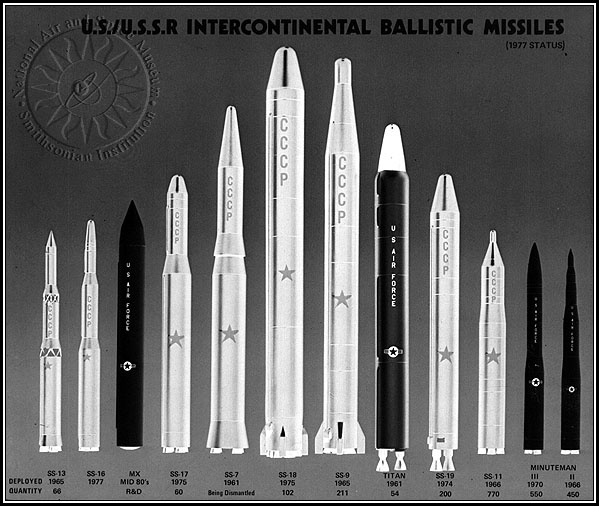
Part of this huge sum of money is driven by plans to “modernize” America’s nuclear triad at an estimated cost of $1.6 trillion over 30 years.  America’s defense experts seek to modernize the triad when we should be working to get rid of it.  Perhaps they think that in the future nuclear winter will cancel out global warming?

Also last week, Senator Elizabeth Warren gave a foreign policy speech that  addressed military spending in critical terms.  Here’s an excerpt:

The United States will spend more than $700 billion on defense this year alone. That is more than President Ronald Reagan spent during the Cold War. It’s more than the federal government spends on education, medical research, border security, housing, the FBI, disaster relief, the State Department, foreign aid-everything else in the discretionary budget put together. This is unsustainable. If more money for the Pentagon could solve our security challenges, we would have solved them by now.

How do we responsibly cut back? We can start by ending the stranglehold of defense contractors on our military policy. It’s clear that the Pentagon is captured by the so-called “Big Five” defense contractors-and taxpayers are picking up the bill.

If you’re skeptical that this a problem, consider this: the President of the United States has refused to halt arms sales to Saudi Arabia in part because he is more interested in appeasing U.S. defense contractors than holding the Saudis accountable for the murder of a Washington Post journalist or for the thousands of Yemeni civilians killed by those weapons.

The defense industry will inevitably have a seat at the table-but they shouldn’t get to own the table.

These are sensible words from the senator, yet her speech was short on specifics when it came to cutting the Pentagon’s bloated budget.  It’s likely the senator’s cuts would be minor ones, since she embraces the conventional view that China and Russia are “peer” threats that must be deterred and contained by massive military force.

Which brings me to this week and the plaudits being awarded to President George H.W. Bush before his funeral and burial.  I respect Bush’s service in the Navy in World War II, during which he was shot down and nearly killed, and as president his rhetoric was more inclusive and less inflammatory than that used by President Trump.

But let’s remember a crucial point about President Bush’s foreign and defense policies: With the collapse of the Soviet Union, Bush could have charted a far more pacific course forward for America.  Under Bush, there could have been a true “peace dividend,” a truly “new world order.” Instead, Bush oversaw Desert Shield/Storm in 1990-91 and boasted America had kicked its “Vietnam Syndrome” once and for all (meaning the U.S. military could be unleashed yet again for more global military “interventions”).

Bush’s “new world order” was simply an expansion of the American empire to replace the Soviet one.  He threw away a unique opportunity to redefine American foreign policy as less bellicose, less expansionist, less interventionist, choosing instead to empower America’s military-industrial complex.  Once again, military action became America’s go-to methodology for reshaping the world, a method his son George W. Bush would disastrously embrace in Afghanistan and Iraq, two wars that proved a “Vietnam syndrome” remained very much alive.

In sum, defense experts now argue with straight faces that Trump’s major increases in defense spending constitute a new minimum, Democrats like Elizabeth Warren are content with tinkering around the edges of these massive budgets, and the mainstream media embraces George H.W. Bush as a visionary for peace who brought the Cold War to a soft landing.  And so it goes.

Note: for truly innovatory ideas to change America’s “defense” policies, consider these words of Daniel Ellsberg.  As he puts it:

“neither [political] party has promised any departure from our reliance on the military-industrial complex. Since [George] McGovern [in 1972], in effect. And he was the only one, I think, who—and his defeat taught many Democratic politicians they could not run for office with that kind of burden of dispossessing, even temporarily, the workers of Grumman, Northrup and General Dynamics and Lockheed, and the shipbuilders in Connecticut, and so forth.”

For the U.S. Military, the World Is Not Enough

W.J. Astore

In physics, I learned about Newton’s three laws.  But his (fictional and humorous) fourth law may be the most important of all

Somewhere, I don’t remember where, I came across a humorous variant of Newton’s three laws of motion, proposing a fourth law, as follows:

“Newton’s Fourth Law: Don’t start no shit, won’t be no shit.”

Imagine if the U.S. government/military had followed this “4th law.”  No Vietnam war.  No Afghan war.  No Iraq war.  No Libya.  No Syria.  And so forth.  Trillions of dollars saved, along with millions of lives.

There’s an unbounded and restless quality to U.S. ambitions that reminds me of Germany’s Second Reich under the Kaiser.  Before World War I, Germany was known as the “restless Reich,” contesting for its imperial place in the sun.  A relative latecomer to European imperialism, Germany wanted to enlarge its global span of control — it wanted to be a “world power” like Great Britain and France.  Those global ambitions got Germany two world wars and utter devastation.

Meet the new “restless Reich”: the United States.  Indeed, for the Pentagon and America’s national security state, being a world power isn’t enough.  Not only must the land, sea, and air be dominated, but space and cyberspace as well.  America’s leaders act as if any backsliding in any region of the world is a sign of weakness, tantamount to appeasement vis-à-vis Russia, China, terrorists, and so on.

The result is that it’s very easy for rivals to pluck the U.S. eagle and make it screech. Russia and China can spend relatively little on missiles or jets or ships, and America’s military-industrial complex is guaranteed to scream in response. China has two aircraft carriers! Russia has new missiles!  American supremacy is not compromised by such weapons, but that has never stopped threat inflation in America (recall the fictional “bomber” and “missile” gaps during the Cold War). 

Threat inflation is now global, meaning scaremongering is global.  Even at America’s border with Mexico, a caravan of a few thousand impoverished and desperate people requires the deployment of more than 5800 combat-ready troops to stop this “invasion,” or so the Trump administration argues.

The United States is bankrupting itself in the name of global strength and full-spectrum dominance.  Dwight D. Eisenhower was right when he said that only Americans can truly hurt America. That’s what our leaders are doing with this global scaremongering.

As Army Major Danny Sjursen noted recently at TomDispatch.com, the United States has transformed the entire planet into a militarized zone, slicing and dicing it into various military commands overseen by generals planning for the next war(s).  Sjursen notes a sobering reality:

With Pentagon budgets reaching record levels — some $717 billion for 2019 — Washington has stayed the course, while beginning to plan for more expansive future conflicts across the globe. Today, not a single square inch of this ever-warming planet of ours escapes the reach of U.S. militarization.

Think of these developments as establishing a potential formula for perpetual conflict that just might lead the United States into a truly cataclysmic war it neither needs nor can meaningfully win.

To avert such a cataclysmic war, we’d do well to channel Newton’s (fictitious) Fourth Law: Don’t start no shit, won’t be no shit.  

Monday Military Musings

W.J. Astore

A few items I’ve been saving up for quick comments:

Remember when civilians were supposed to control the military?  Not in Trump’s White House.  Besides putting retired generals in charge (e.g. Defense Secretary James Mattis), Trump is throwing money at the Pentagon while empowering “his” generals to do what they wish.  As FP:Foreign Policy put it today:  

Frustrated by lack of influence and disheartened by U.S. President Donald Trump’s rhetoric, Department of Defense civilians are heading for the door, leaving key positions unfilled in a Pentagon increasingly run by active-duty or retired military officers, Foreign Policy’s Lara Seligman writes.

Described in interviews with a dozen former and current DOD officials, the exodus has insiders and observers worried that civilian control of the military is being undercut.

“The Joint Staff and the [combatant commanders] are having a field day,” said one Pentagon official, who spoke on condition of anonymity. “They don’t answer any requests, they feel emboldened, and Policy is really struggling.”

As commander-in-chief, Trump has largely been AWOL.  When things go bad (like the Yemen raid early in 2017), he blames his generals.  Instead of “The buck stops here,” the motto of Harry S Truman, who knew how to serve as commander-in-chief, Trump’s motto is “The buck never stops here — unless it’s a literal buck I can add to the Trump empire’s balance sheet.”  

The U.S. military’s commander-in-chief has deserted his post, but the Pentagon doesn’t seem to mind.

Meanwhile, even with roughly $700 billion in yearly budgetary authority, with more billions on the way, the Pentagon is warning it may not be able to win a war against China or Russia unless it gets even more money!  Here’s a quick report from CNN:

Could the US lose a war against China or Russia? It might, according to a new report from a bipartisan panel of military experts. The report warns that the Trump administration’s new National Defense Strategy doesn’t have enough resources, which puts the country at greater risk of losing a military conflict with the Chinese or the Russians.  

I’m shocked, shocked, the U.S. might lose a war against China or Russia!  When the U.S. can’t even win a war against the lowly Taliban in Afghanistan after 17+ years. 

The “solution” is always more money and resources for the Pentagon. How about this instead: Don’t fight a war against China or Russia … period.  Or for that matter against any other country that doesn’t pose a real and pressing threat to the United States.

You have to hand it to the Pentagon: the generals know how to launch preemptive attacks.  Not against foreign armies, mind you, but against what is perceived as “the enemy within.”  The military-industrial complex knows the Pentagon budget could conceivably shrink in 2020, so they’re already claiming “the world’s finest military” is in danger of slipping a notch … unless it gets more money.

The only “war” the Pentagon is clearly winning is the war for money and influence in the American “Homeland.”

Finally, there’s the grim news the Trump administration is pulling out of the INF Treaty with Russia that eliminated intermediate range nuclear weapons in 1987.  That treaty was a remarkable achievement by the Reagan administration: it got rid of nuclear weapons such as the SS-20 on the Soviet side and the Pershing II and ground-launched cruise missiles (GLCMs) on the American side, weapons which were considered “first-strike” and therefore destabilizing to nuclear deterrence.  The Trump administration wants to “invest” in more nukes, including intermediate-range ones, supposedly to deter the Russians, who can already be destroyed dozens of times over by America’s current crop of nuclear weapons.

Cost of nuclear modernization to the U.S.?  At least $1.2 trillion (yes–trillion) over the next thirty years.  Weapons that, if they’re used, will only make the radioactive rubble bounce a little bit higher.  More MADness indeed.

An unchecked Pentagon promises ill not just for America but for the world.  Ike knew this.  So did many other U.S. presidents.  Trump is too busy tweeting and making a buck to care.

Trump and the Media

He’s everywhere.  Trump as Agent Smith in “The Matrix” movies

W.J. Astore

Donald Trump is exploiting a weakness in our media — its quest for eyeballs at any cost. Trump is best at gluing eyeballs to the screen — he inflames his supporters and infuriates his detractors. Meanwhile, he oversees a train wreck of an administration that dominates headlines. “If it bleeds, it leads” — and our country is bleeding under his leadership.

Media owners seem to see synergy here: empower Trump with free and sweeping coverage and watch ratings and profits soar. But Trump is a parasite. He’s drawing strength from the media even as he sucks its power and influence dry. But the biggest loser is democracy, since the Trump-media nexus is degrading (and perhaps destroying) fact-based decision-making.

These thoughts came to mind as I read Tom Engelhardt’s latest article at TomDispatch.com. Trump, Engelhardt notes, has the unique and ultimately pernicious ability to drive — and often to dominate — discourse:

Never, not ever, has a single human being been so inescapable. You can’t turn on the TV news, read a newspaper, listen to the radio, wander on social media, or do much of anything else without almost instantly bumping into or tripping over… him, attacking them, praising himself, telling you how wonderful or terrible he feels and how much he loves or loathes… well, whatever happens to be ever so briefly on his mind that very moment.

Engelhardt highlights an important truth later in his piece: Trump’s true “base” is the very “fake news” media he’s so happy to attack.

Of course, Trump has always been a relentless, even ruthless, self-promoter.  Now that he’s president, the media can’t exactly ignore him (or can they?).  But what’s truly shocking is how the mainstream media is so  supinely subservient to him.  How unwilling they are to call him a liar when he lies; and how unwilling they are to critique their own obsequious coverage in a way that would lead to meaningful changes.

The media can’t get enough of Trump.  Knowing this dependency, Trump exploits it, relentlessly.  He reminds me of Agent Smith in “The Matrix” movies. He’s a rapidly-replicating virus that, if left unchecked, will destroy the matrix of American democracy . The question is: How is Trump to be neutralized, or at least contained, when the media keeps feeding him?

Breaking News: Jim Acosta got his press pass back.  Big deal.  Now Trump can score more points off of CNN and its “fake news” machine.

The Idiocy of Donald Trump

download
Macron and Trump in happier days.

W.J. Astore

There he goes again.  Donald Trump has insulted our French allies, apparently in retaliation for Emmanuel Macron’s sensible speech this past weekend that assailed nationalism as divisive and dangerous to world peace.  In his retaliatory tweet today, the Trumpet had the following to say about France and its war effort in World Wars I and II:

Emmanuel Macron suggests building its own army to protect Europe against the U.S., China and Russia. But it was Germany in World Wars One & Two – How did that work out for France? They were starting to learn German in Paris before the U.S. came along. Pay for NATO or not!

Suggesting the French were learning German because they couldn’t or wouldn’t fight is more than insulting: it reveals Donald Trump’s utter ignorance of history.

First, consider World War I.  The French lost roughly 1.4 million men in that war.  More than any other country, France should be credited for defeating German militarism.  Indeed, France served as America’s “arsenal of democracy” in that war, supplying U.S. troops with weaponry and helping to train them for war as well.  The French, after all, had fought the war for nearly four years before American troops showed up in large numbers.  Yes, the U.S. military helped to stiffen French and British resistance in 1918 and contributed to turning the tide toward victory, but overall France deserves tremendous credit and deep respect both for its victory and for the enormity of its sacrifice.

Now, let’s turn to World War II.  It was the devastation of France in World War I (along with interwar political divisions and an overly defensive mentality) that contributed to its relatively quick defeat in World War II.  Because of this defeat, France paid a high price indeed under German occupation.  Some French people collaborated; many more resisted and paid for that resistance with their lives.

Trump insults the memory of millions of French men and women who died resisting German militarism in both world wars, and to what end?  Just so he can score cheap points with his base by tweeting ignorant insults against an ally that fought side-by-side with Americans in both world wars?

The French, of course, helped to secure American independence in the 18th century, a favor you could say we repaid during the closing stages of World War I.  And while World War II was a disaster for French arms, there was no lack of fighting spirit among major sectors of the French populace.

Suggesting the French were studying German because they were militarily inept until Americans rode to the rescue does more than a grave disservice to history.  It gravely insults the French people.  Such is the idiocy of Donald Trump.

The Pentagon as a Herd of Elephants

Now this makes me proud to be an American.  “Salute to service” during Ravens-Steelers game.

W.J. Astore

A few months ago, I was talking to a researcher about the Pentagon, the military-industrial complex, and America’s fourth (and most powerful?) branch of government: the national security state.  After talking about the enormous sweep and power of these entities, she said to me, it’s the elephant in the room, isn’t it?  More than that, I replied: It’s the rampaging herd of elephants in the room.  Even so, we prefer to ignore the herd, even as it dominates and destroys.

This thought came back to me as I read Danny Sjursen’s recent article at Antiwar.com.  His main point was that enormous Pentagon spending and endless wars went undebated during this election cycle.  President Trump preferred to talk of “invasions” by caravans of “criminals,” when not denigrating Democrats as a mutinous mob; the Democrats preferred to talk of health care and coverage for preexisting conditions, when not attacking Trump as hateful and reckless.  No one wanted to talk about never-ending and expanding wars in the Greater Middle East and Africa, and no one in the mainstream dared to call for significant reductions in military spending.

As Sjursen put it:

So long as there is no conscription of Americans’ sons and daughters, and so long as taxes don’t rise (we simply put our wars on the national credit card), the people are quite content to allow less than 1% of the population [to] fight the nation’s failing wars – with no questions asked. Both mainstream wings of the Republicans and Democrats like it that way. They practice the politics of distraction and go on tacitly supporting one indecisive intervention after another, all the while basking in the embarrassment of riches bestowed upon them by the corporate military industrial complex. Everyone wins, except, that is, the soldiers doing multiple tours of combat duty, and – dare I say – the people of the Greater Middle East, who live in an utterly destabilized nightmare of a region.

Why should we be surprised? The de facto “leaders” of both parties – the Chuck Schumers, Joe Bidens, Hillary Clintons and Mitch McConnells of the world – all voted for the 2002 Iraq War resolution, one of the worst foreign policy adventures in American History. Sure, on domestic issues – taxes, healthcare, immigration – there may be some distinction between Republican and Democratic policies; but on the profound issues of war and peace, there is precious little daylight between the two parties. That, right there, is a formula for perpetual war.

As we refuse to debate our wars while effectively handing blank checks to the Pentagon, we take pains to celebrate the military in various “salutes to service.”  These are justified as Veterans Day celebrations, but originally November 11th celebrated the end of war in 1918, not the glorification of it.  Consider these camouflage NFL hats and uniforms modeled on military clothing (courtesy of a good friend):

unnamed

When I lived in England in the early 1990s, the way people marked Veterans or Armistice Day was with a simple poppy. I recall buying one from a veteran who went door-to-door to raise funds to support indigent vets.  Students of military history will know that many young men died in World War I in fields of poppies.  Thus the poppy has become a simple yet powerful symbol of sacrifice, loss, and gratitude for those who went before us to defend freedom.

800px-Royal_British_Legion's_Paper_Poppy_-_white_background

No poppies for us.  Instead, Americans are encouraged to buy expensive NFL clothing that is modeled on military uniforms.  Once again, we turn war into sport, perhaps even into a fashion statement.

And the herd of elephants marches on …

Lessons from Hitler

W.J. Astore

Purely by chance this morning, I came across old notes I took from historian John Lukacs’ study of Adolf Hitler.  Lukacs said that Hitler’s genius “lay in his understanding of human weaknesses,” for which he had the nose of a vulture.  Lukacs further identified him as a populist who used propaganda pragmatically.  He knew what people wanted to hear, and not only the common people at his rallies, but prominent leaders whose illusions he recognized and exploited.

For example, Hitler wasn’t religious, but he presented himself as pro-Christian as a contrast to the atheism of his German communist opponents.  He claimed to support families and moral order, what we today term “family values.”  Hitler knew people were frustrated with the Weimar Republic, an experiment in parliamentary democracy in Germany after World War I; Lukacs uses the words “schismatic” and “chaotic” and “weak” to describe Hitler’s critique of democracy.

Hitler’s response was to appeal to nationalism (I’m a nationalist, he might have said) and a revival of Germany as a “spiritual community” in which class differences wouldn’t matter.  Persecution among the right sort of Germans was to be avoided; instead, “good” (read: Aryan) Germans were to come together against racial and political enemies.  Hitler’s goal, Lukacs said, was to achieve a tyranny not simply through violence but through a political majority, and he was incredibly successful at it.

71V+xEdM9kL

Interestingly, Lukacs points out that Hitler convinced the Nazis in 1926 (when the Nazis were still very much a fringe party ostensibly for the working classes) to vote in favor of the restitution of property to German princes.  In short, Hitler appeased powerful conservative elements within German society, Weimar Germany’s version of today’s 1%.  He gained power legally as Chancellor early in 1933 by persuading Germany’s aging president, Paul von Hindenburg, that “The Bolshevization of the masses proceeds rapidly.”  To an avowed monarchist like Hindenburg, it was worth the risk of appointing Hitler and empowering the Nazis so that the communist “mobs” could be put in their place.

Virtually everyone underestimated Hitler and the ruthlessness of his drive to power.  He was often dismissed as crude, vulgar, harsh.  As lacking class.  Yet he knew his audience and he knew how to get his way in a deeply divided Germany.

Food for thought as Americans prepare to go to the polls.

Update (11/6/18): I’ve been re-reading Lukacs; two points I came across yesterday after writing this article:

  1. Hitler said hate was a real strength of the Nazi party.  We have learned to hate our political rivals, Hitler said, and that hatred makes us strong.  In reading this, I thought of Trump and his efforts to demonize Democrats as a “mob” that wants to allow “invaders” (rapists, murderers) from Central America into the country.  Also, of course, Trump’s denunciation of the media as “the enemy of the people.”
  2. Even as Hitler was throwing communists and other rivals into concentration camps by the tens of thousands in 1933-34, he was lying about the growing threat to Germany coming from the left.  Hitler knew the power of lies, the bigger the better, and used them to eliminate his rivals in the name of keeping Germany safe (“homeland security,” we might say).

The USA is being invaded!

yoda22

W.J. Astore

President Trump claims the USA is being invaded.  “Masses of illegal aliens” are going to “overrun” America.  “Giant” caravans.  Bad people from Central America.  Fear them!

Isn’t it amazing that a nation of over 300 million people — which claims to have “the world’s finest fighting force” in all of history — fears an “invasion” by a few thousand desperate people, mainly women and children, who most likely would be happy cleaning toilets and doing other jobs that most Americans believe are beneath them?

This election cycle seems like a gloss on the “The Empire Strikes Back,” with the Dark Side of the Force triumphing on the Republican side.  As Yoda the Jedi Master put it, “anger, fear, aggression.” They are “quicker, easier, more seductive” than the good side.


Trump and his minions know this.  They know what stirs up his base and drives them to the polls to vote.

Trump is more opportunistic grifter than evil Sith Lord, but he’s stirring up anger, fear, aggression among voters to sustain his power.

Is the Dark Side stronger?  We’ll soon see.

Update (11/4/18): A U.S. military report suggests that most of the several thousand people currently in the caravan in Mexico are unlikely to reach the U.S. border.  To face down the roughly one thousand people who are likely to reach the border and apply legally for asylum, Trump is deploying roughly 15,000 troops while threatening that rock-throwers will be met by Army bullets.

This isn’t tough-talking; it’s irresponsible, it’s inflammatory, it’s even bat-shit crazy.  Will bat-shit crazy work for Trump?  Stay tuned: same bat-time, same bat-channel.

A Few Comments on the Flag and the Pledge

W.J. Astore

When I was young, I kept a pamphlet in my room: “How to Respect and Display Our Flag.”  It was from the U.S. Marine Corps, dated March 1968.  I still have that pamphlet; here’s a photo of it:

IMG_1929

Some of its guidance is now (it saddens me to say) obsolete.  Consider the following: “Do not use the flag as a portion of a costume or athletic uniform.  Do not embroider it upon cushions or handkerchiefs nor print it on paper napkins or boxes.”

Nowadays, flags are everywhere.  They are on football helmets and baseball caps.  They are on bathing suits (!) and shirts, jackets and tops.  I once bought an ice cream cone at a baseball game in a paper wrapper decorated by the American flag.

Fifty years ago, there was a sense our flag was special, meaning you didn’t put one everywhere and on everything.  All these representations of the flag that you see today, especially those flag lapel pins most often seen on sportscasters and politicians, strike me as opportunistic and self-celebratory rather than respectable tributes to Old Glory.

My flag handbook also says, “When carried, the flag should always be aloft and free–never flat or horizontal.”  I suppose they couldn’t imagine in 1968 flags so gigantic that they could only be carried flat or horizontal.

A book of more recent vintage (2001), “United We Stand,” celebrates efforts during World War II to bring the nation together by marking the Fourth of July in 1942 with images of the flag on magazines.  One of my favorites from that time showcased Veronica Lake:

screenland

From this book, I was reminded of the original “Pledge of Allegiance”:

I pledge allegiance to my Flag

and the Republic for which it stands,

one nation indivisible,

with liberty and justice for all.

The phrase “under God” was only added in 1954 at the height of McCarthyism.

I favor the original pledge.  If it was good enough for the “Greatest Generation” who fought and won World War II, it should be good enough for these times.

I was also reminded of a song that I rarely hear nowadays: “You’re a Grand Old Flag” by George M. Cohan (played, of course, by Jimmy Cagney in “Yankee Doodle Dandy,” as mentioned on the cover above).  Remember the opening stanza of that song?

You’re a grand old flag.

You’re a high-flying flag

and forever in Peace may you wave.

“Forever in peace may you wave” — how come we don’t hear that sentiment today?