Monday Military Musings

W.J. Astore

A few items I’ve been saving up for quick comments:

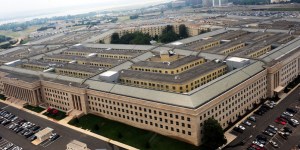
Remember when civilians were supposed to control the military?  Not in Trump’s White House.  Besides putting retired generals in charge (e.g. Defense Secretary James Mattis), Trump is throwing money at the Pentagon while empowering “his” generals to do what they wish.  As FP:Foreign Policy put it today:  

Frustrated by lack of influence and disheartened by U.S. President Donald Trump’s rhetoric, Department of Defense civilians are heading for the door, leaving key positions unfilled in a Pentagon increasingly run by active-duty or retired military officers, Foreign Policy’s Lara Seligman writes.

Described in interviews with a dozen former and current DOD officials, the exodus has insiders and observers worried that civilian control of the military is being undercut.

“The Joint Staff and the [combatant commanders] are having a field day,” said one Pentagon official, who spoke on condition of anonymity. “They don’t answer any requests, they feel emboldened, and Policy is really struggling.”

As commander-in-chief, Trump has largely been AWOL.  When things go bad (like the Yemen raid early in 2017), he blames his generals.  Instead of “The buck stops here,” the motto of Harry S Truman, who knew how to serve as commander-in-chief, Trump’s motto is “The buck never stops here — unless it’s a literal buck I can add to the Trump empire’s balance sheet.”  

The U.S. military’s commander-in-chief has deserted his post, but the Pentagon doesn’t seem to mind.

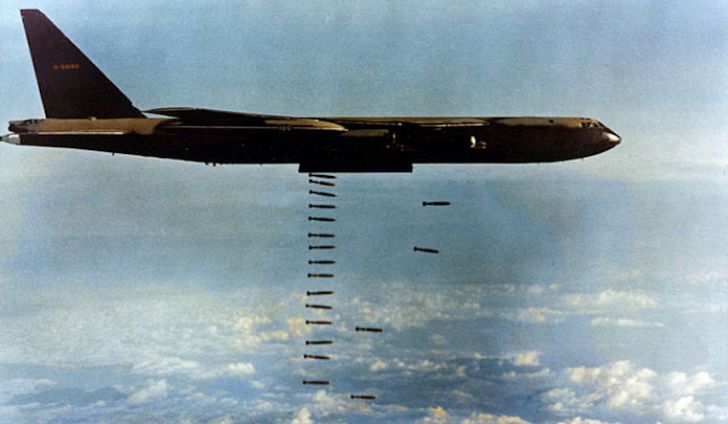
Meanwhile, even with roughly $700 billion in yearly budgetary authority, with more billions on the way, the Pentagon is warning it may not be able to win a war against China or Russia unless it gets even more money!  Here’s a quick report from CNN:

Could the US lose a war against China or Russia? It might, according to a new report from a bipartisan panel of military experts. The report warns that the Trump administration’s new National Defense Strategy doesn’t have enough resources, which puts the country at greater risk of losing a military conflict with the Chinese or the Russians.  

I’m shocked, shocked, the U.S. might lose a war against China or Russia!  When the U.S. can’t even win a war against the lowly Taliban in Afghanistan after 17+ years. 

The “solution” is always more money and resources for the Pentagon. How about this instead: Don’t fight a war against China or Russia … period.  Or for that matter against any other country that doesn’t pose a real and pressing threat to the United States.

You have to hand it to the Pentagon: the generals know how to launch preemptive attacks.  Not against foreign armies, mind you, but against what is perceived as “the enemy within.”  The military-industrial complex knows the Pentagon budget could conceivably shrink in 2020, so they’re already claiming “the world’s finest military” is in danger of slipping a notch … unless it gets more money.

The only “war” the Pentagon is clearly winning is the war for money and influence in the American “Homeland.”

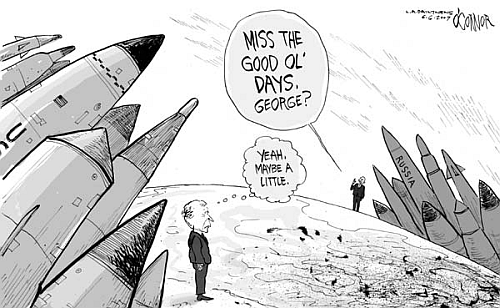
Finally, there’s the grim news the Trump administration is pulling out of the INF Treaty with Russia that eliminated intermediate range nuclear weapons in 1987.  That treaty was a remarkable achievement by the Reagan administration: it got rid of nuclear weapons such as the SS-20 on the Soviet side and the Pershing II and ground-launched cruise missiles (GLCMs) on the American side, weapons which were considered “first-strike” and therefore destabilizing to nuclear deterrence.  The Trump administration wants to “invest” in more nukes, including intermediate-range ones, supposedly to deter the Russians, who can already be destroyed dozens of times over by America’s current crop of nuclear weapons.

Cost of nuclear modernization to the U.S.?  At least $1.2 trillion (yes–trillion) over the next thirty years.  Weapons that, if they’re used, will only make the radioactive rubble bounce a little bit higher.  More MADness indeed.

An unchecked Pentagon promises ill not just for America but for the world.  Ike knew this.  So did many other U.S. presidents.  Trump is too busy tweeting and making a buck to care.

The Idiocy of Donald Trump

download
Macron and Trump in happier days.

W.J. Astore

There he goes again.  Donald Trump has insulted our French allies, apparently in retaliation for Emmanuel Macron’s sensible speech this past weekend that assailed nationalism as divisive and dangerous to world peace.  In his retaliatory tweet today, the Trumpet had the following to say about France and its war effort in World Wars I and II:

Emmanuel Macron suggests building its own army to protect Europe against the U.S., China and Russia. But it was Germany in World Wars One & Two – How did that work out for France? They were starting to learn German in Paris before the U.S. came along. Pay for NATO or not!

Suggesting the French were learning German because they couldn’t or wouldn’t fight is more than insulting: it reveals Donald Trump’s utter ignorance of history.

First, consider World War I.  The French lost roughly 1.4 million men in that war.  More than any other country, France should be credited for defeating German militarism.  Indeed, France served as America’s “arsenal of democracy” in that war, supplying U.S. troops with weaponry and helping to train them for war as well.  The French, after all, had fought the war for nearly four years before American troops showed up in large numbers.  Yes, the U.S. military helped to stiffen French and British resistance in 1918 and contributed to turning the tide toward victory, but overall France deserves tremendous credit and deep respect both for its victory and for the enormity of its sacrifice.

Now, let’s turn to World War II.  It was the devastation of France in World War I (along with interwar political divisions and an overly defensive mentality) that contributed to its relatively quick defeat in World War II.  Because of this defeat, France paid a high price indeed under German occupation.  Some French people collaborated; many more resisted and paid for that resistance with their lives.

Trump insults the memory of millions of French men and women who died resisting German militarism in both world wars, and to what end?  Just so he can score cheap points with his base by tweeting ignorant insults against an ally that fought side-by-side with Americans in both world wars?

The French, of course, helped to secure American independence in the 18th century, a favor you could say we repaid during the closing stages of World War I.  And while World War II was a disaster for French arms, there was no lack of fighting spirit among major sectors of the French populace.

Suggesting the French were studying German because they were militarily inept until Americans rode to the rescue does more than a grave disservice to history.  It gravely insults the French people.  Such is the idiocy of Donald Trump.

The Pentagon as a Herd of Elephants

Now this makes me proud to be an American.  “Salute to service” during Ravens-Steelers game.

W.J. Astore

A few months ago, I was talking to a researcher about the Pentagon, the military-industrial complex, and America’s fourth (and most powerful?) branch of government: the national security state.  After talking about the enormous sweep and power of these entities, she said to me, it’s the elephant in the room, isn’t it?  More than that, I replied: It’s the rampaging herd of elephants in the room.  Even so, we prefer to ignore the herd, even as it dominates and destroys.

This thought came back to me as I read Danny Sjursen’s recent article at Antiwar.com.  His main point was that enormous Pentagon spending and endless wars went undebated during this election cycle.  President Trump preferred to talk of “invasions” by caravans of “criminals,” when not denigrating Democrats as a mutinous mob; the Democrats preferred to talk of health care and coverage for preexisting conditions, when not attacking Trump as hateful and reckless.  No one wanted to talk about never-ending and expanding wars in the Greater Middle East and Africa, and no one in the mainstream dared to call for significant reductions in military spending.

As Sjursen put it:

So long as there is no conscription of Americans’ sons and daughters, and so long as taxes don’t rise (we simply put our wars on the national credit card), the people are quite content to allow less than 1% of the population [to] fight the nation’s failing wars – with no questions asked. Both mainstream wings of the Republicans and Democrats like it that way. They practice the politics of distraction and go on tacitly supporting one indecisive intervention after another, all the while basking in the embarrassment of riches bestowed upon them by the corporate military industrial complex. Everyone wins, except, that is, the soldiers doing multiple tours of combat duty, and – dare I say – the people of the Greater Middle East, who live in an utterly destabilized nightmare of a region.

Why should we be surprised? The de facto “leaders” of both parties – the Chuck Schumers, Joe Bidens, Hillary Clintons and Mitch McConnells of the world – all voted for the 2002 Iraq War resolution, one of the worst foreign policy adventures in American History. Sure, on domestic issues – taxes, healthcare, immigration – there may be some distinction between Republican and Democratic policies; but on the profound issues of war and peace, there is precious little daylight between the two parties. That, right there, is a formula for perpetual war.

As we refuse to debate our wars while effectively handing blank checks to the Pentagon, we take pains to celebrate the military in various “salutes to service.”  These are justified as Veterans Day celebrations, but originally November 11th celebrated the end of war in 1918, not the glorification of it.  Consider these camouflage NFL hats and uniforms modeled on military clothing (courtesy of a good friend):

unnamed

When I lived in England in the early 1990s, the way people marked Veterans or Armistice Day was with a simple poppy. I recall buying one from a veteran who went door-to-door to raise funds to support indigent vets.  Students of military history will know that many young men died in World War I in fields of poppies.  Thus the poppy has become a simple yet powerful symbol of sacrifice, loss, and gratitude for those who went before us to defend freedom.

800px-Royal_British_Legion's_Paper_Poppy_-_white_background

No poppies for us.  Instead, Americans are encouraged to buy expensive NFL clothing that is modeled on military uniforms.  Once again, we turn war into sport, perhaps even into a fashion statement.

And the herd of elephants marches on …

A Few Comments on the Flag and the Pledge

W.J. Astore

When I was young, I kept a pamphlet in my room: “How to Respect and Display Our Flag.”  It was from the U.S. Marine Corps, dated March 1968.  I still have that pamphlet; here’s a photo of it:

IMG_1929

Some of its guidance is now (it saddens me to say) obsolete.  Consider the following: “Do not use the flag as a portion of a costume or athletic uniform.  Do not embroider it upon cushions or handkerchiefs nor print it on paper napkins or boxes.”

Nowadays, flags are everywhere.  They are on football helmets and baseball caps.  They are on bathing suits (!) and shirts, jackets and tops.  I once bought an ice cream cone at a baseball game in a paper wrapper decorated by the American flag.

Fifty years ago, there was a sense our flag was special, meaning you didn’t put one everywhere and on everything.  All these representations of the flag that you see today, especially those flag lapel pins most often seen on sportscasters and politicians, strike me as opportunistic and self-celebratory rather than respectable tributes to Old Glory.

My flag handbook also says, “When carried, the flag should always be aloft and free–never flat or horizontal.”  I suppose they couldn’t imagine in 1968 flags so gigantic that they could only be carried flat or horizontal.

A book of more recent vintage (2001), “United We Stand,” celebrates efforts during World War II to bring the nation together by marking the Fourth of July in 1942 with images of the flag on magazines.  One of my favorites from that time showcased Veronica Lake:

screenland

From this book, I was reminded of the original “Pledge of Allegiance”:

I pledge allegiance to my Flag

and the Republic for which it stands,

one nation indivisible,

with liberty and justice for all.

The phrase “under God” was only added in 1954 at the height of McCarthyism.

I favor the original pledge.  If it was good enough for the “Greatest Generation” who fought and won World War II, it should be good enough for these times.

I was also reminded of a song that I rarely hear nowadays: “You’re a Grand Old Flag” by George M. Cohan (played, of course, by Jimmy Cagney in “Yankee Doodle Dandy,” as mentioned on the cover above).  Remember the opening stanza of that song?

You’re a grand old flag.

You’re a high-flying flag

and forever in Peace may you wave.

“Forever in peace may you wave” — how come we don’t hear that sentiment today?

Endless War and the Lack of a Progressive Critique of the Pentagon

brac_pentagon
The Pentagon has won the war that matters most

W.J. Astore

In my latest article for TomDispatch.com, I argue the Pentagon has won the war that matters: the struggle for the “hearts and minds” of America.  Pentagon budgets are soaring even as wars in places like Afghanistan continue to go poorly.  Despite poor results, criticism of the Pentagon is rare indeed, whether in the mainstream U.S. media or even among so-called liberals and progressives, a point hammered home to me when I contacted my senator.  Here’s an excerpt from TomDispatch; you can read my article in full here.

A Letter From My Senator

A few months back, I wrote a note to one of my senators to complain about America’s endless wars and received a signed reply via email. I’m sure you won’t be surprised to learn that it was a canned response, but no less telling for that. My senator began by praising American troops as “tough, smart, and courageous, and they make huge sacrifices to keep our families safe. We owe them all a true debt of gratitude for their service.” OK, I got an instant warm and fuzzy feeling, but seeking applause wasn’t exactly the purpose of my note.

My senator then expressed support for counterterror operations, for, that is, “conducting limited, targeted operations designed to deter violent extremists that pose a credible threat to America’s national security, including al-Qaeda and its affiliates, the Islamic State in Iraq and Syria (ISIS), localized extremist groups, and homegrown terrorists.” My senator then added a caveat, suggesting that the military should obey “the law of armed conflict” and that the authorization for the use of military force (AUMF) that Congress hastily approved in the aftermath of 9/11 should not be interpreted as an “open-ended mandate” for perpetual war.

Finally, my senator voiced support for diplomacy as well as military action, writing, “I believe that our foreign policy should be smart, tough, and pragmatic, using every tool in the toolbox — including defense, diplomacy, and development — to advance U.S. security and economic interests around the world.” The conclusion: “robust” diplomacy must be combined with a “strong” military.

Now, can you guess the name and party affiliation of that senator? Could it have been Lindsey Graham or Jeff Flake, Republicans who favor a beyond-strong military and endlessly aggressive counterterror operations? Of course, from that little critical comment on the AUMF, you’ve probably already figured out that my senator is a Democrat. But did you guess that my military-praising, counterterror-waging representative was Elizabeth Warren, Democrat of Massachusetts?

Full disclosure: I like Warren and have made small contributions to her campaign. And her letter did stipulate that she believed “military action should always be a last resort.” Still, nowhere in it was there any critique of, or even passingly critical commentary about, the U.S. military, or the still-spreading war on terror, or the never-ending Afghan War, or the wastefulness of Pentagon spending, or the devastation wrought in these years by the last superpower on this planet. Everything was anodyne and safe — and this from a senator who’s been pilloried by the right as a flaming liberal and caricatured as yet another socialist out to destroy America.

I know what you’re thinking: What choice does Warren have but to play it safe? She can’t go on record criticizing the military. (She’s already gotten in enough trouble in my home state for daring to criticize the police.) If she doesn’t support a “strong” U.S. military presence globally, how could she remain a viable presidential candidate in 2020?

And I would agree with you, but with this little addendum: Isn’t that proof that the Pentagon has won its most important war, the one that captured — to steal a phrase from another losing war — the “hearts and minds” of America? In this country in 2018, as in 2017, 2016, and so on, the U.S. military and its leaders dictate what is acceptable for us to say and do when it comes to our prodigal pursuit of weapons and wars.

So, while it’s true that the military establishment failed to win those “hearts and minds” in Vietnam or more recently in Iraq and Afghanistan, they sure as hell didn’t fail to win them here. In Homeland, U.S.A., in fact, victory has been achieved and, judging by the latest Pentagon budgets, it couldn’t be more overwhelming.

If you ask — and few Americans do these days — why this country’s losing wars persist, the answer should be, at least in part: because there’s no accountability. The losers in those wars have seized control of our national narrative. They now define how the military is seen (as an investment, a boon, a good and great thing); they now shape how we view our wars abroad (as regrettable perhaps, but necessary and also a sign of national toughness); they now assign all serious criticism of the Pentagon to what they might term the defeatist fringe.

In their hearts, America’s self-professed warriors know they’re right. But the wrongs they’ve committed, and continue to commit, in our name will not be truly righted until Americans begin to reject the madness of rampant militarism, bloated militaries, and endless wars.

A Perpetual War Machine

52504708-6849-4bf7-99db-c88804164a6c
Fighting in Kabul in August. The Afghan capital is increasingly under attack by militants, highlighting the lack of Coalition progress in the war (Wakil Kohsar/AFP/Getty Images)

W.J. Astore

Scientists tell us a perpetual motion machine is impossible (that pesky 2nd law of thermodynamics about entropy), but America’s leaders are proving a perpetual war machine is quite possible, as events in Afghanistan prove.  The USA is now entering the 18th year of its Afghan war, with regress rather than progress being the reality of nearly a trillion dollars committed to this war.  At TomDispatch.com, Tom Engelhardt notes that “Though few realized it at the time [in 2001], the American people married war. Permanent, generational, infinite war is now embedded in the American way of life, while just about the only part of the government guaranteed ever more soaring dollars, no matter what it does with them, is the U.S. military.”  At Slate.com, Fred Kaplan notes that the Afghan War

has been going on for 17 years now… making it the longest war in American history. Yet we are no closer than we have ever been to accomplishing our objectives, in part because those objectives have been so sketchily, inconsistently, and unrealistically defined.

In fact, the Taliban is gaining strength; other jihadist groups, including ISIS and a revivified al-Qaida, are joining the fight (against the Afghan government, Western forces, and the Taliban); the Afghan Army is suffering casualties at an alarming rate; the chaos is spiraling to unsustainable levels.

Nevertheless, the USA persists in its folly.  There are many reasons for this, but I’d like to focus on one: the warrior ethos in the U.S. military.  “Warriors wanted,” say new U.S. Army TV ads and web campaigns.  The warrior ethos, according to the Army, compels us to never accept defeat.  Check out goarmy.com/warriors to get your lesson on America’s warrior ethos.  The site says the Army must be “unbeatable.”  The site says “We never accept defeat.”

But this is ridiculous.  All armies lose battles.  The greatest generals of history suffered setbacks. In fact, it’s often wise to accept defeat or to make a strategic retreat.  And some wars aren’t worth fighting to begin with.

Apply the warrior ethos to Afghanistan: The USA will never accept defeat. Which means the war will go on forever, since it never was ours to win to begin with.

Waging a no-win war is not a measure of warrior toughness; it’s a sign of stubborn stupidity.

Fear of Defeat and the Vietnam War

image
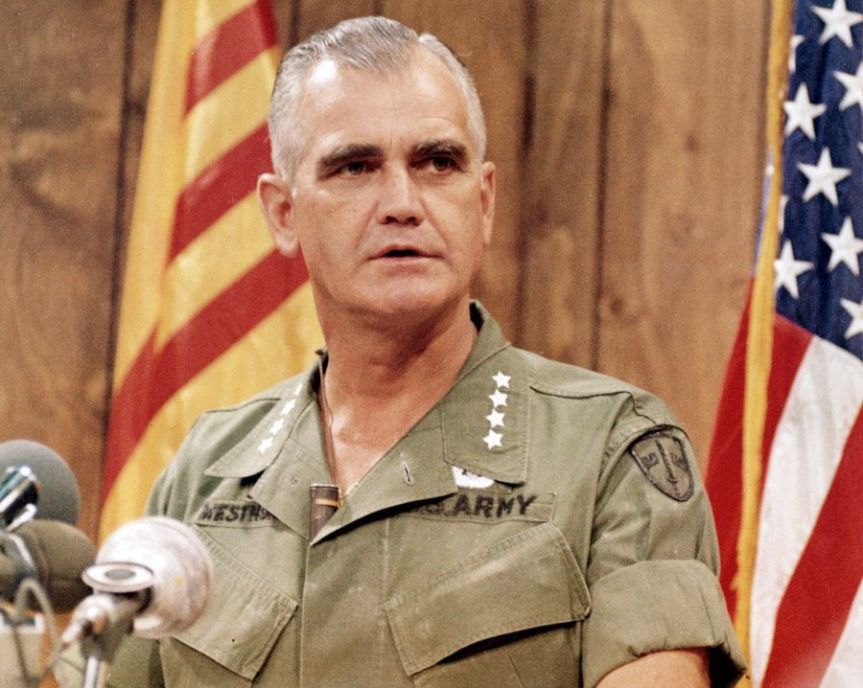
General William Westmoreland in 1968 (Stars and Stripes)

W.J. Astore

Fear of defeat drives military men to folly.  Early in 1968, General William Westmoreland, America’s commanding general in Vietnam, feared that communist forces might overrun U.S. military positions at Khe Sanh.  His response, according to recently declassified cables as reported in the New York Times today, was to seek authorization to move nuclear weapons into Vietnam.  He planned to use tactical nuclear weapons against concentrations of North Vietnamese Army (NVA) troops.  President Lyndon Johnson cancelled Westmoreland’s plans and ordered that discussions about using nuclear weapons be kept secret (i.e. hidden from the American people), which for the last fifty years they have been.

Westmoreland and the U.S. military/government had already been lying to the American people about progress in the war.  Khe Sanh as well as the Tet Offensive of 1968 were illustrations that there was no light in sight at the end of the tunnel — no victory loomed by force of arms.  Thus the call for nuclear weapons to be deployed to Vietnam, a call that President Johnson wisely refused to countenance.

Westmoreland’s recourse to nuclear weapons would have made a limited war (“limited” for U.S. forces, not for the Vietnamese on the receiving end of U.S. firepower) unlimited.  A nuclear attack in Vietnam likely would have been catastrophic to world order, perhaps leading to a much wider war in Asia that could have led to world-ending nuclear exchanges.  But Westmoreland seems to have had only Khe Sanh in his sights: only the staving off of defeat in a position that American forces quickly abandoned after they had “won” the battle.

War, as French leader Georges Clemenceau famously said, is too important to be left to generals.  Generals often see the battlefield in narrow terms, seeking victory at any price, if only to avoid the stain of defeat.

But what price victory if the world ends as a result?

A Trumped-Up Space Force

download
Space exploration and exploitation isn’t what it used to be

W.J. Astore

Space, the “final frontier,” isn’t what it used to be.  In the 1960s and early 1970s I grew up a fan of NASA as well as Star Trek with Captain Kirk and Mr. Spock.  NASA was (and is) a civilian space agency, even though its corps of astronauts was originally drawn from the ranks of military test pilots.  Star Trek offered a vision of a “federation” of planets in the future, united by a vision “to explore strange new worlds,” venturing forth boldly in the cause of peace.  Within the US military, space itself was considered to be the new “high ground,” admittedly a great place for spy satellites (which helped to keep the peace) but a disastrous place for war.  (Of course, that didn’t prevent the military from proposing crazy ideas, like building a military base on the moon armed with nuclear-tipped missiles.)

Attracted to the space mission, my first assignment as a military officer was to Air Force Space Command.  I helped to support the Space Surveillance Center in Cheyenne Mountain Complex, which kept track of all objects in earth orbit, from satellites to space junk.  (You don’t want a lost hammer or other space junk colliding with your billion-dollar satellite at a speed of roughly 17,000 miles per hour.)  In the mid-1980s, when I was in AFSPACECOM, an offensive space force to “dominate” space was a vision shared by very few people.  I had a small role to play in supporting tests of an anti-satellite (ASAT) missile launched from F-15s, but those tests were curtailed and later cancelled as the Soviet Union, considered as America’s main rival for control of space, began to collapse in the late 1980s.

But that was then, and this is now, and the “now” of the moment is a new US military service, an offensive space force, proposed by the Trump administration as essential to US national security.  At TomDispatch.com, William Hartung provides the details of Trump’s new space force in this fine article.  As I read Hartung’s article, a thought flashed through my mind: We’re not the peaceful Federation of Star Trek.  We’re much more like the Klingon Empire.

In the original Star Trek, the Klingons were a highly aggressive and thoroughly militaristic species that was dedicated to dominating space.  They were proudly imperial and driven by conquest.  Trump, who with his bombast and barking and boasting would make a great Klingon, sees a “space force” that’s all military: that’s all about domination through aggressive action and better offensive weaponry.

Perhaps you’ve heard the saying: Everywhere we go, there we are.  Increasingly for America, that saying means: Everywhere we go, there our military and weapons are.  Even in space.

The “final frontier” of space, which in my youth was largely a realm of peaceful exploration, whether by NASA in the real-world or in the imaginary future of Star Trek, is now under Trump an increasingly militarized place.  This is so because our minds, perhaps humanity’s true “final frontier,” have also been thoroughly militarized.

A war-driven people will bring war with them wherever they go.  If the Vulcans (like Mr. Spock, who was half-Vulcan) are smart, they won’t reach out to humans if and when we find a “warp” drive that allows us to travel much faster than the speed of light.  Logical and peaceful beings that they are, perhaps they’ll quarantine earth and humanity instead.  Maybe with the Vulcan equivalent of a big, fat, beautiful wall?

Monday Military Musings

brac_pentagon
Pentagon spending keeps rolling along …

W.J. Astore

I get “Air & Space Power Journal” electronically.  You might call it a professional journal for Air Force personnel.  The latest articles had these titles:

Character into Action: How Officers Demonstrate Strengths with Transformational Leadership

Multidomain Observing and Orienting: ISR to Meet the Emerging Battlespace

Preparing for Multidomain Warfare: Lessons from Space/Cyber Operations

An Ethical Decision-Making Tool for Offensive Cyberspace Operation

There’s something about military writing that loves pretentious jargon.  Not just leadership, but “transformational” leadership.  Combat or war must be “multidomain.”  Battle or battlefield isn’t enough: we must now talk of “battlespace.”  My automatic spell-check is having conniptions over these three words.

Instead of resorting to pretentious jargon in titles, why not go for the simple and direct?  Here are my suggested titles for the articles above:

* How to Lead.

*Intelligence, Surveillance, and Reconnaissance in Battle.

*Lessons from Space/Cyber Warfare.

*Applying Ethics to Cyber Warfare.

(Here I think “warfare” is more honest than “operations.”)

One tiny reason the U.S. military continues to struggle in its various “overseas contingency operations,” i.e. wars, is the pretentiousness of its writing.

As the military drowns in words, it’s also drowning in money, though it’s already thinking about what will happen when the cash is curtailed.  A good friend of mine sent me an article with the title, “Pentagon, Defense Industry Brace for Expected Dip in Future Funding.”  Here’s an excerpt:

Without congressional action, the decrease in defense funding would be dramatic. The base Department of Defense budget would drop to $549 billion in FY 2020 and $564 billion in FY 2021, according to a July 2018 report by the Congressional Research Service. The FY 2019 defense budget, recently signed into law, set spending at $717 billion.

The defense industry knows what a looming congressional budget fight could do to the Pentagon’s current high levels of spending. Executives are preparing Wall Street analysts for what likely lays ahead: Congress reducing the cash flow to the Pentagon and what that will mean to corporate bottom lines.

Yes — we must defend those “corporate bottom lines”!

Defense contractors have to be prudent and prepare for the future.  That said, a decline in defense spending should be good news to the American taxpayer.  Old-school Republicans, who used to fight for smaller government and lower deficits, should also be pleased at the prospect of lower spending.

Except it doesn’t work that way anymore. Few if any Members of Congress of either party want to see a decline in spending.  And of course defense contractors want to keep the money flowing — as President Eisenhower famously warned us about in his military-industrial-Congressional complex speech of 1961.

The rest of the world could declare “peace forever” tomorrow and Ike’s complex would still roll along.  The U.S. economy is now linked (forever?) to inflated spending on weapons and war.

Inflated war/weapons spending and inflated prose about “transformational multidomain battlespace” what-have-yous.  All that’s missing in our military are the victories.

The USA and Israel as Big and Little Prussia

download
Co-joined Twins?

W.J. Astore

As a kid, I was a big admirer of Israel.*  I kept a scrapbook on the Yom Kippur War in 1973.  Back then, Israel was America’s plucky ally, David against Goliath, helping to keep the Soviet bear at bay, or so it seemed to me.

Through a kid’s eyes, Israel in 1973 was an island seemingly surrounded by a sea of well-armed enemies: Egypt, Syria, Iraq, Jordan, Saudi Arabia. Outnumbered and outgunned.  And now look at today’s reality: Egypt and Iraq have been neutralized.  Syria is devastated.  Jordan is wisely (sort of) neutral.  The Saudis are a quasi-ally.  Outside of the more-or-less manageable threat of terrorism (Hamas and Hezbollah), Israel’s chief enemy today appears to be itself.

What I mean by that is this: Israel, which over the last 70 years has fought several wars for its survival, is now a regional superpower.  Yet the mindset of David versus Goliath persists, even though Goliath is hobbled and defeated.  Meanwhile, as Israel combats terrorism and the legacies of West Bank occupation and isolation of the Gaza Strip, the government prosecutes policies that are considered illiberal and dangerous by many Jewish critics within Israel itself.

A similar David-Goliath mindset exists in the USA, but with far less cause.  Bizarrely, the world’s military superpower envisions itself as being surrounded by enemies.  Its response is something like Israel’s, as if the USA is Israel writ large.  Both countries seek total military dominance over their perceived enemies and rivals; both are led by strong men dogged by claims of corruption; both glorify their militaries; both appear to be spoiling for war with Iran.

Interestingly, both are also obsessed with demographic “enemies within”: many Israelis fear growing Arab/Muslim influence within; many Americans fear minorities will soon constitute the majority (estimates say non-whites will outnumber whites in the year 2045, but some Americans – like Laura Ingraham on Fox News – feel it’s already happened).  The result: the ruling administrations of both countries have doubled down on security and identity politics.  Israel has made Arabs second-class citizens, a form of apartheid; Trump & Co. has vilified immigrants (especially Mexicans) as rapists and murderers.  Both are building walls to keep the “enemy” without.  Both see massive military spending (and nuclear weapons) as the ultimate guarantors of peace.

Israel is little Prussia; the USA is big Prussia.  And like Prussia (and Germany) of the past, they pose as the aggrieved party, surrounded by enemies, hemmed in and oppressed.  It’s never wrong to be strong – that’s their guiding motto.  And by strength they mean hardness: military strength, police strength, the strength of superior weapons technology, embraced by leaders willing to kill or torture or imprison others in the name of preserving a “democratic” way of life.

It’s a mindset conducive to authoritarianism, to militarism, to nationalism, even to kleptocracy disguised as essential spending on national security.  At its root is fear, which generates a “no compromise” attitude toward the Other (whether Palestinian “terrorists” or immigrant “killers” and “animals”).  As the Palestinian activist Bassam Aramin put it in an interview in The Sun (October 2016):

“I think our main enemy is the Israelis’ fear.  It’s part of their consciousness.  When they talk about security, the Holocaust is always in the background.  If I throw a stone at an armored tank, they interpret it as the beginning of a new Holocaust.”

Fear is the mind-killer.  It enables perpetual warfare and a police state – and lots of profit and power to those who facilitate the same.

The original Prussia became consumed by militarism and nationalism and collapsed after two devastating world wars.  What will happen to today’s Big and Little Prussia?  Perhaps a war against Iran, timed to coincide with the 2020 presidential campaign season in the USA?  Such an unnecessary and likely disastrous war can’t be ruled out.

Consider the dynamic between the current leaders of the USA and Israel, each egging the other one on to be tougher, less compromising, more Prussian.  A pacific future is not in the cards for these military “superpowers.”  Not when they’re so busy emulating Prussia.

*Why are Americans, generally speaking, supporters and admirers of Israel?  So much so that politicians ostentatiously wear co-joined US/Israel flag lapel pins?  For several reasons:

1.   The US media is generally pro-Israel.  Meanwhile, the Arab world is often synonymous with terrorism in our media.

2.  Israelis seem more like Americans.  What I mean is this: Israeli spokespeople wear western dress and speak English with a faint accent.  Until recently, Arab spokespeople on TV looked and dressed “foreign” and spoke English with a heavier accent.

3.  The power of pro-Israeli political lobbies such as AIPAC and fear among politicians that criticism of Israel will be construed (and demonized) as anti-Semitism.

4.  The Holocaust.

5.  The Evangelical Context: I remember listening to a talk show on the radio, soon after the Yom Kippur War, in the mid-1970s.  The speaker predicted the Second Coming was near.  That got my attention!  Why was that?  Because, this person said, Israel had gained control over Jerusalem in apparent fulfillment of Biblical prophecy.  Fast forward forty years to today and you hear basically the same evangelical predictions about the Second Coming of Christ being imminent as Israel expands its hegemony over the “holy land” in Palestine.

One cannot underrate the importance of (selective) Biblical prophecy as advanced by fundamentalist Christians nestled within today’s Republican Party.  These evangelicals couldn’t care less about Trump’s sins and transgressions.  Their eyes are on the prize: Armageddon and Christ’s return, which they link to Israel’s domination of the region – which will lead to more wars, a brutal future seen as inevitable, even desirable.