Stop the MADness

W.J. Astore

Mutually Assured Destruction (MAD) is making a comeback as the Pentagon hypes a new Cold War with China and Russia. Threat inflation is a big part of this “new” war, just as it was in the old one. So too is greed. There’s much money to be made (a trillion or more dollars, perhaps) in building new nuclear missiles and bombers, even though these weapons represent incipient holocausts.

We need to stop this MADness. There is no need for a new Cold War, and there is no need for new nuclear weapons, weapons that could very well destroy human civilization and most of life on our planet.

This is the subject of my latest article at TomDispatch.com. What follows is an excerpt. I encourage you to read the article in its entirety here.
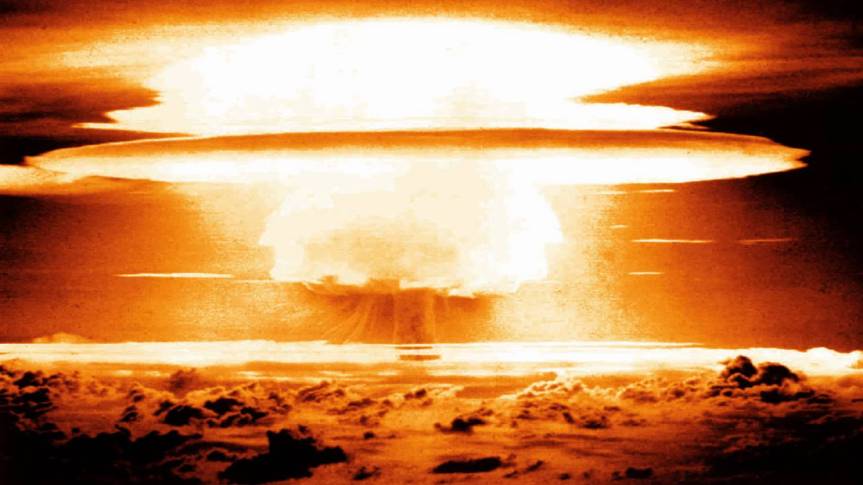
Stop the MADness. Seriously.

Only Fools Replay Doomsday

In the early 1960s, at the height of America’s original Cold War with the Soviet Union, my old service branch, the Air Force, sought to build 10,000 land-based nuclear missiles. These were intended to augment the hundreds of nuclear bombers it already had, like the B-52s featured so memorably in the movie Dr. Strangelove. Predictably, massive future overkill was justified in the name of “deterrence,” though the nuclear war plan in force back then was more about obliteration. It featured a devastating attack on the Soviet Union and communist China that would kill an estimated 600 million people in six months (the equivalent of 100 Holocausts, notes Daniel Ellsberg in his book, The Doomsday Machine). Slightly saner heads finally prevailed — in the sense that the Air Force eventually got “only” 1,000 of those Minuteman nuclear missiles.

Despite the strategic arms limitation talks between the U.S. and the Soviet Union, the dire threat of nuclear Armageddon persisted, reaching a fresh peak in the 1980s during Ronald Reagan’s presidency. At the time, he memorably declared the Soviet Union to be an “evil empire,” while nuclear-capable Pershing II and ground-launched cruise missiles were rushed to Europe. At that same moment, more than a few Europeans, joined by some Americans, took to the streets, calling for a nuclear freeze— an end to new nuclear weapons and the destabilizing deployment of the ones that already existed. If only…

It was in this heady environment that, in uniform, I found myself working in the ultimate nuclear redoubt of the Cold War. I was under 2,000 feet of solid granite in a North American Aerospace Defense (NORAD) command post built into Cheyenne Mountain at the southern end of the Colorado front range that includes Pikes Peak. When off-duty, I used to hike up a trail that put me roughly level with the top of Cheyenne Mountain. There, I saw it from a fresh perspective, with all its antennas blinking, ready to receive and relay warnings and commands that could have ended in my annihilation in a Soviet first strike or retaliatory counterstrike.

Yet, to be honest, I didn’t give much thought to the possibility of Armageddon. As a young Air Force lieutenant, I was caught up in the minuscule role I was playing in an unimaginably powerful military machine. And as a hiker out of uniform, I would always do my best to enjoy the bracing air, the bright sunshine, and the deep blue skies as I climbed near the timberline in those Colorado mountains. Surrounded by such natural grandeur, I chose not to give more than a moment’s thought to the nightmarish idea that I might be standing at ground zero of the opening act of World War III.  Because there was one thing I knew with certainty: if the next war went nuclear, whether I was on-duty under the mountain or off-duty hiking nearby, I was certainly going to be dead.

Then came 1991 and the collapse of the Soviet Union. The Cold War was over! America had won! Rather than nightmares of the Red Storm Rising sort that novelist Tom Clancy had imagined or Hollywood’s Red Dawn in which there was an actual communist invasion of this country, we could now dream of “peace dividends,” of America becoming a normal country in normal times.

It was, as the phrase went, “morning again in America” — or, at least, it could have been. Yet here I sit, 30 years later, at sea level rather than near the timberline, stunned by the resurgence of a twenty-first-century version of anticommunist hysteria and at the idea of a new cold war with Russia, the rump version of the Soviet Union of my younger days, joined by an emerging China, both still ostensibly conspiring to endanger our national security, or so experts in and out of the Pentagon tell us.

Excuse me while my youthful 28-year-old self asks my cranky 58-year-old self a few questions: What the hell happened? Dammit, we won the Cold War three decades ago. Decisively so! How, then, could we have allowed a new one to emerge? Why would any sane nation want to refight a war that it had already won at enormous cost? Who in their right mind would want to hit the “replay” button on such a costly, potentially cataclysmic strategic paradigm as deterrence through MAD, or mutually assured destruction?

Please read the rest of my article here.
Air Force Core Values

W.J. Astore

I was thinking today about my old service branch’s core values. No — not “more fighters, more bombers, more missiles” or “put bombs on target” or “jet noise is the sound of freedom” or “show me the money!” or that old Strategic Air Command classic, “peace is our profession.” No — the core values all airmen are supposed to uphold — integrity first, service before self, and excellence in all we do, in that order, sometimes abbreviated as integrity, service, excellence. How’s the Air Force doing here?

Not well, I’m afraid. Think of “integrity,” which I think of as truth-telling. Over the last 20 years, and indeed over the life of the service, going back to 1947 and before, the Air Force has consistently overestimated the accuracy of its bombing and consistently underestimated the number of civilians and non-combatants killed by that bombing. And that’s putting it charitably. In reality, the Air Force has conspired to advance an image of airpower as surgical and precise when it clearly isn’t, and indeed never has been. My old service branch advances this image because it’s good for the Air Force. It’s really that simple. Such image-making, i.e. lying, may be good for the Air Force budget, but it isn’t good for integrity. Nor is it good for America or those unfortunates on the receiving end of U.S. munitions.

Turning to “service before self,” I think of a system that when I served often stressed and rewarded self before service. For example, the promotion system in the military was structured to reward the hard-chargers, the overachievers, Type-A personalities, the thrusters and the true believers. Perhaps this is true of most bureaucracies, but the emphasis on ticket-punching and hoop-jumping in the Air Force was conducive to a narrow form of achievement in which “service” played second fiddle, when it played at all. Another way of putting it is that a certain kind of personal selfishness is more than acceptable as long as it advances institutional goals and agendas — a quite narrow form of service, if one is again being charitable.

And now we come to “excellence in all we do,” which brings to mind all kinds of disasters, such as drone strikes that kill innocents, or wayward generals, or cheating nuclear missile crews, and so on. But I’d like to focus on recent procurement practices, such as the lamentable F-35 jet fighter, which was supposed to be a fairly low-cost, high-availability fighter but which even the Air Force Chief of Staff now compares to a Ferrari, i.e. super-expensive and often in the shop. From tankers that can’t refuel to fighter planes that can’t shoot straight to nuclear bombers and missiles that the country (and, for that matter, humanity) simply doesn’t need, the Air Force’s record of excellence is spotty indeed.

What are we to do with a service that is so unwilling or unable to live up to its core values? Well, as usual, accountability and punishment are out of the question. I guess we’ll just have to give the Air Force more money while hoping it’ll reform itself, because you know that strategy always works.

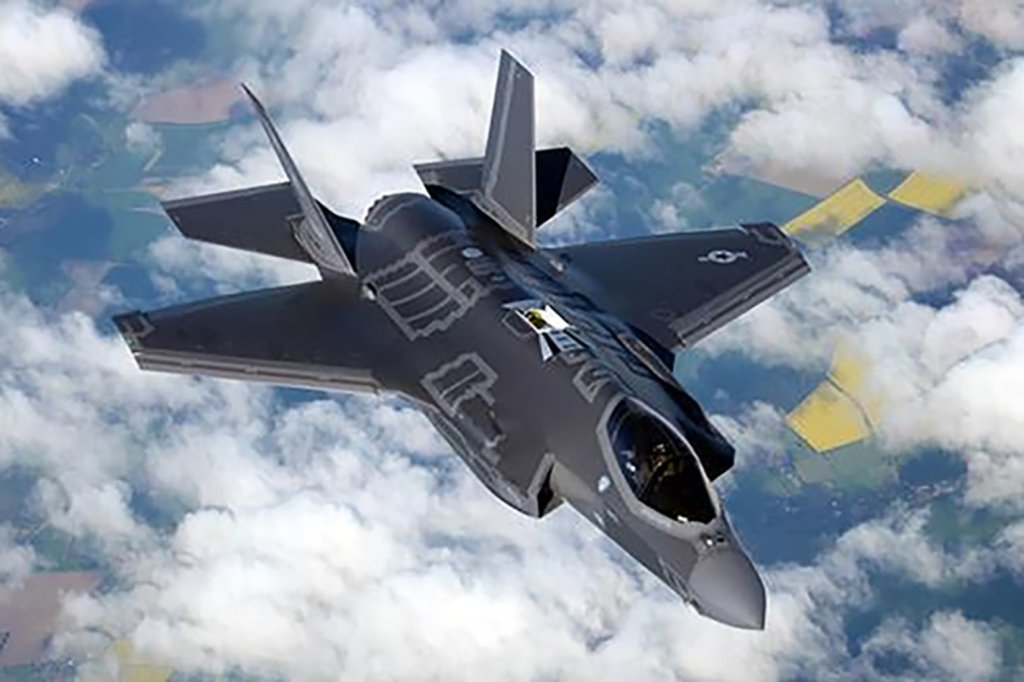
The F-35 “Ferrari”: It costs a lot and is often in the shop, but it looks kinda sexy. Too bad the F-35 was supposed to be a reliable workhorse, not a temperamental stallion. Interestingly, the inspiration for the Ferrari symbol of a prancing horse came from an Italian fighter pilot during World War I.

America Needs A Can’t Do Military

W.J. Astore

“Can-do” is an attitude that’s common, indeed obligatory, in the U.S. military. “Can’t do” is for quitters, for losers, for the “whiskey deltas” (weak dicks) who don’t have “the right stuff” to succeed. Yet I’d argue the U.S. military could use a few good men and women who are willing to say “can’t do,” not because they’re losers or lazy or otherwise “weak,” but because they’re smart and willing to speak uncomfortable truths.

“Saluting smartly” goes along with a “can-do” attitude. But was it sensible to salute smartly and invade Afghanistan and seek to remake a complex and decentralized tribal society into a centralized pseudo-democracy? Was it sensible to invade and occupy Iraq, disband its army, and seek to remake an ethnically and religiously fractured society, previously controlled by an authoritarian dictator, into a centralized pseudo-democracy? And by “remake,” I mean imposing a new government by often violent means by outsiders (yes, that’s us). Of course it wasn’t sensible, as events proved. These were “can’t do” scenarios, and never-should-have-done wars, and the U.S. military should have said so, and loudly, rather than saluting smartly and lying year after year about “progress.”

Sometimes, integrity means admitting that you can’t do. It recalls a line from Dirty Harry in “Magnum Force”: A man’s got to know his limitations. Not everything is achievable or even desirable, no matter how much money and “Hooah!” spirit you throw at the problem.

But officers in the military don’t get promoted for saying “can’t do,” no matter how sensible the sentiment may be. You’ve got to make it work, or die or lie trying, no matter the folly of it all. Here I recall a weapon system I worked on in the Air Force in the mid-1990s. It was over-budget, under-performing, and also being overtaken by newer, cheaper, technologies that flight crews liked better. But my job (and possibly my future promotion) hinged on refusing to recognize this truth. Instead, I had to do my part to make the “bad” system work — or seem to work.

As I recently wrote to a fellow former Air Force officer: As a captain, I worked on a project that probably should have been canceled. But the pressure on me was to make it work, at least my piece of it. Jobs depended on it. We are a can-do military even when can’t- or shouldn’t-do would be the much wiser course of action.

This fellow officer, also a captain and engineer, sent along this perceptive comment:

I don’t know about your path to promotion, but in my Support Group position, our annual performance reviews and officer promotion path was dependent upon being responsible for an ever expanding budget, year after year. I could never see a situation where being in charge of less compared to the previous year was ever a positive if one wanted to make a career out of military service. It really didn’t matter if the expansion was due to the inclusion of unnecessary spending. After I left active duty it finally sank in that all of the personal/professional incentives are to continually spend more, never to save the taxpayer money. I have since felt that the personal promotion incentive is one of several internal systems that creates the environment that is present; where DoD spending is commonly and fairly criticized for fraud, waste and abuse and why there are few incentives for the military leadership to do a better job of advising the civilian leadership to war less.

So, for example, saying “can’t do” while saving money is often the worst sort of action one could make if you want to get ahead in the military. Saying “can-do” while burning through money and accomplishing nothing but an expansion of next year’s budget is, however, rewarded by the system. You have proven yourself to be a “team player,” irrespective of results.

Of course, what America really needs is not a can- or can’t-do military but rather one with unimpeachable integrity in its oath to the U.S. Constitution. That oath carries with it an obligation to speak the truth, and a willingness to put the truth before conformity and ambition and “going along to get along.”

Our history since 9/11 would have been far different if the U.S. military knew its limitations and was willing to say “can’t do” when it was given unachievable objectives.

Reading Defense Contractor Ads

W.J. Astore

I subscribe to a news feed called “Breaking Defense” (the name may be more ironic than the site creators intended). I saw this advertisement today, which sums up much of what is common in America, where jargon substitutes for thought:

Kratos’ next generation unmanned aerial target drones and their capabilities continue to evolve to represent ever changing, evolving threats from near-peer adversaries to best prepare the American warfighter while keeping costs down for the American taxpayer. 

I know nothing about the company (Kratos), but it does appear to have a good command of Pentagon jargon. Those “near-peer adversaries” (meaning China and Russia, mainly). Those “ever changing, evolving threats.” And of course the almost obligatory appeal to the “warfighter.”

From this ad (and others like it), it’s simply assumed that America will always be at war. There’s also an assumption that Americans fall into two basic categories: warfighters and taxpayers. Warfighters are the doers, the hard men and women on the front lines, deserving of everlasting support and praise, and the taxpayers are there to fund it all and cheer along. Naturally, there’s no mention of “peacemakers.”

If we truly want to keep costs down for the American taxpayer, maybe we shouldn’t buy any of these target drones?

In the same email send-out, here’s a sample of the articles at “Breaking Defense”:


For Space Force, it’s acquisition, acquisition, acquisition: 2022 Preview 

In 2022, the Pentagon will need to see real movement on acquisition reform to reduce long understood vulnerabilities that have been essentially ignored for many years.

The Pentagon’s new strategy might already be behind the times: 2022 Preview 

A Russian invasion of Ukraine could derail the Defense Department’s planning. 

For the Army, looming budgets and multi-domain everything: 2022 Preview 

Here’s the key Army storylines we’ll be tracking at Breaking Defense next year. 

Seems like the “Space Force” will be spending lots of money in 2022 due to “vulnerabilities.” Meanwhile, a Russian invasion of Ukraine might “derail” the DoD’s “new strategy.” And the Army is looking at “multi-domains,” which I assume is a smart way for the Army to expand its budgetary reach in the new year.

Nice to know the Pentagon has a new strategy, but how could a Russian incursion into Ukraine derail it? If the U.S. invaded Mexico, would that derail Russia’s defense planning? Or China’s?

Here’s another ad from a different “Breaking Defense” send-out.

Systel’s fully rugged computing solutions are purpose-built for the most demanding environments and workloads. High performance, SWaP-optimized, single LRU solutions supporting edge AI and force-protection missions. MOSA/CMOA, SAVE, and GCIA-compliant. Fully rugged, configurable, and modular. Centralized sensor ingest and data fusion support.

Ah, the good old days of military acronyms! Again, I know nothing about Systel, but the company has a solid command of opaque acronyms. Even the ad has redundancy in the sense that it mentions “fully rugged” twice! Note the mission of “force-protection,” as in keeping U.S. “warfighters” safe while in harm’s way.

Maybe we should keep our troops safe by not putting them in harm’s way, unless the defense of America truly requires it?

There’s nothing special about these ads or stories, which is why I cite them here. Just another day in the American empire of warfighters buying weapons systems to force-protect and confront near-peer threats out to exploit our vulnerabilities across multiple domains. Or, put simply, multi-domain everything!

Happy New Year, everyone.

The Prince of Peace

W.J. Astore

As Christmas approaches, peace is on my mind. Christ, after all, was known as the Prince of Peace. I say “was” because we hear so infrequently of peace in the United States today. In fact, peace in the U.S. seems to be contingent on enormous military budgets dedicated to weapons and warfare. It reminds me of Strategic Air Command (SAC) in the Air Force, which was prepared utterly to destroy the Soviet Union and China in the 1960s but whose motto was “peace is our profession.” Paraphrasing Tacitus, one might say that SAC was prepared to make the world an irradiated hellscape and call it “peace.”

If Christmas is to have any religious meaning, one would think it would be centered on the arrival of the Prince of Peace in the world. As a Catholic, I can’t count the number of times I recited the prayer that begins, Glory to God in the highest/and peace to His people on earth, the Gloria in adoration of Christ as a bringer of peace. By way of contrast, Easter is about the fulfillment of Christ’s mission; His death and resurrection “takes away the sins of the world,” even as we continue to implore Him to “grant us peace.”

Now that I reflect upon it, the Christian mass must be one of the few places in American culture today where we routinely hear about peace, where the idea is not mocked as fallacious or faulty or insane.

To be honest, I’m not in close contact with Christian culture today. What little I know of it confuses me and disappoints me. I can’t square the so-called Prosperity Gospel with Christ’s teachings against the corruption of earthly riches. I can’t square the evangelical emphasis on personal salvation by being born again with Christ’s command to focus on helping others in place of celebrating oneself. (OK, you’re saved; now get over yourself.) It’s so terribly easy to lose sight of the great commandments of Christianity, which boil down to loving God and loving thy neighbor.

So many Americans seem to believe they live in an exceptional nation, literally holier than other nations because of shared Judeo-Christian traditions as well as God’s special favor allegedly showered upon this “city on a hill.”

Is it OK if I say that current events (and past ones too) suggest otherwise? Garrisons across the globe bristling with weapons are not the same as a shining city on a hill. There is nothing angelic about a Predator or Reaper drone, nor is salvation to be found at any end of a Hellfire missile.

What part of “love thy neighbor” is reflected in a gargantuan war and weapons budget that officially sits just under $800 billion, and which in its total cost routinely exceeds a trillion dollars annually? Not to be presumptuous, but something tells me the Prince of Peace isn’t too happy about this.

Yes, I am stunned that there isn’t more Christian opposition to America’s war machine. I am stunned that America’s churches and ministers have made their peace, so to speak, with nuclear weapons that can destroy all of God’s creation. I am stunned that on Christmas Day, when Christians are supposed to adore Christ and to recall the miracle of His birth, that we collectively give so little thought to making peace happen, to dedicating ourselves to it in His name.

Still, I must say this about my Catholic Church and my memories of it: At least we reached out to each other to offer a sign of peace. We reached across the pews to shake hands, to share smiles, to make human contact.

Let us offer each other the sign of peace: Should this not be our gift to each other, not just this Christmas but on each and every day? What better way to adore the Prince of Peace than to spread peace?

Bombing Kills Lots of Innocents: Who Knew?

W.J. Astore

Extensive U.S. bombing overseas kills lots of innocent people: who knew?

So this blinding statement of the obvious popped up in my email today from the New York Times:

A five-year Times investigation found that the U.S. air wars in Iraq, Syria and Afghanistan led to thousands of civilian deaths.
Hidden Pentagon records show a pattern of failures in U.S. airstrikes — a sharp contrast to the American government’s image of war waged by all-seeing drones and precision bombs.
The military’s own confidential assessments of over 1,300 reports of civilian casualties since 2014, obtained by The Times, lays bare how the air war has been marked by deeply flawed intelligence, rushed and often imprecise targeting and the deaths of thousands of civilians, many of them children. None of these failures resulted in a finding of wrongdoing. We are making these Pentagon records public.
This is the first of a two-part investigation. Here are the key takeaways.

Finally, at the end of 2021, the Times is willing to speak up against America’s murderous regimen of bombing overseas. I wrote about this myself at this site in 2016 and 2017, and I’m hardly the only person to have pointed this out. At TomDispatch.com, Tom Engelhardt has been reporting for years and years on wedding parties being wiped out by U.S. bombing missions based on “faulty intelligence.” The mainstream media have largely played down these atrocities until now, when the war in Afghanistan is finally (mostly) over, at least for the U.S.

As I wrote in 2013 for TomDispatch.com, airpower is neither cheap nor surgical nor decisive. Indeed, because it provides an illusion of effectiveness, and because America dominates the “high ground” of the air, all of this “precision” bombing serves to keep America in wars for far longer than is tenable on tactical grounds. Imagine how long the Iraq and Afghan wars would have lasted if America didn’t dominate the air, if the U.S. military had to rely exclusively on ground troops, and thus had suffered much higher casualties in ground combat. My guess is that these wars would have ended earlier, but “progress” could always be faked with all those statistics of bombs dropped and alleged “high value targets” eliminated.

I suppose it’s good to see the “liberal” New York Times cover this issue of murderous bombing after 20 years of the global war on terror. The question remains: why did it take them two decades to cover this issue in depth?

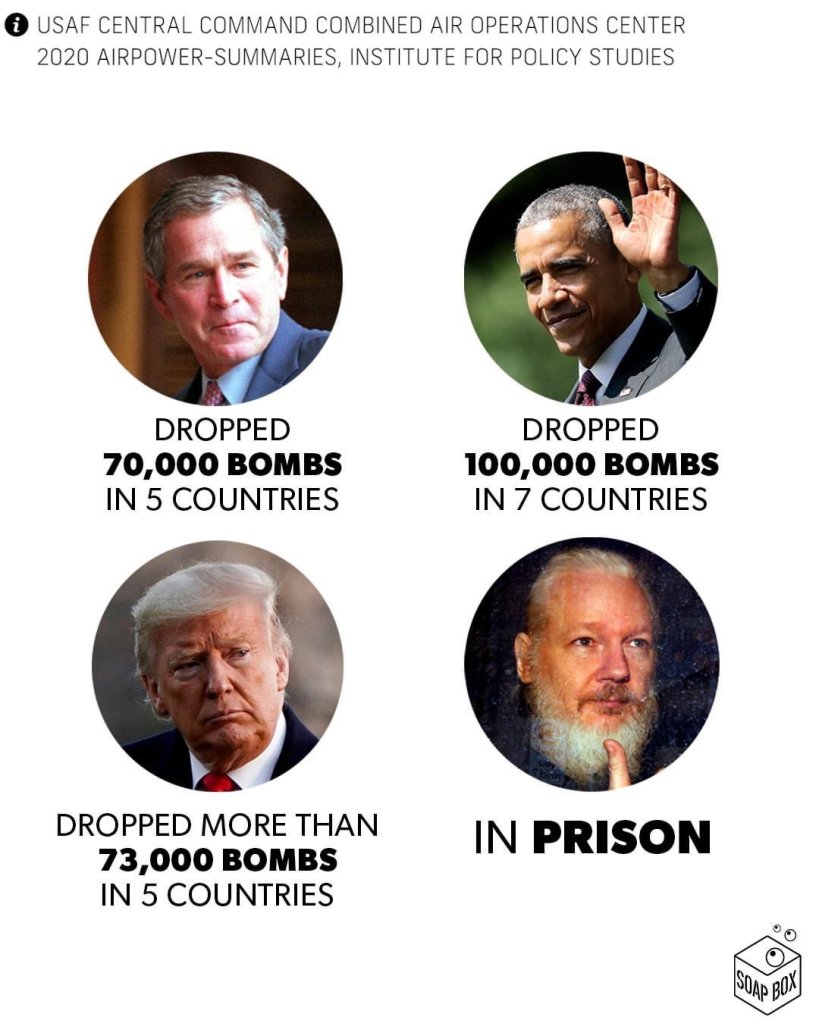
Presidents become “presidential” when they bomb other countries. Meanwhile, Julian Assange rots in prison. Maybe he needs to bomb a few countries?

Update (12/21/21)

More notes on U.S. bombing and the Times report, courtesy of ReThink Round Up:

“Not a single file [from the military about the bombings] includes a finding of wrongdoing. An effort within the military to find lessons learned to prevent future civilian harm was suppressed. An analyst who captures strike imagery even told the Times that superior officers would often “tell the cameras to look somewhere else” because “they knew if they’d just hit a bad target.”

Responding to the report, a Pentagon spokesperson acknowledged that preventing civilian deaths is not just a “moral imperative” but a strategic issue because civilian casualties can fuel recruiting for extremist groups. [New York Times/ Azmat Khan]”

*****

Again, to state the obvious here:

1. There’s no accountability in the system. Murderous mistakes are covered up and no one is held responsible (“tell the cameras to look somewhere else”).

2. The bombing attacks were counterproductive. Guess what? Killing innocents creates more “terrorists.” Who knew?

Murderous inaccuracy, making matters worse, with no accountability: WTF? So much for America’s “awesome” military, as Andrew Bacevich writes about today at TomDispatch.com.

How Awesome Is “Awesome”?

Curbing the Military-Industrial Complex

W.J. Astore

The American people have failed Dwight D. Eisenhower.

Sixty years ago, President Eisenhower warned us about the military-industrial complex. He told us it was sapping our resources and livelihood. He said its total influence — economic, political, and spiritual — was warping the very structure of our society. Its growing power, Ike warned, posed a grave danger to our liberties and our democratic processes. We heard his words, but we failed to act on them.

Ike didn’t just issue a warning in his farewell address in 1961. He gave us a mission. He literally put us on guard duty, as he said we must guard against the growing power of the Complex. He challenged us to be an alert and knowledgeable citizenry. Notice those three words: alert, knowledgeable, citizenry. Ike told us to get smart, to be vigilant, to be fully informed and involved citizens. Not citizen-soldiers for war, but citizen-guards against the growing power of the U.S. military and its weapons makers within a democracy that was increasingly compromised by militarism and imperialism.

Collectively, we have failed to heed Ike’s warning. We have failed to curb the military-industrial complex. And thus it has become a leviathan within our society and our culture. It has, as Ike warned, come to dominate our economics, our politics, even our spiritual lives.

Ike had a different vision. He knew war and hated it. So he asked Americans to work for world peace and for human betterment. Yes, of course he was worried about communism in the climate of the Cold War. Of course he was in favor of negotiating from a position of strength. But Ike was in favor of the kind of strength that feels free and confident to extend the open hand of friendship rather than the mailed fist of war.

The latest Pentagon budget is all about the mailed fist of war. It undermines world peace and human betterment. It is a betrayal of Ike’s vision and a failure of democracy.

The American Republic is dead. The American Empire, consumed by militarism and powered by threat inflation and greed, is visibly in decline even as it consumes the lion’s share of federal discretionary spending. What is needed is a spiritual rebirth of America, a turning away from greed-war, a collective reawakening to the idea that strength is not measured by nuclear missiles or tanks or fighter jets, but by the health of our society, especially our commitment to human rights, to maximizing our human potential while protecting our environment and our planet.

America desperately needs a new vision of the good life, one that abjures war and rejects weaponry. War and weaponry are not the health of society; quite the opposite. Ike saw this; he challenged us to see it as well, and to act to ensure our democracy wouldn’t be destroyed by a permanent military establishment of vast proportions.

And we the people have failed him — and ourselves.

What is to be done? We need to reject fear. We need to cut military spending. We need to dismantle the empire. And we need to see these acts for what they are: the acts of a strong people, confident that right makes might, committed to avoiding the utter waste of war and the depravity of building an economy based on weapons production and arms exports.

Nobody said it would be easy. Ike knew it wouldn’t be. It’s why he put us on guard duty. He told us to be alert, to get smart, and to act.

Ike gave us a mission, not just a warning. Are you ready to enlist and fight against weapons and war?

Major Cuts in Military Spending Are the Best Way to Revive Our Democracy

W.J. Astore

In my latest article for TomDispatch.com, I argue for major cuts in military spending.

This year’s Pentagon budget is a staggering $778 billion, a sum that’s virtually unimaginable. That said, the real budget for “defense,” or, as we should say, the budget for wars and weapons, is well over a trillion dollars. This is madness. No self-avowed democracy can survive such a misappropriation of resources for domination and destruction. But of course America is not a democracy, it’s an empire, with a figurehead for a president and a Congress that acts as a rubber stamp for the generals and their weapons makers.

The military-industrial complex has become America’s fourth branch of government, eclipsing the roles and powers of the other three branches (executive, legislative, judicial). The only way to rein it in, I believe, is to cut its budget. In my article, I propose cutting that budget by $50 billion a year for the next seven years. Thus by Fiscal Year 2029, the Pentagon budget should be no more than $400 billion, still a vast sum, but roughly half of what we’re paying for war and weaponry today. Such cuts can be made sensibly and without harming America’s true defense needs. Indeed, a smaller U.S. military establishment will reduce adventurism and increase our security and safety.

Here’s the conclusion to my piece at TomDispatch.com. Please read the rest of it at the site. And I urge you as well to read Tom Engelhardt’s introduction, which provides stunning details about how America’s generals profit from endless wars and weapons production, so much so that “In wars and weapons we trust” could very well serve as America’s truest national motto.

Of Smoking Guns and Mushroom Clouds

What would real oversight look like when it comes to the defense budget? Again, glad you asked!

It would focus on actual defense, on preventing wars, and above all, on scaling down our gigantic military. It would involve cutting that budget roughly in half over the next few years and so forcing our generals and admirals to engage in that rarest of acts for them: making some tough choices. Maybe then they’d see the folly of spending $1.7 trillion on the next generation of world-ending weaponry, or maintaining all those military bases globally, or maybe even the blazing stupidity of backing China into a corner in the name of “deterrence.”

Here’s a radical thought for Congress: Americans, especially the working class, are constantly being advised to do more with less. Come on, you workers out there, pull yourself up by your bootstraps and put your noses to those grindstones!

To so many of our elected representatives (often sheltered in grotesquely gerrymandered districts), less money and fewer benefits for workers are seldom seen as problems, just challenges. Quit your whining, apply some elbow grease, and “git-r-done!”

The U.S. military, still proud of its “can-do” spirit in a warfighting age of can’t-do-ism, should have plenty of smarts to draw on. Just consider all those Washington “think tanks” it can call on! Isn’t it high time, then, for Congress to challenge the military-industrial complex to focus on how to do so much less (as in less warfighting) with so much less (as in lower budgets for prodigal weaponry and calamitous wars)?

For this and future Pentagon budgets, Congress should send the strongest of messages by cutting at least $50 billion a year for the next seven years. Force the guys (and few gals) wearing the stars to set priorities and emphasize the actual defense of this country and its Constitution, which, believe me, would be a unique experience for us all.

Every year or so, I listen again to Eisenhower’s military-industrial complex speech. In those final moments of his presidency, Ike warned Americans of the “grave implications” of the rise of an “immense military establishment” and “a permanent armaments industry of vast proportions,” the combination of which would constitute a “disastrous rise of misplaced power.” This country is today suffering from just such a rise to levels that have warped the very structure of our society. Ike also spoke then of pursuing disarmament as a continuous imperative and of the vital importance of seeking peace through diplomacy.

In his spirit, we should all call on Congress to stop the madness of ever-mushrooming war budgets and substitute for them the pursuit of peace through wisdom and restraint. This time, we truly can’t allow America’s numerous smoking guns to turn into so many mushroom clouds above our beleaguered planet.

Link to the entire article here.

Fox News and The New York Times Agree: America is Weak!

W.J. Astore

Did you know that the world’s lone surviving military superpower, the one that spends more than a trillion dollars yearly on all things military, is weak?

Fox News would have you think that. And so too would the New York Times (NYT).

Over at Fox News, the headline suggests Biden’s weakness is inviting “the next Pearl Harbor,” even as the article focuses mainly on alleged weakness vis-a-vis Russia-Ukraine and China-Taiwan. Meanwhile, my daily summary from the NYT agrees that “U.S. weakness emboldens Moscow and Beijing.” So what does the NYT suggest America should do to show strength?

With respect to Russia and Ukraine, this is the sage advice of the New York Times:

On its own, Ukraine’s military seems outmatched by Russia’s. And a full-scale U.S. military response seems doubtful, given a weariness of foreign wars that Biden and many American voters share.
But Biden still has options. The U.S. can increase its military support to Ukraine, which could make a potential invasion look bloodier and more costly for Russia. (The U.S. is pursuing a related strategy in Taiwan.)
Biden can also threaten sanctions on Russia, as he did on the call with Putin yesterday, according to Jake Sullivan, the president’s national security adviser. “He told President Putin directly that if Russia further invades Ukraine, the United States and our European allies would respond with strong economic measures,” Sullivan told reporters. If Russia does attack Ukraine, Biden said that the U.S. would react more strongly than it did to the 2014 takeover of the Crimean Peninsula.
But sanctions might not be enough to deter Putin.

In sum, here’s the tough-minded advice of the “liberal” New York Times: Sell more expensive weaponry to Ukraine (as well as Taiwan). Threaten the most violent economic warfare possible. And, since sanctions “might not be enough” to deter Russia or China, there’s more than a hint that America may need to go to war, despite “weariness” of wars allegedly shared by Biden and “many American voters.”

A show of hands here: How many Americans think it’s wise to risk nuclear war if Russia attacks Ukraine or China attacks Taiwan?

Even if the risk of nuclear war is discounted (which it shouldn’t be), how many Americans think it’s wise for the U.S. military to get involved in a land war in Asia or against Russia in Ukraine?

Maybe patient diplomacy is the answer here? After all, what does the “defense” of Ukraine or Taiwan by U.S. forces have to do with defending our country and our constitution?

America doesn’t lack toughness — it lacks smarts. Selling more weapons to Ukraine or Taiwan isn’t the answer. Nor are constant threats.

Sun Tzu taught that the best way to win is when you can achieve your objectives without even having to fight. Guile is not weakness, nor is restraint. But Fox News, joined by the New York Times, would have us think that toughness is mostly about weaponry and a willingness to wage war. Because, you know, it’s worked so well for America in Vietnam, Afghanistan, Iraq, and so many other places around the globe.

Should You Join the U.S. Military?

W.J. Astore

When I was eighteen, the U.S. Army promised I could “be all that you can be.” The Navy said “It’s not just a job, it’s an adventure.” The Marines were all about “The few — the proud — the Marines.” And the Air Force promised “a great way of life.” I guess I wanted a great way of life, so I joined the Air Force.

Seriously, I never thought I’d serve for twenty years in uniform. My career was relatively easy in the sense that no one ever shot at me, nor did I ever have to take a life. I got an excellent education, met good people, went to interesting places, and got to teach a subject I loved for six years.

Recently, I learned that a member of my family is thinking of joining the military after high school. He hasn’t asked for my advice, but his interest in wearing the uniform made me think about the advice I’d give him if he did ask. What can you say to young men and women that can help them to make an informed decision — the best possible one for them?

It’s easy to be gung-ho about the military. It’s also easy, I think, to dismiss military service with extreme prejudice. The best advice is honest, balanced, and attuned to the person seeking it. In this spirit, what would I say to a young person contemplating enlisting in the military?

Let’s tackle the disadvantages first, the downside and drawbacks to military service, the aspects of military life that potential recruits rarely think about. Here are a few of them:

  1. You could die or be seriously wounded in the military. Think of PTSD, TBI (traumatic brain injury), and similar “hidden” wounds of war. America is incessantly at war, somewhere, and there’s always a chance you could die. But of course young people think they’re immortal and may even crave danger, so this reality rarely deters them.
  2. You may have to kill other people. Perhaps even innocent people, because war is extremely messy and chaotic. Such acts of violence against humanity may lead to moral injury that will haunt your conscience. Are you prepared to kill? Truly?
  3. You sacrifice personal autonomy and some of your rights when you join the military. You have to be willing to follow orders. You can’t just quit and walk away. The military insists on obedience and discipline. Are you prepared to do as you’re told?
  4. If you think you’re important, you’re not: and the military will remind you of this. You’re a pawn in a vast bureaucracy; you’re at the mercy of a system that is often capricious and treats you as a number. You’ll quickly learn the wisdom of acronyms like SNAFU (situation normal, all fucked up) and FUBAR (fucked up beyond all recognition). They may sound funny, until they come to describe your life and career in the military.
  5. You may wish to ask yourself when was the last “good” or necessary war that America has fought for the purpose of true national defense. You may discover that recent wars in Afghanistan, Iraq, and elsewhere were not “good” wars in service of your Oath of Office to the U.S. Constitution. If this gives you pause, if this troubles you, I suggest you don’t enlist.
  6. Take the time to read about veterans who are against war. Consider this letter written by Daniel Hale, who is currently serving prison time for his courageous stance against the murderously imprecise nature of drone warfare. Read about Pat Tillman, the NFL player who enlisted in the Army and who was killed by friendly fire, then used as a propaganda prop by the U.S. military. Don’t think something similar can’t happen to you.

I could mention other disadvantages, such as frequent moves, nonsensical jobs, bad bosses, etc., but many civilian jobs share these. Work isn’t easy; it’s why it’s called “work.”

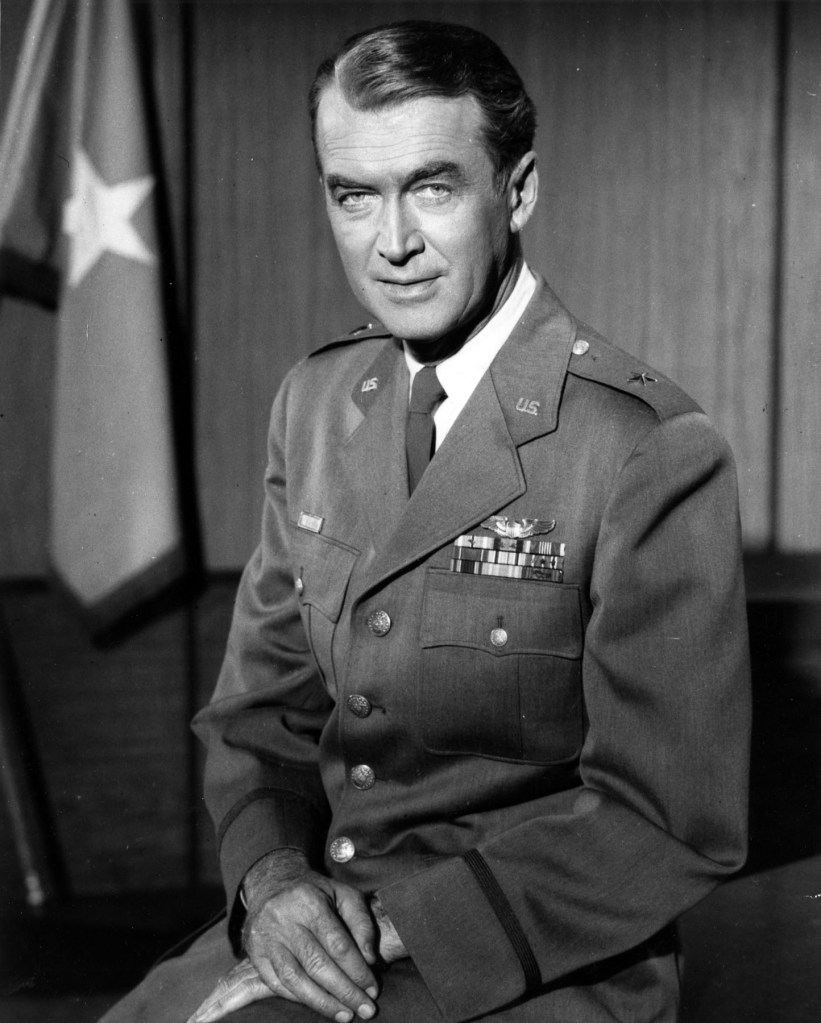
Brigadier General Jimmy Stewart. A bomber pilot during World War II, Stewart suffered from what we today call PTSD. A heroic man, but he’d be the first man to deny that he was a hero. Put differently, Stewart didn’t need war to make him great.

Now, how about the advantages to military service. I know that some of my readers will challenge these, and rightly so, but here are a few “positive waves” about enlisting and taking the oath:

  1. Tradition. For some enlistees, it’s about family tradition. I wasn’t from a strong military family, but my father and his two brothers served in World War II; so did my mother’s brother; and, more recently, my older brother enlisted at the tail end of the Vietnam War and three brothers-in-law also served, one in Vietnam during that horrendous war.
  2. Opportunity. The military today is respected within our society, even venerated. Serving in the military may provide you with unique opportunities both during and after your service.
  3. Teamwork. In a selfish “you can have it all” society, the military reminds us of the importance of teamwork.
  4. Idealism. Taking the Oath of Office should mean something to you. If it doesn’t, don’t enlist.
  5. Purpose, discipline, responsibility, maturity. The military isn’t the only way to live a life of purpose, a disciplined life, a life of responsibility, a life centered on growth and maturation. But, for more than a few people, the military has provided a path forward, a sense of pride and clarity, though that can come at tremendous cost, as explained above.
  6. And, of course, the normal reasons people join: pay, benefits, an opportunity to travel, to start life over, perhaps to escape a bad situation, and so on.

Enlistment, in sum, is a personal decision that must be weighed carefully. What I would say is this: remember the words of Yoda the Jedi Master. “Wars not make one great.” If you’re thinking of enlisting with a hero complex in mind, don’t do it. You’re too immature and you’re misguided to boot. Military service should be about service; it’s also about sacrifice. And you must always remember you may have to make the “ultimate” sacrifice, which is a euphemism for getting killed.

As the Outlaw Josey Wales said: Dyin’ ain’t much of a living, boy.

You’re your own person: Do you what you think is right, and good luck.

Update (11/30/21):

This photo by Jonathan Ernst of Reuters shows the “Gold Star” tree at the White House. It’s a tribute to “the fallen” in recent wars. That expression, “the fallen,” is truly a lamentable euphemism. Of course, we should remember the dead, for which we have Memorial Day and “gardens of stone,” i.e. cemeteries. Should we also remember the dead as ornaments on a Christmas tree? I have my doubts here.