Trump’s Secret: He Delivers to His Base

Trump, delivering to his base, even if it’s all image

W.J. Astore

Chatting with friends today via email, we discussed Trump’s prospects for a second term. Trump could win again, one friend said. “Could” win? He’s got this thing locked up, another friend added. It’s beginning to feel that way.

What’s Trump’s secret? Sure, he’s a shameless con man. He passes himself off as a “law and order” man even as his own way of living demonstrates lawlessness and disorder. Sure, his ignorance, his narcissism, and his laziness have combined to produce 200,000 American deaths from Covid-19, a figure that should have been far smaller with firm leadership from an engaged president.

Yet his supporters don’t hold him responsible for any of this: deaths, disorder, lawlessness in the government, who cares? They favor Trump because he gives them what they want. He makes them feel good.

Can you say the same of Joe Biden? Biden is largely a cipher who’s been picked by the donor class precisely because he’s predictable. His appeals to the progressive base of his party are at best lukewarm. While Trump feeds his base red meat, Biden gives his some warmed up, somewhat spoiled, leftovers.

Trump is an empty shell of man, devoid of compassion and humility. But he knows how to sell, and he knows how to deliver, even if that delivery isn’t quite what one was expecting. So, for example, he hasn’t built much of his great big beautiful wall along the southern border, and Mexico sure isn’t paying for it, but Trump has kept fighting for it. New portions of the wall are being built. And his base likes this because they like walls that allegedly keep out killers and rapists and they like Trump for persisting. Even if the final result is ineffective, a colossal waste of money, it made his base feel better. And Trump knows this.

Trump is delivering with the Supreme Court as well, with help from the ultimate Washington swamp creature, Mitch McConnell. How did Obama do with his Supreme Court choice in 2016? That poor weak man had his pick stolen from him. You think Trump and McConnell are going to let Democrats block or cheat them? Forget about it.

In four short years, Trump will deliver three supreme court justices who are conservative and who will likely overturn Roe v. Wade, sealing the support of evangelicals until End Times. Again, like him or loathe him, Trump has delivered to his base.

Remember when Obama promised hope and change in 2008 and then hired all the usual suspects in Washington to protect businesses and the bankers while screwing the little people? Remember when Obama instantly caved on the idea of universal health care as he worked toward what became Obamacare, which is basically Romneycare and originally a conservative idea? Remember when Obama admitted his policies were basically those of a moderate Republican? So do I.

That’s why we got Trump in 2016. That and the terrible campaign his Democratic rival ran. “I’m with her,” but she wasn’t with me or the majority of Americans, so she lost. Now we have Joe Biden, yet another Democrat who wants to win without promising anything to the base that will upset his donors.

And how does that base feel about Joe? My sense is they are, at best, ambivalent. They don’t trust him. And why should they? Biden is establishment, unexciting, and past his prime. Trump is anti-establishment (in his poses), exciting (in a violent and visceral way), and still hitting on most of his cylinders. Edge to Trump.

Look: Readers of Bracing Views know I despise Trump. I find Biden unreliable as well as uninspiring. His message, so far, is “I’m not Trump.” And I don’t think that’s enough.

You need to inspire. You need to make people feel — something. Trump does this, mostly in a highly charged and negative way. His followers like him and think that Trump knows them and cares about them. Biden is not connecting, not in the same charged way as Trump does, and he’s not giving the Democratic base much of anything.

If the Democrats lose yet again, they had better change tactics and actually play to their base, else you can start penciling in Ivanka Trump and Jared Kushner as America’s president and “first man” in 2024.

RIP RBG, Advantage GOP

W.J. Astore

This summer I read a really good book: “Conversations with RBG: Ruth Bader Ginsburg on Life, Love, Liberty, and Law,” by Jeffrey Rosen. I was impressed by Ginsburg’s clarity, coherence, and especially by her compassion. The Supreme Court and the country have lost a giant.

Now, of course, Mitch McConnell has already vowed a Senate hearing for her replacement prior to the election on November 3rd. His rank hypocrisy and slimy opportunism are eminently predictable. But I really don’t blame Mitch. He’s just doing what swamp creatures do.

No — I blame the Democrats. When Mitch McConnell blocked President Obama’s SCOTUS nominee in 2016, Obama could have done something. There were options. But the Democrats assumed Hillary Clinton would win and she’d get to nominate her first Supreme Court justice, so they caved to Mitch’s obstructionism. That craven strategy got us Donald Trump and Neil Gorsuch. (And, later, the bonus of Brett Kavanaugh.)

Meanwhile, at the lower court levels, Chuck Schumer in the Senate has served as a rubber stamp for Mitch McConnell’s remake of the courts with ultra-conservative judges. Schumer, it must be said, is basically doing the bidding of his masters in the donor class, who are more than happy to see a large number of pro-business, anti-regulatory, judges being appointed to various federal courts.

With the death of Ruth Bader Ginsburg, the Republicans will doubtless nominate someone who’s the polar opposite of RBG. Someone without much compassion, a partisan hack no doubt, someone dedicated to overturning Roe v. Wade, even though the nominee will use the usual weasel words about respecting judicial precedent.

RBG’s death is a major blow, not only because we lost a great justice and an admirable person, but because it will unleash the Republicans to do their worst even as the Democrats will once again reveal their pusillanimity in the face of determined opposition.

If only more Democrats had the spine of RBG. Rest in peace, Ruth. You did all that you could to make this country a better place.

2020, the most depressing presidential election ever

W.J. Astore

It doesn’t get much more depressing than Donald Trump versus Joe Biden. Con man versus corporate man. Neither candidate is a friend of workers, labor, the disadvantaged, the poor. Neither candidate has an ounce of progressivism in his body. At least for me, neither inspires confidence. One has to win, meaning that America’s decline will continue through 2024.

Perhaps I put too much stock in who is president. Yet for certain issues, surely it does matter. Joe Biden won’t seek to appease his evangelical base by trying to outlaw abortion. Joe Biden won’t try to eliminate Obamacare (and thereby cut health care coverage for millions during a pandemic) just out of spite. Joe Biden won’t deny the reality of climate change and thus will help, in a small way, to prepare for future global disruptions caused by the same. These and other reasons are enough for many people to vote for Joe.

But Joe is largely an empty vessel that’s waiting to be filled by all the usual suspects within the Washington Beltway. His domestic agenda will likely be defined by neoliberal economics and disastrous compromises with Republicans, e.g. cuts to social security, while his foreign policy will likely be the usual forever wars driven by neoconservative agendas disguised by appeals to American exceptionalism and national security. In short, much like Obama, but more conservative (if such a thing is possible).

Friends like to send me appeals to vote for Joe, because Trump is basically a blustering ignoramus who doesn’t care how much damage he does, as long as he remains in office (and thus can call himself a “winner” while enriching himself further). They argue that Joe will be open to progressive ideas after the election, or at the very least will respond to progressives when pressured.

It’s nice fairy tale, where somehow things end happily ever after, but it’s just that. A fairy tale.

As I wrote to one friend about voting for Joe:

It’s all so depressing. This is what the corporate-bought DNC is counting on. Vote for Joe — he’s not quite as bad as Trump. And you have no other choice.

And if Joe wins, forget about Progressive initiatives, as Joe pivots, i.e. caves, to the Republicans in the (false) name of bipartisanship and “reaching across the aisle.”

And, just after I sent that, I saw this image of Joe and Mike Pence at a 9/11 event:

Prepare for lots of bipartisanship under Joe. But it will serve the elites, not you.

As I said to my friend, Nothing wrong with voting for Joe — but this is what’s going to happen if he wins. We get a moderate Republican — bought and paid for — instead of a lazy egomaniac named Trump.

What a “choice”!

Bring Back National Service

Dad in Oregon
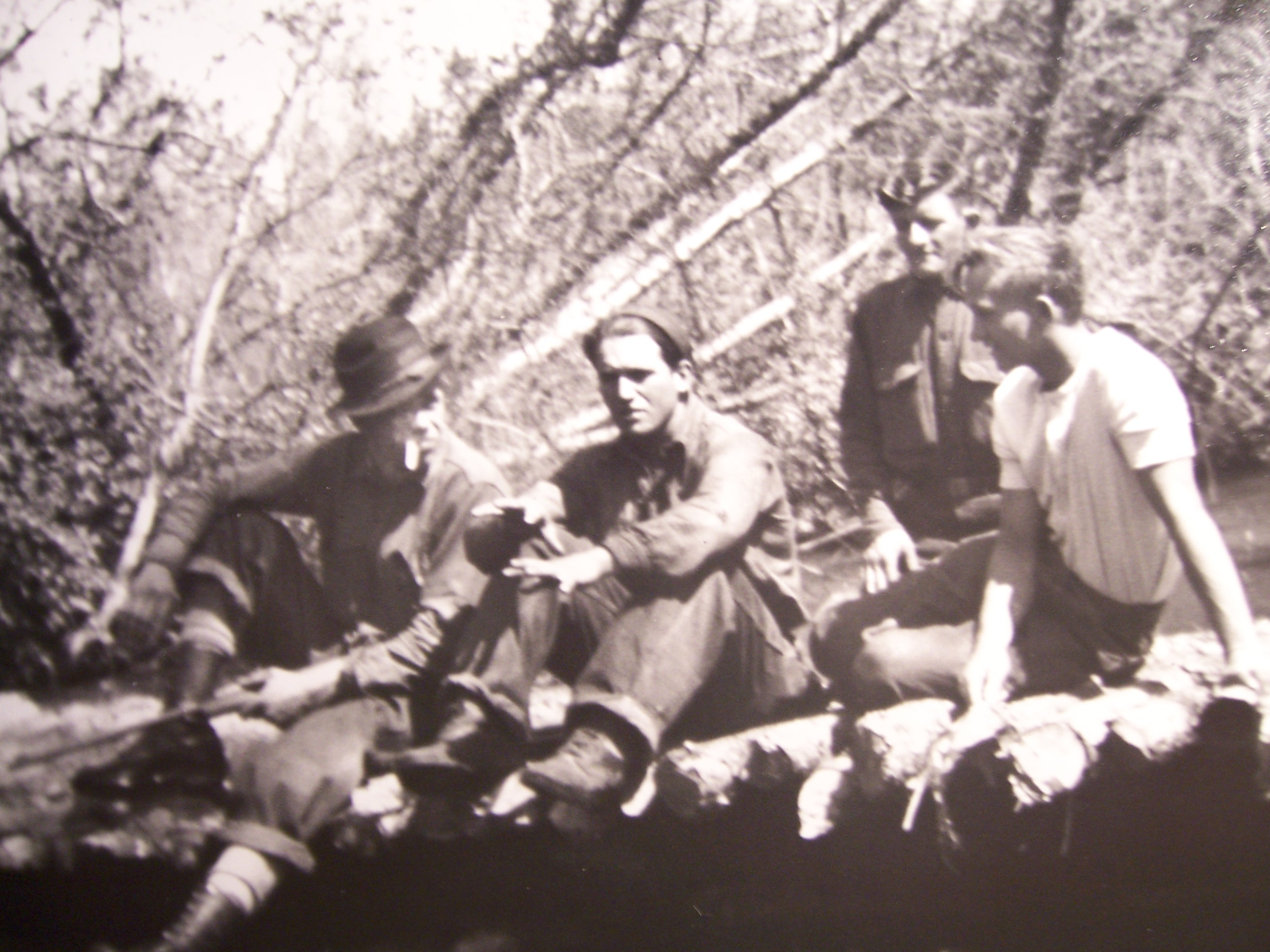
My dad (2nd from left) in Oregon with some of the “fellows,” c.1937

With fires raging in California and Oregon, and with unemployment rates high, I recalled the experiences of my dad, which I wrote about twelve years ago for TomDispatch.com.  My dad served in the Civilian Conservation Corps (CCC), mainly fighting forest fires in Oregon.  The CCC was one of those alphabet soup agencies created by FDR’s administration to put people back to work while paying them a meaningful wage.  You might call it “democratic socialism,” but I prefer to call it common sense and applaud its spirit of service to country.

We need to revive national service while deemphasizing its military aspects.  There are all sorts of honorable services one can render to one’s fellow citizens, as my father’s example shows from the 1930s, an era that now seems almost biblical in its remoteness from today’s concerns.

Hey, Government! How About Calling on Us?
Reviving National Service in a Big Way
By William J. Astore

Lately, our news has focused on tropical depressions maturing into monster hurricanes that leave devastation in their wake — and I’m not just talking about Gustav and Ike. Today, we face a perfect storm of financial devastation, notable for the enormity of the greed that generated it and the somnolent response of our government in helping Americans left devastated in its wake.

As unemployment rates soar to their highest level in five years and home construction sinks to its lowest level in 17 years, all our federal government seems able to do is buy up to $700 billion in “distressed” mortgage-related assets, bail-out Fannie Mae and Freddie Mac (at a cost of roughly $200 billion) or “loan” $85 billion to liquidate insurance giant AIG. If you’re Merrill Lynch, you get a hearing; if you’re just plain Marilyn Lynch of Topeka, what you get is a recession, a looming depression, and a federal tax bill for the fat-cat bail-outs.

But, amazingly enough, ordinary Americans generally don’t want bail-outs, nor do they want handouts. What they normally want is honorable work, decent wages, and a government willing to wake up and help them contribute to a national restoration.

How America Was Once Rebuilt

Before surging ahead, however, let’s look back. Seventy-five years ago, our country faced an even deeper depression. Millions of men had neither jobs, nor job prospects. Families were struggling to put food on the table. And President Franklin Delano Roosevelt acted. He created the Civilian Conservation Corps, soon widely known as the CCC.

From 1933 to 1942, the CCC enrolled nearly 3.5 million men in roughly 4,500 camps across the country. It helped to build roads, build and repair bridges, clear brush and fight forest fires, create state parks and recreational areas, and otherwise develop and improve our nation’s infrastructure — work no less desperately needed today than it was back then. These young men — women were not included — willingly lived in primitive camps and barracks, sacrificing to support their families who were hurting back home.

My father, who served in the CCC from 1935 to 1937, was among those young men. They earned $30 a month for their labor — a dollar a day — and he sent home $25 of that to support the family. For those modest wages, he and others like him gave liberally to our country in return. The stats are still impressive: 800 state parks developed; 125,000 miles of road built; more than two billion trees planted; 972 million fish stocked. The list goes on and on in jaw-dropping detail.

Not only did the CCC improve our country physically, you might even say that experiencing it prepared a significant part of the “greatest generation” of World War II for greatness. After all, veterans of the CCC had already learned to work and sacrifice for something larger than themselves — for, in fact, their families, their state, their country. As important as the G.I. Bill was to veterans returning from that war and to our country’s economic boom in the 1950s, the CCC was certainly no less important in building character and instilling an ethic of teamwork, service, and sacrifice in a generation of American men.

Today, we desperately need to tap a similar ethic of service to country. The parlous health of our communities, our rickety infrastructure, and our increasingly rickety country demands nothing less.

Of course, I’m hardly alone in suggesting the importance of national service. Last year, in Time Magazine, for example, Richard Stengel called for a revival of national service and urged the formation of a “Green Corps,” analogous to the CCC, and dedicated to the rejuvenation of our national infrastructure.

To mark the seventh anniversary of 9/11, John McCain and Barack Obama recently spoke in glowing terms of national service at a forum hosted by Columbia University. Both men expressed support for increased governmental spending, with McCain promising that, as president, he would sign into law the Kennedy-Hatch “Serve America Act,” which would, among other things, triple the size of the AmeriCorps. (Of course, McCain had just come from a Republican convention that had again and again mocked Obama’s time as a “community organizer” and, even at Columbia, he expressed a preference for faith-based organizations and the private sector over service programs run by the government.) Obama has made national service a pillar of his campaign, promising to spend $3.5 billion annually to more than triple the size of AmeriCorps, while also doubling the size of the Peace Corps.

It all sounds impressive. But is it? Compared to the roughly $900 billion being spent in FY2009 on national defense, homeland security, intelligence, and the wars in Iraq and Afghanistan, $3.5 billion seems like chump change, not a major investment in national service or in Americans. When you consider the problems facing American workers and our country, both McCain and Obama are remarkable in their timidity. Now is surely not the time to tinker with the controls on a ship of state that’s listing dangerously to starboard.

Do I overstate? Here are just two data points. Last month our national unemployment rate rose to 6.1%, a five-year high. This year alone, we’ve shed more than 600,000 jobs in eight months. If you include the so-called marginally attached jobless, 11 million Americans are currently out of work, which adds up to a real unemployment rate of 7.1%. Now, that doesn’t begin to compare to the unemployment rate during the Great Depression which, at times, exceeded 20%. In absolute terms, however, 11 million unemployed American workers represent an enormous waste of human potential.

How can we get people off the jobless rolls, while offering them useful tasks that will help support families, while building character, community, and country?

Here’s where our federal government really should step in, just as it did in 1933. For we face an enormous national challenge today which goes largely unaddressed: shoring up our nation’s crumbling infrastructure. The prestigious American Society of Civil Engineers did a survey of, and a report card on, the state of the American infrastructure. Our country’s backbone earned a dismal “D,” barely above a failing (and fatal) grade. The Society estimates that we need to invest $1.6 trillion in infrastructure maintenance and improvements over the next five years or face ever more collapsing bridges and bursting dams. It’s a staggering sum, until you realize that we’re already approaching a trillion dollars spent on the Iraq war alone.

No less pressing than a trillion-dollar investment in our nation’s physical health is a commensurate investment in the emotional and civic well-being of our country — not just the drop-in-the-bucket amounts both Obama and McCain are talking about, but something commensurate with the task ahead of us. As our president dithers, even refusing to use the “R” word of recession, The Wall Street Journal quotes Mark Gertler, a New York University economist, simply stating this is “the worst financial crisis since the Great Depression.”

The best and fairest way to head off that crisis is not simply to spend untold scores of billions of taxpayer dollars rescuing (or even liquidating) recklessly speculative outfits that gave no thought to ordinary workers while they were living large. Rather, our government should invest scores of billions in empowering the ordinary American worker, particularly those who have suffered the most from the economic ravages of our financial hurricane.

Just as in 1933, a call today to serve our country and strengthen its infrastructure would serve to reenergize a shared sense of commitment to America. Such service would touch millions of Americans in powerful ways that can’t be fully predicted in advance, just as it touched my father as a young man.

What “Ordinary” Americans Are Capable Of

My father was a self-confessed “regular guy,” and his CCC service was typical. He was a “woodsman-falling,” a somewhat droll job title perhaps, but one that concealed considerable danger. In the fall of 1936, he fought the Bandon forest fire in Oregon, a huge conflagration that burned 100,000 acres and killed a dozen people. To corral and contain that fire, he and the other “fellows” in his company worked on the fire lines for five straight weeks. At one point, my father worked 22 hours straight, in part because the fire raged so fiercely and so close to him that he was too scared to sleep (as he admitted to me long after).

My father was 19 when he fought that fire. Previously, he had been a newspaper boy and had after the tenth grade quit high school to support the family. Still, nothing marked him as a man who would risk his own life to save the lives of others, but his country gave him an opportunity to serve and prove himself, and he did.

Before joining the CCC, my father had been a city boy, but in the Oregon woods he discovered a new world of great wonder. It enriched his life, just as his recollections of it enrich my own:

“Thunder and lightning are very dangerous in the forest. Well, one stormy night a Forest Ranger smoke chaser got a call from the fire tower. They spotted a small night fire; getting the location the Ranger took me and another CCC boy to check it out. After walking about a mile in the woods we spotted the fire. It had burned a circle of fire at least 100 yards in diameter from the impact of the lightning bolt.

“You never saw anything so beautiful. The trees were all lit in fire; the fire on the ground was lit up in hot coals. Also fiery embers were falling off the trees. Some of the trees were dried dead snags. It looked like the New York skyline lit up at night. The Ranger radioed back for a fire crew. Meanwhile the three of us started to contain the fire with a fire trail.

“Later, we got caught in a thunderstorm in the mountains. We stretched a tarpaulin to protect ourselves from the downpours. You could see the storm clouds, with thunder and lightning flashing, approaching and passing over us. Then the torrents of rain. It would stop and clear with stars shining. And sure enough it must have repeated the sequence at least five times. What a night.”

Jump ahead to 2008 and picture a nineteen-year-old high school dropout. Do you see a self-centered slacker, someone too preoccupied exercising his thumbs on video games, or advertising himself on MySpace and Facebook, to do much of anything to help anyone other than himself?

Sure, there are a few of these. Aren’t there always? But many more young Americans already serve or volunteer in some capacity. Even our imaginary slacker may just need an opportunity — and a little push — to prove his mettle. We’ll never know unless our leaders put our money where, at present, only their mouths are.

Remaking National Service — And Our Country

Today, when most people think of national service, they think of military service. As a retired military officer, I’m hardly one to discount the importance of such service, but we need to extend the notion of service beyond the military, beyond national defense, to embrace all dimensions of civic life. Imagine if such service was as much the norm as in the 1930s, rather than the exception, and imagine if our government was no longer seen as the problem, but the progenitor of opportunity and solutions?

Some will say it can no longer be done. Much like Rudy Giuliani, they’ll poke fun at the whole idea of service, and paint the government as dangerously corrupt, or wasteful, or even as the enemy of the people — perhaps because they’re part of that same government.

How sad. We don’t need jaded “insiders” or callow “outsiders” in Washington; what we need are doers and dreamers. We need leaders with faith both in the people — the common worker with uncommon spirit — and the government to inspire and get things done.

The unselfish idealism, work ethic, and public service of the CCC could be tapped again, if only our government remembers that our greatest national resource is not exhaustible commodities like oil or natural gas, but the inexhaustible spirit and generosity of the American worker.

William J. Astore, a retired lieutenant colonel (USAF), taught at the Air Force Academy and the Naval Postgraduate School. He now teaches at the Pennsylvania College of Technology, and is the author of Hindenburg: Icon of German Militarism (Potomac Press, 2005), among other works. He may be reached at wastore@pct.edu.

Copyright 2008 William Astore

The USA as a Fourth World Country

Trump, striding to protect precious property

W.J. Astore

1+3=4. It’s a simple equation that says much about the American moment, suggests Tom Engelhardt today at TomDispatch.com. Think about it. America remains a first world country with its unmatched military might, its powerful corporate and financial sectors, and the quality of life available to the affluent and well-connected. But for most other Americans? The country increasingly seems 3rd world, with crumbling infrastructure, low wages, lack of good jobs, lack of health care coverage for the less fortunate, and so on.

Perhaps that’s why Trump gets away with tweets about thug-ridden streets (that he connects to the Black Lives Matter movement). People may not see these thugs, but they sense something is wrong out there, and someone may indeed be coming for them, very shortly, perhaps to evict or foreclose on them.

There is a unique ideology to our fourth world country. Our two main parties, the Democrats and Republicans, agree that to invest in society is socialism, but to “invest” in weaponry and wars is the height of prudence and sanity. I know: a few Democrats like Bernie Sanders and AOC make noises, more or less sincere, about helping workers and investing in people, but they are shunted aside by the corporate Democrats whose main job it is to keep “socialists” like Bernie out of power. It’s the one thing they’re good at, led as they are by those icons of charisma and homespun goodness, Nancy Pelosi and Chuck Schumer.

Meanwhile, Trump continues to rant about American carnage, doing his level best to create it where it doesn’t yet exist. “Law&Order” is his new cry, usually shouted in all caps, even as he himself leads an administration that’s lawless and disordered. Roughly one-third of likely voters find him attractive as a tough-guy leader, the plutocrat populist, so mark this down as another weird feature of fourth worldness.

Fourth worldness: to invest in people is socialism and wrong; to invest in wars and weaponry is not militarism and is right. To elect a (democratic) socialist like Bernie Sanders would be un-American, but to reelect a sociopathic plutocrat posing as a populist is about keeping America great.

That’s America! You can’t love it “as is,” unless you’re crazy, and you can’t leave it ’cause we’re all Covid pariahs to the rest of the world.

So maybe, just maybe, we should change it?

On War Dead, Politics, and Trump

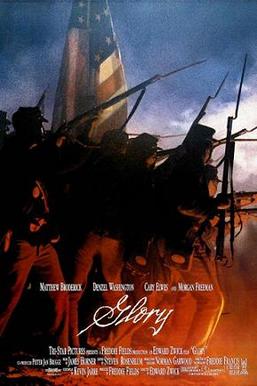
Glory_(1989_film)_poster

M. Davout

I was recently re-watching Glory (1989), starring Matthew Broderick and Morgan Freeman, with my high school senior son (for whom this was a first viewing). I’ve regularly shown sequences from this dramatization of the 54th Massachusetts Regiment, one of the first “Colored” combat units to enter the fight against the Confederacy, to students in my “Film and Politics” course. Toward the end of the film, as the action swung to the 54th’s frontal assault on Fort Wagner, South Carolina, on July 18, 1863, I let slip, to my son’s chagrin, that the attack would fail and result in the regiment’s near destruction. He rhetorically asked why they would make a film about this regiment if the attack failed and all the main characters died.

My son is a tech geek with libertarian leanings and, as a result, he tends to analyze interactions through a transactional lens. In assessing whether a deal or agreement or commitment makes sense, he asks himself what each party materially stands to gain. From his point of view, the conclusion of the dramatic arc of Glory was problematic because it depicted men who failed and died rather than lived and won. And it left viewers with an emotional deficit rather than a surplus.

My son’s response to Glory put me to mind of the uproar over President Trump’s reportedly disdainful remarks about US war dead, which continues to reverberate in the mainstream media. The sources for the Atlantic Monthly story remain anonymous to date but Trump’s documented pattern of openly contemptuous remarks about John McCain’s harrowing imprisonment by North Vietnamese captors gives credence to reports that Trump considered fallen US soldiers to have been “suckers” and “losers.” He openly wondered during a visit with his then chief-of-staff John Kelly to the grave of Kelly’s soldier son why his son had put his life at risk for his country.

Trump’s reported comments and the attitude toward military sacrifice they purportedly exemplify have provoked attacks from Democratic politicians and a deafening silence from Republican politicians. It remains to be seen what lasting damage, if any, this controversy will do to Trump’s electoral prospects.

Sometime an outrageous comment can illuminate an issue worth thinking about that would otherwise be obscured in the dust of political combat. While Trump could be faulted for lacking decorum in pressing Kelly about the rationale for his son’s death, it isn’t an unserious question to wonder why someone would volunteer to be a soldier in a country at war. After all, countries or nation-states are mostly abstractions. People experience them mainly as aggregations of bureaucratic practices and routines which determine where borders are, where certain customs hold or one language or currency is in use rather than another.

It is intuitively graspable why one would be prepared to sacrifice one’s life for one’s child or one’s family or one’s close friend or even a flesh-and-blood stranger in a car accident whose distress provokes an immediate empathetic response. (Maybe not for Trump—he does not seem capable of empathizing with anyone enough to put his interests or life at risk for them.) But to be prepared to die for one set of bureaucratic routines and practices in a conflict with others fighting for a different set of bureaucratic routines and practices? How does that make sense?

Recognizing the challenge of getting citizens to feel a self-sacrificing love of country, the functionaries of emerging nation-states have come universally to institute all sorts of cultural practices designed to foster an emotional connection to one’s nation: pledges of allegiance, national anthems, patriotic rhetoric and ceremonies (e.g., France’s Bastille Day Parade), even the instrumentalization of war dead as a way of tugging on citizen heartstrings (e.g., Lincoln’s Gettysburg Address).

However, the fact that the inhabitants of a bureaucratically-inscribed geographic region come to love their country and feel ready to sacrifice their lives for its good does not, in and of itself, guarantee the reasonableness of their sacrifice or the moral worthiness of the policies that led to that sacrifice. People do end up dying for stupid or bad or even evil national causes and a government’s instrumentalization of the war dead has sometimes had a role in rallying people to do wrong or even terrible things. (See for example the Totenehrung at the 1934 Nazi Nuremberg Rally.) As numerous columns at Bracingviews.com have argued, notions of patriotic service to country can be enlisted in a program of militarization that mainly benefits corporate profits and bureaucratic growth.

So fault Trump for a narcissism so pathological that he cannot control his disdain and contempt whenever he is faced with the spectacle of people who have sacrificed in the service of others. Fault him for colossal presidential laziness and mammoth personal vanity in not wanting to pay respects at a second US military cemetery in France because the rainy weather would force him to take a long drive and get his hair wet. Fault him for his lack of sensitivity in needlessly rubbing raw the sorrow of a father at the grave of his fallen son. But do not let the anger (whether righteous or hypocritical) being expended on him in this heated moment of political controversy obscure the duty citizens have to judge the right and wrong of war policy and the reasonableness of dying for country.

M. Davout, a political science professor who teaches in the Deep South, is an occasional contributor to Bracing Views.

Proud to be a deplorable

W.J. Astore

Today, my wife got stuck behind a pickup truck sporting a bumper sticker of considerable meaning: “Proud to be a deplorable.” No, this wasn’t red state Mississippi; it was blue state Massachusetts.

It’s worth a chuckle or two, until you realize its larger meaning. Many people are proud to vote for Trump because establishment Democrats like Hillary Clinton don’t speak to them, except when they’re dismissing them as deplorables that are “irredeemable,” as Hillary put it in 2016.

Take that, Hillary and all you “libtards”!

It’s never smart to dismiss potential voters as dumbasses without hope, but Hillary thought she had the election in the bag. She lost because she ran a poor campaign and because her elitism and sense of privilege were so obvious. But she also had no compelling messages for the “deplorables.” And Trump did. Trump talked about bad trade deals, the offshoring of jobs, the betrayal of ordinary Americans by the financial set, the big money people, the ones who paid Hillary so handsomely for a few empty speeches.

Of course, Trump didn’t and doesn’t care about ordinary Americans. From all appearances, Trump cares only about himself (and perhaps his immediate family). Nevertheless, he was smart enough to offer the people something, even if all they were left with in the end was a rebel identity as a deplorable.

Establishment Democrats, demonstrating their ability to learn nothing, are once again offering “deplorables” nothing specific. No universal health care (indeed, Joe Biden said he’d veto such a bill if it reached his desk as president). No firm and trustworthy commitment to a $15 minimum wage. No firm and trustworthy commitment to ending those endless foreign wars. Biden promises nothing more than he’s not Trump, end of story.

His choice of Vice President backs this up. Kamala Harris is a conservative Democrat; she’s establishment through and through. But she’s a woman who’s multiracial, so this is considered proof of her diversity and her commitment to helping the less fortunate. Come again?

As Tulsi Gabbard pointed out during a debate, Harris smugly joked about smoking marijuana even as she put “deplorable” users into prison, among other positions that showcased her privileged hypocrisy, but no matter. Even though Harris dropped out early (after boasting of being a top-tier candidate), even though she couldn’t win a single delegate in the primaries, she was handpicked by Joe Biden to lend some excitement to the ticket. Mission unaccomplished.

So I fear, like Michael Moore, that Trump could win again, probably losing the popular vote but winning enough swing states to put him over the top in the electoral college. Trump could win because the “deplorables” in their trucks across blue- and red state America know how to stand by their man. Even though he’s a no-good cheatin’ fool, Trump offers them something, something unquantifiable but powerful, an identity, perhaps, and the ability, in casting their votes, to give a big FU to all the elites that keep telling them they don’t measure up — and never will.

The Face of America

The Face of America

W.J. Astore

The Republican National Convention is over. Its main message: be afraid. Be very afraid. Of socialism. Of people coming to take your guns. Of open borders. Of anarchy in the street. Of “cancel culture.” And so on.

Its ancillary message: the Democrats are not a rival party of patriotic Americans. They are dangerous. Dishonest. Scheming. And un-American.

In last night’s acceptance speech, Trump was his usual huckster and grifter self. Perhaps my favorite claim was when Trump said he’d done more to help black people than any other president, Abraham Lincoln excepted. There’s little doubt that in his own mind Trump believes he’s done more than Lincoln “for the black.”

What can I say that hasn’t already been said about the alternate (un)reality that Trump sells to his acolytes? It’s total BS, it’s fantasy, it’s often hateful or spiteful, but it resonates with certain people, even as it disgusts others.

Trump, among many other things, is a sower of discord. A manufacturer of outrage based on lies and misinformation. But he needs an audience of willing followers, and there are plenty of those in America.

In life, Trump has failed at so many things. I’d argue he has failed miserably as a president, dividing the country instead of uniting it, effectively feeding the rich while starving the poor. Yet the man has captured an entire political party and the fervid support of roughly one-third of those Americans most likely to vote in November.

He has shown us a face of America we’d prefer not to see, a face defined by appetites and grievances and prejudices actuated by violence and fear and lies. But I’d go further. By fomenting violence and fear and lies, Trump has acted not like a true mirror but a funhouse one. He has distorted America. He has made it more grotesque. He has twisted it and contorted it and made it more like him.

In short, he has made his mark on the face of America. And that mark will be a very difficult one to erase.

The Republican Party of the Perpetual Now

Not much need for History in Trump’s America

W.J. Astore

As a historian, I have an allegiance to the past, and to getting the facts right about that past. Because, if you can’t get the facts right, if you can’t do research with rigor and honesty, you can’t call yourself an historian.

So you won’t be surprised to learn that Trump’s version of the Republican Party is anathema to me. The party has no respect for the past. And getting facts right? What does that matter in a time of “alternative facts,” in an administration that lies routinely and about everything?

Trump’s version of the Republican Party is a party of the perpetual now, in which the meaning of “now” is remarkably labile and open to interpretation (and re-interpretation). In a strange way, Trump’s party is the party of post-modernism, where all facts are contingent, where everything is open to being constructed and deconstructed. Truth itself is a social construct in the Trumpian universe, determined by Trump himself and the various ass-kissers he’s assembled around him.

Not only is the Trumpian Party without a meaningful past: it’s also without a mediated future. According to the official platform of the Republican Party adopted last night, the party and its platform is what Trump says it is, world without end, Amen.

Here’s how it was put in a press release:

“RESOLVED, That the Republican Party has and will continue to enthusiastically support the President’s America-first agenda” and “The 2020 Republican National Convention will adjourn without adopting a new platform until the 2024 Republican National Convention.”

The platform is Trump and Trump is the platform. The future is whatever Trump wills it to be, in his usual egotistical and often nonsensical way.

Facts don’t matter. The (true) past doesn’t matter. America as will and idea, as defined by Trump’s mind and driven by Trump’s desires.

As many have said, this isn’t a party, it’s a cult. A cult of unreflective minds, a cult unconcerned with critical thinking about the past, a cult that believes the future is best defined by one man.

One thing is certain: You won’t need any historians in Trump’s world. Just a lot of stenographers and sycophants willing to accept reality as Trump presents it, a perpetual now that’s constantly constructed and deconstructed before your eyes, the only constant being the celebration of Trump.

Remember: you can’t believe your lying eyes, but you can believe in Trump. If that’s not the end of history, I don’t know what is.

What Trump Can Do to Win Again (Fair and Square)

With Trump trailing in the polls, some people have suggested an “October surprise” looms, such as a provocation against Iran, that could swing the election. But what if this “surprise” is something different. What if Trump decides to outflank Biden on an issue of great importance to ordinary Americans. It’s a scenario that’s more than possible, as the redoubtable M. Davout argues in his latest article for this site. W.J. Astore

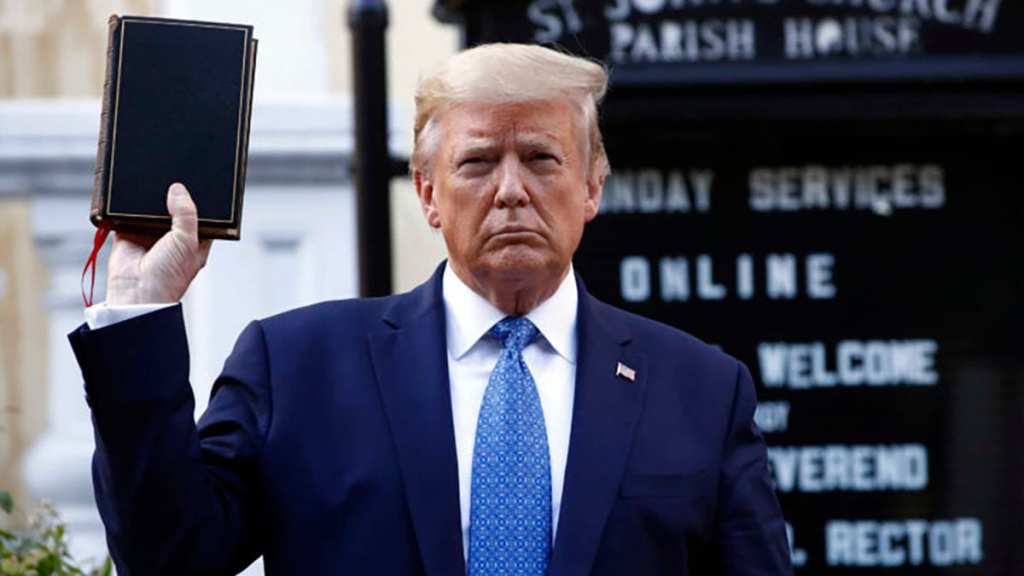
He’s willing to thump a Bible — why not thump Medicare for All?

M. Davout

In my first contribution to Bracing Views a little more than four years ago, I appealed, as an enthusiastic advocate for Bernie Sanders during the Democratic primaries, to fellow Bernie supporters in swing states to vote for Hillary Clinton in the upcoming general election. This election cycle I will be taking a different approach.

The virtual Democratic National Convention for the 2020 general election has just ended with the nomination of a candidate, Joe Biden, whose political instincts, record in office, and stated policy goals are in most essential respects updates of Clinton’s. Despite the convention speakers’ almost universal silence about policy, we can expect from a Biden win a continuation of what has largely been the Democratic Party policy agenda of the last forty years: maintenance of the US global military umbrella, protection of neoliberal economic interests, and gestures of racial inclusiveness and multicultural tolerance.

If Biden wins, it will be because of Trump’s catastrophic public health leadership failures in the face of the Covid pandemic, which has radically disrupted social life, tanked many parts of the economy, and thus far killed 175,000+ American lives. And Trump’s heartless and authoritarian response to the mobilization of millions of people in street demonstrations affirming that Black Lives Matter has not helped his electoral prospects.

In his acceptance speech, Biden emphatically told us that if elected he will take effective action to get a grip on the Covid crisis. Yet, on other occasions, he has also told us that if he wins, he will not fundamentally address the more insidious and chronic crisis of tens of millions of Americans with few, if any, health care options, even going so far as to say that he would veto any Medicare-for-All bill passed by Congress. On the issue of policing, he has been up front about his intention not to challenge the militarized and racist institutions of policing in this country other than to call for more training and prohibition of police use of choke holds.

The sad truth is that of the two major party candidates, only one has ever run a national campaign as an economic populist and it isn’t the current standard bearer of the Democratic Party. In 2016, Donald Trump promised Americans that he would get all of them great health care, take on Big Pharma and make prescription drugs affordable, end the hemorrhaging of American lives and treasure in foreign wars and drain the swamp by putting a stop to special interest corruption of members of Congress. Trump was lying, of course, but these lies were just effective enough in states like Wisconsin and Pennsylvania because the Democratic Party had lost all credibility as the party of working people.

So, this cycle, rather than try to persuade my fellow Bernie supporters once again to vote democratic, let me try a different approach and offer Trump some electoral advice. Give a nationally televised Oval Office speech in which you commit to stopping the pandemic and embrace, as one of the main pillars of your pandemic response, Medicare-for-All. Tell the American people the truth—that the private health insurance system in the U.S. has failed to protect the health of the American people and instead has lined the pockets of CEOs, rich shareholders, medical specialists, insurance industry lobbyists and members of Congress. Tell them that ensuring universal and affordable access to healthcare through universal expansion of Medicare is an essential step not only in defeating Covid-19 but also in protecting against the pandemics that might occur down the road. A true nation-state takes care of its own and Medicare-for-All will Make America Great Again.

As a certified political scientist, I can guarantee that you stand only to gain electorally by taking this advice. You won’t lose your business supporters and anti-Communist Republican voters–they will know that you are lying. The idea of universal health insurance based on the expansion of a system on which their parents and grandparents have relied will be attractive to your white working class base voters who have suffered disproportionately from opioid and alcohol addiction and deaths. And, who knows, maybe some progressives, unhinged by Biden’s hostility to universal coverage, will pull the lever for you. It may be enough to keep Michigan, Wisconsin, and Pennsylvania in your column (and maybe even swing Minnesota your way).

I give this advice not because I want Trump to win but because of my conviction that until the Democratic Party is forced to compete for working class votes on the basis of economic populism, we are going to be locked into an ever more dangerous cycle of alternating rule by neoliberal Democrats and nationalist-racist Republican populists.

M. Davout teaches political science in the Deep South.