It’s not just the Tea Party that’s lame (Toby Toons)
W.J. Astore
The more the United States has come to talk about dominance, the less dominant we’ve become.
To compensate, we’ve become a steroidal nation, to include the violent side effects associated with steroid use (just look at the latest stories out of the NFL about spousal and child abuse, or our steroidal police forces, including MRAPs and M-16s for school police). If the story of the last fifty years is the gradual decline of the U.S., most notably in the economic and political realms, the story of today is how we’ve compensated with militarized Viagra. We’ve reached “the age of knowing” that we’ve lost much of our potency as our country. To compensate, we’re forever popping pills and flexing our muscles. (Just look at John McCain’s enthusiasm for bombing.)
It’s precisely those steroids that are weakening us as a country. As we’ve overcompensated with military weapons and bases, we’ve allowed our economy to slide. As we’ve sought domination overseas, we’ve weakened our country right here at home. We feverishly build and repair roads in Afghanistan but not here in the USA. Same with schools — we’d rather build prisons, to include Gitmo, than colleges (since 1984, California has built 21 prisons but only one university).
Consider our binary debates on foreign policy. It’s the hawks versus the doves, militarized “engagement” versus isolationist “appeasers,” the implication being that the latter is wrong — that minding one’s own business is not an option in a globalized world. But the world is not some “global village”: it’s a conglomeration of fragments. And U.S. efforts to dominate those fragments by military means are only accelerating that fragmentation. Just look at what our government did and is doing to Iraq and Afghanistan.
Fragmentation facilitates dominance by multinational corporations even as the U.S. military is misused and overextended. The result is more global instability and a retreat (or a return) to ideologies that promise coherence and order. Witness the rise of militant Islam and ISIS. By attacking it, the U.S. is acting as an accelerant to it.
As the U.S. weakens itself as a country, as it accumulates debt by constantly fighting wars while passing the costs along to future generations, large multinational corporations grow in power. They are today’s equivalent to the British East India Company, the Dutch East India Company, and similar entities of the past. Combine powerful multinationals with privatized mercenary outfits and you see echoes of the seventeenth century, to include wars over religion and resources. Three centuries ago, it was Catholics versus Protestants and wars over spices like pepper and nutmeg. Now it’s divisions within Islam and wars over oil.
We’re witnessing the decline of Enlightenment ideals and community-based Democracy, as seen by the way in which the U.S. government routinely betrays those ideals. Any sense of shared, community-based, obligation is tainted by “socialism,” meaning that a Darwinian capitalism based on selfish individualism is promoted instead, which only feeds the growth of multinationals competing to sell “product” to the masses.
Everything is becoming a consumable, including the most vital parts of life. As a consumable, it can be marketed, sold, and controlled by those same multinationals. Even education is now an ephemeral product, marketed and sold as a commodity.
Corporations think and act for short-term profit. But democracies are supposed to think strategically, over the long term. Now the quarterly business cycle controls all. Look at politics: A congressman is elected and instantly starts fund raising to win his next campaign. Obama wins a second term and is almost instantly branded a lame duck.
But it’s not Obama who is the lame duck – it’s America. And all the militarized steroids in the world won’t cure that lameness. Indeed, they just aggravate it.
A sentiment attributed to Vice President Joe Biden is, Show me what’s in your budget, and I’ll tell you what you value. These words resonate with me whenever I consider the yearly budget for the Department of Defense (DoD), Homeland Security, the Department of Energy (which handles nuclear weapons), and the various intelligence agencies (roughly 17; that’s why they form a community).
When you add up what we spend on defense, homeland security, “overseas contingency operations” (wars), nuclear weapons, and intelligence and surveillance operations, the sum approaches $750 billion dollars each and every year, consuming more than two-thirds of the federal government’s discretionary spending.
Here are some figures for Fiscal Year 2015 (FY15):
Defense: “Base” budget of $496 billion
Afghan War (not part of “defense”): $85 billion
VA: $65 billion
Homeland Security: $38 billion
Nuclear Weapons: $12 billion
FBI and Cyber Security (part of Justice Department budget): $18 billion
Total: $714 billion
Some of the budget of the State Department and for foreign aid supports weapons and training (“foreign military sales”), bringing us to roughly three-quarters of a trillion dollars, each and every year, on the military, intelligence, security, weapons, and wars.
How much do we spend at the federal level on education, interior, and transportation? Roughly $95 billion.
When a government spends almost eight times as much on its military, security, wars, weapons, and the like as it does on educating its youth, fixing its roads and bridges and related infrastructure, and maintaining its national parks and land, is there any question what that country ultimately values?
Show me your budget and I’ll tell you what you value. Sobering words. Sobering — and scary.
Obama “consults” with Congress before ordering more bombing. Note the irony of George Washington’s portrait, the man who warned us to avoid foreign entanglements (Source: NYT)
W.J. Astore
President Obama’s speech tonight on the Islamic State (or ISIS) promises more military action. More airstrikes, more boots on the ground (mainly Special Forces), more training for the Iraqi military (who have endured more than a decade’s worth of U.S. military training, with indifferent results), and more weapons sales (which often end up in the hands of ISIS, thereby necessitating more U.S. airstrikes to destroy them).
All of this is sadly predictable. Call it the TINA militarized strategy, as in “There is no alternative” (TINA) but to call in the military.
There are three reasons for the TINA strategy. One is domestic politics. Facing elections in November, the Obama Administration and the Democrats must appear to be strong. They must take military action, at least in their eyes, else risk being painted by Republicans as terrorist-appeasers.
The second reason is also obvious: The military option is the only one the U.S. is heavily invested in; the only option we’re prepared, mentally as well as physically, to embrace. The U.S. is militarized; we see the military as offering quick results; indeed, the military promises such results; we’re impatient people; so we embrace the military.
Never mind the talk of another long war, perhaps of three years or longer. When they bother to pay attention, what most Americans see on their TV and computer screens is quick results, like the video released by Central Command showing the U.S. military blowing up ISIS equipment (often, U.S. military equipment provided to Iraq but appropriated by ISIS). And unlike those ISIS “medieval” beheadings, decapitation by laser-guided bomb is both unoffensive and justified.
And if we’re blowing things up with our 21st-century decapitation bombs, we must be winning — or, at least we’re doing something to avenge ISIS barbarism. Better to do something than nothing. Right?
The third reason is more subtle and it comes down to our embrace of “dominance” as our de facto military strategy. Allow me to explain. After World War II, the U.S. military embraced “containment” as the approach to the Soviet Union. “Parity” was the buzzword, at least in the nuclear realm, and “deterrence” was the goal. With the collapse of the Soviet Union, the U.S. did not become “a normal country in normal times,” nor did we cash in our peace dividends. Instead, the U.S. military saw a chance for “global reach, global power,” global dominance in other words. And that’s precisely the word the U.S. military uses: dominance (expanded sometimes to full spectrum dominance, as in land, sea, air, space, cyberspace, and who knows what else).
You can explain a lot of what’s happened since 9/11 with that single word: dominance. The attacks of 9/11 put the lie to U.S. efforts to dominate global security, which drove the Bush/Cheney Administration to double down on the military option as the one and only way of showing the world who’s boss. Clear failures of the military option in Iraq, Afghanistan, and elsewhere did not encourage soul-searching; rather, it simply drove Obama and his generals to promise that “this time, we’ll do it (bombing and raids and interventions) better and smarter” than the previous administration.
There’s simply no learning curve when your overall goal is to exercise dominance each and every time you’re challenged. Ask John McCain.
So as you listen to the president’s speech tonight, keep those three elements in mind: domestic politics, our enormous investment (cultural as well as financial) in the military and our preference for quick results at any price, and finally our desire to exercise dominance across the globe. It may help you to parse the president’s words more effectively. Perhaps it will also explain why our leaders never seem to learn. It’s not because they’re stupid: it’s because their careers and commitments require them not to learn.
Bombs away.
Update: There’s another aspect of our dominance that is fascinating to consider. The US sees its dominance as benevolent or benign, never as bellicose or baneful. This is reflected brilliantly in the US Navy’s current motto, “A global force for good.” Not to deny that the Navy does good work, but I’m not sure we’d applaud if F-18s were dropping laser-guided bombs on our troops. The point is that as a society we have a willed blindness to how our “dominance” plays out in the rest of the world. We only seem to care when that “dominance” comes to Main Street USA, as it did recently in Ferguson, Mo. (The ongoing militarization of police forces, and their aggressiveness toward ordinary people, are surely signs of “dominance,” but who wants to argue this is benevolent or benign in intent?)
If another country sought global reach/global power through military dominance, that country would be instantly denounced by US leaders as inherently hostile and treated as a major threat to world peace.
Update 2 (9/12/14): Dan Froomkin at The Intercepthas a stimulating round-up of criticism about Obama’s latest plans for war (courtesy of Tom Engelhardt at TomDispatch.com). A summary:
Yesterday, Dan Froomkin of the Intercept offered a fairly devastating round-up of news reports from the mainstream (finally coming in, after much deferential and semi-hysterical reportage!) suggesting just what a fool’s errand the latest expansion of the U.S. intervention in Iraq/Syria could be. (And today’s NY Times has more of the same.) Here are just some selections from his post. Tom Engelhardt
“President Obama’s plan to “degrade and destroy” the Islamic State counts on pretty much everything going right in a region of the world where pretty much anything the U.S. does always goes wrong. Our newspapers of record today finally remembered it’s their job to point stuff like that out.
“The New York Times, in particular, calls bullshit this morning — albeit without breaking from the classic detached Timesian tonelessness. Mark Mazzetti, Eric Schmitt and Mark Landler (with contributions from Matt Apuzzo and James Risen) start by pointing out the essential but often overlooked fact that ‘American intelligence agencies have concluded that [the Islamic State] poses no immediate threat to the United States.’
“And then, with the cover of ‘some officials and terrorism experts,’ they share a devastating analysis of all the coverage that has come before: ‘Some officials and terrorism experts believe that the actual danger posed by ISIS has been distorted in hours of television punditry and alarmist statements by politicians, and that there has been little substantive public debate about the unintended consequences of expanding American military action in the Middle East….’
“In the Washington Post this morning, Rajiv Chandrasekaran focuses on all the implausible things that have to go right beyond ‘U.S. bombs and missiles hitting their intended targets’: ‘In Iraq, dissolved elements of the army will have to regroup and fight with conviction. Political leaders will have to reach compromises on the allocation of power and money in ways that have eluded them for years. Disenfranchised Sunni tribesmen will have to muster the will to join the government’s battle. European and Arab allies will have to hang together, Washington will have to tolerate the resurgence of Iranian-backed Shiite militias it once fought, and U.S. commanders will have to orchestrate an air war without ground-level guidance from American combat forces…’
“The McClatchy Newspapers Washington bureau , finally no longer alone in expressing skepticism about Obama’s plans, goes all Buzzfeed with a Hannah Allam story: ‘5 potential pitfalls in Obama’s plan to combat the Islamic State’. Allam notes that Yemen and Somalia are hardly examples of success; that the new Iraqi government is hardly “inclusive”; that training of Iraqi soldiers hasn’t worked in the past; that in Syria it’s unclear which “opposition” Obama intends to support; and that it may be too late to cut off the flow of fighters and funds.”
Update 3 (9/12/14): US Army Colonel (ret.) Andrew Bacevich has a sound critique of the bankruptcy of Obama’s strategy. Here’s an excerpt:
Destroying what Obama calls the Islamic State of Iraq and the Levant won’t create an effective and legitimate Iraqi state. It won’t restore the possibility of a democratic Egypt. It won’t dissuade Saudi Arabia from funding jihadists. It won’t pull Libya back from the brink of anarchy. It won’t end the Syrian civil war. It won’t bring peace and harmony to Somalia and Yemen. It won’t persuade the Taliban to lay down their arms in Afghanistan. It won’t end the perpetual crisis of Pakistan. It certainly won’t resolve the Israeli-Palestinian conflict.
All the military power in the world won’t solve those problems. Obama knows that. Yet he is allowing himself to be drawn back into the very war that he once correctly denounced as stupid and unnecessary — mostly because he and his advisers don’t know what else to do. Bombing has become his administration’s default option.
Rudderless and without a compass, the American ship of state continues to drift, guns blazing.
Recent news that the planned Eisenhower Memorial in Washington, D.C. remains in trouble greatly saddens me. When I was young, I considered myself a moderate Republican/conservative Democrat. I recall favoring Gerald Ford over Jimmy Carter in the 1976 presidential election. My idea of a Democrat was someone like Senators Scoop Jackson and Sam Nunn, supporters of a hard line against the Soviet Union. To me, these men appeared to be pragmatic, tough-minded, and willing to put country before partisan politics — much like Ike himself.
Ike, of course, was a Republican but could have run as a Democrat. Indeed, today’s Republican Party would probably reject men like Ike and Gerald Ford. They wouldn’t pass certain litmus tests in the primaries on issues like abortion or gun rights or school prayer and the like. More’s the pity for our country.
Back in February 2012, I wrote this article (at Huff Post) on “Why I Still Like Ike.” When you read Ike’s warning below about too much money being spent on weaponry, and his prophecy about the disastrous influence of the Military-Industrial Complex, ask yourself whether any mainstream political candidate today of either party would dare to denounce major weapons makers and America’s propensity for war with such clarity and guts.
Instead, today we have Democrats wetting themselves in their eagerness to appear tough (witness Vice President Biden’s comment about confronting the Islamic State at “the gates of hell”), and Republicans eager to bomb everything in sight.
Ike wasn’t perfect, but we sure could use a person of his courage and gravitas in 2016. Chris Christie or Hillary Clinton, anyone? Forget about it.
Why I Still Like Ike (2012)
The ongoing controversy over the national memorial to President Dwight D. Eisenhower provides us with an opportunity to recall Ike’s legacy and his deeper meaning to America. Ike was of course a national hero, the supreme allied commander who led the assault at D-Day on June 6, 1944 and who later served as president during the height of the Cold War with the Soviet Union. His legacies are many and profound, from ending the Korean War to the interstate highway system that bears his name to advancing civil rights to creating the space program to the establishment of the department of health, education and welfare.
As important as Ike’s deeds were to our country, in some way his words were (and are) even more important, especially in this time of constant war and bloated budgets for “defense” and our burgeoning trade in deadly weaponry.
Ike was a citizen-soldier first and foremost, not a warrior or warfighter, and like the citizen-soldiers of World War II he came to hate war. This is not to say that Ike was a pacifist. He believed in a strong defense and intervened in countries such as Iran, Guatemala, Lebanon, Formosa, and South Vietnam, in order in his words to prevent “communist efforts to dominate” these countries. And we may certainly question the legality as well as the wisdom of these “wars in the shadows,” especially with respect to Iran and Vietnam.
But let us focus on Ike’s words — his lessons to America. Grossly underestimated by intellectuals who were deceived by his amiable public demeanor and his love of golf (with its country-club associations), Ike was a fine writer and a deep thinker who thoroughly understood the American heartland — and the American heart.
Any memorial to Ike should seek to capture the wisdom of his words and how they struck to the very core of the American (and human) experience. It should confront us with his words and encourage us to contemplate their meaning in a setting conducive to reflection and reconsideration.
First, let’s consider what Ike said about war. In a speech at the Canada Club in Ottawa on Jan. 10, 1946, Ike stated:
“I hate war as only a soldier who has lived it can, only as one who has seen its brutality, its futility, its stupidity.”
Let all Americans pause and reflect on the hard-earned wisdom of that statement before plotting our next military intervention.
Second, let’s consider what Ike said about the true cost of spending on military weaponry. In remarks prepared for the American Society of Newspaper Editors in 1953, Ike declared that:
Every gun that is made, every warship launched, every rocket fired signifies, in the final sense, a theft from those who hunger and are not fed, those who are cold and are not clothed. This world in arms is not spending money alone. It is spending the sweat of its laborers, the genius of its scientists, the hopes of its children… This is not a way of life at all, in any true sense. Under the cloud of threatening war, it is humanity hanging from a cross of iron.
Third, let’s consider Ike’s final warning upon leaving office in 1961 about the dangers of a growing “military-industrial complex” to democracy and freedom in America. In his words:
The conjunction of an immense military establishment and a large arms industry is new in the American experience. The total influence — economic, political, even spiritual — is felt in every city, every statehouse, every office of the federal government.
In the councils of government, we must guard against the acquisition of unwarranted influence, whether sought or unsought, by the military-industrial complex. The potential for the disastrous rise of misplaced power exists and will persist.
We must never let the weight of this combination endanger our liberties or democratic processes. We should take nothing for granted. Only an alert and knowledgeable citizenry can compel the proper meshing of the huge industrial and military machinery of defense with our peaceful methods and goals, so that security and liberty may prosper together.
Ike’s tersely prophetic words are rarely heard in American political discourse today. Indeed, his avowed hatred of war, his condemnation of the deadly weapons trade as contrary to human values, his warning about an emergent military-industrial complex with the power to threaten our liberties, would likely be dismissed in this year’s election season, whether by mainstream Democrats or Republicans, as the ravings of a left-wing, weak-kneed, liberal.
All the more reason why these words need to be enshrined in a national memorial to Eisenhower.
One more lesson Ike can impart to us: the virtue of humility. In spite of his immense accomplishments, Ike remained a humble man. Doubtless this humility stemmed from his upbringing, but so too did it come from his military service. As he himself wrote, “Humility must always be the portion of any man who receives acclaim earned in blood of his followers and sacrifices of his friends.”
In this age of American exceptionalism, in which our nation touts its “generation of heroes” and boasts of its unrivaled military power, Ike’s words remind us that humility is far more becoming a man and a nation.
Even the most powerful nation may fall if it loses itself in its own celebratory braggadocio. Ike knew this, and if despite his efforts such a fate had happened on his watch, he doubtless would have taken full responsibility. Consider here the words Ike prepared in case the D-Day attack had failed on June 6, 1944. This was what Ike was prepared to say:
Our landings in the Cherbourg-Havre area have failed to gain a satisfactory foothold and I have withdrawn the troops. My decision to attack at this time and place was based upon the best information available. The troops, the air and the Navy did all that Bravery and devotion to duty could do. If any blame or fault attaches to the attempt it is mine alone.
Fortunately for history, Ike never had to say those words. Left unsaid, they nevertheless live on as an example of Ike’s willingness to bear unselfishly the burden of defeat, even as he humbly bore the laurels of victory.
Whatever final form the national memorial to Ike eventually assumes, I sincerely and fervently hope it enshrines the wisdom, the courage, the humility, the humanity of Ike’s words, so desperately do we need these qualities today.
For Ike knew that America’s true strength resides not in the size of our arsenals but in the generosity of our spirit.
This year the USA celebrates the 200th anniversary of The Star-Spangled Banner. Francis Scott Key wrote the lyrics, inspired by the battle at Fort McHenry during the War of 1812, and it officially became the National Anthem in 1931. Notoriously difficult to sing (my favorite rendition is Whitney Houston’s, complete with combat jets at the end), it’s a song of resolve and resilience suffused with images of battle, which only makes sense given the conditions under which it was composed.
Along with the National Anthem, the other patriotic song most commonly sung at sporting events and other official gatherings is God Bless America. Penned by Irving Berlin in 1918 and made famous by Kate Smith’s renditions, it’s usually performed today without its placatory preamble (“While the storm clouds gather far across the sea/Let us swear allegiance to a land that’s free/Let us all be grateful for a land so fair/As we raise our voices in a solemn prayer”). Most performances that I hear today are neither solemn nor placatory; they’re boastful in the sense of suggesting that God uniquely blesses America, that of course God blesses America. We’re so great — how could He not? Here I recall the saying of Abraham Lincoln that we must not presume God is on our side, but rather we must be concerned we are on His side.
A third and unofficial anthem for many Americans today is Lee Greenwood’s God Bless the USA, with its refrain “And I’m proud to be an American,” the popularity of which is consistent with the strongly affirmational qualities of the National Anthem and God Bless America.
Why is this? I think it’s because these three songs are less bellicose, less boastful, and more insistent that the defining qualities of America are national beauty and brotherhood, liberty and freedom, and equality of access for all, rather than of bellicosity and boastfulness about being uniquely blessed and favored by God.
The most contrarian is Woody Guthrie’s “This Land.” Most people have never heard the stanzas that Guthrie included in the original version that highlight inequality and suffering in the USA. Yet even without those, Guthrie’s song stayed with me as a youth because it stressed that the land was made for you as well as me: that we share the land together as a form of commonwealth.
Here are the original stanzas to Guthrie’s song as he composed them in 1940:
This land is your land, this land is my land
From California to the New York Island,
From the Redwood Forest, to the Gulf stream waters,
This land was made for you and me.
As I went walking that ribbon of highway
And saw above me that endless skyway,
And saw below me the golden valley, I said:
This land was made for you and me.
I roamed and rambled and followed my footsteps
To the sparkling sands of her diamond deserts,
And all around me, a voice was sounding:
This land was made for you and me.
Was a high wall there that tried to stop me
A sign was painted said: Private Property,
But on the back side it didn’t say nothing —
This land was made for you and me.
When the sun come shining, then I was strolling
In wheat fields waving and dust clouds rolling;
The voice was chanting as the fog was lifting:
This land was made for you and me.
One bright sunny morning in the shadow of the steeple
By the Relief Office I saw my people —
As they stood hungry, I stood there wondering if
This land was made for you and me.
Recalling that my father and his family went hungry during the Great Depression, and remembering my father’s saying that the rich have no use or sympathy for the poor, I think he would have appreciated the honesty and integrity of Guthrie’s song.
On this Labor Day weekend, patriotic songs will be in vogue. But let’s not sing just the first three above; let’s sing the final three, including Woody Guthrie’s. Let’s stress, and stress again, the importance of national beauty and brotherhood, liberty and freedom, and equality of access for all.
Is this the leader of a “scourge” and an “abomination” and a “witch’s brew”?
W.J. Astore
General John Allen wants to “destroy the Islamic State now.” So he says in an article for Defense One. Allen, a retired Marine Corps general who led troops in Iraq and Afghanistan, is currently a distinguished fellow at the Brookings Institution. But what is distinguishing him in this article is his crusader-speak, a remarkable blend of religious extremism and chauvinistic parochialism.
Let’s tackle the latter first. For Allen, the good people of Iraq are “poor” and “benighted.” But some of them can serve as our “boots on the ground” in the region, i.e. they can serve as bullet magnets while the U.S. provides air support with impunity. It’s up to the U.S. to “orchestrate” their attacks against the Islamic State. As long as they follow our conductor’s baton, all will end well, perhaps with a crescendo of U.S. bombs. (As an aside, he describes the Taliban in Afghanistan as “cavemen” when compared to the new enemy in Iraq. Some of those “cavemen” did fairly well against the former Soviet Union, did they not?)
My charge that the general’s language is that of “religious extremism” may itself appear extreme, but take a close look at his article. The general refers to the Islamic State as a “scourge” and an “abomination.” (I’ve read my Bible and recognize the religious resonances here.) They are “beyond the pale of humanity” and must be “eradicated” because they are engaged in “total war” aided by a “witch’s brew” of foreign recruits.
In sum, General Allen has demonized the enemy while at the same time diminishing potential allies (those “poor benighted” people in need of an American conductor). The answer is eradication, i.e. extermination of that enemy. Now!
Remind me again: Which side is engaged in religious war here?
As Richard Nixon used to say, let me make one thing perfectly clear: I’m not in any way defending the murderous extremism of the Islamic State. What I’m saying is that the best solution is not to return the favor (unless you’re truly seeking a crusade). I’m also suggesting that the general’s article is (unintentionally) indicative of a mindset that explains much about why American efforts in Iraq and Afghanistan have failed.
When you do something again and again, placing great faith in it, investing enormous amounts of money in it, only to see indifferent or even negative results, you wouldn’t be entirely surprised if a neutral observer questioned your sanity or asked you if you were part of some cult. Yet few Americans question the sanity or cult-like behavior of American presidents as they continue to seek solutions to complex issues by bombing Iraq (as well as numerous other countries across the globe).
Poor Iraq. From Operation Desert Shield/Storm under George H.W. Bush to enforcing no-fly zones under Bill Clinton to Operation Iraqi Freedom under George W. Bush to the latest “humanitarian” bombing under Barack Obama, the one constant is American bombs bursting in Iraqi desert air. Yet despite this bombing — or rather in part because of it — Iraq is a devastated and destabilized country, slowly falling apart at seams that have been unraveling under almost a quarter-century of steady, at times relentless, pounding. “Shock and awe,” anyone?
Well, I confess to being shocked: that U.S. airpower assets, including strategic bombers like B-52s and B-1s, built during the Cold War to deter and, if necessary, attack that second planetary superpower, the Soviet Union, have routinely been used to attack countries that are essentially helpless to defend themselves from bombing.
In 1985, when I entered active duty as an Air Force lieutenant, if you had asked me which country the U.S. would “have” to bomb in four sustained aerial campaigns spanning three decades, among the last countries I would have suggested was Iraq. Heck, back then we were still helping Saddam Hussein in his war against Iran, sharing intelligence that aided his military in pinpointing (and using his chemical weapons against) Iranian troop concentrations. The Reagan administration had sent future Bush secretary of defense Donald Rumsfeld there to shake Saddam’s hand for a photo op. We even overlooked Iraq’s “accidental” bombing in 1987 of a American naval vessel, the USS Stark, that resulted in the death of 37 American sailors, all in the name of containing Iran (and Shia revolutionary fervor).
…
What we need in 2014 is a new expression that catches the essence of the cult of U.S. air power, something like: “The bomber will always get funded — and used.”
Let’s tackle the first half of that equation: the bomber will always get funded. Skeptical? What else captures the reality (as well as the folly) of dedicating more than $400 billion to the F-35 fighter-bomber program, a wildly over-budget and underperforming weapons system that may, in the end, cost the American taxpayer $1.5 trillion. Yes, you read that right. Or the persistence of U.S. plans to build yet another long-range “strike” bomber to augment and replace the B-1 and B-2 fleet? It’s a “must-have,” according to the Air Force, if the U.S. is to maintain its “full-spectrum dominance” on Planet Earth. Already pegged at an estimated price of $550 million per plane while still on the drawing boards, it’s just about guaranteed to replace the F-35 in the record books, when it comes to delays, cost overruns, and price. And if you don’t think it’ll get funded, you don’t know recent history.
Heck, I get it. I was a teenager once. In the 1970s, as an Air Force enthusiast and child of the Cold War, I hugged exotic and therefore pricey bomber jets to my chest. (Well, models of them, anyway.) I considered them to be both uniquely American and an absolute necessity when it came to defending our country against the lumbering (but nevertheless menacing) Soviet “bear.” As a result, I gasped in 1977 when President Jimmy Carter dared to cancel the B-1 bomber program. While I was a little young to pen my outrage, more mature critics than I quickly accused him of being soft on defense, of pursuing “unilateral disarmament.”
Back then, I’d built a model of the B-1 bomber. In my mind’s eye I still see its sexy white body and its rakish swing wings. No question that it was a man’s bomber. I recall attaching a firecracker to its body, lighting the wick, and dropping the plane from the third-floor porch. It exploded in mid-air, symbolic to me of the plane’s tragic fate at the hands of the pusillanimous Carter.
But I need not have feared for the B-1. In October 1981, as one of his first major acts in office, President Ronald Reagan rescinded Carter’s cancellation and revived the mothballed program. The Air Force eventually bought 100 of the planes for $28 billion, expensive at the time (and called a “turkey” by some), but a relative bargain in the present budgetary environment when it comes to bombers (but these days, little else).
At that point, I was a young lieutenant serving on active duty in the Air Force. I had by then come to learn that Carter, the peanut farmer (and former Navy nuclear engineer), was right. We really didn’t need the B-1 for our defense. In 1986, for a contest at Peterson Air Force Base where I was stationed, I wrote a paper against the B-1, terming the idea of a “penetrating strategic bomber” a “flawed strategy” in an era of long-range air-launched cruise missiles. It earned an honorable mention, the equivalent of drawing the “you have won second prize in a beauty contest” card in Monopoly, but without the compensatory $10.
That “penetrating,” by the way, meant being loaded with expensive avionics, nowadays augmented by budget-busting “stealth” features, so that a plane could theoretically penetrate enemy air defenses while eluding detection. If the idea of producing such a bomber was flawed in the 1980s, how much more is it today, in an age of remotely-piloted drones and missiles guided by GPS and in a world in which no country the U.S. chooses to bomb is likely to have air defenses of any sophistication? Yet the Air Force insists that it needs at least 100 of the next generation version of them at a cost of $55 billion. (Based on experience, especially with the F-35, you should automatically double or even triple that price tag, cost overruns and product development delays being a given in the process. So let’s say it’ll cost closer to $150 billion. Check back with me, God willing, in 2040 to see whether the Air Force’s figure or mine was closer to reality.)
Idols for Worship, Urges to Satisfy
Obviously, there are staggering amounts of money to be made by feeding America’s fetish for bombers. But the U.S. cult of air power and its wildly expensive persistence requires further explanation. On one level, exotic and expensive attack planes like the F-35 or the future “long range strike bomber” (LRS-B in bloodless acronym-speak) are the military equivalent of sacred cows. They are idols to be worshipped (and funded) without question. But they are also symptoms of a larger disease — the engorgement of the Department of Defense. In the post-9/11 world, this has become so pronounced that the military-industrial-congressional complex clearly believes it is entitled to a trough filled with money with virtually no accountability to the American taxpayer.
Add to that sense of entitlement the absurdist faith of administration after administration in the efficacy of bombing as a problem solver — despite overwhelming evidence to the contrary — and you have a truly lethal combo. Senator John McCain was widely mocked by progressives for his “bomb Iran” song, warbled during the 2008 presidential campaign to the tune of the Beach Boys’s “Barbara Ann.” In fact, his tuneless rendition captured perfectly Washington’s absolute faith in bombing as a solution to…whatever.
Even if the bombs bursting over Iraq or elsewhere don’t solve anything, even when they make things worse, they still make a president look, well, presidential. In America, land of warbirds, it is always better politically to pose as a hunting hawk than a helpless dove.
So don’t blame the Air Force for wanting more and deadlier bombers. Or don’t blame only them. Just as admirals want more ships, flyboys naturally want more planes, even when strategically obsolete from scratch and blazingly expensive. No military service has ever willingly given up even a tiny slice of its share of the prospective budgetary pie, especially if that slice cuts into the service’s core image. In this sense, the Air Force takes its motto from King Lear’s “Reason not the need!” and from Zack Mayo’s “I want to fly jets!” (memorably uttered by that great Shakespearean actor Richard Gere in An Officer and a Gentleman).
The sad truth runs deeper: Americans evidently want them, too. More bombers. More bombs. In the movie Top Gun, Tom Cruise’s Maverick got it all wrong. It’s not speed Americans feel a need for; they have an urge to bomb. When you refuse to reason, when you persist in investing ever more resources in ever more planes, use almost automatically follows.
In other words, fund it, build it, and, as promised in the second half of my equation, the bomber will always get used. Mock him all you want, but John McCain was on to something. It’s bomb, bomb, bomb, bomb bomb if not (yet) Iran… then Iraq, or Pakistan, or Libya, or Yemen, or (insert intransigent foreign country/peoples here).
And like cults everywhere, it’s best not to question the core belief and practices of its leaders — after all, bombs bursting in air is now as American as the “Star Spangled Banner.”
There you go again, President Obama, echoing a line delivered by that consummate actor, Ronald Reagan. Yes, we’re bombing Iraq again, in the name of humanitarianism. This time, we’re only getting the “bad” Iraqis, so it’s OK. Right?
The only “humanitarian” bombing I’ve ever heard of is in fiction; specifically, in Slaughter-House Five, where Kurt Vonnegut imagined a bombing raid in reverse, with bombs returning to their planes and bodies blown into pieces magically reassembling into living, breathing, human beings.
The U.S. still believes in the dream of airpower: that it’s cheap, surgical, decisive. But history has taught us otherwise, a fact I wrote about at TomDispatch.com in March of 2013. But who cares about history — it’s bunk, right?
So we persist in our “bombs away” mentality, whether it’s Iraq or Afghanistan or Pakistan or Libya or Yemen or … well, you get the picture.
Here is the article I wrote about airpower and its lessons. Consider it as you listen to media reports of how precise and decisive and “modulated” and “measured” our most current raids have been.
The lesson, I think, is simple: So many bombs; so little brains.
The Ever-Destructive Dreams of Air Power Enthusiasts
Today’s unmanned aerial vehicles, most famously Predator and Reaper drones, have been celebrated as the culmination of the longtime dreams of airpower enthusiasts, offering the possibility of victory through quick, clean, and selective destruction. Those drones, so the (very old) story goes, assure the U.S. military of command of the high ground, and so provide the royal road to a speedy and decisive triumph over helpless enemies below.
Fantasies about the certain success of air power in transforming, even ending, war as we know it arose with the plane itself. But when it comes to killing people from the skies, again and again air power has proven neither cheap nor surgical nor decisive nor in itself triumphant. Seductive and tenacious as the dreams of air supremacy continue to be, much as they automatically attach themselves to the latest machine to take to the skies, air power has not fundamentally softened the brutal face of war, nor has it made war less dirty or chaotic.
Indeed, by emboldening politicians to seek seemingly low-cost, Olympian solutions to complex human problems — like Zeus hurling thunderbolts from the sky to skewer puny mortals — it has fostered fantasies of illimitable power emboldened by contempt for human life. However, just like Zeus’s obdurate and rebellious subjects, the mortals on the receiving end of death from on high have shown surprising strength in frustrating the designs of the air power gods, whether past or present. Yet the Olympian fantasy persists, a fact that requires explanation.
The Rise of Air Power
It did not take long after the Wright Brothers first put a machine in the air for a few exhilarating moments above the sandy beaches of Kitty Hawk, North Carolina, in December of 1903, for the militaries of industrialized countries to express interest in buying and testing airplanes. Previously balloons had been used for reconnaissance, as in the Napoleonic wars and the U.S. Civil War, and so initially fledgling air branches focused on surveillance and intelligence-gathering. As early as 1911, however, Italian aircraft began dropping small bombs from open-air cockpits on the enemy — we might today call them “insurgents” — in Libya.
World War I encouraged the development of specialized aircraft, most famously the dancing bi- and tri-winged fighter planes of the dashing “knights of the air,” as well as the more ponderous, but for the future far more important, bombers. By the close of World War I in 1918, each side had developed multi-engine bombers like the German Gotha, which superseded the more vulnerable zeppelins. Their mission was to fly over the trenches where the opposing armies were stalemated and take the war to the enemy’s homeland, striking fear in his heart and compelling him to surrender. Fortunately for civilians a century ago, those bombers were too few in number, and their payloads too limited, to inflict widespread destruction, although German air attacks on England in 1917 did spread confusion and, in a few cases, panic.
Pondering the hecatombs of dead from trench warfare, air power enthusiasts of the 1920s and 1930s not surprisingly argued strongly, and sometimes insubordinately, for the decisive importance of bombing campaigns launched by independent air forces. A leading enthusiast was Italy’s Giulio Douhet. In his 1921 work Il dominio dell’aria (Command of the Air), he argued that in future wars strategic bombing attacks by heavily armed “battle-planes” (bombers) would produce rapid and decisive victories. Driven by a fascist-inspired logic of victory through preemptive attack, Douhet called for all-out air strikes to destroy the enemy’s air force and its bases, followed by hammer blows against industry and civilians using high-explosive, incendiary, and poison-gas bombs. Such blows, he predicted, would produce psychological uproar and social chaos (“shock and awe,” in modern parlance), fatally weakening the enemy’s will to resist.
As treacherous and immoral as his ideas may sound, Douhet’s intent was to shorten wars and lessen casualties — at least for his side. Better to subdue the enemy by pressing hard on select pressure points (even if the “pressing” was via high explosives and poison gas, and the “points” included concentrations of innocent civilians), rather than forcing your own army to bog down in bloody, protracted land wars.
That air power was inherently offensive and uniquely efficacious in winning cheap victories was a conclusion that found a receptive audience in Great Britain and the United States. In England, Hugh Trenchard, founding father of the Royal Air Force (RAF), embraced strategic bombing as the most direct way to degrade the enemy’s will; he boldly asserted that “the moral effect of bombing stands undoubtedly to the material effect in a proportion of twenty to one.”
Even bolder was his American counterpart, William “Billy” Mitchell, famously court-martialed and romanticized as a “martyr” to air power. (In his honor, cadets at the U.S. Air Force Academy still eat in Mitchell Hall.) At the Air Corps Tactical School in the 1930s, U.S. airmen refined Mitchell’s tenets, developing a “vital centers” theory of bombing — the idea that one could compel an enemy to surrender by identifying and destroying his vulnerable economic nodes. It therefore came as no accident that the U.S. entered World War II with the world’s best heavy bomber, the B-17 Flying Fortress, and a fervid belief that “precision bombing” would be the most direct path to victory.
World War II and After: Dehousing, Scorching, Boiling, and Baking the Enemy
In World War II, “strategic” air forces that focused on winning the war by heavy bombing reached young adulthood, with all the swagger associated with that stage of maturity. The moral outrage of Western democracies that accompanied the German bombing of civilian populations in Guernica, Spain, in 1937 or Rotterdam in 1940 was quickly forgotten once the Allies sought to open a “second front” against Hitler through the air. Four-engine strategic bombers like the B-17 and the British Lancaster flew for thousands of miles carrying bomb loads measured in tons. From 1942 to 1945 they rained two million tons of ordnance on Axis targets in Europe, but accuracy in bombing remained elusive.
While the U.S. attempted and failed at precision daylight bombing against Germany’s “vital centers,” Britain’s RAF Bomber Command began employing what was bloodlessly termed “area bombing” at night in a “dehousing” campaign led by Arthur “Bomber” Harris. What became an American/British combined bomber offensive killed 600,000 German civilians, including 120,000 children, reducing cities like Cologne (1942), Hamburg (1943), Berlin (1944-45), and Dresden (1945) to rubble.
Yet, contrary to the dreams of air power advocates, Germany’s will to resist remained unbroken. The vaunted second front of aerial battle became yet another bloody attritional brawl, with hundreds of thousands of civilians joining scores of thousands of aircrews in death.
Similarly mauled but unbroken by bombing was Japan, despite an air campaign of relentless intensity that killed hundreds of thousands of Japanese civilians. Planned and directed by Major General Curtis LeMay, new B-29 bombers loaded with incendiaries struck Tokyo, a city made largely of wood, in March 1945, creating a firestorm that in his words “scorched and boiled and baked [the Japanese] to death.” As many as 100,000 Japanese died in this attack.
Subsequently, 60 more cities were firebombed until the apotheosis of destruction came that August as atomic bombs incinerated Hiroshima and Nagasaki, killing another 200,000 people. It quickly became an article of faith among American air power enthusiasts that these bombs had driven Japan to surrender; together with this, the “decisive” air campaign against Germany became reason enough to justify an independent U.S. Air Force, which was created by the National Security Act of 1947.
In the total war against Nazi and Japanese terror, moral concerns, when expressed, came privately. General Ira Eaker worried that future generations might condemn the Allied bombing campaign against Germany for its targeting of “the man in the street.” Even LeMay, not known for introspective doubts, worried in 1945 that he and his team would likely be tried as war criminals if the U.S. failed to defeat Japan. (So Robert McNamara, then an Army Air Force officer working for LeMay, recalled in the documentaryThe Fog of War.)
But moral qualms were put aside in the post-war glow of victory and as the fear rose of future battles with communism. The Korean War (1950-1953) may have ushered in the jet age, as symbolized by the dogfights of American Sabre Jets and Soviet MiGs over the Yalu River, but it also witnessed the devastation by bombing of North Korea, even as the enemy took cover underground and refused to do what air power strategists had always assumed they would: give up.
Still, for the U.S. Air Force, the real action of that era lay largely in the realm of dystopian fantasies as it created the Strategic Air Command (SAC), which coordinated two legs of the nuclear triad, land-based intercontinental ballistic missiles in silos and nuclear-armed long-range bombers. (The third was nuclear-missile-armed submarines.) SAC kept some of those bombers carrying thermonuclear weapons in the air 24/7 as a “deterrent” to a Soviet nuclear first strike (and as a constant first strike threat of our own). “Thinking about the unthinkable” — that is, nuclear Armageddon — became all the rage, with “massive retaliation” serving as the byword for air power enthusiasts. In this way, dreams of clean victories morphed into nightmares of global thermonuclear annihilation, leaving the 1930s air power ideal of “clean” and “surgical” strikes in the dust — for the time being.
Reaping What We Sow
Despite an unimaginably powerful nuclear deterrent that essentially couldn’t be used, the U.S. Air Force had to relearn the hard way that there remained limits to the efficacy of air power, especially when applied to low-intensity, counterinsurgency wars. As in Korea in the 1950s, air power in the 1960s and 1970s failed to provide the winning edge in the Vietnam War, even as it spread wanton destruction throughout the Vietnamese countryside. But it was the arrival of “smart” bombs near that war’s end that marked the revival of the fantasies of air power enthusiasts about “precision bombing” as the path to future victory.
By the 1990s, laser- and GPS-guided bombs (known collectively as PGMs, for precision guided munitions) were relegating unguided, “dumb” bombs largely to the past. Yet like their predecessors, PGMs proved no panacea. In the opening stages of Operation Iraqi Freedom in 2003, for example, 50 precision “decapitation strikes” targeting dictator Saddam Hussein’s top leadership failed to hit any of their intended targets, while causing “dozens” of civilian deaths. That same year, air power’s inability to produce decisive results on the ground after Iraq’s descent into chaos, insurrection, and civil war served as a reminder that the vaunted success of the U.S. air campaign in the First Gulf War (1991) was a fluke, not a flowering of air power’s maturity. (Saddam Hussein made his traditionally organized military, defenseless against air power, occupy static positions after his invasion of Kuwait.)
The recent marriage of PGMs to drones, hailed as the newest “perfect weapon” in the air arsenal, has once again led to the usual fantasies about the arrival — finally, almost 100 years late — of clean, precise, and decisive war. Using drones, a military need not risk even a pilot’s life in its attacks. Yet the nature of war — its horrors, its unpredictability, its tendency to outlive its original causes — remains fundamentally unaltered by “precision” drone strikes. War’s inherent fog and friction persist. In the case of drones, that fog is often generated by faulty intelligence, the friction by malfunctioning weaponry or innocent civilians appearing just as the Hellfire missiles are unleashed. Rather than clean wars of decision, drone strikes decide nothing. Instead, they produce their share of “collateral damage” that only spawns new enemies seeking revenge.
The fantasy of air war as a realm of technical decision, as an exercise in decisively finding, fixing, and dispatching the enemy, appeals to a country like the United States that idolizes technology as a way to quick fixes. As a result, it’s hardly surprising that two administrations in Washington have ever more zealously pursued drone wars and aerial global assassination campaigns, already killing 4,700 “terrorists” and bystanders. And this has been just part of our Nobel Peace Prize-winning president’s campaign of 20,000 air strikes (only 10% of which were drone strikes) in his first term of office. Yet despite — or perhaps because of — these attacks, our global war against al-Qaeda, its affiliates, and other groups like the Taliban appears no closer to ending.
And that is, in part, because the dream of air power remains just that: a fantasy, a capricious and destructive will-o’-the-wisp. It’s a fantasy because it denies agency to enemies (and others) who invariably find ways to react, adapt, and strike back. It’s a fantasy because, however much such attacks seem both alluringly low-risk and high-reward to the U.S. military, they become a rallying cause for those on the other end of the bombs and missiles.
A much-quoted line from the movie Apocalypse Now captured the insanity of the American air war in Vietnam. “I love the smell of napalm in the morning,” says an Air Cav commander played by Robert Duvall. “Smelled like… victory.” Updated for drone warfare, this line might read: “I love the sound of drones in the morning. Sounds like… victory.” But will we say the same when armed drones are hovering, not only above our enemies’ heads but above ours, too, in fortress America, enforcing security and conformity while smiting citizens judged to be rebellious?
Something tells me this is not the dream that airpower enthusiasts had in mind.
In April of 2009, I wrote the following article for TomDispatch.com on the situation in Afghanistan. During his 2008 campaign for President, Obama had claimed that Afghanistan was the right war to be fighting, and that Bush and Company had taken their eye off the Afghan ball when they chose to invade Iraq in 2003.
Here we are in August 2014 and the news from Afghanistan is about as grim as one could expect. This week has witnessed costly “insider” attacks that killed an American major general as well as eleven Afghan police officers. Progress toward democratic reforms and political stability remains elusive. U.S. efforts to reshape and rebuild Afghanistan have cost more than $100 billion, exceeding the Marshall Plan that rebuilt Europe after World War II, but without corresponding results.
Obama appears to be channeling Richard Nixon. Publicly, he’s seeking “peace with honor” in Afghanistan. Privately, he’s seeking a “decent interval” between when the U.S. exits Afghanistan for good and when Afghanistan returns to Taliban and tribal control, i.e. chaos, or at least that’s my guess. The “fall” of Afghanistan will then become a political football, with Republicans attempting to paint Democrats as being spineless in leaving Afghanistan, whereas the Democrats will likely paint Afghan leaders as corrupt and incompetent and ungrateful. Perhaps a Democratic candidate will emerge in 2020 to explain to Americans that our failed efforts in Afghanistan were nevertheless part of a “noble cause” in the global war on terror.
What follows is my article from April of 2009. I think lesson (2) below will be especially telling in the weeks and months ahead.
Mary McCarthy in Vietnam, Barack Obama in Afghanistan
Seven Lessons and Many Questions for the President
By William Astore
In 1967, outraged by the course of the Vietnam War, as well as her country’s role in prolonging and worsening it, Mary McCarthy, novelist, memoirist, and author of the bestseller The Group, went to Saigon, then the capital of South Vietnam, to judge the situation for herself. The next year, she went to the North Vietnamese capital, Hanoi. She wrote accounts of both journeys, published originally in pamphlet format as Vietnam (1967) and Hanoi (1968), and later gathered with her other writings on Vietnam as a book, The Seventeenth Degree (1974). As pamphlets, McCarthy’s accounts sold poorly and passed into obscurity; deservedly so, some would say.
Those who’d say this, however, would be wrong. McCarthy brought a novelist’s keen eye to America’s activities and its rhetoric in Vietnam. By no means a military expert, not even an expert on Vietnam — she only made a conscious decision to study the war in Vietnam after she returned from her trip to Saigon — her impressionistic writings were nevertheless insightful precisely because she had long been a critical thinker beholden to no authority.
Her insights into our approach to war-fighting and to foreign cultures are as telling today as they were 40 years ago, so much so that President Obama and his advisors might do well to add her unconventional lessons to their all-too-conventional thinking on our spreading war in Afghanistan and Pakistan.
What were those lessons? Here are seven of them, each followed by questions that, four decades later, someone at President Obama’s next press conference should consider asking him:
1. McCarthy’s most fundamental objection was to the way, in Vietnam, the U.S. government decided to apply “technology and a superior power to a political situation that will not yield to this.” At the very least, the United States was guilty of folly, but McCarthy went further. She condemned our technocentric and hegemonic form of warfare as “wicked” because of its “absolute indifference to the cost in human lives” to the Vietnamese people.
Even in 1967, the widespread, at times indiscriminate, nature of American killing was well known. For example, U.S. planes dropped roughly 7 million tons of bombs on Vietnam and parts of Laos and Cambodia during the war, nearly five times the tonnage used against Germany during World War II. The U.S. even waged war on the Vietnamese jungle and forest, which so effectively hid Vietnamese guerrilla forces, spraying roughly 20 million gallons of toxic herbicides (including the dioxin-contaminated Agent Orange) on it.
In her outrage, McCarthy dared to compare the seeming indifference of many of her fellow citizens toward the blunt-edged sword of technological destruction we had loosed on Vietnam to the moral obtuseness of ordinary Germans under Adolf Hitler.
Questions for President Obama: Aren’t we once again relying on the destructive power of technology to “solve” complex political and religious struggles? Aren’t we yet again showing indifference to the human costs of war, especially when borne by non-Americans? Even though we’re using far fewer bombs in the Af-Pak highlands than we did in Vietnam, aren’t we still morally culpable when these “precision-guided munitions” miss their targets and instead claim innocents, or hit suspected “terrorists” who suddenly morph into wedding parties? In those cases, do we not seek false comfort in the phrase, C’est la guerre, or at least that modern equivalent: unavoidable collateral damage?
2. As Richard Nixon campaigned for the presidency in 1968 by calling for “peace with honor” in Vietnam, McCarthy offered her own warning about the dangers that arose when the office of the presidency collided with an American desire never to be labeled a loser: “The American so-called free-enterprise system, highly competitive, investment-conscious, expansionist, repels a loser policy by instinctive defense movements centering in the ganglia of the presidency. No matter what direction the incumbent, as candidate, was pointing in, he slowly pivots once he assumes office.”
Questions for President Obama: Have you, like Vietnam-era presidents, pivoted toward yet another surge simply to avoid the label of “loser” in Afghanistan? And if the cost of victory (however defined) is hundreds, or even thousands, more American military casualties, hundreds of billions of additional dollars spent, and extensive collateral damage and blowback, will this “victory” not be a pyrrhic one, achieved at a price so dear as to be indistinguishable from defeat?
3. Though critical of the U.S. military in Vietnam, McCarthy was even more critical of American civilian officials there. “On the whole,” she wrote, they “behaved like a team of promoters with a dubious ‘growth’ stock they were brokering.” At least military men were often more forthright than the civilians, if not necessarily more self-aware, McCarthy noted, because they were part of the war — the product, so to speak — not its salesmen.
Questions for President Obama: In promising to send a new “surge” of State Department personnel and other civilians into Afghanistan, are you prepared as well to parse their words? Are you braced in case they sell you a false bill of goods, even if the sellers themselves, in their eagerness to speak fairy tales to power, continually ignore the Fantasyland nature of their tale?
4.Well before Bush administration officials boasted about creating their own reality and new “facts on the ground” in Iraq, Mary McCarthy recognized the danger of another type of “fact”: “The more troops and matériel committed to Vietnam, the more retreat appears to be cut off — not by an enemy, but by our own numbers. To call for withdrawal in the face of that commitment… is to seem to argue not against a policy, but against facts, which by their very nature are unanswerable.”
Questions for President Obama: If your surge in Afghanistan fails, will you be able to de-escalate as quickly as you escalated? Or will the fact that you’ve put more troops in harm’s way (with all their equipment and all the money that will go into new base and airfield and road construction), and committed more of your prestige to prevailing, make it even harder to consider leaving?
5.A cursory reading of The Pentagon Papers, the famously secret government documents on Vietnam leaked to the New York Times by Daniel Ellsberg, reveals how skeptical America’s top officials were, early on, in pursuing a military solution to the situation in South Vietnam. Nevertheless, knowing better, the “best and brightest,” as journalist David Halberstam termed them in his famous, ironic book title, still talked themselves into it; and they did so, as McCarthy noted, because they set seemingly meaningful goals (“metrics” or “benchmarks,” we’d say today), which they then convinced themselves they were actually achieving. When you trick yourself into believing that you’re meeting your goals, as Halberstam noted, there’s no reason to reexamine your course of action.
Questions for President Obama: Much has been written about an internal struggle within your administration over the wisdom of surging in Afghanistan. Now, you, too, have called for the setting of “benchmarks” for your new strategy’s success. Are you wise enough to set them to capture the complexities of political realities on the ground rather than playing to American strengths? Are you capable of re-examining them, even when your advisors assure you that they are being achieved?
6.In her day, Mary McCarthy recognized the inequities of burden-sharing at home when it came to the war in Vietnam: “Casualty figures, still low [in 1967], seldom strike home outside rural and low-income groups — the silent part of society. The absence of sacrifices [among the privileged classes] has had its effect on the opposition [to the war], which feels no need, on the whole, to turn away from its habitual standards and practices — what for? We have not withdrawn our sympathy from American power and from the way of life that is tied to it — a connection that is more evident to a low-grade G.I. in Vietnam than to most American intellectuals.”
Questions for President Obama: Are you willing to listen to the common G.I. as well as to the generals who have your ear? Are you willing to insist on greater equity in burden-sharing, since once again most of the burden of Iraq and Afghanistan has fallen on “the silent part of society”? Are you able to recognize that the “best and brightest” in the corridors of power may not be the wisest exactly because they have so little to lose (and perhaps much to gain) from our “overseas contingency operations”?
7.McCarthy was remarkably perceptive when it came to the seductiveness of American technological prowess. Our technological superiority, she wrote, was a large part of “our willingness to get into Vietnam and stay there… The technological gap between us and the North Vietnamese constituted, we thought, an advantage which obliged us not to quit.”
Questions for President Obama: Rather than providing us with a war-winning edge, might our robot drones, satellite imagery, and all our other gadgetry of war seduce us into believing that we can “prevail” at a reasonable and sustainable cost? Indeed, do we think we should prevail precisely because our high-tech military brags of “full spectrum dominance”?
One bonus lesson from Mary McCarthy before we take our leave of her: Even now, we speak too often of “Bush’s war” or, more recently, “Obama’s war.” Before we start chattering mindlessly about Iraq and Afghanistan as American tragedies, we would do well to recall what McCarthy had to say about the war in Vietnam: “There is something distasteful,” she wrote, “in the very notion of approaching [Vietnam] as an American tragedy, whose protagonist is a great suffering Texan [President Lyndon Baines Johnson].”
Yes, there is something distasteful about a media that blithely refers to Bush’s or Obama’s war as hundreds of thousands of Iraqis and Afghans suffer. For American troops, after all, are not the only ones paying the ultimate price when the U.S. fights foreign wars for ill-considered reasons and misguided goals.
Mahan’s vision attained: The U.S. Atlantic Fleet in 1907
W.J. Astore
The U.S. military today openly boasts of global reach, global power. Full spectrum dominance is the goal, with that spectrum encompassing land, sea, and air operations, but also extending to space (“the shining stars, and beyond,” one Air Force advertisement claimed) and cyberspace.
The desire for global dominance has deep roots in American strategic thought. In American strategic circles the foremost proponent of this vision was Alfred Thayer Mahan. More than a century ago, Mahan promoted a vision of American dominance achieved through naval power, in those days big-gunned battleships. Mahan believed America was the successor to England and was destined to build a great empire.
Mahan’s imperial vision was occasionally superseded by American tendencies toward isolationism, in which case the U.S. Navy sold its fleet as America’s best defender. (This is also how early airpower proponents sold bombers in the 1920s; even though airpower enthusiasts embraced the offensive, they could spin on a dime to promote bombers as being more cost effective than naval ships and army coastal artillery in defending America’s coasts when isolationism held sway.)
Today’s U.S. military is inherently Mahanian. Even though most Americans think of our military as defensive (after all, it’s advertised as the Department of Defense), our military is obviously structured to take the fight to the enemy. America’s “warriors” are forever leaning forward in the foxhole, forever on alert, forever ready for the next exercise in global reach, global power.
Alfred Thayer Mahan, prophet of global reach, global power
In part, we can thank Mahan and England’s boisterous imperialism for this. What follows is an essay I wrote in 1992 for a Strategic Studies Seminar. Perhaps it’s still worth reading, at least as a precis on how we became a country that openly sought (and brazenly exercised) global power. It all started with Mahan and the navy, today’s “global force for good.”
Alfred Thayer Mahan, Julian Corbett, and Naval Strategy before World War I (Written in 1992)
W.J. Astore
Prior to World War I, an uncritical demand for naval power, or Navalism, led to the greatest warship building boom in history. Nations built great battle fleets to help establish and protect colonial empires whether they could afford them or not. As Chancellor Bulow of Germany declared, “The question is not whether we want to colonize or not, but that we must
colonize, whether we want it or not.”
The rapid growth of England’s empire provided the justification for Navalism. In 1800 the British Empire had 20 million subjects, spread over 1.5 million square miles. In 1900 she had 390 million subjects, spread over 11 million square miles. Explaining England’s success was one mission of Captain Alfred Thayer Mahan, United States Navy (USN). In his Influence of Sea Power Upon History, 1660-1783, published in 1890, Mahan plainly stated England dominated the world because of her holy naval trinity of merchant shipping, colonies, and, most importantly, her navy. He observed “a country’s power and influence must depend upon her hold upon regions without her own borders, and to which the sea leads. The influence of the little British islands gives a lesson our people will surely learn.” Mahan’s primary purpose in Influence was rhetorical: to persuade Americans that a large USN built around battleships was essential for their wealth and security, and to move them to support, with their votes and purses, such a navy.
This rhetorical subtext drove Mahan’s writings on naval strategy. Of the three traditional naval strategies — superior fleet, fleet in being, guerre de course — Mahan heaped scorn on the latter two while brazenly proclaiming the superiority of the former. “It is not the taking of individual ships or convoys…that strikes down the money power of a nation,” Mahan observed; “it is the possession of that overbearing power on the sea which drives the enemy’s flag from it, or allows it to appear only as a fugitive; and which, by controlling the great common, closes the highways by which commerce moves… This overbearing power can only be exercised by great navies.”
Mahan further drove home his lesson that superior fleets bring command of the sea and its subsequent benefits of national growth, prosperity, and security by using examples from history. He warned Americans they were “being led, by a like [that is, like France’s] redundancy of home wealth, into the same neglect of that great instrument [a navy].” France’s “false policy of continental extension swallowed up the resources of the country,” asserted Mahan, “expos[ing] the greatest source of [her] wealth [commerce and colonies] to be cut off, as in fact happened.” The one instance the French got it right was during the American Revolution. The French rebuilt their navy and got temporary control of the seas, partly due to blunders by the Royal Navy. To support his call for a larger USN, Mahan cleverly quoted George Washington on the decisive role the revitalized French fleet played at Yorktown.
To understand Mahan’s fixation on the superior fleet strategy, we need to study the distinctly American context in which he wrote. Mark Shulman showed in The Journal of Military History that there was an influential movement in America in the 1880s to reinterpret the War of 1812 between the United States and England. This movement played up the role of the USN at the expense of the Army, and emphasized the need for a powerful navy to protect America and to project American power abroad. Theodore Roosevelt’s The Naval War of 1812, published in 1882, was a prime example of the revisionist literature of this group. Mahan’s book is only the best known polemic of an American Navalist movement which sought to revitalize a USN struggling through fifteen years of post-bellum neglect.
Neglect there was. Elting Morison, a leading naval historian, has said that for about twenty years after the Civil War, “In [US naval] strategy the highest thought was that you existed to protect the coastline. You went out on station if there was a war and waited for the enemy to come to you. You then went close to her and at very short ranges either boarded or rammed or poured broadsides into her.” Mahan would have agreed with Morison; in his words, there was no formulated naval policy after the Civil War, only “apathetic drift,” a period of “decadence.” And while some pointed to the stunning successes won by the USN pursuing guerre de course in the War of 1812 as a possible future strategy, Mahan stressed our dismal failure to command the seas, which allowed the nasty Britons to burn our capital, stop our commerce, and threaten our national existence.
Mahan’s vision was a USN that would at least rival the Royal Navy. He thus unashamedly simplified naval strategy to mean battleship building, as when he stated “Naval strategy has indeed for its end to found, support, and increase, as well in peace as in war, the sea power of a country.” The USN needed to grow, and a superior fleet strategy provided the most room for the USN’s future growth.
Mahan turned to Jomini when he dealt with the specifics of naval strategy. He quoted with approval Jomini’s definition of strategy as deciding where to act. Under “strategy” he listed such issues as the selection of the theater of war, the paramount importance of securing lines of communication, the role of military ports, and the choice of the objective and how to achieve it. Like Jomini, he stressed the geometry of strategy and the value of concentration, warning the USN must never divide the fleet into Atlantic and Pacific squadrons.
Mahan helped speed-up naval modernization in the US, and his efforts appeared justified by the Spanish-American War of 1898. But Mahan’s influence went far beyond American shores, and for several reasons. First, Mahan, imitating Jomini, searched for scientific or timeless principles of naval warfare. His Influence is a practical handbook enlivened by history, not a Hegelian tome obscured by dialectic like Clausewitz’s On War. Second, Mahan writes well. I hesitate to quote once again his melodramatic depiction of Nelson’s navy, “those far-distant, storm-beaten ships, upon which Napoleon’s soldiers never looked, [that] stood between them and the conquest of the world.” Nonetheless, it is worth quoting to demonstrate Mahan’s popular appeal. One can’t imagine Kaiser Wilhelm committing every word of Clausewitz to memory, good Prussian though he was. Third, and perhaps most importantly, Mahan wrote the perfect book for the time. England had already voted for the Two Power Standard in 1889, which Mahan’s book seemed to verify as wise. His most attentive audience, however, was in Germany, where the Kaiser and Admiral Tirpitz seized upon his work to justify their naval buildup in pursuit of Germany’s place in the sun and world-power status.
Mahan’s drawbacks are well-known and many: he overestimated the decisiveness of navies in warfare, subordinating history to his “artistic” (as he termed it) vision of a powerful USN ruling the seas, and he almost completely ignored land-sea cooperation. Although he paid homage to the political dimensions of war, he preached almost exclusively that “victory goes to the side with the bigger fleets,” in effect reducing naval strategy to naval shipbuilding.
While it is true Mahan neglected such traditional naval functions as amphibious operations, he probably did so so as to not water down his argument for a powerful, blue water navy. His heavy-handed dismissal of guerre de course and fleet-in-being as viable strategies can be seen in a similar light. With respect to the former, Mahan admitted the importance of commerce raiding as a secondary naval operation, but he stressed “the great object of naval warfare” was first to get command of the sea through decisive fleet actions. The side commanding the seas, Mahan predicted, could severely restrict an enemy’s commerce-raiders (mostly cruisers at this time) by capturing their coaling stations. He did not foresee the rise of submarines as commerce-raiders, but this is hardly surprising, given the primitive state
of submarine technology. He did remark, based on second-hand knowledge of the Russo-Japanese War, that submarines, because they lay so low in the water, had a limited horizon and thus had difficulty locating ships.
He also criticized the fleet-in-being strategy, saying its utility had “been much overstated” and that the superior fleet would always sink or otherwise neutralize the inferior. Events in the Russo-Japanese War seemed to support his ideas. The Russian fleet in being at Port Arthur proved of little value, Mahan wrote, and the Japanese simply “masked” it by blockade. He did observe that if one was stuck with an inferior fleet, the proper strategy was to divide the enemy’s superior fleet by some tactic, then crush it in detail. He termed this the “defensive-offensive,” and here he spoke highly of the Dutch Admiral De Ruyter’s efforts against the Royal Navy during the Anglo-Dutch wars of the 17th century.
Mahan exerted a powerful influence over naval strategy in the United States, Japan, and Germany. In America, the USN became a top-heavy force of mainly battleships, serving as the nation’s “first line of defense.” Mahan’s dictum of “Never divide the fleet!” remained gospel up until World War II. In Japan, Mahan’s Influence was adopted as a text in all her naval and military colleges. In Germany, the Kaiser had it translated and boasted that all his naval officers were reading it. But while the United States and Japan prospered by following his teachings, Germany embarked on a dangerous and costly naval arms race with the Royal Navy. In building dreadnoughts to win command of the sea, the Germans created a cold war between themselves and the British while wasting valuable resources that could have been devoted to land warfare.
It is within the context of an England threatened by Germany’s naval program that we need to place Julian Corbett and his book Some Principles of Maritime Strategy, published in 1911. Two obvious differences — the time and the country in which he’s writing — separate his work from Mahan’s. Corbett had little need to convince his fellow Britons of the importance of a navy, nor did he need or want to win over a world audience already enthralled by Mahan. War loomed, and Corbett wanted to ensure the Royal Navy had given the matter some thought. His book is a sophisticated reading of Clausewitz and how the Prussian’s ideas can be applied to naval warfare.
Sir Julian Corbett
Corbett, who taught naval history at the Royal Navy college at Greenwich, defined maritime strategy as the mutual relations of navy and army in a plan for war. War itself he defined in Clausewitzian terms as the continuation of policy by other means. Corbett’s strategic theory is more modern sounding than Mahan’s precisely because of his use of Clausewitz, but also because he believed that through close cooperation, armies and navies could produce a synergistic effect. While he should be applauded for his lack of service parochialism, Corbett was reasserting the critical role the navy played in strategy at a time when the British Army was controlling the terms of strategic debate in England.
Corbett defined naval strategy in relation to maritime strategy. Naval strategy was the movement and actions of the fleet which best advanced the maritime strategy. While this might involve attacking the enemy fleet and gaining command of the seas, it might also involve amphibious operations. The strategy adopted would depend on the circumstances of the conflict. Reading the circumstances and taking the proper actions, Corbett believed, were skills enhanced by the study of history and strategic theory. Most commonly, gaining command of the sea was the primary object of naval warfare. Once command was gained, either through battle or blockade, one could then control the all-important lines of communication or trade routes. Command was best gained by battleships, whereas control was best exercised by cruisers which could protect one’s own trade while interdicting the enemy’s.
Corbett’s distinction between gaining command of the sea and exercising that command was crucial to his thinking. His approach to naval strategy was thoughtful and descriptive, rather than prescriptive. He recognized a fleet-in-being could dispute control of local communication lines and prevent a superior fleet from gaining positive results, as the German High Seas fleet did to some extent during World War I. Like Mahan, though, he rejected guerre de course as a viable strategy. Commerce raiders would have limited range, and he thought improvements in technology such as wireless radios favored the defense. He saw submarines working in concert with fleets-in-being to threaten superior fleets, but he overlooked their potential as commerce raiders.
Keeping the German fleet firmly in mind, Corbett cautioned the Royal Navy and the Fisher school against reckless attacks to obtain an immediate decision by fleet action. If the Germans refused to sail, Corbett recommended a blockade, distinguishing between its naval and commercial functions. Through a blockade, which most likely had to be “open” or “loose” because new technologies such as torpedoes made close blockades too risky, the Royal Navy could prevent the Germans from putting to sea, thereby effectively gaining command of the sea. With command won, the navy would mount a commercial blockade to control trade. The ultimate target was Germany’s will and her finances. This is essentially the strategy the Grand Fleet and Admirals Jellicoe and Beatty followed against Germany during the Great War. It was exhausting sea duty lacking in glory, but it worked.
To conclude, Mahan charted the dimensions of naval strategy, while Corbett plumbed its depths. Both of their strategies must be understood in their context. Mahan developed a strategy for a navy adrift and in need of ideas. At a time when strategic naval thought was arguably neglected in England, Corbett forced his navy to think more deeply about their rich tradition and come up with strategies which fit the crisis at hand. Both men repay reading, although Corbett, like his mentor Clausewitz, is more thought-provoking.


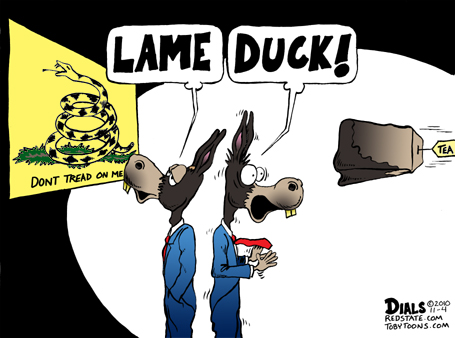
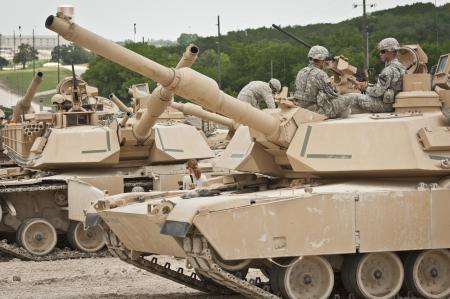
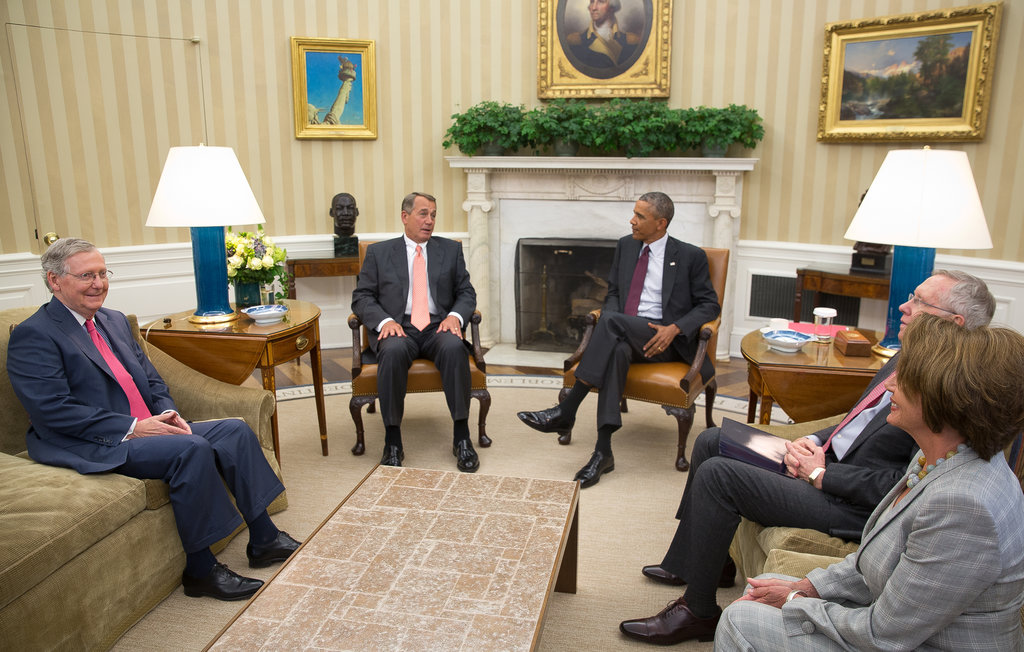


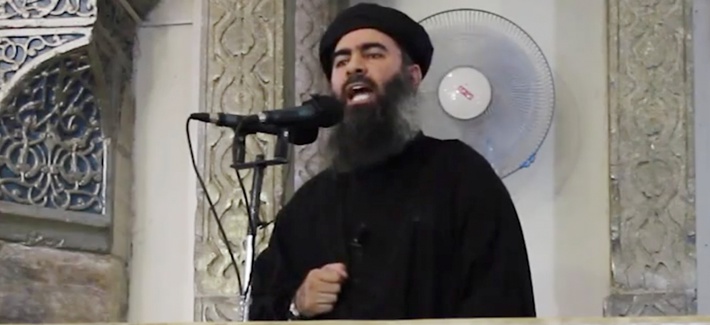

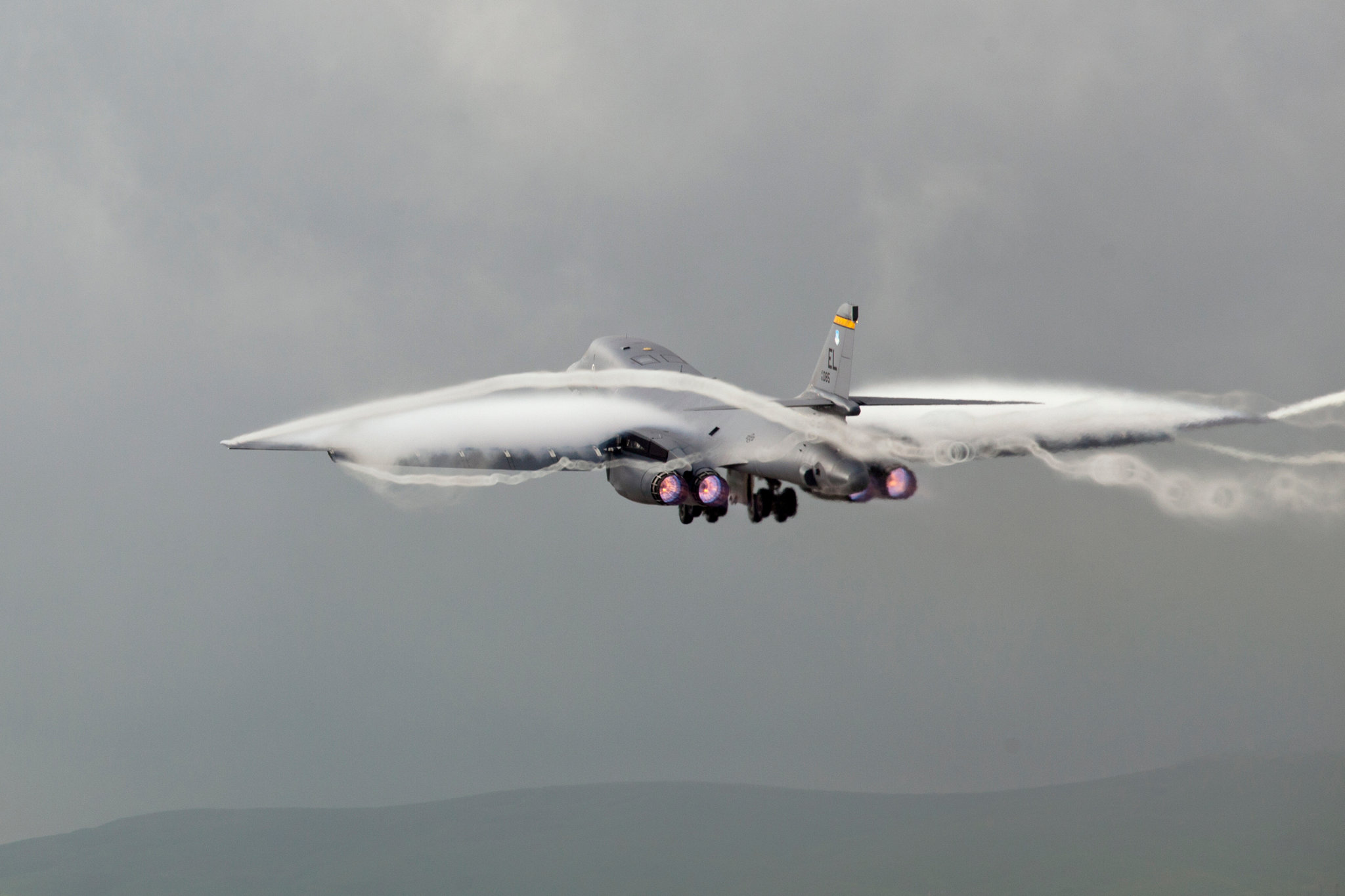

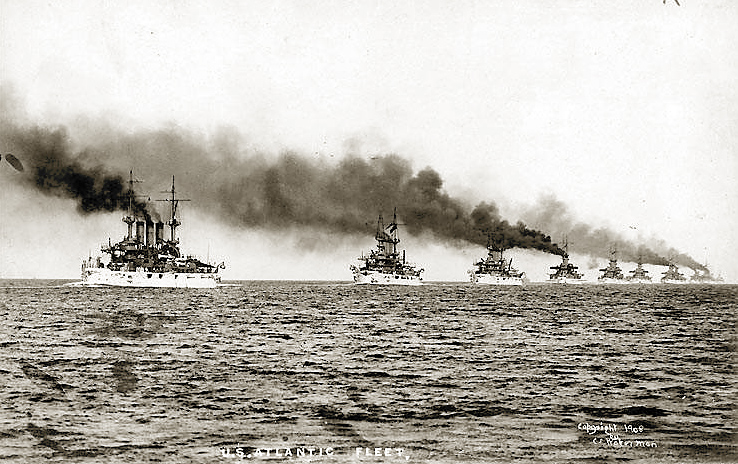

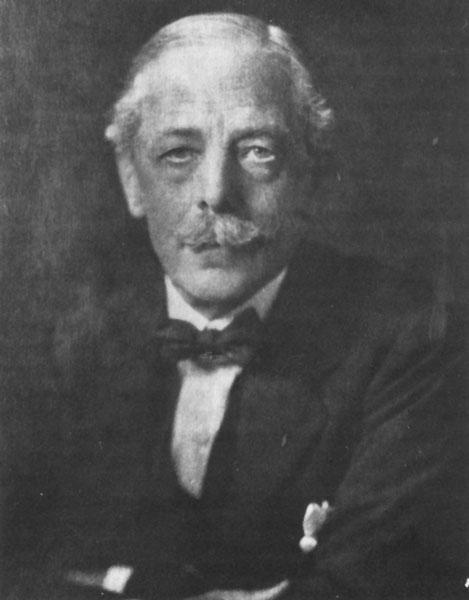
 Bracing Views