
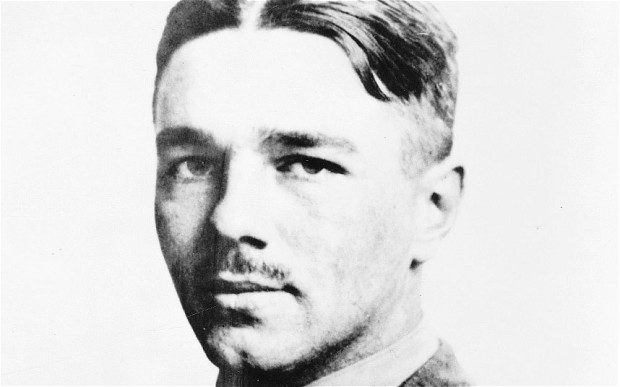
World War I, the Death of Chivalry, and the False End of War

Wilfred Owen
Wilfred Owen

W.J. Astore

This summer marks the 100th anniversary of World War I.  Today in my daily “alert” from The New York Times, there are five articles related to the war.  Steven Erlanger writes about how the war brought fundamental changes to the world; Jim Yardley writes about the Yanks in the Second Battle of the Marne in 1918; Alison Smale recounts the costs of German militarism, then and today; John F. Burns raises the specter of Gavrilo Princip’s assassination (on June 28th, 1914) of the Archduke Franz Ferdinand and its legacies in the Balkans and specifically in Bosnia; and Tim Arango recaptures the Gallipoli Campaign of 1915 and how it forged national identities among the Turks and Australians.

An immensely destructive war, World War I saw the full application of mass production and the machine age applied to warfare.  Mass production enabled mass mobilization as well as mass destruction; the machine age enabled the machine gun and automated death on such a massive scale that bodies were collected in ossuaries, boneyards of doomed youth.

Four decades ago, Paul Fussell famously captured the loss of idealism that accompanied mass death on an industrial scale in his book The Great War and Modern Memory (1975).  As Fussell noted in a separate essay on “The Fate of Chivalry,” idealistic codes of chivalry, popular in the Victorian age, became “ludicrously inappropriate” in World War I, defeated entirely by “poison gas, zeppelin raids on civilians, the machine gun, and unrestricted submarine warfare, not to mention such very unchivalric experiences as soldiers’ passively trembling under artillery shelling hour after hour or soiling their trousers for weeks with acute dysentery (sometimes requiring the cutting of large holes in the rear of their clothing), or milking down their penises monthly before the eyes of bored and contemptuous medical officers alert for unreported gonorrheal discharges.”

Wilfred Owen, a British officer and war poet, condemned the “old lie” of Horace, Dulce et decorum est pro patria mori (Sweet and fitting it is to die for one’s country), in his famous poem, which concludes:

If you could hear, at every jolt, the blood
Come gargling from the froth-corrupted lungs,
Obscene as cancer, bitter as the cud
Of vile, incurable sores on innocent tongues,
My friend, you would not tell with such high zest
To children ardent for some desperate glory,
The old Lie; Dulce et Decorum est
Pro patria mori.

Amazingly, the ideal of military service and war as ennobling, even liberating, survived World War I and is thriving today, most notably in the United States.  The “doomed youth” of World War I, marching off to mass death, have become the universal heroes of the American moment, to be sent to places like Iraq as liberators.

We would do well to recall that World War I, a “war to end all wars,” has led only to new wars, with today’s unrest in the Middle East connected to the fall of the Ottoman Empire in 1918 and conflicting agreements made at the time by manipulative power players like Great Britain and France.

Once again, at least in the United States, the cry is for more military action in the Middle East – more killing – as a solution to complex political, social, economic, and religious problems.  Those who are most strident in sending in more bombs, if not more troops, are usually those “donkeys” who are well past military age themselves, and most concerned about appearing tough and decisive.  Great believers in the utility of war, they seem to have no regard for the big lesson of World War I: the utter unpredictability as well as the horrifying destructiveness of modern, machine-age war.

All sides marched to war in the summer of 1914 looking ahead to decisive victories.  The fighting was supposed to be over by Christmas, and it was: well, not 1914, but 1918.  The result?  Four empires in ruin, ten million dead, and legacies of massive destruction and revolutionary change that we’re still coming to grips with.

And yet despite all this there are still those who call for more weapons and more war.  In the U.S. they are held up as serious and respectable statesmen.  Yet they are merely old men propagating old lies.

If they are so ardent for some desperate glory, let them take up the lance and charge forth in foreign fields.  Until they do, let’s hear no talk of more weapons and more war.

Spreading Violence is Much Easier than Bridging Cultural Gaps

Teach a man to shoot ...
Is a warm gun the universal translator?

W.J. Astore

In Iraq, Afghanistan, and elsewhere, the U.S. military is fairly good at projecting power. Indeed, the military prides itself on “global reach, global power,” achieved through a worldwide system of bases and funded by enormous amounts of “defense” spending.  What the U.S. military is not so good at is understanding foreign cultures.  Often, it seems the number one goal of military interventions is selling weapons to armies in the countries in which the U.S. military intervenes, so-called foreign military sales or FMS for short.  This is true of Iraq, Afghanistan, and now many countries in Africa, as Nick Turse has shown in several groundbreaking articles at TomDispatch.com.

The U.S. military is “can-do” when it comes to projecting power, and “can-do” when it comes to building host nation armies (of course, the reliability of those armies, such as the Afghan National Army, is often highly suspect, even after a decade of training and billions of dollars in weapons and related equipment).  But what the military always gives short-shrift to is cultural understanding.  Cultural gaps are either ignored or dismissed as irrelevant (“Grab them by the balls and their hearts and minds will follow”) or bridged in ways that ultimately reveal how little we know about the foreign peoples on the receiving end of American largesse.

I learned this firsthand about ten years ago when I was at the Defense Language Institute (DLI) in Monterey, California.  Of all things my lesson came as the result of a Peter, Paul, and Mary song.  While I was the Associate Provost at DLI, the school received an urgent request from a U.S. official working with Iraqi schools. The official wanted help translating the song, “Don’t Laugh At Me,” from English to Arabic. The song, which appears on the Peter, Paul, and Mary CD Songs of Conscience & Concern, is used in U.S. elementary schools to promote tolerance. Its first lines are “I’m a little boy with glasses/The one they call a geek/A little girl who never smiles/’Cause I have braces on my teeth.” The refrain urges: “Don’t laugh at me/Don’t call me names/Don’t get your pleasure from my pain/In God’s eyes we’re all the same.” Rather safe and innocuous lyrics, one might think.

Yet, translating this feel-good song of tolerance into Arabic was neither safe nor easy. After gathering our best Arabic translators, we quickly learned that even the simplest lyrics posed problems of translation. What about that geeky American boy with glasses, the one being taunted for being bookish? Our translators, many of whom hailed from Middle Eastern countries, explained that in Iraq he would most likely be admired and praised for his smarts. How about that American girl with braces, so reluctant to smile? Well, most Iraqi kids would be fortunate indeed to have access to orthodontia. In an Iraqi cultural context, laughing at geeks with glasses or girls with braces just didn’t translate.

And if such seemingly simple lines as these were untranslatable due to the culture gap, what about lines like “I’m gay, I’m lesbian, I’m American Indian,” or even more treacherously, “A single teenage mother/Tryin’ to overcome my past”?  Best not go there, we concluded.

I learned a lot from this experience. If we can’t translate seemingly harmless song lyrics to promote diversity and tolerance, how do we expect to “translate” democracy?

It seems the military’s answer to this is to focus on what needs no translation: violence.  So the goal is to build host armies and police forces and to sell them weapons while building fortress-like American embassies (in Iraq and Afghanistan) or American bases (which are mini-fortresses) to watch over the benighted buggers of the world.

Some might say that warm guns serve as universal translators.  But a harsher conclusion is this: That we are indeed translating our culture overseas: a culture built less on tolerance than it is on violence.

The Winners of Putin’s Aggression: The U.S. Military-Industrial Complex and Big Oil

There's a bear in the woods ...
There’s a bear in the woods …

W.J. Astore

There’s a new bear in the woods and his name is Vladimir Putin. Remember that Reagan campaign ad from 1984 that showed a menacing, obviously Soviet, bear patrolling the woods, with ominous music in the background? Fast-forward thirty years and a bare-chested Putin is that new bear, marauding in the Crimea and threatening Ukraine.

Our mainstream media has entered a time warp and we’re back to 1984.  No, not the 1984 of George Orwell and of constant monitoring by Big Brother – our media is not concerned by that.  Instead, they’re concerned with a revived Soviet Union, a new Cold War, and the notion that America is unprepared and weak.

The big winner of this collective (and selective) exercise in time travel is obvious: the U.S. Military-Industrial Complex as well as Big Oil and Gas.  We can’t make significant cuts to “defense” spending now that the Russian bear is on the loose again.  Right?  And the best way to neutralize the bear’s threats of cutting off gas shipments to Europe is by surging oil and gas drilling in the U.S., chiefly by hydro-fracturing or fracking.  Right?

Never mind concerns about rising CO2 levels and global warming.  It’s 1984 again, not 2014.  We need to corral that Russian bear before he emasculates us.  Deploy our military!  Drill baby drill!  Show the Russkies who’s boss!  Before they go all “Red Dawn” on us.

red_dawn

And when was the cheesy “Red Dawn” originally released? You guessed it: 1984.

How the U.S. Could Have “Won” the Vietnam War (1982) — Updated

The look of defeat: Saigon, 1975

W.J. Astore

Much like my father, I can be a pack rat. Going through old files, I found a “blue book” exam that I took as a college freshman in 1982. The essay question I had to answer was whether the U.S. could have won the Vietnam War.  Recall that in 1975, South Vietnam had fallen to the communist North Vietnamese invaders, with U.S. diplomats ignominiously escaping by helicopter from the roof of our embassy in Saigon.  In the 1980 Presidential Election, Ronald Reagan defeated Jimmy Carter, with Reagan declaring that the unpopular Vietnam War had been “a noble cause.”

I have not edited my answer (except for a few additions, in brackets, for clarity), which follows below. This is what one U.S. college freshman thought about Vietnam and the U.S. involvement in that war seven years after the defeat in 1975.  (You can’t even call it sophomoric, since I was only a freshman.)  I think my answer reflects a certain naivete as well as can-do optimism: That we were fighting for the right reasons but in the wrong way, and if we had followed a better strategy, and bossed around the South Vietnamese more, we could have, in some sense, “won.”

Today, I don’t believe the Vietnam War was winnable, and I lament the enormous amount of destruction we visited on the Vietnamese and their country, which I’ve written about in other articles, here and here for example.

Update (8/27/2014): Having watched the recent HBO documentary Nixon by Nixon: In His Own Words, it’s now glaringly obvious that the Vietnam War was unwinnable.  Indeed, that’s precisely what Nixon and Kissinger (secretly) concluded.  As they talked publicly about “peace with honor,” Nixon and Kissinger were privately conceding that the war was lost.  They were looking only to deflect blame from themselves, for “a decent interval” between when US troops withdrew and when South Vietnam collapsed, which is exactly what they got — roughly three years, by which time Nixon had resigned in disgrace due to Watergate.  Nixon and Kissinger also cast about for scapegoats; at the time, they planned to blame the inevitable defeat on the corruption of South Vietnamese leaders.  

Why did the U.S. lose in Vietnam?  A big reason, I think, is the dishonesty of our own government in consistently misleading the American people about the war and the region as well.  This dishonesty started just after World War II and extended to LBJ and Nixon as revealed in “The Pentagon Papers.”   In other words, Nixon’s “silent majority” wasn’t silent because it supported his policies.  It was silent because it had been lied to by Nixon and his predecessors.  If the U.S. government had had the guts to level with the American people, the worst of the war may have been averted.  Even Watergate would have been averted, since you can draw a clear line from Daniel Ellsberg and “The Pentagon Papers” to attempts to “get” Ellsberg to the “dirty tricks” of the Nixon Campaign in 1972 that ended in his resignation.  Lies begat crimes that begat more lies that begat more crimes…

[Winning the Vietnam War, as written in March of 1982]

The Vietnam War was a costly struggle involving over 500,000 U.S. troops [at peak deployment strength] and billions of dollars of equipment.  The war was attacked both at home and abroad, and when the U.S. finally did pullout in 1972, the South Vietnamese government and the ARVN [Army of the Republic of Vietnam] collapsed in three years.  The Vietnam War was a failure of U.S. foreign policy making, but if other alternatives had been pursued, the results would have been much better for the United States.

The U.S. became involved in Vietnam to contain communism, to prevent the takeover of South Vietnam by North Vietnam, and to contain China.  Unfortunately, the U.S. underestimated the strength of the North Vietnamese will, and turned a local civil war between two conflicting ideologies into a major conflict.  The U.S. believed that South Vietnam was a vital area of American interest, but it really wasn’t.

The South Vietnamese government was politically inefficient and corrupt.  Most of the natives did not support the government, which was why the Viet Cong were able to succeed the way they did.  U.S. foreign policy concentrated on defeating the Viet Cong and the North Vietnamese Army, not realizing that the reform of the South Vietnamese government and the pacification of the local villagers were of more importance.

What could we have done, then, to “save” South Vietnam from North Vietnam?  The answers are not concrete or exact.  Most people believe that if the U.S. Army had had fewer restrictions and more men, North Vietnam would have lost.  This pedestrian view is wrong for two basic reasons.  One is that the U.S. Army fought the wrong type of war.  Instead of conducting counterguerrilla activities, the U.S. Army adopted tactics intended for conventional warfare in Europe.  The U.S. tried to defeat North Vietnam by sheer firepower, but superior numbers and materiel lose their advantage against a determined guerrilla enemy.  Employing hit-and-run tactics, the Viet Cong fought only when they wanted to fight, and on ground of their choosing.  Cincinnatus [Cecil B. Currey], in his book Self-Destruction:[The Disintegration and Decay of the United States Army during the Vietnam Era] stated that the U.S. Army could not have won the war because of the way they fought it.

The second reason is that each escalation of American troops in Vietnam could be easily matched by North Vietnam.  Each year over 200,000 men [in North Vietnam] became eligible for the draft.  When General Westmoreland asked for 200,000+ troops to launch a major counteroffensive after Tet [in early 1968], he was denied them on the grounds that more numbers would have had little or no effect in ending the war.

What can one conclude from this?  A definite conclusion is that U.S. tactics were totally unsuited to the type of war fought in Vietnam.  This suggests one change in our policy that would have improved the result.  If we had pursued a policy of counterguerrilla warfare, and if we had protected the local villagers better, then we could have concentrated on the main problem—reforming the South Vietnamese government and creating an ARVN that didn’t lose every battle they fought.

The Vietnamization policy [under Nixon] was a step in the right direction, but it was implemented haphazardly and inefficiently.  U.S. foreign policy should have recognized that the support of the government by the people was of paramount importance, but needed reforms [in South Vietnam] were not carried out and the people became disillusioned and bitter.  If the government cannot protect us, the people thought, what good was it?  The U.S. should have forced the various South Vietnamese governments to implement reforms, and it also should have pursued a more vigorous pacification program.

The handling of ARVN was also a mistake.  ARVN came to rely upon the U.S. Army to great extent, and when the U.S. Army withdrew, the ARVN desertion rate reached an all-time high.  The U.S. should have realized that giving the South Vietnamese billions of dollars in equipment and, among other things, the fourth largest air force in the world, was not enough.  It did not cure the disease that afflicted ARVN, which was corruption and the lack of experienced officers.

What conclusions can be reached?  U.S. foreign policy was definitely flawed, but we could have attained better results if other policies were implemented.  A more effective pacification program, combined with counterguerrilla activities and increased defense of local villages, would have eroded the support of the Viet Cong, since a guerrilla war needs the support of the populace to succeed.  The most basic flaw in U.S. policy, however, was ignoring the faults and corruption of the South Vietnamese government.  Needed reforms of the overbearing totalitarian government would have gained the support of the South Vietnamese people, and this more than any other factor might have changed the results of 1975 and “won” the war for the United States.


One Word Defines U.S. Foreign Policy: Hubris

Like Gloria Swanson in "Sunset Boulevard," Our Hubristic Leaders Are Always Ready for their Close-up
Like Gloria Swanson in “Sunset Boulevard,” Our Hubristic Leaders Are Always Ready for their Close-up

W.J. Astore

When Hannah Arendt, the famous German-American political philosopher, criticized American involvement in the Vietnam War, she said that our foreign policy “experts” fell prey to using excessive means to achieve minor aims in a region of marginal interest to the United States.  You could say the same of most of America’s foreign interventions since 1945.  We are a superpower with a boundless propensity for meddling in world affairs.  We waste enormous amounts of money and resources intervening in areas that are of marginal importance to our national security.

There are many reasons for these wasteful interventions, of course.  The military-industrial-Congressional complex plays its role. Presidents love to intervene as a sign of “strength.” Natural resources, especially oil, are usually in play.  The usual motives, in short: profit, power, greed.

But perhaps the root cause of our mistakes can be traced to hubris, our prideful belief that we can remake other societies and peoples in our image.  Our hubris leads us to undervalue legitimate cultural differences, and to underestimate the difficulties involved in bridging those distances.  Because we underestimate the difficulties, we rush in with money and troops, only to find that the problems we encounter — and often exacerbate — are not amenable to being solved with money and troops.  Nevertheless, once we’ve committed our prestige, we believe that we can’t withdraw without losing face.  So we commit even more money and troops and prestige, until our folly can no longer be denied, even to ourselves.  After which, sadly, we usually search for scapegoats.

Rarely do we stop to think that some problems simply can’t be solved with massive infusions of money and troops.  Indeed, infusions of the same often exacerbate the very problems we claim we’re trying to solve.

The way out, to paraphrase Arendt, is to commit only those means necessary to secure our major aims in regions of vital interest to the U.S.

Such an approach requires humility as well as moderation. Our foreign policy types will need to stop strutting the world stage as if they own it.  Our leaders will need to stop vamping like Gloria Swanson in Sunset Boulevard, declaiming “I am big.  It’s the pictures that got small.” (If only they had her style.)

“Look at them in the front offices.  The masterminds!”  Yes, Gloria Swanson had it right. Our foreign policy “masterminds” need to learn some humility.  Either that, or America will be among the smashed idols of history.

Why We Fight? Oil

Pay no attention to the "black gold" in Iraq!
Pay no attention to the “black gold” in Iraq!

W.J. Astore

Rachel Maddow at MSNBC aired a new documentary last night on why we went to war against Iraq in 2003.  In a word: oil.  Bush and Cheney were looking to overthrow Saddam Hussein as a prerequisite to controlling and privatizing Iraqi oil production.  Pre-war planning in the U.S. as well as Great Britain focused on identifying, safeguarding, and ultimately privatizing Iraqi oil facilities.  When U.S. forces took Baghdad, the one building they protected was the Iraqi oil ministry (museums containing priceless objects from the dawn of human civilization, left unprotected, were looted).

This is a familiar story, of course, though many Americans continue wrongly to believe that Saddam had WMD or that he was allied to Al Qaeda (or both).  Watching the documentary, I appreciated the honesty of the Polish government, which admitted that it had participated in the invasion of Iraq precisely to gain access to Iraqi oil resources.  Bush and Blair, naturally, denied any such connection, even as Bush was warning Iraqis not to damage oil facilities, even as Blair’s government was negotiating with British Petroleum on how best to divide the spoils.

When it comes to oil, maybe “The Beverly Hillbillies” song had it right: “Black gold.  Texas tea.”  And whether it’s black gold or the yellow variety, the West has always shown a rapacity for it that borders on the insane.  Just ask the Aztecs and the Incas, for example.

Here’s an article I wrote back in 2012 for Huffington Post on the question of why the U.S. invaded Iraq and not, say, North Korea, which as Maddow points out was identified as one head of Bush’s three-headed “Axis of Evil,” but which unlike Iraq and Iran actually was hard at work on building an atomic bomb, efforts that ended in a successful test in 2006.  But North Korea is not floating on a sea of oil, is it?

Why We Fight? Oil  (written in 2012)

I’m old enough to remember the Arab oil embargo of 1973 and long lines for gasoline in the United States. A joke that circulated among my schoolmates caught the spirit of the moment. It involved calculators, which were fairly new back then for the masses. It went like this: 142 Arabs fight 154 Israelis for control of 69 oil wells for five years. Who wins?

Punch the numbers 142, 154, and 69 into your calculator and then multiply by 5 and you get 71077345. Turn the calculator upside down and those numbers spell out “ShELLOIL,” or so we joked. Call it the cynicism of 11-year-olds.

Thirty years later, as an Air Force officer I recall a discussion of what we should name the operation to liberate Iraq from Saddam Hussein. Wags in my office suggested the obvious: Operation IRAQI LIBERATION, with lots of chuckles about the resulting acronym (OIL). Call it the cynicism of 40-somethings.

Fighting for vital resources is nothing new in history, and nothing new in U.S. history either. Smedley Butler, the famous U.S. Marine general who penned War Is a Racket, wrote in the 1930s that “those damned oil companies” should fly their own flag — perhaps one with a gas pump on it — over foreign lands that they viewed as their personal property. Call it the cynicism of a retired major-general who twice was awarded the Congressional Medal of Honor.

But is it cynicism — or just plain honesty? Consider the book by Greg Muttitt on the Iraq war and its fallout, which places oil back where it belongs, front and center, in American motivations and machinations. This is hardly surprising, for recall the words of then-Deputy Secretary of Defense Paul Wolfowitz that Iraq floated on a sea of oil, or the background of then-Vice President Dick Cheney and his overweening ambition to dominate global energy resources.

Our nation’s great thirst for oil should come as no surprise to anyone. Even former President George W. Bush gave a speech in which he declared that the U.S. was addicted to foreign oil. What’s surprising is that we continue to wrap our wars in the rhetoric of “freedom” even as we pursue the fix that our leaders believe they need to thrive: foreign oil, and lots of it.

There’s plenty of oil still in the ground in Iraq and elsewhere in the Middle East, and at $100 a barrel for oil and $4.00 a gallon for gasoline, you’re talking trillions of dollars for oil companies over the next few decades.

Considering the vast profits involved, you don’t have to be a cynic to recognize that concerns about oil continue to drive our nation’s foreign policy. But you do have to be willing to face that fact; and you do have to be willing, like General Smedley Butler was willing, to ignore the siren song about waging war for freedom and democracy.

As former President Bush said, we’re addicted to oil. And history has shown we’re willing to fight for it, though the biggest winners may well be powerful energy companies.

Don’t believe me? Read Smedley Butler or Greg Muttitt. Or just ask to see an 11-year-old’s calculator.

Hair-Trigger America

Easy on that trigger, America

W.J. Astore

I wrote this for Truthout but debated whether to publish it.  I just didn’t want to deal with all the gun enthusiasts who equate liberty with owning lots of guns and ammo.  This article is not specifically about guns.  It’s about our propensity for seeking quick and violent solutions to societal and political problems.  It’s about our willingness to spend billions on weaponry and also our willingness to sell billions in weaponry. It’s about a mentality that’s captured in the image of fingers tensed on so many hair-triggers, whether metaphorically or literally.

A nation that used to espouse isolationism has morphed into one poised for hair-trigger pre-emptive war, privately armed to the teeth and the leading purveyor in the global arms trade.

We live in hair-trigger America, an America that’s quick to kill, slow to think. A nation and a people that used to espouse isolationism (even if the practice was imperfect) has morphed into one poised for constant warfare. America’s leaders call for hair-trigger pre-emptive war even if the odds of an attack on the United States are 100 to 1against. America’s military and the CIA use Predator and Reaper drones to kill “enemies,” even when they’re not completely sure they are the enemy.

This is not the first time we’ve been a hair-trigger people. When I worked in the Air Force at the Cheyenne Mountain complex in Colorado in the 1980s, fear of nuclear annihilation was palpable. US nuclear forces were on hair-trigger alert. With the collapse of the Soviet Union and the end of the Cold War, annihilatory fears abated.  We were, in the words of President George H.W. Bush, offered a chance to cash-in our peace dividends. We were, in the words of Jeanne Kirkpatrick (no dove she), offered a chance to become a normal country in normal times.

What intervened, of course, was the shock and awe of 9/11, together with what President Dwight D. Eisenhower termed the growing power of the military-industrial complex. Motive and opportunity drove a military (and militantly hysterical) response to 9/11 (to include torture) that was in retrospect entirely out of proportion to the damage done as well as to the threat posed by the attackers. At the same time, US troops were lauded as so many heroes, their leaders as so many Caesars. Forgotten was our founders’ hard-earned skepticism of militarism and war, their prediction that constant warfare would trigger the end of liberty.

More than a decade after 9/11, America remains poised to strike, fingers at ready on so many hair triggers. The military and especially its Special Forces remain on alert, trigger-pullers who are forward-deployed in 100-plus countries for rapid responses (and deadly interventions). Drones patrol foreign skies, always circling, always seeking targets. Full-spectrum dominance is the military’s stated goal. The land, the seas, the skies, space, even cyberspace – all must be treated as potential war zones.  All must therefore be dominated.

A hair-trigger mentality is both glitch and feature of a distinctly militarized and authoritarian American moment.  And those hair-triggers often morph into trigger-pullers, literally so, domestically as well as internationally.  Gun deaths in America continue to exceed 30,000 a year; by 2015, they may exceed traffic deaths. If not trigger-pullers, so many millions of Americans are trigger owners. As of 2009, there were 310 million non-military firearms in the United States, enough guns to arm every man, woman and child. One nation, under guns (but certainly not under-gunned).

Of course, Americans are not only trigger-pullers, but trigger-pushers. And by that I mean that the United States dominates the world’s (legal) arms trade. In 2010, we accounted for 53 percent of this trade; in 2011, a banner year, we accounted for a whopping 75 percent of this trade, dropping back to only 58 percent in 2012. Add to this legal arms trade the propensity for American guns to cross borders illegally to end up at crime scenes in Mexico and elsewhere, even when our own government isn’t involved in facilitating the trade.

To be seen as ready, willing, and able to pull various triggers is a distinctly American trope. Toughness, especially in dealing with foreign adversaries, is measured by a willingness to kill, a form of martial virtue. No American president can be seen without a gun in his hand, a trigger being pulled, even Barack Obama, whose staff took pains to release a photo of him shooting skeet.

When will we learn, as Eisenhower said, that only Americans can hurt America? And that trigger-pulling and trigger-pushing Americans are an especially grave threat, not only to America, but also to the world?

Recalling the words of Kirkpatrick, it’s long past time for America to become a normal country in normal times.  A time when fingers need not be tensed on so many hair triggers. Or any triggers at all.

Copyright, Truthout. May not be reprinted without permission.

Cheney, Rumsfeld, and the End of History

Rumsfeld and Cheney
Rumsfeld and Cheney

W.J. Astore

Mark Danner has a probing article at TomDispatch.com on the career arc of Dick Cheney, the self-selected Vice President under George W. Bush.  Cheney’s approach to history, an attitude he shared with Karl Rove and Donald Rumsfeld, was the idea he could make his own reality, independent of history.  Previous precedents on waterboarding as torture?  They don’t matter.  The predictable civil war that resulted from our invasion of Iraq?  Doesn’t matter.  History is made by the big swinging dicks, no regrets, no apologies.

Even when the insurgency in Iraq was obvious to all, Cheney and Rumsfeld sought to deny that reality.  Recall that Cheney said in 2005 that the insurgency was in its last throes even as it was beginning to peak.  Recall that Rumsfeld said in July 2003 “I don’t do quagmires” even as he and the U.S. military were sinking into one in post-invasion Iraq.

History teaches humility, but Cheney and Rumsfeld were having none of that.  History is a sovereign remedy to hubris, but Cheney and Rumsfeld were all about hubris.  Faced with history’s uncertainty, as represented by favorite questions like “Yes, but” and “Are you sure,” Cheney and Rumsfeld hissed like vampires confronting garlic.

The end of history — in the sense of ignoring its lessons — came with Cheney and Rumsfeld.

And like Danner says in his article, we’re left today with the bloody mess these dicks created.

The USA Takes the Gold Medal in Threat Inflation

The USA Takes the Gold! (In Threat Inflation.)
The USA Takes the Gold! (In Threat Inflation)

W.J. Astore

Did you know an Iranian “fleet” is approaching American shores?  I’m talking about a destroyer and a supply ship.  Sound the alarm!  General quarters!

Juan Cole at Informed Comment has an amusing story on our media’s latest manifestation of what he terms Iranian “Derangement Syndrome.”  Two years ago, I wrote about our amazing capacity for threat inflation when it comes to Iran.

This is nothing new, of course.  Threat inflation is a perennial theme in American history.  Non-existent bomber gaps. Missile gaps.  A vast overestimation of the Soviet threat even as the Soviet Union was beginning to collapse.   All employed to sustain high “defense” spending for the military-industrial-Congressional complex.

Let’s face it: Citing the deployment of an Iranian “fleet” as a potential threat to the USA is like citing the Jamaican bobsled team as a threat to win all the gold medals at the Winter Olympics.

Once again, America is the odds-on favorite to win the gold medal in our favorite Olympian event of threat inflation.  USA!  USA!

Do We Learn Anything from History?

Worthless?
Worthless?

W.J. Astore

As a historian, I like to think we learn valuable lessons from history.  Those who don’t learn from the mistakes of the past are condemned to repeat them, or so my students tell me, paraphrasing (often unknowingly) the words of George Santayana.

We applaud that saying as a truism, yet why do we persist in pursuing mistaken courses?  Why two costly and destructive wars in Iraq and Afghanistan?  Why an energy policy that exploits dirty fossil fuels at the expense of the environment?  Why a foreign policy that is dominated by military interventionists in love with Special Forces and drones?

In part, I think, because our decision makers have no respect for the lessons of history.  They think the lessons don’t apply to them.  They think they can make history freely: that history is like a blank canvas for their creative (and destructive) impulses.  They figure they are in complete control.  Hubris, in other words.

Such hubris was captured in a notorious boast of the Bush Administration (in words later attributed to Karl Rove) that judicious study of the past was, well, antiquarian and passé.  Why?  Because men like Karl Rove would strut the historical stage to create an entirely new reality.  And the rest of us would be reduced to impotent watchers, our only role being to applaud the big swinging dicks at their climactic “mission accomplished” moments.  In Rove’s words:

“We’re an empire now, and when we act, we create our own reality. And while you’re studying that reality—judiciously, as you will—we’ll act again, creating other new realities, which you can study too, and that’s how things will sort out. We’re history’s actors…and you, all of you, will be left to just study what we do.”

Rove’s rejection of history stemmed from hubris.  For the character of Joaquin in Scott Anderson’s novel Triage, history is “The worst invention of man” for a very different reason.  History was to be reviled because it tries to make rational what is often irrational; history invents reasons for what is often unreasonable or beyond reason.

In Joaquin’s words:

“We invented history for the same reason we invented God, because the alternative is too terrible to imagine.  To accept that there is no reason for any of it, that we are only animals—special animals, maybe, but still animals—and there is no explaining the things we do, that happen to us—too awful, no?  … To hell with history.  If there is anything to be learned from any of it, it is only that civilization is fragile, that in war it takes nothing for a man—any man, fascist, communist, schoolteacher, peasant, it doesn’t matter—to become a beast.”

As a good Catholic, I was taught that wisdom begins with the fear of God.  A secular version might be that wisdom begins with the fear of history.  Our history.  Because it teaches us what we’re capable of.  We invent all sorts of seemingly reasonable excuses to kill one another.  We grow bored, so we kill.  In the words of Joaquin, we come to slaughter one another “because we wanted to see how blood ran, because it seemed an interesting thing to do.  We killed because we could.  That was the reason.”

The beginning of wisdom is not the fear of God.  It’s the fear of ourselves—the destruction that we as humans are capable of in the name of creating new realities.  The historical record provides a bible of sorts that records our harshness as well as our extraordinary capacity for self-deception.  Such knowledge is not to be reviled, nor should it be dismissed.

The more we dismiss history—the more we exalt ourselves as unconstrained creators of new realities—the more we pursue policies that are unwise—perhaps even murderously so.  If we learn nothing else from history, let us learn that.