Russia, Ukraine, and the USA

W.J. Astore

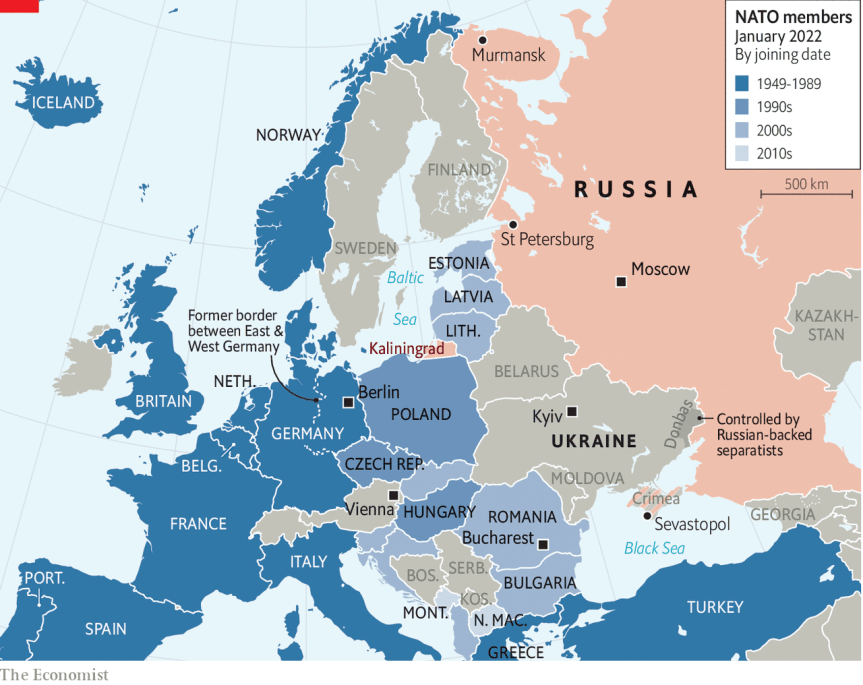
The situation along the border of Russia and Ukraine is volatile. War is possible. Given this volatility and the possibility of war, does it make any sense to send more weaponry to Ukraine?

From this CNN report, that is exactly what the USA is doing: sending more arms and ammunition to Ukraine:

“The second bird in Kyiv! More than 80 tons of weapons to strengthen Ukraine’s defense capabilities from our friends in the USA! And this is not the end,” Ukrainian Defense Minister Oleksii Reznikov said in a tweet Sunday. The first shipment of security assistance from the US had arrived in Ukraine on Friday. That shipment included “close to 200,000 pounds of lethal aid, including ammunition for the front line defenders of Ukraine,” the US Embassy in Kyiv tweeted Friday night. The shipments come as the US has sought to convince Moscow to de-escalate the situation at the Ukrainian border, where Russia has amassed more than 100,000 troops. Earlier Sunday, Secretary of State Antony Blinken amplified his warning against a Russian invasion of Ukraine, saying “a single additional Russian force” entering Ukraine “in an aggressive way” would result in a severe response by the US and its allies. “If a single additional Russian force goes into Ukraine in an aggressive way, as I said, that would trigger a swift, a severe and a united response from us and from Europe,” Blinken told CNN’s Dana Bash on “State of the Union.”

Let me get this straight: weapons and ammo are “security assistance,” or “lethal aid,” a construction that should win a prize for best oxymoron of the year. Hi! I’m here to help you. How about some “lethal” aid? Meanwhile, even as the US escalates the situation with “lethal aid” and threats, the US State Department insists it’s the Russians who need to “de-escalate the situation.” No contradiction here, right?

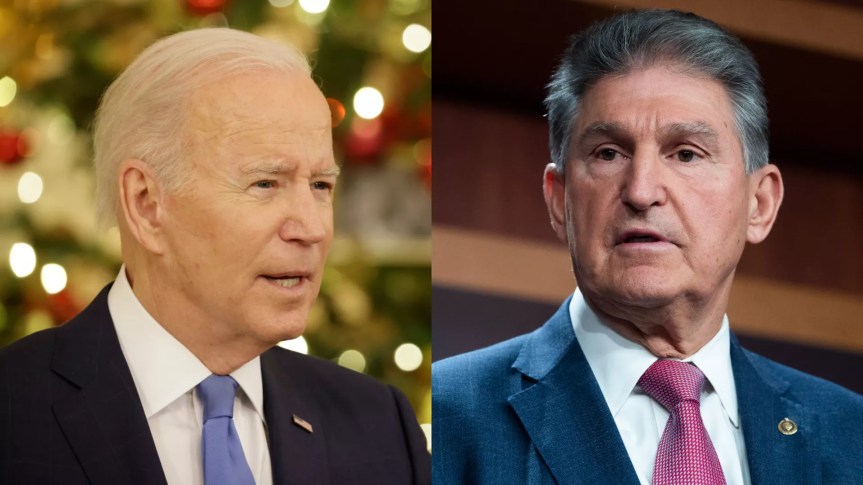
Consider here the words of Antony Blinken, he of the “swift” and “severe” and “united” response if only a “single” Russian force should enter Ukraine “in an aggressive way.” This naked bombast directly contradicts President Joe Biden’s words at last week’s press conference. Biden, who occasionally has “senior moments” of inadvertent truth, explained that NATO wasn’t united and that a minor incursion by Russian forces probably wouldn’t trigger a swift and severe response. It’s reassuring to know we have such skilled and consistent leaders as Biden and Blinken in charge here.

US meddling in Ukraine is complex, but let’s just say America’s leaders are part of the problem, not the solution. As usual, the US response to almost any situation is to send troops and weapons while telling the other side to “de-escalate.”

Worst of all, though, from an American perspective, is the lack of skilled and smart leadership in the White House. Biden appears confused and his vice president is hapless. Blinken is a neo-con tool who won’t be confused with Bismarck, let alone Henry Kissinger. He thinks American diplomacy is most effective when it’s backed by brazen military threats. No speaking softly with a big stick held prudently in reserve; Blinken prefers to shout loudly while openly brandishing the big stick of the US military.

It doesn’t bode well, does it?

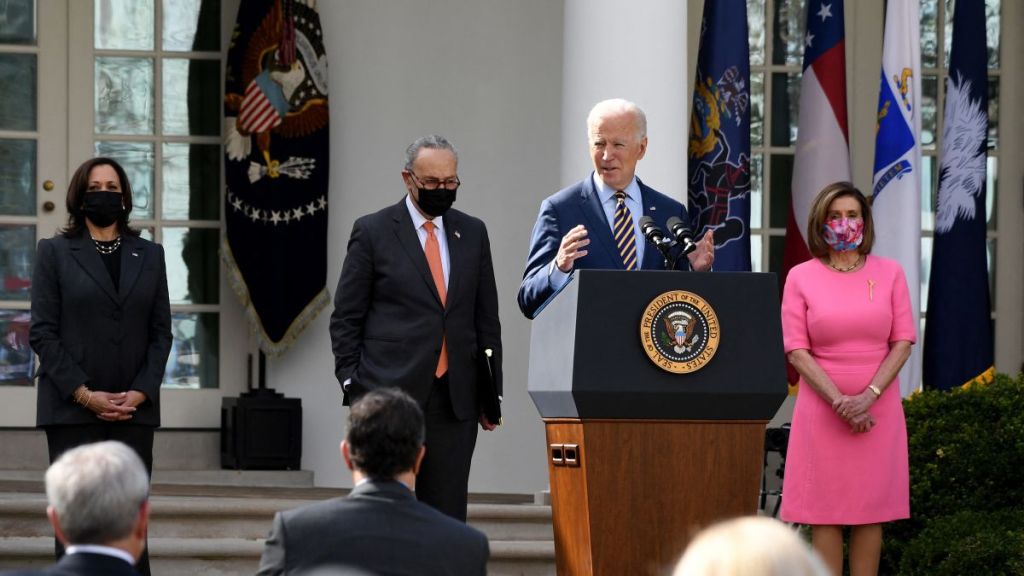
Kamala Harris and Joe Biden with Antony Blinken on the far right. Not exactly the A-Team.

Stop the MADness

W.J. Astore

Mutually Assured Destruction (MAD) is making a comeback as the Pentagon hypes a new Cold War with China and Russia. Threat inflation is a big part of this “new” war, just as it was in the old one. So too is greed. There’s much money to be made (a trillion or more dollars, perhaps) in building new nuclear missiles and bombers, even though these weapons represent incipient holocausts.

We need to stop this MADness. There is no need for a new Cold War, and there is no need for new nuclear weapons, weapons that could very well destroy human civilization and most of life on our planet.

This is the subject of my latest article at TomDispatch.com. What follows is an excerpt. I encourage you to read the article in its entirety here.

Stop the MADness. Seriously.

Only Fools Replay Doomsday

In the early 1960s, at the height of America’s original Cold War with the Soviet Union, my old service branch, the Air Force, sought to build 10,000 land-based nuclear missiles. These were intended to augment the hundreds of nuclear bombers it already had, like the B-52s featured so memorably in the movie Dr. Strangelove. Predictably, massive future overkill was justified in the name of “deterrence,” though the nuclear war plan in force back then was more about obliteration. It featured a devastating attack on the Soviet Union and communist China that would kill an estimated 600 million people in six months (the equivalent of 100 Holocausts, notes Daniel Ellsberg in his book, The Doomsday Machine). Slightly saner heads finally prevailed — in the sense that the Air Force eventually got “only” 1,000 of those Minuteman nuclear missiles.

Despite the strategic arms limitation talks between the U.S. and the Soviet Union, the dire threat of nuclear Armageddon persisted, reaching a fresh peak in the 1980s during Ronald Reagan’s presidency. At the time, he memorably declared the Soviet Union to be an “evil empire,” while nuclear-capable Pershing II and ground-launched cruise missiles were rushed to Europe. At that same moment, more than a few Europeans, joined by some Americans, took to the streets, calling for a nuclear freeze— an end to new nuclear weapons and the destabilizing deployment of the ones that already existed. If only…

It was in this heady environment that, in uniform, I found myself working in the ultimate nuclear redoubt of the Cold War. I was under 2,000 feet of solid granite in a North American Aerospace Defense (NORAD) command post built into Cheyenne Mountain at the southern end of the Colorado front range that includes Pikes Peak. When off-duty, I used to hike up a trail that put me roughly level with the top of Cheyenne Mountain. There, I saw it from a fresh perspective, with all its antennas blinking, ready to receive and relay warnings and commands that could have ended in my annihilation in a Soviet first strike or retaliatory counterstrike.

Yet, to be honest, I didn’t give much thought to the possibility of Armageddon. As a young Air Force lieutenant, I was caught up in the minuscule role I was playing in an unimaginably powerful military machine. And as a hiker out of uniform, I would always do my best to enjoy the bracing air, the bright sunshine, and the deep blue skies as I climbed near the timberline in those Colorado mountains. Surrounded by such natural grandeur, I chose not to give more than a moment’s thought to the nightmarish idea that I might be standing at ground zero of the opening act of World War III.  Because there was one thing I knew with certainty: if the next war went nuclear, whether I was on-duty under the mountain or off-duty hiking nearby, I was certainly going to be dead.

Then came 1991 and the collapse of the Soviet Union. The Cold War was over! America had won! Rather than nightmares of the Red Storm Rising sort that novelist Tom Clancy had imagined or Hollywood’s Red Dawn in which there was an actual communist invasion of this country, we could now dream of “peace dividends,” of America becoming a normal country in normal times.

It was, as the phrase went, “morning again in America” — or, at least, it could have been. Yet here I sit, 30 years later, at sea level rather than near the timberline, stunned by the resurgence of a twenty-first-century version of anticommunist hysteria and at the idea of a new cold war with Russia, the rump version of the Soviet Union of my younger days, joined by an emerging China, both still ostensibly conspiring to endanger our national security, or so experts in and out of the Pentagon tell us.

Excuse me while my youthful 28-year-old self asks my cranky 58-year-old self a few questions: What the hell happened? Dammit, we won the Cold War three decades ago. Decisively so! How, then, could we have allowed a new one to emerge? Why would any sane nation want to refight a war that it had already won at enormous cost? Who in their right mind would want to hit the “replay” button on such a costly, potentially cataclysmic strategic paradigm as deterrence through MAD, or mutually assured destruction?

Please read the rest of my article here.

The Prince of Peace

W.J. Astore

As Christmas approaches, peace is on my mind. Christ, after all, was known as the Prince of Peace. I say “was” because we hear so infrequently of peace in the United States today. In fact, peace in the U.S. seems to be contingent on enormous military budgets dedicated to weapons and warfare. It reminds me of Strategic Air Command (SAC) in the Air Force, which was prepared utterly to destroy the Soviet Union and China in the 1960s but whose motto was “peace is our profession.” Paraphrasing Tacitus, one might say that SAC was prepared to make the world an irradiated hellscape and call it “peace.”

If Christmas is to have any religious meaning, one would think it would be centered on the arrival of the Prince of Peace in the world. As a Catholic, I can’t count the number of times I recited the prayer that begins, Glory to God in the highest/and peace to His people on earth, the Gloria in adoration of Christ as a bringer of peace. By way of contrast, Easter is about the fulfillment of Christ’s mission; His death and resurrection “takes away the sins of the world,” even as we continue to implore Him to “grant us peace.”

Now that I reflect upon it, the Christian mass must be one of the few places in American culture today where we routinely hear about peace, where the idea is not mocked as fallacious or faulty or insane.

To be honest, I’m not in close contact with Christian culture today. What little I know of it confuses me and disappoints me. I can’t square the so-called Prosperity Gospel with Christ’s teachings against the corruption of earthly riches. I can’t square the evangelical emphasis on personal salvation by being born again with Christ’s command to focus on helping others in place of celebrating oneself. (OK, you’re saved; now get over yourself.) It’s so terribly easy to lose sight of the great commandments of Christianity, which boil down to loving God and loving thy neighbor.

So many Americans seem to believe they live in an exceptional nation, literally holier than other nations because of shared Judeo-Christian traditions as well as God’s special favor allegedly showered upon this “city on a hill.”

Is it OK if I say that current events (and past ones too) suggest otherwise? Garrisons across the globe bristling with weapons are not the same as a shining city on a hill. There is nothing angelic about a Predator or Reaper drone, nor is salvation to be found at any end of a Hellfire missile.

What part of “love thy neighbor” is reflected in a gargantuan war and weapons budget that officially sits just under $800 billion, and which in its total cost routinely exceeds a trillion dollars annually? Not to be presumptuous, but something tells me the Prince of Peace isn’t too happy about this.

Yes, I am stunned that there isn’t more Christian opposition to America’s war machine. I am stunned that America’s churches and ministers have made their peace, so to speak, with nuclear weapons that can destroy all of God’s creation. I am stunned that on Christmas Day, when Christians are supposed to adore Christ and to recall the miracle of His birth, that we collectively give so little thought to making peace happen, to dedicating ourselves to it in His name.

Still, I must say this about my Catholic Church and my memories of it: At least we reached out to each other to offer a sign of peace. We reached across the pews to shake hands, to share smiles, to make human contact.

Let us offer each other the sign of peace: Should this not be our gift to each other, not just this Christmas but on each and every day? What better way to adore the Prince of Peace than to spread peace?

Bombing Kills Lots of Innocents: Who Knew?

W.J. Astore

Extensive U.S. bombing overseas kills lots of innocent people: who knew?

So this blinding statement of the obvious popped up in my email today from the New York Times:

A five-year Times investigation found that the U.S. air wars in Iraq, Syria and Afghanistan led to thousands of civilian deaths.
Hidden Pentagon records show a pattern of failures in U.S. airstrikes — a sharp contrast to the American government’s image of war waged by all-seeing drones and precision bombs.
The military’s own confidential assessments of over 1,300 reports of civilian casualties since 2014, obtained by The Times, lays bare how the air war has been marked by deeply flawed intelligence, rushed and often imprecise targeting and the deaths of thousands of civilians, many of them children. None of these failures resulted in a finding of wrongdoing. We are making these Pentagon records public.
This is the first of a two-part investigation. Here are the key takeaways.

Finally, at the end of 2021, the Times is willing to speak up against America’s murderous regimen of bombing overseas. I wrote about this myself at this site in 2016 and 2017, and I’m hardly the only person to have pointed this out. At TomDispatch.com, Tom Engelhardt has been reporting for years and years on wedding parties being wiped out by U.S. bombing missions based on “faulty intelligence.” The mainstream media have largely played down these atrocities until now, when the war in Afghanistan is finally (mostly) over, at least for the U.S.

As I wrote in 2013 for TomDispatch.com, airpower is neither cheap nor surgical nor decisive. Indeed, because it provides an illusion of effectiveness, and because America dominates the “high ground” of the air, all of this “precision” bombing serves to keep America in wars for far longer than is tenable on tactical grounds. Imagine how long the Iraq and Afghan wars would have lasted if America didn’t dominate the air, if the U.S. military had to rely exclusively on ground troops, and thus had suffered much higher casualties in ground combat. My guess is that these wars would have ended earlier, but “progress” could always be faked with all those statistics of bombs dropped and alleged “high value targets” eliminated.

I suppose it’s good to see the “liberal” New York Times cover this issue of murderous bombing after 20 years of the global war on terror. The question remains: why did it take them two decades to cover this issue in depth?

Presidents become “presidential” when they bomb other countries. Meanwhile, Julian Assange rots in prison. Maybe he needs to bomb a few countries?

Update (12/21/21)

More notes on U.S. bombing and the Times report, courtesy of ReThink Round Up:

“Not a single file [from the military about the bombings] includes a finding of wrongdoing. An effort within the military to find lessons learned to prevent future civilian harm was suppressed. An analyst who captures strike imagery even told the Times that superior officers would often “tell the cameras to look somewhere else” because “they knew if they’d just hit a bad target.”

Responding to the report, a Pentagon spokesperson acknowledged that preventing civilian deaths is not just a “moral imperative” but a strategic issue because civilian casualties can fuel recruiting for extremist groups. [New York Times/ Azmat Khan]”

*****

Again, to state the obvious here:

1. There’s no accountability in the system. Murderous mistakes are covered up and no one is held responsible (“tell the cameras to look somewhere else”).

2. The bombing attacks were counterproductive. Guess what? Killing innocents creates more “terrorists.” Who knew?

Murderous inaccuracy, making matters worse, with no accountability: WTF? So much for America’s “awesome” military, as Andrew Bacevich writes about today at TomDispatch.com.

How Awesome Is “Awesome”?

Fox News and The New York Times Agree: America is Weak!

W.J. Astore

Did you know that the world’s lone surviving military superpower, the one that spends more than a trillion dollars yearly on all things military, is weak?

Fox News would have you think that. And so too would the New York Times (NYT).

Over at Fox News, the headline suggests Biden’s weakness is inviting “the next Pearl Harbor,” even as the article focuses mainly on alleged weakness vis-a-vis Russia-Ukraine and China-Taiwan. Meanwhile, my daily summary from the NYT agrees that “U.S. weakness emboldens Moscow and Beijing.” So what does the NYT suggest America should do to show strength?

With respect to Russia and Ukraine, this is the sage advice of the New York Times:

On its own, Ukraine’s military seems outmatched by Russia’s. And a full-scale U.S. military response seems doubtful, given a weariness of foreign wars that Biden and many American voters share.
But Biden still has options. The U.S. can increase its military support to Ukraine, which could make a potential invasion look bloodier and more costly for Russia. (The U.S. is pursuing a related strategy in Taiwan.)
Biden can also threaten sanctions on Russia, as he did on the call with Putin yesterday, according to Jake Sullivan, the president’s national security adviser. “He told President Putin directly that if Russia further invades Ukraine, the United States and our European allies would respond with strong economic measures,” Sullivan told reporters. If Russia does attack Ukraine, Biden said that the U.S. would react more strongly than it did to the 2014 takeover of the Crimean Peninsula.
But sanctions might not be enough to deter Putin.

In sum, here’s the tough-minded advice of the “liberal” New York Times: Sell more expensive weaponry to Ukraine (as well as Taiwan). Threaten the most violent economic warfare possible. And, since sanctions “might not be enough” to deter Russia or China, there’s more than a hint that America may need to go to war, despite “weariness” of wars allegedly shared by Biden and “many American voters.”

A show of hands here: How many Americans think it’s wise to risk nuclear war if Russia attacks Ukraine or China attacks Taiwan?

Even if the risk of nuclear war is discounted (which it shouldn’t be), how many Americans think it’s wise for the U.S. military to get involved in a land war in Asia or against Russia in Ukraine?

Maybe patient diplomacy is the answer here? After all, what does the “defense” of Ukraine or Taiwan by U.S. forces have to do with defending our country and our constitution?

America doesn’t lack toughness — it lacks smarts. Selling more weapons to Ukraine or Taiwan isn’t the answer. Nor are constant threats.

Sun Tzu taught that the best way to win is when you can achieve your objectives without even having to fight. Guile is not weakness, nor is restraint. But Fox News, joined by the New York Times, would have us think that toughness is mostly about weaponry and a willingness to wage war. Because, you know, it’s worked so well for America in Vietnam, Afghanistan, Iraq, and so many other places around the globe.

Are We the New Martians?

Heat rays don’t always carry the day. (I used to own this double album, narrated by the great Richard Burton)

W.J. Astore

A few years ago, I picked up H.G. Wells’s classic novel, “War of the Worlds,” and read it in full. I had seen the movies based on it and had also dipped into the book, but I finally read the whole thing, marveling at the suspense Wells created in his classic account of Martians invading our planet, stomping us with their superior technology, only to be overcome by microbes to which they had no resistance.

As I read the book, I asked myself: Are we Americans becoming the new Martians? Warlike ways, superior technology, a predilection to invade and dominate for resources, with no regard for the “primitives” we stomp on or push out of the way in our quest for full-spectrum dominance?

I’m not the only one with questions along these lines. At TomDispatch today, Tom Engelhardt recounts his own affection for “War of the Worlds,” which he avidly read as a boy, and which he recently turned to again in our era of dangerous microbes, incessant war, and a changing climate that is threatening life as we know it on this planet.

Wells, of course, intended his story partly as a critique of the British and Western imperialism of his day, which is why it remains relevant to our imperial world today.

Think about it. America’s leaders, and especially the military-industrial-congressional complex, are in many ways the new Martians. Their god seems to be Mars, the god of war, and the planet they’re remaking is increasingly red, barren, and inhospitable. They’re doing a fair job of emulating those Martians as well, leaving Planet America to attack other lands for their resources, banking on superior technology and “heat rays” (Hellfire missiles!) to win the day.

Yet, like those very same Martians in “War of the Worlds,” Planet America loses its wars to “inferior” peoples, betrayed by “primitive” and hostile environments (the sweltering jungles of Vietnam, the urban jungle and heat of Iraq, the rugged mountains and omnipresent dust of Afghanistan). But do America’s Martians ever quit? Of course not! They keep building new war machines, they keep “investing” in new technologies, they keep advocating dominance through invasion and killing, much like those desperate Martians in Wells’s book, who, faced with a dying planet, decided their only course of action was to invade a different planet and steal its resources for themselves.

In Wells’s book, the Martians reveled in war, shouting “Ulla! Ulla!” as they fired their death rays. Our leaders are doing something similar while many of us shout “USA! USA!” mindlessly.

Wells sought to teach us that war and technology and destruction are just as likely to lead to our demise as to our triumph. The more we make war on ourselves and our planet, the more likely it is that Earth will come to resemble Mars, an inhospitable place for a dying species. Yet, unlike the imaginary Martians of Wells’s book, there’s no other hospitable planet in the neighborhood for us to invade.

Bonus: Here’s an excerpt from Jeff Wayne’s musical version of “War of the Worlds,” featuring Justin Hayward on vocals and Richard Burton as narrator. “The massacre of mankind”: No one says it quite like Burton.

Being Right For the Wrong Reasons

W.J. Astore

Were you against the Afghan War? The Iraq War? Events proved you right, of course, but for the wrong reasons. And if you were pro-war in both cases, you were of course wrong but for the right reasons. Therefore you will still be celebrated and featured on mainstream media outlets, whereas those “right” people will still be ignored because, again, they may have been right about those disastrous wars, but their reasons were all wrong.

I think I heard this formulation first in Jeremy Scahill’s book “Dirty Wars.” An official said opponents of the war on terror had been “right for the wrong reasons,” but that proponents of war, the Kristols and Krauthammers of the necon world, had been “wrong for the right reasons.”

Nick Turse picks up on this theme in his latest for TomDispatch.com. In 2010, Turse edited a book of essays: “The Case for Withdrawal from Afghanistan.” In his latest essay, and with tongue firmly in cheek, Turse asks why he’s not being invited to speak on the mainstream media networks, why he’s not being celebrated for his prescience, why he’s not being lauded for being right. And of course Turse knows the answer: he was right — but for the wrong reasons.

If you’re confused, allow me to translate. It’s OK, even laudable, to argue that the Pentagon will win; that wars should be fought; and that U.S. generals are so many reincarnations of Napoleon and Alexander and Caesar.  Because being “wrong” here means that the Pentagon grows ever more powerful; that the U.S. always looks tough (if perhaps dumb); and that America’s generals are celebrated as the “finest” while never being called to account. Again, all these things are “right,” even when, indeed especially when, they’re so obviously wrong.

But it’s not OK, indeed it’s deplorable, to suggest the Pentagon will lose; that wars should not be fought; that U.S. generals are mostly time-serving mediocrities.  Because being “right” here means a weaker Pentagon; it means America fights fewer wars, an obvious sign of national weakness and a calamity to the military-industrial complex; it means holding generals responsible for their self-serving lies and obfuscations.

Being right about all this weakens militarism in America and could lead to lower “defense” budgets and fewer wars. And we can’t have that in America!

So, remember, in America it’s better to be wrong and thus feed the military-industrial complex than to be right and thus possibly to chart a wiser and less bellicose course. To paraphrase Mister Spock, it is not logical, but it is often true.

Sorry, Nick: You were right but for the wrong reasons

The Biggest Threat to America

W..J. Astore

Aside from climate change (Armageddon in slow motion) and nuclear war (Armageddon in the blink of an eye), the biggest threat to America is perpetual war and preparations for war driven by threat inflation. We’re witnessing it now, before our very eyes, with America’s increasingly polarized relations with China, notes David Vine in his latest effort for TomDispatch.com. Both parties, Republican and Democratic, accuse the other of being “soft” on China, even as the U.S. “defense” budget (meaning the war and weapons budget) soars with bipartisan support in Congress.

It’s folly, of course, and dangerous folly at that. China has roughly four times as many people as the U.S. and a vibrant economy; China is also a leading trading partner and owner of American debt. China, in short, should be a friend, or friendly rival, or a competitor worthy of respect. What China shouldn’t be in American eyes is a manifestation of a new “Yellow Peril,” an inscrutable foe, a soon-to-be enemy. Anything that tips us in that direction is truly folly, since any war with China could end in nuclear catastrophe. And even if such a catastrophe is avoided, war, even a “cold” one, will destroy any chance for concerted action against climate change, imperiling the very planet we live on.

If we want to avoid Armageddon, whether the one in slow motion or the one in the blink of an eye, the USA needs good relations with China, based again on mutual respect and a cooperative spirit. What should unite us (working to mitigate climate change and reduce the threat of nuclear war) is far more important than what is allegedly dividing us.

But threat inflation works, especially for the military-industrial-congressional complex, to justify colossal war budgets to the American people. Here’s the problem, though: When you inflate the threat, in some way you also create it. You instantiate it, at least in your own mind. You give it more and more substance.  And the more weapons you build to meet the threat you created, the more likely it becomes that you’ll choose to use those weapons when push comes to shove — and Americans sure do a lot of shoving in the world.

I just hope the Chinese are wise enough to see that America’s national security state is indeed a big threat — to America.  So they’d be wisest to stand back and let America defeat itself with debilitating wars and profligate spending on costly weaponry.  Meanwhile, they can use their strong economy to dominate trade.  While we build weapons and fight wars, China will defeat us — at capitalism!  Ah, the irony, comrade.

Yet even as China wins the new cold war, the planet itself will lose. Anything that distracts humanity from facing climate change together is folly. It may not seem so at this moment, but check back with the planet in 2031. Another decade lost to military folly is another nail in the coffin to efforts at preserving and restoring life on our planet.

So, as David Vine asks in his article, Do you want a new cold war? Anyone with any sense knows that “No!” is the only possible answer.

Time for a Real Peace Dividend

W.J. Astore

On “Two Minutes to Midnight,” I talk about some of the themes I’ve developed at this site. Produced by Catalysta, the idea behind the series is to encourage fresh thinking on the challenges confronting us in a rapidly changing world.

Here is the Youtube link: https://www.youtube.com/watch?v=JTc7Qj4AXWU&t=59s

In this interview, I explain how and why America spends way too much on weaponry and wars, and how we can shift the narrative and revive the idea of peace. Echoing George McGovern, it’s time to “come home, America,” to invest in our country and ourselves, rather than to fund more weaponry and more overseas wars.

Near the end of the video, I make an appeal to younger generations of America to lift their voices against the military-industrial-Congressional complex. I urge them not to be intimidated and to speak their mind, explaining that many veterans are just as fed up as they are. Collectively, we need to act. And perhaps the first and most critical step is getting big corporate money out of politics even as we work to make major cuts to the U.S. war budget.

Special thanks to Edward Goldberg at Catalysta.net for inviting me and offering me a chance to share my views with a wider audience.

In Praise of Whistleblowers

Julian Assange. The “true” Afghan War was not for us to see, but the truth will out, at least in this case, as total defeat in war is hard to hide

W.J. Astore

Edward Snowden. Daniel Hale. Chelsea Manning. Julian Assange. And of course Daniel Ellsberg. These and other whistleblowers courageously spoke out to reveal the lies the government feeds us to keep us pacified and compliant.

What do whistleblowers do? Some might say they speak truth to power. But power already knows the truth, indeed the powerful manufacture the truth, and they like their near-monopoly on truth and its creation and distribution.

What whistleblowers really do is speak truth to the powerless. They speak truth to us, and their version of the truth is one that reveals the manipulation and mendacity of the powerful. It exposes power to the light, revealing the rot, the greed, the lies, and for this act of defiance and of patriotism, the whistleblower must be punished.

Snowden was forced into exile in Russia. Hale was recently imprisoned for up to four years. Manning spent years in prison under humiliating conditions that included solitary confinement. Assange is still in prison, and the U.S. government still seeks to extradite him and punish him under an espionage act that shouldn’t even apply to a citizen of another country (not to mention a journalist who should be protected in a democracy that allegedly reveres the freedom of the press).

It’s not that the American people can’t handle the truth, to cite the words of Colonel Jessup as played by Jack Nicholson. It’s that the American people can handle the truth, that the truth would empower us while weakening the powers-that-be and their various plots and privileges. That’s why the truth is such a scarce commodity in Washington, D.C. It must be guarded while being massaged and manipulated before its fed to the masses as formless, often truthless, pabulum.

America’s punishment of principled whistleblowers is yet another sign of the death of democracy in America. If President Biden wanted to do something important, something inspiring, something meaningful, he’d permit Snowden to return with no charges, he’d pardon Hale, and he’d stop pursuing the extradition of Assange. But Biden will do none of these. Whistleblowers must be persecuted, must be punished, not because they’ve done something wrong, but because they’ve done something right, something that embarrasses the powerful. And that simply cannot be tolerated.

After all, if Americans in positions to know start speaking the truth to their fellow Americans, where will that end? We might see a resurgence of accountability, of justice, even of democracy in America. And we can’t have that.

Addendum: For a terrific book on whistleblowing that will make you angry indeed, check out Tom Mueller’s “Crisis of Conscience: Whistleblowing In An Age of Fraud” (New York, Riverhead Books, 2019).