Next year we celebrate the 250th anniversary of America’s founding. There’s going to be the usual fight over what that anniversary should mean to Americans, and what lessons we should draw. For example, the Ken Burns series on “The American Revolution” starts this Sunday night on PBS. I’ll be watching it. If it comes close to his series on the U.S. Civil War, it should be interesting and informative.
There are so many lessons we could take from the American revolution (or war of independence). Speaking as a retired military officer, I might stress the citizen-soldier tradition, the ideal of the Minuteman, the rejection of tyranny, the suspicion of large standing armies, the desire for independence and liberty, the courage to affix one’s name to a declaration that could end with your head swinging in the air.
I don’t know what lessons Trump & Crew will be selling, but something tells me they won’t be salutary. Lots of flag-waving, of course, along with American exceptionalism.
We know America was founded as an imperfect union. Life, liberty, and the pursuit of happiness wasn’t granted to slaves. Or indigenous peoples. Or women for that matter. (Let’s not forget women couldn’t vote for president until 1920.) The founders were mostly white men of property, with some holding “property” in slaves. For African-Americans, the “revolution of 1776” certainly didn’t prove revolutionary for them.
I would stress the idea of striving toward a more perfect union, recognizing the early republic was, in so many ways, imperfect. And that’s putting it gently. I’d stress as well what Benjamin Franklin said. As a form of government, a representative republic is better than most but also difficult to keep. And there’s the rub: today our representatives, our public servants, serve the owners and donors, the power brokers, rather than the people. A revival of the republic isn’t going to come from either major political party—they’re both beholden to money.
So how can we end this “tyranny” without a bloody revolution? Is a national revival possible without years and years of domestic conflict and strife? Meanwhile, can America reject its embrace of militarism and imperialism? Can it advance the rule of law as represented by the U.S. Constitution? Can we be touched, as Abraham Lincoln wrote, by the better angels of our nature?
1776-2026. 250 years of glorious imperfection. We can be better. We can do better. Let’s strive to live up to the promise of America.
Since the last time (July 19th) I wrote about the Russia-Ukraine War, perhaps the biggest change has been to President Trump’s rhetoric. After being frustrated in his efforts to end the war (and perhaps win a Nobel Peace Prize to boot), Trump effectively washed his hands of the conflict. A Truth Social post was especially surprising, as the BBC reported on 9/24:
US President Donald Trump has said Kyiv can “win all of Ukraine back in its original form”, marking a major shift in his position on the war with Russia.
In a post on his Truth Social platform, he said Ukraine could get back “the original borders from where this war started” with the support of Europe and Nato, due to pressures on Russia’s economy …
Trump has repeatedly expressed his desire to end the war, but has previously warned that process would likely involve Ukraine giving up some territory, an outcome Zelensky hasconsistently rejected.
In his post, Trump added Ukraine could “maybe even go further than that”, but did not specify what he was referring to.
Exactly how Ukraine is going to win back all the land captured by Russia is unclear. Also less than clear is the role of the EU and NATO in this. Trump appears to have said it’s up to the EU and NATO to support Ukraine (as if NATO is not commanded and controlled by America), with the U.S. more than willing to sell weapons to EU and NATO countries to support Ukraine’s efforts.
Trump’s gambit is this: If Ukraine wins, he takes credit for continuing to supply weaponry and for his new vote of confidence. If Ukraine loses, Trump shifts the blame to the EU and possibly to Ukraine and Zelensky too.
It’s a cynical policy—but these are cynical times.
An undeniable truth is that the war grinds on with no end in sight. U.S. aid to Ukraine will soon reach $200 billion. Meanwhile, front lines have stagnated, counteroffensives have stalled, and Ukrainians themselves have grown increasingly weary of war.
Observers in the West point to a weakening Russian economy and high battlefield losses as signs Russia itself may be nearing a tipping point that could lead to collapse and defeat. Both a heavily damaged Ukraine and a destabilized Russia might be the fruits of “victory,” leading to chaos and possible nuclear escalation.
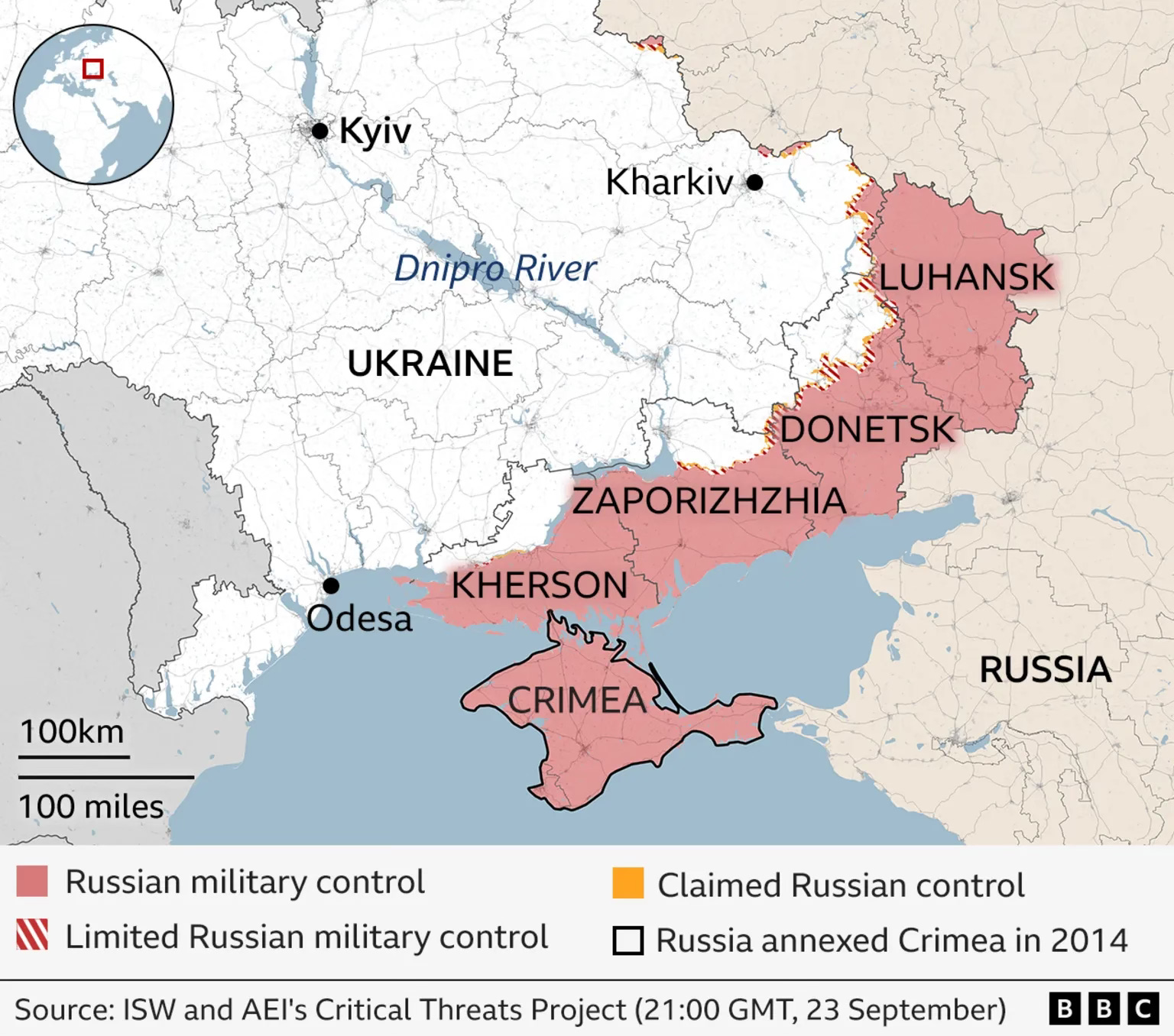
Again, no matter what Trump says, a total victory for Ukraine looks remote. Russia controls about 20 percent of Ukrainian territory, including the industrial Donbas and much of the south. Ukraine’s economy is weakened (as is Russia’s), its army is depleted, and its demographics are unfavorable to success (millions of Ukrainians have sought sanctuary abroad).
The Media’s Role in Perpetuating Illusion
The mainstream media in the U.S. has been partisan since day one. The MSM framed the conflict as a morality play: a heroic democracy versus an evil autocrat.
Meanwhile, the MSM overhyped U.S. weapons as “decisive” and Ukrainian counteroffensives in 2023 as “war-winning.” Media hype distorted expectations and contributed to public fatigue.
Most strikingly, the press has consistently downplayed the risks of escalation with a nuclear power. Ukraine’s use of long-range Western missiles to strike inside Russia carries serious dangers. That Putin will tolerate further provocations without escalating himself is a dangerous bet.
The Case for Diplomacy
Ukraine, no matter Trump’s new faith, cannot win this war in the maximalist sense of regaining all occupied territories and forcing Russia’s surrender. The longer the war continues, the more Ukraine will suffer—physically, economically, and politically.
Wars feed autocracy. Already, Ukraine has postponed elections, banned several opposition parties, and restricted media outlets. These measures may be understandable in wartime, but they belie the notion that Ukraine is a flourishing democracy.
A negotiated settlement is not capitulation. It is recognition of limits. The alternative is indefinite conflict—one that may bleed Ukraine dry even as it edges the world closer to catastrophe.
Dangerous Assumptions
Some policymakers argue a prolonged war will weaken Russia to the point of collapse. But a weakened Russia is not necessarily a safer one. If the Russian state disintegrates, who controls its nuclear arsenal? What if chaos in Moscow produces a more radical, vengeful leader? What if a desperate Kremlin lashes out, or if fighting spills into a NATO country like Poland?
Conversely, what if Ukraine, drained by endless war and reliant on foreign arms, slides toward authoritarianism? Wars have a way of transforming republics into garrison states. The longer the conflict lasts, the greater the risk that Ukraine’s democracy will become a casualty of its own “great patriotic war.”
The Limits of Analogy
Too often, the war is discussed through lazy historical analogies. Putin is Hitler; Zelensky is Churchill; negotiations are “another Munich.” Such framing flatters Western moral vanity but obscures strategic reality. This is not 1938. Putin is not on the verge of conquering Europe, and diplomats are not appeasing him by seeking peace.
Putin may be ruthless, but he is not suicidal. He knows that attacking a NATO member would invite his own destruction. Nuclear deterrence remains real. To suggest otherwise is to indulge in a fever-dream of perpetual conflict, one that justifies limitless military spending and forecloses diplomacy.
The American Connection
For most Americans, the Russia–Ukraine War remains distant and impersonal. We are not threatened by Russian artillery; the war is thousands of miles away. Yet we are paying for it—literally. Every artillery shell, every tank, every missile financed through our taxes contributes to death and destruction abroad. Some justify this as moral duty: helping Ukraine defend freedom. But morality also demands an accounting of consequences.
How many Americans know that 69 percent of Ukrainians report being weary of the war, or that their own government has suspended elections? How many realize that each dollar spent on war is a dollar not spent on schools, infrastructure, or healthcare at home?
We are told the U.S. can afford virtually limitless weapons for Ukraine, but when it comes to social programs, we always hear the same question: How are you going to pay for that? Apparently, there’s always money for war, never for peaceful pursuits.
A Broader Reckoning
The Russia–Ukraine War has become a mirror reflecting America’s own pathologies: our addiction to militarism, our aversion to diplomacy, our willingness to spend without scrutiny when the cause is war, and our moral complacency about the human cost of conflict.
We have turned foreign policy into a morality play, where compromise is dismissed as cowardice and negotiation is treated as akin to sin. Yet history teaches the opposite: the greatest statesmen are not those who glorify war but those who end it.
The Russia–Ukraine War continues, and so does the silence around the most basic of questions: What is America’s endgame? If the answer is “as long as it takes,” we should ask: takes for what? For Ukraine’s victory—or for its ruin? For democracy’s defense—or for another endless war?
It is time to demand accountability, restraint, and above all, diplomacy. Supporting Ukraine should not mean subsidizing endless cycles of death and destruction. How many more must die before this war is finally ended?
If there’s one thing we’ve learned (or re-learned, again and again) from the Pentagon it’s that all governments lie and that the first casualty of war is truth. From the Pentagon Papers in the Vietnam War to the Afghan War Papers and the lies about WMD in Iraq, the American people have been deliberately and maliciously lied to about America’s wars and their true causes and purposes. And you can go back further to the infamous “Remember the Maine!” cry that touched off the Spanish-American War of 1898. When it comes to war, America’s leaders have always been economical with the truth.
At the Pentagon, Pomade Pete Strikes Again!
But wait, today’s Pentagon is about to outdo that! As usual with nefarious government decisions, it was announced on Friday when people are most distracted. A short summary from NBC News:
Journalists who cover the Defense Department at the Pentagon can no longer gather or report information, even if it is unclassified, unless it’s been authorized for release by the government, defense officials announced Friday. Reporters who don’t sign a statement agreeing to the new rules will have their press credentials revoked, officials said.
Multiple press associations quickly condemned the new rules and said they will fundamentally change journalists’ ability to cover the Pentagon and the U.S. military. They called for the Trump administration to rescind the new requirements, arguing they inhibit transparency to the American people.
The National Press Club denounced the requirement as “a direct assault on independent journalism at the very place where independent scrutiny matters most: the U.S. military.”
Remember that old saw that, “If you’ve done nothing wrong, you have nothing to hide” from your friendly government surveillance program? Looks like the Pentagon has decided it’s got plenty to hide, meaning it’s done and is planning to do a lot of wrong, and thus only government-approved information will be allowed to be released.
Any journalist worth her or his salt will never agree to this. Journalists who do agree, who sign the Pentagon statement, should just become paid spokespeople for the U.S. military (as indeed many of them already essentially are).
We’ve created a monstrous military, America, one that believes it should be completely unaccountable to us even as we feed it over a trillion dollars a year.
America, there’s only one way to rein in the military: cut the Pentagon budget in half. Show them who’s boss. Of course, Congress controls the purse strings, and Congress, as Ike noted, is intimately intertwined with the military-industrial complex, so it’s not going to be easy to do it.
But no one ever said it’ll be easy: it’s just necessary for the survival of our country as a quasi-democracy.
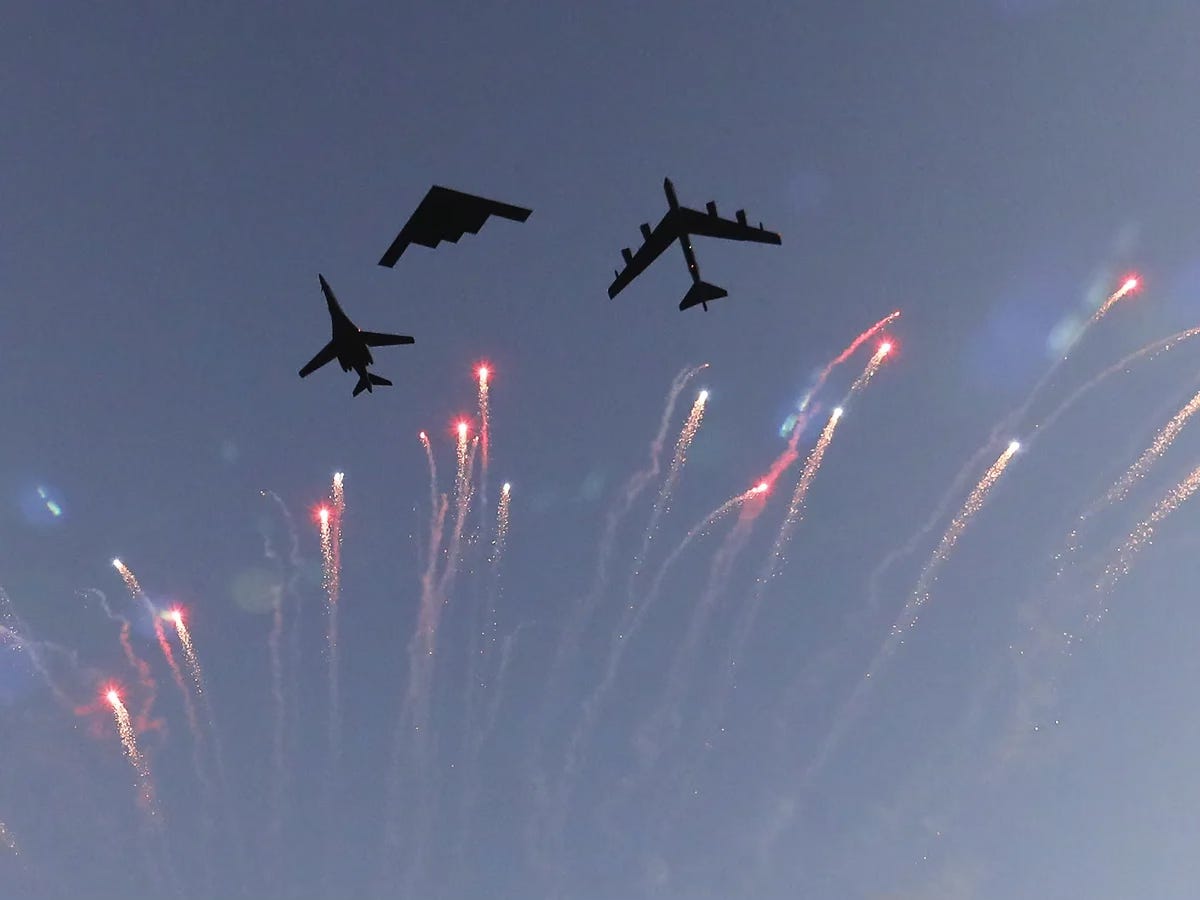
There’s a full slate of NFL football games today, meaning there’ll be a full slate of military flyovers and similar ceremonies to “support” our troops. The militarization of sports in America is something to behold, and a new report that tackles the issue is available from a series on “Consuming War” at Brown University. Here’s the link.
It put me to mind of an article I wrote for Huff Post back in 2011. Fourteen years later, the unholy alliance between sports and the military has only deepened.
Here’s what I wrote in 2011. What do you think, readers? Will we ever learn to play ball again without all the military trappings?
America!
The Militarization of Sports — And the Sportiness of Military Service
The co-joining of corporate-owned sports teams and events with the military strikes me as more than disturbing. We’ve created a dangerous dynamic in this country: one in which sporting events are exploited to sell military service for some while providing cheap grace for all.
Writer, History Professor, Retired Lieutenant Colonel (USAF)
Jul 28, 2011, 01:19 PM EDT
Updated Sep 27, 2011
Connecting sports to military service and vice versa has a venerable history. The Battle of Waterloo (1815) was won on the playing fields of Eton, Wellington allegedly said. Going over the top at the Battle of the Somme (1916), a few British soldiers kicked soccer balls in the general direction of the German lines. American service academies have historically placed a high value on sports (especially football) for their ability to generate and instill leadership, teamwork and toughness under pressure.
But in today’s America, we are witnessing an unprecedented militarization of sports, and a concomitant emphasis on the sportiness of military service. With respect to the latter, take a close look at recent Army recruitment ads (which I happen to see while watching baseball). These ads show soldiers lifting weights, playing volleyball, climbing mountains and similar sporty activities. The voice-over stresses that army service promotes teamwork and toughness (“There’s strong. Then there’s armystrong.”) There are, of course, no shots of soldiers under direct fire, of wounded soldiers crying for help, of disabled veterans. Army service in these ads is celebrated as (and reduced to) an action-filled sequence of sporting events.
Today’s militarization of sports is even more blatant. Consider this excellent article by U.S. Army Colonel (retired) Andrew Bacevich, which highlights the “cheap grace” available to crowds at major sporting events. For-profit sports corporations and the Pentagon join hands to orchestrate pageants that encourage (manipulate?) us to cheer and celebrate our flag, our troops and our sports and military heroes, as the obligatory fighter jets roar overhead.
Now, I’m sure there are well-meaning people who see such pageantry as an uncontroversial celebration of love of country, as well as a gesture of generosity and thanks to our military. And this retired veteran admits to feeling my heart swell when I see our flag flying proudly and our troops marching smartly. But the co-joining of corporate-owned sports teams and events (which are ultimately about entertainment and making a buck) with the military (which is ultimately in the deadly business of winning wars) strikes me as more than disturbing.
To cite only one example: The San Diego Padres baseball team takes “tremendous pride” in being “the first team in professional sports to have a dedicated military affairs department,” according to a team press release quoting Tom Garfinkel, the Padres president and chief operating officer. But is it truly “tremendous” for sports teams to be creating “military affairs” departments? As our sporting “heroes” celebrate our military ones, does not a dangerous blurring take place, especially in the minds of America’s youth?
War is not a sport; it’s not entertainment; it’s not fun. And blurring the lines between sport and war is not in the best interests of our youth, who should not be sold on military service based on stadium pageantry or team marketing, however well-intentioned it may be.
We’ve created a dangerous dynamic in this country: one in which sporting events are exploited to sell military service for some while providing cheap grace for all, even as military service is sold as providing the thrill of (sporting) victory while elevating our troops to the status of “heroes” (a status too often assigned by our society to well-paid professional athletes).
Which brings me to a humble request: At our sporting events, is it too much to ask that we simply “Play Ball?” In our appeals for military recruits, is it too much for us to tell them that war is not a sport?
Think of these questions the next time those military warplanes roar over the coliseum of your corporate-owned team.
It’s well worth a few minutes of your time to watch the first episode of this series on the military-industrial complex and its enormous reach and power, especially in American society.
I remember when I used to see thoughtful series like this on Frontline. Occasionally, you’d see critical reports on the mainstream media: I’m referring here to the 1970s and 1980s and shows like “60 Minutes” and “20/20.” Those days, dear reader, are long gone.
It’s rather amazing that Americans have to look to Al Jazeera for critical and sensible reporting on our very own military-industrial complex. Remember what Ike warned us about in 1961? Remember when he challenged us to remain alert and knowledgeable? America, we have a trillion-dollar “pentagon of power” to monitor—and we’re not doing the greatest job at it, are we? In fact, that pentagon of power is doing a far better job at monitoring us.
Indeed, when our mainstream media covers the Pentagon, it usually relies on retired generals and admirals, who often have unreported conflicts of interest (they may sit on corporate boards of weapons contractors, for example, or even get their talking points handed to them by the Pentagon). Let’s just say you rarely hear a negative word about the MIC in this very much unbalanced and biased coverage.
I see that YouTube is cautioning us that Al Jazeera is partially funded by the Qatari government. The horror!
Anyway, Al Jazeera is promising three more episodes in the series, the next one on America’s $1.7 trillion “investment” in new nuclear weapons. Should be sobering.
I sent this somewhat despairing note to a friend this morning:
It remains unclear to me whether the U.S. government kowtows to Israel (for all the reasons we know, like AIPAC), or whether Israel is a sort of cat’s paw for U.S. imperial and corporate interests. Maybe it’s not about nations and borders, as the famous speech from “Network” put it, but rather resources and profit, whether oil, water, weapons, and the like. The people of Gaza are simply in the way and entirely expendable to these larger interests. Naturally, propaganda is skillfully used to portray just about every Palestinian as a Hamas terrorist. Then, as you noted, there’s a media blackout on Gaza in most U.S. mainstream media sources.
Short of revolution, I don’t see any changes coming. The Democrats, of course, are just as happy to serve Israel and corporate interests.
This is the famous scene from “Network” featuring a brilliant performance by Ned Beatty:
If the world is a “college of corporations” (heck, even Harvard is a corporation) and if business and money is the universal lubricant, the Palestinians in Gaza are both good and bad for business. They are “good” in the sense that money can be made from killing them, concentrating them, monitoring them, expelling them, and so on. Speaking and documenting this horrendous truth got Francesca Albanese, the UN Special Rapporteur for Palestine, sanctioned by the U.S. government, as Lisa Savage noted here.
They are “bad” for business with respect to the gas fields off Gaza. Those marine gas reserves are likely worth $5 billion or more, money that would have done much to alleviate poverty in Gaza. Of course, Israel wasn’t about to allow Palestinians in Gaza to share in this bounty. Getting rid of Palestinians is a means to the end of completely dominating future trade in gas and other commodities in the Levant Basin.
I’ve been wondering why Great Britain is at great pains to help the Netanyahu government—then I noted that British Petroleum is one of the giant corporations that Israel granted a license to for future gas exploration. Coincidence?
Now, unlike Ned Beatty above, I’m not saying everything is explained by money and currency flows as “the primal forces of nature.” But it’s always a good idea to follow the money. It’s a ghastly business indeed when genocide makes money, but there you have it. A large part of the Holocaust in World War II was Germans and their fellow travelers taking everything from the Jews before they killed them. Profit from death factories—a grim truth I care not to contemplate, but it happened. Mass death can be a huge money-maker, and those pulling the strings couldn’t care less about body counts. Quarterly profits—now those they care about.
This suggests a strategy for activism—except efforts at BDS (boycott, divestment, sanctions) are heavily resisted by the powers that be. Surprise! You can find out more about the BDS movement here.
When protests are bad for business, that’s when the powerful pay attention. Powerful people already know the truth—they do everything in their power to determine what is “true”—so they’re not interested in right or wrong. What’s “right” is what makes money and what’s wrong, very wrong, loses money. You can’t appeal to their collective conscience (Good luck with that!), but you can possibly appeal to or cut into their collective profits.
Yesterday, I talked to Dick Price, a Vietnam War veteran, at the LA Progressive about the U.S. military, the Vietnam War, the all-volunteer military, media coverage, and why America just can’t stop making war.
When no one is held accountable for failure, when lies are used as the basis for killing, when war produces colossal profits for a select few, when Congress refuses to take responsibility for oversight, when war budgets keep climbing to the trillion dollar mark, it isn’t all that surprising that wars prove essentially endless as democracy withers.
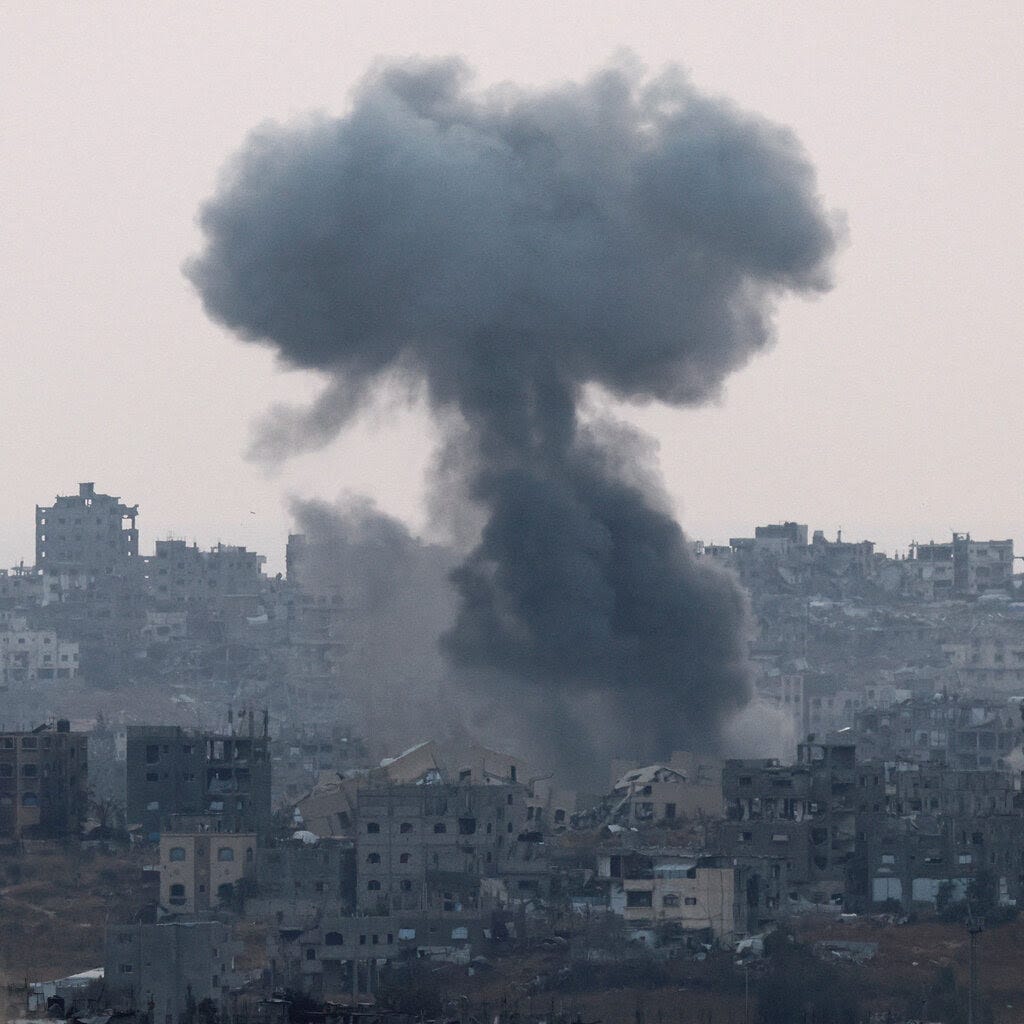
It’s rather amazing how the New York Times covers ethnic cleansing and genocide in Gaza. Today’s NYT features an article (in my email newsfeed) that talks about the “war” on Hamas and identifies the key issue as the hostages and their return. From this article, you’d never know Gaza has been reduced to rubble in a bombing campaign equivalent to seven Hiroshima atomic bombs. You’d never know that more than 60,000 Palestinians have been killed, but that the likely number of killed is probably twice or three times that. You’d never know the Israeli government’s plan is to kill or push out all the Palestinians in Gaza, a “final solution” to the Gaza problem. You’d never know the main victims of Israel’s “war” have been innocent women and children in Gaza.
And while the NYT does mention starvation and the spread of diseases, it provides no estimate for the number of Palestinians killed as a result of Israel’s blockade.
Also, the NYT mentions that Israeli’s latest invasion may endanger the hostages. Nothing is said about endangering the lives of Palestinians in Gaza. Basically, all those who live in Gaza are treated as Hamas, as terrorists, who must either be killed or removed.
This is your “paper of record,” America, with all the news that’s fit to print.
Here’s what appeared in my news feed from the NYT. Judge for yourself:
WAR RETURNS TO GAZA
After an Israeli airstrike in Gaza on Saturday. Amir Cohen/Reuters
Over the weekend, Israel decided to call in military reservists and escalate the war in the Gaza Strip again.
The news reflects a sharp turn of events. Earlier this year, Israel and Hamas agreed to a cease-fire. That deal held for months, during which Israel halted operations in Gaza and Hamas handed over some Israeli hostages. But the cease-fire ended in March. Now, it seems the war is truly returning.
Why escalate now?
Israel has pressured Hamas to return all of the remaining hostages, especially the 24 who officials believe are still alive. Officials also say that Hamas must disarm as part of any future deal. But Hamas has refused. Before it makes further concessions, it wants the war over and Israel out of Gaza.
Israel hopes escalation will get Hamas to capitulate and return all of the hostages — while giving its troops a chance to destroy the group’s remaining infrastructure.
What is Israel’s plan?
The generals are calling up tens of thousands of reservists to expand operations in Gaza. They plan to occupy the region, forcibly relocate Palestinians in affected areas and oversee aid distribution.
Israel has blocked all aid, including food and medicine, from entering the territory for more than two months. (Some aid workers are accused of participating in the Oct. 7 attacks, The Times explained, and a lawsuit claims that Hamas skimmed $1 billion in U.N. aid. But the blockade has led to starvation and the spread of diseases, as The Times documented.) With direct control, Israel says, it will allow distribution to resume.
Will the plan work?
Israeli leaders say that military pressure secured the release of hostages before. They hope to replicate that success. Critics argue that Israel has by now exhausted its ability to pressure Hamas with force. They worry more fighting will put the surviving hostages at risk. — German Lopez
To them, the right lessons; to everyone else, the wrong ones
We just marked the 50th anniversary of the Fall of Saigon on April 30, 1975. Did American officials learn anything from the disastrous Vietnam War?
Saigon, April 1975
Of course they did. Just not the lessons you’d have wished they’d learned.
So, what did they learn?
They learned that wars can indeed last forever, but that Vietnam wasn’t the best “forever war” for the military-industrial complex because it became deeply unpopular and was disrupting cohesion within the military itself. The best forever wars are open-ended “wars” like the global war on terror. And perhaps a “new Cold War” with Russia and/or China. Wars that don’t involve the deployment of over half a million men (unless that “new” Cold War turns hot).
They learned to control the narrative. No more journalists traveling freely in war zones as in the 1960s in Vietnam. Journalists are now most often embedded in U.S. military units. Embedded reporters, dependent on the military for access and protection, know what they can and can’t say, even as they tend to sympathize with the troops they’re with.
They learned that forced conscription via a draft doesn’t work well for unpopular wars. So they transformed the military into an “all-volunteer” force. Draftees may well be resentful, rightly so, but volunteers? Too bad—they volunteered for this.
Along with “volunteers,” they learned to indoctrinate U.S. troops to be “warriors” and “warfighters” rather than citizen-soldiers. Warriors exist to fight wars, so shut up and blast away.
They learned to keep the American people isolated from war and its deadly effects. Recall that under Bush/Cheney, Americans weren’t even allowed to see flag-draped caskets. During Vietnam, war was in America’s living rooms during dinner, complete with body counts. Coverage of wars in Iraq, Afghanistan, and elsewhere was sanitized, almost bloodlessly so.
They learned never to talk of sacrifice (except by those volunteer warriors) by the American people. Taxes aren’t raised in the name of war. There are no war bond drives. America’s leaders tell the rest of us to enjoy life, to visit Disney and to go shopping, while “our” warriors fight overseas.
Together with those “lessons,” they continue to preach “peace through strength,” attacking those who truly seek peace as misguided (at best) and treasonous (at worst). As ever, they tend to attack those who’d dare criticize the U.S. military as ungrateful backstabbers. And of course they consistently obscure the truth of how poorly wars like Iraq and Afghanistan were going while holding no one in the upper echelons responsible and accountable for rampant corruption and disastrous endings.
All these “lessons” ensured that Vietnam wouldn’t be the last example of hubris, folly, and atrocity, and indeed it hasn’t been. Until the right lessons are learned, expect future repeats, tragic variations on a theme of Vietnam.
The NFL draft started last night, in prime time. I’m fascinated, flabbergasted, and horrified by all the ink spilled and money spent on the draft–what a spectacle it’s become! Even before the draft, there are literally thousands of “mock” drafts, including those that attempt to predict all seven rounds of the draft, like this example. It’s insane! Why go through these exercises when you can simply wait for the draft results? I guess articles like this get clicks, but still …
After the obligatory national anthem and a military flyover featuring four helicopters (A flyover? For the draft?), the commissioner got down to business, Somewhere in the neighborhood of 200,000 people were in attendance outside of Lambeau Field in Green Bay, Wisconsin. There’s one tradition I do like: lusty boos for the commish (the commissioner). It’s all in good fun.
Anyhow, many people have noted the spectacle of mostly Black players being “selected” by mostly white owners. Echoes of the slave auctions of the past? I don’t go there, since the players selected in the 1st round become instant millionaires — they’re not slaves, obviously — but there’s something to the comparison.
When a player is selected, networks like ABC, ESPN, and the NFL Network show instant video highlights, over which “experts” intone whether the pick was wise or unwise, an overpay or a steal, and so on. Each player has a “tale of the tape” with all the player’s stats, including height, weight, arm length, speed in the 40-yard dash, even wrist size! The coverage is exhaustive—and exhausting, especially if you’re not a fan.
If only America took its wars as seriously as it took NFL football. If only events in Gaza were covered with the same objectivity and attention to detail as the draft. Given the media resources expended on it, you’d think the NFL draft was the lifeblood of America, the linchpin of our democracy. Perhaps it is?
With legalized betting, you can now bet on when a player will be drafted. Again, those odds are carefully calculated and supported with reams of data. NFL owners love all this legal betting—it puts a ton of money in their pockets. Just don’t read all the fine print about how America has more gambling addicts than ever.
Football remains #1 in America (along with the Pentagon, I suppose). At so many colleges and universities, the most richly compensated and often most powerful person is the football coach. A fortunate professor with tenure might make $100,000 a year as the football coach takes home several million dollars. Who says America’s students aren’t learning the right lessons at college?
Everything about major American sports like the NFL has been corporatized and monetized. Despite that, I still enjoy following “my” team, don’t ask me why, even as I marvel at the excess of America’s new national pastime of football. Call it a guilty pleasure, something that gets my mind off atrocities and all the other violent excesses of America. I’m just another member of the hoi polloi in the Colosseum, waiting for my bread and circuses. Next up: the Lions take on the Bears as the Eagles fight the Seahawks. Let the games begin!
Bears against the Lions—Bring it on! (AI-generated image)