Bring Back National Service

Dad in Oregon
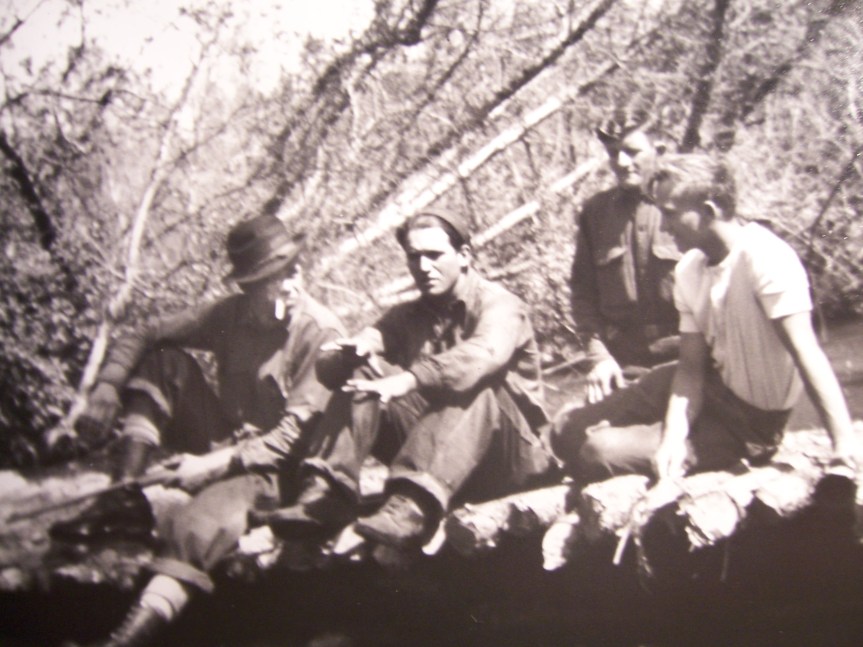
My dad (2nd from left) in Oregon with some of the “fellows,” c.1937

With fires raging in California and Oregon, and with unemployment rates high, I recalled the experiences of my dad, which I wrote about twelve years ago for TomDispatch.com.  My dad served in the Civilian Conservation Corps (CCC), mainly fighting forest fires in Oregon.  The CCC was one of those alphabet soup agencies created by FDR’s administration to put people back to work while paying them a meaningful wage.  You might call it “democratic socialism,” but I prefer to call it common sense and applaud its spirit of service to country.

We need to revive national service while deemphasizing its military aspects.  There are all sorts of honorable services one can render to one’s fellow citizens, as my father’s example shows from the 1930s, an era that now seems almost biblical in its remoteness from today’s concerns.

Hey, Government! How About Calling on Us?
Reviving National Service in a Big Way
By William J. Astore

Lately, our news has focused on tropical depressions maturing into monster hurricanes that leave devastation in their wake — and I’m not just talking about Gustav and Ike. Today, we face a perfect storm of financial devastation, notable for the enormity of the greed that generated it and the somnolent response of our government in helping Americans left devastated in its wake.

As unemployment rates soar to their highest level in five years and home construction sinks to its lowest level in 17 years, all our federal government seems able to do is buy up to $700 billion in “distressed” mortgage-related assets, bail-out Fannie Mae and Freddie Mac (at a cost of roughly $200 billion) or “loan” $85 billion to liquidate insurance giant AIG. If you’re Merrill Lynch, you get a hearing; if you’re just plain Marilyn Lynch of Topeka, what you get is a recession, a looming depression, and a federal tax bill for the fat-cat bail-outs.

But, amazingly enough, ordinary Americans generally don’t want bail-outs, nor do they want handouts. What they normally want is honorable work, decent wages, and a government willing to wake up and help them contribute to a national restoration.

How America Was Once Rebuilt

Before surging ahead, however, let’s look back. Seventy-five years ago, our country faced an even deeper depression. Millions of men had neither jobs, nor job prospects. Families were struggling to put food on the table. And President Franklin Delano Roosevelt acted. He created the Civilian Conservation Corps, soon widely known as the CCC.

From 1933 to 1942, the CCC enrolled nearly 3.5 million men in roughly 4,500 camps across the country. It helped to build roads, build and repair bridges, clear brush and fight forest fires, create state parks and recreational areas, and otherwise develop and improve our nation’s infrastructure — work no less desperately needed today than it was back then. These young men — women were not included — willingly lived in primitive camps and barracks, sacrificing to support their families who were hurting back home.

My father, who served in the CCC from 1935 to 1937, was among those young men. They earned $30 a month for their labor — a dollar a day — and he sent home $25 of that to support the family. For those modest wages, he and others like him gave liberally to our country in return. The stats are still impressive: 800 state parks developed; 125,000 miles of road built; more than two billion trees planted; 972 million fish stocked. The list goes on and on in jaw-dropping detail.

Not only did the CCC improve our country physically, you might even say that experiencing it prepared a significant part of the “greatest generation” of World War II for greatness. After all, veterans of the CCC had already learned to work and sacrifice for something larger than themselves — for, in fact, their families, their state, their country. As important as the G.I. Bill was to veterans returning from that war and to our country’s economic boom in the 1950s, the CCC was certainly no less important in building character and instilling an ethic of teamwork, service, and sacrifice in a generation of American men.

Today, we desperately need to tap a similar ethic of service to country. The parlous health of our communities, our rickety infrastructure, and our increasingly rickety country demands nothing less.

Of course, I’m hardly alone in suggesting the importance of national service. Last year, in Time Magazine, for example, Richard Stengel called for a revival of national service and urged the formation of a “Green Corps,” analogous to the CCC, and dedicated to the rejuvenation of our national infrastructure.

To mark the seventh anniversary of 9/11, John McCain and Barack Obama recently spoke in glowing terms of national service at a forum hosted by Columbia University. Both men expressed support for increased governmental spending, with McCain promising that, as president, he would sign into law the Kennedy-Hatch “Serve America Act,” which would, among other things, triple the size of the AmeriCorps. (Of course, McCain had just come from a Republican convention that had again and again mocked Obama’s time as a “community organizer” and, even at Columbia, he expressed a preference for faith-based organizations and the private sector over service programs run by the government.) Obama has made national service a pillar of his campaign, promising to spend $3.5 billion annually to more than triple the size of AmeriCorps, while also doubling the size of the Peace Corps.

It all sounds impressive. But is it? Compared to the roughly $900 billion being spent in FY2009 on national defense, homeland security, intelligence, and the wars in Iraq and Afghanistan, $3.5 billion seems like chump change, not a major investment in national service or in Americans. When you consider the problems facing American workers and our country, both McCain and Obama are remarkable in their timidity. Now is surely not the time to tinker with the controls on a ship of state that’s listing dangerously to starboard.

Do I overstate? Here are just two data points. Last month our national unemployment rate rose to 6.1%, a five-year high. This year alone, we’ve shed more than 600,000 jobs in eight months. If you include the so-called marginally attached jobless, 11 million Americans are currently out of work, which adds up to a real unemployment rate of 7.1%. Now, that doesn’t begin to compare to the unemployment rate during the Great Depression which, at times, exceeded 20%. In absolute terms, however, 11 million unemployed American workers represent an enormous waste of human potential.

How can we get people off the jobless rolls, while offering them useful tasks that will help support families, while building character, community, and country?

Here’s where our federal government really should step in, just as it did in 1933. For we face an enormous national challenge today which goes largely unaddressed: shoring up our nation’s crumbling infrastructure. The prestigious American Society of Civil Engineers did a survey of, and a report card on, the state of the American infrastructure. Our country’s backbone earned a dismal “D,” barely above a failing (and fatal) grade. The Society estimates that we need to invest $1.6 trillion in infrastructure maintenance and improvements over the next five years or face ever more collapsing bridges and bursting dams. It’s a staggering sum, until you realize that we’re already approaching a trillion dollars spent on the Iraq war alone.

No less pressing than a trillion-dollar investment in our nation’s physical health is a commensurate investment in the emotional and civic well-being of our country — not just the drop-in-the-bucket amounts both Obama and McCain are talking about, but something commensurate with the task ahead of us. As our president dithers, even refusing to use the “R” word of recession, The Wall Street Journal quotes Mark Gertler, a New York University economist, simply stating this is “the worst financial crisis since the Great Depression.”

The best and fairest way to head off that crisis is not simply to spend untold scores of billions of taxpayer dollars rescuing (or even liquidating) recklessly speculative outfits that gave no thought to ordinary workers while they were living large. Rather, our government should invest scores of billions in empowering the ordinary American worker, particularly those who have suffered the most from the economic ravages of our financial hurricane.

Just as in 1933, a call today to serve our country and strengthen its infrastructure would serve to reenergize a shared sense of commitment to America. Such service would touch millions of Americans in powerful ways that can’t be fully predicted in advance, just as it touched my father as a young man.

What “Ordinary” Americans Are Capable Of

My father was a self-confessed “regular guy,” and his CCC service was typical. He was a “woodsman-falling,” a somewhat droll job title perhaps, but one that concealed considerable danger. In the fall of 1936, he fought the Bandon forest fire in Oregon, a huge conflagration that burned 100,000 acres and killed a dozen people. To corral and contain that fire, he and the other “fellows” in his company worked on the fire lines for five straight weeks. At one point, my father worked 22 hours straight, in part because the fire raged so fiercely and so close to him that he was too scared to sleep (as he admitted to me long after).

My father was 19 when he fought that fire. Previously, he had been a newspaper boy and had after the tenth grade quit high school to support the family. Still, nothing marked him as a man who would risk his own life to save the lives of others, but his country gave him an opportunity to serve and prove himself, and he did.

Before joining the CCC, my father had been a city boy, but in the Oregon woods he discovered a new world of great wonder. It enriched his life, just as his recollections of it enrich my own:

“Thunder and lightning are very dangerous in the forest. Well, one stormy night a Forest Ranger smoke chaser got a call from the fire tower. They spotted a small night fire; getting the location the Ranger took me and another CCC boy to check it out. After walking about a mile in the woods we spotted the fire. It had burned a circle of fire at least 100 yards in diameter from the impact of the lightning bolt.

“You never saw anything so beautiful. The trees were all lit in fire; the fire on the ground was lit up in hot coals. Also fiery embers were falling off the trees. Some of the trees were dried dead snags. It looked like the New York skyline lit up at night. The Ranger radioed back for a fire crew. Meanwhile the three of us started to contain the fire with a fire trail.

“Later, we got caught in a thunderstorm in the mountains. We stretched a tarpaulin to protect ourselves from the downpours. You could see the storm clouds, with thunder and lightning flashing, approaching and passing over us. Then the torrents of rain. It would stop and clear with stars shining. And sure enough it must have repeated the sequence at least five times. What a night.”

Jump ahead to 2008 and picture a nineteen-year-old high school dropout. Do you see a self-centered slacker, someone too preoccupied exercising his thumbs on video games, or advertising himself on MySpace and Facebook, to do much of anything to help anyone other than himself?

Sure, there are a few of these. Aren’t there always? But many more young Americans already serve or volunteer in some capacity. Even our imaginary slacker may just need an opportunity — and a little push — to prove his mettle. We’ll never know unless our leaders put our money where, at present, only their mouths are.

Remaking National Service — And Our Country

Today, when most people think of national service, they think of military service. As a retired military officer, I’m hardly one to discount the importance of such service, but we need to extend the notion of service beyond the military, beyond national defense, to embrace all dimensions of civic life. Imagine if such service was as much the norm as in the 1930s, rather than the exception, and imagine if our government was no longer seen as the problem, but the progenitor of opportunity and solutions?

Some will say it can no longer be done. Much like Rudy Giuliani, they’ll poke fun at the whole idea of service, and paint the government as dangerously corrupt, or wasteful, or even as the enemy of the people — perhaps because they’re part of that same government.

How sad. We don’t need jaded “insiders” or callow “outsiders” in Washington; what we need are doers and dreamers. We need leaders with faith both in the people — the common worker with uncommon spirit — and the government to inspire and get things done.

The unselfish idealism, work ethic, and public service of the CCC could be tapped again, if only our government remembers that our greatest national resource is not exhaustible commodities like oil or natural gas, but the inexhaustible spirit and generosity of the American worker.

William J. Astore, a retired lieutenant colonel (USAF), taught at the Air Force Academy and the Naval Postgraduate School. He now teaches at the Pennsylvania College of Technology, and is the author of Hindenburg: Icon of German Militarism (Potomac Press, 2005), among other works. He may be reached at wastore@pct.edu.

Copyright 2008 William Astore

Three Generals Walk Into a Bar …

W.J. Astore (and Andrew Bacevich)

Back in May of 2019, I wrote an article here on General William Westmoreland and the Vietnam War. Westmoreland was conventional in every sense of the word; it was his misfortune to be put in charge of an unconventional war in Southeast Asia, a war he didn’t understand but also one that was unnecessary for U.S. security and incredibly wasteful to boot. Relieved of command by being booted upstairs, Westmoreland went to his grave convinced that the war was winnable. If only he’d received the reinforcements he needed …

Today at TomDispatch.com, Andrew Bacevich, a retired Army colonel and author, imagines Westmoreland grousing in a bar with two other generals: George S. Patton of World War II fame, and an imaginary general of today’s wars, Victor Constant. Let’s just say General Constant does not cover himself in glory, failing to live up to his victor(ious) first name as he loses himself in vapid catchphrases he’s gleaned from PowerPoint briefings on war and its meaning. Much like today’s generals, in fact.

So, with the blessing of TomDispatch.com, here is that barroom conversation, as imagined by Colonel (ret.) Bacevich:

Patton and Westy Meet in a Bar
A Play of Many Parts in One Act
By Andrew Bacevich

It’s only mid-afternoon and Army Lieutenant General Victor Constant has already had a bad day.1 Soon after he arrived at the office at 0700, the Chief2 had called. “Come see me. We need to talk.”

The call was not unexpected. Any day now, POTUS3 will announce the next four-star to command the war effort in Afghanistan — how many have there been? — and Constant felt certain that he’d be tapped for the job. He’d certainly earned it. Multiple tours in Iraq and Afghanistan and, worse still, at the Pentagon. If anyone deserved that fourth star, he did.

Unfortunately, the Chief sees things differently. “Time’s up, Vic. I need you to retire.” Thirty-three years of service and this is what you get: your walking papers, with maybe a medal thrown in.

Constant returns to his office, then abruptly tells his staff that he needs some personal time. A 10-minute drive and he’s at the O-Club, where the bar is just opening. “Barkeep,” he growls. “Bourbon. Double. Rocks.” On the job long enough to have seen more than a few senior officers get the axe, the bartender quietly complies.

Constant has some thinking to do. For the first time in his adult life, he’s about to become unemployed. His alimony payments and college tuition bills are already killing him. When he and Sally have to move out of quarters,4 she’s going to expect that fancy house in McLean or Potomac that he had hinted at when they were dating. But where’s the money going to come from?

He needs a plan. “Barkeep. Another.” Lost in thought, Constant doesn’t notice that he’s no longer alone. Two soldiers — one boisterous, the other melancholy — have arrived and are occupying adjacent bar stools.

The first of them smells of horses. To judge by his jodhpurs and riding crop, he’s just returned from playing polo. He has thinning gray hair, small uneven teeth, a high-pitched voice, and a grin that says: I know things you never will, you dumb sonofabitch. He exudes arrogance and charisma. He is George S. Patton. He orders whiskey with a beer chaser.

The second wears Vietnam-era jungle fatigues, starched. His jump boots glisten.5 On his ballcap, which he carefully sets aside, are four embroidered silver stars. He is impeccably groomed and manicured. The nametape over his breast pocket reads: WESTMORELAND. He exudes the resentment of someone who has been treated unfairly — or thinks he has.

“Westy! Damned if you still don’t look like TIME’s Man of the Year back in ’65! Ease up, man! Have a drink. What’ll it be?”

“Just water for me, General. It’s a bit early in the day.”

“Shit. Water? You think my guys beat the Nazis by filling their canteens with water?”

Westmoreland sniffs. “Alcohol consumption does not correlate with battlefield performance — although my troops did not suffer from a shortage of drink. They never suffered from shortages of anything.”

Patton guffaws. “But you lost! That’s the point, ain’t it? You lost!”

The bickering draws Victor Constant out of his reverie. “Gentlemen, please.”

“Who are you, bucko?” asks Patton.

“I am Lieutenant General Victor Constant, U.S. Army. To my friends, I’m VC.”

“VC!” Westy nearly falls off of his stool. “My army has generals named after the Vietcong?”

Patton intervenes. “Well, VC, tell us old timers what you’re famous for and why you’re here, drinking in uniform during duty hours.

“Well, sir, first of all, I’m a warrior. I commanded a company in combat, then a battalion, then a brigade, then a division. But I’m here now because the chief just told me that I need to retire. That came as a bit of a blow. I don’t know what Sally is going to say.” He stares at his drink.

Patton snorts. “Well, my young friend, sounds like you’ve seen plenty of action. All that fighting translates into how many wins?”

“Wins?” VC doesn’t quite grasp the question.

“Wins,” Patton says again. “You know, victories. The enemy surrenders. Their flag comes down and ours goes up. The troops go home to a heroes’ welcome. Polo resumes.”

Westy interjects. “Wins? Are you that out of touch, George? The answer is: none. These so-called warriors haven’t won anything.”

“With all due respect, sir, I don’t think that’s fair. Everyone agrees that, back in ’91, Operation Desert Storm was a historic victory. I know. I was there, fresh out of West Point.”

Patton smirks. “Then why did you have to go back and do it again in 2003? And why has your army been stuck in Iraq ever since? Not to mention Syria! And don’t get me started on Afghanistan or Somalia! The truth is your record isn’t any better than Westy’s.”

“Now, see here, George. You’re being unreasonable. We never lost a fight in Vietnam.” He pauses and corrects himself. “Well, maybe not never, but very rarely.”

“Rarely lost a fight!” Patton roars. “What does that have to do with anything? That’s like you and your thing with body counts! Dammit, Westy, don’t you know anything about war?”

VC ventures an opinion. “General Westmoreland, sir, I’m going to have to agree with General Patton on this one. You picked the wrong metric to measure progress. We don’t do body counts anymore.”

“Well, what’s your metric, sonny?”

VC squirms and falls silent.

His hackles up, Westy continues. “First of all, the whole body-count business was the fault of the politicians. We knew exactly how to defeat North Vietnam. Invade the country, destroy the NVA,6 occupy Hanoi. Just like World War II: Mission accomplished. Not complicated.”

He pauses to take a breath. “But LBJ and that arrogant fool McNamara7 wouldn’t let us. They imposed limits. They wouldn’t even mobilize the reserves. They set restrictions on where we could go, what we could attack. General Patton here had none of those problems in ’44-’45. And then the press turned on us. And the smartass college kids who should have been fighting communists started protesting. Nothing like it before or since — the home front collaborating with the enemy.”

Westy changes his mind about having a drink. “Give me a gin martini,” he barks. “Straight up. Twist of lemon. And give VC here” — his voice drips with contempt — “another of whatever he’s having.”

The bartender, who has been eavesdropping while pretending to polish glassware, grabs a bottle and pours.

“Hearts and minds, Westy, hearts and minds.” Patton taunts, obviously enjoying himself.

“Yes, hearts and minds. Don’t you think, George, that we understood the importance of winning over the South Vietnamese? But after Diem’s assassination,8 the Republic of Vietnam consisted of little more than a flag. After D-Day, you didn’t need to create France. You just needed to kick out the Germans and hand matters over to De Gaulle.”9

Westmoreland is becoming increasingly animated. “And you fought alongside the Brits. We were shackled to a Vietnamese army that was miserably led and not eager to fight either.”

“Monty was a horse’s ass,”10 Patton interjects, apropos of nothing.

“The point is,” Westmoreland continues, “liberating Europe was politically simple. Defending South Vietnam came with complications you could never havedreamed of. Did the New York Times pester you about killing civilians? All you had to do to keep the press on your side was not to get caught slapping your own soldiers.”

“That was an isolated incident and I apologized,” Patton replies, with a tight smile. “But the fact is, Westy, all your talk about ‘firepower and mobility’ didn’t work. ‘Search and destroy’? Hell, you damn near destroyed the whole U.S. Army. And the war ended with the North Vietnamese sitting in Saigon.”

“Ho Chi Minh City,” Victor Constant offers by way of correction.

“Oh, shut up,” Patton and Westmoreland respond simultaneously.

Patton leans menacingly toward Victor Constant and looks him right in the eye. “Have you seen my movie, son?”11

“Yes, of course, sir. Several times.”

“Then you should understand what war is all about. You ‘hold onto him by the nose’ and you ‘kick him in the ass.’ That’s what I said in the movie. Why is that so hard to understand? How is it that my soldiers could defeat those Hun bastards and you and your crew can’t manage to take care of a few thousand ‘militants’ who don’t have tanks or an air force or even decent uniforms, for God’s sake?”

“Hearts and minds, George, hearts and minds.”

“What’s that supposed to mean, Westy?”

“Your kick-them-in-the-ass approach isn’t good enough these days. You studied Clausewitz — war is politics with guns. Now, I’ll give you this much: in Vietnam, we never got the politics right. We couldn’t solve the puzzle of making war work politically. Maybe there wasn’t a solution. Maybe the war was already lost the day I showed up. So we just killed to no purpose. That’s a failure I took to my grave.”

A bead of perspiration is forming on Westmoreland’s lip. “But these guys” — he nods toward Constant — “now, we’ve got a generation of generals who think they’ve seen a lot of war but don’t know squat about politics — and don’t even want to know. And we’ve got a generation of politicians who don’t know squat about war, but keep doling out the money. There’s no dialogue, no strategy, no connecting war and politics.”

Victor Constant is mystified. Dialogue? He rouses himself to defend his service. “Gentlemen, let me remind you that the United States Army today is far and away the world’s finest military force. No one else comes close.”

Westy just presses on. “So what has your experience in war taught you? What have you learned?”

Patton repeats the question. “What have you learned, Mr. Warrior? Tell us.”

Learned? After several drinks, Victor Constant is not at his best. “Well, I’ve learned a lot. The whole army has.”

He struggles to recall recent PowerPoint briefings that he’s dozed through. Random phrases come to mind. “Leap-ahead technology. Dominant maneuver in an ever-enlarging battlespace. Simultaneous and sequential operations. Artificial Intelligence. Quantum computing. Remote sensing. Machine learning. Big data analytics. 5G technology. High-fidelity, multi-domain training.”

However dimly, VC realizes he’s babbling. He pauses to catch his breath. “It’s all coming, if they’ll just give us the money.”

Patton stares at him silently. Victor Constant senses that it’s time to go home.

“Can I call you a taxi?” Westmoreland asks.

“No, sir, thank you.” With as much dignity as he can muster, Victor Constant straightens his tie, finds his headgear, and walks unsteadily toward the door.

What have I learned? What did they even mean? He was a general officer in the best army in the world. Maybe the best army ever. Wasn’t that enough? He needed to ask Sally.

Andrew Bacevich, a TomDispatch regular, is president of the Quincy Institute for Responsible Statecraft. His most recent book is The Age of Illusions: How America Squandered Its Cold War Victory.

Copyright 2020 Andrew Bacevich


1 Victor Constant is the name of the ski slope at the United States Military Academy, called such in memory of a cadet ski instructor killed in an accident during World War II. To my knowledge, there is no officer bearing that name in the U.S. Army. Return to story.

2 The chief of staff, U.S. Army. Return to story.

3 The president of the United States. Return to story.

4 Many of the army’s most senior officers are housed at government-owned quarters at Fort Myers, Virginia, and Fort McNair in Washington. Return to story.

5 Beginning in World War II, U.S. Army paratroopers sported a distinctive style of black leather boot, more fashionable than standard army issue. After the war, Westmoreland attended jump school and commanded the 101st Airborne Division. Return to story.

6 Shorthand for the North Vietnamese army. Return to story.

7 Lyndon Johnson served as U.S. president from November 1963 to January 1969. Robert Strange McNamara filled the post of defense secretary from 1961 to 1968. Return to story.

8 The November 1963 assassination of South Vietnamese President Ngo Dinh Diem destroyed whatever slight political legitimacy the Republic of Vietnam had possessed. Return to story.

9 Charles De Gaulle was the leader of the Free French during World War II. Return to story.

10 Field Marshal Bernard Law Montgomery, the senior British commander in the European Theater of Operations in World War II, had a low opinion of American officers from U.S. Supreme Allied Commander Dwight D. Eisenhower on down. Return to story.

11 “Patton” (1970), starring George C. Scott. Return to story.

The USA as a Fourth World Country

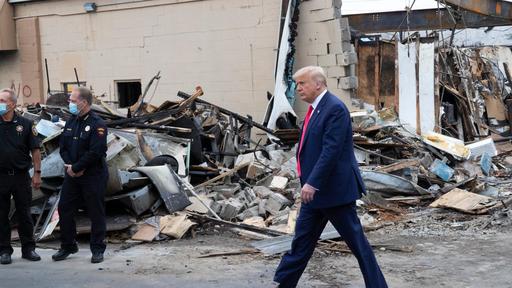
Trump, striding to protect precious property

W.J. Astore

1+3=4. It’s a simple equation that says much about the American moment, suggests Tom Engelhardt today at TomDispatch.com. Think about it. America remains a first world country with its unmatched military might, its powerful corporate and financial sectors, and the quality of life available to the affluent and well-connected. But for most other Americans? The country increasingly seems 3rd world, with crumbling infrastructure, low wages, lack of good jobs, lack of health care coverage for the less fortunate, and so on.

Perhaps that’s why Trump gets away with tweets about thug-ridden streets (that he connects to the Black Lives Matter movement). People may not see these thugs, but they sense something is wrong out there, and someone may indeed be coming for them, very shortly, perhaps to evict or foreclose on them.

There is a unique ideology to our fourth world country. Our two main parties, the Democrats and Republicans, agree that to invest in society is socialism, but to “invest” in weaponry and wars is the height of prudence and sanity. I know: a few Democrats like Bernie Sanders and AOC make noises, more or less sincere, about helping workers and investing in people, but they are shunted aside by the corporate Democrats whose main job it is to keep “socialists” like Bernie out of power. It’s the one thing they’re good at, led as they are by those icons of charisma and homespun goodness, Nancy Pelosi and Chuck Schumer.

Meanwhile, Trump continues to rant about American carnage, doing his level best to create it where it doesn’t yet exist. “Law&Order” is his new cry, usually shouted in all caps, even as he himself leads an administration that’s lawless and disordered. Roughly one-third of likely voters find him attractive as a tough-guy leader, the plutocrat populist, so mark this down as another weird feature of fourth worldness.

Fourth worldness: to invest in people is socialism and wrong; to invest in wars and weaponry is not militarism and is right. To elect a (democratic) socialist like Bernie Sanders would be un-American, but to reelect a sociopathic plutocrat posing as a populist is about keeping America great.

That’s America! You can’t love it “as is,” unless you’re crazy, and you can’t leave it ’cause we’re all Covid pariahs to the rest of the world.

So maybe, just maybe, we should change it?

On War Dead, Politics, and Trump

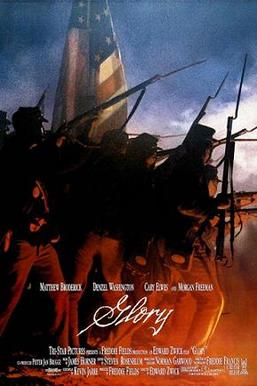
Glory_(1989_film)_poster

M. Davout

I was recently re-watching Glory (1989), starring Matthew Broderick and Morgan Freeman, with my high school senior son (for whom this was a first viewing). I’ve regularly shown sequences from this dramatization of the 54th Massachusetts Regiment, one of the first “Colored” combat units to enter the fight against the Confederacy, to students in my “Film and Politics” course. Toward the end of the film, as the action swung to the 54th’s frontal assault on Fort Wagner, South Carolina, on July 18, 1863, I let slip, to my son’s chagrin, that the attack would fail and result in the regiment’s near destruction. He rhetorically asked why they would make a film about this regiment if the attack failed and all the main characters died.

My son is a tech geek with libertarian leanings and, as a result, he tends to analyze interactions through a transactional lens. In assessing whether a deal or agreement or commitment makes sense, he asks himself what each party materially stands to gain. From his point of view, the conclusion of the dramatic arc of Glory was problematic because it depicted men who failed and died rather than lived and won. And it left viewers with an emotional deficit rather than a surplus.

My son’s response to Glory put me to mind of the uproar over President Trump’s reportedly disdainful remarks about US war dead, which continues to reverberate in the mainstream media. The sources for the Atlantic Monthly story remain anonymous to date but Trump’s documented pattern of openly contemptuous remarks about John McCain’s harrowing imprisonment by North Vietnamese captors gives credence to reports that Trump considered fallen US soldiers to have been “suckers” and “losers.” He openly wondered during a visit with his then chief-of-staff John Kelly to the grave of Kelly’s soldier son why his son had put his life at risk for his country.

Trump’s reported comments and the attitude toward military sacrifice they purportedly exemplify have provoked attacks from Democratic politicians and a deafening silence from Republican politicians. It remains to be seen what lasting damage, if any, this controversy will do to Trump’s electoral prospects.

Sometime an outrageous comment can illuminate an issue worth thinking about that would otherwise be obscured in the dust of political combat. While Trump could be faulted for lacking decorum in pressing Kelly about the rationale for his son’s death, it isn’t an unserious question to wonder why someone would volunteer to be a soldier in a country at war. After all, countries or nation-states are mostly abstractions. People experience them mainly as aggregations of bureaucratic practices and routines which determine where borders are, where certain customs hold or one language or currency is in use rather than another.

It is intuitively graspable why one would be prepared to sacrifice one’s life for one’s child or one’s family or one’s close friend or even a flesh-and-blood stranger in a car accident whose distress provokes an immediate empathetic response. (Maybe not for Trump—he does not seem capable of empathizing with anyone enough to put his interests or life at risk for them.) But to be prepared to die for one set of bureaucratic routines and practices in a conflict with others fighting for a different set of bureaucratic routines and practices? How does that make sense?

Recognizing the challenge of getting citizens to feel a self-sacrificing love of country, the functionaries of emerging nation-states have come universally to institute all sorts of cultural practices designed to foster an emotional connection to one’s nation: pledges of allegiance, national anthems, patriotic rhetoric and ceremonies (e.g., France’s Bastille Day Parade), even the instrumentalization of war dead as a way of tugging on citizen heartstrings (e.g., Lincoln’s Gettysburg Address).

However, the fact that the inhabitants of a bureaucratically-inscribed geographic region come to love their country and feel ready to sacrifice their lives for its good does not, in and of itself, guarantee the reasonableness of their sacrifice or the moral worthiness of the policies that led to that sacrifice. People do end up dying for stupid or bad or even evil national causes and a government’s instrumentalization of the war dead has sometimes had a role in rallying people to do wrong or even terrible things. (See for example the Totenehrung at the 1934 Nazi Nuremberg Rally.) As numerous columns at Bracingviews.com have argued, notions of patriotic service to country can be enlisted in a program of militarization that mainly benefits corporate profits and bureaucratic growth.

So fault Trump for a narcissism so pathological that he cannot control his disdain and contempt whenever he is faced with the spectacle of people who have sacrificed in the service of others. Fault him for colossal presidential laziness and mammoth personal vanity in not wanting to pay respects at a second US military cemetery in France because the rainy weather would force him to take a long drive and get his hair wet. Fault him for his lack of sensitivity in needlessly rubbing raw the sorrow of a father at the grave of his fallen son. But do not let the anger (whether righteous or hypocritical) being expended on him in this heated moment of political controversy obscure the duty citizens have to judge the right and wrong of war policy and the reasonableness of dying for country.

M. Davout, a political science professor who teaches in the Deep South, is an occasional contributor to Bracing Views.

In the year 2049 …

Marching ahead to 2049?

W.J. Astore

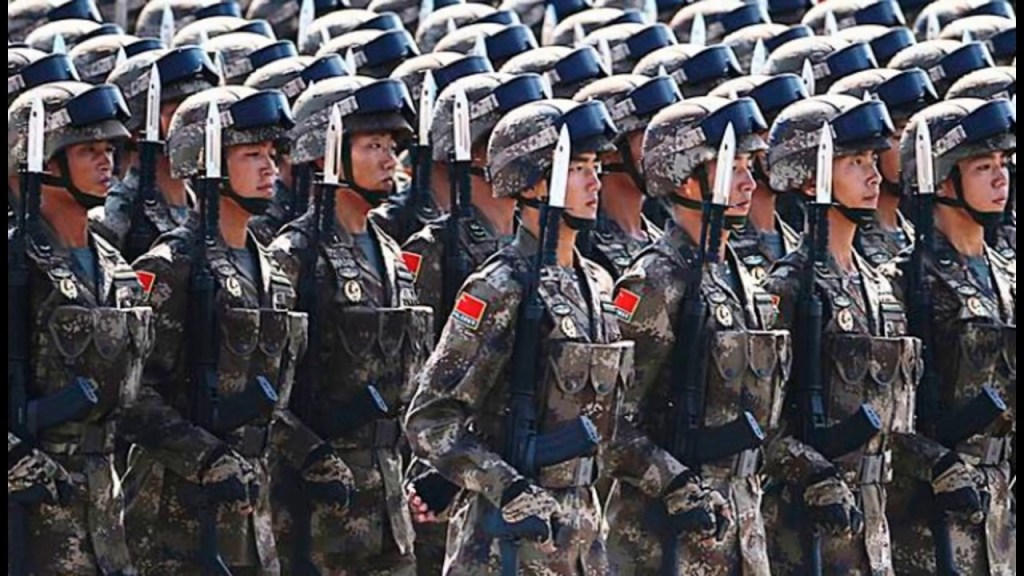
Who says Americans can’t plan ahead? According to the Pentagon, China may exceed the U.S. military in reach and power in the year 2049. As debatable as that prediction is, you can be sure it’s fodder for officials to clamor for high “defense” budgets, if only to stay ahead of the allegedly surging Chinese.

Speaking of the defense budget, it would be an amazing thing if that budget was truly based on the defensive needs of the USA. But we Americans love NFL football and that sport teaches us “the best defense is a good offense,” which makes some sense in the NFL but not so much in war.

Defense, to my mind, is best provided by citizen-soldiers. But that old concept has been replaced by the warrior ideal in the USA. Today’s military is increasingly detached from the people even as it’s celebrated as a band of noble heroes. “Support our troops!” read the bumper stickers. But are they really “ours” if they self-identify as warriors who see themselves as something better and apart from the rest of us?

Even as Americans tend to glorify the military (as in sports, movies, and TV, among other venues), we speak with our tax dollars, giving the Pentagon vast sums of money in the name of “defense.” It’s really militarism in disguise. “Our” military is not defensive — it’s offensive and configured that way. Indeed, it’s potentially world-destroying even as its vision is world-dominating.

If that isn’t militarism I don’t know what is. It’s also the honest definition of American exceptionalism. Consider again the Pentagon’s worry that in 2049, China might — just might — have a military that’s roughly equal to the U.S. military. Parity cannot be tolerated! The U.S. military must be the world’s strongest, the most dominant, the one best able to project massive power. Why? Because we’re exceptional. And we’re exceptional because of that same military.

Something tells me that in the year 2049, China’s military will be the least of America’s problems.

Bernie and Biden: The Debate

In a recent speech in Pennsylvania, Joe Biden said he wouldn’t ban fracking. For some people in PA, fracking has been a major money maker. For others, it’s brought noise, nuisance, and environmental disaster. Biden took a firm stance: he’s for it!

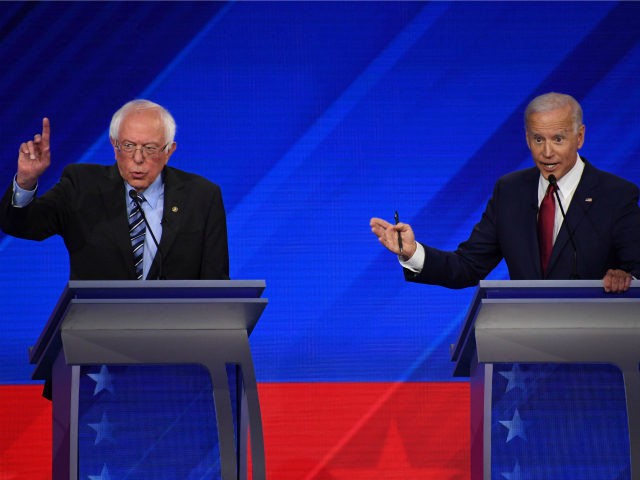
Yet, just a few months ago, in his debate with Bernie Sanders, Biden took a firm stance against fracking. As I wrote back then, Biden was likely faking left so he could run right. And indeed that’s what he’s doing now: running to the right, dodging progressives, or stiff-arming them, searching for elusive centrist supporters who will escort him over the goal line to the presidency.

Why should we support you, Joe, when all you do is spout BS?

wjastore's avatarBracing Views

again Bernie Sanders and Joe Biden in 2019

W.J. Astore

In last night’s debate, Joe Biden ran away from his own record.  Suddenly, Biden is against fracking.  He’s for Elizabeth Warren’s education plan.  He’s against subsidies for fossil fuels.  He’s for a $15 minimum wage.  He’s against Super PACs and for public funding of elections.  He’s never tried to cut social security.  Just about the only progressive policy he remains against is Medicare for All, which he says is simply too expensive to countenance.

Biden also wanted to drive the narrative by saying he was picking a woman as vice president and a black female as the next justice to the Supreme Court (Anita Hill, perhaps?).  I’m not sure why Biden thought a female VP-candidate was such a big deal; Walter Mondale picked Geraldine Ferraro in 1984, and of course Hillary Clinton ran for president in 2016.  Months ago, I foresaw…

View original post 372 more words

Yes, Trump is a Racist

Consider this your yearly reminder that Trump is a racist. Most recently, he’s refused to condemn Kyle Rittenhouse, a teenager who killed innocents in Kenosha.

Trump uses racism without guilt even as he claims to be the least racist person you’ll ever meet. As long as people keep applauding Trump, he’ll keep lying and playing to their baser instincts, consequences be damned.

If America reelects him, it’ll be the clearest sign yet of our profound moral decline as a nation.

wjastore's avatarBracing Views

Donald Trump Makes Announcement At Trump Tower Trump on the down escalator toward American carnage, 2015

W.J. Astore

Yes, Donald Trump is a racist.  His attacks on four Democratic Congresswomen of color are only the most recent illustration of this.  Trump, of course, is also an opportunist.  A conniver.  An exploiter.  Unless it backfires, he’ll keep using racism.  It fires up his “base” and distracts from the looting his family and administration are actively engaged in.

Trump intuitively grasped a painful reality that Norman Mailer wrote about in 1968.  Inspired by Richard Nixon’s campaign, Mailer wrote that “political power of the most frightening sort was obviously waiting for the first demagogue who would smash the obsession and free the white man of his guilt [of slavery and racism and their legacies].  Torrents of energy would be loosed, yes, those same torrents which Hitler had freed in the Germans when he exploded their ten-year obsession with whether they…

View original post 200 more words

Proud to be a deplorable

W.J. Astore

Today, my wife got stuck behind a pickup truck sporting a bumper sticker of considerable meaning: “Proud to be a deplorable.” No, this wasn’t red state Mississippi; it was blue state Massachusetts.

It’s worth a chuckle or two, until you realize its larger meaning. Many people are proud to vote for Trump because establishment Democrats like Hillary Clinton don’t speak to them, except when they’re dismissing them as deplorables that are “irredeemable,” as Hillary put it in 2016.

Take that, Hillary and all you “libtards”!

It’s never smart to dismiss potential voters as dumbasses without hope, but Hillary thought she had the election in the bag. She lost because she ran a poor campaign and because her elitism and sense of privilege were so obvious. But she also had no compelling messages for the “deplorables.” And Trump did. Trump talked about bad trade deals, the offshoring of jobs, the betrayal of ordinary Americans by the financial set, the big money people, the ones who paid Hillary so handsomely for a few empty speeches.

Of course, Trump didn’t and doesn’t care about ordinary Americans. From all appearances, Trump cares only about himself (and perhaps his immediate family). Nevertheless, he was smart enough to offer the people something, even if all they were left with in the end was a rebel identity as a deplorable.

Establishment Democrats, demonstrating their ability to learn nothing, are once again offering “deplorables” nothing specific. No universal health care (indeed, Joe Biden said he’d veto such a bill if it reached his desk as president). No firm and trustworthy commitment to a $15 minimum wage. No firm and trustworthy commitment to ending those endless foreign wars. Biden promises nothing more than he’s not Trump, end of story.

His choice of Vice President backs this up. Kamala Harris is a conservative Democrat; she’s establishment through and through. But she’s a woman who’s multiracial, so this is considered proof of her diversity and her commitment to helping the less fortunate. Come again?

As Tulsi Gabbard pointed out during a debate, Harris smugly joked about smoking marijuana even as she put “deplorable” users into prison, among other positions that showcased her privileged hypocrisy, but no matter. Even though Harris dropped out early (after boasting of being a top-tier candidate), even though she couldn’t win a single delegate in the primaries, she was handpicked by Joe Biden to lend some excitement to the ticket. Mission unaccomplished.

So I fear, like Michael Moore, that Trump could win again, probably losing the popular vote but winning enough swing states to put him over the top in the electoral college. Trump could win because the “deplorables” in their trucks across blue- and red state America know how to stand by their man. Even though he’s a no-good cheatin’ fool, Trump offers them something, something unquantifiable but powerful, an identity, perhaps, and the ability, in casting their votes, to give a big FU to all the elites that keep telling them they don’t measure up — and never will.

The Face of America

The Face of America

W.J. Astore

The Republican National Convention is over. Its main message: be afraid. Be very afraid. Of socialism. Of people coming to take your guns. Of open borders. Of anarchy in the street. Of “cancel culture.” And so on.

Its ancillary message: the Democrats are not a rival party of patriotic Americans. They are dangerous. Dishonest. Scheming. And un-American.

In last night’s acceptance speech, Trump was his usual huckster and grifter self. Perhaps my favorite claim was when Trump said he’d done more to help black people than any other president, Abraham Lincoln excepted. There’s little doubt that in his own mind Trump believes he’s done more than Lincoln “for the black.”

What can I say that hasn’t already been said about the alternate (un)reality that Trump sells to his acolytes? It’s total BS, it’s fantasy, it’s often hateful or spiteful, but it resonates with certain people, even as it disgusts others.

Trump, among many other things, is a sower of discord. A manufacturer of outrage based on lies and misinformation. But he needs an audience of willing followers, and there are plenty of those in America.

In life, Trump has failed at so many things. I’d argue he has failed miserably as a president, dividing the country instead of uniting it, effectively feeding the rich while starving the poor. Yet the man has captured an entire political party and the fervid support of roughly one-third of those Americans most likely to vote in November.

He has shown us a face of America we’d prefer not to see, a face defined by appetites and grievances and prejudices actuated by violence and fear and lies. But I’d go further. By fomenting violence and fear and lies, Trump has acted not like a true mirror but a funhouse one. He has distorted America. He has made it more grotesque. He has twisted it and contorted it and made it more like him.

In short, he has made his mark on the face of America. And that mark will be a very difficult one to erase.

The Republican Party of the Perpetual Now

Not much need for History in Trump’s America

W.J. Astore

As a historian, I have an allegiance to the past, and to getting the facts right about that past. Because, if you can’t get the facts right, if you can’t do research with rigor and honesty, you can’t call yourself an historian.

So you won’t be surprised to learn that Trump’s version of the Republican Party is anathema to me. The party has no respect for the past. And getting facts right? What does that matter in a time of “alternative facts,” in an administration that lies routinely and about everything?

Trump’s version of the Republican Party is a party of the perpetual now, in which the meaning of “now” is remarkably labile and open to interpretation (and re-interpretation). In a strange way, Trump’s party is the party of post-modernism, where all facts are contingent, where everything is open to being constructed and deconstructed. Truth itself is a social construct in the Trumpian universe, determined by Trump himself and the various ass-kissers he’s assembled around him.

Not only is the Trumpian Party without a meaningful past: it’s also without a mediated future. According to the official platform of the Republican Party adopted last night, the party and its platform is what Trump says it is, world without end, Amen.

Here’s how it was put in a press release:

“RESOLVED, That the Republican Party has and will continue to enthusiastically support the President’s America-first agenda” and “The 2020 Republican National Convention will adjourn without adopting a new platform until the 2024 Republican National Convention.”

The platform is Trump and Trump is the platform. The future is whatever Trump wills it to be, in his usual egotistical and often nonsensical way.

Facts don’t matter. The (true) past doesn’t matter. America as will and idea, as defined by Trump’s mind and driven by Trump’s desires.

As many have said, this isn’t a party, it’s a cult. A cult of unreflective minds, a cult unconcerned with critical thinking about the past, a cult that believes the future is best defined by one man.

One thing is certain: You won’t need any historians in Trump’s world. Just a lot of stenographers and sycophants willing to accept reality as Trump presents it, a perpetual now that’s constantly constructed and deconstructed before your eyes, the only constant being the celebration of Trump.

Remember: you can’t believe your lying eyes, but you can believe in Trump. If that’s not the end of history, I don’t know what is.