Creator of Bracing Views. Contributor to TomDispatch, Truthout, HNN, Alternet, Huffington Post, Antiwar, and other sites. Retired AF lieutenant colonel and professor of history. Senior fellow, Eisenhower Media Network
I wrote this for Truthout but debated whether to publish it. I just didn’t want to deal with all the gun enthusiasts who equate liberty with owning lots of guns and ammo. This article is not specifically about guns. It’s about our propensity for seeking quick and violent solutions to societal and political problems. It’s about our willingness to spend billions on weaponry and also our willingness to sell billions in weaponry. It’s about a mentality that’s captured in the image of fingers tensed on so many hair-triggers, whether metaphorically or literally.
A nation that used to espouse isolationism has morphed into one poised for hair-trigger pre-emptive war, privately armed to the teeth and the leading purveyor in the global arms trade.
We live in hair-trigger America, an America that’s quick to kill, slow to think. A nation and a people that used to espouse isolationism (even if the practice was imperfect) has morphed into one poised for constant warfare. America’s leaders call for hair-trigger pre-emptive war even if the odds of an attack on the United States are 100 to 1against. America’s military and the CIA use Predator and Reaper drones to kill “enemies,” even when they’re not completely sure they are the enemy.
This is not the first time we’ve been a hair-trigger people. When I worked in the Air Force at the Cheyenne Mountain complex in Colorado in the 1980s, fear of nuclear annihilation was palpable. US nuclear forces were on hair-trigger alert. With the collapse of the Soviet Union and the end of the Cold War, annihilatory fears abated. We were, in the words of President George H.W. Bush, offered a chance to cash-in our peace dividends. We were, in the words of Jeanne Kirkpatrick (no dove she), offered a chance to become a normal country in normal times.
What intervened, of course, was the shock and awe of 9/11, together with what President Dwight D. Eisenhower termed the growing power of the military-industrial complex. Motive and opportunity drove a military (and militantly hysterical) response to 9/11 (to include torture) that was in retrospect entirely out of proportion to the damage done as well as to the threat posed by the attackers. At the same time, US troops were lauded as so many heroes, their leaders as so many Caesars. Forgotten was our founders’ hard-earned skepticism of militarism and war, their prediction that constant warfare would trigger the end of liberty.
More than a decade after 9/11, America remains poised to strike, fingers at ready on so many hair triggers. The military and especially its Special Forces remain on alert, trigger-pullers who are forward-deployed in 100-plus countries for rapid responses (and deadly interventions). Drones patrol foreign skies, always circling, always seeking targets. Full-spectrum dominance is the military’s stated goal. The land, the seas, the skies, space, even cyberspace – all must be treated as potential war zones. All must therefore be dominated.
A hair-trigger mentality is both glitch and feature of a distinctly militarized and authoritarian American moment. And those hair-triggers often morph into trigger-pullers, literally so, domestically as well as internationally. Gun deaths in America continue to exceed 30,000 a year; by 2015, they may exceed traffic deaths. If not trigger-pullers, so many millions of Americans are trigger owners. As of 2009, there were 310 million non-military firearms in the United States, enough guns to arm every man, woman and child. One nation, under guns (but certainly not under-gunned).
Of course, Americans are not only trigger-pullers, but trigger-pushers. And by that I mean that the United States dominates the world’s (legal) arms trade. In 2010, we accounted for 53 percent of this trade; in 2011, a banner year, we accounted for a whopping 75 percent of this trade, dropping back to only 58 percent in 2012. Add to this legal arms trade the propensity for American guns to cross borders illegally to end up at crime scenes in Mexico and elsewhere, even when our own government isn’t involved in facilitating the trade.
To be seen as ready, willing, and able to pull various triggers is a distinctly American trope. Toughness, especially in dealing with foreign adversaries, is measured by a willingness to kill, a form of martial virtue. No American president can be seen without a gun in his hand, a trigger being pulled, even Barack Obama, whose staff took pains to release a photo of him shooting skeet.
When will we learn, as Eisenhower said, that only Americans can hurt America? And that trigger-pulling and trigger-pushing Americans are an especially grave threat, not only to America, but also to the world?
Recalling the words of Kirkpatrick, it’s long past time for America to become a normal country in normal times. A time when fingers need not be tensed on so many hair triggers. Or any triggers at all.
Copyright, Truthout. May not be reprinted without permission.
The Pentagon brass and bureaucrats can’t win foreign wars, but they sure as hell kick ass in domestic budgetary wars. That point is clear from Mattea Kramer’s new article at TomDispatch.com. Allowing the Pentagon a largely untouchable second budget to fund the ongoing military occupation of Afghanistan is an invitation both to prolong that war and for exercises in money-changing. Masters at budgetary sleight of hand, the military spins any reduction, no matter how small, in apocalyptic terms, as we saw with claims that cuts in the end strength of the US Army would reduce it to 1940 levels, i.e. the somnolent peacetime days just before Pearl Harbor.
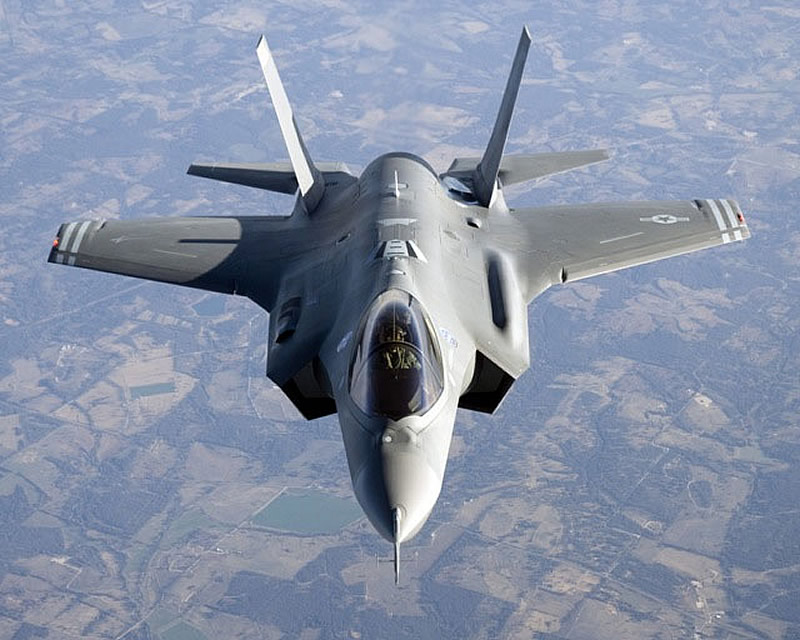
Any cut to military spending is spun as “appeasement,” as recklessly endangering our security vis-a-vis the exaggerated threats of the day, usually China or Russia or both. Yet the true “threat” that the Pentagon sees is not so much China or Russia (they can be handled) but cuts to their privileges and power. The Pentagon still maintains an unimaginably top-heavy bureaucracy that continues to throw pallets of money into the afterburners of costly weapons programs like the F-35 jet fighter.
Here is Kramer’s full text, courtesy of TomDispatch. Isn’t it nice to know that in lean times the Pentagon continues to live off the fat of the land?
The Pentagon’s Phony Budget War: Or How the U.S. Military Avoided Budget Cuts, Lied About Doing So, Then Asked for Billions More
By Mattea Kramer
Washington is pushing the panic button, claiming austerity is hollowing out our armed forces and our national security is at risk. That was the message Secretary of Defense Chuck Hagel delivered last week when he announced that the Army would shrink to levels not seen since before World War II. Headlines about this crisis followed in papers like the New York Times and members of Congress issued statements swearing that they would never allow our security to be held hostage to the budget-cutting process.
Yet a careful look at budget figures for the U.S. military — a bureaucratic juggernaut accounting for 57% of the federal discretionary budget and nearly 40% of all military spending on this planet — shows that such claims have been largely fictional. Despite cries of doom since the across-the-board cuts known as sequestration surfaced in Washington in 2011, the Pentagon has seen few actual reductions, and there is no indication that will change any time soon.
This piece of potentially explosive news has, however, gone missing in action — and the “news” that replaced it could prove to be one of the great bait-and-switch stories of our time.
The Pentagon Cries Wolf, Round One
As sequestration first approached, the Pentagon issued deafening cries of despair. Looming cuts would “inflict lasting damage on our national defense and hurt the very men and women who protect this country,” said Secretary Hagel in December 2012.
Sequestration went into effect in March 2013 and was slated to slice $54.6 billion from the Pentagon’s $550 billion larger-than-the-economy-of-Sweden budget. But Congress didn’t have the stomach for it, so lawmakers knocked the cuts down to $37 billion. (Domestic programs like Head Start and cancer research received no such special dispensation.)
By law, the cuts were to be applied across the board. But that, too, didn’t go as planned. The Pentagon was able to do something hardly recognizable as a cut at all. Having the luxury of unspent funds from previous budgets — known obscurely as “prior year unobligated balances” — officials reallocated some of the cuts to those funds instead.
In the end, the Pentagon shaved about 5.7%, or $31 billion, from its 2013 budget. And just how painful did that turn out to be? Frank Kendall, who serves as the Undersecretary of Defense for Acquisition, Technology, and Logistics, has acknowledged that the Pentagon “cried wolf.” Those cuts caused no substantial damage, he admitted.
And that’s not where the story ends — it’s where it begins.
Sequestration, the Phony Budget War, Round Two
A $54.6 billion slice was supposed to come out of the Pentagon budget in 2014. If that had actually happened, it would have amounted to around 10% of its budget. But after the hubbub over the supposedly devastating cuts of 2013, lawmakers set about softening the blow.
And this time they did a much better job.
In December 2013, a budget deal was brokered by Republican Congressman Paul Ryan and Democratic Senator Patty Murray. In it they agreed to reduce sequestration. Cuts for the Pentagon soon shrank to $34 billion for 2014.
And that was just a start.
All the cuts discussed so far pertain to what’s called the Pentagon’s “base” budget — its regular peacetime budget. That, however, doesn’t represent all of its funding. It gets a whole different budget for making war, and for the 13th year, the U.S. is making war in Afghanistan. For that part of the budget, which falls into the Washington category of “Overseas Contingency Operations” (OCO), the Pentagon is getting an additional $85 billion in 2014.
And this is where something funny happens.
That war funding isn’t subject to caps or cuts or any restrictions at all. So imagine for a moment that you’re an official at the Pentagon — or the White House — and you’re committed to sparing the military from downsizing. Your budget has two parts: one that’s subject to caps and cuts, and one that isn’t. What do you do? When you hit a ceiling in the former, you stuff extra cash into the latter.
It takes a fine-toothed comb to discover how this is done. Todd Harrison, senior fellow for defense studies at the Center for Strategic and Budgetary Assessments, found that the Pentagon was stashing an estimated extra $20 billion worth of non-war funding in the “operation and maintenance” accounts of its proposed 2014 war budget. And since all federal agencies work in concert with the White House to craft their budget proposals, it’s safe to say that the Obama administration was in on the game.
Add the December budget deal to this $20 billion switcheroo and the sequester cuts for 2014 were now down to $14 billion, hardly a devastating sum given the roughly $550 billion in previously projected funding.
And the story’s still not over.
When it was time to write the Pentagon budget into law, appropriators in Congress wanted in on the fun. As Winslow Wheeler of the Project on Government Oversight discovered, lawmakers added a $10.8 billion slush fund to the war budget.
All told, that leaves $3.4 billion — a cut of less than 1% from Pentagon funding this year. It’s hard to imagine that anyone in the sprawling bureaucracy of the Defense Department will even notice. Nonetheless, last week Secretary Hagel insisted that “[s]equestration requires cuts so deep, so abrupt, so quickly that… the only way to implement [them] is to sharply reduce spending on our readiness and modernization, which would almost certainly result in a hollow force.”
Yet this less than 1% cut comes from a budget that, at last count, was the size of the next 10 largest military budgets on the planet combined. If you can find a threat to our national security in this story, your sleuthing powers are greater than mine. Meanwhile, in the non-military part of the budget, sequestration has brought cuts that actually matter to everything from public education to the justice system.
Cashing in on the “Cuts,” Round Three and Beyond
After two years of uproar over mostly phantom cuts, 2015 isn’t likely to bring austerity to the Pentagon either. Last December’s budget deal already reduced the cuts projected for 2015, and President Obama is now asking for something he’s calling the “Opportunity, Growth, and Security Initiative.” It would deliver an extra $26 billion to the Pentagon next year. And that still leaves the war budget for officials to use as a cash cow.
And the president is proposing significant growth in military spending further down the road. In his 2015 budget plan, he’s asking Congress to approve an additional $115 billion in extra Pentagon funds for the years 2016-2019.
My guess is he’ll claim that our national security requires it after the years of austerity.
Mattea Kramer is a TomDispatch regular and Research Director at National Priorities Project, which is a 2014 nominee for the Nobel Peace Prize. She is also the lead author of the book A People’s Guide to the Federal Budget.
I love movies but I can’t say that I love Hollywood. My wife and I sat through the interminable Academy Awards last night; we should have received an Oscar for patience. What amazes me is the lack of thanks the winners express to movie-goers. You know: the little people who shell out $12 or more a ticket to see roughly two hours of often mediocre entertainment. Instead of thanking the fans, most Oscar winners celebrate themselves (with perhaps a nod toward their fellow nominees) while thanking their publicists, their agents, various power-brokers in the industry, and so on.
Want the Academy Awards to move faster? Have the winners take the stage, accept the Oscar, thank the Academy and the fans, and sit down. And shut up.
Hollywood has a certain contempt for the working classes — you know, the people who keep them in their “Capitol” lifestyle (which is why “The Hunger Games” trilogy truly captures the zeitgeist of the American moment). I was disgusted in watching the Oscar preview to see ordinary Americans caricatured as crumb-infested, couch-ridden, half-naked, clinically obese morons. Yes, I’m not immune to humor, but to depict the fans who ultimately pay your salaries and keep you living the high life in such a luridly abusive way shows a contempt that is far too common among our “elites,” Hollywood included.
I enjoy Ellen Degeneres. She has a light touch, good comic timing, and she knows how to zing the audience. But her “Who wants pizza” skit was unfunny and ungenerous — no pun intended. Once again, part of the joke involved whether the assembled Capitol beauties were going to stiff the pizza delivery man. Ha ha. Let’s pass the hat and take up a collection to pay for the pizza we ordered. I’m not surprised many of the assembled elect couldn’t find a dime to kick in — they’re so accustomed to their Oscar freebies.
Hollywood has always catered to narcissists. Nothing new there. But there was a time when Hollywood celebrities knew how to accept awards (and their glamorous lifestyle) with a certain amount of class, while thanking, even respecting, the fans who make it all possible. Last night was not of that time.
I suppose the ultimate measure of Hollywood’s contempt for its paying audience is the poor quality of its movies. Want to make better movies, Hollywood? Start by treating the working classes with a measure of common courtesy — along with some empathy based on respect for their challenges and sacrifices.
A last comment: It was nice to see, however briefly, a scene from Norma Rae (1979), featuring the great Sally Field as a factory worker trying to unionize her place of work, a gutsy dynamo fighting for fair wages and safe working conditions. Where is that movie today, Hollywood? When was the last time you made a sensitive, sympathetic, and generous movie about the tough struggles of American workers? There must be a few, but none that stick in my head. Help me out in the comments section, dear reader, if I’m missing some obvious recent examples.
You’ve probably seen the headline: Secretary of Defense Chuck Hagel is gutting the Army to numbers not seen since the sleepy days before Pearl Harbor! Senior Republicans like Lindsey Graham and John McCain have already declared that these cuts are DOA (dead on arrival) in the Senate. Why? Allegedly because they endanger our national defense. Naturally, such claims are often politically-motivated. Former Vice President Dick Cheney has already gone on record as claiming that President Obama prefers to fund food stamps and other social entitlement programs to funding the military at adequate levels.
Should we be worried? Conor Friedersdorf has an excellent article at The Atlantic to explain why Hagel’s proposed cuts to today’s Army should not be compared to the Army’s end strength in 1940. The U.S. military has obviously changed greatly since then. Today, the military relies much more on technology as “force multipliers.” There is simply no military on the planet as high-tech and capable of projecting power as the U.S. military. Moreover, because we’re not fighting simultaneous wars in Iraq and Afghanistan, we simply no longer need as many soldiers in the Army as we did during the Surge years.
Today’s military is far less concerned with end strength than it is with capabilities. I recall talking to an Army lieutenant colonel and experienced battalion commander in Iraq. He explained that one of his infantry companies (of approximately 100 men) could easily defeat an enemy battalion (of approximately 500 men). He wasn’t boasting; just stating facts. An American company, assuming it could tap its technology as well as all of its fire support units (artillery, helicopters, and close air support from the U.S. Air Force), would simply move faster and hit harder and more accurately than its enemy. Again, it’s not about numbers; it’s about capabilities.
The US military is enormously powerful. Its naval and air assets are second to none. So is its ability to hit hard at a distance. So is its equipment — its force multipliers — from divisional/brigade levels down to the platoon/squad level. Reversing the old Soviet dictum, in this case quality has a quantity all its own.
To suggest that Hagel’s proposed retrenchment in Army end strength would return us to 1940 is the ultimate in ignorance — or the ultimate in deliberate disinformation for political gain.
America’s weakness has nothing to do with its military. America’s weakness is the rampant dishonesty of its political discourse. Even adding a million soldiers to our Army’s rolls won’t fix that.
This past weekend [February 2014], CBS 60 Minutes did a segment on the F-35 fighter program. The basic facts are these: the program is seven years behind schedule and $163 billion over budget. Yes, you read that right: Not $163 million, but $163 billion. The lead contractor, Lockheed Martin, is essentially unapologetic about the delays and cost overruns. Why should they be? The general in charge of the F-35 acquisition program said we’re going to buy thousands of the plane over the next two decades. Talk about rewarding failure!
If we continue like drunken sailors to throw money at the F-35, it’ll be an effective fighter jet. But the biggest issue is that we don’t need it. Predator and Reaper drones are just the beginning of a new generation of pilotless aircraft that promise to be more effective. Why? Because we need not risk pilots getting shot down. Also, when you combine long loiter time over targets with super-sensitive sensors, drones reduce collateral damage while increasing the odds of “one shot, one kill.”
Proponents of the F-35 like to brag about its (costly) stealthy features, its (costly) cameras and sensors (especially the computer- and sensor-integrated helmet worn by each pilot, which creates a virtual reality and visual scape for that pilot), and its survivability vis-a-vis Russian and Chinese fighters (which are largely still on the drawing boards in those countries). But the truth is that an updated generation of F-15s, F-16s, F-18s, and F-22s are more than capable of defending America and projecting power. (The Vietnam War proved that, in aerial combat, pilot training and skill matter more than technology. That’s why the U.S. military established realistic training at “Top Gun” schools.)
The F-35, given the amount of money thrown at it, doubtless has some improvements over planes such as the F-15 and F-18. But at a price tag of at least $400 billion to purchase the F-35, and $1.45 trillion over the life of the program to operate and maintain them, it has simply become far too prohibitive for the United States to afford, especially in a climate of fiscal austerity.
Based on its track record, it’s probably safe to say that the F-35 will soon be a decade behind schedule and $200 billion over budget, even as it’s increasingly rendered irrelevant by improvements in drone technologies. So why are we buying it? Simply because the program is too big to fail. The Air Force, Navy, and Marines are all counting on it.
Meanwhile, Lockheed Martin has distributed its subcontractors across the USA, making it exceedingly difficult for Congress to cut the program without hurting jobs in virtually every Congressional district. Indeed, in an awesome display of chutzpah, you can go to the Lockheed Martin website to see how much your state is involved in building the F-35. Clicking on the “economic impact map,” I see that for the State of Pennsylvania, for example, the F-35 creates 759 jobs and an economic impact of nearly $51 million.
For the DoD, the F-35 may have ridden off the rails, but for Lockheed Martin the F-35 will continue to soar into the stratosphere as a major money-maker for decades to come. In the battle between DoD program managers and Lockheed Martin, the winner and “top gun” is as obvious as it is depressing. Score another victory for Lockheed Martin! But please avert your eyes as America itself goes down in flames.
Update 1: Another critical perspective from “War Is Boring” on the F-35 program that also takes “60 Minutes” to task for relying only on government sources for their (weak) critique. Here’s an excerpt:
“But where was the long list of design and quality-control issues with the aircraft, 12 years after development began? What about discussing the many alternatives to this under-performing machine, such as F-22s and drones plus rebuilt F-15s, F-16s and F/A-18s? Why not point out how many experts in the defense journalism and analysis worlds see the JSF program as detracting from America’s security rather than enhancing it?”
Those are very good questions.
Update 2: For military/contractor perspectives, check out this video, which includes testimony by test pilots that is generally favorable to the F-35 program (at least from a technical sense).
Update 3: Winslow Wheeler reveals the high cost and serious limitations of the F-35 here and here. Wheeler knows his stuff. He’s the Director of the Straus Military Reform Project of the Center for Defense Information, part of the Project on Government Oversight (POGO) in Washington, DC, and is the author of The Wastrels of Defense: How Congress Sabotages National Security (US Naval Institute Press) and Military Reform: An Uneven History and an Uncertain Future (Stanford University Press). Another critical article is by the legendary Chuck Spinney here with the telling title “F-35: Out of Altitude, Airspeed, and Ideas — But Never Money.”
Update 4: An excerpt from Franklin C. “Chuck” Spinney: “But the F-35 program is not at serious risk, despite all the hysterical hype in the trade press — not by a long shot. The F-35′s political safety net has been front-loaded and politically engineered (the general practices of the power games are explained here) with exquisite malice aforethought. Domestically, the F-35 employs 130,000 people and 1300 domestic suppliers in 47 states and Puerto Rico. The only states missing the gravy train are Hawaii, Wyoming, and North Dakota. Internationally, there are already cooperative development/production plans involving nine countries, and more are in the offing. Given the intensity of the geographic carpet-bombing of contracts around the globe, can there be any question why the Secretary of the Air Force said in September, ‘Simply put, there is no alternative to the F-35 program. It must succeed.’ If you think that is an accident, dear reader, I have a Brooklyn Bridge to sell you.”
Update 5: I’ve worked on two Air Force software programs. Both were overly complex and plagued with coding problems that drove up costs and extended schedules while degrading performance. The software on the F-35 is yet another example of this, as this report indicates. The F-35 continues to slip in schedule as costs rise due to software flaws, even as reports emerge that the software is vulnerable to hacking. In trying for leading edge abilities, the contractor has found the bleeding edge, as they say in the military, but what is being bled is the American taxpayer.
Update 6: More problems for the F-35, including oil leaks and one plane bursting into fire as it was taking off, are leading to more countries questioning their commitment to the plane. For a program so deep into testing and initial production, such problems are worrisome indeed.
Update 7: The latest from Winslow Wheeler on the F-35 (July 11, 2014); see his article A Big Week for the F-35? (pasted below):
“Even if the mainstream U.S. media has been late in coming to the story, the largest defense program in U.S. history is facing two critical events this coming week.
“As major British media has been reporting for some time, the F-35 Joint Strike Fighter may be facing a major international marketing embarrassment: It has failed to show up for two of three scheduled (and much ballyhooed) public demonstrations in the United Kingdom. Now, it may miss the main event, a flying demonstration before the world’s aviation community at the Farnborough International Airshow, starting Monday. You see, the F-35 is grounded-again. An engine blew up on take-off at Eglin Air Force Base on June 23 and reportedly burned up much of the plane’s flammable, plastic composite rear fuselage and tail. No F-35s are flying until inspectors know what the problem is and can say it’s safe to fly-at least in the very limited regimes the F-35 has been cleared for. Moreover, even if the F-35 is released to participate at Farnborough, there may be a new problem: weather predictions for next week in England are not good, and the F-35 has real issues flying near thunder- and rainstorms; it even has problems with wet runways.
“Stuck at home or coddled in UK hangars, the timing could not be worse for F-35 advocates. This Tuesday, the Defense Subcommittee of the Senate Appropriations Committee (SAC-D) will mark up its 2015 Defense Appropriations bill, and more than the usual routine approval of the Pentagon’s F-35 budget request is at stake. As pointed out in two timely commentaries (one by the Center for International Policy’s William Hartung and a second by Taxpayers for Common Sense’s Ryan Alexander), the House Appropriations Committee larded onto the already gigantic $8.3 billion request by adding four unrequested F-35s, costing an extra $479 million.
“The four added planes are clearly at risk given the F-35’s self-embarrassment at Eglin, surely inspiring the F-35 talking points Lockheed is planting on the Members of the SAC-D well beyond their usual spinmeister fantasies on cost and performance. Worse, there could-at least theoretically-arise a critic of the F-35 in the membership of the SAC-D who might try to take real action on the F-35, beyond the rhetorical hyperbole that critics like Senator John McCain (R-AZ) have been hurling at the F-35. Imagine the shock and awe if some Member were to offer a meaningful amendment requiring the F-35 to be tested-actually imposing “fly-before-buy”-before a few hundred more mistake-laden jets are produced.
“Not to worry: the F-35 defenders are rushing to the rescue. Beyond whatever election year financing promises major F-35 contractors Lockheed-Martin, Northrop-Grumman, and Pratt & Whitney may be distributing to keep the program on track, Secretary of Defense Chuck Hagel has just completed a baby-kissing exercise for the airplane. Travelling to Eglin Air Force Base where that F-35 destroyed itself, Hagel declared“This aircraft is the future of fighter aircraft for all our services,” thereby removing any notions that his junket might have some useful purpose other than showing fealty to the beleaguered F-35 program. Any expectation that he went to Eglin to exercise oversight of the F-35’s recurring embarrassments, as one might expect from a functioning Secretary of Defense, has been thoroughly excised. That leaves it up to the Defense Subcommittee of the Senate Appropriations Committee.
“The SAC-D has many important defense spending decisions to make. None will be a better test of whether the committee is willing to conform DOD program ambitions to Pentagon budget realities than this point in the endless F-35 drama. Of course, the easy road beckons; defense business-as-usual will be happy to shower the Members with handsome signs of approval, material and otherwise.
“Unfortunately, more of the same simply accelerates the decay of our defenses at ever-higher expense.
“All eyes are turning to the Senate Appropriations Committee’s Defense Subcommittee. Thus far, political support for the F-35 has rolled over every ground truth, but realities like multiple groundings occurring amidst a continuing torrent of technical failures and cost overruns have a relentlessness all their own. Perhaps the only real question is when, not if, the politicians in Congress and the Pentagon will succumb to the inevitable tide. If next week does not end up as a tipping point for the F-35, it will come. It will come. And, that will be long before we buy the 2,433 Lockheed and its other boosters dream of.” [End of Wheeler’s article.]
Coddled indeed!
Update 8 (9/8/2014): Professor Mark Clodfelter in Air & Space Power Journal notes that the U.S. Air Force today is “purchasing far more remotely piloted than manned aircraft,” making it “remote” that the service will buy 1,763 F-35s at “flyaway costs of roughly $185 million each.” Meanwhile, the Navy version of the F-35 now exceeds $200 million in “flyaway cost,” with the Marines’ short takeoff and vertical landing variant (the F-35B) approaching $300 million per plane. And these per-unit costs are only due to rise as various countries buy fewer planes than currently projected.
I can still recall being on active duty twenty years ago when the Joint Strike Fighter, progenitor to the F-35, was sold as a “low-cost” (at about $35-50 million per plane) multi-role combat jet in the tradition of the F-16. Since then, “low-cost” has become high-cost as the F-35 program spun wildly out of control.
Don’t take my word for it. Listen to Lt Gen Christopher Bogdan, USAF, the F-35 program’s chief. He admitted that “basically the (F-35) program ran itself off the rails.”
Yet despite the fact that the F-35 is the equivalent to a derailing and runaway train, the passengers on board remain captives to it, with some of them smiling all the while.
Update 9 (11/7/2014): The AF is now claiming that A-10s need to be eliminated to free up maintenance staff for the F-35. If the venerable A-10s are not mothballed, initial operational capability (IOC) for the F-35 will be delayed, according to Lt Gen Bogdan.
The AF has never liked the A-10, since it was designed to provide close air support for ground troops. As Winslow Wheeler notes, “The simple truth is that the Air Force does not think the close support mission for troops in combat is a prime responsibility. It never wanted to buy and operate the A-10 in the first place, and it protests that other — unsuitable—aircraft are good enough for the job.”
The AF also knows that Congress as well as soldiers love the A-10. Chances are that the A-10 will be preserved by Congress, which gives the AF the perfect excuse when IOC for the F-35 is delayed. See, the AF will say — We told you we needed those A-10 maintainers for the F-35. That’s the reason why the schedule has slipped yet again. It’s your fault, not ours.
Perhaps the AF believes this is a clever gambit, but what’s being sacrificed (along with credibility) is combat effectiveness. And that may prove a deadly price for our troops to pay.
Update 10 (3/17/2015): In this video, Pierre Sprey, the designer of the F-16 Fighting Falcon, explains why the F-35 is such a “Kluge,” an inherently terrible airplane, as he puts it, an overpriced and ineffective multi-role fighter/bomber that neither fights well nor bombs well.
Update 11 (3/18/2015): Is the F-35 FUBAR? According to this article by AJ Vicens at Mother Jones, it is. Here is the text:
Originally slated to cost $233 billion, the Pentagon’s F-35 Joint Strike Fighterprogram could end up being costing more than $1.5 trillion. Which might not be so bad if the super-sophisticated next-generation jet fighter lives up to its hype. Arecent report from the Defense Department’s Director of Operational Test and Evaluation paints a pretty damning picture of the plane’s already well documented problems. The report makes for some pretty dense reading, but the Project on Government Oversight, a watchdog group that’s long criticized the F-35 program, has boiled down the major issues.
Here are a few:
Teaching to the test: The blizzard of testing required on the plane’s equipment and parts isn’t exactly going well, so the program’s administrators are moving the goal posts. Test scores are improving because the stats are being “massaged” with tricks like not recounting repeated failures. Some required testing is being consolidated, eliminated, or postponed. “As a result,” POGO writes, “the squadron will be flying with an uncertified avionics system.”
Unsafe at any airspeed? The high-tech stuff that was supposed to make the F-35 among the most advanced war machines ever built pose serious safety risks. For example: The fuel tank system “is at significant risk of catastrophic fire and explosion in combat,” according to POGO. The plane isn’t adequately protected against lightning strikes (in the air or on the ground); it’s currently prohibited from flying within 25 miles of thunderstorms. That’s a major problem for a plane training program based in the Florida panhandle.
Flying blind: The F-35’s fancy helmet-mounted display system, which is supposed to show pilots an almost 360-degree view that includes panel controls and threat information, has “high false alarm rates and false target tracks.” Its unreliability, combined with the plane’s design, make it impossible for pilots to see anything behind or below the cockpit.
Wing drop: The DOD report points out an ongoing problem with “wing drop“: When maneuvering at high speeds, the F-35 may drop and roll to one side. This issue has been known to designers for years, and they’ve tried designing add-on parts to address the problem. The fixes, unfortunately, will “further decreas[e] maneuverability, acceleration, and range,” according to POGO.
Engine trouble: For years the F-35s engines have suffered design and performance problems, and these problems have never been fully solved. Last summer these problems resulted in one engine ripping itself apart and destroying one of the planes. At the time, officials said this was a one-time occurrence, but a permanent fix has yet to be determined and the plane may not be airworthy, according to Department of Defense regulations.
Software bugs: The plane’s software includes more than 30 million lines of code. Problems with the code are causing navigation system inaccuracies, false alarms from sensors, and false target tracks. The operating system is so cumbersome that it requires the “design and development of a whole new set of…computers.” The software glitches also affect the plane’s ability to “find targets, detect and survive enemy defenses, deliver weapons accurately, and avoid fratricide.”
More cost overruns: Due to all the testing delays, design problems, and maintenance issues, taxpayers could be on the hook for an additional $67 billion to deploy the F-35. That’s a lot of money. Even for the US military.”
Update 12 (4/28/15): More trouble for the F-35, this time involving its engines. According to Reuters, “The Pentagon’s internal watchdog on Monday said it found 61 violations of quality management rules and policies during an inspection of Pratt & Whitney’s work on the F-35 fighter jet engine and warned the problems could lead to further cost increases and schedule delays on the biggest U.S. arms program.” Further cost increases and schedule delays — where have we heard that before?
The report further added:
“Pratt and the Pentagon are still correcting a design problem with the high-performance F135 engine that grounded the F-35 fleet last year, but that was not due to manufacturing issues. However, quality issues have grounded the fleet in the past.
Earlier this month, the congressional Government Accountability Office also faulted the reliability of the F135 engine.”
Unreliable engines — nothing to worry about. Right?
Update 13 (7/29/15): Not surprisingly, given its design flaws, the F-35 is distinctly inferior to the F-15, F-16, and F-18 in dogfighting capability. Even worse, its cockpit design seriously restricts a pilot’s ability to “Check Six” (to look behind, often the most likely sector from which an enemy plane will attack). For more on this, check out this link: http://www.pogo.org/our-work/straus-military-reform-project/weapons/2015/leaked-f-35-report-confirms-deficiencies.html.
Given its design flaws, which stem from compromises made at the very beginning of the program, the F-35 is not a “next generation” fighter — it’s a lost generation, a step backwards, and a very expensive one at that.
Update 14 (9/25/15): Satire is often good at revealing uncomfortable truths. Here’s a golden example from Duffel Blog:
Pentagon Requests 500 Gold-Plated F-35s
The Pentagon released a report today requesting Congressional authorization for 500 gold-plated F-35 fighter planes.
The F-35 Lightning II is a fifth-generation multirole stealth fighter intended to replace numerous aging aircraft, including the A-10 Thunderbolt II and the F-16 Fighting Falcon. The F-35 program has been fraught with problems, including numerous delays, cost overruns, and failure to deliver on promised operational performance.
The new variant, dubbed the F-35G, is proposed as an upgrade over existing F-35 models. In addition to 24K gold plating encasing its exterior, its cockpit is trimmed with wood grain paneling harvested from the endangered African blackwood tree and leather upholstery from the hide of the northern white rhinoceros. Its GAU-12/A 25mm rotary cannon is able to fire solid platinum rounds at a rate of 3300 per minute. Each round is handcrafted by a Swiss jeweler.
“In an ever-evolving battlefield, it is imperative to have a military equipped with tactical vehicles that offer versatility, adaptability, and mother of pearl ice buckets to keep champagne bottles cold during missions,” reads the Pentagon report. “Our service men and women deserve to fly in only the finest combat aircraft.”
Each F-35G unit is projected to cost 8.2 billion dollars, approximately twice the average annual GDP of some of the countries it is expected to bomb. The total cost, including development, procurement, operation, and sustainment, will top $15 trillion over the life of the program.
While most on Capitol Hill are interested in fulfilling the Pentagon’s request, there is heated debate on how best to pay for it.
“This program can easily be funded by eliminating Medicare,” said Rep. Paul Ryan (R-WI), at a luncheon co-sponsored by Lockheed Martin and Newmont Mining Corp. “Eliminating Medicare will also have the second-order effect of slashing Social Security costs by culling the nation’s senior citizen population.”
The White House was quick to dismiss Ryan’s proposal.
“We’re not going to end anyone’s free lunch,” said White House Press Secretary Josh Earnest. “President Obama has instead proposed funding the program with a 5% tax hike on the wealthiest 1% of Americans.”
“Also, President Obama is not very good at math,” he added.
While most on Capitol Hill are supportive, some naysayers continue to offer criticism. Sen. John McCain (R-AZ) has remained vocal in his staunch opposition to the F-35 program.
“There is nothing a gold-plated F-35 can do in close air support that can’t be done better by a silver-plated A-10,” he opined.
It also remains to be seen if the F-35G’s combat performance will be able to deliver on the program’s promises. At present, the added weight from the gold plating has prevented the F-35G from achieving flight. Its first test was a disaster, as the prototype F-35G rolled straight through the end of the test runway and careened into oncoming traffic on a nearby highway, resulting in 12 fatalities.
“Slight tweaks to the design are still required, however it is clear that the F-35G is the future of United States combat aviation,” the report concluded.
Update 15 (1/27/18): The F-35 continues to suffer serious teething pains, notes this report at breakingdefense.com. From the article:
Here’s what the new DOTE, Robert Behler, says about the F-35 Joint Strike fighter in his office’s latest annual report:
The operational suitability of the F-35 fleet remains below requirements and is dependent on work-arounds that would not meet Service expectations in combat situations (emphasis added). Over the previous year, most suitability metrics have remained nearly the same, or have moved only within narrow bands which are insufficient to characterize a change in performance.
Overall fleet-wide monthly availability rates remain around 50 percent, a condition that has existed with no significant improvement since October 2014, despite the increasing number of new aircraft. One notable trend is an increase in the percentage of the fleet that cannot fly while awaiting replacement parts – indicated by the Not Mission Capable due to Supply rate.
Update 16 (8/17/19): More teething pains for the F-35. notes Dan Grazier at The American Conservative. Here’s the beginning of his report:
The fleet of F-35 Joint Strike Fighters flying in the critical operational testing phase is struggling to stay airborne, which could delay the troubled program’s great leap forward into mass production.
As I recently reported for the Project on Government Oversight (POGO), a document from the program’s test force shows that the fleet’s test aircraft, housed at California’s Edwards Air Force Base, have netted an average 11 percent “fully mission capable rate”—the key measure of how often an aircraft can perform all of its assigned missions—since the process began last December.
To put this into context, the Pentagon’s former operational testing director, Michael Gilmore, has said the fleet needs an 80 percent availability rate to successfully complete the combat-testing phase.
The F-35, by the way, is already the most expensive weapons system in history. As of March, its acquisition price tag was $400 billion. However, the cost of operating and maintaining the fleet over the next several decades stands at an estimated $1.45 trillion.
The 17-year-old program reached an important milestone when, after many delays, officials started the Initial Operational Test and Evaluation (IOT&E) process on December 5, 2018. This is the phase in which the completed product is put through its paces in realistic combat scenarios to determine whether it can fulfill its intended role and is suitable for pilots’ use.
This is supposed to take place after the former design phase. But because the F-35 program hasn’t actually finished the design process, the program effectively created extra obstacles to successful completion of this legally required testing phase. That the test fleet struggles even to get off the ground only compounds these challenges …
Mark Danner has a probing article at TomDispatch.com on the career arc of Dick Cheney, the self-selected Vice President under George W. Bush. Cheney’s approach to history, an attitude he shared with Karl Rove and Donald Rumsfeld, was the idea he could make his own reality, independent of history. Previous precedents on waterboarding as torture? They don’t matter. The predictable civil war that resulted from our invasion of Iraq? Doesn’t matter. History is made by the big swinging dicks, no regrets, no apologies.
Even when the insurgency in Iraq was obvious to all, Cheney and Rumsfeld sought to deny that reality. Recall that Cheney said in 2005 that the insurgency was in its last throes even as it was beginning to peak. Recall that Rumsfeld said in July 2003 “I don’t do quagmires” even as he and the U.S. military were sinking into one in post-invasion Iraq.
History teaches humility, but Cheney and Rumsfeld were having none of that. History is a sovereign remedy to hubris, but Cheney and Rumsfeld were all about hubris. Faced with history’s uncertainty, as represented by favorite questions like “Yes, but” and “Are you sure,” Cheney and Rumsfeld hissed like vampires confronting garlic.
The end of history — in the sense of ignoring its lessons — came with Cheney and Rumsfeld.
And like Danner says in his article, we’re left today with the bloody mess these dicks created.
Did you know an Iranian “fleet” is approaching American shores? I’m talking about a destroyer and a supply ship. Sound the alarm! General quarters!
Juan Cole at Informed Comment has an amusing story on our media’s latest manifestation of what he terms Iranian “Derangement Syndrome.” Two years ago, I wrote about our amazing capacity for threat inflation when it comes to Iran.
This is nothing new, of course. Threat inflation is a perennial theme in American history. Non-existent bomber gaps. Missile gaps. A vast overestimation of the Soviet threat even as the Soviet Union was beginning to collapse. All employed to sustain high “defense” spending for the military-industrial-Congressional complex.
Let’s face it: Citing the deployment of an Iranian “fleet” as a potential threat to the USA is like citing the Jamaican bobsled team as a threat to win all the gold medals at the Winter Olympics.
Once again, America is the odds-on favorite to win the gold medal in our favorite Olympian event of threat inflation. USA! USA!
As a historian, I like to think we learn valuable lessons from history. Those who don’t learn from the mistakes of the past are condemned to repeat them, or so my students tell me, paraphrasing (often unknowingly) the words of George Santayana.
We applaud that saying as a truism, yet why do we persist in pursuing mistaken courses? Why two costly and destructive wars in Iraq and Afghanistan? Why an energy policy that exploits dirty fossil fuels at the expense of the environment? Why a foreign policy that is dominated by military interventionists in love with Special Forces and drones?
In part, I think, because our decision makers have no respect for the lessons of history. They think the lessons don’t apply to them. They think they can make history freely: that history is like a blank canvas for their creative (and destructive) impulses. They figure they are in complete control. Hubris, in other words.
Such hubris was captured in a notorious boast of the Bush Administration (in words later attributed to Karl Rove) that judicious study of the past was, well, antiquarian and passé. Why? Because men like Karl Rove would strut the historical stage to create an entirely new reality. And the rest of us would be reduced to impotent watchers, our only role being to applaud the big swinging dicks at their climactic “mission accomplished” moments. In Rove’s words:
“We’re an empire now, and when we act, we create our own reality. And while you’re studying that reality—judiciously, as you will—we’ll act again, creating other new realities, which you can study too, and that’s how things will sort out. We’re history’s actors…and you, all of you, will be left to just study what we do.”
Rove’s rejection of history stemmed from hubris. For the character of Joaquin in Scott Anderson’s novel Triage, history is “The worst invention of man” for a very different reason. History was to be reviled because it tries to make rational what is often irrational; history invents reasons for what is often unreasonable or beyond reason.
In Joaquin’s words:
“We invented history for the same reason we invented God, because the alternative is too terrible to imagine. To accept that there is no reason for any of it, that we are only animals—special animals, maybe, but still animals—and there is no explaining the things we do, that happen to us—too awful, no? … To hell with history. If there is anything to be learned from any of it, it is only that civilization is fragile, that in war it takes nothing for a man—any man, fascist, communist, schoolteacher, peasant, it doesn’t matter—to become a beast.”
As a good Catholic, I was taught that wisdom begins with the fear of God. A secular version might be that wisdom begins with the fear of history. Our history. Because it teaches us what we’re capable of. We invent all sorts of seemingly reasonable excuses to kill one another. We grow bored, so we kill. In the words of Joaquin, we come to slaughter one another “because we wanted to see how blood ran, because it seemed an interesting thing to do. We killed because we could. That was the reason.”
The beginning of wisdom is not the fear of God. It’s the fear of ourselves—the destruction that we as humans are capable of in the name of creating new realities. The historical record provides a bible of sorts that records our harshness as well as our extraordinary capacity for self-deception. Such knowledge is not to be reviled, nor should it be dismissed.
The more we dismiss history—the more we exalt ourselves as unconstrained creators of new realities—the more we pursue policies that are unwise—perhaps even murderously so. If we learn nothing else from history, let us learn that.
On this Super Bowl Sunday of 2014, doubtless we’ll be hearing about the “heroes” of the gridiron. Whichever team wins will have its “heroes” (Peyton Manning, perhaps?). Meanwhile, remote feeds will show various military units watching the Big Game, and doubtless these troops will be touted as American heroes. (They’re indisputably a tad more heroic than a multi-millionaire quarterback who shills everything from pizza to cars.)
But who are the real heroes of America? I tackled this question on Memorial Day 2011 at Truthout. For me, it’s loving, hard-working, self-sacrificing people like my parents. I recall learning in Catholic catechism class that love is all about selfless giving — giving of yourself, freely and generously, without expecting anything in return. That is assuredly one characteristic of a “hero.”
Here is what I wrote back in 2011. My thanks to Truthout for publishing it back then.
This Memorial Day [2011], let’s remember and learn from our heroes who are gone from us. For me, my heroes are my parents, both of whom grew up in single-parent families during the Great Depression. Let’s start with my Mom. Our concept of “hero” today often works against moms; our culture tends to glorify our troops and other people of action: police, firefighters, and other risk-takers who help others. But to me my Mom was a hero. As a young woman, she worked long hours in a factory to help support her mother. She married at twenty-seven and quickly had four children in five years (I came along a few years later, the beneficiary of the “rhythm method” of Catholic birth control). As a full-time homemaker, she raised five children in a working-class neighborhood while struggling with intense family issues (an older son, my brother, struggled with schizophrenia, a mental disease little understood in the early 1970s).
Despite these burdens and more, my Mom was always upbeat and giving: traits that didn’t change even when she was diagnosed with cancer. She struggled against the ravages of that disease for five long years before succumbing to it in 1980. Cancer took her life but not her spirit. I never heard her once complain about the painful chemotherapy and cobalt treatments she endured.
My father too had a difficult life. He had to quit high school after the tenth grade and find a paying job to support the family. At the age of eighteen, he entered the Civilian Conservation Corps and fought forest fires in Oregon; factory work followed (where he met my Mom) until that was interrupted by the draft and service in the Army during World War II. After more factory work in the latter half of the 1940s, my Dad got on the local firefighting force, serving with distinction for more than thirty years until his retirement. He died in 2003 after a heart attack and surgery, from which he never fully recovered.
America’s heroes are women and men like my Mom and Dad: the factory workers, the homemakers, the blue-collar doers and givers. And as I think about my Mom and Dad, I recall both their loving natures and their toughness. They had few illusions, and they knew how to get a tough job done, without complaint.
There’s so much we can learn from women and men like them. Personally, I’m so sick of our media and our government telling us how scared we should be — whether of violent crime or violent tornadoes or bogeyman terrorists overseas. My parents recognized the hard-won wisdom of Franklin Delano Roosevelt: the only thing we have to fear is fear itself.
But today our government prefers to abridge our rights (see the latest extension of the so-called Patriot Act) in the name of keeping us safe and less fearful, a bargain for those who exercise power, but not for tough-minded people working hard to scrape a living for their children (thanks again, Mom and Dad).
My parents weren’t worried about threats emerging from left field. They had real — and much more immediate — challenges to deal with right at home. In this spirit, I still recall my Dad talking somewhat heretically about the Cold War and the Soviet threat. His opinion: if the Americans and Soviets are stupid enough to nuke one another, a billion Chinese will pick up the slack of human civilization. No bomb shelters or ducking and covering for him. It was back to work to support the family by putting out fires in our neck of the woods.
And that’s what we need to do today as a country. We need to put fear aside and band together to put out fires in our neck of the woods. Together we can make a better country. In so doing, we’ll honor the heroic sacrifices of our families and ancestors: people like my Mom and Dad.
God bless you, Mom, Dad, and all the other quiet and unsung heroes of America.
A great book on the brutality of war and its aftershocks is Scott Anderson’s Triage (Scribner, 1998). Anderson, a war journalist and author, captures the inhumanity of war as well as its lingering effects on war veterans themselves and the people in their lives.
One particular passage in Triage captures the intrinsic nature of war in a way that all proponents of war as politics should ponder. The passage deals with the Spanish Civil War of the 1930s, but it could refer to almost any war at any time:
To Joaquin, the war had hurtled down on Spain like a meteor–unforeseeable, a bad coincidence of nature–and even before those first tremors subsided, even before that first hysteria of bloodletting had spent itself, already the brutal and the daring had found their moment, had begun creeping out from their lairs to take over the land. And because decent men never act as quickly as tyrants, the decent of both sides were soon dispensed with. And because cruelty has always been man’s most awesome weapon–capable of shocking entire nations, entire peoples, into submission–the spoils of victory went to those who showed mercy the least, who knew cruelty the best.”
Yes, war unleashes cruelty and brutality, giving free rein to tyrants of all sorts. What’s amazing is how infrequently this truth is captured in America media and especially in Hollywood movies about war, which celebrate heroism even when they bother to showcase how brutal war can be (see, for example, “Saving Private Ryan” or “Lone Survivor“).
This is not to say that war is always wrong; only that war is rarely noble. Even when the cause is just, the means are cruel and despicable.