Trump’s Anti-Government

scrabble
Trump’s not shy about his cabinet choices

W.J. Astore

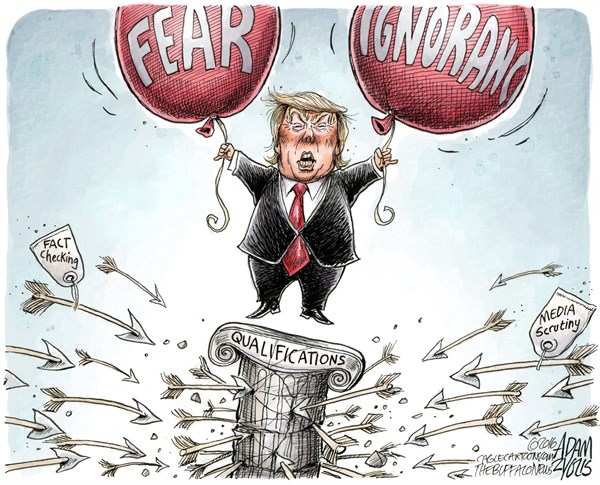
Donald Trump’s cabinet choices form an anti-government of sorts.  A climate change skeptic as head of the EPA who’s involved in suing the EPA.  A head of the Energy department who previously said he wanted to eliminate that department.  A head of Education who’s a fervid proponent of charter schools and further privatization.  A head of housing and urban development with no background in government and no apparent sympathy for the poor.  A head of Labor who’s a fast-food mogul, an opponent of a higher minimum wage, and a proponent of robots replacing humans because the former don’t get sick or need health care or strike for higher pay.  And, let’s not forget, a gaggle of retired generals in civilian security positions at the Pentagon and within the White House.

You have to hand it to Trump and the Republicans: when they select cabinet members, they’re not trying to triangulate; they’re not trying to reach out to the Democrats or rule in a bipartisan fashion.  Their attitude is “We won — and we’re taking no prisoners.”

Remember how newly elected President Obama triangulated in 2008? He kept on Republican Bob Gates as Secretary of Defense.  He selected retired Marine Corps General James Jones to be his National Security Adviser, which drew high praise from John McCain. He appointed Tim Geithner at Treasury, a former member of the Kissinger Associates and advocate of the TARP (the Wall Street bailout).  He tried to appoint other Republicans to his cabinet, such as Judd Gregg at Commerce.  Despite Obama’s huge mandate and his message of “change,” most of his cabinet appointees were conventional Washington insiders, more than acceptable to Republicans.

Of course, this is just further proof (if more is needed) that Democrats like Obama and the Clintons are just another business party, a Republican-lite party. I’d say establishment Democrats don’t have the courage of their convictions, except I’m not sure they have convictions.

Well, Trump has convictions.  And he’s unafraid to act on them with his cabinet choices. You think the Democrats might learn something from this?

At Informed Comment, Juan Cole has an excellent column on this whole issue, “Why do GOP Presidents get to go Hard Right, and Dems are just GOP Lite?” Here’s how Cole begins his column:

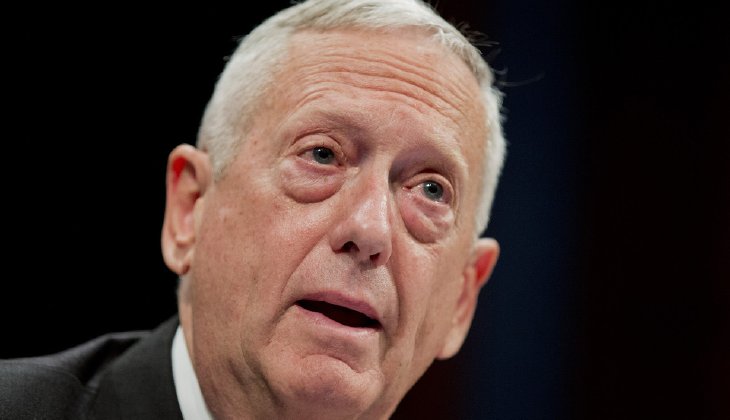
After it was confirmed that Donald J. Trump will appoint former Exxon Mobil CEO Rex Tillerson Secretary of State, the shape of the Trump cabinet and team has become clear. Neofascist Steve Bannon is White House Strategist. Openly racist Jeff Sessions is Attorney General (guess how many civil rights actions he is going to initiate). General James “Mad Dog” Mattis is Secretary of War (call it what it is). Notorious Islamophobe and conspiracy theorist, who denies that Islam is a religion, Lt. Gen. Michael Flynn is National Security adviser.

But Bill Clinton and Barack Obama, when they came to power (and both were very popular and had real mandates) did not go left in the way that George W. Bush and now Trump have gone right.

In fact, the anecdote is told that in 1993 Clinton and his cabinet looked around the room at each other and observed, “Here we are, Eisenhower Republicans.” Why?

Why, indeed?  Just imagine if a true liberal Democrat won the White House.  And let’s imagine he or she is casting about for a suitable Secretary of Defense, someone who thinks outside of the pentagonal box.  How about Ralph Nader or Noam Chomsky?  (Cole mentions Frida Berrigan, another provocative choice.)

Call it spine, call it stones, call it sand, call it whatever you want, but Trump’s Republicans have it and the spineless Democrats don’t.  Just wait until January, when we start to hear about a few Democrats crossing the aisle to work with Trump in the spirit of “bipartisanship” and “putting government back to work.”  It makes me think of another saying of my parents: Trump and his cabinet of billionaires and millionaires “will be laughing all the way to the bank.”  The rest of us?  We may be laughing, but only to hide the tears.

Note: Revised on 12/19 to add retired Marine Corps General Jones as another example of Obama’s ill-fated effort to “move to the center” and to appease Republicans.

Trump’s system will gorge itself until it collapses under its own weight. Too bad it’ll take the planet down as well

richardfeynman
Richard Feynman (copyright Tamiko Thiel, 1984)

W.J. Astore

Conflicts of interest characterize Donald Trump and his cabinet even before he and they take power in January, so we can safely predict a lot of corruption will be forthcoming. I always love the way both parties, but especially the Republicans, vow to fight for smaller government and lower deficits — until they get in power. Then it’s bigger government and larger deficits in the service of crony capitalism. Kleptocracy, in a word.

A good friend put it concisely: “It makes me sick!”

But of course that’s why she’s not in Washington. The Washington-types don’t find it sickening. For them, “Greed is good.” They convince themselves that: 1) The more they have, the better. 2) They deserve more because they’re better people. 3) The little people are schmucks who deserve to be exploited.

My parents liked the saying, “Birds of a feather flock together.” So the greedy are easy to find. Just look for them in the corridors of power, clustered together. For example, why do so many generals and admirals cash-in at retirement, joining corporate boards and making millions? They have six-figure government pensions, so why do they need more? They think they deserve the money. And they want to continue to play the power game, preening among the flock in the process.

As another friend of mine put it, “Money is the only thing the American elite really cares about. And I always think of Sinclair Lewis’s line that poor Americans never think of themselves as poor, only as temporarily embarrassed millionaires. One of our neighbors and friends told me he was voting Trump because with lower taxes he will be free to make a lot more money. Really? How much does anyone really think taxes will go down for people making what we make?”

The reality for us is that our taxes will probably go down by only a few hundred dollars. It’ll help us pay our air conditioning bills next summer, but that’s about it. Modest tax cuts are not going to turn us all into budding Donald Trumps (thank god for small mercies).

Yes, for people in Trump’s crowd, money is the measure of success. But so too is access. And power. Some of these people will kill themselves to be seen at the right parties, among the “right” kind of people. “Players.” “Operators.” Not people like you and me.

Trump’s government will gorge itself until it collapses under its own weight. The big question is whether its collapse will take the rest of us with it. Consider global warming, and consider the climate change deniers and fossil fuel profiteers that Trump is empowering. How long does our planet have left until we confront true disaster? A few decades, perhaps?

I always told my students the big problem with global warming was that its most serious perils – real as they are – lurked decades in the future. Problems that are decades away are difficult to address when America is driven by a quarterly business cycle and a quadrennial election cycle for the presidency. Now, under Trump, these problems won’t be addressed at all because the business moguls as well as the president simply deny their existence. Why? Because it’s convenient for them to do so. Because they stand to make a great deal of money by doing so. And because they don’t care about decades from now; they care about quarterly profits and getting reelected.

As I grow older, the words from a commercial of my youth have found new resonance in my memory: “It’s not nice to fool Mother Nature.” Not only isn’t it nice: it’s incredibly foolhardy. For the words of Richard Feynman about the space shuttle Challenger disaster ring true here:

Reality must take precedence over public relations, for Nature cannot be fooled.

Trump and his cronies may fool some of the people all of the time, but they’re not going to fool Nature. Sooner or later (and sooner under Trump), nature’s bill will come.

The Trump Cabinet of Billionaires and Generals

pottersville
Coming soon to a community near you

W.J. Astore

There’s an obvious trend in Trump’s cabinet picks: billionaires and generals. The billionaires favor private enterprise, capitalism unconstrained by regulations (especially those pesky environmental ones), and a view of the world in which global warming either doesn’t exist or can be ignored for the purposes of economic growth and higher profits. The generals?  Well, they’re military men, “lifers” experienced in the ways of weapons and war, with a reputation for no compromise, especially against radical Islamic terrorism.

Trump’s latest cabinet pick (pending official announcement) is Rex Tillerson for Secretary of State. Tillerson is currently the president, CEO, and chairman of Exxon Mobil Corporation.  He’s done some big petro deals with Russia and favors lifting sanctions against that country for its actions in the Crimea.  Expect relations with Putin’s Russia to improve under Trump, not necessarily a bad thing considering the nuclear arsenals that each country has.

If past is prologue, I’d say we can count on a few big changes from Trump and his cabinet in the coming months and years:

1. Privatization and profit are the bywords.  For example, expect more charter schools and lower government funding for public schools.  Expect a low federal minimum wage (it will probably remain stagnant at $7.25 an hour), sold as helping companies with job creation. Expect an emphasis on helping the “job creators,” i.e. rich people, and a revival of trickle down economics.

2. An embrace (or re-embrace) of fossil fuels.  You can forget about major funding for alternative or green energy.

3. A rejection of global warming/climate change as “speculative” and “unproven” by science, thereby enabling more fossil fuel exploration and production.  Remember, there are still trillions of dollars to be made by extracting fossil fuels.  With that much money at stake, it’s not staying in the ground, America.

4. A repudiation of environmental protections as making America “uncompetitive” in the global marketplace.

5. More military interventionism in the cause of combating radical Islamic terrorism.  And more endless wars as those interventions fail to end the threat, creating blowback and more conflict instead.

6.  A health care system that is increasingly privatized, complicated, and expensive, making many people long for the days of Obamacare.  (People are going to love shopping for their own health care in the private sector under Trump, right?)

7. Renewed emphasis on an ethos based on endless work, knee-jerk patriotism (“We’re Number One!  At something!  Military spending!  The number of hours we work for low pay!  And for no health care!  America!”), and violence both here and abroad.  The rejection of diversity and attacks on “the Other” in the false (and dangerous) cause of “making America American again.”  Prejudice and vulgarity disguised as principled rejection of “political correctness.”

Despite Trump’s thin-skinned nature and relative ignorance of foreign affairs, I don’t see nuclear war in the immediate future.  But I do see creeping militarism and growing authoritarianism, always disguised as “necessary” and “to keep us safe.” I see more people suffering, some even dying, due to cutbacks in government aid, also in the name of “security,” e.g. cutting the deficit. I see more passion directed against marginalized people and less compassion for the afflicted. This will be couched as “realism” and as “fiscally responsible.”  I see “rugged individualism” extolled, even as government welfare is extended to corporations and financiers, again in the name of “competitiveness” and “job creation.”  In the meantime, life will indeed become more rugged for individuals as government welfare for them is cut.

As the holidays approach, many of us will watch “It’s A Wonderful Life” yet again, starring a true war hero, Jimmy Stewart.  In that movie, he wages a long battle against Mr. Potter, a greedy and unprincipled banker, the Trump of his community.  In a brief scene near the end of the movie, Stewart’s character is given a glimpse of how his beloved community of Bedford Falls would have fared if Potter had ruled unchallenged.

pottersville_burlesque
Pottersville: Trump’s kind of place

The lurid and tawdry streets of “Pottersville” are a vivid reminder to Stewart of the value of principled resistance against petty tyrants.

Whether you call it Pottersville or Trump Towers, naked greed and exploitation must be fought.  Just remember: the Potters and Trumps of the world do not fight fair.

America: Land of Extremes

superman
He said he fought for truth, justice, and the American way.  Why does that seem so much more far-fetched today?

W.J. Astore

This is an Andy Rooney moment for me, but did you ever notice how Americans tend to favor either humongous trophy houses (McMansions), or closet-like tiny houses?  Did you ever notice how so many Americans tend to be either very fat or super fit?  Crusading evangelicals or militant atheists?  Faithful believers in creationism or fervid followers of science?  Proud “cave man” carnivores or proselytizing vegans?  Coffee fiends or caffeine avoiders?  Lushes or teetotalers?   Materialists and hoarders or declutterers and minimalists?

The list of opposites, of extremes, goes on.  Heck, why not include Obama supporters or Trump followers?  Obama is urbane, sophisticated, cerebral, “no drama.”  A devoted family man with one very successful marriage.  The Donald?  Well, let’s just say he’s very different than our sitting president.  And I’m not talking skin color.

A good friend of mine once complained about his fellow Americans that he didn’t necessarily mind their extremism.  What he did mind was their efforts to convert him to whatever extreme causes they believed in.  Rodney King famously asked, Can’t we all just get along?  My friend’s cry was more plaintive: Can’t you all just leave me alone?

As Trump crawls closer to power, America risks devolving even more into a society where the byword is “My way or the highway.”  Where the national motto is no longer “In God we trust” or the older “E pluribus unum” (out of many, one) but instead “America: love it or leave it.”

I once read a great rejoinder to the “America: love it or leave it” sentiment.  I first saw it in a bicycle repair book.  The author simply added this coda: “Or change it.”

Extremism in the pursuit of your own selfish definition of “liberty” can indeed be a vice, America.  We need to reject a black/white, love/hate, on/off, Manichean view of each other and the world.  Moderation as a way of pursuing a more inclusive and compassionate world can indeed be a virtue.

That doesn’t mean one submits supinely to injustice.  That doesn’t mean one surrenders meekly to tyrants.  What it does mean is a rejection of a “shoot first, ask questions later” approach to life and each other.  We have enough polarization already in America, and we certainly have enough death.

Superman used to say he fought for truth, justice, and the American way.  There was a sense, a few generations ago, that those words were not laughable.  That they meant something.  We need to get back to those times.

Impossible, you say?  We won’t know unless we try.

The Cost of Empire

cincinnatus_cincinnatorum
Cincinnatus at his plow in Ohio.

W.J. Astore

With all these generals being called out of retirement to serve as Donald Trump’s “civilian” advisers, whether it’s General James “Mad Dog” Mattis as Secretary of Defense or General Mike Flynn (the real mad dog) as National Security Adviser, it’s difficult to envision the American empire being shrunk anytime soon.  The U.S. military is overcommitted around the world, attenuating its strength even as the American taxpayer foots the bill to the tune of over $600 billion a year, not including nuclear weapons, veterans affairs, interest on the national debt related to war and defense spending, and so on.

With its endless wars and global adventurism, the U.S. is slowly bankrupting itself even as President-elect Trump promises higher military spending and more toughness abroad.  Imperial over-commitment, for the historically-minded, recalls the fate of the Roman empire.  Many moons ago, the classicist Steven Willett wrote the following words to me, words that America’s militarists and imperialists would be wise to read – and heed:

My personal concern is the misallocation of our resources in futile wars and global military hegemony.  We are acting under the false belief that the military can and should be used as a foreign policy tool.  The end of US militarism is bankruptcy.  I agree with [Andrew] Bacevich’s recommendation that the US cut military spending 6% a year for 10 years.  The result would be a robust defensive military with more freed-up resources for infrastructure, education, research and alternative energy.  Our so-called defense budget is a massive example of what economists call an opportunity cost.

The US is now about where Rome was in the third to fourth centuries.  In his magisterial study “The Later Roman Empire, 284-602: A Social, Economic, and Administrative Survey,” A. H. M. Jones shows what a drain the army was on the [economy of Rome].  By the third to fifth centuries, the army numbered about 650,000 scattered along the limes and stationed at central strategic locations.  It took most of the state’s revenues, which had long been declining as the economy in the west declined.  And even that 650,000 was far too small for adequate defense of the [Roman] empire.

General Mattis, described as a “warrior-monk” with a reputation for a close study of military history, perhaps understands some of this.  But can he rein in the American empire and decrease U.S. military spending?  The prospects seem grim.

Trying to be strong everywhere is a recipe for being weak when and where it counts.  Under the five good emperors, Rome was able to balance imperial ambition with domestic vitality.  Any chance Donald Trump is going to be a “good” emperor, a Marcus Aurelius, a man of wisdom?  Early signs are unpromising, to say the least.

Of course, America is supposed to be a democracy.  We’re supposed to look back to the Roman Republic, not its empire.  We’re supposed to be committed to a limited military of citizen-soldiers who are eager to shed their armor and weapons and return to the plow, like Cincinnatus — or George Washington.  We’re not supposed to worship warriors and violence.

Imperial decline and cultural decadence march together in step. Under Trump, it appears they’ll soon be marching in lockstep at double-time.  Grim times, indeed.


The USA No Longer Sees Freedom and Liberty as Core Strengths

liberty-tree1
Why are we so intent on chopping it down?

W.J. Astore

In the crusade against Communism, otherwise known as the Cold War, the U.S. saw “freedom” as its core strength.  Our liberties were contrasted with the repression of our chief rival, the USSR.  We drew strength from the idea that our system of government, which empowered people whose individualism was guided by ethics based on shared values, would ultimately prevail over godless centralism and state-enforced conformity.  An important sign of this was our belief in citizen-soldiers rather than warriors, and a military controlled by democratically-elected civilians rather than by dictators and strong men.

Of course, U.S. foreign policy during the Cold War could be amoral or immoral, and ethics were often shunted aside in the name of Realpolitik.  Even so, morality was nevertheless treated as important, and so too were ethics.  They weren’t dismissed out of hand.

Fast forward to today.  We no longer see “freedom” as a core U.S. strength.  Instead, too many of us see freedom as a weakness.  In the name of defeating radical Islamic terrorism, we’ve become more repressive, even within the USA itself.  Obedience and conformity are embraced instead of individualism and liberty.  In place of citizen-soldiers, professional warriors are now celebrated and the military is given the lion’s share of federal resources without debate.  Trump, a CEO rather than a statesman, exacerbates this trend as he surrounds himself with generals while promising to obliterate enemies and to revive torture.

In short, we’ve increasingly come to see a core national strength (liberty, individualism, openness to others) as a weakness.  Thus, America’s new crusades no longer have the ethical underpinnings (however fragile they often proved) of the Cold War.  Yes, the Cold War was often unethical, but as Tom Engelhardt notes at TomDispatch.com today, the dirty work was largely covert, i.e. we were in some sense embarrassed by it.  Contrast this to today, where the new ethos is that America needs to go hard, to embrace the dark side, to torture and kill, all done more or less openly and proudly.

Along with this open and proud embrace of the dark side, America has come increasingly to reject science.  During the Cold War, science and democracy advanced together.  Indeed, the superior record of American science vis-à-vis that of the Soviet Union was considered proof of the strength and value of democracy.  Today, that is no longer the case in America.  Science is increasingly questioned; evidence is dismissed as if it’s irrelevant.  “Inconvenient truths” are no longer recognized as inconvenient — they’re simply rejected as untrue.  Consider the astonishing fact that we have a president-elect who’s suggested climate change is a hoax perpetrated by China.

Yesterday, I saw the following comment online, a comment that summed up the new American ethos: “Evidence and facts are for losers.”  After all, President-elect Trump promised America we’d win again.  Let’s not let facts get in the way of “victory.”

That’s what a close-minded crusader says.  That the truth doesn’t matter.  All that matters is belief and faith.  Obey or suffer the consequences.

Where liberty is eroded and scientific evidence is denied, you don’t have democracy.  You have something meaner.  And dumber.  Something like autocracy, kleptocracy, idiocracy.  And tyranny.

The Poison of War

george
President Bush just before he gave his “mission accomplished” speech in May 2003

Chris Hedges

In May 2003, Chris Hedges gave a controversial commencement speech at Rockford College (Rockford University since 2013) in Illinois.  Back then, Hedges was an award-winning reporter for the New York Times who had recently completed a book, War Is A Force that Gives Us Meaning (2002), which I highly recommend.  Earlier that month, President George W. Bush had given his “Mission Accomplished” speech about the Iraq war, and patriotic pride was riding high.  Hedges had the foresight to recognize the mission had not been accomplished, and that the cost of war (all wars) would be high to the United States as well as to the countries purportedly liberated.

Booed and interrupted on several occasions during his speech, Hedges persevered.  His words from 2003 are well worth reading again, especially as President-elect Trump assembles a team of former generals and hardline rightists with the promise of obliterating ISIS and of “winning” conflicts around the world.

Here is his speech, in its entirety.  I have bolded one passage on Athens and the poison of war that is particularly telling for the current American moment.  W.J. Astore

Chris Hedges at Rockford College, Commencement Address, May 2003

I want to speak to you today about war and empire.

Killing, or at least the worst of it, is over in Iraq. Although blood will continue to spill — theirs and ours — be prepared for this. For we are embarking on an occupation that, if history is any guide, will be as damaging to our souls as it will be to our prestige, power, and security. But this will come later as our empire expands and in all this we become pariahs, tyrants to others weaker than ourselves. Isolation always impairs judgment and we are very isolated now.

We have forfeited the good will, the empathy the world felt for us after 9-11. We have folded in on ourselves, we have severely weakened the delicate international coalitions and alliances that are vital in maintaining and promoting peace and we are part now of a dubious troika in the war against terror with Vladimir Putin and Ariel Sharon, two leaders who do not shrink in Palestine or Chechnya from carrying out acts of gratuitous and senseless acts of violence. We have become the company we keep.

The censure and perhaps the rage of much of the world, certainly one-fifth of the world’s population which is Muslim, most of whom I’ll remind you are not Arab, is upon us. Look today at the 14 people killed last night in several explosions in Casablanca. And this rage in a world where almost 50 percent of the planet struggles on less than two dollars a day will see us targeted. Terrorism will become a way of life, and when we are attacked we will, like our allies Putin and Sharon, lash out with greater fury. The circle of violence is a death spiral; no one escapes. We are spinning at a speed that we may not be able to hold. As we revel in our military prowess — the sophistication of our military hardware and technology, for this is what most of the press coverage consisted of in Iraq — we lose sight of the fact that just because we have the capacity to wage war it does not give us the right to wage war. This capacity has doomed empires in the past.

“Modern western civilization may perish,” the theologian Reinhold Niebuhr warned, “because it falsely worshiped technology as a final good.”

The real injustices, the Israeli occupation of Palestinian land, the brutal and corrupt dictatorships we fund in the Middle East, will mean that we will not rid the extremists who hate us with bombs. Indeed we will swell their ranks. Once you master people by force you depend on force for control. In your isolation you begin to make mistakes.

Fear engenders cruelty; cruelty, fear, insanity, and then paralysis. In the center of Dante’s circle the damned remained motionless. We have blundered into a nation we know little about and are caught between bitter rivalries and competing ethnic groups and leaders we do not understand. We are trying to transplant a modern system of politics invented in Europe characterized, among other things, by the division of earth into independent secular states based on national citizenship in a land where the belief in a secular civil government is an alien creed. Iraq was a cesspool for the British when they occupied it in 1917; it will be a cesspool for us as well. The curfews, the armed clashes with angry crowds that leave scores of Iraqi dead, the military governor, the Christian Evangelical groups who are being allowed to follow on the heels of our occupying troops to try and teach Muslims about Jesus.

The occupation of the oil fields, the notion of the Kurds and the Shiites will listen to the demands of a centralized government in Baghdad, the same Kurds and Shiites who died by the tens of thousands in defiance of Saddam Hussein, a man who happily butchered all of those who challenged him, and this ethnic rivalry has not gone away. The looting of Baghdad, or let me say the looting of Baghdad with the exception of the oil ministry and the interior ministry — the only two ministries we bothered protecting — is self immolation.

As someone who knows Iraq, speaks Arabic, and spent seven years in the Middle East, if the Iraqis believe rightly or wrongly that we come only for oil and occupation, that will begin a long bloody war of attrition; it is how they drove the British out and remember that, when the Israelis invaded southern Lebanon in 1982, they were greeted by the dispossessed Shiites as liberators. But within a few months, when the Shiites saw that the Israelis had come not as liberators but occupiers, they began to kill them. It was Israel who created Hezbollah and was Hezbollah that pushed Israel out of Southern Lebanon.

As William Butler Yeats wrote in “Meditations in Times of Civil War,” “We had fed the heart on fantasies / the hearts grown brutal from the fair.”

This is a war of liberation in Iraq, but it is a war now of liberation by Iraqis from American occupation. And if you watch closely what is happening in Iraq, if you can see it through the abysmal coverage, you can see it in the lashing out of the terrorist death squads, the murder of Shiite leaders in mosques, and the assassination of our young soldiers in the streets. It is one that will soon be joined by Islamic radicals and we are far less secure today than we were before we bumbled into Iraq.

We will pay for this, but what saddens me most is that those who will by and large pay the highest price are poor kids from Mississippi or Alabama or Texas who could not get a decent job or health insurance and joined the army because it was all we offered them. For war in the end is always about betrayal, betrayal of the young by the old, of soldiers by politicians, and of idealists by cynics. Read Antigone, when the king imposes his will without listening to those he rules or Thucydides’ history. Read how Athens’ expanding empire saw it become a tyrant abroad and then a tyrant at home. How the tyranny the Athenian leadership imposed on others it finally imposed on itself.

This, Thucydides wrote, is what doomed Athenian democracy; Athens destroyed itself. For the instrument of empire is war and war is a poison, a poison which at times we must ingest just as a cancer patient must ingest a poison to survive. But if we do not understand the poison of war — if we do not understand how deadly that poison is — it can kill us just as surely as the disease.

We have lost touch with the essence of war. Following our defeat in Vietnam we became a better nation. We were humbled, even humiliated. We asked questions about ourselves we had not asked before.

We were forced to see ourselves as others saw us and the sight was not always a pretty one. We were forced to confront our own capacity for atrocity — for evil — and in this we understood not only war but more about ourselves. But that humility is gone.

War, we have come to believe, is a spectator sport. The military and the press — remember in wartime the press is always part of the problem — have turned war into a vast video arcade came. Its very essence — death — is hidden from public view.

There was no more candor in the Persian Gulf War or the War in Afghanistan or the War in Iraq than there was in Vietnam. But in the age of live feeds and satellite television, the state and the military have perfected the appearance of candor.

Because we no longer understand war, we no longer understand that it can all go horribly wrong. We no longer understand that war begins by calling for the annihilation of others but ends if we do not know when to make or maintain peace with self-annihilation. We flirt, given the potency of modern weapons, with our own destruction.

The seduction of war is insidious because so much of what we are told about it is true — it does create a feeling of comradeship which obliterates our alienation and makes us, for perhaps the only time of our life, feel we belong.

War allows us to rise above our small stations in life; we find nobility in a cause and feelings of selflessness and even bliss. And at a time of soaring deficits and financial scandals and the very deterioration of our domestic fabric, war is a fine diversion. War for those who enter into combat has a dark beauty, filled with the monstrous and the grotesque. The Bible calls it the lust of the eye and warns believers against it. War gives us a distorted sense of self; it gives us meaning.

Once in war, the conflict obliterates the past and the future all is one heady intoxicating present. You feel every heartbeat in war, colors are brighter, your mind races ahead of itself.  We feel in wartime comradeship.  We confuse this with friendship, with love. There are those who will insist that the comradeship of war is love — the exotic glow that makes us in war feel as one people, one entity, is real, but this is part of war’s intoxication.

Think back on the days after the attacks on 9-11. Suddenly we no longer felt alone; we connected with strangers, even with people we did not like. We felt we belonged, that we were somehow wrapped in the embrace of the nation, the community; in short, we no longer felt alienated.

As this feeling dissipated in the weeks after the attack, there was a kind of nostalgia for its warm glow and wartime always brings with it this comradeship, which is the opposite of friendship. Friends are predetermined; friendship takes place between men and women who possess an intellectual and emotional affinity for each other. But comradeship — that ecstatic bliss that comes with belonging to the crowd in wartime — is within our reach. We can all have comrades.

The danger of the external threat that comes when we have an enemy does not create friendship; it creates comradeship. And those in wartime are deceived about what they are undergoing. And this is why once the threat is over, once war ends, comrades again become strangers to us. This is why after war we fall into despair.

In friendship there is a deepening of our sense of self. We become, through the friend, more aware of who we are and what we are about; we find ourselves in the eyes of the friend. Friends probe and question and challenge each other to make each of us more complete; with comradeship, the kind that comes to us in patriotic fervor, there is a suppression of self-awareness, self-knowledge, and self-possession. Comrades lose their identities in wartime for the collective rush of a common cause — a common purpose. In comradeship there are no demands on the self. This is part of its appeal and one of the reasons we miss it and seek to recreate it. Comradeship allows us to escape the demands on the self that is part of friendship.

In wartime when we feel threatened, we no longer face death alone but as a group, and this makes death easier to bear. We ennoble self-sacrifice for the other, for the comrade; in short we begin to worship death. And this is what the god of war demands of us.

Think finally of what it means to die for a friend. It is deliberate and painful; there is no ecstasy. For friends, dying is hard and bitter. The dialogue they have and cherish will perhaps never be recreated. Friends do not, the way comrades do, love death and sacrifice. To friends, the prospect of death is frightening. And this is why friendship or, let me say love, is the most potent enemy of war. Thank you.

Trump’s Emerging Kleptocracy

usa-trump-11
Trump’s latest “con man” hat puts USA front and center, with 45 on the side (Trump, sadly, will be America’s 45th president, unless widespread sanity breaks out)

W.J. Astore

Back in 2010, I wrote an article for TomDispatch.com in which I compared the U.S. government and its corporate handlers to a kleptocracy.  Here’s what I wrote:

What drives America today is, in fact, business — just as was true in the days of Calvin Coolidge. But it’s not the fair-minded “free enterprise” system touted in those freshly revised Texas guidelines for American history textbooks; rather, it’s a rigged system of crony capitalism that increasingly ends in what, if we were looking at some other country, we would recognize as an unabashed kleptocracy.

That’s what we’re witnessing right now with Trump and his family: crony capitalism. Unabashed kleptocracy.  It’s nothing new, except now it’s being done openly and unapologetically by the president-elect, who claims the law of the land says he can’t have conflicts of interest, because as president he’s exempted from those laws.

Recall the saying that history repeats itself, first as tragedy and then as farce.  Trump is both tragedy and farce, but more than anything, he’s a tragedy for our democracy.

Here’s more of what I wrote back in 2010.  It’s prescient, I think, and I’m not proud to say that:

An old Roman maxim enjoins us to “let justice be done, though the heavens fall.”  Within our kleptocracy, the prevailing attitude is an insouciant “We’ll get ours, though the heavens fall.”  This mindset marks the decline of our polity.  A spirit of shared sacrifice, dismissed as hopelessly naïve, has been replaced by a form of tribalized privatization in which insiders find ways to profit no matter what.

Tom Engelhardt documents Trump’s opportunistic greed in his latest introduction to Nick Turse’s humorously painful article on the farce that is Trump.  Here’s what Engelhardt has to say about Trump’s emerging kleptocracy:

Trump is a family man in every sense of the word. His business is a family business. No matter what anyone tells you, there’s no more way to separate him from his brand, with his kids running it, than there is to separate a shark from the ocean or Ivanka from her line of jewelry. There’s no way this administration can be anything but a walking, talking conflict of interest of a kind never before seen or even imagined in this country.  It’s easy, in fact, to guarantee one thing: that foreign business and political interests will have a field day when it comes to applying pressure to the new American president.

Truer words were never written.  Imagine placing Gordon “Greed is Good” Gekko (he of cinematic “Wall Street” infamy) in charge of America, and that’s Trump, except Trump seems to have even fewer scruples.

Anyway, the intrepid Nick Turse journeyed to Trump Tower in Manhattan to survey the farce that is the Trump transition team.  I urge you to read his article in full, but here’s his conclusion:

Descending the switchback escalators [in the Trump Tower], I found myself gazing at the lobby where a scrum of reporters stood waiting for golden elevator doors to open, potentially disgorging a Trump family member or some other person hoping to serve at the pleasure of the next president. Behind me water cascaded several stories down a pink marble wall, an overblown monument to a bygone age of excess.  Ahead of me, glass cases filled with Trump/Pence 2016 T-shirts, colognes with the monikers “Empire” and “Success,” the iconic red “Make America Great Again” one-size-fits-all baseball cap, stuffed animals, and other tchotchkes stood next to an overflowing gilded garbage can.  Heading for the door, I thought about all of this and Joe [a secret service agent] and his commando-chic colleague and Trump’s deserted private-public park, and the army of cops, the metal barricades, and the circus that awaited me on the street.  I felt I’d truly been given some hint of the future, a whisper of what awaits. I also felt certain I’d be returning to Trump Tower — and soon.

Circus, indeed.  Trump has mastered that, but will he provide the bread as well to complete the bread and circuses pairing?  And will the people be satisfied with empty spectacle and a few crumbs of bread as Trump takes America for a kleptocratic ride?

It was said about the Emperor Nero that he fiddled while Rome burned.  Instead of fiddling, Trump, one assumes, will make deals and sell trinkets, all for his personal profit, even as American democracy burns.

Welcome to kleptocracy in the open, America.  As the inferno rages, remember this happy fact: For only $10,000 you too can wear Ivanka’s bracelet!

bracelet-question-still-shoppable
One bracelet to bring them all and in the darkness bind them.


Big Blue Books: Bring Them Back!

img_1066
The cover of my “big blue book”

W.J. Astore

Long ago in a used bookstore, I came across a “Big Blue Book” featuring the counsels and maxims of the philosopher Arthur Schopenhauer.  My dad liked philosophy and was a fan of Schopenhauer, so I picked it up, I think for one dollar.  My tattered paperbound copy, published by Haldeman-Julius Company in Girard, Kansas, is not dated, so I had to do a little research.   According to Indiana State University:

Sold for as little as a nickel or a dime the Little Blue Books and the larger-format Big Blue Books were published and republished by the Haldeman-Julius publishing house located in Girard, Kansas to foster the ideals of American socialism and to provide a basic education for the working man. Titles began appearing as early as 1919, but the Little Blue Books series was not christened until 1923.

I think my copy dates from the late 1920s or early 1930s, since it features a catalog at the back that says 1500 “Little Blue Books” are available, all for a nickel each.  You could order all of them — all 1500 books — for $45.00, “packing and carriage charges” included.  The “little” books were about 3.5″ x 5,” or the size of a small index card, a handy size for shirt pockets; my “big” book is roughly 5.5″ x 8.5″.

Amusingly, the advert used these words to sell them: “There is not a trashy, cheap book in the lot.”  The “blue” came from the color of the cover (mine is faded), not from any “blue” or lurid contents.

What strikes me today is the focus on educating the working classes, with the expectation that workers wanted intellectually challenging and controversial material.  The back cover of my book features the following list of “Big Blue Books” available:

img_1067

Perhaps my favorite title is the “Tyranny of Bunk.”  We could use a book like that for these times.

Titles featuring Voltaire, agnosticism, Clarence Darrow (of the famous Scopes Trial, in which he defended the teaching of evolution), and the debunking of religious miracles point to the free-thinking nature of these books.  Here the “working man” is not being talked down to; rather, he’s being given the intellectual tools with which he can lift himself up.  Workers of America, read Blue Books and become educated: that was the message of these books.

Workers of those days had fewer distractions than the workers of today.  No vapid television, no video games, no materialistic orgies on Black Friday and Cyber Monday: one can imagine more than a few workers picking up a Blue Book for a nickel and enjoying it.

How much was a nickel back then?  My dad was a teenager in the early 1930s.  He told me you could go to the cinema for a nickel.  In other words, a nickel was real money, but it was also a manageable sum.

Nowadays, I suppose, anyone with a computer and an Internet connection has access to libraries of knowledge that far surpass 1500 “Little Blue Books” and their “Big Blue” cousins.  Yet I can’t quite shake the feeling that something is lost in today’s cyberworld. Under socialism and other free-thinking systems of the Roaring Twenties and Depressed Thirties, there was faith in workers, specifically in educated workers, as representing the future of a better, a more just, a fairer America.

Do we still have that same faith, that same optimism, in the common man (and woman)? It doesn’t seem that way.  We are simply not trying to educate everyone roughly equally, irrespective of social class and status and so on.

Assuming literacy, back then it seemed that all that was needed was to place the right books in the hands of workers thirsty for knowledge.  Maybe that was a simple vision, but I admire its idealism.

Can we “make America great again” by getting Americans to read again?  To read real books that address serious subjects in a mature way?  Why not start with some new, inexpensive, little and big blue books?  No lithium batteries or internet required.

Not a bad step, I think, as we fight to restore Democracy and against idiocracy.

The Indispensable Nation?

101222_pentagon_605_reuters
With Trump’s election, it’s a bull market at the Pentagon

W.J. Astore

In two recent speeches, President Obama has repeated the conceit that the United States is “the indispensable nation.”  Apparently, that means the U.S. must lead “the free world,” with a none-too-subtle corollary that other “free” nations must follow.  Yet the conceit of indispensability gets the U.S. into serious trouble.  It facilitates interventionism and meddling, and when the U.S. intervenes and meddles, it’s almost always in military ways, often disastrously (Afghanistan, Iraq, Libya are just three recent examples).

This is hardly surprising.  The U.S. military has roughly 800 bases worldwide.  Its aircraft carriers are essentially mobile American bases, bristling with weapons and munitions.  The U.S. spends roughly $600 billion a year maintaining this military and empire, even as it continues to dominate the world’s arms trade.  This heavy investment in weaponry and war-making, abetted by a mentality that celebrates “global reach, global power,” is a strange way to define your nation as being “indispensable.”

How did America come to invest so much of itself in military weaponry and incessant wars?  One reason is the quest for total safety.  As one of my friends put it:

It [the notion of total safety] must be a post-1941 thing [after the shocking sneak attack on Pearl Harbor]. I think in both cases (1917 [U.S. entry into World War I] and 1941 and maybe 2001) the question Americans have asked is how to keep an evil “over there” somehow from affecting us. In all three cases, I think the answer was neutrality until neutrality no longer seemed to offer safety. My guess is that the idea that total safety required global involvement comes from c.1948, fears of the USSR’s globalism, atomic paranoia, and the desire to protect and preserve the new American affluence. Thus NSC-68 gets passed with nary a whisper of opposition.

What is NSC-68?  We must turn the clock back to 1950, the Cold War, and the Truman Administration, as detailed here by The History Channel:

According to the [National Security Council’s] report, the United States should vigorously pursue a policy of “containing” Soviet expansion. NSC-68 recommended that the United States embark on rapid military expansion of conventional forces and the nuclear arsenal, including the development of the new hydrogen bomb. In addition, massive increases in military aid to U.S. allies were necessary as well as more effective use of “covert” means to achieve U.S. goals. The price of these measures was estimated to be about $50 billion; at the time the report was issued, America was spending just $13 billion on defense.

Under President Trump, we’re likely to see a new version of NSC-68, another expansion of the U.S. military (and U.S. militarism), along with covert action by a newly empowered CIA, this time in the name of containing and defeating radical Islam rather than godless communism.

Defense company stocks are already soaring at the prospect of much higher military spending under Trump, notes William Hartung today at TomDispatch.com.  Trump is difficult to predict, so Hartung takes him at his word in this passage:

A window into Trump’s thinking [on defense] can be found in a speech he gave in Philadelphia in early September. Drawing heavily on a military spending blueprint created by Washington’s right-wing Heritage Foundation, Trump called for tens of thousands of additional troops, a Navy of 350 ships (the current goal is 308), a significantly larger Air Force, an anti-missile, space-based Star Wars-style program of Reaganesque proportions, and an acceleration of the Pentagon’s $1 trillion “modernization” program for the nuclear arsenal (now considered a three-decade-long project).

Todd Harrison of the Center for Strategic and International Studies estimates that, if Trump faithfully follows the Heritage Foundation’s proposal, he could add more than $900 billion to the Pentagon’s budget over the next decade. 

In other words, Obama’s America, the “indispensable nation,” is likely under Trump to channel enormous resources into more weapons even as Trump’s military advisers, men like retired general Mike Flynn, posture for a no-holds-barred crusade against “the cancer” of radical Islam around the globe.

Here’s a harsh truth: America has allowed its arsenal of democracy of World War II fame to become simply an arsenal.  A nation that fought in the name of democracy in two world wars has become one that wages endless wars driven by a crusader’s righteousness.

Remind me: What is so “indispensable” about that?