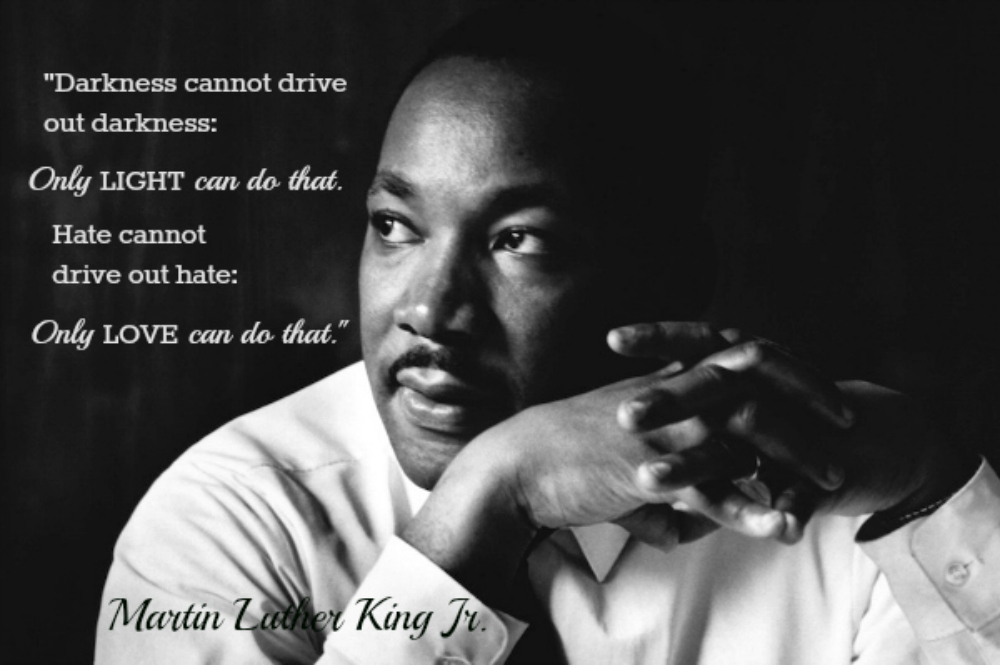
On April 4, 1967, Martin Luther King Jr. gave a powerful speech (“Beyond Vietnam – A Time to Break Silence”) that condemned America’s war in Vietnam. Exactly one year later, he was assassinated in Memphis.
What follows are excerpts from MLK’s speech. I urge you to read it in its entirety, but I’d like to highlight this line:
A nation that continues year after year to spend more money on military defense than on programs of social uplift is approaching spiritual death.
MLK called for a revolution of values in America. In his address, he noted that:
There is nothing except a tragic death wish to prevent us from reordering our priorities so that the pursuit of peace will take precedence over the pursuit of war.
MLK didn’t just have a dream of racial equality. He had a dream for justice around the world, a dream of a world committed to peace, a world in which America would lead a reordering of values in the direction of universal brotherhood.
Both of MLK’s dreams remain elusive. Racial inequalities and biases remain, though America is better now than it was in the 1960s in regards to racial equity. And what of a commitment to peace? Sadly, America remains dedicated to war, spending nearly a trillion dollars yearly on defense, Homeland Security, nuclear weapons, and “overseas contingency operations,” i.e. wars.
America has failed to dream the dreams of Martin Luther King, Jr., and we are the worse for it. W.J. Astore
Excerpts from MLK’s Speech on Vietnam, April 4, 1967
At this point I should make it clear that while I have tried in these last few minutes to give a voice to the voiceless in Vietnam and to understand the arguments of those who are called “enemy,” I am as deeply concerned about our own troops there as anything else. For it occurs to me that what we are submitting them to in Vietnam is not simply the brutalizing process that goes on in any war where armies face each other and seek to destroy. We are adding cynicism to the process of death, for they must know after a short period there that none of the things we claim to be fighting for are really involved. Before long they must know that their government has sent them into a struggle among Vietnamese, and the more sophisticated surely realize that we are on the side of the wealthy, and the secure, while we create a hell for the poor.
Somehow this madness must cease. We must stop now. I speak as a child of God and brother to the suffering poor of Vietnam. I speak for those whose land is being laid waste, whose homes are being destroyed, whose culture is being subverted. I speak of the — for the poor of America who are paying the double price of smashed hopes at home, and death and corruption in Vietnam. I speak as a citizen of the world, for the world as it stands aghast at the path we have taken. I speak as one who loves America, to the leaders of our own nation: The great initiative in this war is ours; the initiative to stop it must be ours…
If we continue, there will be no doubt in my mind and in the mind of the world that we have no honorable intentions in Vietnam. If we do not stop our war against the people of Vietnam immediately, the world will be left with no other alternative than to see this as some horrible, clumsy, and deadly game we have decided to play. The world now demands a maturity of America that we may not be able to achieve. It demands that we admit that we have been wrong from the beginning of our adventure in Vietnam, that we have been detrimental to the life of the Vietnamese people. The situation is one in which we must be ready to turn sharply from our present ways. In order to atone for our sins and errors in Vietnam, we should take the initiative in bringing a halt to this tragic war…
It is with such activity in mind that the words of the late John F. Kennedy come back to haunt us. Five years ago he said, “Those who make peaceful revolution impossible will make violent revolution inevitable.” Increasingly, by choice or by accident, this is the role our nation has taken, the role of those who make peaceful revolution impossible by refusing to give up the privileges and the pleasures that come from the immense profits of overseas investments. I am convinced that if we are to get on the right side of the world revolution, we as a nation must undergo a radical revolution of values. We must rapidly begin…we must rapidly begin the shift from a thing-oriented society to a person-oriented society. When machines and computers, profit motives and property rights, are considered more important than people, the giant triplets of racism, extreme materialism, and militarism are incapable of being conquered.
A true revolution of values will soon cause us to question the fairness and justice of many of our past and present policies. On the one hand, we are called to play the Good Samaritan on life’s roadside, but that will be only an initial act. One day we must come to see that the whole Jericho Road must be transformed so that men and women will not be constantly beaten and robbed as they make their journey on life’s highway. True compassion is more than flinging a coin to a beggar. It comes to see that an edifice which produces beggars needs restructuring.
A true revolution of values will soon look uneasily on the glaring contrast of poverty and wealth. With righteous indignation, it will look across the seas and see individual capitalists of the West investing huge sums of money in Asia, Africa, and South America, only to take the profits out with no concern for the social betterment of the countries, and say, “This is not just.” It will look at our alliance with the landed gentry of South America and say, “This is not just.” The Western arrogance of feeling that it has everything to teach others and nothing to learn from them is not just.
A true revolution of values will lay hand on the world order and say of war, “This way of settling differences is not just.” This business of burning human beings with napalm, of filling our nation’s homes with orphans and widows, of injecting poisonous drugs of hate into the veins of peoples normally humane, of sending men home from dark and bloody battlefields physically handicapped and psychologically deranged, cannot be reconciled with wisdom, justice, and love. A nation that continues year after year to spend more money on military defense than on programs of social uplift is approaching spiritual death.
America, the richest and most powerful nation in the world, can well lead the way in this revolution of values. There is nothing except a tragic death wish to prevent us from reordering our priorities so that the pursuit of peace will take precedence over the pursuit of war. There is nothing to keep us from molding a recalcitrant status quo with bruised hands until we have fashioned it into a brotherhood.
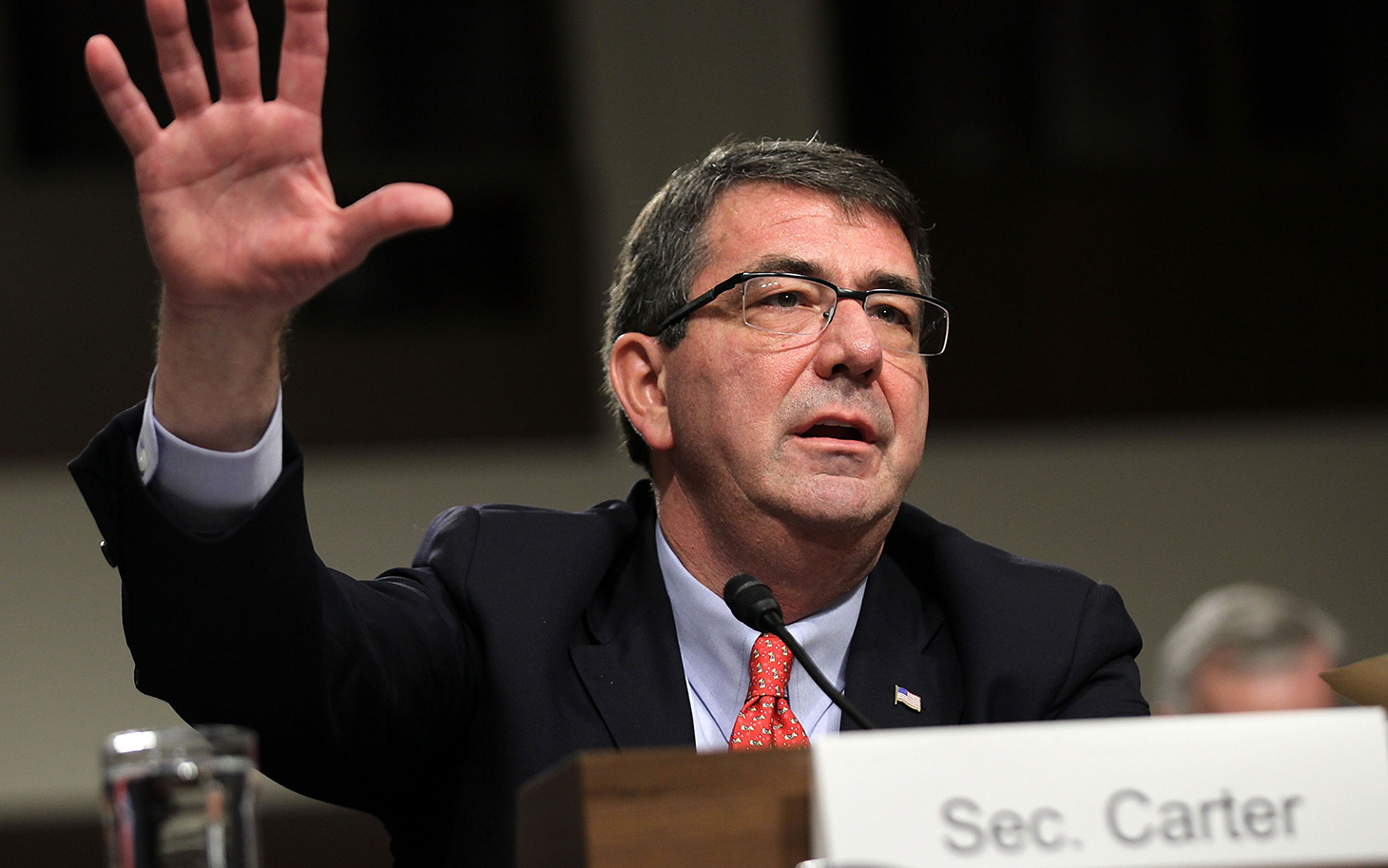
The juxtaposition of two stories in my NY Times military “feed” got me to thinking this morning. The first story involves Ashton Carter, President Obama’s nominee to replace Chuck Hagel as America’s new Secretary of Defense. Carter, the article suggests, is a “centrist who may advocate a stronger use of American power.” The second article updates American casualties in Afghanistan, noting that the Department of Defense (DoD) has identified 2,340 American troops who have died in the Afghan War and related operations. Died for what was left unspecified. A resurgent Taliban? Record-setting opium production in Afghanistan? An Afghan governmental power-sharing agreement that is actually contrary to its official constitution?
In U.S. governmental circles today, you’re “serious” if you favor military aggression and interventionism overseas; you’re hopelessly idealistic if you favor non-intervention and strategic retrenchment.
This is apparently why Chuck Hagel was ash-canned. A Vietnam War veteran, Hagel was skeptical about continued U.S. military interventionism in Afghanistan, Iraq, and elsewhere. Hagel knew from experience that Vietnam — a supposedly necessary war to combat communism — was actually a sucking chest wound that rapidly debilitated the U.S. military even as it deeply divided the country. Such hard-won experience is in short supply in Washington today, which is why it’s sad to see Hagel being booted out of the corridors of power.
His replacement, Carter, is a technocrat who lacks military experience. His main experience is as a weapons buyer for the DoD. His confirmation hearings should be friendly, unlike those of Hagel, who’d been impolite to question the Iraq War, the success of the Petraeus Surge, as well as Israeli governmental actions.
Back to those casualty figures. It was only after Vietnam became a sucking chest wound that the U.S. finally cut its losses and pulled out. The problem with the latest wars is that they are not a sucking chest wound; they are more like slow internal bleeding. The pain threshold seems tolerable to bloodless government bureaucrats, but of course it isn’t, especially to those families who’ve lost loved ones in these never-ending wars of choice.
At Ashton Carter’s confirmation hearings, the first questions should be: What is your plan to end America’s wars in the Middle East and Asia? And how many more young American troops have to die before your plan to end these interventionist and unnecessary wars comes to fruition?
Something tells me these questions won’t only go unanswered: they won’t even be asked.
Update (12/7/14): Upon being introduced by President Obama, Ash Carter praised the U.S. military as “the greatest fighting force the world has ever known.” Such hyperbolic praise of the U.S. military is standard today. Consider these words of Obama on 8/7/2013 that the U.S. military is “the best-led, best-trained, best-equipped military in human history.” Instead of exaggerated praise, what the U.S. military needs today is forceful leadership by civilians who are not content to look in a mirror that reflects a narcissistic opinion that the U.S. has the fairest military of them all.
Some might claim that such praise, even if unmerited, is harmless. Such is not the case. For how can you exercise firm oversight over a powerful and sprawling bureaucracy when you praise it as being the best in human history? Such praise is not only exaggerated — it’s counterproductive. More than that: it’s unhinged.
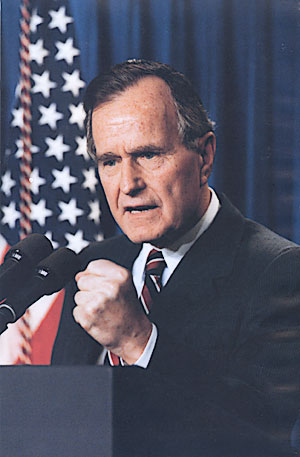
President George H.W. Bush, fist clenched, ready to smack down the Vietnam Syndrome
W.J. Astore
The Vietnam Syndrome refers to an alleged reluctance on the part of the United States to use military force after the disaster of the Vietnam War. In a recent article, Tom Engelhardt reminds us that President George H.W. Bush referred to the success of Desert Shield/Storm in 1990-91 (which evicted Iraq from Kuwait) as helping America to overcome its reluctance to fight wars (a laudable achievement, right?). In Bush’s words:
“It’s a proud day for America. And, by God, we’ve kicked the Vietnam syndrome once and for all.”
Indeed, let’s give thanks to God for overcoming our reluctance to engage in wars of choice thousands of miles from American shores. Wars that debilitate the U.S. even as they spread destruction among the peoples of foreign lands.
Let’s return to President Bush’s phrase and deconstruct it. “It’s a proud day for America.” Proud because the U.S. military, aided by coalition forces, defeated an Iraqi opponent that possessed a third-class military? To use a sports analogy, would the New England Patriots football team be “proud” of defeating a Division III college football team? “By God.” Does God really march solely with American troops? Did America win because its god is bigger than the Iraqi “idol” god, as Christian soldiers like General William Boykin have suggested in the past? “Kicked the Vietnam syndrome once and for all.” So it’s a good thing America has “kicked” its reluctance to engage in costly wars of intervention, not only in the immediate aftermath of Desert Storm, but for “all” time?
Following the example set by Engelhardt in his article, let’s play a game of role reversal here, and imagine Bush’s quotation coming from the mouths of others:
“It’s a proud day for Germany. And, by God, we’ve kicked the Hitler/Nazi syndrome once and for all.” Said by a newly unified Germany after invading Poland in 1991 to reclaim territory ceded in the aftermath of World War II.
“It’s a proud day for Russia. And, by God, we’ve kicked the Afghan War syndrome once and for all.” Said by Vladimir Putin after Russia’s invasion and conquest of Ukraine.
Now, imagine how U.S. leaders would respond to such statements. Would they not be denounced as bombastic? Propagandistic? Delusionary?
One might argue that Desert Storm was an international “police action” in response to Iraqi aggression. OK. How about America’s ongoing war in Afghanistan? The invasion of Iraq in 2003? The destabilization of Libya? An open-ended, and apparently never-ending, “global” war on terror?
The real “Vietnam Syndrome” was not a reluctance by the U.S. to use military force in the aftermath of that war. It was a reluctance to face the legacies and lessons of that war, a failure truly to learn from its violent excesses, a failure to say “no, never again” and to mean it.
By continuing to wage unwinnable wars in regions of marginal interest to the American people, the country is slowly succumbing to this syndrome. The cure is simple: put an end to these wars. Only then can an American president truly speak of taking pride in kicking the Vietnam syndrome once and for all.
In April 2009, I wrote an article for TomDispatch.com recounting Mary McCarthy’s critique of the American experience in Vietnam, and how her lessons applied to President Obama’s “surge” in Afghanistan. A central lesson cited by McCarthy was the American desire never to be labeled a loser. That desire explains, at least in part, the persistence of folly within the Obama Administration today, as Peter Van Buren explains in his latest article for TomDispatch, “Apocalypse Now, Iraq Edition: Fighting in Iraq Until Hell Freezes Over.”
Here’s what McCarthy had to say in 1968 about the American moment and the Vietnam War:
The American so-called free-enterprise system, highly competitive, investment-conscious, expansionist, repels a loser policy by instinctive defense movements centering in the ganglia of the presidency. No matter what direction the incumbent, as candidate, was pointing in, he slowly pivots once he assumes office.
Obama campaigned in 2008 as a “hope” and “change” candidate who as president would end the war in Iraq (so he could prosecute the “better” war in Afghanistan). Yet the U.S. finds itself yet again bombing widely in Iraq (and now Syria) while deploying thousands of military “advisers” (combat troops in plain speak). And after six weeks of airstrikes in Iraq against ISIS, with indecisive results, how long before those U.S. “advisers” start taking the fight directly to the enemy on the ground?
The questions I posed for President Obama back in 2009 were these:
Have you, like Vietnam-era presidents, pivoted toward yet another surge simply to avoid the label of “loser” in Afghanistan? And if the cost of victory (however defined) is hundreds, or even thousands, more American military casualties, hundreds of billions of additional dollars spent, and extensive collateral damage and blowback, will this “victory” not be a pyrrhic one, achieved at a price so dear as to be indistinguishable from defeat?
Similar questions apply to our latest military operations in Iraq and Syria. Is the U.S. surging militarily just to avoid the label of “loser”? And even if the U.S. “wins” this latest round (whatever “win” means), won’t the price paid be indistinguishable from defeat?
In his article, Van Buren offers an excellent summary of the U.S. experience in Iraq since the overthrow of Saddam in 2003. In his words:
The staggering costs of all this — $25 billion to train the Iraqi Army, $60 billion for the reconstruction-that-wasn’t, $2 trillion for the overall war, almost 4,500 Americans dead and more than 32,000 wounded, and an Iraqi death toll of more than190,000 (though some estimates go as high as a million) — can now be measured against the results. The nine-year attempt to create an American client state in Iraq failed, tragically and completely. The proof of that is on today’s front pages.
According to the crudest possible calculation, we spent blood and got no oil. Instead, America’s war of terror resulted in the dissolution of a Middle Eastern post-Cold War stasis that, curiously enough, had been held together by Iraq’s previous autocratic ruler Saddam Hussein. We released a hornet’s nest of Islamic fervor, sectarianism, fundamentalism, and pan-nationalism. Islamic terror groups grew stronger and more diffuse by the year. That horrible lightning over the Middle East that’s left American foreign policy in such an ugly glare will last into our grandchildren’s days. There should have been so many futures. Now, there will be so few as the dead accumulate in the ruins of our hubris. That is all that we won.
Under a new president, elected in 2008 in part on his promise to end American military involvement in Iraq, Washington’s strategy morphed into the more media-palatable mantra of “no boots on the ground.” Instead, backed by aggressive intel and the “surgical” application of drone strikes and other kinds of air power, U.S. covert ops were to link up with the “moderate” elements in Islamic governments or among the rebels opposing them — depending on whether Washington was opting to support a thug government or thug fighters.
The results? Chaos in Libya, highlighted by the flow of advanced weaponry from the arsenals of the dead autocrat Muammar Gaddafi across the Middle East and significant parts of Africa, chaos in Yemen, chaos in Syria, chaos in Somalia, chaos in Kenya, chaos in South Sudan, and, of course, chaos in Iraq.
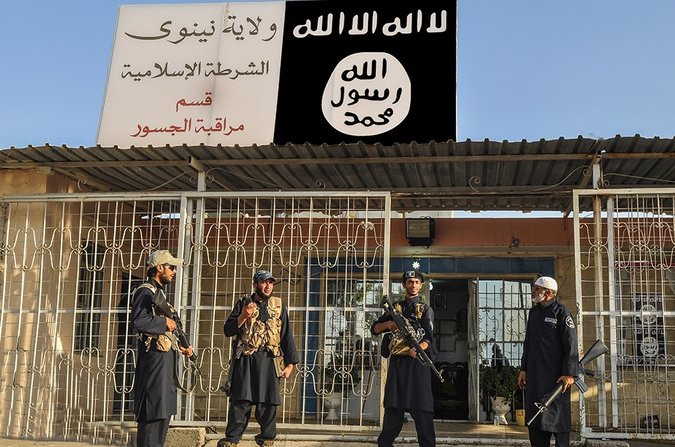
And then came the Islamic State (IS) and the new “caliphate,” the child born of a neglectful occupation and an autocratic Shia government out to put the Sunnis in their place once and for all. And suddenly we were heading back into Iraq. What, in August 2014, was initially promoted as a limited humanitarian effort to save the Yazidis, a small religious sect that no one in Washington or anywhere else in this country had previously heard of, quickly morphed into those 1,600 American troops back on the ground in Iraq and American planes in the skies from Kurdistan in the north to south of Baghdad. The Yazidis were either abandoned, or saved, or just not needed anymore. Who knows and who, by then, cared? They had, after all, served their purpose handsomely as the casus belli of this war. Their agony at least had a horrific reality, unlike the supposed attack in the Gulf of Tonkin that propelled a widening war in Vietnam in 1964 or the nonexistent Iraqi WMDs that were the excuse for the invasion of 2003.
And this is how Van Buren concludes his article:
We’ve been here before, as the failures of American policy and strategy in Vietnam metastasized into war in Cambodia and Laos to deny sanctuary to North Vietnamese forces. As with ISIS, we were told that they were barbarians who sought to impose an evil philosophy across an entire region. They, too, famously needed to be fought “over there” to prevent them from attacking us here. We didn’t say “the Homeland” back then, but you get the picture.
As the similarities with Vietnam are telling, so is the difference. When the reality of America’s failure in Vietnam finally became so clear that there was no one left to lie to, America’s war there ended and the troops came home. They never went back. America is now fighting the Iraq War for the third time, somehow madly expecting different results, while guaranteeing only failure. To paraphrase a young John Kerry, himself back from Vietnam, who’ll be the last to die for that endless mistake? It seems as if it will be many years before we know.
That is indeed the question. As Mary McCarthy noted about the Vietnam War, “The more troops and matériel committed to Vietnam, the more retreat appears to be cut off — not by an enemy, but by our own numbers. To call for withdrawal in the face of that commitment… is to seem to argue not against a policy, but against facts, which by their very nature are unanswerable.”
Back to 2014 and the present moment: The more troops committed against ISIS, the more bombing raids made, the more money spent, the more prestige put on the line, the fewer the options the United States has in the Middle East. Indeed, the only option that remains is “to win,” since losing is unacceptable for the reason Mary McCarthy indicated.
But as Michael Murry, a Vietnam Veteran and regular contributor to this site, noted about Vietnam (citing Bernard Fall’s classic book, Street Without Joy), “You can’t do a wrong thing the right way,” and “We lose the day we start (these stupid imperial wars) and we win the day we stop.” Put differently, just as with Vietnam, the Middle East is not an incredibly complex puzzle for us to solve; it’s simply an impossible situation. Impossible for us. Until we admit this, the U.S. can never “win”; it can only lose.
The U.S. finally “won” in Vietnam when we admitted defeat and left. How long before we come to this realization in the Middle East? Tragically, the persistence of American hubris, amplified by resistance to the very idea of being labeled a “loser,” suggests yet another long, bloody, learning curve.
In April of 2009, I wrote the following article for TomDispatch.com on the situation in Afghanistan. During his 2008 campaign for President, Obama had claimed that Afghanistan was the right war to be fighting, and that Bush and Company had taken their eye off the Afghan ball when they chose to invade Iraq in 2003.
Here we are in August 2014 and the news from Afghanistan is about as grim as one could expect. This week has witnessed costly “insider” attacks that killed an American major general as well as eleven Afghan police officers. Progress toward democratic reforms and political stability remains elusive. U.S. efforts to reshape and rebuild Afghanistan have cost more than $100 billion, exceeding the Marshall Plan that rebuilt Europe after World War II, but without corresponding results.
Obama appears to be channeling Richard Nixon. Publicly, he’s seeking “peace with honor” in Afghanistan. Privately, he’s seeking a “decent interval” between when the U.S. exits Afghanistan for good and when Afghanistan returns to Taliban and tribal control, i.e. chaos, or at least that’s my guess. The “fall” of Afghanistan will then become a political football, with Republicans attempting to paint Democrats as being spineless in leaving Afghanistan, whereas the Democrats will likely paint Afghan leaders as corrupt and incompetent and ungrateful. Perhaps a Democratic candidate will emerge in 2020 to explain to Americans that our failed efforts in Afghanistan were nevertheless part of a “noble cause” in the global war on terror.
What follows is my article from April of 2009. I think lesson (2) below will be especially telling in the weeks and months ahead.
Mary McCarthy in Vietnam, Barack Obama in Afghanistan
Seven Lessons and Many Questions for the President
By William Astore
In 1967, outraged by the course of the Vietnam War, as well as her country’s role in prolonging and worsening it, Mary McCarthy, novelist, memoirist, and author of the bestseller The Group, went to Saigon, then the capital of South Vietnam, to judge the situation for herself. The next year, she went to the North Vietnamese capital, Hanoi. She wrote accounts of both journeys, published originally in pamphlet format as Vietnam (1967) and Hanoi (1968), and later gathered with her other writings on Vietnam as a book, The Seventeenth Degree (1974). As pamphlets, McCarthy’s accounts sold poorly and passed into obscurity; deservedly so, some would say.
Those who’d say this, however, would be wrong. McCarthy brought a novelist’s keen eye to America’s activities and its rhetoric in Vietnam. By no means a military expert, not even an expert on Vietnam — she only made a conscious decision to study the war in Vietnam after she returned from her trip to Saigon — her impressionistic writings were nevertheless insightful precisely because she had long been a critical thinker beholden to no authority.
Her insights into our approach to war-fighting and to foreign cultures are as telling today as they were 40 years ago, so much so that President Obama and his advisors might do well to add her unconventional lessons to their all-too-conventional thinking on our spreading war in Afghanistan and Pakistan.
What were those lessons? Here are seven of them, each followed by questions that, four decades later, someone at President Obama’s next press conference should consider asking him:
1. McCarthy’s most fundamental objection was to the way, in Vietnam, the U.S. government decided to apply “technology and a superior power to a political situation that will not yield to this.” At the very least, the United States was guilty of folly, but McCarthy went further. She condemned our technocentric and hegemonic form of warfare as “wicked” because of its “absolute indifference to the cost in human lives” to the Vietnamese people.
Even in 1967, the widespread, at times indiscriminate, nature of American killing was well known. For example, U.S. planes dropped roughly 7 million tons of bombs on Vietnam and parts of Laos and Cambodia during the war, nearly five times the tonnage used against Germany during World War II. The U.S. even waged war on the Vietnamese jungle and forest, which so effectively hid Vietnamese guerrilla forces, spraying roughly 20 million gallons of toxic herbicides (including the dioxin-contaminated Agent Orange) on it.
In her outrage, McCarthy dared to compare the seeming indifference of many of her fellow citizens toward the blunt-edged sword of technological destruction we had loosed on Vietnam to the moral obtuseness of ordinary Germans under Adolf Hitler.
Questions for President Obama: Aren’t we once again relying on the destructive power of technology to “solve” complex political and religious struggles? Aren’t we yet again showing indifference to the human costs of war, especially when borne by non-Americans? Even though we’re using far fewer bombs in the Af-Pak highlands than we did in Vietnam, aren’t we still morally culpable when these “precision-guided munitions” miss their targets and instead claim innocents, or hit suspected “terrorists” who suddenly morph into wedding parties? In those cases, do we not seek false comfort in the phrase, C’est la guerre, or at least that modern equivalent: unavoidable collateral damage?
2. As Richard Nixon campaigned for the presidency in 1968 by calling for “peace with honor” in Vietnam, McCarthy offered her own warning about the dangers that arose when the office of the presidency collided with an American desire never to be labeled a loser: “The American so-called free-enterprise system, highly competitive, investment-conscious, expansionist, repels a loser policy by instinctive defense movements centering in the ganglia of the presidency. No matter what direction the incumbent, as candidate, was pointing in, he slowly pivots once he assumes office.”
Questions for President Obama: Have you, like Vietnam-era presidents, pivoted toward yet another surge simply to avoid the label of “loser” in Afghanistan? And if the cost of victory (however defined) is hundreds, or even thousands, more American military casualties, hundreds of billions of additional dollars spent, and extensive collateral damage and blowback, will this “victory” not be a pyrrhic one, achieved at a price so dear as to be indistinguishable from defeat?
3. Though critical of the U.S. military in Vietnam, McCarthy was even more critical of American civilian officials there. “On the whole,” she wrote, they “behaved like a team of promoters with a dubious ‘growth’ stock they were brokering.” At least military men were often more forthright than the civilians, if not necessarily more self-aware, McCarthy noted, because they were part of the war — the product, so to speak — not its salesmen.
Questions for President Obama: In promising to send a new “surge” of State Department personnel and other civilians into Afghanistan, are you prepared as well to parse their words? Are you braced in case they sell you a false bill of goods, even if the sellers themselves, in their eagerness to speak fairy tales to power, continually ignore the Fantasyland nature of their tale?
4.Well before Bush administration officials boasted about creating their own reality and new “facts on the ground” in Iraq, Mary McCarthy recognized the danger of another type of “fact”: “The more troops and matériel committed to Vietnam, the more retreat appears to be cut off — not by an enemy, but by our own numbers. To call for withdrawal in the face of that commitment… is to seem to argue not against a policy, but against facts, which by their very nature are unanswerable.”
Questions for President Obama: If your surge in Afghanistan fails, will you be able to de-escalate as quickly as you escalated? Or will the fact that you’ve put more troops in harm’s way (with all their equipment and all the money that will go into new base and airfield and road construction), and committed more of your prestige to prevailing, make it even harder to consider leaving?
5.A cursory reading of The Pentagon Papers, the famously secret government documents on Vietnam leaked to the New York Times by Daniel Ellsberg, reveals how skeptical America’s top officials were, early on, in pursuing a military solution to the situation in South Vietnam. Nevertheless, knowing better, the “best and brightest,” as journalist David Halberstam termed them in his famous, ironic book title, still talked themselves into it; and they did so, as McCarthy noted, because they set seemingly meaningful goals (“metrics” or “benchmarks,” we’d say today), which they then convinced themselves they were actually achieving. When you trick yourself into believing that you’re meeting your goals, as Halberstam noted, there’s no reason to reexamine your course of action.
Questions for President Obama: Much has been written about an internal struggle within your administration over the wisdom of surging in Afghanistan. Now, you, too, have called for the setting of “benchmarks” for your new strategy’s success. Are you wise enough to set them to capture the complexities of political realities on the ground rather than playing to American strengths? Are you capable of re-examining them, even when your advisors assure you that they are being achieved?
6.In her day, Mary McCarthy recognized the inequities of burden-sharing at home when it came to the war in Vietnam: “Casualty figures, still low [in 1967], seldom strike home outside rural and low-income groups — the silent part of society. The absence of sacrifices [among the privileged classes] has had its effect on the opposition [to the war], which feels no need, on the whole, to turn away from its habitual standards and practices — what for? We have not withdrawn our sympathy from American power and from the way of life that is tied to it — a connection that is more evident to a low-grade G.I. in Vietnam than to most American intellectuals.”
Questions for President Obama: Are you willing to listen to the common G.I. as well as to the generals who have your ear? Are you willing to insist on greater equity in burden-sharing, since once again most of the burden of Iraq and Afghanistan has fallen on “the silent part of society”? Are you able to recognize that the “best and brightest” in the corridors of power may not be the wisest exactly because they have so little to lose (and perhaps much to gain) from our “overseas contingency operations”?
7.McCarthy was remarkably perceptive when it came to the seductiveness of American technological prowess. Our technological superiority, she wrote, was a large part of “our willingness to get into Vietnam and stay there… The technological gap between us and the North Vietnamese constituted, we thought, an advantage which obliged us not to quit.”
Questions for President Obama: Rather than providing us with a war-winning edge, might our robot drones, satellite imagery, and all our other gadgetry of war seduce us into believing that we can “prevail” at a reasonable and sustainable cost? Indeed, do we think we should prevail precisely because our high-tech military brags of “full spectrum dominance”?
One bonus lesson from Mary McCarthy before we take our leave of her: Even now, we speak too often of “Bush’s war” or, more recently, “Obama’s war.” Before we start chattering mindlessly about Iraq and Afghanistan as American tragedies, we would do well to recall what McCarthy had to say about the war in Vietnam: “There is something distasteful,” she wrote, “in the very notion of approaching [Vietnam] as an American tragedy, whose protagonist is a great suffering Texan [President Lyndon Baines Johnson].”
Yes, there is something distasteful about a media that blithely refers to Bush’s or Obama’s war as hundreds of thousands of Iraqis and Afghans suffer. For American troops, after all, are not the only ones paying the ultimate price when the U.S. fights foreign wars for ill-considered reasons and misguided goals.
Eleven years after my freshman essay on the Vietnam War in 1982, I found myself at Oxford in a Strategic Studies Seminar. For that seminar, I wrote the following paper on People’s War and Vietnam. Based on deeper reading and more reflection than my freshman essay, I concluded that the Vietnam War had been unwinnable for the United States. Note that this paper was written soon after the apparently decisive victory of the U.S. military over Iraq in Desert Storm. This victory had supposedly cured the U.S. military of its Vietnam Syndrome, a claim which I doubted at that time. Again, I have decided not to edit what I wrote in early 1993 about Vietnam. This paper is what one young Air Force captain thought about the meaning and legacies of the Vietnam War in the early 1990s, with all the biases of a serving military officer intact.
Insurgencies and America’s Defeat in Vietnam (Written in January 1993)
A revolutionary war is a war within a state; the ultimate aim of the insurgents is political control of the state. Nowhere is Clausewitz’s dictum of war as a continuation of politics more true than in a revolutionary war. It typically takes the form of a protracted struggle, conducted patiently and inexorably, a variant of Chinese water torture. Educating or, more accurately, indoctrinating, the people – gaining their sympathy, cooperation, and assistance – is paramount. And all people have a role to play: men and women, young and old. After World War II, insurgencies have been guided by Mao Zedong’s concept of People’s War, and inspired by a complex combination of nationalism, anti-colonialism, and communism. They have bedeviled France, Great Britain, and the United States. This paper addresses the strategy of People’s War in terms of means, ends, and will, and details some of the reasons why the United States lost the Vietnam War.
The strategic end of People’s War is simple in its boldness: the overthrow of the existing government and its replacement with an insurgent-led government. The means are incredibly complex, encompassing social, economic, psychological, military, and political dimensions, but it must be remembered that all means are directed towards the political end. Strength of will usually favors the insurgents, partly because a major goal of People’s War is to mold the minds of its followers to convince them of the righteousness of their cause.
People’s War passes through three stages. At first the insurgents get to know the people as they spread propaganda and build a political infrastructure. Every insurgent is an ambassador for the cause. They create safe havens while intimidating opponents and neutrals, and they commit terrorist acts to undermine the legitimacy of the government. They build their safe havens on the periphery of the state, usually in rural or impoverished areas where they can feed on the misery of the people. The more difficult the terrain, the better, whether it be the mountains of Spain and Afghanistan or the jungles of Malaya and Vietnam. They extend their control over the countryside and into the urban areas during the second stage of People’s War. They use guerrilla tactics and terrorism to further undermine the political legitimacy of the government. The main target is not the government’s troops but the will of its leaders. As they extend their physical control over the countryside, they install their own political structure to control the people. With the government’s will fatally weakened, the insurgents move to the final stage: a conventional military offensive to overthrow the government.
The three stages are not rigidly sequential, however. For example, while conducting guerrilla operations against the government, the insurgents continue to build their infrastructure, conduct terrorist acts, and spread propaganda. Even during the last stage — the general offensive — the insurgents continue stages one and two. This aspect of People’s War was well expressed by John M. Gates in the Journal of Military History in July 1990:
American conventional war doctrine does not anticipate reliance upon population within the enemy’s territory for logistical and combat support. It does not rely upon guerrilla units to fix the enemy, establish clear lines of communication, and maintain security in the rear. And it certainly does not expect enemy morale to be undermined by political cadres within the very heart of the enemy’s territory, cadres who will assume positions of political power as the offensive progresses. Yet all of these things happened in South Vietnam in 1975….
Flexibility, judgement, and comprehensiveness of methods are the keys to success. If the insurgents overestimate the weakness of the government and lose large-scale battles, they slip back into the earlier two phases and continue to work towards weakening the government for the next general offensive.
It bears repeating the primary goal of insurgents is political control. Military actions are only one tool for obtaining this control. As Mao cautions, guerrilla operations are just “one aspect of the revolutionary struggle.” The insurgent appeals to the hearts and minds of the people. He is, after all, one of them. Too much can be made of Mao’s “fish and sea” analogy. The insurgent is not just a fish that swims in the sea of the people: his purpose is to convert the sea to his purpose. He employs any method to command the sea to his will. He would prefer ideological converts, true believers, but converts through terror are acceptable. Those who can’t be converted he ruthlessly kills. That his methods produce squeamishness among some in the West only accentuates their value to him.
As a strategy, People’s War is difficult but not impossible to counter. The United States defeated the Philippine insurrection in the first two decades of this century, and after World War II Great Britain put down a communist insurgency in Malaya. More famous, however, have been the stunning successes of People’s War: Mao’s victory over Japan and the Nationalists in the 1930s and ’40s, and Ho Chi Minh’s victories over France and the United States in the 1950s, ’60s, and ’70s. Perhaps most unsettling was America’s defeat in Vietnam. How could the world’s foremost superpower lose to, in the words of General Richard G. Stilwell in 1980, a “fourth-rate half-country?”
There are no simple answers to America’s defeat, although Hollywood tells us otherwise. A theory still believed by some in the US military is a variation of the German “stab-in-the-back” legend of the Great War. Our hands were tied by meddling civilians who didn’t let the military fight and win the war. One American soldier is the equal of hundreds of pajama-clad midgets, or so it appears in the Rambo flicks. A wretched, dishonorable government also abandoned our POWs to the godless communists, now rescued several times over by Stallone, Chuck Norris, and other martial arts experts. That such films make money is an affront to the genuine sacrifices of Americans represented so tragically by the Vietnam War memorial in Washington.
Perhaps such sentiments seem out of place in a paper devoted to a dispassionate strategic analysis of America’s role in Vietnam. Yet my feelings are perhaps typical of the emotionalism that still surrounds this topic among Americans. A dispassionate critique from an American, let alone an American service member, may still be impossible; nevertheless, I’ll give it a shot.
The United States lost the war for several related reasons. First, we fought the wrong kind of war. As the Navy and especially the Air Force built up their nuclear forces, the army chaffed against its “New Look” and diminished role in the 1950s. Under Kennedy and Johnson, the Army had a new doctrine – Flexible Response – and an opportunity – the Vietnam War – to prove its worth. Vietnam was to be the proving ground for a revitalized Army.
The opposite proved to be the case because the Army pursued the wrong strategy. From 1965-68, when we sent more than half a million troops to Vietnam, the US Army tried to fight a conventional war against the Viet Cong (VC) and North Vietnamese Army (NVA). As LTG Harry Kinnard, commander of the Army’s elite 1st Cavalry Division (Airmobile), put it, “I wanted to make them fight our kind of war. I wanted to turn it into a conventional war – boundaries – and here we go, and what are you going to do to stop us?” Obeying Mao’s teachings, the VC and NVA wisely avoided stand up fights. The Army responded with search-and-destroy operations to find, fix and kill the enemy. The goal was attrition through decisive battles, reflected by high body counts. Nothing illustrates the bankruptcy of American strategy better than the idea of body counts. In theory, a high body count means you’re killing the fish in the sea, without hurting the sea. In practice, a high body count is a measure of the success of the insurgents: they’re recruiting many fish to their cause. And in killing the fish, Americans poisoned the sea with defoliants, bomb craters, unexploded artillery shells, the list goes on. Americans were stuck in Catch-22 dilemmas: they had to destroy villages to save them, they had to destroy villagers’ crops while pursuing guerrilla bands. Such an approach flies in the face of Mao’s “Three Rules and Eight Remarks,” which exhibit a profound respect for the people and their property.
After killing, or perhaps more often not killing, the guerrillas, the Army left, and the guerrillas regained control of the area. This did not disturb LTG Stanley Larson, who observed that if guerrillas returned, “we’ll go back in and kill more of the sons of bitches.” But the VC and NVA retained the initiative, had plenty of manpower, and time was on their side.
Why did the Army pursue such a faulty strategy? In part due to the legacy of World War II, particularly American experience in the Pacific. In island-hopping to Japan, Americans gained faith in massive firepower and lost interest in controlling land. The islands were a means to an end, not the end itself, and success could be measured in some sense by the number of Japanese casualties. Such was not the case in Vietnam, where control of the land was essential to winning the support of the people. Part of the Army’s problem was its lack of experience in counterinsurgency (or COIN) operations. Ronald Spector reports that in the 1950s, COIN operations were limited to four hours in most infantry training courses. What little was taught focused on preventing a conventional enemy from holding raids or infiltrating rear areas. But in the end, the Army fought the war it was trained to fight: a conventional war of maneuver and massive firepower. This worked well in Desert Storm, but failed in Vietnam.
In contrast to the Army, the Marines were far more aware of the nature of the war they were fighting, reports Andrew Krepinevich. They combined 15 marines and 34 Popular Force territorial troops (who lived in and provided security for a village or hamlet) into combat action platoons (CAPs). These CAPs sought to destroy insurgent infrastructure, protect the people and the government infrastructure, organize local intelligence networks, and train local paramilitary troops. In other words, they adopted traditional COIN tactics. But the Army ran the show in Vietnam, and its leaders rejected the Marines’ approach.
The Marines were not alone in their appreciation of the multidimensional aspects of COIN. Robert Komer’s Phoenix program also targeted the Viet Cong infrastructure, but the efforts of the CIA were not well coordinated with those of the military or the State Department, let alone the South Vietnamese. In fact Westmoreland refused to create a combined command to coordinate American actions with those of the South Vietnamese. The latter were an especially neglected resource.
Admittedly, the Army of the Republic of Vietnam (ARVN) was corrupt and at times incompetent, but part of the problem was caused by American mistraining and the Army’s contempt. In the 1950s, American military advisors trained ARVN to repel a conventional invasion from the north, using North Korea as a model. From 1965-68, the US Army gave ARVN the static security mission, judged to be of low importance by the Army. US advisors assigned to help ARVN recognized their careers were endangered: they would advance far quicker if they had “true” combat assignments. After years of neglect, ARVN was built up with billions of US dollars during Nixon’s Vietnamization policy (and that’s exactly what it was – a policy, not a strategy), but by 1969 the rot had gone too far. ARVN lacked a unifying national spirit, VC agents had penetrated the ranks, and the officers were thoroughly politicized. Our ally always thought we’d be there if they ran into trouble, but they didn’t understand how American government worked. As Ambassador Bui Diem explained in 1990, “Our faith in America was total, and our ignorance was equally total.” South Vietnam paid the price in 1975.
Could the United States have won the Vietnam War if we had followed a proper strategy? This question may be unanswerable and ultimately moot, but it’s worth discussing. First, one must admit the war may not have been worth winning. Hannah Arendt has stated the Vietnam War was a case of excess means applied for minor aims in a region of marginal interest. In retrospect this seems irrefutable, but in the climate of the Cold War and Containment Vietnam seemed a critical theater in which communist aggression had to be stopped. Second, one must admit the United States was not protecting a viable government in South Vietnam: we were trying to create one. But we were creating one in our image. We ignored the Vietnamese culture and destroyed their economy with our hard currency. Rear area troops with money to spend spread prostitution and drugs in the streets of Saigon. In short, we alienated the people instead of winning them over to our cause. The few people we did win over were terrorized and often killed by the Viet Cong. Even following a proper COIN strategy, victory would have taken 5-10 more years at least. With weak support from the American people, (the “Silent Majority” was silent due to its ignorance and ambivalence), which waned dramatically after Tet, we never had a chance in Vietnam.
The one strategy that would have succeeded for the United States, I believe, is Mao’s People’s War. We must not deceive ourselves: if free elections had been held as promised in 1956, Ho Chi Minh would have won and unified the country. His was the legitimate government; we were trying to overthrow that government and replace it with almost any non-communist regime. In that effort, we should have formed an alliance of military, state department, intelligence, and academic resources to educate Americans in Vietnamese language and culture. These experts, with a suitable, politically-indoctrinated military force to protect them, would win the hearts of the people. Our main weapons would be our ideas and the ideological fervor of our troops, whether civilian or military. Diplomacy and military strikes would be used to cut-off the flow of arms to the VC and NVA from the Soviet Union. The political infrastructure of the enemy would be targeted, including Ho Chi Minh himself.
But this is ridiculous. Our very arrogance blinded us to the war’s complexities. We attacked the symptoms of the disease – the guerrillas and NVA -without examining what caused the disease in the body politic. Our can-do attitude was reinforced by our military traditions and our pride in our nation as being more moral than the rest of the world. We became our own worst enemy as we tried to manage the war. The commitment was there (at least among the soldiers), the energy was there, the money was there, the technology was there -the strategy, intelligence, and leadership wasn’t. People’s War proved superior to search-and-destroy, the VC and NVA intelligence proved superior to ARVN and ignorant Americans, the brilliant Giap out-thought the dedicated but shortsighted Westmoreland. The Vietnam War was ultimately unwinnable.
In the aftermath of the American-led victory over Iraq in Desert Storm, many Americans predicted the stigma of our defeat in Vietnam had finally been exorcised from our minds. Such was not the case, nor is such a result even desirable. The “dreaded V-word,” as the London Times recently described it, is being whispered again in the endless corridors of the Pentagon. If this breeds an aversion to the use of military force, harm may result; but if it leads to more thought and a more subtle study of the efficacy of military force as applied under different conditions, the dreaded V-word will have served a useful purpose, and those names engraved on the Wall in Washington will not have died in vain.
Much like my father, I can be a pack rat. Going through old files, I found a “blue book” exam that I took as a college freshman in 1982. The essay question I had to answer was whether the U.S. could have won the Vietnam War. Recall that in 1975, South Vietnam had fallen to the communist North Vietnamese invaders, with U.S. diplomats ignominiously escaping by helicopter from the roof of our embassy in Saigon. In the 1980 Presidential Election, Ronald Reagan defeated Jimmy Carter, with Reagan declaring that the unpopular Vietnam War had been “a noble cause.”
I have not edited my answer (except for a few additions, in brackets, for clarity), which follows below. This is what one U.S. college freshman thought about Vietnam and the U.S. involvement in that war seven years after the defeat in 1975. (You can’t even call it sophomoric, since I was only a freshman.) I think my answer reflects a certain naivete as well as can-do optimism: That we were fighting for the right reasons but in the wrong way, and if we had followed a better strategy, and bossed around the South Vietnamese more, we could have, in some sense, “won.”
Today, I don’t believe the Vietnam War was winnable, and I lament the enormous amount of destruction we visited on the Vietnamese and their country, which I’ve written about in other articles, here and here for example.
Update (8/27/2014): Having watched the recent HBO documentary Nixon by Nixon: In His Own Words, it’s now glaringly obvious that the Vietnam War was unwinnable. Indeed, that’s precisely what Nixon and Kissinger (secretly) concluded. As they talked publicly about “peace with honor,” Nixon and Kissinger were privately conceding that the war was lost. They were looking only to deflect blame from themselves, for “a decent interval” between when US troops withdrew and when South Vietnam collapsed, which is exactly what they got — roughly three years, by which time Nixon had resigned in disgrace due to Watergate. Nixon and Kissinger also cast about for scapegoats; at the time, they planned to blame the inevitable defeat on the corruption of South Vietnamese leaders.
Why did the U.S. lose in Vietnam? A big reason, I think, is the dishonesty of our own government in consistently misleading the American people about the war and the region as well. This dishonesty started just after World War II and extended to LBJ and Nixon as revealed in “The Pentagon Papers.” In other words, Nixon’s “silent majority” wasn’t silent because it supported his policies. It was silent because it had been lied to by Nixon and his predecessors. If the U.S. government had had the guts to level with the American people, the worst of the war may have been averted. Even Watergate would have been averted, since you can draw a clear line from Daniel Ellsberg and “The Pentagon Papers” to attempts to “get” Ellsberg to the “dirty tricks” of the Nixon Campaign in 1972 that ended in his resignation. Lies begat crimes that begat more lies that begat more crimes…
[Winning the Vietnam War, as written in March of 1982]
The Vietnam War was a costly struggle involving over 500,000 U.S. troops [at peak deployment strength] and billions of dollars of equipment. The war was attacked both at home and abroad, and when the U.S. finally did pullout in 1972, the South Vietnamese government and the ARVN [Army of the Republic of Vietnam] collapsed in three years. The Vietnam War was a failure of U.S. foreign policy making, but if other alternatives had been pursued, the results would have been much better for the United States.
The U.S. became involved in Vietnam to contain communism, to prevent the takeover of South Vietnam by North Vietnam, and to contain China. Unfortunately, the U.S. underestimated the strength of the North Vietnamese will, and turned a local civil war between two conflicting ideologies into a major conflict. The U.S. believed that South Vietnam was a vital area of American interest, but it really wasn’t.
The South Vietnamese government was politically inefficient and corrupt. Most of the natives did not support the government, which was why the Viet Cong were able to succeed the way they did. U.S. foreign policy concentrated on defeating the Viet Cong and the North Vietnamese Army, not realizing that the reform of the South Vietnamese government and the pacification of the local villagers were of more importance.
What could we have done, then, to “save” South Vietnam from North Vietnam? The answers are not concrete or exact. Most people believe that if the U.S. Army had had fewer restrictions and more men, North Vietnam would have lost. This pedestrian view is wrong for two basic reasons. One is that the U.S. Army fought the wrong type of war. Instead of conducting counterguerrilla activities, the U.S. Army adopted tactics intended for conventional warfare in Europe. The U.S. tried to defeat North Vietnam by sheer firepower, but superior numbers and materiel lose their advantage against a determined guerrilla enemy. Employing hit-and-run tactics, the Viet Cong fought only when they wanted to fight, and on ground of their choosing. Cincinnatus [Cecil B. Currey], in his book Self-Destruction:[The Disintegration and Decay of the United States Army during the Vietnam Era] stated that the U.S. Army could not have won the war because of the way they fought it.
The second reason is that each escalation of American troops in Vietnam could be easily matched by North Vietnam. Each year over 200,000 men [in North Vietnam] became eligible for the draft. When General Westmoreland asked for 200,000+ troops to launch a major counteroffensive after Tet [in early 1968], he was denied them on the grounds that more numbers would have had little or no effect in ending the war.
What can one conclude from this? A definite conclusion is that U.S. tactics were totally unsuited to the type of war fought in Vietnam. This suggests one change in our policy that would have improved the result. If we had pursued a policy of counterguerrilla warfare, and if we had protected the local villagers better, then we could have concentrated on the main problem—reforming the South Vietnamese government and creating an ARVN that didn’t lose every battle they fought.
The Vietnamization policy [under Nixon] was a step in the right direction, but it was implemented haphazardly and inefficiently. U.S. foreign policy should have recognized that the support of the government by the people was of paramount importance, but needed reforms [in South Vietnam] were not carried out and the people became disillusioned and bitter. If the government cannot protect us, the people thought, what good was it? The U.S. should have forced the various South Vietnamese governments to implement reforms, and it also should have pursued a more vigorous pacification program.
The handling of ARVN was also a mistake. ARVN came to rely upon the U.S. Army to great extent, and when the U.S. Army withdrew, the ARVN desertion rate reached an all-time high. The U.S. should have realized that giving the South Vietnamese billions of dollars in equipment and, among other things, the fourth largest air force in the world, was not enough. It did not cure the disease that afflicted ARVN, which was corruption and the lack of experienced officers.
What conclusions can be reached? U.S. foreign policy was definitely flawed, but we could have attained better results if other policies were implemented. A more effective pacification program, combined with counterguerrilla activities and increased defense of local villages, would have eroded the support of the Viet Cong, since a guerrilla war needs the support of the populace to succeed. The most basic flaw in U.S. policy, however, was ignoring the faults and corruption of the South Vietnamese government. Needed reforms of the overbearing totalitarian government would have gained the support of the South Vietnamese people, and this more than any other factor might have changed the results of 1975 and “won” the war for the United States.
Like Gloria Swanson in “Sunset Boulevard,” Our Hubristic Leaders Are Always Ready for their Close-up
W.J. Astore
When Hannah Arendt, the famous German-American political philosopher, criticized American involvement in the Vietnam War, she said that our foreign policy “experts” fell prey to using excessive means to achieve minor aims in a region of marginal interest to the United States. You could say the same of most of America’s foreign interventions since 1945. We are a superpower with a boundless propensity for meddling in world affairs. We waste enormous amounts of money and resources intervening in areas that are of marginal importance to our national security.
There are many reasons for these wasteful interventions, of course. The military-industrial-Congressional complex plays its role. Presidents love to intervene as a sign of “strength.” Natural resources, especially oil, are usually in play. The usual motives, in short: profit, power, greed.
But perhaps the root cause of our mistakes can be traced to hubris, our prideful belief that we can remake other societies and peoples in our image. Our hubris leads us to undervalue legitimate cultural differences, and to underestimate the difficulties involved in bridging those distances. Because we underestimate the difficulties, we rush in with money and troops, only to find that the problems we encounter — and often exacerbate — are not amenable to being solved with money and troops. Nevertheless, once we’ve committed our prestige, we believe that we can’t withdraw without losing face. So we commit even more money and troops and prestige, until our folly can no longer be denied, even to ourselves. After which, sadly, we usually search for scapegoats.
Rarely do we stop to think that some problems simply can’t be solved with massive infusions of money and troops. Indeed, infusions of the same often exacerbate the very problems we claim we’re trying to solve.
The way out, to paraphrase Arendt, is to commit only those means necessary to secure our major aims in regions of vital interest to the U.S.
Such an approach requires humility as well as moderation. Our foreign policy types will need to stop strutting the world stage as if they own it. Our leaders will need to stop vamping like Gloria Swanson in Sunset Boulevard, declaiming “I am big. It’s the pictures that got small.” (If only they had her style.)
“Look at them in the front offices. The masterminds!” Yes, Gloria Swanson had it right. Our foreign policy “masterminds” need to learn some humility. Either that, or America will be among the smashed idols of history.
Is this really the role of the United States in the world?
Daniel N. White. Introduction by W.J. Astore.
Is the United States an empire or umpire? This is the intriguing question raised and interrogated in the latest probing article by Dan White. Since I’m a baseball fan as well as a student of the U.S. military, let me take a swing at an answer. An umpire is supposed to be a neutral observer and arbiter. He is disinterested and dispassionate. By definition, an umpire can’t be a player, and certainly not a main player, a “star.” Umpires are supposed to fade into the background, plying a demanding profession without pursuing private agendas or personal glory.
Does that sound anything like the role the United States plays in the world? But I’ll let Dan White take it from here. W.J. Astore
Yes, We’re An Empire: Just Look At How We Treat the Natives
Daniel N. White
Recently I attended a guest lecture/seminar at the University of Texas at Austin, hosted by Jeremi Suri, a rising star of UT’s History department. The topic was “The US—Empire or Umpire?” Suri, a personable sort, brought in another mainstream historian, Elizabeth Cobbs Hoffman, to promote her latest tome which argues that the US is not in fact an empire but instead acts abroad as an umpire.
There are some lawyerly arguments that suggest that because the US does not enslave the rest of the world for its own financial benefit—this is fundamentally the argument made by Suri and Hoffman—the US isn’t an empire. Cobbs Hoffman was proud that in her recent US history classes a majority of the students came in thinking that the US was an empire but left, after a semester of her ministrations, thinking otherwise.
How swell. Lawyerly arguments are for lawyers in courtrooms attempting to convince other lawyers who all think along the same narrow lines. Most lawyerly arguments aren’t but petty quibbles about word definitions. For the rest of us, we are wise to heed instead the evidence of our senses and the stirrings of our hearts.
The most fundamental evidence of America as an empire is the wars we wage abroad. Countries that have done us no injury have the “privilege” of the US waging a war in their land with their inhabitants having no say in the matter. The most telling giveaway to the question of empire is our regard for the inhabitants in those countries who fight on our behalf. Fundamentally, we have none. They are our tools, nothing more.
During the Vietnam War, the weekly casualty lists routinely had South Vietnamese military (ARVN) killed and wounded exceeding ours. Only two weeks in the entire war did American casualties exceed ARVN’s—the two weeks following the Tet Offensive. South Vietnam, whose population may have been 14 million during the war, paid a terrible butcher’s bill for its leaders assenting to and participating in an American war in their country.
Yet how much reportage was there ever in the US press about the South Vietnamese army and its casualties? ARVN troops were in it for the duration, unlike US troops, and they and their sacrifices were ignored almost entirely by the US press, people, and government. Once a week, Walter Cronkite would recite ARVN casualty figures, when the US Military Assistance Command in Vietnam (MACV) released that week’s figures. But that was all the attention the US press ever gave them.
That same neglect of the natives the US claims to be “liberating” has been repeated in our recent wars in the Middle East and Central Asia. Where are the articles about the Afghan Army and its casualties in the US media? The Iraqi Army and its casualties? We corral the inhabitants in those countries into our schemes for our uses and have paid them—their lives, their hurts, their deaths—no attention, just as we paid ARVN no attention during the Vietnam War.
If we’re not an empire to behave like this, then we are surely the cruelest and most heartless race of people wandering the globe.
What follows is an illustration of the gruesome results of our imperial wars—the kind of illustration that never made our news reports. Richard Critchfield was a war reporter in Vietnam, after which he wrote several superlative books about rural life, both in the US and in the Third World. In 1965 Critchfield encountered a young Vietnamese draftee at Cong Hoa, ARVN’s largest military hospital. The wounded draftee had just arrived after a 50-mile ambulance ride:
From Villages, by Richard Critchfield, pp 62-3:
After he (the ARVN doctor, a civilian drafted into ARVN six years earlier) read the student’s chart, the doctor’s manner softened. He patted the boy gently on the shoulder and lifted up the cotton sheet from the foot of the stretcher.
‘Foot blown off with a mine,’ he told me in English. He spoke to the boy again in their own language, then turned back. ‘After treatment here, the boy will go back to his unit in My Tho to wait for the local military council to meet. The council will decide whether he can go home or not, of whether he must stay in the army to do some light job. He wants to go home. He should go home. When the wound has healed, we will send him to the rehabilitation department for an artificial limb. He says his wife came south with him. She rents a house outside the camp. They have a two-month old son. It must be a very small house.’ He said that as a private with one son, the boy got the equivalent of eighteen dollars a month; totally disabled, he would get thirty-five dollars a year. The doctor thought there were at least fifty thousand partially disabled veterans in the country already; perhaps it was a blessing he did not know the war would last another ten years.
The doctor spoke to the boy again. ‘He says he is an infantry rifleman and that he has never killed anybody.’ A wounded sergeant in a nearby stretcher muttered, ‘Who knows where the bullets go?’ The doctor lifted up the bandages from the boy’s forehead; the right eye was shut and swollen. Unclipping an X-ray from the foot of the stretcher and holding it up to the light the doctor motioned me over. The black film showed the boy’s skull; in the black socket of his right eye was a jagged rectangular shape a quarter inch long. ‘Steel fragment. That eye will have to come out.’ An orderly called the doctor and he went away.
I saw that the boy was moving; painfully, and with great effort, he reached down, groped for the X-ray on his legs where the doctor had left it, clutched it and held it up to the light. We didn’t dare stop him. There was no outcry, just thought—the deep private thought of someone faced with the final, tragic collapse of so much of his life. After a moment he lowered the X-ray carefully back to where it had been, put his head down, and stared upward.
I told my interpreter to ask if there was anything we could do. At first the boy did not seem to hear. We waited. Then he spoke and said, yes, he wanted to send telegrams to his wife and his mother, who did not know what had happened to him nor where he was. The words started pouring out then; my interpreter could only catch part of it. ‘The war must end….so there is no more killing…so I can go home…I want to go home…I want…my brothers*…’ He was crying hard now and the tears streamed down from his good eye. In shame he tried to dab at them with his pajama sleeve. I thrust some piaster notes into my interpreter’s hand to give to the boy and went outside to stare hard at the hedges shaped like rabbits and elephants.
Critchfield elsewhere tells another revealing story of Americans abroad at war, again from his Vietnam War days. From p. 183 of Villages:
“Tran Van Huong, when prime minister of Vietnam in the 1960s, once told me no American had ever asked him, ‘What do you need and how can we help you?’”
In all my years of reading about the Vietnam War, I can’t recall any other American reporter ever asking any Vietnamese that same question of Critchfield’s. I rather doubt that any American military officer, USAID worker, or diplomat ever asked that question at any time during the war. Maybe some NCOs in the Army did. Maybe.
And I can’t recall any US reporter with snap and wit enough to ever ask any Afghan or Iraqi official that same question: What do you need and how can we help you? If they had they most certainly would have received the same answer as PM Huong gave Critchfield in 1965.
Once again, Americans ignore that our butcher’s bill in both these wars is a fraction of our much less populous allies’. Except that this time there is neverany word of Afghan or Iraqi military casualties in US war reports in our media. Our total lack of interest in “the natives” is worse now in our globalized today than it was in our provincial yesterday.
Fifty years after Vietnam the US is still treating our “allies” as third-world primitives. US reporters, politicians, academics, and moral leaders are just as blind to it this time around as they were then. They are content with childish slogans and arguments about our inherent goodness. Nguyen Cao Ky was right when he said that Americans are like big children. We have a child’s self-centered view of ourselves, a child’s disregard for actions and their consequences to others, and we embrace childish rationalizations and arguments.
Our wars abroad are all about us and our plans and wishes. They aren’t at all for the benefit of the host country and its peoples. That makes us either an empire or a bunch of criminal lunatics.
What it most certainly doesn’t make us is an umpire.
*The young ARVN trooper had been a student from a coastal village, youngest of three brothers. Both of his brothers had already been drafted into the ARVN and killed before he was drafted. Unlike the US draft, there were no sole surviving son deferrals for the ARVN draft.
Daniel N. White has lived in Austin, Texas, for a lot longer than he originally planned to. He reads a lot more than we are supposed to, particularly about topics that we really aren’t supposed to worry about. He works blue-collar for a living–you can be honest doing that–but is somewhat fed up with it right now. He will gladly respond to all comments that aren’t too insulting or dumb. He can be reached atLouis_14_le_roi_soleil@hotmail.com.
A few years ago I was talking to an experienced U.S. Army lieutenant colonel, a battalion commander in Iraq. He compared the Iraqi situation to a Rubik’s Cube – a puzzling array of shifting loyalties, interconnected tribes, and religious sects. At the time, I thought it was a telling metaphor.
But the metaphor was misleading. A Rubik’s Cube can be solved. Iraq couldn’t. Not by the U.S. Why? Because Iraq was and is an Iraqi problem, not an American puzzle. The more we twisted and turned the Iraqi cube, the more we avoided the reality that the heavily militarized U.S. presence in Iraq was a large part of the problem.
Similarly, Afghanistan is an Afghan problem. Our long-term, heavily militarized, presence there is ultimately not in the best interests of the vast majority of Afghan people. Nor for that matter is it ultimately in the best interests of America.
This conclusion may seem deceptively simple, even simple-minded. But it isn’t. It requires us to be humble. It requires us to recognize that other countries and people are not problems for us to solve. And American officials are loath to do that. They are loath to admit any limits either to their power or insight.
This ham-fisted puzzle-solving mentality was endemic to the American presence in Vietnam. In a probing book review of Carl Oglesby’s Ravens in the Storm, Dan White cites Oglesby’s experiences talking with the Vietnamese journalist Cao Giao. One passage in particular caught my attention:
“You Americans [Cao Giao said] like to say the Vietnam problem is complex. But this is only an excuse to not face the truth. The truth is that the Vietnam problem is not complex at all. It is only impossible. Do you see? If it was complex, you could try to solve it. But it is simple because it is impossible. Because it is simple it cannot be solved.”
Iraq and Afghanistan (or Yemen or Somalia or Syria) are not complex puzzles. They’re not Rubik’s Cubes to be flipped and turned and massaged until we get all the colors to line up for us. They’re impossible. They’re impossible for us, that is. We can’t “solve” them, no matter how many billions of dollars we spend, no matter how many troop brigades we send, no matter how many weapons we sell to them.
The simple truth (that U.S. officialdom seeks to deny) is that we consume our own myths of global reach, global power, and global goodness. In the process we reduce other peoples and nations to puzzles. We play with them until we “solve” them to our satisfaction. Or we grow bored and tired and throw them away like yesterday’s toys.
Other nations and peoples are not toys. Nor are they complex puzzles. Nor should it be puzzling when the peoples we’ve flipped and spun like so many Rubik’s Cubes seek redress – and revenge.





 Bracing Views